A warning.
Much of this is smoke and mirrors. Hint and rumour.
Are you prepared? Right then, now…
Leeds. We know it, right? It’s where many of us live, one of the biggest cities in the North of England. The best place on earth.
The last part is true, and yes, Leeds is a city, but that happened not quite 130 years ago, a flash in the pan of history.
Do we know Leeds? We might think it’s always been here, a solid part of the country. But the first mention of a place that might be Leeds doesn’t come until the 730s, when the Venerable Bede writes about the area of Loidis.
Even by the time of the Domesday Book, it was a village, a large hamlet, really, with 35 families, about 200 people. But it did have a church and a priest, giving it higher status than many other villages.
Wind the clock back, though, and things grow murky. Pure fog, in fact.
If the story of Leeds has an origin, it’s in Malham Cove, where the River Aire rises. It nurtures Leeds, the artery to the coast and all the places beyond. It was here long before anyone dreamed about Briggate, even before the Armley hippos – three of them excavated in the gyratory.
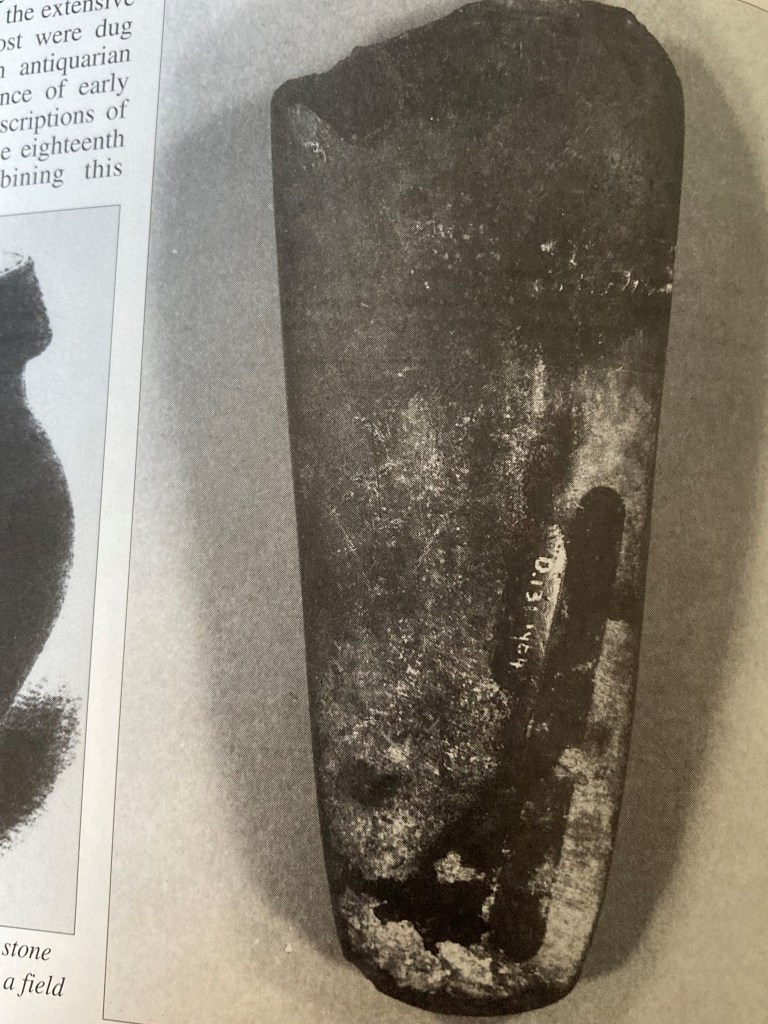
However, little sign of humans from before the Bronze Age have been discovered in Leeds. A flint scraper in Ireland Wood, dated to the bronze age. Bonze chisels in Roundhay, a bronze axe in Hunslet.
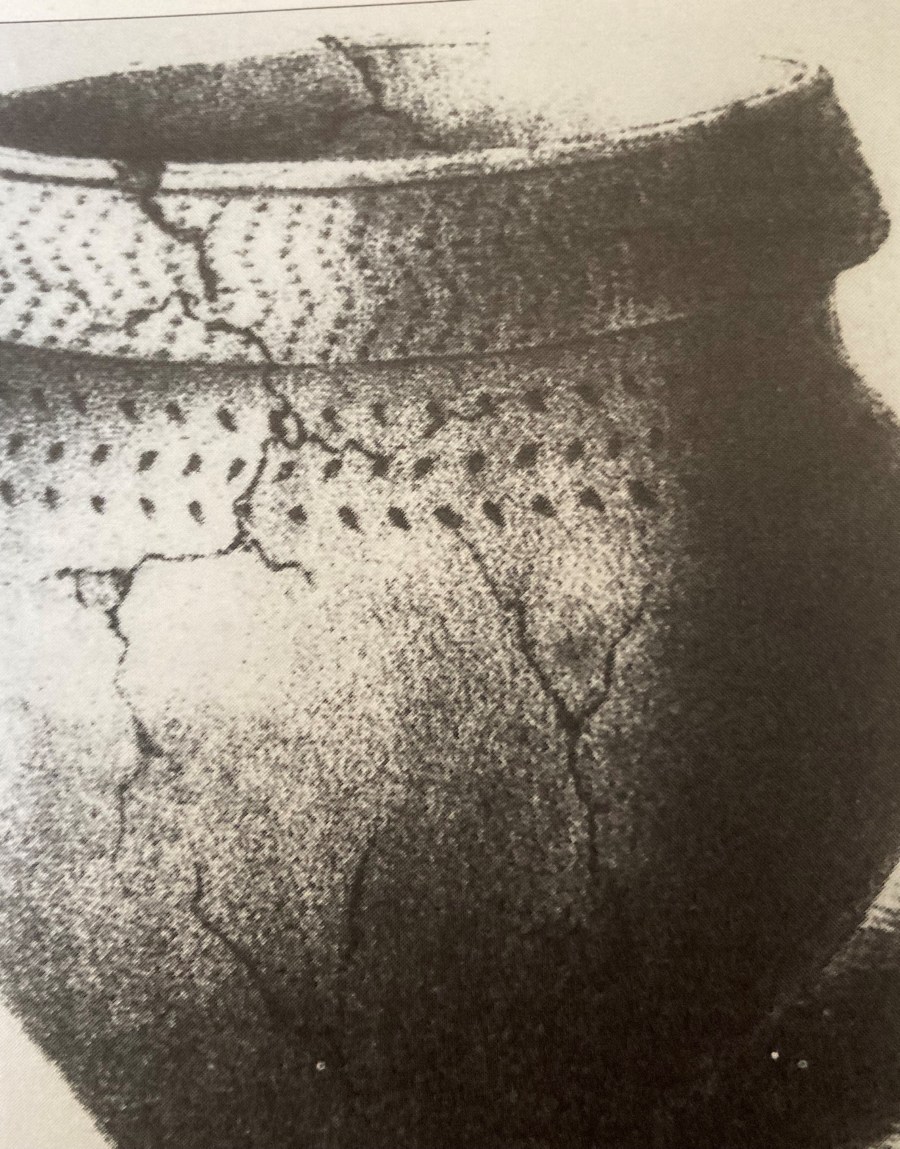
An urn under Briggate (discovered in 1745) with burnt bones.

Possibly some burial mounds on Woodhouse Moor. They’re all isolated finds, however, no sign of a settlement – athough the technology to search for one didn’t exist back then.
Some signs of Bronze Age settlement and querns for grinding corn were discovered not far from the old Cookridge Hospital, and a few things at Ledston, a village 10 miles east of Leeds (which along with Ledsham, fits into that Loidis root name with Leeds). But nothing that close.
It’s believed there were earthwork defences built around Leeds – Temple Newsam, Gipton, Chapel Allerton and Woodhouse Moor; some believe that the name Rampart Road might be an atavistic reference.
Nothing to indicate a any buildings close to the river, although the waterway would probably have been in regular use. The area has been dug over and built on so much in the last few centuries that any signs are long since gone, in a time before we even knew what to look for.
It bring us to the Romans. Were they here? Did they have a settlement? We don’t know. Possibly Leeds is Cambodunum, the fort that exist on the Roman road from Tadcaster to Manchester. Leeds first true historian, Ralph Thoresby, speculated it might have been on Quarry Hill, although even by his time, it has been dug over and built on so much, it was impossible to tell. But part of the area was once known as Wall Flats, which some feel might refer to the wall surrounding a fort.
There are some artefacts from the greater Leeds area: a stone sarcophagus in Chapel Allerton (now sitting on a mound outside St. Matthew’s church there (when dug up, it was closed, but only held two bones – I write a short story about it in Leeds, The Biography). Another burial in Hunslet. An altar, and coins. But nothing to show any kind of settlement.
The road very likely did pass through Leeds. Work in the early 19th century uncovered a road of sorts just south of the river, leading to a ford.
It’s all tantalising, but so much is speculation. To all intents and purposes, Leeds, Loidis, Ledes, didn’t exist until Saxon times.
At that point we hit firm evidence.
Next time.
I’m duty bound to remind you that my new book in out, A Dark Steel Death, featuring Tom Harper and set in 1917 against the backdrop of the home front in the Great War. Ask your library to stock it, or if you can, please buy it yourself. Or even both. Thank you.

 Chris Nickson