Rogation Day Part 1

Something poossibly a little new, heading back to Tudor times (a first for me)

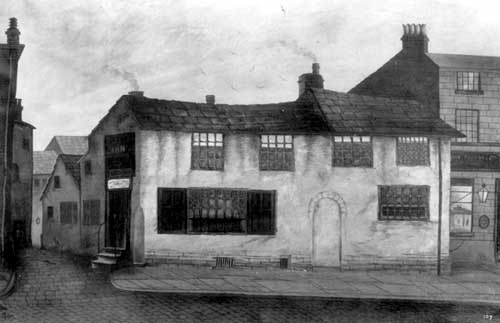
Leeds, April 1578

People disappear. One minute they could be standing there, and you turn away to do something. When you look back, they’ve vanished. No sign, not a trace. The gospels don’t say it can happen, but so many of us know it to be true. Not an illness that can kill a man in a moment, but alchemy. Witchcraft, mayhaps.

            I’d called for Richard Harding that morning. Knocked on his door, no reply. Slipped the latch and entered, calling his name. The night before we’d been drinking at the alehouse on Timble Bridge, and I’d watched him away to his bed.

            And now…his bed was neat, the table clear and cleaned. His pipe and tabor sat by the hearth, ready for this morning. The leather bag, tools for his carpenter’s trade, by the bed. No hint of Richard. Chamber pot empty, no sign of him in the garden at the back. As if he’d never come home last night.

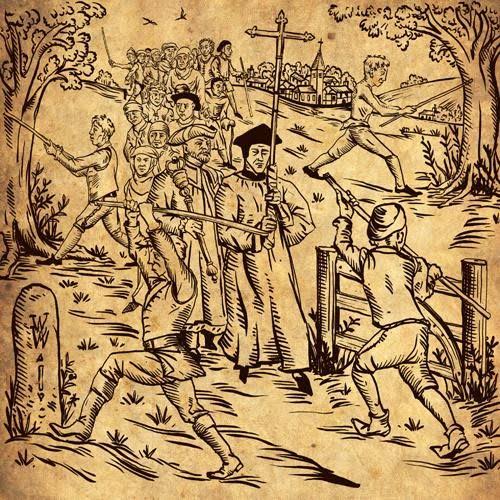
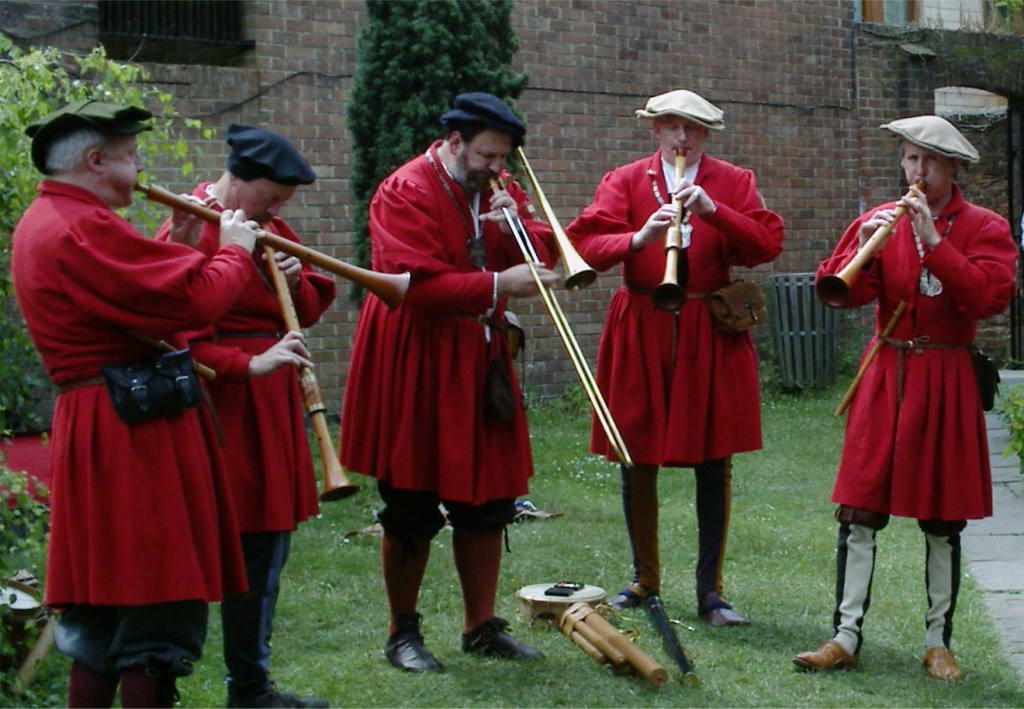
            We were both members of the Town Waits, the musicians who entertained at every occasion, with the silver badges to wear on our coats. Today, Rogation Wednesday, we were to play for the beating of the parish bounds. We did it every year on this day, a tradition that went back beyond our grandfathers and their grandfathers to…who knew when?

            I bellowed his name again. The room answered me with silence. One minute here, another…nowhere to be seen. I hunted through the small house, not that there was anywhere to hide. Out into the garden but he wasn’t there.

            Gone.

            The Parish Church at the bottom of Kirkgate was starting to ring the hour. I had to leave. Richard was a steady soul, busy with work and taking pleasure in playing music. Not one for foolish tricks like this. I sighed, tucked my fiddle under my arm, closed the door and hurried off.

I could have happily kicked young Thomas Dawson down the hill. We were processing along the track, the next mark on the parish bounds no more than half a mile ahead of us, and he struck up a mournful air on the shawm. He’d probably just learned the tune, eager to try it out for people. But it was too slow to keep the people moving.

            I glanced back over my shoulder. Rolly Grimshaw nodded, then raised the sackbut to his mouth, worked the slide, then began to blow. Reluctantly, I tucked the fiddle under my chin and joined in. Only three of us from the Leeds Waits out here as we beat the parish bounds. The other four would join us tonight for the big ball out at Temple Newsam.

            Rogation Day, and at least there was some warmth in the sun. It had been a pitiful start to spring, bad for the crops. You could see the slow growth in the fields. The weather had only begun to improve in the last fortnight. A few half-garbled mutterers claimed it was God’s displeasure at Queen Bess from turning away from the old religion Queen Mary had brought back. I knew who they were. Let them talk; I had no time for idle tongues.

A broad blue ribbon was tied to the tree to mark it out as the parish edge. A good crowd this year followed us, almost forty people, the children dancing and jigging to the music, weaving in and out between their parents and the others.

Yet still no sign of Richard. That worried me. We’d been friends since we were children, both old enough to be widowed and aware of less time ahead of us than behind. We knew each other’s minds and hearts.

What had happened to him?

            Women were pouring mugs from the cask of ale waiting for us. I was ready for something wet in my throat after all the walking. Finally the curate raised his hand and I nodded the others to a halt at the end of the phrase.

            No vicar this year. He’d twisted his ankle and was sitting at home, being waited on by his servant. Instead, it was Curate Gill conducting the prayer and greedily looking over the field to imagine the church’s tithe at harvest time. A young man, barely looking as if he needed to shave, but this was his second year in Leeds. Affable enough, even if he was ambitious to wear a bishop’s mitre one day. It would never happen; the family didn’t know the right people.

            As he spoke, I ducked away, pulling my tankard out of my jerkin before sinking it in the cask. Good ale, Widow Wharton’s brew by its taste, a few herbs in there to give it a kick. And very welcome. We’d kicked up enough dust as we walked to leave me parched. Finished, I flung out the dregs and put it back in the jerkin. No doublets for the likes of us, no fancy gowns on top. Good leather kept you warmer, with the silver badge of the owls and fleece proudly on display all the uniform we needed. I cocked an ear. The prayer had become a sermon. Ample time to rosin up my bow.

            The fiddle had belonged to my father. A better musician than me with an ear for anything at listen. Listen once and he was note-perfect on the tune. I apprenticed with him for a year, then with Geoffrey Farrar in Ripon before coming back to Leeds and taking my father’s place leading the Waits when he died. I’d never play as well as him, but I had a good mind for creating melodies that people would remember. To make them cry or make them dance. Something for every occasion. Even out here.
            This was my thirtieth year of beating the parish bounds. No one knew exactly how the ceremony began, or how long ago. Still, it was good for the children to learn where they lived. For the rest of is, it was a chance to see how the land had changed. Not that it did. Arable fields around and the sheep enjoying the grass higher up the hill.

            Curate Gill was still talking, so I wandered away. I had the faint memory of a stream on the far side of a hawthorn hedge further down the slope. It ran down to Lady Beck, little more than a trickle, but a good place to piss. The bushes were there, exactly where I recalled. But something must have dammed the stream. The water had pooled, dirty and thick, all the ground around it like a bog.

            Strange. I tucked the violin under my arm and picked my way along the slope. Something was blocking the stream., no doubt about that. I could see it, a dark, sodden mound. A yard or two closer and I knew what it was.

            A man’s body.

            ‘Down here.’ I tried to call out the words, but they came in a croak. A deep breath and I tried again. Then a third time, loud enough to draw attention. Soon they were all scrambling down the hill, every one of them with showers of questions that halted as soon as they saw him.

            He was face down, hair and clothes stained with mud. Yesterday it had rained; the stream would have gathered around him.

            It was Rolly who squatted by the corpse and turned it over. A gasp from some. Shrieks from others. We all knew him. William Tenche, the cloth searcher.

            Suddenly they were all talking: where they’d seen him last, when it was who had he been with, anything and everything.

            ‘Wait,’ I shouted. The curate stood, mumbling a prayer and looking out of his depth. ‘We need an inquest and to raise the hue and cry.’ I glanced around their faces. ‘All of you are the jury. The best thing is to take him back to town. Peter, Robert, can you make a hurdle and carry him?’

            They were shepherds, cutting and bending willow for jobs was something they knew well. A nod and they were on their way.

            The Waits also served as the night watch, for whatever crime there was in a small place like Leeds. Drunkenness, mostly. A fight. Adulterated bread, which saw the baker in the stocks. Two murders in my three decades doing this. A man killing his neighbour, and the other never solved. Person or persons unknown.

            We’d need to examine Tenche before declaring anything. It could have been natural, a fall or a seizure, it could have been natural. But I had a worrying feeling deep in my bones that there was more in this. What I knew and the others didn’t was that Tenche still held to his Catholic faith, keeping his worship secret.

            I knew because I was Secretary Walsingham’s man in Leeds, a spy here for the queen, reporting on recusants and strangers who arrived.

Please, let me know what you think, whether it’s worth penning any more of this in idle moments.

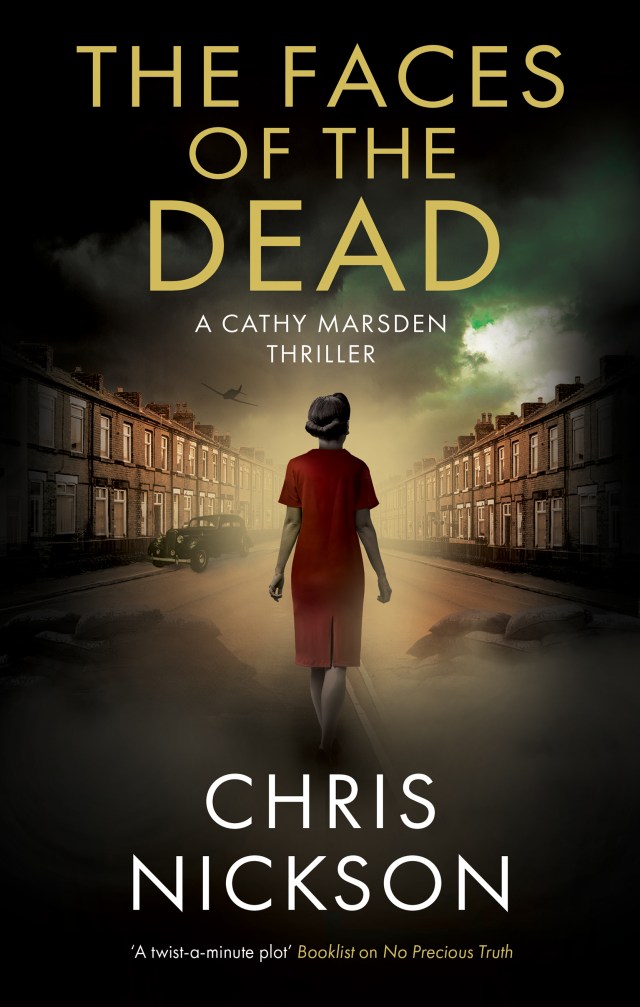
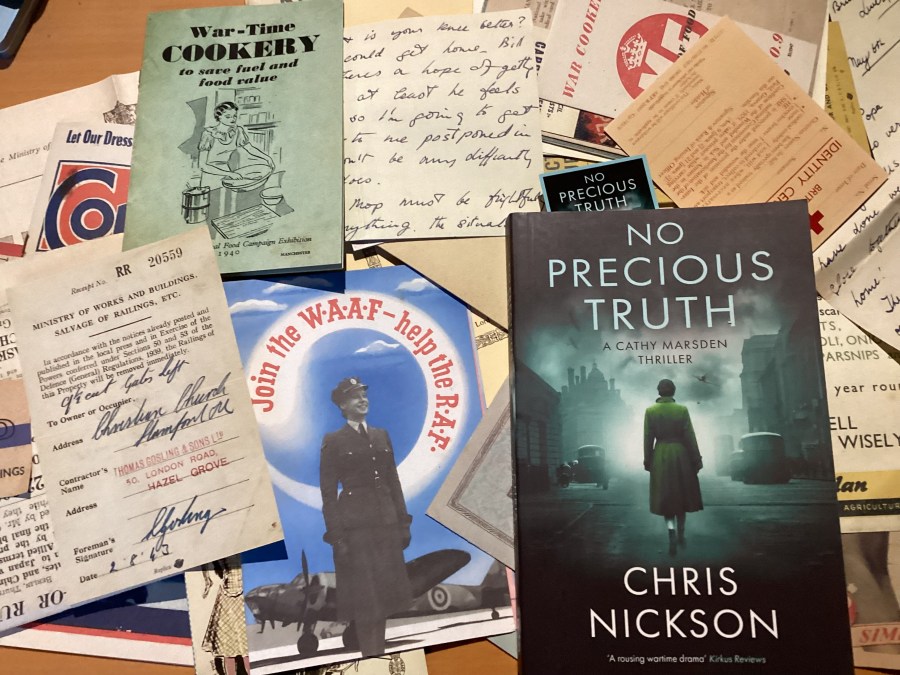
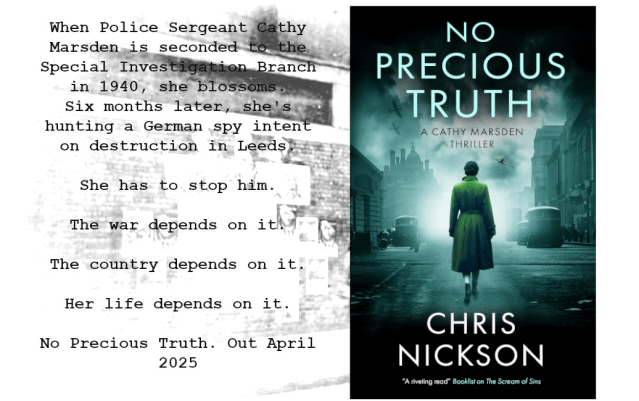
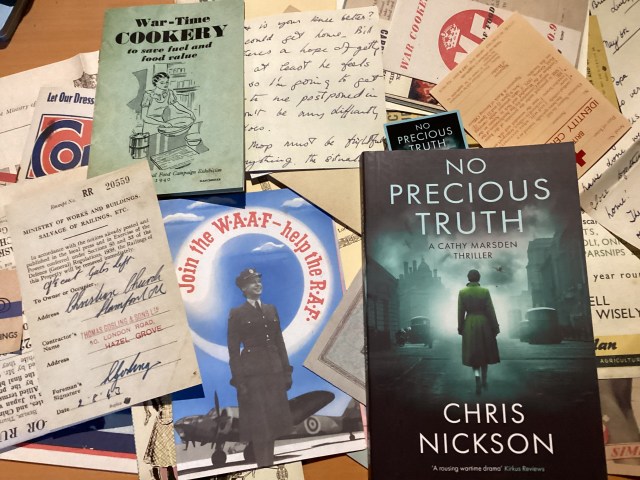
Meanwhile, both the Cathy Marsden WWII novels, No Precious Truth and The Faces Of The Dead are currently £1.99 on Kibdle (free with Kindle Unlimited). That’s two books for around the price of a coffee. You’re not likely to find a better bargain this week. I truly hope you’ll but them – because they’re good. I sweated blood and tears over those books!

Thank you.
Everything Must Go

Want some cheap books? Want to spend next to nothing for hours of reading? Well…

My publishers have put all my books in Kindle Unlimited. That means the ebooks can only be read or bought through Amazon, for Kindle (sorry, but that’s out of my hands). However, if you subscribe to Kindle Unlimited, they’re free. Or, if not, you can buy them, and I don’t believe any of them costs more than £2.99 (cheap in the US, too, where thney’re also on KU).

What does that mean? The two Cathy Marsden book, including The Faces Of The Dead, which only came out in April, are a bargain. Same with the eight Simon Westow books, all 11 Tom Harper novels, and seven Richard Nottingham books. That’s on top of another publisher offering the Dan Markham book and all four Chesterfield novels at a bargain price.

I’m not s\aying you should, but really, you should.

Thanks good – and good reading.

Writing An Alternative Leeds

World building is a phrase you’ll often hear in regard to writing. Every author does it, no matter the genre. It’s not simply in fantasy or science fiction, but in all novels, even those set in today’s world. The characters, their relationships, families, where they live. Step by step, the words on the page flesh them out.

I certainly do it. But I’m attempting to also create an alternative history of Leeds.

What is that? It’s something built on the slenderest of reality. Let me explain…

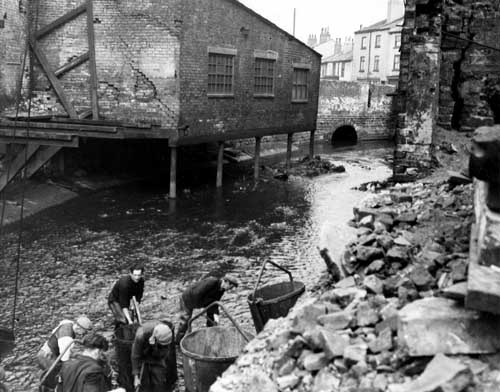
My first series, set in the 1730s, featured a man named Richard Nottingham, the Constable of Leeds. That role would be more honorary than anything, taking part in pageantry while the night watch did the real policing. Richard was a real person, and the town’s constable then; there’s a reference to him parading up Briggate with the great and the good of Leeds. I made him into a proto copper, investigating crimes, living on Marsh Lane crossing Timble Beck each day to the gaol at the top of Kirkgate(the real Richard lived in Kirkgate, then Briggate.

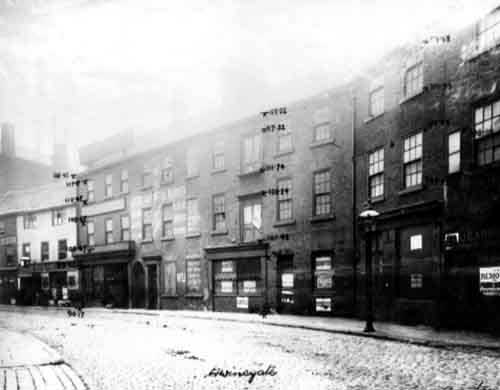
He’s a man with a wife and family and a love-hate relationship with a criminal named Amos Worthy, whose house stood where Swinegate bends. Set in the 1820s, the Simon Westow novels feature a thief-taker, again in the era before a police force. He lives in a house on Swinegate, at the bend of the road, and his twin boys are called Richard and Amos, names he discovered on gravestones outside the Parish Church just before the babies were due to be baptised.

Next January you’ll be meeting Virginia Cooper and her husband Rob; he’s an Inspector of detectives with Leeds Police in 1862. A tip from a friendly lawyer named Amos Westow leads him to a house for rent at the back of Green Dragon Yard. The owner, Jane Truscott, who inherited it from her companion, Mrs Shields, is moving to live with a friend in the country. If you’ve read the Simon Westow books, you’ll certainly remember Jane, a very deadly young woman, older now. Her friend Sally, who also worked as a thief-taker, had long wanted to live on a farm…the thread stretches further. But it’s far from done. Rob Cooper is mentor to a young constable named Kendall, who shows plenty of promise.

By the time of Tom Harper, in the 1890s, Kendall is a superintendent, in charge of Millgarth police station, a position Harper will assume on his rise to chief constable. Tom and his wife Annabelle have a daughter named Mary, a suffragette who’s also a canny businesswoman, opening a typing agency and school on Albion Place.

Tom is commemorated at Millgarth, his picture framed on the wall. Woman Police Sergeant sees it when she’s there as part of the Special Investigation Branch in 1941

Eventually Mary Harper will become a Leeds city councillor, and as you’ll see in July 2027, she’ll use the services of Cathy after the war, when Cathy, no longer part of the police, runs an enquiry agency.

So far, that’s as far as the thread runs, from the 1730s to the 1940s, a little over 200 years. Leeds as it might have been. Or maybe as it really was and the rest of us are a dream. You decide.

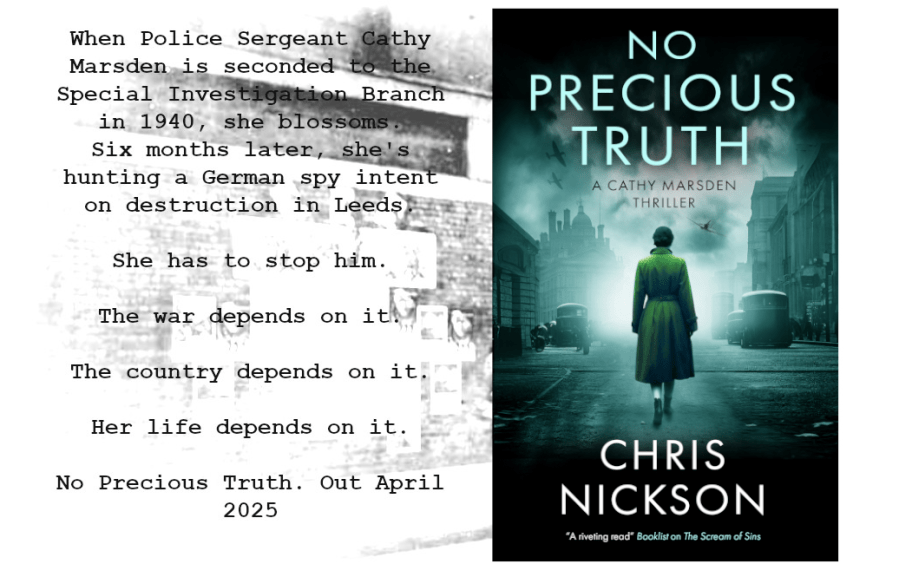
Mentioning Cathy Marsden, you can buy the ebook version of the newst novel, The Faces Of The Dead, for 99p (99c in the US), while No Precious Truth is available for Kindle at the £1.99 or $3.99 in the US (free for Kindle Unlimited).

A Turn Up For The (e) Books

I woke up on Sunday to discover that my publisher has reduced the ebook price for The Faces Of The Dead (yes, the book that came out a month ago) to 99p on all platforms – and 99c in the US. That’s, well, quite a deal, especially as the first in the series, No Precious Truth, is the same price for Kindole, or free on Kindle Unlimited.

As the saying goes….what are you waiting for? Both Cathy Marsden book for less than £2. That’s a steal. If I hadn’t written them, I’d buy them. Actually, I already have.

In Praise Of Heptonstall

Quite early last Friday morning, I took the train out to Hebden Bridge (if you’ve watched Happy Valley, you’ve seen it). A lovely place in the wild West Riding, up the Calder Valley, once the home of weavers and mills, I’ve enjoyed going there for a long time.

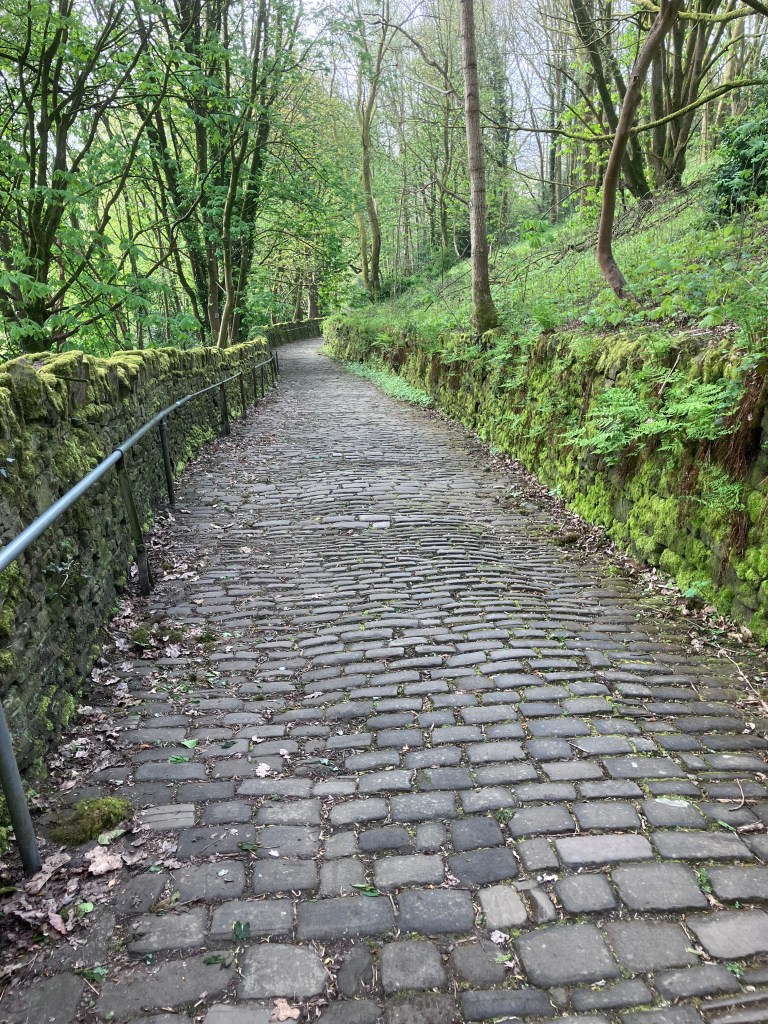
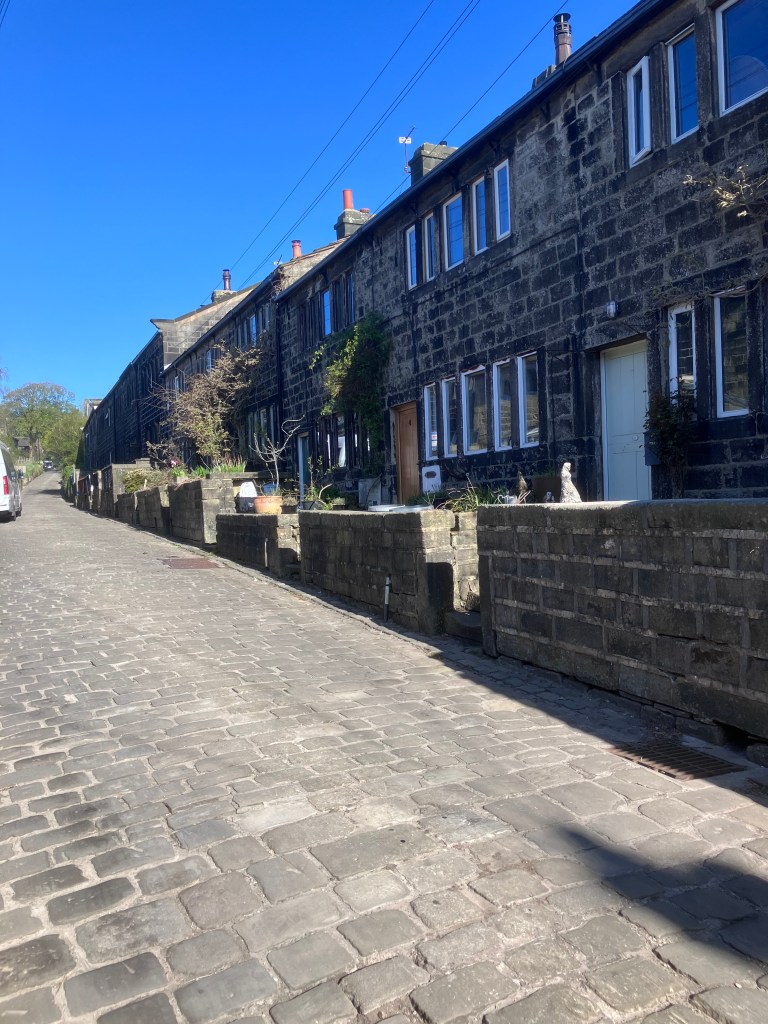
This trip, though, was research for a book I’m writing, the sequel to one that won’t be out until January – just to confuse you. I need to get more of the feel of the place, to walk around. It was a morning of low clouds, but with the promise of the sun burning them off quite quickly and a glorious day ahead. Having plenty of time, I decided to follow a path that had intrigued me for years, a cobbled road known as the Buttress that rose steeply up the hill from the old packhorse bridge – the route up to a village called Heptonstall.

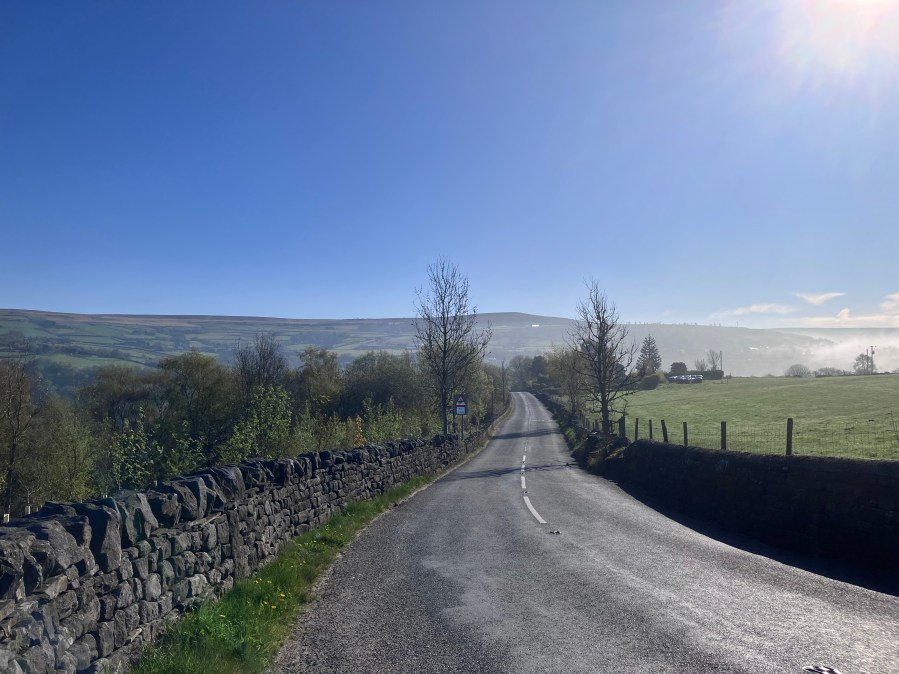
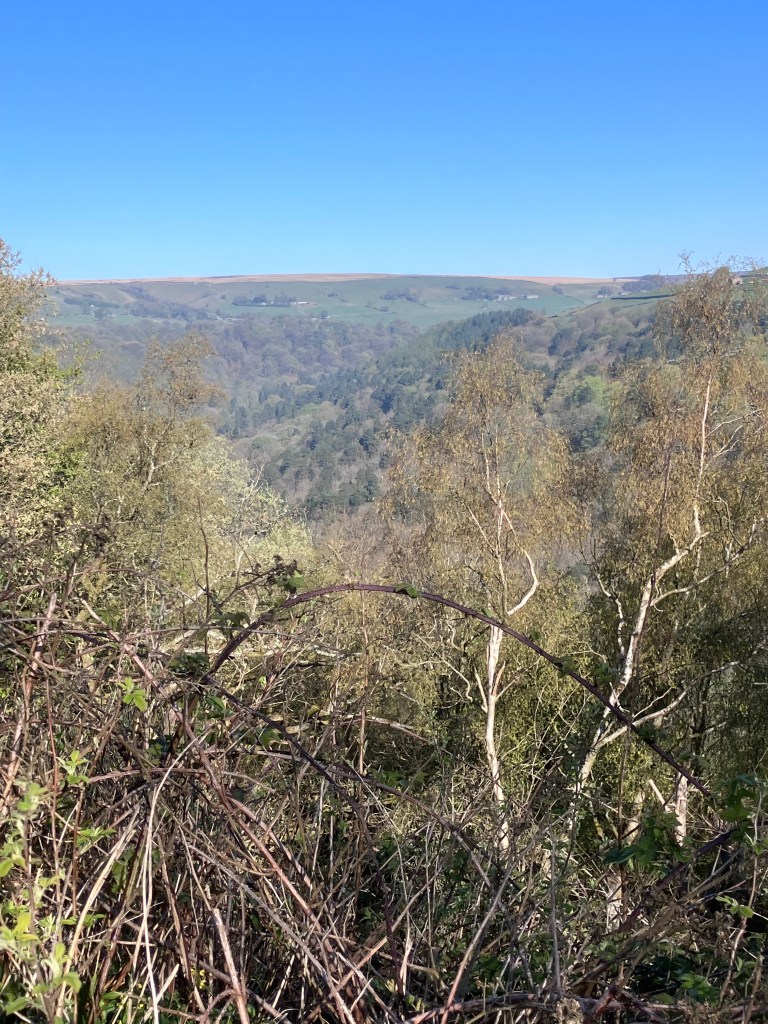
Quite a brutal climb, and the top brought me to a road, still going up and up. Turns out there was another footpath through the woods I could have taken, but I kept to the road. No regrets: once the mist had gone, with the sun shining, no wind, and a clear blue sky, the view across the South Pennines was spectacular.

At the very top, an area called Slack Bottom, I turned towards Heptonstall…and found the most magical place.

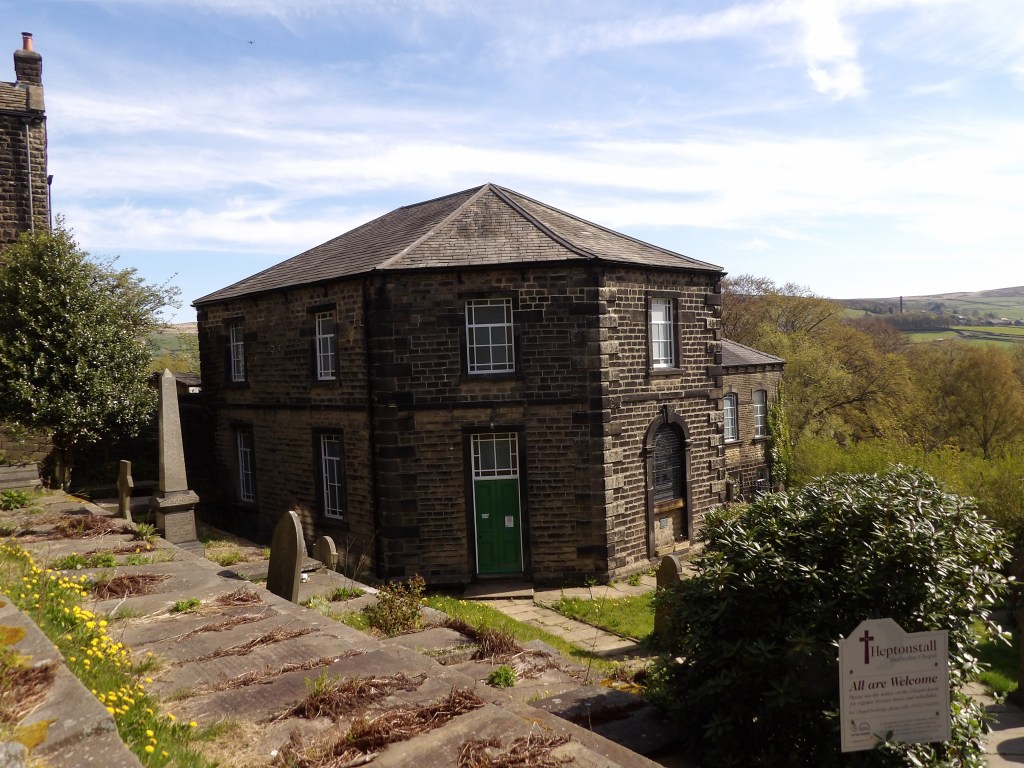
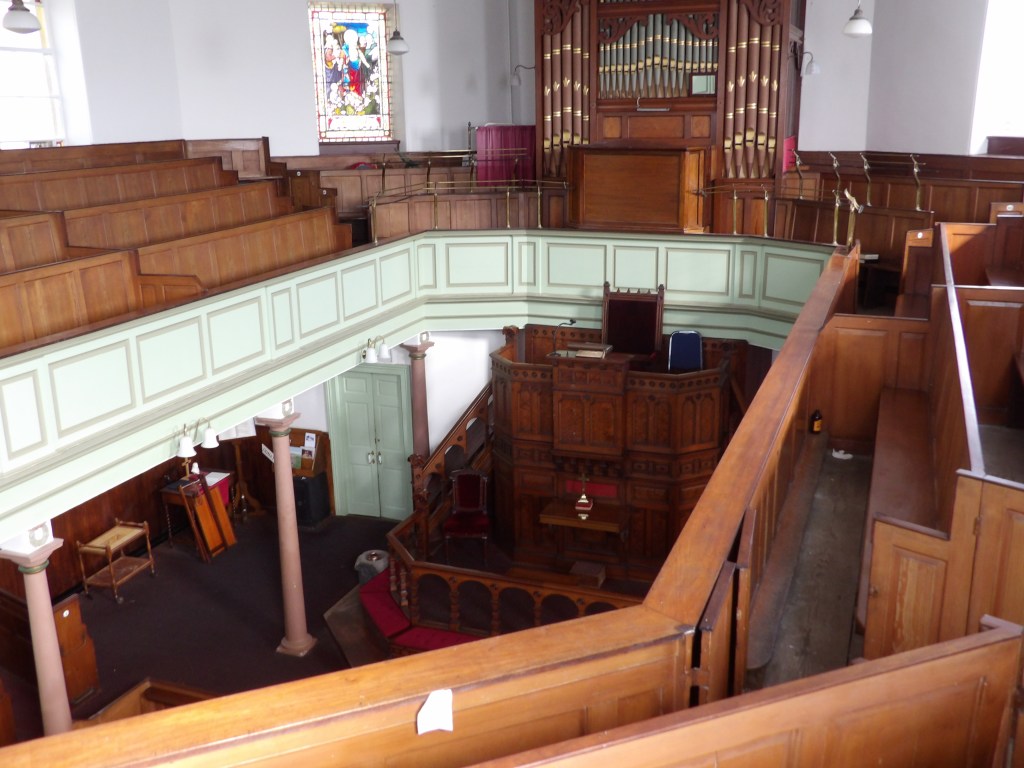
It was a handloom weaving village (the long upper windows are the giveaway), perfectly kept, and as picturesque as it’s possible to be. The octagonal Methodist chapel, built in 1764 (the foundation stone supposedly laid by John Wesley himself) is a gem.

Methodist Chapel Exterior
Methodist Chapel Interior

The old church, left a ruin by an 1847 gale, has parts dating back to the 1200s. Right next to it stands the newer church, with the body of Sylvia Plath in the graveyard. Sadly, my photos of the ruins came out blurred.

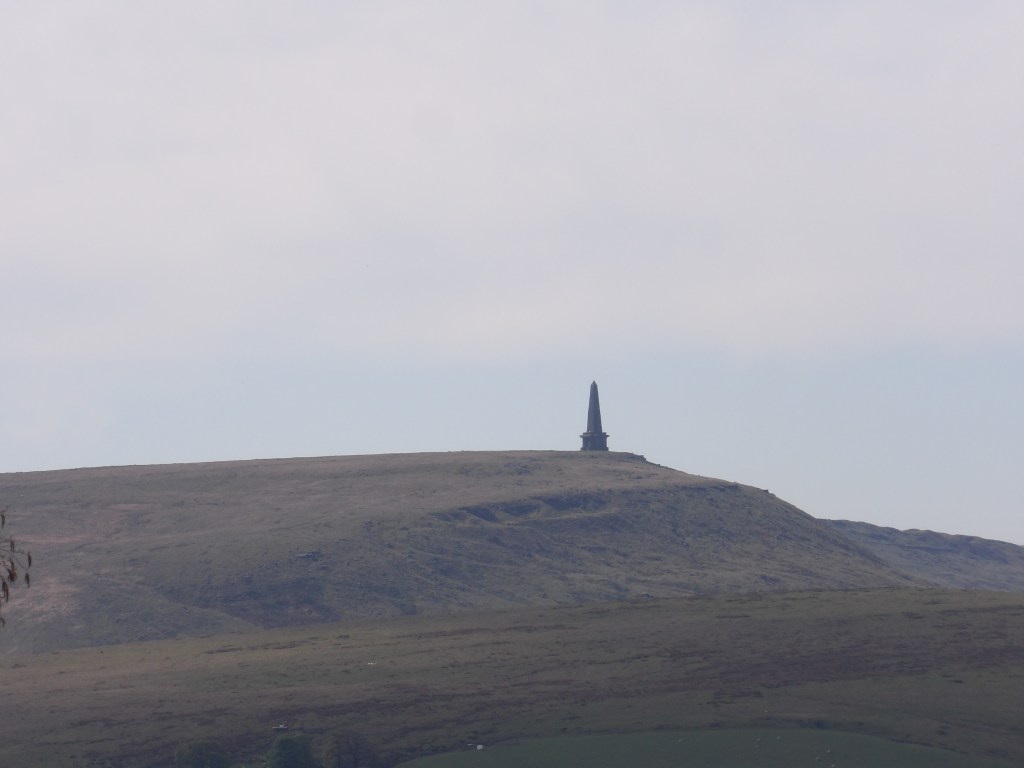
From the road you can see across to Stoodley Pike, originally built to commemorate the victory at Waterloo in 1815, then rebuilt in the 1850s, standing watch over the upper Calder valley.

Stoodley Pike
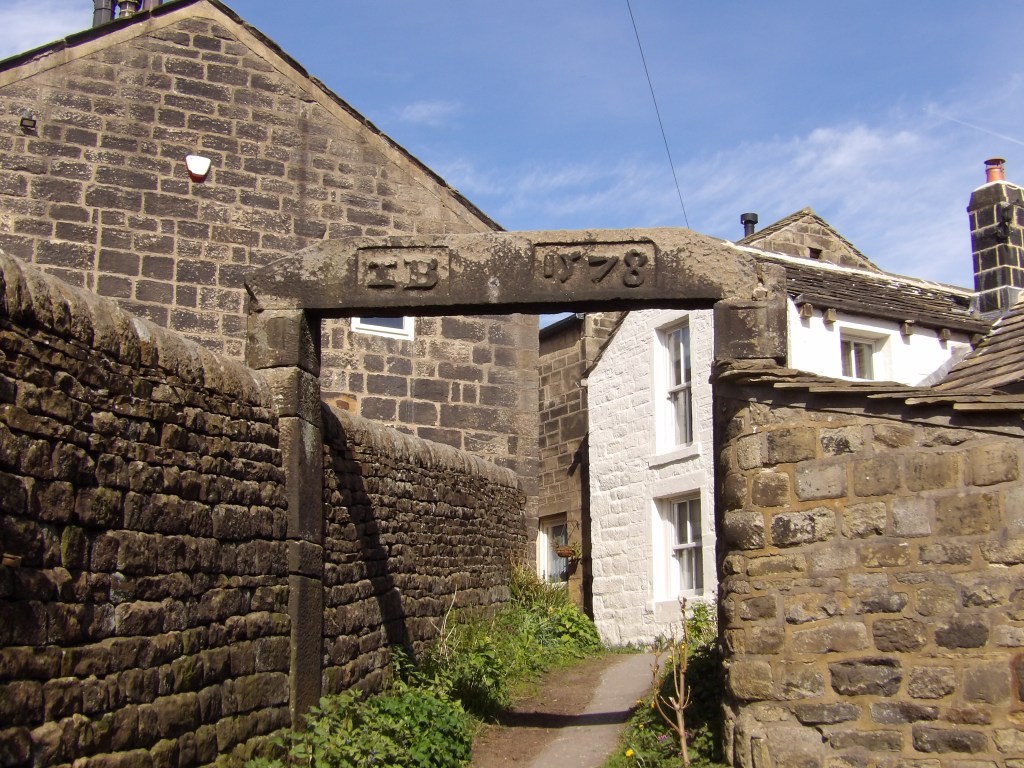
Old entry to a farmhouse
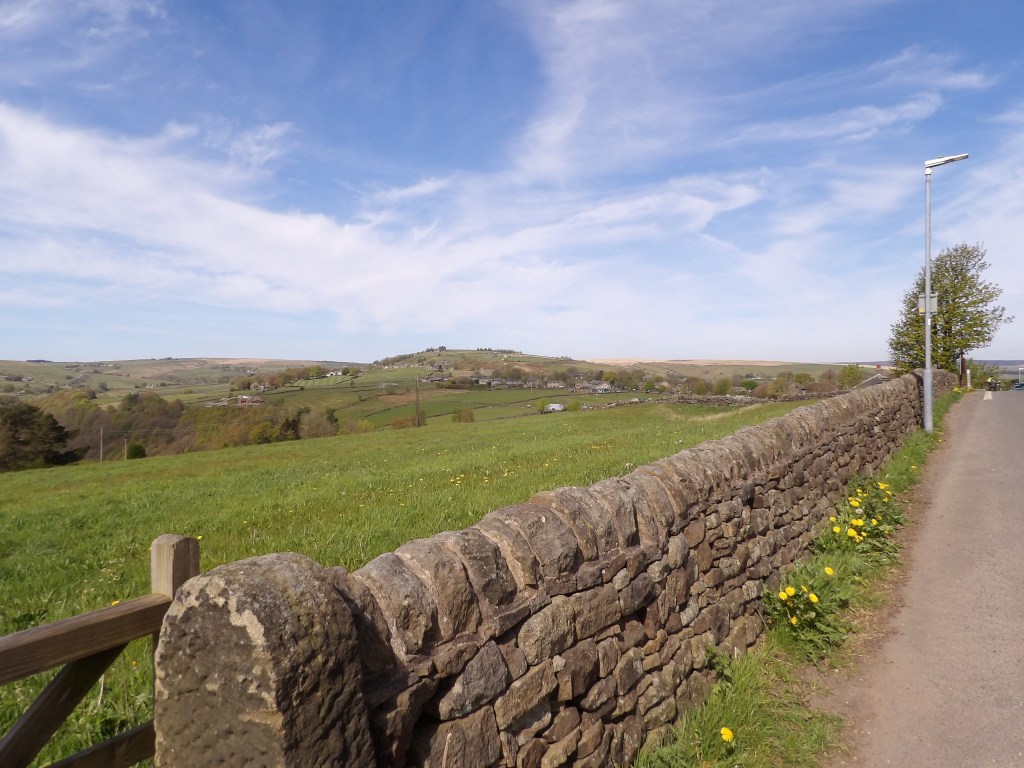
The view….

It’s not touristy – a couple of pubs, a café/gelato shop and a small village shop – and while it’s the dream visit in good weather, it will be isolated in winder; the only ways out are down steep hills.

Go if you can, and you can imagine what life would have been like for those handloom weavers, the last of whom died at the beginning of the 20th century. You won’t regret the trip.

If you want something to read, the second Cathy Marsden book, The Faces Of The Dead, has been out for a couple of weeks, and I’d be grateful if you bought it. By the way, the first Cathy book, No Precious Truth, is 99p (99c) for Kindle – or free if you’re on Kindle Unlimited. Basically, it’s a steal.

Would You Prefer 99p (99c)….Or Free? Your Choice

The Faces Of The Dead, the second Cathy Marsden thriller, has now been in the world for just over two weeks and I’d like to thank all those who’ve bought it or borrowed from the library (if your library doesn’t have it, you can request they stock it. That way you’ll be able to read it and so will others – and I get the royalty from the book sale plus a small time everyone borrows it – a real win-win!).

That’s doing well, but my publisher has arranged a very special deal. No Precious Truth, the book that introduced Cathy, is just 99p on Kindle (99c in the US). If you’re on Kindle Unlimited, you can read it for free.

You’re not going to find anything cheaper than that. Holidays are looming on the horizon. You’re going to need books to read. There’s a three-day weekend just over a week away, and that demands a book or two.

Why not treat yourself? After all, you’re worth it, aren’t you?

Thank you.

The UK link is here

The US link is here

A Very Special Deal

You won’t have noticed, but No Precious Truth, the first in my Cathy Marsden WWII series set in Leeds, vanished off Amazon for a little while. Inevitably, I panicked, but my publisher had it all in hand. Yesterday the listing was back, looking shiny and fresh.

And today, the ebook returned as part of Kindle Unlimited, at least in the UK. Quite what that means, I don’t know (these are uncharted waters for me), but I’m assured it’s a good thing.

So, as The Faces Of The Dead arrives in the world, blinking and looking around, its predecessor is free for those who subscribe to Kindle Unlimited.

What about those who don’t? He’s the really good deal. The Kindle edition of No Precious Truth is just 99p to buy, which is far cheaper than chips (last time I ordered any, I paid £1.50 for a small bag of chips added on to an order of fish). You lose more than that in the sofa each week. And for those in America, it’s 99c.

For the UK, click here

In the US, click here

If you haven’t read The Faces Of The Dead yet, this is a fine place to start, a chance to meet Woman Police Sergeant Cathy Marsden, her family in Gipton, and the men in the Special Investigation Branch in Leeds.

Yes, as you can guess, I’m hoping you’ll all take a chance on it – after all, what do you have to lose?

And doin’t forget The Faces Of The Dead….just waiting for you.

Out In The Wild

Yesterday, The Faces Of The Dead was published. Not my first book and hopefully not my last. But I’ll tell you something, the thrill never goes. It’s never mundane, or an ordinary day.

But each time, it’s a gamble. We write, hope the publishers wants the work – that’s the first hurdle. The true test, though, is when it’s in the hands of the readers. They – you – are the ultimate judges. We hope you like the idea of the book enough to buy it or borrow it from the library. Obviously, buying it is better, as we get the royalties from sales. Still, times are tough and books are a luxury; I understand. Still, request it from the library and if they don’t have it, they’ll buy a copy. The upside to that is that many more people can read it.

I keep gambling on people liking my books, and so far, you have. I’m incredibly grateful for that, believe me. These constant leaps of faith can be draining, but I’ll keep on making them.

Meanwhile, thank you for reading. As we all know, books are better from independent shops. If that isn’t an option for you, Speedy Hen has the best hardback price, plus free UK postage.

Need another nudge to convince you? How about this review from Booklist?

… When her boss is badly injured during a raid, Cathy’s as shocked as she is proud to take over as his temporary replacement, although there’s extra pressure—her “being a woman and all”—to crack the case. But her local connections, ingenuity, bravery, and intuition pay off. A plucky female cop, wartime drama and romance, and a look at how the war gave women new opportunities give oomph to Nickson’s slow-burning police procedural.

Go on, you know you want to.

And thank you.

A Little History And A Taste Of The New

It came as a shock to realise it will soon be 50 years since my words first appeared in black and white. 1978, I believe, in a free music paper – my memory on the title in sketchy, Cincinnati Entertainer, perhaps. I’d moved to the US a couple of years before, music mad, and wrote reviews of two LPs, Roy Harper’s Flashes From the Archives Of Oblivion and Kate Bush’s debut, The Kick Inside. They published both.

Over the next few years I published occasional small pieces for them, but never took it seriously. In my free time I was writing novels, thankfully unpublished, then playing in bands.

After moving to Seattle in 1986 I published a few short stories in small magazines, you know, the ones that look great but nobody sees. Penned a few one-act plays which had a performance or two before vanishing. Then I decided to take this writing lark more seriously and found an encouraging editor at the Seattle Rocket, an excellent free music paper, out every fortnight. It took a while, but I improved until they started publishing my reviews, and then features.

I milked it, sending clips around, finding other outlets who’d publish me. An opportunity came to write an unauthorised biography of a recent star (okay, it was Mariah Carey) and I jumped on that. Short deadline, a lot of work, but worthwhile. For the next few years, as a freelance, I grabbed every opportunity that I could reach. I had a mortgage and a young child, and I was desperate to make a living from this. I think every freelancer can relate.

And now, I have another book arriving, as of next week. The Faces Of The Dead, the second Cathy Marsden thriller. The first, No Precious Truth, has sold surprisingly well, so I hope you’ll all buy this one (right now would be fine). In the UK, Speedy Hen has the cheapest hardback prince, with free postage. Just a word to the wise, you know…here’s a small extract to tempt you.

‘The driver was Eric Carr.’ They knew his name. A nobody. Not even a deserter; he’d failed his conscription medical. A touch of flash, acted big, but could only manage small crimes. The definition of small fry, scuffling to keep alive. But his time was over now.

‘What about the passenger?’ Terry asked.

‘A woman.’

‘Who was she? Do we know her name?’

Faulkner checked the sheet in front of him. ‘The identity and ration cards in her handbag say she was called Nina Cordell. I’ve never heard of her.’

‘I have,’ Cathy said, and she felt everyone’s eyes swivel towards her. ‘She was a prostitute a few years ago. In a brothel. A good one where all the town nabobs go. I haven’t heard anything of her in a while, though.’

‘The interesting stuff is still to come.’ His tone turned darker. ‘We found fifteen guns tucked away in the car and some boxes of ammunition. Five Enfield number two revolvers, British army issue, and ten Colt pistols. All brand-new.’ A tiny pause. ‘The Americans use them.’ She sensed the stirring. No doubt now: this was definitely one for them. ‘I’ve been in touch with the Yanks,’ Faulkner continued. ‘They have a military police detachment up here. But they also have some new outfit to deal with this sort of thing. The Criminal Investigation Division. Just formed.’

‘Are they MPs?’ Jimmy asked.

‘The way it was explained to me, they sound more like the American equivalent of us. They’re sending an investigator, but he won’t be here until tomorrow.’

‘Who’s going to be in charge?’

‘We’ll be working together,’ Faulkner said. ‘Those are orders from on high. That’s why we’re in this. He’ll be following up on the American angle, we’ll take care of everything else. Maybe we can have it all in hand by the time he appears. Terry, talk to the armourers at the barracks and ask them to run an inventory to see if any handguns are missing. Smithy, I want you to take a look at the report, then have a word with the NAAFI headquarters here. See if the food and stuff was stolen locally. George, Jimmy: find out where Carr lived and tear the place apart.’

‘What about me?’ Cathy asked once they’d gone.

‘Do you think you could identify this Nina woman?’

It had been a while since Cathy had seen her, but Nina Cordell’s face was still vivid in her mind. Loud, pretty, always glittering and lively. ‘Probably.’ Her leave was definitely over. She was back to earth with a sharp bump.

Less Than Three Weeks…

…until The Faces Of The Dead is published (out April 7).

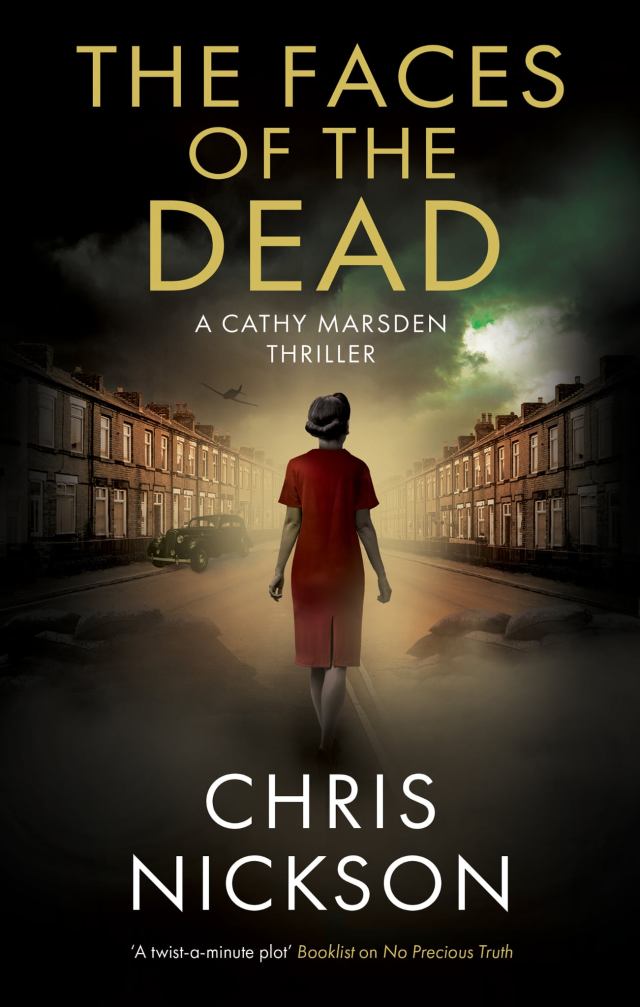
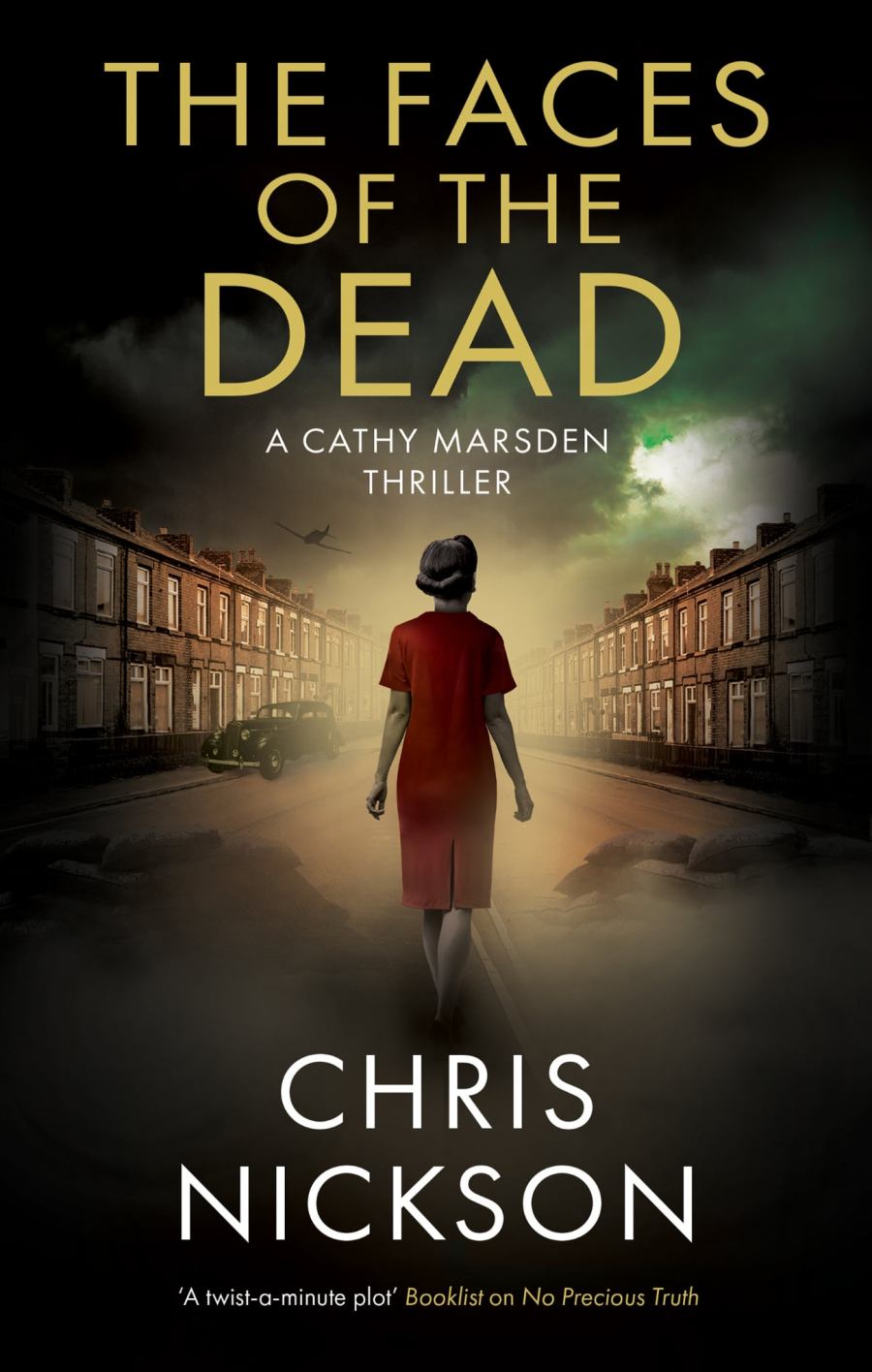
As some of you probably know, it’s the second in the Cathy Marsden series, the sequel to No Precious Truth. Set three years later, in early spring 1944, a few months before D-Day. Not that the buildup greatly affected Leeds; the difference was down South, with thousands of troops – British, American, from all over the Commonwealth – gathered for the opening of the second front.

Up North, Cathy, along with the other members of the Special Investigation Branch (SIB) squad here, has her own problems: a Jaguar owned by a criminal has run off the road near Harewood, killing himself and the female passenger. A tragedy, but hardly something for SIB – until the car is examined. It’s filled with stolen good…including British and American guns.

Now it’s their business.

But the accident unleashes a power battle between the gang leaders in Leeds, one with control of crime in the city at stake. And it quickly turns deadly as one man tries for dominance. Cathy and the squad need to bring him down, and work alongside a couple of officers from the American miliary CID, with the tensions between nations on display.

Meanwhile, her boyfriend is home on leave after serving in North Africa and Italy. He springs a big surprises, but both he and Cathy know what lies ahead for him, looming on the horizon.

It’s a relentless, supercharged ride – but in a Leeds style.

I’d be very grateful if you’d pre-order The Faces Of The Dead from your favourite place (especially an independent). After that, hang on to your hat. It’s going to be a wild ride.