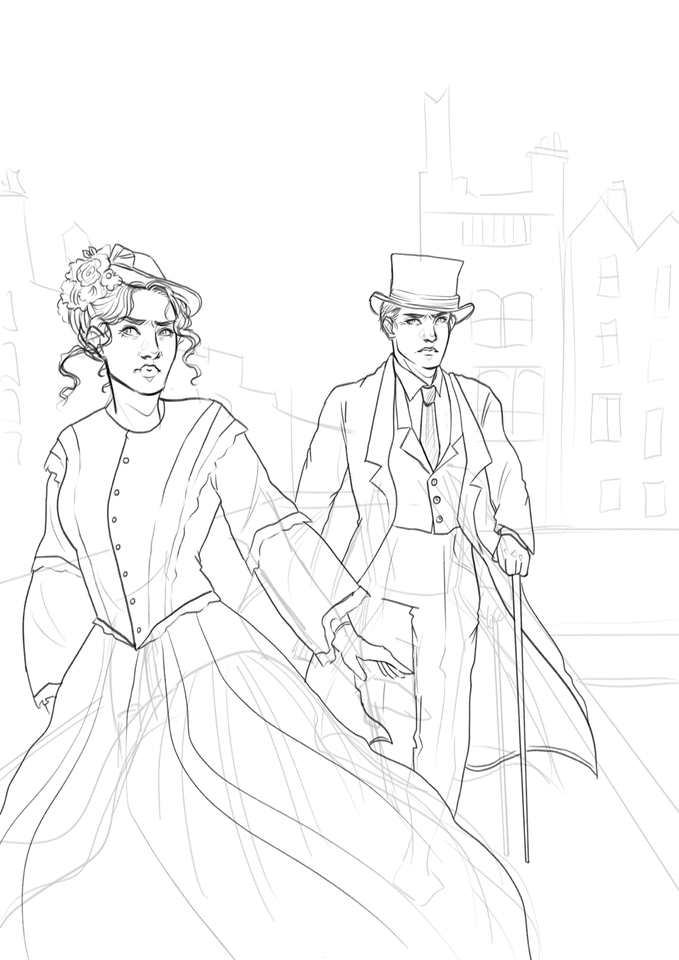
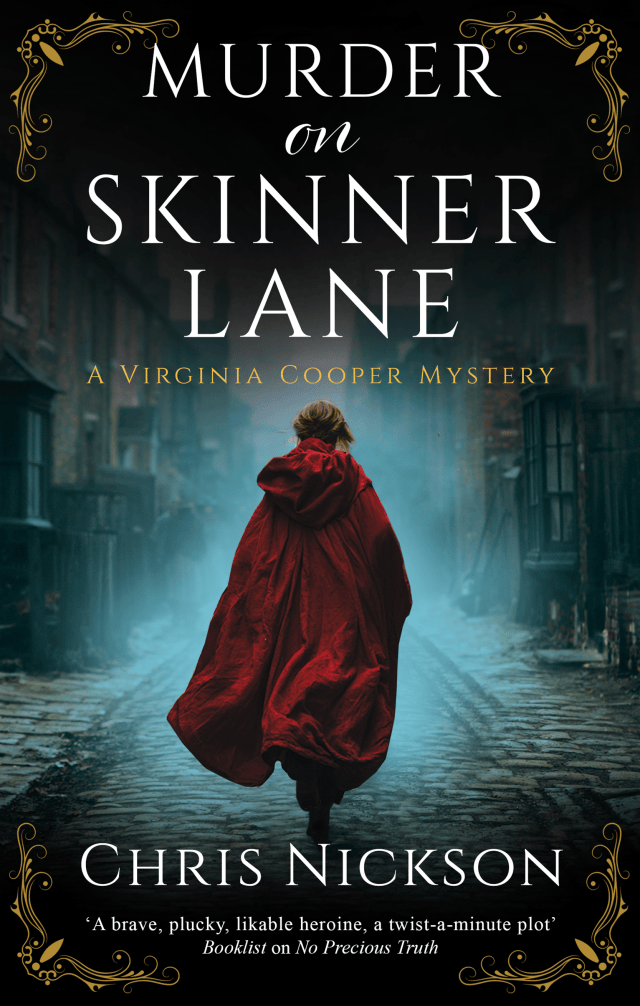
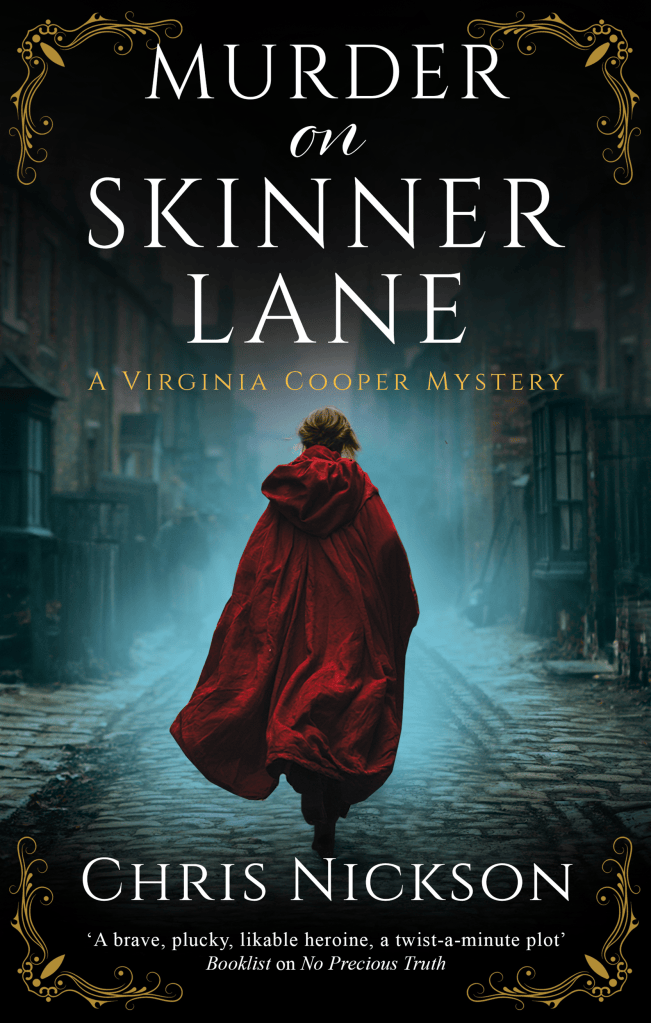
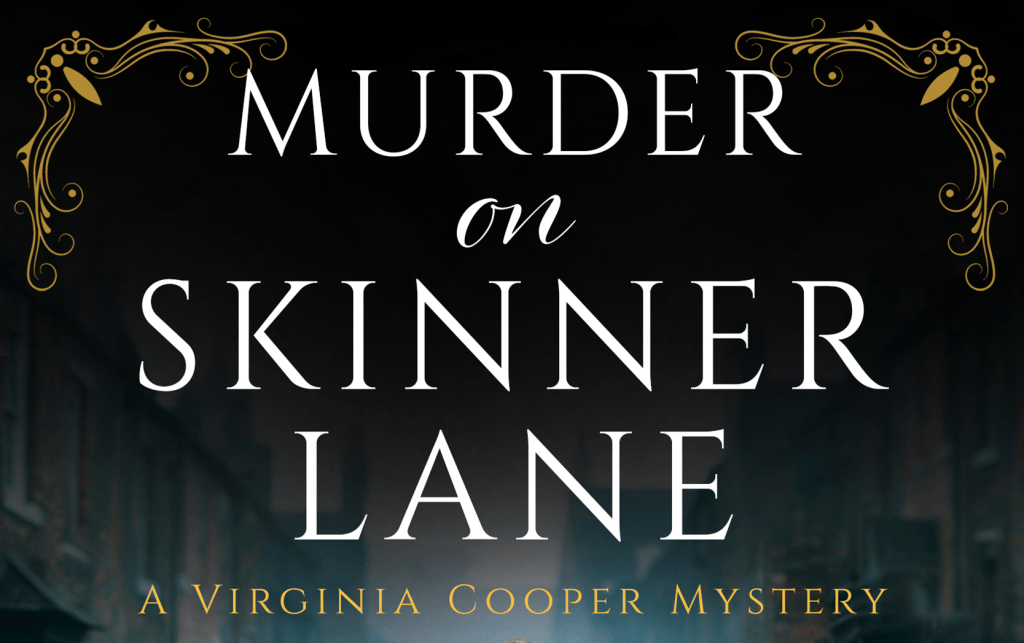
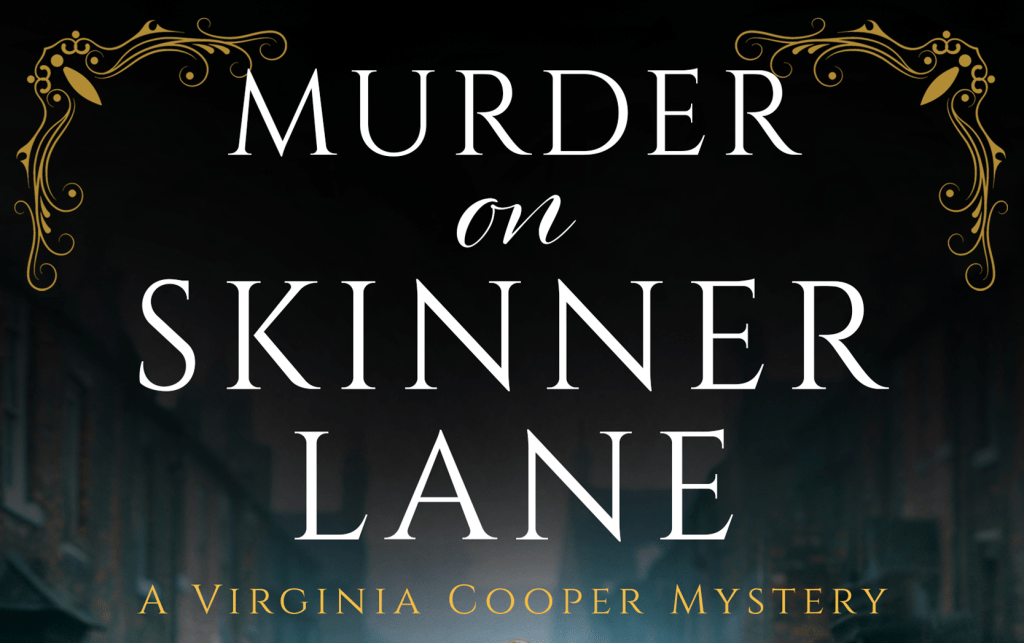
Next February will bring Murder On Skinner Lane, the start of a new series (if the first one sells enough copies), set in 1862 and featuring Virginia Cooper, a very unofficial female detective with Leeds Police, as Asa Daniels, an very vocal American abolitionist who’s feld to England after three attempts on his life and settled in York, lodging with a Quaker couple.
I saw the cover earlier this week. It really grabs the attention, and soon enough I’ll show it all, along with the cover copy. For now, though, just a tease, along with the line It’s 1862 and the Confederates are in Yorkshire.
It’s not available to pre-order yet, but would you buy that?
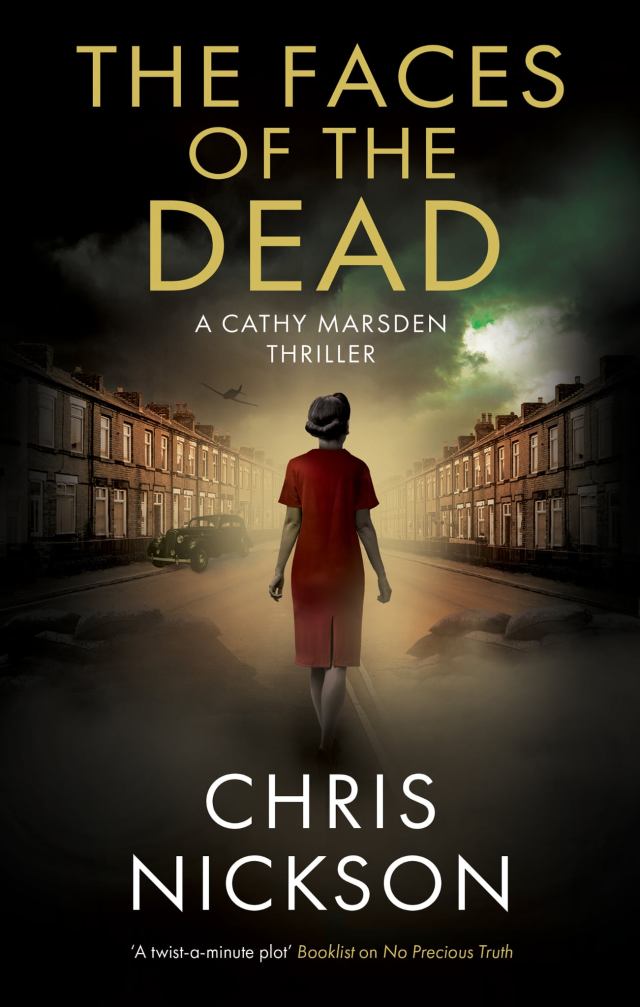
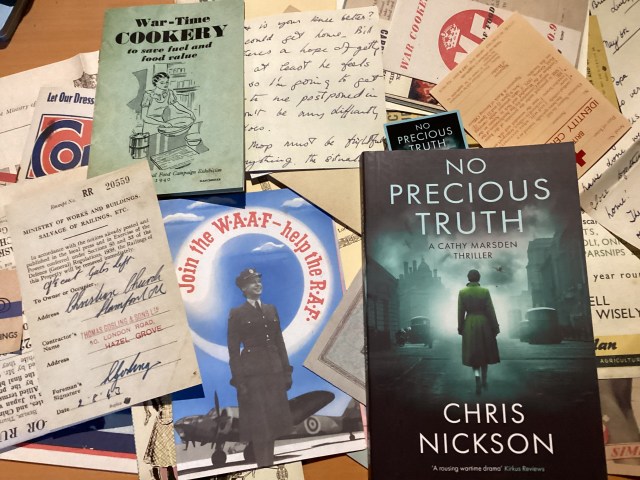
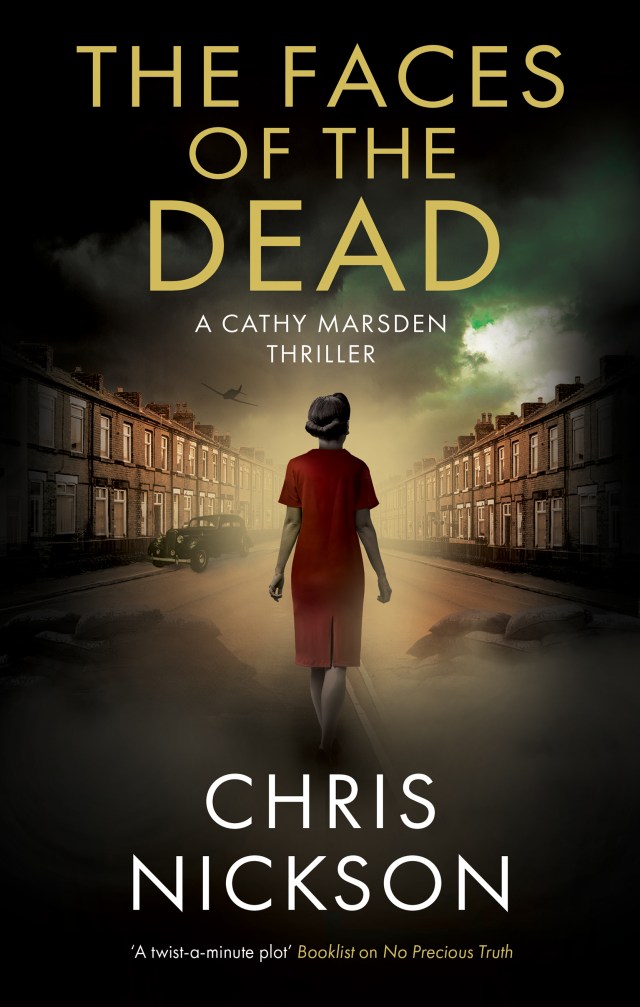
One other thing, please indulge me. The ebook of No Precious Truth received a boost and rose to around 1400 on the Kindle charts in the UK, 2300 in the US. I was gobsmacked. The sequel, The Faces Of The Dead, has been doing well, too. Now, No Precious Truth is just 99p for the ebook (99c US). if you don’t already have it, would you be willing to spend that tiny amount? Maybe get it near the Top 100? It was my birthday last month, so think of it as my present.
This really is turning into a serial, and I’ll be as interested as you to discover where it’s going. Elizabethan Leeds has its charms – but it seems to be a deadly place, filled with secrets for Gil Craven and the watch to uncover.
Id you missed the first two parts, don’t worry. Part one is here, and the second part here. Now relax and enjoy the story.
So many things I needed to do: start the hunt for Tenche’s killer, find Richard, write to Walsingham’s man in the West Riding. But the widow might be known something.
‘I’ll come with you,’ I decided. Sykes stared at me for a moment, his distaste showing, before he nodded.
‘If you must, Craven.’
3
‘Madam,’ Sykes said as he entered the hall of the house on Briggate. He swept off his cap and bowed; I did the same.
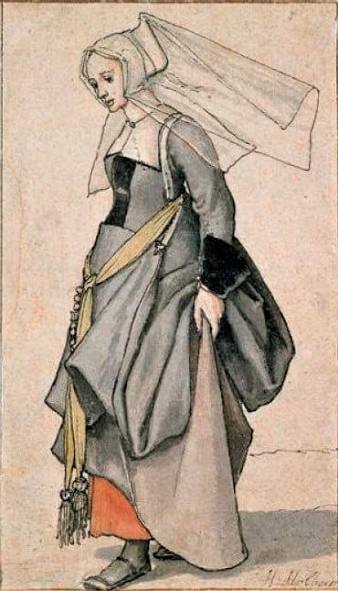
Mary Tenche knew. She’d been crying, eyes rimmed with red, a good lawn handkerchief clutched in one fist. She was dressed for home, hair covered with a starched white coif, a plain gown and kirtle, slippers on her feet. She was a small woman, in her late thirties, with dark hair and smoky eyes, the mistress of a handsome home. A fire burned in the hearth, the chimney drawing well. A pair of painted hangings added colour to the walls. Glazed windows overlooked the plot behind the building, a view over a stone building where the merchant warehoused his cloth, the small counting house behind, then the garden. The man might have been cloth searcher for his year, but he’d made a pretty penny before all that.
‘My condolences, madam,’ I said and she dipped her head in acknowledgement. I’d heard the rumours, that it hadn’t been a loving marriage. Doubtless Sykes knew the same thing; he wouldn’t have been here otherwise, with an eye on his chances.
Three children alive, the elder boy apprenticed to a merchant in Antwerp, learning the other end of the business. The second was starting to learn the trade with John Faulkner, down at his dye works on the river. Jane, the girl, was ten, already betrothed to Henry Atkinson, a merchant’s son, aged just twelve. A few years yet before the ceremony.
‘Was your husband at home last night?’ I asked. Sykes glared at me. He wanted her to himself, a chance to press his suit and its advantages while she was at her weakest.
‘No,’ she answered. Her voice was low and husky. ‘He said he had to meet someone.’ She raised her gaze to stare at me. ‘When I woke this morning, he wasn’t here.’
‘Did you mention it to anyone?’
She shook her head. ‘It wasn’t the first time.’
‘Who was he meeting, madam?’
‘He didn’t tell me. He never discussed his business at home.’
Talk was that Tenche had a lover; it would be easy enough to discover her name. The servants likely knew it. They saw more than their betters imagined. I’d inquire of them in a few minutes, away from Skyes.
‘I’m sorry to have to ask questions at this time, madam,’ I said. ‘Was he having any problems with his work?’
‘Nothing he mentioned.’
One final thing. ‘Did he know Richard Harding?’
‘Who?’
It was the answer I’d expected.
‘No matter, madam. Thank you.’
Skyes gave a grim, satisfied smile as I bowed and left.
The servants had gathered in the buttery, the oldest part of the house where they kept the ale and wine. A fine place for gossip, although the chatter dropped to nothing as soon as they saw me.
‘Mistresses-’ I began, but Elizabeth Carr, the maid, cut me off.
‘Here about the master, Gil Craven?’ She was an older woman with a harsh tongue she curbed around the Tenches. A gown that had probably once belonged to Mrs Tenche, worn now, the colours faded, covered with an apron that cover her from neck to feet.
‘I am.’
‘Murder. That’s what people are saying.’
‘It’s true enough,’ I admitted.
‘Terrible.’ She shook her head, although curiosity gleamed in her eye. ‘How did it happen?’
I countered with a question of my own.
‘He went out last night. Mrs Tenche says he didn’t return. Do you know where he was?’
The cook, Hannah Oliver, gave Sarah, the younger maid, a quick warning look before she could speak.
‘You know,’ I said. ‘Tell me, I’ll find out sooner or later.’ I pressed my lips together. ‘I’m looking for his murderer.’
‘Catherine Warden,’ Sarah spoke the name in a rush before the others could stop her.
A widow. A woman of middling wealth, left enough money not to need to pinch her pennies. She’d shown no inclination to marry, content with the freedom her status brought. Tenche had been her lover. He’d kept it quiet from the town. But of course his servants knew.
‘How long?’ I asked. But they looked away. Sarah’s cheeks were a broad, blushing red. I’d get little more from them out of loyalty to their mistress. No matter. I had a thread I could twitch. ‘God’s blessings on you,’ I said as I left.
The curious had gone from the house of pleas. The curate and churchwardens had left to finish beating the parish bounds. The members of the Waits had stayed, sipping small beer, wondering what to do and looking to me for guidance as I came through the door.
Thomas Dawson’s face was still pale; the first body he’d really seen. Rolly raised his eyebrows, a man who’d experienced more than most of us, one who’d served time in the navy under John Hawkins, a crewman on the commander’s second slaving voyage from Africa to the New World. He’d come home to Leeds with money in his pocket, never speaking about his experience, spending fast and wide and drinking like a man whose desire was to forget.
‘Tom, I want you to stand guard here. I imagine the undertaker will arrive this afternoon. The widow will inform him.’
A reluctant nod as he sat on a bench, turning away from the corpse.
‘What about me?’ Rolly asked.
‘Talk to the people in the cloth warehouses,’ I told him after a moment. ‘See if they know whether Tenche had any business problems. Come and find me later.’
‘Right.’ Before he could stand, the door opened wide and Richard Harding strode in, a tall, sallow man, hair drawing back on his scalp and a frightened look on his face/
‘Where the devil have you been?’ I asked.
Thefourth part will arrive in a week or two – if you want it. Meanwhile, both the Cathy Marsden WWII novels, No Precious Truth andThe Faces Of The Dead are currently £1.99 on Kindle – the first is just 99p (free with Kindle Unlimited). That’s two books for around the price of a coffee. You’re not likely to find a better bargain this week. I truly hope you’ll but them – because they’re good. I sweated blood and tears over those books!
A number of you seemed to like the first part of Rogation Day, which I posted last week (if you missed it, catch up here). Here’s the second installment, and it appears to be turning into a serial. That’s both good and bad. I nered to keep it going and make sure there’s enough to keep you interested. But I’m also getting caught up in the tell of it and what might happen. No, honestly, I don’t know; I’m truly making it up as I go. But Elizabethan Leeds is a new era for me, so we’ll discover it together, shall we?
Meanwhile, on with Part 2…
‘Where should we take him, Gil?’ I was the inspector of the night watch; the decision and the investigation was mine.
I thought for a moment. ‘The house of pleas,’ I said. Plenty of room to gather the witnesses and hear testimony and have a proper view of the corpse. ‘Everyone there and wait.’
They made their way in twos and threes, reluctant to be a part of this. But this was murder, plain to everyone with eyes in their face.
My mind was galloping. Men ended up in brawls, wounded in pain. That usually came after drinking. Straightforward crimes. This was going to be much harder.
I strode out ahead of the others, back into Leeds along Mabgate, banging on Richard’s door once again before going in. I knew I’d find nothing, but I had to check.
Tenche dead, Richard missing. I didn’t know of any connection between them, but there had to be something; I’d never believed in coincidence.
2
The body was laid out along the table and stripped, just a sheet for modesty. I’d sent for the coroner, Mr Bateson, to come and examine it, offer his judgement, and given a boy a farthing to gather the aldermen. I could hear voices outside as a crowd gathered, drawn by the horror of the news.
‘He was stabbed.’ Bateson’s words filled the expectant silence in the room. He was the apothecary, the only man in Leeds with any knowledge of medicine. ‘There, under his ribs.’ The man pointed it out for everyone to see before turning to me. ‘My fee?’
God’s love. A lost life in front of him and all he could consider was a few pennies.
‘Send your bill,’ I told him. ‘You’ll be paid.’
As soon as he’d gone, I raised my voice. ‘Any doubt this was murder?’ Nobody dissented.
We needed to find the killer, and the reason. Tenche’s Catholicism, or his position as cloth searcher? Where was Richard? With each passing moment, my doubts grew.
Richard had never been in a fight, as peaceable a man as they came. A fine musician and a good carpenter; he’d completed his apprenticeship, never an argument with his master, and solid in his work. Our wives died within a year of each other, his Bertha in her childbed after a stillborn baby, my Lizzie taken by the sleeping sickness. Neither of us had remarried. We’d never discussed it, but I suspect our reasons were the same: we couldn’t face heartbreak again. Both of us were find alone, meeting two or three evenings a week to practice with the Waits or play for dances. A few drinks afterwards.
Not a violent bone in his body. What had happened to him?
I noticed Alderman Sykes stood at the back of the hall, looking quizzically down at the floorboards, hat in his hand, the plumes fluttering as they caught the small breeze from the open window. He was well-dressed as ever, a black doublet, sleeves artfully slashed to display the blood red material beneath. Black hose and buckled shoes, a small white ruff around his neck. The starched pleats neatly ironed.
I pulled off my cap as I approached him, bowing my head for a moment.
‘Good morrow to you, master.’
‘Hardly that with Tenche dead,’ he said.
‘It’s murder.’
‘I see.’
‘We’ll need to tell his wife,’ I said.
‘I imagine she already knows,’ he replied. ‘Don’t you think the whole town will have heard by now, Gil Craven?’
‘Mrs Tenche might have information to guide us, sir.’
‘Possibly,’ he agreed after a few seconds’ consideration. ‘She’ll need to arrange the burial.’
‘You knew him well, didn’t you?’
‘I knew him,’ he said cautiously. ‘I wouldn’t say well.’
In a town like Leeds, every face was familiar. With a little over three thousand souls, each day you saw the same folk day after day. Friendships, though, were different. I’d often seen Sykes and Tenche in the alehouses, heads together as they talked.
‘Do you think it had to do with his position?’ Sykes asked.
‘I don’t know, sir. That’s why I need to ask questions.’
He nodded. Walter Tenche had been serving his year as cloth searcher. It was a position of honour among the merchants, voted by the others for his honesty and integrity. He examined the cloth offered for sale on Leeds Bridge on market days, every Tuesday and Saturday, making sure the quality of the worsted and northern dozens was high enough to be sold as Leeds cloth. We didn’t have guilds like York, so our merchants could sell more cheaply. The cloth searcher could refuse pieces and ensure the reputation of everything offered here was high. A dispute over that could well be a reason for murder.
Sykes was a merchant. He’d been born to it. His father had made money in the wool trade and Charles Sykes has seen business expand. He’d built a stone loom house behind his home on Briggate, three apprentices working for him. A wealthy man with a heavy purse dangling from his belt, next to the sharp dagger in its sheath.
He was very aware of his status in the town, but a good man for all that. Did he know about Tenche’s hidden Catholicism? Unless it was important, that was something I hoped to keep quiet; no need for it to taint him in death.
‘I’ll go and see his widow,’ Sykes said. I could see the calculation behind his eyes. He had three children, the oldest ten; his wife had died last year. Mrs Tenche had two young children of her own. Very soon she would need the protection and money of a husband.
The third part will arrive in a week or two – if you want it. Meanwhile, both the Cathy Marsden WWII novels, No Precious Truth andThe Faces Of The Dead are currently £1.99 on Kindle – the first is just 99p (free with Kindle Unlimited). That’s two books for around the price of a coffee. You’re not likely to find a better bargain this week. I truly hope you’ll but them – because they’re good. I sweated blood and tears over those books!
Something poossibly a little new, heading back to Tudor times (a first for me)
Leeds, April 1578
People disappear. One minute they could be standing there, and you turn away to do something. When you look back, they’ve vanished. No sign, not a trace. The gospels don’t say it can happen, but so many of us know it to be true. Not an illness that can kill a man in a moment, but alchemy. Witchcraft, mayhaps.
I’d called for Richard Harding that morning. Knocked on his door, no reply. Slipped the latch and entered, calling his name. The night before we’d been drinking at the alehouse on Timble Bridge, and I’d watched him away to his bed.
And now…his bed was neat, the table clear and cleaned. His pipe and tabor sat by the hearth, ready for this morning. The leather bag, tools for his carpenter’s trade, by the bed. No hint of Richard. Chamber pot empty, no sign of him in the garden at the back. As if he’d never come home last night.
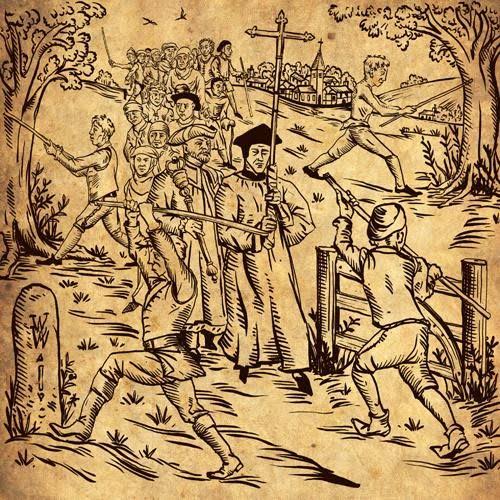
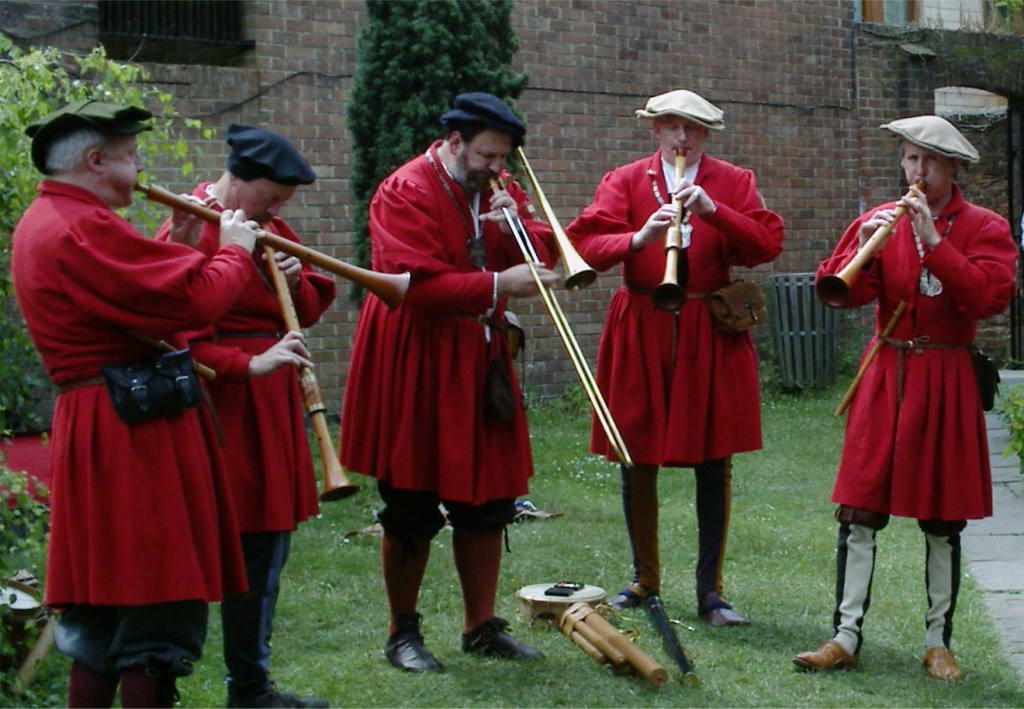
We were both members of the Town Waits, the musicians who entertained at every occasion, with the silver badges to wear on our coats. Today, Rogation Wednesday, we were to play for the beating of the parish bounds. We did it every year on this day, a tradition that went back beyond our grandfathers and their grandfathers to…who knew when?
I bellowed his name again. The room answered me with silence. One minute here, another…nowhere to be seen. I hunted through the small house, not that there was anywhere to hide. Out into the garden but he wasn’t there.
Gone.
The Parish Church at the bottom of Kirkgate was starting to ring the hour. I had to leave. Richard was a steady soul, busy with work and taking pleasure in playing music. Not one for foolish tricks like this. I sighed, tucked my fiddle under my arm, closed the door and hurried off.
I could have happily kicked young Thomas Dawson down the hill. We were processing along the track, the next mark on the parish bounds no more than half a mile ahead of us, and he struck up a mournful air on the shawm. He’d probably just learned the tune, eager to try it out for people. But it was too slow to keep the people moving.
I glanced back over my shoulder. Rolly Grimshaw nodded, then raised the sackbut to his mouth, worked the slide and began to blow. Reluctantly, I tucked the fiddle under my chin and joined in. Only three of us from the Leeds Waits out here as we beat the parish bounds. The other four would join us tonight for the big ball out at Temple Newsam.
Rogation Day, and at least there was some warmth in the sun. It had been a pitiful start to spring, bad for the crops. You could see the slow growth in the fields. The weather had only improved in the last fortnight. A few half-garbled mutterers claimed it was God’s displeasure at Queen Bess from turning away from the old religion Queen Mary had brought back. I knew who they were. Let them talk; I had no time for idle tongues.
A broad blue ribbon was tied to the tree to mark it out as the parish edge. A good crowd this year followed us, almost forty people, the children dancing and jigging to the music, weaving in and out between their parents and the others.
Still no sign of Richard. That worried me. We’d been friends since we were children, both old enough to be widowed and aware of less time ahead of us than behind. We knew each other’s minds and hearts. He was a dependable man.
What had happened to him?
Women were pouring mugs from the cask of ale waiting for us. I was ready for something wet in my throat after all the walking. Finally the curate raised his hand and I nodded the others to a halt at the end of the phrase.
No vicar this year. He’d twisted his ankle and was sitting at home, being waited on by his servant. Instead, it was Curate Gill conducting the prayer and greedily looking over the field to imagine the church’s tithe at harvest time. A young man, barely old enough to need a shave, but this was his second year in Leeds. Affable enough, even if he was ambitious to wear a bishop’s mitre one day. It would never happen; the family didn’t know the right people.
As he spoke, I ducked away, pulling my tankard out of my jerkin before sinking it in the cask. Good ale, Widow Wharton’s brew by its taste, a few herbs in there to give it a kick. And very welcome. We’d kicked up enough dust as we walked to leave me parched. Finished, I flung out the dregs and put it back in the jerkin. No doublets for the likes of us, no fancy gowns on top. Good leather kept you warmer, with the silver badge of the owls and fleece all the uniform we needed. I cocked an ear. The prayer had become a sermon. Ample time to rosin up my bow.
The fiddle had belonged to my father. A better musician than me with an ear for anything. Listen once and he was note-perfect on the tune. I apprenticed with him for a year, then with Geoffrey Farrar in Ripon before coming back to Leeds and taking my father’s place leading the Waits when he died. I’d never play as well as him, but I had a good mind for creating melodies that people would remember. To make them cry or make them dance. Something for every occasion. Even out here.
This was my thirtieth year of beating the parish bounds. No one knew exactly how the ceremony began, or how long ago. Still, it was good for the children to learn where they lived. For the rest of is, it was a chance to see how the land had changed. Not that it did. Arable fields around and the sheep enjoying the grass higher up the hill.
Curate Gill was still talking, so I wandered away. I had the faint memory of a stream on the far side of a hawthorn hedge further down the slope. It ran down to Lady Beck, little more than a trickle, but a good place to piss. The bushes were there, exactly where I recalled. But something must have dammed the stream. The water had pooled, dirty and thick, all the ground around it like a bog.
Strange. I tucked the violin under my arm and picked my way along the slope. Something was blocking the stream., no doubt about that. I could see it, a dark, sodden mound. A yard or two closer and I knew what it was.
Something wrapped in a pack sheet used for woollen cloth.
‘Down here.’ I tried to call out the words, but they came in a croak. A deep breath and I tried again. Then a third time, loud enough to draw attention. Soon they were all scrambling down the hill, every one of them with showers of questions that halted as soon as they saw it. Rolly drew his knife and sliced through the heavy sheet..
The body was face down, hair and clothes stained with mud. Yesterday it had rained; the stream would have gathered around him.
It was Rolly who squatted by the corpse and turned it over. A gasp from some. Shrieks from others. We all knew him. Walter Tenche, the cloth searcher.
Suddenly they were all talking: where they’d seen him last, when it was who had he been with, anything and everything.
‘Wait,’ I shouted. The curate stood, mumbling a prayer, looking lost and frightened by death. ‘We need an inquest and to raise the hue and cry.’ I glanced around their faces. ‘All of you are the jury. The best thing is to take him back to town. Peter, Robert, can you make a hurdle and carry him?’
They were shepherds, cutting and bending willow for jobs was something they knew well. A nod and they were on their way.
The Waits also served as the night watch, for whatever crime there was in a small place like Leeds. Drunkenness, mostly. A fight. Adulterated bread, which saw the baker in the stocks. Two murders in my three decades doing this. A man killing his neighbour, and the other never solved. Person or persons unknown.
We’d need to examine Tenche before declaring anything. But bound inside a sheet and hidden like this, what could it be but murder? What I knew and the others didn’t was that Tenche still clung to his Catholic faith, keeping his worship secret. Always a danger in these times.
I knew because I was Secretary Walsingham’s man in Leeds, a spy here for the queen, reporting on recusants and strangers who arrived. In a country with so many vagrants on the road, any man could be a problem.
Please, let me know what you think, whether it’s worth penning any more of this in idle moments.
Meanwhile, both the Cathy Marsden WWII novels, No Precious Truth and The Faces Of The Dead are currently £1.99 on Kibdle (free with Kindle Unlimited). That’s two books for around the price of a coffee. You’re not likely to find a better bargain this week. I truly hope you’ll but them – because they’re good. I sweated blood and tears over those books!
After a fashion, that’s true. I hope you raised a glass and cut some cake to wish it happy birthday.
Really, though, the place is a lot older than that. It might well be the Loidis mentioned by the Venerable Bede in his eighth century Ecclesiastical History of the English People, and was beyond doubt the Leodis where the Normans built a stockade and planted a garrison of troops (where Mill Hill now stands)
It’s the town where Maurice Peynel, the lord of the manor, created our best-known street, Briggate, in 1208 as a way to raise money.
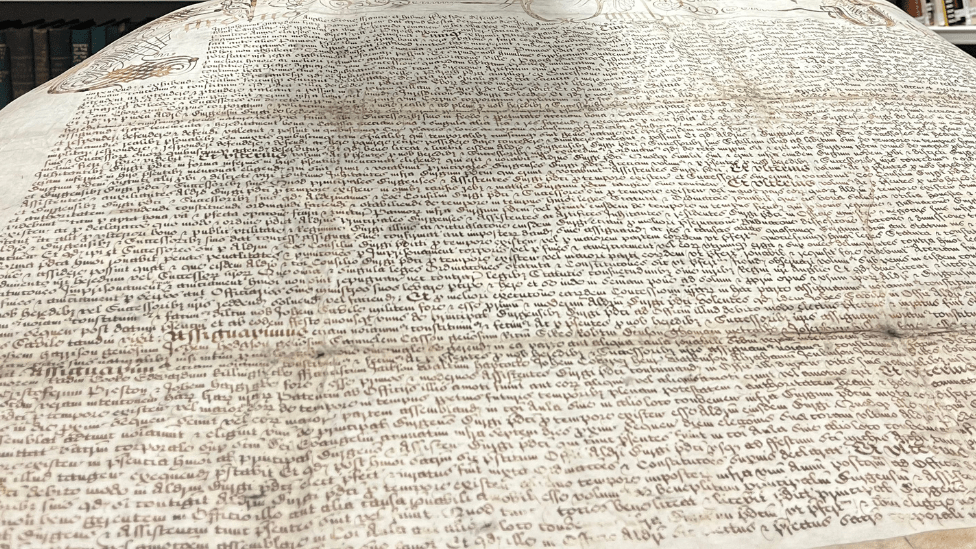
It’s all of those things. But it’s 400 years since Leeds was granted its first charter by Charles I in 1626.
What did that mean? Governance. Until then, Leeds had been a small market town, like many others across the country. The charter transformed it into a self-governing borough with a council run an alderman, burgesses and councillors.
Not everybody praised the idea; many small traders opposed it, as it concentrated power in the council. However, Sir John Savile persuaded the powers in London to grant the charter (he also became the first alderman). The charter covered all 21,000 acres of the parish of St Peter (the Parish Church), allowing it to levy fines, acquire property, make bye-laws and hold courts, things we now take for granted.
However…being Leeds the tale couldn’t be straightforward
Sometime early in the Civil War, which began in 1642, the copy of the charter in Leeds disappeared; it’s never been found. In 1646 a replacement was requested and delivered. You can view the entire charter here. It’s written in legal Latin, but there is a translation.
But that’s not the close of the story…there’s another twist to come.
That copy vanished, too, to be purchased by a bookseller in Kent who promptly lost in behind a bookcase. When he found it again, in 1950, he decided the piece of vellum would make an attractive lampshade. Until he had an expert look at it and discovered exactly what he had.
Leeds Corporation offered him £10 10s (£10.50) for it, but the bookseller donated it to the city – Leeds was granted city status by Queen Victoria in 1893 – and it now sits in West Yorkshire Archives alongside the second charter granted to Leeds by Charles II in 1661, after he ascended to the throne following the Interregnum.
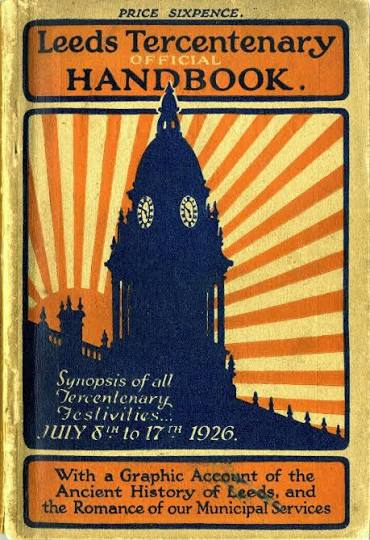
Leeds is celebrating these 400 years, as well it might. The 300 year anniversary was a big affair, with displays in Roundhay Park and more, even a book to serve as a commemoration.
This year includes all manner of events and I’m proud to be a part of it, giving a talk at 1pm on Wednesday, September 23, at Leeds Central library on Alice Mann. I’ve written about here before – you can read it here. It’s a free event; I hope you can come.
Anyway, a week later, but happy birthday Leeds.
While it’s not the chater, you can read a little slice of Leeds historcial fiction set in 1944 with The Faces Of The Dead, the second cathy Marsden book. It’s just £1.99 on Kindle (cheap in the US, too), as is it predecessor.
Recently, the Leeds Library (the oldest private subscription library in the UK) asked its members to name their favourite books as part of the citywide celebration of 400 years since Leeds was granted its first royal charter. Not just books by Leeds authors, but all writers. It was then tallied by author.
The whole thing had bypassed me until a friend emailed to say I was in the top ten.
What????
But there I am,, joint eighth with Alan Bennett and John Le Carre, ahead of Leeds Child, Agatha Christie and – hard to believe – Jane Austen. Colour me beaming and gobsmacked.
Whoever voted for my books, thank you. I’m very grateful and proud.
It’s going to be several months before my next one is published. In the meantime, if you want a flavour of what I do, why not try The Faces Of The Dead and No Precious Truth. Leeds in World War II, with a surprising woman from the Gipton estate as the lead. Oh, they’re £1.99 each on Kindle, free on Kindle Unlimited. Cheap in the US, too.
When RJ Verity contacted me, I was gratified to discover someone else writing about the Leeds of 80 years ago. Her take is very different to mine – no crime. Instead, her novel, Poole of Light, revolves around the cinema of the 1930s and 40s, one my father knew well, as manager of the Shaftesbury and the ABC for a few years after WWII.
She proposed a guest blog post, and I readily agreed. She’s written a good book, and her world dovetails well with Cathy Marsden. Maybe she met some of those characters – who can tell?
The Cinema Manager’s Granddaughter
Guest post by RJ Verity, author of Poole of Light
When Chris Nickson and I first made contact, we quickly discovered we were circling some of the same territory – not just the Leeds of the 1930s and 40s, but something more specific. His father had managed cinemas in the city. My grandfather had too: the Pictodrome and the Palace Picture Hall (shown below), both in Armley.
It is, as Chris put it, a small world.
My own connection is not incidental to my novel. It is, in many ways, the reason my novel exists. My grandfather had chauffeured for a large household in Leeds before becoming a cinema manager. My grandmother worked as a housekeeper in the same house. My father was a teenage projectionist and – through ability and the particular luck of timing – won a grammar school place at Roundhay before training as a doctor. One generation to the next, each one a little further from where it had started.
What struck me was how much depended not on privilege or connection, but on small chances seized at the right moment.
That fragility is at the heart of my debut novel, Poole of Light. The book starts in 1913, in a mining town in County Durham. My protagonist, Jem Poole, is ten years old – he has no money and no obvious future except working down the pit. One day he steals a glimpse through a curtain and sees a moving picture for the first time, and that moment of wonder brings him to the heart of the British cinema industry.
Leeds becomes central to his story. It is where he moves to as a boy, builds his life, and where tensions between ambition and identity play out across the decades. I came to Leeds not as a Loiner – I grew up in nearby Wakefield – but as a little girl who visited her grandparents in Roundhay often enough to know its streets. I understood later that those streets had shaped the people who shaped me.
The cinemas mattered. Not just as places of entertainment, but as institutions with a particular role in working-class life. They were warm and inviting during dark winter evenings. They offered glamour to people whose daily lives offered very little. A cinema manager in Armley in the 30s and 40s was not a grand figure – but he was a custodian of something that genuinely mattered to his community.
I find that writing historical fiction has a circular effect on my life. I know something about my past – stories half-told at family dinners – and am drawn to it. Then I research, I create characters, and somehow those characters reveal something more about my own history. And since releasing Poole of Light last September, I’ve been overwhelmed by the people who have reached out – wanting to talk about their own memories of Leeds, and what it meant to them.
Perhaps that is what historical fiction does best – it gives people permission to remember. Chris and I write about Leeds from different angles, but we are both, in our own way, still holding something of it. When I discovered that cinemas ran in both our families, it felt less like a coincidence and more like a confirmation that the past has a way of finding the people who are looking for it.
Poole of Light is available on Amazon now. You can buy it here. Poole of Honour, the second novel in The Poole Legacy trilogy, publishes on 15 September 2026.
And, while we’re in the 1940s, the second Cathy Marsden book, The Faces Of The Dead, is just £1.99 on Kindle, or free if you have Kindle Unlimited.
There are plenty of significant dates in the history of Leeds. But you can mark the year when this truly started to become the place we know today. It arrived in 1711.
By then, Leeds was a force in the marketing of broadcloth. Clothiers brought what they’d made to town at the twice-weekly cloth markets (Tuesdays and Saturdays). What had begun in a small way had grown and grown to become very big business for Leeds, with up to £20,000 pounds changing hands at every market, which is over £5 million today, a staggering figure. The merchants were growing very rich.
Originally, the cloth (undyed, hence white cloth) was displayed on the parapets of Leeds Bridge, but by 1684 the market had grown too large for that and moved to Lower Briggate, with trestle tables set up on either side for the clothiers.
The wool merchants of Leeds were outliers. They apprenticed in the trade, often with partners in Holland or elsewhere in Europe. But unlike cities like York, there was no guild of wool merchants in Leeds. That could have meant cloth of low quality was sold at the market. However, to ensure the town had a reputation equal to anywhere in England, Leeds had a cloth searcher. A merchant would serve for a year in the post, examining every piece of cloth sold to ensure it met the high local standards. It was certainly operating during Elizabethan times, indicating that the business was already important then.
The market followed a rigid format. The ringing of a bell at 7am would start trading, and another bell would end it at 9am. For the sake of secrecy, transactions were made in whispers. As the cloth market closed, the trestles were moved for the regular market, and the clothiers would deliver their cloth to the merchants’ warehouses, which before the 1600s were probably behind their houses and places of business, many on Briggate. Later, warehouses would be built alone the calls, by the river
Everything seemed to be flourishing. But something dark was lurking under the golden surface.
Competition.
Leeds was only one of several towns with cloth markets, all of them battling to take more and more business. The biggest rival was Wakefield, and Leeds merchants would travel there to buy cloth (and vice versa). Wakefield was more centrally located for clothiers and when they opened a covered cloth hall in 1710, a site that was protected from the weather, it sent a wave of panic through the merchants and the corporation in Leeds at the prospect of being overtaken by the town’s near neighbour.
One of the prime movers for change in Leeds was Ralph Thoresby, know these days as the first and greatest Leeds historian. But before completely applying himself to the past, he’d apprenticed as a wool merchant and invested in a failed rapeseed mill in Sheepscar (where he lost a great deal of money).
Thoresby knew all the great and the good in Yorkshire. One of them was Lord Irwin of Temple Newsam, a man of wealth and property, some of it in Leeds. Thoresby persuaded him to donate a plot of land on Kirkgate that has supposedly been almshouses. Leeds now had a site for its rival cloth hall, and once the merchants put together £1000, they had the money to build it.
Of course, it needed to offer more than Wakefield, and it was carefully designed with lockers for clothiers to keep their cloth, and easy access through what were then tenter fields (where the Corn Exchange stand today) to the warehouses along the Calls and the river for shipping. According to Thoresby, the Hall was “built upon Pillars and Arches in the form of an Exchange, with a Quadrangular Court within.”
It was a spectacular commercial addition to Leeds, and a real sign of the town’s ambition to be the leading market for cloth. But it was also a huge and expensive gamble. If it worked, the future for the merchants and the town could be beyond compare. Fail, and Leeds would become a second-rate wool town.
The opening of the White Cloth Hall came on May 29, 1711.
It proved a resounding success, soon leaving Wakefield in a very distant second place. In fact, there were too many traders to fit inside, and some were on Briggate, where writer Daniel Defoe found them on his tour of Britain the 1720s, describing a typical Leeds cloth market:
The street is a large, broad, fair, and well-built street, beginning, as I have said, at the bridge, and ascending gently to the north.
Early in the morning, there are tressels placed in two rows in the street, sometimes two rows on a side, but always one row at least; then there are boards laid cross those tressels, so that the boards lie like long counters on either side, from one end of the street to the other.
The clothiers come early in the morning with their cloth; and as few clothiers bring more than one piece, the market being so frequent, they go into the inns and publick-houses with it, and there set it down.
At seven a clock in the morning, the clothiers being supposed to be all come by that time, even in the winter, but the hour is varied as the seasons advance (in the summer earlier, in the depth of winter a little later) I take it, at a medium, and as it was when I was there, at six or seven, I say, the market bell rings; it would surprize a stranger to see in how few minutes, without hurry or noise, and not the least disorder, the whole market is fill’d; all the boards upon the tressels are covered with cloth, close to one another as the pieces can lie long ways by one another, and behind every piece of cloth, the clothier standing to sell it.
This indeed is not so difficult, when we consider that the whole quantity is brought into the market as soon as one piece, because as the clothiers stand ready in the inns and shops just behind, and that there is a clothier to every piece, they have no more to do, but, like a regiment drawn up in line, every one takes up his piece, and has about five steps to march to lay it upon the first row of boards, and perhaps ten to the second row; so that upon the market bell ringing, in half a quarter of an hour the whole market is fill’d, the rows of boards cover’d, and the clothiers stand ready.
As soon as the bell has done ringing, the merchants and factors, and buyers of all sorts, come down, and coming along the spaces between the rows of boards, they walk up the rows, and down as their occasions direct. Some of them have their foreign letters of orders, with patterns seal’d on them, in rows, in their hands; and with those they match colours, holding them to the cloths as they think they agree to; when they see any cloths to their colours, or that suit their occasions, they reach over to the clothier and whisper, and in the fewest words imaginable the price is stated; one asks, the other bids; and ’tis agree, or not agree, in a moment.
The merchants and buyers generally walk down and up twice on each side of the rows, and in little more than an hour all the business is done; in less than half an hour you will perceive the cloths begin to move off, the clothier taking it up upon his shoulder to carry it to the merchant’s house; and by half an hour after eight a clock the market bell rings again; immediately the buyers disappear, the cloth is all sold, or if here and there a piece happens not to be bought, ’tis carried back into the inn, and, in a quarter of an hour, there is not a piece of cloth to be seen in the market.
Thus, you see, ten or twenty thousand pounds value in cloth, and sometimes much more, bought and sold in little more than an hour, and the laws of the market the most strictly observed as ever I saw done in any market in England; for,
Before the market bell rings, no man shews a piece of cloth, nor can the clothiers sell any but in open market.
After the market bell rings again, no body stays a moment in the market, but carries his cloth back if it be not sold.
And that which is most admirable is, ’tis all managed with the most profound silence, and you cannot hear a word spoken in the whole market, I mean, by the persons buying and selling; ’tis all done in whisper.
The reason of this silence, is chiefly because the clothiers stand so near to one another; and ’tis always reasonable that one should not know what another does, for that would be discovering their business, and exposing it to one another.
If a merchant has bidden a clothier a price, and he will not take it, he may go after him to his house, and tell him he has considered of it, and is willing to let him have it but they are not to make any new agreement for it, so as to remove the market from the street to the merchant’s house.
By nine a clock the boards are taken down, the tressels are removed, and the street cleared, so that you see no market or goods any more than if there had been nothing to do; and this is done twice a week. By this quick return the clothiers are constantly supplied with money, their workmen are duly paid, and a prodigious sum circulates thro’ the county every week.
One highlight for the clothiers who’d made the arduous journey from the out-townships and villages was the cheap meal they could obtain in the inns along Briggate, as Thoresby described in 1715: “the clothier may, together with his Pot of Ale, have a Noggin o’ Pottage, and a Trencher of either Boil’d or Roast Beef for two Pence.”
The wool trade made Leeds. In 1755 business had outgrown the White Cloth Hall and it was replaced by another, much larger, just south of the River Aire on Meadow Lane. 20 years after that, coloured or mixed cloth had its hall, close to what’s now City Square. In an indication as to how much trade had grown, this hall had room for over 1750 clothiers in two separate avenues, and a central courtyard capable of holding 20,000 people.
Around the same time, a third White Cloth Hall was built in the ground behind the first, a tiny part of which still remains.
The first White Cloth Hall fell into disrepair but was given an outstanding restoration that retained much of it character, along with original brickwork and wood trusses and beams; during the work, some of the wood was dated and found to have been felled in 1476 CE.
The gamble of 1711 paid incredible dividends, bringing wealth and fame to Leeds – the cloth was exported around the world, and Leeds became a byword for the wool trade. It all dates back to the 29th of May, 1711, when Leeds started to become the place we recognise today.
By the way – no Cloth Halls involved – but my most recent book, The Faces Of The Dead, has been out for less than three months, and I’d appreciare you buying it. Set in 1944, a tale of murder, the black market, and a woman police sergeant seconded to the Special Investigation Branch. Currently £1.99 on Kindle (cheap in the US, too). A warning though: you’ll be up late reading it.
Want some cheap books? Want to spend next to nothing for hours of reading? Well…
My publishers have put all my books in Kindle Unlimited. That means the ebooks can only be read or bought through Amazon, for Kindle (sorry, but that’s out of my hands). However, if you subscribe to Kindle Unlimited, they’re free. Or, if not, you can buy them, and I don’t believe any of them costs more than £2.99 (cheap in the US, too, where thney’re also on KU).
What does that mean? The two Cathy Marsden book, including The Faces Of The Dead, which only came out in April, are a bargain. Same with the eight Simon Westow books, all 11 Tom Harper novels, and seven Richard Nottingham books. That’s on top of another publisher offering the Dan Markham book and all four Chesterfield novels at a bargain price.
I’m not s\aying you should, but really, you should.
World building is a phrase you’ll often hear in regard to writing. Every author does it, no matter the genre. It’s not simply in fantasy or science fiction, but in all novels, even those set in today’s world. The characters, their relationships, families, where they live. Step by step, the words on the page flesh them out.
I certainly do it. But I’m attempting to also create an alternative history of Leeds.
What is that? It’s something built on the slenderest of reality. Let me explain…
My first series, set in the 1730s, featured a man named Richard Nottingham, the Constable of Leeds. That role would be more honorary than anything, taking part in pageantry while the night watch did the real policing. Richard was a real person, and the town’s constable then; there’s a reference to him parading up Briggate with the great and the good of Leeds. I made him into a proto copper, investigating crimes, living on Marsh Lane crossing Timble Beck each day to the gaol at the top of Kirkgate(the real Richard lived in Kirkgate, then Briggate.
He’s a man with a wife and family and a love-hate relationship with a criminal named Amos Worthy, whose house stood where Swinegate bends. Set in the 1820s, the Simon Westow novels feature a thief-taker, again in the era before a police force. He lives in a house on Swinegate, at the bend of the road, and his twin boys are called Richard and Amos, names he discovered on gravestones outside the Parish Church just before the babies were due to be baptised.
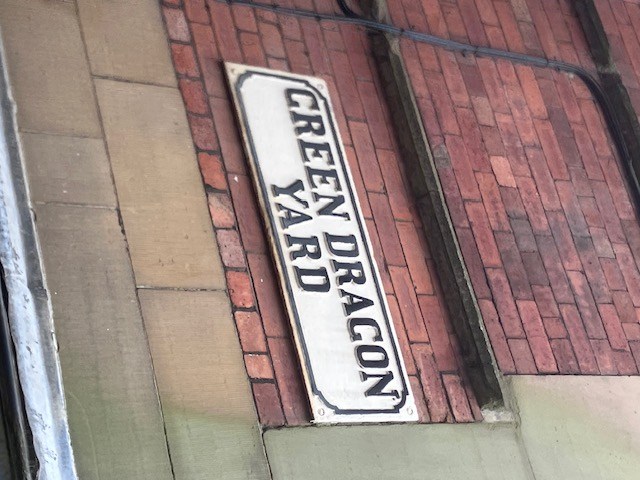
Next January you’ll be meeting Virginia Cooper and her husband Rob; he’s an Inspector of detectives with Leeds Police in 1862. A tip from a friendly lawyer named Amos Westow leads him to a house for rent at the back of Green Dragon Yard. The owner, Jane Truscott, who inherited it from her companion, Mrs Shields, is moving to live with a friend in the country. If you’ve read the Simon Westow books, you’ll certainly remember Jane, a very deadly young woman, older now. Her friend Sally, who also worked as a thief-taker, had long wanted to live on a farm…the thread stretches further. But it’s far from done. Rob Cooper is mentor to a young constable named Kendall, who shows plenty of promise.
By the time of Tom Harper, in the 1890s, Kendall is a superintendent, in charge of Millgarth police station, a position Harper will assume on his rise to chief constable. Tom and his wife Annabelle have a daughter named Mary, a suffragette who’s also a canny businesswoman, opening a typing agency and school on Albion Place.
Tom is commemorated at Millgarth, his picture framed on the wall. Woman Police Sergeant sees it when she’s there as part of the Special Investigation Branch in 1941
Eventually Mary Harper will become a Leeds city councillor, and as you’ll see in July 2027, she’ll use the services of Cathy after the war, when Cathy, no longer part of the police, runs an enquiry agency.
So far, that’s as far as the thread runs, from the 1730s to the 1940s, a little over 200 years. Leeds as it might have been. Or maybe as it really was and the rest of us are a dream. You decide.
Mentioning Cathy Marsden, you can buy the ebook version of the newst novel, The Faces Of The Dead, for 99p (99c in the US), while No Precious Truth is available for Kindle at the £1.99 or $3.99 in the US (free for Kindle Unlimited).