In 1833 the Factories Inquiry Commission investigated the employment of children and found some shocking things. But still years would pass before legislation would give kids a full childhood and the chance to learn and grow fully; their labour was too cheap for factory owners to give up easily.
One person who gave sworn testimony to the Commission was John Dawson from Leeds. This is a paraphrase of what he told them:
Yes sir, my name is John Dawson and I make my living as a tailor when I’m well enough to work. You can see, sir, that my eyesight is bad. That’s why I wear these glasses. If you ask me, it’s from the flax mills I worked in as a lad. There’s always a powerful lot of dust in the air and it does affect the eyes of some folk. I daresay as I’d be blind now if I still worked there.
I started in the mills when I was six, a doffer at Shaw and Tennant’s. The work wasn’t too hard, we had to take the full bobbins off the machines and put on empty ones. But the hours were long, six in the morning to seven at night, six days a week. I was lucky, my da was the overlooker in the room. He beat me, same way he beat the other doffers, but not too bad, not as hard as some. It was the standing all the time that was worst. Every day my knees ached.
I always wanted to learn to read and write. I went to Sunday school whenever I could, unless my ma wanted me at him with the younger bairns or I had no decent clothes or shoes. My da taught me to read, and I was middling good with the Testament.
My da left Tennant’s when I was ten, and I went with him to Garside’s Mill. They put me to work bobbin-hugging, and that was terrible hard work, sir. I had to carry around a basket full of bobbins, some of them still wet. The basket was on my bag, and big it was, held in place by a strap. I often had to carry full baskets up the stairs to the reelers. My knees were so bad that I had to stop after two or three years. You could see them, all bent, but we had no money for a doctor.
When my da and I left there we went to Clayton’s, and I was a doffer again. But the hours were bad. Sometimes five in the morning to half-past nine at night, with forty minutes for us dinner and nothing for breakfast or drinking. Wasn’t always six days, sometimes there was only enough for five or four, and we didn’t bring home enough money then. It was dangerous, too. I knew one lad whose clothes caught in an upright shaft and he closed, and there were other bad accidents I can recall, too. My da died after I’d been there a few years, and when my ma was taken ill we had to go into the workhouse. By then my knees were bent so bad I couldn’t walk more than thirty yards without a rest.
At the workhouse they taught me my trade, sir, made a tailor out of me. And I did see someone about my knees, Mr. Chorley at the infirmary. He gave me strengthening plasters and bandages and they did me some good. You can see it’s still difficult for me to walk, sir, and I need a stick to help me. But it’s better than it was, and for that I’m grateful.
Author: chrisnickson2
Why I Write (It Ain’t Pretty)
I write because I have no choice in the matter. The words are inside and they need to come out, sometimes in a rapid flow, sometimes like squeezing blood from a stone. I write every single day of the year. I don’t want a break from it; in fact, it feels wrong if I don’t write.
As I grow older, this compulsion, this obsession, grows stronger, and I come to define myself more and more as a writer. I’m one of the lucky ones, since a fair bit of what I finish these days gets published in one way or another, even if it’s no more than one of these blog pieces.
Writing is my gift and my curse. It’s also what I’ve dreamed of doing since I was 11 years old. At school we had to write an essay, to tell a story in three paragraphs. It was an exercise, of course, so show us how to use paragraphs for developing a thought. But after I’d finished my piece, it was as if a switch had clicked in me. That’s how it’s done!
Writing might be an art but it’s also a craft. I wrote plenty of unpublished novels, short stories that perhaps saw print somewhere or other but were mostly rejected. And rightly so, even if I was less certain at the time. The craft part has come from years of music journalism, where there isn’t the luxury of time to go through endless revisions, and you learn to pick the right word or phrase the first time. And good editors who pushed and prodded me.
But I’m not an artist. I’m an entertainer, someone who tries to take people out of their lives for a few hours and make them believe in somewhere else, some other time. There is no magic, perhaps, beyond sleight of hand. When a book is finished, people are back in themselves again. They might enjoy what they’ve read, but only a few books have the power to change people’s lives. I’m not sure I’d even want mine to be among them.
I’m just a person who sits down at the computer in the morning and writes down the movie playing in my head. If I’m lucky it’s because the film rarely breaks or fades to scratches and white noise. I’m still the 11-year-old understanding how this can work. And doing it because I have to.
November 1914
This is the third part of Jimmy Morgan’s story, to be updated month by month, until 1918, if Jimmy survives that long.
While you’re here, I’d be very grateful if you’d glance through the site and take a look at my books, too – right now all the Richard Nottingham ebooks are on sale. After all, writing is what I do (that was the ad segment).
If you’ve just arrived at this serial, the last part is here. The first part is here.
It had been a sombre Bonfire Night. No one had been in the mood, not with so many lads already away. There’d always been a big fire at the end of Jimmy’s street, boys out chumping for weeks before, stuffing straw into old clothes and begging for a farthing for the guy.
Not this time. Not when the country was at war. His mam had made parkin, Mrs. Wilson at number 36 had her special cinder toffee, but it was only the kids who were eating as the stood around the small blaze.
‘You’re eighteen tomorrow,’ Teddy Wilson said. He’d joined the month before, now he was just waiting for his notice to report.
‘Aye,’ Jimmy said. ‘I’ll be down at the depot first thing.’
Teddy glanced over at Jimmy’s parents.
‘Do they know yet?’
He didn’t answer. They must have guessed. In the last two months they’d been over it a dozen times. And from tomorrow they couldn’t stop him.
‘What about that lass you’re walking out with?’
Mary. They’d met on the second Sunday in October. The weather had been balmy, even some sun, and Jimmy had taken the tram out to Roundhay Park. They’d met in the queue for an ice cream and he’d ended up buying her a cup of tea. The next Sunday he took her to the pictures at the Hyde Park. She was a maid in one of the big houses past Headingley, but no side on her for all that. A cheeky smile and dark hair. She made him laugh, then more when she gave him a kiss.
‘I talked to her,’ Jimmy told him. ‘She’s dead proud.’
She wouldn’t be a maid much longer, she’d told him that. Soon enough they’d want women for war work, that was what she believed, and she’d be off like a shot. No more yes sir, no sir and working all hours for next to nothing. She was ambitious, was Mary, and she didn’t mind anyone knowing.
There was drizzle in the air the next morning. Jimmy washed and dressed, ready to be out of the house early. Sod work, he had something better planned. Serve the King and see a little glory while he could. If they were right he’d be home in the New Year, anyway. He’d just made a pot of tea and was scraping dripping over a slice of bread when his father came into the scullery.
‘Eighteen, then?’
‘That’s right,’ Jimmy answered.
‘Are you going to do it?’ his father asked.
‘I am.’
Terry Morgan gave a small nod.
‘I think you’re daft. But if you’re sure, cut me a piece of that loaf and I’ll come down with you.’
‘You won’t change my mind.’
‘I know that, lad,’ Terry said quietly. ‘It’s your right. But I’ll testify that you’re old enough. If I were them I’d not believe you otherwise.’
It was easily done, quick enough. In as Jimmy Morgan, out as Private Jimmy Morgan. They measured his height and his chest and gave him the nod.
‘Go home and back to work,’ the NCO told him. ‘We’ll send you a letter saying when and where to report.’ The man sounded bored, the words spoken too many times.
‘Yes, Corporal.’ Jimmy stood at attention, back straight. ‘Thank you, Corporal.’
‘Next,’ the man called, already looking down the line.
The Scarborough Taps was close by.
‘Fancy a drink?’ Terry asked. ‘Celebrate your birthday.’
‘Aye, all right,’ Jimmy said. He’d never had a drink with his father before. If they called him to fight soon, who knew when he would again?
By The Law – A New Richard Nottingham Story
It’s been a while since I sat down with Richard to hear about his life. It might have been longer if it hadn’t been for the Friends of Stank Hall Barn. They invited me out to take a look at the building they’re trying to renovated in Beeston. It’s a remarkable place, one of the oldest secular buildings in Leeds, dating from around 1450. While I was there, one of the members suggested it might be a good setting for a Richard Nottingham story. And it is, in part, at least.
Originally I’d planned to publish this as a standalone short story on Amazon. In the end, for many reasons, I decided against that. Instead, it’s here, for everyone, not just those with a Kindle or Kindle app. And it’s free. But I’d like to ask one thing. It’s your choice, but if you can, please donate a little money to the Friends of Stank Hall Barn. Your choice of how much, how little, or nothing. No names, no pack drill. You can read about the Bran, the work that’s going on, and give your money here. Whatever you do, here’s the story, and I hope you like Richard’s return…
And, of course, you can follow the links on the site here to buy the Richard Nottingham books (I’m told that Gods of Gold, the start of a series Victorian series, isn’t bad, either!).
One
Richard Nottingham stood close enough to the bonfire to feel its heat. It was comforting on bones that chilled too quickly these days. Something sparked, and a tangle of flares spiralled up into the darkness.
‘Did you see that?’ Mary asked, and he saw the wonder on her face, caught in the light. He squeezed his granddaughter’s hand lightly.
‘I did.’
Farther up Briggate, by the Headrow, there was another fire burning, one more on the far side of Leeds Bridge. Every year the same celebration of Gunpowder Treason Day. Remember, remember, the fifth of November…the rhyme caught in his mind.
The Town Waits had paraded up and down, playing their music with a raucous scrape of fiddle and bellow of horns. The members of the Corporation had followed, the mayor nodding grandly, the others looking embarrassed at being on display. He’d seen Tom Williamson, the merchant, marching among them and given a small wave. Then, close to the back, the Constable of Leeds, his son-in-law, Rob Lister, face grim as he took his place in the parade.
Men had been loud and full of ale, firing off their guns, the way they did at every holiday. But he could detect the fear behind it all, so strong he could almost smell it. Prince Charlie had gathered his army in Scotland and soon he’d be crossing the border to make his claim for the throne. When that happened, the gunfire would be in earnest.
Rob would have to fight. Everyone would. 1745 was a dangerous year to be alive.
‘Grandpapa?’ Mary asked, staring up at him. ‘What happens now?’
‘Now I take you both home,’ he said with a smile. ‘You should have been in your bed long ago. Where’s your brother?’
She pointed with a small, chubby fist at a boy running round the blaze with all the others.
‘Richard,’ he called. ‘Come on now.’
The lad stopped suddenly, a crestfallen expression on his face. He was eight, a wild mop of hair on his head that refused to be tamed by a comb, with his father’s rangy body and his mother’s soft features. His sister, three years younger, looked completely different. Every time Nottingham looked at her he saw Rose, the daughter who’d died so soon after she was married. She had the same gentle manner, but underneath it all the steel of her mother, Emily. A few more years, he felt sure, and the tussle of wills would begin.
Before they moved away down Kirkgate he glanced back towards the Moot Hall, only the white statue of Queen Anne visible in the firelight. Two horsemen were dismounting, people crowding around them, too far away to make out anything but heavily bundled shapes.
Richard kept running ahead then dashing back, making a game of it, the way he did with everything. But why not? He had all the joy in the world. Well-fed, a family to care for him. Let him enjoy it while he could.
Mary clung to his hand as he walked. He was leaning a little on the stick. Some days he needed it, others he felt as if it was more for show. But better to have it with him when his legs grew tired.
The Parish Church sounded the hour as they passed. Eight o’clock. As he breathed out he could see his breath bloom in the crisp air. He wished his own Mary could be with him, to walk at his side instead of lying in the graveyard, here to see her grandchildren grow and tumble and laugh and cry. The little girl named for her and the boy after him. At Timble Bridge he paused for a moment to stare down at the beck. The water seemed so loud in the silence all around.
‘What do you see, Grandpapa?’
‘Just memories,’ he told her softly and hoisted her in his arms so her face was next to his. ‘Do you see them?
He felt her nod, her hair tickling his face.
‘They makes me feel sleepy,’ she said, settling against him. ‘Can you carry me home?’
The door was open wide. The boy had run ahead, bursting into the house, full of words and excitement. By the time Nottingham arrived, still carrying Mary, he’d almost finished, taking a deep breath before the last sentence.
‘Then they lit the bonfires and everyone looked happy and we ran round and round. There were people firing guns and Papa looked very important when he went by.’
Emily smiled. The books for tomorrow’s lessons were open on the table. She still taught at the charity school she’d founded. Not as often these days; running it and raising money took time. Lucy, the girl who’d once been their servant, took most of the classes these days.
‘If you were just running, how did you get so dirty?’ she asked. ‘Go and wash before bed.’
Mary wriggled out of his arms and ran to her mother to be cuddled.
‘How was it?’ Emily asked him. She looked tired as she brushed a strand of hair off her face. But with all the work she did, the weariness seemed to have seeped into her skin.
‘The same as ever.’ He shrugged. ‘The children love it.’
‘Any news from the north?’
‘Not yet. But I saw two men riding in as we left. Maybe they know something.’
Rob and Emily had married shortly before Nottingham had retired as Constable of Leeds, eleven years before. The corporation demanded it, in order to give Lister the position; any other arrangement was sinful and abhorrent. Emily had never wanted marriage. To her, it seemed like putting chains on love. But in the end, practicality won over principle.
The house on Marsh Lane came with the job. Nottingham had been prepared to move out, to find lodgings somewhere and leave the place to them. But they’d insisted he stay, adding a room large enough for a bed, a chair and a cupboard. He needed no more than that.
He ate with them, then spent his evenings alone, thinking or walking. Sometimes he’d call at the White Swan for a mug or two of ale. But these days, when he strolled around Leeds, he saw too many ghosts. The people who should still be alive but weren’t. Mary for one, and John Sedgwick, his deputy, his shade still lanky and grinning as he loped around town.
‘You,’ Emily told her daughter as she tickled the girl under her arms, ‘I want you in bed.’
‘Yes, mama.’ She strode off into the kitchen. Charlotte, the servant who’d been with them since Lucy left to marry her young man, would look after her.
‘Do you think they’ll come, Papa?’ Emily asked. He didn’t need to ask who. It was all anyone had talked about since the summer. Unless General Wade and his troops managed to stop them, they’d come.
‘Let’s hope not,’ he said quietly, placed a hand on her shoulder, then went through to his room and settled in the chair.
He must have fallen into a doze. Someone was shaking him. He opened his eyes and saw Rob standing there, his face serious and grim.
‘They’ve crossed the border at Carlisle,’ he said.
Two
He was instantly awake and alert.
‘How long ago?’
‘Two days. Wesley rode in this evening with the word.’
‘The preacher?’ Nottingham asked. The last time he’d been here, two months before, a crowd had heckled and stoned him when he stood in front of them.
‘Yes. He’s staying in Leeds tonight then going south.’ Lister rubbed the back of his neck. ‘I’ve spent the last few hours with the magistrates, making plans. By the time I came out, town was deserted. Just a handful of children left by the fires.’
‘They’re scared.’
‘Can you blame them?’ Rob asked.
He’d grown into a lean man, but the ready smile he’d possessed when he was younger had never vanished. And he’d become a good constable, handling his men fairly, a just, responsible man, a fine husband and father. But this would test him. It would test them all.
‘What can I do to help?’
‘I do have something, boss.’ It was still the word he used, as if he took pleasure in saying it, although the days when Nottingham was constable were only wispy memories. ‘There’s someone I need to bring to the jail from Beeston tomorrow. I’m going to be busy until…’ He didn’t finish the sentence. No one knew yet how it might end.
‘You want me to collect him?’
‘I’d be grateful. I’ll make sure you’re paid.’
He didn’t need the money. There was a small pension from the job, enough for his wants.
‘Just tell me what you need.’
‘It’s a man called Ned Taylor. I had a murder three months ago, and two of the witnesses swear he did it. A farmer out there’s holding him. All you need to do is bring him back here. It’s nothing you didn’t do a hundred times when you were working. There’ll be a horse at the ostler for you.’ He unbuckled the sword from his belt and put it on the bed. ‘Take it. Better to be armed than not.’
‘Are you sure you want me for this?’
Lister grinned.
‘I think I can still trust you with the small jobs, boss.’ He gave a deep sigh. ‘I’m going to need all my men. God only knows what’s going to happen. Will you do it?’
‘Of course.’
Nottingham woke early, the way he’d done all his life. Still full night beyond the window, the first hushed songs from the birds outside in the trees. He’d dreamed he was young again, that there weren’t enough hours in the day for all he wanted to do, and that his love was new. Then he opened his eyes.
He dressed for the weather, the ancient greatcoat on top of everything else; these days it almost seemed too large for his body. In the kitchen Charlotte had the cooking fire lit and dough rising in the bowl. He took the heel of a loaf and a piece of cheese, winking at the girl, and stole out of the house before the children could come clattering downstairs with their endless questions.
He paused by the church, standing for a moment by the graves of his older daughter and his wife. They lay side by side, the grass long since grown over them. A few yards away, John Sedgwick. A small bunch of withered flowers was propped against the headstone; his widow, Elizabeth, must have visited a few weeks before.
At the top of Kirkgate he passed the jail. Lamps were burning inside, and he saw Rob’s silhouette as he bent over his desk.
Saturday morning, and down Briggate men were setting up the trestles for the cloth market. It was still two hours before the bell would ring, but they were already working steadily. The inns were open, the smells of roasting beef and ale floating out on the air.
Nottingham turned on to Swinegate, past the mill and into the ostler’s yard. A lad was shovelling dung, adding it to a pile against the wall. How many years since he’d been here, he wondered? Not since his retirement, that was certain.
But there was a gentle mare for him, and the stable boy adjusted the stirrups. He’d forgotten how strange it felt to be up so high, easing the animal into a walk along the road, through all the night soil tossed from the windows, then over Leeds Bridge, the river flowing dark and dangerous beneath.
He passed men on the road, on their way into Leeds, travelling in ones or twos and leading packhorses laden with cloth, the hope of a good price bright in their eyes.
There was no hurry, he decided as he turned and set out along the road to Dewsbury; he had all day. Dawn was just rising in the east, a band of blue glowing across the horizon. Clear skies and a chill in the air. But soon enough there’d been a pale November sun with its faint hint of warmth to last him through the day.
Out here, away from the town, it was all farms and fields. A few buildings and an inn at a crossroads. A man came out carrying a bucket and slopped the contents on the ground.
‘Stank Hall?’ Nottingham asked.
The man pointed along the road, eyes carefully assessing the stranger. There’d be much more of that soon, he thought. People would suspect anyone out on the road.
‘About two mile,’ he said after a few moments. ‘Off to your left, up a rise. You can’t miss it.’
‘Thank you.’ He smiled as he spoke. ‘How’s the ale?’
‘Good enough,’ the man conceded with a nod. ‘Brewed last Sunday.’
‘I’ll try a cup.’
He climbed down off the horse, tying the reins to a branch, then stretching. He’d covered little more than a mile, but his legs and back ached already. The only horse he’d known in the last few years was Shank’s pony. Nottingham smiled ruefully; after this, he’d be sore for days.
The landlord appeared with a mug and he took a drink. None too bad; there was some taste and bite to it.
‘Where are you from?’
‘Just Leeds.’
‘What are they saying there?’ the man asked, as if it was on the other side of the county.
‘The Scots have crossed at Carlisle.’
He saw the man’s eyes widen with fear.
‘Where are they now?’
‘They can’t have come too far. It only happened on Wednesday. And the Pennines should keep them away from us.’
‘Mebbe,’ the landlord answered warily. ‘And mebbe not. If they come we’re all dead.’
‘Then let’s hope they don’t,’ Nottingham said.
‘Where’s Wade and his army, anyway?’
‘I don’t know.’ He turned his head and gazed off to the northwest. Somewhere up there things were happening. People would be leaving, carrying what they could, making sure they were gone before the Young Pretender and his army arrived.
The man spat on the ground.
‘God help us all if he comes, friend.’
Nottingham drained the ale and wiped his mouth.
‘Indeed,’ he said as he remounted. ‘Look after yourself.’
He felt like the devil’s messenger, carrying bad tidings. Twice as he rode, men stopped him and asked for any news. He told them, seeing the way their faces darkened. No thanks, but that was no astonishment. Who could be grateful for words like those?
By the time he reached the small path up to Stank Hall, the sun was up, a fragile thing with no real heart. But better than a gale from the west. He reined in, stopping to gaze at the place. An old stone house built for the centuries, and next to it, in the low corner of a meadow, a barn of timber and limewash, slates missing from the roof.
Nottingham led the horse to a trough and let the animal drink as he gazed around. It was quiet out here. He’d become so used to the noise of Leeds, the voices, the carts and feet on the streets that the silence seemed as empty as the sky. Off in the distance a hawk circled, its wings spread wide, watching its prey before swooping down in a sudden dive to the ground. He followed it with his eyes, turning only as he heard a door open.
‘Who art thee?’ The woman stood with her arms folded and a knife in her fist.
‘Richard Nottingham.’ He took off his hat and gave a brief bow. ‘You have someone here to go back to Leeds.’
‘Tha’ll need to talk to mi husband first.’ She had a pinched face with hard, unforgiving eyes, half her teeth missing when she opened her mouth. Still, her clothes were clean, darned and mended often, and she wore heavy men’s boots over thick woollen hose.
‘Where is he?’
‘In t’fields.’ She put two fingers in her mouth and let out a piercing whistle. Two short blasts. ‘That’ll bring ‘im.’
‘Where’s the man I’ve come to collect?’
‘In t’barn.’ The woman gave a cruel smile. ‘Tha’s welcome to him, too. Let someone else feed him.’ She closed the door and he was alone again.
The doors to the barn were open wide, the ground outside heavy with mud and cow dung. Nottingham picked his way through the worst of it, trying to keep his balance, one foot sliding into a puddle.
Inside, it was dark. He stood, letting his gaze adjust to the gloom. An earth floor, scattered with straw. Plinths for the thick tree trunks that held up the roof. Paths of grey flagstones leading here and there. But he couldn’t see a man.
Finally he heard it. A small groan coming from the far corner. He strode across the room. There, hidden in the shadows behind a pale of hay, he saw him.
He was lying on the ground. The flesh all over his face was raw, his hair thick and matted. All he had was a shirt and a pair of filthy, torn breeches. No stockings or boots, no coat. His arms and calves covered with heavy bruises.
The man’s wrist were bound with rope that had cut through his flesh. A chain had been wound around his waist and fastened to one of the supports.
‘Are you Ned?’ The man stared fearfully, trying to push himself away. But there was nowhere to go once he backed up against the stones of the wall. ‘There’s no need to be scared,’ he continued softly. ‘I’m Richard Nottingham. I’ve come to take you away from here.’
He glanced around. Three yards away stood a jug. It was a taunt, just too far for Taylor to stretch. Nottingham knelt, feeling the ache in his legs, and picked it up. He sniffed the liquid. Brackish water. But it was all there was and better than nothing
‘Have a drink of this.’ He tipped a little into the man’s mouth. Only a few drops at first, barely enough to moisten his lips. Then a little more as Taylor gulped at the water gratefully. Somewhere beneath the grime he had a young face. Twenty or less at a guess. Not old enough to remember Nottingham as constable.
What in the name of God had happened here?
‘You’re Ned?’ he asked again. ‘Ned Taylor?’
The man gave a wary nod. Then his gaze moved to the side and Nottingham saw his fists clench.
He turned to see a man standing in the doorway. Slowly, he pushed himself up.
‘Thee from Leeds?’ the man asked.
‘That’s right. I’ve come to take him back.’
‘About time, an’ all.’ He took a ring of keys from the pocket of his coat.
‘What have you done to him?’
The man shrugged.
‘He tried to steal two of my chickens about a week back. Caught him and put him in here.’
Nottingham came closer. The farmer was a squat man, arms and chest heavily muscled from years of work.
‘How did you find out anyone was looking for him?’
The man gave a dark smile and shrugged
‘Nowt difficult about making a man talk if you do it right. I told them in Beeston he were here. I suppose they sent word to thee.’
‘I suppose they did.’ He glanced down at Taylor. The man was cowering, trying to make himself small. His bruises were fresh, the dark colours bright. ‘You caught him a week ago?’
‘Close enough. Don’t keep close track of the days out here.’
‘Someone’s beaten him more recently than that.’
‘My lads like a little sport when they finish work. Makes a change from taking the dogs out to course hares. Trying to thieve from us, he had it coming.’
‘Where are your sons now?’
‘Off hunting. Not much to do this time of year. They might as well find some meat for the table afore we have to kill the pigs.’
‘How was Taylor dressed when you found him?’ Nottingham asked.
‘Way thee sees him.’
‘Really? I don’t believe you.’ He put his hand on the hilt of the sword and stared at the farmer. ‘I’ll ask you again: how was he dressed?’
He saw the man’s gaze slide down to his boots for a moment. They weren’t new, but they were solid enough. The stockings were worn, but they were wool; they’d help a man on the road.
‘Tha can have him as tha finds him.’
‘No,’ Nottingham told him. ‘I’ll have him as he arrived.’
‘Tha reckon, dost tha?’ The farmer chuckled.
He didn’t bother to answer. He began to pull the sword from its scabbard, drawing it halfway out before the man held up his hands.
‘He’s the bloody thief, not me.’ But he bent and unlaced the boots, then removed the socks, standing barefoot on the dirt floor.
‘Unlock him,’ Nottingham ordered.
The key scraped as it turned, then the chains fell away from Taylor.
‘Thee can have ‘im, for all the good it’ll do you,’ the man said. ‘But I’ll give tha fair warning. Tha’d best be gone before my lads come back, and don’t show thisen around here again.’
He strode away.
‘Hold your hands out,’ Nottingham said, and sawed at the bonds around Taylor’s wrists with his knife. As the rope fell away he could see the wounds, already festering, scabbed flesh meeting blood and pus. Taylor flexed his fingers and winced. ‘Have another drink and put on your boots. Then we’ll get you back to Leeds.’
How, though? He watched Taylor struggling to stand, weak, bruised. He wouldn’t be able to walk all the way to town and the mare wasn’t strong enough to seat two. He sighed and shook his head.
It took ten full minutes before Taylor was ready and pushed up into the saddle. His fingers were so tight around the pommel that his knuckles were white. Nottingham looped the reins in his fist and began to walk back down the hill to the Dewsbury Road.
Three
He watched Taylor breathe deep, savouring the freshness of the air and looking around.
‘First time on horseback?’
‘Yes.’ His voice was still a croak, but at least the look of terror had vanished from his face. Going so slowly, the man was safe enough up there. And he wasn’t likely to escape; Nottingham doubted Taylor would be able to run twenty yards and he’d be too scared to try riding off. Safe enough.
‘When did they feed you last?’
‘Yesterday morning,’ he answered after some thought. ‘Stale bread and some meat that had turned.’
‘They’ll find you something to eat at the jail. An apothecary to look at those wounds, too.’ He glanced over his shoulder.
‘They won’t come after us,’ Taylor told him. ‘Too cowardly for that.’ He was quiet for a minute. ‘You don’t look like a constable’s man.’
Nottingham chuckled.
‘I’m not. You might say they’re all busy in Leeds. The Pretender crossed the border three days ago.’
‘Christ,’ Taylor said softly. ‘Where?’
‘Carlisle. If they come, it won’t be soon.’
‘They’ll want to butcher everyone.’
‘If they can. It won’t be that easy.’ Fifty yards passed before he spoke again. ‘The constable wants to talk to you about a murder.’
Taylor snorted.
‘I know that. Why do you think I ran?’
‘Did you do it?’
‘Kill him?’ He stared ahead. ‘Does it matter?’
‘It matters.’
Taylor pursed his lips and gave a hollow laugh.
‘All they want is someone to hang.’
‘Is that what you believe?’
‘It’s true enough.’ He gave a shrug. ‘Folk say I was there, so I must be guilty. The noose will fit me as well as anyone else.’
‘Did you do it?’
‘No,’ Taylor answered simply. ‘Do you know who died?’
Nottingham shook his head.
‘My brother,’ the man continued. ‘My own brother. Who’d kill his own kin?’
‘Plenty,’ he answered. He’d seen it often enough. Brother, sisters, parents, children. No one was safe in this world. ‘Don’t you know your Bible?’
‘Just words in church.’
‘The first murder’s in there. One brother killed another.’
He remembered learning it, word for word. The tutor had beaten it into him, wanting the words written deep in his soul. The creation, Adam and Eve, Abraham and Isaac, Cain and Abel…back when he was a merchant’s son, before his father threw him out along with his mother and he became a whore’s brat.
‘I didn’t kill Paul. Why would I?’
‘I don’t know,’ Nottingham told him. ‘I don’t know anything about it.’
‘You want the tale?’ Ned asked. Why not, he thought, it was better than silence. ‘Pass me that jug of water.’ He drank, spitting it out at first, then swallowing. ‘You know the Talbot?’
‘I do.’ There’d been a time when he knew it all too well, back when Landlord Bell ran the place. Cock fighting, whores, and half the criminals in Leeds. He’d had to spend more time there than he’d ever wanted.
‘We were in there, drinking, playing dice with two men we’d met. I went off to the jakes. Came back and one of them was holding Paul. He moved back and Paul just reached out for me.’ He paused, remembering. ‘I’ve never seen a look like that on anyone’s face.’
‘He’d been stabbed,’ Nottingham guessed.
‘Aye, that’s right,’ Taylor said slowly. ‘It was Saturday night, the place was full. I pulled the knife out and started shouting for someone to help.’
‘The other two had vanished?’
‘Gone. But I only cared about Paul right then.’ He shifted his grip on the pommel and stared up at the sky. ‘By the time someone came, he was dead. Bloody deputy started asking questions and people told him I’d been holding Paul. They saw me pull the knife out of him.’ He shook his head. ‘What would you have done? I ran. Kept running until that fucking farmer and his lads caught me.’
‘No one mentioned those other men?’
‘I tried to tell him. He didn’t want to listen.’ He turned his head. ‘Has anyone ever killed anyone you loved? Someone close.’
‘Yes.’ He didn’t want to say more. All these years and it was still raw. The guilt still rubbed against his heart.
‘What did you do?’
‘Less than I should.’
‘No revenge?’
‘In a way,’ Nottingham said after a few moments.
But he hadn’t done it himself. He’d been too upright, he still believed in the power of the law then. It had fallen to Sedgwick and Rob to do what he didn’t have the guts to do himself. And that was the guilt that pressed down on him every night when he closed his eyes.
It had changed him. When the deputy was beaten to death, he’d gone after his killer, knowing he’d show no mercy. He let the anger boil and relished the shot that killed the man. It seemed like penance. But it wasn’t. When it was done all the old feelings still remained, roiling and painful.
‘You’re quiet, constable’s man.’
‘Just thinking. Remembering.’
‘Going to come and watch when they string me up? See me do Jack Ketch’s dance?’
‘No.’ He’d seen too many of them. He hadn’t attended a hanging since he retired. He didn’t need to see more death. But if the Pretender came, he’d have no choice. It was all in God’s hands.
‘What happened to that man?’ Taylor asked. ‘The killer.’
‘There were two of them. They disappeared.’
He’d never known the details; he’d never dared to ask, too afraid of a truthful answer.
‘Your friends take care of it?’
‘Yes.’
Taylor laughed.
‘I could use some friends like that.’
‘It was a long time ago,’ Nottingham said. But all too often it felt like it had happened yesterday. There were still nights when he turned and could swear she was beside him. He’d reach out and feel her skin under his fingertips. But it wasn’t real. When his eyes opened, it vanished like smoke.
He could see the inn in the distance, two carts outside, a horse standing, ears pricked. The sun had lifted enough to blunt the edge of the cold. Autumn falling gently into winter. If a man didn’t know what was happening out in the world it might almost be peaceful.
A stone had worked its way into his boot, digging against his sole as he walked. Time to stop. Something to eat and drink, be ready for the final part of the journey.
Nottingham tethered the horse, knotting the reins to the branch.
‘Don’t try to leave,’ he warned, hand resting on the sword hilt. ‘I’ll find you.’
Inside, he ordered bread, cheese and a jug of ale, glancing back to make sure Taylor hadn’t tried to escape. But he simply sat there, staring around. As if he’d given up on life already.
‘Here, this will help.’ The bread was fresh and soft, the cheese still white, no mould clinging to the edges. Taylor took a long drink of the ale, then wiped his mouth with the back of his hand.
‘I think I needed that more than anything.’ He dipped his head for a moment in thanks, then took a bite of the bread, a satisfied smile crossing his face. ‘That tastes right.’
Nottingham chewed slowly, washing the food down with sips of the ale. Taylor wolfed down his meal, reaching for the jug to refill his cup. Finally they were done, and Nottingham eased off his boot, shaking it to remove the stone, keeping a close watch on the prisoner for any sudden movement.
‘I thought you might try to run,’ he said as they moved slowly down the road. His legs were stiff, even after the rest, and he wished he’d brought his stick. But Leeds wasn’t too far. He would see it in the distance, beyond Hunslet. The towers of the churches, St Peter’s, St John’s, Holy Trinity, the smoke from the chimneys. They’d be there soon enough, back among the crowds and the stink.
‘Why bother? You’d find me, or someone else, or I’d end up on a Scotsman’s knife.’ Taylor sounded weary. He sat in the saddle with his shoulders slumped, letting his body move with the horse’s rhythm.
‘When you were playing dice that night, whose dice did you use?’ Nottingham wondered.
‘My brother’s. Same as always.’
‘Clean dice?’
‘Yes. If you don’t believe me, try them yourself when we get to the jail. They’ll still have them.’
‘Did you play the others for money?’
‘What do you think?’ Taylor asked, as if it was a stupid question.
‘Who was winning?’
‘Paul. Five pennies up when I went to the jakes. When I came back, the money had gone.’
Five pennies. Hardly worth a life. But he’d seen blood shed for far less. Careless words when men were deep in their cups. A look. He’d come close enough to being killed himself before. His body was a map of scars. Wrinkled these days, growing flabby in some places, thin and weaker in others. Once he’d been so proud of his hair, wearing it long and tied back by a ribbon. Now what remained was straggly, coarse and grey. All that vanity worth nothing.
‘Did you see the other men leave? Could you describe them?’
‘They weren’t local,’ Taylor said. ‘Acted as if they’d been on the road a while. I was looking after Paul, trying to get him some help. He died right there with my hand under his head.’ He pointed to a dark patch on his shirt, lost among the dirt of the last weeks. ‘You see that? That’s his.’
‘What work did you do?’
‘This and that,’ Taylor said quietly. ‘Nothing steady. Nothing that pays on offer these days.’
He knew what that meant. Work for a little while, then let it go when he’d had enough. Drift. Thieve, gamble.
‘What was your last job?’
‘Setting up the trestles on market day. Cloth market in the morning, move them up Briggate for the ordinary market when it was over. Clear everything away when it was done.’ Honest work, hard work, but only two days a week. ‘I know what you’re thinking,’ Taylor told him. ‘I can see it on your face.’
‘And what’s that?’ Nottingham asked.
‘That you reckon you know me. My sort.’ He stared, eyes dark and angry.
‘You’ve stolen before.’
‘I have,’ Taylor admitted. ‘And what about you? Are you so bloody pure, constable’s man? You don’t look it.’
Of course he wasn’t. After his mother died and he was on his own, with no money, no one, he’d done whatever he needed to survive. He worked. He stole, and prayed he wouldn’t be caught.
‘No,’ he answered.
‘Then don’t judge me. Isn’t that what you Christians say? Judge not?’
‘Maybe they do. But it’s the law that judges.’
‘Aye, and the law’s fine if you have money. Show me a poor man who can find some justice.’
Nottingham stopped, tugging on the reins so the horse halted its pacing.
‘I’ll ask you once more: did you kill your brother?’
‘And I’ll tell you again. No, I didn’t. You can keep asking for the rest of the year and it’ll be the same answer.’
‘Right.’ He began to walk again. Each step brought a nag of pain moving down from his hip. Even limping, trying to ease the weight to his other leg, didn’t help.
Four
‘We’ll be there very soon.’
He could see people moving about on the streets. Light glinting off windows. He could smell the place, so familiar, so welcoming, so full of his past.
‘There’s no rush,’ Taylor said. ‘They’re only going to hang me.’
‘That’s for a jury to decide,’ Nottingham reminded him.
‘We might as well just carry on to Chapeltown Moor.’ He gave a weak laugh. ‘The jail’s just another bloody stop on the way.’
‘At least you’ll have a bed and food.’
‘For a while.’
‘Rob Lister’s a good man. He’s fair.’
‘He’s like everyone else. He only sees what’s in front of him.’
Had he done that, too? Seven years the Constable of Leeds. Had he hung innocent men? He’d never believed he had. When he’d been uncertain, he’d given the accused man the benefit of the doubt. It was too final, too brutal to risk being wrong. Was Rob that way, too? He’d taught the lad, but those lessons had ended eleven years before. Who was to say what he’d become since then? He’d watched when Lister came home with a wound or a beating from trying to capture someone. It could harden the heart; he knew that.
‘He’s fair,’ Nottingham repeated. It was the evidence of his own eyes, seeing Rob with Emily and his children.
A few folk stopped to stare as they crossed Leeds Bridge. Not so many around, too worried to be outside unless it was vital. What caught their curiosity, he wondered? A ragged man riding, or did they remember his face, surprised to see him working again?
He’d been happy to leave office. It was time. Time to let go of all that weight. It had simply grown too heavy for him. And since then he’d kept his distance. Rob asked his advice on this and that, and he gave it freely. But he never asked after the trials he read about in the Mercury. He’d bid all that farewell, gratefully. And now he was back. Once more. The final time, he hoped, although God alone knew they’d all be needed if the Scots came.
‘What are you thinking, old man?’ Taylor’s voice was almost a taunt.
‘About the past,’ Nottingham replied easily. ‘Like every other old man.’
‘But you still have a future,’ Taylor said. ‘I don’t.’
At the jail he waited as the man dismounted and led him inside. The building still smelled the same, feat, sweat, piss. Everything but hope. As if it was part of the stone and the wood. Hopkinson, the deputy, took Taylor through to a cell.
‘Simple enough?’ Rob asked. His face was drawn and his fingers were stained with ink from the quill pen.
‘The farmer who caught him mistreated him.’
‘Nothing I can do about that.’ He shrugged and stood. ‘Come on, let’s go next door. I’ll buy you a drink.’
At the White Swan they settled on the bench and Lister signalled for a jug of ale and two cups.
‘Thank you for doing that. I’ve been run off my feet all day. We’re looking at positions for defences.’ He ran a hand through his hair; there were already ample flecks of grey. ‘The problem is, we don’t know which way they’ll come.’
‘Or if they’ll come.’
‘They will,’ Rob said with certainty. ‘We just have to make sure we’re ready.’ He took a long drink and sat back. ‘Did Taylor give you any problems, boss?’
‘None.’ He smiled. ‘You should stop calling me that. You’re in charge now.’
‘Habit,’ Rob replied. ‘And you still deserve it. What did you make of Taylor?’
‘Honestly?’ Nottingham moved the mug in small circles on the table. ‘I’m not sure he’s guilty.’
‘He convinced you?’
‘No,’ he answered after a long pause. ‘But I’d want to ask some questions.’
‘What if I told you he was one of the best liars I’ve ever met and that I have two witnesses who saw him put the knife in his brother?’
‘The men they were playing dice with?’
Rob shook his head.
‘At the next table. I know one of them, he’s as honest as anyone who goes in the Talbot.’
‘That’s not saying a lot.’
Rob grinned.
‘I believe him, though. And as soon as Hopkinson arrived and began asking questions, Taylor ran. I was starting to think we’d never find him.’
‘So he’s guilty,’ Nottingham said bleakly.
‘He is, boss,’ Rob said quietly.
In one long swallow, Nottingham downed the rest of the ale.
‘Just as well I’m not in the job any longer.’ He stood. ‘I’m going home. It feels like it’s been a long day.’
‘I’ll still need you when the Scots come.’
‘There’s time enough for that.’
Slowly, painfully, he walked down Kirkgate and back towards Marsh Lane. To Emily and Richard and Mary. To the past, a sweeter country.
100 Years Ago Today – A Family Tale Of sorts
100 years ago today my father was born.
The enormity of that statement hit me this week as I thought about the date. We think of centenaries as abstract things – this year World War 1 began, for instance – but when it becomes person, it takes on much greater resonance.
100 years ago today my father was born.
Not ‘this would have been my father’s birthday.’ He died at the start of 2001. By now his ashes are scattered hither and yon around the globe and his soul is wherever souls go. All that is history.
His life is history, but it’s also part of me. He was born in Leeds, just five months after his parents married. Not uncommon, and hardly a shame among the working classes in those days. His mother was the daughter of a pub landlord in Hunslet (the Royal Arms on South Accommodation Road), while his father, a boot repairer, lived a few minutes’ walk away in Cross Green.
My father grew up in Hunslet. Went to Cockburn, left at 14 as most people did. He loved music, he loved writing. By the beginning of World War II he was an engineer at A.V. Roe (or so I recollect from what he said). He joined up – the RAF – and end up in India and Burma, seconded as liaison between British and American troops.
But facts hardly tell anyone’s story. He was a very talented pianist who led jazz bands around Leeds in the 1930s. After the war a BBC dance orchestra offered him a job. He turned it down because he didn’t believe he was good enough.
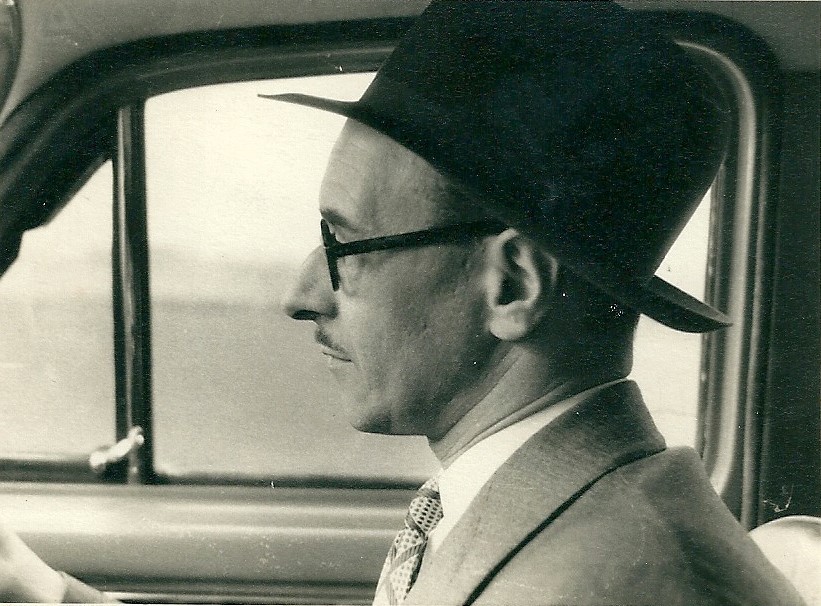
He was a writer, with a story about Tibet published in the Yorkshire Evening Post sometime in the 1940s (I saw the clipping once, but God knows where it went). He wrote TV plays, two of which were aired in the late 1960s. There was talk of a scriptwriting job for Coronation Street, I believe, but he backed away from it.
From the little he told, his upbringing hadn’t always been easy. My grandfather wasn’t the most reliable person. For weeks on ends he wouldn’t give his sons any pocket money. Then, when he was flush, it would be a whole half-crown, a huge amount then. Around 1920-21 he won a mill in Ireland in a card game and moved his family to Dublin – right at the height of the Troubles. That didn’t last long. My father’s great solace was escaping to the Victoria in Sheepscar, which his mother’s parents now ran, and where he could sit up in the living quarters and play the piano for as long as he liked.
He was never one for stories about his life. He’d dangle threads, but never weave them into cloth. Once he said he’d done volunteer undercover work for Leeds Police in the 1950s. It seemed unlikely, but after he died, I asked my mother: it was true. She made him quit when I was born.
My father inherited some of his father’s impulses. When I was one, he spent £55, a fortune in 1955, on a Tudor watch without consulting my mother. Another time he traded in his Ford Popular for a Wolseley car, a beautiful thing with a walnut dashboard and leather seats. When I was seven he took me to Banks’ Music Shop in County Arcade to buy a mouth organ. We got that, but also a baby grand piano that sat in the front room for a few years.
For most of my teenage years we were at loggerheads. Many reasons, and much of the fault was mine, even if I didn’t see it then. My mother had to be peacekeeper, no easy task. But with a young man continually testing boundaries and an older man hesitant to give up control, it was sometimes a fragile truce.
It eased, thankfully. The last time I saw him in the flesh was two weeks before his final stroke. I was living overseas and came for a visit. He was argumentative as ever, a little deafer each year, scared of leaving the flat (which is another tale).
But that wasn’t the final time I saw him. Early 2001 I was in Seattle, where I lived. It was perhaps 8.45 in the morning. I came out of the bathroom and into my office in the basement. For a split second I saw him in the chair by my desk, wearing his cavalry twills, a jumper and shirt with a cravat. Then the vision was gone. He died later that day. My mother had visited him in the afternoon, though, and he surfaced from unconsciousness briefly to ask her ‘Where’s Chris?’ ‘He’s in Seattle, of course,’ she told him. As best as we can make out, that was right around the time I saw him for a moment.
Make of that what you will. If someone told me the story, I wouldn’t believe it. Well, now I would…
And so it was 100 years ago today that Raymond Ewart Nickson came into the world.
The Tea Merchant’s Daughter
I don’t write ghost stories. Never have, never intended to. Then this one came to me, quite a while ago now. It floated down out of the blue, as tales do, and said ‘Write me.’ Well, it’s impossible to say no that. As we’re almost a Halloween, it seems like a good time to blow the dust off it…
She was the daughter of a tea merchant, a man whose soul totted up life into columns of pounds and pennies. He lived in a world made from profit and loss, where China clippers slipped through the seas to arrive and clerks brought him figures and fortunes and messages from captains.
All her life she’d known the smell of that world – the polished wood, cigars and old leather of the offices, the faint tang of salt water and, above all, the scent of the dried tea leaves that hung on his clothes, buried deep in the wool, when he came home in the evenings.
She’d hold her breath as she kissed his cheek, then move quickly away, still feeling the bristles of his beard on her lips.
“Kitty,” he’d call softly, and a few feet from him she’d exhale silently, turn with a smile and say,
“Yes, Papa?”
He was a good man and she loved him deeply. He treated his family with kindness. But the smell of the tea that shrouded him, the smell that was his wealth, was slowly killing her.
He refused to believe it. To him it was nothing more than hysterical nonsense, and impossibility.
“No one ever died from the smell of tea, Kitty,” he tried telling her gently. When she kept her slow insistence he left the room rather than argue with her then made her an appointment with a physician who tried to tell her the same. Her mother shook her head at the girl’s fancy and her younger sisters giggled at anything so unlikely.
But she knew. She knew.
It had begun when she was eleven and the governess has taken the girls to the warehouse.
“It’s only right that you see what your father does,” she told them in the cold voice that Kitty knew was no more than resentment and envy. “It pays for your dresses and the dolls you play with.”
“It pays your wages, too,” Kitty said. She’d hoped the remark would cut the woman but she’d merely nodded and replied,
“It does.”
The carriage had taken them down to the vast brick sprawl of the docks, building upon building pushed and cramped against the river, fighting each other for space. And around them, all the houses, street up street of them, looking like the ruins of a civilisation that had once been great and glorious and now left to rot.
At the warehouse the factor greeted them, escorting them first through the warren of offices where clerks bowed their heads over desks and ledgers and worked ink-stained fingers. Without any reason, Kitty could feel the sense of unease growing, her chest tightening with each breath in the rooms. It was something beyond her understanding, the way her heart fluttered and shook and her skin flushed hot in the place.
Then, finally, they were led through the door into the warehouse itself, a majestic room as big and tall as any cathedral, the light coming through high windows. Tea dust floated in the air, collecting on her face and hands as she entered and the smell overwhelmed her senses. After just three paces she knew she couldn’t move any further. It left her drunk and spinning, unable to think.
She came to outside, sitting in the carriage, the faces pressed around her – the governess hovering too close, her sisters, the factor standing back a few paces and wringing his hands with worry.
Kitty looked at them, blinking three times to bring them into focus.
“You’re all right!” the governess said triumphantly. “We were all so worried about you, my dear. You fainted in the warehouse.”
She remembered then: the way it all seemed to choke her, how she’d believed her throat would close, the fear and panic that filled her body and her mind until everything went dark.
They left then, her sisters a welter of chatter, the governess asking every five minutes how she felt. But how did she feel? As if there was less of her, as if she’d lost something in there. What it was, she didn’t know, no more than a feeling.
At home she studied herself in the mirror. Her cheeks seemed a little more pale, the blue of her eyes a little less bright. Running her hands down her arms her flesh seemed somehow thinner, as if a layer had vanished, as if she could poke through to the muscle and bone that lay underneath.
Her sisters returned to the warehouse every year, a treat for them, but Kitty would stay at home. At first her father tried to insist, then to cajole her into joining them, but once her saw the terror in her eyes he stopped his insistence.
She stopped drinking tea. She began to shrink away from her father when he returned in his work suits, suddenly sensitive to the smell of him after a day in his office. But it was impossible to escape completely, and after each hug, each bearded kiss on her cheek or forehead, she felt one more small part of her vanish from the world.
As she grew a little older she began to consider why this was happening. She read about illnesses and found nothing that resembled hers until she began to wonder if everyone was right and it was all in her head and she really was an hysterical girl. Then, one day with nothing to fill the hours, she glanced at the table in the hall. Her father had thrown a few of his business letters there when he’d returned the night before and forgotten to take them that morning. Her eyes strayed across the writing and she saw the demands he placed on the tea planters in those countries so far away. He reminded them of the contracts they’d signed, of the risks he took in transportation, and if their costs had risen so much, then perhaps they should pay the labourers less.
From there, over the days and weeks and months, when the house was quiet she’d carefully put on the leathers gloves that fitted so smooth and snug over her hands, tie and kerchief around her nose and mouth until she looked like a common bandit, and sneak into her father’s study. It was dangerous – the place smelt of him, the scent of tea a note that hung high in the air over everything – but she’d spend as long as she dare reading his correspondence. Her ears stayed alert from the smallest sound and she was all too aware of what this was doing to her. She could feel the way her heart pounded dully under her ribs, the energy it all took, but she had to know more.
She read it all, every last word and reply. She knew how he’d dealt with the attempt to form a union among the men at the warehouse, how he’d crushed it with dismissals and threats. She knew the money he’d spent in bribes of officials overseas for preferential treatment, the way he’d ridden roughshod over everything to find greater profits.
By the time she was done, she understood. But after that her gowns hung more loosely on her body than they had before, although she was still growing and ate as heartily as she ever had. Her spirit had sunk deeper. She understood.
Kitty knew that her mother and father worried about her. She sometimes heard them talking in hushed, serious tones behind carefully closed doors, and noticed the looks they gave her. But even if she’d tried, even if she’d had the words to make it all clear to them, they’d never have accepted it.
Tea was a plant. It was a commodity, a means to the money that built and furnished this house, that paid for the dressmaker, the tailor and the grocer. It could never be more than that.
But she knew.
They took her from doctor to doctor, tried this remedy and that, some pleasant, some less so. None of them worked. If they’d ever been willing to listen, she could have told them.
“Kitty,” he mother said, “we’re going out for the morning tomorrow.”
“Where, Mama?” she asked. “All of us?”
“Into town,” her mother answered. “I’ve ordered the coach for nine, so you’ll need to be ready. And yes, all of us. Except your father, of course. He’ll be at work.”
Excited, she was waiting by the door as the coachman brought the carriage round the next morning. It was a week before Christmas, a bare coating of snow and frost on the ground, the three standing tall in the hallways, decorated with baubles and candles.
Kitty sat between her sisters, listening contentedly to the quick babble of their gossip, the frivolities comforting somehow, like a bolster to hug in a cold bed. The horses clopped along merrily, the countryside changing to suburban terraces then the shops and arcades that bloomed with shoppers glancing into windows and businessmen who strode purposefully as if they were following a higher calling.
Any moment she expected the coach to stop but it didn’t. Her sisters prattled on, not even seeming to notice, but Kitty looked at her mother, the older woman giving a calm, superior smile.
“Where are we going, Mama?”
“To visit your father, dear.”
“What? At the warehouse?” she could feel the panic rising, her throat starting to tighten around her words.
“Where else would he be at this time, Kitty? It’s time you overcame these silly feeling of yours, you know. You’re almost a grown woman now. It’s not seemly.”
“But…” she began but could go no further. Nothing she could do now would make any difference. Weary, heartsick, she saw the landscape change, sliding from money to the poverty of the small back-to-backs where even the sky looked tired. Finally they pulled up at the warehouse.
I could just sit here, she thought. I could refuse to move. But then her mother was tugging at her wrist, saying,
“Get down now, Kitty. I’m not going to take no for an answer any more. Whatever these ridiculous ideas are that you have in your head, you need to get over them.”
But they’re not in my head, Mama, she thought. They’re real.
Then she was standing on the gravel, being ushered along with her mother’s hand at her elbow, half-pushing, half-dragging, the woman’s face set and stern as her sisters trailed behind.
The factor met them at the door of the building, a harried man of middle age with wisps of hair at the sides of his head, sad, bulldog eyes, bowing to the ladies as he led them towards the warehouse door.
It looked so innocuous, Kitty thought. Nothing more than bricks, mortar and wood. But already she felt as if hands were tightening around her throat, the tongue swelling in her mouth, her palms clammy inside the gloves and her skin itching.
First they passed through the offices, the way they had when she’d come here as a girl. Even the smells were exactly as she remembered them, just as if they’d waited for her return. And then they came to the door into the warehouse.
The women stood back as the factor turned the handle and opened it. Kitty could see her father there, off in the distance, talking to a workman in his buff coat, the sacks of tea leaves everywhere piled high.
“Well,” her mother said, “go on, girl.” Four words that brooked no objection.
She breathed in, her chest so tight it hurt and began to walk towards the door, glancing once over her shoulder at her mother and her sisters. They looked so earnest, so hopeful, so alive. Kitty walked through the entrance, her head held high, and gently closed the door behind her.
Two minutes later her father came out, glancing around in confusion.
“Where’s Kitty?” he asked his wife. “I thought you were going to send her in.”
“I did,” his wife objected, looking at him in disbelief. She turned to her daughters. “We watched her go through the door, didn’t we, girls?”
He pointed at the warehouse behind them and shook his head.
“That door?”
The woman nodded firmly
“But she can’t have,” her told her, exasperation edging into voice. “I was standing right there. I was watching the whole time. The only person who came in there was the factor. Then there was a draught and the door closed behind him.” He sighed and took off his glasses. “Where is she? What’s happened to her? You can’t tell me she simply vanished into thin air.”
Friday Leeds Fun
It’s Friday, the week’s over, and you want something light and fun for the weekend, right. How about the beginning of a book I’ve just finished writing? Well, why not…set in Leeds in the 1930s, think of it as Golden Age meets Elmore Leonard. Or something.
CHAPTER ONE
He parked the Austin Seven Swallow outside the Eagle on North Street. There’d been hardly any traffic on the drive up from London, just a few lorries, the cars bucketing along as fast as they could, the drivers’ faces fierce with concentration.
He buttoned his suit jacket and put on the hat, checking the brim in the wing mirror to see it was just so. A late May evening, some warmth still left in the air, and that feeling of dusk, with daylight starting to seep away and casting long shadows. 1934. The world might be poor, but there was still some beauty in it.
Only a few customers sat in the pub. An old husband and wife, holding hands and chattering away easily, halves of stout on the table in front of them, a dotting of ancient fellows, leftovers from Victorian times, gathered to play dominoes, a young couple out to do their courting, and a group of four middle-aged men, eyes like flints, standing in earnest discussion.
The landlord was cleaning the polished wood shelves, his back turned.
He saw her at the end of the bar, a glass of gin and tonic in front of her, a cigarette between her fingers. She was wearing a nubby tweed skirt and an ochre sweater, the sleeves rolled up on her red cardigan. There was a wedding ring on her finger, but she was on her own.
She’d glanced up when he walked in, then turned away again.
‘Can I buy you another?’ he asked as he stood beside her. She looked at him, eyes carefully appraising. Her hair was neatly set in waves, her lipstick bold red. In her early thirties and definitely pretty.
‘My mother always said I shouldn’t take drinks from strange men.’
‘We’re safe them. I’m not strange.’
She tightened her mouth as she arched her brows.
‘Who told you that? Your wife?’
He grinned. One of his front teeth was slightly chipped. Someone had told him once that it made him look irresistible. Dashing. Wolfish. A little like Ronald Colman.
‘Someone much more reliable.’ He cocked his head. ‘I have to ask, are those eyes of yours eyes blue or grey?’
She was staring at him now, and smiling.
‘Take a guess. If you’re right, you can take me home.’
‘Violet?’
She waited a moment, then started to gather her handbag off the bar.
‘Eyes and name,’ she told him, then asked, ‘Where should we go? Your house or mine?’
‘Oh, yours, I think,’ he answered without hesitation. ‘My wife’s a terrible housekeeper.’
Her elbow dug sharply into his ribs.
‘You’d best be careful, Johnny Williams, or you’ll be sleeping on the settee tonight. What kept you? I thought you’d be home this afternoon.’
CHAPTER TWO
He reported to the police station in his best double-breasted suit, navy blue with a pale pinstripe, his black brogues shining, the hat brim tipped just enough to put his eyes in shadow.
After a fortnight working with the Met in London it felt good to be home again. The capital had its charms, but Johnny Williams knew Leeds. He understood how the city worked with even having to consider it.
He wasn’t even sure why they’d wanted him down there. All he’d done was read the case file, go and talk to four people, then sit back and wait, time enough to tie up a couple of loose ends. Eight days later, they’d started making arrests and he was on his way back up the Great North Road.
Williams slapped the desk. There were files waiting for him. One thing about being a copper, he’d never be short of a job. Count your blessings, he thought, as he took a folder from the pile.
But he hadn’t even finished the first page before Superintendent Randall called his name. Detective Sergeant Williams straightened his tie, buttoned his jacket and walked through to the office.
‘Everything fine down South?’ Randall asked as he sat.
‘Went well, sir.’ He shrugged. They’d made the arrests easily.
‘Head not turned by the glamour?’
‘Well, the King invited me over, but I told him I needed to be back here by teatime…’ Williams grinned.
Randall picked up a piece of paper and pushed it across the desk. ‘Something to get your teeth into.’
He read it through quickly. While he was been gone there’d been two bank jobs, one in Horsforth, the other in Morley. Three men, one of them armed with a sawed-off shotgun. Quick, efficient, no violence, just threats and menace. In both cases, the getaway vehicles had been stolen and recovered about a mile away. There were descriptions, for whatever they were worth; none of the witnesses could agree on much. Violet had told him all about it last night. Lying on the bed after his welcome home, smoking cigarettes with the windows open, she’d brought him up to date on the happenings in Leeds. Working as a reporter on the Yorkshire Evening Post, she heard them all.
‘No clues?’ he asked, his arm around her bare shoulders. The slip and brassiere were long gone, tossed somewhere on the floor, and sweat was drying on her skin.
‘If they have, they’re not saying. The rumour is that they’ve nabbed over a thousand pounds.’
That was impressive. Carry on with that and they’d have a good little earner. He moved his hand a little. He needed to feel more welcome.
‘Nasty,’ Williams said.
‘They’ve taken over twelve hundred so far. But keep that to yourself.’ Randall pulled a packet of Black Cats from his pocket and lit one.
‘What’s CID turned up?’
‘Not enough. None of the narks seem to know anything.’
‘I was hoping for a few days’ leave,’ Johnny said.
‘You wouldn’t know what to do with yourself.’
But he would. He’d seen the sun shining through the curtains that morning, smelt spring warmth in the air and thought about Sandsend. He and Violet, a few days away, a decent hotel, Whitby just a stroll away along the beach at low tide. Some walking, some fishing, plenty of fresh air.
‘Well…’ he began, but Randall shook his head.
‘I want you on this. If they get away with it, other people are going to get the same idea. Times are bad, Johnny, you know that. We don’t need folk thinking they can be Dillinger or Bonnie and Clyde. Not round here.’
Williams picked up the report as he stood. Before he could even take a pace the door flew open and the desk sergeant, old red-faced Murphy, announced,
‘There’s been another one, sir. The Midland Bank on City Square.’
Randall raised an eyebrow.
‘Looks like you know where to start, Johnny.’
A Taste of Dan Markham
You’ve been discovering Tom Harper and Leeds in 1890 – at least I hope you’re reading Gods of Gold. I’m incredibly proud of it, and I adore Annabelle (if you don’t know who she is, read the book).
But in January I moved ahead to 1954 and Dan Markham, a young enquiry agent in Leeds. Here’s a taster.
The Adelphi probably hadn’t changed since the turn of the century. An old gas lamp still hung over the front door. Inside, the pub was dark wood, dull brass and bevelled etched glass, all neglected and in need of a thorough cleaning. At the bar he ordered an orange squash.
A table and two chairs sat in the middle of the snug. This room was different; freshly scrubbed, the hearth black-leaded, tiles gleaming and windows shining.
‘Have a seat, Mr Markham,’ the man by the window said. The voice on the telephone. He checked his wristwatch. ‘You’re right on time.’ He smiled. ‘Punctuality is a good sign.’
‘Of what?’
‘An organised man.’ He was probably in his late forties but well-kept, broadly built, neat dark hair shot through with grey. His nose had been broken in the past and there were small scars across his knuckles. But he didn’t have the look of a bruiser. His eyes shone with intelligence. The dark suit was costly, a subdued pinstripe, cut smartly enough to hide the start of a belly. The tie was real silk. He sat and gestured at the chair opposite. ‘We have things to talk about.’
‘One thing, at least.’
‘In my experience one thing always leads to another. It’s the way of the world.’ And he had the air of someone who’d spent a fair bit of time in the heart of the world.
‘I like to know who I’m talking to.’
‘I’m David Carter.’ He brought out a pack of Dunhills and a slim gold lighter. ‘Does that name mean anything to you?’ he asked as he blew smoke towards the ceiling.
‘No.’
‘Good.’ He sipped from a glass of whisky, savouring the taste before swallowing it. ‘Never wise to be too public. If people see a name cropping up a few times they tend to become inquisitive.’
‘So what do you want with me?’
The man cocked his head. ‘Your co-operation.’
‘You should have just asked, Mr Carter.’ The words were calm enough, but he was shaking inside. Whoever this man was, he knew exactly what he was doing. ‘You obviously know where my office is.’
Carter reached into the side pocket of his suit and threw a packet of Lucky Strikes onto the table.
‘I’m told you liked those during your National Service in Hamburg. That American colleague of yours used buy them for you from the PX. Have them. My compliments.’
All he could do was sit and stare. Oscar, the American Pfc he’d worked with in Germany, had been able to buy the cigarettes on base for next to nothing. That and the jazz records. Carter possessed a long reach. All the way to the War Office. And far beyond. It was a powerful little gesture. Impressive. And chilling.
‘What do you want in Leeds?’
‘Oh, I’ve been buying some businesses here in the last few months. You won’t have heard.’ He gave a quick, tight smile. ‘And those who work for me are good at staying out of sight. Except for one of the chaps following you today. But you didn’t notice the other, did you?’ He stared at the burning tip of his cigarette for a moment. ‘Tell me, Mr Markham, what do you know about crime in Leeds? This is your home, after all.’
‘I don’t really deal with criminals,’ he answered slowly. ‘If you think I do, you’ve got the wrong man.’
‘Indulge me. What do you know?’
He shrugged. ‘There are tarts. Shebeens. I imagine there’s illegal gambling and some protection rackets. I don’t really know.’
‘Penny ante stuff,’ Carter said dismissively. ‘And if someone’s caught they end up in prison.’ He paused. ‘In some cases, on the gallows.’
Markham unwrapped the cellophane from the Lucky Strikes, broke open the packet and lit one. The taste brought quick memories of Germany.
‘What do you want?’ he said.
‘I’m more interested in guineas than change. Let’s say a man signs over half a profitable business to someone. A little while later he sells the rest of it to his new partner at a knockdown price. All above board and completely legitimate. Do that with a number of places and there’s good money to be made.’
Waterloo Lake – 1815
It’s a wet Wednesday in Leeds, and that makes it a good time for a story. If you know Leeds, if you’ve even just visited, there’s a good chance you know Roundhay Park. And so you’d know Waterloo Lake, often just called the Big Lake. Things might not have happened quite this way, but according to the stories passed down it might have been very similar…
The foreman looked at him doubtfully.
“I don’t know, lad. This is a job that needs muscle. You’ve not got much of that.”
Joe breathed deeply. How many times had he gone through this in the last six months?
“I’ve been all over England looking for work, sir. I can do my share and more. If I don’t, just turn me out. But there’s not much food on the road.”
Not much in his belly, either, he thought. Berries that he’d found that morning on his way here, and the charity of his sister’s bench for sleeping and a loaf of bread in Leeds yesterday.
“You were in the army, you said?” The foreman had a grizzled face and wide, scarred knuckles. His breeches were thick and patched, old boots scuffed to nothing.
“Yes, sir. The Fourteenth. Started in the first battalion and then in the second as a corporal.”
“The peninsula?”
“Yes, sir. Spain and we followed Wellington up into France. And served in the Lowlands, too, when we were there.” Joe turned his head and spat at the memory. Half his platoon had died of Walcheren fever and they’d never fired a shot.
The foreman chewed at a fingernail as he thought.
“From Leeds?” he asked.
“Long time ago,” Joe admitted. After twelve years away fighting it didn’t feel like home. But nowhere did. He’d only drifted back because he’d run out of other places to go. And then he’d found that his mam and the bastard she’d married were both dead, his brothers scattered who knew where. Only Emily left, and that husband of hers had been grudging enough about a night’s lodging. At least he’d told them about the work here. A landowner making a lake he’d said, and employing men who’d been in the army. Happen they’d take you on, he said.
“I’ll give you a chance,” the foreman decided finally. “Tuppence a day and two quarts of beer. But if you don’t pull your weight, you’ll be gone. He pointed to a hut in the distance. “Report over there.”
“Yes, sir.” He hesitated a moment, then asked, “Is it right that this is going to be a lake.”
“Aye. Mr. Nicholson thinks it’ll look better like that. More harmonious, he said.” He scratched his head and looked at the long deep scar in the ground that stretched for a good half mile. “Can’t say as he’s wrong, neither. Better than a bloody quarry, any road.” The creases on the foreman’s face turned into a smile. “Going to name it Waterloo lake, celebrate the victory. Were you there, lad?”
Joe shook his head. The army had paid him off after they’d caught Boney for the first time. Cast him adrift in England without even a thank you for the thousands of miles he’d marched, all the powder and shot he’d fired or the friends left on battlefields. There’d been hundreds like him, thousands maybe. They could spot each other with ease, skin darkened by years of foreign sun and the eyes of men who’d thought they were needed only to discover that they weren’t once the cannon stopped roaring.
He’d been better off than some; he still had all his limbs and his wits. He could work. He would have, too, if there’d been any jobs. He’d worked where he could, begged when he had to. He’d been moved on from parishes by beadles, sentenced to seven days in jail as a vagrant down South when all he wanted was to earn his keep. Tuppence was a fair wage. It was only September. The days were still hot, the nights warm and dry enough to sleep outside. He’d be able to find somewhere around here. God knew, there was enough space.
He marched across to the hut, aware that people would be watching him, judging him. The door was open, a man studying a drawing weighted down on a table. A gentleman, from the cut of his clothes. Joe stood at attention for a minute, waiting for him to turn, then gave a small cough. The man looked up quickly, blinking against the sunlight.
“You must be a new man.”
“Yes, sir. Joseph Colton, sir.”
“Old John decided you were worth a try, did he?” The man had a calm smile and an easy manner.
“Yes, sir. I suppose so, sir.” He’d say whatever the man wanted. Tuppence a day would see him right for a while.
“Do you have any engineering training, Mr. Colton?”
“No, sir. Just building ramparts in Spain, that’s all.”
“Good.” The man’s smile widened. “That’s more or less what we’re doing here. We’re making a dam to create a lake.” He came out, ducking his head under the low lintel. “You see over there, that low side? We’re digging out from the bottom to dam it all there. There’s another lake. We’re going to bring in water from there and it’ll look perfect.”
“Yes, sir.” Joe gazed around. There had to be fifty or sixty men in the quarry, some digging, others moving earth in carts, by hand or goading donkeys along. “Is that what I’ll be doing, sir?”
“It is, Mr. Colton. We need the dam finished before winter comes.” The man raised his eyes. “Mind you, that might be a while yet if God keeps smiling on us like this. You were a soldier?”
“In the Fourteenth.”
“Ah, good!” The man beamed, the sun catching his fair hair so it almost seemed white. “The West Yorkshires as was. Right. There’s a path cut just over there. Mattocks and spades are at the bottom. And the ale barrel, of course,” he added quickly. “Start at six, dinner at eleven, finish at six.” He drew a watch on a fine gold chain from the pocket of his waistcoat and pursed his lips thoughtfully. “It’s just gone eight. You work hard and I think we can stretch to paying you for a full day.”
“Thank you, sir.”
Calling it a path was generous, Joe decided. In places some of the dirt had crumbled away so that the track was less than a foot wide, and a sheer drop down the quarry for anyone who fell. He walked carefully, testing each pace forward, until he reached the bottom.
By six the worst of the heat had faded from the day. He sat in the welcome shade of a tree, sipping from a mug of ale. Simply walking back up from the quarry had seemed like an impossible effort. He’d spent the day shovelling earth onto an endless procession of carts. By dinner he felt as if there was a fire in his back and his shoulders. He’d forced himself to continue through the afternoon, the sun on him. Blisters grew and burst on his hands, then more came until he could barely take hold of anything.
When work was done he’d waited for the foreman to return and pocketed his wages.
“You can come back tomorrow,” he man told him. “You’re hired on.”
He still had half the loaf his sister had given him and a blanket in his pack. All he needed was somewhere by a stream and he’d be fine for the night. A group of workers passed, raising their arms a weary salute.
“Where are you staying?” one of them called and Joe only shrugged. He wanted a little longer here first, settled under the coolness of an oak.
“We’ve got a camp,” another said. “You might as well come and join us.”
Slowly, Joe pushed himself upright. It was like Spain, when every rest only made going on more difficult. You continued because you had to, because not moving meant a whipping or death from the robbers who roamed the country.
He caught up with them close to the top of the lake, where woods came down to the water.
“We’re over there. Plenty of room.” The man gave a hoarse laugh. “Did you I hear you say earlier that you were from Leeds?”
“Aye,” Joe agreed. “Once.”
“Changed much?”
“I suppose so.” More people, the chimneys of the manufactories with their smoke, the streets full and feeling dangerous. Or perhaps he’d been the one to change.
“Welcome home, anyway,” the man said.
October 1914
This is the second part of Jimmy Morgan’s story, to be updated month by month, until 1918, if Jimmy survives that long.
While you’re here, I’d be very grateful if you’d glance through the site and take a look at my books, too. After all, writing is what I do (that was the ad segment).
It had been a piss poor month. The only good thing was that so many had joined up at the factory that he’d been promoted to fitter. Another shilling a week in the pay packet. But that went to his mam, anyway. And not as good as a uniform and a rifle. He’d had letters from his mates, already off training, saying how good the grub was. Everything found.
Another month and he’d be eighteen. Jimmy Morgan, private. It had a ring to it.
‘Don’t be so bloody daft,’ his father had said. ‘They can’t send you overseas until you’re nineteen, anyway. Don’t you know owt?’
‘Where does it say that?’
‘It’s the law,’ Terry Morgan told him as he put on his cap and left for his evening drink.
‘Don’t you go doing it, Jimmy,’ his mother said as she sat down on the other side of the table. ‘It’ll break your da’s heart.’
‘Him?’ He laughed. His father was made of stone. Ale, fists, and anger, that was all he knew.
‘He’ll not say it, but it’s true. He’s been that worried since you tried to join up.’
‘I’m eighteen soon enough.’
‘I know, luv.’ She reach out a thin, worn hand and took his. ‘And I know it’s a good thing to do. Someone has to defend the country. But just think on it first.’
There wasn’t much thinking to do. Though. Not when you were out of an evening and all the lasses looked at you, wondering why you were still here, if you were a coward. He tried to explain a few times, but it was all wasted words. They didn’t want to listen.
Still, not long until he was eighteen now. Then he could look everyone in the eye.
 Chris Nickson