A Guest Meditation On Historical Fiction

When RJ Verity contacted me, I was gratified to discover someone else writing about the Leeds of 80 years ago. Her take is very different to mine – no crime. Instead, her novel, Poole of Light, revolves around the cinema of the 1930s and 40s, one my father knew well, as manager of the Shaftesbury and the ABC for a few years after WWII.

She proposed a guest blog post, and I readily agreed. She’s written a good book, and her world dovetails well with Cathy Marsden. Maybe she met some of those characters – who can tell?

The Cinema Manager’s Granddaughter

Guest post by RJ Verity, author of Poole of Light

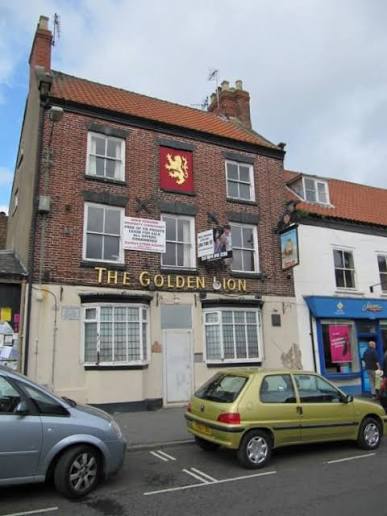
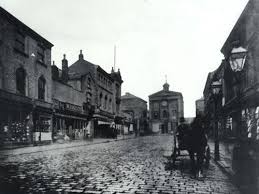
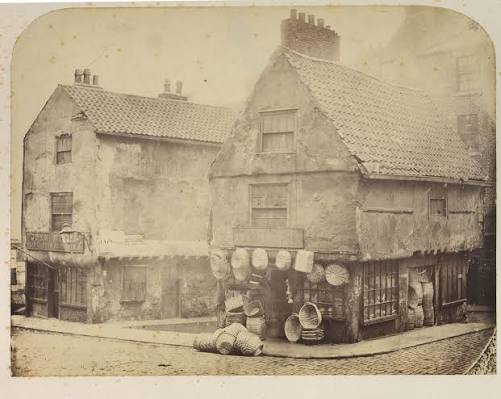
When Chris Nickson and I first made contact, we quickly discovered we were circling some of the same territory – not just the Leeds of the 1930s and 40s, but something more specific. His father had managed cinemas in the city. My grandfather had too: the Pictodrome and the Palace Picture Hall (shown below), both in Armley.

It is, as Chris put it, a small world.

My own connection is not incidental to my novel. It is, in many ways, the reason my novel exists. My grandfather had chauffeured for a large household in Leeds before becoming a cinema manager. My grandmother worked as a housekeeper in the same house. My father was a teenage projectionist and – through ability and the particular luck of timing – won a grammar school place at Roundhay before training as a doctor. One generation to the next, each one a little further from where it had started.

What struck me was how much depended not on privilege or connection, but on small chances seized at the right moment.

That fragility is at the heart of my debut novel, Poole of Light. The book starts in 1913, in a mining town in County Durham. My protagonist, Jem Poole, is ten years old – he has no money and no obvious future except working down the pit. One day he steals a glimpse through a curtain and sees a moving picture for the first time, and that moment of wonder brings him to the heart of the British cinema industry.

Leeds becomes central to his story. It is where he moves to as a boy, builds his life, and where tensions between ambition and identity play out across the decades. I came to Leeds not as a Loiner – I grew up in nearby Wakefield – but as a little girl who visited her grandparents in Roundhay often enough to know its streets. I understood later that those streets had shaped the people who shaped me.

The cinemas mattered. Not just as places of entertainment, but as institutions with a particular role in working-class life. They were warm and inviting during dark winter evenings. They offered glamour to people whose daily lives offered very little. A cinema manager in Armley in the 30s and 40s was not a grand figure – but he was a custodian of something that genuinely mattered to his community.

I find that writing historical fiction has a circular effect on my life. I know something about my past – stories half-told at family dinners – and am drawn to it. Then I research, I create characters, and somehow those characters reveal something more about my own history. And since releasing Poole of Light last September, I’ve been overwhelmed by the people who have reached out – wanting to talk about their own memories of Leeds, and what it meant to them.

Perhaps that is what historical fiction does best – it gives people permission to remember. Chris and I write about Leeds from different angles, but we are both, in our own way, still holding something of it. When I discovered that cinemas ran in both our families, it felt less like a coincidence and more like a confirmation that the past has a way of finding the people who are looking for it.

Poole of Light is available on Amazon now. You can buy it here. Poole of Honour, the second novel in The Poole Legacy trilogy, publishes on 15 September 2026.

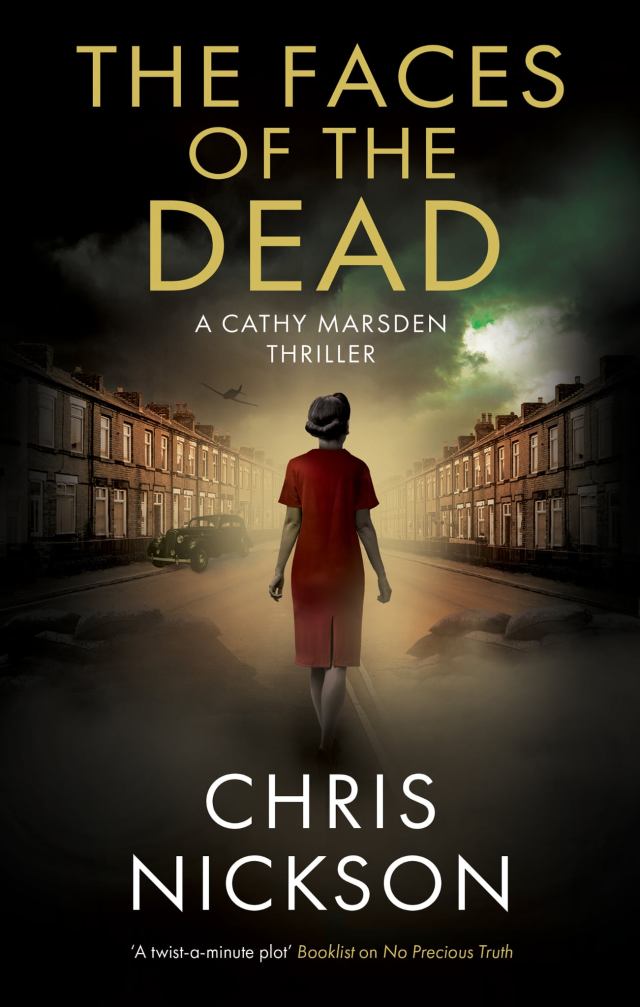
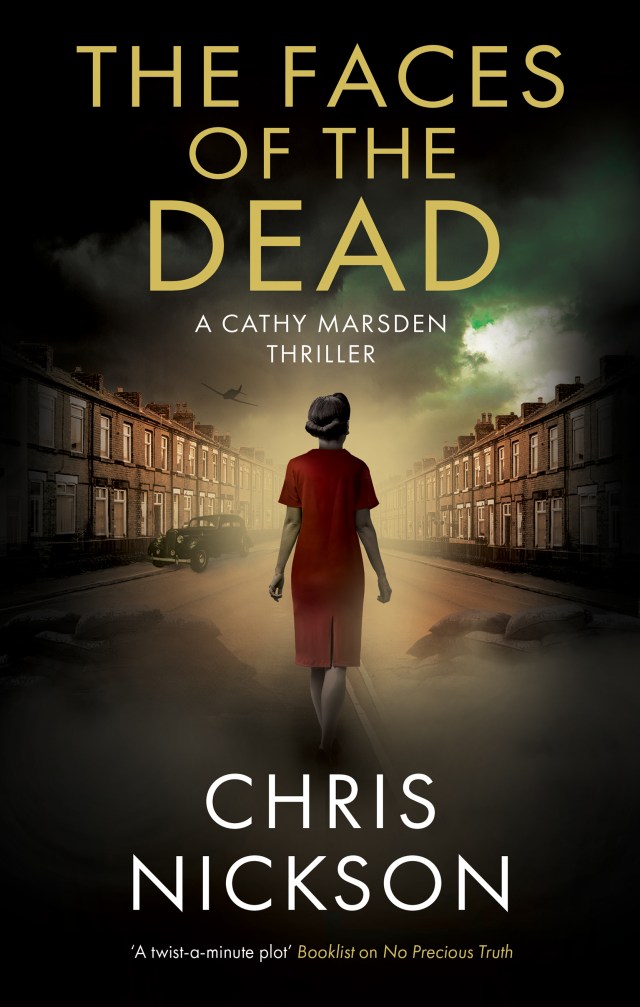
And, while we’re in the 1940s, the second Cathy Marsden book, The Faces Of The Dead, is just £1.99 on Kindle, or free if you have Kindle Unlimited.

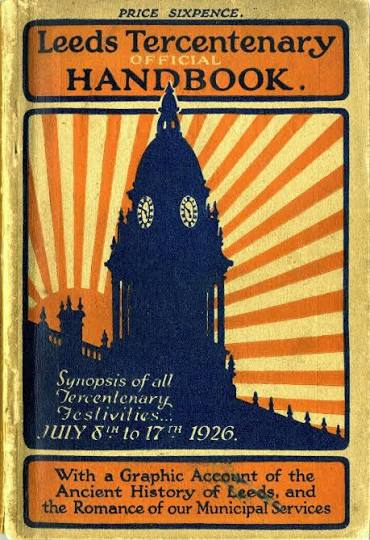
When Leeds Became Leeds

There are plenty of significant dates in the history of Leeds. But you can mark the year when this truly started to become the place we know today. It arrived in 1711.

By then, Leeds was a force in the marketing of broadcloth. Clothiers brought what they’d made to town at the twice-weekly cloth markets (Tuesdays and Saturdays). What had begun in a small way had grown and grown to become very big business for Leeds, with up to £20,000 pounds changing hands at every market, which is over £5 million today, a staggering figure. The merchants were growing very rich.

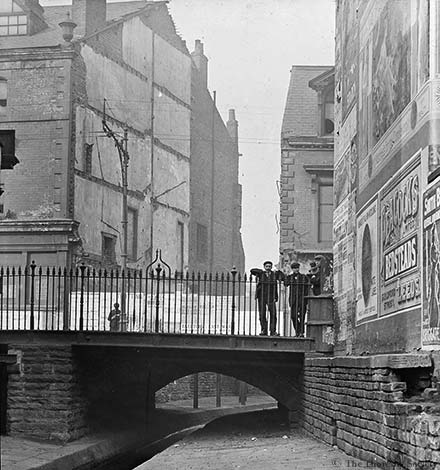
Originally, the cloth (undyed, hence white cloth) was displayed on the parapets of Leeds Bridge, but by 1684 the market had grown too large for that and moved to Lower Briggate, with trestle tables set up on either side for the clothiers.

The wool merchants of Leeds were outliers. They apprenticed in the trade, often with partners in Holland or elsewhere in Europe. But unlike cities like York, there was no guild of wool merchants in Leeds. That could have meant cloth of low quality was sold at the market. However, to ensure the town had a reputation equal to anywhere in England, Leeds had a cloth searcher. A merchant would serve for a year in the post, examining every piece of cloth sold to ensure it met the high local standards. It was certainly operating during Elizabethan times, indicating that the business was already important then.

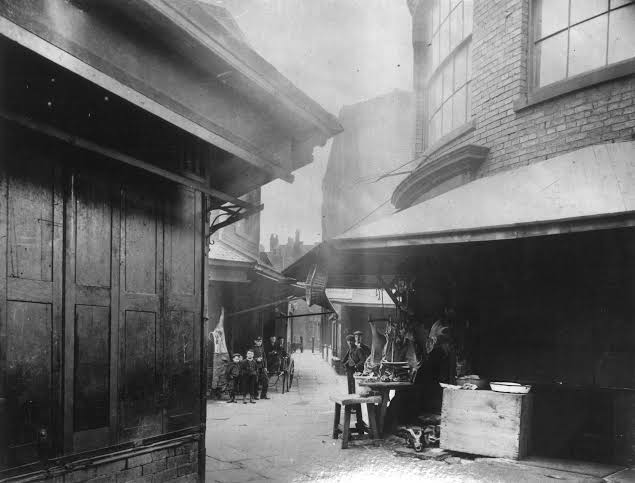
The market followed a rigid format. The ringing of a bell at 7am would start trading, and another bell would end it at 9am. For the sake of secrecy, transactions were made in whispers. As the cloth market closed, the trestles were moved for the regular market, and the clothiers would deliver their cloth to the merchants’ warehouses, which before the 1600s were probably behind their houses and places of business, many on Briggate. Later, warehouses would be built alone the calls, by the river

Everything seemed to be flourishing. But something dark was lurking under the golden surface.

Competition.

Leeds was only one of several towns with cloth markets, all of them battling to take more and more business. The biggest rival was Wakefield, and Leeds merchants would travel there to buy cloth (and vice versa).  Wakefield was more centrally located for clothiers and when they opened a covered cloth hall in 1710, a site that was protected from the weather, it sent a wave of panic through the merchants and the corporation in Leeds at the prospect of being overtaken by the town’s near neighbour.

One of the prime movers for change in Leeds was Ralph Thoresby, know these days as the first and greatest Leeds historian. But before completely applying himself to the past, he’d apprenticed as a wool merchant and invested in a failed rapeseed mill in Sheepscar (where he lost a great deal of money).

Thoresby knew all the great and the good in Yorkshire. One of them was Lord Irwin of Temple Newsam, a man of wealth and property, some of it in Leeds. Thoresby persuaded him to donate a plot of land on Kirkgate that has supposedly been almshouses. Leeds now had a site for its rival cloth hall, and once the merchants put together £1000, they had the money to build it.

Of course, it needed to offer more than Wakefield, and it was carefully designed with lockers for clothiers to keep their cloth, and easy access through what were then tenter fields (where the Corn Exchange stand today) to the warehouses along the Calls and the river for shipping. According to Thoresby, the Hall was “built upon Pillars and Arches in the form of an Exchange, with a Quadrangular Court within.”

It was a spectacular commercial addition to Leeds, and a real sign of the town’s ambition to be the leading market for cloth. But it was also a huge and expensive gamble. If it worked, the future for the merchants and the town could be beyond compare. Fail, and Leeds would become a second-rate wool town.

The opening of the White Cloth Hall came on May 29, 1711.

It proved a resounding success, soon leaving Wakefield in a very distant second place. In fact, there were too many traders to fit inside, and some were on Briggate, where writer Daniel Defoe found them on his tour of Britain the 1720s, describing a typical Leeds cloth market:

The street is a large, broad, fair, and well-built street, beginning, as I have said, at the bridge, and ascending gently to the north.

Early in the morning, there are tressels placed in two rows in the street, sometimes two rows on a side, but always one row at least; then there are boards laid cross those tressels, so that the boards lie like long counters on either side, from one end of the street to the other.

The clothiers come early in the morning with their cloth; and as few clothiers bring more than one piece, the market being so frequent, they go into the inns and publick-houses with it, and there set it down.

At seven a clock in the morning, the clothiers being supposed to be all come by that time, even in the winter, but the hour is varied as the seasons advance (in the summer earlier, in the depth of winter a little later) I take it, at a medium, and as it was when I was there, at six or seven, I say, the market bell rings; it would surprize a stranger to see in how few minutes, without hurry or noise, and not the least disorder, the whole market is fill’d; all the boards upon the tressels are covered with cloth, close to one another as the pieces can lie long ways by one another, and behind every piece of cloth, the clothier standing to sell it.

This indeed is not so difficult, when we consider that the whole quantity is brought into the market as soon as one piece, because as the clothiers stand ready in the inns and shops just behind, and that there is a clothier to every piece, they have no more to do, but, like a regiment drawn up in line, every one takes up his piece, and has about five steps to march to lay it upon the first row of boards, and perhaps ten to the second row; so that upon the market bell ringing, in half a quarter of an hour the whole market is fill’d, the rows of boards cover’d, and the clothiers stand ready.

As soon as the bell has done ringing, the merchants and factors, and buyers of all sorts, come down, and coming along the spaces between the rows of boards, they walk up the rows, and down as their occasions direct. Some of them have their foreign letters of orders, with patterns seal’d on them, in rows, in their hands; and with those they match colours, holding them to the cloths as they think they agree to; when they see any cloths to their colours, or that suit their occasions, they reach over to the clothier and whisper, and in the fewest words imaginable the price is stated; one asks, the other bids; and ’tis agree, or not agree, in a moment.

The merchants and buyers generally walk down and up twice on each side of the rows, and in little more than an hour all the business is done; in less than half an hour you will perceive the cloths begin to move off, the clothier taking it up upon his shoulder to carry it to the merchant’s house; and by half an hour after eight a clock the market bell rings again; immediately the buyers disappear, the cloth is all sold, or if here and there a piece happens not to be bought, ’tis carried back into the inn, and, in a quarter of an hour, there is not a piece of cloth to be seen in the market.

Thus, you see, ten or twenty thousand pounds value in cloth, and sometimes much more, bought and sold in little more than an hour, and the laws of the market the most strictly observed as ever I saw done in any market in England; for,

  1. Before the market bell rings, no man shews a piece of cloth, nor can the clothiers sell any but in open market.
  2. After the market bell rings again, no body stays a moment in the market, but carries his cloth back if it be not sold.
  3. And that which is most admirable is, ’tis all managed with the most profound silence, and you cannot hear a word spoken in the whole market, I mean, by the persons buying and selling; ’tis all done in whisper.

The reason of this silence, is chiefly because the clothiers stand so near to one another; and ’tis always reasonable that one should not know what another does, for that would be discovering their business, and exposing it to one another.

If a merchant has bidden a clothier a price, and he will not take it, he may go after him to his house, and tell him he has considered of it, and is willing to let him have it but they are not to make any new agreement for it, so as to remove the market from the street to the merchant’s house.

By nine a clock the boards are taken down, the tressels are removed, and the street cleared, so that you see no market or goods any more than if there had been nothing to do; and this is done twice a week. By this quick return the clothiers are constantly supplied with money, their workmen are duly paid, and a prodigious sum circulates thro’ the county every week.

One highlight for the clothiers who’d made the arduous journey from the out-townships and villages was the cheap meal they could obtain in the inns along Briggate, as Thoresby described in 1715: “the clothier may, together with his Pot of Ale, have a Noggin o’ Pottage, and a Trencher of either Boil’d or Roast Beef for two Pence.”

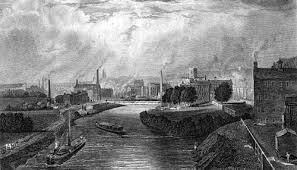
The wool trade made Leeds. In 1755 business had outgrown the White Cloth Hall and it was replaced by another, much larger, just south of the River Aire on Meadow Lane. 20 years after that, coloured or mixed cloth had its hall, close to what’s now City Square. In an indication as to how much trade had grown, this hall had room for over 1750 clothiers in two separate avenues, and a central courtyard capable of holding 20,000 people.

Around the same time, a third White Cloth Hall was built in the ground behind the first, a tiny part of which still remains.

The first White Cloth Hall fell into disrepair but was given an outstanding restoration that retained much of it character, along with original brickwork and wood trusses and beams; during the work, some of the wood was dated and found to have been felled in 1476 CE.

The gamble of 1711 paid incredible dividends, bringing wealth and fame to Leeds – the cloth was exported around the world, and Leeds became a byword for the wool trade. It all dates back to the 29th of May, 1711, when Leeds started to become the place we recognise today.

By the way – no Cloth Halls involved – but my most recent book, The Faces Of The Dead, has been out for less than three months, and I’d appreciare you buying it. Set in 1944, a tale of murder, the black market, and a woman police sergeant seconded to the Special Investigation Branch. Currently £1.99 on Kindle (cheap in the US, too). A warning though: you’ll be up late reading it.

A Very Limited Time Offer On The Crooked Spire

In May, The Crooked Spire reached the stage in Chesterfield as a murder-mystery musical. Very professional produced, too. Back then, I said the company that did it has plans to make it available online.

Well, that time has just about come – but it’ll only be for a short while. From tomorrow (July 8), one of the performances of the show will be available via for one month only. Please book your tickets here. However, you should be aware that it’ll cost £8 to view. A very fair sum, given the work that so many people put into it.

If you decide to watch it, I hope you’ll enjoy it. I know that when I saw it, they did a cracking job.

When The Music Plays In Chesterfield

All too often I’m amazed at the things that have happened because I started writing historical crime novels. Things I could never have anticipated or imagined. I’ve helped with an exhibition, The Vote Before The Vote, that showcased the 19th century Leeds woman who worked towards a proper franchise. I was commissioned to write a play about Dark Briggate Blues’ Dan Markham by Leeds Jazz Fest, and ended up with something that included a live jazz quintet and sold out two performances. I’ve become the writer-in-residence for Abbey House Museum in Leeds.

But Saturday was perhaps the most surreal experience of them all. I was in Chesterfield for the matinee performance of The Crooked Spire, the murder-mystery music that had been made from my novel set in the town in 1360.

Full disclosure. I’m not a fan of musicals, so I approached this with a degree of trepidation.

But it was outstanding. A very professional production, with full credit to all the backstage people who helped make it that way, A superb band that was always spot-on. Wonderful direction and production, a great set and costumes.

Of course, it’s the actors that we see and hear. They were great. The audience loved it. So did I. I knew it wouldn’t quite be my book on the stage, and it wasn’t. It would have felt wrong if it had been. This told its story beautifully. Some of the songs were quite transcendent and deserve a life beyond the five performances of the run. I hope they have that chance.

After the show, I took part in a Q&A with the director, musical arranger, set/costume designer, script writer, and producer, and felt embarrassed when many of the initial questions were for me. After all, the others were the ones responsible for what they’d just seen. But at the end, when people came up and brought out copies of the book or their programmes for me to sign (one man had his autograph book, his “memory book” as he called it), I was moved. Dumbfounded.

The Crooked Spire had gone beyond anything I’d envision when it was published nine years ago. It’s grown far beyond me.

I’m told that the performances were recorded and something will be available online soon. I’ll let you know.

Strange things happen when you write, and some of them are wonderful.

The Crooked Spire, Coming Next Week

The music made from my book, The Crooked Spire, set in Chesterfield in 1360 is set to open next week, and very aptly, it will be in Chesterfield.

You’ll probably have come across me rabbiting on about it, but yes, it’s a murder-mystery musical. Unlikely, I know, but from the little I’ve seen, it works.

Last month, some of the cast went out in town and performed some of the songs and tunes. Yes, they are in costume.

Rehearsals are underway, as you’d hope. Here are some of those actors and behjind the scenes people talking about the show.

Finally, for those who’ve never had chance to visit Chesterfield, one of the cast takes you up in the tower and gives you a glimpse up into the spire. Remember, it’s only held on by its own weight.

I’ll be there for the Saturday matinee – I’m eager to see it – and I’ll be taking part in a Q&A afterwards. You should probably come along.

Quick! To The Library

A plea for libraries. And, yes, for me.

You love to read; I doubt you’d be here otherwise. Quite possibly public libraries were the backbone of your childhood and adolescence. A place that introduced you to a range of authors. Somewhere you could choose books and take them home for a few weeks without having to pay a penny. Older, they’re useful for reference, and still for hours of entertainment in what you choose.

Libraries, be they municipal, Carnegie, community hubs, whatever, are an invaluable part of our society. That’s true wherever you live, no matter which town, city, whatever country. We need libraries. Yet everywhere, their budgets are cut, branches have had to close. It’s not the fault of local government. Their budgets are squeezed and they need to focus on the most vital service. I understand that.

But libraries offer a vital service, too. The open up worlds. As books become more expensive, they’re harder for many on limited incomes to afford. The libraries offer them galaxies for the imagination.

Support your libraries, please. If they’re not used, then in time they will close. Future generations needs them. We need them right now.

That is heartfelt. I’ve benefitted from libraries all my life. I discovered a number of favourite writers through them that I might never have found otherwise.

And that leads into the second part, which is less altruistic. I have a new book coming out at the end of December called The Blood Covenant. I really, completely believe in it. Its springboard is the exploitation and abuse of children in the factory system of the 1820s. That was a commonplace. The difference is that two children die from it.

I want people to know that happened, and I like fighting back against those who made it possible. I’d like people to read this book.

Of course, I’d love it if you all bought copies. However, hardbacks cost money. You could request that your library buys a copy – my publisher, Severn House, is what’s known as a library publisher, after all; that’s their prime market. Borrow it from them instead.

If they put one on the shelves, it’s not only you who can read it, but any others who decide to borrow it (actually, through the Public Lending Right, authors make a few pennies every time one of their books is borrowed, which is great). It’s out there, it’s available. The days when libraries could order everything have gone, but if you ask, there’s a much better chance they’ll spend their money. You’re doing a public service.

Yes, you’re helping me, and I would truly appreciate that. I know I’m being self. But you’ll be using the libraries and that helps to keep them open. That way, we’re all winners.

Thank you. Please do request the book for your local library. And others that you want to read.

Ghosts

This is what happens when you raise the ghosts. When you let the past out of its box.

A few weeks ago I was looking through some old photos and picked up one of my first wife. It had been taken on our first wedding anniversary, on the trip to the US her parents gave us as a belated birthday present. She had glasses that turned dark in the sunshine, so it was impossible to see her eyes in the bright Ohio May light. But the dark hair framed her face and she was beaming at the camera. Young, happy, carefree.

            That was a long time ago. Eight years and we divorced. I moved to the West Coast, then back to England. She stayed where she was. I don’t even remember how it happened, but we became friends online. Exchanging messages. And then, last year, from out of the blue I received a message from the daughter of her second marriage. The first time she’d contacted me. My ex was in hospital, she wrote, and not expected to last the night.

            It was a brain bleed. She was gone. It rocked me. We were the same age – hers a June birthday, mine July. Not old, not by today’s standards.

            Then I glanced at the photo and woke the ghost.

It appeared first when I opened my e-mail a couple of mornings later. No subject header, an address I didn’t know. Probably spam, I thought. But I was curious and opened it anyway.

Do you remember when we went to that village where the Brontës lived? It was winter, it must have been. The main street was very steep. I have a memory that we went up on to that moorland and it began to snow. In my mind, that snow was so heavy we almost couldn’t see? Did that happen or did I imagine it? I’m trying to recall, but it’s lost.

            It had happened just as she said. A white-out for a couple of minutes that made us terrified we’d end up lost. It passed, we came down, and laughed about it later.

            But who else apart from her knew that detail? It scared me. If this was some kind of joke, it was twisted. It couldn’t be her. That was impossible. She’d been dead for nine months.

            I read the words over and over. At first I refused to believe it all. Then the horror arrived. I wanted to trace the email, but I didn’t know how. I’m no techie.

            After a day of opening the email endless times until I could have recited each word with my eyes closed, I decided to reply. It was stupid, but there had been a real sense of longing. Of someone lost.

            Yes, it all happened. All that snow coming down. I was up there in the summer a couple of years ago. Sun, blue skies, grass and flowers. It looked absolutely different.

WHO ARE YOU?

            The reply was there the next morning: I don’t understand. What do you mean? It’s me. I’m trying to remember. The farther back I go, the hazier it becomes. It’s like trying to see through gauze. I was hoping you could help me. It’s hard sometimes. I can’t keep my mind clear. That house we bought here. Was it that bad? When I think about it, it seems like a wreck. Did we really have three dogs?

            Here? Did she really think she was still in Ohio? That…no…it couldn’t be. But everything was so earnest. This wasn’t someone having a joke or taunting me. It was real.

            Yes, we had three dogs – Rag, Muffin and Lindy. Yes, the house was pretty bad. But cheap. You do know you’re read, don’t you?

            A reply within an hour. Dead? I can’t be dead. I’m right here. I know I’m right here. I have to be…

            I’m sorry, I told her, but you’re dead. Your daughter messaged me to tell me. It happened suddenly. You remember your husband and daughter, don’t you?

            A whole day passed before her reply.

            I see them all the time. I’m there with them. It’s the past that seems dim, that’s all Everything recent is clear. I can’t be dead, they’re with me. When did I die?

            It was last August, I wrote. By now I was convinced it was real, that it was her. If not, I’d somehow gone mad. But the rest of my life carried on normally. Everything expect the emails. I hadn’t told anyone about them. Who’d have believed me, anyway?

            Did I want to believe it? I did. We lose the past soon enough as it is. This was one way of holding on. But I couldn’t understand why she was visiting me.

            What about your husband and your daughter? Anything we shared was a long time ago.

            Yes, she replied. I just want to know about the past. It’s like trying to see through a fog.

            It carried on for a week, several emails every day. From the header, she looked to be on East Coast time.

            It all scared me. I didn’t understand it, although a part of me enjoyed the whole idea. It wasn’t quite romantic, but full of mystery.

            It kept me awake at night. Soon it was filling my thoughts. That wasn’t good. And it wasn’t helping here. She was asking questions again that I’d already answered.

            Finally I saw down at the computer: I know you feel you need this. Perhaps part of you does. But there are people close to you who love you deeply. They’re grieving for you. Maybe it’s time to leave this and be with them. They need to know you’re there.

            Then answer was waiting the next morning. You’re right. Thank you. For everything. For those old memories.

            No need to reply. I went to make some tea. By the time I returned, the whole thread of mails had gone from the computer, as if they’d never really existed.

            That night I dreamed. The usual mix of images. I was in my current car, but I was in Ohio, parking on a track I’d never driven along, that didn’t exist. But I knew it was close to her parents’ house. I went inside. No need to knock. She was there, and the place was filled with the smell of cooking.

            She was there, looking just the way she had in the first photo she ever sent me. Smiling. She came over and placed her hand on my shoulders. A touch so light I had to look to be sure it was there. Her breath smelt of wildflowers.

            A peck on the cheek.

            ‘Thank you,’ she said. The voice I remembered.

            Then I was walk back to the car.

            No more dreams of her since. No more emails.

            Just everyday, ordinary life.

            And the ghost in my head.

Win Your Christmas Presents

As you may know, the third Simon Westow book, To The Dark, comes out in about six weeks, blinking into the light in that strange limbo time between Christmas and New Year.

It should have arrived at the end of September, but Covid has upended everything. Honestly, I’m grateful that’s it’s being published at all.

It a dark, hard book, set in Leeds in the late winter of 1823, and much of it happens around Cynder Island, a part of Leeds that no longer exists by that name – it’s right around Sovereign Street these days. Back then it was on the edge of the river. People lived and worked there, and the old Flay Crow Mill was already falling down.

It’s a book of murder and deceit. Of violence had revenge.

It’s hardcore.

It’s Leeds.

To prime the pump for publication and take care of some of your Christmas present, I’m going to give away a set of five books. Yes, that’s five. The first two Simon Westow novels, The Hanging Psalm and The Hocus Girl (“outstandsing…historical mysteries don’t get much better than this” – Publishers Weekly), The Tin God from the Tom Harper series, and The Broken Token, which kicked off the Richard Nottingham sagas and was my first published novel. To round it out, The Anchoress of Chesterfield, the most recent John the Carpenter novel.

How can you win, you ask? Simple, comment under the blog post with the name of the mill where part of To The Dark takes place; it’s mentioned above. I’ll select a winner on November 30. Sadly, postage costs mean UK only. Sorry. Leave your email with your entry andf I’ll contact the winner.

Good luck, and if you’re on NetGalley, please request To The Dark. And if you read it, I’d be grateful for a reivew.

Already Here And Coming In The Next 12 Months.

Just this week, my publisher put up a blog interview with me about what these last 10 years of publishing books has been like. You can read it right here. It touched on a few things, book things, but to my amazement, the decade has stretched beyond that.

There have been a couple of plays, The Empress On The Corner, a one-women play about Annabelle Harper and her life, with scenes performed at various places in Leeds. One was filmed at the Hark To Rover pub in Abbey House Museum.

New Briggate Blues was commissioned by Leeds Jazz Fest in 2018. It featured Dan Markham (Dark Briggate Blues) and revolved around memories of Studio 20 Jazz Club in Leeds. Two characters plus a live jazz quintet, and both performances sold out.


The biggest thing, though, came with my involvement in The Vote Before The Vote, an exhibition at Leeds Libraries about the Victorian Leeds women who worked towards suffrage. It coincided with the publication of The Tin God, when Annabelle Harper runs to become a Poor Law Guardian. I wasn’t the historian who did most of the work, but I helped, and I’m hugely proud to be have been part of it – and that Annabelle wrote herself into Leeds history.

Of the books, perhaps the thing that truly blew me away happened in 2011, when Cold Cruel Winter, my second novel, was named one of the 10 best mysteries of the year by Library Journal. I was quite literally speechless for a while.

So what lies ahead? Here’s a taster:

“The end of this year brings the third Simon Westow novel, To The Dark, then a new Tom Harper, Brass Lives, sometime next summer. I’ve just finished writing A Dark Steel Death, the tenth Harper mystery. I couldn’t comment on rumours that I’m making headway in the final Harper book…”

And here’s the cover for TO THE DARK. What do you think?

To The Dark 1

Finally, a bit of micro fiction.

He poured hot water into the bowl, watching the soap bubble. Pushed the masks down with a spoon. Once it cooled he’d rinse them off, wring them out and hang them to dry. This is how we live now, he thought. This is how we stay alive.