He’d seen the tram down at the Swinegate Depot. All done up like a bloody dog’s dinner, God Save The King in lights on the side and Berlin as its destination.
Dog’s dinner was right. He read the slogan on the window – Wanted At Once, 5000 Recruits From Leeds. British Bulldogs. Airedale Or Yorkshire Terriers. Line them up and watch them run at the Hun. Still, he couldn’t help feeling a bit of pride.
There was already a queue hundreds long waiting to join up. In one end of the tram, out the other with big smiles on their faces. He joined at the end, smoking, listening to lads chattering away, full of spunk and fire about how many they’d kill and still be home by Christmas.
He didn’t care when it was over. However long it took, it would be better than what he had here. Grafting away in a factory for next to nowt. No future, just years of the same. His dad drunk Friday and Saturday nights, battering his mam when he came home.
Finally he stood in front of the corporal. The uniform was neat, the moustache clipped, buttons glinting in the light. Eyes full of pride.
‘Name?’
‘James Morgan.’
The corporal looked up.
‘If you want to be in the army, son, you’d better get used to rank.’ He pointed at the stripes. ‘See those? They mean I’m a corporal. So you address me as corporal or sir. Got it?’
‘Yes, corporal,’ he answered. It was like talking to the foreman.
‘Address?’
’31 East Park Road. Corporal.’ And he’d be glad to get shut of that place, too. No room, nowhere to think. Not that he expected the army to be much better. But at least he’d be a man, not just Tommy Morgan’s son.
‘Age?’
‘Eighteen, corporal.’
The man snorted.
‘Pull the other one, lad, it’s got bells on. How old?’
‘Seventeen.’
‘Then come back on your birthday.’ He looked down the line. ‘Next!’
Outside, all the ones who’d joined up were congratulating each other, off for a drink to celebrate. He walked off, hands in his pockets.
Author: chrisnickson2
Remember, Remember – A Leeds Story
We’re less than a month away from Bonfire Night now. Very soon they’ll start building the pyramid of pallets on Soldiers Field, and on the night there’ll be a grand ooh and aah, when it goes up and all the fireworks begin bursting in the air.
But there was one Bonfire Night that stands out from the others in Leeds’ history – back in 1745. The news that everyone feared arrived that night, that the Scots under Bonnie Prince Charlie – the Young Pretender, as he was known – had crossed the border at Carlisle.
Perhaps some had other things on their minds, though…
REMEMBER, REMEMBER – 1745
He fitted the new string on the fiddle and tightened the peg slowly, plucking it over and over as his wrist moved the tuner until it was close to a G. It would keep going flat during the evening and he’d have to re-tune. But it couldn’t be helped. At least it was the bottom string; he’d just try and use it as little as possible.
“Are you ready, Joshua Walker?” Toby called from outside the door.
“Aye,” he said. “Ready and willing.”
By eight, all the bonfires were burning well, sparks rising up into the darkness, people drinking and passing around the jugs of ale from one person to the next. Josh Walker locked the fiddle away in his room, safe from harm.
In the end it had all gone well. The string had been fair with him, staying in tune until a piece was done, and then all through the procession from the Assembly room up to the big fire on the open ground across from St. John’s. He’d been paid and given his share of scraps from the banquet, enough to feed him for a day if he was careful.
He walked up Briggate, the cudgel swinging from his wrist, eyes alert. It was a night for celebration, one where folk stayed out late, even the children. But who wouldn’t want to remember someone trying to blow up Parliament and all those down in London who only cared for themselves. Even if the plotters were all Papists, they’d done something right.
He rubbed the sleeve of his heavy greatcoat over the Town Waits badge, seeing it shine in the light from the bonfire. He was proud of that. It meant he made his living from the fiddle. Well, that and being part of the night watch, but he’d never heard of anyone earning enough money just from music.
After five years of doing this he knew what to expect. The apprentices would have their plans, staying out long after good folk were off to their beds. They’d be looking for a fight and before it was all done the night watch would give them one. There’d be some broken heads and a few waking up in gaol. The new gaol, they still called it, although it had been built before he was born.
They needed to learn some new tunes before Christmas, he thought. It was always a busy season, a time to line the pockets by playing balls and parties all over town. Last year they’d been invited out to Temple Newsam, the year before as far as Harrogate. He’d made enough to buy a new dress for his wife and clothes for his children. Roger was five and he’d just started the lad playing the fiddle, some simple fingering and learning how to hold it, exactly the way his own father had taught him.
He didn’t read music, none of the Waits did, but he had a quick ear. All he needed was to listen to something twice and he could play it, every note perfect. The others would pick it up from him and within half an hour they’d have it arranged and ready to perform. There was a melody he’d had in his head for days, one that wouldn’t go away. Josh was still trying to decide if he’d heard it somewhere or if it was a gift from God. He hummed it as he walked.
So far it had all been quiet. Several people had shot off muskets and fowling pieces, but no one had been hurt. No children had fallen into the flames, there hadn’t been any fights…all the trouble would happen later, once the families had drifted away. And it would come, it did every year. But then they’d be ready for it. This year, perhaps, the apprentices would at least manage to hit the statue of Queen Anne with their stones, unless they were already too drunk.
He stood close to the large fire, watching the shadows jump and warming his bones. Someone passed him a jug and he took a drink of ale, good twice-brewed that went down perfectly. He started to amble away, then turned at the sound of hooves. Someone riding in along the Newcastle Road.
He stood at the side, a hand raised, hoping they saw him. Three horses, together, slowing to a canter as they reached the houses.
“Welcome, friends,” Josh called loudly. “What brings you here so late?”
The man in front reined in close, his mount wet with sweat and wild-eyed. The two behind kept their distance, the animals pawing the ground as they breathed heavily.
“I need to speak to the magistrates,” the man said urgently. “There’s important news.”
People had begun to drift over from the fire, curious about the newcomers and pressing closer to see their faces.
“I know him!” someone shouted from the back of the crowd. “It’s that preacher.”
Josh looked up sharply. The horse moved enough for the light to catch the man’s face. Aye, it was true enough, Josh thought. That was John Wesley. Two months before they’d been quick enough to pelt him with stones when he stood up to speak. Now they were pressing close to hear whatever news he might be carrying.
“I’ll take you,” Josh told him, turning to see Theosophus Johnson and Robert Newman at his side, their cudgels at the ready. “Gentlemen,” he said to the riders, “follow me.”
He’d heard some of the aldermen talking about the Rose and Crown when they’d gathered to light the bonfire. With luck, a few of them might still be there. It was no more than two hundred yards, the light from the flames bright enough to guide them.
The stable lad came out as soon as he heard voices, taking the beasts as Josh led the men inside. Six of the aldermen were gathered around the table closest to the fire. Some of them looked close to sleep, heads lolling, while three of them laughed and drank. Almost a dozen empty bottles sat between them. Josh coughed, hoping one of them would notice him, then again, louder, when no one turned his head.
“Sirs,” he said in the voice he used to keep order in the town, and waited until the men quieted. Eyes blinked open. “Mr. Wesley’s arrived with important information.”
The preacher stepped forward. He stood tall, looking down with distaste.
“I’ve just come down from the north. People are fleeing. I’ve been told that the Pretender’s crossed by Carlisle. He’s in England. You need to prepare, sirs.”
There was a brief moment of silence, when time seemed to stand still, then a babble of voices, each one trying to rise above all the others. Josh saw a couple of men slip out. In the room, Alderman Atkinson tried to calm the noise.
He’d heard all he needed. The Scots were south of the border, the Jacobites were coming. He walked out into the night, the fires still burning. But the crowds had gone, simply vanished into the darkness. A few young men wandered, but they looked lost, without purpose.
He marched down Briggate. What would he do if the Scots arrived? Would he take up a sword and fight? Or would he take his wife and his children on the road south, hoping to find safety somewhere.
Suddenly the tune came back into his mind. It was transformed this time, martial and stirring, an accompaniment to his steps. Yes, he thought, this is it. He could already hear the other instruments. It would be excellent for the upcoming balls. If any of them were still here.
West Seattle Blues
If you’re interested in hearing the audio version of West Seattle blues, read by the sublime Lorelei King and published by the lovely people at Creative Content, and are willing to submit a review – and honest one, please – after listening, it’s available at Audio Jukebox. I hope you’ll give it a try. My Seattle books are very different from those set in Leeds, but I’m equally proud of them, not least because they’re from a female perspective, which is a good challenge for me. Do I succeed? Have a listen and tell me. Just click here.
Interviews
A couple of weeks ago I did an interview with a journalist from Library Journal, the biggest trade publication for libraries in America. It’s actually sponsored by my publisher, Severn House, but the writer had her choice of authors. I’m happy and grateful she chose me.
It’s massive exposure, truly massive, the biggest I’ve had. And a huge boost for the US publication of Gods of Gold.
Ineterested? Read it right here. Don’t forget the comments beneath!
A Year And A Day
A year and a day. For centuries, in English law, it was a vital time period. It was the minimum sentence that could be given for any crime ruled to be a felony. And in the case of a death, if it occurred a year and a day (or more) after the initial event, the death couldn’t be called murder.
A year and a day ago I moved back to Leeds. Back home. I remember when I was young and couldn’t wait to leave a city I found so restricting and small. I came back often over the years, but I saw it with an outsider’s eyes. Its decline and the way it rose again.
I began collecting books on Leeds history – I’m still not sure exactly why – and immersing myself in them. Then I started writing novels set there. By that time I’d returned to England after a few decades abroad. My ambivalent feelings towards the place had turned to love. Well, revisiting an old love, really. I came here more often, and discovered more and more about that place (something I’m still doing).
Finally, with all the right stars aligned, it was time to return.
A year ago tonight, we walked the streets I’d walked when I was a teenager. Past my old school, which stands on the far side of the fields from where we live now. I kept encountering the ghost of the younger me, so naïve and hopeful.
He’s gone now, not even a glimpse at the corner of my eye, but it was strange to meet him. The ghosts now aren’t from my own past, but my family’s. The places in Leeds where they lived and loved and worked. They feed me history, not just of Leeds, but how they existed, and urge me to write it down.
So it’s been a year and a day. And I’m content.
A Newsletter?
I’m considering having a quarterly newsletter that I’d send out to everyone and anyone who wanted to subscribe. There’d be news of upcoming books (two coming in the first three months of 2015, for instance) and events, as well as reviews of those recently published, and possibly even a little short fiction (very short).
I mentioned it on Twitter and Facebook and a number of people seemed interested. If you’d like to start getting a copy (I think the first one would arrive in December), let me have your email address, please, and I’ll set it in motion.
Thank you.
Kirkby Malham (By Accident)
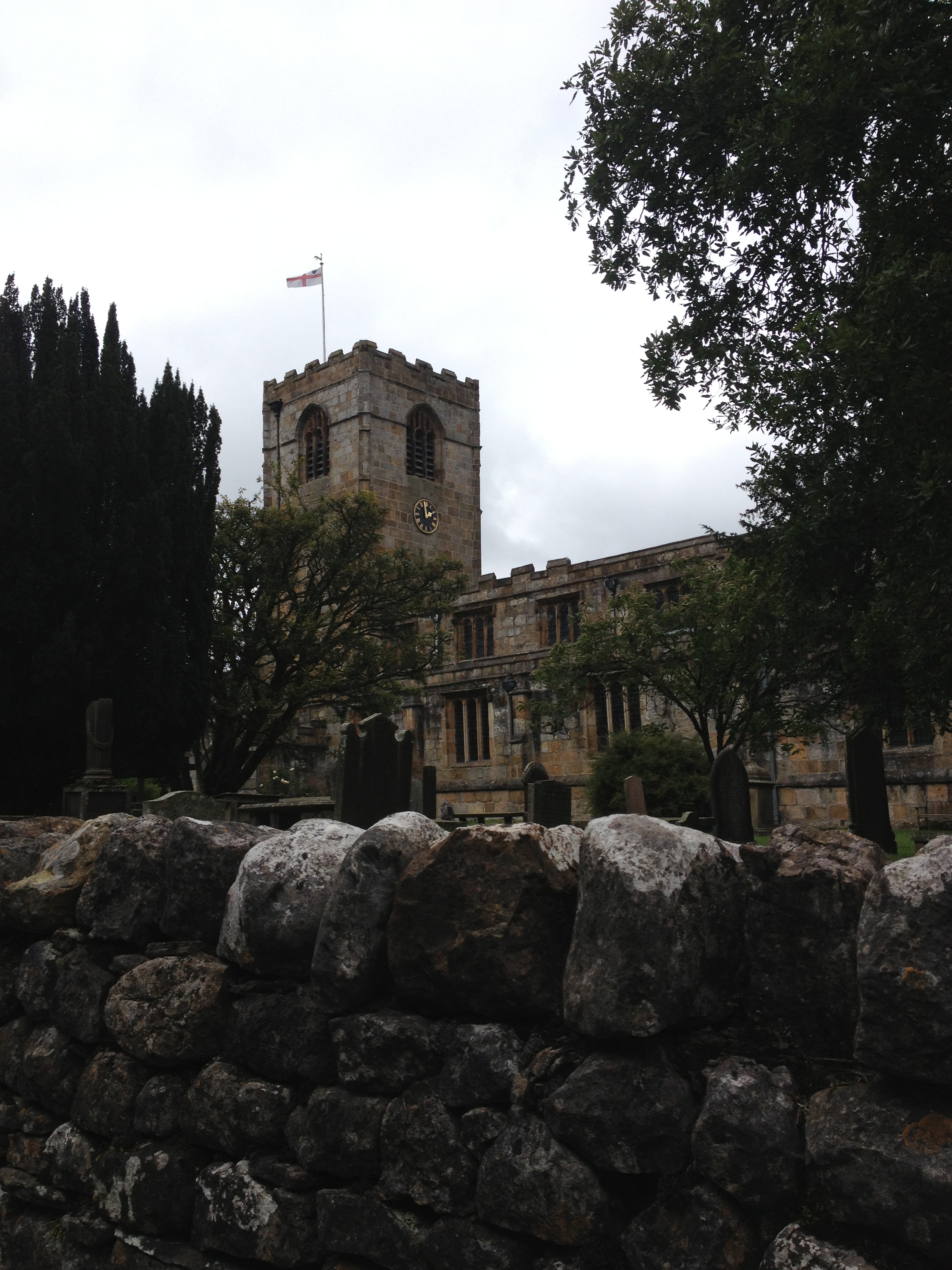
Sometimes a little accident can take you to a wonderful place. After a lovely walk to Goredale Scar, neat Malham in the Yorkshire Dales, we’d planned to stop and have a wander in the village of Airton. Instead, without thinking, I turned off and parked in the village – it’s almost more of a hamlet – of Kirkby Malham.
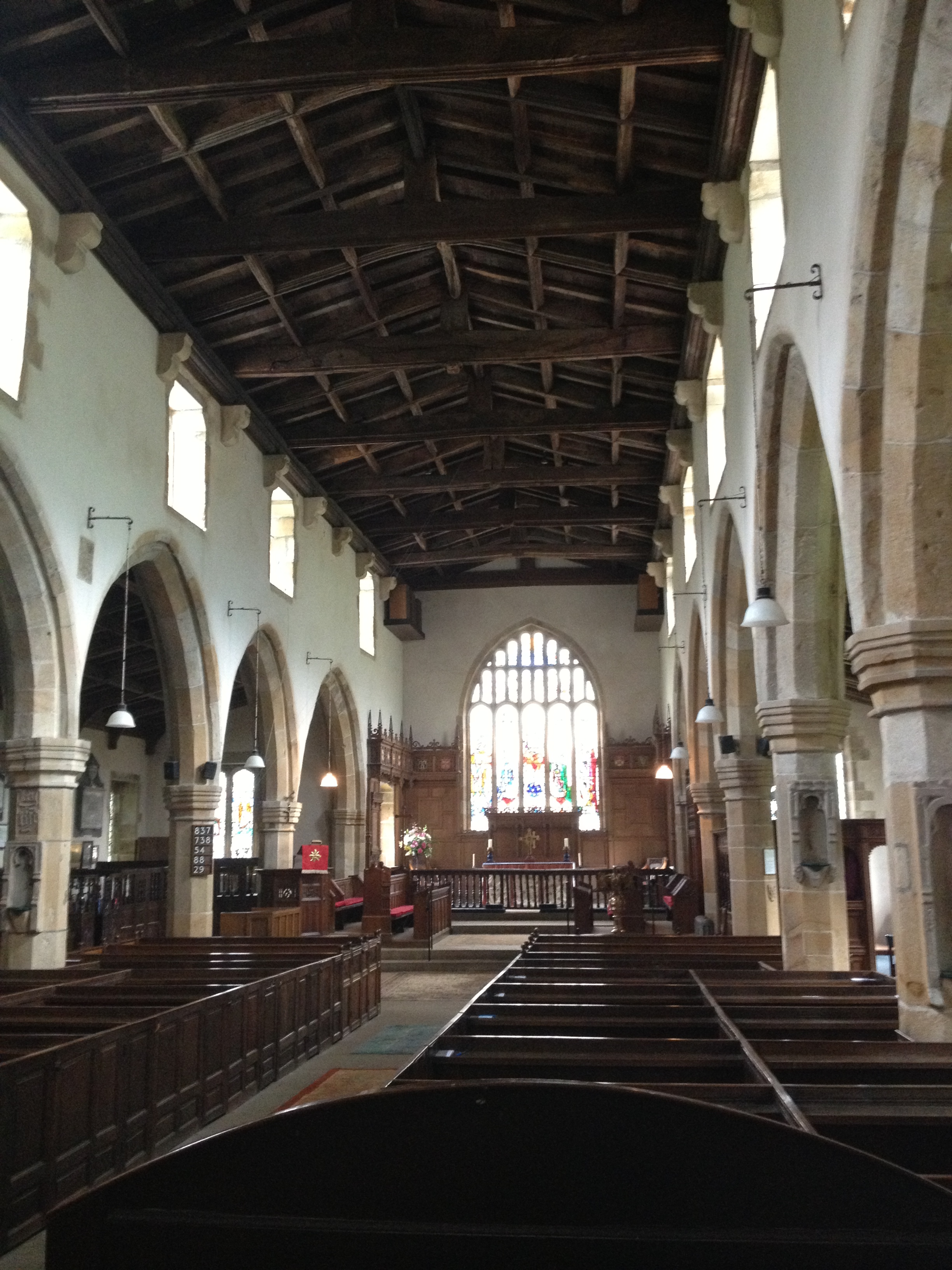
Other than a few houses, there’s a pub and a church. But what a church. It’s sometimes called the Cathedral of the Dales (which I didn’t know beforehand), and stepping inside, it’s easy to understand why. The details are here, but the beauty is in the viewing and the experience.
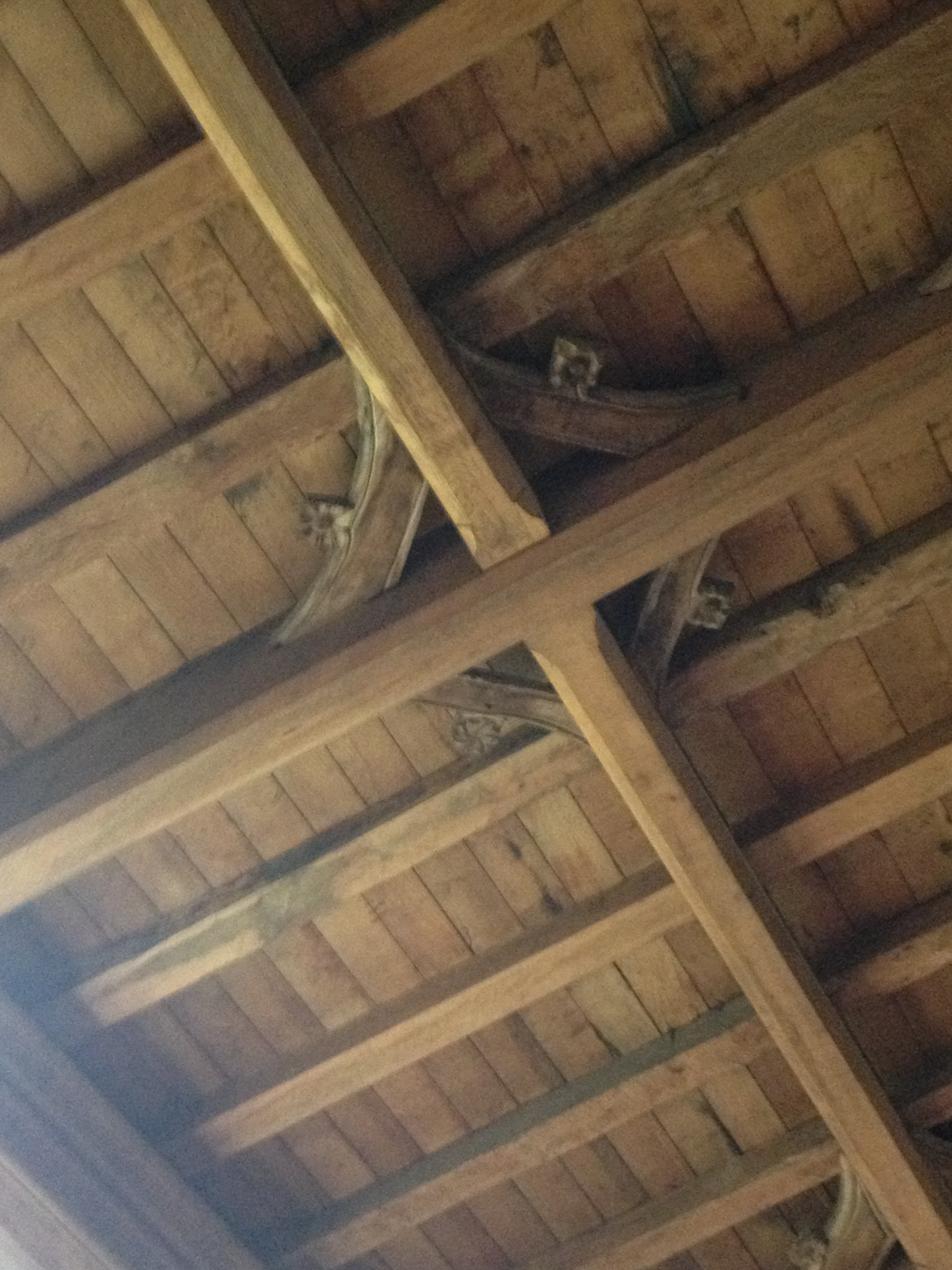
There’s been a church here since the eighth century, possibly the seventh. This building, St. Michael’s itself dates from the late 1400s, quite simple, but unusually with small, rounded-arch Italianate windows on the north and south walls and a simple but gorgeously crafted ceiling.
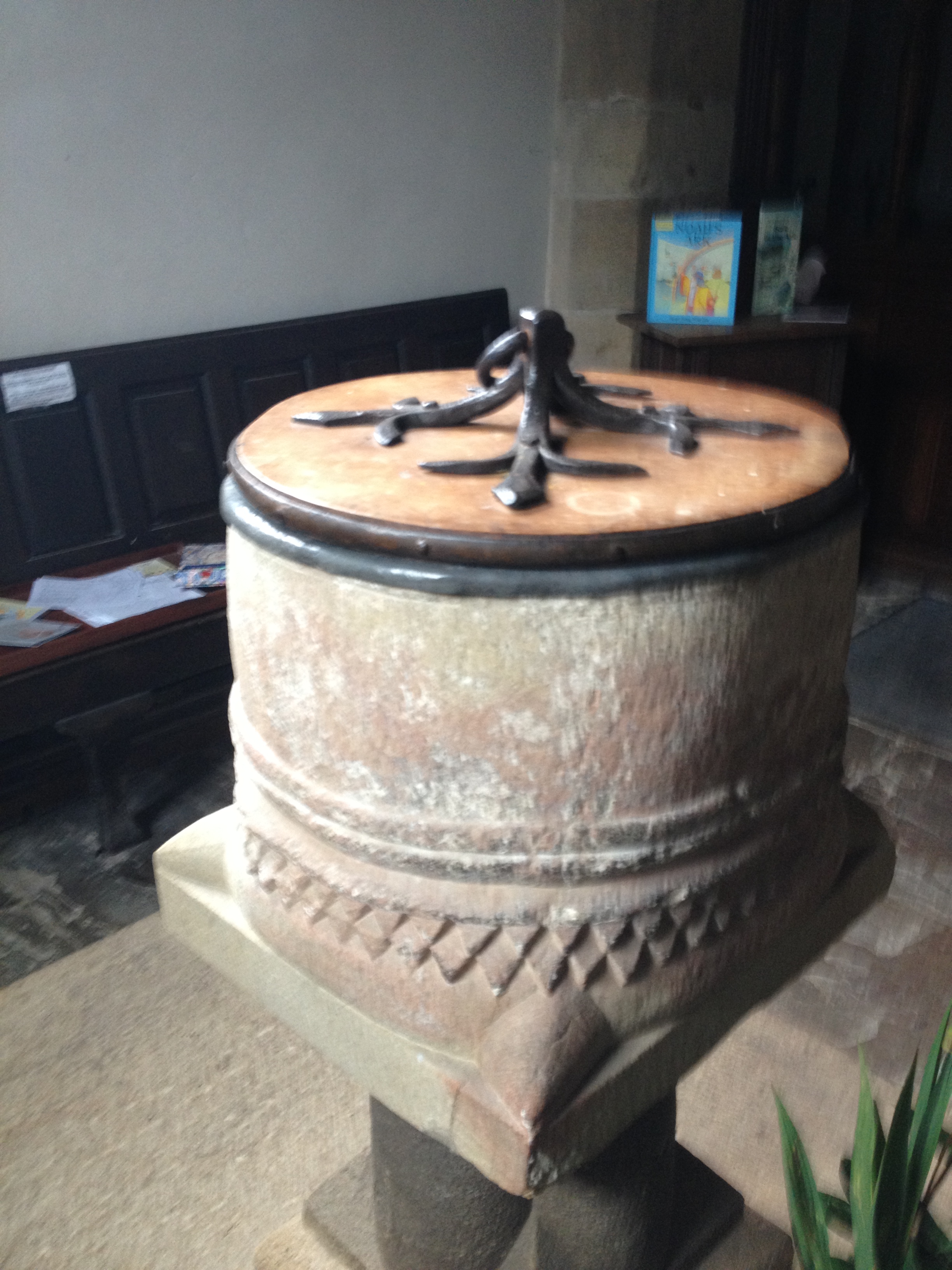
The font, though, is from Norman times.
It’s a church of old box pews, both the smaller ones from the 18th century, one of which has a name on it:
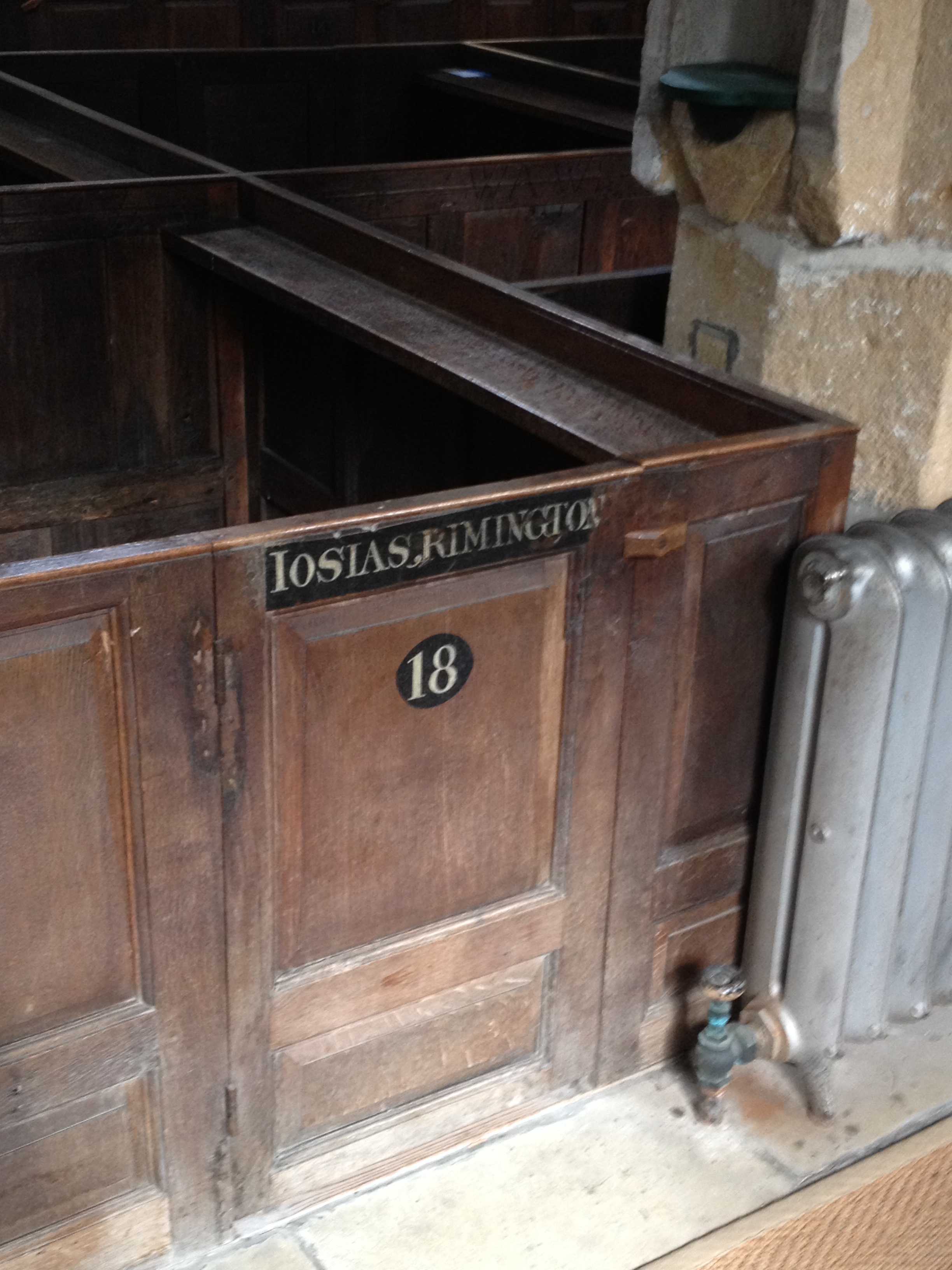
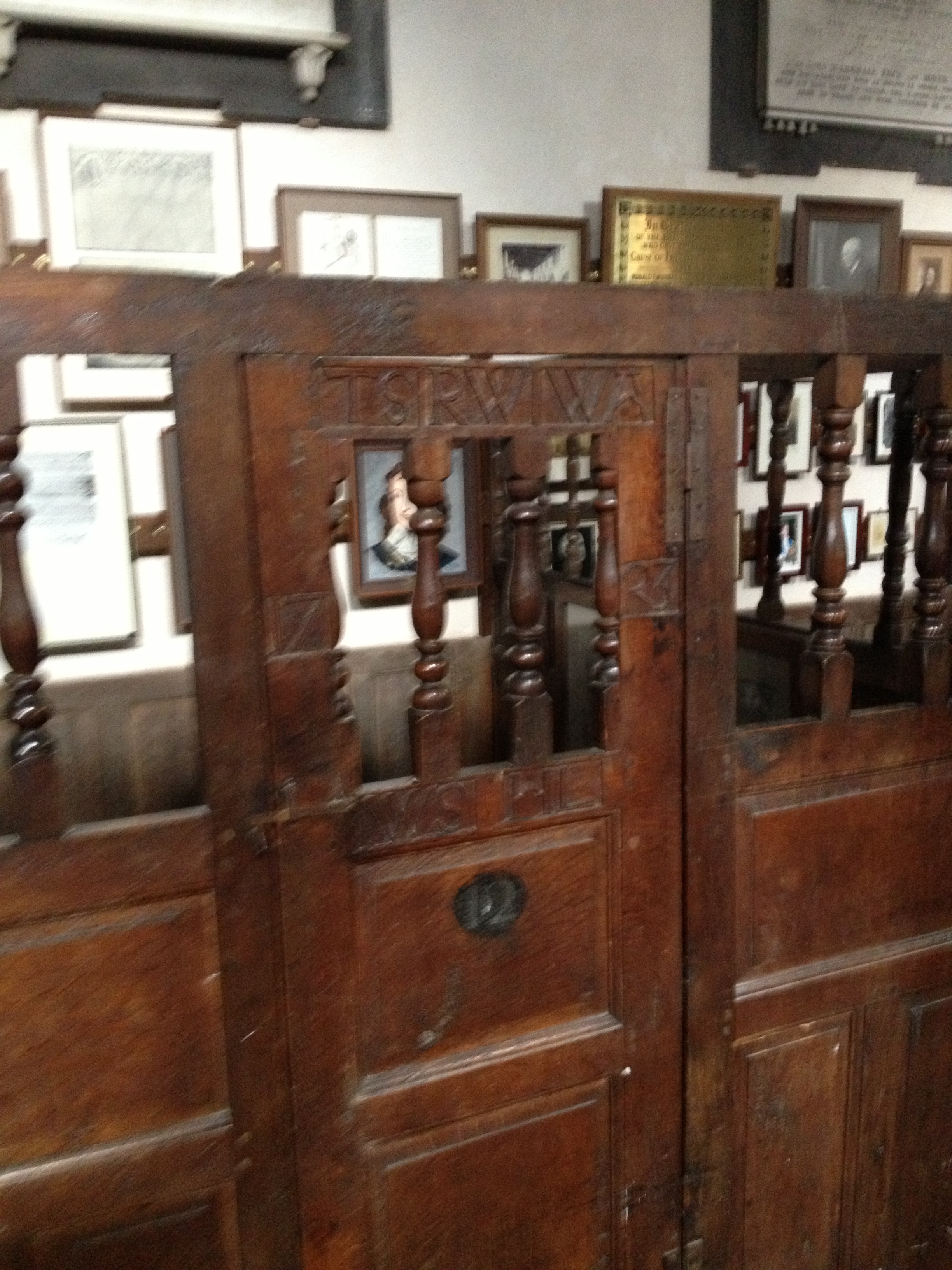
And the older, Jacobean, high box pews, which would likely have been reserved for the gentry.
There was gentry in the area, too, notably a family named Lambert who lived in the nearby village of Colton. Colonel John Lambert fought with distinction on the side of Parliament in the Civil War. He died in Plymouth, but a memorial to him stands in a chantry chapel. Next to it is the poignant memorial to his son, the last of his line, able to trace his ancestry back to the Norman Conquest. Sad enough, but the feat of being able to trace his family back that far in an age before genealogist, when parish registers and widely dispersed poll tax records and wills were the only paper is quite a feat.
There’s a lovely lych gate standing right next to the pub, and just inside, the village stocks, still used annually to raise funds.
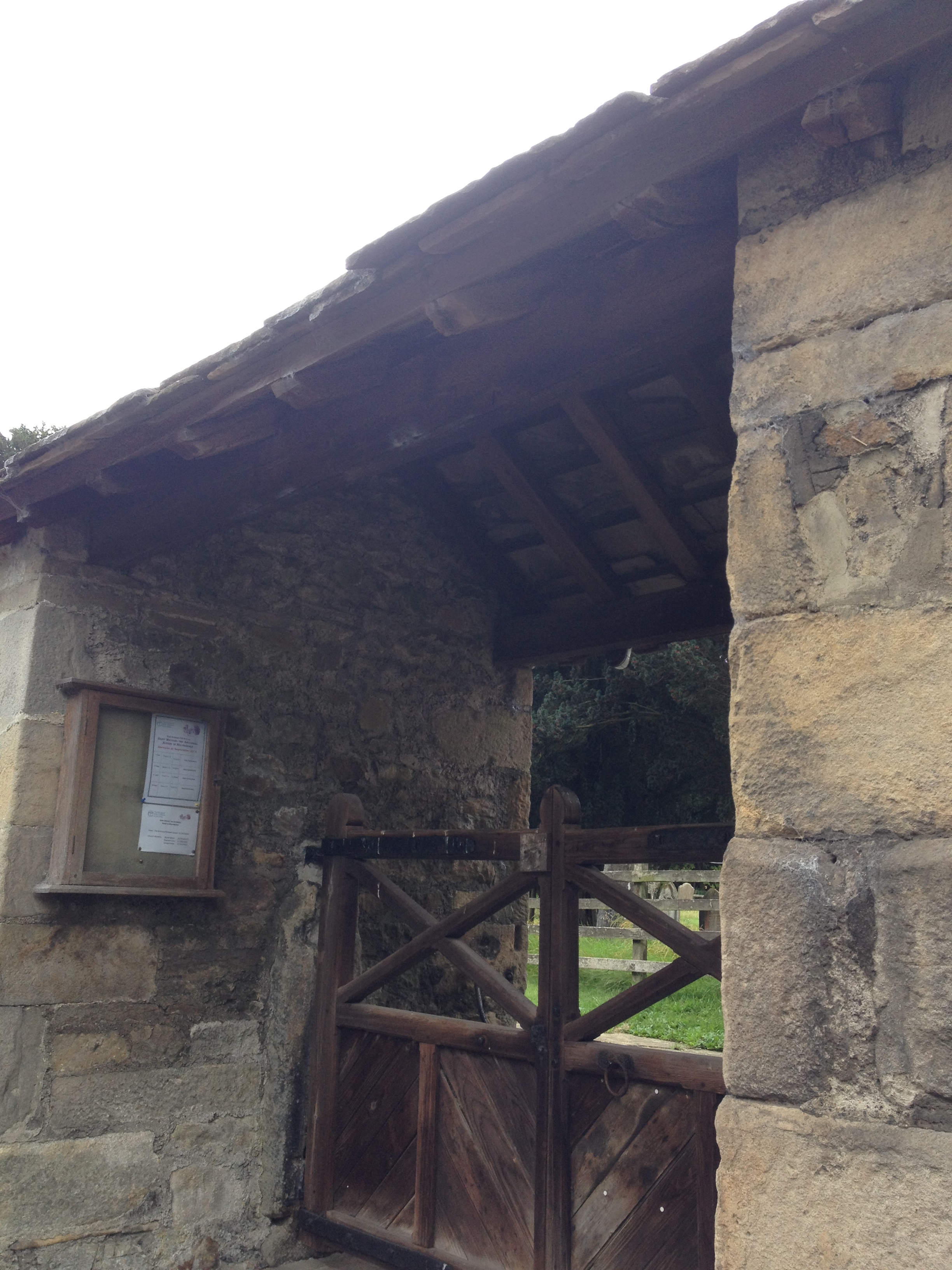
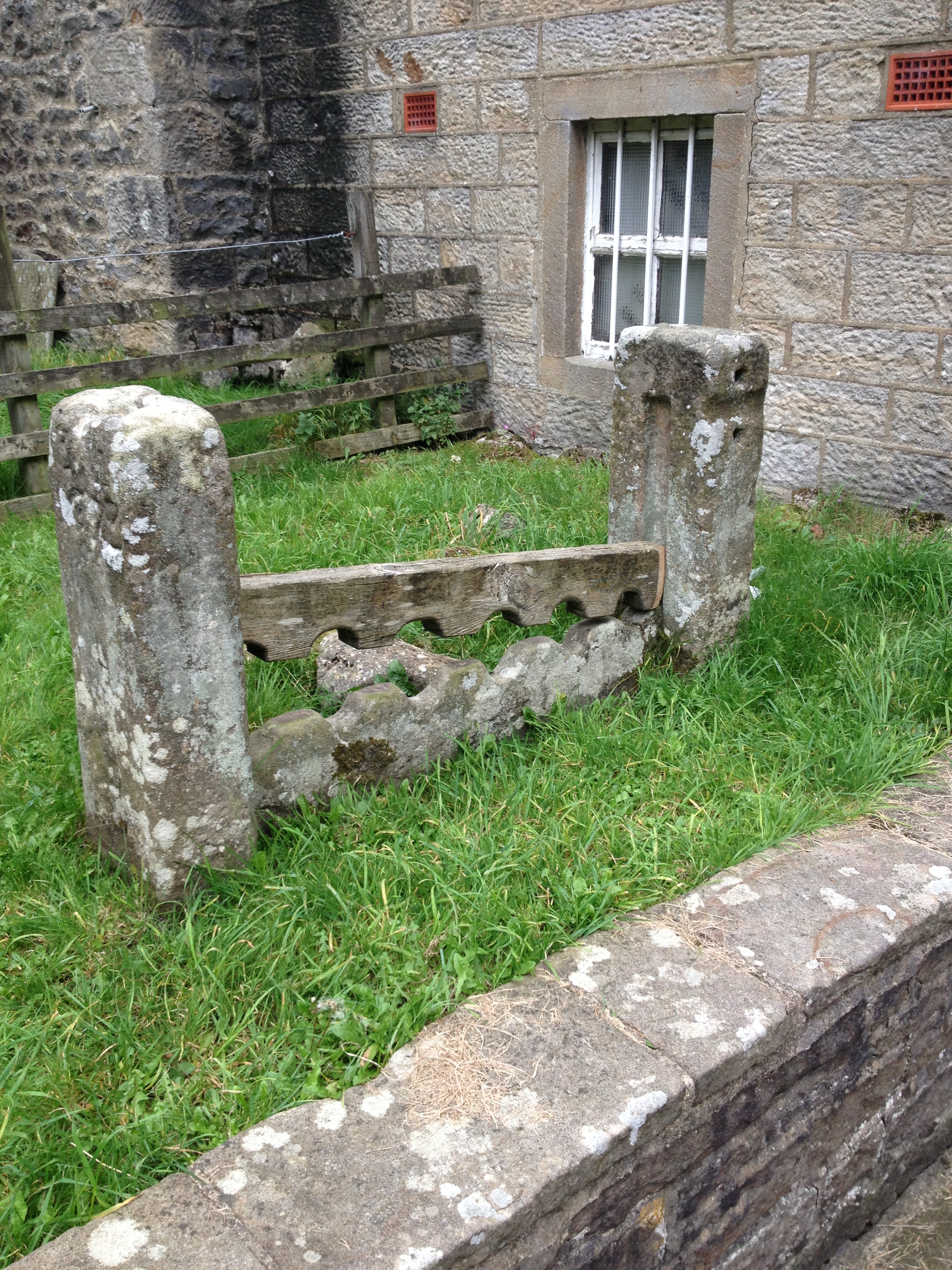
And they do need funds. With a leaky roof, they after £100,000 to get things fixed. The vicarage, which was given a makeover in the 19th century, is a lovely, simple – but fairly large- building that dates from 1612.

Kirkby Malham, well worth a visit, a pop a few quid in the church box while you’re there. Helping to preserve history is never a bad thing.
To finish off, click here for a local folktale (like me, you might need to read the explanation at the end to understand it fully). Seriously, how can you resist something called ‘The Legend of the Banquet of the Dead’?
Behind the Gods of Gold
I’d always said I’d never write a Victorian crime novel. I was certain of it. With so many already out there, what was left to add?
But somehow, I reckoned without Leeds tapping me on the shoulder.
Walk through the city and the Victorian era doesn’t just echo. It roars. It’s a time you can literally reach out and touch. The city’s architectural jewels are its grand Victorian buildings – the Town Hall, the Corn Exchange, and the solid, powerful edifices put up by the banks and insurance companies. They were the bricks and mortar promises of solidity, propriety and prosperity. A reminder of when this was one of the industrial powerhouses of the British Empire. And at the other end of the scale, the back-to-back houses in places like Harehills and Kirkstall stand as brusque accusations of the poverty so rife back then.
A world away, yet still close enough to be a very real part of today. But I wasn’t interested.
Then Leeds gave me the tale of its Gas Strike.
By 1890, the workers had begun to organise. The unions had were gaining strength. And that year, with the Leeds Gas Strike, they showed their power. Their terms of work changed by the council, wages cut, jobs slashed, the gas workers had no choice but to walk out. ‘Replacement workers’ were drafted in from Manchester and London to stoke the furnaces and keep the gas flowing. But they didn’t know they’d have to face a mob thousands strong. In fact, they’d been recruited under false pretences, believing they’d be employed at a new works. As soon as they discovered the truth, most abandoned their posts. The lights were flickering. Factories were closing. Within three days the strikers had their victory. For austere times it was an glorious story: the workers won.
I was intrigued. This might be a tale worth telling.
Reading more about the strike led to Tom Maguire. He was a young labour activist in Leeds, still in his middle twenties in 1890, a believer who helped build the labour movement, and became one of the founders of the Independent Labour Party. More than that, he was a poet (it’s a line from one of his works that gives Gods of Gold its title) who died in poverty in 1895 – yet thousands reportedly lined the roads as his coffin was taken to the cemetery.
There was definitely something here. But it needed something more personal to tip the scales and make me renege on my no-Victorian promise.
A couple of years ago I wrote a short story that took its inspiration from Atkinson Grimshaw’s dark, evocative painting Reflections On The Aire: On Strike, Leeds 1879. It shows the river, almost empty of ships, and a woman standing alone on the bank, clutching a bundle. Annabelle Atkinson. That was what I called her. And even then I knew we had unfinished business. She was too powerful, too vibrant a character to ever be satisfied with a single, brief appearance.
But she bided her time. It was only when I was researching the Gas Strike that she came and sat beside me in a swish of velvet.
‘I know all about this, luv,’ she said with a smile. ‘I was there, remember? Do you want me to tell you about it?’
So Annabelle introduced me to her fiancé, Detective Inspector Tom Harper, and the other characters in her life. We strolled along the streets of Hunslet and the Leylands together, drank in the Victoria in Sheepscar, were jostled by the crowds on Briggate and window-shopped in the Grand Pygmalion on Boar Lane. We sang along with the music hall tunes they loved – “My Old Man,” “Sidney The One-Week Wonder,” “’Enerey The Eighth”.
After that, how could I walk away?
Especially when with them came the ghosts of my own family, of Isaac Nickson who brought his wife and children to Leeds from Malton in the 1820s, of his descendants – William, John William, Harold Ewart – and the stories they had to tell me.
I couldn’t refuse. I didn’t even have a choice any more.
‘Tom Harper pounded down Briggate, the hobnails from his boots scattering sparks behind him…’
A Leeds Storytime
It’s been a long time since I wrote a #leedsstorytime on Twitter. Taking a folk tale and re-telling it, maybe embellishing it a little. Because if the stories from the tradition aren’t told, they wither.
There was a place called Jenny White’s Hole in Leeds. It was a set of stairs between two houses on the Calls, leading directly down into the River Aire. No one seems to know about Jenny herself. This is my take on how it got its name.
Jenny White was a pretty Leeds lass, courted by all the lads. She worked as a mill hand and took her fun in the evenings. It was a time of factories and smoke, the bitter taste of soot in the air. But Jenny was young, she loved life. People danced to fiddlers and sang the songs they’d known all their lives. It was a hard life, but there was sun in it, too.
The lads threw their caps at Jenny. They all wanted her. But she only had eyes for Joshua, a handsome lad with cruel eyes. He paid her no mind, though. He could have any girl he desired, and his father was a mill foreman, with power and prestige. But his friends told him to court her. She was a right bobby dazzler, she’d make a good wife. So he looked. She was pretty.
More than that, she was willing. Where lads usually did her bidding, she was willing to make all the time she had for him. Joshua, though, saw her weakness. She loved him with all her heart, but he treated her cruelly. He wouldn’t turn up when he promised, just leave her standing for hours, lonely and heartbroken. Even when they were together, he’d hardly give her attention. Unless they were alone. In those moments she felt happy.
So she was overjoyed when Joshua suggested they wed. He might not be perfect, but he’d be hers forever. Yet she quickly learned that married life with Joshua was worse than courting him. Much worse.
He’d stay out in the beershops until all hours, coming home drunk and taking out his anger on her. After a year of this, Jenny White understood the gap between the hope of her heart and her life. He wasn’t going to change, for her or for anyone. She had nothing and no one; her parents had died.
With each day the feelings grew worse. And there was no way out, no escape. To a friend she bemoaned “the marriage vows as false as dicer’s oaths.” One night Joshua didn’t come home at all. Part of her hoped he might have died, to free her. But someone told her he’d left the inn with a young, pretty girl.
Despondent, Jenny began to walk. Her route took her along the Calls, a street of low, dark houses, poor and dismal. Between two houses stood a set of steps, leading down into the chilly, damp blackness. Jenny followed them. And as she placed one foot in front of another, her spirit began to lighten, as if she might fly away. Down she went, as the water of the river lapped around her feet. Down until it reached her knees.
Someone saw her disappear down the stairs and ran, looking to stop her. But when he looked, there was no Jenny in the water. She’d moved out of sight and out of this world. No body was ever found, although people searched.
Some said she’d drowned. Others believed she’d drifted until she found a place where lovers spoke truly. Where hearts were safe and words were bonds. Perhaps she’d slipped through to somewhere she could smile and laugh again. But it seemed as if she gone through a hole in the world. Which is why that spot became known as Jenny White’s Hole.
A Little Bit Of History For The Soul
It’s a time to look forward to: Heritage Days. The weekend when so many older buildings are open, free of charge, to the public. Many of them aren’t even on show for the rest of the year. And Leeds is definitely blessed with them – 83 this time around. It’s impossible to see every one over a single weekend, of course.
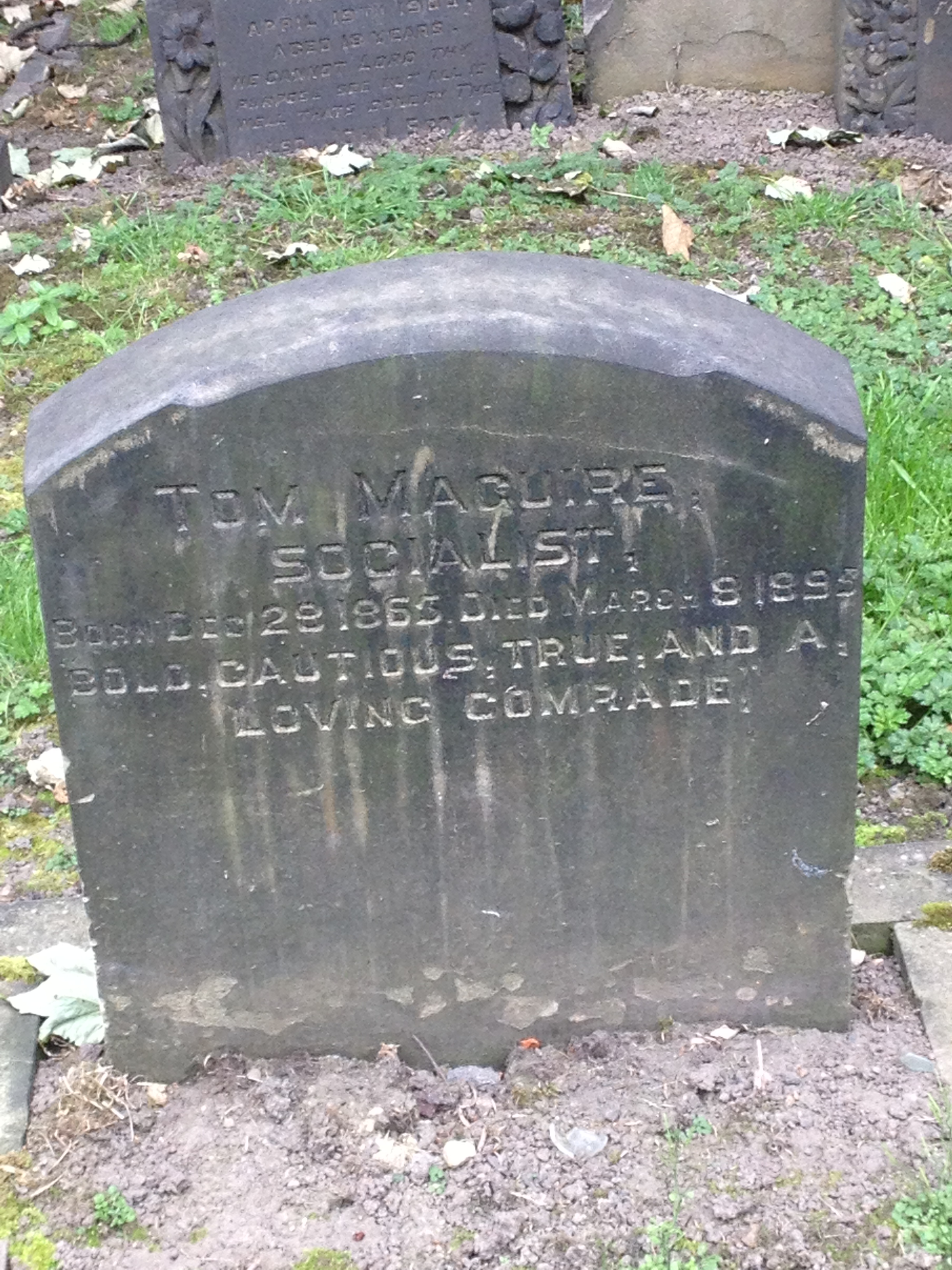
This time around it began with a tour of Beckett Street cemetery. Far more interesting than it sounds, one of the oldest municipal cemeteries in Britain (the oldest is in Hunslet, also in Leeds), which contains the fascinating subscription graves (or guinea graves, as they’re known). For a guinea, the dead could be commemorated on a gravestone, rather than be buried nameless. The downside is that there will be five or six bodies in the grace, and more on the other side of the stone. Even in death, they’re as crowded and packed together as they were in life.
But the place does have the grave of Tom Maguire, who features as a minor character in Gods of Gold, and who, in life, was one of the founders of the Independent Labour Party in 1893. A great man.
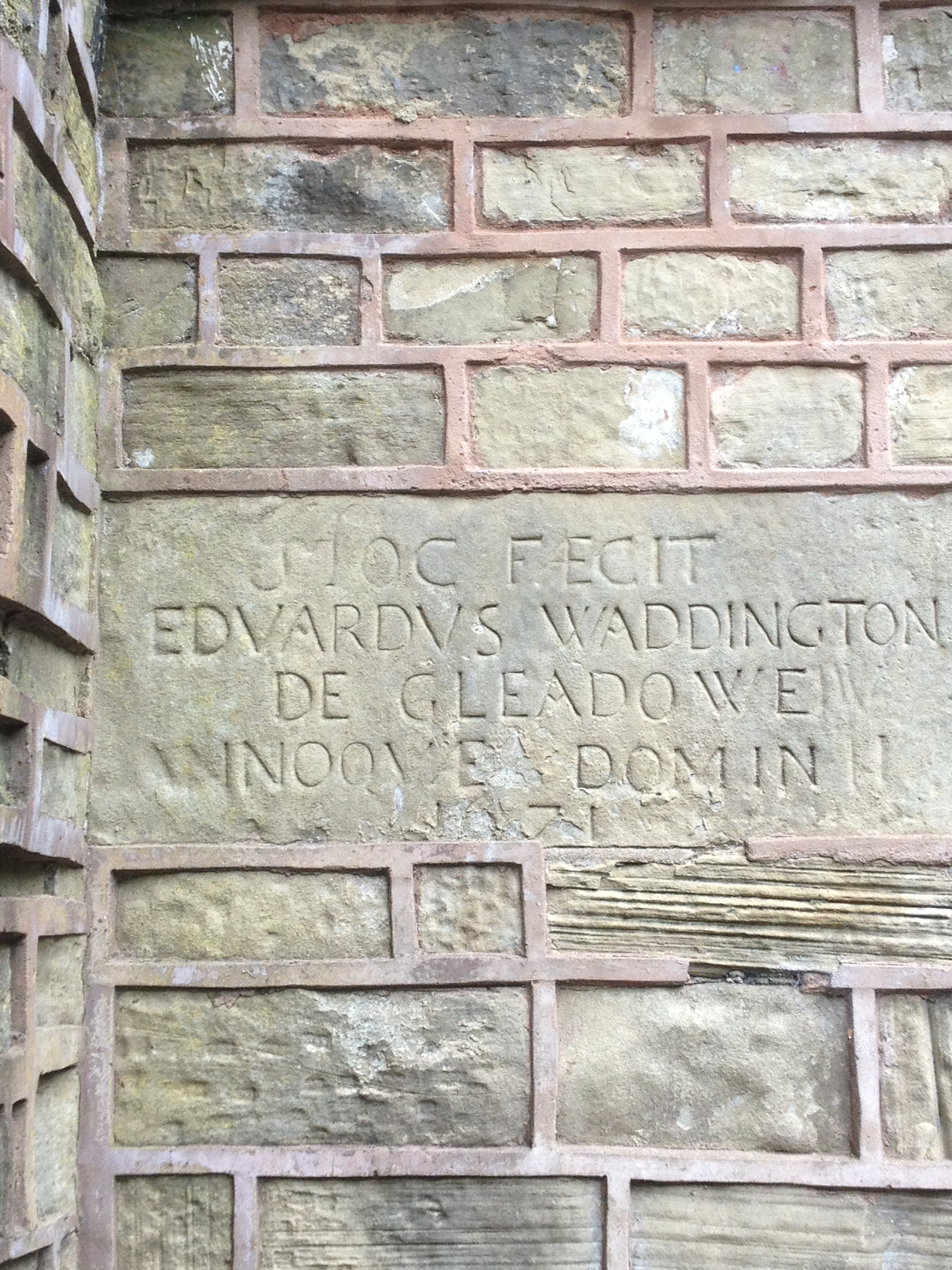
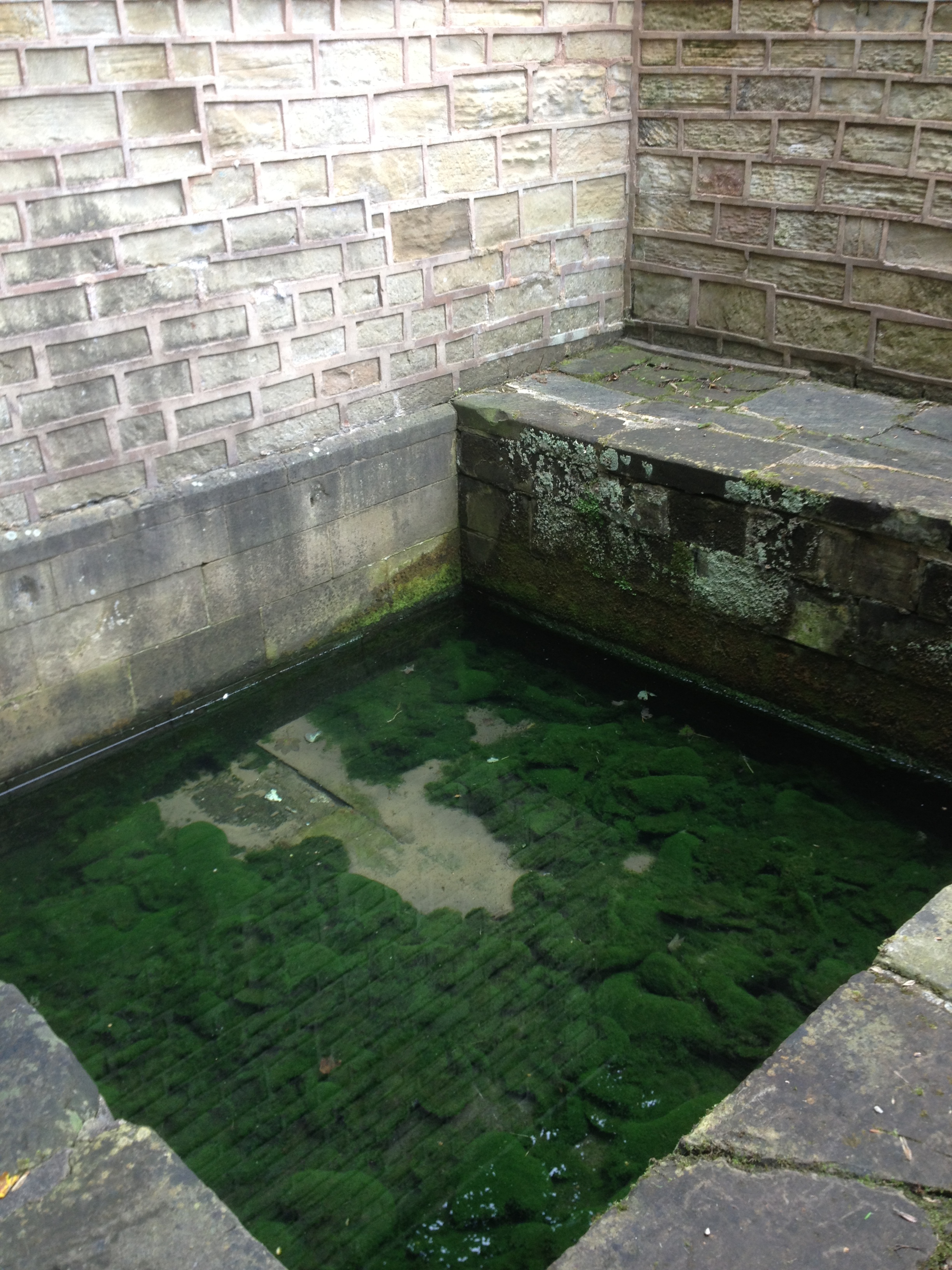
Sunday was Gipton Well, about half a mile from where I grew up. It’s a place to take the waters, just small, but once only one of many spas dotted around Leeds. Built in 1671, it’s fed by a small spring, and the privileged few who used it would wade or sit in the water, removing clothes in the outer room, which also had a fireplace, before plunging into the cold pool. The place has resonance for me, as the climax of The Constant Lovers takes place there. Going inside for the first time in many years, it was just as I remembered it – but in better, cared-for shape.

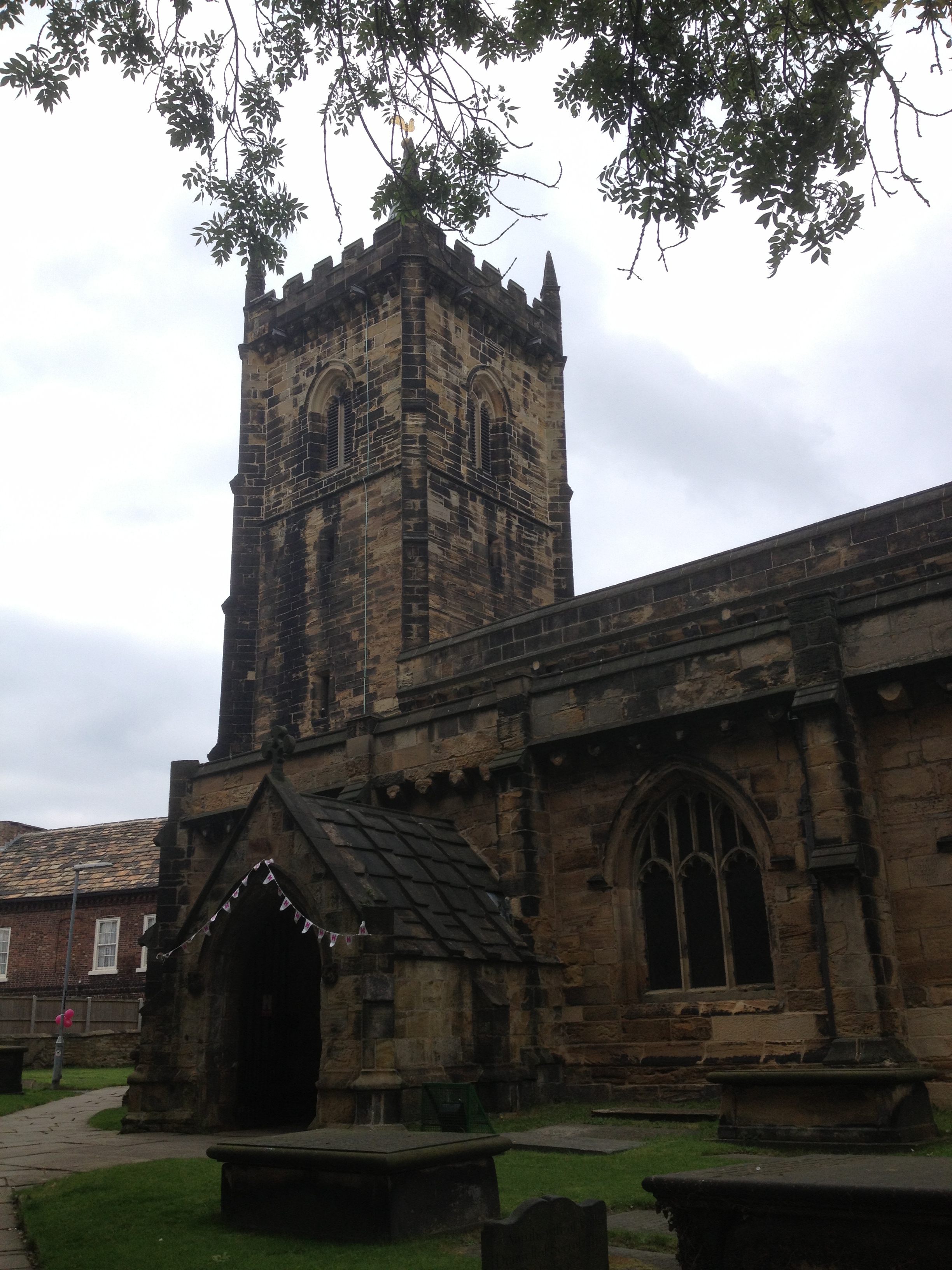
And then, Whitkirk Church, which dates from the 15th century, with a tower completed by 1440, and a continuous line of priests since 1185, although there was a church mentioned in the Domesday Book. Originally a Knights Templar church (it’s close to Temple Newsman, which was owned by the Templars, and there are two small houses close by with Templar crosses), it’s been renovated a couple of times, but still retains a beautiful medieval simplicity – although some of the memorials are very elaborate for as small church.
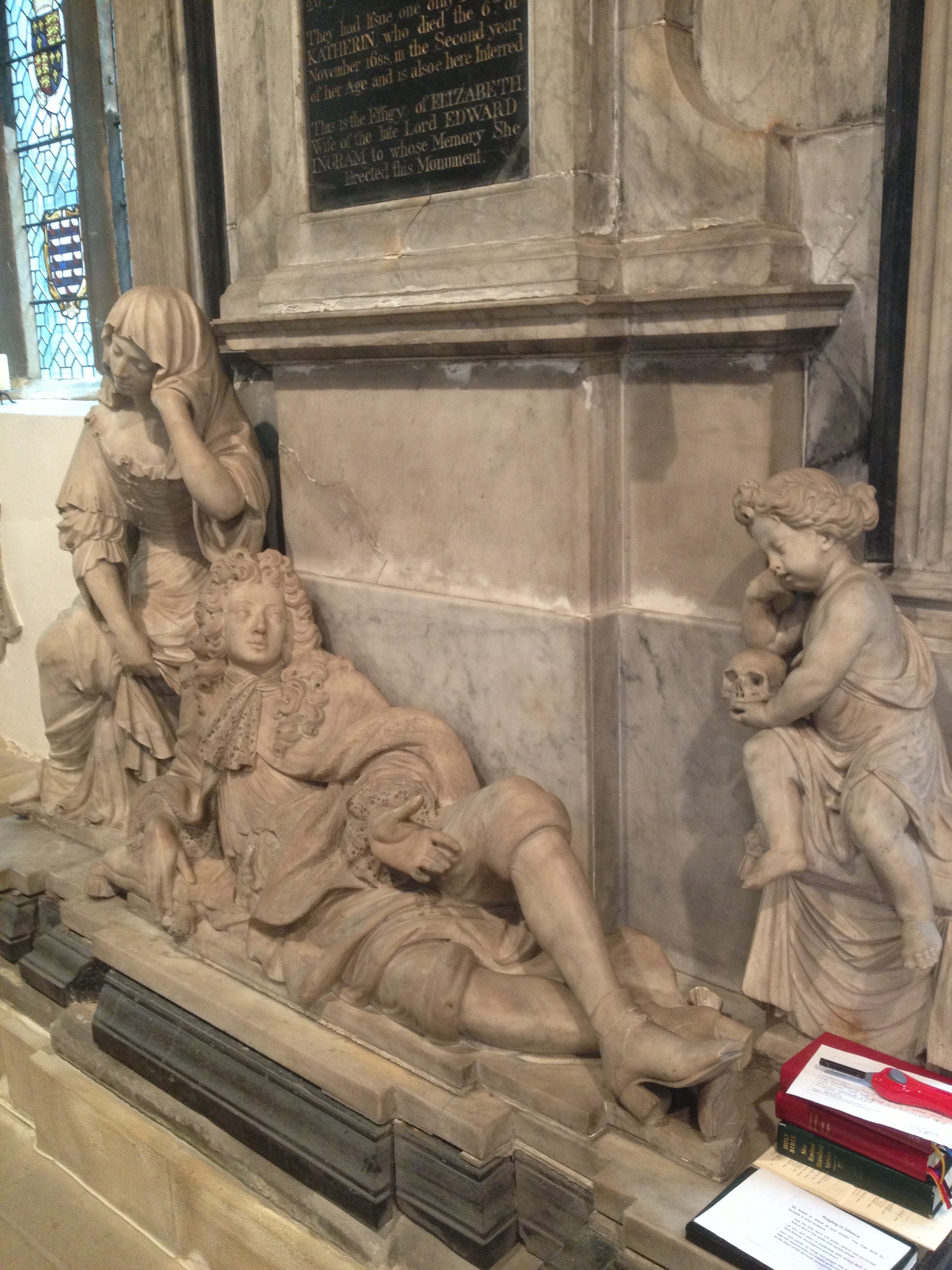
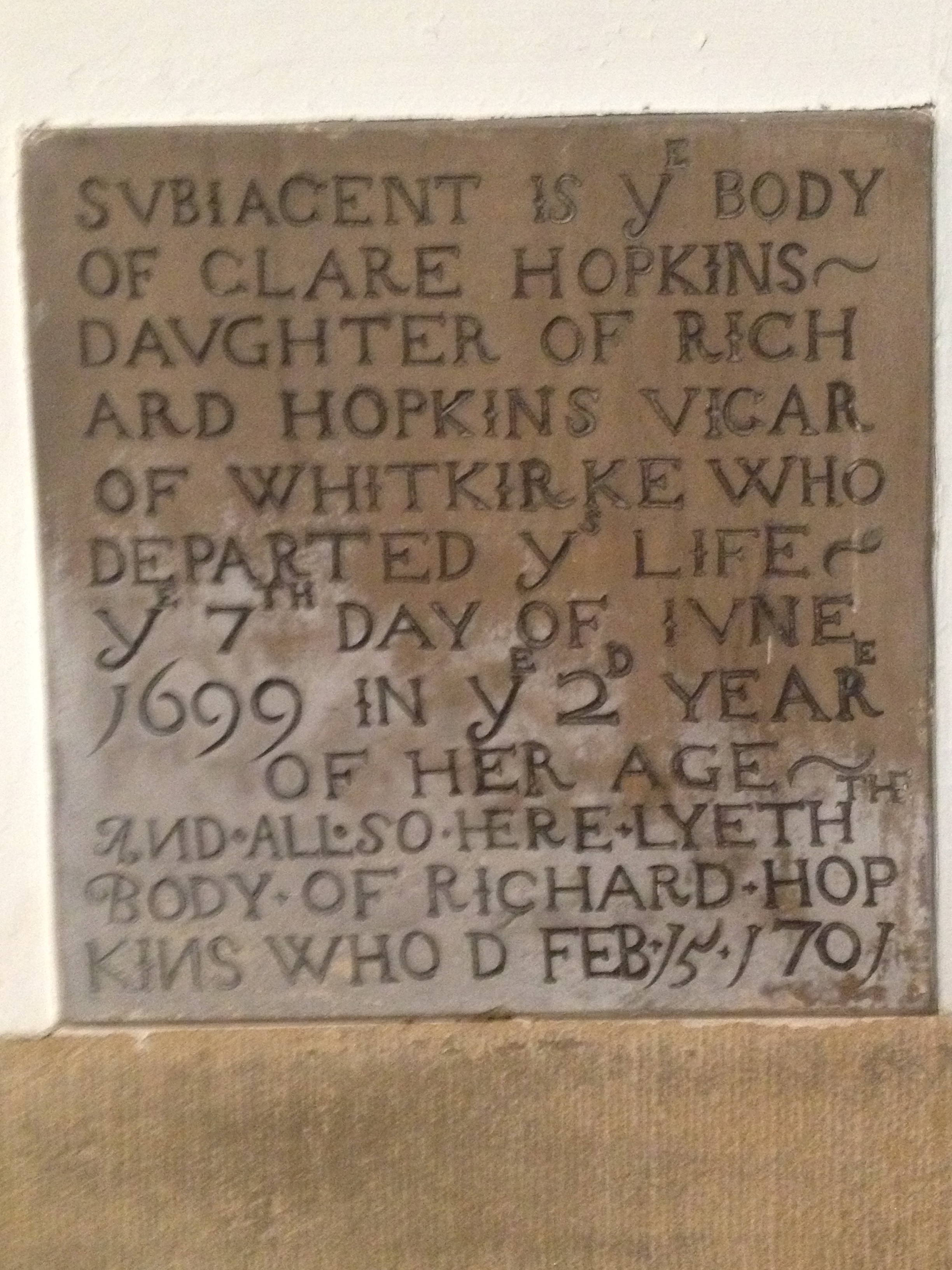
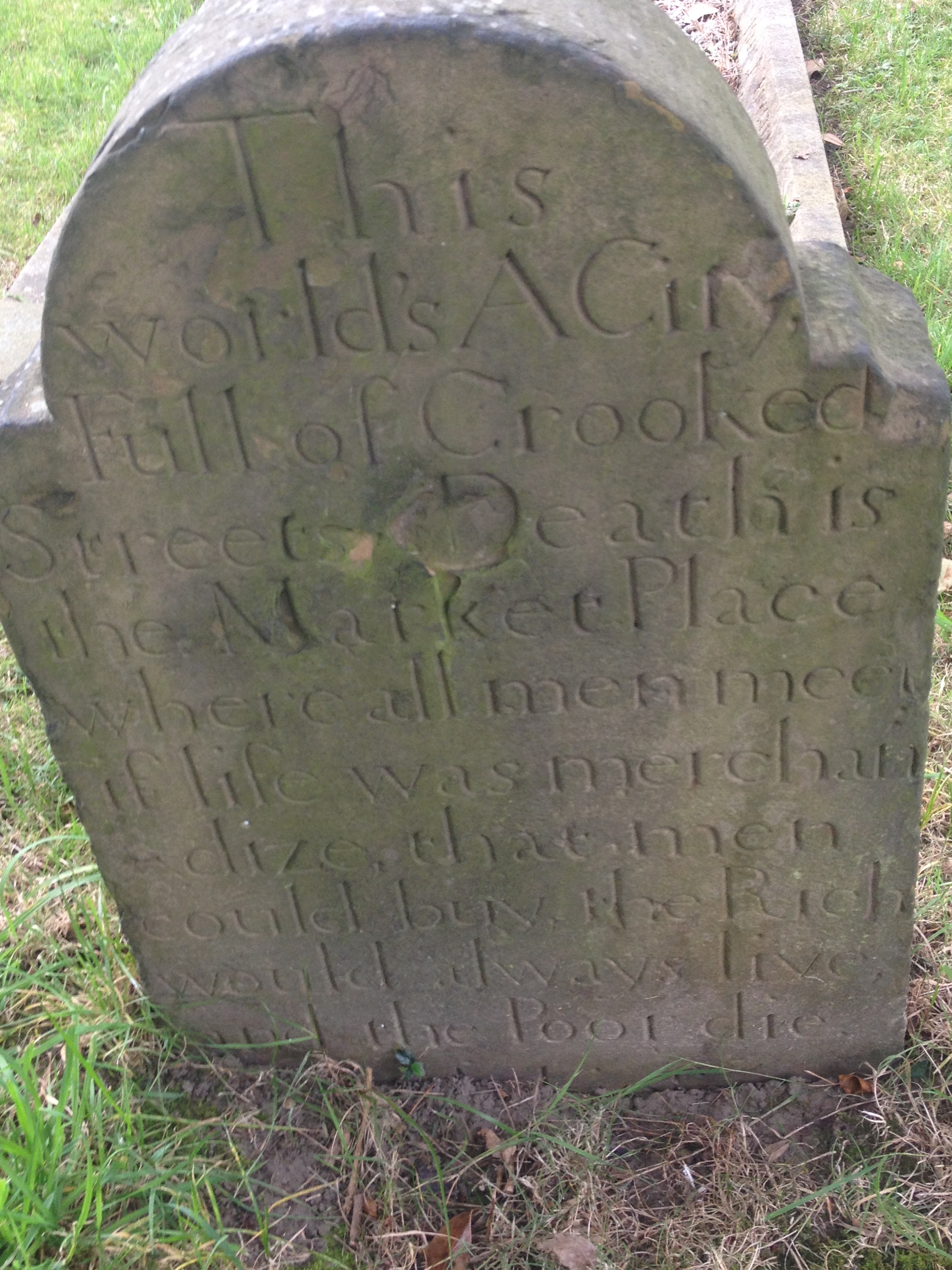
The graveyard also has this wonderful headstone. A very modern sentiment. No names or date on it, just these words.
The highlight of 2014’s Heritage Days, though, was a chance to tour Templeworks in Holbeck. The area was one of the Victorian industrial powerhouses of Leeds, although manufacturing is long since a thing of the past.
When it opened it 1841, Temple Mill (as it was then) was very modern. It was the brainchild of John Marshall, who’d run Marshall’s Mill next door since the 1790s.
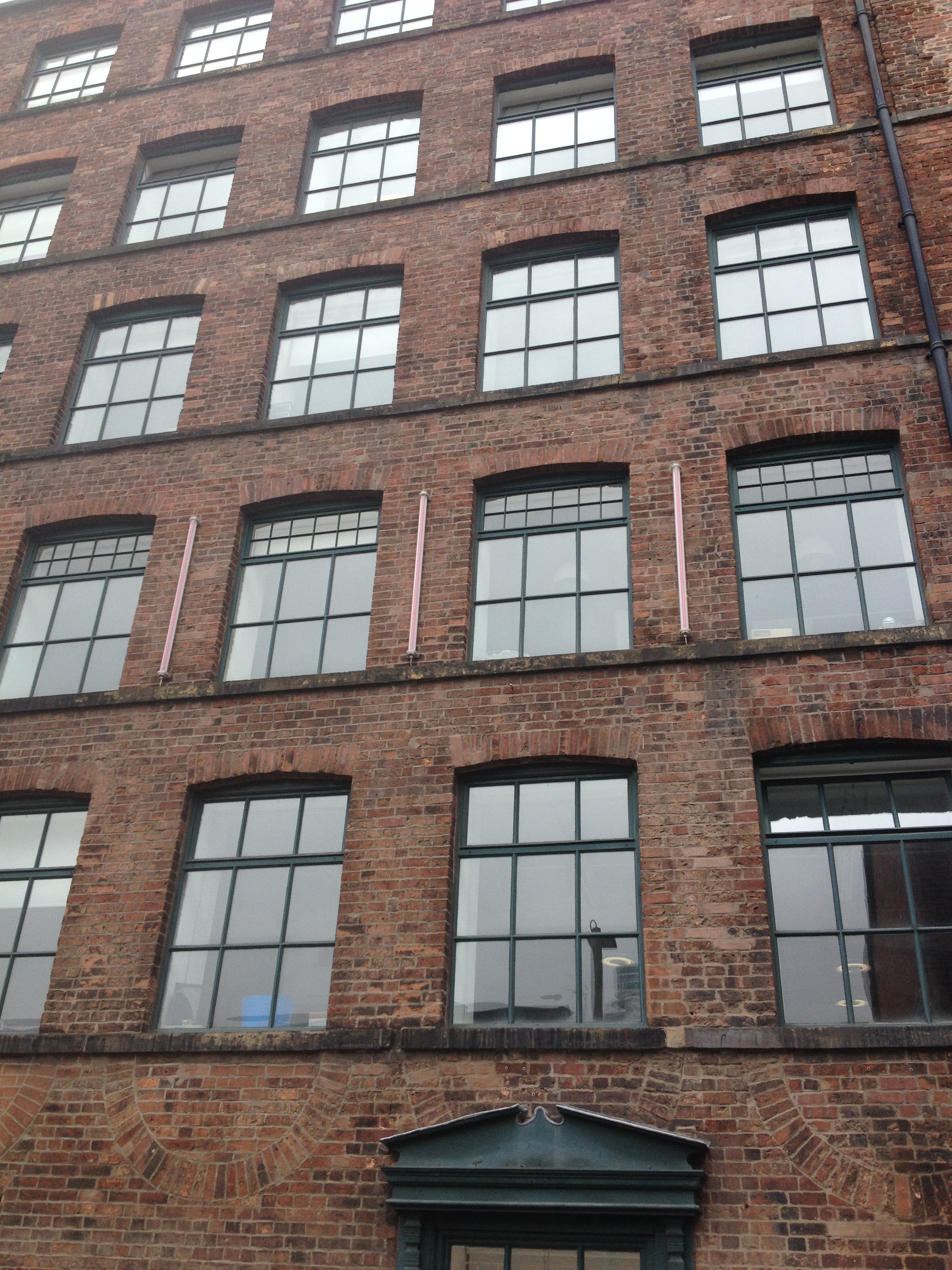
The frontage of Temple Mill is a replica of the Temple of Horus at Edfu in Egypt.

Behind that, though, it was thoroughly modern. The mill itself was the largest room in the world, with 17 exits in case of fire.
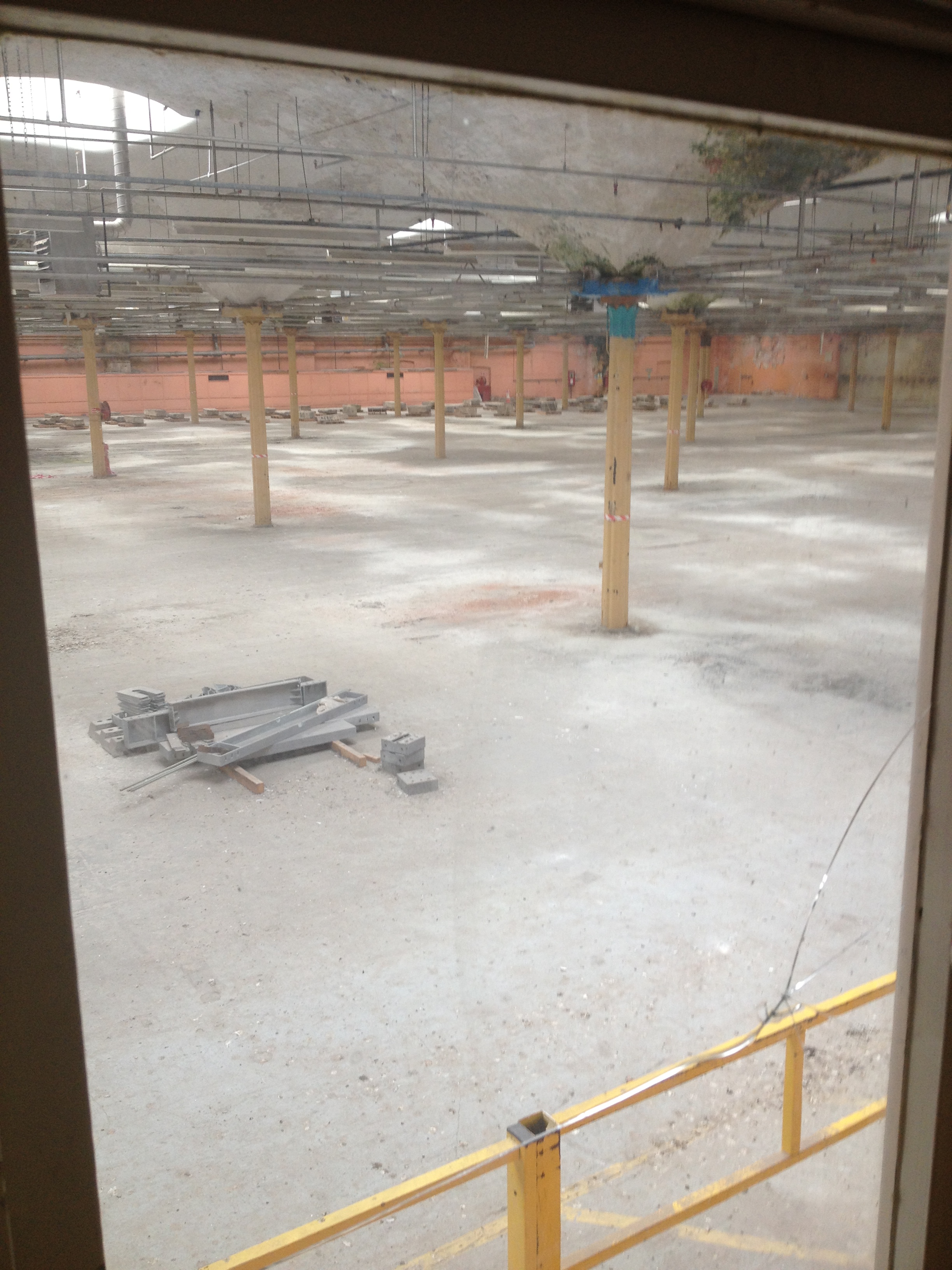
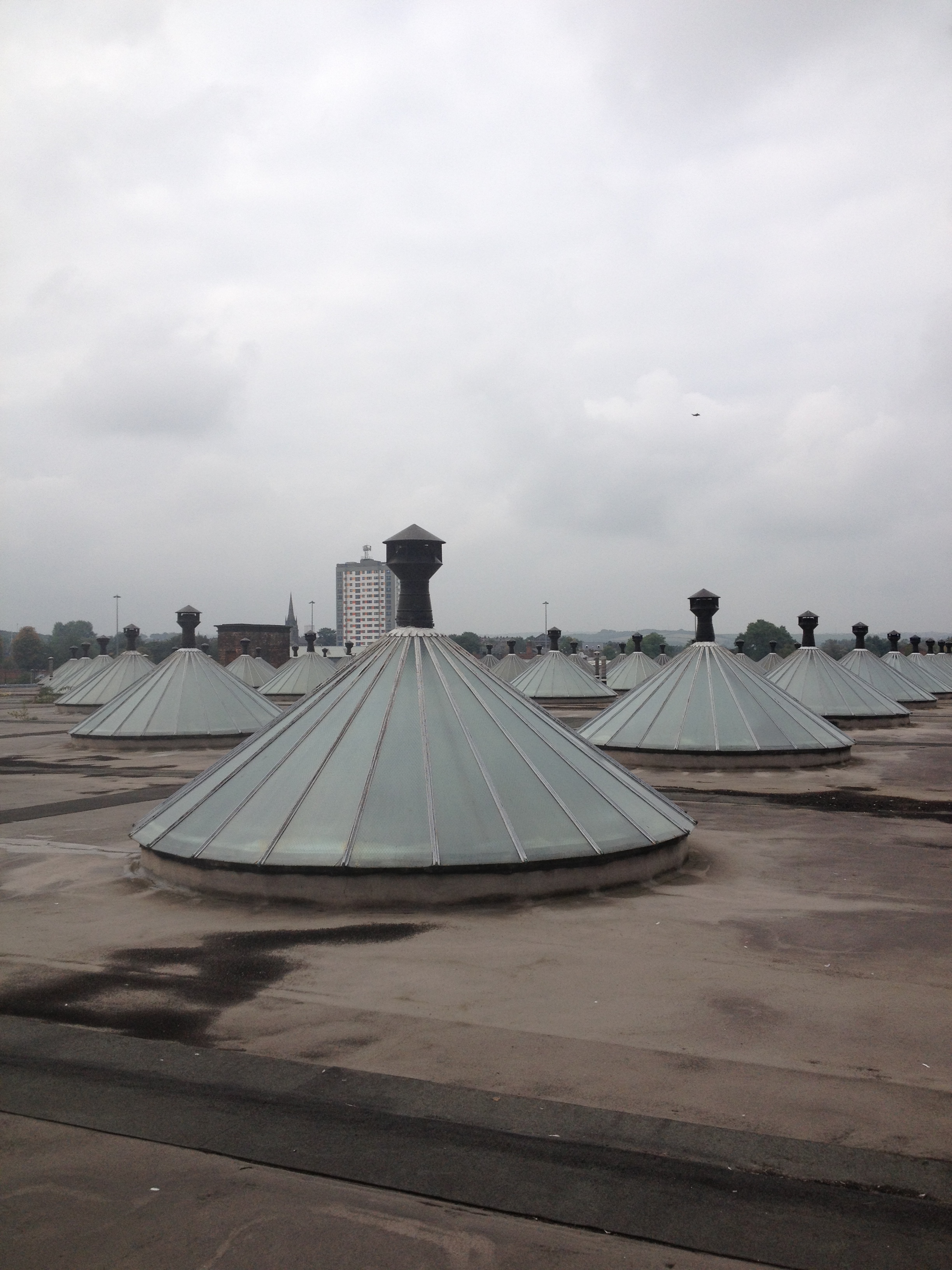
Used for spinning flax, it ran without electricity, powered by steam, generated in the cellar, while the light came from a forest of skylights on the roof that look like something from a science fiction film; they must have seemed completely alien at the time.

To provide the heat and humidity needed for spinning flax, all the iron pillars holding up the ceiling in the mill were hollowed, allowing water to trickle down naturally. The moisture level was increase by turfing the roof and having sheep crop the grass there (they were transported up and down in the world’s first hydraulic lift).
Marshall was a hard master, but also enlightened to a degree. He ran a crèche for the women who worked at the mill and there was schooling for the young workers until they were 12.
The building was in continuous use into the 21st century, last as a catalogue headquarters for Kay’s. These days, though, as Templeworks, it’s an artist’s co-op that survives without funding. Much of the income is generated from TV companies filming there, but it also hosts theatre and music events.
That reinvention is wonderful, but typical of what’s going on across Holbeck. The factories have gone, but these days it’s the digital hub of Leeds – and what is digital except the industry of the 21st century?
But some of the history is left behind in the fabric. Like these wonderful chimneys still standing at Tower Works, both of them based on old Italian church towers. Like Temple Mill, they’re a reminder that there could even be romance in industry.

 Chris Nickson