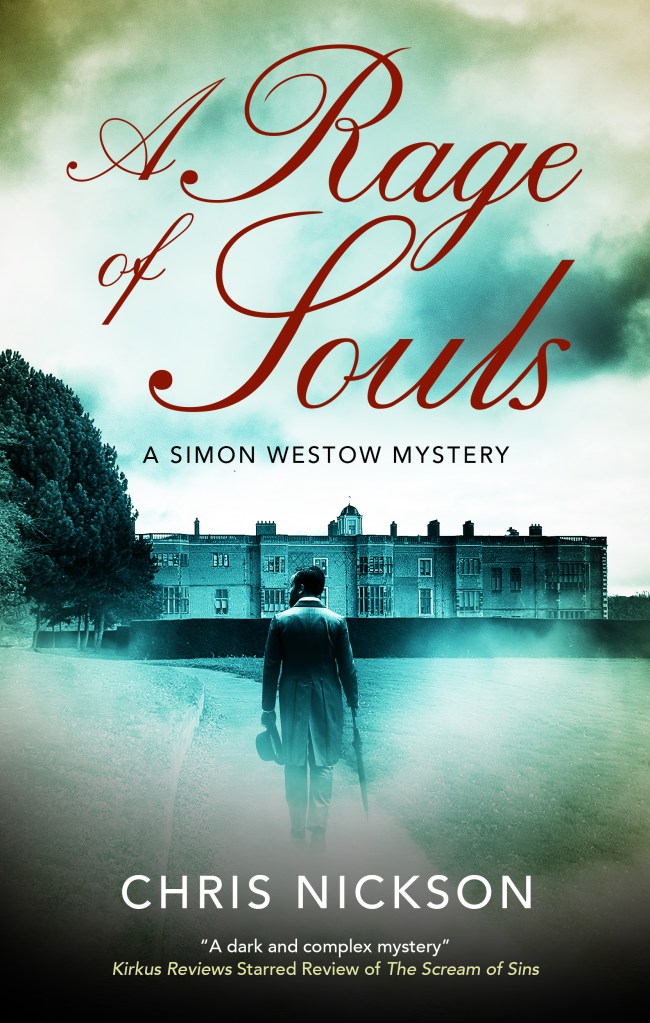
October will bring the publication of A Rage Of Souls, the eighth Simon Westow novel. A couple of people who’ve read it feel it’s the darkest yet in the series – which surprised me; it never struck me that way when I was writing it. Shadowed and sorrowful, yes. But the series had always had shaded undercurrents and that sense that violence might explode.
Yes (I think) there’s always been hope in there too, some light amongst everything else.
She sat outside the cottage, quietly reading her book and relishing the warmth of the afternoon sun. Even through the fine layer of haze and smoke that always hung over the town, the heat was comforting.
When the bell at the parish church pealed half past five, Jane set the book aside and brought a knife from her pocket, spending five minutes honing its sharpness. She knew this blade. It had saved her life and served her well. Readiness could mark the distance between life and death. Her attention had slipped once, and she’d paid for it with her little finger. Simon had let down his guard for a single moment and now he walked with the consequences.
As she approached Barton’s house, she paused to study Sally. When they met, the girl had been a child of anger. It was fury that had kept her alive on the streets. But living with Simon and Rosie and their boys, she’d found a family who cared for her, and much of that hardness had blunted, tempered with compassion. She was growing, taller every month it seemed, and starting to fill out. How old was she? Thirteen, Jane decided. That, or perhaps a year older.
Still a strange one, a child of two families, one with the Westows and the other with the homeless children who relied on each other. God help her if she was ever forced to choose between them, Jane thought.
‘Barton left about an hour after you,’ Sally said. ‘The servant brought a gig from the coach house. He and a woman went off in it. I decided to stay in case Fox came sniffing.’
‘Any sign of him?’ Her gaze slid around, but there was little to see. The house was quiet, nobody visible through the windows. She shook her head.
‘Nothing at all.’ ‘I’ll stay for a few hours and come back again in the morning.’
When she turned her head again, Sally had vanished.
But I should probably announce something – this will be the last book in the series. I hadn’t originally planned it that way, but the one I had in my head as the final novel refused to come together, and, reading it again, this seems to make a good conclusion. I’m not going to force things
Perhaps I’m right. You’ll have to be the judge.
To be clear – no, this doesn’t mean I’m retiring. It’s simply the last Simon Westow book.
It’s available for pre-order, as hardback and ebook. I’ll give the Amazon UK links here, although Speedy Hen is cheaper for the hardback and has free postage. Find it here.
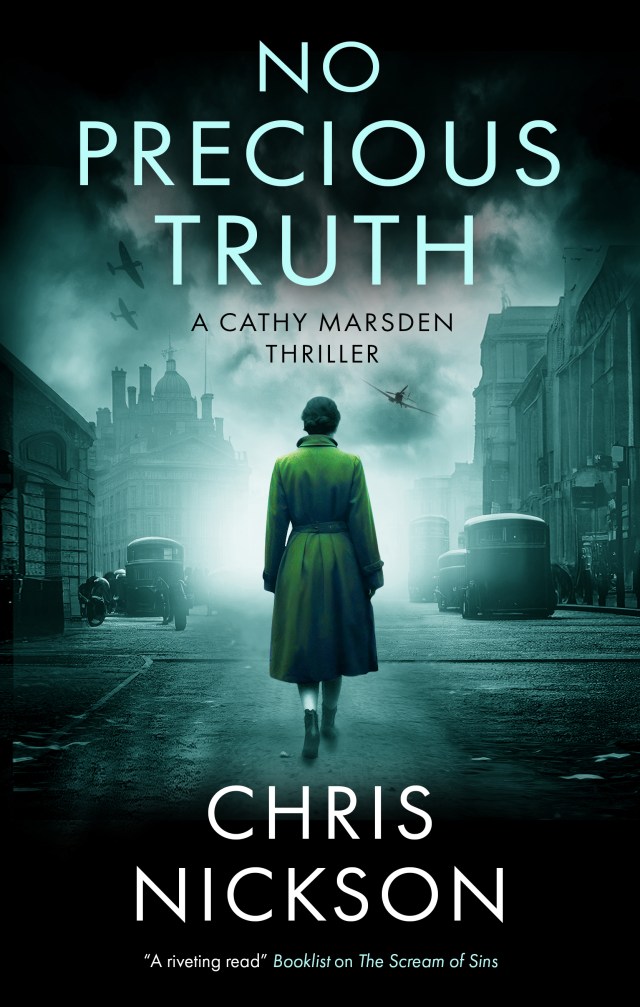
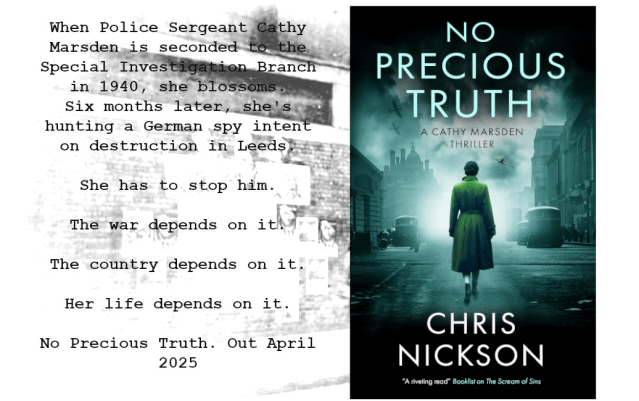
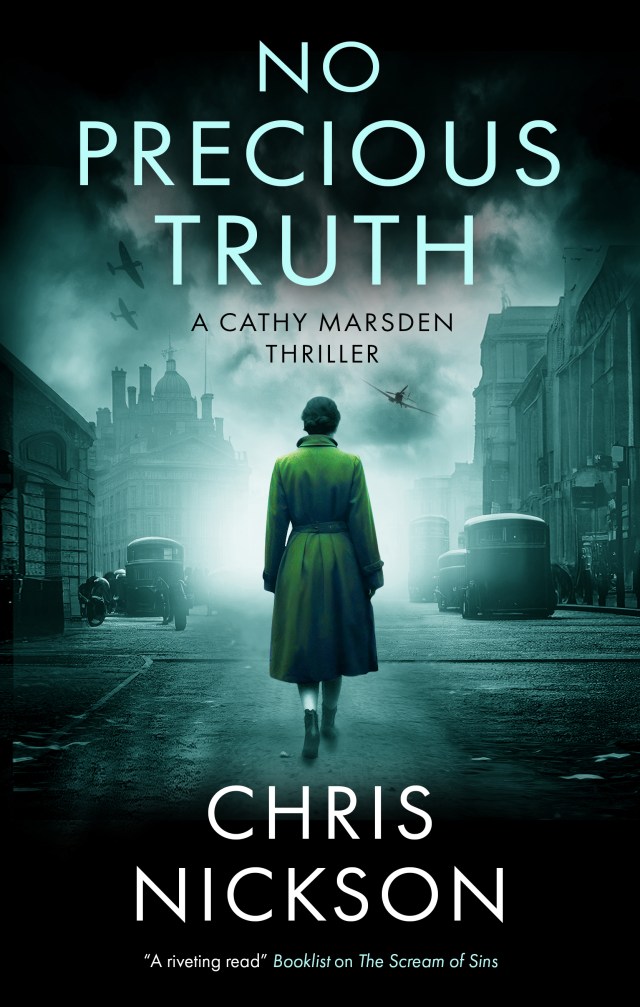
And while you’re at it, Cathy Marsden in No Precious Truth will appear in paperback in November for £9.99 ($16.99 US). Very easy to carry around and also makes a great extra Christmas present. You can pre-order that, too. Do it right here.
The scream sliced through the sky. Loud, clear, a cry of pure terror that crashed into her thoughts. Everyone near Seaton’s old mill turned to look. Carts halted, their drivers searching for the sound. Men and women walking together clutched each other’s arms. All of them stopped except the couple Jane was following. Heads down, they kept moving steadily along, as if they hadn’t heard a thing. A second scream, stronger, more awful than the first. Two men ran along the road, carrying a girl on a wooden hurdle. She was a small creature, no more than nine, clothes drenched in blood. Her dress was torn, showing a leg where the flesh hung ragged, ripped through to pale bone. Her fists were clenched, thrashing against the wood to try and stop the pain. ‘Be quiet,’ one of the men ordered in a harsh voice. ‘Surgeon will take care of it.’ They all knew what that meant: the leg would go. People shuddered and stepped back as the girl wailed no, no, no, no, the fear raw in her voice….
Jane realised she’d been digging her nails hard into her palms. Pain arrived so suddenly; it could touch anyone. She knew; seeing the girl had brought back the torment of losing her own little finger. Hers had been a deliberate act of violence, but in some small way she understood. She was still for a moment, trying to push everything she’d just seen out of her mind. She knew it would return later. As soon as she closed her eyes that night.
You can pre-order it here (UK) or here (US). It might look like the links don’t work, but if you click on the ‘here,’ they do. And yes, the building on the cover is Temple Newsam.
I’m trying something new, set in Leeds of course, this time in 1862 (although the section coming up in 1858, to confuse you). It’s a little different – I have about 20,000 written. This is the opening – I really like the characters – but I’d honestly love to know what you think.
Meet Virginia Cooper. Her husband will be along shortly
‘Mrs Cooper,’ the chief constable said, ‘allow me to be blunt.’
Finally, she thought, but made sure her face showed nothing. For the last five minutes he’d been going round the houses, offering hesitant comments about the weather, the roads, anything but the reason she was here.
‘Of course, sir.’
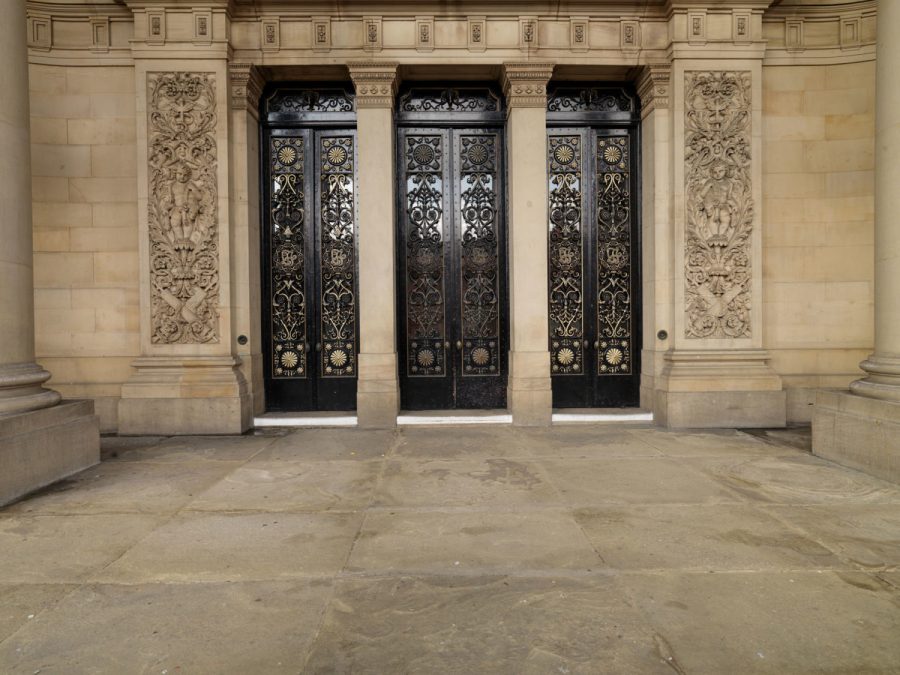
Virginia had arrived at the town hall half an hour earlier, nine o’clock on the dot, stomach fluttering as she patted the stone lions on the steps for luck. Just a month before she’d been a speck in the crowd that had gathered along the road to watch Queen Victoria arrive in her carriage and open the building. Now she was inside, and the splendour of it all, with its polished marble and granite, captured her breath for a second.
She was in her finery, the dress and she and daughter Ellie had sewn at the start of spring, a pale, spotted muslin with false sleeves, embroidered belt and a tiered skirt that cascaded to the ground, copied from a London magazine, all topped by a hat prettily decorated with flowers and ribbons. The button boots on her feet were polished to a brilliant shine. She’d been up early, fussing over every little detail, desperate to make a strong impression. As she sat across from him, with Her Majesty’s portrait gazing down from the wall, she felt up to the mark, pushing down the nerves she’d had before she met Chief Constable Broadbent.
He was a fastidious, exact man. His appearance made that obvious, with a well-cut suit, a high, crisp collar and neat tie held in place by a small gold pin. Pale, soft skin, a double chin, and luxurious combed mutton-chop sideboards that spread across his cheeks. Long, thin fingers with clean nails that kept toying with a pen to try and hide his awkwardness. An outstanding policeman, her husband had told her; the men would follow him anywhere. A bachelor, she knew that, too; obviously hesitant and uncomfortable around women. Seeing that made her feel easier.
‘I’ll ask you plainly: would you be interested in working with the police force, Mrs Cooper? Your husband has, hmm, praised you as a woman of intelligence and rare perception.’
‘He’s very generous to say so, sir.’ Woe betide him if he’d said anything less, she thought. ‘What would you require me to do?’
No skivvying, no ironing shirts or cleaning. She’d made that plain to Rob when he first raised the idea two evenings before. He’d shaken his head and laughed, then put his arm around her shoulders. ‘I wouldn’t dare. No, this is something to exercise that brain of yours.’
She narrowed her eyes. ‘What do you mean? Something like your duties?’ Robert Cooper was the inspector of detectives in Leeds police, with a sergeant and two men in plain clothes under his command.
Virginia thought she’d kept her restlessness well hidden. The wish for something more in her life. She didn’t know what, she couldn’t name it, but it was there inside her.
But he’d seen, and he’d been sharp enough to come up with this, something that might settle the ache inside. But never in a million years would she have imagined an involvement with the police as the answer. How could she? Female detectives simply didn’t exist.
‘A little similar,’ he allowed. ‘Doing things that a man can’t manage so easily.’
Her pulse had begun to beat faster. But…
‘Does it pay?’ she asked sharply. The job sounded intriguing. But if the police wanted a woman, they could pay her a wage.
He nodded. ‘If things go well, it could become fairly regular paid employment.’
If things go well. Virginia saw that satisfied look in his eye; he knew he’d piqued her curiosity.
‘I’ve been, hmm, considering the idea of a woman to work with our detective police,’ the chief constable continued. ‘A couple of other forces have enjoyed success using women in, hmm, certain situations. Often the wives of policemen. They deal with females who are breaking the law, for instance, searching them when they’re arrested or following them around town.’
‘I understand, sir,’ she said, fingers tight around the reticule in her lap, lips pressed together, trying to keep the hope out of her voice.
‘It will require discretion and a certain amount of skill,’ he said. ‘A person of a certain maturity. More than that, Mrs Cooper, you have to understand, any arrangement must remain, hmm, completely unofficial. You won’t have the power to arrest anyone, of course, and you can’t tell people what you do. I’m sure you can see that the majority in Leeds – throughout England, for that matter – would never, hmm, condone the idea of a policewoman.’ He offered her a fleeting, earnest smile. ‘I can’t imagine her majesty would approve, either.’
‘I’m sure she wouldn’t, sir.’ Her heart was pounding. The job felt close enough to taste.
Then the questions about herself. Did she have children? Two, from her first marriage. A grown son named Tom, now an assistant manager at Queen’s Mill in Castleford, and a daughter aged sixteen, Eleanor, living at home and apprenticed to a dressmaker. There’d been one more, the very first. He’d died of diphtheria before his second birthday.
How did she feel about a wife working? When it was something like this, it was a service to the town, she replied and looked at him. Didn’t he feel that way?
Broadbent reddened slightly and turned away for a second.
A few more things, but she’d been reading men’s expressions for most of her forty-five years. He was satisfied, he’d made up his mind. The chief constable gathered his papers together, tapped them into a neat pile and took a breath.
‘Mrs Cooper, if you’re willing, I would like to have you work with Leeds police. One job to begin, a, hmm, trial, as it were. Then possibly more to follow. We’d pay you by the case to start.’
‘Thank you, sir. I’d be very pleased with that.’ She didn’t try to hide her broad smile. A female detective. The eagerness overflowed in her voice. ‘Do you have something in mind to begin?’
‘I do,’ he said. He steepled his forearms on the desk and delicately rested his chin on his fingertips, eyes down to avoid her stare. ‘I don’t know if you’re aware of it, but a pair of fortune tellers arrived in town at the end of last week.’
‘Yes, sir.’ It had been common gossip at the covered market on Kirkgate. They’d come and set up in a house on Trafalgar Street in the Leylands.
‘I’d like you to make an appointment and, hmm, have your fortune told. A woman will raise no suspicion. Make a note of everything, and report back here afterwards. Fortune telling is an offence under the Vagrancy Act, you see. We’ll take care of the prosecution.’ His face clouded. ‘You realise that the, hmm, the nature of your work must largely stay in the shadows, Mrs Cooper. You’d only step out of them if you have to give evidence in court.’ He cocked his head. ‘Would you be comfortable doing that?’
For a moment, Virginia felt a panic rise in her chest. Rob had never mentioned anything about that. He’d probably never thought about it; facing judges and counsel was second nature to him. But she only needed a moment to make up her mind: she didn’t know if she could do this work, but she was desperate to try, to see if it could provide what was missing.
‘Yes, sir.’ Her voice was firm. ‘I would be willing to do that.’
‘Excellent.’ He smiled, a real look of warmth on his face. ‘Detective Sergeant Bell will give you the details.’ Broadbent extended his hand. ‘Welcome, Mrs Cooper.’
Four years had gone by since then. She’d learned how to spot frauds, been scratched and bruised as she searched female prisoners, and trailed pickpockets all over Leeds. She’d seen heartbreaks and horrors that returned to haunt her through the nights. Tried to comfort a young woman whose drunken husband had beaten her halfway to death simply because she answered him back. Heard the anguish of a woman whose man had just murdered her young child. She’d spent five hours in a dark, muddy cellar along Marsh Lane with a female killer, while water leaked through the wall to lap over her ankles, constantly alert in case the woman tried to attack her.
She’d watched the harm people did to each other, more of it than she could ever have conceived. Known their fears and violence and learned to develop a shell to protect herself. Along the way, she’d come to understand that she had a gift for this. Rob must have seen that in her. But now she understood why he never wanted to discuss the job when he came home; it kept his family safe from the demons that lived inside him.
While silent, unspoken, she kept her own well of sorrows hidden.
It’s the best damn World War II thriller set outside Lodom that you’ll read this year. Guaranteed.
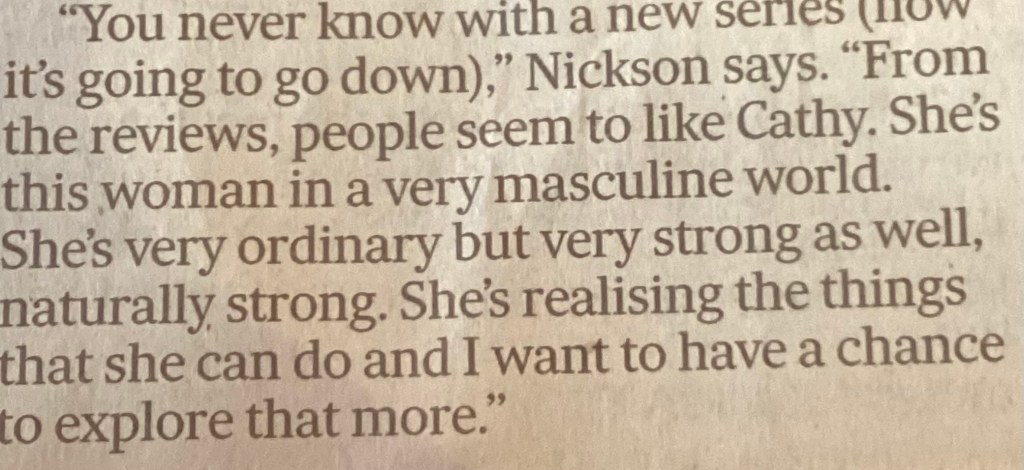
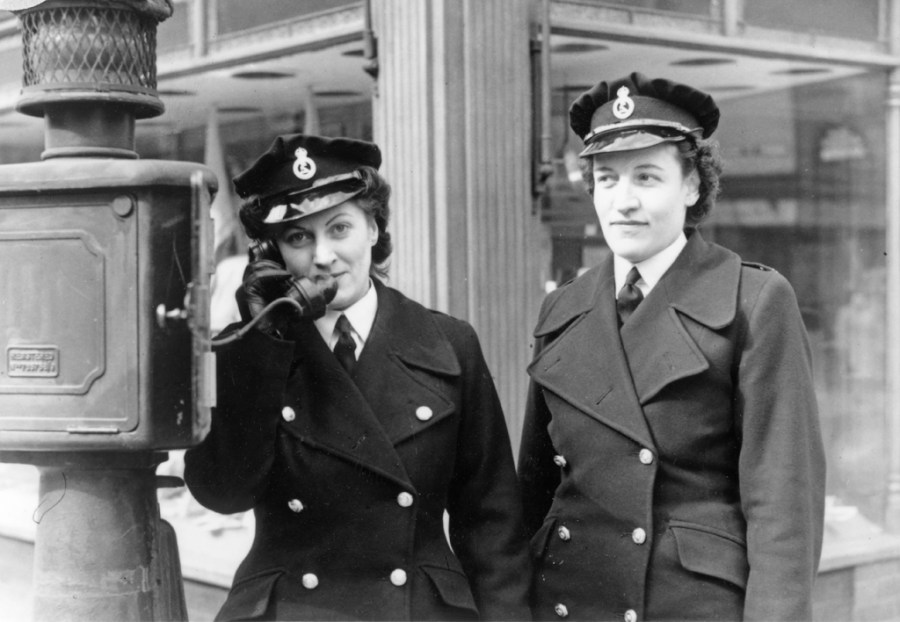
It features as strong Northern woman, Woman Police Sergeant Cathy Marsden, as the main character.
You’ll walk those streets and feel the fear as the air raid sirens sound.
You’ll be there with Cathy as she hunts an escaped German spy.
It’s set in Leeds.
Bonus: I want to sell plenty of copies of this, partly because it’s very good, but also because it means my publisher will let me continue the series. The second comes out next year, but I want a third and a fourth, so…please?
Buy it from an independent bookshop if you can, but the behemoth is going to be easier for some people. The link is here. I know money’s tight for so many people – ask your local library to get it for you.
Hard to believe that it’s almost two weeks since the wonderful launch for No Precious Truth. Time’s felt compressed since then. But April has seemed to rush by, as if it was sprinting, so strange after a never-ending March.
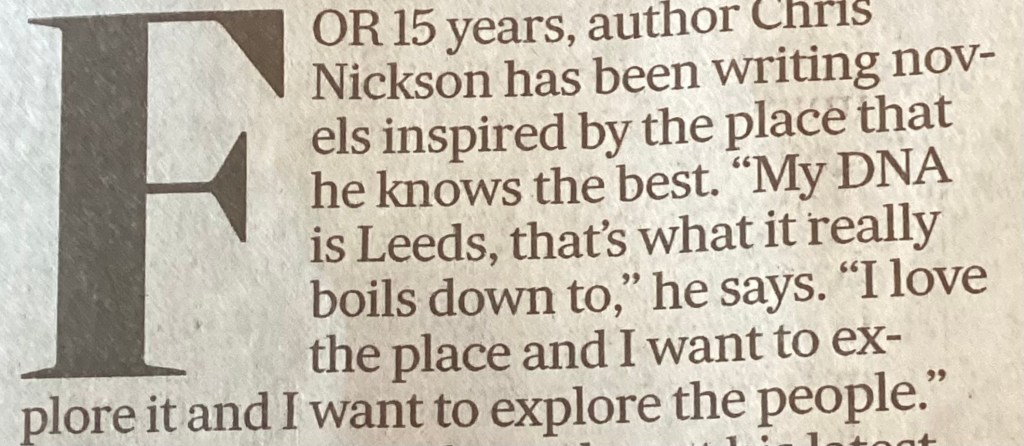
A week later and the Yorkshire Post published an interview with me, one that captured me and my writing pretty well, I think.
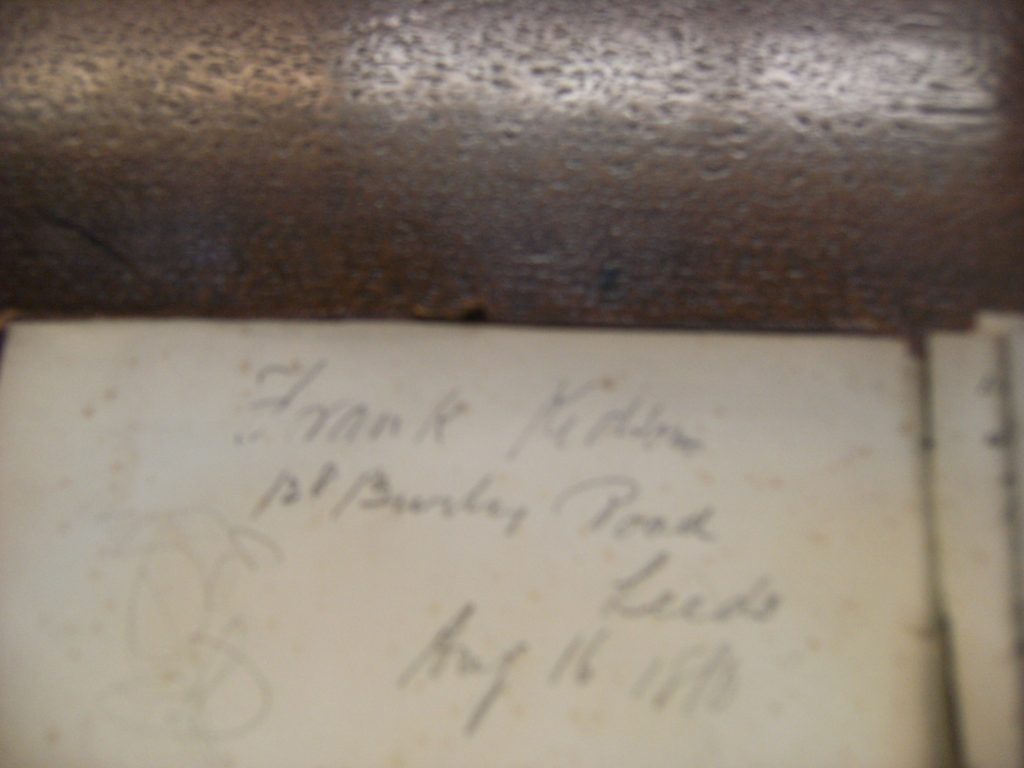
I’d barely caught my breath when I had to write a paper I’d agreed to present at a symposium for music in the Leeds collections, in the new music library (and you really should see it) that’s part of the central library. I’d been asked to talk about Frank Kidson and his materials. A shock to me, as I’m no academic – not even a degree – but I’m a great admirer of Kidson and what he did.
He and his niece and companion, Ethel, are minor characters in the Tom Harper book, The Tin God, where his knowledge of folk song is important in unravelling the clues. He was one of the pioneering Victorian folk song collectors, penning a column about songs in the Leeds Mercury Supplement for a few years and published books on folk music; the most famous is the influential Traditional Tunes, which was largely preciously unknown music, much from Yorkshire, especially Leeds.
Leeds Libraries has an excellent collection, a handwritten biography of him by his niece, his watercolour sketchbook, arrangement of songs he worked on with composer Arthur Grimshaw (son of the famous Leeds painter Atkinson Grimshaw), and much more.
It was an honour to be asked to do this and have the rare luxury of spending time with the materials. I’ve wrote about Kidson for fRoots magazine in 2018 and I was grateful for the chance to spend time with him once more.
The day after was my school reunion. 53 years, although we bulked up the numbers by including the two years below. It was interesting. I’d expected it to be that, so I wasn’t disappointed. I’d seen a couple of the people more recently, and it was good to catch up with them. But I was never part of the mainstream at school, and there were plenty I didn’t recall.
Tomorrow, another symposium, this time at the law school of the University of Sheffield. Talking about crime fiction, so I’ve prepared that paper, even as I’ve been going through the proofs for A Rage Of Souls, the next Simon Westow novel, coming in October.
After that, I’ll be ready to take the long weekend off…
Of course, No Precious Truth hasn’t even been out for a month yet. If you haven’t read it yet, I’d certainly appreciate the sales. Independent bookshops are always best, but wherever you want. And for those on a budget, please, ask your public library to order it in, if they haven’t already. A little about Cathy from the Yorkshire Post interview, just to convince you.
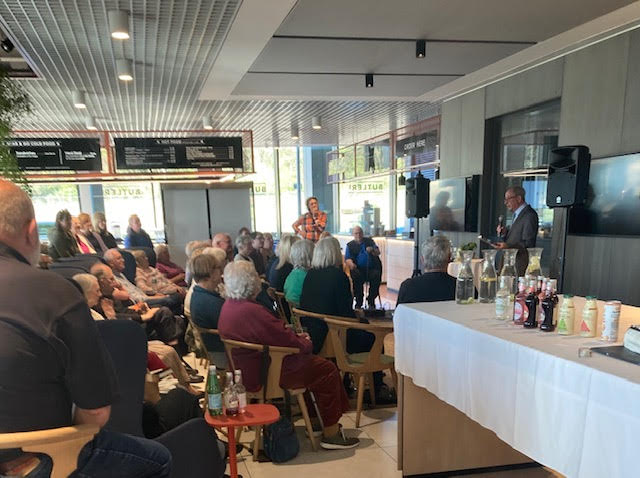
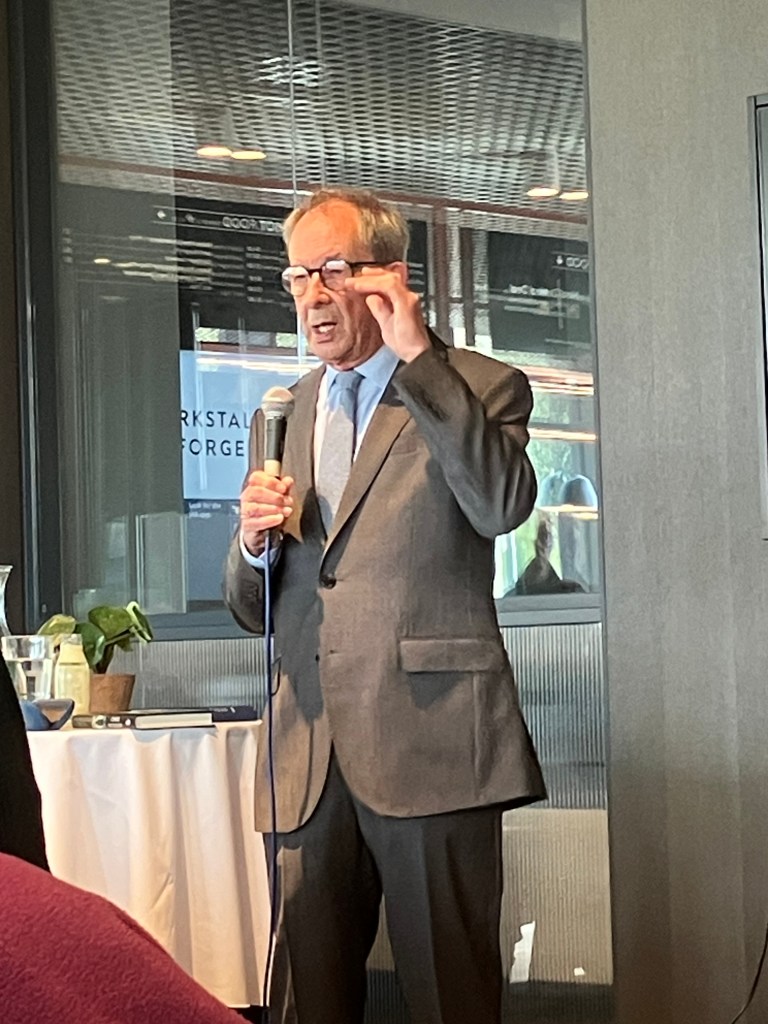
I’m sorry you couldn’t be there, out at Kirkstall Forge for the launch of No Precious Truth. I never counted how many came, but the estimates are between 50 and 60 – a hell of a turnout for a sunny Thursday evening, and I’m flattered so many attended.
A number of faces I knew, and far many more that I didn’t. There had been an article about the event in the regional newspapers that must have made people curious. But also people familiar with my books, curious to see Leeds in a World War 2 setting, and to meet Woman Police Sergeant Cathy Marsden. And to be terrified by that rare vision of me in a suit.
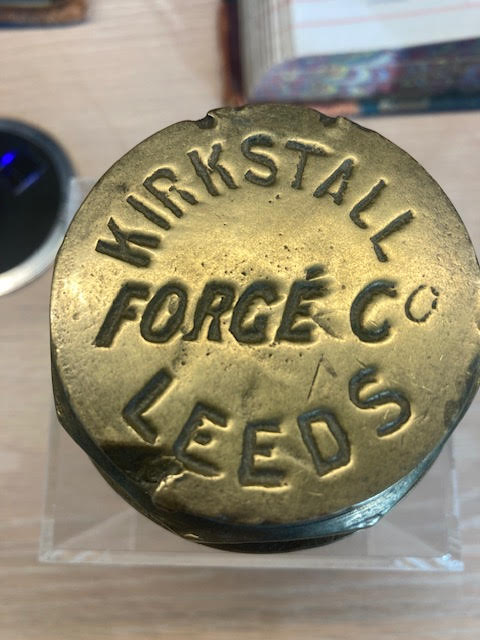
The Forge features in the book, making it an ideal location for the launch. It had been important in the war (and was bombed in 1942, with five men losing their lives). I’m grateful to Lucinda Yeadon, who ended up in hospital two nights before the event (all wishes for a speedy recovery), to Marius and Shelly for being so receptive to the idea and organising everything, as well as providing refreshments for everyone.
Plenty of artifacts and ledgers from the Forge in wartime were on display, along with replica war documents, like ration books and identity cards, and newspapers.
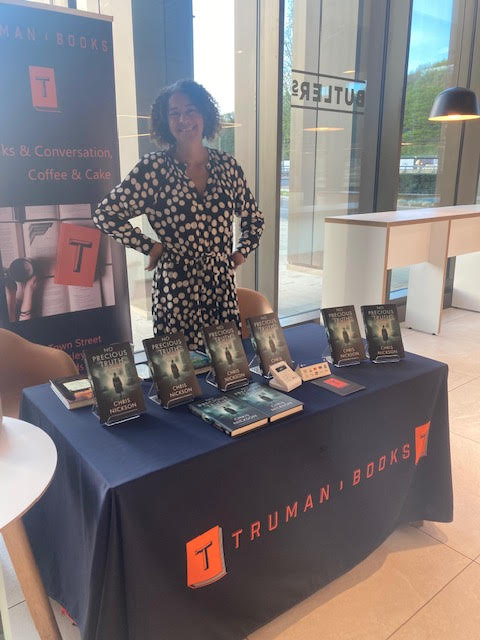
Truman Books, a wonderful independent from Farsley, was the bookseller. 22 copies of No Precious Truth were sold, as well as two from the Tom Harper series. Thank you, everyone who bought a copy.
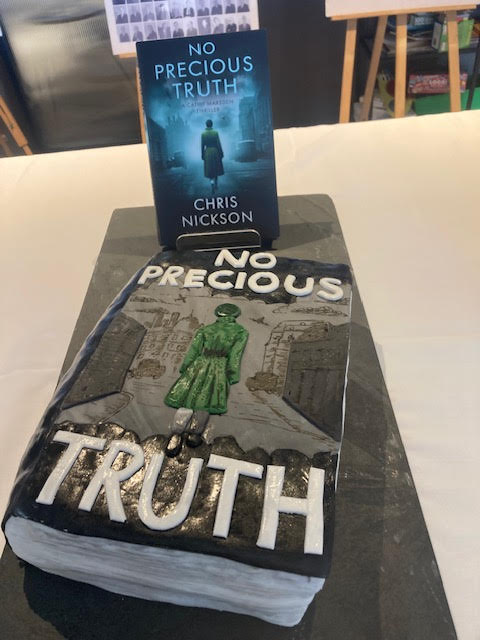
The centrepiece, though, was the cake, made and decorated by Lizzie, the daughter of Shelly, who runs Butler’s café, the venue for the event. Isn’t it glorious? Here it is, before and after.
I’m grateful to everyone who came and all those involved in putting on the event. Thank you. I hope the photos make you feel you were there. Remember, you can buy the book and see what all those people have discovered. Cheapest UK hardback price, with free postage, is here.
Just a week until No Precious Truth is published (April 1, and I hope that’s not an omen!). It’s seemed so distant for so long, and now it’s barrelling down on me at a rate of knots.
Things are in place. I have a new review from Booklist that says the book has a “likable heroine, a twist-a-minute plot, and heart-wrenching details about the effects of war make this a good choice for fans of historical wartime mysteries.”
I’ll definitely take that. Meanwhile out of the blue, the Promoting Crime Fiction website has declared an as “Unsung Hero Of Crime Fiction.” I’m flattered, but I don’t feel very heroic. Read it here.
The blog tour begins on publication days. Eight stops, eight different reviews, all posted online (mostly Instagram, I believe). Keep your eyes peeled for them.
I’ve taken out ads, putting my money where my mouth is because I believe in this book.
There’s going to be a launch. It’s on Thursday, April 17th, from 6-7 pm. It’s going to be held at Kirkstall Forge, which features in the book. They’ll have some photos and artefacts from the war. I’ll be bringing replica documents from the war, as well as newspapers. Truman Books will be there to see you copies of the book.
And there will be a special cake.
You’re invited. If you’re close, come along. Plenty of parking, or the Forge has its own little railways station, just five minutes on the train from Leeds.
If you really can’t wait until then to read No Precious Truth, why not buy it from your local indie bookshop, or Speedy Hen has the cheapest price for the hardback, with free UK postage. Go here and get it.
The following first appeared in History and Heritage Yorkshire – you can find them here. The photos are courtest for the excellent Leodis photo archive. Take a browse.
We’ve all heard about the rationing. Of food, clothes, petrol, coal, pretty much everything, and the way the amounts people were allowed grew smaller and smaller as the war progressed. We had a National Loaf, devised by nutritionists, incredibly healthy, but supposedly tasteless and grey. Ministry of Food pamphlets offered recipes for families during the conflict. People dug for victory in their back gardens. Unused open areas or bomb sites that had been cleared, every kind of spaces was made over into a veg plot.
That was right across the country. But what changes did the war bring to Leeds? In terms of air raids, the city escaped very lightly. We had some – nine in total – and 77 lives were lost. But there was only one of any great consequence, the Leeds Blitz of March 14-15, 1941 (it was termed a quarter-blitz, comparing it in size to the damage inflicted on other cities). The night began with incendiaries, fires lighting the way for the waves of high explosive bombs that arrived later. In all, about 100 houses were destroyed and around 4600 damaged. Bad enough, but not much when compared to elsewhere, and there would only be one more raid of note, in 1942, when five workers at Kirkstall Forge were killed.
The appearance of the city changed. There were sandbags everywhere, tape on the windows of shops and office, as well as home. Much less traffic on the roads due to strict petrol rationing – handcarts and horse-drawn wagons often replaced lorries and vans (out in the country, horses drew ploughs and threshing machines, as if we’d moved back a century).
The Blackout
The blackout meant that those vehicles which kept running, and only a small number were permitted, had to cover head and rear lights, with only a thin slit for illumination – and that made the 20mph speed limit an excellent idea. Curbs, lamp posts, telegraph posts were painted with black and white stripes to aid motorists. Trams had bells that jangled to warn pedestrians who might be in the way. The windows in trams and buses were covered to stop light leaking, then with netting or tape in case of blasts.
The ARP (Air Raid Precaution) wardens were the ones with the job of enforcing the blackout. Stories have so many of them acting like little tin gods, and probably some did. But it was a thankless job.
The blackout should have been a boon to crime. Yet a number of newspapers reported the expected wave of thefts and robberies didn’t happen. There was plenty of opportunistic crime: where houses had been bombed or families fled, there was looting (not much of a problem in Leeds), and some other illegal activities did flourish – while the duties of the police grew. Prostitution became more widespread, and more blatant, for one small example. Some of the women were honest; others would lure their customers into the dark ness and rob them, either alone or with an accomplice.
There was a rise in bag-snatching, thefts from telephone boxes and standing cars, but greater crime figures seemed to be down. In part, that was due to transportation. Petrol rationing made it illegal for most people to use cars. There was plenty of black-market petrol for sale, but cars on the road were remembered, and easily traced. Which might explain why one of the biggest rises was in bicycle theft.
The Black Market
With rationing, there as the inevitable rise of those who saw the chance to make money by bypassing the law. It could be something as simple as a shopkeeper saving a little extra for favoured customers or fudging coupons. It could be the spiv – a term that came into use with the war to denote the stereotype of a flashily-dressed man selling goods on the corner. Rationing and crime were interlinked, and it was responsible for many of the offences that ended up on police blotters and in court.
One of the most widespread of those was that theft of coupons from Ministry of Food offices. The security was non-existent, and if someone broke in at the right time, there were literally thousands of coupons waiting to be taken and sold. Others forged coupons. Essentially, rationing and coupons created an industry.
Items were stolen – entire lorries of them at times, often tinned food. On a smaller scale, things walked out of the stores for the NAAFI canteens which gave food and drink to service personnel. Other items vanished from work. In Bradford, my own grandfather was arrested and convicted of stealing 99 yards of cloth from his employer. He got off with little more than a rap on the knuckles: just a £5 fine.
Outside the small amount allocated for civilian use, petrol was dyed red to deter theft. However, with a little work and ingenuity, the dye could be removed.
Rationed alcohol offered more opportunities. Much of the whisky supply was reserved for export to help the vital balance of payments. Enterprising crooks worked with chemists and made hooch, alcohol created from different things with the kick of booze, then dyed and flavoured and passed off as the real thing, often in recycled bottles and with carefully printed labels. The customers were often clubs – many operating without a licence – where couple and service people on leave went to relax. It had worked during Prohibition in the US and proved successful here. However, there were reports of drinkers becoming ill after using hooch, often severely. Cases of permanent blindness, even death, happened.
Physical Changes
There was bomb damage in Leeds. Far less than other places, but it was there. Marsh Lane goods station was pretty much destroyed, and the same with a number of factories along the river. The front of the museum on Park Row collapsed, and there was damage to the Town Hall, aa well as a number of houses, particularly in Armley.
Leeds Museum after the March raid
Model Road, Armley
Some of the physical changes were made as precautions. Lewis’s, the big department store on the Headrow had the brick blast wall outside its main entrance to avoid any flying glass and debris. Outside, along the middle of the road, stood a series of emergency water tanks to help deal with any incendiary bombs and fires. They were painted in black and white checks to alert traffic and pedestrians at night.
Emergency water ponds were dug all over, although most of them were never needed, thankfully.
The Marks & Spencer store that’s such a familiar sight on Briggate was completed right at the beginning on the war. The company had kept a presence further up the main shopping street since 1909, but this was intended to be the grand flagship store. They purchased and demolished the Rialto cinema at 46 Briggate and built something entirely new and modern. However, in 1940, as they were set to opened, the building was requisitioned by the government for use by the Ministry of Works. A blast wall was erected to cover where the display windows had been (and was soon covered in layers of posters advertising films). The entry for staff was a metal door to the right, still there if you look.
The elegance of Park Square remained, but in a diminished state. The railings around the grass were removed, like most metal, part of a national drive. It was ostensibly to build more Spitfires; the reality was that the metal often just sat in huge, rusting piles in scrapyards.
Food
As mentioned earlier, rationing gradually bit harder and harder. Nutritionists worked on recipes with the Ministry of Food, creating dishes that were both healthy and tasted good (although many might disagree with that). But the reality was that Britons did eat a very healthy diet during the war, better than before it for many, and rationing did create an equality between the classes.
Gardening was encouraged, growing the food that was so desperately needed with imports so limited. There were pamphlets and newspaper columns with characters like Potato Pete. Gardens were made over, empty ground cultivated. A street, even a couple of streets, would use all their scraps and waste to feed a pig that one of them would keep – quite illegally. In return, they’d receive some of the meat when it was butchered.
Fishing was affected, too, with the trawler fleet and the catch depleted, as the Germans considered fishing vessels to be legitimate targets, and mines took their toll. By 1944, the catch was round half the pre-war figure – and that was an improvement over 1941. Fish was never rationed, but the prices rose very steadily as the fighting continued.
These are just a few quick snapshots; there are entire books and studies on each of the topics. The war in Leeds, at least at the beginning of 1941, is the backdrop for my new novel, No Precious Truth. The main character is Woman Police Sergeant Cathy Marsden, one of the very few women in the force back then. She’s’ seconded to the brand-new local squad of the Special Investigation Branch (a real organisation, part of the military police) for three weeks, a period that keeps getting extended. They deal with organised crime and the forces. But suddenly they find themselves facing something very different: an escaped German spy.
It’s published by Severn House, and available as a hardback and ebook from April 1. Buy from an independent if you can, or the cheapest UK hardback price, with free postage, is here. The launch will be at Kirkstall Forge in Leeds (a location in the book) on April 17, 6pm. I hope you’ll show up. All are welcome – they even have their own little train station.
Sometimes the truly wondrous does happen. When that occurs, it etches a sharp, memorable line in a life.
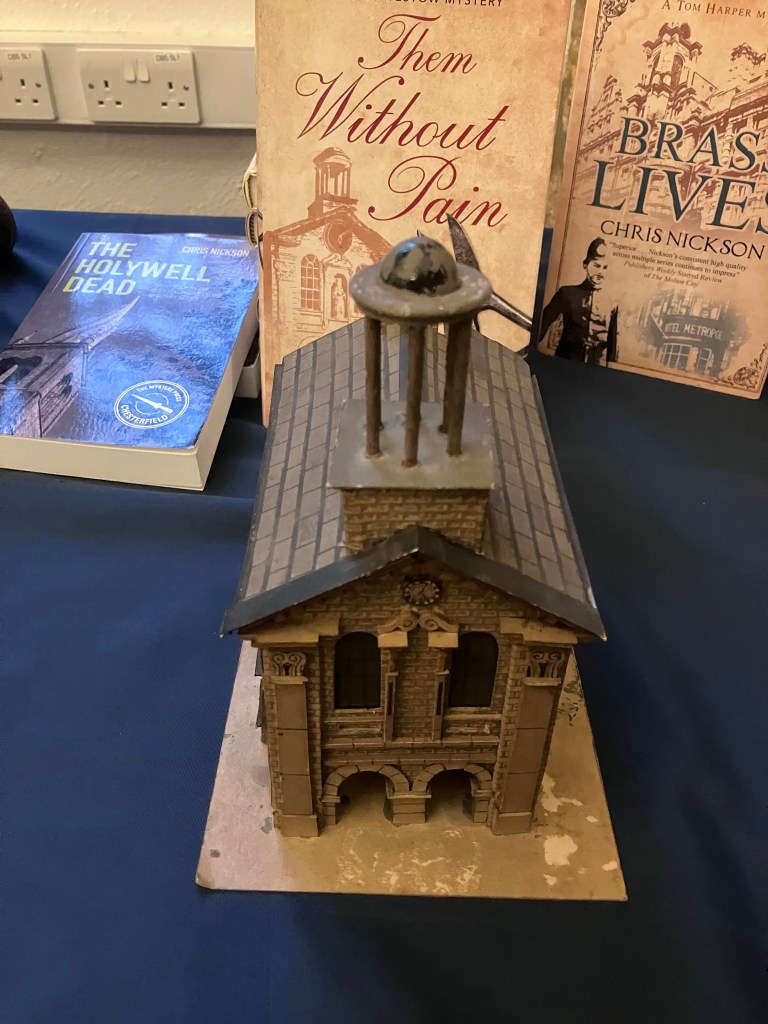
In my most recent book, Them Without Pain, a true incident from Leeds history is the catalyst for everything that happens. In 1696, goldsmith Arthury Mangey was hanged for coin clipping – which was treason, as it debased the coinage. In his trial it was alleged that he had a secret workshop on Middle Row, the shops and workshops behind the Moot Hall in the middle of Briggate (see the superb cardboard model).
In 1825, the Moot Hall and Middle Row were finally demolished, opening up the town’s main street. But as the workmen tore down walls, they discovered…a hidden workshop, with two pairs of metal shears, a bowl and an Elizabethan coin.
In the book, Simon Westow is there, and in the hidden room he also finds a body. That provides the spark for everything that happens.
Why had no one looked for the room at the time of the trial? Did the things in there really belong to Mangey or had he been set up?
We’ll never know. But some of what was found has remained and will be used in an exhibition on Leeds writing later this year.
Yesterday I was giving a talk at Abbey House Museum, where I’m writer-in-residence. I had the real privilege of holding these shears, of touching history. Maybe Arthur Mangey really did use them to commit treason over 300 years ago and I was able to share that with him. A connection across the centuries.
I’d written about them, and they were real. Now that’s magic, isn’t it?
Forgive me for ending on a crass commercial note, but in the UK Amazon has both Kindle and hardback editions at very low prices. See here.
My new book, No Precious Truth, will be published on April 1.
However, in exchange for an honest review, you can read it now. It’s available on NetGalley. You need to register with them – free and only takes a few seconds – then be approved for Severn House titles. If you’re not, please drop me a line and I should be able to fix that for you.
It’s the start of a new series, Leeds in World War 2, with a new female lead character I love, but yes, I’m nervous about it, even more so than when a series in established. I’d like plenty of people to read it and give their opinions, so you’d actually be helping me.
Thank you in advance.
If you are registered with NetGalley and approved for Severn Housem simply go here.