A Walk With My Ancestors

Yesterday I took a walk with my family. To anyone who saw me, I was on my own, but my family was there – the ghosts of my father, my grandparents and great-parents. By the end even my great-great-great grandfather had joined us. They were showing me where they’d lived as I walked through Leeds, from Hunslet over into Cross Green and back down through what used to be called the Bank (properly Richmond Hill) and down to Marsh Lane.
It was a way to connect the threads, but far more, my chance to thank people I’d known and those who were dead long before I was born. They gave me Leeds. They set themselves here, coming down from New Malton back in the 1820s and they stayed.

It’s not a great dynasty. No mayors or distinguished citizens. Just people who got by, probably by the skin of their teeth. But a couple of the places where they lived are still standing. To walk up to these house, to have the voice whispering in my ear: ‘Do you see that room up there? That where me and me brothers all slept. It was freezing at night when we had to go down to the privy’ or ‘It were right there. You should have seen it, lad. A proud place was the Royal.’

Garton Street. East Park Road.
IMG_0765

IMG_0766

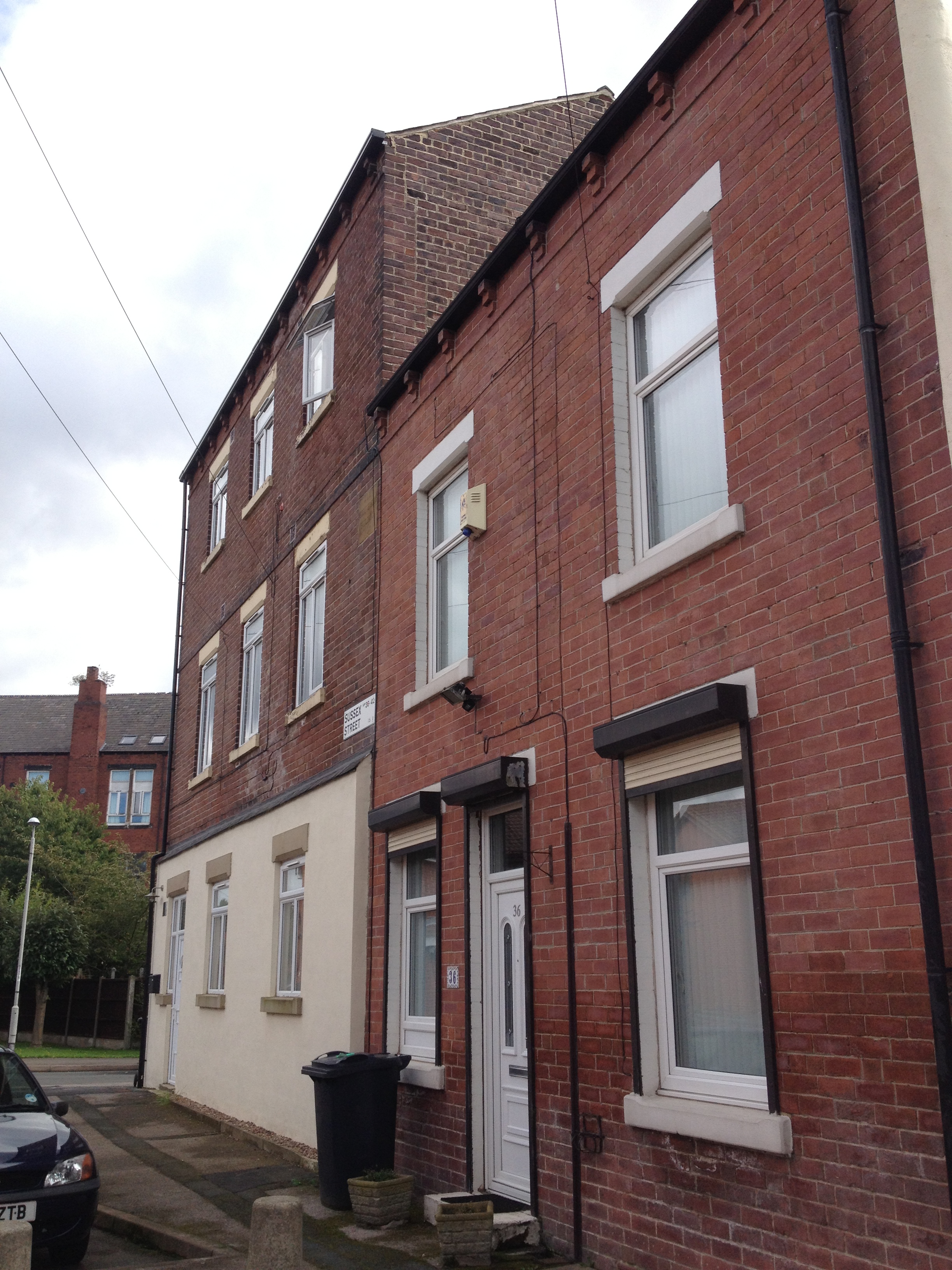
The small fragment that’s the only remnant of Sussex St.

IMG_0767

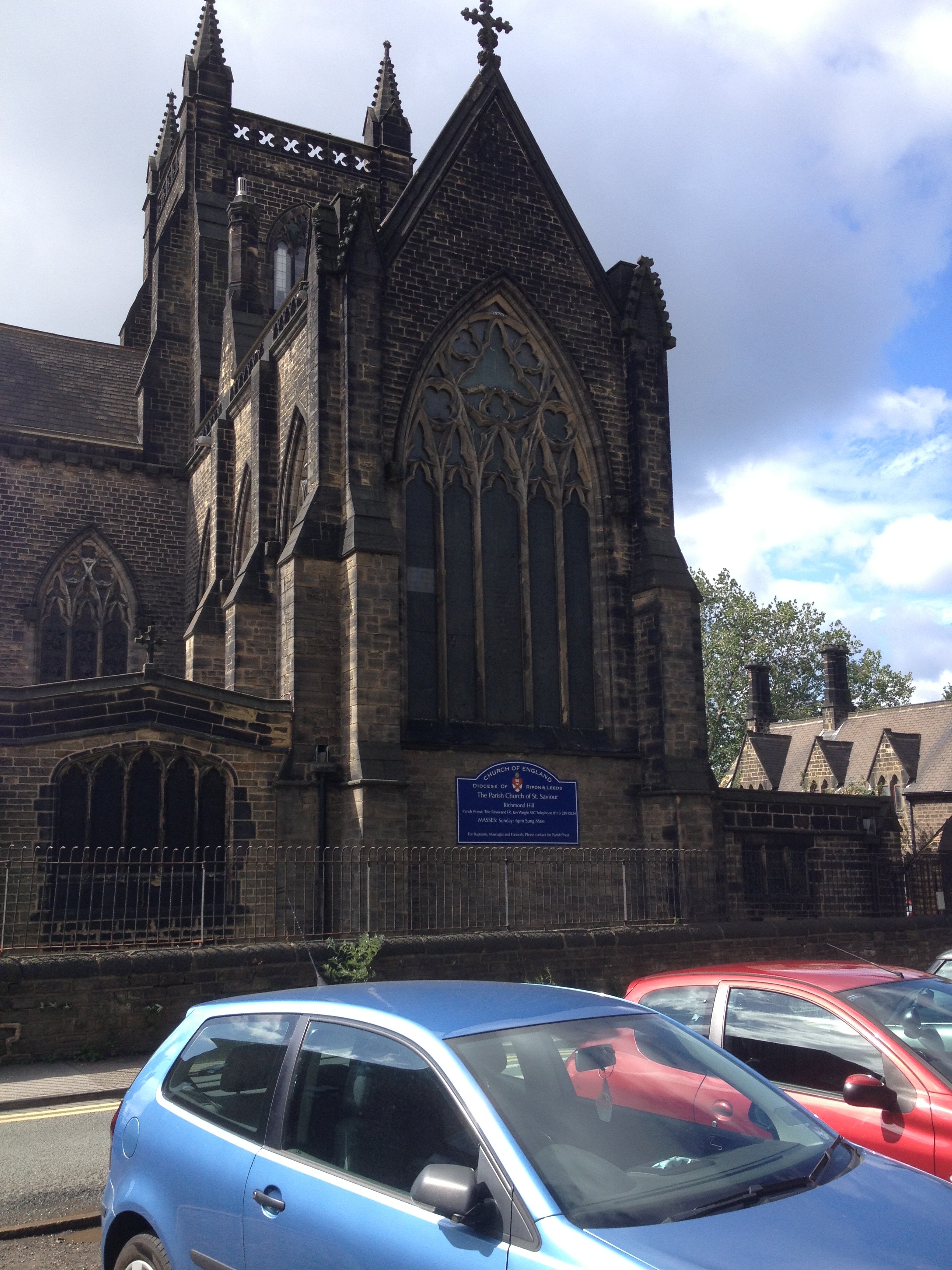
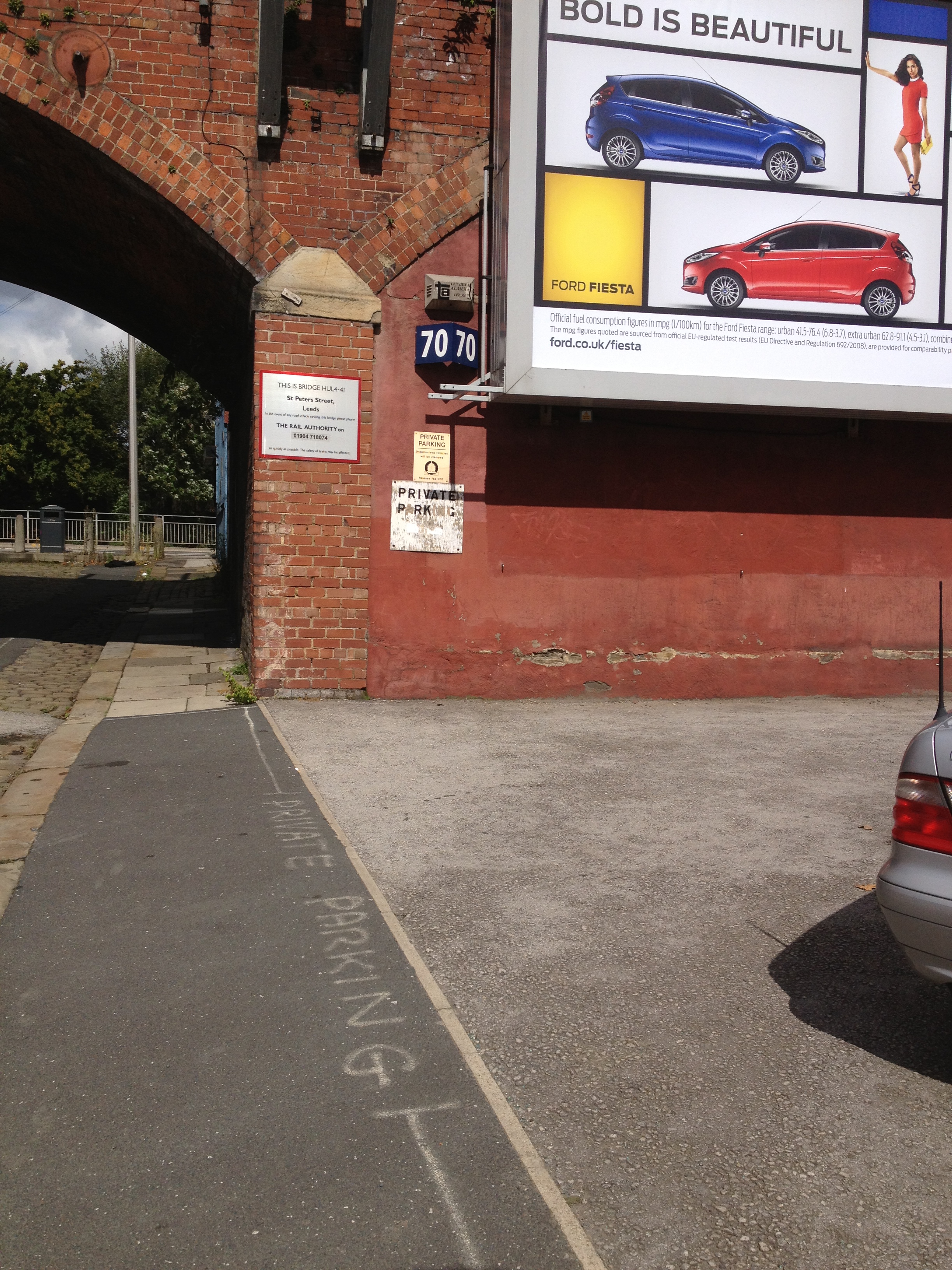
The Allied Brewery that fills acres where the Royal Inn (where my maternal great-grandfather was the landlord) once stood on South Accommodation Road. St. Saviour, still there, still in use, where some of my relatives were married.

IMG_0769

And the space on Marsh Lane that was once, long ago, Garland Fold. By the time Isaac Nickson – the first of my family to live in Leeds, bringing his wife and children with him, to work as a butcher – lived there (where the 1841 census places him) the ‘fold’ (once a place for keeping sheep) was slums, one of the worst part of Leeds, where the police were afraid to walk on their own and where, after a heavy rain, the roads were ankle deep in mud and slime used to run down the walls of the cellars where the poor lived.

IMG_0770

And, by some synchronicity, or some guiding hand, or whatever, very close to where I had the home of my character Richard Nottingham, back in the 1730s. A kind of full circle, from my real family to what became my fictional family of sorts.

Completing the circle? I don’t know. But I am certain that this family walk was exactly that. We were never more than 15 minutes’ walk from the centre of Leeds, but it was a journey that managed to take in many lifetimes. It told me stories. It gave me a little more of my own history. I hope I haven’t exorcised them. I want them with me until I become just like them, my invisible family in Leeds.

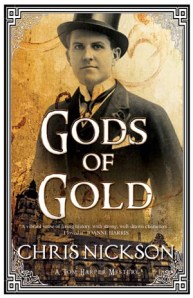
Win a Copy of Gods of Gold

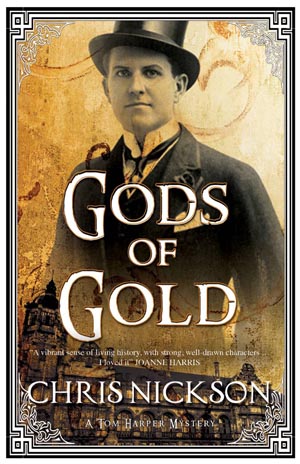
Gods of Gold was published in the UK yesterday – it comes out in the US on December 1. I’m giving away a copy, autographed if you want it, to one lucky (possibly unlucky) person.

What do you have to do? Simply reply to this post with your name. Do it before 9am UK time on September 3, and after that I’ll select a name at random.


Right…go for it!

gog finalx

Tomorrow: Gods of Gold

It’s been a long time coming, but tomorrow is the publication day for Gods of Gold (buy it, please!). Today, as the final teaser, how Tom Harper met Annabelle Atkinson:

She’d been collecting glasses in the Victoria down in Sheepscar, an old apron covering her dress and her sleeves rolled up, talking and laughing with the customers. He thought she must be a serving girl with a brass mouth. Then, as he sat and watched her over another pint, he noticed the rest of the staff defer to the woman. He was still there when she poured herself a glass of gin and sat down next to him.
‘I’m surprised those eyes of yours haven’t popped out on stalks yet,’ she told him. ‘You’ve been looking that hard you must have seen through to me garters.’ She leaned close enough for him to smell her perfume and whispered, ‘They’re blue, by the way.’
For the first time in years, Tom Harper blushed. She laughed.
‘Aye, I thought that’d shut you up. I’m Annabelle. Mrs Atkinson.’ She extended a hand and he shook it, feeling the calluses of hard work on her palms. But there was no ring on her finger. ‘He’s dead, love,’ she explained as she caught his glance. ‘Three year back. Left me this place.’
She’d started as a servant in the pub when she was fifteen, she said, after a spell in the mills. The landlord had taken a shine to her, and she’d liked him. One thing had led to another and they’d married. She was eighteen, he was fifty, already a widower once. After eight years together, he died.
‘Woke up and he were cold,’ she said, toying with the empty glass. ‘Heart gave out in the night, they said. And before you ask, I were happy with him. Everyone thought I’d sell up once he was gone but I couldn’t see the sense. We were making money. So I took it over. Not bad for a lass who grew up on the Bank, is it?’ She gave him a quick smile.
‘I’m impressed,’ he said.
‘So what brings a bobby in here?’ Annabelle asked bluntly. ‘Something I should worry about?’
‘How did you know?’
She gave him a withering look. ‘If I can’t spot a copper by now I might as well give up the keys to this place. You’re not in uniform. Off duty, are you?’
‘I’m a detective. Inspector.’
She pushed her lips together. ‘Right posh, eh? Got a name, Inspector?’
‘Tom. Tom Harper.’
He’d returned the next night, and the next, and soon they started walking out together. Shows at Thornton’s Music Hall and the Grand, walks up to Roundhay Park on a Sunday for the band concerts. Slowly, as the romance began to bloom, he learned more about her. She didn’t just own the pub, she also had a pair of bakeries, one just up Meanwood Road close to the chemical works and the foundry, the other on Skinner Lane for the trade from the building yards. She employed people to do the baking but in the early days she’d been up at four each morning to take care of everything herself.
Annabelle constantly surprised him. She loved an evening out at the halls, laughing at the comedians and singing along with the popular songs. But just a month before she’d dragged him out to the annual exhibition at Leeds Art Gallery.
By the time they’d arrived, catching the omnibus and walking along the Headrow, it was almost dusk.
‘Are you sure they’ll still be open?’ he asked.
‘Positive,’ she said and squeezed his hand. ‘Come on.’
It seemed a strange thing to him. How would they light the pictures? Candles? Lanterns? At the entrance she turned to him.
‘Just close your eyes,’ she said, a smile flickering across her lips. ‘That’s better.’ She guided him into the room at the top of the building. ‘You can open them again now.’
It was bright as day inside, although deep evening showed through the skylights.
‘What?’ he asked, startled and unsure what he was seeing.
‘Electric light,’ she explained. She gazed around, eyes wide. ‘Wonderful, eh?’ She’d taken her time, examining every painting, every piece of sculpture, stopping to glance up at the glowing bulbs. Like everything else there, she was transfixed by the light as much as the art. To him it seemed to beggar belief that anyone can do this. When they finally came out it was full night, the gas lamps soft along the street. ‘You see that, Tom? That’s the future, that is.’

Two Days to Gods of Gold…

and here’s how Tom Harper became a copper.

gog finalx

He’d wanted to be a policeman as long as he could remember. When he was a nipper, no more than a toddler, he’d often follow Constable Hardwick, the beat bobby, down their street in the Leylands, just north of the city centre, imitating the man’s waddling walk and nods at the women gathered on their doorsteps. To him, the decision to join the force was made there and then. He didn’t need to think about it again. But that certainty shattered when he was nine. Suddenly his schooldays had ended, like every other boy and girl he knew. His father found him work at Brunswick’s brewery, rolling barrels, full and empty, twelve hours a day and Saturday mornings, his pay going straight to his mam. Each evening he’d trudge home, so tired he could barely stay awake for supper. It took two years for his ambition to rekindle. He’d been sent on an errand that took him past Millgarth police station, and saw two bobbies escorting a prisoner in handcuffs. The desire all came back then, stronger than ever, the thought that he could do something more than use his muscles for the rest of his life. He joined the public library, wary at first in case they wouldn’t let someone like him borrow books. From there he spent his free hours reading; novels, politics, history, he’d roared through them all. Books took him away and showed him the world beyond the end of the road. The only pity was that he didn’t have time for books any longer. He’d laboured at his penmanship, practising over and over until he could manage a fair, legible hand. Then, the day he turned nineteen, he’d applied to join the force, certain they wouldn’t turn him down.
They’d accepted him. The proudest day of his life had been putting on the blue uniform and adjusting the cap. His mother had lived to see it, surprised and happy that he’d managed it. His father had taken him to the public house, put a drink in his hand and shouted a toast – ‘My son, the rozzer.’
He’d been proud then; he’d loved walking the beat, each part of the job. He learned every day. But he was happier still when he was finally able to move into plain clothes. That was real policing, he’d concluded. He’d done well, too, climbing from detective constable to sergeant and then to inspector before he was thirty.

A Glimpse of Annabelle

Annabelle Atkinson is one of the main characters in Gods of Gold. The fiancee of Detective Inspector Tom Harper, she’s a successful woman, owning the Victoria public house and a pair of bakeries. But she had a life before they ever met. Here’s a moment in her past:

She stared at the mirror. The light flickered in the gas mantle, reflecting on the jet buttons of her dress. In black, head to toe. Even the lace and the petticoats and the new button boots that pinched her feet.
Annabelle picked up the funeral hat off the back of the chair and arranged it on her head, spreading the veil in front of her face. Her hand was raised, ready to pin it all in place, when she tore it off and sent the hat spinning across the room.
She turned to the photograph on the mantelpiece. A shiny silver frame. Herself, younger, happy on her wedding day, arm in arm with her husband. Mr. and Mrs. Atkinson.
‘You sod,’ she said quietly. ‘You bloody sod.’
They’d all be waiting downstairs in the pub. Will’s sister and her children, Dan the barman, the two servants, and all the neighbours and friends from round Sheepscar. The hearse was outside, the horses with the ebony plumes.
She breathed deeply, gathered up the hat and set it in place again, hearing the footsteps on the stairs, then the tentative knock on the door.
‘Annabelle, are you ready, luv?’ Bessie, her sister-in-law. ‘Only it’s time.’
A last glance in the mirror and at the picture.
‘Yes,’ Annabelle Atkinson said. ‘I’m coming.’

When Family and Fiction Collide

To begin, apologies for a long post. But as you read, I think you’ll understand the necessity.
The other night I delved back, hunting my ancestors. I’d done it a few years ago, but most of the information had vanished – probably in a box somewhere in the garage. Still, with nothing on television, and some time to kill, it seemed like fun to trace that line through history.
Somewhere in the first 40 years of the 19th century, Isaac Nickson arrived in Leeds. He’d been born in 1792 in Malton, North Yorkshire, and married Jane Caulter on June 2, 1813. He brought a pair of sons along with him, Isaac and George. According to the 1841 census (the first one undertaken), Isaac Nickson Sr. was living in Garland Fold, just by Timble Bridge. His 16 year-old-son William was with him and a 15-year-old daughter, Mary. By this time, Isaac Jr and George shared a house on Gower Street in the Leylands. Isaac was 25, George 20. Hey made their living as painters – for which, read Jack of all trades – and both were married.
George had wed Mary Caroline Hewson on April 22, 1839, in Leeds Parish Church. She was born in 1821 and would live until 1897. He’d die on December 30, 1866.
By 1851 they’d moved to the bottom of Meanwood Road, in Sheepscar. George was still listed as a painter and paper hanger, and by now they had three children, John William, who was nine, Jane, aged five, and Hannah, three (in 1861 Isaac and his wife were on Wade Street, more or less where the Merrion Centre now stands, with his wife. No children mentioned).
Skip forward to the 1871 census. A Caroline M. Nickson is listed at 200 North Street in Holbeck. She’s the head of the house, which chimes with George dying a few years before. However, she’s also a painter a decorator, with a cryptic (7 men and boys) after the job. She took over the firm? Maybe. Living with her are her sons, John William and Robert, as well as daughters Caroline (12) and another son, Richard (9).
The 1861 census shows a William Nickson, old Isaac’s son a painter just like his older brothers, ahe 36 living on Elm Street, in the Bank area of Leeds with his wife Charlotte and his daughter Martha (they don’t show up on the 1851 census). He’s 36, The three of them are still address a decade later.  By now Martha is 15 and listed as a flax screwer.
In 1881 they’re still at 13, Elm St. Martha isn’t mentioned, but there’s a son call John William, born in 1864 and making a living as a repairer and heeler of boots. There’s also Mary Rushworth. She’s five and listed as granddaughter. Martha’s child – she married Benjamin Rushworth on Christmas Day, 1873.
John William would marry Elizabeth Mona (or Marie) Nickson. In 1901 he was 37 and still a boot repairer, living on Ellerby Road, near East End Park. The couple had five children, Willie (16) a grocer’s assistant, Nellie (15), Maud (14) – both girls listed as tailoresses – John William, Jr (4) and Harold Ewart, then 9.

10 years later and they’d barely moved 200 yards. Still living in the Bank, on East Park Rd. John William, Sr. is still a painter. Willie is still a grocer’s assistant. John William, Jr. is a clothier ticket, and Harold Ewart is a miller – he worked in a flour mill.
But by 1914, Harold was living on Garton Road and was a tailor’s cutter. It was still just a stone’s throw from his parents. He’d obviously been courting, because on June 1, he marries Elizabeth Laycock, the daughter of a publican oat 103, South Accommodation Rd in Hunslet. It’s a Baptist ceremony.
It’s also a necessary one, because five months later, on November 2, my father, Raymond Ewart would be born. She was in the family way at the ceremony. My father grew up in Hunslet. Still close to the Bank area, but on the south side of the river, and a definite step up. The family must have moved there, a definite step up from where Harold had been.
So why am I telling you all this? Perhaps because a strange feeling began to creep over me as I researched. My fiction and my family were colliding.
In my new book Gods of Gold, the main character, Tom Harper, grows up in the Leylands, not even two minutes away from Gower Street, where Isaac and George Nickson lived for a while. His fiancée, Annabelle, grew up on the Bank, round the corner from John William Nickson and his brood; they might well have known each other. And she’d go on to run the Victoria, at the bottom of Roundhay Road in Sheepscar. When George Nickson lived on Meanwood Road, it would almost have been his local, albeit before Annabelle’s time.
They were all working-class people. Poor. I doubt a single one of them owned the roof over their heads. They probably all struggled from day to day.
Suddenly I began to wonder if those ancestors of mine, and their relations, hadn’t been tugging at my sleeve when I was writing the book. ‘No, have him born there.’ ‘She should come from there.’ ‘Have a scene set there, I’ll tell you what it looked like.’ Or perhaps it’s some atavistic memory.
There’s even link of sorts to Richard Nottingham. At the first census, old Isaac Nickson was living in Garland Fold, by Timble Bridge. That’s yards from where I sited Richard’s house.
I don’t know. But it’s strange, and even a little creepy. It tells me that my roots run deep here. Sometime I’ll dig deeper into those 19th century ancestors. I’m just not sure I’m ready for it yet…
gog finalx

Another Day Older…

A couple of days ago I had a birthday. I never make a fuss about these things any more – it’s just another day, after all – but in societal terms, this is quite a big one, a decade flipping over. When I was young, the age I’ve now reached was old. Now, they say, it’s the new 40.
The truth, I realise, is that I don’t feel any age at all. Or, rather, I feel all the ages I’ve been. My body knows it’s older, as it showed me when I tried to play softball last Monday for the first time in 20 years and tore up an Achilles tendon. But my mind. That’s still young, and it’s refusing to grow up. I’m happier now than I’ve ever been, and more fulfilled. Why wouldn’t I be? However tenuous it is, I’m making a living from my writing. The dream I’ve always had of my novels being published is a reality. I’m having a ball.
Okay, I never did make the professional musician ambition. But I played in bar bands, I played solo in front of audiences and was paid for it. It wasn’t the big time, but damn, it was fun. I don’t indulge in the excesses I used to enjoy, but I don’t miss them.
I don’t regret what I’ve done, not a minute of it. There are times I’ve been stupid, been thoughtless and hurtful. I apologise for those, but each action, each move, has brought me to where I am no, so regrets are pointless.
And really, I don’t care what age I am, as long as I’m happy. I have a few good friends, good love, and the joy of a wonderful son.
One thing I do know with certainty is that I’ll never grow old. My body might argue the point more and more as every year passes. But my mind is made up. Nuh uh. Not me. When I’m 80, I’ll still be 20, 30, 40 – and even the new 40 – inside.

Gods of Gold Book Launch

The launch for Gods of Gold is happening on Thursday, September 11, from 6.45-8pm. It’s at the Leeds Library, the oldest subscription library in Britain, and in its present location since 1808.

It’s a wonderful place, and I feel very lucky to be having an event there again. There’s going to be wine and cake, and the library has promised to have newspapers (and possibly artefacts) relation to the 1890 Leeds Gas Strike – which forms the backdrop to the book – on display. And yes, the workers won!

Everyone is welcome, and I hope you’ll come, but you will need to reserve a place. Call the Library on (0113) 245 3071 or email enquiries@theleedslibrary.org.uk.

Last time I was there, it was packed, and I hope it will be again. There will be copies of the book on sale, of course, as well as just a few Gods of Gold tee shirts.

Come on along.

gog finalx

A Sense Of Place

Nine months ago, I moved back to Leeds. Not just to the city where I’d been born and raised, but to the area where I spent most of my teens.

Back in those days, I couldn’t wait to leave. The city seemed small and stultifying. It seemed horribly provincial, and there’s probably nothing more deadly to a teenager. So I left, only to return, then leave again for 30 years in America.

But I never felt American. I thought England had shaped me, but that wasn’t true. Leeds had, although I didn’t realise it. I loved Seattle, and for a long time I was settled there. But circumstances change…

Returning to England, I didn’t want to be in Leeds. Going back there would seem like defeat. It took a while, and several novels set in Leeds, which meant plenty of visits to the city, to understand that I felt more comfortable, more at home here than I’d felt anywhere else.

Funny thing, though. I’d anticipated this move, but once here, I felt like I was walking with ghosts – mostly my own young ghost. But we’ve made peace on those streets and in the park. My work might take place in the past, but my life is very much in the present, and whether it’s walking around my neighbourhood or in the city centre, or even something as mundane as taking the bus into town, I realise I’m happy here. Happier than I’ve felt anywhere else. It’s finally sunk in.

I did the right thing to leave all those years ago. But I definitely did the right thing in coming back.