Foolish, perhaps, but I’ve had a few Gods of Gold tee shirts made (very few, I should add). If anyone wants one, they’re for sale at cost…just get in touch.

Foolish, perhaps, but I’ve had a few Gods of Gold tee shirts made (very few, I should add). If anyone wants one, they’re for sale at cost…just get in touch.
I don’t often have a post full of news, mostly because there’s not often much to tell. But I have five – yes, FIVE – big pieces of news for once.
West Seattle Blues comes out June 30th on ebook and audiobook, and it can now be pre-ordered. I like Laura Benton, and I still love Seattle. But then, I lived there for 20 years…Find it here in the UK and here in the US, and listen to the trailer here.
Gods of Gold, the first in my new Tom Harper series set in Leeds during the 1890 Gas Strike, comes out late August in the UK. You can pre-order it here.
The second book in the series has just been accepted by my publisher. It will come out in 2014.
There’s going to be a big launch in Leeds for Gods of Gold, on September 11, 6.45 pm at The Leeds Library on Commercial St. They’ll have a display of newspaper and magazine articles relating to the Gas Strike, artefacts, and more. And there will be wine and probably cake. Admission is free, but you’ll need to book a place. It’s a fabulous place, occupying the same premises since 1808, and well worth seeing. I’ve been here once before and the place was packed, so please book early. Call them on (0113) 245 3071, or by email.
And last but not least, I’m teaching a weekend workshop on historical fiction in September in the Lake district. I do hope you’ll book (so they’ll hold it, so I can visit). Details here.
I’ve no idea if you enjoyed the start of something new I posted last week (consider that a hint to offer a reaction or two, please). But in the hope that you did, here’s a bit more:
CHAPTER TWO
He reported to the police station in his best double-breasted suit, navy blue with a pale pinstripe, his black brogues shining, the hat brim tipped just enough to put his eyes in shadow.
After a fortnight working with the Met in London it felt good to be home again. The capital had its charms, but Williams knew Leeds. He understood how the city worked with even having to consider it.
He wasn’t even sure why they’d wanted him down there. All he’d done was read the case file, go and talk to four people, then sit back and wait, time enough to tie up a couple of loose ends. Eight days later, they’d started making arrests and he was on his way back up the A1.
Williams slapped the desk. There were files waiting for him. One thing about being a copper, he’d never be short of a job. Count your blessings, he thought, as he took a folder from the pile.
But he hadn’t even finished the first page before Superintendent Randall called his name. Detective Sergeant Johnny Williams straightened his tie, buttoned his jacket and walked through to the office.
‘Everything fine down South?’ Randall asked as he sat.
‘Went well, sir.’ He shrugged. They’d made the arrests easily.
‘Head not turned by the glamour?’
‘Well, the King invited me over, but I told him I needed to be back here by teatime…’ Williams grinned.
Randall picked up a piece of paper and pushed it across the desk. ‘Something to get your teeth into.’
He read it through quickly. While he’d been gone there’d been two bank jobs, one in Horsforth, the other in Morley. Three men, one of them armed with a sawed-off shotgun. Quick, efficient, no violence, just threats and menace. In both cases, the getaway vehicles had been stolen and recovered about a mile away. There were descriptions, for whatever they were worth. None of the witnesses could agree on much. Violet had told him about the robberies last night. Lying on the bed after his welcome home, smoking cigarettes with the windows open, she’d brought him up to date on the happenings in Leeds. Working as a reporter on the Yorkshire Post, she heard them all.
‘No clues?’ he asked, his arm around her bare shoulders. The slip and brassiere were long gone, tossed somewhere on the floor, and sweat was drying on her skin.
‘If they have, they’re not saying. The rumour is that they’ve nabbed over a thousand pounds.’
That was impressive. Carry on with that and they’d have a good little earner. He moved his hand a little. He needed to feel more welcome.
‘Nasty,’ Williams said.
‘They’ve taken over twelve hundred so far. But keep that to yourself.’ Randall pulled a packet of Black Cats from his pocket and lit one.
‘What’s CID turned up?’
‘Not enough. None of the narks seem to know anything.’
‘I was hoping for a few days’ leave,’ Johnny said.
‘You wouldn’t know what to do with yourself.’
But he would. He’d seen the sun shining through the curtains that morning, smelt spring warmth in the air and thought about Sandsend. He and Violet, a few days away, decent hotel, Whitby just a stroll away along the beach at high tide. Some walking, some fishing, plenty of fresh air.
‘Well…’ he began, but Randall shook his head.
‘I want you on this. If they get away with it, other people will get the same idea. Times are bad, Johnny, you know that. We don’t need folk getting the idea they can be Dillinger or Bonnie and Clyde. Not round here.’
Williams picked up the report as he stood. Before he could even take a pace the door flew open and the desk sergeant, old red-faced Murphy, announced,
‘There’s been another one, sir. The Midland Bank on City Square.’
Randall raised an eyebrow.
‘Looks like you know where to start, John.’
He found a parking place on Boar Lane and walked to the building on the corner, solid stone staring out across City Square. Wisps of smoke and the stink of the trains drifted out from the railway station across the street.
Williams nodded at the uniformed constables guarding the door of the Midland Bank and sauntered inside. Another bobby was questioning a distraught woman, while a pair of CID men looked around the building.
It was much like any bank – high ceilings, a grandiose interior of marble and tile, varnished wood and glistening brass. And like any bank, easy enough to rob with plenty of determination and a little planning. The only problem would be getting away in the city traffic.
One of the detectives spotted him and walked slowly across with a rolling gait. He was tall, close to six-and-a-half feet, well into middle age, spectacles crowding a pinched face, most of his hair gone, just leaving a tonsure that was turning grey.
‘Might have known you’d find your way down here.’
‘Good morning, sir.’
Inspector Gibson had started his career with Leeds City Police well before the war. He’d served in the trenches and returned to the job, trudging up from rank to rank. ‘Going to have it solved by dinnertime?’
Johnny Williams gave a small sigh and turned his hat around in his hand.
‘I don’t know sir,’ he answered, voice serious. ‘Depends what time you want to eat.’
Gibson’s face reddened. He snorted and stalked away.
The girl sitting at the desk and cradling a cup of tea in her lap was smiling at him. It was a pert, inviting smile, full lips with bright red lipstick, under dark eyebrows and Carol Lombard blonde hair.
‘Will you?’ she asked.
‘Will I what?’
‘Catch them by dinnertime.’
‘Probably not.’ He grinned and shrugged. ‘But stranger things have happened. Do you work here?’
‘I do. I’m Mr. Osborne’s secretary.’ When he looked at her quizzically, she explained, ‘He’s the manager.’
‘Did you see the robbery, Miss…?’
‘Simpson,’ she answered. ‘Jane Simpson.’ He heard the light emphasis she put on her Christian name. ‘And yes. I was in the office. Over there.’ She pointed at the corner and he was two boxes of wood and glass. ‘It was like watching one of those films.’
She didn’t seem too upset or shocked, he thought. More..entertained.
‘Why don’t you tell me what happened?’ he suggested. ‘Weren’t you scared?’
‘Oh, no. They couldn’t really see me.’ She lowered her head a little, embarrassed. ‘I’m sorry, I don’t know your name.’
‘Detective Sergeant Williams.’ He took out a packet of Gold Flake cigarettes and offered her one. ‘How many of them were there?’
‘Three.’ She closed her eyes to focus. They were wearing jackets and trousers, and all of them had caps. They didn’t look like the kind of customers we have here.’
He smiled. They looked like ordinary working men, she meant, the kind who didn’t have bank accounts.
‘Did one of them have a gun?’
‘Yes. It was like a shotgun, but not as long.’ She cocked her head towards him. ‘Is that right?’
‘He’d sawn down the barrels,’ William explained. ‘Where was Mr. Osbone while all this was going on?’
He couldn’t see she didn’t want to answer, but after a few more words she admitted he’d been in the toilet when it happened.
The men had burst in just after the bank opened at half-past nine. There were only two customers in the place, and three staff behind the counter. The robbery was over in less than thirty seconds.
She gave him descriptions, but they could have fitted half the young men in Leeds. None of them more than twenty-five, dark hair, two tall, the one with the gun short and fatter.
‘How much did they take?’ he asked.
‘Oh.’ She paused, calculating. ‘It can’t have been more than three hundred pounds. Probably not even that. The cashiers only had their morning floats. None of the businesses had brought in their deposits yet. There’s more money here just before we close at three. Or on a Friday – we handle the wages for a number of factories.’
Today was Monday. Interesting, he thought. Whoever was behind it wasn’t thinking ahead.
‘Had you seen any of them in here before?’
She shook her head. ‘I don’t see everyone who comes in. But dressed like that, they’d have stood out, if you know what I mean.’
He understood exactly what she meant. ‘How did they sound?’
‘Sound?’ she asked.
‘They must have shouted when they came in. Did they seem local?’
‘Oh.’ She pursed her lips for a moment. ‘I suppose so. I never really thought about it, so they must have.’
He thanked her and stood up to walk away.
‘Tell me something, Sergeant,’ Miss Simpson said, and he heard the rustle of silk stockings as she crossed her legs. ‘That other policeman didn’t seem to like you.’
‘I’m not sure he really likes anyone.’
But especially you?’ She was grinning now.
He gave her his best smile, showing the chipped tooth. ‘He thinks I’m cocky.’
‘And are you?’
‘You’d probably get the best answer from my wife.’ He hoped that was a small flutter of disappointment on her face. ‘Thank you, Miss Simpson. Jane.’
I’ve been quiet on the blog lately, but real life does intervene at times, and the bank account is like an open maw constantly needing to be fed. But I haven’t been ignoring fiction. That chugs slowly along. And this is the start of something new, set in Leeds – of course – in the 1930s. Because you’ve been so nice and let me mumble on in peace, here’s the opening. Please do let me know what you think…and I do mean that.
No title yet, but the year is 1934.
He parked the Austin Seven Swallow outside the Eagle. There’d been hardly any traffic on the drive, a few lorries, cars bucketing along as fast as they could, the drivers’ faces fierce with concentration.
He buttoned his suit jacket and put on the hat, checking the brim in the wing mirror to see it was just so. A late May evening, some warmth still left in the air, and that feeling of dusk, with daylight starting to seep away and casting long shadows. 1934. The world might be poor, but there was still some beauty in it.
Only a few customers were in the pub. An old husband and wife, holding hands a chattering away easily, halves of stout on the table in front of them, a few ancient fellows, leftovers from Victorian times, gathered to play dominoes, a young couple out to do their courting, and a group of four middle-aged men, eyes like flints, standing in earnest discussion.
The landlord was cleaning the polished wood shelves, his back turned.
He saw her, sitting at the end of the bar, a glass of gin and tonic in front of her, a cigarette between her fingers. She was wearing a nubby tweed skirt and an ochre sweater, the sleeves rolled up on her red cardigan. There was a wedding ring on her finger, but she was on her own.
She’d glanced up when he walked in, then turned away again.
‘Can I buy you another?’ he asked as he stood beside her. She looked at him, eyes carefully appraising. Her hair was neatly set in waves, her lipstick bold red. In her early thirties and definitely pretty.
‘My mother always said I shouldn’t take drinks from strange men.’
‘We safe them. I’m not strange.’
A smile flicked across her mouth and she arched her brows.
‘Who told you that? Your wife?’
He grinned. One of his front teeth was slightly chipped. Someone had told him once that it made him look irresistible. Dashing. Wolfish. A little like Ronald Colman.
‘Someone much more reliable.’ He cocked his head. ‘I have to ask, are those eyes of yours eyes blue or grey?’
She was staring at him now, and smiling.
‘Take a guess. If you’re right, you can take me home.’
‘Violet?’
She waited a moment, then started to gather her handbag off the bar.
‘Eyes and name,’ she told him, then asked, ‘Where should we go? Your house or mine?’
‘Oh, yours, I think,’ he answered without hesitation. ‘My wife’s a terrible housekeeper.’
Her elbow dug sharply into his ribs.
‘You’d best be careful, Johnny Williams, or you’ll be sleeping on the settee tonight. What kept you? I thought you’d be home this afternoon.’
I’ve been asked to teach a weekend course this September – it’s a weekend, the 21st-22nd – at a lovely B&B in the Lake District. I’ll be covering historical fiction, sessions on setting time and place, integrating the history, creating living, breathing characters and more. There will be one-one-one sessions, time for your own writing, and more.
It’s limited to just 10 places, so booking early is very likely a good idea (I hope).
Details at: http://www.goldenrock.co.uk/chrisn.html
In just over a month, my next book, West Seattle Blues, will be coming out. It’s the second in my Seattle trilogy, and I’m every bit as proud of it as anything else I’ve published. The sad thing – certainly to me – is that the first volume, Emerald City, received scant attention. Yes, I tried the Seattle Times, but they weren’t interested, because it was only published as an ebook and audiobook. Doing it that way, and working with digital publishers Creative Content, was my decision (I did actually have another offer on the table).

I might not have lived in Seattle since 2005 (or America, for that matter), but I have great affection for the city, especially West Seattle, where I spent a total of 11 years. When I left, it was very different to the place I originally saw. Doubtless, it’s changed again.
I’m very proud that Gary Heffern, a name familiar to everyone in Seattle music circles, agreed to sing the song West Seattle Blues, which will be an extra on the ebook. As always, he did an incredible job, and I feel honoured that he was willing to do this.
Anyway, I’d like to whet your appetites with a three things. First, a short extract from the novel, then the audio trailer, and finally, a Spotify playlist to go with the book (which I’m not really making public until closer to publication date, so keep it to yourselves, k?). Ready? Okay, here we go—and remember, it’s out at the end of June.
He had a voice like a country song: a lifetime of heartbreak and failed promises in just four words. It was a sound like old leather that had been soaked in bourbon or rye.
“This is Carson Mack,” he announced.
I explained who I was, hearing his breathing on the other end of the line.
“I remember hearing your stuff on the radio, back in the day,” I continued.
“Yeah, I was all over that for a little while.” He gave a hoarse, world-weary chuckle.
“Tonia said you were thinking about a book?”
“I don’t know what I’m thinking, really,” Carson admitted. “It just seemed like an idea. I figured there might be someone at The Rocket who’d have a few ideas.”
I tried to be kind.“The only problem is those hits were a long time ago. Most people won’t know who you are now.”
“I’m trying to do a bit more now. And a book would be a good way for people to find out, right?”
“Yeah,” I agreed warily. “But a book’s only worthwhile if someone wants to publish it.”
“I guess. So you’re trying to tell me it’s a bullshit idea, huh?”
“I’m saying that a book might not be the easiest place to start. Music’s changed in twenty years.” All music had, including country. Now it all seemed to be guys in cowboy hats, or girls who looked like truck stop waitresses with a sideline in hooking. And the songs had more to do with pop music that any country stuff I ever knew.
“I know. I listen nowadays and I’m not even sure what’s going on.”
“Look, Carson,” I said, “how about this? Why don’t we start off by doing a piece for The Rocket and see how that goes? It’s a place to begin.
“You sure they want one? I don’t want charity.”
“I’m sure, they’ll print it.” I hoped they would, anyway.
“Okay,” he agreed, sounding happier. “You want to come over here and talk to me?”
“I can do that. Whereabouts are you?”
“I got a place on Beach Drive in West Seattle. You know where that is?”
“I do.” If he could afford a house down there, he must have written a few hits. It was right on Puget Sound, where the water lapped against the bottom of the gardens. Just the year before, I’d been to see a one-bedroom house along there, one in need of plenty of TLC before it would even be habitable. The asking price was over three hundred thousand and yet it had sold in a week. I loved the idea of living by the water but I knew that it was a dream. I’d never have the money for it.
And the audio book trailer – video is coming in a couple of weeks:
https://soundcloud.com/creative-content-ltd/seattleblues
Finally, the Spotify playlist (shhh!):
And please, tell me what you think…
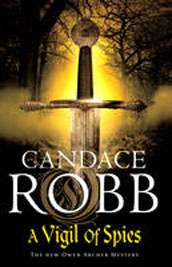
I feel I’m very fortunate to have become friends with Candace Robb, a novelist who’s had an influence on my work as a mystery writer. I’ve been a huge fan of her Owen Archer novels since I discovered them (they’re set in 14th Century York, but I found them in the library in Seattle). As Emma Campion, she’s written a pair of outstanding historical novels, and A Triple Knot, the newest, is set to be published very soon. Ironically, I did know that she lived in Seattle, too, or that, prior to that, we’d both lived in another city in America. Goes to show, small world. We exchange emails regularly, and when Candace suggested us having a conversation for her blog, I was flattered. The exchange has grown, so we’ve decided to split it between our blogs. This is part two – just follow the link here for part one.


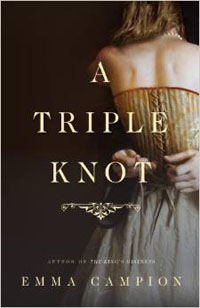
Chris: How do you think writing backgrounds affect the way we work? For instance, you came to this as an academic. Did you have to force yourself not to put in too much history? And what stylistic changes did you have to make? I came to novels from music journalism and writing quickie unauthorized biographies, where I had to write and research a book in 30 days (much of this was pre-Internet). For both of these, deadlines meant getting it mostly right the first time, and being direct. I’m still that way, I think. I know you revise and revise endlessly. I do more of it, but I try to get the real sense and shape of a book on the first draft.
Candace: Interesting question! I began my university studies in journalism, then switched to literature after a few years. I’ve taught business, academic, and creative writing, and I worked for over a decade as an editor of scientific research publications at a university. So early on I trained in getting it mostly right the first time. And as an editor I was always up against deadlines. For the first 10 Owen Archer novels and the Margaret Kerr trilogy I was under fairly rigid annual deadlines. I seldom did more than two drafts. I simply didn’t have time. For the Emma Campion books I’ve had more time. It was quite a change to work on The King’s Mistress for four years; I wrote one version in two years for the UK market and then rewrote it for the US and foreign markets because they wanted a shorter book. But I’ve always thought of writing as a process and an exploration. When I reread I find connections and undercurrents that I’ve rushed past, and work on them to deepen the story.
As far as forcing myself not to put in too much history, I haven’t been tempted with the crime novels, but I had a bit of a struggle writing The King’s Mistress and even more working on A Triple Knot. Joan of Kent’s story is so much a part of the beginning of the Hundred Years War, and that can’t be glossed over. Joan’s story was obscured by the historical detail in the first draft. Focus became my mantra in subsequent drafts, paring down to the essential.
Chris: We both have politics in our books. Yours play out more on national stages, both in York and with the Margaret Kerr novels. And even more when you write as Emma Campion. Mine are far more local, since my feeling is that the doings of Parliament and kings would matter little to ordinary people and everyday life in 18th century Leeds. In my new Victorian series, there’s more politics, but it’s the politics of the working man, the strikes. Do you feel that the politics are a vital strand?
Candace: I chose York as the location for the Owen Archers because of its political importance, and Owen’s identity as the Welsh outsider is an integral part of his character and his view of the world. So, too, I chose to lengthen John Thoresby’s term as Lord Chancellor of England in order to play with the politics of the realm. Owen’s return to Wales and his flirtation with Welsh rebels was something I very much wanted to do. And I wrote Margaret’s trilogy to explore the terrible burden of the Scots during their Wars of Independence, how the people suffered. So you might say that politics are my inspiration. Many of my plots grow out of political events.
Chris: What other things play important parts in your books? For me, it’s music. There’s folk music here and there in the Richard Nottingham novels, because it’s what people would have heard. Some of the ballads, people scraping on fiddles, the music of the people. And in my Seattle books, the music is integral to the story, whether it’s the local sound that’s in Emerald City, just before grunge became big, or the country music in West Seattle Blues. I have a novel coming out next January, Dark Briggate Blues, set in Leeds in the ‘50s. It’s noir, really, but jazz runs through it, and Leeds really did have a jazz club then, a place called Studio 20, where the protagonist goes regularly. It’s a way to combine my two passions.
Candace: I love how music runs through your books, how your language sings. As for me, I suppose the overarching interest is all aspects of medieval culture—music, clothing, drama, literature, ballads. And gardening, particularly medicinal gardens. So Lucie Wilton has a remarkable apothecary’s garden. Falconry. York and Yorkshire—I fell passionately in love with York and the surrounding countryside on my first visit and my love has only grown stronger with familiarity. That goes for Wales as well. A fascination with folk traditions that embrace the magical and the inexplicable.
Chris: I already knew York well when I first came across your books, and your love for it was obvious. But you seemed to steeped in it that I believed you lived there. And you really do bring 14th Century York alive so well, to the point where the reader can taste and smell it. Like my books about Leeds – and also Seattle – they seem like love letters to the place, truly immersive experiences.
Chris: What made you become Emma Campion for the non-mystery novels? (as a confession, for some of my more teen-oriented quickie bios, I adopted the nom de plume of Anna Louise Golden. I imagine myself sitting in gingham and writing!)
Candace: Gingham? Really? Hah! Emma Campion exists solely because the marketing department at Century, my British publisher, wanted a way to distinguish the mainstream historicals from the historical crime novels. I had fun coming up with the name and practicing a new signature. But Candace and Emma both write in leggings and baggy sweaters.
Chris: I know you’ve started work on a new Owen Archer novel, which will please many people. What else is in the future? The return of Margaret Kerr?
Candace: Yes, I’m working on Owen Archer #11, A Rumor of Wolves. Then Emma wants to complete Joan of Kent’s story with The Hero’s Wife (title subject to change) and to give Queen Isabella her own book, tentatively titled Birthright. Isabella intrigues me—or, er, Emma, so she—no, we want to tease her out, find her passion. I have Owen Archer #12 in mind, the return of a popular character in the series. And then there’s something at the back of my mind, a concept and a few characters who are haunting me. The woman is much like Maggie Kerr, but I’m trying not to pin anything down, just jotting down impressions, not struggling to understand….
What’s in the future for you, Chris? Will you bring back my favorite sleuth, Richard Nottingham? How about John the carpenter from The Crooked Spire?
Chris: It was my publisher’s decision to end the Richard Nottingham series, but they specifically said they didn’t want him dead (which, with my track record, was probably a good order to give). I do believe that Richard and I have unfinished business, and there are wheels slowly turning in the back on my mind. So he’ll be back, sooner or later. As to John the carpenter, I did start a second book with him, but it wasn’t working. Again, I have some ideas, so when the time is right, there’s a good chance he’ll see the light of day once more.
Right now, I’m working on a standalone set in Leeds in 1971, currently called Sympathy for the Devils, set in the period when Britain went decimal and leading up to the Stones playing Leeds University (which was a great gig). It’s still a crime novel, but a little different – so far, anyway. I’m also finishing revisions on The Golem of Leeds, the sequel to Gods of Gold. At the start of next week I’ll be sending it to my publisher, so it’s fingers crossed that they want to put it out. Next January there’s another Leeds standalone, Dark Briggate Blues, coming out. That one’s set in 1954, the year I was born, and it’s ‘50s British noir – plenty of jazz in there, as Leeds had a jazz club at the time, a place called Studio 20. It wasn’t intended to be a noir, more an exploration of the ‘50s, but like all books, it took on its own tone…
Finally, I’d recommend A Triple Knot to anyone who likes historical fiction. It’s the start of the tale of Joan of Kent, and it’s a superb read (I’ve been lucky enough to have already devoured it – you won’t be disappointed). And if you haven’t yet discovered the Owen Archer and Margaret Kerr novels, you have a treat in store.
We’d both love to hear your comments, so feel free…
I haven’t posted any fiction here for a while, so I thought you might enjoy a taste of the book I’m working on, Sympathy for the Devils. Set in Leeds in 1971 – here’s the opening. I’d be really interested to have your opinions; after all, you’re the readers, my intended audience…
PROLOGUE
COSTA BRAVA, FEBRUARY 10, 1971
The house was easy enough to find, a quarter of a mile up the track above the village. His plimsolls didn’t make a sound as he climbed over the hard ground. There was a thin moon, just enough light to pick his way over the tree roots and not enough for anyone to spot him. The haversack on his back didn’t weight much; all he was carrying was what he needed for the job.
He’d scouted the area that morning, looking like a tourist who’d lost his way. He’d spotted the track but hadn’t followed it. Instead he’d spent a few minutes in the village; it didn’t need any more than that, with a few poor shops and a café that sat in the deep shade of a tree.
So this is Spain, Mark thought. There was no money here, people still using horses and carts, only a few old cars and the burp of a motor scooter somewhere. Two miles away, where he was staying, it was a little better. But not that much. Warmer than Leeds, but, God, the place was deprived.
There were no lights in the house. He slipped on a pair of gloves, broke the glass on a window and unlatched it. Inside, the air was stuffy, as if no one had been there for a while. Good. He hadn’t asked who owned the place, or why Ellis wanted it torched. That wasn’t his business.
He unbuckled the haversack and took out the newspapers, souvenir tee shirts and a can of lighter fluid. Easy enough to buy and nothing to arouse suspicion. He tore the newspaper and shirts into strips and glanced around. Right, he thought, and pushed the solid oak table over by the bed, piling cloth and paper on the thin, worn mattress.
Working quickly, he doused everything in lighter fluid, and replaced the can in the haversack. A quick flick of his fingers and he’d lit a match, tossing it onto the pile. Mark waited a few seconds to be certain the blaze had caught, then left.
He slipped down the patch, no more than a shadow, moving quickly and lightly. Out past the village, on the dark road, he turned, able to see the flames lighting the sky. Halfway back to the hotel, he heard a soft whoomp, looked, and saw the flames climbing higher. Must have been a propane tank, he thought. Up on the hillside, the blaze stood out like a beacon.
Mark tossed the empty can of lighter fluid in the bushes, removed the gloves, and walked on.
CHAPTER ONE
LEEDS, FEBRUARY 8, 1971
‘Please don’t,’ she said when Mark moved his hands to her breasts, and the look she gave made him stop. Her voice was no more than a whisper, almost pleading. He moved his arms away, cradling her head against his chest.
He’d been awake since six, thinking about that her. Thinking about last night He rolled over, smelling the scent of her on the pillow. The bed was warm, the blankets like a cocoon around him. He settled into it for a minute, then pushed back the covers and stood.
Bloody freezing. He dressed quickly, making tea and toast, keeping one eye on the clock. He knew better than to be late.
In the end, he still had to run to catch the bus on Headingley Lane, climbing to the top deck and panting as he found a seat next to a woman who spent the whole trip into town coughing and sniffling. Mark Johnson huddled in his army greatcoat and tried to ignore her.
It had been a good night, the first time Pam had been to the flat, their first chance to really be alone. They’d been going out for four weeks, the usual cinema and disco routine, over for tea, an awkwardly polite couple of hours with her mum and dad. They didn’t quite approve of him, he could tell; there were too many silences during the meal. No surprise they had a little talk with her later, saying perhaps she shouldn’t see him. She was sixteen, a year younger than him, and still training to be a hairdresser. He’d spent an hour pacing, wondering if she’d actually come. She’d lied to her parents about where she was going and turned up just before eight.
Anyone else, he’d have jacked them in after last night. But there was something about her that stopped him. There was a freshness, a prettiness about her, the wide eyes that always made him smile. In the end they’d snogged on the bed, rubbing against each other. It was strange; it had been enough for him. He’d driven her home in his old Triumph Herald, parking at the end of the street so nobody see.
Mark shook his head. He was going soft. He was bloody well falling for her.
The bus out to Roundhay Park was late. He spent the journey checking his watch, hoping he’d arrive in time. For his own sake.
Bloody February. It was cold enough to freeze your bollocks off. Mark pulled the greatcoat tight against himself and hurried round the lake as the flares flapped around his ankles and his boots kept slipping on the hard earth. All the way to the other end, of course. Far from prying eyes, just the way Ellis liked it.
He’d followed the orders, taken a day’s holiday from work, left the car at home and used the bus. The man was so fussy that it was like listening to an old woman. He could see him now, sitting on his usual bench, tossing breadcrumbs from a plastic bag to the ducks gathered close in the water. His minder, Davy Sands, was twenty yards away, standing at the edge of a grove of trees, eyes watching everything carefully.
Johnson settled on the seat, took a packet of Embassy from his pocket and lit one, feeling the smoke warm his lungs.
‘Good morning, Mr. Ellis,’ he said.
The man threw a final handful of crumbs, folded the bag and put it in the pocket of his donkey jacket. Jimmy Ellis had a whole wardrobe full of suits from Austin Reed, Mark knew that. He’d seen them. And he still dressed like a bloody navvy. Jacket, flat cap, thick sweater, old jeans and steel cap boots. Fifty if he was a day, successful, and happy to put on a labourer’s costume. It didn’t make any sense. Ellis pushed back the sleeve slowly and glanced at his watch.
‘You’re ten minutes late.’
‘I’m sorry, Mr. Ellis, the bus-‘
‘Excuses.’ He turned and stared. He didn’t need more than a single word. His eyes were blue and empty; look in them and there was nothing. No pleasure, no sorrow, just a void. ‘Next time make bloody well sure you’re on time.’
‘Yes, Mr. Ellis.’ He ducked his head quickly.
‘Look at you, you’re like one of those fucking hippies. What are those you’re wearing, anyway?’ He nodded at the trousers.
‘Loon pants,’ Mark began to explain, but Ellis turned his head and he shut up. He knew better. He’d been doing little jobs for the man since he left school, two years now. Long enough to see what happened to anyone who didn’t treat him with respect.
Ellis brought an envelope from his jacket pocket and tossed it onto Johnson’s lap.
‘What’s that?’
‘Open it and you’ll find out, won’t you?’ The older man sighed. ‘I thought you had brains, with all those O-levels, an’ all.’
Johnson ripped the paper, sorting through a passport and some twenty-pound notes. He didn’t even try to count them, just looked at Ellis with questions in his eyes.
‘This passport,’ he said, ‘it’s got the wrong name on it.’
The man gazed at him as though he was simple. ‘No, it doesn’t. I had it made special for you. You’re taking a little trip.’
Mark could feel the twinge of the pulse in his neck. He drew deeply on the cigarette.
‘Costa Brava,’ Ellis continued. ‘Take the train over to Manchester tomorrow and fly from there. I’ve given you enough for your fare and somewhere to stay. Just two days,’ he warned. ‘I’m not paying for a bloody holiday. Back on Friday.’
Yes, Mr. Ellis,’ he agreed quickly. He’d need to ring Pam; they were supposed to be going out to the flicks on Thursday night. He’d offer her something better for Friday. ‘What do you want me to do there?
‘There’s a bloke I know, he has a house there. Had, by the time you come back. Got it?’
Mark nodded, trying to hide a smile. He’d done a few torch jobs for the boss before. Businesses and warehouses. But they’d all been local. He was moving up in the world.
‘Right,’ Ellis said. ‘Everything is in the envelope, address and there’s a map. I’ll see you right on payment once you’re back.’ He gripped Mark’s wrist, his fingers tight enough to hurt. ‘And don’t bugger it up.’
‘I won’t. What’ll I tell them at work?’
‘Ring up and say you’re poorly.’
Two days, it wouldn’t matter. The gaffer would moan, but that would be the end of it.
‘Right,’ Mark agreed hurriedly. ‘Do you want me to ring you when I’m back and tell you how it went?’
Ellis turned the empty eyes on him‘ No need, lad. If you bugger it up, I’ll be the last person you want to talk to. If I went well, I’ll hear about it.’ He waited a moment. ‘Off you go then, on your way.’
Six years ago today, my mother died. As these things go, it was perhaps as good a death as it could be: instant (a fatal heart attack), probably painless, I’m told, and at home. She made it to 88 with her senses intact and her mind still sharp.
She was one of the reasons I moved back to England. Not the main one, I admit guiltily, but still there. We talked every morning on the phone and I saw her regularly.
I’ve often written about my father, but not about my mother, and I’m not sure why. Maybe because I’m more like my father than I care to admit, and see a mirror of him in myself. But during my teenage years, when my dad and I locked horns on a very regular basis, it was my mother who stood between us as the peacemaker. What I didn’t understand then was how much the fighting tore her apart. Both of them had been married before, during the war, and this was their second marriage. It speaks volumes that it lasted almost 50 years; that would have been longer if my father hadn’t died in January 2001, 48 years and two months after they were wed.
But she was always there when I needed her. When I was about 15, and my first real girlfriend broke up with me, she was the one who gave me money for a pack of cigarettes – Gold Leaf, none of the cheap rubbish – and told me to buy them, to calm myself, although she never smoked herself.
When I moved to America, and the only real contact was airmail letters, with phone calls on birthdays and Christmas, she – both of them – gave their blessing to me going, and never said a word more about it, then or later.
Every time I came back to visit, she was the one who cooked my favourite foods. And she looked after my father. After his heart attack, he was too scared to really venture out. She was the one who ran all the errands and did the shopping, even though an arthritic knee made movement difficult for her.
I visited them in November 2000, just a couple of weeks before my father’s last stroke. He did the following January in hospital, and she was the one who told me not to fly back for his funeral. He wasn’t there any more, she said, it was just bones and flesh that would go up in flames.
A few months later, she came to Seattle and stayed for a month. She couldn’t get around well enough for sightseeing, but I believe she loved simply getting away from the four walls that had held her close for so long, and getting to know her grandson. If her knee had been better, I’m certain she’d have travelled more.
Her own father was quite the patriarch; she’d been raised to defer, not argue. But that didn’t stop her being a very strong woman, in her own way – in ways I didn’t fully comprehend until later. She lived long enough to see me published, but not long enough to see any of my novels in print. She would, I believe, have enjoyed that and felt proud.
She set me a good example, and all I can do is try to make her proud. I love her still, and I miss her. In every sense of the word, she was a good woman.
But you will. Well, I hope you will, once Gods of Gold is published (end of August in the UK). Anyone coming in after Richard Nottingham has big shoes to fill. But almost 160 years after Richard, perhaps Inspector Tom Harper is the man to do it.
Although he’s the central character in the new series, he wasn’t the first one to leap out at me fully-formed. That was his fiancée, Annabelle Atkinson, a widow of about 30 who runs the Victoria pub at the bottom of Roundhay Road in Leeds. She’d been in a short story I wrote, Annabelle Atkinson and Mr Grimshaw and she began to haunt me. But she wasn’t yet the Annabelle of the book. There was still a way to go.
And she had more to tell me.
It clicked into place when I realised she ran the Victoria. It’s a pub that really existed until a few years ago, and the building is still standing. The woman who really ran it was a distant relative – at least around 1920. My father, who lived in Hunslet, would spend his summers there, as it had a big garden, and a piano where he could practice to his heart’s content. She also owned a few bakeries in the area and did a little moneylending; a consummate businesswoman, and a strong, independent woman who’d started out as a servant in the pub, married the owner for love, then run the business herself after she died.
I had her. That was a beginning.
After that, I happened to read about the Leeds Gas Strike of 1890. It was a blatant attempt by the Gas Committee of Leeds Council to save money by basically firing workers then hiring fewer of them back at a lower wage and under terms that largely deprived them of their rights, a move that resonates so much with what’s happening everywhere today.
The difference is that the strikers won. The Gas Committee had to capitulate. Hard to imagine that happening these days. Who wouldn’t want to write about a situation like that?
And that was where Tom Harper walked in. He had to be somewhat political, and on the left end of the spectrum. So he’d be a working class lad. And he needed a detective. From there, he simply came together. He’d grown up in the Leylands, just north of the town centre, before it became a Jewish area. He’d lived in a back-to-back house, left school when he was nine to work rolling barrels at Brunswick Brewery. But he wanted to be a policeman. He’d educated himself by borrowing books from the public library and finally, when he was 19, he’d joined Leeds Police. He’d spent six years on the beat, covering the courts and yards between Briggate and Lands Lane. His parents had died, his sisters were happily married, and he lived in lodgings just off Chapeltown Road.
And there was Tom. Of course, he couldn’t do everything alone, but there’s more to come in the book, of course. And he still had to meet Annabelle and the two of them had to become close…you’ll have to read Gods of Gold to discover all that, though.
 Chris Nickson