Leeds History – The Ice Fair

After Beyond Guardian Leeds shut up shop last month, I promised I’d keep going with a little Leeds history. Being a man of my word, here’s January’s edition.

We’ve been lucky in our winters lately. Some snow and cold last winter, but nothing like those during history. And if your parents or grandparents have ever said how bad 1963 or 1947 was, even they don’t know how bad winter can be.

The tail end of the 17th century was a little ice age in Britain. The winters were truly brutal and cold. In Leeds, the winter of 1683/84 was the real one for the record books. It was the year the River Aire froze.

It didn’t simply freeze, the ice was thick enough and lasted long enough to hold an ice fair on it. Stalls, markets, hot foods – and probably hot mulled wine – were erected on the ice, and most of the population, which would have been around 3,000, came to enjoy themselves. In all likelihood the Town Waits or musicians would have played at times and dignitaries been on show.

There was no river trade at this time. It was truly impassable, so the vessels that would have moved goods all the wall to Hull couldn’t penetrate. It’s almost certain that the cloth market would have been suspended, as the weavers would have found the roads impassable from their outlying villages. Grand and interesting it might have been, but it also meant that Leeds ground to a halt.

How far did the ice extend? We’ll never know for sure, but Leeds historian Ralph Thoresby recounted that he and a friend strode on to the ice at the mills below the Parish Church at the bottom of Kirkgate, then walked along the ice under Leeds Bridge and all the way to the Upper Dam, which is more or less where the railway station is today.

While ice fairs became almost annual events for a few years down in London as the Thames froze in this period, this is the only year Leeds was ever hit so hard. So, no matter what January or February do, just remember that it could be a great deal worse.

Mr. Thoresby’s Curiosities

Ralph Thoresby (1658-1725) was the Leeds historian. No one before or since comes as close. He lived here all his life – educated at Leeds Grammar School – and tried his hand, unsuccessfully, as a merchant. He was lucky, inasmuch as he didn’t have to work. After attempting to make fortunes he gave himself to learning and published three books  – Ducatus Leodiensis, Museum Thoresbyanum, and Vicaria Leodiensis. The first is his great work, a history and survey of Leeds and its surrounding area, plus the great families there.

He lived in Kirkgate (a blue plaque commemorates the place, close to Superdrug) and was an avid collector of all manner of things. He really did have a museum in his house. But when he died, no one was that interested in his collection. Much was thrown away, and the rest went to his eldest son near London and was sold when he died. Sad, really. Which brings us to the story…

MR. THORESBY’S CURIOSITIES – 1725

“It won’t do,” he said, shaking his head and pursing his lips. “It just won’t do.”

“No, sir,” I agreed.

Mr. Brocklehurst looked slowly around the room once more. He’d tied his stock too tightly in the morning and his large face had been red all day.

“No,” he repeated. “It just won’t do.”

But it would have to be done. Every item in this collection of curiosities needed to be catalogued. And I knew it wouldn’t fall to Brocklehurst the lawyer to do it. It would be my job, his clerk.

Mr. Thoresby had amassed thousands upon thousands of objects during his life, so many that he’d needed to build an annexe to this modest house on Kirkgate for them all. Now he’d passed on his heirs needed an inventory of everything.

I’d miss the man. He’d been my favourite of Mr. Brocklehurst’s clients. Whenever he’d visit the office he’d ask after my wife and children with honest interest. No matter that he was a gentleman with his independent means and I was no more than a law clerk.

Even after his first stroke his mind had been alert. I’d come here several times with papers to be signed and he’d always been polite. He’d even insisted on showing me around this place, his museum as he called it with a wry little smile, and he’d pressed a copy of his book on me, his history of Leeds and the areas around it, picking it from a tall pile, blowing off the dust and inscribing it with his name, writing in an awkward scrawl. I didn’t have the heart to tell him that only gentlemen had the leisure for reading and learning. For the rest of us, life was made for work and sleep. So his Ducatus Leodiensis propped up a broken table leg in our house now, the gold letters on the spine growing dustier each month.

Brocklehurst paced around the room, hands clasped together in the small of his back, pausing here and there to look at this and that. Finally he announced,

“Well, you’d better get to work. And don’t be too long about it. I want you back in the office as soon as possible. There’s plenty of work among the living.”

“Yes, sir.” I opened the ledger on an old table then set down the quill and the ink pot, hearing the door slam in the empty house as the lawyer left. I knew I should begin the task, but instead I walked to a shelf at the far end of the room and picked up a small object.

I’d last been here two months earlier, no more than a fortnight before Mr. Thoresby suffered his second stroke and died. I’d come on a trifling errand, his signature on a note to append to an annuity. He’d been sitting in his parlour, lost in thought when I was shown through.

“Young man,” he said with real pleasure, as if I’d been his first visitor in an age. He struggled to his feet with the help of a stick, putting out a heavy, palsied hand to grip mine. Wigless, he showed wisps of grey hair over a shiny pink skull, and a mouth that drooped on one side. But his eyes still twinkled. Over the last months he’d grown portly, his movements confined to his house or the streets close by. No more wanderings around England or setting off in the morning to walk to York and dine with the archbishop. And invalid now, his wide world had become so small. “Come with me, come on. I have something very special to show you,” he urged, his voice just an echo of the cannon boom it had once been.

I followed him through to this room of wonders. He shuffled slowly, pausing two or three times to catch his breath. Yet once we reached the shelf and he reached out, it was as if his illness had never happened. His hand was steady as a youth’s and his thick sausage fingers were deft as he plucked up the item.

“Do you see that?” he asked me, letting it sit on his palm. “The vicar in Rothwell sent it to me last week.” He displayed it like something precious but I had no idea what it could be. I wasn’t like him, I had no knowledge of these things, no chance to learn. My only learning had been letters and numbers before I had to earn my way in the world. It seemed nothing more than a piece of sharp stone, nothing of value. He saw my look and smiled. “Would you like me to tell you?”

“Yes, sir, I would.” If it was important to him then it must have a purpose, I thought.

“Long ago, before there was any Cambodunum, or Leodis or Leeds, long before anyone thought of a town here, there were people in this country,” he began. It wasn’t the chiding, strident tone of my old schoolmaster. Instead, there was enjoyment in his voice sharing these things with all the eagerness of an enthusiast.

“Where did they live?” I wondered.

“In caves, perhaps, or out in the open. We don’t know that yet,” he answered with a small sigh, as if he was disappointed that he’d never know. “But they hunted. They had to, for food. And they possessed spears and arrows, we do know that. And clubs, I suppose,” he added, as if it was an aside to himself. “This, young man, is an arrowhead made of flint.”

Once he told me, I could discern the shape of it, the point at one end. It was delicate, crude yet carefully worked and I marvelled at how anyone could have made that so long ago and that it could still be found like this.

“Just imagine,” Mr. Thoresby continued, “that a man might have killed many animals with this arrow. Perhaps it ended up in some beast that escaped him. Or maybe it was a wild shot he never found again. Or,” he winked at me, “he might simply have lost it somewhere.”

He replaced the arrowhead on the shelf and we returned to the parlour to finish our business. Since then I’d thought of it often. I told my wife about it but she paid it little mind. Seeing an arrowhead wouldn’t put food on our table or clothe our children. It came to me later that I’d never asked him just how old it was. He would have known; after all, he was acknowledged to be the most learned man in Leeds. Now, though, he was interred under the choir of the Parish Church, his widow gone to live with one of their sons.

I lifted the arrowhead very carefully, astonished that something with all this wait of years on it could be so light. I ran my thumb along the edge and gasped out loud to discover it was still sharp enough to cut the skin. How long had it taken to fashion something like this? What tools had he used? Suddenly I had so many questions ringing like Sunday morning bells in my head and no one to answer them.

Furtively I looked around, as if there might be someone spying on me. It was a ridiculous fancy, of course. The house was all closed up, the shutters pulled tight, the air inside stuffy, still holding that old, desperate smell of disease and death that tugged at the nostrils. Then I took out my kerchief and gently wrapped it around the arrowhead. Another glance over my shoulder and I tucked it away in my coat pocket. No one would know. No one but me would count all the curiosities here.

Dickens, Chandler and Me

Heading swiftly towards the end of the year and I find myself reflecting on some of the things from the past twelve months. In writing, at least, two stand out – doing things I’d never imagined. In one case something I swore I’d never do.

A Victorian mystery? Why would I want to do that? After all, everyone and his brother (and sister) has written one. I’ve never been a fan of the Victorians. And yet…I have one coming out in April called Gods of Gold.

I blame Leeds history. I started reading about the Leeds Gas Strike of 1980, when the workers took on the council and won, and realised that people should know about this. And then I thought about a family story, one my father told me, about the landlady of the Victoria in Sheepscar (now no longer there). I’d featured her in a story before, after a fashion (and she’s in this Christmas story I wrote for Leeds Book Club this year). From there I started to dig deeper into 1980 Leeds and realised how fascinating it was. The start of organised working-class politics in this country. I wanted to write about that, too.

So all the old vows were washed away. I wanted to take people to that time, to feel the excitement, the poverty, the power and grandeur of a city hitting the peak of its power – and also into the underclass.

And then there’s the 1950s. I was born in that decade, close to the middle of it. But the more I read about it, the more I understood that I didn’t know. I’d assumed a great deal that was wrong. It began to intrigue me more and more.

I’ve always been a fan of good private detective stores – Chandler, Hammett, Ross MacDonald, etc. – and I’d enjoyed a TV show back in the ‘60s called Public Eye, about a rather down-at-heel British private detective. But there’d been little set in the 1950s about an enquiry agent, as they were known. Not in an English provincial town. That was a thought. One that blossomed.

I’m now revising that book, and I’ve discovered that I’ve ended up with ‘50s English provincial noir. Where will it go? That’s yet to be seen. But I guess I’ll find out. No title yet…

So it’s been a year of Dickens (okay, not really, he was long gone by 1890), Chandler and me. Funny how those things happen, isn’t it?

The Unchanging Leeds No One Notices

In the early evening last Thursday, a couple of hours after dark, I was walking up Briggate. I’d been down in the glittering Victoriana of the Adelphi, one the other side of the bridge, poised at the top of Hunslet Road where it meets Dock Street.

The place was busy. Town was busy, many heading home from work, others beginning a pre-Christmas evening out. Plenty of foot traffic on Leeds Bridge, spilling out into the road, vehicles passing. If they’d been carts instead of cars and lorries, it could have been a re-enactment of Louis Le Prince’s 1888 moving pictures of the scene (the first in the world, in case you didn’t know).

Queen’s Court, Lambert’s Yard and Hirst’s Yard, each with their tiny entrances off Lower Briggate, looked like dark portals back to the nineteenth century, each with their menaces and joys. Cross over Duncan Street to see the police arresting someone, possibly a shoplifter or pickpocket. Buskers entertaining, hoping for change in their hats or guitar cases from the generous.

The little ginnels that lead through to Whitelock’s, the Packhorse, the Ship. All of them with memories going back three hundred years. How many drunks had held themselves upright on those walls? How many had waited in the shadows to rob the unwary? How many prostitutes has tumbled their clients just a yard or two off the street?

Further up Briggate, street vendors are crying their wares to drum up trade. Calls that echo back through the years. ‘What do you need? What do you lack?’ They’re there, in the space where Leeds market stood for so long, every Tuesday and Saturday, pretty much from where Harvey Nicks now sparkles all the way up to the Headrow, where there was once the market cross.

So what’s the point of this? It’s simply that, for all the sheen of the 21st century, Leeds is very much the same as it was 200, 300 and more years ago. The same things in different clothes, with different words. We have far more in common with those who came before us in Leeds than we admit or even think. Briggate and the streets that surround it, might change their facades. But that’s the only thing that really changes, along with the tat offered for sale; the nature of people doesn’t necessarily alter that much.

Next time you’re walking along there after dark, think about that.

Leeds Story Time – Robert of Red Hall and William de Wayte

In 1318, one of the years of famine in England, Leeds was still a very small town. Little more than a village, really. It had two streets, Kirkgate and the more recent Briggate, which was just 100 years old. No more than a few hundred lived in Leeds but it already had its share of rich and poor. Among the richest was the de Ledes family of North hall, whose oldest, arrogant son was Robert. Like so many rich young men, he believed the laws didn’t apply to him. That was way, on his way to church one Sunday morning he was throwing dice with William de Wayte, another young Leeds man of wealth. An argument rose up between them, almost coming to blows or more, but neighbours pulled them apart and calmed them. In the church, William told his page and his friend John de Manston what had happened.

The service over, the trio waited in the churchyard until Robert appeared and began to taunt him. William and his page came at Robert, swords drawn. The church door was barred, there was nowhere for him to run.  He tried to defend himself and in the fight that followed, Robert killed William de Wayte. As soon as they realised what had happened, the page, de Manston, and another man took hold of Robert. Even the chaplain joined them. In the ditch that separated church from graveyard they beat him and left him for dead.

But God was looking kindly on Robert. His brothers found him and took him home. Injured, bloodied, he still recovered. But the de Wayte family wanted revenge. They accused him or murder, a charge far too serious to be heard in the court of the manor; he had to be tried in far-off London. Arrested, Robert de Ledes was taken in chain to Marshalsea prison in the capital.

But his father had money to hire the best lawyer and also went to work on his son’s behalf. Many had witnessed what happened after the service. He gathered depositions and statements from witnesses, ready to present at the trial. Robert spent months in the Marshalsea, for just moves slowly. The prospect of the noose was always close.

In court Robert claimed self-defence, to the outrage of the de Wayte family, who wanted him hung for murder. But while they had those with William as their witnesses, Robert could present more evidence to make his case. It mounted up, word by word, person by person, until, finally, it couldn’t be denied. There was no hanging that day. Instead, Robert de Ledes walked out a free man and returned to Leeds.

Diving Deep Into History

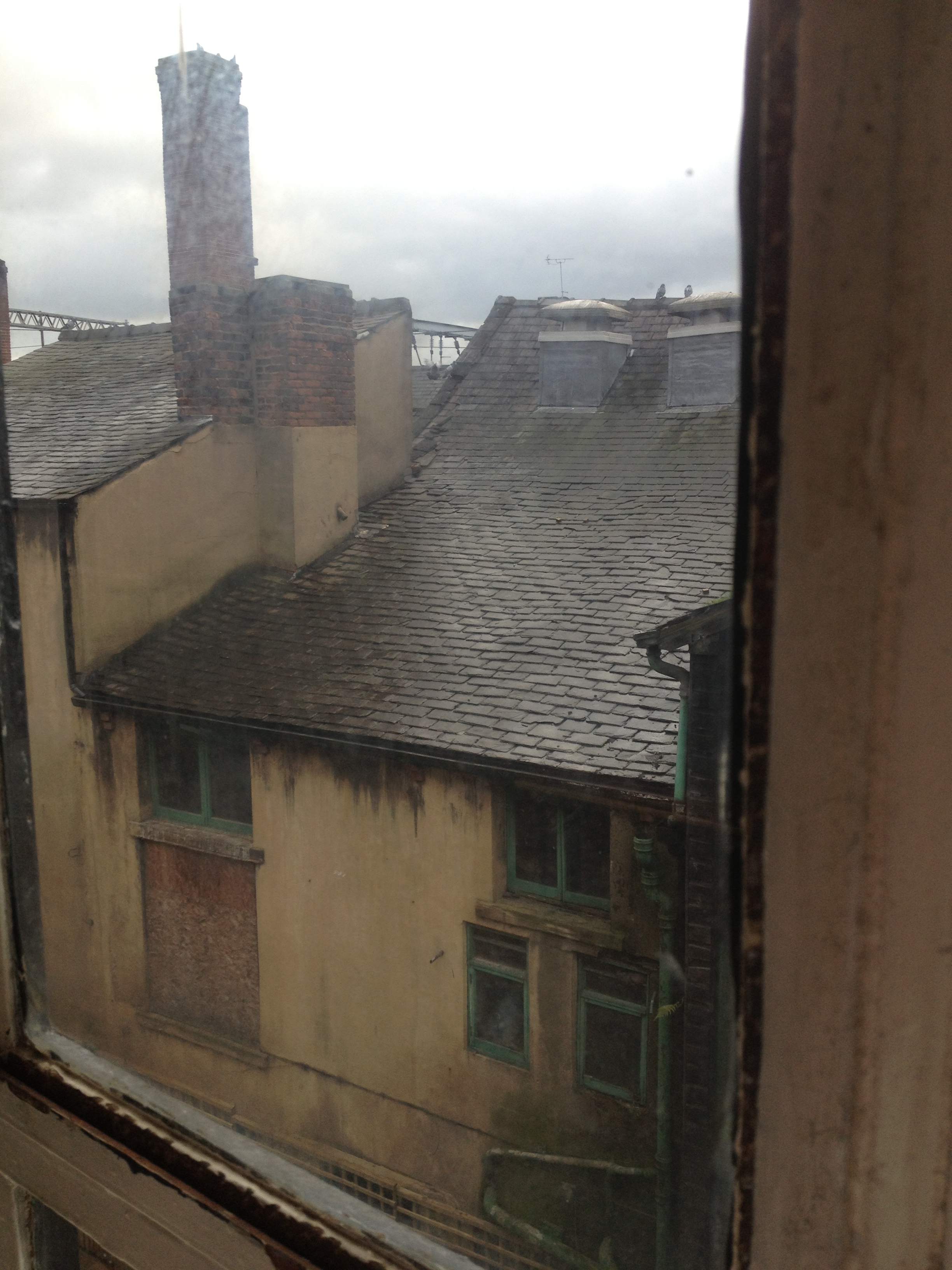
Yesterday I felt very privileged. For a few minutes I could look deep into the heart of Leeds’ history. 400 years into the past at the oldest house in the city, three storeys, each one jettied out from the one beneath.

Image

Let me explain: This week saw the opening of Lambert’s Yard, a new retail/arts space on Lower Briggate. From their windows, and especially the gallery on the floor above, you can look down into the yard and across at the wonderful Grade II listed house. You can’t go in, it’s in a real state of disrepair, but simply to see it after so many years of it being shut out of sight is a joy. As are the buildings behind it. A little younger, from the look of them, probably 18th century, but still beautiful in their simplicity.

Image


Image

On the surface the house doesn’t look too magnificent. It’s been wood-boarded with tongue-and-groove boards, an ugly white board on one side for repair. The days when it was timbered and limewashed have long faded (look in the gable and you can see where the timbers were cut). But it’s a slice of old Leeds history, and God knows there’s precious little of that left, certainly from pre-Victorian times. Gaze out of the windows, see beyond the surface to the lives that were lived there over the centuries.

No one knows who built the house, or who lived in the yard back when Elizabeth I was still on the throne. What we do know is that the yard took its name from the Lamberts, tea merchants who worked and lived in the house up until the early 1900s. Before that…look and make up your own tale. Just as I did (see below).

Go to Lambert’s Yard is you can (162-163 Lower Briggate) and see it for yourself. And while you’re there, buy something so this place can stay open and grow into something deeper, where we’ll all be able to reach out and touch history.


The last part. The limewash.

            He stood in the yard and watched the workman up on his ladder, working with his trowel to give a smooth finish, brilliant white on the gable above the third story. The sun came from behind the clouds and caught it, gleaming.

            The man kept going, working the same piece over and over until he was satisfied, then climbing back down, slowly. He was a hunched old man, a smock over his clothes, legs bowed with the years, a full beard and a quizzical eye. The best in Leeds, folk said. But the best was what he wanted for this house, so he’d paid the workman his price. It had been worthwhile.

            He’d worked hard enough to afford it, the design in his head for years. Every month he’d counted the coins in the chest, although he already knew exactly how many were there. From his marriage, then the births of Adam and Hannah, the death of his father, he’d wished the time away until today.

            There was money in wool these days. Not like the trade from Bristol or Norwich, but enough to give a fair living to a man with enterprise in his heart. Not the way it had been before Henry has taken all the wealth from the churches. He’d heard the tales when he was young, passed on from his grandfather’s father. How Kirkstall sold all their wool abroad, precious little for the town.

            The workman lowered his ladder and began to clean his tools.

            “You’ve done a good job.”

            The man shrugged.

            “Just what you paid me to do.” He raised his head. “It’ll last years, will that. A well-built house.” He hoisted the ladder on his shoulder and left.

            It was. It ought to be for everything it cost in materials and design. The frontage on Briggate, the gate through to the cobbled yard. A house in the latest fashion, each storey jettied out from the one beneath, not only in the front but on the sides. Good mullioned windows to bring in the light, entrances to the yard and the street. Strong hearths for heat and a kitchen to prepare a feast.

            With a warehouse for cloth, a strongroom for his accounts and money, and cobbles down over the mud, it was finished. Finally.

            He stood by the entrance to the yard, gazing across Briggate. The old house had been home to the family longer than anyone could recall. Cramped, cold, dark. It was no place for a modern man and his family. When his father died, as soon as the coffin was in the ground, he’d begun to make his plans. His mother would have objected. She’d have talked about the history in the wood, but she’d been gone these twenty years now.

            He could hear the children inside, running up and down the staircase. Soon enough he’d go in and tell them to have respect for property. For now they could have their moment of fun.

            One long shelf in the warehouse was full, the cloth bundled and tied. Already sold, simply waiting for a boat to carry it down to the coast. There’d be more to take its place. He’d bought lengths at the market on Leeds Bridge two days before. It was off with the fuller now. Dyeing, then stretching on the tenter frames, carefully cropped and ready to go on its way. It took time. Success took patience. His father had drummed that into him. But it needed more than that. An eye for opportunity, the willingness to gamble, to parlay a little into a lot.

            He had orders from the Low Counties, down into Italy, all the way to Jamestown in Virginia. A man had to look to new markets. It was how he’d been able to afford this house. Soon others would follow, he’d wager good money on it. Richard Sykes had talk about building when they shared a jug of wine last month. And there was Metcalf, although he probably had even grander visions. The only one who wouldn’t was Bowman the shoemaker. He loved that place with its bowed windows for showing off his goods.

            Leeds had grown and changed, there was no doubt about it. When he was a lad there’d been nothing to the place, it seemed. Now he saw new faces each day, and more people on the streets than he could count. Folk with money in their purses.

            He slapped a hand against the house’s corner beam, feeling it solid under his palm. A house to last for years and years. For his children and theirs, and all the generations to come.

The Harrying – 1069

William the Bastard (or Conqueror) didn’t immediately rule all of England from 1066. He faced rebels in the North, men who attacked his forces but wouldn’t face him in pitched battle; guerilla forces, if you will. Finally, frustrated, he took out his anger on the ordinary people who made their lives there. In a massive act of genocide his troops destroyed villages and all who lived with them, leaving huge areas waste, often salting the earth so nothing would grow again. They came to Headingley. By the time of the Domesday Book in 1086 people were there again, but there was no doubt that it had suffered. I’ve borrowed some of the images from Martin Carthy’s wonderful version of the traditional ballad ‘Famous Flower Of Serving Men.’

They came in the night, the Norman bastards. The first we knew was the screams and the sound of burning. My man was up quickly, grabbing his hoe and dashing out into the dark. As he pushed the door open I could see flames lighting up the sky.

We’d heard the word from folk passing on the road. William, him as ruled us now, he said, was sick of rebellion, of the lords and them who defied him. He’d sent out men to destroy the North.

For weeks people had been coming through in their ragged, desperate ones and twos, a family and sometimes more, clutching what little they could carry, just seeking safety somewhere. We fed them, gave a place to sleep in a byre or a hut and saw them move on the next morning, hoping for a home to live free from sword and fear. Precious little chance of that in this land. In the church we prayed to the Holy Virgin that they’d leave us alone. But even as we mouthed the words we knew they’d arrive sooner or later.

Headingley had been famous once. I’d listened to the old men when I was a girl; I knew what all the tales said. How famous warriors, good men and great, would come from miles to gather at the Shire Oak and make their laws. I never pay mind to stories these days. They’re just words and words won’t feed my bairn. I’d lost three in blood and screams and pain before he was born and every day I beseeched God to let him grow to his manhood.

I picked my sweet William up from the scraps of cloth that swaddled him and held him close to my breast. Keep quiet, I whispered. For the love of Jesu, suckle and stay quiet. His mouth found the nipple and he closed his eyes again as I huddled in the corner, trying to keep hidden from the terror and yelling that filled the world beyond my walls.

Embers gave the only light, shadows that moved around the room. A steer lowed helplessly somewhere before its cry was cut short and a man began to laugh. I cowered, pushing myself hard against the wattle, head down, trying to soothe my William.

They’d kill who they wanted and put it all to the torch. That was what they did; we’d been told. What could we do against the power of armed men on horseback, with evil in their heart? Ten houses in the village. All we had were hoes and scythes and the hunger that clawed at bellies our bellies. What match was that?

There were screams that wouldn’t end. I put my hands over my ears but they remained. Even in her agony I knew her voice. Matilda, beautiful Matilda, and men doing what they always did in war and drink and rage.

I could smell the burning. Straw, flesh, meat. The shouting was loud, careless and urgent together. Matilda’s voice fell silent.

Someone kicked the door open and came in, holding a brand. There was nowhere to hide from the light. A tall man, with blood smeared on the leather of his jerkin, the lust of killing on his lips. He grunted and dragged me upright. I just tried to hold William close, to keep him safe as I was pulled outside.

The dead lay on the ground. Ten, fifteen, twenty and more of them. I picked out my man, eyes blankly staring up at nothing, a deep wound in his chest. Matilda, the clothes ripped all the way to her flesh. Her throat had been cut.

The soldier casually threw his torch into my house. The days had been dry and the straw caught quickly as the fire began to crackle and roar. I kept my arms tight around William. A man grabbed my hair and pulled hard. I wanted to cry, to do anything, to vanish into the darkness. To take my son and live.

Without a word he slapped me so that I staggered, and someone else tore William away from me. I reached out. I screamed. I shouted. I begged while they laughed. They held him close to taunt me. When I lunged to reach him, they drew back again.

Then one of them gave an order with his strange words I couldn’t understand. The tears ran down my cheeks. They held my head forcing me to watch as one of them lovingly drew his knife across my William’s throat. The blood bubbled on his skin as his yelling turned to nothing.

They let me go then. I fell to my knees, cradling my lovely boy. His blood was warm against my flesh.

The men turned and began to walk away, leaving me there. The only one still alive here. Their testament. Their warning. Their memory. A warrior passed me, spat, and tossed his broken sword on the ground before me. I wanted to die, more than I’d ever desired anything.

Long after they’d gone, when the sound of hooves had vanished and all that remained were the burning houses, I rocked my baby. I sang him soft lullabies and let my tears fall on his cheeks.

Through the night I whispered and cooed to him, stroked his soft hair. I spoke and I mumbled until my throat was raw. I told him every hope and dream I had stored for him, all the love I felt and the joy he’d given me.

By dawn he was cold.

Smoking from the ruins and black timbers were all that was left of Headingley. And the bodies tossed on the dirt. My man, my sister, my father, my friends. My son. The only building untouched was the church.

Finally I stood, picked up the ruined weapon and begin to hack out my William’s grave. The earth was soaked with blood, coming up in wet clods. I dug all through the morning, not stopping for water or rest.

I had blisters on my hands but I kept working until I was three feet in the ground. Too deep for the wolves ever to dig him out again. Safe for the coming of the Lord. I lowered him down, his face so beautiful even in death, and started to scoop the soil on top of him.

I said a prayer for his soul. God would listen. He’d been no more than a babe with no sin to stain him.

In the church I took hold of the rope, pulling until the bell began to toll. I let it ring for the memories of all those who were out there.

Outside, back in the light, I picked up the sword. I touched my man’s lips then held the fingers to my own. And I walked away.

Memory in the Bone

Outside, the sun is shining. The only clouds are over on the horizon and the grass on the field is a brilliant shade of green. It’s chilly, but well, it’s December, what do you expect?

We’ve been in Leeds for a little over two months now. The house has been pulled together and we’re starting to develop lives up here. For me this return to my roots is wonderful, but often strange. Not hallucinogenic, but certainly weird.

Last Saturday took us to a pair of Christmas fairs. Normally I’d give those things a very wide berth, but both places had associations for me…

Going to your old school is never going to be an easy thing, even if you were fairly happy there. It’s impossible not to sound like a throwback: “When I was here that used to be…” “I remember there were old buildings there. Gone now…”. A visit like that turns you into an instant relic But a little over 40 years have passed since I left Roundhay School. At that time it was boys only, a state grammar school with a shockingly high rate of Oxbridge admissions (and no, I wasn’t among them). The girls’ school was next door. Now…ah, now it’s probably much better in so many ways, freed from the restrains of aching to be a minor public school. The weirdness became complete when I met someone on the school committee who introduced me to the current head teacher and I didn’t quake to be close to that authority.

On the way back to the car, my partner suggested walking across the outfield of the cricket pitch in front of the building. We couldn’t do that in my day, I started to say, then realised the hell with it. What could they do, give me a detention?

The second fair was at St. Matthew’s Church. I hadn’t set foot in there since I was 11. Back then I’d been a pupil at St. Matthew’s Church of England primary school, where pupils were supposed to attend church every Sunday – not that I did. The building that housed my school, an old board school from the 1870s, is long gone, replaced by houses, but I was curious to see the church. The vicarage, built for the arrival of Canon Shields in 1964 (don’t even ask how or why I remember that) still stands. There’s a new primary school where an orchard once was. The fair was in a recent annex, spilling over into the church nave. There was no pang of memory. Too long ago, or had the place really never touched me that much? I’ve no idea.

The moral? I don’t know, perhaps there isn’t one. But the tug of school, the unchanging smell through generations, that sense of being a pupil as soon as you walk through the door. 41 years after the fact and it’s still the same. Like memory in the bone.

Carson Mack

I’ve just spent the last few hours back in Seattle, at a show that never happened at the Tractor Tavern. It’s a scene from what I hope will be the second novel in my Seattle series, the sequel to Emerald City. Come along and have a listen…

He had the old Martin guitar in one hand, limping, but no stick. A clean shirt, a newer pair of jeans and a shine on his cowboy boots. He’d combed his hair, but whatever he did, Carson would always look grizzled, as though he’d look life square in the face. He took one of the two chairs on the stage, plugged in his instrument and gazed out at us for a moment.

“So this is what people do on a Tuesday evening in Seattle.” He smiled and the ice was broken. Without another word he began to pick out chords and the rusty, ragged voice started on ‘Idaho Sweetheart.’

I could see a few people begin to smile as they recognized the song, dredging it up from long-ago memories. Stripped-back, unsweetened by strings and backing singers, it had real depth. It ached. He didn’t try anything fancy, just let it speak for itself and it worked. Carson might look like a hick but he was a professional musician. It was easy to forget that he’d been doing this for more years than most of the audience had been alive.

He followed it up with something newer and unfamiliar, daring the crowd to follow him. And they did. Then he started on “As The Heart Falls.” He write it, but the hit had been someone else’s. This eclipsed that version, coming from some well deep inside him that held his world of pain.

For the first half of the set he alternated new and old, throwing in covers of Hank Williams’s “Mansion On The Hill” and Michael Nesmith’s “Propinquity.” After that he turned to the side and tilted his head, smiling as Jim Clark shuffled onto the stage. The poor guy looked petrified, clutching the Gibson close to his chest, eyes darting around the room.

“This is my grandson, Jim Clark,” Carson said, letting that country twang flow like warm honey. “He’s kind of bashful. I know he’s kin and all, but I reckon he’s got something. Want to show them?”

Jim Clark sang his heart out. He was better than when I’d heard him down by the water, but he was nowhere near Carson’s league. He knew, everyone in the room knew it, but he tried anyway, and we all applauded him. The silence built again. Carson licked his lips.

“I never knew Jim’s daddy. Hell, I’ve only known my grandson for a few weeks. But my son died four years ago, right downtown. Someone shot him and they never found out who did it.” He paused. Everyone was focused on him, rapt. “I don’t have much I can give him, ‘cept some justice if I ever find out who did it. But this is about him.”

He started the song he’d played me. Jim added a little guitar, but this was all Carson. His voice was quiet, almost meditative, ragged and torn over the fingerpicking lines. It was a memorial, a lament. So beautiful it hurt with its rawness. When he finished and the final note died to silence, there was a pause before the place erupted, the sound of clapping so loud it was painful. Carson looked at Jim in surprise, then sighed and embraced his grandson.

There was nothing he could do to top that, but the rest of the set was no letdown. He tore through “Call You Sunshine” and “Maybe Darlin’,” turning them into upbeat pleasures. A couple of songs tore at the fabric of broken hearts, ripping them wider. Toward the end he was simply having fun, running through some Buck Owens, Jimmie Rodgers and Ernest Tubb, telling little tales of Nashville and life on the road way back when.

Then, with a goodnight and thank you, it was over. He bowed and vanished backstage. But no one was going to let him leave that easily. We were all standing, demanding more. Finally he came back, almost speechless.

“I…I don’t know what to say. You’re very kind.” He sat for a moment, hands poised over the guitar. We all knew there was only one thing that would satisfy, and he began to play the song he’d written for his son once more.

It seemed as if everyone held their breath for three minutes. Like time stood still, suspended by his words. When he finished there were no more farewells. Just a quick shake of his head and he was gone. The house lights came up and people looked around as if they were surprised to find themselves here.

Leaned against the edge of the stage, finishing my beer and smoking a cigarette. I knew exactly what I’d witnessed. It had been one of those perfect evenings. Something to remain in the memory and light it up for years to come. Something every artist wants but rarely achieves.

I was still there fifteen minutes later. The mics had been put away, the stands folded and the cords all wound. The chairs had been taken away and Dan the owner was sweeping the butts and debris off the floor. I could hear voices backstage.

It was ten thirty. Past my bedtime but I was still flying on the performance. I’d wanted him to do well but I’d never imagined anything as wonderful as this. Finally he came out, leaning on his cane, bought a bottle of Pabst at the bar then stood beside me. He looked stunned and drained.

“You did it,” I told him. “That was pretty amazing, Carson.”

He fished in his shirt pocket, took out a pack of Marlboros and lit one.

“Yeah,” he said after a long time. But the way he spoke the word held it all. “You know, I waited all my life for a night like this. I just had some guy come up to me and says he wants to write about me for a magazine called No Depression. You figure that?”

A Sale Of Effects – 1919

In 1919 Leeds City FC was wound up…this might have happened.


Billy Cartwright moved down King Street, leaning heavily on the crutch so the cast barely touched the ground. After a week he had the hang of it and he could swing along easily, almost as quickly as someone walking.

            At the Metropole Hotel he eased himself up the stairs. A sign with an arrow stood on an easel – Leeds City sale – and he followed along a heavily carpeted corridor to a large room already covered in a fug of smoke. Cups of tea stood on some of the tables, and men in good suits sat puffing on their pipes and talking as they looked through the list of items for sale.

            He saw a hand go up and Fred Linfoot waved him over. All the players had gathered together at the back, crowded around three large tables. The auction hadn’t begun yet but the ashtrays were already full, cigarette butts crushed down together.

            “How long before it’s off?” John Sampson asked.

            “A week,” Billy answered. The broken leg was stretched out, the crutch lying on the floor, out of the way. He glanced around. There were men here from every club in the league, older and with serious faces. Prosperous men who sat straighter as the auctioneer approached his lectern. It was time for business and that was why they’d come to Leeds.

            A Sale of Effects, the notice had read. Only four words. Billy had seen the advertisement in the Yorkshire Post, scarcely believing four words could take in so much. Metropole Hotel, 17th October, conducted by S. Whittam and Sons. He’d looked at it again and again before he’d pushed the paper across the table. Another hour or so and it would be as if Leeds City had never existed. Even the goal netting and the balls would be sold off. The players auctioned like they were slaves.

            He knew who’d fetch the best price – Billy McLeod. He was the best player by far, the one everyone would want. He sat quietly, listening to the conversations around him.

            It was all a stupid bloody mess and if it hadn’t been for Charlie Copeland they wouldn’t be here today. The way he understood it, if Charlie hadn’t reported the club to the FA for paying players during the war, none of this would have happened. Or if Leeds had been willing to produce its books when it was asked. Instead, the chairman had refused and they’d all paid the price. Kicked out of the League, wound up, everything must go.

            There’d be more to it, Billy thought. There always was, wheels within wheels, and someone would have made something. They always did, although none of it would come down to them on the sharp end.

            The auctioneer banged the gavel and the room was suddenly silent and alert. He was going to start with the players, the club’s most important asset, he said, some short speech about how sad this occasion was, the end of an era.

            Billy’s mouth was dry. Everything rested on this. He’d be happy if someone offered two hundred pounds for him. Even a hundred or just fifty. Anything to keep him playing.

            The problem was that he’d never run out for the club. He only turned eighteen during the summer and signed for the club in September. Then, during the second week of training there’d been the tackle. As soon as it happened, he knew. It was all he could do not to yell and start crying like a kid. A broken tibia, that was what the doctor said after they’d driven him to the Infirmary. Eight weeks in plaster. And after that it’d be a good three months before he’d be fit again, the muscle built back up and ready. By Christmas – if he was lucky.

            They’d been the worst six weeks of his life. Cooped up at home every day, just his mam for company while his father and his brothers went off to work. No brass in his pocket. Just down to Elland Road for the home matches, wishing for time to pass until it could be him out there.

            He was good enough. He had to believe he was. He’d played inside right for Leeds Schoolboys until he left when he was fourteen, and then he’d been in the works team at Blackburn’s, the Olympia Works up on Roundhay Road. Saturday mornings off, paid, to play up on Soldiers’ Field. It hadn’t been a bad life. The old factory that had once been a roller skating rink was fun, a good bunch to work with.

            But he’d known he wasn’t going to stay. At fifteen he tried to join up, to follow his brother into the Leeds Pals. A worn-out sergeant told him to come back when he was old enough. He did, a year later, birth certificate tight in his fist. A week later he was in Catterick, learning what it meant to be a Tommy.

            By December of ’17 he’d been in France for six weeks. He was already scared, sick and dirtier than he could have believed. Half of those he’d known in training were already dead, He was numb inside, just living from hour to hour. After a week in the trenches he’d wondered if he’d ever feel warm and dry again. After three weeks, he didn’t care, just as long as he lived to the end of this war and he could know some silence again.

            Come Armistice Day he didn’t know where he was. It was simply another muddy hole in another muddy, lifeless landscape. It could have been in France, Belgium or Germany. He didn’t know and it didn’t matter. The important thing was they could put down their guns and not worry about being killed.

            He could look forward to a hot bath, Billy thought, and going home. Looking around, he could see the same thought in every pair of eyes.


He ended up walking halfway to the coast. The transport never arrived and after waiting for three days the brigadier gave up and ordered them to start on foot. It was a slow march. They were all eager to be back in Blighty, but they were weary, half-fed creatures. The leather of Billy’s boots had rotted away in places, he had trench foot; each step took effort. The further they travelled from the front, the more they seemed to be walking into a dream of green fields and houses that hadn’t been demolished by shells. The type of places they’d almost forgotten.

            He wasn’t home for Christmas. He’d spent that in hospital while they tended his feet. He hobbled home in January, his mother’s arms around him as soon as he was through the front door. Not his oldest brother, though. He’d never come back.

            Billy was still thin, still weak. He wasn’t even eighteen yet and he’d seen enough death for seven lifetimes. His ma made him beef tea three times a day and forced as much food as he could manage down him. He started back at Blackburn’s and began training for the works team again. He ran after work and cut down on to ten Park Drive a week.

            Before the end of the season he was the first choice for inside right again, more reckless now, as if he knew there was nothing in the game that could scare him. He tackled hard, he ran and he scored, three goals in five games.

            The summer, with no matches, left him restless, too full of energy but with nothing to do until his birthday and his trial for Leeds City. He kept up the running, taking off after work for a circuit of Roundhay Park, along by the big lake, through the gorge and back before catching the bus home. Saturday afternoons, when Leeds were playing away, he’d try to cajole workmates into a kick around, something to keep his skills sharp.

            Until the trial he’d been confident. For too long people had told him he was a good footballer. He was always the best in any team. But the others there were his equals. Some were better, he had no doubt about that. They made him sweat, made him play, made him think. And when it was over, for the first time he had to wonder if he was good enough.

            For the next three days he was on edge, going straight home from work to see if there’d been any post for him. When it finally arrived he let it sit in his hand, as if its weight might tell him what was inside. It took courage to open the envelope, and he had to breathe hard before unfolding the letter.

            Dear Mr, Cartwright…

            He read it through twice to be certain he was right. They were taking him on at three pounds a week. For the rest of the evening he couldn’t stop smiling, then couldn’t rest in his bed although he had to work in the morning. He gave his notice, and before the end of September he was training every day at Elland Road, seeing the men he’d only cheered from the terraces. More than that, he was playing against them and just beginning to understand how much he had to learn. He wasn’t good; he’d barely even started.

            The divot shouldn’t have been there. They all said that later. But he’d been chasing down a long pass, watching the ball, not the pitch. His studs caught and he went down awkwardly. Barely two weeks into his professional career and he’d broken his leg.


Each club offered a sealed bid for the players they wanted. Billy wasn’t surprised when McLeod went for £1,250. He outclassed everyone else in the side. Glancing over, he could see the mix of pride and relief on the man’s face. Then it was Harry Millership and John Hampson, a thousand each. And then it was down the line – eight hundred, six hundred, five – all the way to Frank Chipperfield, off to Wednesday for a hundred. That left seven of them looking worriedly at each other. The auctioneer coughed. Four had new clubs. No fee. No one for Mick Sutcliffe, Charlie Foley. Or for him.

            By the time he was listening again, they were selling off the goal posts and the nets. He pushed himself up, leaning heavily on the crutch, and made his way out, threading through the tight spaces between tables. None of the men from other clubs bothered to look up at him.

            Out in the corridor he stopped to light a cigarette. As he was about to move off again, he heard the man say,

            “Billy.”

            He turned. The manager was there, Mr. Chapman, the one who’d picked him out from the trial. Just like Leeds City, he’d been banned from football, that was what Billy had heard, although the rumour was that he was going to appeal. He was growing heavy at the waist, the start of jowls on his face. He gave a sad smile.

            “Yes, boss?”

            “I just wanted to tell you I’m sorry, lad. I had a word with them, said you had potential. But they didn’t want to take a chance.” He shrugged slightly.

            “Thank you, boss.”

            “Don’t give up. You have talent. Keep trying, all right?”

            “Yes, boss. Thank you.”

            He turned and hobbled away.