Another Teaser for AT THE DYING OF THE YEAR

He hurried back up the ladder, falling on his knees at the top and gulping down the fresh air. His legs buckled at he tried to stand, and for a moment he was forced to hold on to someone’s arm. The man handed him the jug and he drank deep, swilling the ale around his mouth before spitting out the taste of the pit.

            ‘Bad,’ was the only thing the man said.

            Rob didn’t reply. He didn’t own the words for what he’d seen. ‘Send someone for Mr Brogden, the coroner,’ he said, his voice little more than a hoarse croak. ‘I’ll bring some men to take the bodies out.’

            He marched purposefully up Kirkgate, trying to clear the thoughts and images from his head. For all he knew there were more children down there, hidden by the darkness. He ran a hand through his hair, the stink of the dead clinging fast to his clothes.

 ***********

 The Constable remembered the face of every dead child he’d seen since he’d begun the job. They were impossible to forget, each one clear and sharp in his head. Many had gone from hunger, little more than ghosts even before their hearts gave up the battle to keep beating, some from accidents, crushed by carts or lost to the river. Precious few had been murdered, and he thanked Christ for that, at least.

Some of the workmen were sitting on the grass when he arrived, others stood in a small group. He nodded and asked, ‘Has the coroner arrived yet?’

            ‘Gone down there with a candle,’ one of the men answered.

            When Brogden climbed back out there was dirt on his immaculate coat and he’d vomited on his shoes with their expensive silver buckles. He brought a flask from his waistcoat, fingers shaking so hard he could barely unscrew the top.  He took a long drink and saw the Constable.

            ‘What’s down there?’ Nottingham asked.

            The coroner shook his head, as if he couldn’t believe what he’d seen. He raised his eyes. ‘Three of them,’ he replied quietly. ‘Someone’s killed them. None of them look older than eight.’ Tears began to roll down his cheeks and he pawed at them angrily before walking away.

            The Constable ran a hand across his mouth. His thoughts raced away from him. Three? It seemed impossible. Unless they did belong to the dead man, how could so many children vanish without anyone noticing? For the love of God, why would anyone want to murder them and leave them that way? He was still standing there thinking when Lister returned with four others, a ragtaggle group who looked more like beggars than Constable’s men.

            ‘You’ll have to be my eyes down there,’ he told Rob. ‘I can’t use a ladder. Not yet.’

            ‘I’ll tell you what I see, boss.’

Yes, there’s a New Blog In, Er, Town

A new year is supposed to bring changes, isn’t it? That’s the way of the world, plenty of resolutions to keep or break. Turns out I have my own changes to ring for 2013, although they were quite unintended.

For more than a dozen years I’ve been writing for a music website that I’ll leave nameless, contributing reviews and biographies of artists. They’ve been good to work for, even after they obtained new corporate masters. I pitched stuff I wanted to cover, they said yes to some, I uploaded and they paid very promptly (and as any freelancer can tell you, that last one is very important).

Then, a month ago, I received an email telling me that as of the end of December they would no longer be requiring my services. Nothing to do with my writing at all; they needed to cut back on the freelancers they used. In this economy that happens, although I do suspect that the marginal areas of music that I mined – world, folk and weird – probably contributed. When things are tough, you focus on the core.

Time and money has taken its toll of the outlets that exist for the music I love. Even the wonderful Sing Out! looks as if it won’t exist much longer, so another one will bite the dust. The newspapers have their reviewers already, as do the mainstream music magazines.

So what’s a man to do? He starts a blog, of course. I already have two, one for random things and another covering Danish music. But the Fortnightly-ish review (http://fortnightlyish.blogspot.co.uk) will just be music. Every couple of weeks or so, one review of a new, or at least fairly new, album that’s grabbed me. Because I love writing about music, in case you wondered.

What not more often? Time, for one. And also I’m a lot harder to impress these days. That’s one advantage – or possibly disadvantage – of age. I began listening to music seriously in 1967, and I’ve learned a great deal in all those years since. It doesn’t mean I know everything, of course – I still don’t understand quite how Monk manages to do all that on the piano, for instance, or why Robert Wyatt’s voice could make a stone cry – but I’ve a reasonable knowledge.

Back when I began reviewing world music, as opposed to just rock/electronic/post rock/whatever, I wanted to write about it in terms that didn’t make it seem foreign to people, so it was just as accessible as rock. I think I wandered away from that path. It’s probably time to get back to it, but also to broaden my church. After all, like most people, my tastes are eclectic. I can find joy in some of Johnny Dowd’s work, next to Charley Patton or Nick Cave. They’re all saying something similar, and it’s all art, just as much as a Bach prelude, Spem In Alium or John Coltrane.

I want to communicate that, and probably include some ramblings, too. It’s a blog, you can do that. Whether anyone will care or not, I’ve no idea. Time will tell. But I’m going to be selective about the music in it. It’ll mean something, if only to me. You’re welcome along for the ride, if you like.

A Taste of AT THE DYING OF THE YEAR

Coming in hardback at the end of February.


Richard Nottingham exhaled slowly as his boot heels clattered over Timble Bridge, feeling the wool of his breeches rasp against his thighs as he moved. Partway across he stopped to rest for a moment, leaning heavily on the silver-topped stick and listening to the birds singing for the dawn. His breath bloomed in the November air and he pulled the greatcoat collar higher.

            Five months had passed since he’d last walked this way to work. Five months since the knife sliced into his belly. For a week he’d drifted in and out of the world, living in a place made of furious heat and bitter chills, the pain always there, powerful enough to fill every thought, every moment. Few believed he’d survive.

            Finally the fever burned out of his system and he woke, the daylight so bright it hurt his eyes, his wife Mary sitting by the bed, holding his hand. He’d live, the apothecary announced after examining him, although the healing would take a long time.

            The summer of 1733 was warm, sticky, full of the drowsy scent of wildflowers in the fields as he began to walk again, shuffling like an old man. At first he could only manage a few yards before he was exhausted, forced to stop, frustrated by his body and its weakness. Strength returned gradually, at its own dismal pace. He went further, first to the bridge, then into the city, a little more distance each day.

            And now he was back to work.  Richard Nottingham was Constable of the City of Leeds once more.


                                                **********************

He was still looking for the place when he heard a shout and turned. A man was running quickly towards him, stripped to shirt and breeches, his face and hands covered in dirt, the bright light of fear in his eyes.

            ‘You the lad who works with the Constable?’ he asked. Rob nodded. ‘You’d better come, then. It’s the bell pits.’ The man jerked his thumb vaguely in the direction of the White Cloth Hall then moved away, his stride fast and jerky.

            Lister was pushed to keep pace with the man as they headed along Low Back Passage. ‘What is it?’ he asked. ‘What’s in the pit?’

            But the man just shook his head. ‘Tha’ll see soon enough.’

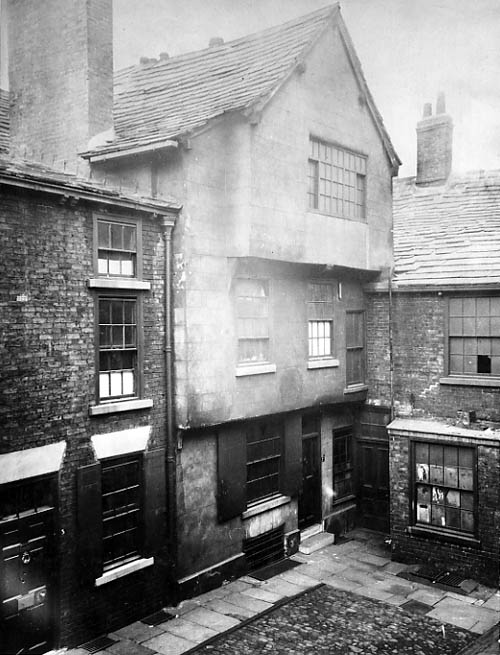
            Rob knew about the bell pits; everyone in Leeds did. They were holes that extended just a few feet into the ground, opening into chambers ten or twelve feet across and shaped liked the bells that gave them their names; places where folk gathered scraps of coal for their fires. They’d existed for generations, all over the city, for so long that no one really knew who’d first dug them. He’d never been in one, although the schoolboys often dared each other to go down into the dry warmth. Three of them lay close together, no more than twenty feet apart, each separate from the other, along the path that led from Kirkgate to the White Cloth Hall, mounds of dark earth next to each one. A group of workmen were passing a flagon of ale around, all of them silent, their faces serious.

            ‘Down there.’ The man pointed at one of the pits, where a ladder protruded above the lip. Rob glanced at him questioningly, but the man looked away, unwilling to meet his eyes. He gazed at the other men, but none of them would offer him more than a sad stare.

            Curious, he placed his boots on the wooden rungs, testing the weight, and began to climb down. He’d barely descended a yard before he stopped, swallowing hard as he smelled it. Something was dead down here, the thick, cloying smell of decay heavy in the heat all around him. He drew a breath through his mouth and went deeper into the pit.

            At the bottom, no more than ten feet below the surface, he felt the rough, dry earth under his soles. He was already sweating from the still heat. A thin tunnel of light came down the hole, spilling into a small circle on the ground, deep shadows and pitch darkness reaching beyond. He retched hard, unable to keep the bile down, pulled a handkerchief from his breeches and clamped it over his face and mouth.

            It didn’t help. He bent over, vomiting again and coughing until there was only a thin trickle of spittle trailing from his lips. The stench of death was so strong he felt he could touch it.

Just at the edge of the gloom he could make out the shape of feet. Six of them, bare, dirty soles showing, three different sizes. He moved two paces closer, his eyes watering. The legs were small, thin. They were children.Image

Emerald City – the opening

Coming in late March…just something to whet your appetite:


Seattle was like every city. It had those cool areas where people wanted to live. In 1988 it was Capitol Hill, Belltown, or lower Queen Anne – anywhere close enough to stagger home from downtown when the music ended and the bars closed.

But West Seattle definitely wasn’t cool. It was the kind of place where people went when they couldn’t afford anything better.


I was sitting out on the deck, drinking coffee, reading the newspaper and enjoying the morning sun, a rare surprise in May. Down below, Lake Union was sparkling in the light, and the towers of the downtown skyline glittered in the distance.

The building I lived in had been put up quickly for the World’s Fair back in 1962, and it looked like a cheap California motel, ugly pebble stucco and concrete, but the apartments were spacious and clean and it was affordable. It was just up the street from Tower Records, close enough to walk downtown. If I craned hard over the balcony I could even see the tip of the Space Needle.

It was a small item on page three. I’d have missed it if not for the name.

“Come and take a look at this,” I called to Steve.

            “What is it?” he asked as he came out, fresh from the shower and running a hand through his wet hair. He grabbed my coffee and took a sip.

            “Hey,” I said and took the cup back. “Have you seen this? Craig Adler’s dead.”

            “What? Are you serious, Laura?” His voice rose in astonishment.

            “Here.” I pushed the newspaper at him. He scanned the brief article, eyes widening.

            “Jesus.” He looked at me in amazement. “Heroin?”

            “That’s what it says. Seems weird to me. But…”

            “Yeah, me too.” He settled in the other chair and read it through again, puzzlement on his face. “And West Seattle?” He shook his head. “That’s strange. I figured he had a place on the Hill. I know he used to.”

Those Legacy Acts

2012 seems to have been the year of the legacy act. Or, for those who prefer plain English, old bands getting out on the road to add to their pension pots. The Stones and the Beach Boys celebrated 50 years, and God alone knows who else made it out of their gardens and back on to the stage – judging by my Facebook feed, plenty of them, including the Who (at least the two of them still around), the Rascals and more.

This is fine, in its own way, and good luck to them. But I didn’t stick my hand deep in my pocket to stump up for tickets to see them. Even if I could have afforded it, I wouldn’t have wanted to do that. Some highlights of the Beach Boys tour were on BBC 4 as part of a documentary and in so many ways it was a sad, rather than joyous, affair, not least because several of the original members were given the push once it was over. Not even because they’d released an album with the execrable That’s Why God Made The Radio on it, a eulogy to a past that’s so far gone it’s as nostalgic as they are. There was no huge pleasure in seeing them back by a veritable rock’n’roll orchestra to try and do note-for-note re-creations of their big hits (I felt much the same seeing Steely Dan play everything note perfectly in 1974, but for different reasons – good musicians can also improvise). I can hear them on record the way Brian really intended them to be.

They’re out there because an aging audience has a disposable income and we don’t want to admit we’re growing older. If these people are still making music, if they’re not too old, then we aren’t, either, and the merchandise stands can do land office business as we prove how hip we still are. It gives us the illusion, if only for a couple of hours at very inflated prices, of still being young. Still being vital. Still having that streak of rebellion.

And it’s all bullshit.

None of these acts have released a track of any significance in decades. It’s highly unlikely they ever will again. Yes, they have a body of work, but trotting it out every few years to play in major city stadia – is that why you really started in rock’n’roll, guys? Is that what you saw yourself doing? A run through the motions, a wiggle of the arse, a quick encore and back to the hotel? It’s just…pointless.

Also aired this year were some highlights from the Led Zeppelin reunion, a one-off that packed the O2 arena. I didn’t expect much. After all, old songs, old musicians. Maybe the difference is that Page and Jones have both stayed active, pushing themselves in different directions, and this coming together of the tribe was for the first time in 20 years, with a promise of it never being repeated, even for silly money. And they rocked. Bare stage, a projection behind, a kind of glorified light show, and they tore through the music like they meant it, sounding fresh and passionate. A glorious change. It wasn’t dinosaur music, a ‘70s jukebox with a quarter in the slot, it was living and breathing. And it won’t be back.

Maybe that’s the way it should be. One night only, caught on DVD while there’s some fire to it. Because, God only knows, otherwise it just ends up as one of Dante’s circles of hell.

Emerald City

People who know me from my novels associate me with Leeds. That’s perfectly natural, as my series of books are set there – in the 1730s. But the city where I spent the longest period is somewhere else. Not even on the same continent.

I moved to Seattle in January 1986 and remained there until August 2005. Before that I’d spent 10 years in Cincinnati. I moved to Seattle on the recommendation of a friend who’d gone there a couple of years before. I had no job, no place to live except my friend’s floor, and precious little money. But it was the new start I needed.

Seattle was the most beautiful place I’ve ever lived, the only one I know where you can look out and see both saltwater and mountains, beaches and a city skyline. In the months I was discovering it, the place was a backwater in the Northwest, just up at the top left-hand corner of the US map. It had a small, vital music scene, a very active gay and lesbian community and fabulous book and record shops. And lovely independent coffee shops and cafes (such as Paradiso and the original Café Septieme)

Fast forward just a few years and Seattle was America’s Most Liveable City, which brought people flooding in. Microsoft meant that it was on the forward edge of technology (never mind that the company was on the other side of Lake Washington). That local music started to find an international audience as first Pearl Jam, then Nirvana and Soundgarden sold albums in ridiculous quantities and grunge became a word and a fashion.

The BoHo area of Belltown was gentrified, artists’ lofts turned into condos, rents and house prices all over the city rose. New clubs opened – hello Crocodile Café and Moe. The old underpinnings remained in places like the Two Bells and new ones joined them as the Tractor emerged. But the city had received a gloss.

One thing that remained a constant was The Rocket, the local free music paper. It was more than just listings. There were reviews, interviews and some damned good writing. I was lucky enough to write for the paper for several years until its demise in 2000. I’d published a little music journalism back in Cincy, but it was in Seattle that my writing career began in earnest, pushing out into non-fiction books (yes, they were mostly quickie unauthorized celebrity bios and some of them were written under a pseudonym that is better left unknown).

The Rocket was a remarkable publication, highly professional yet still wonderfully quirky, every bit as good as anything national, but still ineffably Northwest (there was also a Portland edition). It’s still missed by people who knew it, and I probably still have more pride in being associated with it (by the end I was on the masthead as a senior writer) than almost any other music journalism. It led me to so many things – local radio and then National Public Radio, reviewing CDs for Amazon when they began selling them and all the other magazines who’ve been kind enough to use my work.

My son was born in Seattle and still lives there (although a few more months and he’ll be moving to Bellingham for college). I still have friends there. The ties remain strong.

And now, in three months, I’ll be publishing my first love letter to Seattle. Not just to the Emerald City, but to the music that surged in the underground there before breaking out, to the dark side that stayed in the shadows, and most definitely to The Rocket. I’m sure the city’s changed immensely since I left. I’m not sure I’ll ever return. But it still has a big, big place in my heart, right next to Leeds.

In Praise of Peter Tinniswood

Way back in the mid-1970s there was a British sitcom called I Didn’t Know You Cared, featuring the Brandon family. Back then it seem absolutely hilarious and it introduced me to the writing of Peter Tinniswood, who ended up writing several books about the family. The first was the wildly bizarre A Touch of Daniel and the last Call It a Canary. The spanned the 1960s in a Northern town – probably Lancashire, more’s the pity, but in them he captured the decade, and the North, with hilarious perfection.

The TV show, which came out on DVD a few years ago, hasn’t aged well, but the books remain timeless (allowing for the prejudices of when they were written and the time in which they’re set, always important distinctions); periodically I go through them all and revel in his writing. On nature he could be elegiac, but there’s also poetry of a sort in his deadpan dialogue and descriptions:

“Pat’s just this minute told me she’s expecting. So unless she falls off a trolley bus and has a nasty mishap, you’re going to have a grandchild.”

The restaurant had been opened one thundery afternoon in June. It was called The Scented Lotus Garden.

There were hexagonal lampshades with tassels. The wallpaper had a pattern of peacocks and cormorants. The menu was printed by G. Fearnley & Sons, Pontefract.

Carter Brandon was eating curried King prawns with fried rice and water chestnuts. Pat was eating liver and chips.

“It’s very continental in here, isn’t it?” said Pat.

“Mm,” said Carter Brandon, applying another sprinkling of Yorkshire relish to his shrimp crackers.

They finished their meal with lychees and custard and then they stepped outside into the autumn night.

Stars crackled in the jet-black sky. It was frosty. The frost glistened on the trolley bus wires.

Anyone who grew up in a time when going to a Chinese restaurant was an exotic treat will perfectly understand that description. It captures the time and place – and the menu – perfectly. That’s exactly what it was like. In the North. Maybe to understand it fully you had to grow up there. The humour, under the more obvious guffaws, is very bleak and black, as it should be. Even when the sun shines the next bad weather is on the way and there’s never a truly happy ending. But that’s life, and these things simply aren’t possible. Tinniswood understood that and poked at it.

His real fame came a little later with Tales From a Long Room, with the Brigadier (some of the best and funniest books about cricket), and he was a prolific radio dramatist. Next year, 2013, will be the tenth anniversary of his death. But in the books about the Brandons he created a world – more a cosmology, perhaps – that mythologises the North even more effectively than the early days of Coronation Street.

If you haven’t read him, maybe you should.

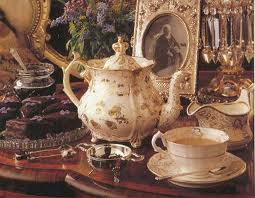
THE TEA MERCHANT’S DAUGHTER

She was the daughter of a tea merchant, a man whose soul totted up life into columns of pounds and pennies. He lived in a world made from profit and loss, where China clippers slipped through the seas to arrive and clerks brought him figures and fortunes and messages from captains.

All her life she’d known the smell of that world  – the polished wood, cigars and old leather of the offices, the faint tang of salt water and, above all, the scent of the dried tea leaves that hung on his clothes, buried deep in the wool, when he came home in the evenings.

She’d hold her breath as she kissed his cheek, then move quickly away, still feeling the bristles of his beard on her lips.

“Kitty,” he’d call softly, and a few feet from him she’d exhale silently, turn with a smile and say,

“Yes, Papa?”

He was a good man and she loved him deeply. He treated his family with kindness. But the smell of the tea that shrouded him, the smell that was his wealth, was slowly killing her.

He refused to believe it. To him it was nothing more than hysterical nonsense, and impossibility.

“No one ever died from the smell of tea, Kitty,” he tried telling her gently. When she kept her slow insistence he left the room rather than argue with her then made her an appointment with a physician who tried to tell her the same. Her mother shook her head at the girl’s fancy and her younger sisters giggled at anything so unlikely.

But she knew. She knew.

It had begun when she was eleven and the governess has taken the girls to the warehouse.

“It’s only right that you see what your father does,” she told them in the cold voice that Kitty knew was no more than resentment and envy. “It pays for your dresses and the dolls you play with.”

“It pays your wages, too,” Kitty said. She’d hoped the remark would cut the woman but she’d merely nodded and replied,

“It does.”

The carriage had taken them down to the vast brick sprawl of the docks, building upon building pushed and cramped against the river, fighting each other for space. And around them, all the houses, street up street of them, looking like the ruins of a civilisation that had once been great and glorious and now left to rot.

At the warehouse the factor greeted them, escorting them first through the warren of offices where clerks bowed their heads over desks and ledgers and worked ink-stained fingers. Without any reason, Kitty could feel the sense of unease growing, her chest tightening with each breath in the rooms. It was something beyond her understanding, the way her heart fluttered and shook and her skin flushed hot in the place.

Then, finally, they were led through the door into the warehouse itself, a majestic room as big and tall as any cathedral, the light coming through high windows. Tea dust floated in the air, collecting on her face and hands as she entered and the smell overwhelmed her senses. After just three paces she knew she couldn’t move any further. It left her drunk and spinning, unable to think.

She came to outside, sitting in the carriage, the faces pressed around her – the governess hovering too close, her sisters, the factor standing back a few paces and wringing his hands with worry.

Kitty looked at them, blinking three times to bring them into focus.

“You’re all right!” the governess said triumphantly. “We were all so worried about you, my dear. You fainted in the warehouse.”

She remembered then: the way it all seemed to choke her, how she’d believed her throat would close, the fear and panic that filled her body and her mind until everything went dark.

They left then, her sisters a welter of chatter, the governess asking every five minutes how she felt. But how did she feel? As if there was less of her, as if she’d lost something in there. What it was, she didn’t know, no more than a feeling.

At home she studied herself in the mirror. Her cheeks seemed a little more pale, the blue of her eyes a little less bright. Running her hands down her arms her flesh seemed somehow thinner, as if a layer had vanished, as if she could poke through to the muscle and bone that lay underneath.

Her sisters returned to the warehouse every year, a treat for them, but Kitty would stay at home. At first her father tried to insist, then to cajole her into joining them, but once her saw the terror in her eyes he stopped his insistence.

She stopped drinking tea. She began to shrink away from her father when he returned in his work suits, suddenly sensitive to the smell of him after a day in his office. But it was impossible to escape completely, and after each hug, each bearded kiss on her cheek or forehead, she felt one more small part of her vanish from the world.

As she grew a little older she began to consider why this was happening. She read about illnesses and found nothing that resembled hers until she began to wonder if everyone was right and it was all in her head and she really was an hysterical girl. Then, one day with nothing to fill the hours, she glanced at the table in the hall. Her father had thrown a few of his business letters there when he’d returned the night before and forgotten to take them that morning. Her eyes strayed across the writing and she saw the demands he placed on the tea planters in those countries so far away. He reminded them of the contracts they’d signed, of the risks he took in transportation, and if their costs had risen so much, then perhaps they should pay the labourers less.

From there, over the days and weeks and months, when the house was quiet she’d carefully put on the leathers gloves that fitted so smooth and snug over her hands, tie and kerchief around her nose and mouth until she looked like a common bandit, and sneak into her father’s study. It was dangerous – the place smelt of him, the scent of tea a note that hung high in the air over everything – but she’d spend as long as she dare reading his correspondence. Her ears stayed alert from the smallest sound and she was all too aware of what this was doing to her. She could feel the way her heart pounded dully under her ribs, the energy it all took, but she had to know more.

She read it all, every last word and reply. She knew how he’d dealt with the attempt to form a union among the men at the warehouse, how he’d crushed it with dismissals and threats. She knew the money he’d spent in bribes of officials overseas for preferential treatment, the way he’d ridden roughshod over everything to find greater profits.

By the time she was done, she understood. But after that her gowns hung more loosely on her body than they had before, although she was still growing and ate as heartily as she ever had. Her spirit had sunk deeper. She understood.

Kitty knew that her mother and father worried about her. She sometimes heard them talking in hushed, serious tones behind carefully closed doors, and noticed the looks they gave her. But even if she’d tried, even if she’d had the words to make it all clear to them, they’d never have accepted it.

Tea was a plant. It was a commodity, a means to the money that built and furnished this house, that paid for the dressmaker, the tailor and the grocer. It could never be more than that.

But she knew.

They took her from doctor to doctor, tried this remedy and that, some pleasant, some less so. None of them worked. If they’d ever been willing to listen, she could have told them.

“Kitty,” he mother said, “we’re going out for the morning tomorrow.”

“Where, Mama?” she asked. “All of us?”

“Into town,” her mother answered. “I’ve ordered the coach for nine, so you’ll need to be ready. And yes, all of us. Except your father, of course. He’ll be at work.”

Excited, she was waiting by the door as the coachman brought the carriage round the next morning. It was a week before Christmas, a bare coating of snow and frost on the ground, the three standing tall in the hallways, decorated with baubles and candles.

Kitty sat between her sisters, listening contentedly to the quick babble of their gossip, the frivolities comforting somehow, like a bolster to hug in a cold bed. The horses clopped along merrily, the countryside changing to suburban terraces then the shops and arcades that bloomed with shoppers glancing into windows and businessmen who strode purposefully as if they were following a higher calling.

Any moment she expected the coach to stop but it didn’t. Her sisters prattled on, not even seeming to notice, but Kitty looked at her mother, the older woman giving a calm, superior smile.

“Where are we going, Mama?”

“To visit your father, dear.”

“What? At the warehouse?” she could feel the panic rising, her throat starting to tighten around her words.

“Where else would he be at this time, Kitty? It’s time you overcame these silly feeling of yours, you know. You’re almost a grown woman now. It’s not seemly.”

“But…” she began but could go no further. Nothing she could do now would make any difference. Weary, heartsick, she saw the landscape change, sliding from money to the poverty of the small back-to-backs where even the sky looked tired. Finally they pulled up at the warehouse.

I could just sit here, she thought. I could refuse to move. But then her mother was tugging at her wrist, saying,

“Get down now, Kitty. I’m not going to take no for an answer any more. Whatever these ridiculous ideas are that you have in your head, you need to get over them.”

But they’re not in my head, Mama, she thought. They’re real.

Then she was standing on the gravel, being ushered along with her mother’s hand at her elbow, half-pushing, half-dragging, the woman’s face set and stern as her sisters trailed behind.

The factor met them at the door of the building, a harried man of middle age with wisps of hair at the sides of his head, sad, bulldog eyes, bowing to the ladies as he led them towards the warehouse door.

It looked so innocuous, Kitty thought. Nothing more than bricks, mortar and wood. But already she felt as if hands were tightening around her throat, the tongue swelling in her mouth, her palms clammy inside the gloves and her skin itching.

First they passed through the offices, the way they had when she’d come here as a girl. Even the smells were exactly as she remembered them, just as if they’d waited for her return. And then they came to the door into the warehouse.

The women stood back as the factor turned the handle and opened it. Kitty could see her father there, off in the distance, talking to a workman in his buff coat, the sacks of tea leaves everywhere piled high.

“Well,” her mother said, “go on, girl.” Four words that brooked no objection.

She breathed in, her chest so tight it hurt and began to walk towards the door, glancing once over her shoulder at her mother and her sisters. They looked so earnest, so hopeful, so alive. Kitty walked through the entrance, her head held high, and gently closed the door behind her.

Two minutes later her father came out, glancing around in confusion.

“Where’s Kitty?” he asked his wife. “I thought you were going to send her in.”

“I did,” his wife objected, looking at him in disbelief. She turned to her daughters. “We watched her go through the door, didn’t we, girls?”

He pointed at the warehouse behind them and shook his head.

“That door?”

The woman nodded firmly

“But she can’t have,” her told her, exasperation edging into voice. “I was standing right there. I was watching the whole time. The only person who came in there was the factor. Then there was a draught and the door closed behind him.” He sighed and took off his glasses. “Where is she? What’s happened to her? You can’t tell me she simply vanished into thin air.”

THE END
 Image

A Cat, a Hat and a Piece of String by Joanne Harris

cat-hat-ball-of-stringIt’s been a bumper year for fans of Joanne Harris. First there was Peaches for Monsieur le Curé, the third installment in the tale of the wonderful Vianne Rocher, and now there’s A Cat, a Hat and a Piece of String, Harris’ second collection of short stories.

She’s one of those rare writers whose books sell superbly well but also manage to be thought-provoking, questioning assumptions and examining ideas many people take for granted. But she’s someone who has that most remarkable thing of all, a sense of magic and wonder at the world. Sometimes it’s very dark (witness her novel blueeyedboy, for instance) and sometimes the light simply glows so brightly it’s irresistible, as with Chocolat. Magic in its myriad forms is here in these stories.

As anyone who follows her  occasional #storytime hashtag on Twitter (she tweets as @JoanneChocolat) knows, she has a deep love and understanding of myth and its power – of the archetypes of gods and elements that sit somewhere near the roots of psyche. Here they’re present overtly in a couple of stories, Rainy Days and Mondays and Wildfire in Manhattan, but with a twist; these aren’t always the all-powerful Norse gods of the old tales. Time has taken its toll on them, although redemption might be at hand.

The elements play a strong part, too, with water especially prevalent. It’s there in the title of River Song, where the water is so central and powerful, but it recurs here and there throughout the book (Hope’s feet in water and pebbles to take her mind to the coast, for example), and the path of Road Song is simply a different kind of river, one that can be swum or can sweep one away, never to return. There’s a sense, too, that Harris sees the Internet as another element, one containing good and evil, and it’s become so vital in all our lives that it might we considered that way. She finds beauty and hope in it, but also the sense of the sinister (after all, someone said magic is technology we don’t understand, if I have the quote right).

There are also gently comedic tales inspired by Elvis and the welcome return of Faith and Hope (twice!) who manage to find joy and triumph even as residents of a home for the elderly. Cookie keeps its ending deliciously ambivalent, a tale of baked goods and babies, and Muse finds inspiration in the rather mysterious owners – and cat – of an old-fashioned station café and its marvellous bacon sandwiches. It’s a book of sensual pleasures, of food, buildings and the joys that can hide behind even the tackiest Christmas.

Yes, Harris has magic. But perhaps her greatest gift is the compassion that comes through in her writing. She can be romantic, although never in a maudlin way, with the certainty of how love, in all its ways, can bring people together. A feeling of hope is the link between these stories, and that makes this not only a truly entertaining collection, not just a diversion but every bit as good as her rightly celebrated novels, and also a very powerful one.

December

A Richard Nottingham Story

By

Chris Nickson


The frost lay heavy on the grass and the branches as he walked towards Timble Bridge, his breath blooming wide in the air. The dirt was hard under his boots and the air bitter against his face. Richard Nottingham pulled the greatcoat more tightly around his body and walked up Kirkgate.

            It was still dark, dawn no more than a line of pale sky on the eastern horizon. In some houses the servants were already up and labouring, plumes of smoke rising from a few chimneys. At the jail he checked the cells, seeing a drunk who’d been pulled from the street and a pair brought in by the night men for fighting at an alehouse. Another quiet night.

            He pushed the poker into the banked fire and added more of the good Middleton coal kept in an old scuttle nearby. As warmth filled the room he removed the coat and settled to work. So far the winter had been gentle, he thought, but it was still only December. Come January and February, once the bitter weather arrived, the poor would freeze and die.

            It was the same every year, he thought sadly. He’d been Constable of the City of Leeds long enough to know that all too well. When the cold bit it was always those without money who paid the price.

            Down on Briggate the weavers would be setting up their trestles for the cloth market. They’d been laying out the lengths ready for the merchants, then eating their Brigg End Shot breakfast of hot beef and beer in the taverns, keeping a wary eye on their goods. He’d go down there before the bell rang to show the start of trading, walking around to watch for cutpurses and pickpockets, hearing the business of Leeds carried out in low whispers, thousands of pounds changing hands quietly in an hour.

            He fed a little more coal onto the fire and straightened as the door swung open, bringing in a blast of cold.

            “Morning, boss,” said John Sedgwick, edging closer and holding his hands out as if he was trying to scoop up the heat. He’d been the deputy constable for little more a year, still eager and hardworking, a lanky, pale lad with pock marks fading on his cheeks.

            “Looks like you had an easy time of it,” the Constable said.

            “Aye, not too bad,” he agreed, pouring himself a mug of ale. “You know what it’s like. As soon as the nights turn chilly they stay by their hearths at night.”

            “You wait. It’s Saturday, they’ll all be out drinking come evening,” Nottingham warned him. “You’ll have your hands full then.” He shook his head. “Get yourself home, John. Have some sleep.”

            The deputy downed the ale and wiped the back of his hand across his mouth. “I’ll be glad to see my bed, right enough. I might warm up for a few hours.”

            Alone, Nottingham wrote his daily report for the mayor, nothing more than a few lines. He delivered it to the Moot Hall, the imposing building that stood hard in the middle of Briggate. The city was run from there, from rooms with polished furnishings and deep Turkey carpets that hushed the dealings and the sound of coins being counted. He gave the paper to a sleepy clerk and made his way down the street just as the Parish Church bell rang the half hour to signal the start of the cloth trading.

            The merchants were out in their expensive clothes, the thick coats of good cloth, hose shining white as a sinless day and shoes with glittering silver buckles. They were moving around the stalls, making their bargains and settling them with a swift handshake before moving on to the next purchase. He saw Alderman Thompson softly berating a clothier, his face red, trying to beat the man down in price in his usual bullying manner.

            The alderman glanced around, noticed him and glared. There was bad blood between them and Thompson was loath to forget it, a man who kept grudges in his mind like a ledger. But the man had been a fool, trying to cheat a whore of the few pennies that would have been food and shelter for her. The girl had complained and the Constable had confronted the man in front of his friends, shaming him, forcing the money from his pocket and passing it on to the lass.

            He knew what he’d risked, the enmity of a man who was powerful on the Corporation. But the girl had earned her payment and deserved it; the man could afford it easily enough.

            The Constable walked up and down the road, alert for quick movements, but there was nothing. He settled by the bridge, leaning on the parapet and looking at the rushing black water of the Aire. How many bodies had they pulled out of the river this year? Twenty, perhaps? Enough to lose count, certainly. Those who couldn’t cope any more with life and had found refuge in the current, the ones who’d drunk too much and fallen in, unable to get out again. There was always death, always hopelessness.

            He shook his head and started to make his way back to the jail. Atkinson was striding out, thirty yards ahead of him. A girl running headlong down the street crashed into the man, and he batted her away idly with his arm, sending her tumbling before uttering a loud curse moving on.

            The girl picked herself up and began to walk. As she passed, Nottingham took her by the arm.

            “You shouldn’t have done that,” he told her, his grip tight.

            “Done what?” she asked, the fright in her eyes as she raised her eyes to him and tried to pull away. She was young, no more than thirteen, thin as March sunlight, cheeks sunken from hunger, wearing an old, faded dress and shoes where the upper was coming away from the soles. Her flesh was cold under his touch.

            “You know exactly what you did. You cut his purse.”

            “I didn’t,” she protested and began to struggle.

            “Do you know who I am?” he asked gently. She shook her head, her mouth a tight, scared line. “I’m the Constable of Leeds. I think you’d better come along with me.” She tried to wriggle away, but his hand was firm on her. After a few moments she gave up, hanging her head and shuffling beside him.

            The jail was warm, the fire burning bright and loud. He sat her down then held out his hand for the purse. Reluctantly, she brought it from a pocket in her dress and gave it to him.

            “What’s your name?” he asked.

            “Elizabeth, sir.” Now, with the cells so close she could see them, she was shivering in spite of the heat. “What’s going to happen to me?”

            “Nothing just yet,” he assured her. “But I can’t make you any promises, Elizabeth. Where do you live?”

            “Nowhere, sir.” He looked at him. “Me and my man and my sisters, we sleep where we can.” It was a familiar tale, one he’d heard so many times before, one he’d lived himself when he was young.

            “How many of you?”

            “Five, sir.”

            He nodded at the purse. “How long have you been doing that? And give me an honest answer,” he warned.

            “Two month, sir. But I’ve only managed to take three,” the girl pleaded.

            He sat back, pushing the fringe off his forehead then rubbing his chin. “When did you last eat?”

            “Thursday.”

            “How old are your sisters?”

            “Nine, seven and six, sir.”

            “What happened to you father?”

            “He died, sir. A horse kicked him in the summer.” He could see the beginning of tears in her eyes.

            “What was his name?” Nottingham wondered.

            “William Marsden, sir. He worked at the stables.”

            He remembered the name and the incident. The man was a farrier, experienced and good at his trade. He’d been about to put fresh shoes on a horse when it kicked him in the head. He’d died instantly. “Doesn’t your mam work?”

            “She has a bad leg, sir, she can’t walk proper.”

            “And what about you? You’re old enough.”

            “I’ve tried to find work, sir, but no one has anything.” The girl raised her chin defiantly. “I have, sir, honest.”

            He stared at her face, all the guile vanished from it now, leaving a terrified girl who knew she could be sentenced to hang for what she’d done. He hesitated for a long moment, then said, “When you leave here, go next door to the White Swan. Talk to Michael and tell him the Constable sent you. He needs a girl to help there. It won’t pay much, but it’s better than nothing.”

            Her eyes widened in astonishment and happiness as she understood he was letting her go. “Thank you, sir. Thank you. Do you really mean it, sir?”

            He nodded, weighing the purse in his hand. It was heavy enough. With a small movement he tossed it to her. As she caught it, her mouth widened into a silent O.

            “Rent a room for all of you and buy some food. Now go.”

            He stood at the window, watching her in the street, looking back in disbelief before she vanished into the inn. Off to the west the clouds were heavy and pale as pearls. If they came in there’d be snow later.Image