Something poossibly a little new, heading back to Tudor times (a first for me)
Leeds, April 1578
People disappear. One minute they could be standing there, and you turn away to do something. When you look back, they’ve vanished. No sign, not a trace. The gospels don’t say it can happen, but so many of us know it to be true. Not an illness that can kill a man in a moment, but alchemy. Witchcraft, mayhaps.
I’d called for Richard Harding that morning. Knocked on his door, no reply. Slipped the latch and entered, calling his name. The night before we’d been drinking at the alehouse on Timble Bridge, and I’d watched him away to his bed.
And now…his bed was neat, the table clear and cleaned. His pipe and tabor sat by the hearth, ready for this morning. The leather bag, tools for his carpenter’s trade, by the bed. No hint of Richard. Chamber pot empty, no sign of him in the garden at the back. As if he’d never come home last night.
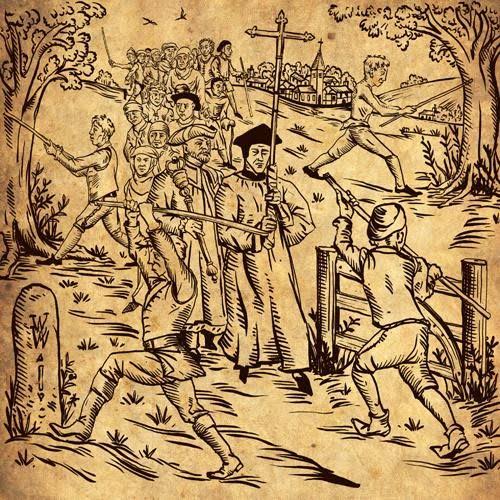
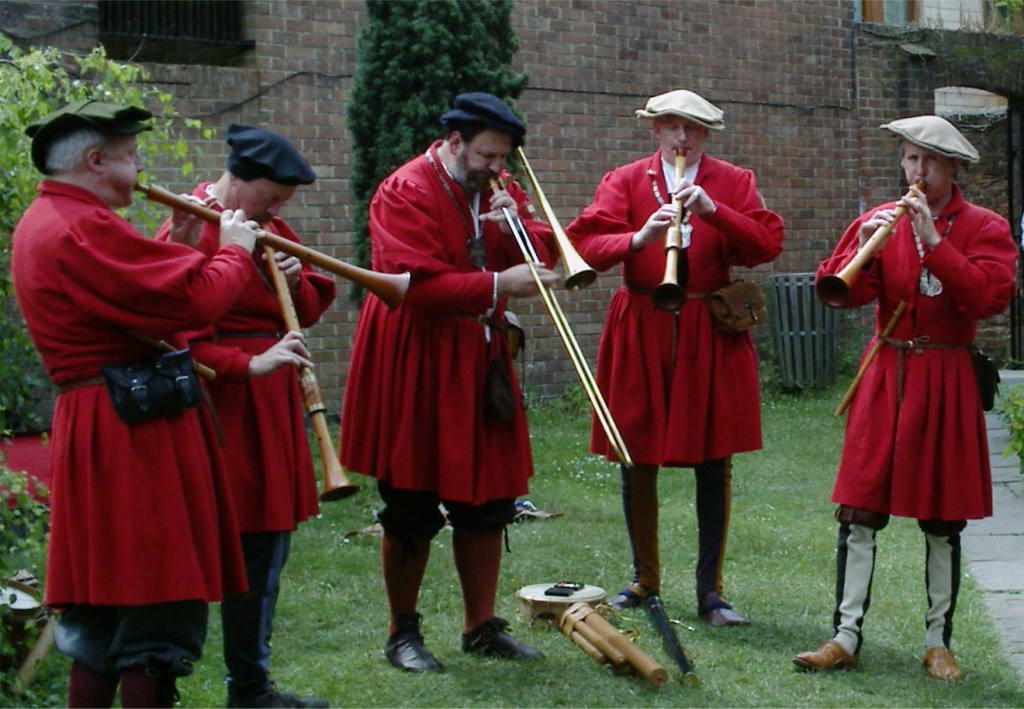
We were both members of the Town Waits, the musicians who entertained at every occasion, with the silver badges to wear on our coats. Today, Rogation Wednesday, we were to play for the beating of the parish bounds. We did it every year on this day, a tradition that went back beyond our grandfathers and their grandfathers to…who knew when?
I bellowed his name again. The room answered me with silence. One minute here, another…nowhere to be seen. I hunted through the small house, not that there was anywhere to hide. Out into the garden but he wasn’t there.
Gone.
The Parish Church at the bottom of Kirkgate was starting to ring the hour. I had to leave. Richard was a steady soul, busy with work and taking pleasure in playing music. Not one for foolish tricks like this. I sighed, tucked my fiddle under my arm, closed the door and hurried off.
I could have happily kicked young Thomas Dawson down the hill. We were processing along the track, the next mark on the parish bounds no more than half a mile ahead of us, and he struck up a mournful air on the shawm. He’d probably just learned the tune, eager to try it out for people. But it was too slow to keep the people moving.
I glanced back over my shoulder. Rolly Grimshaw nodded, then raised the sackbut to his mouth, worked the slide and began to blow. Reluctantly, I tucked the fiddle under my chin and joined in. Only three of us from the Leeds Waits out here as we beat the parish bounds. The other four would join us tonight for the big ball out at Temple Newsam.
Rogation Day, and at least there was some warmth in the sun. It had been a pitiful start to spring, bad for the crops. You could see the slow growth in the fields. The weather had only improved in the last fortnight. A few half-garbled mutterers claimed it was God’s displeasure at Queen Bess from turning away from the old religion Queen Mary had brought back. I knew who they were. Let them talk; I had no time for idle tongues.
A broad blue ribbon was tied to the tree to mark it out as the parish edge. A good crowd this year followed us, almost forty people, the children dancing and jigging to the music, weaving in and out between their parents and the others.
Still no sign of Richard. That worried me. We’d been friends since we were children, both old enough to be widowed and aware of less time ahead of us than behind. We knew each other’s minds and hearts. He was a dependable man.
What had happened to him?
Women were pouring mugs from the cask of ale waiting for us. I was ready for something wet in my throat after all the walking. Finally the curate raised his hand and I nodded the others to a halt at the end of the phrase.
No vicar this year. He’d twisted his ankle and was sitting at home, being waited on by his servant. Instead, it was Curate Gill conducting the prayer and greedily looking over the field to imagine the church’s tithe at harvest time. A young man, barely old enough to need a shave, but this was his second year in Leeds. Affable enough, even if he was ambitious to wear a bishop’s mitre one day. It would never happen; the family didn’t know the right people.
As he spoke, I ducked away, pulling my tankard out of my jerkin before sinking it in the cask. Good ale, Widow Wharton’s brew by its taste, a few herbs in there to give it a kick. And very welcome. We’d kicked up enough dust as we walked to leave me parched. Finished, I flung out the dregs and put it back in the jerkin. No doublets for the likes of us, no fancy gowns on top. Good leather kept you warmer, with the silver badge of the owls and fleece all the uniform we needed. I cocked an ear. The prayer had become a sermon. Ample time to rosin up my bow.
The fiddle had belonged to my father. A better musician than me with an ear for anything. Listen once and he was note-perfect on the tune. I apprenticed with him for a year, then with Geoffrey Farrar in Ripon before coming back to Leeds and taking my father’s place leading the Waits when he died. I’d never play as well as him, but I had a good mind for creating melodies that people would remember. To make them cry or make them dance. Something for every occasion. Even out here.
This was my thirtieth year of beating the parish bounds. No one knew exactly how the ceremony began, or how long ago. Still, it was good for the children to learn where they lived. For the rest of is, it was a chance to see how the land had changed. Not that it did. Arable fields around and the sheep enjoying the grass higher up the hill.
Curate Gill was still talking, so I wandered away. I had the faint memory of a stream on the far side of a hawthorn hedge further down the slope. It ran down to Lady Beck, little more than a trickle, but a good place to piss. The bushes were there, exactly where I recalled. But something must have dammed the stream. The water had pooled, dirty and thick, all the ground around it like a bog.
Strange. I tucked the violin under my arm and picked my way along the slope. Something was blocking the stream., no doubt about that. I could see it, a dark, sodden mound. A yard or two closer and I knew what it was.
Something wrapped in a pack sheet used for woollen cloth.
‘Down here.’ I tried to call out the words, but they came in a croak. A deep breath and I tried again. Then a third time, loud enough to draw attention. Soon they were all scrambling down the hill, every one of them with showers of questions that halted as soon as they saw it. Rolly drew his knife and sliced through the heavy sheet..
The body was face down, hair and clothes stained with mud. Yesterday it had rained; the stream would have gathered around him.
It was Rolly who squatted by the corpse and turned it over. A gasp from some. Shrieks from others. We all knew him. Walter Tenche, the cloth searcher.
Suddenly they were all talking: where they’d seen him last, when it was who had he been with, anything and everything.
‘Wait,’ I shouted. The curate stood, mumbling a prayer, looking lost and frightened by death. ‘We need an inquest and to raise the hue and cry.’ I glanced around their faces. ‘All of you are the jury. The best thing is to take him back to town. Peter, Robert, can you make a hurdle and carry him?’
They were shepherds, cutting and bending willow for jobs was something they knew well. A nod and they were on their way.
The Waits also served as the night watch, for whatever crime there was in a small place like Leeds. Drunkenness, mostly. A fight. Adulterated bread, which saw the baker in the stocks. Two murders in my three decades doing this. A man killing his neighbour, and the other never solved. Person or persons unknown.
We’d need to examine Tenche before declaring anything. But bound inside a sheet and hidden like this, what could it be but murder? What I knew and the others didn’t was that Tenche still clung to his Catholic faith, keeping his worship secret. Always a danger in these times.
I knew because I was Secretary Walsingham’s man in Leeds, a spy here for the queen, reporting on recusants and strangers who arrived. In a country with so many vagrants on the road, any man could be a problem.
Please, let me know what you think, whether it’s worth penning any more of this in idle moments.
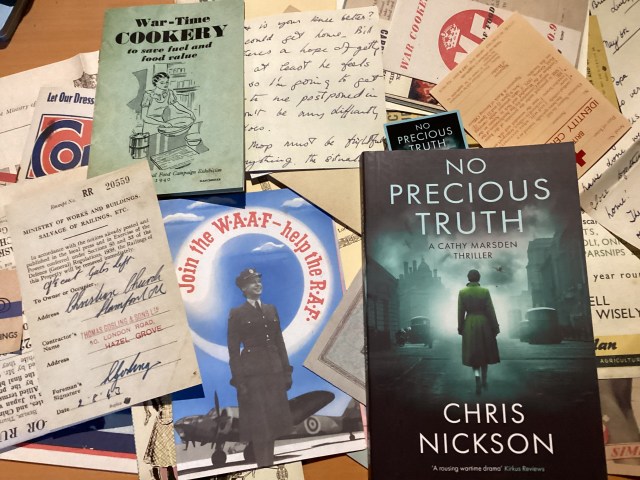
Meanwhile, both the Cathy Marsden WWII novels, No Precious Truth and The Faces Of The Dead are currently £1.99 on Kibdle (free with Kindle Unlimited). That’s two books for around the price of a coffee. You’re not likely to find a better bargain this week. I truly hope you’ll but them – because they’re good. I sweated blood and tears over those books!
Thank you.