Gipton Well And A Dark Steel Death

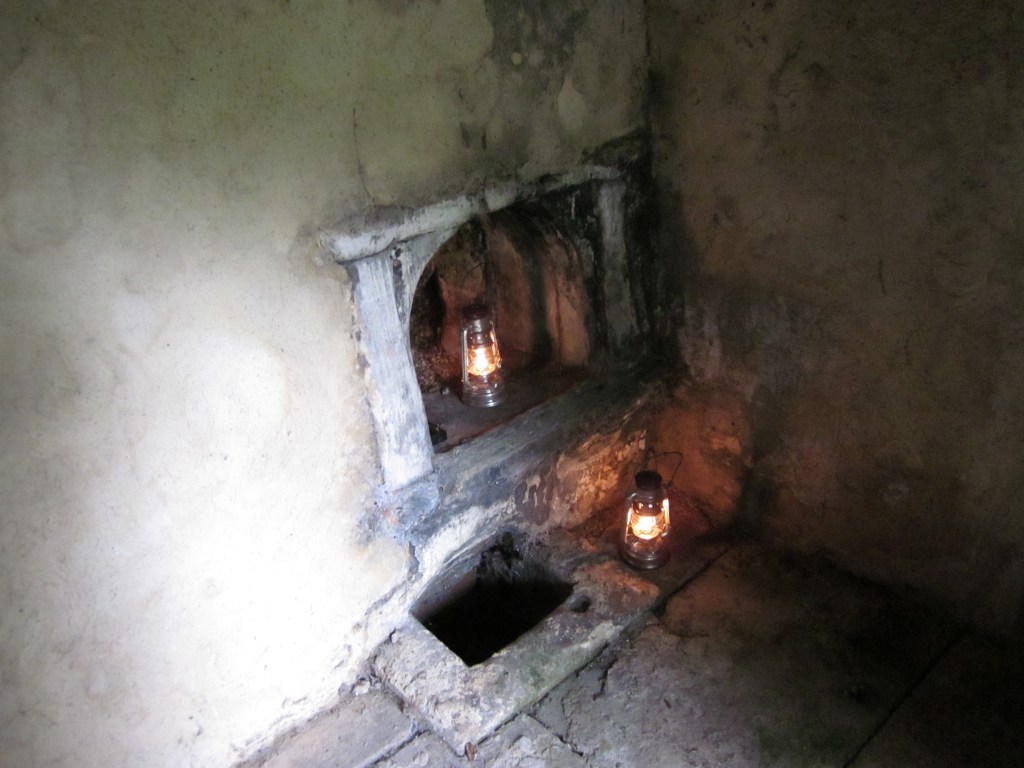
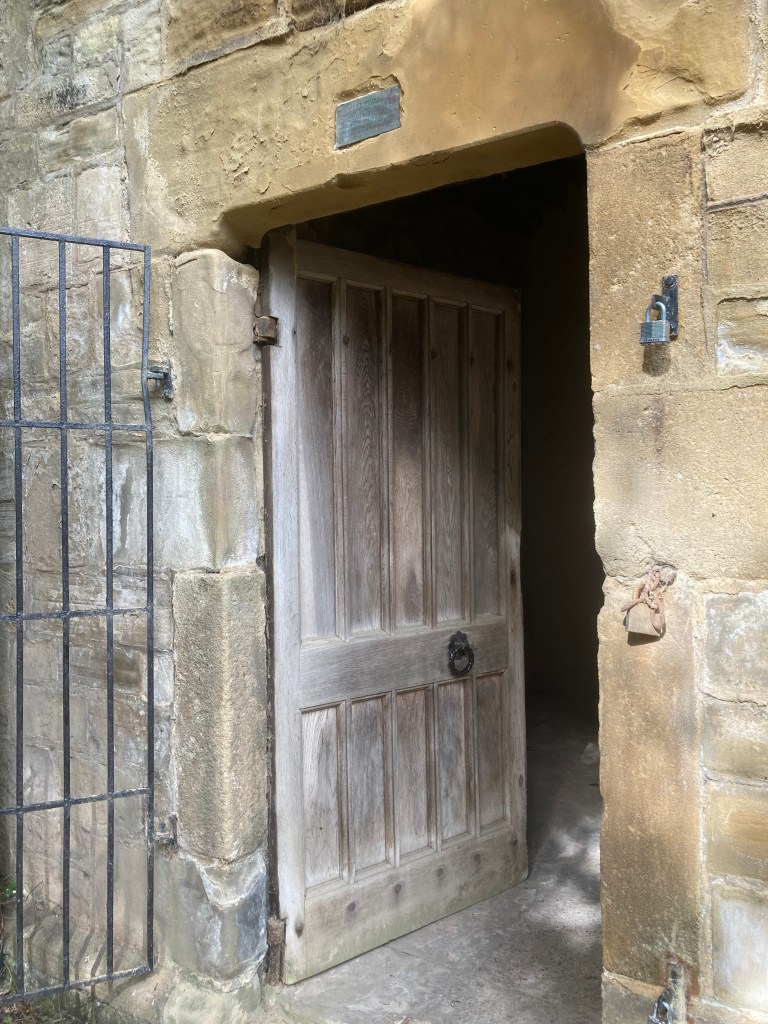
There’s a small place that plays an important role in A Dark Steel Death. Gipton Well, or Gipton Spa Bath House  or Gipton Well and Waddington Bath, to offer the full titles, has its part in the book, although I’m not about to give you any spoilers on exactly what.

It’s one of about 26 wells or spas that once existed around Leeds (including the wonderfully-named Slavering Baby Well in Adel), but are mostly covered over or long forgotten, except in some local names, like Sugarwell in Meanwood).

It was originally built in 1671 by Edward Waddington. His grandfather, Alderman John Thwaites, owned Gledhow Hall, and the well was in the estate; on private property, in other words.
Like so many spas, the water which entered the bath house supposedly had healing properties supposedly head healing properties. Leeds historian Ralph Thoresby brought his son Richard there, attempting to cure him of rheumatism, and that involved sitting in the stone-built cold water bath. Lord Irwin was also a regular visitor.
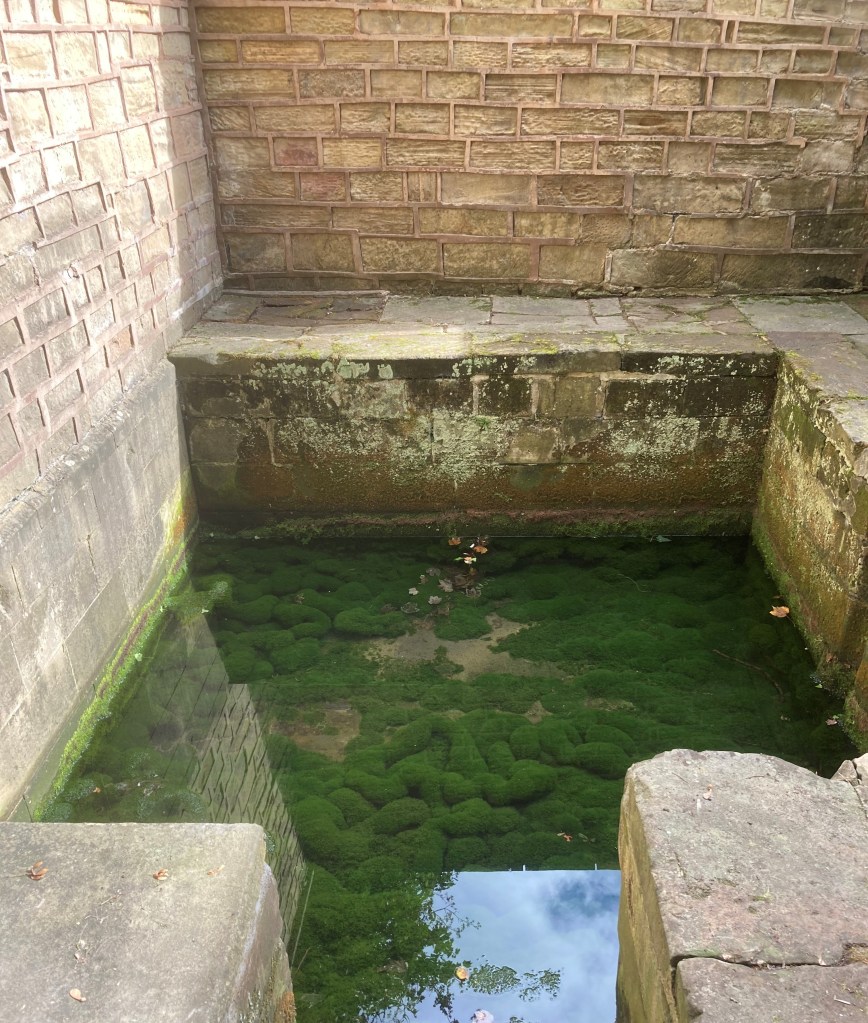
Next to it was a room with a fire for undressing and warming up after a dip in the plunge pool, with a separate spring with water that could be drunk.

Thoresby referred to the place in his Ducatus Leodiensis, where he states the room with its fire is used “to sweat the patient after bathing”.

Edward Parsons also commended the place in his History of Leeds in 1834, and as late as 1881, Kelly’s Directory noted it was still in use, although now it’s “by people who live in the neighbourhood.”

Shortly after it had fallen into disuse and disrepair, to the extent that when the Honourable Hilda Kitson bought Well House Farm (again, the association with the well), which included the spa, she offered £200 to the Council to keep up the spa. The city bought the spa and the land around it in 1926, just after Gledhow Valley Road had opened a few yards away.

While the building has been there for a long, long time, no one seems sure when the walls around the pool were built; certainly much later. I’ve included them in the book purely for plot reasons.

The Friends of Gledhow Valley Woods (an excellent organisation who also provided much of the historical information from their website. Take a look at it here) have doner a great deal of work on the place, and now it’s surrounded by a metal fence to stop vandalism. However, it was open on Sunday as part of Heritage Open Days, and I was able to go inside and take some photos.

Tom Harper’s spectre didn’t fill the place. But after seeing the pictures you’ll be able to be there with him. And I’m sure you will read the book. Hopefully buy it, too, to make sure the final one in the series in published. Thank you.

A Dark Steel Death And Gledhow Woods

At the weekend we walked in Gledhow Valley Woods. Nothing unusual in that. It’s not far from home, a pleasant stroll along Gipton Beck to the past the bridge that leads to the majestic sweep of the carriage drive and up to the old Gledhow Hall, and finally to the lake.

I know it well. We moved to a place right across from it when I was 11. My path to and from school was through the woods. I walked the dog there. Until I was 18 and moved away, I was in there every day. It was my playground, really.

So what, you think. We all have those.

Here’s where my history and my fiction intertwine. This ground is also where the climax of A Dark Steel Death (officially published tomorrow) happens. During World War I, Gledhow Hall became a Voluntary Aid Detachment hospital, one of many in Leeds treating casualties from the front, and…no, no spoilers.

You’ll have to buy the book or borrow it from the library. But it plays out along the woods and all the way to Gipton Spa and Bath House.

Walking, it’s impossible not to remember things that happened to me there. Being chased through the woods when I was a teenager by a skinhead with an axe. More innocently, my dog Mickey chasing a goose down the long hill to the lake, only to find himself unable to stop in time and belly-flopping into the water.

Winter sledging.

A small dip in the lake myself – just one leg below the knee, but it was enough.

A trail to ride my bike. An open area to play football with myself, and all too often having to climb down into the back to retrieve the ball.

I was lucky, having so much green so close. Back then, I had no idea of the history, or the fact that that road along the bottom of the valley was less than 50 years old. It was simply the woods.

Now, I know so much more about the history. The stone bridge near the top of the hill known as Little Switzerland makes for a thin road.

But it was constructed for one man – Jeremiah Dixon, who owned Gledhow Hall. You can see his initials and the date carved into the bridge.

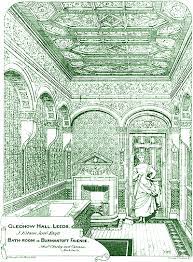
Like so much around Leeds, the land had once belong to Kirkstall Abbey, but with the Dissolution of the Monasteries, it was sold into private hands. Dixon bought the hall in 1763 or 4 and had the bridge built five years later (the date is carved in the sone) to connect his house to his pleasure gardens and ice house on the other side of Gledhow Lane. A later owner, James Kitson, would commission the breathtaking bathroom of hand-painted Burmantofts faience tile (this image doesn’t do it justice).

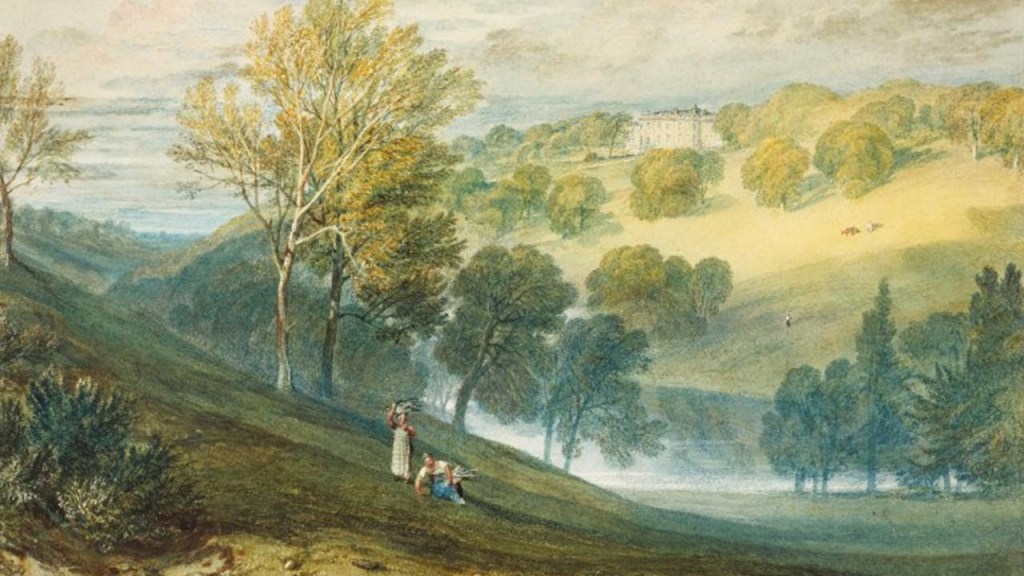
Early in the 1800s, Turner painted the hall, the lake and some of the grounds from the other side of the valley, giving the scene a sweetness and romance that captures some of the sweep. One hundred years later, Tom Harper would be pursuing a killer through there, the ground neglected and overgrown.

Several decades after that, I’d be watching my dog desperately try to stop himself tumbling into the water. Fast-forward even further and we’d be walking along, watching the ducks in the lake.

Time past and time passing, as a Yorkshire songwriter once sang.

Oh, and please don’t forget to buy your copy of A Dark Steel Death, please. Independent bookshops need your business. But this place has the cheapest price and free postage. Thank you.