A Conversation with Candace Robb

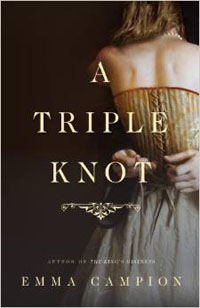
I feel I’m very fortunate to have become friends with Candace Robb, a novelist who’s had an influence on my work as a mystery writer. I’ve been a huge fan of her Owen Archer novels since I discovered them (they’re set in 14th Century York, but I found them in the library in Seattle). As Emma Campion, she’s written a pair of outstanding historical novels, and A Triple Knot, the newest, is set to be published very soon. Ironically, I did know that she lived in Seattle, too, or that, prior to that, we’d both lived in another city in America. Goes to show, small world. We exchange emails regularly, and when Candace suggested us having a conversation for her blog, I was flattered. The exchange has grown, so we’ve decided to split it between our blogs. This is part two – just follow the link here for part one.

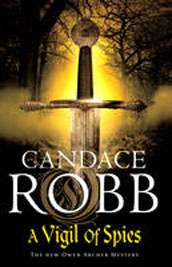
fire in the flint vigil of spies apothecary rose a triple knot

Chris:  How do you think writing backgrounds affect the way we work? For instance, you came to this as an academic. Did you have to force yourself not to put in too much history? And what stylistic changes did you have to make? I came to novels from music journalism and writing quickie unauthorized biographies, where I had to write and research a book in 30 days (much of this was pre-Internet). For both of these, deadlines meant getting it mostly right the first time, and being direct. I’m still that way, I think. I know you revise and revise endlessly. I do more of it, but I try to get the real sense and shape of a book on the first draft.

Candace:  Interesting question! I began my university studies in journalism, then switched to literature after a few years. I’ve taught business, academic, and creative writing, and I worked for over a decade as an editor of scientific research publications at a university. So early on I trained in getting it mostly right the first time. And as an editor I was always up against deadlines. For the first 10 Owen Archer novels and the Margaret Kerr trilogy I was under fairly rigid annual deadlines. I seldom did more than two drafts. I simply didn’t have time. For the Emma Campion books I’ve had more time. It was quite a change to work on The King’s Mistress for four years; I wrote one version in two years for the UK market and then rewrote it for the US and foreign markets because they wanted a shorter book. But I’ve always thought of writing as a process and an exploration. When I reread I find connections and undercurrents that I’ve rushed past, and work on them to deepen the story.

As far as forcing myself not to put in too much history, I haven’t been tempted with the crime novels, but I had a bit of a struggle writing The King’s Mistress and even more working on A Triple Knot. Joan of Kent’s story is so much a part of the beginning of the Hundred Years War, and that can’t be glossed over. Joan’s story was obscured by the historical detail in the first draft. Focus became my mantra in subsequent drafts, paring down to the essential.

Chris: We both have politics in our books. Yours play out more on national stages, both in York and with the Margaret Kerr novels. And even more when you write as Emma Campion. Mine are far more local, since my feeling is that the doings of Parliament and kings would matter little to ordinary people and everyday life in 18th century Leeds. In my new Victorian series, there’s more politics, but it’s the politics of the working man, the strikes. Do you feel that the politics are a vital strand?

Candace: I chose York as the location for the Owen Archers because of its political importance, and Owen’s identity as the Welsh outsider is an integral part of his character and his view of the world. So, too, I chose to lengthen John Thoresby’s term as Lord Chancellor of England in order to play with the politics of the realm. Owen’s return to Wales and his flirtation with Welsh rebels was something I very much wanted to do. And I wrote Margaret’s trilogy to explore the terrible burden of the Scots during their Wars of Independence, how the people suffered. So you might say that politics are my inspiration. Many of my plots grow out of political events.

Chris: What other things play important parts in your books? For me, it’s music. There’s folk music here and there in the Richard Nottingham novels, because it’s what people would have heard. Some of the ballads, people scraping on fiddles, the music of the people. And in my Seattle books, the music is integral to the story, whether it’s the local sound that’s in Emerald City, just before grunge became big, or the country music in West Seattle Blues. I have a novel coming out next January, Dark Briggate Blues, set in Leeds in the ‘50s. It’s noir, really, but jazz runs through it, and Leeds really did have a jazz club then, a place called Studio 20, where the protagonist goes regularly. It’s a way to combine my two passions.

Candace: I love how music runs through your books, how your language sings. As for me, I suppose the overarching interest is all aspects of medieval culture—music, clothing, drama, literature, ballads. And gardening, particularly medicinal gardens. So Lucie Wilton has a remarkable apothecary’s garden. Falconry. York and Yorkshire—I fell passionately in love with York and the surrounding countryside on my first visit and my love has only grown stronger with familiarity. That goes for Wales as well. A fascination with folk traditions that embrace the magical and the inexplicable.

Chris: I already knew York well when I first came across your books, and your love for it was obvious. But you seemed to steeped in it that I believed you lived there. And you really do bring 14th Century York alive so well, to the point where the reader can taste and smell it. Like my books about Leeds – and also Seattle – they seem like love letters to the place, truly immersive experiences.

Chris:  What made you become Emma Campion for the non-mystery novels? (as a confession, for some of my more teen-oriented quickie bios, I adopted the nom de plume of Anna Louise Golden. I imagine myself sitting in gingham and writing!)

Candace:  Gingham? Really? Hah! Emma Campion exists solely because the marketing department at Century, my British publisher, wanted a way to distinguish the mainstream historicals from the historical crime novels. I had fun coming up with the name and practicing a new signature. But Candace and Emma both write in leggings and baggy sweaters.

Chris: I know you’ve started work on a new Owen Archer novel, which will please many people. What else is in the future? The return of Margaret Kerr?

Candace:  Yes, I’m working on Owen Archer #11, A Rumor of Wolves. Then Emma wants to complete Joan of Kent’s story with The Hero’s Wife (title subject to change) and to give Queen Isabella her own book, tentatively titled Birthright. Isabella intrigues me—or, er, Emma, so she—no, we want to tease her out, find her passion. I have Owen Archer #12 in mind, the return of a popular character in the series. And then there’s something at the back of my mind, a concept and a few characters who are haunting me. The woman is much like Maggie Kerr, but I’m trying not to pin anything down, just jotting down impressions, not struggling to understand….

What’s in the future for you, Chris? Will you bring back my favorite sleuth, Richard Nottingham? How about John the carpenter from The Crooked Spire?

Chris: It was my publisher’s decision to end the Richard Nottingham series, but they specifically said they didn’t want him dead (which, with my track record, was probably a good order to give). I do believe that Richard and I have unfinished business, and there are wheels slowly turning in the back on my mind. So he’ll be back, sooner or later. As to John the carpenter, I did start a second book with him, but it wasn’t working. Again, I have some ideas, so when the time is right, there’s a good chance he’ll see the light of day once more.

Right now, I’m working on a standalone set in Leeds in 1971, currently called Sympathy for the Devils, set in the period when Britain went decimal and leading up to the Stones playing Leeds University (which was a great gig). It’s still a crime novel, but a little different – so far, anyway. I’m also finishing revisions on The Golem of Leeds, the sequel to Gods of Gold. At the start of next week I’ll be sending it to my publisher, so it’s fingers crossed that they want to put it out. Next January there’s another Leeds standalone, Dark Briggate Blues, coming out. That one’s set in 1954, the year I was born, and it’s ‘50s British noir – plenty of jazz in there, as Leeds had a jazz club at the time, a place called Studio 20. It wasn’t intended to be a noir, more an exploration of the ‘50s, but like all books, it took on its own tone…

Finally, I’d recommend A Triple Knot to anyone who likes historical fiction. It’s the start of the tale of Joan of Kent, and it’s a superb read (I’ve been lucky enough to have already devoured it – you won’t be disappointed). And if you haven’t yet discovered the Owen Archer and Margaret Kerr novels, you have a treat in store.

We’d both love to hear your comments, so feel free…

You Don’t Know Tom Harper, Do you?

But you will. Well, I hope you will, once Gods of Gold is published (end of August in the UK). Anyone coming in after Richard Nottingham has big shoes to fill. But almost 160 years after Richard, perhaps Inspector Tom Harper is the man to do it.

Although he’s the central character in the new series, he wasn’t the first one to leap out at me fully-formed. That was his fiancée, Annabelle Atkinson, a widow of about 30 who runs the Victoria pub at the bottom of Roundhay Road in Leeds. She’d been in a short story I wrote, Annabelle Atkinson and Mr Grimshaw and she began to haunt me. But she wasn’t yet the Annabelle of the book. There was still a way to go.

And she had more to tell me.

It clicked into place when I realised she ran the Victoria. It’s a pub that really existed until a few years ago, and the building is still standing. The woman who really ran it was a distant relative – at least around 1920. My father, who lived in Hunslet, would spend his summers there, as it had a big garden, and a piano where he could practice to his heart’s content. She also owned a few bakeries in the area and did a little moneylending; a consummate businesswoman, and a strong, independent woman who’d started out as a servant in the pub, married the owner for love, then run the business herself after she died.

I had her. That was a beginning.

After that, I happened to read about the Leeds Gas Strike of 1890. It was a blatant attempt by the Gas Committee of Leeds Council to save money by basically firing workers then hiring fewer of them back at a lower wage and under terms that largely deprived them of their rights, a move that resonates so much with what’s happening everywhere today.

The difference is that the strikers won. The Gas Committee had to capitulate. Hard to imagine that happening these days. Who wouldn’t want to write about a situation like that?

And that was where Tom Harper walked in. He had to be somewhat political, and on the left end of the spectrum. So he’d be a working class lad. And he needed a detective. From there, he simply came together. He’d grown up in the Leylands, just north of the town centre, before it became a Jewish area. He’d lived in a back-to-back house, left school when he was nine to work rolling barrels at Brunswick Brewery. But he wanted to be a policeman. He’d educated himself by borrowing books from the public library and finally, when he was 19, he’d joined Leeds Police. He’d spent six years on the beat, covering the courts and yards between Briggate and Lands Lane. His parents had died, his sisters were happily married, and he lived in lodgings just off Chapeltown Road.

And there was Tom. Of course, he couldn’t do everything alone, but there’s more to come in the book, of course. And he still had to meet Annabelle and the two of them had to become close…you’ll have to read Gods of Gold to discover all that, though.

The Ways of Darkness

By now, many of you know that Gods of Gold, my mystery set in Victorian Leeds, comes out in August. It is – I hope – the first in a series, and I’m working on the second. Because I’m in one of those devil-may-care moods, I thought you might enjoy the start of the sequel, The Ways of Darkness. Actually, I thought it might help build anticipation for the first book. I’m evil that way….

DECEMBER 1890

CHAPTER ONE

“Have you heard a word I said, Tom Harper?”

“Of course I have.” He stirred and stretched in the chair. “You were talking about visiting your sister.”

Annabelle’s face softened.

“It’ll only be for an hour. We can go in the afternoon, after we’ve eaten.”

“Of course,” he told her with a smile. He was content, finally at home and warm for the first time since morning.

He’d spent the day chasing around Leeds on the trail of a burglar, no closer to catching him than he’d been a month before. He’d gone from Burley to Hunslet, and never a sniff of the man. Still, better that than being in uniform; half of the constables had been on patrol in the outdoor market, cut by the December wind as they tried to nab the pickpockets and sneak thieves. It was still blowing out there, howling and rattling the window frames. At least as a police inspector with he could take Hackney cabs and omnibuses and dodge the weather for a while.

But tomorrow he was off duty, the first Christmas in five years that he hadn’t worked. Christmas 1890, the first together with his wife. He turned his head to look at her and the wedding ring that sparkled in the light. Five months married. Annabelle Harper. The words still made him smile.

“What?” she asked.

He shook his head.

“Nothing.”

He often glanced at her when she was busy with something else, working in the kitchen or at her desk, going through the figures for her businesses. Sometimes he could scarcely believe she’d married him. Annabelle had grown up in the slums of the Bank, another daughter in a poor Irish family. She’d started work here in the Victoria and eventually married the landlord. Six years later, after he died, everyone advised her to sell. But she’d held on and kept the place, trusting her instincts. She’d built it into a healthy business, then seen a chance and opened bakeries in Sheepscar and Meanwood that were doing well. Annabelle Harper was a rich woman. Not that anyone round here called her Harper. To them she’d always be Mrs. Atkinson, the name she’d carried for so long.

And she was his.

“You look all in,” she told him.

Harper gave a happy sigh. Where they lived, the rooms over the public house, felt perfectly comfortable, curtains drawn against the winter night, the fire in the hearth and the soft hiss of the gas lights. He didn’t even want to move.

“I’m cosy,” he said. “Come and give me a cuddle.”

“A cuddle? You’re lucky I put your supper on the table.”

She stuck out her tongue, her gown swishing as she came and settled in his arms. He could hear the voices in the bar downstairs. Laughter and a snatch of song from the music halls.

“Don’t worry,” she told him. “I’ll send them on their way early tonight. They all have homes to go to. Then we’ll have some peace and quiet.”

But only for a few hours. She’d be up before dawn, the way she always was, working next to the servants, stuffing the goose that was waiting in the kitchen, baking the bread and preparing the Christmas dinner. Dan the barman and the girls who worked for her would join them at the table. They’d light candles on the tree, sing, laugh, exchange gifts and drink their way through the barrel of beer she’d set aside.

After their bellies were full the two of them would walk over to visit her sister, taking presents for Annabelle’s nieces and nephews. For one day, at least, he could forget all the crime in Leeds. Billy Reed, his sergeant, was would cover the holiday. Then Harper would be return on Boxing Day, back to pursue the damned burglar.

Annabelle stirred.

“Did you hear that?” she asked.

“What?”

He gazed at her. He hadn’t heard a thing. Six years before, while he was still a constable, he’d taken a blow on the ear that left him partially deaf. The best the doctor had promised was that his hearing might return in time. But in the last few months, since autumn began, it had grown a little worse. Sometimes he missed entire sentences, not just words. His ear simply shut off for a few seconds. He’d never told anyone, scared that it would go on his record, that someone would tell.

“On the stairs.”

He listened. Still nothing. Then someone was knocking on the door. Before he could even move, she rose swiftly to answer it.

“It’s for you.” Her voice was dark.

He’d seen the constable down at Millgarth station. One of the new intake, uniform carefully pressed, the cap pulled down smartly on his head and his face eager for excitement. Had he ever looked as young as that?

“I’m off duty-” he began.

“I know, sir.” The man blushed. “But Superintendent Kendall told me to come and fetch you. There’s been a murder.”

Harper turned helplessly to Annabelle.

“You go, Tom.” She kissed him on the cheek. “Just come home as soon as you can.”

CHAPTER TWO

The cold clawed his breath away. Stars shone brilliantly in a clear sky. He huddled deeper into his overcoat and pulled the muffler tight around his neck.

“What’s your name?” Harper asked as they started down the road.

“Stone, sir. Constable Stone. Started three month back.”

“And where are we going, Mr. Stone?”

“The Leylands, sir.”

Harper frowned.

“Whereabouts?”

“Trafalgar Street.”

He knew it well, no more than a stone’s throw from where he’d grown up on Noble Street. All of it poverty scented by the stink of malt and hops from the Brunswick Brewery up the road. Back-to-backs as far as the eye could see. A place where the pawnbrokers did roaring business each Monday as housewives took anything valuable for the cash to last until Friday payday.

In the last few years the area had filled with Jewish immigrants, almost every house packed with them, from Russia and Hungary and countries whose names he didn’t know, while the English moved out and scattered across the city. Yiddish had become the language of the Leylands. Only the smell of the brewery and the lack of money remained the same.

“Step out,” he told the constable. “We’ll freeze to the bloody spot if we stand still.”

Harper led the way, through the memory of the streets where he used to run as a boy. The gas lamps threw little circles of light but he didn’t need them; he could have found his way in pitch blackness. There streets were empty, curtains closed tight. People would be huddled together in their beds, trying to keep warm.

As they turned the corner into Trafalgar Street he caught the murmur of voices. Suddenly lights burned in the houses and figures gathered on their doorsteps. Harper raised his eyes questioningly at Stone.

“The outhouses, sir. About halfway down.”

The cobbles were icy; Harper’s boots slipped as he walked. Conversation ended as they passed, mean and women looking at them what sad, suspicious eyes. They were goys. Worse, they were authority.

They passed two blocks of four houses before Stone turned and moved between a pair of coppers, their faces ruddy and chilled, keeping back a small press of people. Someone had placed a sheet over the body. Harper knelt and pulled it back for a moment. A young man, strangely serene in death. Straggly dark hair, a white shirt without a collar and a dark suit. The inspector ran has hands over the clothes, feeling the blood crusted where the man had been stabbed. Slowly, he counted the wounds. Four of them. All on his chest. The corpse had been carefully arranged. The body was straight, the arms at ninety degrees to make the shape of a cross.

Harper stood again and noticed Billy Reed talking to one of the uniforms and scribbling in his notebook. The sergeant nodded as he saw him.

“Do we know who he was?”

“Not yet.” Reed rubbed his hands together and blew on them. “Best as I can make out, that one found him an hour ago. But I don’t speak the lingo.” He nodded at a middle-aged man in a dark coat, a black hat that was too large almost covering his eyes. “He started shouting and the beat bobby came along. They called me out.” He shrugged. “I told the super I could take care of it but he wanted you.” His voice was a mixture of apology and resentment.

“It doesn’t matter.”

It did, of course. He didn’t want to be out here in the bitter night with a corpse. He wanted to be at home with his wife, in bed and feeling the warmth of her skin. But Kendall had given his orders.

The man who’d found the body stood apart from the others, head bowed, muttering to himself. He scarcely glanced up as Harper approached, lips moving in undertone of words that was just a whisper.

“Do you know who that man was?” he asked.

Er iz toyt.” He’s dead.

“English?” the Inspector asked hopefully, but the man just shook his head. He kept his gaze on the ground, too fearful to look directly at a policeman.

Velz is dayn nomen?” The Yiddish made the man’s head jerk up. What’s your name?

“Israel Liebermann, mayn ir,” the man replied nervously. Sir. Growing up here it had been impossible not to absorb a little of the language. It floated in the shops and all around the boys that played in the road.

Ikh bin Inspector Harper.”

A hand tapped him on the shoulder and he turned quickly to see a pair of dark eyes staring at him.

“What?” He had the sense that the man had spoken; for that moment he hadn’t heard a word. He swallowed and the world came back into both ears

“I said it was a good try, Inspector Harper. But your accent needs work.” The voice was warm, filled with kindness. He extended his hand and Harper took it.

“I’m Rabbi Feldman.”

The man was dressed for the weather in a heavy overcoat that extended almost to his feet, thick boots, leather gloves and a hat pulled down to his ears. A wiry grey beard flowed down to his chest.

A gust of wind blew hard. Harper shivered, feeling the chill deep in his marrow.

“If you think this is cold, you never had a winter in Odessa.” The rabbi grinned then his face grew serious. “Can I be help at all?”

“Someone’s been murdered. This gentleman found him. But we don’t know who the dead man was.”

Feldman nodded then began a conversation in Yiddish with Liebermann. A pause, another question and a long answer.

He’d heard of the rabbi. Everyone had. In the Leylands he was almost a hero. He was one of them; his family had taken the long march west when the pogroms began. He understood their sorrows and their dreams. In his sixties now, walking with the help of a silver-topped stick, he’d been head of the Belgrave Street Synagogue for over ten years. He taught in the Hebrew school on Gower Street and met with councillors from the Town Hall. He was man of mitzvahs, good deeds. Portly and gentle, with quiet dignity, he was someone that everybody respected.

“He says he needed the outhouse just before ten – he’d looked at his watch in the house so he knew what time it was. He put on his coat and came down.” Feldman smiled. “You understand, it’s cold in these places. You try to finish as soon as possible. When he was done he noticed the shape and went to look. That’s when he began to yell.”

“Thank you,” Harper said, although it was no more than they already knew.

“Murder is a terrible business, Inspector.” The man hesitated. “Is there anything else I can do?”

“We still don’t know the name of the dead man.”

“May I?” Feldman gestured at the corpse. Harper nodded and one of the constables drew back the sheet again.

Mine Got.” He drew in his breath sharply.

“Do you know him?”

It was a few seconds before the rabbi answered, staring intently at the face. Slowly he took off the hat and tugged a hand through his ragged white hair.

“Yes, Inspector,” he said, and there was all the sadness of the world in his voice. “I know him. I know him very well. I gave him his bris and his bar mitzvah. He’s my sister’s son.”

His nephew. God, he thought, what a way to find out.

“I’m sorry, sir. Truly.”

The man’s shoulders slumped.

“Seventeen.” He shook his head in disbelief. “Just a boychik. He was going to be the one.” Feldman tapped a finger against the side of his head. “He had the smarts, Inspector. His father, he was already training him to run the business.”

“What was his name, sir? I need to know.”

“Abraham. Abraham Levy.” The rabbi rummaged in a trouser pocket, brought out a handkerchief and wiped his eyes. “Why?” he asked quietly. “Why would someone kill anyone who was so young?”

Harper didn’t have the answer. Why was anyone murdered?

“Where did he live?”

“On Nile Street.” Feldman straightened suddenly. “My sister. I have to tell her.”

“I’ll come with you.”

“No,” the man answered, his voice firm. “No, Inspector, please. It’s better from me. I’ll go and see them. Tomorrow you can ask your questions. Tonight’s for grieving. You come in the morning.”

“Of course,” he agreed.

He waited, but the rabbi didn’t move, staring at something no one else could see.

“You know, when I was young, they murdered Jews for fun,” he said. “For sport. So we ran, because running was the only way to stay alive. Then, when we came here, we wondered if we’d run far enough or fast enough, if it would be the same again. We had children and we built lives. But always, we keep our eyes open and a bag close by.” He turned his eyes on Harper, the tears shining on his cheeks. “Is this the way it is now? Do we have to run again?”

“No, sir. That’s something you’ll never have to do again.”

Of course there were those who resented the Jews. He’d heard them from time to time, talking in the pubs after a few pints loosened their tongues. But it had never been more than words.

He watched Feldman shuffle away, exchanging a few solemn words here and there, then stopping to talk to a young woman and place his hand on her shoulder as she put her hands over her face.

“Did you hear all that?” he asked. Reed nodded and lit a cigarette, smoke curling into the air.

“It’s the position he was left in that worries me.”

Harper agreed. A mockery of the crucifixion, out on the cobbles.

“And the time. Christmas Eve.”

“What do you think?” the sergeant asked.

“I don’t know yet, Billy.”

“I’ll tell you something. Look around him. There’s hardly any blood. He wasn’t killed here.”

Harper nodded; he’d noticed. What it all meant was anyone’s guess.

“Talk to everyone in the houses round here and find out if they saw anything. Start the bobbies on that. One or two of them must speak Yiddish. And have a word with that girl over there.” He pointed at her, surrounded now by others trying to give some comfort. “She knew Abraham Levy.”

“Do you think she’ll speak English?”

The Inspector glanced over at her. No more than sixteen. Probably born in Leeds. The place where her parents had lived would be no more than horror stories to her.

“I’m sure she does.”

“What about the body?” Reed wondered. “Do you want me to send it over to Hunslet for Dr. King?”

“No,” Harper said slowly. The police surgeon wouldn’t be there for the next two days. There was little he could tell them that they couldn’t see for themselves. He knew the Jewish way, burial before the next sunset. He could give them that, if nothing else. “They’ll have an undertaker along soon. And Billy…”

“What?”

“Once they’ve all gone, take a look through his pockets. And have them start searching for the knife that killed him. It might be around somewhere. I’m going to Millgarth and write up the report.”

Time, Place And the Quote Of Great Joy

Back at the start of 1986, a decade after moving to America, I ended up in Seattle. Once I had the chance to find my feet, the city felt like home. For those who don’t know it, it’s a place that lives up to the hype in its beauty, scenery and people. I was happy there. But there was that lingering feeling of being a man without a country, not quite American, not quite English.

Four months ago I finally came back to Leeds. It only took 37 years for me to find my way home. And home is a real, deep feeling. I do feel like someone who’s found his true place in the world. Considering that most of my novels have been set here, it’s taken me a while to realise that this is where I belong. I feel this city deep in my bones, the way I can feel no other. I understand it, and in an odd way I feel that it understands me.

I’ve been writing about Leeds quite a bit lately. Not just the monthly history blog (which has now migrated to the Leeds Big Bookend website), but my books. August sees the publication of Gods of Gold, the first in a new series set in the Leeds of 1890. I’ve completed another one set in Leeds, Dark Briggate Blues, a surprisingly noir novel – well, that aspect surprised me, anyway – in 1954 Leeds, and I’m at work on the second Victorian novel.

This is the place that moves me, that makes my heart beat a little fast.

And yet. And yet…I can’t fully say goodbye to Seattle. It’s a place with plenty of memories, the home of my son, and where I made many friends. I’m not ready to see it sail away just yet. My way of dealing with all that, to try and make sense of the past, is to write about it. Out of that comes West Seattle Blues. It’s the second of my Seattle books, and this one takes place in March and early April of 1994. For anyone who knows music and Seattle, that’s a time to ring big bells. A time when the course of history altered a little. Here’s the cover.

Image

But it’s going to be Leeds that fills my time for a while yet. Not just living in the here and now, but also with my head in 1890/91.

And I teased with that talk about a quote, didn’t I? It’s one that’s made my month, probably my year. I had one a year ago from Candace Robb, one of the great historical crime novelists (and someone who’s become a treasured friend), whose work influenced the way I’ve looked at mine. My publishers used it on promotional material and it really helped. For Gods of Gold I plucked up my courage and approached the wonderful writer Joanne Harris, who’s read the Richard Nottingham books, to ask if she’d be willing to read this new one and, if she liked it, to write a few words about it. Well, she was willing, more than gracious and once she’d finished it, this is what she replied:

Gods of Gold creates a vibrant sense of living history and of place, with strong, well-drawn characters and dialogue that’s just made for film, as well as a damn good story.”

Happy? I was over the moon. I still bloody am. As was my publisher. Thank you, Joanne. That, very proudly is going on the book cover.

And I wish you all a happy Valentine’s Day.

On Books And Movies.

I’m not much of a movie person. I never have been. Given the choice between a film and a book, I’ll crack the page every time. Of the few movies I really love, only one started out as a book (The Year of Living Dangerously) and the films adds the dimension of sweaty, heady sensuality, plus Linda Grant’s stunning performance.

What prompts this is the fact that I’m re-reading The English Patient. It’s a glorious novel, a worthy winner of the Booker Prize, more than the equal of the rest of Michael Ondaatje’s canon, and I love most of this books. I’ve never seen the film and doubt I ever will. It would become too concrete. I’d hear the voices and see the faces from the movie, rather than the ones the author puts in my head.

There’s real beauty in imagination. It soars, it flies. Movies, at least to me, are too grounded, they have too much gravity to them. They keep me trapped on the screen, I can’t escape. Television does much the same, and is often far more mundane. I prefer things to happen in my head, where I’m an active participant, than to be a consumer.

I’ve been asked more than a few times who I’d like to play the leads if the Richard Nottingham books were filmed for the big or small screen. Apart from the fact that it’s never going to happen, the answer is I simply don’t know. I’m not familiar with actors or actresses. The closest I can come, for the upcoming Gods of Gold, is for Maxine Peake to play Annabelle Atkinson (but that’s not going to happen, either).

Really, no one could match of to those people who populate my mind. Those characters are nebulous. To give them definitive faces and voices would change them forever. Within they freedom of a novel they will be whoever you see them as being.

Dickens, Chandler and Me

Heading swiftly towards the end of the year and I find myself reflecting on some of the things from the past twelve months. In writing, at least, two stand out – doing things I’d never imagined. In one case something I swore I’d never do.

A Victorian mystery? Why would I want to do that? After all, everyone and his brother (and sister) has written one. I’ve never been a fan of the Victorians. And yet…I have one coming out in April called Gods of Gold.

I blame Leeds history. I started reading about the Leeds Gas Strike of 1980, when the workers took on the council and won, and realised that people should know about this. And then I thought about a family story, one my father told me, about the landlady of the Victoria in Sheepscar (now no longer there). I’d featured her in a story before, after a fashion (and she’s in this Christmas story I wrote for Leeds Book Club this year). From there I started to dig deeper into 1980 Leeds and realised how fascinating it was. The start of organised working-class politics in this country. I wanted to write about that, too.

So all the old vows were washed away. I wanted to take people to that time, to feel the excitement, the poverty, the power and grandeur of a city hitting the peak of its power – and also into the underclass.

And then there’s the 1950s. I was born in that decade, close to the middle of it. But the more I read about it, the more I understood that I didn’t know. I’d assumed a great deal that was wrong. It began to intrigue me more and more.

I’ve always been a fan of good private detective stores – Chandler, Hammett, Ross MacDonald, etc. – and I’d enjoyed a TV show back in the ‘60s called Public Eye, about a rather down-at-heel British private detective. But there’d been little set in the 1950s about an enquiry agent, as they were known. Not in an English provincial town. That was a thought. One that blossomed.

I’m now revising that book, and I’ve discovered that I’ve ended up with ‘50s English provincial noir. Where will it go? That’s yet to be seen. But I guess I’ll find out. No title yet…

So it’s been a year of Dickens (okay, not really, he was long gone by 1890), Chandler and me. Funny how those things happen, isn’t it?

Annabelle Atkinson and the Strands of Memory

All families have their tales. Mine is no exception. But they’re not quite tales, they’re strands, almost footnotes, and they wait to be woven into something bigger, to be made into a picture, maybe even a real one. At this remove all the detail has been lost. And maybe it doesn’t matter anyway. Because what is a tale other than something that captures your imagination and makes you believe for a little while.

There’s talk of ‘the Spanish woman,’ but there’s no one in the family tree with a Spanish name. The closest is a Charlotte. Maybe she’d been a Carlotta. Most likely she wasn’t Spanish at all, but had olive colouring. Who she might have been, she ended up in Cold Cruel Winter as the girlfriend of a killer, made over by fiction.

My father, who grew up in Hunslet (part of Leeds, south of the river for those who don’t know) sometimes recalled spending summers at the Victoria, a pub in Sheepscar (another equally working-class part of Leeds) as a child. There was plenty of space to run around and a large garden to the rear where they grew rhubarb. Best of all, there was a piano where he could play to his heart’s content. The pub closed a few years ago (it’s now an Indian centre), but I visited it once in the mid-‘90s. It had stayed happily out of fashion, still an ordinary working man’s pub and all the better for it.

He also talked about a woman, a relative – how close or distant, I don’t know – who arrived in Leeds from Barnsley as a servant at the pub. Eventually, she married the landlord, and after he died, she ran the place herself. This would have been just after world War I. Not content with that, she opened a few bakeries around Leeds, rising early to supervise the baking. Her enterprises made her into a wealthy woman, although she evidently continued to live above the Victoria.

Enough for one woman? You’d think so, but she saw the shrieking poverty all around every single day. In an area like that it was impossible to miss. So she would loan a little money here and there, enough to tide people over a bad patch. To people she knew and trusted, and she was always repaid. Perhaps she charged a little interest, but possibly not.

My father only told the story once, but she stuck with me over the years. I’ve no idea who she really was, but that’s irrelevant. An early version of her surfaced in the short story Annabelle Atkinson and Mr Grimshaw. I knew it was her in there, but she hadn’t really appeared yet. And by now she was firmly in my head, demanding to be let out.

With Gods of Gold (to be published next year by Crème de la Crime), the real Annabelle has her voice. In the best Northern tradition she’s a strong, bold woman, the widowed landlady of the Victoria, engaged to be married to Inspector Tom Harper of Leeds Police. She runs two bakeries and is thinking of lending money to people she can trust. Here she is now:

She’d been collecting glasses in the Victoria down in Sheepscar, an old apron covering her dress and her sleeves rolled up, talking and laughing with the customers. He thought she must be a serving girl with a brass mouth. Then, as he sat and watched her over another pint, he noticed the rest of the staff defer to the woman. He was still there when she poured herself a glass of gin and sat down next to him.

‘I’m surprised those eyes of yours haven’t popped out on stalks yet,’ she told him. ‘You’ve been looking that hard you must have seen through to me garters.’ She leaned close enough for him to smell her perfume and whispered, ‘They’re blue, by the way.’

For the first time in years, Tom Harper blushed. She laughed.

‘Aye, I thought that’d shut you up. I’m Annabelle. Mrs Atkinson.’ She extended a hand and he shook it, feeling the calluses of hard work on her palms. But there was no ring on her finger. ‘He’s dead, love,’ she explained as she caught his glance. ‘Three year back. Left me this place.’

She’d started as a servant in the pub when she was fifteen, she said, after a spell in the mills. The landlord had taken a shine to her, and she’d liked him. One thing had led to another and they’d married. She was eighteen, he was fifty, already a widower once. After eight years together, he died.

‘Woke up and he were cold,’ she said, toying with the empty glass. ‘Heart gave out in the night, they said. And before you ask, I were happy with him. Everyone thought I’d sell up once he was gone but I couldn’t see the sense. We were making money. So I took it over. Not bad for a lass who grew up on the Bank, is it?’ She gave him a quick smile.

‘I’m impressed,’ he said.

‘So what brings a bobby in here?’ Annabelle asked bluntly. ‘Something I should worry about?’

‘How did you know?’

She gave him a withering look. ‘If I can’t spot a copper by now I might as well give up the keys to this place. You’re not in uniform. Off duty, are you?’

‘I’m a detective. Inspector.’

She pushed her lips together. ‘Right posh, eh? Got a name, Inspector?’

‘Tom. Tom Harper.’

He’d returned the next night, and the next, and soon they started walking out together. Shows at Thornton’s Music Hall and the Grand, walks up to Roundhay Park on a Sunday for the band concerts. Slowly, as the romance began to bloom, he learned more about her. She didn’t just own the pub, she also had a pair of bakeries, one just up Meanwood Road close to the chemical works and the foundry, the other on Skinner Lane for the trade from the building yards. She employed people to do the baking but in the early days she’d been up at four each morning to take care of everything herself.

Annabelle constantly surprised him. She loved an evening out at the halls, laughing at the comedians and singing along with the popular songs. But just a month before she’d dragged him out to the annual exhibition at Leeds Art Gallery.

By the time they’d arrived, catching the omnibus and walking along the Headrow, it was almost dusk.

‘Are you sure they’ll still be open?’ he asked.

‘Positive,’ she said and squeezed his hand. ‘Come on.’

It seemed a strange thing to him. How would they light the pictures? Candles? Lanterns? At the entrance she turned to him.

‘Just close your eyes,’ she said, a smile flickering across her lips. ‘That’s better.’ She guided him into the room at the top of the building. ‘You can open them again now.’

It was bright as day inside, although deep evening showed through the skylights.

‘What?’ he asked, startled and unsure what he was seeing.

‘Electric light,’ she explained. She gazed around, eyes wide. ‘Wonderful, eh?’ She’d taken her time, examining every painting, every piece of sculpture, stopping to glance up at the glowing bulbs. Like everything else there, she was transfixed by the light as much as the art. To him it seemed to beggar belief that anyone can do this. When they finally came out it was full night, the gas lamps soft along the street. ‘You see that, Tom? That’s the future, that is.’

Family stories, eh? You never know where they’ll crop up.

Gods of Gold

Yesterday my agent heard back from the publisher which had been weighing whether to publish my new book. Needless to say, I’d been on tenterhooks (a good Leeds expression, by the way) since it had been sent off.

The result, as those who saw my Facebook and Twitter posts will know, is that Crème de la Crime will publish Gods of Gold in April next year – and four months later in the US, as usual.

So what is Gods of Gold? It’s the first in a new series set in Leeds, this time in the 1890s. The small town on Richard Nottingham’s time has grown and grown, bringing in the suburbs. It’s an industrial place now, full of dark Satanic mills and factories. Street after street is filled with back-to-back housing, the homes of the poor. Most of the buildings are black with soot from all the chimneys.

It’s a place much closer to the Leeds of the present day. Not just in time, but in attitude; it’s very recognisable. The main character is Detective Inspector Tom Harper. He’s 31, from a working-class background. Left school at the age of nine and worked 12 hours a day in a brewery, but was determined to become a policeman. He’s worked his way up from walking a beat in the yards and courts off Briggate – still around 160 years after my earlier Leeds series – to plain clothes.

His partner is Detective Sergeant Billy Reed, a man who spent time in the West Yorkshire Regiment and was in Afghanistan during the Second Afghan War. The nightmares of those times still come to him, leaving him a troubled man who finds it safer not to grow attached to people.

As the book opens, Harper’s wedding to Annabelle Atkinson is just a few weeks away. She’s a new type of women, not so much ahead of her time, but in the vanguard. After growing up very poor in the Bank – the area of Leeds where most of the Irish settled – she became a servant at the Victoria pub in Sheepscar. The landlord, an older widower, fell for her and married her. When he died, she took over the business and made it more successful, then opened two bakeries to cater for the working men at the factories all around. She’s based, in part at least, on stories about a relative of mine who was the landlady at the Victoria (the pub is now gone, turned into an Indian community centre. I did have a drink there once, back in the ‘90s, and it seemed a wonderful place). So a fictionalised version of my own family’s tale is one thread in the tapestry.

The books are more political. The first one unfolds over the backdrop of the 1890 Leeds Gas Strike, one that the workers won (and it’s well worth reading about the strike).

I suppose that this series is part of my continuing love affair with Leeds. The place won’t let me go – possibly just as well as I’ll be moving back there within a month. It’s the start of something new, and it pulls at me just as hard as Richard Nottingham ever has.

The big test, of course, will to be see how all of you like it…