New Year, New Book, New Series

First of all, a happy 2025. May it bring you healthy and happiness and a sense of calm.

But…new year, new series?

It’s true, I’ve dropped hints and more on here about it. With No Precious Truth (out April 1) I’m shifting to the Second World War and Leeds in 1941.

To begin, I should say I wrote an entire unpublished novel with Cathy that detailed her start with the Special Investigation Branch. And I discovered that she, the era and the situation would not leave me alone. She demanded I write more. The last time that happened was with Annabelle Harper, so draw your own conclusions.

Cathy Marsden was born and raised in Leeds, growing up on Quarry Hill until the family was rehoused to the brand-new Gipton estate in 1934. The city and its people is in her blood – more than she realises at first. Her father receives a pension, lungs ruined by mustard gas at Arras in World War 1. Cathy is a policewoman, a sergeant. She’d been in charge of six female police constables and reporting to a female inspector – at least until September 1940, when she was seconded to the Special Investigation Branch, which had opened a small Leeds office in the summer. The idea was she’d show the five men in the squad around the city. The SIB was made up of former police detectives who’d joined the army or been in the reserve, only to end up in the military police, and then SIB. They have army ranks, are supposed to carry sidearms, and work out of a small office in the Ministry of Works office on Briggate.

Where was that? Does this look familiar?
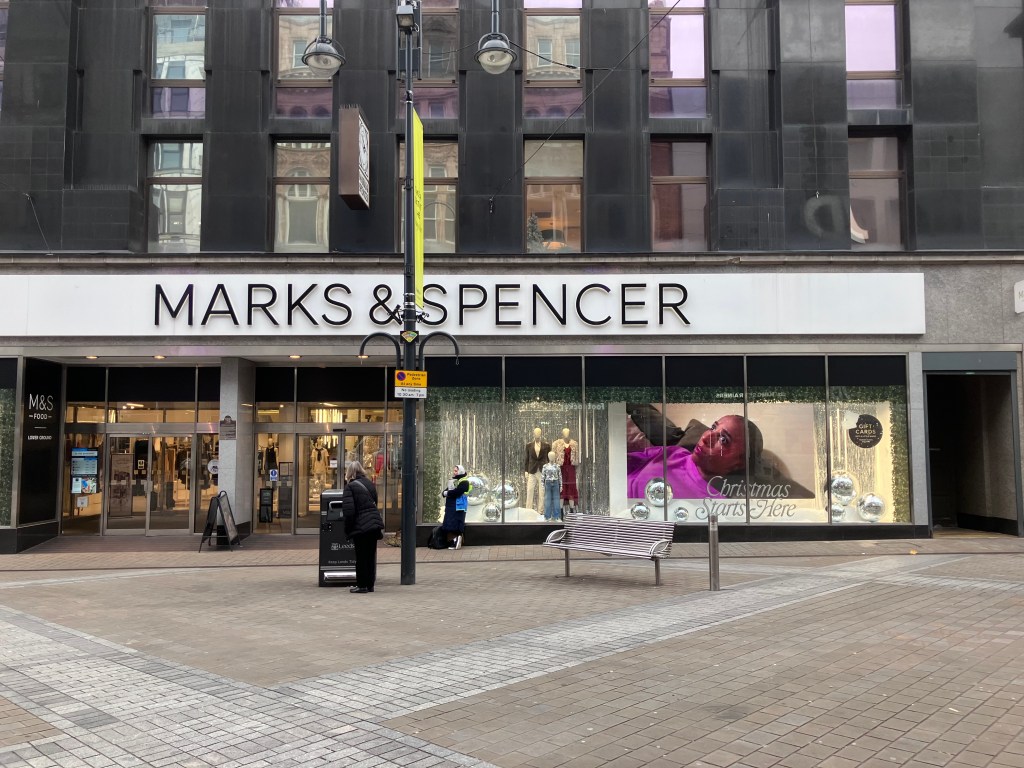
Now take a look at this. It was supposed to be the flagship Marks & Spencer store, but it was requisition by the government for the ministry.
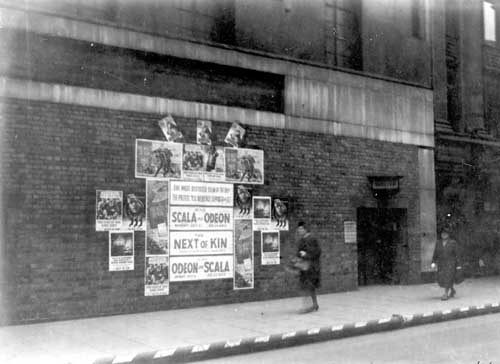
Entrance right here.
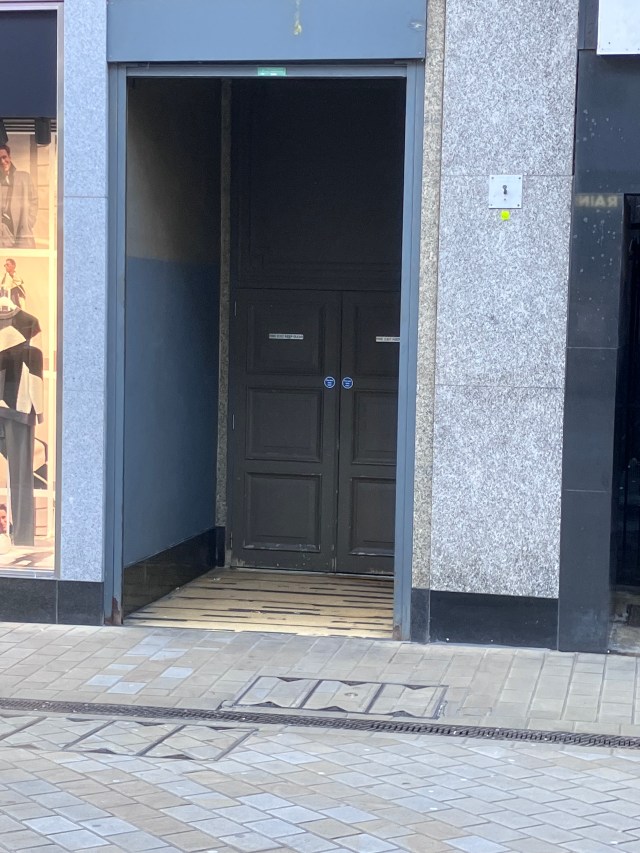
The secondment was meant to last three weeks. In that time Cathy proved to be vital to the squad. Working in plain clothes, with her local knowledge, her skills have chance to blossom and the period is extended until she’s there for the duration.

But there’s one other thing she does. Every Friday evening, from 6-10, she’s a firewatcher at the top of Matthias Robinson’s department store, just up Briggate (it became Debenhams, and just reopened as Flannels).

There have been air raids, but Leeds has escaped the horrors inflicted on other British cities – so far. But how long can that last?

Meanwhile, Cathy and the men in SIB are going to have a very big problem. The first inkling is the return of her brother, who moved to London as soon as he could and is, he’s told the family, a civil servant…well, read for yourselves.

From the corner of her eye, Cathy caught sight of someone else entering the room. Her eyes widened in disbelief. He wasn’t anyone she’d ever expected to see in this place. She folded her arms and glared at him.

‘What the hell are you doing here?

Daniel Marsden was five years older than her, the clever boy who won the scholarship to grammar school. The one who passed everything without seeming to do a stroke of work while she studied deep into the night, struggling with her lessons and failing half her exams.

He was the boy people noticed. They remembered him, asked after him, always full of praise, with Cathy a poor second. When Dan landed a Civil Service job and moved down to London, she’d said nothing, but deep inside she’d been glad to see the back of him. After so many years she had the chance to move out of her brother’s shadow. Even now, his Christmas visits each year felt like more than enough time together, watching everyone gather round him. She’d been quietly relieved when he’d said there was too much going on at the ministry last December to be able to come.

Now he was standing in the office where she worked. He smiled.

‘I like the way you’ve had your hair done. It suits you.’

Cathy felt herself bristle. At twenty-six, she’d spent four years as a woman police constable, then two more as a sergeant, before her secondment to SIB and a move into plain clothes. She’d had to fight for respect every step of the way. It had been the same when she started here. She’d needed to work hard to make the squad accept her. To understand that a woman could do this job. Cathy wasn’t going to let her brother dismiss all that with a flippant comment. Just the sight of him here, where she’d built a place for herself, made the excitement and pride at finding Dobson wither away.

‘I’m so very glad you approve.’

Dan shifted his glance away.

‘He’s been sent,’ Faulkner told her. ‘We’re working with him.’

She turned, fire in her eyes. Like the other men in SIB, Adam Faulkner had been a police detective before the war. He’d been in London, a member of the Flying Squad. They were famous, the best Scotland Yard had; everybody in the country had heard of them. He’d joined the army, eager to defend his country, only to find himself shuffled into the military police. Recruited for the Special Investigation Branch when it was formed the year before, last July he’d been posted to Leeds to set up this new squad. A sergeant, like her, but his was an army rank. A good, fair boss.

‘Sent?’ Cathy asked. ‘What do you mean, sent?’

Faulkner closed his eyes for a second. ‘Your brother is with the Security Service,’ he said.

I hope you’re intrigued by a female character front and centre in a Leeds WWII thriller. If you’re registered there with my publisher, No Precious Truth will soon be available to read on NetGalley, in exchange for an honest review. If you’re not registered and fancy it, drop me a line and I’ll arrange it.

Or you could pre-order it, of course. Amazon has the Kindle edition of No Precious Truth pretty cheap in the UK and US. UK version here. In the UK, the cheapest hardback price is here. The cover’s pretty great, too.
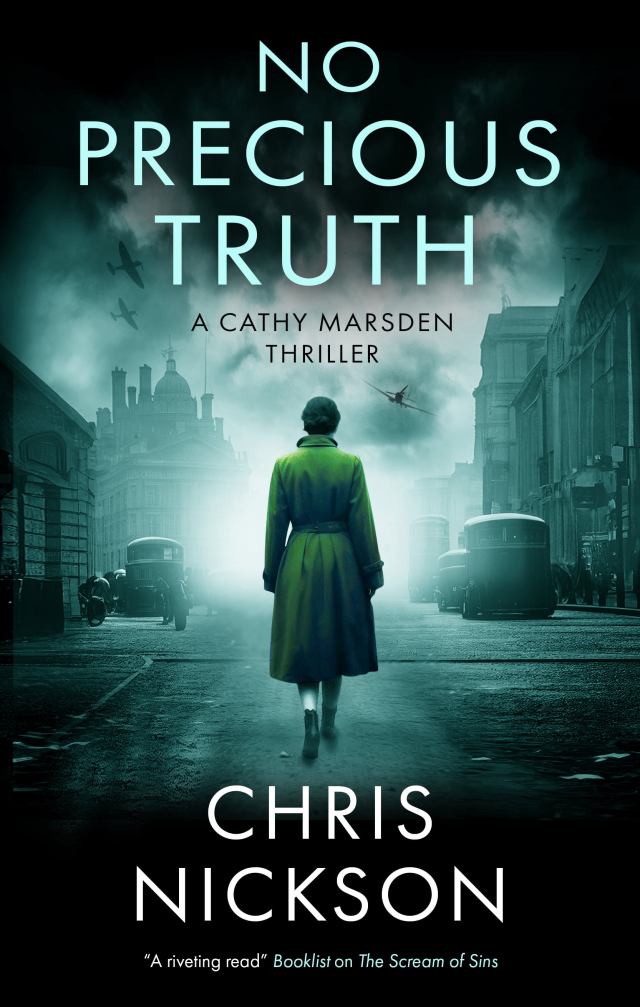
And of course, the Kindle version of the latest Simon Westow book, Them Without Pain, is pretty decently priced in the UK. Find it here. The hardback is just over a tenner, too.

One final thing: Cathy arrives with her own soundtrack. Find the playlist here, but be prepared to dance and jitterbug.
The Reality Of Old Leeds

“The past is a foreign country; they do things differently there.” – LP Hartley

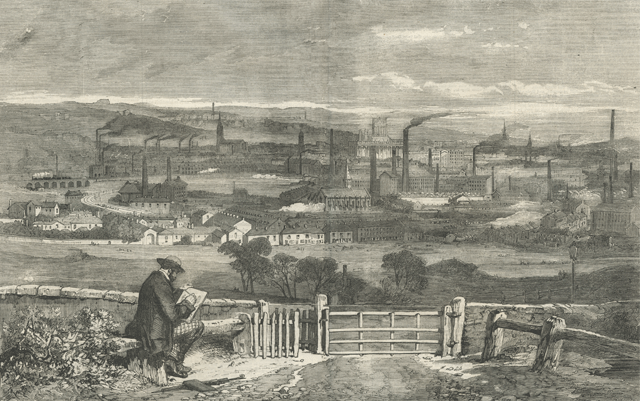
Novelists writing books that take place in the present day have to set the scene, of course, and create the sense of place. But the world they describe is one that’s essentially familiar, whether it’s in Britain, the US, or even Mongolia. Dickens’s readers understood the world he was describing, even if part of it feel alien to us (Even books written a little less than 20 years ago can feel like historical fiction. I’ve been reading Ian’s Rankin’s The Falls, published 2001, and the mentions of Teletext and WAP phones push it into another era)

.The historical novelist, however, has to take the past and make it alive and real to modern minds. We rely on research, we have to, but so much depends on our own imaginations. After all, an historical novel is only really successful if you feel you’ve been there yourself. That you’ve walked the streets, smell the stink and sweetness of history and met the people.

Yet research can only take you so far, especially if you’re dealing with the poor. All too often, their stories aren’t documented, especially before the middle of the 19th century. So many are nothing more than a name in a parish register – maybe a guinea grave, and that’s if they were lucky – with the memories vanished to nothing. Yet they had their lives and loves, their joys and sorrow.

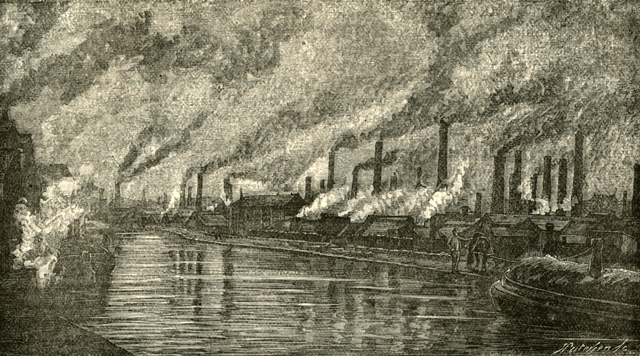
I can only speak for myself, but giving voices to some of them is one of the things I try to do in my books. Yes, I try to tell a story to engage, but I attempt to put the reader on the streets of Leeds, along it’s people whether it’s around the turn of the 20th century, the 1730s, or the 1820s, which is when the book I’m currently writing (the fourth Simon Westow novel) is set. There are some lovely pictures, watercolours, that show Leeds in a flattering, romantic light, with gracious houses and wide avenues, a place more desirable and cleaner than the best addresses in London or Paris. For me, that comes with not just a grain of salt, but a ton of the stuff.

In the 1820s Leeds was dashing headlong into the industrial age. It was smoky – there’s ample testament to that – and filthy. Workers were pouring in to the town to take the jobs in factories and mills. What housing existed for them was shoddy at best, and however quickly speculators built, there wasn’t enough. No sewage, no running water for most. Middens, standpipes and buckets. Privies that had to be empties by hand, all the waste carted off to the market gardens outside town. For those with money, the only mod cons were servants to do the dirty work.

Not the stuff of high romance, is it?

For the poor, life was often very short. High infant mortality, and even if you did grow up, you probably wouldn’t be alive too long. From an early age you were worked to the bone, six days a week, and all for a pittance. No chance to go into shops and buy new clothes; you wouldn’t be able to afford them. Second-, third- fifth-hand was good enough. The wages went on rent and food and heat.

That’s the world I want to lead my readers into. No, it’s not a picturesque place to visit at all. The poor aren’t always good. They are thieves and killers, the same as in every part of society. They just don’t have the protection of money or connections.

I do my best to make all that real. So does every historical novelist, and historical crime novels are also historical fiction. There’s no point in painting dishonest portraits. The days when writers only had aristocratic characters are long gone, thankfully. Only a tiny percentage of people have ever had money and privilege.

Still, even if those people couldn’t vote, and wouldn’t be able to for many years, every life was political.

It still is. That much hasn’t changed.

We all do our best to make things real. But…and it’s a huge but…this is fiction. I can’t say with absolutely certainly that this is exactly how it was then. I’m not a historian, I haven’t researched each tiny fact. As far as possible, it’s true. Remember, though, first and foremost I’m telling a story. If you finish the book and believe you’ve been there, that it was real to you, then I’ve succeeded. Especially if you care about the people. Let me try to illustrate with a couple of extracts from To The Dark, which is published December 31 in the UK. You can pre-order it now. Here has the cheapest price (and free postage).

Robbie Flowers stood by the window. The glass was grimy; it had probably never been cleaned in all the years he’d lived here.

            Jane was at his side, staring down at Flay Cross Mill. From up here, she could see there was order to the arrangement of the buildings below. But the years of neglect were even more obvious. Three roofs caved in, a hole in the fourth.

            ‘You didn’t see anything?’ she asked.

            He shook his head. ‘Why would I look down there? I’ve seen it often enough.’

            ‘Maybe you heard a noise.’ She glanced at his face, realizing with surprise that she was looking directly into his eyes. Two years ago he’d been a full head taller than her.

            ‘There’s always noise.’ He pointed. ‘Listen, it’s there. People working on the river. Day and night.’

            In the corner, an old woman moaned and tried to push herself out of the chair. But she was firmly tied in place. Flowers’s mother. Her mind was gone; she saw the past instead of the present. But her legs still worked. Given half a chance, she’d be out and away down the stairs.

            Jane had found her by the Moot Hall once, standing, staring at the building. She’d helped her back here. Flowers worked in one of the warehouses on the river, a clerk checking the daily shipments in and out. He had no one to look after his mother while he was gone. No money to pay for a companion for her. He had no choice but to tie her in the chair to stop her wandering.

            Jane had been waiting outside the door when he returned today.

            ‘I’m sorry,’ Flowers said. He turned away, untying the knots that held his mother in place as he spoke gently in the old woman’s ear. She’d soiled herself; Jane could smell it. She knew the man would clean his mother, then feed her, read to her until the light grew too dim.

For two or three years after it was built, Welling Court had been a good address. Set back from Kirkgate up a small flight of stone steps, it had grown up around a courtyard. But those bright days had ended very quickly. Now it was a last refuge for people who had nothing. There was no sun, no warmth, so little hope in the place. The snow had drifted into the corners of the courtyard, thick and dirty. An air of desolation hung over it all.

            The room he wanted was in the attic. Simon dashed up the stairs, pulling out his knife as he ran. Jane hurried behind him. The door was locked, but the wood hung so loose in the frame it only took a second to prise it open.

            The glass had gone in one of the windows. An old sheet hung in its place, but it couldn’t keep out the pinching cold. A bare wooden floor, thick with splinters. One wall had been turned brown by damp leaching through the plaster. Simon touched it and it crumbled under his fingers.

            They searched hurriedly, all too aware that the constable might be on his way. They needed to be out of sight well before that happened. If anyone found them here, there would be too many awkward questions.

            Two minutes was all they needed. Poole had owned a change of linen and some spare socks. That, along with the greatcoat – pockets empty – and the ancient top hat on a hook behind the door, was all. Except for the notebook and pencil he’d pushed under the bed as if he’d wanted to keep them hidden from sight. Simon scooped them up and thrust them into his coat pocket. A final sweep around the room. Nothing more here; he was certain of it.