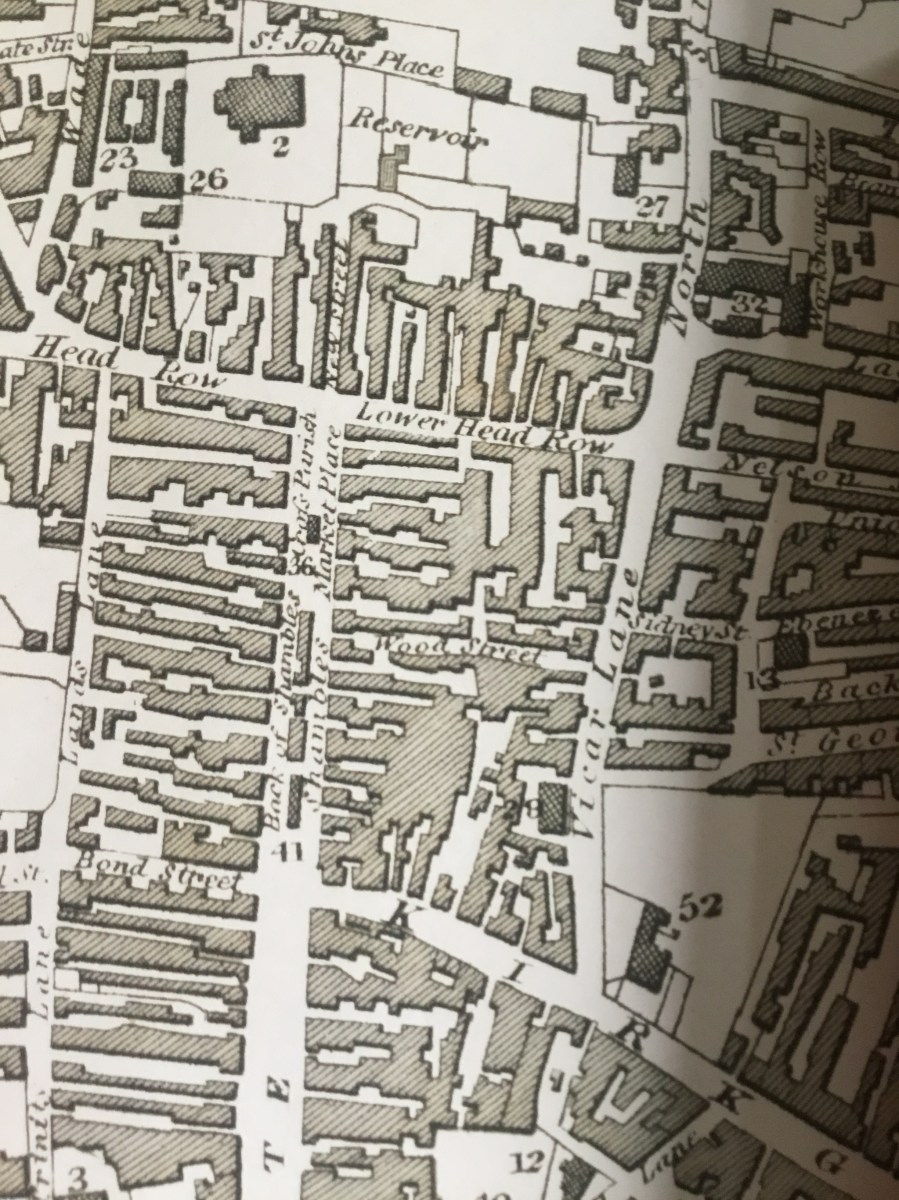
If you’ve read any of my books, you’ll have come across the courts and yards that ran off Briggate. There were dozens of them; this 1847 map of Lower Briggate gives an indication.
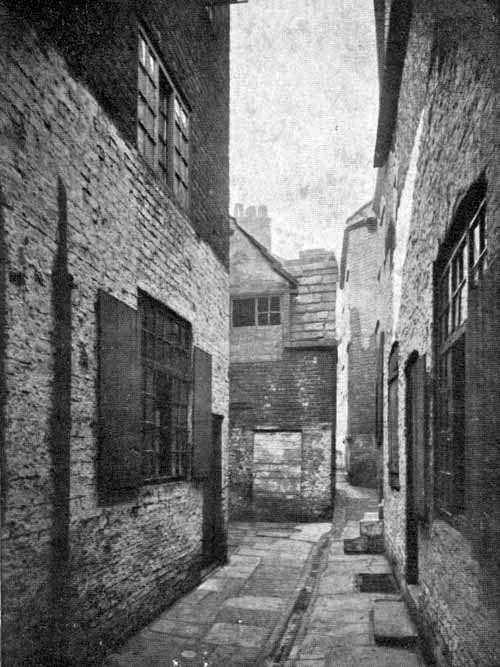
Development over the years has done away with most of them, and in many cases, that’s no bad thing. They were cramped, awkward spaces, originally intended for workshops, counting houses and warehouses when Briggate was first laid out in 1208.
But times and needs changed. Leeds began to grow rich off just as the fields that had sustained small farmers were enclosed by landlords who could graze sheep and make more money from their estates. People arrived in town hoping for streets paved with gold, and that trickle became a torrent with the Industrial Revolution.
They all needed somewhere to live. The first back-to-back houses appeared around the start of the 19th century. But long before that, these courts and yards of Leeds had become places for people to live. For artisans and labourers, they offered a home. For the prostitutes, the bottleneck openings were a place to stand and ply their trade.
Some led to inns and taverns. But even so, along the yard you’d find small businesses with their offices and many living in rooms.
They became an inimitable part of Leeds, an accidental growth that came to typify Leeds. They were just off Briggate; plenty ran of Kirkgate and the Upper and Lowerhead Row. Each had its character, its citizens, its grievances and joys.
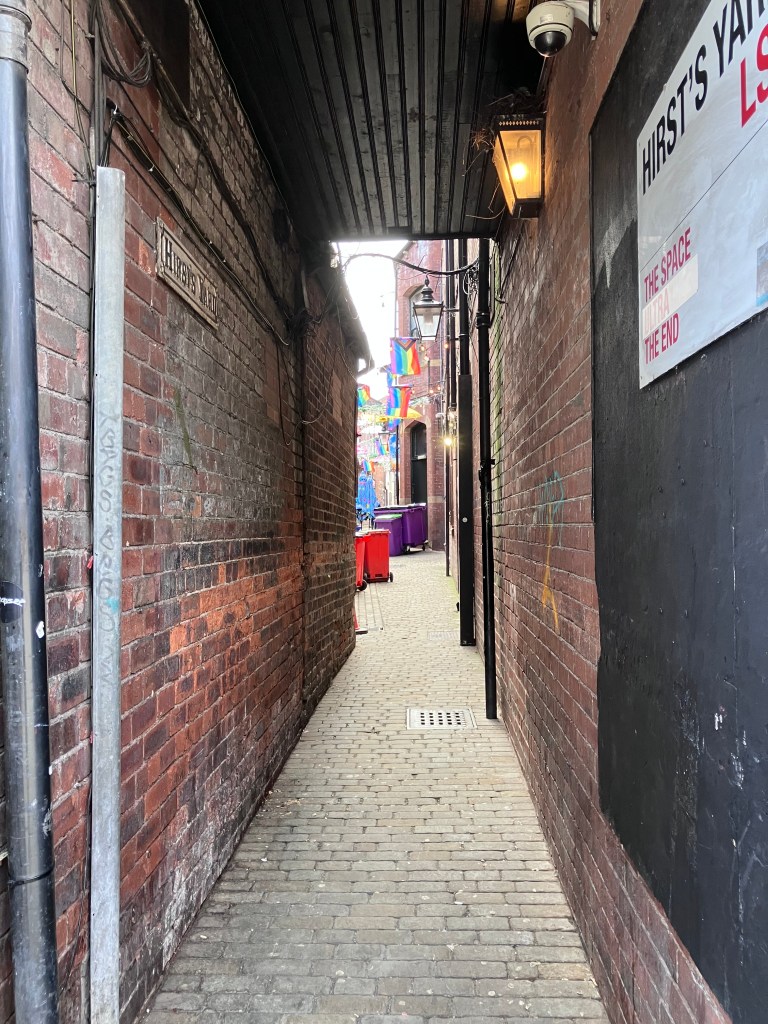
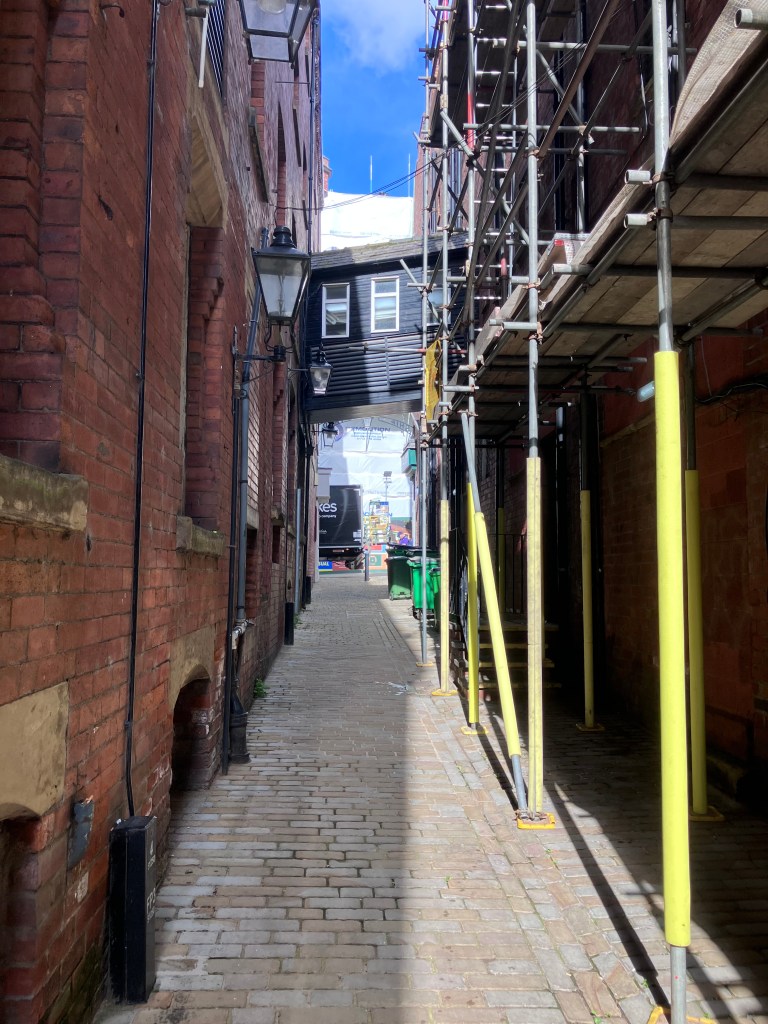
Few remain now, and those are home to bars and clubs. A handful from what was once part of everyday life. Given the way Leeds has carelessly laid waste to much of its past, I’m grateful these remain.
Take a look at a few. My characters have walked down most of these. Simon Westow, Jane and Sally have. Did I mention they’ll be doing it for one last time in October, when A Rage Of Souls is published. Come along and walk with them. Don’t forget a stroll down Green Dragon Yard, too. Pre-order it right here.
The following first appeared in History and Heritage Yorkshire – you can find them here. The photos are courtest for the excellent Leodis photo archive. Take a browse.
We’ve all heard about the rationing. Of food, clothes, petrol, coal, pretty much everything, and the way the amounts people were allowed grew smaller and smaller as the war progressed. We had a National Loaf, devised by nutritionists, incredibly healthy, but supposedly tasteless and grey. Ministry of Food pamphlets offered recipes for families during the conflict. People dug for victory in their back gardens. Unused open areas or bomb sites that had been cleared, every kind of spaces was made over into a veg plot.
That was right across the country. But what changes did the war bring to Leeds? In terms of air raids, the city escaped very lightly. We had some – nine in total – and 77 lives were lost. But there was only one of any great consequence, the Leeds Blitz of March 14-15, 1941 (it was termed a quarter-blitz, comparing it in size to the damage inflicted on other cities). The night began with incendiaries, fires lighting the way for the waves of high explosive bombs that arrived later. In all, about 100 houses were destroyed and around 4600 damaged. Bad enough, but not much when compared to elsewhere, and there would only be one more raid of note, in 1942, when five workers at Kirkstall Forge were killed.
The appearance of the city changed. There were sandbags everywhere, tape on the windows of shops and office, as well as home. Much less traffic on the roads due to strict petrol rationing – handcarts and horse-drawn wagons often replaced lorries and vans (out in the country, horses drew ploughs and threshing machines, as if we’d moved back a century).
The Blackout
The blackout meant that those vehicles which kept running, and only a small number were permitted, had to cover head and rear lights, with only a thin slit for illumination – and that made the 20mph speed limit an excellent idea. Curbs, lamp posts, telegraph posts were painted with black and white stripes to aid motorists. Trams had bells that jangled to warn pedestrians who might be in the way. The windows in trams and buses were covered to stop light leaking, then with netting or tape in case of blasts.
The ARP (Air Raid Precaution) wardens were the ones with the job of enforcing the blackout. Stories have so many of them acting like little tin gods, and probably some did. But it was a thankless job.
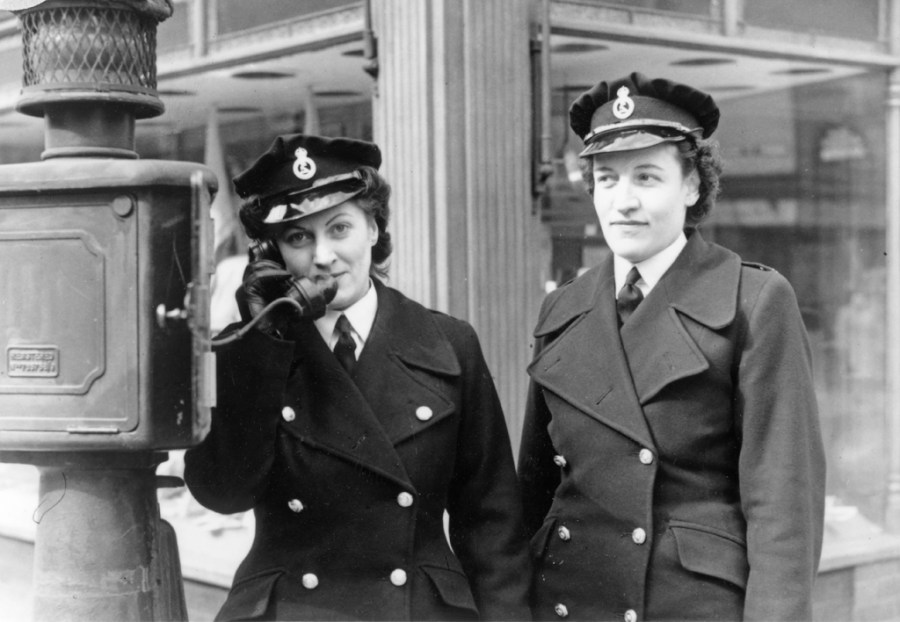
The blackout should have been a boon to crime. Yet a number of newspapers reported the expected wave of thefts and robberies didn’t happen. There was plenty of opportunistic crime: where houses had been bombed or families fled, there was looting (not much of a problem in Leeds), and some other illegal activities did flourish – while the duties of the police grew. Prostitution became more widespread, and more blatant, for one small example. Some of the women were honest; others would lure their customers into the dark ness and rob them, either alone or with an accomplice.
There was a rise in bag-snatching, thefts from telephone boxes and standing cars, but greater crime figures seemed to be down. In part, that was due to transportation. Petrol rationing made it illegal for most people to use cars. There was plenty of black-market petrol for sale, but cars on the road were remembered, and easily traced. Which might explain why one of the biggest rises was in bicycle theft.
The Black Market
With rationing, there as the inevitable rise of those who saw the chance to make money by bypassing the law. It could be something as simple as a shopkeeper saving a little extra for favoured customers or fudging coupons. It could be the spiv – a term that came into use with the war to denote the stereotype of a flashily-dressed man selling goods on the corner. Rationing and crime were interlinked, and it was responsible for many of the offences that ended up on police blotters and in court.
One of the most widespread of those was that theft of coupons from Ministry of Food offices. The security was non-existent, and if someone broke in at the right time, there were literally thousands of coupons waiting to be taken and sold. Others forged coupons. Essentially, rationing and coupons created an industry.
Items were stolen – entire lorries of them at times, often tinned food. On a smaller scale, things walked out of the stores for the NAAFI canteens which gave food and drink to service personnel. Other items vanished from work. In Bradford, my own grandfather was arrested and convicted of stealing 99 yards of cloth from his employer. He got off with little more than a rap on the knuckles: just a £5 fine.
Outside the small amount allocated for civilian use, petrol was dyed red to deter theft. However, with a little work and ingenuity, the dye could be removed.
Rationed alcohol offered more opportunities. Much of the whisky supply was reserved for export to help the vital balance of payments. Enterprising crooks worked with chemists and made hooch, alcohol created from different things with the kick of booze, then dyed and flavoured and passed off as the real thing, often in recycled bottles and with carefully printed labels. The customers were often clubs – many operating without a licence – where couple and service people on leave went to relax. It had worked during Prohibition in the US and proved successful here. However, there were reports of drinkers becoming ill after using hooch, often severely. Cases of permanent blindness, even death, happened.
Physical Changes
There was bomb damage in Leeds. Far less than other places, but it was there. Marsh Lane goods station was pretty much destroyed, and the same with a number of factories along the river. The front of the museum on Park Row collapsed, and there was damage to the Town Hall, aa well as a number of houses, particularly in Armley.
Leeds Museum after the March raid
Model Road, Armley
Some of the physical changes were made as precautions. Lewis’s, the big department store on the Headrow had the brick blast wall outside its main entrance to avoid any flying glass and debris. Outside, along the middle of the road, stood a series of emergency water tanks to help deal with any incendiary bombs and fires. They were painted in black and white checks to alert traffic and pedestrians at night.
Emergency water ponds were dug all over, although most of them were never needed, thankfully.
The Marks & Spencer store that’s such a familiar sight on Briggate was completed right at the beginning on the war. The company had kept a presence further up the main shopping street since 1909, but this was intended to be the grand flagship store. They purchased and demolished the Rialto cinema at 46 Briggate and built something entirely new and modern. However, in 1940, as they were set to opened, the building was requisitioned by the government for use by the Ministry of Works. A blast wall was erected to cover where the display windows had been (and was soon covered in layers of posters advertising films). The entry for staff was a metal door to the right, still there if you look.
The elegance of Park Square remained, but in a diminished state. The railings around the grass were removed, like most metal, part of a national drive. It was ostensibly to build more Spitfires; the reality was that the metal often just sat in huge, rusting piles in scrapyards.
Food
As mentioned earlier, rationing gradually bit harder and harder. Nutritionists worked on recipes with the Ministry of Food, creating dishes that were both healthy and tasted good (although many might disagree with that). But the reality was that Britons did eat a very healthy diet during the war, better than before it for many, and rationing did create an equality between the classes.
Gardening was encouraged, growing the food that was so desperately needed with imports so limited. There were pamphlets and newspaper columns with characters like Potato Pete. Gardens were made over, empty ground cultivated. A street, even a couple of streets, would use all their scraps and waste to feed a pig that one of them would keep – quite illegally. In return, they’d receive some of the meat when it was butchered.
Fishing was affected, too, with the trawler fleet and the catch depleted, as the Germans considered fishing vessels to be legitimate targets, and mines took their toll. By 1944, the catch was round half the pre-war figure – and that was an improvement over 1941. Fish was never rationed, but the prices rose very steadily as the fighting continued.
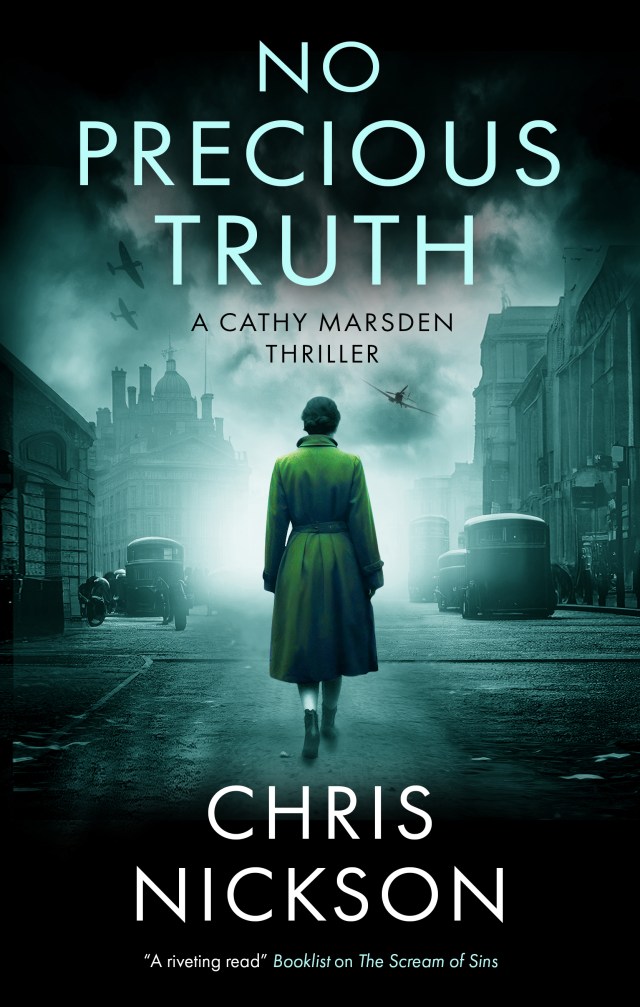
These are just a few quick snapshots; there are entire books and studies on each of the topics. The war in Leeds, at least at the beginning of 1941, is the backdrop for my new novel, No Precious Truth. The main character is Woman Police Sergeant Cathy Marsden, one of the very few women in the force back then. She’s’ seconded to the brand-new local squad of the Special Investigation Branch (a real organisation, part of the military police) for three weeks, a period that keeps getting extended. They deal with organised crime and the forces. But suddenly they find themselves facing something very different: an escaped German spy.
It’s published by Severn House, and available as a hardback and ebook from April 1. Buy from an independent if you can, or the cheapest UK hardback price, with free postage, is here. The launch will be at Kirkstall Forge in Leeds (a location in the book) on April 17, 6pm. I hope you’ll show up. All are welcome – they even have their own little train station.
Sometimes the truly wondrous does happen. When that occurs, it etches a sharp, memorable line in a life.
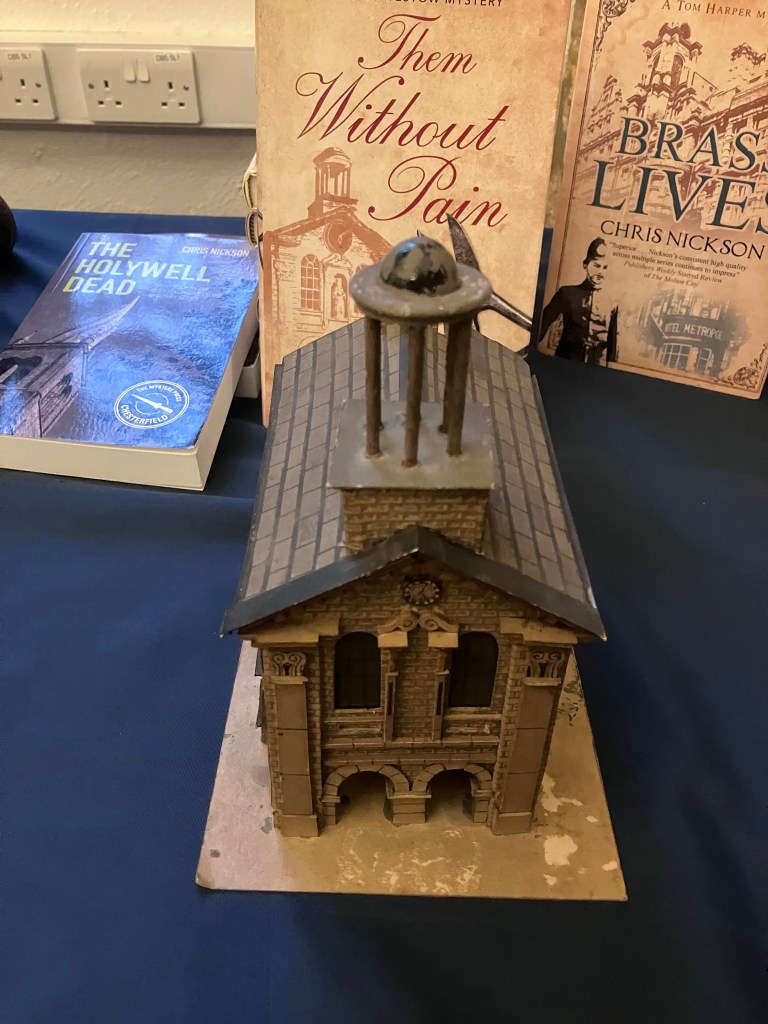
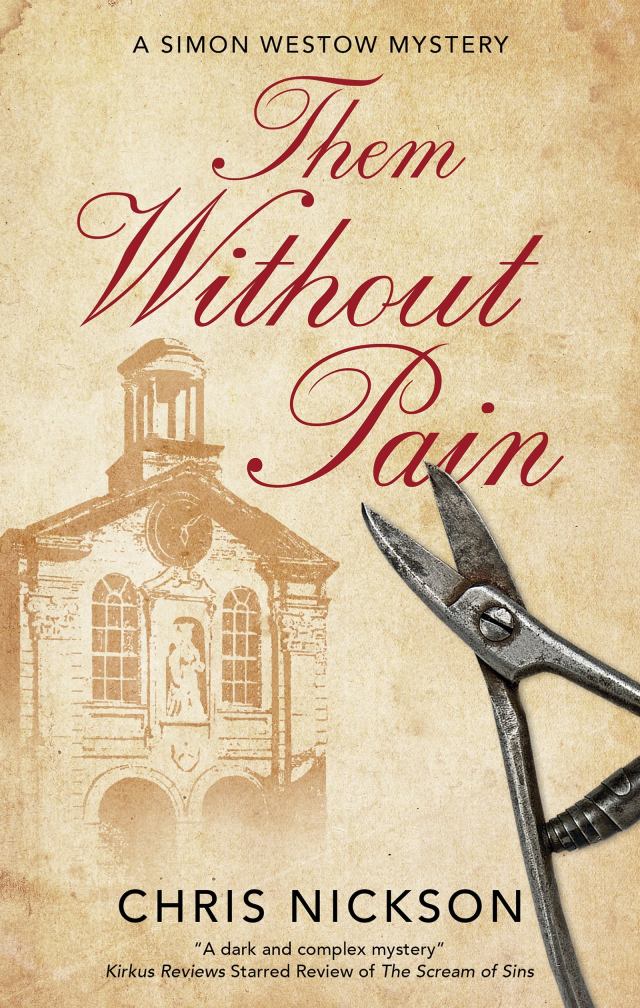
In my most recent book, Them Without Pain, a true incident from Leeds history is the catalyst for everything that happens. In 1696, goldsmith Arthury Mangey was hanged for coin clipping – which was treason, as it debased the coinage. In his trial it was alleged that he had a secret workshop on Middle Row, the shops and workshops behind the Moot Hall in the middle of Briggate (see the superb cardboard model).
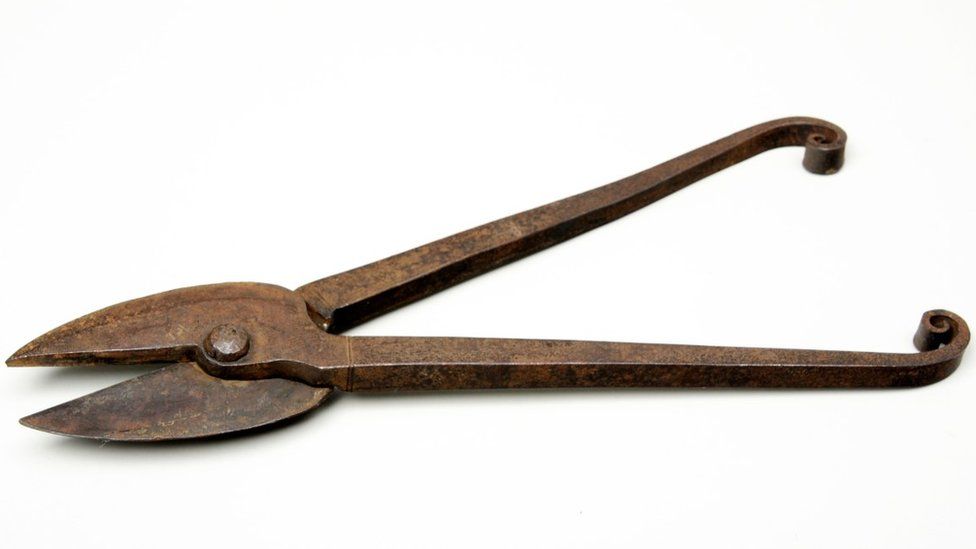
In 1825, the Moot Hall and Middle Row were finally demolished, opening up the town’s main street. But as the workmen tore down walls, they discovered…a hidden workshop, with two pairs of metal shears, a bowl and an Elizabethan coin.
In the book, Simon Westow is there, and in the hidden room he also finds a body. That provides the spark for everything that happens.
Why had no one looked for the room at the time of the trial? Did the things in there really belong to Mangey or had he been set up?
We’ll never know. But some of what was found has remained and will be used in an exhibition on Leeds writing later this year.
Yesterday I was giving a talk at Abbey House Museum, where I’m writer-in-residence. I had the real privilege of holding these shears, of touching history. Maybe Arthur Mangey really did use them to commit treason over 300 years ago and I was able to share that with him. A connection across the centuries.
I’d written about them, and they were real. Now that’s magic, isn’t it?
Forgive me for ending on a crass commercial note, but in the UK Amazon has both Kindle and hardback editions at very low prices. See here.
We’re leaping into that season again. Christmas lights switch-ones, Christmas fairs and markets, Thanksgiving in the US, the spectre of Black Friday that lasts for weeks…it all means it’s time to think of presents, and a period when artists of all types tout their works as ideal gifts.
I’m no different standing here like I have a stall in the market and barking out my bargains. But yes, I do feel they’d make good presents for anyone who likes to read, has an interest in history and likes crime novels.
My latest is on sale with Amazon (I know, but…cost of living). At least, it is in the UK. The hardback is £13.61 and the ebook £12.93. That’s a good deal and I still get a full royalty. I’d love to sell more copies of it. I believe it’s a hell of a good story, with great characters, and a foundation in Leeds history (a Leeds goldsmith hanged for treason in 1696) that resonates through the years. You can find it right here – just click the link.
KODAK Digital Still Camera
If you could find your way to buying a copy, even for yourself, I’d be very grateful. And if you don’t have the money, please request it from your local library. They may not have it, but they can order it in.
Above all, though, please enjoy the holidays, be healthy and be well. And thank you for reading.
Well, a part of one, anyway. The first scene came to me as I was walking, and I needed to write it, to get it out of my head. Then another scene came, and a third…quite what it’s going to be – or if it’s going to be anything at all – remains to be seen.
I’ve tried without success to write something set in Leeds in the 1960s. This might go the way of all the other attempts. Or perhaps it might click. But I’d honestly appreciate your reaction to it.
Picture courtesy of Leodis.
One
Leeds, April 1966
‘I’ll tell you what,’ Clarky began then took a sip of the beer. He was three pints and two Scotches into the evening, right around the time his tongue usually loosened.
Davy Wilson shook a Gold Leaf from a packet of ten and lit it. They were drinking in the City of Mabgate pub. Just a few hundred yards from Millgarth police station, but the coppers didn’t come in here. Except Detective Constable Robert Clark.
‘I’ll tell you what,’ he said again. Voice steady. It would take another two of three pints before he started to slur his words. Then the landlord would gently send him on his way home, up the hill to Lincoln Green.
‘What?’ Davy asked. Friday evening and across Leeds the mood would be rising. People putting on their best clothes. New dresses, suits from Burton’s. Knotting the tie just right. Some already out drinking, preparing for a night in the dancehalls and discotheques. Not him; another half hour and he’d be on his way home. But first he wanted to hear what Clarky had to say. When you worked for an enquiry agent, a copper’s information was like gold.
Sometimes gold, anyway. More often it was just shit. Still, no knowing when a nugget would show itself. Worth paying for a pint and a small measure Scotch. The cheap stuff; Clarky would never taste the difference.
‘You know George Hathaway?’
‘Georgie Porgie?’ Nobody would ever call him that to his face. He was big, as protruding belly, one of the most violent men in town, with a temper that could arrive from nowhere, like the flick of a switch. A criminal, running half the money lending and prostitution in town. And dangerous; there were rumours he’d made a couple of enemies disappear. But smart enough never to be caught, and enough policemen on his payroll to be certain he’d stay free.
‘Talk is he’s planning something big.’
‘Any idea what?’ He tried to make the question casual. It was business for the rozzers, not someone like him. His work was security. A different, safer world. Still, he was curious. Something useful might slip out.
‘No. But he has a pair of councillors in his pocket and I hear they’ve had full wallets lately.’ He took another sip. ‘Same with my Superintendent. He rolled up the other day in a Wolseley. Brand new, a 16/60.’
They didn’t come cheap, even with the kind of discount a dealer would give the police. Hathway, a pair of councillors and Superintendent Witham. Davy filed it away in his mind. Counted out three shillings and placed them on the bar before he stood and patted Clarky on the shoulder.
‘Have yourself another on me.’
Dickie Parsons studied himself in the bathroom mirror, pushing his fringe up a little. It wouldn’t last long, but he wanted to look perfect when he left the house. The suit was just right, three-button, two vents at the back, slim fitting, creases like knives on the trousers. A blue knitted tie.
In the hall he pulled his good overcoat from the stand and shouted bye to his parents. They’d be in bed long before he was home. He had work tomorrow morning, always a half day on Saturday, but he was twenty years old. Who wanted to stay at home and watch the telly on a Friday night? Plenty of time for that when he was old.
At the end of the drive, he stopped to light a cigarette. He’d been paid in the afternoon and he had some money in his pocket. Even after paying room and board to his mam and setting a little aside for a holiday, maybe a car or a motorbike, there was still plenty left for the weekend.
Rod and Jimmy were at the bus stop on Foundry Lane. They’d all been at school together, left as soon as they were fifteen. Jimmy had landed on his feet, an apprentice with an engineering company, with prospects for the future. Rod was a big lad with strong shoulders, content to carry hods full of bricks on the building sites. Dickie, though, he had a touch with engines, working at a garage in Cross Green, on decent money and learning. Always learning. Anything with a motor, he could repair it.
They had a laugh about work. But nights out were serious business. A few pints and over to the Mecca, see if there were any birds. They’d start at the Market Tavern, just up from the bus station, then across Vicar Lane for a couple more in the Robin Hood for going on to County Arcade and start dancing.
Dickie was beginning to feel the weekend, a little buzz in his body, like that time someone gave him a Purple Heart. The week before he’d noticed a lass at the Mecca. Short skirt, long legs, short dark hair and big, wide eyes like Twiggy. Mandy, she’d told him as they talked for a couple of minutes before her friends dragged her away to the bus.
‘Maybe see you next Friday,’ he told her. He’d keep his eyes open; there’d been a promise in her smile.
Dickie stood by the bar in the Robin Hood, the air thick with cigarette smoke and talk. He chuckled to himself as he saw the daft little World Cup Willie gonk someone had put on top of the optics. Still, it was only a few weeks until the matches started, and he was looking forward to the football. He was in a good mood, ready to have a little fun, when somebody pushed into him, hard enough to make him lurch forward and spill his beer. The first thing he did was look down. The bottoms of his trousers were safe, just a few drops. Most of it splashed onto his Chelsea boots. A flash of annoyance. He’d only bought them the weekend before.
Dickie turned around. ‘What the hell do you think you’re doing?’
The man was fat, a glass of Scotch in his thick hand. A pair of hard cases stood beside him.
‘Sorry, lad,’ he said. ‘No damage done, eh?’
‘All over my bloody shoes.’ Suddenly Rod and Jimmy were there.
‘I said sorry, all right? Let it go.’
He’d had just enough to drink to show a little bravado. ‘You can buy me another pint.’
He saw something change in the fat man’s face. In an instant it grew hard and dangerous.
‘I said sorry. I’m not buying you owt. Leave it while you can.’
‘Least you can do is stand him another,’ Jimmy said.
The big man turned his head a little. ‘I’d shut up if I were you.’
‘What do you want to do, boss?’ one of the hard men asked.
‘Nothing.’ He was staring at Dickie. ‘These boys were just leaving.’ He had a smile that looked like a curse. ‘It’s probably past their bedtime, anyway. Let them go home to mummy and cocoa.’
It was Rod who put a hand on Dickie’s shoulder.
‘Come on, mate. It’s not worth it. We’ve got better things to do.’
Dickie stood his ground, staring at the fat man for five seconds.
‘Yeah,’ he agreed finally. ‘Let’s go.’ As he pulled the door open, he looked back. The fat man was still watching him, amused now.
‘Pillock,’ he shouted.
Then they were out on the street. Only a few yards to the County Arcade and the Mecca where the night could really begin. But he heard the footsteps behind them. He glanced and the others.
You couldn’t run for it. You didn’t do that. You stood your ground even if you knew you couldn’t win.
Then Rod and Jimmy were on the floor, the hard men kicking them like they were playing at Elland Road. Dickie was facing the fat man.
‘You need to learn some respect, boy.’ He grabbed Dickie’s lapels, pulled him close and brought his head down hard. Dickie felt his nose explode. Pain and a sudden gush of blood. He opened his mouth to cry out. Then the fist caught him on the chin and he was flying back on to the pavement.
Two
Leeds, June 1966
‘Do you remember that assault on Boar Lane back in April? A Friday night, three lads in hospital. One of them in a coma.’
Davy Wilson lifted his head. Charlie Hooper was staring out of a dirty window, gazing at the blackened stone of Mill Hill Chapel on the other side of Lower Basinghall Street.
‘I remember seeing it in the paper. Why?’
‘He came out of the coma yesterday. They’re not sure if he has brain damage.’
Davy waited. Charlie wasn’t the type to bring something up out of the blue and then leave it hanging there. He was usually decisive, mind sparking. Today he seemed…distracted. Sad. Not like him at all. There had to be more
Hooper had served in Military Intelligence during the war, left with a good record, came back to Leeds and started the business. He had the kind of face nobody remembered, a real asset for this line of work. Sharp enough to look ahead and see the divorce laws were likely to change soon. That market would vanish. He’d begun to push the industrial security side of their work to keep them ahead of the competition That was Davy’s field. Aged eighteen, three A-levels behind him, he’d started worked for a company making burglar alarms and sense the possibilities. Three years of that, learning the electronics and how to set everything up, he’d done his research on enquiry agents and gone to see Hooper. Another trade to learn, how to work on the street and with the police while he built up contacts with businesses and Charlie used the friends he’d developed. It was starting to pay off for both of them, and Davy was still only twenty-six.
‘Poor lad,’ he said. What else was there?
Charlie nodded and ground out his cigarette in the ashtray. He was in his fifties, white hair, a bald spot on the crown of his head. He smoked too much, starting to go to seed: nicotine stains, jowly, belly ending over the top of his trousers. ‘Happened on a Friday evening right in the middle of town.’ He spoke quietly, thoughtfully; he could have been talking to himself. ‘A couple of witnesses gave statements to the police. The way I heard things, they went back later and changed their minds.’ He raised his eyebrows. ‘Nobody on the force pushed them.’
‘It happens,’ Davy said. ‘We both know that. Someone put the fix in.’
‘Yes,’ Charlie agreed. ‘Dickie, the one in the coma, he’s my cousin’s boy.’ He turned his head to stare at Davy. ‘She asked if we could do something.’
‘What did you tell her?’
‘I rang a couple of coppers I know. They’re not saying a word.’ A pause, no more than a moment, but it felt like a lifetime. ‘You drink with that detective out of Millgarth, don’t you?’
‘Sometimes.’ He knew what was coming.
‘Can you ask him? See what he knows?’
‘I can try.’ Tomorrow was Friday. Come evening, Clarky would probably be in the pub.
‘I’d appreciate it.’ A small, wan smile. ‘Dickie’s a good kid. We’re going to have to wait and see how he goes along. Meanwhile…’
‘Yes.’
While you’re here, just a reminder that this book is still pretty new, very dark and (I think) pretty damn good. You might like to try it.
I know that many, probably most, of you don’t live in Leeds. I do my best to describe my city in different period. But nothing is better that seeing it for yourself. That’s why I’ve been making a few videos in town. Just short ones, to try and offer a taste of some areas.
Why not come take take a walk through time with me on Briggate and Leeds Bridge. And we’ll finish off in a graveyard. Ready? We won’t be long, no need to pack a lunch…
First of all, many thanks to those who came to the two panel events last week – nearly 100 of you in all. I hope you had a much fun as we did…
Ask the question “When was Leeds founded?” and every answer is going to be qualified with if and maybe and possibly.
It’s impossible to come up with a vague date, let along and exact one. But…if Bede’s Ecclesiastical History contains some truth, King Edwin built a church in Loidis in the early 600s – which was sacked a little later by Penda.
Now, Loidis could refer to a part of the British kingdom of Elmet, and Ledsham (part of the church there is ancient) and Ledston. But (a small word doing a lot of work), it’s believed that Loidis means ‘people who live by the river,’ which would be more likely to mean Leeds. If so, there would already have been some kind of settlement here, large enough to warrant a church.
It means, too, that Christianity had arrived, although the pagan Penda would interrupt that for a few years – he was defeated the battle of Winwaed, which might have been in Whinmoor, somewhere near to what’s now the big Arium council nursery in the 650s. You can still find a street or two named for him between Stanks and Whinmoor.
Again, we don’t know when Leeds first got a church. It was probably made of wood, and later rebuild, more solidly and lastingly, in stone. Nothing like the building we know today, or even the one the preceded it. It would have been far more modest in these Saxon times. No pews. Maybe a stone bench built into the west wall for those who couldn’t stand.
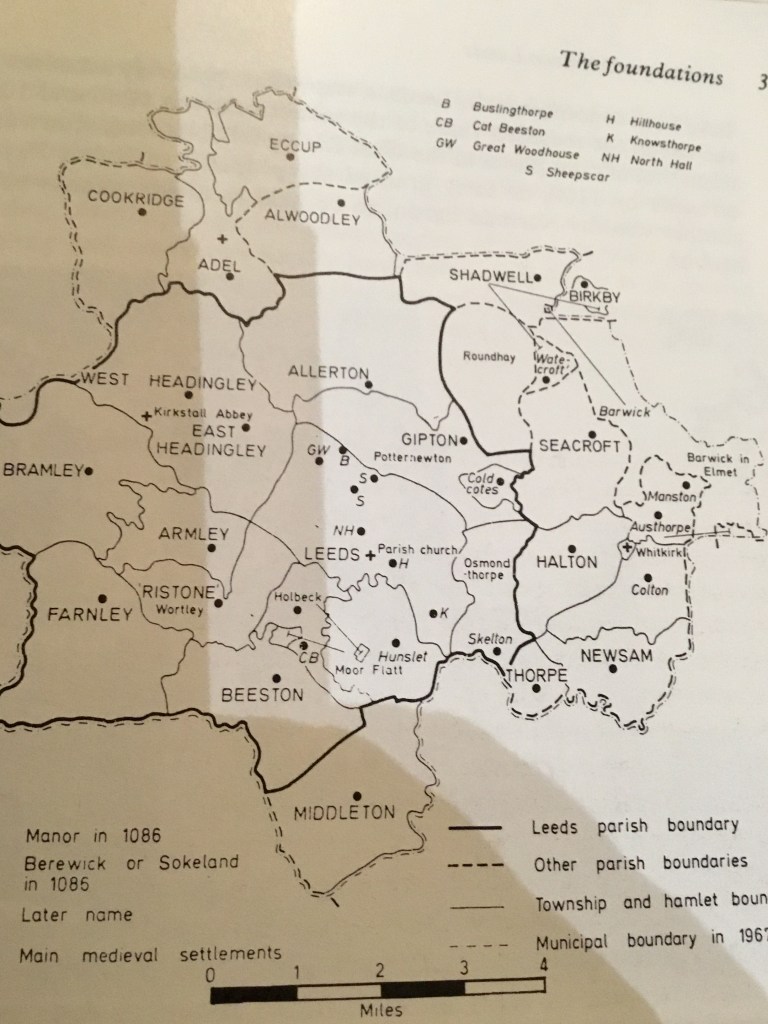
Leeds was also a parish, and it became a large and influential one, although it might not have begun quite so grandly. Certainly by Norman times it covered 32 square miles, taking in not only the village, but a host of surrounding communities.
We know about the Vikings arriving, in York from 866, if not earlier. Was there much pillaging in Leeds? Little evidence of it, and recent digging indicates they preferred East Yorkshire to the West Riding overall (no surprise, as the landscape is very reminiscent of Denmark). But they were here, they settled, intermarried.
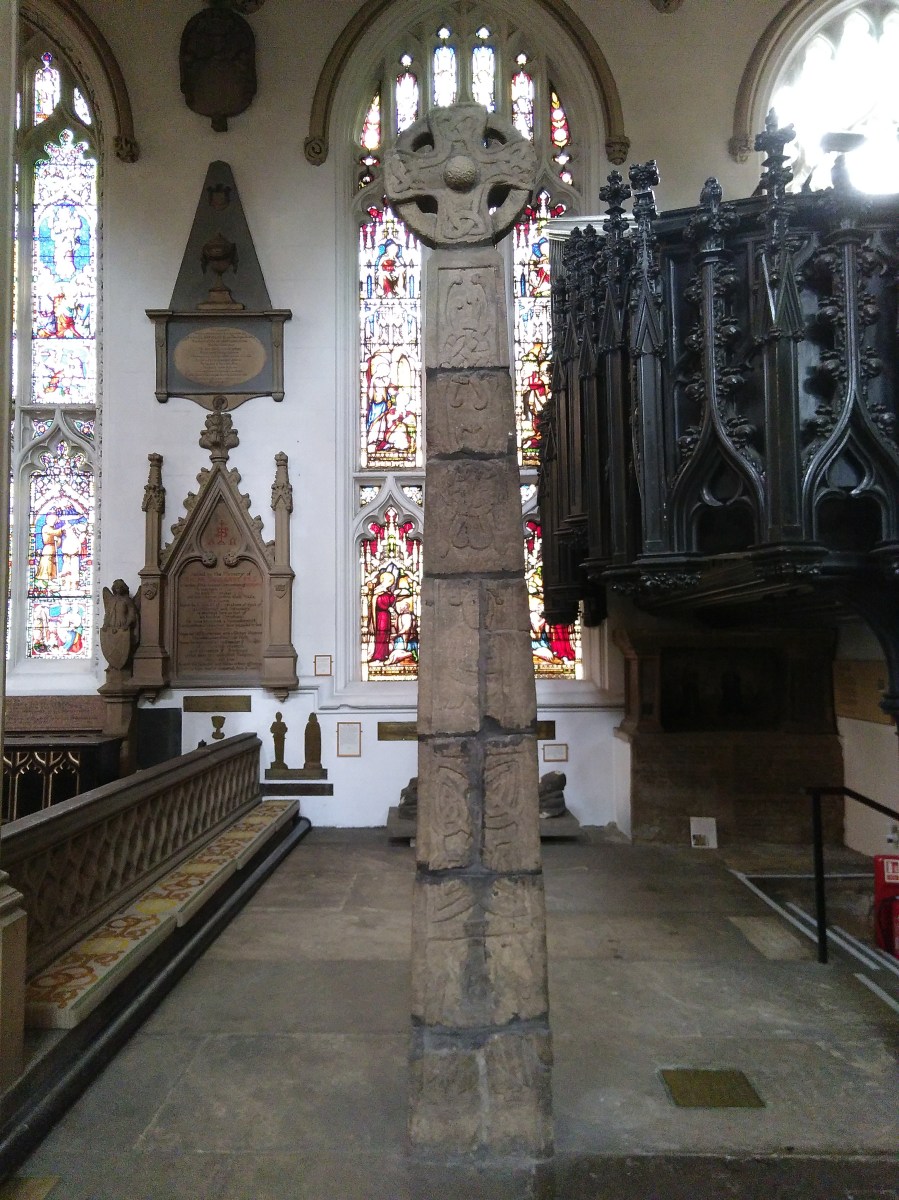
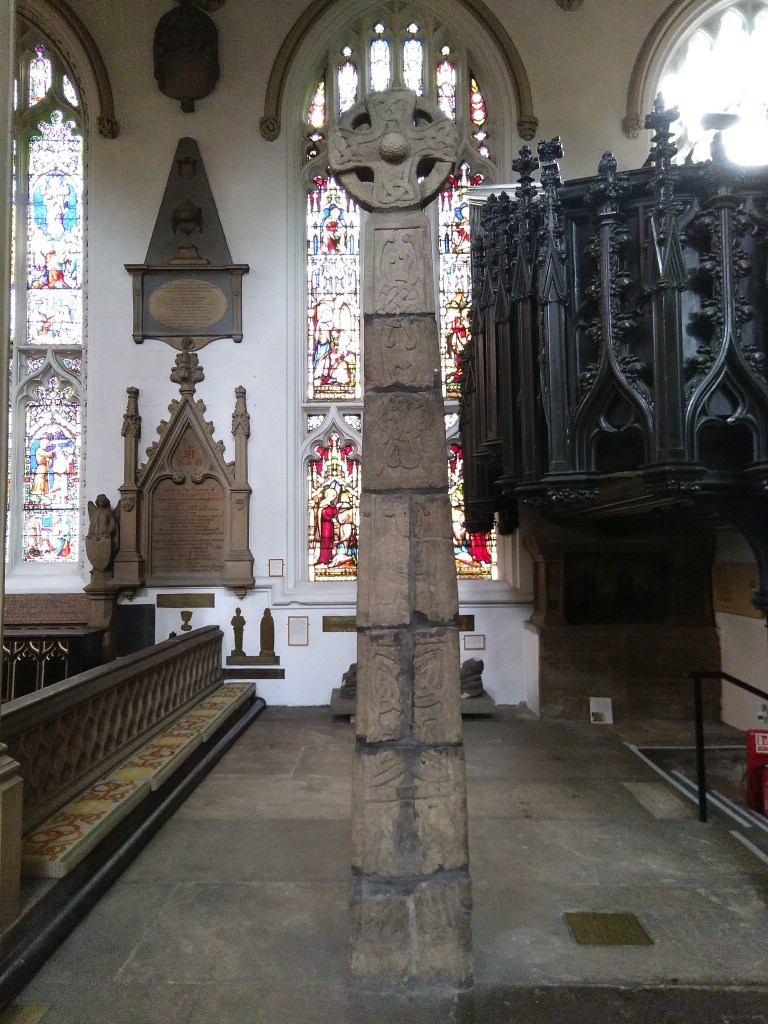
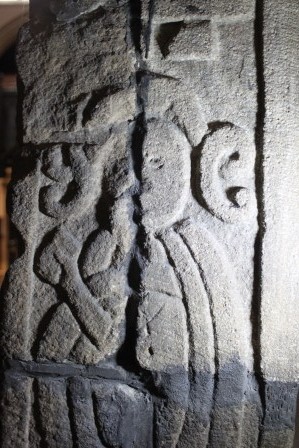
In the 10th century, Leeds stood on the edge of two kingdoms, a cross point, which elevated its status. There were also fives crosses standing outside the church. Not preaching crosses, because the time for those had passed. These were memorials to important people. They were carved and would have been covered in plaster and brightly painted; probably the only splash of colour in Leeds. Along with Christian imagery, there’s also a representation of Wayland the Smith from earlier times, a sign that old and newer religions could co-exist. What remained of the crosses was found in the call of the Parish Church when it was being torn down and rebuilt in 1838. Enough fragments remained to assemble a single cross, which now stands in the church.
Leeds might have hosted a saint in the 940s, by which time is was very much part of the Danelaw and under Viking control St Cathroe, or Cadroe, might have crossed from the kingdom of Cumbia to the kingdom of the Northmen here, where he was escorted to York to meet King Eric. Eric’s wife was supposedly Cathroe’s sister. However, Eric Bloodaxe was not the king in York at the time, and his wife was supposed to be Norwegian. On top of that, the crossing point is named as Loidam Civitatem, which evidently can be read as either Leeds or Carlisle.
While there are precious few artefacts from the Viking era, their presence here remains in some of the words we use every day, like beck, gate (street), kirk, and many more.
The legal administration was through the wapentake, more or less equivalent to the Saxon hundred. One was in Morley, the other in Headingley, called the skyrack, or shire oak. An ancient oak stood across from the pub of that name (outside the Original Oak) until it finally died in 1941.
After the Vikings, of course, came the Normans…and Loidis became Ledes (probably pronounced as two syllables, it would have sounded similar to today’s name for the place). By then, Leeds had a church, where it stands now, a tithe barn, mill, communal over, and somewhere between thirty and fort families living on the only street – Kirkgate.
I hope you’ll remember that my new book, A Dark Steel Death (set in 1917, not early Leeds) is out for you to buy or borrow from a library. Thank you.
The note was short: Meet me outside the Moot Hall tomorrow at seven in the morning.
Jane read it twice and set it aside.
But she was there, wrapped in her heavy green cloak with the hood pulled over her hair. She stamped her feet against the February cold and waited for Simon.
He arrived with the final toll of the church bell for the hour, a smile on his face as he said, ‘Come with me.’
Why? What did he want? He knew something. She followed quickly, curious to find out.
No more than a few yards. He stopped by one of the stone buildings of Middle Row, a tailing of workshops behind the Moot Hall, leading up Briggate. They’d been empty for a few years. Another week or two and all this would be pulled down, along with the hall, making space to erect a new Corn Exchange.
The Moot Hall with Middle Row behind
Simon produced a key and unlocked the heavy old wooden door of one of the workshops. No telling how long these had stood here. As Simon pushed the door open, she could smell the mustiness and the age of the place.
‘What is it?’ she asked.
‘It used to belong to a man named Arthur Mangey.’
‘Who was he? Nobody’s been in there for a long time. Years.’
‘This was a long, long time ago. Let me light the lantern.’ It flared; he trimmed the wick and lowered the glass shade. ‘Come in and close the door. We don’t want the whole town knowing. Not yet.’
She gazed around. A small, barred window high in one wall, all the glass gone. Cobwebs pale and thick in the corners and draped across the walls. Dried leaves like a rug on the floor. A heavy wooden bench was the only furniture.
‘Constable Porter and I came in here yesterday. A chance to look around before it’s rubble.’
She didn’t understand. It was nothing more than an empty, derelict room. Stone on three walls, old wooden panelling on the fourth. No mystery, nothing to see. What was going to interest Leeds about that?
‘Watch,’ Simon said. He reached into the corner, moved something, and with a click, some of the panelling moved out like a draw. She drew in her breath with a gasp. ‘We found it by accident. Sheer luck.’ He held up the lantern and grinned. ‘Take a look.’
A dark, airless room that felt heavy with history. The lantern gave the only light. Another bench.
‘See?’ he asked.
Two pairs of shears on the wood, as if someone had put them down a few minutes earlier. Some small, tarnished chips of metal in a shallow tin bowl, black with age.
‘What are they?’ She kept her hands by her side, scared that someone might reach from the past and grab her if she tried to touch anything.
‘Silver. There was a coin. Porter took it and showed it to old Wilf Harrison. You know him, the jeweller on Vicar Lane. He says it dates back to Queen Elizabeth. More than two hundred years. Someone was clipping the edges from coins in here. A little bit of silver from quite a few, melt them down and you’ve made some money.’
Jane stared. Two hundred years. Beyond her comprehension.
‘Mangey was a goldsmith and silversmith. He was used to working with precious metals.’
‘It was true, then,’ Mrs Shields sighed as Jane told her what she’d seen.
‘What was?’
‘The story about the secret room. My grandmother heard it from her mother when she was a girl. She told me when…I suppose I was 10 or 11. We were walking down Briggate and passed Middle Row.’
‘Tell me. Please.’ She knew she sounded like an eager child, but she didn’t care.
‘This all happened over a hundred years ago-’
‘Simon said the coin is over two centuries old.’
Catherine Shields smiled. ‘Maybe it is, child, but I can only tell you what Grandmama said to me. Have you heard of the Leeds Mace?’
The Leeds Mace
Jane frowned. ‘No, what is it?’
‘It’s big, made from silver. Very beautiful. They bring it out for ceremonial occasions. It was made by Alfred Mangey. He worked in gold and silver, and he had that workshop on Middle Row. The one you were in this morning.’
‘If he worked in silver, why would he clip coins? He was already rich, wasn’t he?’
‘I don’t know, child.’ She reached out and stroked Jane’s arm. ‘People are greedy or maybe they want to do things for other reasons.’
‘How did anyone find out he was doing it?’
‘They did. At least, that’s what I was told. He was accused of forgery by someone and tried in York. There wasn’t any evidence, but they found him guilty.’
‘What happened then?’
Mrs Shields’ mouth tightened. ‘They hung him. Forgery was treason. He died a traitor. Evidently plenty of people thought he was innocent.’
‘But the room…’ Jane began.
‘Yes. That seems to end it all, doesn’t it?’
‘Yes.’
‘It won’t, though. You can guarantee that. People will always wonder if those things were planted by the man who accused him.’ She exhaled slowly ‘We’ll never know, will we?’
The story of Arthur Mangey is real. He was hung in 1696 after being accused of forgery by a shoemaker named George Norcross. But it was only during demolition of Middle Row in 1825 that the secret workshop was discovered.
The Moot Hall and Middle Row in the middle of Briggate
Had Norcross planted the evidence? He’d never have been able to tell people about the secret room without giving himself away. We will simply never have a proper answer.
Forgive the small ad, but A Dark Steel Death has been out for a month now and I would be very grateful if you would buy a copy – if you can afford it – or ask your library to stock it. Once you’ve read it, please leave a review, good or bad, somewhere. Honestly, they all help. Thanks.
They say there are places where the fabric of time stretches so thin that you can reach though, maybe even walk through, into another age. There are times I feel that in Leeds, when I feel I can push the veil aside and touch other times.
Maybe it because something happened there, that something lives on, some faint echo; I don’t have the answer to that. Yet it seems very real.
Stand by the patch of green by St Mary’s Street off Mabgate. Its look like nothing now, trapped in a construction site. To the south there’s New York Road, all the bustle of roar of the modern world. But if you stand there, you can hear the mourning. It’s where Leeds buried many the victims of the 1832 cholera outbreak, in the graveyard of St Mary’s Church. Over 700 people died in the town, so many of them poor, drinking tainted water, living crowded together (340 people in 27 rooms in Boot and Shoe Yard alone).
The dead were buried quickly. There was little choice about that. few headstones or markers remain. No graves for families to visit. But there, on the edge of Quarry Hill, has always been a place for isolation.
When Leeds has its outbreak of plague in 1645, this was where they built the cabins to house the victims, to try and keep them away from the healthy. Quite possibly some are buried her. Well over a thousand perished.
Stand, and if there’s a break in the nearby traffic, listen. The voices are muffled, and distant. Maybe more of a feeling than anything distinct. But touch the air in that place and you cut through the centuries.
Not far away, around the Parish Church, the Minster as it’s styled now, there’s the deep sense of history. More than anywhere, inside the building, the Leeds Cross, cobbled together from five ancient crosses that stood outside a much earlier version of the building, in a time before the Norman Conquest, when Leeds has one ragged street – Kirkgate – fewer than 200 people lived here and Leeds was still Leodis.
Reach out, touch the stone. Feel the cuts, how time and weather has worn them away. Back then, the village stood on the boundary of kingdoms. Tiny, but important. These crosses were memorials, perhaps. Certainly a mix of Christian and pagan symbols, from a time when people still hedged their bets about gods. One that’s survived comes from the story of Wayland the Smith, one of the oldest and most powerful English tales (and pre-Christian). Put out your hand, rub it, and you can feel the man who stood there with his hammer and chisel, who worked the stone. You’re there with him, catapulted through the centuries. It’s a feeling to leave you silent.
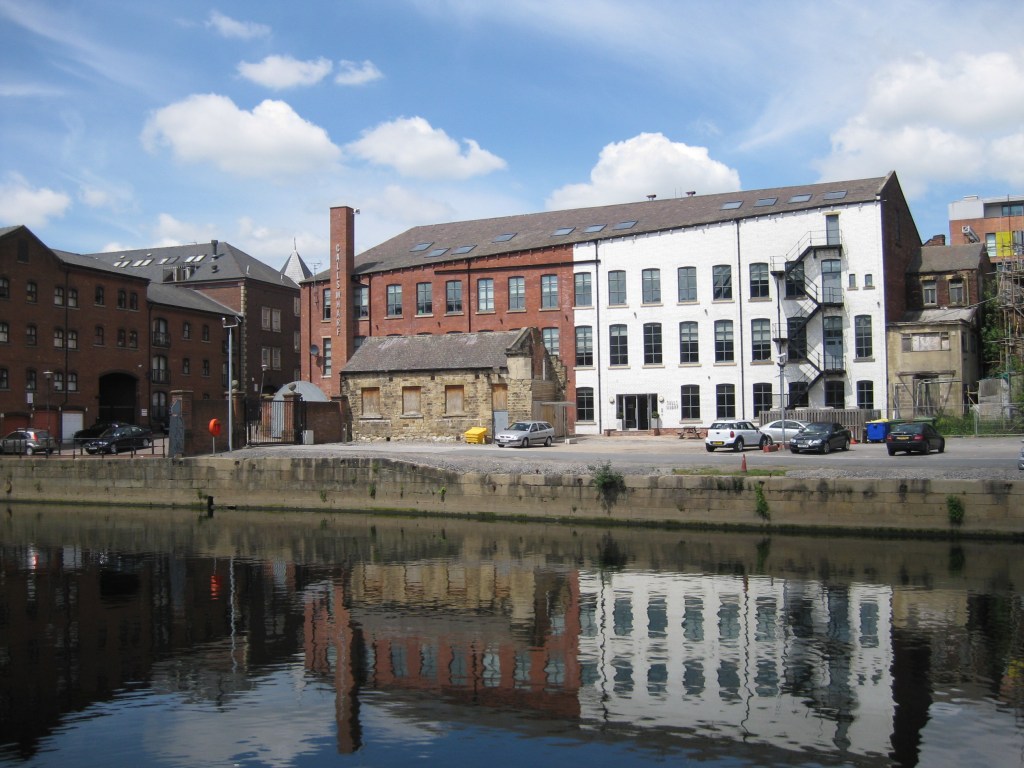
One more, and not far to walk for this. Just along the Calls. It’s a street of apartments, offices and clubs fashioned from warehouses now. But once it would have been a track leading from the ford over the river towards the church. Not a street, nothing at all, really, worn down by feet and maybe the wheels of carts. It would have existed before Briggate.
Later, the river and canal became the highway for good, bareges loading and unloading, warehouses being built on the river’s edge. There were also sets of stairs down to the water, and the tale of a woman called Jenny White who walked into the Aire to drown herself when she discovered her man (lover? Husband?) was unfaithful.
In 1835, Heaton, in his description of the area, notes “a long flight of steps, dark and ugly, between the houses (the last being into the water, long known by the name of Jenny White’s hole.” From that, it might well have happened before Leeds became a town filled the factories.
Where on the Calls? There plenty of places, and all the river stairs have long since gone. Walk down behind all those buildings, towards Calls Wharf. You’re by the water, and you call almost hear the cries of men who worked there. Look at the river from the right angle and you can see Jenny’s ghost under the surface. It’s there. Still there. Always there.
Jenny White’s story survives as a folk tale. But truth becomes tale over time. She’s remembered. She’s a part of Leeds, like the bodies at St Mary’s, or the man who carved Wayland the Smith in the Cross. Look and you can see them.


















 Chris Nickson