Tiger, Tiger

Jack had the shelter built at the bottom of the garden right after Mr. Chamberlain came back from Munich. I used to stand in the back bedroom and watch the men digging out the ground then laying the brick and putting on the concrete roof.
“When Hitler comes we’ll be safe now,” he told me. “And we won’t have to share it with anyone.”
He was wrong about that. But Jack was wrong about most things; the only time I can remember him being right was building the shelter. Even then, we didn’t need it. No bombs dropped in these parts of Leeds. We had a few raids, but nothing like those poor people down in London. I can’t imagine how they stood it.
Whenever the siren went off, everyone in the street would come into our shelter. None of them had built one; they’d more sense than brass, I suppose. Jack had signed up to do his bit. God only knew where he was – the only thing he’d managed to get past the censor was that he had brown knees. The way he managed to swing things he was probably in Filey, not Egypt.
So it was me and Michael for the duration. But he was at school during the day, and after that he was off with his pals until dark, pretending to machine gun every Nazi and win the war by himself. Still, once that siren wailed he was down in the shelter and as scared as the rest of us.
I had a job three mornings a week at the museum on Park Row. It might not have been as worthwhile as assembling shells or putting Spitfires together, but it was a little something. I enjoyed it, working there with Miss Woods and Mr. Johnson, who was too old to fight. He knew all about history, though. He’d given me a proper tour of the exhibits one day, even telling me about the Indian stuffed tiger that stood inside the doorway and the Egyptian mummy at the top of the stairs. Mr. Johnson boasted he could read the hieroglyphics. I didn’t believed a word, of course, but it didn’t matter. I liked the work there and it took me out of the house, around people, into all the whirl and bustle of town.
For some reason, I loved that tiger. It was threadbare, a little like an old teddy bear that had been loved too much, but it had personality. Every week I’d dust it and polish up the glass eyes in its head. The snarling mouth didn’t scare me. I always felt as if I could stroke it and it would just start purring.
From the bus I’d seen some of the damage the early raids did, all that wreckage at Marsh Lane Station, and it made me shudder. We weren’t safe at all; if a bomb landed on the shelter, we might as well have been hiding under cardboard. Jack had just wasted his money on an illusion again.
Michael was already in bed when the siren sounded. It was a Friday night, right on the stroke of nine, and for a moment my heart stopped, the way it always did when it heard the wail. In less than a minute he was down in the kitchen, socks, slippers and dressing gown over his pyjamas. I’d been listening to the wireless, one of those dance bands that sound like everyone else.
It was March. Outside, the sky was very clear, so many stars up there, and very cold.
“Stay there,” I told Michael, and dashed back into the house for our overcoats. Over the next quarter of an hour the neighbours drifted in. We talked for a while until all the gossip had been given out and we all knew which butcher might have mince the next day. There was a primus stove down there, the kettle boiling to make a pot of tea, and with the oil lamps at we could see each other – well, make out the faces and shapes, anyway.
After an hour and a half we’d run out of things to say. Shivers kept running through me from the cold. We were ready for the all-clear to sound, to go back to our beds and warm up. But there was only silence. Then I heard something off in the distance, like a hum growing louder. The Germans were coming.
It seemed like we were down there forever. We could hear the explosions down towards the city centre. God, I thought, what if one of them goes off course and drops its load on us? Old Mr. Henderson from number eleven climbed on the roof of the shelter to give us a running commentary. He was sixty if he was a day, but he was still active and in the Home Guard.
“Those are incendiaries,” he announced with a shout. “I can see them burning.” And later, when the planes seemed to come wave after wave and the soft crump of bombs was a constant sound, he’d cry out, “That must have done some damage,” until we all clambered out to join him.
A little after three we were all back in our houses. Michael trudged up to bed, the poor lamb could hardly keep his eyes open, but I couldn’t sleep. It had been like a thousand Guy Fawkes’ nights all in one, all light and fire and explosions. Except there was nothing fun about this. There was just terror and destruction and death.
I thought about the museum, hoping it had survived. And then I thought about Jack, somewhere in the world with his brown knees and I lay in bed and cried quietly until the alarm clock went off.

The bus could only go as far as Buslingthorpe Lane before the wardens stopped it. I wasn’t going to give up. Instead I walked into town. Quarry Hill Flats had taken a hit and there was smoke still coming from the roof of the market, with water running down George Street. The air smelt like gunpowder and I had to tread carefully around the rubble.
“You’d best watch yourself, luv,” one of the auxiliary firemen told me. “There’s stuff here that could tumble down on you.”
I smiled politely at him and walked on. There seemed to be plenty like me, people on their way to work, hoping there’d still be a business standing, and those who simply needed to see what the Germans had done to us. It seemed bad, but nothing like the newsreels, where street after street in London had been blown to nothing. If this was our Blitz then we’d come off lightly.
As soon as I turned onto Park Row I could see something was wrong. There was a huge hole in the road, a crater, and I started to walk faster, almost running down the pavement. I could see Miss Woods in the distance, holding something to her face. She was a spinster, fifty-three years old – she was always very exact – with some small private income. She worked at the museum because she wanted to, not because she needed the money. She was the first in and the last to leave every day, caring for the place as if it was her own home. I watched as she bent down and picked something up.
The whole front of the building had gone, as if a giant, petulant child had swept his hand across and crushed it. Stone, glass and wood were all scattered across the street, fallen into the hole and all around it. Men stood around, one or two in their ARP helmets, most just in caps, staring, pointing and talking.
Miss Woods seemed to be in shock when I looked at her, dazed, her eyes quite blank. She held up her hand and I could see what she’d rescued from the ground, a piece of old, dirty linen. At first I didn’t know what to make of it. Then I took in all the gaping frontage of the museum, the staircase little more than splinters now, and I realised it must have come from our mummy. It might be all that was left of him.
Everything I could see inside the building was blackened. Even the air seemed charred and dead. The desk where I worked didn’t exist any more, only a space on the burned and buckled floor where it had once been.
The tiger, I thought. But he was gone, too, not even a scrap of fur. It had all gone. Everything had gone. There was nothing they could shore up, they couldn’t make do with what was left. The museum was gone. I put my arm around Miss Woods’ shoulders. For a moment the contact seemed to startle her and she began to pull away. I smiled at her gently.
“I know,” I told her. “I know.”

The Oldest Building in West Yorkshire

A few days ago I happened to read something in passing about the oldest building in West Yorkshire. It’s a church, of course, dating back to someone in the 700s CE, and it looked as if a fair bit of the original building survived.

It’s in Ledsham, about 10 miles east of Leeds, and a little north of Castleford. The name, according to Wikipedia, derives from ham, the Saxon word for home or farm. The conjecture, though, is that Led is an early reference to Leeds. Curious, as in the same period, Bede referred to Loidis, and later it became Ledes; there’s no other apparent reference to Led in relation to Leeds that I know of. It’s even more intriguing as there are two other villages close by, Ledston and the wonderfully-named Ledston Luck. Regardless of name, All Saints church still deserved a visit, and it was certainly worth the time.

IMG_0783

This is the original entrance, at the base of the tower at the west end. The decoration, sadly, is 19th century. But the original tower had two storeys (there’s a small blocked-in window higher up, as well as other blocked-in Saxon windows along thesSouth wall.

IMG_0773

It’s quite easy to make out the original nave, although the church was added to in Norman times – they increased the height of the tower, for example) and again in the 13th and 15 the centuries, adding a north aisle, replacing the chancel, putting in larger windows, and transforming the original porticus into what’s now the porch.

IMG_0777

IMG_0775

The final restoration came in 1871, and was quite tasteful. A couple of things that didn’t come out in the pictures, though, are the fragments of an old cross built into the north aisle wall and an ancient stone used in the tower arch with a Roman carving of a cleaver in it.

IMG_0786

It’s a place well worth a visit, and there’s more to see in the graveyard. Hard to be certain, but this looks to be from 1665. If so, it’s worn remarkably well. No guarantees on this, though.

IMG_0785

And there’s even the mason’s name at the bottom.

IMG_0793

The church would be enough. But behind it stands a row of 11 stone cottages, dating from 1610. They were built for workers in the orphanage built by Lady Elizabeth Hastings (which also still stands, now Hastings Hall). The cottages are well-tended, and these days let to older residents of the area.

IMG_0787

IMG_0788

Down past the hall is the old school house for Ledsham, about the same vintage as the hall and cottages, with the bell in the small tower above the roof.

IMG_0791

Didn’t stop at the local pub for lunch, at least not on this visit, but it’s called the Chequers, and has existed on the same spot since at least 1540.

A Walk With My Ancestors

Yesterday I took a walk with my family. To anyone who saw me, I was on my own, but my family was there – the ghosts of my father, my grandparents and great-parents. By the end even my great-great-great grandfather had joined us. They were showing me where they’d lived as I walked through Leeds, from Hunslet over into Cross Green and back down through what used to be called the Bank (properly Richmond Hill) and down to Marsh Lane.
It was a way to connect the threads, but far more, my chance to thank people I’d known and those who were dead long before I was born. They gave me Leeds. They set themselves here, coming down from New Malton back in the 1820s and they stayed.

It’s not a great dynasty. No mayors or distinguished citizens. Just people who got by, probably by the skin of their teeth. But a couple of the places where they lived are still standing. To walk up to these house, to have the voice whispering in my ear: ‘Do you see that room up there? That where me and me brothers all slept. It was freezing at night when we had to go down to the privy’ or ‘It were right there. You should have seen it, lad. A proud place was the Royal.’

Garton Street. East Park Road.
IMG_0765

IMG_0766

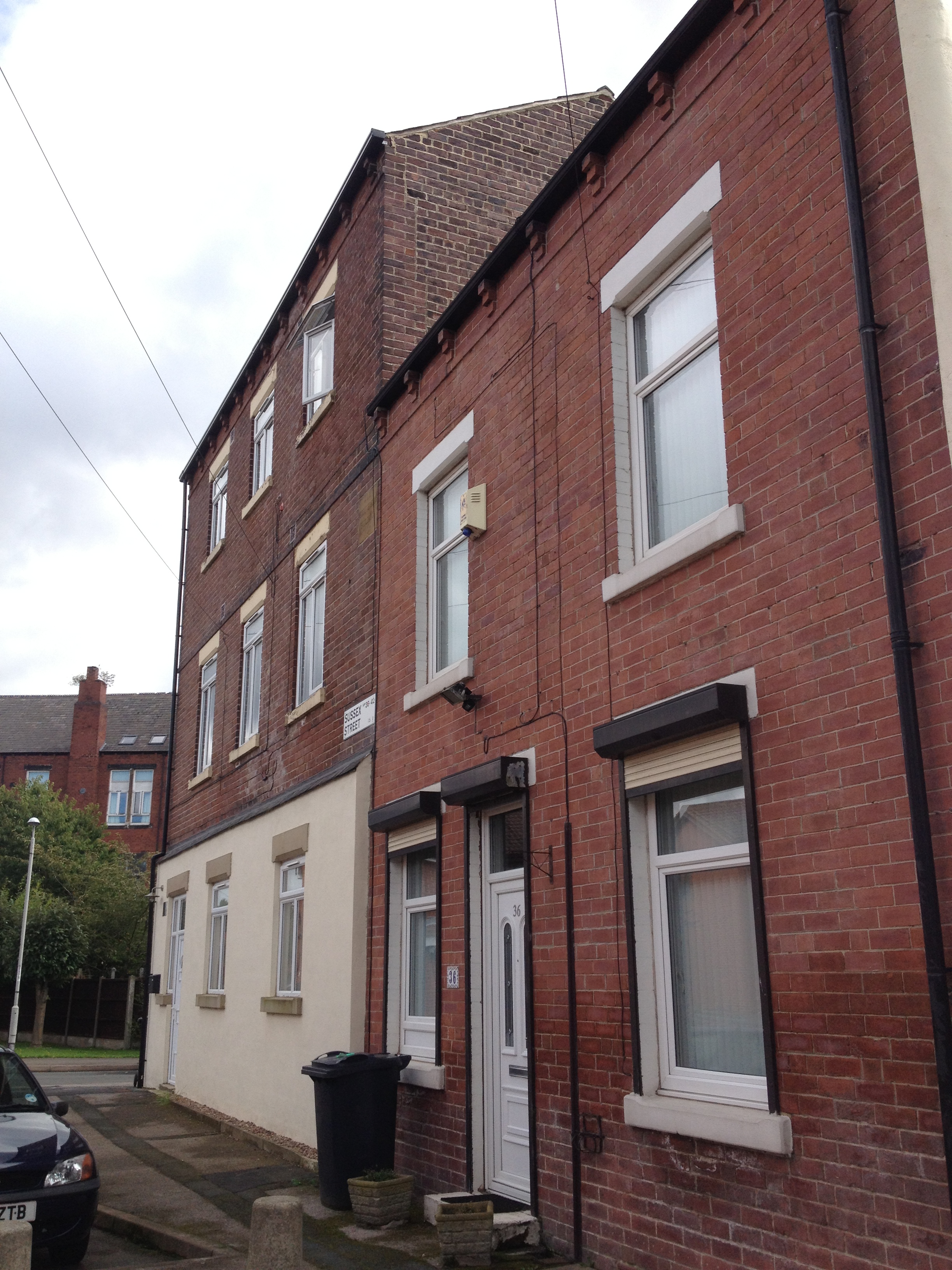
The small fragment that’s the only remnant of Sussex St.

IMG_0767

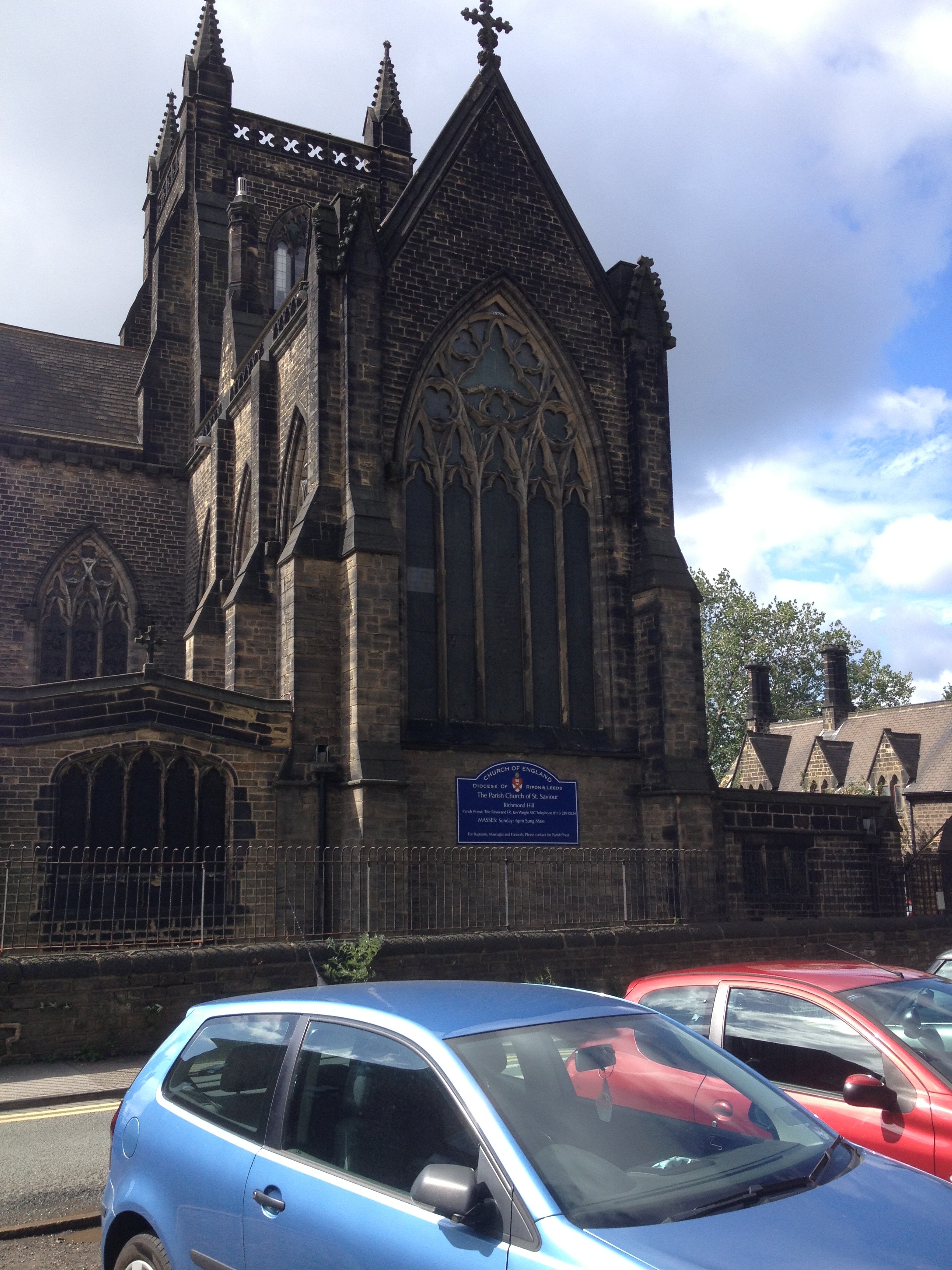
The Allied Brewery that fills acres where the Royal Inn (where my maternal great-grandfather was the landlord) once stood on South Accommodation Road. St. Saviour, still there, still in use, where some of my relatives were married.

IMG_0769

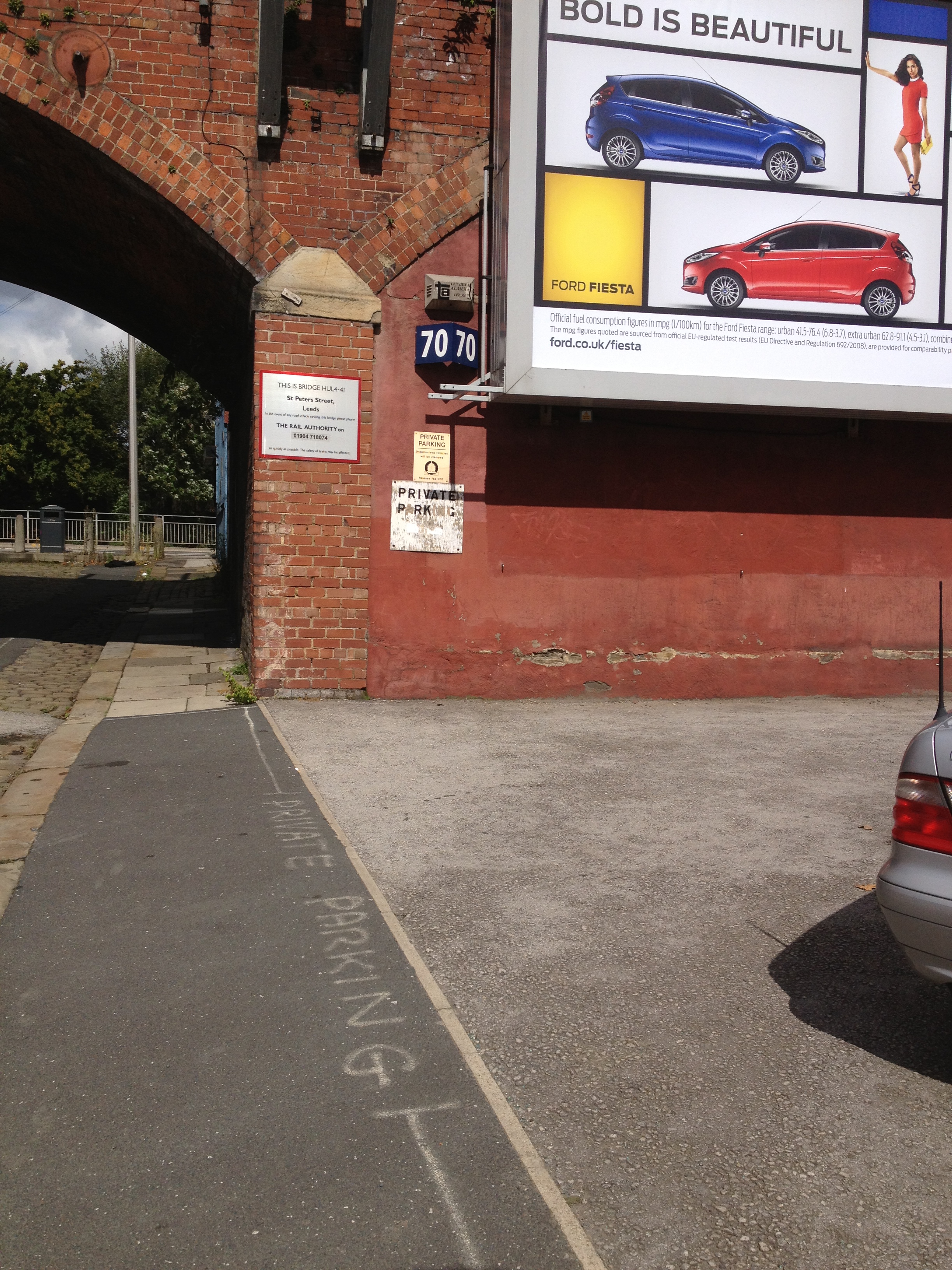
And the space on Marsh Lane that was once, long ago, Garland Fold. By the time Isaac Nickson – the first of my family to live in Leeds, bringing his wife and children with him, to work as a butcher – lived there (where the 1841 census places him) the ‘fold’ (once a place for keeping sheep) was slums, one of the worst part of Leeds, where the police were afraid to walk on their own and where, after a heavy rain, the roads were ankle deep in mud and slime used to run down the walls of the cellars where the poor lived.

IMG_0770

And, by some synchronicity, or some guiding hand, or whatever, very close to where I had the home of my character Richard Nottingham, back in the 1730s. A kind of full circle, from my real family to what became my fictional family of sorts.

Completing the circle? I don’t know. But I am certain that this family walk was exactly that. We were never more than 15 minutes’ walk from the centre of Leeds, but it was a journey that managed to take in many lifetimes. It told me stories. It gave me a little more of my own history. I hope I haven’t exorcised them. I want them with me until I become just like them, my invisible family in Leeds.

Tomorrow: Gods of Gold

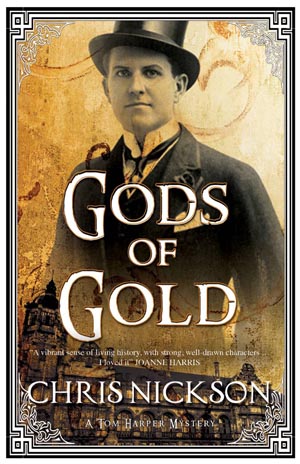
It’s been a long time coming, but tomorrow is the publication day for Gods of Gold (buy it, please!). Today, as the final teaser, how Tom Harper met Annabelle Atkinson:

She’d been collecting glasses in the Victoria down in Sheepscar, an old apron covering her dress and her sleeves rolled up, talking and laughing with the customers. He thought she must be a serving girl with a brass mouth. Then, as he sat and watched her over another pint, he noticed the rest of the staff defer to the woman. He was still there when she poured herself a glass of gin and sat down next to him.
‘I’m surprised those eyes of yours haven’t popped out on stalks yet,’ she told him. ‘You’ve been looking that hard you must have seen through to me garters.’ She leaned close enough for him to smell her perfume and whispered, ‘They’re blue, by the way.’
For the first time in years, Tom Harper blushed. She laughed.
‘Aye, I thought that’d shut you up. I’m Annabelle. Mrs Atkinson.’ She extended a hand and he shook it, feeling the calluses of hard work on her palms. But there was no ring on her finger. ‘He’s dead, love,’ she explained as she caught his glance. ‘Three year back. Left me this place.’
She’d started as a servant in the pub when she was fifteen, she said, after a spell in the mills. The landlord had taken a shine to her, and she’d liked him. One thing had led to another and they’d married. She was eighteen, he was fifty, already a widower once. After eight years together, he died.
‘Woke up and he were cold,’ she said, toying with the empty glass. ‘Heart gave out in the night, they said. And before you ask, I were happy with him. Everyone thought I’d sell up once he was gone but I couldn’t see the sense. We were making money. So I took it over. Not bad for a lass who grew up on the Bank, is it?’ She gave him a quick smile.
‘I’m impressed,’ he said.
‘So what brings a bobby in here?’ Annabelle asked bluntly. ‘Something I should worry about?’
‘How did you know?’
She gave him a withering look. ‘If I can’t spot a copper by now I might as well give up the keys to this place. You’re not in uniform. Off duty, are you?’
‘I’m a detective. Inspector.’
She pushed her lips together. ‘Right posh, eh? Got a name, Inspector?’
‘Tom. Tom Harper.’
He’d returned the next night, and the next, and soon they started walking out together. Shows at Thornton’s Music Hall and the Grand, walks up to Roundhay Park on a Sunday for the band concerts. Slowly, as the romance began to bloom, he learned more about her. She didn’t just own the pub, she also had a pair of bakeries, one just up Meanwood Road close to the chemical works and the foundry, the other on Skinner Lane for the trade from the building yards. She employed people to do the baking but in the early days she’d been up at four each morning to take care of everything herself.
Annabelle constantly surprised him. She loved an evening out at the halls, laughing at the comedians and singing along with the popular songs. But just a month before she’d dragged him out to the annual exhibition at Leeds Art Gallery.
By the time they’d arrived, catching the omnibus and walking along the Headrow, it was almost dusk.
‘Are you sure they’ll still be open?’ he asked.
‘Positive,’ she said and squeezed his hand. ‘Come on.’
It seemed a strange thing to him. How would they light the pictures? Candles? Lanterns? At the entrance she turned to him.
‘Just close your eyes,’ she said, a smile flickering across her lips. ‘That’s better.’ She guided him into the room at the top of the building. ‘You can open them again now.’
It was bright as day inside, although deep evening showed through the skylights.
‘What?’ he asked, startled and unsure what he was seeing.
‘Electric light,’ she explained. She gazed around, eyes wide. ‘Wonderful, eh?’ She’d taken her time, examining every painting, every piece of sculpture, stopping to glance up at the glowing bulbs. Like everything else there, she was transfixed by the light as much as the art. To him it seemed to beggar belief that anyone can do this. When they finally came out it was full night, the gas lamps soft along the street. ‘You see that, Tom? That’s the future, that is.’

To Whet Your Appetite

My new book, Gods of Gold, is published in the UK on August 28th. Yes, I’d like you to buy it, of course I would, don’t silly. To give you a little inducement, here’s a taster, a teaser, the opening. It’s set in 1890, against the backdrop of the Leeds Gas Strike, and features Detective Inspector Tom Harper of Leeds Police.

Tom Harper pounded down Briggate, the hobnails from his boots scattering sparks behind him. He pushed between people, not even hearing their complaints as he ran on, eyes fixed on the man he was pursuing, leaping over a small dog that tried to snap at his ankles.

‘Police!’ he yelled. ‘Stop him!’

They didn’t, of course they didn’t, but at least they parted to let him through. At Duncan Street, under the Yorkshire Relish sign, he slid between a cart and a tram that was turning the corner. His foot slipped on a pile of horse dung and he drew in his breath sharply, the moment hanging. Then the sole gripped and he was running again.

Harper ducked in front of a hackney carriage, steadying himself with a hand on the horse’s neck. He felt its breath hot against his cheek for a second, then plunged on. He was fast but the man in front was even faster, stretching the distance between them.

His lungs were burning. Without even thinking, he glanced across at the clock on the Ball-Dyson building. Half past eleven. He forced his feet down harder, arms pumping like a harrier.

As they reached Leeds Bridge the man leapt into the road, weaving between the traffic. Harper followed him, squeezing sideways between a pair of omnibuses, seeing the passengers stare down at him in astonishment through the window. Then he was free again, rushing past the row of small shops and watching the man disappear round the corner on to Dock Street.

By the time he arrived the street was empty. He stood, panting heavily, holding on to the gas lamp on the corner, unable to believe his eyes. The man had simply vanished. There was nothing, not even the sound of footsteps. Off to his left, a cluster of warehouses ran down to the river. Across the road the chimneys of the paper mill belched their stink into the air. Where had the bugger gone?


Harper had been up at Hope Brothers on Briggate, barely listening as the manager described a shoplifter. The man’s mouth frowned prissily as he talked and rearranged a display of bonnets on a table. Outside, the shop boy was lowering the canvas awning against the June sun.

Harper scribbled a word or two in his notebook. It should be the beat bobby doing this, he thought. He was a detective inspector; his time was more valuable than this. But one of the Hopes lived next door to the new chief constable. A word or two and the superintendent had sent him down here with an apologetic shrug of his shoulders.

Then Harper heard the shout. He dashed out eagerly, the bell tinkling gently as he threw the door wide. Further up the street a man gestured and yelled, ‘He stole my wallet!’

That was all he needed. Inspector Harper began to run.


He tipped the hat back and wiped the sweat off his forehead. The air was sultry, hot with the start of summer. Where was the sod? He could be hiding just a few yards away or already off beyond a wall and clear away in Hunslet. One thing was certain: Harper wasn’t going to find him. He straightened his jacket and turned around. What a bloody waste of a morning.

He’d wanted to be a policeman as long as he could remember. When he was a nipper, no more than a toddler, he’d often follow Constable Hardwick, the beat bobby, down their street in the Leylands, just north of the city centre, imitating the man’s waddling walk and nods at the women gathered on their doorsteps. To him, the decision to join the force was made there and then. He didn’t need to think about it again. But that certainty shattered when he was nine. Suddenly his schooldays had ended, like every other boy and girl he knew. His father found him work at Brunswick’s brewery, rolling barrels, full and empty, twelve hours a day and Saturday mornings, his pay going straight to his mam. Each evening he’d trudge home, so tired he could barely stay awake for supper. It took two years for his ambition to rekindle. He’d been sent on an errand that took him past Millgarth police station, and saw two bobbies escorting a prisoner in handcuffs. The desire all came back then, stronger than ever, the thought that he could do something more than use his muscles for the rest of his life. He joined the public library, wary at first in case they wouldn’t let someone like him borrow books. From there he spent his free hours reading; novels, politics, history, he’d roared through them all. Books took him away and showed him the world beyond the end of the road. The only pity was that he didn’t have time for books any longer. He’d laboured at his penmanship, practising over and over until he could manage a fair, legible hand. Then, the day he turned nineteen, he’d applied to join the force, certain they wouldn’t turn him down.

They’d accepted him. The proudest day of his life had been putting on the blue uniform and adjusting the cap. His mother had lived to see it, surprised and happy that he’d managed it. His father had taken him to the public house, put a drink in his hand and shouted a toast – ‘My son, the rozzer.’

He’d been proud then; he’d loved walking the beat, each part of the job. He learned every day. But he was happier still when he was finally able to move into plain clothes. That was real policing, he’d concluded. He’d done well, too, climbing from detective constable to sergeant and then to inspector before he was thirty.

And now he was chasing bloody pickpockets down Briggate. He might as well be back in uniform.

gog finalx

Something Even Newer

A few weeks ago I posted a couple of extracts from a 1930s piece featuring Sgt. johnny Williams of Leeds Police CID and his wife, Violet. That piece turned into a novella…and here’s the start of the second one, for your entertainment…

‘We have a visitor from America, apparently.’
‘Oh?’ Violet sat back as the waiter brought their cocktails, taking a small sip of the martini and nodding her approval. ‘That new bartender seems to have the knack,’ she said. ‘So who is this mysterious American?’
They were sitting in the cocktail bar of the Metropole Hotel, a ceiling fan turning just lazily enough to keep the air cool. The warm spring of 1934 had turned into an endless summer of heat hazes and frayed tempers in the city.
‘Someone called Oscar Arbramson,’ Johnny Williams told her. ‘That’s what Superintendent Randall told me.’
‘And why would the Leeds Police be interested? Is he, what do they call it in the pictures, on the lam from something?’
‘He’s a gangster. From Chicago.’ He nodded towards two men at a table on the other side of the bar. ‘That’s him, with his back to us. And the friend he brought along, Barney something-or-other.’
‘So you didn’t invite me here just to be a loving husband?’
‘Well, of course I did. I’m just mixing business and pleasure.’
Violet stared over at the pair. There was little to see of Abramson besides a pair of broad shoulders in a well-tailored suit. The other man looked just as large, with meaty hands and a face that seemed locked in a permanent snarl.
‘They don’t look quite the thing, do they? What are they doing here?’
‘I’ll find out tomorrow. I’m going to call on him bright and early.’
‘Just watch out if he opens a violin case.’
‘Are Americans notoriously bad on the instrument?’
‘It’s where gangsters keep their Tommy guns. You’d know that if you saw more films.’
‘What about cello cases?’ he asked.
‘Howitzers,’ she replied. ‘Absolutely deadly. Now that you’ve had a glance at them, where are you taking me for dinner?’

But it was luncheon before he caught up with the Americans. He’d been called out early to deal with an embezzlement. By ten, simply glancing through the accounts, he knew who was responsible. An hour later the man had confessed.
Johnny shook his head. Randall had assigned Forbes and Gorman to follow the gangster and his friend. They’d rung in from a telephone box; the pair were dining at Jacomelli’s.
He walked over to Boar Lane, rapping his knuckles on the roof of the battered Morris where the policemen were keeping watch, straightened his tie and strolled into the restaurant.
Abramson and Barney filled the table. Two large men, a sense of menace around them. They’d emptied their plates, forks on the crockery, knives still sitting on the crisp table cloth. Johnny pulled out the chair across from them, sat down and took off his hat.
‘How do you do?’
Abramson stared at him. Barney began to rise, a look of anger on his face, but the other man waved him down.
‘Let me guess, you’re a cop.’
‘Sergeant Williams, Leeds Police.’ He smiled.
Abramson leaned back and produced a cigar case from his pocket. He made a production of selecting a large Havana, cutting the tip and lighting it before he peer through the cloud of smoke.
‘Any relation to a reporter?’ he asked. ‘Can’t be your sister, she’s too cute.’
‘My wife,’ he replied. ‘You’ve met her, then?’
‘She stopped by while we were having breakfast. Wants to write a story about Americans visiting Leeds. What’s your angle?’
‘Angle?’ He thought about the word. ‘I don’t suppose I have one. Just a friendly little chat and a word of advice.’
‘Yeah?’ Abramson seemed amused. Barney was still tense, ready to pounce as soon as his boss gave the order. ‘What kind of advice would you have for me’
‘Just the usual. Obey the law, look right and then left before crossing the road, don’t kill anyone. Nothing that unusual.’
The man threw his head back and laughed.
‘You’re good. You out to go into vaudeville. With that accent you’d slay ‘em.’ He leaned forward. A very faint, thin scar ran from the tip of his eyebrow, disappearing into his temple. ‘You heard of Chicago, hotshot?’
‘Big place somewhere in the middle of America? A fire that had something to do with a cow, Al Capone, St. Valentine’s Day Massacre?’
‘That’s the one. Let me tell you something. Over there we don’t like smartass cops. They don’t last too long.’
‘That’s the difference, you see. We have a longer lifespan over here.’ He glanced at Barney. ‘You should really tell your friend to relax a little. His face is so red he looks like he’s going to have a heart attack.’
‘He’s excitable.’
‘Poor chap. Take him up into the Dales for a weekend. Very calming up there. Take a cottage for a few days.’
‘I’ll keep it in mind, Sergeant.’ The waiter brought two cups of coffee. ‘We were just making our plans for today.’
‘The art gallery’s very good,’ Johnny suggested. ‘Wonderful place to spend an hour or two.’ He stood. ‘I’ll leave you gentlemen to it. If you need anything, I’m around.’ He began to turn away, then stopped. ‘By the way, do you play the violin?’
Abramson stared at him, confusion on his face.
‘No. I’m a businessman. Why the hell would I?’
‘Never mind. How about the cello.’
The man shook his head and Johnny walked away.

At the station he telephoned the Evening Post.
‘I hear you saw our visitors.’
‘I popped over while they were having breakfast. I thought you might be there.’
‘I had a little distraction. Did they say what they were doing here?’
‘Looking for business opportunities, he claimed, although he didn’t answer when I asked why here. He’s rather gruff, isn’t he?’
‘I noticed that,’ Johnny told her.
‘And that chap with him just glowered the whole time.’
‘He did that to me, too. Seemed to be getting quite worked up.’
‘Abramson called me a dame,’ Violet said. He could imagine her frown. ‘I always thought they were those old dears who got awards for good works.’
‘Maybe he thinks you’re a young dame. He is American, after all.’

A Sense Of Place

Nine months ago, I moved back to Leeds. Not just to the city where I’d been born and raised, but to the area where I spent most of my teens.

Back in those days, I couldn’t wait to leave. The city seemed small and stultifying. It seemed horribly provincial, and there’s probably nothing more deadly to a teenager. So I left, only to return, then leave again for 30 years in America.

But I never felt American. I thought England had shaped me, but that wasn’t true. Leeds had, although I didn’t realise it. I loved Seattle, and for a long time I was settled there. But circumstances change…

Returning to England, I didn’t want to be in Leeds. Going back there would seem like defeat. It took a while, and several novels set in Leeds, which meant plenty of visits to the city, to understand that I felt more comfortable, more at home here than I’d felt anywhere else.

Funny thing, though. I’d anticipated this move, but once here, I felt like I was walking with ghosts – mostly my own young ghost. But we’ve made peace on those streets and in the park. My work might take place in the past, but my life is very much in the present, and whether it’s walking around my neighbourhood or in the city centre, or even something as mundane as taking the bus into town, I realise I’m happy here. Happier than I’ve felt anywhere else. It’s finally sunk in.

I did the right thing to leave all those years ago. But I definitely did the right thing in coming back.

A Bit More

I’ve no idea if you enjoyed the start of something new I posted last week (consider that a hint to offer a reaction or two, please). But in the hope that you did, here’s a bit more:

CHAPTER TWO


He reported to the police station in his best double-breasted suit, navy blue with a pale pinstripe, his black brogues shining, the hat brim tipped just enough to put his eyes in shadow.

            After a fortnight working with the Met in London it felt good to be home again. The capital had its charms, but Williams knew Leeds. He understood how the city worked with even having to consider it.

            He wasn’t even sure why they’d wanted him down there. All he’d done was read the case file, go and talk to four people, then sit back and wait, time enough to tie up a couple of loose ends. Eight days later, they’d started making arrests and he was on his way back up the A1.

            Williams slapped the desk. There were files waiting for him. One thing about being a copper, he’d never be short of a job. Count your blessings, he thought, as he took a folder from the pile.

            But he hadn’t even finished the first page before Superintendent Randall called his name. Detective Sergeant Johnny Williams straightened his tie, buttoned his jacket and walked through to the office.

            ‘Everything fine down South?’ Randall asked as he sat.

            ‘Went well, sir.’ He shrugged. They’d made the arrests easily.

            ‘Head not turned by the glamour?’

            ‘Well, the King invited me over, but I told him I needed to be back here by teatime…’ Williams grinned.

            Randall picked up a piece of paper and pushed it across the desk. ‘Something to get your teeth into.’

            He read it through quickly. While he’d been gone there’d been two bank jobs, one in Horsforth, the other in Morley. Three men, one of them armed with a sawed-off shotgun. Quick, efficient, no violence, just threats and menace. In both cases, the getaway vehicles had been stolen and recovered about a mile away. There were descriptions, for whatever they were worth. None of the witnesses could agree on much. Violet had told him about the robberies last night. Lying on the bed after his welcome home, smoking cigarettes with the windows open, she’d brought him up to date on the happenings in Leeds. Working as a reporter on the Yorkshire Post, she heard them all.

            ‘No clues?’ he asked, his arm around her bare shoulders. The slip and brassiere were long gone, tossed somewhere on the floor, and sweat was drying on her skin.

            ‘If they have, they’re not saying. The rumour is that they’ve nabbed over a thousand pounds.’

            That was impressive. Carry on with that and they’d have a good little earner. He moved his hand a little. He needed to feel more welcome.


‘Nasty,’ Williams said.

            ‘They’ve taken over twelve hundred so far. But keep that to yourself.’ Randall pulled a packet of Black Cats from his pocket and lit one.

            ‘What’s CID turned up?’

            ‘Not enough. None of the narks seem to know anything.’

            ‘I was hoping for a few days’ leave,’ Johnny said.

            ‘You wouldn’t know what to do with yourself.’

            But he would. He’d seen the sun shining through the curtains that morning, smelt spring warmth in the air and thought about Sandsend. He and Violet, a few days away, decent hotel, Whitby just a stroll away along the beach at high tide. Some walking, some fishing, plenty of fresh air.

            ‘Well…’ he began, but Randall shook his head.

            ‘I want you on this. If they get away with it, other people will get the same idea. Times are bad, Johnny, you know that. We don’t need folk getting the idea they can be Dillinger or Bonnie and Clyde. Not round here.’

            Williams picked up the report as he stood. Before he could even take a pace the door flew open and the desk sergeant, old red-faced Murphy, announced,

            ‘There’s been another one, sir. The Midland Bank on City Square.’

            Randall raised an eyebrow.

            ‘Looks like you know where to start, John.’


He found a parking place on Boar Lane and walked to the building on the corner, solid stone staring out across City Square. Wisps of smoke and the stink of the trains drifted out from the railway station across the street.

            Williams nodded at the uniformed constables guarding the door of the Midland Bank and sauntered inside. Another bobby was questioning a distraught woman, while a pair of CID men looked around the building.

            It was much like any bank – high ceilings, a grandiose interior of marble and tile, varnished wood and glistening brass. And like any bank, easy enough to rob with plenty of determination and a little planning. The only problem would be getting away in the city traffic.

            One of the detectives spotted him and walked slowly across with a rolling gait. He was tall, close to six-and-a-half feet, well into middle age, spectacles crowding a pinched face, most of his hair gone, just leaving a tonsure that was turning grey.

            ‘Might have known you’d find your way down here.’

            ‘Good morning, sir.’

            Inspector Gibson had started his career with Leeds City Police well before the war. He’d served in the trenches and returned to the job, trudging up from rank to rank. ‘Going to have it solved by dinnertime?’

            Johnny Williams gave a small sigh and turned his hat around in his hand.

            ‘I don’t know sir,’ he answered, voice serious. ‘Depends what time you want to eat.’

            Gibson’s face reddened. He snorted and stalked away.


The girl sitting at the desk and cradling a cup of tea in her lap was smiling at him. It was a pert, inviting smile, full lips with bright red lipstick, under dark eyebrows and Carol Lombard blonde hair.

            ‘Will you?’ she asked.

            ‘Will I what?’

            ‘Catch them by dinnertime.’

            ‘Probably not.’ He grinned and shrugged. ‘But stranger things have happened. Do you work here?’

            ‘I do. I’m Mr. Osborne’s secretary.’ When he looked at her quizzically, she explained, ‘He’s the manager.’

            ‘Did you see the robbery, Miss…?’

            ‘Simpson,’ she answered. ‘Jane Simpson.’ He heard the light emphasis she put on her Christian name. ‘And yes. I was in the office. Over there.’ She pointed at the corner and he was two boxes of wood and glass. ‘It was like watching one of those films.’

            She didn’t seem too upset or shocked, he thought. More..entertained.

            ‘Why don’t you tell me what happened?’ he suggested. ‘Weren’t you scared?’

            ‘Oh, no. They couldn’t really see me.’ She lowered her head a little, embarrassed. ‘I’m sorry, I don’t know your name.’

            ‘Detective Sergeant Williams.’ He took out a packet of Gold Flake cigarettes and offered her one. ‘How many of them were there?’

            ‘Three.’ She closed her eyes to focus. They were wearing jackets and trousers, and all of them had caps. They didn’t look like the kind of customers we have here.’

            He smiled. They looked like ordinary working men, she meant, the kind who didn’t have bank accounts.

            ‘Did one of them have a gun?’

            ‘Yes. It was like a shotgun, but not as long.’ She cocked her head towards him. ‘Is that right?’

            ‘He’d sawn down the barrels,’ William explained. ‘Where was Mr. Osbone while all this was going on?’

            He couldn’t see she didn’t want to answer, but after a few more words she admitted he’d been in the toilet when it happened.

            The men had burst in just after the bank opened at half-past nine. There were only two customers in the place, and three staff behind the counter. The robbery was over in less than thirty seconds.

            She gave him descriptions, but they could have fitted half the young men in Leeds. None of them more than twenty-five, dark hair, two tall, the one with the gun short and fatter.

            ‘How much did they take?’ he asked.

            ‘Oh.’ She paused, calculating. ‘It can’t have been more than three hundred pounds. Probably not even that. The cashiers only had their morning floats. None of the businesses had brought in their deposits yet. There’s more money here just before we close at three. Or on a Friday – we handle the wages for a number of factories.’

            Today was Monday. Interesting, he thought. Whoever was behind it wasn’t thinking ahead.        

‘Had you seen any of them in here before?’

            She shook her head. ‘I don’t see everyone who comes in. But dressed like that, they’d have stood out, if you know what I mean.’

            He understood exactly what she meant. ‘How did they sound?’

            ‘Sound?’ she asked.

            ‘They must have shouted when they came in. Did they seem local?’

            ‘Oh.’ She pursed her lips for a moment. ‘I suppose so. I never really thought about it, so they must have.’

            He thanked her and stood up to walk away.

            ‘Tell me something, Sergeant,’ Miss Simpson said, and he heard the rustle of silk stockings as she crossed her legs. ‘That other policeman didn’t seem to like you.’

            ‘I’m not sure he really likes anyone.’

But especially you?’ She was grinning now.

He gave her his best smile, showing the chipped tooth. ‘He thinks I’m cocky.’

            ‘And are you?’

            ‘You’d probably get the best answer from my wife.’ He hoped that was a small flutter of disappointment on her face. ‘Thank you, Miss Simpson. Jane.’