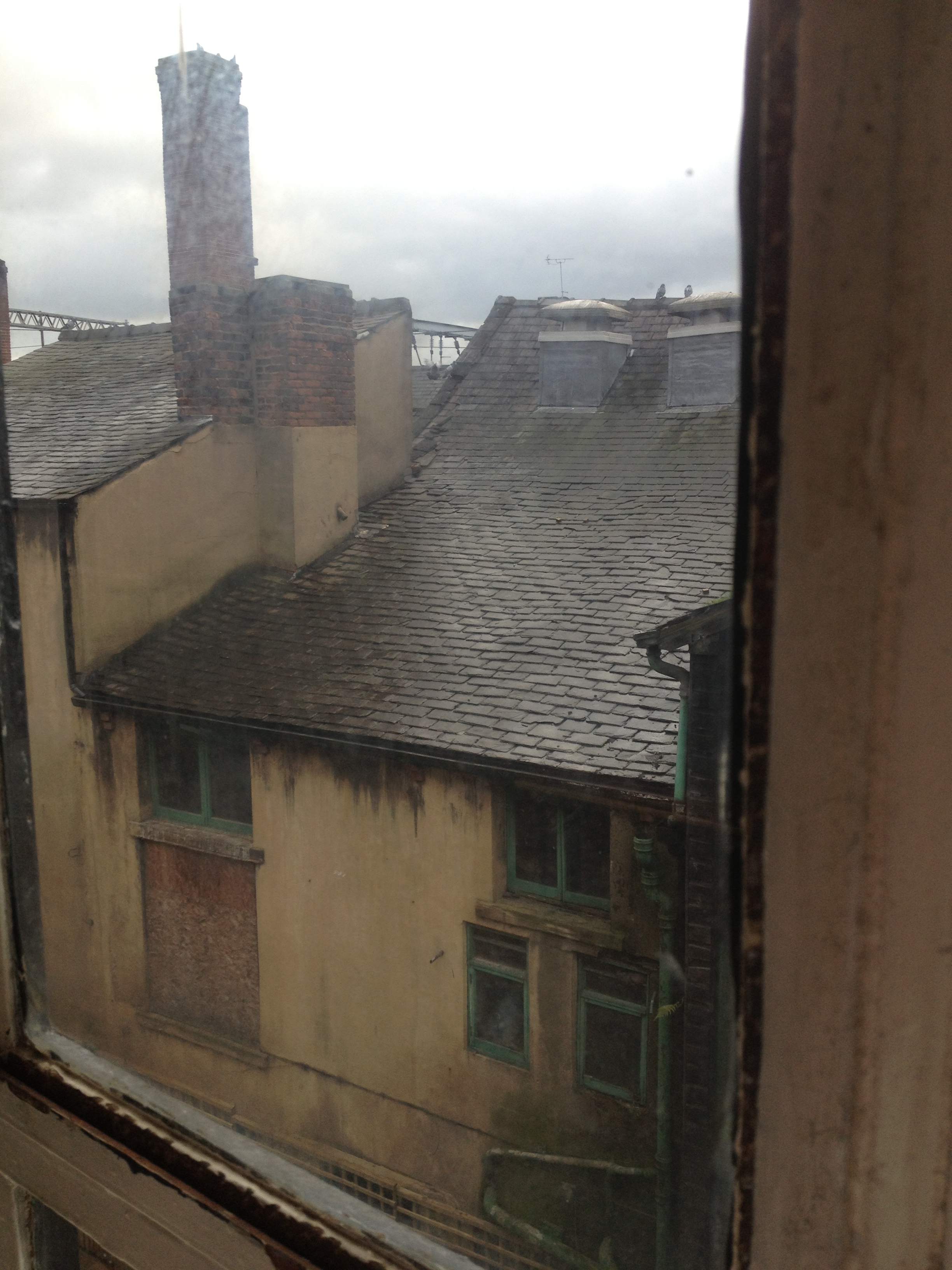
Something New

I’ve been quiet on the blog lately, but real life does intervene at times, and the bank account is like an open maw constantly needing to be fed. But I haven’t been ignoring fiction. That chugs slowly along. And this is the start of something new, set in Leeds – of course – in the 1930s. Because you’ve been so nice and let me mumble on in peace, here’s the opening. Please do let me know what you think…and I do mean that.

No title yet, but the year is 1934.

He parked the Austin Seven Swallow outside the Eagle. There’d been hardly any traffic on the drive, a few lorries, cars bucketing along as fast as they could, the drivers’ faces fierce with concentration.

            He buttoned his suit jacket and put on the hat, checking the brim in the wing mirror to see it was just so. A late May evening, some warmth still left in the air, and that feeling of dusk, with daylight starting to seep away and casting long shadows. 1934. The world might be poor, but there was still some beauty in it.

            Only a few customers were in the pub. An old husband and wife, holding hands a chattering away easily, halves of stout on the table in front of them, a few ancient fellows, leftovers from Victorian times, gathered to play dominoes, a young couple out to do their courting, and a group of four middle-aged men, eyes like flints, standing in earnest discussion.

            The landlord was cleaning the polished wood shelves, his back turned.

            He saw her, sitting at the end of the bar, a glass of gin and tonic in front of her, a cigarette between her fingers. She was wearing a nubby tweed skirt and an ochre sweater, the sleeves rolled up on her red cardigan. There was a wedding ring on her finger, but she was on her own.

            She’d glanced up when he walked in, then turned away again.

            ‘Can I buy you another?’ he asked as he stood beside her. She looked at him, eyes carefully appraising. Her hair was neatly set in waves, her lipstick bold red. In her early thirties and definitely pretty.

            ‘My mother always said I shouldn’t take drinks from strange men.’

            ‘We safe them. I’m not strange.’

            A smile flicked across her mouth and she arched her brows.

            ‘Who told you that? Your wife?’

            He grinned. One of his front teeth was slightly chipped. Someone had told him once that it made him look irresistible. Dashing. Wolfish. A little like Ronald Colman.

            ‘Someone much more reliable.’ He cocked his head. ‘I have to ask, are those eyes of yours eyes blue or grey?’

            She was staring at him now, and smiling.

            ‘Take a guess. If you’re right, you can take me home.’

            ‘Violet?’

            She waited a moment, then started to gather her handbag off the bar.

            ‘Eyes and name,’ she told him, then asked, ‘Where should we go? Your house or mine?’

            ‘Oh, yours, I think,’ he answered without hesitation. ‘My wife’s a terrible housekeeper.’

            Her elbow dug sharply into his ribs.

            ‘You’d best be careful, Johnny Williams, or you’ll be sleeping on the settee tonight. What kept you? I thought you’d be home this afternoon.’

Sympathy For The Devils

I haven’t posted any fiction here for a while, so I thought you might enjoy a taste of the book I’m working on, Sympathy for the Devils. Set in Leeds in 1971 – here’s the opening. I’d be really interested to have your opinions; after all, you’re the readers, my intended audience…


PROLOGUE


COSTA BRAVA, FEBRUARY 10, 1971


The house was easy enough to find, a quarter of a mile up the track above the village. His plimsolls didn’t make a sound as he climbed over the hard ground. There was a thin moon, just enough light to pick his way over the tree roots and not enough for anyone to spot him. The haversack on his back didn’t weight much; all he was carrying was what he needed for the job.

He’d scouted the area that morning, looking like a tourist who’d lost his way. He’d spotted the track but hadn’t followed it. Instead he’d spent a few minutes in the village; it didn’t need any more than that, with a few poor shops and a café that sat in the deep shade of a tree.

            So this is Spain, Mark thought. There was no money here, people still using horses and carts, only a few old cars and the burp of a motor scooter somewhere. Two miles away, where he was staying, it was a little better. But not that much. Warmer than Leeds, but, God, the place was deprived.

            There were no lights in the house. He slipped on a pair of gloves, broke the glass on a window and unlatched it. Inside, the air was stuffy, as if no one had been there for a while. Good. He hadn’t asked who owned the place, or why Ellis wanted it torched. That wasn’t his business.

            He unbuckled the haversack and took out the newspapers, souvenir tee shirts and a can of lighter fluid. Easy enough to buy and nothing to arouse suspicion. He tore the newspaper and shirts into strips and glanced around. Right, he thought, and pushed the solid oak table over by the bed, piling cloth and paper on the thin, worn mattress.

            Working quickly, he doused everything in lighter fluid, and replaced the can in the haversack. A quick flick of his fingers and he’d lit a match, tossing it onto the pile. Mark waited a few seconds to be certain the blaze had caught, then left.

            He slipped down the patch, no more than a shadow, moving quickly and lightly. Out past the village, on the dark road, he turned, able to see the flames lighting the sky. Halfway back to the hotel, he heard a soft whoomp, looked, and saw the flames climbing higher. Must have been a propane tank, he thought. Up on the hillside, the blaze stood out like a beacon.

            Mark tossed the empty can of lighter fluid in the bushes, removed the gloves, and walked on.


CHAPTER ONE

LEEDS, FEBRUARY  8, 1971


            ‘Please don’t,’ she said when Mark moved his hands to her breasts, and the look she gave made him stop. Her voice was no more than a whisper, almost pleading. He moved his arms away, cradling her head against his chest.

He’d been awake since six, thinking about that her. Thinking about last night He rolled over, smelling the scent of her on the pillow. The bed was warm, the blankets like a cocoon around him. He settled into it for a minute, then pushed back the covers and stood.

            Bloody freezing. He dressed quickly, making tea and toast, keeping one eye on the clock. He knew better than to be late.

            In the end, he still had to run to catch the bus on Headingley Lane, climbing to the top deck and panting as he found a seat next to a woman who spent the whole trip into town coughing and sniffling. Mark Johnson huddled in his army greatcoat and tried to ignore her.

            It had been a good night, the first time Pam had been to the flat, their first chance to really be alone. They’d been going out for four weeks, the usual cinema and disco routine, over for tea, an awkwardly polite couple of hours with her mum and dad. They didn’t quite approve of him, he could tell; there were too many silences during the meal. No surprise they had a little talk with her later, saying perhaps she shouldn’t see him. She was sixteen, a year younger than him, and still training to be a hairdresser. He’d spent an hour pacing, wondering if she’d actually come. She’d lied to her parents about where she was going and turned up just before eight.

            Anyone else, he’d have jacked them in after last night. But there was something about her that stopped him. There was a freshness, a prettiness about her, the wide eyes that always made him smile. In the end they’d snogged on the bed, rubbing against each other. It was strange; it had been enough for him. He’d driven her home in his old Triumph Herald, parking at the end of the street so nobody see.

            Mark shook his head. He was going soft. He was bloody well falling for her.

            The bus out to Roundhay Park was late. He spent the journey checking his watch, hoping he’d arrive in time. For his own sake.

            Bloody February. It was cold enough to freeze your bollocks off. Mark pulled the greatcoat tight against himself and hurried round the lake as the flares flapped around his ankles and his boots kept slipping on the hard earth. All the way to the other end, of course. Far from prying eyes, just the way Ellis liked it.

            He’d followed the orders, taken a day’s holiday from work, left the car at home and used the bus. The man was so fussy that it was like listening to an old woman. He could see him now, sitting on his usual bench, tossing breadcrumbs from a plastic bag to the ducks gathered close in the water. His minder, Davy Sands, was twenty yards away, standing at the edge of a grove of trees, eyes watching everything carefully.

            Johnson settled on the seat, took a packet of Embassy from his pocket and lit one, feeling the smoke warm his lungs.

            ‘Good morning, Mr. Ellis,’ he said.

            The man threw a final handful of crumbs, folded the bag and put it in the pocket of his donkey jacket. Jimmy Ellis had a whole wardrobe full of suits from Austin Reed, Mark knew that. He’d seen them. And he still dressed like a bloody navvy. Jacket, flat cap, thick sweater, old jeans and steel cap boots. Fifty if he was a day, successful, and happy to put on a labourer’s costume. It didn’t make any sense. Ellis pushed back the sleeve slowly and glanced at his watch.

            ‘You’re ten minutes late.’

            ‘I’m sorry, Mr. Ellis, the bus-‘

            ‘Excuses.’ He turned and stared.  He didn’t need more than a single word. His eyes were blue and empty; look in them and there was nothing. No pleasure, no sorrow, just a void. ‘Next time make bloody well sure you’re on time.’

            ‘Yes, Mr. Ellis.’ He ducked his head quickly.

            ‘Look at you, you’re like one of those fucking hippies. What are those you’re wearing, anyway?’ He nodded at the trousers.

            ‘Loon pants,’ Mark began to explain, but Ellis turned his head and he shut up. He knew better. He’d been doing little jobs for the man since he left school, two years now. Long enough to see what happened to anyone who didn’t treat him with respect.

            Ellis brought an envelope from his jacket pocket and tossed it onto Johnson’s lap.

            ‘What’s that?’

            ‘Open it and you’ll find out, won’t you?’ The older man sighed. ‘I thought you had brains, with all those O-levels, an’ all.’

            Johnson ripped the paper, sorting through a passport and some twenty-pound notes. He didn’t even try to count them, just looked at Ellis with questions in his eyes.

            ‘This passport,’ he said, ‘it’s got the wrong name on it.’

            The man gazed at him as though he was simple. ‘No, it doesn’t. I had it made special for you. You’re taking a little trip.’

            Mark could feel the twinge of the pulse in his neck. He drew deeply on the cigarette.

            ‘Costa Brava,’ Ellis continued. ‘Take the train over to Manchester tomorrow and fly from there. I’ve given you enough for your fare and somewhere to stay. Just two days,’ he warned. ‘I’m not paying for a bloody holiday. Back on Friday.’

            Yes, Mr. Ellis,’ he agreed quickly. He’d need to ring Pam; they were supposed to be going out to the flicks on Thursday night. He’d offer her something better for Friday. ‘What do you want me to do there?

            ‘There’s a bloke I know, he has a house there. Had, by the time you come back. Got it?’

            Mark nodded, trying to hide a smile. He’d done a few torch jobs for the boss before. Businesses and warehouses. But they’d all been local. He was moving up in the world.

            ‘Right,’ Ellis said. ‘Everything is in the envelope, address and there’s a map. I’ll see you right on payment once you’re back.’ He gripped Mark’s wrist, his fingers tight enough to hurt. ‘And don’t bugger it up.’

            ‘I won’t. What’ll I tell them at work?’

            ‘Ring up and say you’re poorly.’

Two days, it wouldn’t matter. The gaffer would moan, but that would be the end of it.

‘Right,’ Mark agreed hurriedly. ‘Do you want me to ring you when I’m back and tell you how it went?’

            Ellis turned the empty eyes on him‘ No need, lad. If you bugger it up, I’ll be the last person you want to talk to. If I went well, I’ll hear about it.’ He waited a moment. ‘Off you go then, on your way.’

Walking Into Reality

A week or so ago, I just put the final words to the draft of a new novel. A murder mystery; after all, that’s what I do, kill people for a living. When I’d finished, after living deep in the book and with these people for a few months, I decided to take a walk to clear my head.

There’s a place, a house that I used to pass every day on my way to school. I just fancied another look at it and a walk in the woods there. It’s no more than 20 minutes’ walk from where I live now. Across the fields, down the ginnel that runs alongside my old school, then along a road that’s still unpaved 40 years on…and I was pretty much there.

Except I wasn’t.

At the top of the hill everyone knows as Little Switzerland, the road was blocked by police tape and a Police Community Support Worker keeping traffic out. All he’d tell me was that there had been an ‘incident.’

Okay.

There are other ways into the woods, and I was curious now. I still know this area well. The woods cover one side of the valley, with paths on different levels. I took the high path, and even saw someone walking a dog. But the trees were bare, and at the bottom of the hill I could see five police cars. Whatever had happened, it was something big. But I wasn’t going to go closer. Not my affair. It was directly across the street from where I grew up, and where my mother lived until her death. If she’d still been alive, this would have been the best gossip in years.

I did get to take a look at the outside of the house I’d come to see – it was near the top of the hill – then walked home. A question on Twitter provided the answer to what had happened. Two kids on their way to school – my old school – had found a body.

That was bad enough. Horrible for the family of whoever was dead, and traumatic for the kids. But as the story developed, it got worse. He’d been murdered, shot. Supposedly kidnapped and killed; two people are in custody and police are seeking a third.

The reasons will come out in time. But for now, for me at least (and I know this is a selfish view, given the tragedy), it can’t help but be a little surreal. Leaving murder on the page to walk into a crime scene…

The Ways of Darkness

By now, many of you know that Gods of Gold, my mystery set in Victorian Leeds, comes out in August. It is – I hope – the first in a series, and I’m working on the second. Because I’m in one of those devil-may-care moods, I thought you might enjoy the start of the sequel, The Ways of Darkness. Actually, I thought it might help build anticipation for the first book. I’m evil that way….

DECEMBER 1890

CHAPTER ONE

“Have you heard a word I said, Tom Harper?”

“Of course I have.” He stirred and stretched in the chair. “You were talking about visiting your sister.”

Annabelle’s face softened.

“It’ll only be for an hour. We can go in the afternoon, after we’ve eaten.”

“Of course,” he told her with a smile. He was content, finally at home and warm for the first time since morning.

He’d spent the day chasing around Leeds on the trail of a burglar, no closer to catching him than he’d been a month before. He’d gone from Burley to Hunslet, and never a sniff of the man. Still, better that than being in uniform; half of the constables had been on patrol in the outdoor market, cut by the December wind as they tried to nab the pickpockets and sneak thieves. It was still blowing out there, howling and rattling the window frames. At least as a police inspector with he could take Hackney cabs and omnibuses and dodge the weather for a while.

But tomorrow he was off duty, the first Christmas in five years that he hadn’t worked. Christmas 1890, the first together with his wife. He turned his head to look at her and the wedding ring that sparkled in the light. Five months married. Annabelle Harper. The words still made him smile.

“What?” she asked.

He shook his head.

“Nothing.”

He often glanced at her when she was busy with something else, working in the kitchen or at her desk, going through the figures for her businesses. Sometimes he could scarcely believe she’d married him. Annabelle had grown up in the slums of the Bank, another daughter in a poor Irish family. She’d started work here in the Victoria and eventually married the landlord. Six years later, after he died, everyone advised her to sell. But she’d held on and kept the place, trusting her instincts. She’d built it into a healthy business, then seen a chance and opened bakeries in Sheepscar and Meanwood that were doing well. Annabelle Harper was a rich woman. Not that anyone round here called her Harper. To them she’d always be Mrs. Atkinson, the name she’d carried for so long.

And she was his.

“You look all in,” she told him.

Harper gave a happy sigh. Where they lived, the rooms over the public house, felt perfectly comfortable, curtains drawn against the winter night, the fire in the hearth and the soft hiss of the gas lights. He didn’t even want to move.

“I’m cosy,” he said. “Come and give me a cuddle.”

“A cuddle? You’re lucky I put your supper on the table.”

She stuck out her tongue, her gown swishing as she came and settled in his arms. He could hear the voices in the bar downstairs. Laughter and a snatch of song from the music halls.

“Don’t worry,” she told him. “I’ll send them on their way early tonight. They all have homes to go to. Then we’ll have some peace and quiet.”

But only for a few hours. She’d be up before dawn, the way she always was, working next to the servants, stuffing the goose that was waiting in the kitchen, baking the bread and preparing the Christmas dinner. Dan the barman and the girls who worked for her would join them at the table. They’d light candles on the tree, sing, laugh, exchange gifts and drink their way through the barrel of beer she’d set aside.

After their bellies were full the two of them would walk over to visit her sister, taking presents for Annabelle’s nieces and nephews. For one day, at least, he could forget all the crime in Leeds. Billy Reed, his sergeant, was would cover the holiday. Then Harper would be return on Boxing Day, back to pursue the damned burglar.

Annabelle stirred.

“Did you hear that?” she asked.

“What?”

He gazed at her. He hadn’t heard a thing. Six years before, while he was still a constable, he’d taken a blow on the ear that left him partially deaf. The best the doctor had promised was that his hearing might return in time. But in the last few months, since autumn began, it had grown a little worse. Sometimes he missed entire sentences, not just words. His ear simply shut off for a few seconds. He’d never told anyone, scared that it would go on his record, that someone would tell.

“On the stairs.”

He listened. Still nothing. Then someone was knocking on the door. Before he could even move, she rose swiftly to answer it.

“It’s for you.” Her voice was dark.

He’d seen the constable down at Millgarth station. One of the new intake, uniform carefully pressed, the cap pulled down smartly on his head and his face eager for excitement. Had he ever looked as young as that?

“I’m off duty-” he began.

“I know, sir.” The man blushed. “But Superintendent Kendall told me to come and fetch you. There’s been a murder.”

Harper turned helplessly to Annabelle.

“You go, Tom.” She kissed him on the cheek. “Just come home as soon as you can.”

CHAPTER TWO

The cold clawed his breath away. Stars shone brilliantly in a clear sky. He huddled deeper into his overcoat and pulled the muffler tight around his neck.

“What’s your name?” Harper asked as they started down the road.

“Stone, sir. Constable Stone. Started three month back.”

“And where are we going, Mr. Stone?”

“The Leylands, sir.”

Harper frowned.

“Whereabouts?”

“Trafalgar Street.”

He knew it well, no more than a stone’s throw from where he’d grown up on Noble Street. All of it poverty scented by the stink of malt and hops from the Brunswick Brewery up the road. Back-to-backs as far as the eye could see. A place where the pawnbrokers did roaring business each Monday as housewives took anything valuable for the cash to last until Friday payday.

In the last few years the area had filled with Jewish immigrants, almost every house packed with them, from Russia and Hungary and countries whose names he didn’t know, while the English moved out and scattered across the city. Yiddish had become the language of the Leylands. Only the smell of the brewery and the lack of money remained the same.

“Step out,” he told the constable. “We’ll freeze to the bloody spot if we stand still.”

Harper led the way, through the memory of the streets where he used to run as a boy. The gas lamps threw little circles of light but he didn’t need them; he could have found his way in pitch blackness. There streets were empty, curtains closed tight. People would be huddled together in their beds, trying to keep warm.

As they turned the corner into Trafalgar Street he caught the murmur of voices. Suddenly lights burned in the houses and figures gathered on their doorsteps. Harper raised his eyes questioningly at Stone.

“The outhouses, sir. About halfway down.”

The cobbles were icy; Harper’s boots slipped as he walked. Conversation ended as they passed, mean and women looking at them what sad, suspicious eyes. They were goys. Worse, they were authority.

They passed two blocks of four houses before Stone turned and moved between a pair of coppers, their faces ruddy and chilled, keeping back a small press of people. Someone had placed a sheet over the body. Harper knelt and pulled it back for a moment. A young man, strangely serene in death. Straggly dark hair, a white shirt without a collar and a dark suit. The inspector ran has hands over the clothes, feeling the blood crusted where the man had been stabbed. Slowly, he counted the wounds. Four of them. All on his chest. The corpse had been carefully arranged. The body was straight, the arms at ninety degrees to make the shape of a cross.

Harper stood again and noticed Billy Reed talking to one of the uniforms and scribbling in his notebook. The sergeant nodded as he saw him.

“Do we know who he was?”

“Not yet.” Reed rubbed his hands together and blew on them. “Best as I can make out, that one found him an hour ago. But I don’t speak the lingo.” He nodded at a middle-aged man in a dark coat, a black hat that was too large almost covering his eyes. “He started shouting and the beat bobby came along. They called me out.” He shrugged. “I told the super I could take care of it but he wanted you.” His voice was a mixture of apology and resentment.

“It doesn’t matter.”

It did, of course. He didn’t want to be out here in the bitter night with a corpse. He wanted to be at home with his wife, in bed and feeling the warmth of her skin. But Kendall had given his orders.

The man who’d found the body stood apart from the others, head bowed, muttering to himself. He scarcely glanced up as Harper approached, lips moving in undertone of words that was just a whisper.

“Do you know who that man was?” he asked.

Er iz toyt.” He’s dead.

“English?” the Inspector asked hopefully, but the man just shook his head. He kept his gaze on the ground, too fearful to look directly at a policeman.

Velz is dayn nomen?” The Yiddish made the man’s head jerk up. What’s your name?

“Israel Liebermann, mayn ir,” the man replied nervously. Sir. Growing up here it had been impossible not to absorb a little of the language. It floated in the shops and all around the boys that played in the road.

Ikh bin Inspector Harper.”

A hand tapped him on the shoulder and he turned quickly to see a pair of dark eyes staring at him.

“What?” He had the sense that the man had spoken; for that moment he hadn’t heard a word. He swallowed and the world came back into both ears

“I said it was a good try, Inspector Harper. But your accent needs work.” The voice was warm, filled with kindness. He extended his hand and Harper took it.

“I’m Rabbi Feldman.”

The man was dressed for the weather in a heavy overcoat that extended almost to his feet, thick boots, leather gloves and a hat pulled down to his ears. A wiry grey beard flowed down to his chest.

A gust of wind blew hard. Harper shivered, feeling the chill deep in his marrow.

“If you think this is cold, you never had a winter in Odessa.” The rabbi grinned then his face grew serious. “Can I be help at all?”

“Someone’s been murdered. This gentleman found him. But we don’t know who the dead man was.”

Feldman nodded then began a conversation in Yiddish with Liebermann. A pause, another question and a long answer.

He’d heard of the rabbi. Everyone had. In the Leylands he was almost a hero. He was one of them; his family had taken the long march west when the pogroms began. He understood their sorrows and their dreams. In his sixties now, walking with the help of a silver-topped stick, he’d been head of the Belgrave Street Synagogue for over ten years. He taught in the Hebrew school on Gower Street and met with councillors from the Town Hall. He was man of mitzvahs, good deeds. Portly and gentle, with quiet dignity, he was someone that everybody respected.

“He says he needed the outhouse just before ten – he’d looked at his watch in the house so he knew what time it was. He put on his coat and came down.” Feldman smiled. “You understand, it’s cold in these places. You try to finish as soon as possible. When he was done he noticed the shape and went to look. That’s when he began to yell.”

“Thank you,” Harper said, although it was no more than they already knew.

“Murder is a terrible business, Inspector.” The man hesitated. “Is there anything else I can do?”

“We still don’t know the name of the dead man.”

“May I?” Feldman gestured at the corpse. Harper nodded and one of the constables drew back the sheet again.

Mine Got.” He drew in his breath sharply.

“Do you know him?”

It was a few seconds before the rabbi answered, staring intently at the face. Slowly he took off the hat and tugged a hand through his ragged white hair.

“Yes, Inspector,” he said, and there was all the sadness of the world in his voice. “I know him. I know him very well. I gave him his bris and his bar mitzvah. He’s my sister’s son.”

His nephew. God, he thought, what a way to find out.

“I’m sorry, sir. Truly.”

The man’s shoulders slumped.

“Seventeen.” He shook his head in disbelief. “Just a boychik. He was going to be the one.” Feldman tapped a finger against the side of his head. “He had the smarts, Inspector. His father, he was already training him to run the business.”

“What was his name, sir? I need to know.”

“Abraham. Abraham Levy.” The rabbi rummaged in a trouser pocket, brought out a handkerchief and wiped his eyes. “Why?” he asked quietly. “Why would someone kill anyone who was so young?”

Harper didn’t have the answer. Why was anyone murdered?

“Where did he live?”

“On Nile Street.” Feldman straightened suddenly. “My sister. I have to tell her.”

“I’ll come with you.”

“No,” the man answered, his voice firm. “No, Inspector, please. It’s better from me. I’ll go and see them. Tomorrow you can ask your questions. Tonight’s for grieving. You come in the morning.”

“Of course,” he agreed.

He waited, but the rabbi didn’t move, staring at something no one else could see.

“You know, when I was young, they murdered Jews for fun,” he said. “For sport. So we ran, because running was the only way to stay alive. Then, when we came here, we wondered if we’d run far enough or fast enough, if it would be the same again. We had children and we built lives. But always, we keep our eyes open and a bag close by.” He turned his eyes on Harper, the tears shining on his cheeks. “Is this the way it is now? Do we have to run again?”

“No, sir. That’s something you’ll never have to do again.”

Of course there were those who resented the Jews. He’d heard them from time to time, talking in the pubs after a few pints loosened their tongues. But it had never been more than words.

He watched Feldman shuffle away, exchanging a few solemn words here and there, then stopping to talk to a young woman and place his hand on her shoulder as she put her hands over her face.

“Did you hear all that?” he asked. Reed nodded and lit a cigarette, smoke curling into the air.

“It’s the position he was left in that worries me.”

Harper agreed. A mockery of the crucifixion, out on the cobbles.

“And the time. Christmas Eve.”

“What do you think?” the sergeant asked.

“I don’t know yet, Billy.”

“I’ll tell you something. Look around him. There’s hardly any blood. He wasn’t killed here.”

Harper nodded; he’d noticed. What it all meant was anyone’s guess.

“Talk to everyone in the houses round here and find out if they saw anything. Start the bobbies on that. One or two of them must speak Yiddish. And have a word with that girl over there.” He pointed at her, surrounded now by others trying to give some comfort. “She knew Abraham Levy.”

“Do you think she’ll speak English?”

The Inspector glanced over at her. No more than sixteen. Probably born in Leeds. The place where her parents had lived would be no more than horror stories to her.

“I’m sure she does.”

“What about the body?” Reed wondered. “Do you want me to send it over to Hunslet for Dr. King?”

“No,” Harper said slowly. The police surgeon wouldn’t be there for the next two days. There was little he could tell them that they couldn’t see for themselves. He knew the Jewish way, burial before the next sunset. He could give them that, if nothing else. “They’ll have an undertaker along soon. And Billy…”

“What?”

“Once they’ve all gone, take a look through his pockets. And have them start searching for the knife that killed him. It might be around somewhere. I’m going to Millgarth and write up the report.”

Time, Place And the Quote Of Great Joy

Back at the start of 1986, a decade after moving to America, I ended up in Seattle. Once I had the chance to find my feet, the city felt like home. For those who don’t know it, it’s a place that lives up to the hype in its beauty, scenery and people. I was happy there. But there was that lingering feeling of being a man without a country, not quite American, not quite English.

Four months ago I finally came back to Leeds. It only took 37 years for me to find my way home. And home is a real, deep feeling. I do feel like someone who’s found his true place in the world. Considering that most of my novels have been set here, it’s taken me a while to realise that this is where I belong. I feel this city deep in my bones, the way I can feel no other. I understand it, and in an odd way I feel that it understands me.

I’ve been writing about Leeds quite a bit lately. Not just the monthly history blog (which has now migrated to the Leeds Big Bookend website), but my books. August sees the publication of Gods of Gold, the first in a new series set in the Leeds of 1890. I’ve completed another one set in Leeds, Dark Briggate Blues, a surprisingly noir novel – well, that aspect surprised me, anyway – in 1954 Leeds, and I’m at work on the second Victorian novel.

This is the place that moves me, that makes my heart beat a little fast.

And yet. And yet…I can’t fully say goodbye to Seattle. It’s a place with plenty of memories, the home of my son, and where I made many friends. I’m not ready to see it sail away just yet. My way of dealing with all that, to try and make sense of the past, is to write about it. Out of that comes West Seattle Blues. It’s the second of my Seattle books, and this one takes place in March and early April of 1994. For anyone who knows music and Seattle, that’s a time to ring big bells. A time when the course of history altered a little. Here’s the cover.

Image

But it’s going to be Leeds that fills my time for a while yet. Not just living in the here and now, but also with my head in 1890/91.

And I teased with that talk about a quote, didn’t I? It’s one that’s made my month, probably my year. I had one a year ago from Candace Robb, one of the great historical crime novelists (and someone who’s become a treasured friend), whose work influenced the way I’ve looked at mine. My publishers used it on promotional material and it really helped. For Gods of Gold I plucked up my courage and approached the wonderful writer Joanne Harris, who’s read the Richard Nottingham books, to ask if she’d be willing to read this new one and, if she liked it, to write a few words about it. Well, she was willing, more than gracious and once she’d finished it, this is what she replied:

Gods of Gold creates a vibrant sense of living history and of place, with strong, well-drawn characters and dialogue that’s just made for film, as well as a damn good story.”

Happy? I was over the moon. I still bloody am. As was my publisher. Thank you, Joanne. That, very proudly is going on the book cover.

And I wish you all a happy Valentine’s Day.

An Elegy For My Father

In January 2001 my father died at the age of 86. He was a writer and a musician, a man who revealed facts about his life in passing, never elaborating, never telling the stories behind them. One of the things he mentioned was that he’d played piano with Nat King Cole. At the time I found it hard to believe; Cole was a superb pianist himself – why would he want someone else to sit in. But after my dad had gone, I asked my mother about it. It was true, she insisted, although there were still no details.

It’s taken me 13 years to write this elegy for my father. Maybe it’s taken me this long to be a good enough writer to do him justice. There are plenty of facts in here – he was a pianist, he did have a band in Leeds in the 1930s, he did serve in India and Burma. He did end up spending four months as a guest at the Calcutta Country Club. He was a salesman. However, not everything might be real in the way it seems here. In thoughts and dreams, reality and fantasy bleed into each other. But, wherever he may be now, I hope he likes this. It’s what I can offer in his memory. He was The Man Who Played With Nat King Cole.

More than a year after the war and England still looked grey and sullen, as if all the effort had exhausted it. Grey November turning into cold, rainy December. As he walked the sky opened and he ran the last ten yards past to the pub, brushing the rain off his mackintosh as he entered. Half-past two and the bar was empty, everyone back at work. Even the old, hardened drinkers had gone off to rest. Only the barman remained, lazily washing the glasses massed along the counter.

            The two o’clock appointment had been a waste of time. He’d known it from the moment he walked in, the wholesaler too distracted to pay attention. He should have just packed up the sample case and left instead of carrying on. But there was still one more in an hour, a customer who’d bought from him before. A little luck and he’d be driving home with a decent order. Enough to make today worthwhile, anyway.

            “What’ll you have?”

            “Just a whisky, please.” He counted out change as the man poured a measure into the glass and offered a tumbler of water.

            He glanced around, spotting the piano in the corner. An old upright, the lid open like an invitation.

            “Do you mind..?” He gestured towards the instrument and the man shrugged.

            He tried a few scales. It was almost a miracle; every key worked and it was in tune. The ivory had browned with the years, but that didn’t matter. He let his hands move, forming a chord, then another. Almost without thinking it became I’m Getting Sentimental Over You. He’d played it every weekend in the 1930s. Back then he’d let Stan take the solo, the tenor sax so mellow and sensuous that the couples on the dancefloor always held each other closer.

            Now the ideas flowed through his fingers, lightly picking out the melody before gliding up an octave while his left hand vamped the chords. Then he found the sweetness at the core of the tune, spinning and making it shimmer in the air. One thing suggested another and he lost himself in the music, slowly bringing it back on the chorus and finishing with a gentle flourish before picking up his glass and taking a drink.

            “You’re not bad,” the barman called. “Want to give us another? I’ll pour you one more on the house.”

            “All right,” he agreed and drained the glass in a swallow, feeling the heat in his throat and into his chest. “Any requests?”

            The barman thought for a moment, smoothing his Brylcreemed hair.

            “You know As Time Goes By?”

            He smiled and began to play the chords. It was the one they’d always wanted in the NAAFI. Or even in the country club in Calcutta. That and White Cliffs Of Dover. After Casablanca, everyone loved As Time Goes By.

            But the version he remembered was Cole’s. That voice like cream, slowly cataloguing every regret. He could hear it now, the pitch so perfect and pure that everything else fell away and all that remained was him.

            He started to play arpeggios, using the pedal to make them hang, trying to capture that feel. A soft run at the end of the line and he was on his way, easing the melody into dives and curls. When he was done, the barman was standing by the table, holding out a double, a contented smile on his face.

            “Professional, are you?”

            “No.” He smiled, nodding at the compliment. “I’m a salesman. Manufacturer’s agent.”

            “You should do it for a living. You’re better than them on the radio, if you want my opinion.”

            “Thank you.” He looked over at the clock. Quarter to three.

            “You play as long as you want, mate,” the barman told him. “It’s the best I’ve heard in years. I’ll just lock the door when it’s closing time.”

            He started on Blues In The Night. He’d heard it out in India, playing on American Forces radio and loved the quiet way the tune progressed. So graceful that it almost seemed to fly. For more than a month he’d played it every day at the country club, exploring its corners, its nooks and crannies. Now he found them again, sweeping them out into the light. He gave the tune the gravity of a solemn left hand, transposing it into the minor before bring it back, allowing the tension to rise before he resolved it with a series of quiet, broken chords that satisfied his ear.

            From somewhere below he heard the clatter of bottles, then the barman appeared with two crates of brown ale, looked at the clock, now right on the hour, and turned the key in the lock.

            “Are you from round here, like? I’ve not seen you before.”

            He shook his head.

            “Leeds. I had some business up here. Some appointments”

            “I’ll tell you what. I don’t know the sales game, but if you’re as good as you are on the piano you’ll be making a cracking living. I told you, man, I’ve not heard anything like you.”

            “Music’s better as a hobby.”

            “If you say so.” The barman shrugged. “You’ve got some colour on you. Overseas, were you?”

            “India. RAF. I only got back six months ago.”

            He’d been one of the last ones from the war. Out there in 1940 and not home until the early summer of 1946. Back to a daughter who didn’t know his face and a wife who didn’t want him anymore. Finding lodgings and taking Stan up on his job offer, selling knitwear to wholesalers. From Leeds all over the north east. It was the only reason he was in Sunderland today.

            “Bloody hell, Ray, you’ve got the knack for this,” Stan told him after a month on the job. “These are better orders than I ever brought in.”

            “Put me on commission, then,” he said impulsively.

            Stan eyed him across the desk, his expression doubtful.

            “You sure you want that? It’s chancy. All it takes is a couple of bad weeks and it goes arse over tip.”

            “I’ll try it.” He had five months of back pay in the bank. Not a fortune, but a cushion that would see him through a lean time. All that money from when the RAF lost his paperwork. When he didn’t exist and he’d lived on the charity of the Calcutta Country Club.

            The CO had arranged it, the last thing he did before he was shipped back to Blighty. He was embarrassed, sitting back in his shirt sleeves, the fan going full blast to try and break through the thick heat. He brought out a handkerchief and cleaned his spectacles, holding them up to the light before replacing them on his nose.

            “I’m sorry, Nickson. They’ve made a balls-up of it. As usual. Can’t trust a pen pusher.”

            “What do I do now, sir?”

            The CO frowned under this thin moustache.

            “That’s the problem, you see. Until they sort it out you don’t even exist. So they can’t pay you, or house you or feed you.”

            “Sir?” He felt the panic beginning to rise in his belly, but the officer smiled.

            “I had a word with a chum of mine. Move your kit over to the country club. They’re going to put you up there until everything’s sorted out. The clerk said it should only take a week or two, then they’ll send you back to Blighty.”

            “Thank you, sir.” The gratitude in his voice had been real.

            The CO waved it away.

            “Can’t have you living on the street like a bloody native, can we?” He stood up and offered a handshake. “Good luck, Nickson.”

            It was the perfect billet. The room was small and out of sight, but it caught the evening breeze. He had a wallah to take care of everything. Food from the kitchen that put some weight back on him after years of air force rations. And complete freedom of the place. All he did was swim, eat and spend his free time reading or playing the piano in the bar. Heaven after airfields tugged out of the Burmese jungle and the constant threat of the Japs attacking.

            The fortnight passed. Soon, the clerks promised, patting their files and tottering heaps of paper; the paperwork would be through soon. Two more days, a week then another. “Soon” became an idea that retreated into the distance until it seemed mythical. He needed to be home. He could read between the lines in Maureen’s letters, how the love she felt had dried up and fallen away. He wanted to be home. If he was there everything would come right again and he’d see the little girl he only knew from the smudged, wilted photographs that had survived the heat and humidity to sit on his dressing table.

            He took a drink of the Scotch and shifted on the piano stool. Without even thinking, his fingers moved into some stride piano. Octaves in the left hand, a steady syncopated beat while the fingers of his right hand played around with thirds and fourths before going into long, looping runs. It was a nothing, really, an exercise. But it was joyful, the kind of thing that set feet tapping

            He’d played it over and over at the country club, along with every other piece he knew, improvising chorus after chorus to fill the hours. At first people gathered round, but the numbers dwindled as they all went home. The diplomats went first, followed by all the senior military staff, from generals to fawning aides-de-camp. Over four weeks there was a slow attrition, a few less each day until only the waifs and strays remained. Those who were stuck there. Some by choice, most because they had no opportunity to be anywhere else. And he continued to dredge up the tunes the band used to play, vamping and filling in the different parts. Tried to remember pieces from the radio. Anything and everything.           

He lost himself in playing, letting it eat up the hours. He had all the time in the world. It wasn’t practice, it was pleasure. He improved. Over the last five years, since he’d joined the RAF, he’d probably had less than twenty hours to play. Now he sated himself.

            “You must be a Tatum man,” the voice at his shoulder said and he stopped playing. He hadn’t heard the man approach; he’d been lost in a fantasy that built around the theme from Rhapsody In Blue. He turned and saw a US Army colonel holding a glass of Scotch. He was a stocky man, in his forties, with the same open face and buzz cut he’d seen on so many of the American troops.  “Carry on, I didn’t mean to disturb you.”

            “I’m fine, thank you, sir.” He took a sip of the lime juice and tonic. The ice cubes in the glass had long since melted. “I wish I could play like him.”

            “No one can.” The colonel’s face creased into a smile. “I saw him in New York a few times. But you got the touch, son. Been listening to you for the last few days. Are you a pro?”

            “No, sir. Never had the chance.”

            The colonel leaned against the piano, took a packet of Lucky Strikes in an army green pack from his pocket and shook one out.

            “You never had a band? You should, you’re pretty sharp.”

            “I had a band.” He shrugged. “Before the war.”

            But almost everything in his life dated from before the war. The band had begun while they were still at school: the Cockburn Boys, and they’d stuck together for most of the Thirties, playing dances around Leeds every weekend. Anywhere they could reach on the bus, anywhere that would pay them, with every member helping to carry the drums. They covered all the popular dance tunes, giving people a chance to kick up their heels on a Friday or Saturday night. But the real fun had come on the breaks, when he carried on playing alone and half the dancers would crowd around the piano.

He’d met Maureen that way. The first time he saw her she’d been with a boy. The next weekend, in a place in Wortley, she arrived with some other girls. It didn’t matter where in Leeds they played: Bramley, Holbeck, Pudsey, she was there. They began to talk, and soon enough he was seeing her. Courting. Ray was in his twenties then, with a good engineering job at Fairbairn Lawson, one with prospects for the future. They married in ’38, war clouds gathering behind the wedding.

            “Get you another, son?” the colonel asked.

            “Thank you, sir.”

            The man signalled to the waiter and two more drinks appeared.

            “What’s your name?”

            “Nickson, sir. Leading Aircraftman.” He had to make himself stop before he gave his serial number.

            The colonel smiled.

            “First name.”

            “Ray, sir.”

            “Well, Ray, I’m Pete Austin, colonel with the US Army. Tell me something, you like Nat King Cole?”

            “Very much.”

            “You know he’s playing a USO show tomorrow?” He knew. He’d read about it; he’d planned on going and hoping they let him in, even with the RAF uniform. “One of the things I do is work with the USO. How’d you like to go see him?”

            The offer took him aback. “That would be…thank you, sir.”

            Austin smiled again.

            “You know where the show is, right?”

            “Yes, sir.”

            “You come on down to gate C at twenty-one hundred and ask for me. I’ll give you the best seat in the house, Guaranteed. That sound okay?”

            “Yes. Of course, sir.”

            Austin raised his glass in a toast.

“It’s a deal, then. I’ll see you there.”


He stood outside the gate, blue shirt ironed, a crease in the canvas uniform trousersA couple of guards stood casually at the entrance, Sam Brownes glowing with polish, pistols holstered by their sides.

            “What you need, fly boy?” one of them asked.

            “My name’s Ray Nickson,” he said, hoping that the promise hadn’t been a lie. “Colonel Austin told me to report here.”

            The guard checked the name against a list on his clipboard.

            “You’re okay. Go on through. Second corridor on the left.” The soldier’s hard mouth curled into a smile. “Enjoy the show.”

            He followed the directions, footsteps echoing down a concrete tunnel until he could hear the restless voices of a huge crowd and came out at the side of the stage. The best seat in the house, the colonel had said; he’d told the truth. A grand piano sat on the stage and close by, a double bass on its side.

            “Looking forward to it?”

            Austin had walked up without him noticing. The colonel was freshly shaved, uniform impeccable, the cap low over his forehead.

            “Yes, sir. And thank you for this.”

            He was staring intently at the stage and the audience when three figures moved past, one stopping to give Austin a pat on the shoulder.

            “This the guy?” A smooth voice, almost like cream, with a hint of the Southern states.

            “Yeah, this is the one.”

            He turned to see Nat King Cole staring at him, calmly smoking a cigarette, a hint of a smile on lips. Tall, slim, and just as sophisticated as the newsreel clips he’d seen. The man was wearing a light tropical suit, the collar of his shirt open, no tie. His hair was cut short and glistened with oil in the sunlight.  The man extended his hand and Ray shook it.

            “I’m Nat. Pete here tells me you play the piano.”

            He didn’t even know how to answer. This man was a star, about to perform for thousands of people, and taking the time to talk to him.

            “A little,” he answered finally. “I try.”

            “The guy’s good, Nat,” Austin said. “He’s better’n that. I’ve heard the cat play. He could hold his own in Harlem.”

            Cole raised his eyebrows.

            “You know Getting Sentimental Over You and As Time Goes By?”

            “Yes, sir, I do.”

            Cole gave a fleeting grin. “No need to call me sir.” He brushed a hand over his jacket collar. “No bars up here. I’ll give you a wave when it’s time. We’ll be in G.” He ground out the cigarette and ambled on to the stage, raising his hand to acknowledge the cheers before sitting at the piano and pulling the microphone close.

            He was a superb pianist. Every so often he reminded the crowd of that, letting his fingers dazzle on a solo. But it was the singer that they’d really come to hear and he didn’t disappoint, his voice lazy and rich, nailing the emotion at the heart of a tune almost without trying. Ray desperately wanted to listen to it, to take it all in, but he couldn’t. All he could feel was fear so powerful he could barely move. Soon he’d be ought there, with a star, every eye on him. He was going to fluff it. He was going to forget everything. He looked down at his fingers. They seemed, fat, awkward, as if they’d never manage to play a note. He was still numb when Austin gave him a nudge.

            “You’re on, son.”

            The biggest audiences he’d had were church halls in Leeds where the couples didn’t care who made the music as long as it had a tune and a beat. And here there were…he couldn’t even guess how many thousands standing in the bright glare of the sun.

            Cole stood and bowed to him as he sat on the piano stool.

            “We’ll start with Sentimental. Take a sixteen-bar intro and give everyone the nod to come in, okay?”

            The star moved to the front of the stage, to a waiting microphone.

            “We got a bit of reverse lend-lease here today. This gentleman is British and I’m told he’s a good pianist. So we’re putting him on the spot. No warning, no rehearsal.” He turned and smiled kindly. “But I just know he’s gonna be good.”

            Ray began the tune, a gentle run through the chords of the melody before his fingers explored a little. He stopped thinking about all the faces staring up at him and lost himself in the music, the way he did at the country club. Then he raised his head and suddenly there was a bass and guitar giving it a rhythm, while Cole eased into the first line, as relaxed as if this lineup had played together for years.

            He kept to a soft vamp under the voice, a run or two between the lines. Then they finished the bridge and Cole said,

            “Take it, Ray.”

            He did, two choruses that started low and built, letting the double bass do the work of his left hand, leaving him free to fly, building and building until there was nowhere left to go and he finished with a series of chords that rolled down the keyboard before the verse returned. Cole was right there, entering perfectly on cue to finish off the piece.

            The applause was deafening. So intense it scared him. But there was magic in it, too; the knowledge that part of it, at least, was for him. He glanced at the other musicians. They were smiling and nodding at him. Cole turned, raising a thumb in approval before casually saying,

            “You know what to do, Ray.”

            They let him stretch out on As Time Goes By. Before the solo he took a deep breath then let himself go completely, switching the melody between hands, bringing in broken chords followed a lightning tumble of notes that resolved itself just before it might fall apart, then finishing with the melody syncopated in the left hand and back into the tune. He’d never played it better and he knew it. He’d never play it as well again.

            Once it was over he began to stand, hearing them all clap and cheer. The bass player and guitarist had their hands together for him. Cole strode over, beaming.

            “Ray, man, that was beautiful.” He took him by the wrist, raising his hand like a boxing champion, and leaned close. “Listen, if you can get yourself to Los Angeles, I know a record company would love to record you. I mean it. Whatever it is, you got it.”

            And it was over. He left, glancing over his shoulder to see Cole seat himself at the piano, in control again, with his trio, his music. Austin clapped him on the back as he came off, into the shadows of the wings.

            “I don’t know where you’d been keeping that, but it was beautiful. I haven’t heard a piano played like that in years. Did you see Nat looking at you in that solo? You had him scared there.”

            Ray shook the man by the hand and kept on walking. He felt so tall that he could have reached England in three strides.


He lifted his hands from the keys. Almost quarter-past three. Time for the final appointment of the day and the long, wet drive home. The barman was wiping the final glasses and stacking them on a shelf.

            “You’ve got class in those fingers,” he said as he lifted the flap and came out “Come back anytime.”

            “Thanks.”

            The day after the concert he’d spent hours in the bar, playing, hoping the colonel would return. But there’d been no sight of the man, nor the day after or all the ones that followed. Just endless time to fill, playing, reading, swimming, until the papers finally came through and he was a person again. Then a month at sea. Suez and the Mediterranean before they docked at Southampton and he searched out the travel warrant to Leeds.

            The barman held the door open.

            “Still cats and dogs out there,” he said. “Good luck to you.”

            “Thank you,” Ray replied and walked out into the rain. It was Sunderland on a Monday afternoon. A long, long way from Los Angeles.

Mr. Thoresby’s Curiosities

Ralph Thoresby (1658-1725) was the Leeds historian. No one before or since comes as close. He lived here all his life – educated at Leeds Grammar School – and tried his hand, unsuccessfully, as a merchant. He was lucky, inasmuch as he didn’t have to work. After attempting to make fortunes he gave himself to learning and published three books  – Ducatus Leodiensis, Museum Thoresbyanum, and Vicaria Leodiensis. The first is his great work, a history and survey of Leeds and its surrounding area, plus the great families there.

He lived in Kirkgate (a blue plaque commemorates the place, close to Superdrug) and was an avid collector of all manner of things. He really did have a museum in his house. But when he died, no one was that interested in his collection. Much was thrown away, and the rest went to his eldest son near London and was sold when he died. Sad, really. Which brings us to the story…

MR. THORESBY’S CURIOSITIES – 1725

“It won’t do,” he said, shaking his head and pursing his lips. “It just won’t do.”

“No, sir,” I agreed.

Mr. Brocklehurst looked slowly around the room once more. He’d tied his stock too tightly in the morning and his large face had been red all day.

“No,” he repeated. “It just won’t do.”

But it would have to be done. Every item in this collection of curiosities needed to be catalogued. And I knew it wouldn’t fall to Brocklehurst the lawyer to do it. It would be my job, his clerk.

Mr. Thoresby had amassed thousands upon thousands of objects during his life, so many that he’d needed to build an annexe to this modest house on Kirkgate for them all. Now he’d passed on his heirs needed an inventory of everything.

I’d miss the man. He’d been my favourite of Mr. Brocklehurst’s clients. Whenever he’d visit the office he’d ask after my wife and children with honest interest. No matter that he was a gentleman with his independent means and I was no more than a law clerk.

Even after his first stroke his mind had been alert. I’d come here several times with papers to be signed and he’d always been polite. He’d even insisted on showing me around this place, his museum as he called it with a wry little smile, and he’d pressed a copy of his book on me, his history of Leeds and the areas around it, picking it from a tall pile, blowing off the dust and inscribing it with his name, writing in an awkward scrawl. I didn’t have the heart to tell him that only gentlemen had the leisure for reading and learning. For the rest of us, life was made for work and sleep. So his Ducatus Leodiensis propped up a broken table leg in our house now, the gold letters on the spine growing dustier each month.

Brocklehurst paced around the room, hands clasped together in the small of his back, pausing here and there to look at this and that. Finally he announced,

“Well, you’d better get to work. And don’t be too long about it. I want you back in the office as soon as possible. There’s plenty of work among the living.”

“Yes, sir.” I opened the ledger on an old table then set down the quill and the ink pot, hearing the door slam in the empty house as the lawyer left. I knew I should begin the task, but instead I walked to a shelf at the far end of the room and picked up a small object.

I’d last been here two months earlier, no more than a fortnight before Mr. Thoresby suffered his second stroke and died. I’d come on a trifling errand, his signature on a note to append to an annuity. He’d been sitting in his parlour, lost in thought when I was shown through.

“Young man,” he said with real pleasure, as if I’d been his first visitor in an age. He struggled to his feet with the help of a stick, putting out a heavy, palsied hand to grip mine. Wigless, he showed wisps of grey hair over a shiny pink skull, and a mouth that drooped on one side. But his eyes still twinkled. Over the last months he’d grown portly, his movements confined to his house or the streets close by. No more wanderings around England or setting off in the morning to walk to York and dine with the archbishop. And invalid now, his wide world had become so small. “Come with me, come on. I have something very special to show you,” he urged, his voice just an echo of the cannon boom it had once been.

I followed him through to this room of wonders. He shuffled slowly, pausing two or three times to catch his breath. Yet once we reached the shelf and he reached out, it was as if his illness had never happened. His hand was steady as a youth’s and his thick sausage fingers were deft as he plucked up the item.

“Do you see that?” he asked me, letting it sit on his palm. “The vicar in Rothwell sent it to me last week.” He displayed it like something precious but I had no idea what it could be. I wasn’t like him, I had no knowledge of these things, no chance to learn. My only learning had been letters and numbers before I had to earn my way in the world. It seemed nothing more than a piece of sharp stone, nothing of value. He saw my look and smiled. “Would you like me to tell you?”

“Yes, sir, I would.” If it was important to him then it must have a purpose, I thought.

“Long ago, before there was any Cambodunum, or Leodis or Leeds, long before anyone thought of a town here, there were people in this country,” he began. It wasn’t the chiding, strident tone of my old schoolmaster. Instead, there was enjoyment in his voice sharing these things with all the eagerness of an enthusiast.

“Where did they live?” I wondered.

“In caves, perhaps, or out in the open. We don’t know that yet,” he answered with a small sigh, as if he was disappointed that he’d never know. “But they hunted. They had to, for food. And they possessed spears and arrows, we do know that. And clubs, I suppose,” he added, as if it was an aside to himself. “This, young man, is an arrowhead made of flint.”

Once he told me, I could discern the shape of it, the point at one end. It was delicate, crude yet carefully worked and I marvelled at how anyone could have made that so long ago and that it could still be found like this.

“Just imagine,” Mr. Thoresby continued, “that a man might have killed many animals with this arrow. Perhaps it ended up in some beast that escaped him. Or maybe it was a wild shot he never found again. Or,” he winked at me, “he might simply have lost it somewhere.”

He replaced the arrowhead on the shelf and we returned to the parlour to finish our business. Since then I’d thought of it often. I told my wife about it but she paid it little mind. Seeing an arrowhead wouldn’t put food on our table or clothe our children. It came to me later that I’d never asked him just how old it was. He would have known; after all, he was acknowledged to be the most learned man in Leeds. Now, though, he was interred under the choir of the Parish Church, his widow gone to live with one of their sons.

I lifted the arrowhead very carefully, astonished that something with all this wait of years on it could be so light. I ran my thumb along the edge and gasped out loud to discover it was still sharp enough to cut the skin. How long had it taken to fashion something like this? What tools had he used? Suddenly I had so many questions ringing like Sunday morning bells in my head and no one to answer them.

Furtively I looked around, as if there might be someone spying on me. It was a ridiculous fancy, of course. The house was all closed up, the shutters pulled tight, the air inside stuffy, still holding that old, desperate smell of disease and death that tugged at the nostrils. Then I took out my kerchief and gently wrapped it around the arrowhead. Another glance over my shoulder and I tucked it away in my coat pocket. No one would know. No one but me would count all the curiosities here.

The Unchanging Leeds No One Notices

In the early evening last Thursday, a couple of hours after dark, I was walking up Briggate. I’d been down in the glittering Victoriana of the Adelphi, one the other side of the bridge, poised at the top of Hunslet Road where it meets Dock Street.

The place was busy. Town was busy, many heading home from work, others beginning a pre-Christmas evening out. Plenty of foot traffic on Leeds Bridge, spilling out into the road, vehicles passing. If they’d been carts instead of cars and lorries, it could have been a re-enactment of Louis Le Prince’s 1888 moving pictures of the scene (the first in the world, in case you didn’t know).

Queen’s Court, Lambert’s Yard and Hirst’s Yard, each with their tiny entrances off Lower Briggate, looked like dark portals back to the nineteenth century, each with their menaces and joys. Cross over Duncan Street to see the police arresting someone, possibly a shoplifter or pickpocket. Buskers entertaining, hoping for change in their hats or guitar cases from the generous.

The little ginnels that lead through to Whitelock’s, the Packhorse, the Ship. All of them with memories going back three hundred years. How many drunks had held themselves upright on those walls? How many had waited in the shadows to rob the unwary? How many prostitutes has tumbled their clients just a yard or two off the street?

Further up Briggate, street vendors are crying their wares to drum up trade. Calls that echo back through the years. ‘What do you need? What do you lack?’ They’re there, in the space where Leeds market stood for so long, every Tuesday and Saturday, pretty much from where Harvey Nicks now sparkles all the way up to the Headrow, where there was once the market cross.

So what’s the point of this? It’s simply that, for all the sheen of the 21st century, Leeds is very much the same as it was 200, 300 and more years ago. The same things in different clothes, with different words. We have far more in common with those who came before us in Leeds than we admit or even think. Briggate and the streets that surround it, might change their facades. But that’s the only thing that really changes, along with the tat offered for sale; the nature of people doesn’t necessarily alter that much.

Next time you’re walking along there after dark, think about that.

Leeds Story Time – Robert of Red Hall and William de Wayte

In 1318, one of the years of famine in England, Leeds was still a very small town. Little more than a village, really. It had two streets, Kirkgate and the more recent Briggate, which was just 100 years old. No more than a few hundred lived in Leeds but it already had its share of rich and poor. Among the richest was the de Ledes family of North hall, whose oldest, arrogant son was Robert. Like so many rich young men, he believed the laws didn’t apply to him. That was way, on his way to church one Sunday morning he was throwing dice with William de Wayte, another young Leeds man of wealth. An argument rose up between them, almost coming to blows or more, but neighbours pulled them apart and calmed them. In the church, William told his page and his friend John de Manston what had happened.

The service over, the trio waited in the churchyard until Robert appeared and began to taunt him. William and his page came at Robert, swords drawn. The church door was barred, there was nowhere for him to run.  He tried to defend himself and in the fight that followed, Robert killed William de Wayte. As soon as they realised what had happened, the page, de Manston, and another man took hold of Robert. Even the chaplain joined them. In the ditch that separated church from graveyard they beat him and left him for dead.

But God was looking kindly on Robert. His brothers found him and took him home. Injured, bloodied, he still recovered. But the de Wayte family wanted revenge. They accused him or murder, a charge far too serious to be heard in the court of the manor; he had to be tried in far-off London. Arrested, Robert de Ledes was taken in chain to Marshalsea prison in the capital.

But his father had money to hire the best lawyer and also went to work on his son’s behalf. Many had witnessed what happened after the service. He gathered depositions and statements from witnesses, ready to present at the trial. Robert spent months in the Marshalsea, for just moves slowly. The prospect of the noose was always close.

In court Robert claimed self-defence, to the outrage of the de Wayte family, who wanted him hung for murder. But while they had those with William as their witnesses, Robert could present more evidence to make his case. It mounted up, word by word, person by person, until, finally, it couldn’t be denied. There was no hanging that day. Instead, Robert de Ledes walked out a free man and returned to Leeds.

Diving Deep Into History

Yesterday I felt very privileged. For a few minutes I could look deep into the heart of Leeds’ history. 400 years into the past at the oldest house in the city, three storeys, each one jettied out from the one beneath.

Image

Let me explain: This week saw the opening of Lambert’s Yard, a new retail/arts space on Lower Briggate. From their windows, and especially the gallery on the floor above, you can look down into the yard and across at the wonderful Grade II listed house. You can’t go in, it’s in a real state of disrepair, but simply to see it after so many years of it being shut out of sight is a joy. As are the buildings behind it. A little younger, from the look of them, probably 18th century, but still beautiful in their simplicity.

Image


Image

On the surface the house doesn’t look too magnificent. It’s been wood-boarded with tongue-and-groove boards, an ugly white board on one side for repair. The days when it was timbered and limewashed have long faded (look in the gable and you can see where the timbers were cut). But it’s a slice of old Leeds history, and God knows there’s precious little of that left, certainly from pre-Victorian times. Gaze out of the windows, see beyond the surface to the lives that were lived there over the centuries.

No one knows who built the house, or who lived in the yard back when Elizabeth I was still on the throne. What we do know is that the yard took its name from the Lamberts, tea merchants who worked and lived in the house up until the early 1900s. Before that…look and make up your own tale. Just as I did (see below).

Go to Lambert’s Yard is you can (162-163 Lower Briggate) and see it for yourself. And while you’re there, buy something so this place can stay open and grow into something deeper, where we’ll all be able to reach out and touch history.


The last part. The limewash.

            He stood in the yard and watched the workman up on his ladder, working with his trowel to give a smooth finish, brilliant white on the gable above the third story. The sun came from behind the clouds and caught it, gleaming.

            The man kept going, working the same piece over and over until he was satisfied, then climbing back down, slowly. He was a hunched old man, a smock over his clothes, legs bowed with the years, a full beard and a quizzical eye. The best in Leeds, folk said. But the best was what he wanted for this house, so he’d paid the workman his price. It had been worthwhile.

            He’d worked hard enough to afford it, the design in his head for years. Every month he’d counted the coins in the chest, although he already knew exactly how many were there. From his marriage, then the births of Adam and Hannah, the death of his father, he’d wished the time away until today.

            There was money in wool these days. Not like the trade from Bristol or Norwich, but enough to give a fair living to a man with enterprise in his heart. Not the way it had been before Henry has taken all the wealth from the churches. He’d heard the tales when he was young, passed on from his grandfather’s father. How Kirkstall sold all their wool abroad, precious little for the town.

            The workman lowered his ladder and began to clean his tools.

            “You’ve done a good job.”

            The man shrugged.

            “Just what you paid me to do.” He raised his head. “It’ll last years, will that. A well-built house.” He hoisted the ladder on his shoulder and left.

            It was. It ought to be for everything it cost in materials and design. The frontage on Briggate, the gate through to the cobbled yard. A house in the latest fashion, each storey jettied out from the one beneath, not only in the front but on the sides. Good mullioned windows to bring in the light, entrances to the yard and the street. Strong hearths for heat and a kitchen to prepare a feast.

            With a warehouse for cloth, a strongroom for his accounts and money, and cobbles down over the mud, it was finished. Finally.

            He stood by the entrance to the yard, gazing across Briggate. The old house had been home to the family longer than anyone could recall. Cramped, cold, dark. It was no place for a modern man and his family. When his father died, as soon as the coffin was in the ground, he’d begun to make his plans. His mother would have objected. She’d have talked about the history in the wood, but she’d been gone these twenty years now.

            He could hear the children inside, running up and down the staircase. Soon enough he’d go in and tell them to have respect for property. For now they could have their moment of fun.

            One long shelf in the warehouse was full, the cloth bundled and tied. Already sold, simply waiting for a boat to carry it down to the coast. There’d be more to take its place. He’d bought lengths at the market on Leeds Bridge two days before. It was off with the fuller now. Dyeing, then stretching on the tenter frames, carefully cropped and ready to go on its way. It took time. Success took patience. His father had drummed that into him. But it needed more than that. An eye for opportunity, the willingness to gamble, to parlay a little into a lot.

            He had orders from the Low Counties, down into Italy, all the way to Jamestown in Virginia. A man had to look to new markets. It was how he’d been able to afford this house. Soon others would follow, he’d wager good money on it. Richard Sykes had talk about building when they shared a jug of wine last month. And there was Metcalf, although he probably had even grander visions. The only one who wouldn’t was Bowman the shoemaker. He loved that place with its bowed windows for showing off his goods.

            Leeds had grown and changed, there was no doubt about it. When he was a lad there’d been nothing to the place, it seemed. Now he saw new faces each day, and more people on the streets than he could count. Folk with money in their purses.

            He slapped a hand against the house’s corner beam, feeling it solid under his palm. A house to last for years and years. For his children and theirs, and all the generations to come.