Rogation Day Part 3

This really is turning into a serial, and I’ll be as interested as you to discover where it’s going. Elizabethan Leeds has its charms – but it seems to be a deadly place, filled with secrets for Gil Craven and the watch to uncover.

Id you missed the first two parts, don’t worry. Part one is here, and the second part here. Now relax and enjoy the story.

            So many things I needed to do: start the hunt for Tenche’s killer, find Richard, write to Walsingham’s man in the West Riding. But the widow might be known something.

            ‘I’ll come with you,’ I decided. Sykes stared at me for a moment, his distaste showing, before he nodded.

            ‘If you must, Craven.’

3
‘Madam,’ Sykes said as he entered the hall of the house on Briggate. He swept off his cap and bowed; I did the same.

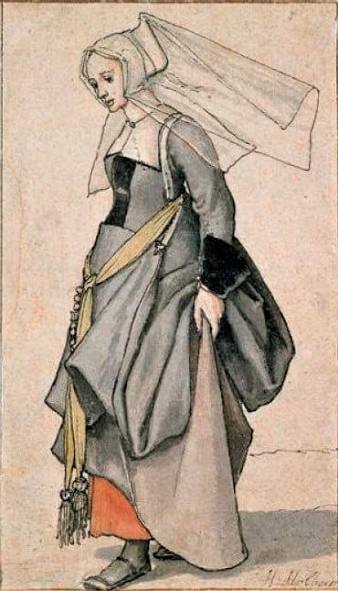
            Mary Tenche knew. She’d been crying, eyes rimmed with red, a good lawn handkerchief clutched in one fist. She was dressed for home, hair covered with a starched white coif, a plain gown and kirtle, slippers on her feet. She was a small woman, in her late thirties, with dark hair and smoky eyes, the mistress of a handsome home. A fire burned in the hearth, the chimney drawing well. A pair of painted hangings added colour to the walls. Glazed windows overlooked the plot behind the building, a view over a stone building where the merchant warehoused his cloth, the small counting house behind, then the garden. The man might have been cloth searcher for his year, but he’d made a pretty penny before all that.

            ‘My condolences, madam,’ I said and she dipped her head in acknowledgement. I’d heard the rumours, that it hadn’t been a loving marriage. Doubtless Sykes knew the same thing; he wouldn’t have been here otherwise, with an eye on his chances.

Three children alive, the elder boy apprenticed to a merchant in Antwerp, learning the other end of the business. The second was starting to learn the trade with John Faulkner, down at his dye works on the river. Jane, the girl, was ten, already betrothed to Henry Atkinson, a merchant’s son, aged just twelve. A few years yet before the ceremony.

‘Was your husband at home last night?’ I asked. Sykes glared at me. He wanted her to himself, a chance to press his suit and its advantages while she was at her weakest.

‘No,’ she answered. Her voice was low and husky. ‘He said he had to meet someone.’ She raised her gaze to stare at me. ‘When I woke this morning, he wasn’t here.’

‘Did you mention it to anyone?’

She shook her head. ‘It wasn’t the first time.’

‘Who was he meeting, madam?’

‘He didn’t tell me. He never discussed his business at home.’

Talk was that Tenche had a lover; it would be easy enough to discover her name. The servants likely knew it. They saw more than their betters imagined. I’d inquire of them in a few minutes, away from Skyes.

‘I’m sorry to have to ask questions at this time, madam,’ I said. ‘Was he having any problems with his work?’

‘Nothing he mentioned.’

One final thing. ‘Did he know Richard Harding?’

‘Who?’

It was the answer I’d expected.

‘No matter, madam. Thank you.’

            Skyes gave a grim, satisfied smile as I bowed and left.

The servants had gathered in the buttery, the oldest part of the house where they kept the ale and wine. A fine place for gossip, although the chatter dropped to nothing as soon as they saw me.

            ‘Mistresses-’ I began, but Elizabeth Carr, the maid, cut me off.

            ‘Here about the master, Gil Craven?’ She was an older woman with a harsh tongue she curbed around the Tenches. A gown that had probably once belonged to Mrs Tenche, worn now, the colours faded, covered with an apron that cover her from neck to feet.

            ‘I am.’

            ‘Murder. That’s what people are saying.’

            ‘It’s true enough,’ I admitted.

            ‘Terrible.’ She shook her head, although curiosity gleamed in her eye. ‘How did it happen?’

            I countered with a question of my own.

            ‘He went out last night. Mrs Tenche says he didn’t return. Do you know where he was?’

            The cook, Hannah Oliver, gave Sarah, the younger maid, a quick warning look before she could speak.

            ‘You know,’ I said. ‘Tell me, I’ll find out sooner or later.’ I pressed my lips together. ‘I’m looking for his murderer.’

            ‘Catherine Warden,’ Sarah spoke the name in a rush before the others could stop her.

            A widow. A woman of middling wealth, left enough money not to need to pinch her pennies. She’d shown no inclination to marry, content with the freedom her status brought. Tenche had been her lover. He’d kept it quiet from the town. But of course his servants knew.

            ‘How long?’ I asked. But they looked away. Sarah’s cheeks were a broad, blushing red. I’d get little more from them out of loyalty to their mistress. No matter. I had a thread I could twitch. ‘God’s blessings on you,’ I said as I left.
The curious had gone from the house of pleas. The curate and churchwardens had left to finish beating the parish bounds. The members of the Waits had stayed, sipping small beer, wondering what to do and looking to me for guidance as I came through the door.

            Thomas Dawson’s face was still pale; the first body he’d really seen. Rolly raised his eyebrows, a man who’d experienced more than most of us, one who’d served time in the navy under John Hawkins, a crewman on the commander’s second slaving voyage from Africa to the New World. He’d come home to Leeds with money in his pocket, never speaking about his experience, spending fast and wide and drinking like a man whose desire was to forget.

            ‘Tom, I want you to stand guard here. I imagine the undertaker will arrive this afternoon. The widow will inform him.’

            A reluctant nod as he sat on a bench, turning away from the corpse.

            ‘What about me?’ Rolly asked.

            ‘Talk to the people in the cloth warehouses,’ I told him after a moment. ‘See if they know whether Tenche had any business problems. Come and find me later.’

            ‘Right.’ Before he could stand, the door opened wide and Richard Harding strode in, a tall, sallow man, hair drawing back on his scalp and a frightened look on his face/

            ‘Where the devil have you been?’ I asked.

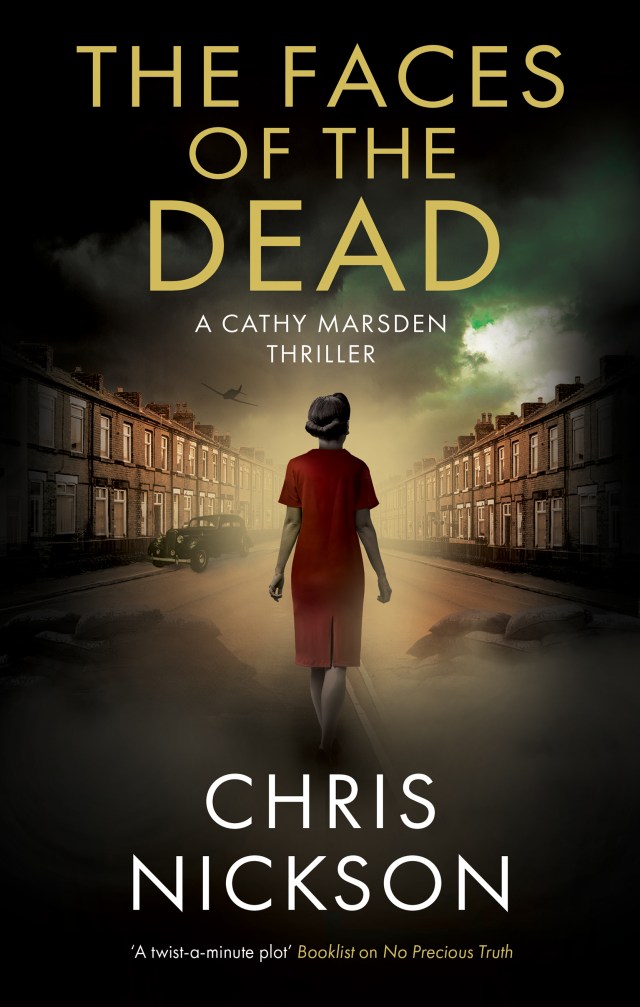
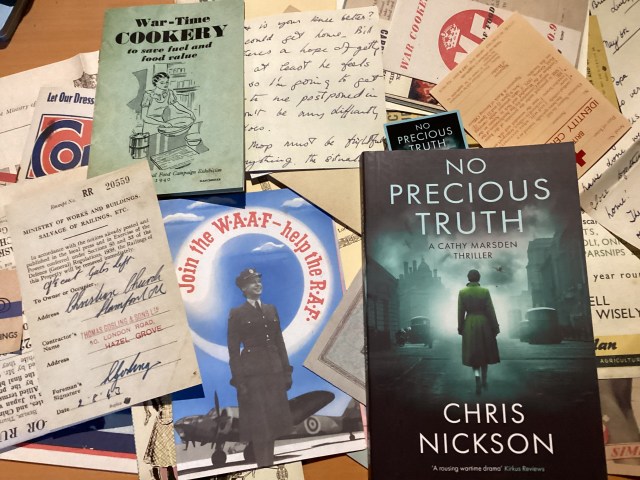
Thefourth part will arrive in a week or two – if you want it. Meanwhile, both the Cathy Marsden WWII novels, No Precious Truth and The Faces Of The Dead are currently £1.99 on Kindle – the first is just 99p (free with Kindle Unlimited). That’s two books for around the price of a coffee. You’re not likely to find a better bargain this week. I truly hope you’ll but them – because they’re good. I sweated blood and tears over those books!
Rogation Day Part 2

A number of you seemed to like the first part of Rogation Day, which I posted last week (if you missed it, catch up here). Here’s the second installment, and it appears to be turning into a serial. That’s both good and bad. I nered to keep it going and make sure there’s enough to keep you interested. But I’m also getting caught up in the tell of it and what might happen. No, honestly, I don’t know; I’m truly making it up as I go. But Elizabethan Leeds is a new era for me, so we’ll discover it together, shall we?

Meanwhile, on with Part 2…

            ‘Where should we take him, Gil?’ I was the inspector of the night watch; the decision and the investigation was mine.

            I thought for a moment. ‘The house of pleas,’ I said. Plenty of room to gather the witnesses and hear testimony and have a proper view of the corpse. ‘Everyone there and wait.’

            They made their way in twos and threes, reluctant to be a part of this. But this was murder, plain to everyone with eyes in their face.

            My mind was galloping. Men ended up in brawls, wounded in pain. That usually came after drinking. Straightforward crimes. This was going to be much harder.

     I strode out ahead of the others, back into Leeds along Mabgate, banging on Richard’s door once again before going in. I knew I’d find nothing, but I had to check.

            Tenche dead, Richard missing. I didn’t know of any connection between them, but there had to be something; I’d never believed in coincidence.

2

The body was laid out along the table and stripped, just a sheet for modesty. I’d sent for the coroner, Mr Bateson, to come and examine it, offer his judgement, and given a boy a farthing to gather the aldermen. I could hear voices outside as a crowd gathered, drawn by the horror of the news.

            ‘He was stabbed.’ Bateson’s words filled the expectant silence in the room. He was the apothecary, the only man in Leeds with any knowledge of medicine. ‘There, under his ribs.’ The man pointed it out for everyone to see before turning to me. ‘My fee?’

            God’s love. A lost life in front of him and all he could consider was a few pennies.

            ‘Send your bill,’ I told him. ‘You’ll be paid.’

            As soon as he’d gone, I raised my voice. ‘Any doubt this was murder?’ Nobody dissented.

            We needed to find the killer, and the reason. Tenche’s Catholicism, or his position as cloth searcher? Where was Richard? With each passing moment, my doubts grew.

Richard had never been in a fight, as peaceable a man as they came. A fine musician and a good carpenter; he’d completed his apprenticeship, never an argument with his master, and solid in his work. Our wives died within a year of each other, his Bertha in her childbed after a stillborn baby, my Lizzie taken by the sleeping sickness. Neither of us had remarried. We’d never discussed it, but I suspect our reasons were the same: we couldn’t face heartbreak again. Both of us were find alone, meeting two or three evenings a week to practice with the Waits or play for dances. A few drinks afterwards.

            Not a violent bone in his body. What had happened to him?

I noticed Alderman Sykes stood at the back of the hall, looking quizzically down at the floorboards, hat in his hand, the plumes fluttering as they caught the small breeze from the open window. He was well-dressed as ever, a black doublet, sleeves artfully slashed to display the blood red material beneath. Black hose and buckled shoes, a small white ruff around his neck. The starched pleats neatly ironed.

   I pulled off my cap as I approached him, bowing my head for a moment.

            ‘Good morrow to you, master.’

            ‘Hardly that with Tenche dead,’ he said.

            ‘It’s murder.’

            ‘I see.’         

‘We’ll need to tell his wife,’ I said.

            ‘I imagine she already knows,’ he replied. ‘Don’t you think the whole town will have heard by now, Gil Craven?’

            ‘Mrs Tenche might have information to guide us, sir.’

            ‘Possibly,’ he agreed after a few seconds’ consideration. ‘She’ll need to arrange the burial.’

            ‘You knew him well, didn’t you?’

            ‘I knew him,’ he said cautiously. ‘I wouldn’t say well.’

            In a town like Leeds, every face was familiar. With a little over three thousand souls, each day you saw the same folk day after day. Friendships, though, were different. I’d often seen Sykes and Tenche in the alehouses, heads together as they talked.

            ‘Do you think it had to do with his position?’ Sykes asked.

            ‘I don’t know, sir. That’s why I need to ask questions.’

            He nodded. Walter Tenche had been serving his year as cloth searcher. It was a position of honour among the merchants, voted by the others for his honesty and integrity. He examined the cloth offered for sale on Leeds Bridge on market days, every Tuesday and Saturday, making sure the quality of the worsted and northern dozens was high enough to be sold as Leeds cloth. We didn’t have guilds like York, so our merchants could sell more cheaply. The cloth searcher could refuse pieces and ensure the reputation of everything offered here was high. A dispute over that could well be a reason for murder.

            Sykes was a merchant. He’d been born to it. His father had made money in the wool trade and Charles Sykes has seen business expand. He’d built a stone loom house behind his home on Briggate, three apprentices working for him. A wealthy man with a heavy purse dangling from his belt, next to the sharp dagger in its sheath.

            He was very aware of his status in the town, but a good man for all that. Did he know about Tenche’s hidden Catholicism? Unless it was important, that was something I hoped to keep quiet; no need for it to taint him in death.

            ‘I’ll go and see his widow,’ Sykes said. I could see the calculation behind his eyes. He had three children, the oldest ten; his wife had died last year. Mrs Tenche had two young children of her own. Very soon she would need the protection and money of a husband.

The third part will arrive in a week or two – if you want it. Meanwhile, both the Cathy Marsden WWII novels, No Precious Truth and The Faces Of The Dead are currently £1.99 on Kindle – the first is just 99p (free with Kindle Unlimited). That’s two books for around the price of a coffee. You’re not likely to find a better bargain this week. I truly hope you’ll but them – because they’re good. I sweated blood and tears over those books!