One Month to Markham

It’s four weeks until the publication of Dark Briggate Blues, set in Leeds in 1954 and featuring enquiry agent Dan Markham. It’s 50s English provincial noir, Northern noir if you like, and very full of Leeds at the time, including the jazz club Studio 20, which was downstairs at 20, New Briggate (where Sela Bar now stands).

It is, I hope, a very dark book. That was my intention. And to whet your appetite, here’s another little extract. You can pre-order it here. And it’s in paperback, people, paperback!

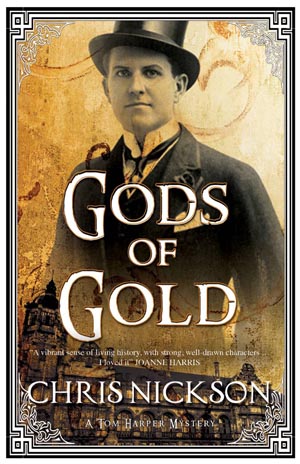
Although it’s not out until the New Year, I would like to point out that I have several other Leeds books out there – the Richard Nottingham series and the first in my new Tom Harper Victorian series, God of Gold. They (ahem) make wonderful Christmas presents, whether in hard copy or ebook. Thank you, and back to your regularly scheduled broadcast.

The ‘phone rang before he had a chance to sit down, the bell ringing loud and urgent.
He answered with the number and heard the clunk of coins dropping in a telephone box.
‘Mr Markham?’ a man’s voice said.
‘That’s right.’
‘I understand that you’re missing something.’ The hairs on the back of his neck prickled and he drew in a breath without thinking. The Webley stolen from his desk. ‘Well, Mr Markham? Do you know what I mean?’
‘I do,’ he answered quietly. ‘Who are you?’
‘Tell me,’ said the caller, ignoring the question, ‘would you like the return of the … item? Or perhaps I should see it ends up in official hands?’
He didn’t know the voice. Not local. From the South. Long vowels.
‘What do you want?’
‘Many things, Mr Markham.’ The man sounded amused, in control and taking his time. ‘But for the moment I’ll settle for your attention.’
‘You have it,’ he said.
‘Do you know the Adelphi?’
‘Yes.’ It was a grubby old Victorian pub at the top of Hunslet Lane, just over the river.
‘Be in there at, oh, let’s say one o’clock. I’ll tell you more then.’
‘How will I know you?’
The voice turned to a chuckle.
‘You won’t need to, Mr Markham. After all, I know you.’
The line went dead. Markham replaced the receiver and looked at the clock. A little after noon. Soon enough he’d know exactly who was so keen to set him up. Someone had known he was back in the office. Why, he wondered? What the hell was going on?
In the service, as part of his military intelligence training, they’d taught him how to shadow someone and how to throw off a tail. Everything hammered into him in drill after drill. He’d never been as good as some of the others. His friend, Ged Jones, seemed able to disappear in a crowd. But Markham could get by. He walked out purposefully, taking a quick note of the faces on the street as he crossed Briggate, slipped through County Arcade and Cross Arcade, then along Fish Street, ending up staring at the reflections in a window on Kirkgate to see who was behind him.
The man was an amateur. By the time he came out into Kirkgate he was almost running, staring around nervously until he spotted Markham. Older, NHS specs, his overcoat buttoned up and belted with a scarf at the neck and a hat was pulled down on a ruddy, jowly face. It was no one he recognised, no one he could remember ever seeing. But the face was imprinted on his memory now.
He set off again, ambling back to Briggate and stopping often, then down to the bridge over the river Aire. The buildings were old, decayed and black from a hundred or more years of dirt that had built up layer on layer.
The Adelphi probably hadn’t changed since the turn of the century. An old gas lamp still hung over the front door. Inside, the pub was dark wood, dull brass and bevelled etched glass, all neglected and in need of a thorough cleaning. At the bar he ordered an orange squash.
A table and two chairs sat in the middle of the snug. This room was different; freshly scrubbed, the hearth black-leaded, tiles gleaming and windows shining.
‘Have a seat, Mr Markham,’ the man by the window said. The voice on the telephone. He checked his wristwatch. ‘You’re right on time.’ He smiled. ‘Punctuality is a good sign.’
‘Of what?’
‘An organised man.’ He was probably in his late forties but well-kept, broadly built, neat dark hair shot through with grey. His nose had been broken in the past and there were small scars across his knuckles. But he didn’t have the look of a bruiser. His eyes shone with intelligence. The dark suit was costly, a subdued pinstripe, cut smartly enough to hide the start of a belly. The tie was real silk. He sat and gestured at the chair opposite. ‘We have things to talk about.’

Behind the Gods of Gold

I’d always said I’d never write a Victorian crime novel. I was certain of it. With so many already out there, what was left to add?
But somehow, I reckoned without Leeds tapping me on the shoulder.
Walk through the city and the Victorian era doesn’t just echo. It roars. It’s a time you can literally reach out and touch. The city’s architectural jewels are its grand Victorian buildings – the Town Hall, the Corn Exchange, and the solid, powerful edifices put up by the banks and insurance companies. They were the bricks and mortar promises of solidity, propriety and prosperity. A reminder of when this was one of the industrial powerhouses of the British Empire. And at the other end of the scale, the back-to-back houses in places like Harehills and Kirkstall stand as brusque accusations of the poverty so rife back then.
A world away, yet still close enough to be a very real part of today. But I wasn’t interested.
Then Leeds gave me the tale of its Gas Strike.
By 1890, the workers had begun to organise. The unions had were gaining strength. And that year, with the Leeds Gas Strike, they showed their power. Their terms of work changed by the council, wages cut, jobs slashed, the gas workers had no choice but to walk out. ‘Replacement workers’ were drafted in from Manchester and London to stoke the furnaces and keep the gas flowing. But they didn’t know they’d have to face a mob thousands strong. In fact, they’d been recruited under false pretences, believing they’d be employed at a new works. As soon as they discovered the truth, most abandoned their posts. The lights were flickering. Factories were closing. Within three days the strikers had their victory. For austere times it was an glorious story: the workers won.
I was intrigued. This might be a tale worth telling.

Reading more about the strike led to Tom Maguire. He was a young labour activist in Leeds, still in his middle twenties in 1890, a believer who helped build the labour movement, and became one of the founders of the Independent Labour Party. More than that, he was a poet (it’s a line from one of his works that gives Gods of Gold its title) who died in poverty in 1895 – yet thousands reportedly lined the roads as his coffin was taken to the cemetery.
There was definitely something here. But it needed something more personal to tip the scales and make me renege on my no-Victorian promise.
A couple of years ago I wrote a short story that took its inspiration from Atkinson Grimshaw’s dark, evocative painting Reflections On The Aire: On Strike, Leeds 1879. It shows the river, almost empty of ships, and a woman standing alone on the bank, clutching a bundle. Annabelle Atkinson. That was what I called her. And even then I knew we had unfinished business. She was too powerful, too vibrant a character to ever be satisfied with a single, brief appearance.
But she bided her time. It was only when I was researching the Gas Strike that she came and sat beside me in a swish of velvet.
‘I know all about this, luv,’ she said with a smile. ‘I was there, remember? Do you want me to tell you about it?’
So Annabelle introduced me to her fiancé, Detective Inspector Tom Harper, and the other characters in her life. We strolled along the streets of Hunslet and the Leylands together, drank in the Victoria in Sheepscar, were jostled by the crowds on Briggate and window-shopped in the Grand Pygmalion on Boar Lane. We sang along with the music hall tunes they loved – “My Old Man,” “Sidney The One-Week Wonder,” “’Enerey The Eighth”.
After that, how could I walk away?
Especially when with them came the ghosts of my own family, of Isaac Nickson who brought his wife and children to Leeds from Malton in the 1820s, of his descendants – William, John William, Harold Ewart – and the stories they had to tell me.
I couldn’t refuse. I didn’t even have a choice any more.
‘Tom Harper pounded down Briggate, the hobnails from his boots scattering sparks behind him…’

Tomorrow: Gods of Gold

It’s been a long time coming, but tomorrow is the publication day for Gods of Gold (buy it, please!). Today, as the final teaser, how Tom Harper met Annabelle Atkinson:

She’d been collecting glasses in the Victoria down in Sheepscar, an old apron covering her dress and her sleeves rolled up, talking and laughing with the customers. He thought she must be a serving girl with a brass mouth. Then, as he sat and watched her over another pint, he noticed the rest of the staff defer to the woman. He was still there when she poured herself a glass of gin and sat down next to him.
‘I’m surprised those eyes of yours haven’t popped out on stalks yet,’ she told him. ‘You’ve been looking that hard you must have seen through to me garters.’ She leaned close enough for him to smell her perfume and whispered, ‘They’re blue, by the way.’
For the first time in years, Tom Harper blushed. She laughed.
‘Aye, I thought that’d shut you up. I’m Annabelle. Mrs Atkinson.’ She extended a hand and he shook it, feeling the calluses of hard work on her palms. But there was no ring on her finger. ‘He’s dead, love,’ she explained as she caught his glance. ‘Three year back. Left me this place.’
She’d started as a servant in the pub when she was fifteen, she said, after a spell in the mills. The landlord had taken a shine to her, and she’d liked him. One thing had led to another and they’d married. She was eighteen, he was fifty, already a widower once. After eight years together, he died.
‘Woke up and he were cold,’ she said, toying with the empty glass. ‘Heart gave out in the night, they said. And before you ask, I were happy with him. Everyone thought I’d sell up once he was gone but I couldn’t see the sense. We were making money. So I took it over. Not bad for a lass who grew up on the Bank, is it?’ She gave him a quick smile.
‘I’m impressed,’ he said.
‘So what brings a bobby in here?’ Annabelle asked bluntly. ‘Something I should worry about?’
‘How did you know?’
She gave him a withering look. ‘If I can’t spot a copper by now I might as well give up the keys to this place. You’re not in uniform. Off duty, are you?’
‘I’m a detective. Inspector.’
She pushed her lips together. ‘Right posh, eh? Got a name, Inspector?’
‘Tom. Tom Harper.’
He’d returned the next night, and the next, and soon they started walking out together. Shows at Thornton’s Music Hall and the Grand, walks up to Roundhay Park on a Sunday for the band concerts. Slowly, as the romance began to bloom, he learned more about her. She didn’t just own the pub, she also had a pair of bakeries, one just up Meanwood Road close to the chemical works and the foundry, the other on Skinner Lane for the trade from the building yards. She employed people to do the baking but in the early days she’d been up at four each morning to take care of everything herself.
Annabelle constantly surprised him. She loved an evening out at the halls, laughing at the comedians and singing along with the popular songs. But just a month before she’d dragged him out to the annual exhibition at Leeds Art Gallery.
By the time they’d arrived, catching the omnibus and walking along the Headrow, it was almost dusk.
‘Are you sure they’ll still be open?’ he asked.
‘Positive,’ she said and squeezed his hand. ‘Come on.’
It seemed a strange thing to him. How would they light the pictures? Candles? Lanterns? At the entrance she turned to him.
‘Just close your eyes,’ she said, a smile flickering across her lips. ‘That’s better.’ She guided him into the room at the top of the building. ‘You can open them again now.’
It was bright as day inside, although deep evening showed through the skylights.
‘What?’ he asked, startled and unsure what he was seeing.
‘Electric light,’ she explained. She gazed around, eyes wide. ‘Wonderful, eh?’ She’d taken her time, examining every painting, every piece of sculpture, stopping to glance up at the glowing bulbs. Like everything else there, she was transfixed by the light as much as the art. To him it seemed to beggar belief that anyone can do this. When they finally came out it was full night, the gas lamps soft along the street. ‘You see that, Tom? That’s the future, that is.’

Two Days to Gods of Gold…

and here’s how Tom Harper became a copper.

gog finalx

He’d wanted to be a policeman as long as he could remember. When he was a nipper, no more than a toddler, he’d often follow Constable Hardwick, the beat bobby, down their street in the Leylands, just north of the city centre, imitating the man’s waddling walk and nods at the women gathered on their doorsteps. To him, the decision to join the force was made there and then. He didn’t need to think about it again. But that certainty shattered when he was nine. Suddenly his schooldays had ended, like every other boy and girl he knew. His father found him work at Brunswick’s brewery, rolling barrels, full and empty, twelve hours a day and Saturday mornings, his pay going straight to his mam. Each evening he’d trudge home, so tired he could barely stay awake for supper. It took two years for his ambition to rekindle. He’d been sent on an errand that took him past Millgarth police station, and saw two bobbies escorting a prisoner in handcuffs. The desire all came back then, stronger than ever, the thought that he could do something more than use his muscles for the rest of his life. He joined the public library, wary at first in case they wouldn’t let someone like him borrow books. From there he spent his free hours reading; novels, politics, history, he’d roared through them all. Books took him away and showed him the world beyond the end of the road. The only pity was that he didn’t have time for books any longer. He’d laboured at his penmanship, practising over and over until he could manage a fair, legible hand. Then, the day he turned nineteen, he’d applied to join the force, certain they wouldn’t turn him down.
They’d accepted him. The proudest day of his life had been putting on the blue uniform and adjusting the cap. His mother had lived to see it, surprised and happy that he’d managed it. His father had taken him to the public house, put a drink in his hand and shouted a toast – ‘My son, the rozzer.’
He’d been proud then; he’d loved walking the beat, each part of the job. He learned every day. But he was happier still when he was finally able to move into plain clothes. That was real policing, he’d concluded. He’d done well, too, climbing from detective constable to sergeant and then to inspector before he was thirty.

To Whet Your Appetite

My new book, Gods of Gold, is published in the UK on August 28th. Yes, I’d like you to buy it, of course I would, don’t silly. To give you a little inducement, here’s a taster, a teaser, the opening. It’s set in 1890, against the backdrop of the Leeds Gas Strike, and features Detective Inspector Tom Harper of Leeds Police.

Tom Harper pounded down Briggate, the hobnails from his boots scattering sparks behind him. He pushed between people, not even hearing their complaints as he ran on, eyes fixed on the man he was pursuing, leaping over a small dog that tried to snap at his ankles.

‘Police!’ he yelled. ‘Stop him!’

They didn’t, of course they didn’t, but at least they parted to let him through. At Duncan Street, under the Yorkshire Relish sign, he slid between a cart and a tram that was turning the corner. His foot slipped on a pile of horse dung and he drew in his breath sharply, the moment hanging. Then the sole gripped and he was running again.

Harper ducked in front of a hackney carriage, steadying himself with a hand on the horse’s neck. He felt its breath hot against his cheek for a second, then plunged on. He was fast but the man in front was even faster, stretching the distance between them.

His lungs were burning. Without even thinking, he glanced across at the clock on the Ball-Dyson building. Half past eleven. He forced his feet down harder, arms pumping like a harrier.

As they reached Leeds Bridge the man leapt into the road, weaving between the traffic. Harper followed him, squeezing sideways between a pair of omnibuses, seeing the passengers stare down at him in astonishment through the window. Then he was free again, rushing past the row of small shops and watching the man disappear round the corner on to Dock Street.

By the time he arrived the street was empty. He stood, panting heavily, holding on to the gas lamp on the corner, unable to believe his eyes. The man had simply vanished. There was nothing, not even the sound of footsteps. Off to his left, a cluster of warehouses ran down to the river. Across the road the chimneys of the paper mill belched their stink into the air. Where had the bugger gone?


Harper had been up at Hope Brothers on Briggate, barely listening as the manager described a shoplifter. The man’s mouth frowned prissily as he talked and rearranged a display of bonnets on a table. Outside, the shop boy was lowering the canvas awning against the June sun.

Harper scribbled a word or two in his notebook. It should be the beat bobby doing this, he thought. He was a detective inspector; his time was more valuable than this. But one of the Hopes lived next door to the new chief constable. A word or two and the superintendent had sent him down here with an apologetic shrug of his shoulders.

Then Harper heard the shout. He dashed out eagerly, the bell tinkling gently as he threw the door wide. Further up the street a man gestured and yelled, ‘He stole my wallet!’

That was all he needed. Inspector Harper began to run.


He tipped the hat back and wiped the sweat off his forehead. The air was sultry, hot with the start of summer. Where was the sod? He could be hiding just a few yards away or already off beyond a wall and clear away in Hunslet. One thing was certain: Harper wasn’t going to find him. He straightened his jacket and turned around. What a bloody waste of a morning.

He’d wanted to be a policeman as long as he could remember. When he was a nipper, no more than a toddler, he’d often follow Constable Hardwick, the beat bobby, down their street in the Leylands, just north of the city centre, imitating the man’s waddling walk and nods at the women gathered on their doorsteps. To him, the decision to join the force was made there and then. He didn’t need to think about it again. But that certainty shattered when he was nine. Suddenly his schooldays had ended, like every other boy and girl he knew. His father found him work at Brunswick’s brewery, rolling barrels, full and empty, twelve hours a day and Saturday mornings, his pay going straight to his mam. Each evening he’d trudge home, so tired he could barely stay awake for supper. It took two years for his ambition to rekindle. He’d been sent on an errand that took him past Millgarth police station, and saw two bobbies escorting a prisoner in handcuffs. The desire all came back then, stronger than ever, the thought that he could do something more than use his muscles for the rest of his life. He joined the public library, wary at first in case they wouldn’t let someone like him borrow books. From there he spent his free hours reading; novels, politics, history, he’d roared through them all. Books took him away and showed him the world beyond the end of the road. The only pity was that he didn’t have time for books any longer. He’d laboured at his penmanship, practising over and over until he could manage a fair, legible hand. Then, the day he turned nineteen, he’d applied to join the force, certain they wouldn’t turn him down.

They’d accepted him. The proudest day of his life had been putting on the blue uniform and adjusting the cap. His mother had lived to see it, surprised and happy that he’d managed it. His father had taken him to the public house, put a drink in his hand and shouted a toast – ‘My son, the rozzer.’

He’d been proud then; he’d loved walking the beat, each part of the job. He learned every day. But he was happier still when he was finally able to move into plain clothes. That was real policing, he’d concluded. He’d done well, too, climbing from detective constable to sergeant and then to inspector before he was thirty.

And now he was chasing bloody pickpockets down Briggate. He might as well be back in uniform.

gog finalx

You Don’t Know Tom Harper, Do you?

But you will. Well, I hope you will, once Gods of Gold is published (end of August in the UK). Anyone coming in after Richard Nottingham has big shoes to fill. But almost 160 years after Richard, perhaps Inspector Tom Harper is the man to do it.

Although he’s the central character in the new series, he wasn’t the first one to leap out at me fully-formed. That was his fiancée, Annabelle Atkinson, a widow of about 30 who runs the Victoria pub at the bottom of Roundhay Road in Leeds. She’d been in a short story I wrote, Annabelle Atkinson and Mr Grimshaw and she began to haunt me. But she wasn’t yet the Annabelle of the book. There was still a way to go.

And she had more to tell me.

It clicked into place when I realised she ran the Victoria. It’s a pub that really existed until a few years ago, and the building is still standing. The woman who really ran it was a distant relative – at least around 1920. My father, who lived in Hunslet, would spend his summers there, as it had a big garden, and a piano where he could practice to his heart’s content. She also owned a few bakeries in the area and did a little moneylending; a consummate businesswoman, and a strong, independent woman who’d started out as a servant in the pub, married the owner for love, then run the business herself after she died.

I had her. That was a beginning.

After that, I happened to read about the Leeds Gas Strike of 1890. It was a blatant attempt by the Gas Committee of Leeds Council to save money by basically firing workers then hiring fewer of them back at a lower wage and under terms that largely deprived them of their rights, a move that resonates so much with what’s happening everywhere today.

The difference is that the strikers won. The Gas Committee had to capitulate. Hard to imagine that happening these days. Who wouldn’t want to write about a situation like that?

And that was where Tom Harper walked in. He had to be somewhat political, and on the left end of the spectrum. So he’d be a working class lad. And he needed a detective. From there, he simply came together. He’d grown up in the Leylands, just north of the town centre, before it became a Jewish area. He’d lived in a back-to-back house, left school when he was nine to work rolling barrels at Brunswick Brewery. But he wanted to be a policeman. He’d educated himself by borrowing books from the public library and finally, when he was 19, he’d joined Leeds Police. He’d spent six years on the beat, covering the courts and yards between Briggate and Lands Lane. His parents had died, his sisters were happily married, and he lived in lodgings just off Chapeltown Road.

And there was Tom. Of course, he couldn’t do everything alone, but there’s more to come in the book, of course. And he still had to meet Annabelle and the two of them had to become close…you’ll have to read Gods of Gold to discover all that, though.

The Ways of Darkness

By now, many of you know that Gods of Gold, my mystery set in Victorian Leeds, comes out in August. It is – I hope – the first in a series, and I’m working on the second. Because I’m in one of those devil-may-care moods, I thought you might enjoy the start of the sequel, The Ways of Darkness. Actually, I thought it might help build anticipation for the first book. I’m evil that way….

DECEMBER 1890

CHAPTER ONE

“Have you heard a word I said, Tom Harper?”

“Of course I have.” He stirred and stretched in the chair. “You were talking about visiting your sister.”

Annabelle’s face softened.

“It’ll only be for an hour. We can go in the afternoon, after we’ve eaten.”

“Of course,” he told her with a smile. He was content, finally at home and warm for the first time since morning.

He’d spent the day chasing around Leeds on the trail of a burglar, no closer to catching him than he’d been a month before. He’d gone from Burley to Hunslet, and never a sniff of the man. Still, better that than being in uniform; half of the constables had been on patrol in the outdoor market, cut by the December wind as they tried to nab the pickpockets and sneak thieves. It was still blowing out there, howling and rattling the window frames. At least as a police inspector with he could take Hackney cabs and omnibuses and dodge the weather for a while.

But tomorrow he was off duty, the first Christmas in five years that he hadn’t worked. Christmas 1890, the first together with his wife. He turned his head to look at her and the wedding ring that sparkled in the light. Five months married. Annabelle Harper. The words still made him smile.

“What?” she asked.

He shook his head.

“Nothing.”

He often glanced at her when she was busy with something else, working in the kitchen or at her desk, going through the figures for her businesses. Sometimes he could scarcely believe she’d married him. Annabelle had grown up in the slums of the Bank, another daughter in a poor Irish family. She’d started work here in the Victoria and eventually married the landlord. Six years later, after he died, everyone advised her to sell. But she’d held on and kept the place, trusting her instincts. She’d built it into a healthy business, then seen a chance and opened bakeries in Sheepscar and Meanwood that were doing well. Annabelle Harper was a rich woman. Not that anyone round here called her Harper. To them she’d always be Mrs. Atkinson, the name she’d carried for so long.

And she was his.

“You look all in,” she told him.

Harper gave a happy sigh. Where they lived, the rooms over the public house, felt perfectly comfortable, curtains drawn against the winter night, the fire in the hearth and the soft hiss of the gas lights. He didn’t even want to move.

“I’m cosy,” he said. “Come and give me a cuddle.”

“A cuddle? You’re lucky I put your supper on the table.”

She stuck out her tongue, her gown swishing as she came and settled in his arms. He could hear the voices in the bar downstairs. Laughter and a snatch of song from the music halls.

“Don’t worry,” she told him. “I’ll send them on their way early tonight. They all have homes to go to. Then we’ll have some peace and quiet.”

But only for a few hours. She’d be up before dawn, the way she always was, working next to the servants, stuffing the goose that was waiting in the kitchen, baking the bread and preparing the Christmas dinner. Dan the barman and the girls who worked for her would join them at the table. They’d light candles on the tree, sing, laugh, exchange gifts and drink their way through the barrel of beer she’d set aside.

After their bellies were full the two of them would walk over to visit her sister, taking presents for Annabelle’s nieces and nephews. For one day, at least, he could forget all the crime in Leeds. Billy Reed, his sergeant, was would cover the holiday. Then Harper would be return on Boxing Day, back to pursue the damned burglar.

Annabelle stirred.

“Did you hear that?” she asked.

“What?”

He gazed at her. He hadn’t heard a thing. Six years before, while he was still a constable, he’d taken a blow on the ear that left him partially deaf. The best the doctor had promised was that his hearing might return in time. But in the last few months, since autumn began, it had grown a little worse. Sometimes he missed entire sentences, not just words. His ear simply shut off for a few seconds. He’d never told anyone, scared that it would go on his record, that someone would tell.

“On the stairs.”

He listened. Still nothing. Then someone was knocking on the door. Before he could even move, she rose swiftly to answer it.

“It’s for you.” Her voice was dark.

He’d seen the constable down at Millgarth station. One of the new intake, uniform carefully pressed, the cap pulled down smartly on his head and his face eager for excitement. Had he ever looked as young as that?

“I’m off duty-” he began.

“I know, sir.” The man blushed. “But Superintendent Kendall told me to come and fetch you. There’s been a murder.”

Harper turned helplessly to Annabelle.

“You go, Tom.” She kissed him on the cheek. “Just come home as soon as you can.”

CHAPTER TWO

The cold clawed his breath away. Stars shone brilliantly in a clear sky. He huddled deeper into his overcoat and pulled the muffler tight around his neck.

“What’s your name?” Harper asked as they started down the road.

“Stone, sir. Constable Stone. Started three month back.”

“And where are we going, Mr. Stone?”

“The Leylands, sir.”

Harper frowned.

“Whereabouts?”

“Trafalgar Street.”

He knew it well, no more than a stone’s throw from where he’d grown up on Noble Street. All of it poverty scented by the stink of malt and hops from the Brunswick Brewery up the road. Back-to-backs as far as the eye could see. A place where the pawnbrokers did roaring business each Monday as housewives took anything valuable for the cash to last until Friday payday.

In the last few years the area had filled with Jewish immigrants, almost every house packed with them, from Russia and Hungary and countries whose names he didn’t know, while the English moved out and scattered across the city. Yiddish had become the language of the Leylands. Only the smell of the brewery and the lack of money remained the same.

“Step out,” he told the constable. “We’ll freeze to the bloody spot if we stand still.”

Harper led the way, through the memory of the streets where he used to run as a boy. The gas lamps threw little circles of light but he didn’t need them; he could have found his way in pitch blackness. There streets were empty, curtains closed tight. People would be huddled together in their beds, trying to keep warm.

As they turned the corner into Trafalgar Street he caught the murmur of voices. Suddenly lights burned in the houses and figures gathered on their doorsteps. Harper raised his eyes questioningly at Stone.

“The outhouses, sir. About halfway down.”

The cobbles were icy; Harper’s boots slipped as he walked. Conversation ended as they passed, mean and women looking at them what sad, suspicious eyes. They were goys. Worse, they were authority.

They passed two blocks of four houses before Stone turned and moved between a pair of coppers, their faces ruddy and chilled, keeping back a small press of people. Someone had placed a sheet over the body. Harper knelt and pulled it back for a moment. A young man, strangely serene in death. Straggly dark hair, a white shirt without a collar and a dark suit. The inspector ran has hands over the clothes, feeling the blood crusted where the man had been stabbed. Slowly, he counted the wounds. Four of them. All on his chest. The corpse had been carefully arranged. The body was straight, the arms at ninety degrees to make the shape of a cross.

Harper stood again and noticed Billy Reed talking to one of the uniforms and scribbling in his notebook. The sergeant nodded as he saw him.

“Do we know who he was?”

“Not yet.” Reed rubbed his hands together and blew on them. “Best as I can make out, that one found him an hour ago. But I don’t speak the lingo.” He nodded at a middle-aged man in a dark coat, a black hat that was too large almost covering his eyes. “He started shouting and the beat bobby came along. They called me out.” He shrugged. “I told the super I could take care of it but he wanted you.” His voice was a mixture of apology and resentment.

“It doesn’t matter.”

It did, of course. He didn’t want to be out here in the bitter night with a corpse. He wanted to be at home with his wife, in bed and feeling the warmth of her skin. But Kendall had given his orders.

The man who’d found the body stood apart from the others, head bowed, muttering to himself. He scarcely glanced up as Harper approached, lips moving in undertone of words that was just a whisper.

“Do you know who that man was?” he asked.

Er iz toyt.” He’s dead.

“English?” the Inspector asked hopefully, but the man just shook his head. He kept his gaze on the ground, too fearful to look directly at a policeman.

Velz is dayn nomen?” The Yiddish made the man’s head jerk up. What’s your name?

“Israel Liebermann, mayn ir,” the man replied nervously. Sir. Growing up here it had been impossible not to absorb a little of the language. It floated in the shops and all around the boys that played in the road.

Ikh bin Inspector Harper.”

A hand tapped him on the shoulder and he turned quickly to see a pair of dark eyes staring at him.

“What?” He had the sense that the man had spoken; for that moment he hadn’t heard a word. He swallowed and the world came back into both ears

“I said it was a good try, Inspector Harper. But your accent needs work.” The voice was warm, filled with kindness. He extended his hand and Harper took it.

“I’m Rabbi Feldman.”

The man was dressed for the weather in a heavy overcoat that extended almost to his feet, thick boots, leather gloves and a hat pulled down to his ears. A wiry grey beard flowed down to his chest.

A gust of wind blew hard. Harper shivered, feeling the chill deep in his marrow.

“If you think this is cold, you never had a winter in Odessa.” The rabbi grinned then his face grew serious. “Can I be help at all?”

“Someone’s been murdered. This gentleman found him. But we don’t know who the dead man was.”

Feldman nodded then began a conversation in Yiddish with Liebermann. A pause, another question and a long answer.

He’d heard of the rabbi. Everyone had. In the Leylands he was almost a hero. He was one of them; his family had taken the long march west when the pogroms began. He understood their sorrows and their dreams. In his sixties now, walking with the help of a silver-topped stick, he’d been head of the Belgrave Street Synagogue for over ten years. He taught in the Hebrew school on Gower Street and met with councillors from the Town Hall. He was man of mitzvahs, good deeds. Portly and gentle, with quiet dignity, he was someone that everybody respected.

“He says he needed the outhouse just before ten – he’d looked at his watch in the house so he knew what time it was. He put on his coat and came down.” Feldman smiled. “You understand, it’s cold in these places. You try to finish as soon as possible. When he was done he noticed the shape and went to look. That’s when he began to yell.”

“Thank you,” Harper said, although it was no more than they already knew.

“Murder is a terrible business, Inspector.” The man hesitated. “Is there anything else I can do?”

“We still don’t know the name of the dead man.”

“May I?” Feldman gestured at the corpse. Harper nodded and one of the constables drew back the sheet again.

Mine Got.” He drew in his breath sharply.

“Do you know him?”

It was a few seconds before the rabbi answered, staring intently at the face. Slowly he took off the hat and tugged a hand through his ragged white hair.

“Yes, Inspector,” he said, and there was all the sadness of the world in his voice. “I know him. I know him very well. I gave him his bris and his bar mitzvah. He’s my sister’s son.”

His nephew. God, he thought, what a way to find out.

“I’m sorry, sir. Truly.”

The man’s shoulders slumped.

“Seventeen.” He shook his head in disbelief. “Just a boychik. He was going to be the one.” Feldman tapped a finger against the side of his head. “He had the smarts, Inspector. His father, he was already training him to run the business.”

“What was his name, sir? I need to know.”

“Abraham. Abraham Levy.” The rabbi rummaged in a trouser pocket, brought out a handkerchief and wiped his eyes. “Why?” he asked quietly. “Why would someone kill anyone who was so young?”

Harper didn’t have the answer. Why was anyone murdered?

“Where did he live?”

“On Nile Street.” Feldman straightened suddenly. “My sister. I have to tell her.”

“I’ll come with you.”

“No,” the man answered, his voice firm. “No, Inspector, please. It’s better from me. I’ll go and see them. Tomorrow you can ask your questions. Tonight’s for grieving. You come in the morning.”

“Of course,” he agreed.

He waited, but the rabbi didn’t move, staring at something no one else could see.

“You know, when I was young, they murdered Jews for fun,” he said. “For sport. So we ran, because running was the only way to stay alive. Then, when we came here, we wondered if we’d run far enough or fast enough, if it would be the same again. We had children and we built lives. But always, we keep our eyes open and a bag close by.” He turned his eyes on Harper, the tears shining on his cheeks. “Is this the way it is now? Do we have to run again?”

“No, sir. That’s something you’ll never have to do again.”

Of course there were those who resented the Jews. He’d heard them from time to time, talking in the pubs after a few pints loosened their tongues. But it had never been more than words.

He watched Feldman shuffle away, exchanging a few solemn words here and there, then stopping to talk to a young woman and place his hand on her shoulder as she put her hands over her face.

“Did you hear all that?” he asked. Reed nodded and lit a cigarette, smoke curling into the air.

“It’s the position he was left in that worries me.”

Harper agreed. A mockery of the crucifixion, out on the cobbles.

“And the time. Christmas Eve.”

“What do you think?” the sergeant asked.

“I don’t know yet, Billy.”

“I’ll tell you something. Look around him. There’s hardly any blood. He wasn’t killed here.”

Harper nodded; he’d noticed. What it all meant was anyone’s guess.

“Talk to everyone in the houses round here and find out if they saw anything. Start the bobbies on that. One or two of them must speak Yiddish. And have a word with that girl over there.” He pointed at her, surrounded now by others trying to give some comfort. “She knew Abraham Levy.”

“Do you think she’ll speak English?”

The Inspector glanced over at her. No more than sixteen. Probably born in Leeds. The place where her parents had lived would be no more than horror stories to her.

“I’m sure she does.”

“What about the body?” Reed wondered. “Do you want me to send it over to Hunslet for Dr. King?”

“No,” Harper said slowly. The police surgeon wouldn’t be there for the next two days. There was little he could tell them that they couldn’t see for themselves. He knew the Jewish way, burial before the next sunset. He could give them that, if nothing else. “They’ll have an undertaker along soon. And Billy…”

“What?”

“Once they’ve all gone, take a look through his pockets. And have them start searching for the knife that killed him. It might be around somewhere. I’m going to Millgarth and write up the report.”