Happy Birthday To Leeds

Last week Leeds turned 400.

After a fashion, that’s true. I hope you raised a glass and cut some cake to wish it happy birthday.

Really, though, the place is a lot older than that. It might well be the Loidis mentioned by the Venerable Bede in his eighth century Ecclesiastical History of the English People, and was beyond doubt the Leodis where the Normans built a stockade and planted a garrison of troops (where Mill Hill now stands)

It’s the town where Maurice Peynel, the lord of the manor, created our best-known street, Briggate, in 1208 as a way to raise money.

It’s all of those things. But it’s 400 years since Leeds was granted its first charter by Charles I in 1626.

What did that mean? Governance. Until then, Leeds had been a small market town, like many others across the country. The charter transformed it into a self-governing borough with a council run an alderman, burgesses and councillors.

Not everybody praised the idea; many small traders opposed it, as it concentrated power in the council. However, Sir John Savile persuaded the powers in London to grant the charter (he also became the first alderman). The charter covered all 21,000 acres of the parish of St Peter (the Parish Church), allowing it to levy fines, acquire property, make bye-laws and hold courts, things we now take for granted.

However…being Leeds the tale couldn’t be straightforward

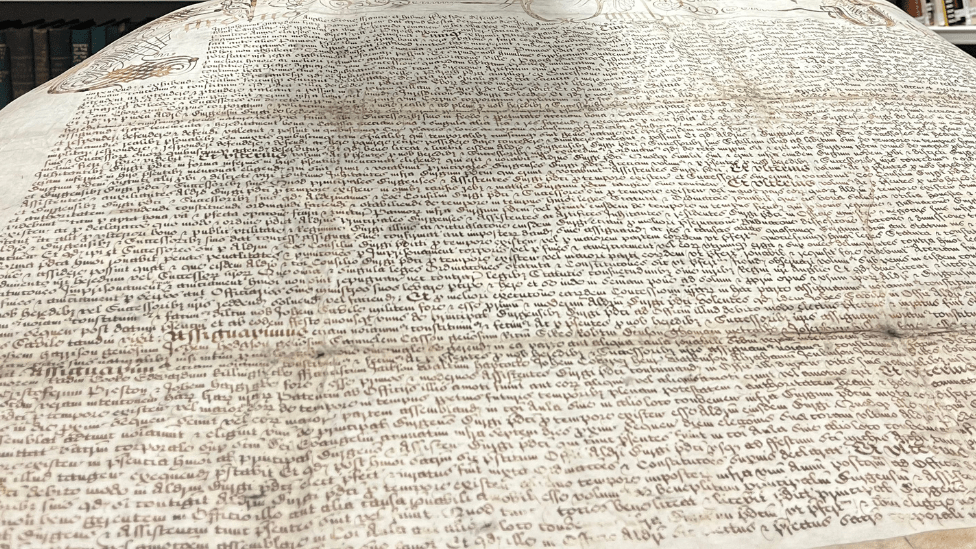
Sometime early in the Civil War, which began in 1642, the copy of the charter in Leeds disappeared; it’s never been found. In 1646 a replacement was requested and delivered. You can view the entire charter here. It’s written in legal Latin, but there is a translation.

But that’s not the close of the story…there’s another twist to come.

That copy vanished, too, to be purchased by a bookseller in Kent who promptly lost in behind a bookcase. When he found it again, in 1950, he decided the piece of vellum would make an attractive lampshade. Until he had an expert look at it and discovered exactly what he had.

Leeds Corporation offered him £10 10s (£10.50) for it, but the bookseller donated it to the city – Leeds was granted city status by Queen Victoria in 1893 – and it now sits in West Yorkshire Archives alongside the second charter granted to Leeds by Charles II in 1661, after he ascended to the throne following the Interregnum.

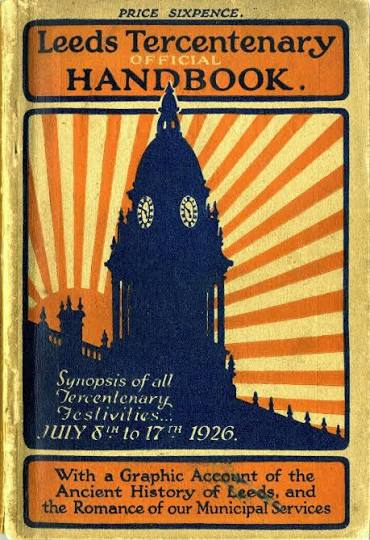
Leeds is celebrating these 400 years, as well it might. The 300 year anniversary was a big affair, with displays in Roundhay Park and more, even a book to serve as a commemoration.

 This year includes all manner of events and I’m proud to be a part of it, giving a talk at 1pm on Wednesday, September 23, at Leeds Central library on Alice Mann. I’ve written about here before – you can read it here. It’s a free event; I hope you can come.

Anyway, a week later, but happy birthday Leeds.

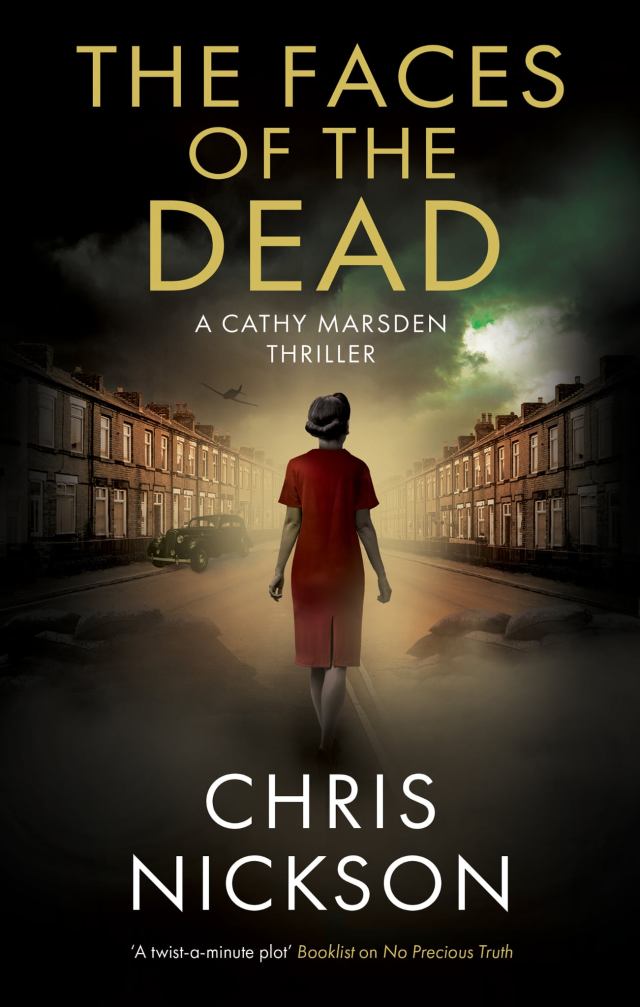
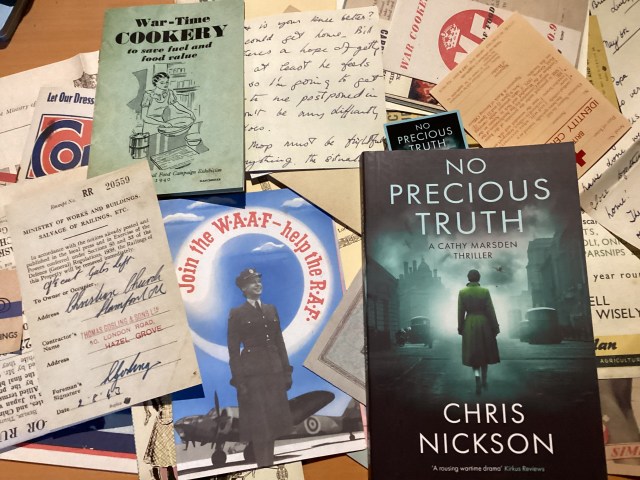
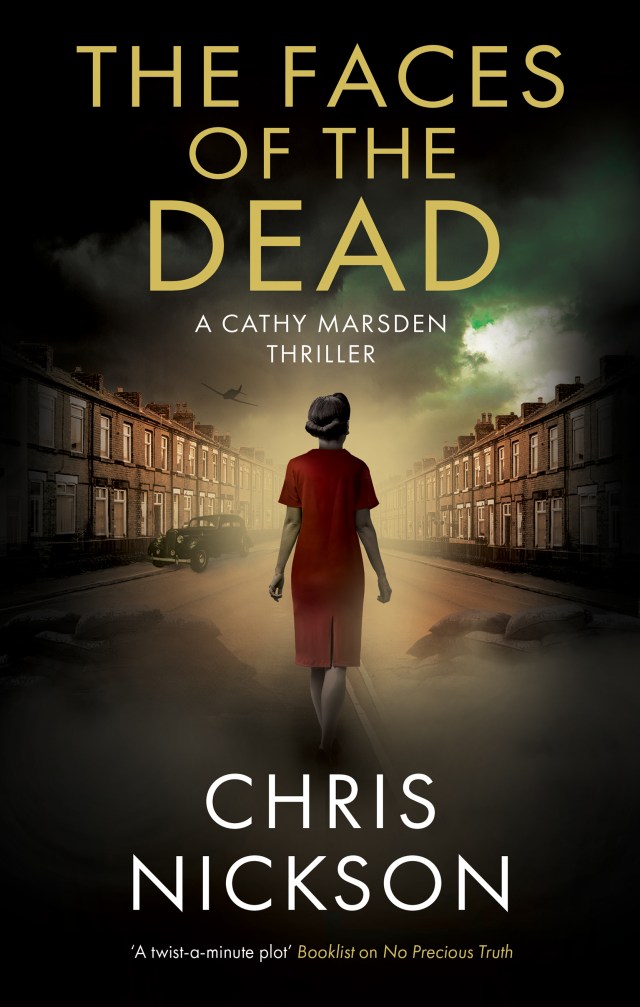
While it’s not the chater, you can read a little slice of Leeds historcial fiction set in 1944 with The Faces Of The Dead, the second cathy Marsden book. It’s just £1.99 on Kindle (cheap in the US, too), as is it predecessor.

Here endeth the Leeds history lesson.

A Guest Meditation On Historical Fiction

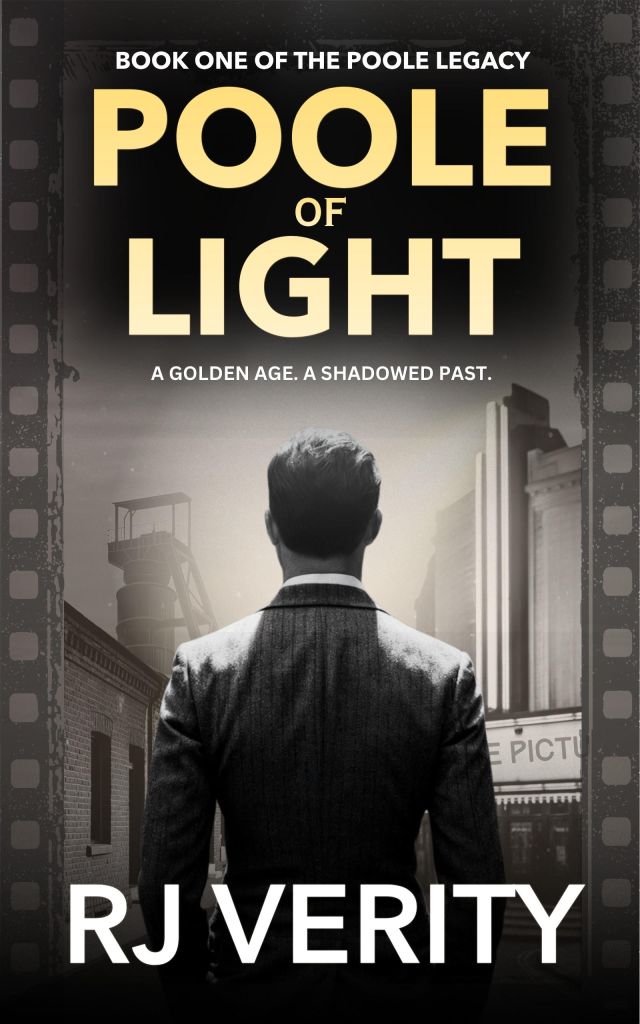
When RJ Verity contacted me, I was gratified to discover someone else writing about the Leeds of 80 years ago. Her take is very different to mine – no crime. Instead, her novel, Poole of Light, revolves around the cinema of the 1930s and 40s, one my father knew well, as manager of the Shaftesbury and the ABC for a few years after WWII.

She proposed a guest blog post, and I readily agreed. She’s written a good book, and her world dovetails well with Cathy Marsden. Maybe she met some of those characters – who can tell?

The Cinema Manager’s Granddaughter

Guest post by RJ Verity, author of Poole of Light

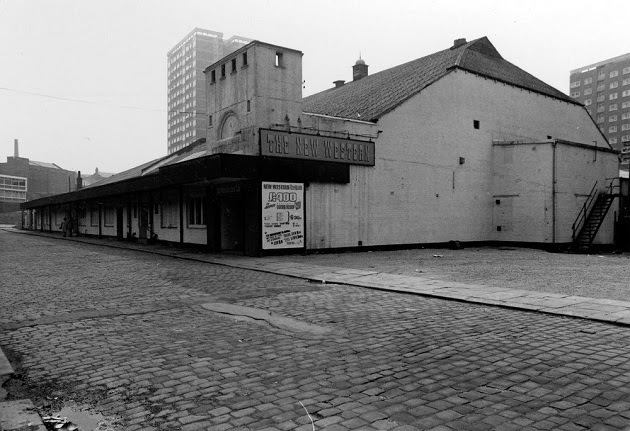
When Chris Nickson and I first made contact, we quickly discovered we were circling some of the same territory – not just the Leeds of the 1930s and 40s, but something more specific. His father had managed cinemas in the city. My grandfather had too: the Pictodrome and the Palace Picture Hall (shown below), both in Armley.

It is, as Chris put it, a small world.

My own connection is not incidental to my novel. It is, in many ways, the reason my novel exists. My grandfather had chauffeured for a large household in Leeds before becoming a cinema manager. My grandmother worked as a housekeeper in the same house. My father was a teenage projectionist and – through ability and the particular luck of timing – won a grammar school place at Roundhay before training as a doctor. One generation to the next, each one a little further from where it had started.

What struck me was how much depended not on privilege or connection, but on small chances seized at the right moment.

That fragility is at the heart of my debut novel, Poole of Light. The book starts in 1913, in a mining town in County Durham. My protagonist, Jem Poole, is ten years old – he has no money and no obvious future except working down the pit. One day he steals a glimpse through a curtain and sees a moving picture for the first time, and that moment of wonder brings him to the heart of the British cinema industry.

Leeds becomes central to his story. It is where he moves to as a boy, builds his life, and where tensions between ambition and identity play out across the decades. I came to Leeds not as a Loiner – I grew up in nearby Wakefield – but as a little girl who visited her grandparents in Roundhay often enough to know its streets. I understood later that those streets had shaped the people who shaped me.

The cinemas mattered. Not just as places of entertainment, but as institutions with a particular role in working-class life. They were warm and inviting during dark winter evenings. They offered glamour to people whose daily lives offered very little. A cinema manager in Armley in the 30s and 40s was not a grand figure – but he was a custodian of something that genuinely mattered to his community.

I find that writing historical fiction has a circular effect on my life. I know something about my past – stories half-told at family dinners – and am drawn to it. Then I research, I create characters, and somehow those characters reveal something more about my own history. And since releasing Poole of Light last September, I’ve been overwhelmed by the people who have reached out – wanting to talk about their own memories of Leeds, and what it meant to them.

Perhaps that is what historical fiction does best – it gives people permission to remember. Chris and I write about Leeds from different angles, but we are both, in our own way, still holding something of it. When I discovered that cinemas ran in both our families, it felt less like a coincidence and more like a confirmation that the past has a way of finding the people who are looking for it.

Poole of Light is available on Amazon now. You can buy it here. Poole of Honour, the second novel in The Poole Legacy trilogy, publishes on 15 September 2026.

And, while we’re in the 1940s, the second Cathy Marsden book, The Faces Of The Dead, is just £1.99 on Kindle, or free if you have Kindle Unlimited.

Why I Write (It Ain’t Pretty)

I write because I have no choice in the matter. The words are inside and they need to come out, sometimes in a rapid flow, sometimes like squeezing blood from a stone. I write every single day of the year. I don’t want a break from it; in fact, it feels wrong if I don’t write.
As I grow older, this compulsion, this obsession, grows stronger, and I come to define myself more and more as a writer. I’m one of the lucky ones, since a fair bit of what I finish these days gets published in one way or another, even if it’s no more than one of these blog pieces.
Writing is my gift and my curse. It’s also what I’ve dreamed of doing since I was 11 years old. At school we had to write an essay, to tell a story in three paragraphs. It was an exercise, of course, so show us how to use paragraphs for developing a thought. But after I’d finished my piece, it was as if a switch had clicked in me. That’s how it’s done!
Writing might be an art but it’s also a craft. I wrote plenty of unpublished novels, short stories that perhaps saw print somewhere or other but were mostly rejected. And rightly so, even if I was less certain at the time. The craft part has come from years of music journalism, where there isn’t the luxury of time to go through endless revisions, and you learn to pick the right word or phrase the first time. And good editors who pushed and prodded me.
But I’m not an artist. I’m an entertainer, someone who tries to take people out of their lives for a few hours and make them believe in somewhere else, some other time. There is no magic, perhaps, beyond sleight of hand. When a book is finished, people are back in themselves again. They might enjoy what they’ve read, but only a few books have the power to change people’s lives. I’m not sure I’d even want mine to be among them.
I’m just a person who sits down at the computer in the morning and writes down the movie playing in my head. If I’m lucky it’s because the film rarely breaks or fades to scratches and white noise. I’m still the 11-year-old understanding how this can work. And doing it because I have to.

Making That New Character A Woman

For my new Seattle Emerald City series of books, my main character was a male music journalist – something I did myself in that city. I say was quite advisedly: the company that’s publishing the books (simultaneously as ebooks and audiobooks) suggested making the protagonist female. It wasn’t a demand, by any means, and I understood the practical rationale behind it (one of the women behind the company is American and an award-winning ebook narrator and actress – Lorelei King). But it appealed to me. I’m male, think like a man. Now I’m changing the character’s sex and it’s proving to be a wonderful, deep challenge. It affects every dynamic in the book, every interaction with every character, male and female. More than that, I have to get into her head and learn to think, and more especially feel, as a woman. What writer wouldn’t relish? Seattle in the late 1980s was far more feminist than most parts of the US. Gender politics were rife, as were gay politics, which were interlinked. That has to be part of it, and it’s made me think and become more aware of the sexism inherent in everyday life. It was more so then, and quite casual, but it still exists. It was even there in the music scene, not too bad but still there. There were some female music journalists around, but men remained in the majority and they made up most of the musicians. A woman writer said to me that women feel more. That might not always be exactly true, but in general women are more aware of their feelings, and they’ll discuss them, with partners and friends, so that has to becomes part of the equation of character, too. Add to that the fact that I’m inserting this character into a story that’s already written, although there will be some changes and it becomes even more interesting. Am I enjoying it? Absolutely. Will it succeed? I hope so, but you’ll have to read for yourself to decide. That’s your challenge…