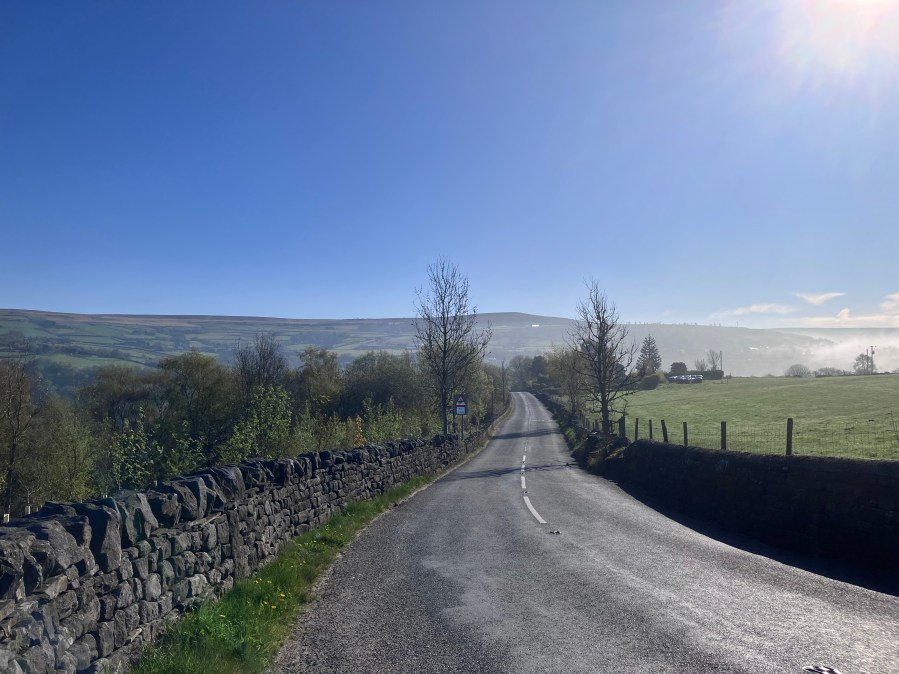
Quite early last Friday morning, I took the train out to Hebden Bridge (if you’ve watched Happy Valley, you’ve seen it). A lovely place in the wild West Riding, up the Calder Valley, once the home of weavers and mills, I’ve enjoyed going there for a long time.
This trip, though, was research for a book I’m writing, the sequel to one that won’t be out until January – just to confuse you. I need to get more of the feel of the place, to walk around. It was a morning of low clouds, but with the promise of the sun burning them off quite quickly and a glorious day ahead. Having plenty of time, I decided to follow a path that had intrigued me for years, a cobbled road known as the Buttress that rose steeply up the hill from the old packhorse bridge – the route up to a village called Heptonstall.
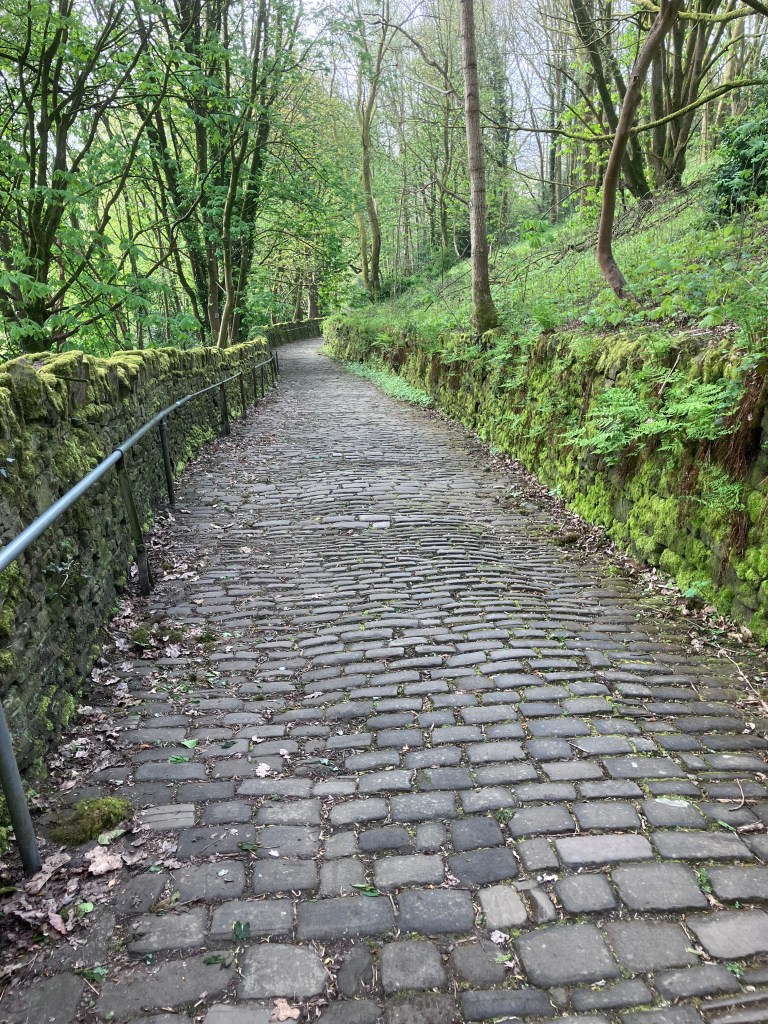
Quite a brutal climb, and the top brought me to a road, still going up and up. Turns out there was another footpath through the woods I could have taken, but I kept to the road. No regrets: once the mist had gone, with the sun shining, no wind, and a clear blue sky, the view across the South Pennines was spectacular.
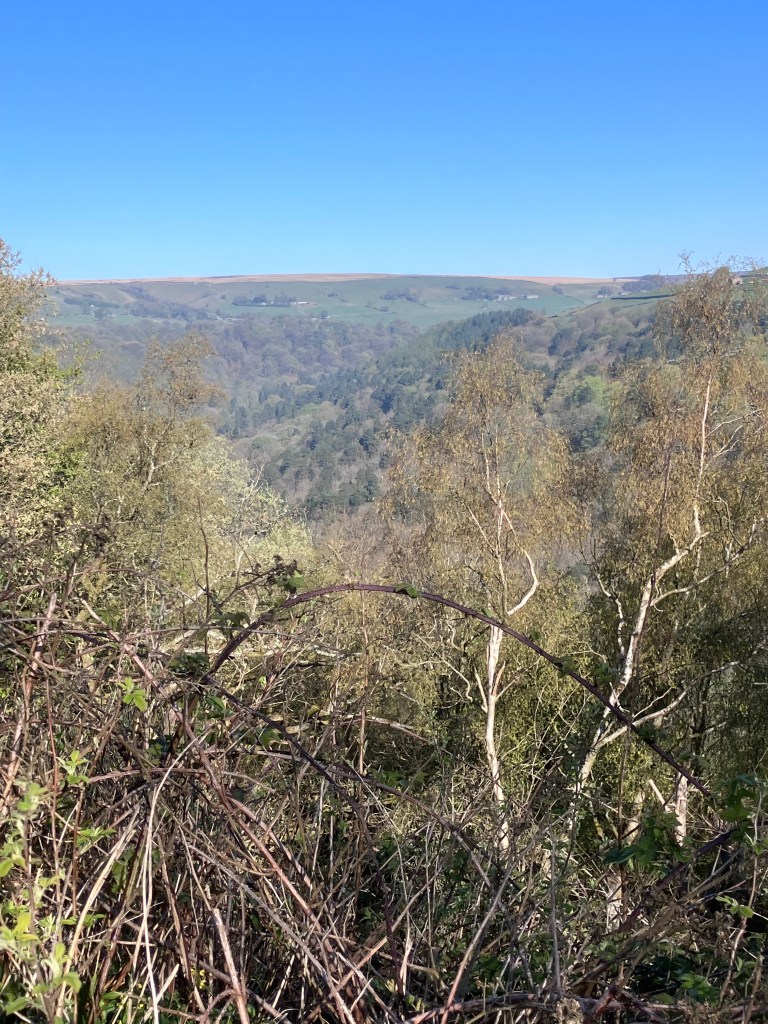
At the very top, an area called Slack Bottom, I turned towards Heptonstall…and found the most magical place.
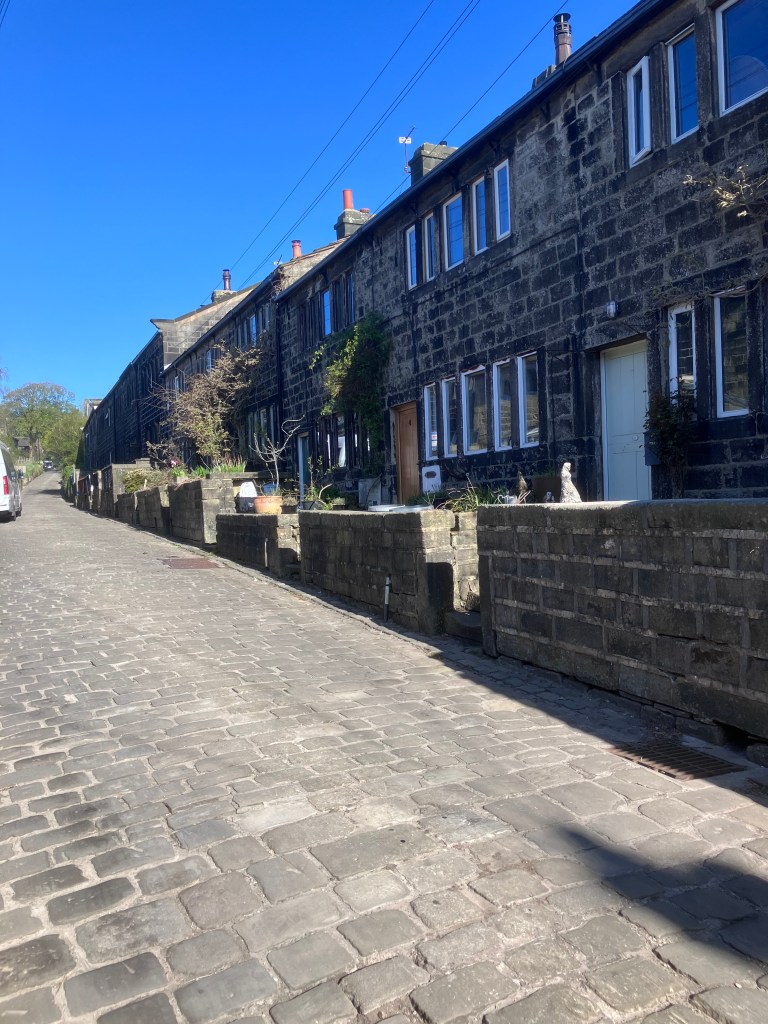
It was a handloom weaving village (the long upper windows are the giveaway), perfectly kept, and as picturesque as it’s possible to be. The octagonal Methodist chapel, built in 1764 (the foundation stone supposedly laid by John Wesley himself) is a gem.
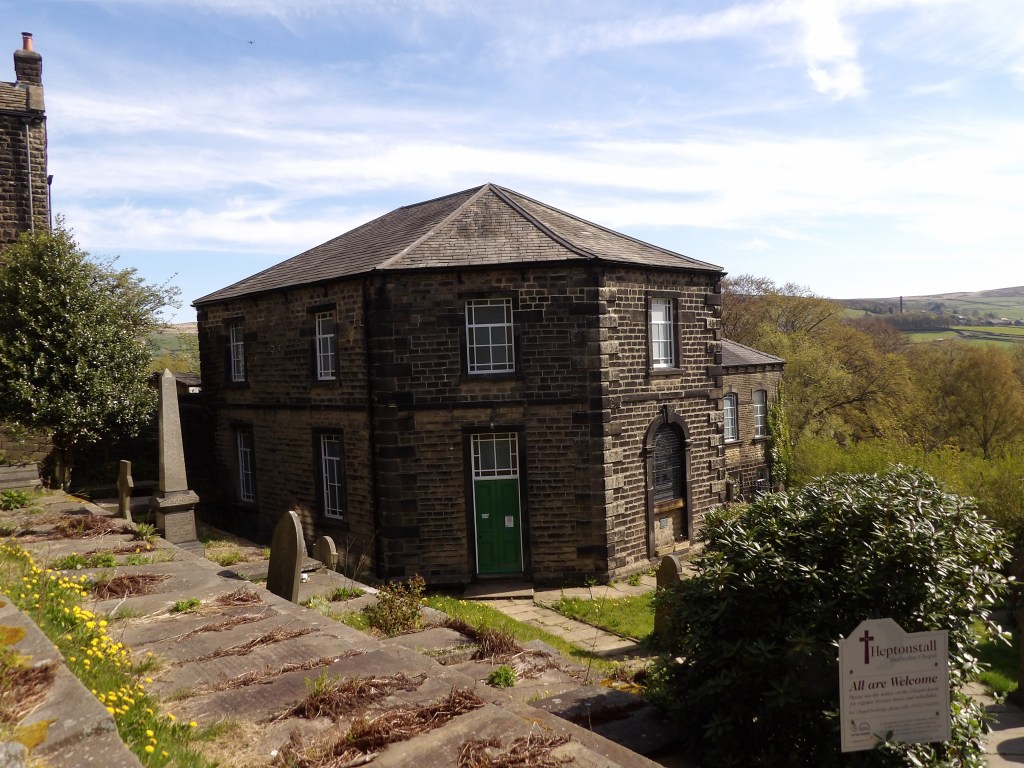
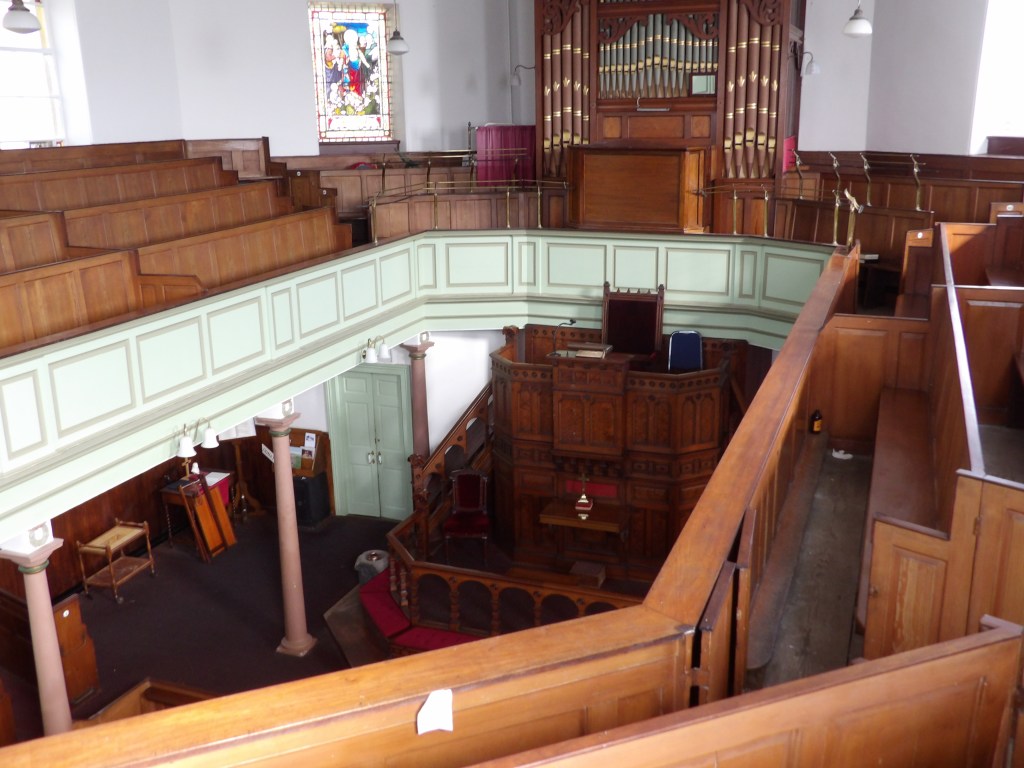
The old church, left a ruin by an 1847 gale, has parts dating back to the 1200s. Right next to it stands the newer church, with the body of Sylvia Plath in the graveyard. Sadly, my photos of the ruins came out blurred.
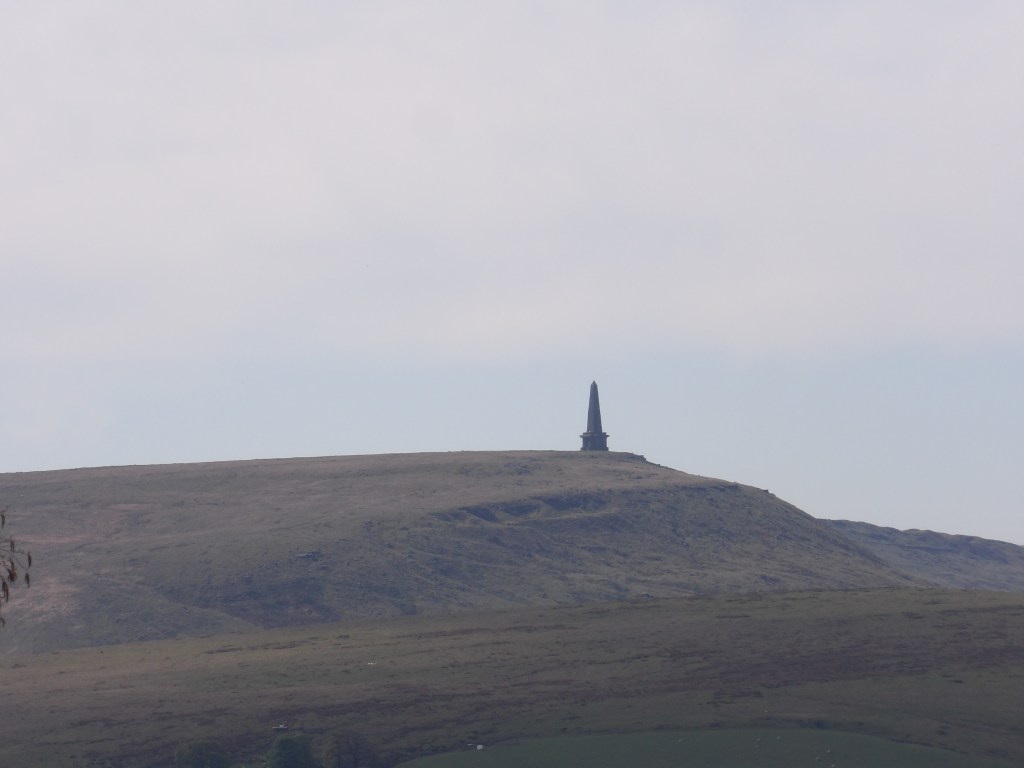
From the road you can see across to Stoodley Pike, originally built to commemorate the victory at Waterloo in 1815, then rebuilt in the 1850s, standing watch over the upper Calder valley.
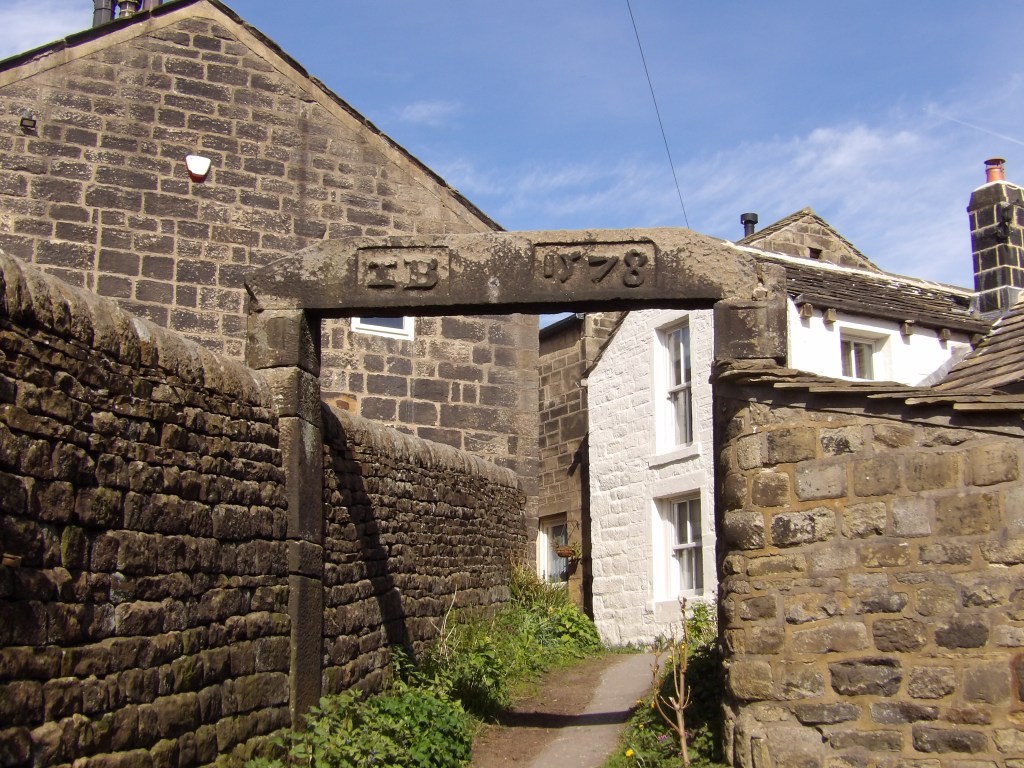
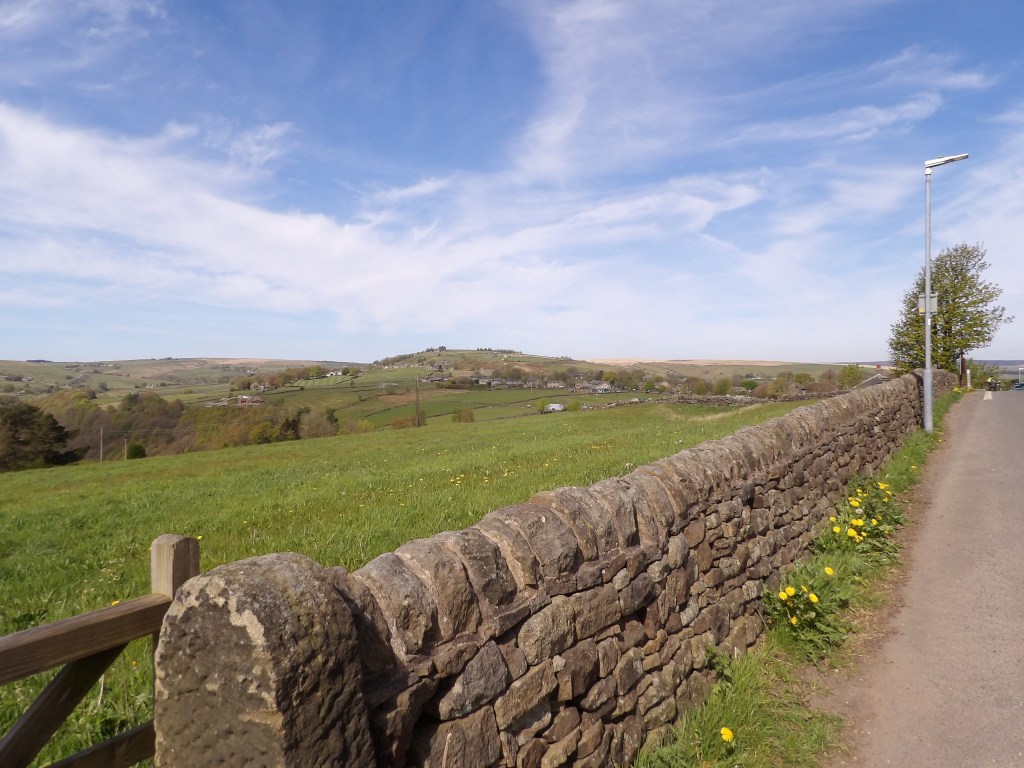
It’s not touristy – a couple of pubs, a café/gelato shop and a small village shop – and while it’s the dream visit in good weather, it will be isolated in winder; the only ways out are down steep hills.
Go if you can, and you can imagine what life would have been like for those handloom weavers, the last of whom died at the beginning of the 20th century. You won’t regret the trip.
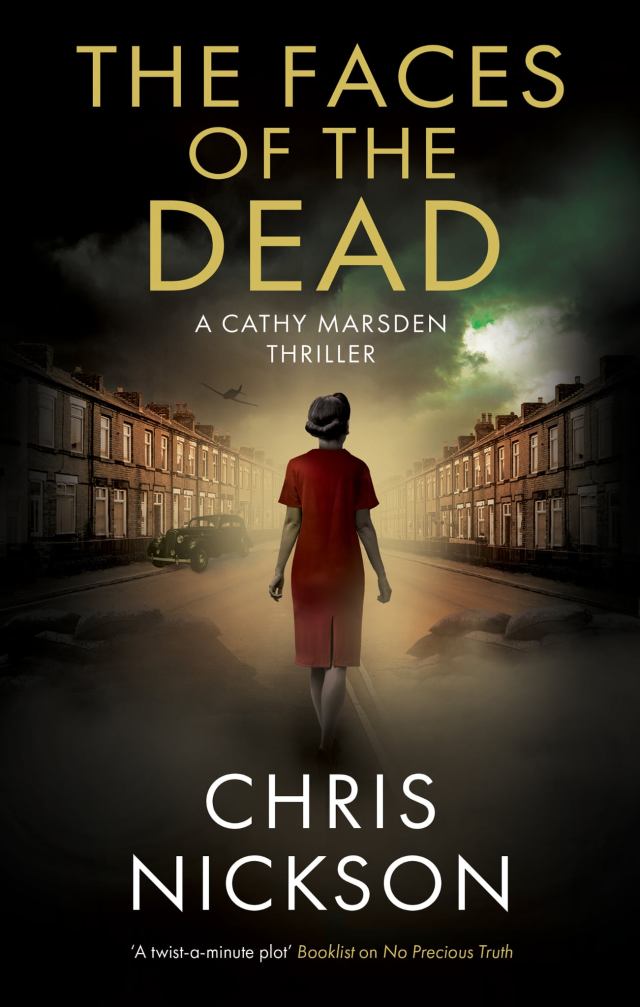
If you want something to read, the second Cathy Marsden book, The Faces Of The Dead, has been out for a couple of weeks, and I’d be grateful if you bought it. By the way, the first Cathy book, No Precious Truth, is 99p (99c) for Kindle – or free if you’re on Kindle Unlimited. Basically, it’s a steal.
 Chris Nickson
Heptonstall is the most fabulously atmospheric place and l very much look forward to reading your Hebden Bridge books
In addition to that of Sylvia Plath, another interesting grave, one of the older ones, is that of ‘King’ David Hartley, the leader of the Cragg Vale Coiners. I think it’s in the graveyard next to the ruined church.
Your books are wonderful! Many thanks for the hours of pleasure that they have given.
First of all, thank you for the wonderful praise – you made me blush. You’re quite right, David Hartley is buried there, but I mentioned Sylvia Plath because I figured more people would recognise her name.
Hebden has a minor role in this book – much of it is set in Todmorden. However, it won’t be out (if my publisher wants it) until January 2028 – feels like a lifetime away!
January 2028 – something to which to look forward!
All the very best with your research and your writing.