There have been Nicksons in Leeds for 200 years – it’s very likely two centuries to the year since Isaac Nickson, his wife Jane, and their children Isaac, Jane, George, Mary, and William arrived from Malton (three more children would be born after they were settled). Isaac had been born in 1785, in Westow, about fives miles away. His wife, Jane (nee Coultas) has come into the world in 1792 in the village of Appleton-le-Street, where they married in 1813, with the consent of her parents as she was still a minor, not quite 21. Isaac was listed as a farmer, but once they moved to Malton, he became a butcher, and then an innkeeper, looking after the Golden Lion in the marketplace.
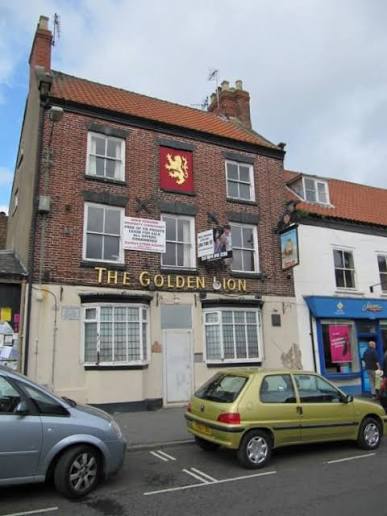
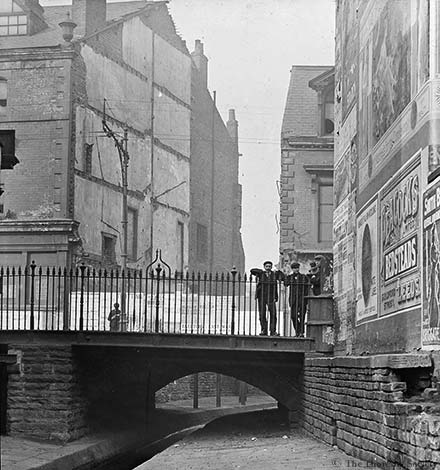
What made Isaac decide to move the family to Leeds? There’s no record to show the reason, but very little a chance of a better life with more money – they became economic migrants. The Leeds trade directories show Isaac soon established as a butcher with his shop in Timble Bridge, a place that hasn’t existed for well over a century. It crossed Sheepscar Beck, Lady Beck, whatever name you want to give it, a little east of the Parish Church, connecting it to Marsh Lane and all that lay beyond. They only real picture of it is from much later in the 19th century, when the beck had been tamed and culverted, before it was paved over in 1911. When the Nicksons arrived it would have been wider and free, running down to come into the River Aire near Crown Point.
After Malton, Leeds probably seemed like a metropolis. They were just a few of the thousands of people flocking here each year, many lured by the opportunity of burgeoning factories, mills, workshops, while other, arriving from the countryside, had been displaced by enclosure that turned landlords’ farms into huge enterprises. Those had nowhere else to turn.
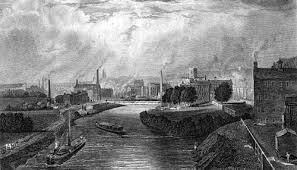
Industry had brought people and profits, but it had turned Leeds into a filthy place. Hundreds of chimneys throwing smoke and soot into the air, so it covered all the stonework. It was what people breathed every single day. A German visitor described “a transparent cloud of smoke was diffused over the whole space…a hundred hot fires shot upwards into the sky and as many towering chimneys poured forth columns of black smoke.”
Were the Nicksons scared by the size of the place? Did they feel overwhelmed? Or were they excited at the opportunities ahead?
Isaac and his family arrived in a town that seemed to be changing every month. Briggate was different, widened by the demolition of the old Moot Hall, crumbling to nothing after being built in the 1600s. It had stood in the middle of the street, diving it in two. The de facto town hall had a row of butchers’ shops and workshops behind it, called Middle Row. It had all come down the year before, with the butchers moved to the Shambles, off Vicar Lane (although Isaac didn’t ply his trade there; he must have been a retail butcher).
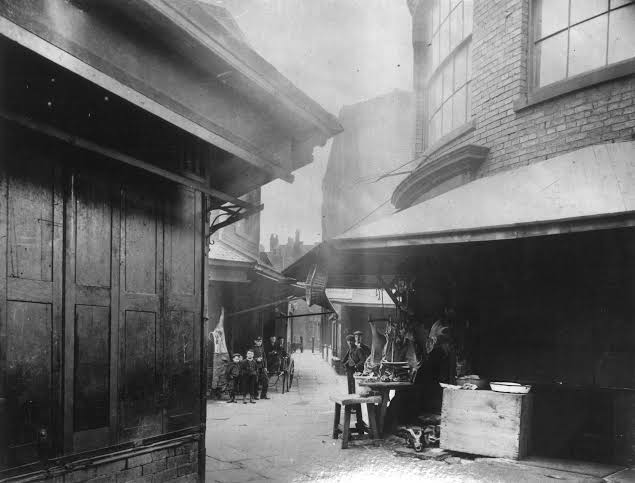
Soon enough another building would appear just on the far side of the Lowerhead Row, as this photo from the 1860s shows. It”s a new Corn Exchange, which would be replaced in the 1860s by the building that still stands near the market.
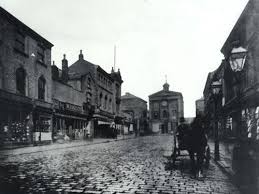
Leeds is a town of layers, one of top of the other. From the original church and ramshackle houses that made up Kirkgate, the first, and for centuries the only street in Leeds, though to the planned community that was the original Briggate, the courts and yards, there was history under their feet, although they probably never wondered too deeply about it. They had to survive, to try and propser.
With so many arriving, housing was at a premium. Families crammed into single rooms, often more than one family, if they had little money. Only people with money had running water, and that was cold. There was no sewage system; waste was gathered in a chamber pot and thrown out into the street. It was a town that smelled bad. The streets were full of horse shit from all the carts and coaches and carriages – a danger to anyone walking. Crossing boys earned change by sweeping a path for pedestrians.
The town was growing, expanding. It had to, with all the people arriving, and for builders and landlords, there was money to be made in new houses, new streets, with tenants waiting. The Leylands was beginning to take shape, north of the city centre, covering old farmland. Some tentative moves up Wade Lane, to what would become Little London. Around Sheepscar, it was still farmhouses and open country, except for the new cavalry barracks (1819) at the bottom end of Chapeltown, by the turnpikes to Harrogate and Wetherby.
Leeds was loud. People crying their wares for sales, machinery operating day and night. But for those who owned the machines and the property, there was good money to be made. The economy was booming if you came from the right class. Interestingly, those were the very people who moved out of town, building houses in what are now the suburbs, but were then villages. One of those, then called Newtown, was at the bottom end of Chapeltown, far enough from Leeds to have clean air but still very accessible.
Circuses came to Leeds to entertain, setting up on scraps of waste ground in the town – off Lands Lane, or near Holy Trinity Church, and people went, if only to escape the grind of their own lives.
This is the Leeds that would have met the Nicksons when they arrived, trying to settle themselves and make a success of their lives. At six, the children would have been working, probably in mills or factories, of assisting in their father’s shop. There was no childhood as we understand it today. Just work, 12 hours a day, six days a week, and rest on Sunday.
But Isaac stayed, as did his sons, and became part of Leeds, just like everyone else who arrives here, yesterday or today. And their Leeds, much of it in Sheepscar or Cross Green, became mine, a part of my DNA, the way future generations will feel after their ancestors first set foot here this year.
200 years. It’s nothing, really, in the great scheme of things, but it’s so many lifetimes of hopes and dreams.

