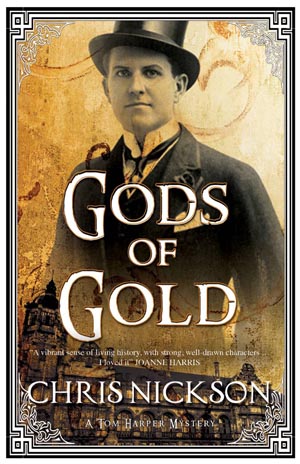
A couple of days ago I had a birthday. I never make a fuss about these things any more – it’s just another day, after all – but in societal terms, this is quite a big one, a decade flipping over. When I was young, the age I’ve now reached was old. Now, they say, it’s the new 40.
The truth, I realise, is that I don’t feel any age at all. Or, rather, I feel all the ages I’ve been. My body knows it’s older, as it showed me when I tried to play softball last Monday for the first time in 20 years and tore up an Achilles tendon. But my mind. That’s still young, and it’s refusing to grow up. I’m happier now than I’ve ever been, and more fulfilled. Why wouldn’t I be? However tenuous it is, I’m making a living from my writing. The dream I’ve always had of my novels being published is a reality. I’m having a ball.
Okay, I never did make the professional musician ambition. But I played in bar bands, I played solo in front of audiences and was paid for it. It wasn’t the big time, but damn, it was fun. I don’t indulge in the excesses I used to enjoy, but I don’t miss them.
I don’t regret what I’ve done, not a minute of it. There are times I’ve been stupid, been thoughtless and hurtful. I apologise for those, but each action, each move, has brought me to where I am no, so regrets are pointless.
And really, I don’t care what age I am, as long as I’m happy. I have a few good friends, good love, and the joy of a wonderful son.
One thing I do know with certainty is that I’ll never grow old. My body might argue the point more and more as every year passes. But my mind is made up. Nuh uh. Not me. When I’m 80, I’ll still be 20, 30, 40 – and even the new 40 – inside.
Gods of Gold Book Launch
The launch for Gods of Gold is happening on Thursday, September 11, from 6.45-8pm. It’s at the Leeds Library, the oldest subscription library in Britain, and in its present location since 1808.
It’s a wonderful place, and I feel very lucky to be having an event there again. There’s going to be wine and cake, and the library has promised to have newspapers (and possibly artefacts) relation to the 1890 Leeds Gas Strike – which forms the backdrop to the book – on display. And yes, the workers won!
Everyone is welcome, and I hope you’ll come, but you will need to reserve a place. Call the Library on (0113) 245 3071 or email enquiries@theleedslibrary.org.uk.
Last time I was there, it was packed, and I hope it will be again. There will be copies of the book on sale, of course, as well as just a few Gods of Gold tee shirts.
Come on along.
Something Even Newer
A few weeks ago I posted a couple of extracts from a 1930s piece featuring Sgt. johnny Williams of Leeds Police CID and his wife, Violet. That piece turned into a novella…and here’s the start of the second one, for your entertainment…
‘We have a visitor from America, apparently.’
‘Oh?’ Violet sat back as the waiter brought their cocktails, taking a small sip of the martini and nodding her approval. ‘That new bartender seems to have the knack,’ she said. ‘So who is this mysterious American?’
They were sitting in the cocktail bar of the Metropole Hotel, a ceiling fan turning just lazily enough to keep the air cool. The warm spring of 1934 had turned into an endless summer of heat hazes and frayed tempers in the city.
‘Someone called Oscar Arbramson,’ Johnny Williams told her. ‘That’s what Superintendent Randall told me.’
‘And why would the Leeds Police be interested? Is he, what do they call it in the pictures, on the lam from something?’
‘He’s a gangster. From Chicago.’ He nodded towards two men at a table on the other side of the bar. ‘That’s him, with his back to us. And the friend he brought along, Barney something-or-other.’
‘So you didn’t invite me here just to be a loving husband?’
‘Well, of course I did. I’m just mixing business and pleasure.’
Violet stared over at the pair. There was little to see of Abramson besides a pair of broad shoulders in a well-tailored suit. The other man looked just as large, with meaty hands and a face that seemed locked in a permanent snarl.
‘They don’t look quite the thing, do they? What are they doing here?’
‘I’ll find out tomorrow. I’m going to call on him bright and early.’
‘Just watch out if he opens a violin case.’
‘Are Americans notoriously bad on the instrument?’
‘It’s where gangsters keep their Tommy guns. You’d know that if you saw more films.’
‘What about cello cases?’ he asked.
‘Howitzers,’ she replied. ‘Absolutely deadly. Now that you’ve had a glance at them, where are you taking me for dinner?’
But it was luncheon before he caught up with the Americans. He’d been called out early to deal with an embezzlement. By ten, simply glancing through the accounts, he knew who was responsible. An hour later the man had confessed.
Johnny shook his head. Randall had assigned Forbes and Gorman to follow the gangster and his friend. They’d rung in from a telephone box; the pair were dining at Jacomelli’s.
He walked over to Boar Lane, rapping his knuckles on the roof of the battered Morris where the policemen were keeping watch, straightened his tie and strolled into the restaurant.
Abramson and Barney filled the table. Two large men, a sense of menace around them. They’d emptied their plates, forks on the crockery, knives still sitting on the crisp table cloth. Johnny pulled out the chair across from them, sat down and took off his hat.
‘How do you do?’
Abramson stared at him. Barney began to rise, a look of anger on his face, but the other man waved him down.
‘Let me guess, you’re a cop.’
‘Sergeant Williams, Leeds Police.’ He smiled.
Abramson leaned back and produced a cigar case from his pocket. He made a production of selecting a large Havana, cutting the tip and lighting it before he peer through the cloud of smoke.
‘Any relation to a reporter?’ he asked. ‘Can’t be your sister, she’s too cute.’
‘My wife,’ he replied. ‘You’ve met her, then?’
‘She stopped by while we were having breakfast. Wants to write a story about Americans visiting Leeds. What’s your angle?’
‘Angle?’ He thought about the word. ‘I don’t suppose I have one. Just a friendly little chat and a word of advice.’
‘Yeah?’ Abramson seemed amused. Barney was still tense, ready to pounce as soon as his boss gave the order. ‘What kind of advice would you have for me’
‘Just the usual. Obey the law, look right and then left before crossing the road, don’t kill anyone. Nothing that unusual.’
The man threw his head back and laughed.
‘You’re good. You out to go into vaudeville. With that accent you’d slay ‘em.’ He leaned forward. A very faint, thin scar ran from the tip of his eyebrow, disappearing into his temple. ‘You heard of Chicago, hotshot?’
‘Big place somewhere in the middle of America? A fire that had something to do with a cow, Al Capone, St. Valentine’s Day Massacre?’
‘That’s the one. Let me tell you something. Over there we don’t like smartass cops. They don’t last too long.’
‘That’s the difference, you see. We have a longer lifespan over here.’ He glanced at Barney. ‘You should really tell your friend to relax a little. His face is so red he looks like he’s going to have a heart attack.’
‘He’s excitable.’
‘Poor chap. Take him up into the Dales for a weekend. Very calming up there. Take a cottage for a few days.’
‘I’ll keep it in mind, Sergeant.’ The waiter brought two cups of coffee. ‘We were just making our plans for today.’
‘The art gallery’s very good,’ Johnny suggested. ‘Wonderful place to spend an hour or two.’ He stood. ‘I’ll leave you gentlemen to it. If you need anything, I’m around.’ He began to turn away, then stopped. ‘By the way, do you play the violin?’
Abramson stared at him, confusion on his face.
‘No. I’m a businessman. Why the hell would I?’
‘Never mind. How about the cello.’
The man shook his head and Johnny walked away.
At the station he telephoned the Evening Post.
‘I hear you saw our visitors.’
‘I popped over while they were having breakfast. I thought you might be there.’
‘I had a little distraction. Did they say what they were doing here?’
‘Looking for business opportunities, he claimed, although he didn’t answer when I asked why here. He’s rather gruff, isn’t he?’
‘I noticed that,’ Johnny told her.
‘And that chap with him just glowered the whole time.’
‘He did that to me, too. Seemed to be getting quite worked up.’
‘Abramson called me a dame,’ Violet said. He could imagine her frown. ‘I always thought they were those old dears who got awards for good works.’
‘Maybe he thinks you’re a young dame. He is American, after all.’
A Sense Of Place
Nine months ago, I moved back to Leeds. Not just to the city where I’d been born and raised, but to the area where I spent most of my teens.
Back in those days, I couldn’t wait to leave. The city seemed small and stultifying. It seemed horribly provincial, and there’s probably nothing more deadly to a teenager. So I left, only to return, then leave again for 30 years in America.
But I never felt American. I thought England had shaped me, but that wasn’t true. Leeds had, although I didn’t realise it. I loved Seattle, and for a long time I was settled there. But circumstances change…
Returning to England, I didn’t want to be in Leeds. Going back there would seem like defeat. It took a while, and several novels set in Leeds, which meant plenty of visits to the city, to understand that I felt more comfortable, more at home here than I’d felt anywhere else.
Funny thing, though. I’d anticipated this move, but once here, I felt like I was walking with ghosts – mostly my own young ghost. But we’ve made peace on those streets and in the park. My work might take place in the past, but my life is very much in the present, and whether it’s walking around my neighbourhood or in the city centre, or even something as mundane as taking the bus into town, I realise I’m happy here. Happier than I’ve felt anywhere else. It’s finally sunk in.
I did the right thing to leave all those years ago. But I definitely did the right thing in coming back.
The BIG News
I don’t often have a post full of news, mostly because there’s not often much to tell. But I have five – yes, FIVE – big pieces of news for once.
West Seattle Blues comes out June 30th on ebook and audiobook, and it can now be pre-ordered. I like Laura Benton, and I still love Seattle. But then, I lived there for 20 years…Find it here in the UK and here in the US, and listen to the trailer here.
Gods of Gold, the first in my new Tom Harper series set in Leeds during the 1890 Gas Strike, comes out late August in the UK. You can pre-order it here.
The second book in the series has just been accepted by my publisher. It will come out in 2014.
There’s going to be a big launch in Leeds for Gods of Gold, on September 11, 6.45 pm at The Leeds Library on Commercial St. They’ll have a display of newspaper and magazine articles relating to the Gas Strike, artefacts, and more. And there will be wine and probably cake. Admission is free, but you’ll need to book a place. It’s a fabulous place, occupying the same premises since 1808, and well worth seeing. I’ve been here once before and the place was packed, so please book early. Call them on (0113) 245 3071, or by email.
And last but not least, I’m teaching a weekend workshop on historical fiction in September in the Lake district. I do hope you’ll book (so they’ll hold it, so I can visit). Details here.
A Bit More
I’ve no idea if you enjoyed the start of something new I posted last week (consider that a hint to offer a reaction or two, please). But in the hope that you did, here’s a bit more:
CHAPTER TWO
He reported to the police station in his best double-breasted suit, navy blue with a pale pinstripe, his black brogues shining, the hat brim tipped just enough to put his eyes in shadow.
After a fortnight working with the Met in London it felt good to be home again. The capital had its charms, but Williams knew Leeds. He understood how the city worked with even having to consider it.
He wasn’t even sure why they’d wanted him down there. All he’d done was read the case file, go and talk to four people, then sit back and wait, time enough to tie up a couple of loose ends. Eight days later, they’d started making arrests and he was on his way back up the A1.
Williams slapped the desk. There were files waiting for him. One thing about being a copper, he’d never be short of a job. Count your blessings, he thought, as he took a folder from the pile.
But he hadn’t even finished the first page before Superintendent Randall called his name. Detective Sergeant Johnny Williams straightened his tie, buttoned his jacket and walked through to the office.
‘Everything fine down South?’ Randall asked as he sat.
‘Went well, sir.’ He shrugged. They’d made the arrests easily.
‘Head not turned by the glamour?’
‘Well, the King invited me over, but I told him I needed to be back here by teatime…’ Williams grinned.
Randall picked up a piece of paper and pushed it across the desk. ‘Something to get your teeth into.’
He read it through quickly. While he’d been gone there’d been two bank jobs, one in Horsforth, the other in Morley. Three men, one of them armed with a sawed-off shotgun. Quick, efficient, no violence, just threats and menace. In both cases, the getaway vehicles had been stolen and recovered about a mile away. There were descriptions, for whatever they were worth. None of the witnesses could agree on much. Violet had told him about the robberies last night. Lying on the bed after his welcome home, smoking cigarettes with the windows open, she’d brought him up to date on the happenings in Leeds. Working as a reporter on the Yorkshire Post, she heard them all.
‘No clues?’ he asked, his arm around her bare shoulders. The slip and brassiere were long gone, tossed somewhere on the floor, and sweat was drying on her skin.
‘If they have, they’re not saying. The rumour is that they’ve nabbed over a thousand pounds.’
That was impressive. Carry on with that and they’d have a good little earner. He moved his hand a little. He needed to feel more welcome.
‘Nasty,’ Williams said.
‘They’ve taken over twelve hundred so far. But keep that to yourself.’ Randall pulled a packet of Black Cats from his pocket and lit one.
‘What’s CID turned up?’
‘Not enough. None of the narks seem to know anything.’
‘I was hoping for a few days’ leave,’ Johnny said.
‘You wouldn’t know what to do with yourself.’
But he would. He’d seen the sun shining through the curtains that morning, smelt spring warmth in the air and thought about Sandsend. He and Violet, a few days away, decent hotel, Whitby just a stroll away along the beach at high tide. Some walking, some fishing, plenty of fresh air.
‘Well…’ he began, but Randall shook his head.
‘I want you on this. If they get away with it, other people will get the same idea. Times are bad, Johnny, you know that. We don’t need folk getting the idea they can be Dillinger or Bonnie and Clyde. Not round here.’
Williams picked up the report as he stood. Before he could even take a pace the door flew open and the desk sergeant, old red-faced Murphy, announced,
‘There’s been another one, sir. The Midland Bank on City Square.’
Randall raised an eyebrow.
‘Looks like you know where to start, John.’
He found a parking place on Boar Lane and walked to the building on the corner, solid stone staring out across City Square. Wisps of smoke and the stink of the trains drifted out from the railway station across the street.
Williams nodded at the uniformed constables guarding the door of the Midland Bank and sauntered inside. Another bobby was questioning a distraught woman, while a pair of CID men looked around the building.
It was much like any bank – high ceilings, a grandiose interior of marble and tile, varnished wood and glistening brass. And like any bank, easy enough to rob with plenty of determination and a little planning. The only problem would be getting away in the city traffic.
One of the detectives spotted him and walked slowly across with a rolling gait. He was tall, close to six-and-a-half feet, well into middle age, spectacles crowding a pinched face, most of his hair gone, just leaving a tonsure that was turning grey.
‘Might have known you’d find your way down here.’
‘Good morning, sir.’
Inspector Gibson had started his career with Leeds City Police well before the war. He’d served in the trenches and returned to the job, trudging up from rank to rank. ‘Going to have it solved by dinnertime?’
Johnny Williams gave a small sigh and turned his hat around in his hand.
‘I don’t know sir,’ he answered, voice serious. ‘Depends what time you want to eat.’
Gibson’s face reddened. He snorted and stalked away.
The girl sitting at the desk and cradling a cup of tea in her lap was smiling at him. It was a pert, inviting smile, full lips with bright red lipstick, under dark eyebrows and Carol Lombard blonde hair.
‘Will you?’ she asked.
‘Will I what?’
‘Catch them by dinnertime.’
‘Probably not.’ He grinned and shrugged. ‘But stranger things have happened. Do you work here?’
‘I do. I’m Mr. Osborne’s secretary.’ When he looked at her quizzically, she explained, ‘He’s the manager.’
‘Did you see the robbery, Miss…?’
‘Simpson,’ she answered. ‘Jane Simpson.’ He heard the light emphasis she put on her Christian name. ‘And yes. I was in the office. Over there.’ She pointed at the corner and he was two boxes of wood and glass. ‘It was like watching one of those films.’
She didn’t seem too upset or shocked, he thought. More..entertained.
‘Why don’t you tell me what happened?’ he suggested. ‘Weren’t you scared?’
‘Oh, no. They couldn’t really see me.’ She lowered her head a little, embarrassed. ‘I’m sorry, I don’t know your name.’
‘Detective Sergeant Williams.’ He took out a packet of Gold Flake cigarettes and offered her one. ‘How many of them were there?’
‘Three.’ She closed her eyes to focus. They were wearing jackets and trousers, and all of them had caps. They didn’t look like the kind of customers we have here.’
He smiled. They looked like ordinary working men, she meant, the kind who didn’t have bank accounts.
‘Did one of them have a gun?’
‘Yes. It was like a shotgun, but not as long.’ She cocked her head towards him. ‘Is that right?’
‘He’d sawn down the barrels,’ William explained. ‘Where was Mr. Osbone while all this was going on?’
He couldn’t see she didn’t want to answer, but after a few more words she admitted he’d been in the toilet when it happened.
The men had burst in just after the bank opened at half-past nine. There were only two customers in the place, and three staff behind the counter. The robbery was over in less than thirty seconds.
She gave him descriptions, but they could have fitted half the young men in Leeds. None of them more than twenty-five, dark hair, two tall, the one with the gun short and fatter.
‘How much did they take?’ he asked.
‘Oh.’ She paused, calculating. ‘It can’t have been more than three hundred pounds. Probably not even that. The cashiers only had their morning floats. None of the businesses had brought in their deposits yet. There’s more money here just before we close at three. Or on a Friday – we handle the wages for a number of factories.’
Today was Monday. Interesting, he thought. Whoever was behind it wasn’t thinking ahead.
‘Had you seen any of them in here before?’
She shook her head. ‘I don’t see everyone who comes in. But dressed like that, they’d have stood out, if you know what I mean.’
He understood exactly what she meant. ‘How did they sound?’
‘Sound?’ she asked.
‘They must have shouted when they came in. Did they seem local?’
‘Oh.’ She pursed her lips for a moment. ‘I suppose so. I never really thought about it, so they must have.’
He thanked her and stood up to walk away.
‘Tell me something, Sergeant,’ Miss Simpson said, and he heard the rustle of silk stockings as she crossed her legs. ‘That other policeman didn’t seem to like you.’
‘I’m not sure he really likes anyone.’
But especially you?’ She was grinning now.
He gave her his best smile, showing the chipped tooth. ‘He thinks I’m cocky.’
‘And are you?’
‘You’d probably get the best answer from my wife.’ He hoped that was a small flutter of disappointment on her face. ‘Thank you, Miss Simpson. Jane.’
Something New
I’ve been quiet on the blog lately, but real life does intervene at times, and the bank account is like an open maw constantly needing to be fed. But I haven’t been ignoring fiction. That chugs slowly along. And this is the start of something new, set in Leeds – of course – in the 1930s. Because you’ve been so nice and let me mumble on in peace, here’s the opening. Please do let me know what you think…and I do mean that.
No title yet, but the year is 1934.
He parked the Austin Seven Swallow outside the Eagle. There’d been hardly any traffic on the drive, a few lorries, cars bucketing along as fast as they could, the drivers’ faces fierce with concentration.
He buttoned his suit jacket and put on the hat, checking the brim in the wing mirror to see it was just so. A late May evening, some warmth still left in the air, and that feeling of dusk, with daylight starting to seep away and casting long shadows. 1934. The world might be poor, but there was still some beauty in it.
Only a few customers were in the pub. An old husband and wife, holding hands a chattering away easily, halves of stout on the table in front of them, a few ancient fellows, leftovers from Victorian times, gathered to play dominoes, a young couple out to do their courting, and a group of four middle-aged men, eyes like flints, standing in earnest discussion.
The landlord was cleaning the polished wood shelves, his back turned.
He saw her, sitting at the end of the bar, a glass of gin and tonic in front of her, a cigarette between her fingers. She was wearing a nubby tweed skirt and an ochre sweater, the sleeves rolled up on her red cardigan. There was a wedding ring on her finger, but she was on her own.
She’d glanced up when he walked in, then turned away again.
‘Can I buy you another?’ he asked as he stood beside her. She looked at him, eyes carefully appraising. Her hair was neatly set in waves, her lipstick bold red. In her early thirties and definitely pretty.
‘My mother always said I shouldn’t take drinks from strange men.’
‘We safe them. I’m not strange.’
A smile flicked across her mouth and she arched her brows.
‘Who told you that? Your wife?’
He grinned. One of his front teeth was slightly chipped. Someone had told him once that it made him look irresistible. Dashing. Wolfish. A little like Ronald Colman.
‘Someone much more reliable.’ He cocked his head. ‘I have to ask, are those eyes of yours eyes blue or grey?’
She was staring at him now, and smiling.
‘Take a guess. If you’re right, you can take me home.’
‘Violet?’
She waited a moment, then started to gather her handbag off the bar.
‘Eyes and name,’ she told him, then asked, ‘Where should we go? Your house or mine?’
‘Oh, yours, I think,’ he answered without hesitation. ‘My wife’s a terrible housekeeper.’
Her elbow dug sharply into his ribs.
‘You’d best be careful, Johnny Williams, or you’ll be sleeping on the settee tonight. What kept you? I thought you’d be home this afternoon.’
A Writing Course In The Country
I’ve been asked to teach a weekend course this September – it’s a weekend, the 21st-22nd – at a lovely B&B in the Lake District. I’ll be covering historical fiction, sessions on setting time and place, integrating the history, creating living, breathing characters and more. There will be one-one-one sessions, time for your own writing, and more.
It’s limited to just 10 places, so booking early is very likely a good idea (I hope).
Details at: http://www.goldenrock.co.uk/chrisn.html
Talking West Seattle Blues
In just over a month, my next book, West Seattle Blues, will be coming out. It’s the second in my Seattle trilogy, and I’m every bit as proud of it as anything else I’ve published. The sad thing – certainly to me – is that the first volume, Emerald City, received scant attention. Yes, I tried the Seattle Times, but they weren’t interested, because it was only published as an ebook and audiobook. Doing it that way, and working with digital publishers Creative Content, was my decision (I did actually have another offer on the table).
I might not have lived in Seattle since 2005 (or America, for that matter), but I have great affection for the city, especially West Seattle, where I spent a total of 11 years. When I left, it was very different to the place I originally saw. Doubtless, it’s changed again.
I’m very proud that Gary Heffern, a name familiar to everyone in Seattle music circles, agreed to sing the song West Seattle Blues, which will be an extra on the ebook. As always, he did an incredible job, and I feel honoured that he was willing to do this.
Anyway, I’d like to whet your appetites with a three things. First, a short extract from the novel, then the audio trailer, and finally, a Spotify playlist to go with the book (which I’m not really making public until closer to publication date, so keep it to yourselves, k?). Ready? Okay, here we go—and remember, it’s out at the end of June.
He had a voice like a country song: a lifetime of heartbreak and failed promises in just four words. It was a sound like old leather that had been soaked in bourbon or rye.
“This is Carson Mack,” he announced.
I explained who I was, hearing his breathing on the other end of the line.
“I remember hearing your stuff on the radio, back in the day,” I continued.
“Yeah, I was all over that for a little while.” He gave a hoarse, world-weary chuckle.
“Tonia said you were thinking about a book?”
“I don’t know what I’m thinking, really,” Carson admitted. “It just seemed like an idea. I figured there might be someone at The Rocket who’d have a few ideas.”
I tried to be kind.“The only problem is those hits were a long time ago. Most people won’t know who you are now.”
“I’m trying to do a bit more now. And a book would be a good way for people to find out, right?”
“Yeah,” I agreed warily. “But a book’s only worthwhile if someone wants to publish it.”
“I guess. So you’re trying to tell me it’s a bullshit idea, huh?”
“I’m saying that a book might not be the easiest place to start. Music’s changed in twenty years.” All music had, including country. Now it all seemed to be guys in cowboy hats, or girls who looked like truck stop waitresses with a sideline in hooking. And the songs had more to do with pop music that any country stuff I ever knew.
“I know. I listen nowadays and I’m not even sure what’s going on.”
“Look, Carson,” I said, “how about this? Why don’t we start off by doing a piece for The Rocket and see how that goes? It’s a place to begin.
“You sure they want one? I don’t want charity.”
“I’m sure, they’ll print it.” I hoped they would, anyway.
“Okay,” he agreed, sounding happier. “You want to come over here and talk to me?”
“I can do that. Whereabouts are you?”
“I got a place on Beach Drive in West Seattle. You know where that is?”
“I do.” If he could afford a house down there, he must have written a few hits. It was right on Puget Sound, where the water lapped against the bottom of the gardens. Just the year before, I’d been to see a one-bedroom house along there, one in need of plenty of TLC before it would even be habitable. The asking price was over three hundred thousand and yet it had sold in a week. I loved the idea of living by the water but I knew that it was a dream. I’d never have the money for it.
And the audio book trailer – video is coming in a couple of weeks:
https://soundcloud.com/creative-content-ltd/seattleblues
Finally, the Spotify playlist (shhh!):
And please, tell me what you think…