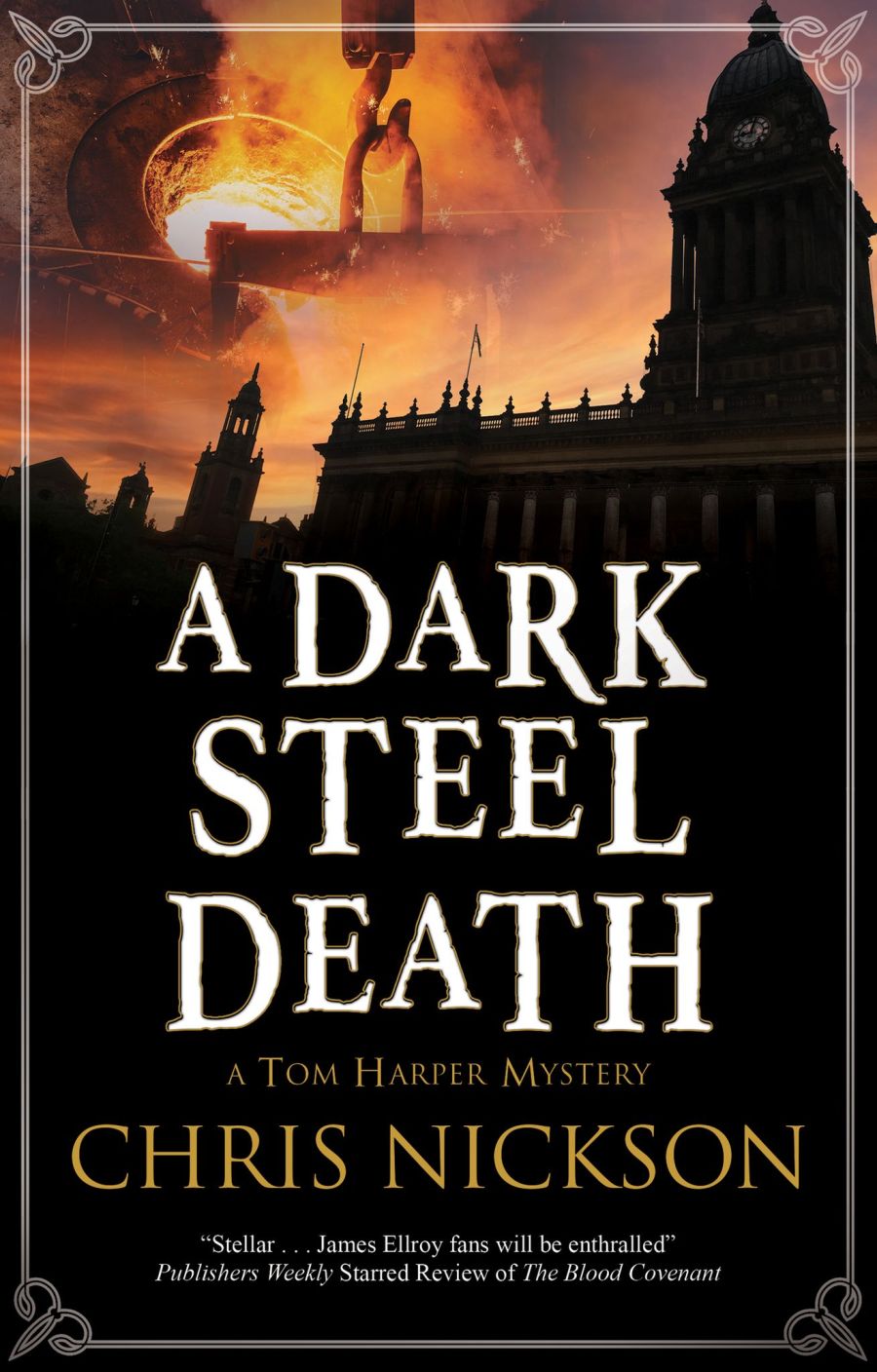
Want some cheap books? Want to spend next to nothing for hours of reading? Well…
My publishers have put all my books in Kindle Unlimited. That means the ebooks can only be read or bought through Amazon, for Kindle (sorry, but that’s out of my hands). However, if you subscribe to Kindle Unlimited, they’re free. Or, if not, you can buy them, and I don’t believe any of them costs more than £2.99 (cheap in the US, too, where thney’re also on KU).
What does that mean? The two Cathy Marsden book, including The Faces Of The Dead, which only came out in April, are a bargain. Same with the eight Simon Westow books, all 11 Tom Harper novels, and seven Richard Nottingham books. That’s on top of another publisher offering the Dan Markham book and all four Chesterfield novels at a bargain price.
I’m not s\aying you should, but really, you should.
World building is a phrase you’ll often hear in regard to writing. Every author does it, no matter the genre. It’s not simply in fantasy or science fiction, but in all novels, even those set in today’s world. The characters, their relationships, families, where they live. Step by step, the words on the page flesh them out.
I certainly do it. But I’m attempting to also create an alternative history of Leeds.
What is that? It’s something built on the slenderest of reality. Let me explain…
My first series, set in the 1730s, featured a man named Richard Nottingham, the Constable of Leeds. That role would be more honorary than anything, taking part in pageantry while the night watch did the real policing. Richard was a real person, and the town’s constable then; there’s a reference to him parading up Briggate with the great and the good of Leeds. I made him into a proto copper, investigating crimes, living on Marsh Lane crossing Timble Beck each day to the gaol at the top of Kirkgate(the real Richard lived in Kirkgate, then Briggate.
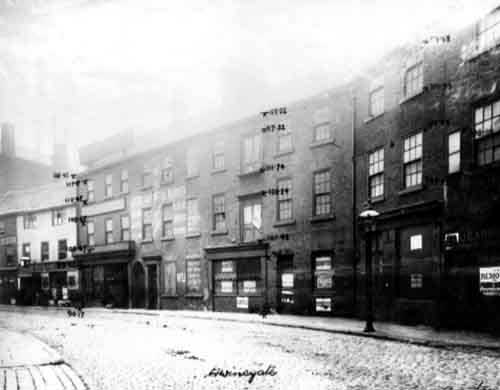
He’s a man with a wife and family and a love-hate relationship with a criminal named Amos Worthy, whose house stood where Swinegate bends. Set in the 1820s, the Simon Westow novels feature a thief-taker, again in the era before a police force. He lives in a house on Swinegate, at the bend of the road, and his twin boys are called Richard and Amos, names he discovered on gravestones outside the Parish Church just before the babies were due to be baptised.
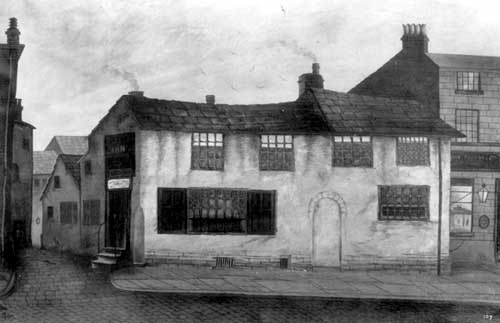
Next January you’ll be meeting Virginia Cooper and her husband Rob; he’s an Inspector of detectives with Leeds Police in 1862. A tip from a friendly lawyer named Amos Westow leads him to a house for rent at the back of Green Dragon Yard. The owner, Jane Truscott, who inherited it from her companion, Mrs Shields, is moving to live with a friend in the country. If you’ve read the Simon Westow books, you’ll certainly remember Jane, a very deadly young woman, older now. Her friend Sally, who also worked as a thief-taker, had long wanted to live on a farm…the thread stretches further. But it’s far from done. Rob Cooper is mentor to a young constable named Kendall, who shows plenty of promise.
By the time of Tom Harper, in the 1890s, Kendall is a superintendent, in charge of Millgarth police station, a position Harper will assume on his rise to chief constable. Tom and his wife Annabelle have a daughter named Mary, a suffragette who’s also a canny businesswoman, opening a typing agency and school on Albion Place.
Tom is commemorated at Millgarth, his picture framed on the wall. Woman Police Sergeant sees it when she’s there as part of the Special Investigation Branch in 1941
Eventually Mary Harper will become a Leeds city councillor, and as you’ll see in July 2027, she’ll use the services of Cathy after the war, when Cathy, no longer part of the police, runs an enquiry agency.
So far, that’s as far as the thread runs, from the 1730s to the 1940s, a little over 200 years. Leeds as it might have been. Or maybe as it really was and the rest of us are a dream. You decide.
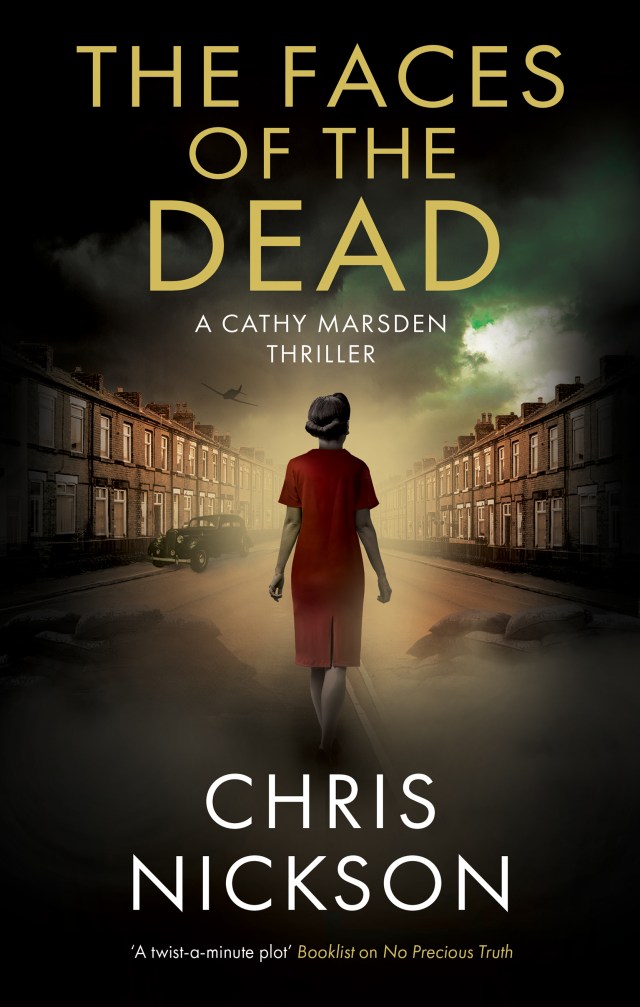
Mentioning Cathy Marsden, you can buy the ebook version of the newst novel, The Faces Of The Dead, for 99p (99c in the US), while No Precious Truth is available for Kindle at the £1.99 or $3.99 in the US (free for Kindle Unlimited).
Sheepscar Beck, said Ralph Thoresby, the first historian of Leeds, “is the nameless water, that Mr William Harrison, in his description of Britain, (published in the reign of Queen Elizabeth), mentions as running into the Aire, on the north side of Leeds, from Wettlewood (as it is misprinted for Weetwood), This beck proceeds from a small spring up on the moor, a little above Adel, and yet had some time ago [previous to1714], eight mills upon it, in its four miles’ course. The first is that of Adel near unto which is the Roman camp, and the vestigial of the town lately discovered; and the last before its conjunction with the Aire is this at Sheepscar, which above eighty years ago [before 1714] was employed for the grinding of red wood, and making rape oil, then first known in these parts. It was converted into a corn mill in the late times, but upon the Restoration, when the king’s mills recovered their ancient soke, it dwindled into a paper mill, not for imperial, but for that coarse paper called “emporetica”, useful only for chapmen to wrap wares in. It was afterwards made a rape mill again, as it now stands.”
It’s worth pointing out that Thoresby made an unsuccessful investment in the Sheepscar rape oil mill and lost quite a chunk of his capital.
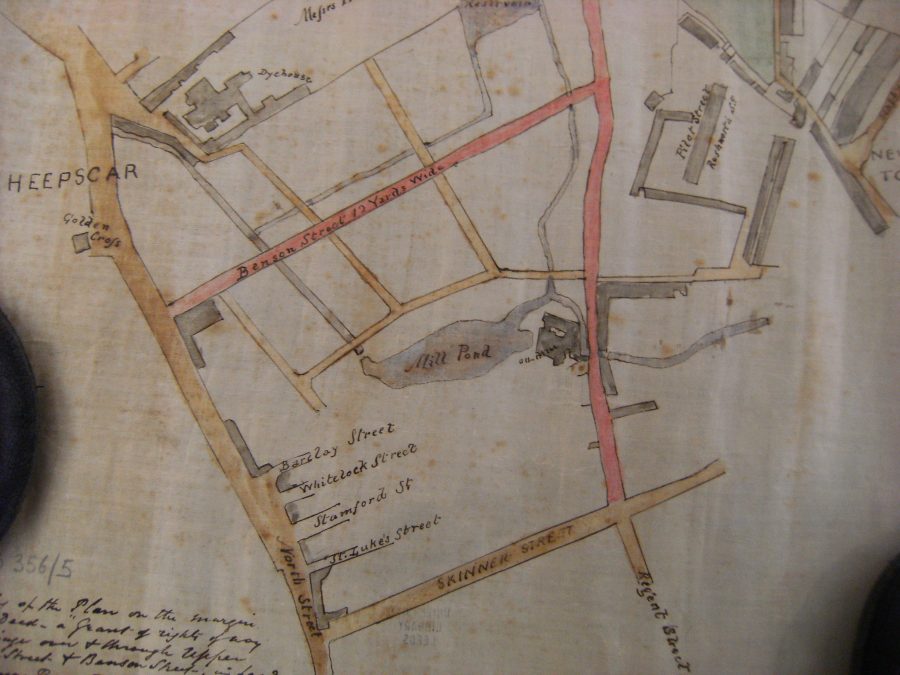
Sheepscar Beck is actually one of two streams that meet near the bottom of the area (along the way it’s also known as Meanwood Beck on its trail across the area from its proper origin on Ilkley Moor). It comes in the from northwest, while Gipton Beck arrives from the north. It’s most clearly illustrated on the most ancient map of Leeds, created for a court case in the 1570s, where Gipton Beck is mysteriously called Newton Beck (the new New Town for part of the area didn’t appear until later).
Together, they become Lady Beck, or Timble Beck, going down Mabgate, then through Leeds (Timble Bridge, covered over more than a century ago, crossed the water at the bottom of Kirkgate) to reach the River Aire close to Crown Point Bridge.
Sheepscar Beck on the left, meets Gipton Beck
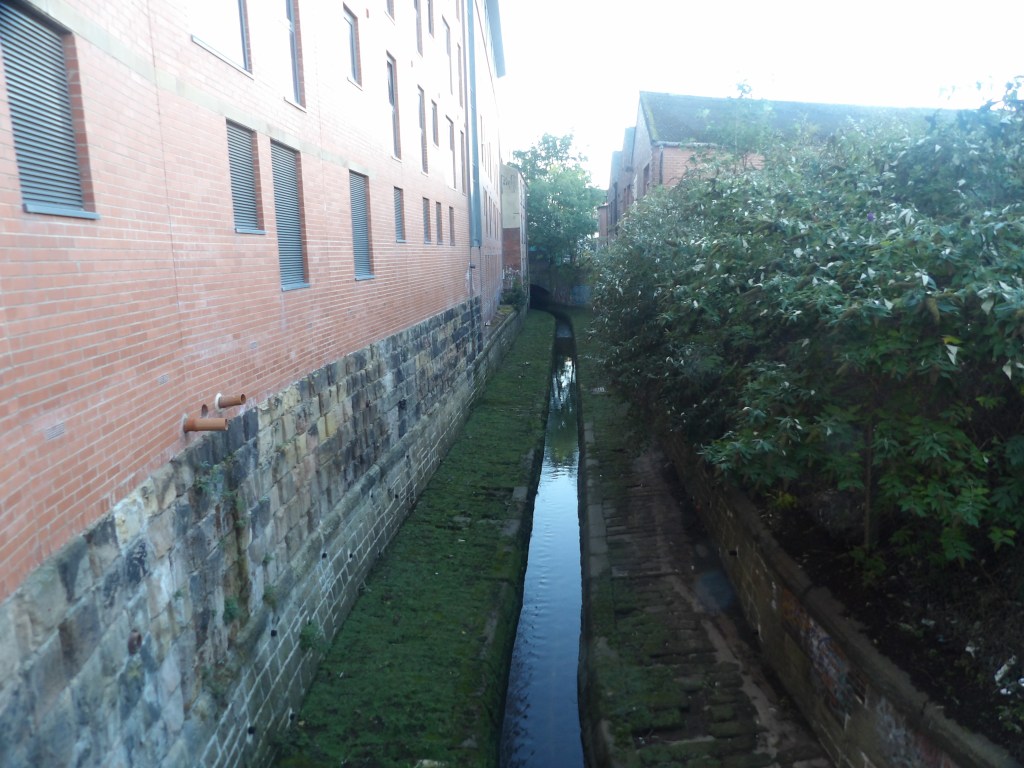
Early on it ran as free as if had been in the country, but as Leeds expanded, the beck was culverted and largely covered over. However, you can still see a few traces at the bottom of Sheepscar, where the two streams meet and the mill pond would have been, just below Bristol Street.
It’s also easy to track here and there along Mabgate – a bridge crosses it on Hope Street – before one final glimpse as it vanishes underground, not too far from the Eastgate roundabout.
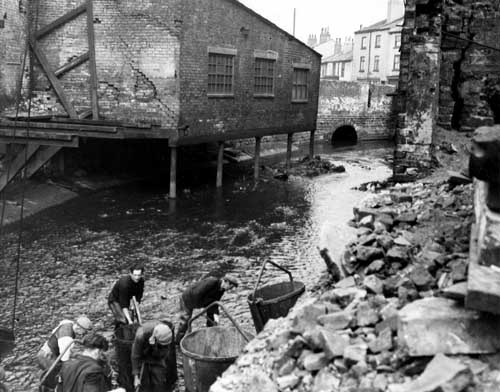
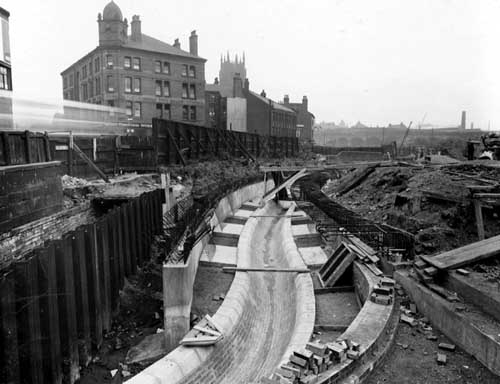
Going underground
The culverting and covering of Timble Beck was a massive undertaking, as this picture shows.
Where Timble Bridge once stood.
By several names, beck and bridge have featured in any number of my books. It was a totem throughout the Richard Nottingham series, and has played a large role in the Simon Westow books. For the most part, Leeds hasn’t been kind to its own history, treating it as something in the way instead of worth saving.
But the beck, or what few bits you can still see, is history right under your feet. It’s powered mills, it’s flowed through the history of this place. These days it’s greatly diminished, but the role it played in helping Leeds develop, especially Leeds industry, is huge.
Lady Beck/Timble Beck
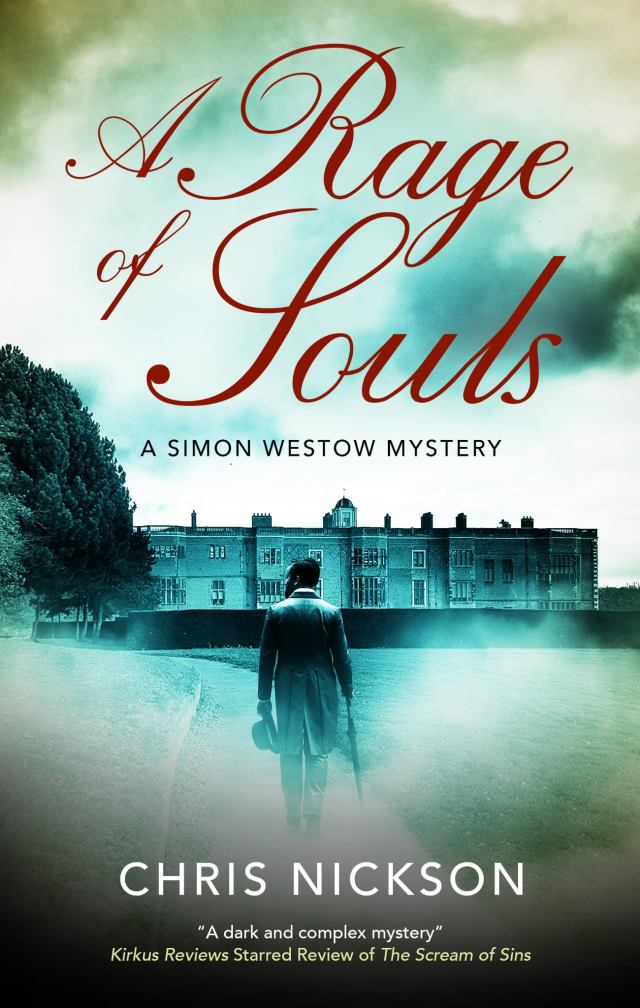
Since you’ve read this far, can I put in a quick plug for my upcoming book, A Rage Of Souls, which will be published October 7. It’s the eighth and final Simon Westow, every bit as dark and explosive as you could wish. Please ask your library to buy a copy, and you can pre-order it for yourself right here. Thank you and keep Leedsing. If that’s’ not a word, it should be.
This is the second (and last) of the Richard Nottingham stories I’m posting in the run up to Christmas. It harks back to much earlier in the series, about the time of Cold Cruel Winter, in one of the characters. Although it’s set in summer, after Nottingham, os no longer Constable of Leeds, the ideals seem right for this time of year.
Leeds, August 1736
Two years. It always surprised him. It should be longer, he thought. It felt longer. Time past, time passing. But not so quickly now, as if someone had slowed the hands of the clock. A chance to keep memory close. To hold on to ghosts.
Richard Nottingham stirred. The dog days of summer, brilliant light through the cracks in the shutters. He’d woken before first light, just lying in bed and letting his thoughts wander. He heard his daughter Emily leave to go and teach at her school. Then Rob Lister, her man, now the deputy constable in Leeds, had gone with his clank of keys and the solid tread of his boots across the boards. Lucy the servant moved around downstairs, opening the door to the garden and tossing the crumbs for the birds.
Life went on.
He poured water in the ewer and washed, then dressed in old breeches and thin woollen stockings.
The road was dusty and rutted, the hot air tight in his lungs. Sun flickering through the leaves onto the water of Sheepscar Beck. He crossed Timble Bridge and walked along Kirkgate to the Parish Church, then over the path he knew so well.
Two years, eight months, and thirteen days since she’d been murdered.
He went to visit his wife, to talk to her, the way he did every single day, thinking of nothing in particular. Just a few minutes of conversation, a chance to hear her voice in his head, to try and make amends once more, although he already knew she forgave him.
And then he saw it. The pieces smashed and scattered across the grass.
For a moment he couldn’t move. It had to be a dream. Then he was on his knees, scrabbling around all the pieces, the fragments, and piecing them together on her grave until her name was Mary Nottingham once more. Beloved. Died 1733. Beside it, the memorial to their daughter Rose was intact.
Why? Why would anyone do that? He looked around and saw that a few others had been damaged. But he didn’t care about them. Only this one.
‘You must have heard them.’
Jeb looked after the ground, sleeping in a small shed at the back of the burying ground. He was tall, like a long streak of water, a man in his fifties, back bent, straggly hair grey and thin.
‘I din’t,’ the man insisted. ‘I told you.’
He stank of ale, eyes rheumy.
‘For God’s sake, Jeb, someone took a hammer to that stone,’ Nottingham said in disgust. ‘And you were so drunk you never stirred.’
His mind was raging as he strode away to the jail. The smells in the building were so familiar. But there was another man behind the desk where he once sat. Simon Kirkstall. The new constable.
‘Visiting old glories?’ The man had a politician’s face, smooth and shiny, the periwig clean and powdered, his long waistcoat colourful in sharp reds and yellows.
Prissy. Exact. That was how Rob had described his boss. Fractious, a know-nothing who knew everything. Nottingham had listened and commiserated, glad to be gone from the job. He’d chosen to walk away from being Constable of Leeds and never regretted his decision. The corporation had given him the house and a small pension, enough for the little he desired.
‘I’m here to report a crime, Mr. Kirkstall.’
The constable picked up a quill, dipped it in the ink and waited.
‘What’s happened?’
‘Someone’s been destroying gravestones at the church.’
Kirkstall put the pen down again.
‘I see.’
‘My wife’s was one of them.’
The man chewed his lip.
‘I’m sorry to hear that. But…’ He gave a helpless shrug. ‘You know how it is. Too few men and too much crime. A murder, robberies, a young man missing for a week. I’ll make sure they ask around and try to find something. But that’s all I can promise for now.’
Nottingham stood for a moment, staring at the man and seething.
‘I see. I’ll bid you good day, then.’
He wandered. Down to the bridge, watching carts and carriages lumber along in the heat. Past the tenting fields with all the cloth hung to dry and shrink, through the rubble of the old manor house and around, back to Lands Lane.
Sadness, anger, emptiness.
Why?
Up on the Headrow, as he walked by Garraway’s Coffee House, a sharp tap on the glass made him turn.
Tom Finer sat at the table, his hand resting against the window.
‘You look like a man with the world on his shoulders,’ he said as Nottingham settled on the bench across from him. ‘Would a dish of tea help? Coffee?’
‘Not today.’
Nor any other day; he’d never developed the taste for them. Ale was fine for him.
After almost twenty years away, older and claiming to have left his crooked past in the capital, Finer had returned to Leeds. Nottingham had still just been a constable’s man when he first knew him. Finer had a finger in everything, but nothing was ever proven against him before he vanished one night.
He seemed smaller than the last time they’d met, as if he was slowly withering away with age. In spite of the warmth Finer was well wrapped-up in a heavy coat, with thick breeches and socks.
‘You must have been to the churchyard.’
Nottingham looked up sharply.
‘Why? What do you know?’
‘Not much more than you. I heard talk first thing so I went down there. I’m sorry.’
‘Do you have any idea who…?
Finer shook his head.
‘If I did, I’d tell you.’ He paused. ‘But did you notice which ones they were?’
‘My wife’s. Why? Who else?’
Finer was silent a few moments, chewing on his lower lip.
‘Go back and look again,’ he suggested. ‘Look outside your own pain.’
‘Why?’ Nottingham asked. ‘What is it?’
Finer stared at him.
‘You’ll see.’
He stood by Mary’s grave, resting his hand on the broken stone, and let his gaze move around. He understood what Finer had been trying to tell him. If he’d been thinking he’d have noticed straight away.
One was the memorial to Amos Worthy, the man who’d kept Leeds crime in his fist until the cancer rotted him and pulled him into the ground. Someone he’d hated and liked in equal measure.
The other was the stone for John Sedgwick, Nottingham’s deputy, beaten and killed in his duties.
Messages for him. From the past.
He gathered the remains, puzzling them whole again on the grass.
Why? Why would someone come crawling out of history now? He was no one these days. No longer the constable, not a man of note. Nobody.
Nottingham walked the courts and yards, asking his questions. He had no position any more but folk remembered. But all his talking brought nothing. No one knew, no one had an answer. Not even a hint. The closest he came was at the White Swan, when the landlord said someone had been asking for him.
‘Who?’
‘He wasn’t much more than a lad.’ The man shrugged. ‘No one I knew. Looked like a Gypsy, if you ask me. Left his lass and bairns standing in the doorway.’
Strange, he thought. Were the two things connected?
Morning became dinnertime. He pestered men as they ate. Nothing. Over the bridge and south of the river, into the streets that led off the London Road. No Joe Buck to ask these days. He’d left Leeds, searching for something more, the black servant Henry gone with him.
The town he’d known for so long was changing.
The church bell rang four as he walked back up Marsh Lane. Head down, lost in his thoughts as the dust rose from his footsteps. He’d go out again later, round the inns and the beershops. Someone knew and he’d find out.
‘I heard about it.’ Lucy the servant eyed him. ‘Who did it, have you found out yet?’
He slumped into the chair and shook his head.
‘I will, though.’
‘There was someone here looking for you earlier. Came at dinnertime.’
Nottingham cocked his head.
‘Just a lad. Not much older than me. Had a lass and little ‘uns with him.’
‘What was his name?’
‘Didn’t tell me, just that he’d come back later.’
‘Did he look like a Gypsy?’
Lucy thought.
‘Aye, happen he did. Who is he?’
‘I don’t know.’ Very strange indeed. He gave the girl a strained smile. ‘We’ll find out if he comes back.’
Emily returned home in a fury. She’d been to the churchyard and seen it for herself. Nottingham listened to her, seeing so much of Mary in her face.
‘Why would they do that to mama?’ she asked.
‘To hurt me.’ It was the only answer. Some sweet destruction to shatter his past. Before she could say more, there was a knock on the door. Maybe one mystery would be solved, at least.
Yes, he was young, dark hair hanging straight to his shoulders. Ragged clothes, a bright hoop in his ear. But tall, bulky, already a man from the look on his face. Someone half-familiar, a face he believed he almost knew. A man with a smile on his lips.
‘Hello, boss. How are you?’
With those words, it flooded back. All Nottingham could do was stop and stare. Joshua Forester, the young cutpurse he’d taken on five years before. His girl had died, the lad had been beaten and he’d chosen to go off with a band of Gypsies. But he looked well from it.
‘Come in, lad, come in. Your family, too.’
Soon they were seated around the table. Lucy brought bread and cheese and small beer, standing by the door to catch this glimpse into Nottingham’s past.
‘I don’t remember your wife’s name,’ Josh said and reddened.
‘Mary. She’s dead.’
‘Boss, I’m sorry.’
‘I should tell you that John Sedgwick’s in the ground, too. Someone killed him.’ The boy always had high regard for Nottingham’s deputy constable. Old days, probably best forgotten. ‘And you, what have you been up to?’ He smiled at the children. ‘I can see some of the results.’
‘That’s Frances,’ he said, indicating the girl. The name of his girl who’d died. ‘And the boy’s called John. My wife, Nancy. She’s part of the Petulengro clan. I work with them. I’m a horse dealer now.’ He lifted his hands to show the thick calluses on his palms and fingers. ‘We’re camped on Woodhouse Moor for a few days, on our way down to Buckinghamshire. While we were here I wanted to see you.’
‘And you’re very welcome’
It did make his heart soar to see someone doing so well, the new life amongst all the death and the senseless destruction. They talked for almost an hour until Josh gathered together his wife and family. At the door he saw them off just as Rob Lister was returning. Emily’s man and the deputy constable of Leeds.
‘Company?’ he asked.
‘Someone who worked for me a while ago. Passing through Leeds.’
Lister glanced at the family walking towards Timble Bridge.
‘They look like Gypsies.’
‘They are. And you and I have something to discuss.’
‘Aye,’ Lister agreed. ‘We do.’
The night was balmy. It wasn’t hard to keep watch over the graveyard, and he wouldn’t trust Jeb to stay awake and sober. Nottingham never slept much any more. He sat in the church porch, letting the darkness wrap around him. He listened to the soft snuffling of animals in the dark, the last sounds of humans fading, then felt the embrace of the hours.
A few times he stood and walked around, as silent as possible.
But no one came. No more damage.
With first light, he ambled up Kirkgate, smelling the cooking fires the servants had lit in the grand houses. Briggate was beginning to come to life, the butchers in the Shambles under the Moot Hall opening their shutters for early customers. He passed without a word, fading into the background.
Tom Finer was up with the lark, already in Garraway’s, reading the London newspapers and enjoying his coffee.
‘You look like a man who’s spent a restless night,’ he said with a smile.
‘I have.’ He settled back on the bench. ‘How did you know?’
Finer raised a thick eyebrow. ‘Know what?’
‘About the gravestones.’
‘A little bird told me.’
Nottingham wrapped his fingers around the old man’s wrist. It was bony and brittle in his grip, as if it might snap all too easily. He stared into Finer’s eyes.
‘Which little bird?’ When the man didn’t answer, he squeezed. ‘That was my wife’s gravestone.’
‘A young man I pay to gather gossip.’ Finer tried to look unaffected, but his mouth was stretched and the skin was tight over the bones of his face.
‘A name?’
‘You wouldn’t know him.’
Probably not, now he was no longer constable. But Rob Lister might. ‘A name,’ Nottingham repeated.
‘I know the lad,’ Lister said as they ate dinner in the White Swan. Stew for him, bread and cheese for Nottingham and mugs of ale on the table in front of them both. ‘I’ll find him this afternoon.’
Rob had grown into a thoughtful young man. Hard when the job demanded, but compassionate, too, and utterly in love with Nottingham’s daughter, Emily. Seeing them together, the tenderness and humour between them, he was always reminded of the way Mary approved of the match: ‘They’re perfect for each other, Richard. Like two halves finding each other.’
Nottingham would go home this afternoon and rest, ready to be out again tonight. What kind of man harmed gravestones like that? And why those three? What grudge, what anger could move someone like that? All through the night, as the stars moved through the sky, he’d tried to come up with names and found nothing that fitted.
Who?
He’d been wearier than he imagined, sleeping into the evening only to wake disoriented and with aching limbs.
Downstairs he sat with Rob as he ate. A young man’s hearty appetite after a long day of work.
‘He’ll meet you at eight on Timble Bridge.’
‘Does he know who did it?’ Nottingham asked.
‘He wouldn’t say.’
‘He’ll tell me.’ He’d make damned sure of it.
‘Watch out for him. He’s a little weasel. He’ll try to rob you if he can.’
‘But will he tell me the truth?’
Lister considered the question for a moment. ‘If you don’t leave him any other choice. Take your knife.’
First, the graveyard. Still full light, the evening warm enough to sweat as he worked, picking up all the fragments. He’d cleaned up Mary’s headstone yesterday. Now he tidied Amos’s and John’s. He’d almost finished when he felt someone kneel beside him and looked across.
Josh Forester, with a sad smile on his face and a colourful scarf knotted at his neck.
‘I went to your house, boss,’ he said. ‘Your lass’s man reckoned as you’d be here. Says you visit all the time.’
‘Every day. It’s all I have left of her.’
‘I understand.’ He ran hard fingertips over the carving in the stone. ‘I don’t know who’d do this, but I’ll tell you something I’ve learned. It’s probably not worth much, but a headstone doesn’t mean anything.’
‘I know.’ Nottingham’s voice was hushed.
‘Frances, she went in a pauper’s grave. No markings. You remember that, boss.’ He tapped the side of his head. ‘But she’s still here. They’re alive as long as someone remembers. This…it’s just trappings, isn’t it?’
‘Maybe it is.’ He pushed himself upright, feeling the creak in his knees. ‘But it means something to me. I have to meet someone. It won’t take long. If you wait, we can go for a drink.’
Josh smiled. Bright white teeth. Young teeth. ‘Aye, I’d like that. I’ll be right here, boss.’
He stood on Timble Bridge, hearing Sheepscar Beck burble and flow under his feet. It had been a dry summer and the water was low. The sound was pleasing, musical and rich. It filled his heart. But he was ready as he heard footsteps approaching.
A boy? He didn’t know why he was so surprised. The lad looked to be ten or eleven, with suspicious eyes that darted around, dark, matted hair, and dirt ingrained into his skin.
‘Don’t worry, I’m not going to hurt you,’ Nottingham said.
It was like coaxing a feral animal. Like the wary boy he’d been himself at that age, living for three years on the streets, surviving by wit and cunning and ruthlessness.
He placed two pennies on the ground and moved away.
‘I only have one question – who’s been damaging the graves?’
‘I’d never seen her before.’
‘Her?’ The word shook him. He couldn’t believe it. It was impossible to imagine any woman doing that. He took a deep breath. ‘Tell me about her.’
‘I couldn’t see much. It were dark and she had a shawl over her hair. And a hammer in her hand. I wun’t going to get too close to that.’
‘Where were you?’
‘Sleeping. There’s a dip in the graveyard near High Court. I were in there and heard her.’
‘Is there anything you remember?’
‘She meant it,’ the boy said. ‘Not just for the sake of doing it. Like she hated those people. She knew which ones she wanted.’
‘I daresay she did.’
‘And she weren’t young. You could see that. She moved slow, like it hurt her.’
‘You’re an observant young man.’
The boy shrugged and scooped the money from the ground.
‘Wait,’ Nottingham told him and brought out his purse. The boy darted for it, knife out to cut the strings. But Nottingham turned away, grabbing him by the hair and pushing him down to his knees. ‘Don’t. You’re too slow. I was stopping this long before anyone even dreamed of you. I was going to give you tuppence more.’
‘I’m sorry, mister.’
‘Maybe you are.’ He pushed the boy away, took out the coins and threw them on the dirt before walking away towards Leeds.
‘A woman?’ Josh Forester frowned, cupped the mug of ale and drank. ‘That seems odd.’
They were sitting in the White Swan, a welter of conversation all around their heads. It felt strange to be here with Josh. His memories of the lad were of someone so young, so full of pain. And here he was, grown, filled-out. A man with a life that suited him.
‘It surprised me, too,’ Nottingham admitted. ‘But why not? Women can hurt, too.’
‘Do you think she’ll be back?’
‘I don’t know.’ He leaned back. The woman had done her damage. Why would she need to return?
‘And you’ve no idea who it is, boss?’
‘None at all.’ He gave a weary smile. ‘I’ll be out there again tonight. Maybe she’ll decide she hasn’t had enough yet. Who can tell?’
Josh smiled. ‘Do you fancy some company?’
He stared at the young man. ‘Are you sure?’
‘Yes. We’re going south tomorrow, this will be the last chance.’ He took another drink. ‘You changed my life, boss. I’d like to spend more time with you.’
It was a companionable silence. A warm, dry night, with just enough moon to throw light across the graveyard. They settled in the church porch and waited. The last drunks rolled and sang their way home. The nightjars called and turned silent.
A snuffle of animals in the distance. A badger, a fox.
He found himself starting to doze, chin settling on his chest, then quickly sitting upright, stretching his neck and looking round sheepishly at Josh.
It must have happened again. He was aware of the touch on his shoulder, then warm breath and words whispered into his ear.
‘Footsteps, boss. In the churchyard.’
Silently, he stood, ready, feeling the other man stir behind him. But he waited. Impossible to tell yet who it might be. A couple seeking out a private place. Someone with no better place to sleep.
Time seemed to stretch. He breathed slowly, listening for the faintest sound. Then it came: the tapping on steel on stone.
Nottingham pressed himself against the church wall, turning his head, waiting to hear it again, to know where the woman was in the graveyard. Josh had already disappeared, moving like a ghost through the night.
It was unmistakeable. Mary’s headstone once again. Without thinking, he started to run, feeling every stride in his knees. He needed to get there before too much damage was done.
He knew every inch of this ground, moving sure-footed without even needing to look.
But he wasn’t fast enough.
Josh had beaten him to the spot, big hands clamped around a pair of thin arms, stopping her from struggling.
‘She’s not going to cause a problem, boss.’
‘Keep her still. I want to see her face.’
Nottingham pulled the shawl away. A small, faded woman with stringy grey hair. A thin mouth, most of the teeth missing. Eyes filled with hate. She drew back her lips and spat at him. But there was no power. It dribbled down her chin.
He didn’t recognise her. Nothing about her.
‘Who-’ he began, but her rusted voice cut through his question.
‘Abraham Wyatt.’
The years turned away and he groped for her name. Caroline. Something like that.
‘Charlotte.’ The word seemed to come of its own accord and he saw her cold grin.
‘Now you remember, don’t you? You killed him, you and Worthy and that other man.’
They had, and the man had needed to die for all he’d done. Back then he’d let her go, though, never expecting to see her again.
‘Why? Why try and demolish my wife’s headstone?’ He didn’t understand that. But the answer was simple.
‘Because you don’t have one, and I’ve watched you come here and spend time with her.’ Her eyes glistened. ‘I knew this would hurt you.’
She understood too much, he thought. Nottingham tried to picture her as she’d been when he last saw her, but the image refused to come into his mind. All he could see was the woman as she was now, living on the past and her anger. She’d loved Wyatt; that had never been in doubt. She’d remained devoted to him through all the years he’d been exiled, transported to the Indies.
‘What do you want to do with her, boss?’ Josh’s question interrupted his thoughts.
‘Take her to the jail.’
She fought, pulled against him and dragged her feet. But the young man was bigger, stronger, used to wild beasts. A few minutes and the night man had her in a cell.
‘What’s the charge?’ he asked.
Nottingham didn’t know.
‘Ask Mr. Lister in the morning.’ Rob could think of something.
Outside, the night was still, heavy with the scent of flowers.
‘Thank you,’ Nottingham said.
Josh smiled and shook his head.
‘The least I could do, boss. I told you, I owe you a lot.’
‘On your way tomorrow?’
‘We pack up first thing.’ He raised his head and studied the sky. ‘In an hour or two. Then south.’
‘When you come through here again…’
‘I’ll stop, boss. I promise. You look after yourself.’
‘You, too. And that family of yours.’
They shook hands. Nottingham stood and watched as Josh strode up Briggate, out towards the Gypsy camp on Woodhouse Moor. Finally he turned and began to walk back to Marsh Lane.
A headstone could be replaced. But the woman could never destroy his memories. Josh was right. Mary was remembered.
If you fancy something else to read over the holidays and you’re in the UK, Amazon has both the ebook and hardback of my latest novel, set in the 1820s, for under £12. I’d be grateful if you treated yourself or someone else. Just follow this link.
For those who don’t know my Richard Nottingham books, he really was the Constable of Leeds during the period the series covers. It was probably a ceremonial role, not so much the proto-copper I made him. A good man, straight as an arrow. this might be an old story, but I haven’t sat down with him in a while. His Leeds was almost 300 years ago, but if you know Simon Westow or Tom Harper, you’ll recognise the streets
The frost lay heavy on the grass and the branches as he walked towards Timble Bridge, his breath blooming wide in the air. The dirt was hard under his boots and the air bitter against his face. Richard Nottingham pulled the greatcoat more tightly around his body and walked up Kirkgate.
It was still dark, dawn no more than a line of pale sky on the eastern horizon. In some houses the servants were already up and labouring, plumes of smoke rising from a few chimneys. At the jail he checked the cells, seeing a drunk who’d been pulled from the street and a pair brought in by the night men for fighting at an alehouse. Another quiet night.
He pushed the poker into the banked fire and added more of the good Middleton coal kept in an old scuttle nearby. As warmth filled the room he removed the coat and settled to work. So far the winter had been gentle, he thought, but it was still only December. Come January and February, once the bitter weather arrived, the poor would freeze and die.
It was the same every year, he thought sadly. He’d been Constable of the City of Leeds long enough to know that all too well. When the cold bit it was always those without money who paid the price.
Down on Briggate the weavers would be setting up their trestles for the cloth market. They’d been laying out the lengths ready for the merchants, then eating their Brigg End Shot breakfast of hot beef and beer in the taverns, keeping a wary eye on their goods. He’d go down there before the bell rang to show the start of trading, walking around to watch for cutpurses and pickpockets, hearing the business of Leeds carried out in low whispers, thousands of pounds changing hands quietly in an hour.
He fed a little more coal onto the fire and straightened as the door swung open, bringing in a blast of cold.
“Morning, boss,” said John Sedgwick, edging closer and holding his hands out as if he was trying to scoop up the heat. He’d been the deputy constable for little more a year, still eager and hardworking, a lanky, pale lad with pock marks fading on his cheeks.
“Looks like you had an easy time of it,” the Constable said.
“Aye, not too bad,” he agreed, pouring himself a mug of ale. “You know what it’s like. As soon as the nights turn chilly they stay by their hearths.”
“You wait. It’s Saturday, they’ll all be out drinking come evening,” Nottingham warned him. “You’ll have your hands full then.” He shook his head. “Get yourself home, John. Have some sleep.”
The deputy downed the ale and wiped the back of his hand across his mouth. “I’ll be glad to see my bed, right enough. I might warm up for a few hours.”
Alone, Nottingham wrote his daily report for the mayor, nothing more than a few lines. He delivered it to the Moot Hall, the imposing building that stood hard in the middle of Briggate. The city was run from there, from rooms with polished furnishings and deep Turkey carpets that hushed the dealings and the sound of coins being counted. He gave the paper to a sleepy clerk and made his way down the street just as the Parish Church bell rang the half hour to signal the start of the cloth trading.
The merchants were out in their expensive clothes, the thick coats of good cloth, hose shining white as a sinless day and shoes with glittering silver buckles. They were moving around the stalls, making their bargains and settling them with a swift handshake before moving on to the next purchase. He saw Alderman Thompson softly berating a clothier, his face red, trying to beat the man down in price in his usual bullying manner.
The alderman glanced around, noticed him and glared. There was bad blood between them and Thompson was loath to forget it, a man who kept grudges in his mind like a ledger. But the man had been a fool, trying to cheat a whore of the few pennies that would have been food and shelter for her. The girl had complained and the Constable had confronted the man in front of his friends, shaming him, forcing the money from his pocket and passing it on to the lass.
He knew what he’d risked, the enmity of a man who was powerful on the Corporation. But the girl had earned her payment and deserved it; the man could afford it easily enough.
The Constable walked up and down the road, alert for quick movements, but there was nothing. He settled by the bridge, leaning on the parapet and looking at the rushing black water of the Aire. How many bodies had they pulled out of the river this year? Twenty, perhaps? Enough to lose count, certainly. Those who couldn’t cope any more with life and had found refuge in the current, the ones who’d drunk too much and fallen in, unable to get out again. There was always death, always hopelessness.
He shook his head and started to make his way back to the jail. Atkinson was striding out, thirty yards ahead of him. A girl running headlong down the street crashed into the man, and he batted her away idly with his arm, sending her tumbling before uttering a loud curse moving on.
The girl picked herself up and began to walk. As she passed, Nottingham took her by the arm.
“You shouldn’t have done that,” he told her, his grip tight.
“Done what?” she asked, the fright in her eyes as she raised her eyes to him and tried to pull away. She was young, no more than thirteen, thin as March sunlight, cheeks sunken from hunger, wearing an old, faded dress and shoes where the upper was coming away from the soles. Her flesh was cold under his touch.
“You know exactly what you did. You cut his purse.”
“I didn’t,” she protested and began to struggle.
“Do you know who I am?” he asked gently. She shook her head, her mouth a tight, scared line. “I’m the Constable. I think you’d better come along with me.” She tried to wriggle away, but his hand was firm on her. After a few moments she gave up, hanging her head and shuffling beside him.
The jail was warm, the fire burning bright and loud. He sat her down then held out his hand for the purse. Reluctantly, she brought it from a pocket in her dress and gave it to him.
“What’s your name?” he asked.
“Elizabeth, sir.” Now, with the cells so close she could see them, she was shivering in spite of the heat. “What’s going to happen to me?”
“Nothing just yet,” he assured her. “But I can’t make you any promises, Elizabeth. Where do you live?”
“Nowhere, sir.” He looked at him. “Me and my man and my sisters, we sleep where we can.” It was a familiar tale, one he’d heard so many times before, one he’d lived himself when he was young.
“How many of you?”
“Five, sir.”
He nodded at the purse. “How long have you been doing that? And give me an honest answer,” he warned.
“Two month, sir. But I’ve only managed to take three,” the girl pleaded.
He sat back, pushing the fringe off his forehead then rubbing his chin. “When did you last eat?”
“Thursday.”
“How old are your sisters?”
“Nine, seven and six, sir.”
“What happened to you father?”
“He died, sir. A horse kicked him in the summer.” He could see the beginning of tears in her eyes.
“What was his name?” Nottingham wondered.
“William Marsden, sir. He worked at the stables.”
He remembered the name and the incident. The man was a farrier, experienced and good at his trade. He’d been about to put fresh shoes on a horse when it kicked him in the head. He’d died instantly. “Doesn’t your mam work?”
“She has a bad leg, sir, she can’t walk proper.”
“And what about you? You’re old enough.”
“I’ve tried to find work, sir, but no one has anything.” The girl raised her chin defiantly. “I have, sir, honest.”
He stared at her face, all the guile vanished from it now, leaving a terrified girl who knew she could be sentenced to hang for what she’d done. He hesitated for a long moment, then said, “When you leave here, go next door to the White Swan. Talk to Michael and tell him the Constable sent you. He needs a girl to help there. It won’t pay much, but it’s better than nothing.”
Her eyes widened in astonishment and happiness as she understood he was letting her go. “Thank you, sir. Thank you. Do you really mean it, sir?”
He nodded, weighing the purse in his hand. It was heavy enough. Atkinson hadn’t come hurrying to report the theft. With a small movement he tossed it to her. As she caught it, her mouth widened into a silent O.
“Rent a room for all of you and buy some food. Now go.”
He stood at the window, watching her in the street, looking back in disbelief before she vanished into the inn. Off to the west the clouds were heavy and pale as pearls. If they came in there’d be snow later.
While I love Tom and Annabelle Harper dearly, along with Simon Westow, his wife Rosie, Jane and Sally, and can’t imagine them not in my life, there’s someone I all too often forget, and it’s to my shame that I do, especially as he’s the only one who truly existed.
Richard Nottingham, the Constable of Leeds.
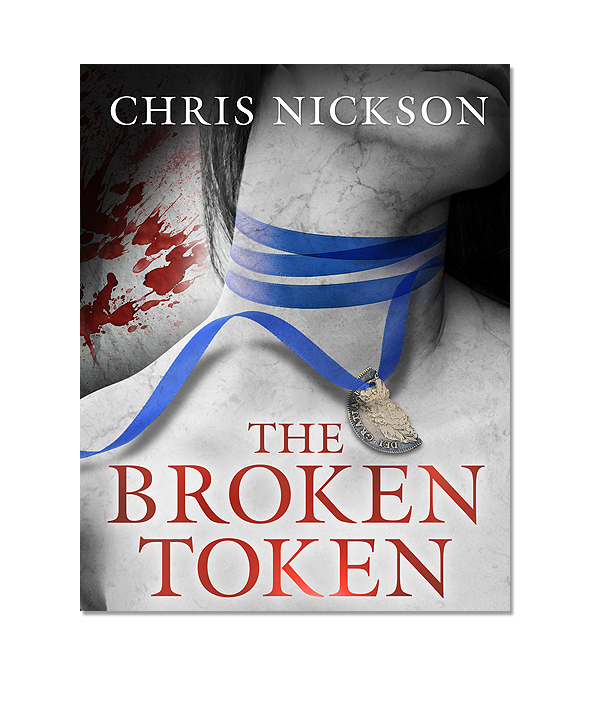
I wrote seven books with him in the role he had in real life (and to settle any possible questions, no there won’t be more). He gave me my start as a published fiction writer with The Broken Token
(which was also an Independent on Sunday best audiobook of the year) and got me a rating as one of the 10 best crime novels of the year for Cold Cruel Winter. All seven of the novels in that series won starred review in Publishers Weekly.
Richard was kind to me, a true inspiration. I’m proud of all those books, of him, and the community around him in Leeds during the 1730s.
From records, I know he was given a reward in the 1690s for informing on a highwayman – and this well before he became the law himself. Maybe it gave him the taste. Or possibly the fact that Walter Nottingham, perhaps his father or brother, was constable before him.
I made what was a title, a sinecure, a man who take part in official processions, into a proto coppers, with the night watch underneath him. He solved crimes. He found himself in danger. I was stretching history, but Richard seemed to enjoy himself doing it.
My Richard had a wife and two daughters. The real one had other children, of course, one of whom was a young woman who went in to marry into the minor nobility. Richard owned property in town. On Kirkgate at first, then Briggate; Leeds was a very small place at that time. People kept arriving, but there were fewer than 10,000 inhabitants.
I have written about the real Richard Nottingham here, with plenty of detail snippets from documents. Sadly, I’ve never found a portrait of him.
Why mention him at all? Most of the books are out of print in hardback, after all (and only the first is available in paper, I believe). But a number of you who came to my work through Tom or Simon might not know about Richard. You might like him.
The ebooks are all pretty cheap, and you’ll discover a family, as well as a place and time that are close to my heart. I always had Leeds, of course, but Richard showed me what to do with it, and that’s a gift I can never fully repay.
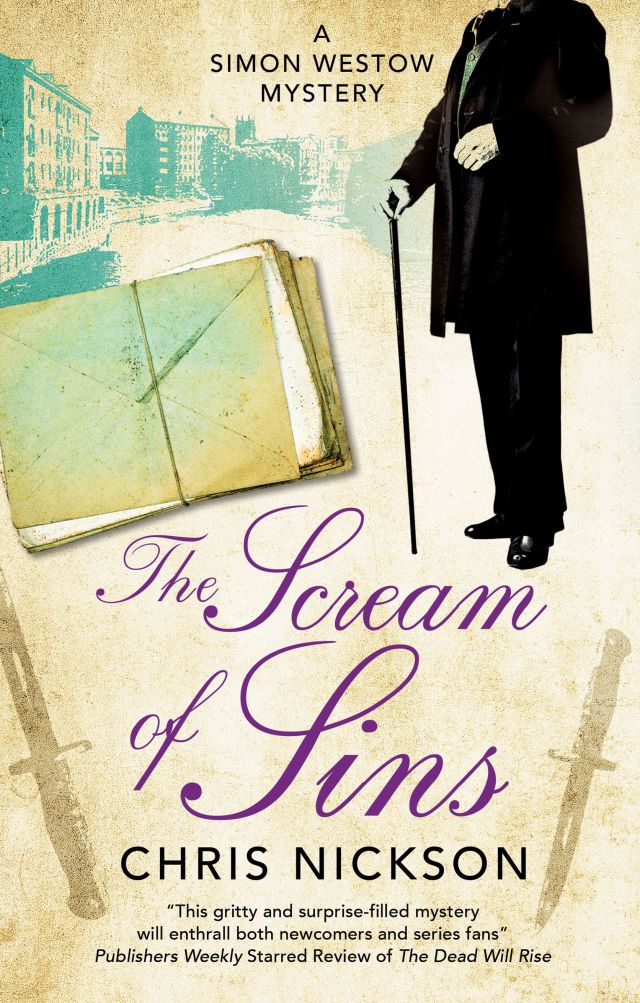
I will remind you that if you haven’t read The Scream of Sins yet, it’s been out for a month now – and God, the reviews have been so good it’s amazed me, since it’s so dark. Why not read it and judge for yourself?
It’s Sunday and tipping down with rain. Much as I’d love to be out at my allotment, there’s not a chance today.
That means it’s time for a story. A true story about the unpublished novels that preceded The Broken Token. Make a cup of tea, grab a biscuit and pull up a chair, because there were a few of them.
The first came when I was 20. I’d married an American and were we living in a bedsit in Hyde Park – the Leeds one, of course. I’d written poetry, which in retrospect was only slightly better than the usual teenage angst, and some short stories. It was time for my big artistic statement. A novel.
I’d read quite a bit of Richard Brautigan and hooked into that style, as best I could. The problem is that I wasn’t a San Francisco Beat/hippie guy who with a highly skewed, often surreal worldview. I was a 20-year-old Brit who had nowhere near the experience of the world as I believe I did. It probably had a title, but I don’t remember it.
The second came after we moved to the US, living in my wife’s hometown of Cincinnati. I was probably two or three years older. We’d bought a very cheap wreck of a house, we were both working. I’d been reading a lot more American crime novels, people like Michael Z Lewin, who books too place in Indianapolis, about 100 miles away. Bear in mind that this is heading towards the late 70s, a more innocent time. And a much more innocent your Brit, who still had a lot of growing up to do. Never mind that I believed that life had hardened me to my core.
The novel wasn’t completely awful. Hard boiled? No. Scarcely soft-boiled. Someone saw something in it and offered to put it out as a YA if I’d make some (a lot of) changes. I didn’t, and now I’m grateful. The title is lost in the mists of time, but the PI was called Steve Holzer.
There followed a more mainstream, autobiographical novel that was so much of a nothing that I can’t recall the plot. Thankfully, probably. After that, The Ohio Boy, about a talented young Ohio poet who was determined on self-destruction through alcohol. I knew nothing about alcoholism back then and didn’t really research. The poems were the ones I’d written a few years before, still seen through rose-coloured glasses. Unsurprisingly, nobody was interested.
After that? Career Opportunities, an American recalling student days in London and his involvement with the punk scene in 76-77. I still have it somewhere. Never reread it; I don’t need the humiliation. I knew about punk from records and the music papers (this was around 1980, long before any books about it all). I didn’t know London. What could go wrong?
A long gap followed. Divorce, and a move out to Seattle on the West Coast. A few short stories, a couple of one-act plays, then diving into becoming a music journalist, married again, with a young kid and a mortgage, writing a lot of quickie unauthorised celebrity bios. I was back in Leeds regularly to see my parents and picking up books on Leeds history, old enough to start really learning about it.
The result was The Cloth Searcher, an historical novel set in Leeds in the 1730s, with Richard Nottingham as a secondary character. I was stumbling towards something and nearly there, in the opinion of an agent who read it.
“Go and write something else and let me see it,” she said.
I did. That was The Broken Token, and the start of all that’s happened since.
Hey, time to wake up.
To remind you, The Scream of Sins is out there now. I’d be very grateful if you could buy a copy or borrow one from the library. If they don’t have it, ask them to get one in – others can read it after you.
As we all know, that time is coming in a few weeks. Not my favourite season, but it’s going to happen regardless.
However, it does mean presents and books make great gifts. So please forgive a few weeks of shameless self-promotion ahead…
For the last few years I’ve focused to the Tom Harper and Simon Westow books – I’m working on the sixth book with Simon and Jane, and the big news is that my publisher has accept Rusted Souls, the 11th and final book in the Tom Harper series. It’ll be out next autumn.
Before those, though, was another series, the first of my published novels, with Richard Nottingham, Constable of Leeds, as the main character. His family were important in the books, especially his daughter Emily, and also his deputy, John Sedgwick.
They’re set in Leeds, but in the 1730s, just as the town is grown wealthy off the wool trade. Well, the merchants are. For ordinary people, life is always a battle. It’s a small place, around 7,000 people, dominated by Kirkgate and Briggate.
Richard lives on Marsh Lane, crossing Timble Bridge, down near the Parish Church, to come to the jail. That’s by the top of Kirkgate, next to the White Swan on the corner of Briggate.
It was, perhaps, an unusual setting for a series of crime novels. But Leeds is my home. I feel it and I wanted to bring the place to life, to make readers feel they’d walked the streets, heard the voice, smell all the stink of life. All in the framework of a crime novel.
What many don’t know is that Richard Nottingham was real. He was the constable from 1717-1737, although it would be a largely ceremonial role in reality. He was a somewhat elusive figure in life. I spent time trying to track him down and wrote about it here – there’s just enough to be fascinating and make me want to known much more.
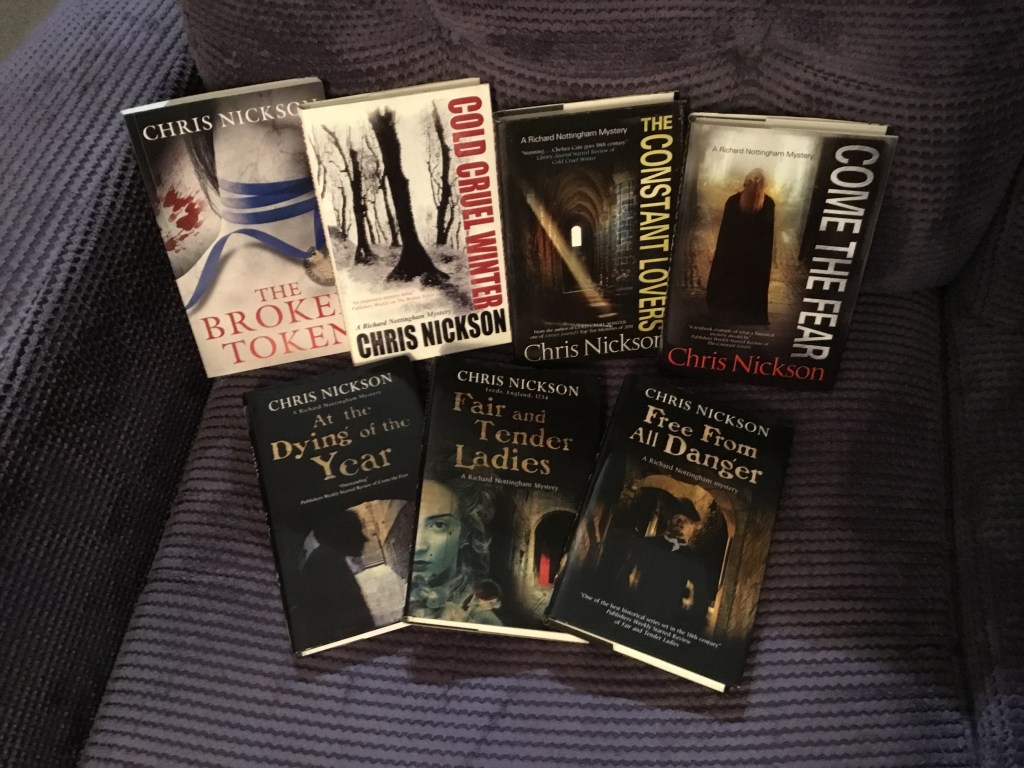
There are seven books in the series. Each one of them received a starred review from Publishers Weekly, which I’m told is very rare. Although virtually all are out of print in hardback, most are available in paperback. All are there as ebooks in every format. The Broken Token is also an audiobook (and one of the Independent on Sunday’s Audiobooks of the Year for 2012).
I have a very soft spot for Richard, and not just because he helped me into this fiction business. He’s a genuinely good man, someone I could wish to be. People still occasionally ask if I’ll write another with him. I won’t. At the end of Free From All Danger I left him happy. He deserves that.
If you haven’t tried him, please take a look. The ebooks are pretty cheap, and they’ll fill a dark winter evening. For those who are squeezed…ask the library; they should have them in stock to borrow.
It’s just a few days until A Dark Steel Death is officially published, and I have to say, I’ve been overwhelmed by the early reviews. It’s the kind of thing a writer always hopes for, but rarely manages.
I hope you won’t mind if I quote from them. It’s the kind of ego boost I need sometimes when I wonder why I’m sitting and typing words for a new books.
Publishers Weekly called it “superior” in a starred review noting that “Nickson does his usual superb job of evoking the period and balancing his lead’s professional challenges with personal ones. This entry reinforces his place in the front rank of historical mystery authors.”
If only…
The Go Buy The Book blog greatly enjoyed it, noting “the research is spot on, taking us back to wartime Leeds and introducing us to some of the real events of the time. Fact and fiction are merged really well, Chris Nickson, once again, delivering an engaging and tense plot where you really don’t know what is going to happen next.”
Booklist calls A Dark Steel Death “the latest in this successful series” and believes “this is a sure bet for the PBS crowd, who love their historical mysteries.”
Kirkus Reviews says it’s a gritty police procedural with well-drawn characters.”
And then there’s Yorkshire Bylines, which has an extensive review that makes me smile. “And that’s the thing with Nickson, he’s so good at telling a story that you don’t really have time to think about it when you start one of his books. You turn to the first page and you’re in, you’re hooked…offers facts wrapped up in fiction so readers don’t even realise they’re learning something. It’s fascinating to have an insight into a familiar place in an unfamiliar time.
Nickson makes the reader care about each character, even the villains, and so many of the issues raised in this book are relevant now, over a hundred years after it was set. It may be a crime thriller but it’s a social commentary too; for example, the reality of the war hero returning home with shell shock…Even when the situation is resolved it feels that it never really will be.
His female characters are strong and standalone, not just accessories to the male characters; from strong, proud Annabelle Harper, his suffragist wife who is struggling with her own health to his brave, sad daughter, Mary.”
Wow, that’s pretty much all I can say.
For those who read on Kindle, Amazon UK currently has it on sale for that. Not that I’d try to nudge you, but…you know.
And a few other UK Kindle deals on my books. My Lottie Armstrong and Chesterfield series are always £2.37, but here are a few more:
The Dead On Leave (one you might not know) is 99p
Free From All Danger is £2.79 (and £2.94 for the hardback)
Leeds, The Biography (short stories) is £3.98
The Leaden Heart is £4.98 (£5.24 for the hardback)
The Broken Token – my first published novel, with Richard Nottingham) is £4.99
Wish me luck for next Tuesday, please. And please, feel free to buy a copy to make sure my publisher will put out the final volume in the series. Or reserve it from your library, so they will buy it, and you can borrow it.
It’s about 16 years since I wrote my first published novel, The Broken Token – it took a while to find someone willing to put it out. But for some reason, I’ve remembered that I created a set of rules for myself back then. I’d read plenty of crime novels and I was tired of the loner, heavy drinking detective, and so much that went along with it.
My main character would be married. Most are. Since then, only one of my protagonists hasn’t been married on quickly on the way there. I wasn’t trying to be different, simply to reflect life. And most have had happy marriages, with or without children.
I decided that anyone could die. Again, it was simply life. People die at all ages, for all manner of reasons. Within the business of enforcing the law, there’s always a greater chance of violence. I kept that rule throughout the Richard Nottingham series (and one death brought quite a few variations on “you bastard”). I ditched it for the Tom Harper books, because conditions and life expectancy had improved in a century and a half, although things do happen, like Billy Reed’s heart attack. And the main characters have stayed alive (so far) in the Simon Westow series. I’ll say nothing else about that.
The characters have lives outside their work. We all do, and they’re often more important than anything else. They round out the people, make them human and three-dimensional. Know that and you know them and you’re even more willing to follow them.
The reader has to feel they’ve walked through the place, and experienced that time. All the sighs and smalls and noise. It needs to be alive to be convincing. It’s one reason that most of my books are set in Leeds. It’s the place I feel, that I know through the soles of my shoes. I can sense the different periods of history, like seeing through different layers of time. I can touch them, taste them. All I do is write down that move in my head, including the descriptions of the where and when.
History is important, but it’s more the local than national effect. As we grow into the 20th century, that changes, but as a rule of thumb it’s true. People cared about what affected them directly. How they lived, conditions of houses, money in their pocket. A writer needs to know their history. But to be convincing, it needs to be worn lightly. Woven into the fabric of the story so it falls gently on a reader’s shoulders. No information dumps.
Create people that readers care about. Even the second character need three dimensions. Cardboard doesn’t work.
I still try to live by all of those. But – and it’s a very big but – there also has to be a good, powerful story that will engage people. That’s at the heart of it all.
I try, but it’s only you, the readers, who can say if I succeed.
To finish, please indulge me while I ask a favour. My most recent novel, The Blood Covenant, has had the types of reviews a writer can only dream about. The one coming in September, which isn’t far away now, is very good, the 10th Tom Harper novel. Yes, I’d love for you to buy them. Ideally from an independent bookshop, but outlets like Speedy Hen and the Hive in the UK have excellent prices and free postage. Like everyone, though, I know we’re all squeezed and books are a luxury. If you can’t afford it, please order from your local library. If they don’t have it, they will get it in. If every library system in the UK, US, Canada, Australia and NZ ordered copies of both, it would be handsome sales figures. And it would be on the shelves for everyone to read.
Even if you can afford, please consider the library request – that way it’s there for others.
Thank you.
If you have some time to spare – quite a bit of time – I was interviewed for the Working House podcast. You can listen here.