A Rage Of Souls has been out in the world for just over a week. I’m grateful to everyone who’s bought it and (hopefully) enjoyed the book.
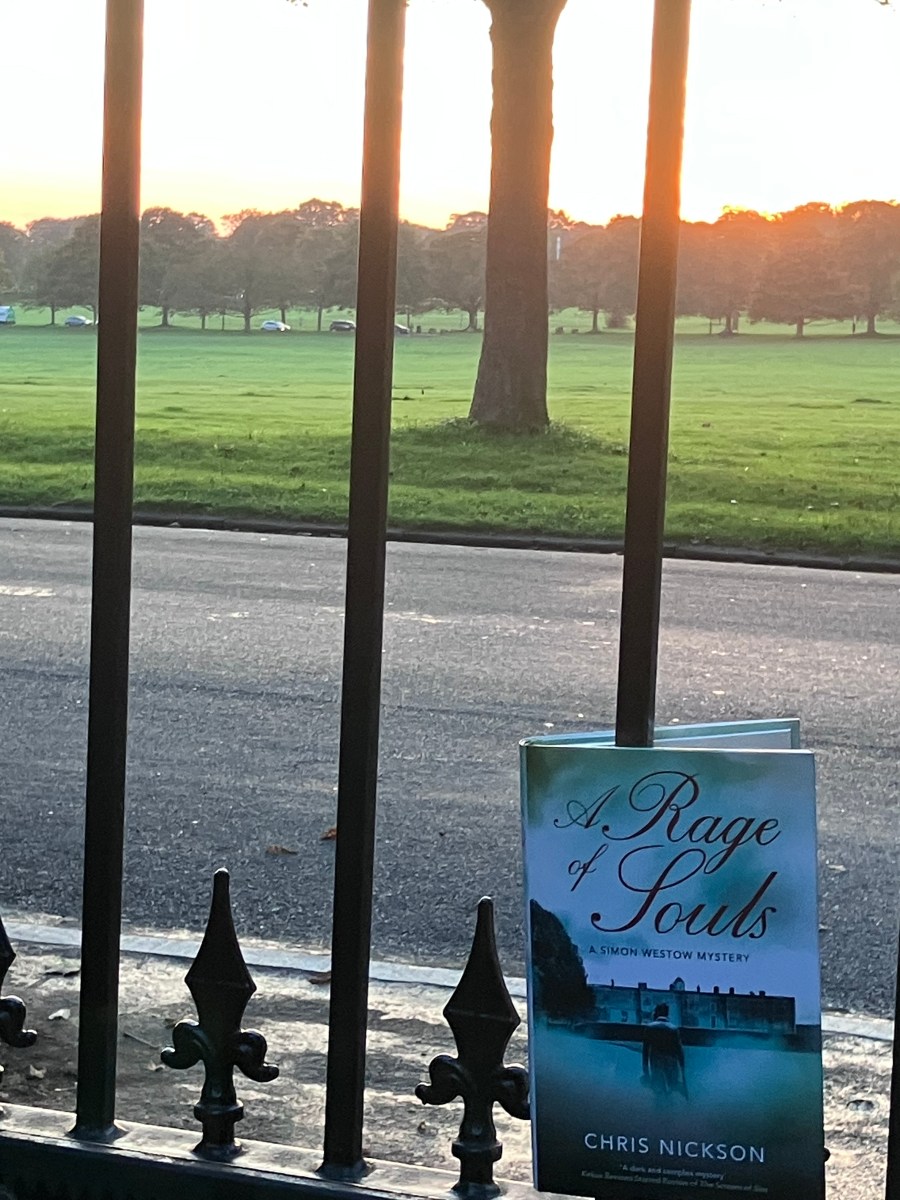
I’ve attempted some wit in marketing it in photos, puns around the theme of rage. Has it worked? Who can tell. But it amuses (me, if nobody else), and perhaps it jogged one or two people into buying.
All the Rage
That first week is crucial for a book. It’s when that critical first momentum takes place. This book has been off to a good start. The trick is to try and keep that going.
Maybe this can give sales a little boost. None of it is my doing; I’m not sure my publisher had a band in it, either. Whatever the reason, I’m not complaining.
Out- Rage
In the UK, the price for the Kindle version has dropped to £7.99 – you can buy it here. A hair over two cups of coffee. It’s $9.99 in the US (follow this link). If you’ve been thinking about a punt on it but felt it was too expensive before (it was, in my view), now is your time. I honestly think the book will convince you once to start reading. You can always download a free sample and try it out. How’s that for a deal.
It does get better. If you like that, Them Without Pain, the book that preceded it in the series, is only £8.54 in the Uk (look here) and £8.99 for the hardback. The US hardcover is $18.54. The entire series is very reasonably priced; the first two are just £2.99 for the ebooks.
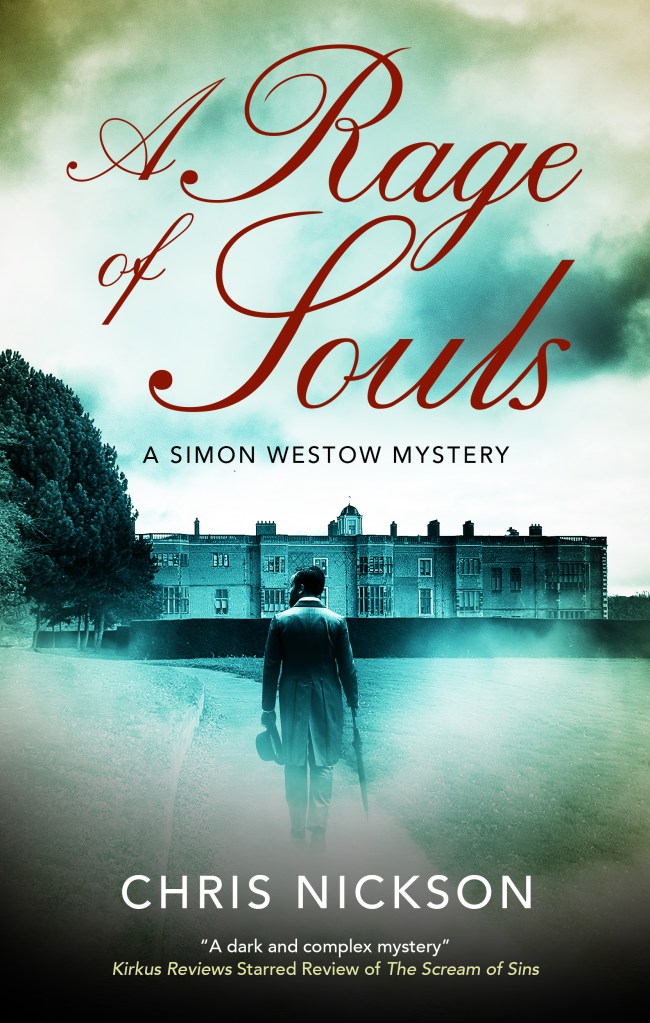
A Rage Of Souls is the final Simon Westow novel. I’d be very grateful if you gave him a grand send-off.
Sheepscar Beck, said Ralph Thoresby, the first historian of Leeds, “is the nameless water, that Mr William Harrison, in his description of Britain, (published in the reign of Queen Elizabeth), mentions as running into the Aire, on the north side of Leeds, from Wettlewood (as it is misprinted for Weetwood), This beck proceeds from a small spring up on the moor, a little above Adel, and yet had some time ago [previous to1714], eight mills upon it, in its four miles’ course. The first is that of Adel near unto which is the Roman camp, and the vestigial of the town lately discovered; and the last before its conjunction with the Aire is this at Sheepscar, which above eighty years ago [before 1714] was employed for the grinding of red wood, and making rape oil, then first known in these parts. It was converted into a corn mill in the late times, but upon the Restoration, when the king’s mills recovered their ancient soke, it dwindled into a paper mill, not for imperial, but for that coarse paper called “emporetica”, useful only for chapmen to wrap wares in. It was afterwards made a rape mill again, as it now stands.”
It’s worth pointing out that Thoresby made an unsuccessful investment in the Sheepscar rape oil mill and lost quite a chunk of his capital.
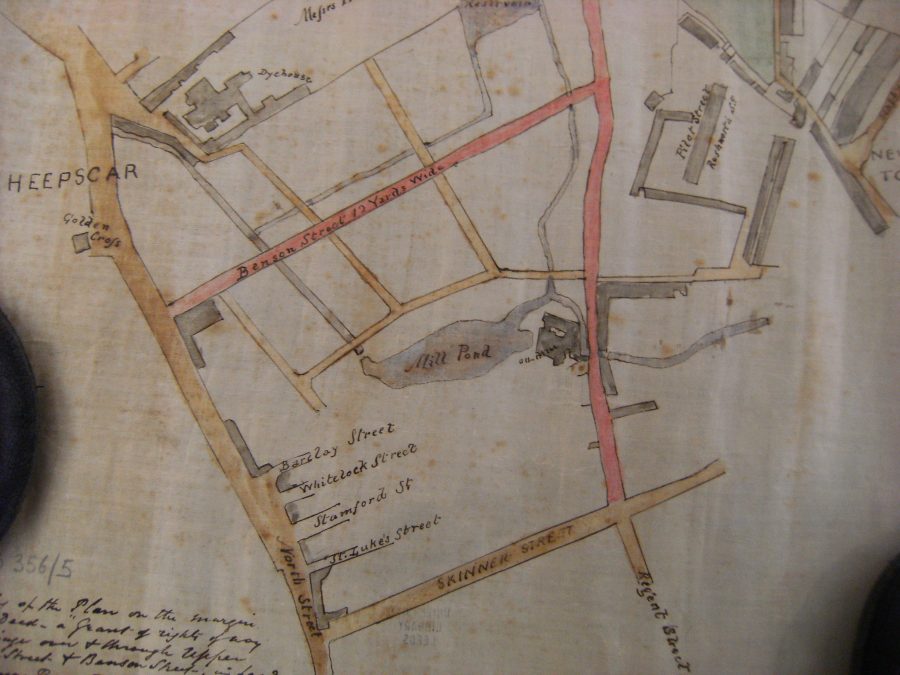
Sheepscar Beck is actually one of two streams that meet near the bottom of the area (along the way it’s also known as Meanwood Beck on its trail across the area from its proper origin on Ilkley Moor). It comes in the from northwest, while Gipton Beck arrives from the north. It’s most clearly illustrated on the most ancient map of Leeds, created for a court case in the 1570s, where Gipton Beck is mysteriously called Newton Beck (the new New Town for part of the area didn’t appear until later).
Together, they become Lady Beck, or Timble Beck, going down Mabgate, then through Leeds (Timble Bridge, covered over more than a century ago, crossed the water at the bottom of Kirkgate) to reach the River Aire close to Crown Point Bridge.
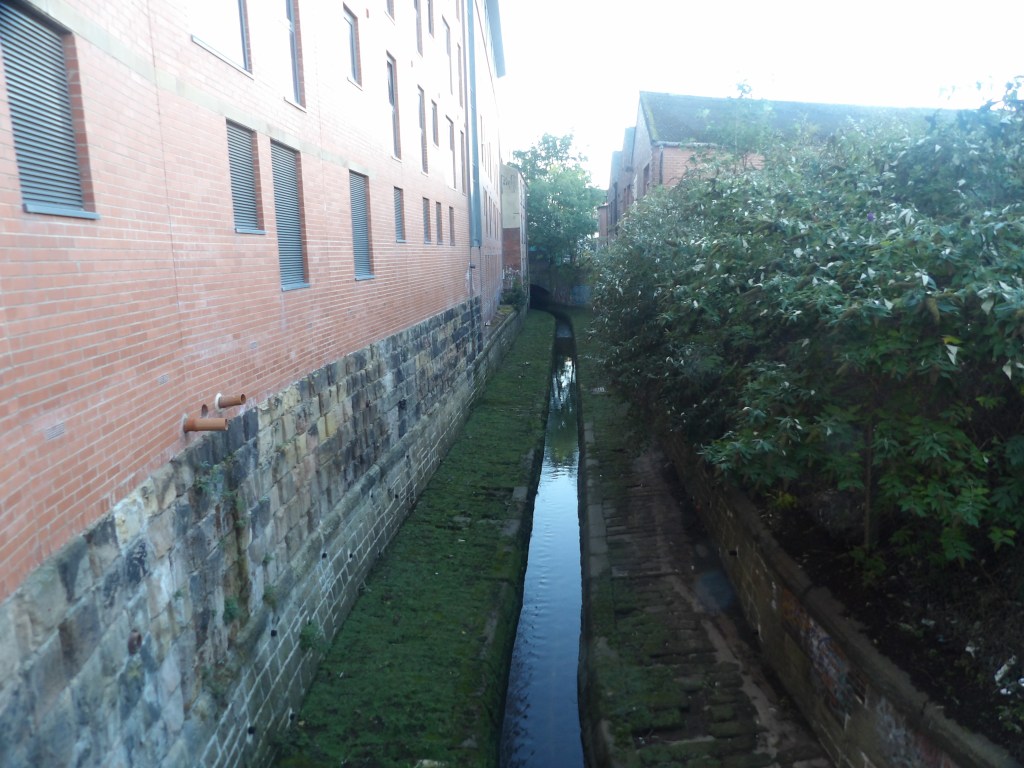
Sheepscar Beck on the left, meets Gipton Beck
Early on it ran as free as if had been in the country, but as Leeds expanded, the beck was culverted and largely covered over. However, you can still see a few traces at the bottom of Sheepscar, where the two streams meet and the mill pond would have been, just below Bristol Street.
It’s also easy to track here and there along Mabgate – a bridge crosses it on Hope Street – before one final glimpse as it vanishes underground, not too far from the Eastgate roundabout.
Going underground
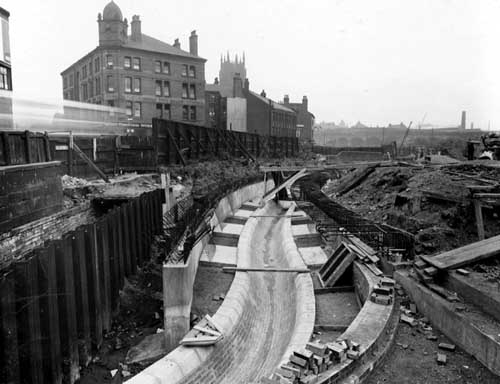
The culverting and covering of Timble Beck was a massive undertaking, as this picture shows.
Where Timble Bridge once stood.
By several names, beck and bridge have featured in any number of my books. It was a totem throughout the Richard Nottingham series, and has played a large role in the Simon Westow books. For the most part, Leeds hasn’t been kind to its own history, treating it as something in the way instead of worth saving.
But the beck, or what few bits you can still see, is history right under your feet. It’s powered mills, it’s flowed through the history of this place. These days it’s greatly diminished, but the role it played in helping Leeds develop, especially Leeds industry, is huge.
Lady Beck/Timble Beck
Since you’ve read this far, can I put in a quick plug for my upcoming book, A Rage Of Souls, which will be published October 7. It’s the eighth and final Simon Westow, every bit as dark and explosive as you could wish. Please ask your library to buy a copy, and you can pre-order it for yourself right here. Thank you and keep Leedsing. If that’s’ not a word, it should be.
Two minutes, that’s all…two minutes out of your busy day to travel back 200 years and peer into the darkness and mystery with A Rage Of Souls. Go on…you know you want to. It’s the final Simon Westow novel.
Leeds, April 1826
Simon Westow looked up from the Leeds Intelligencer. The house was quiet, their twin sons Richard and Amos off at their lessons at the grammar school.
‘Do you remember Frederick Fox?’ he asked.
Rosie was stirring a pot on the range. ‘Of course I do. What’s happened? Have they finally hanged him?’
‘He’s been pardoned.’
‘What?’ She let the spoon clatter against the pan. ‘Why?’
He folded the newspaper and placed it on the table. ‘It doesn’t give the reason. All done at the last minute, apparently. He was standing on the scaffold in York when the message arrived.’ ‘That’s probably an exaggeration. You know they always try to make it sound dramatic.’
Rosie pressed her lips together. ‘Still, I wonder what happened. Maybe he knows someone important.
A man in dark, sober livery was standing on the step, a serious look on his face. Someone’s servant, Simon thought. He made a hasty bow and handed him a folded note.
‘Mr Barton said to bring you this, sir.’
‘Thank you.’ He fumbled in his pocket, found a halfpenny and pressed it into his hand. With a smile and a thank you, the man drifted away.
At the kitchen table, Simon broke the seal.
Mr Westow,
No doubt you saw the news that Fox was granted a reprieve from death. When that happened, I imagined he and his wife would go somewhere nobody knew them and find a new life. However, since last week, I believe I’ve seen him following me three times. At first, I decided it had to be my imagination. With the second instance, I was a little less sure. The third happened yesterday morning, and I’d swear an oath it was Fox. Always at a distance, with no attempt to speak to me or threaten me. I’m not a man easily given to fright, but this worries me, more for my wife than myself. I will gladly pay you to discover what’s happening and to keep us safe.
Your servant,
James Barton
He read it through once again and began to plan.
It’s out in under a month. You can pre-order it right here, but if you can, please buy from an independent bookshop. In the UK, this place has the best hardback price, plus free postage.
What are the critics saying?
“Nickson vividly evokes the atmosphere of nineteenth-century Leeds and keeps the plot tense and twisty throughout. A good pick for historical-mystery fans.” Booklist
“A first-rate, complex mystery that delves deeply into the many social injustices of the time.” Kirkus Reviews
Ask your library system to order a copy. That way it’s there for everyone.
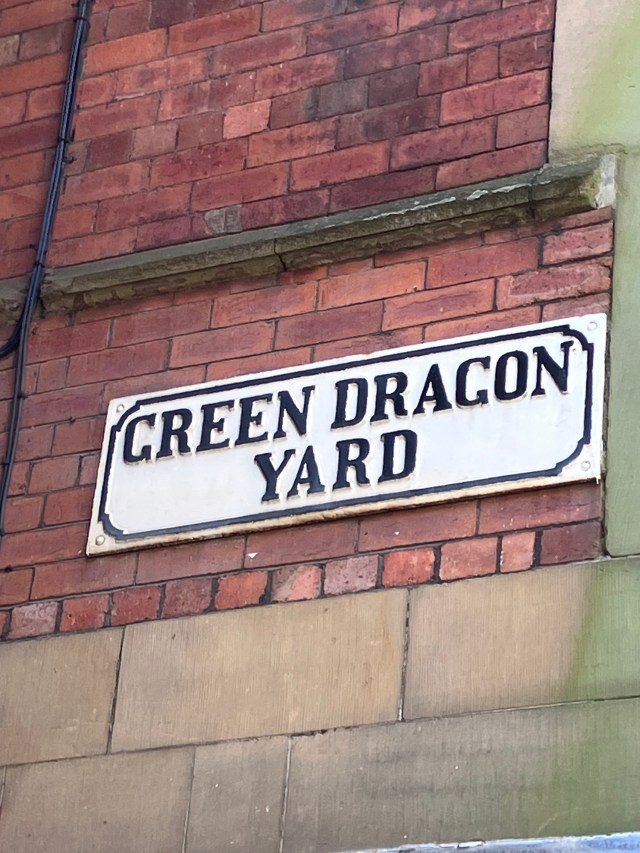
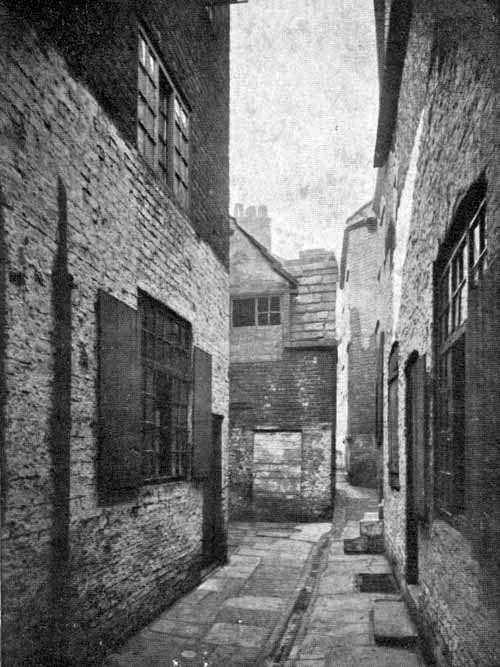
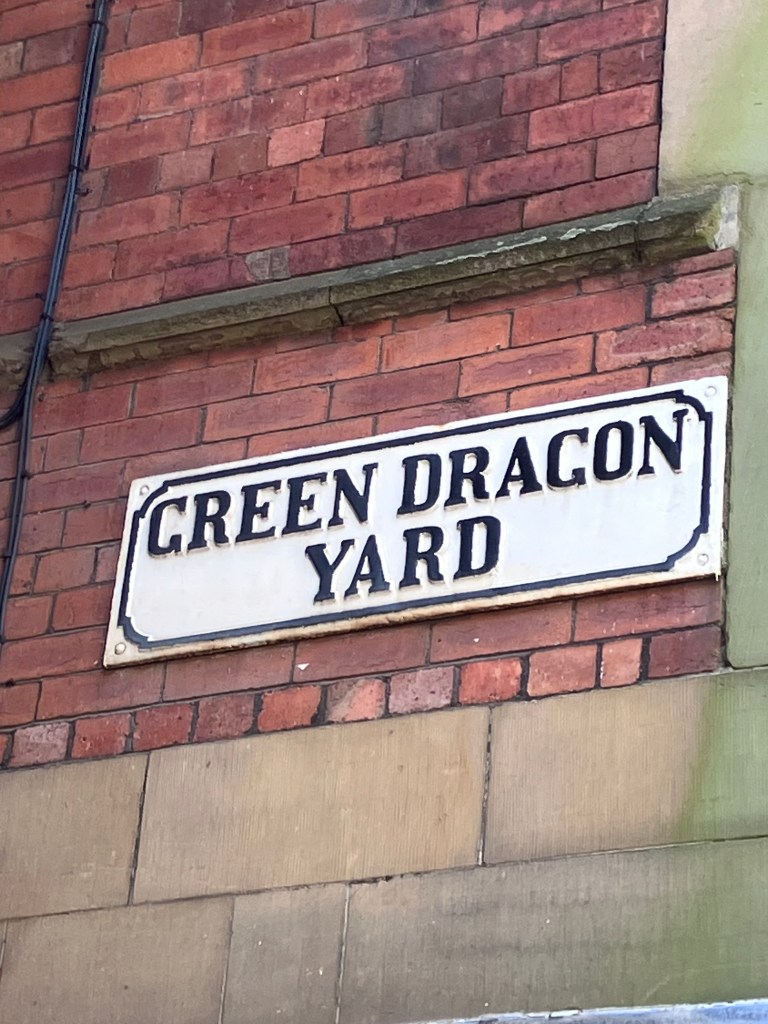
Please, come and walk with me for a few minutes in Green Dragon Yard. I want to tell you a little story.
Another month and A Rage Of Souls will be published. It’s the eighth, and the final Simon Westow book.
A couple of people who’ve read it feel it’s the darkest in the series, going further into the shadows than The Scream of Sins. That surprised me; I hadn’t seen it that way. But maybe I’m too close to the book to have any objective view.
Yes, there is darkness, but it’s the creeping shade of death and loss – there’s plenty of that in the book – that forms the overall mood. Once again, it’s an exploration of privilege, wealth, greed and a sense of entitlement that money and position can bring.
The canvas is a little broader. Still resolutely Leeds, but ranging a little father, out to Kirkstall Abbey, Temple Newsam, with a passageway connecting the wings under the courtyard, and out to the lovely old church at Lead, close to the historic, deadly Towton battlefield. But all those places hold the past and dead…
The church at Lead
When I wrote the book I had no intention of the being the last one. I had another in mind for that, featuring Jane (who’s been the linchpin of the books) after the death of Mrs Shields. The old woman has left her the house behind Green Dragon Yard plus a surprising amount of money. But the old woman’s great-nephew feels it ought to belong to him and is determined to have it, whatever that takes.
The Old Green Dragon Inn
The possibility of an epic battle, but the words simply wouldn’t catch fire. And without combustion, there’s no book worth reading. I tried several times but couldn’t make it work in the way I wanted.
Whatever the reason, it was a tale determined not to be told.
Simon, Rosie, Jane, Sally, Richard and Amos, they’ve given us their stories. Not always easy ones for them to tell, but they’ve certainly been a part of my life for several years.
Is the book as dark as people have claimed?
More to the point, is it everything I hoped it would be when I finished it?
The only way to know is to read it.
If you’re on NetGalley, you can find it here – all my publisher asks is an honest review (and they’ve been cracking so far).
Or you can pre-order it here for Kindle. But if you’re in the UK and going for the hardback, you’ll find the best price here, with free shipping.
With times being tough, you can always request that your library gets it in. That way, I get a royalty from the sale, plus a small amount ever time someone borrows one of my books.
I hope you like it, and I hope you think I’ve given all the characters hope for the future. That’s all we can ask, really.
If you’ve read any of my books, you’ll have come across the courts and yards that ran off Briggate. There were dozens of them; this 1847 map of Lower Briggate gives an indication.
Development over the years has done away with most of them, and in many cases, that’s no bad thing. They were cramped, awkward spaces, originally intended for workshops, counting houses and warehouses when Briggate was first laid out in 1208.
But times and needs changed. Leeds began to grow rich off just as the fields that had sustained small farmers were enclosed by landlords who could graze sheep and make more money from their estates. People arrived in town hoping for streets paved with gold, and that trickle became a torrent with the Industrial Revolution.
They all needed somewhere to live. The first back-to-back houses appeared around the start of the 19th century. But long before that, these courts and yards of Leeds had become places for people to live. For artisans and labourers, they offered a home. For the prostitutes, the bottleneck openings were a place to stand and ply their trade.
Some led to inns and taverns. But even so, along the yard you’d find small businesses with their offices and many living in rooms.
They became an inimitable part of Leeds, an accidental growth that came to typify Leeds. They were just off Briggate; plenty ran of Kirkgate and the Upper and Lowerhead Row. Each had its character, its citizens, its grievances and joys.
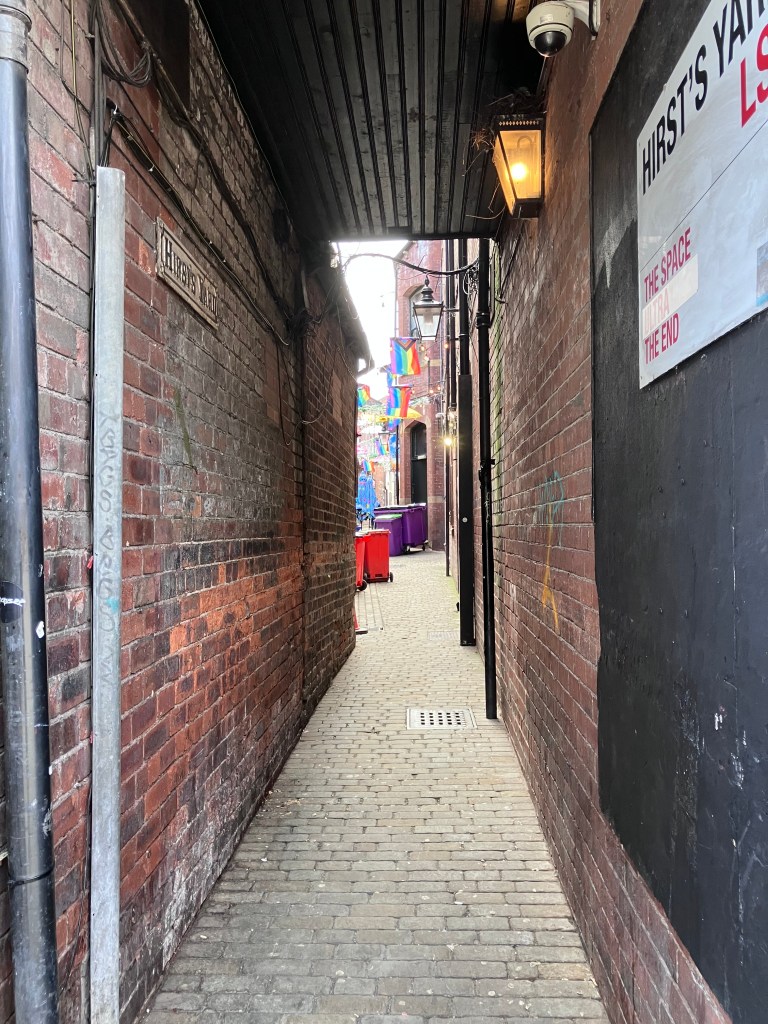
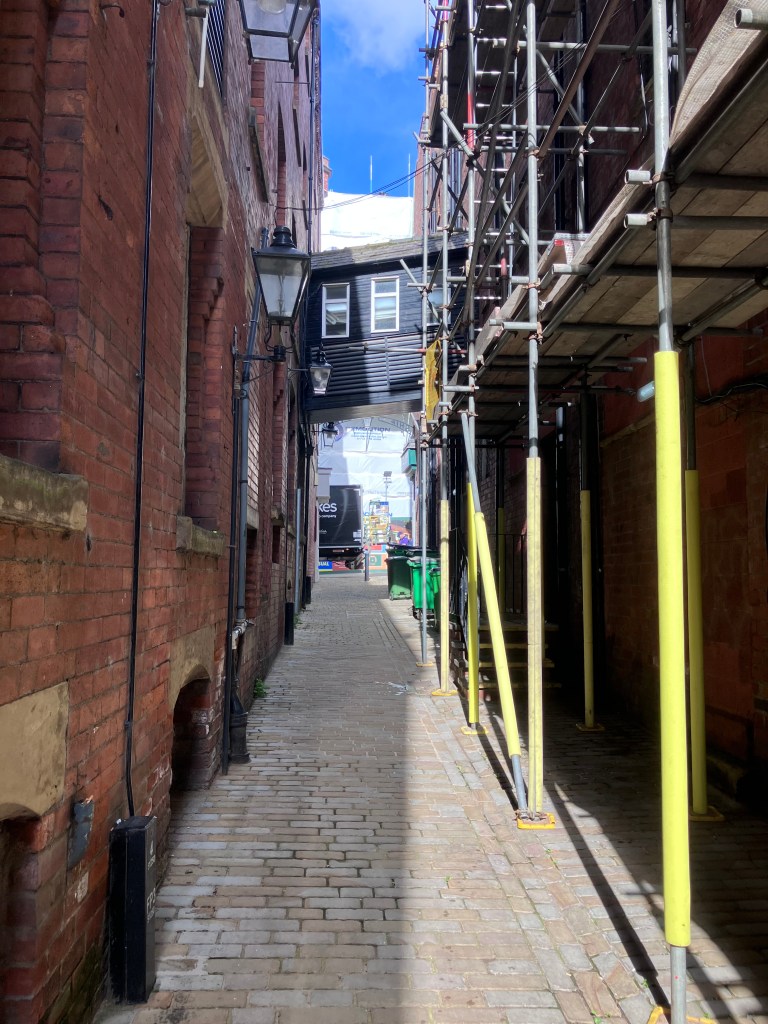
Few remain now, and those are home to bars and clubs. A handful from what was once part of everyday life. Given the way Leeds has carelessly laid waste to much of its past, I’m grateful these remain.
Take a look at a few. My characters have walked down most of these. Simon Westow, Jane and Sally have. Did I mention they’ll be doing it for one last time in October, when A Rage Of Souls is published. Come along and walk with them. Don’t forget a stroll down Green Dragon Yard, too. Pre-order it right here.
October will bring the publication of A Rage Of Souls, the eighth Simon Westow novel. A couple of people who’ve read it feel it’s the darkest yet in the series – which surprised me; it never struck me that way when I was writing it. Shadowed and sorrowful, yes. But the series had always had shaded undercurrents and that sense that violence might explode.
Yes (I think) there’s always been hope in there too, some light amongst everything else.
She sat outside the cottage, quietly reading her book and relishing the warmth of the afternoon sun. Even through the fine layer of haze and smoke that always hung over the town, the heat was comforting.
When the bell at the parish church pealed half past five, Jane set the book aside and brought a knife from her pocket, spending five minutes honing its sharpness. She knew this blade. It had saved her life and served her well. Readiness could mark the distance between life and death. Her attention had slipped once, and she’d paid for it with her little finger. Simon had let down his guard for a single moment and now he walked with the consequences.
As she approached Barton’s house, she paused to study Sally. When they met, the girl had been a child of anger. It was fury that had kept her alive on the streets. But living with Simon and Rosie and their boys, she’d found a family who cared for her, and much of that hardness had blunted, tempered with compassion. She was growing, taller every month it seemed, and starting to fill out. How old was she? Thirteen, Jane decided. That, or perhaps a year older.
Still a strange one, a child of two families, one with the Westows and the other with the homeless children who relied on each other. God help her if she was ever forced to choose between them, Jane thought.
‘Barton left about an hour after you,’ Sally said. ‘The servant brought a gig from the coach house. He and a woman went off in it. I decided to stay in case Fox came sniffing.’
‘Any sign of him?’ Her gaze slid around, but there was little to see. The house was quiet, nobody visible through the windows. She shook her head.
‘Nothing at all.’ ‘I’ll stay for a few hours and come back again in the morning.’
When she turned her head again, Sally had vanished.
But I should probably announce something – this will be the last book in the series. I hadn’t originally planned it that way, but the one I had in my head as the final novel refused to come together, and, reading it again, this seems to make a good conclusion. I’m not going to force things
Perhaps I’m right. You’ll have to be the judge.
To be clear – no, this doesn’t mean I’m retiring. It’s simply the last Simon Westow book.
It’s available for pre-order, as hardback and ebook. I’ll give the Amazon UK links here, although Speedy Hen is cheaper for the hardback and has free postage. Find it here.
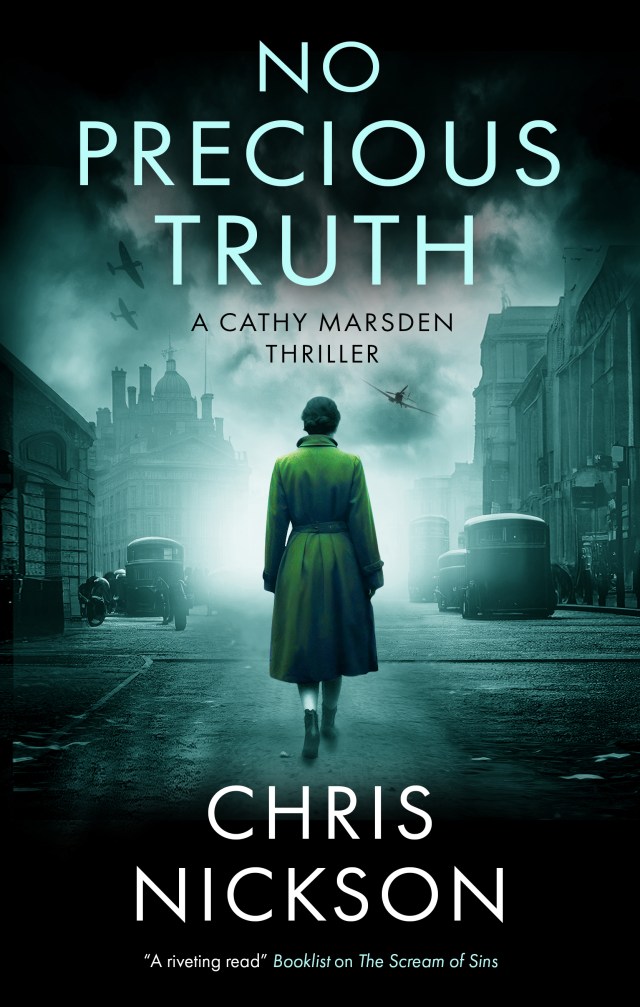
And while you’re at it, Cathy Marsden in No Precious Truth will appear in paperback in November for £9.99 ($16.99 US). Very easy to carry around and also makes a great extra Christmas present. You can pre-order that, too. Do it right here.
The scream sliced through the sky. Loud, clear, a cry of pure terror that crashed into her thoughts. Everyone near Seaton’s old mill turned to look. Carts halted, their drivers searching for the sound. Men and women walking together clutched each other’s arms. All of them stopped except the couple Jane was following. Heads down, they kept moving steadily along, as if they hadn’t heard a thing. A second scream, stronger, more awful than the first. Two men ran along the road, carrying a girl on a wooden hurdle. She was a small creature, no more than nine, clothes drenched in blood. Her dress was torn, showing a leg where the flesh hung ragged, ripped through to pale bone. Her fists were clenched, thrashing against the wood to try and stop the pain. ‘Be quiet,’ one of the men ordered in a harsh voice. ‘Surgeon will take care of it.’ They all knew what that meant: the leg would go. People shuddered and stepped back as the girl wailed no, no, no, no, the fear raw in her voice….
Jane realised she’d been digging her nails hard into her palms. Pain arrived so suddenly; it could touch anyone. She knew; seeing the girl had brought back the torment of losing her own little finger. Hers had been a deliberate act of violence, but in some small way she understood. She was still for a moment, trying to push everything she’d just seen out of her mind. She knew it would return later. As soon as she closed her eyes that night.
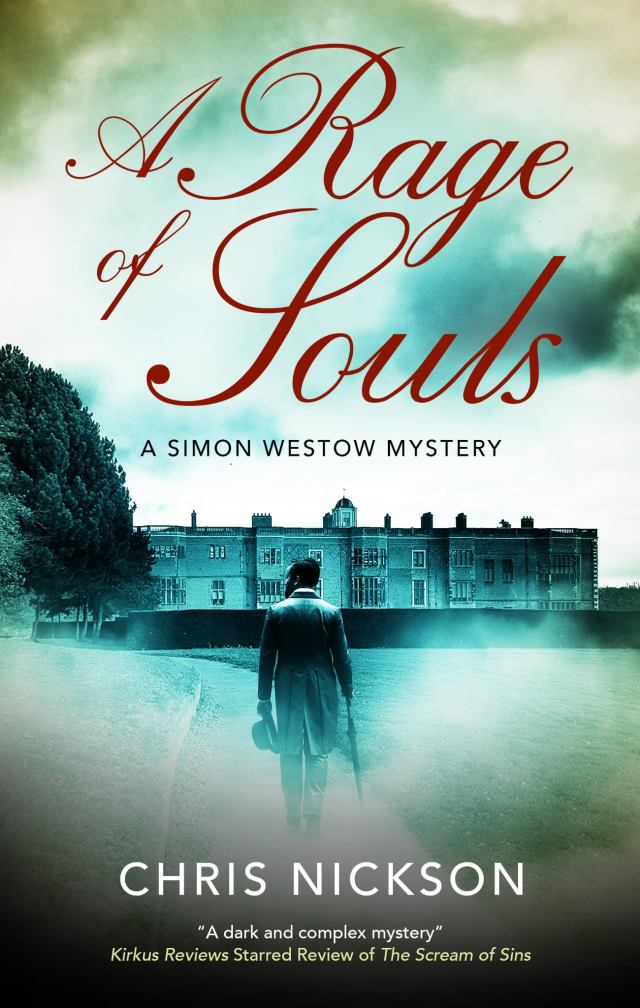
You can pre-order it here (UK) or here (US). It might look like the links don’t work, but if you click on the ‘here,’ they do. And yes, the building on the cover is Temple Newsam.
Hard to believe that it’s almost two weeks since the wonderful launch for No Precious Truth. Time’s felt compressed since then. But April has seemed to rush by, as if it was sprinting, so strange after a never-ending March.
A week later and the Yorkshire Post published an interview with me, one that captured me and my writing pretty well, I think.
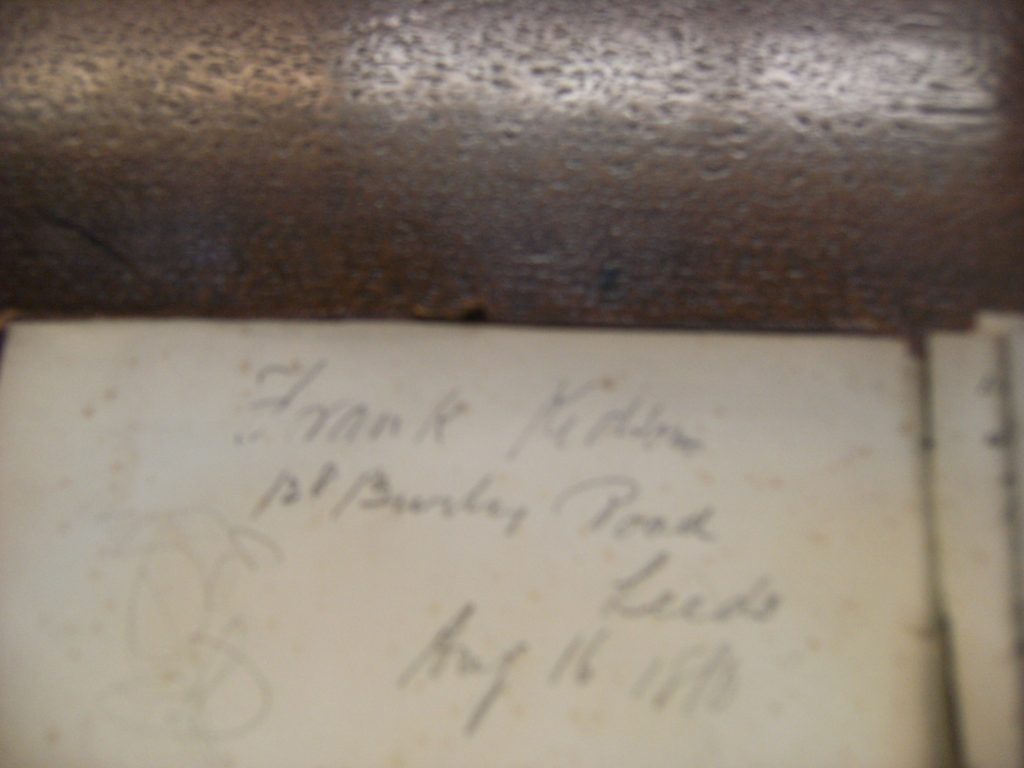
I’d barely caught my breath when I had to write a paper I’d agreed to present at a symposium for music in the Leeds collections, in the new music library (and you really should see it) that’s part of the central library. I’d been asked to talk about Frank Kidson and his materials. A shock to me, as I’m no academic – not even a degree – but I’m a great admirer of Kidson and what he did.
He and his niece and companion, Ethel, are minor characters in the Tom Harper book, The Tin God, where his knowledge of folk song is important in unravelling the clues. He was one of the pioneering Victorian folk song collectors, penning a column about songs in the Leeds Mercury Supplement for a few years and published books on folk music; the most famous is the influential Traditional Tunes, which was largely preciously unknown music, much from Yorkshire, especially Leeds.
Leeds Libraries has an excellent collection, a handwritten biography of him by his niece, his watercolour sketchbook, arrangement of songs he worked on with composer Arthur Grimshaw (son of the famous Leeds painter Atkinson Grimshaw), and much more.
It was an honour to be asked to do this and have the rare luxury of spending time with the materials. I’ve wrote about Kidson for fRoots magazine in 2018 and I was grateful for the chance to spend time with him once more.
The day after was my school reunion. 53 years, although we bulked up the numbers by including the two years below. It was interesting. I’d expected it to be that, so I wasn’t disappointed. I’d seen a couple of the people more recently, and it was good to catch up with them. But I was never part of the mainstream at school, and there were plenty I didn’t recall.
Tomorrow, another symposium, this time at the law school of the University of Sheffield. Talking about crime fiction, so I’ve prepared that paper, even as I’ve been going through the proofs for A Rage Of Souls, the next Simon Westow novel, coming in October.
After that, I’ll be ready to take the long weekend off…
Of course, No Precious Truth hasn’t even been out for a month yet. If you haven’t read it yet, I’d certainly appreciate the sales. Independent bookshops are always best, but wherever you want. And for those on a budget, please, ask your public library to order it in, if they haven’t already. A little about Cathy from the Yorkshire Post interview, just to convince you.
Sometimes the truly wondrous does happen. When that occurs, it etches a sharp, memorable line in a life.
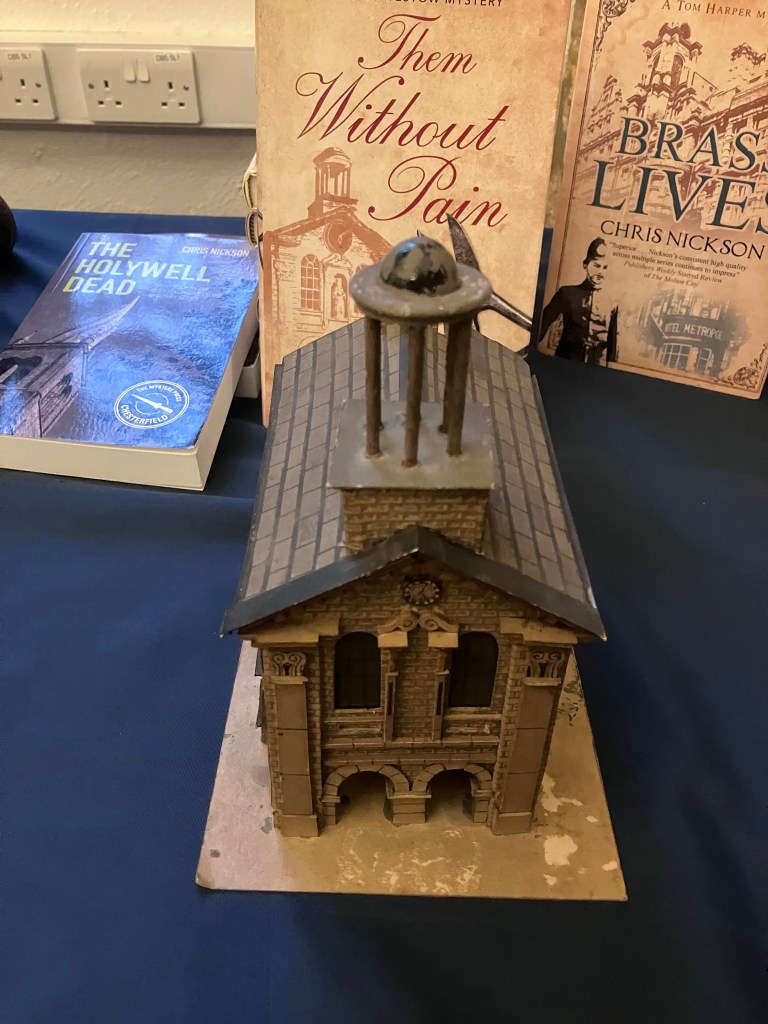
In my most recent book, Them Without Pain, a true incident from Leeds history is the catalyst for everything that happens. In 1696, goldsmith Arthury Mangey was hanged for coin clipping – which was treason, as it debased the coinage. In his trial it was alleged that he had a secret workshop on Middle Row, the shops and workshops behind the Moot Hall in the middle of Briggate (see the superb cardboard model).
In 1825, the Moot Hall and Middle Row were finally demolished, opening up the town’s main street. But as the workmen tore down walls, they discovered…a hidden workshop, with two pairs of metal shears, a bowl and an Elizabethan coin.
In the book, Simon Westow is there, and in the hidden room he also finds a body. That provides the spark for everything that happens.
Why had no one looked for the room at the time of the trial? Did the things in there really belong to Mangey or had he been set up?
We’ll never know. But some of what was found has remained and will be used in an exhibition on Leeds writing later this year.
Yesterday I was giving a talk at Abbey House Museum, where I’m writer-in-residence. I had the real privilege of holding these shears, of touching history. Maybe Arthur Mangey really did use them to commit treason over 300 years ago and I was able to share that with him. A connection across the centuries.
I’d written about them, and they were real. Now that’s magic, isn’t it?
Forgive me for ending on a crass commercial note, but in the UK Amazon has both Kindle and hardback editions at very low prices. See here.
First of all, a happy 2025. May it bring you healthy and happiness and a sense of calm.
But…new year, new series?
It’s true, I’ve dropped hints and more on here about it. With No Precious Truth (out April 1) I’m shifting to the Second World War and Leeds in 1941.
To begin, I should say I wrote an entire unpublished novel with Cathy that detailed her start with the Special Investigation Branch. And I discovered that she, the era and the situation would not leave me alone. She demanded I write more. The last time that happened was with Annabelle Harper, so draw your own conclusions.
Cathy Marsden was born and raised in Leeds, growing up on Quarry Hill until the family was rehoused to the brand-new Gipton estate in 1934. The city and its people is in her blood – more than she realises at first. Her father receives a pension, lungs ruined by mustard gas at Arras in World War 1. Cathy is a policewoman, a sergeant. She’d been in charge of six female police constables and reporting to a female inspector – at least until September 1940, when she was seconded to the Special Investigation Branch, which had opened a small Leeds office in the summer. The idea was she’d show the five men in the squad around the city. The SIB was made up of former police detectives who’d joined the army or been in the reserve, only to end up in the military police, and then SIB. They have army ranks, are supposed to carry sidearms, and work out of a small office in the Ministry of Works office on Briggate.
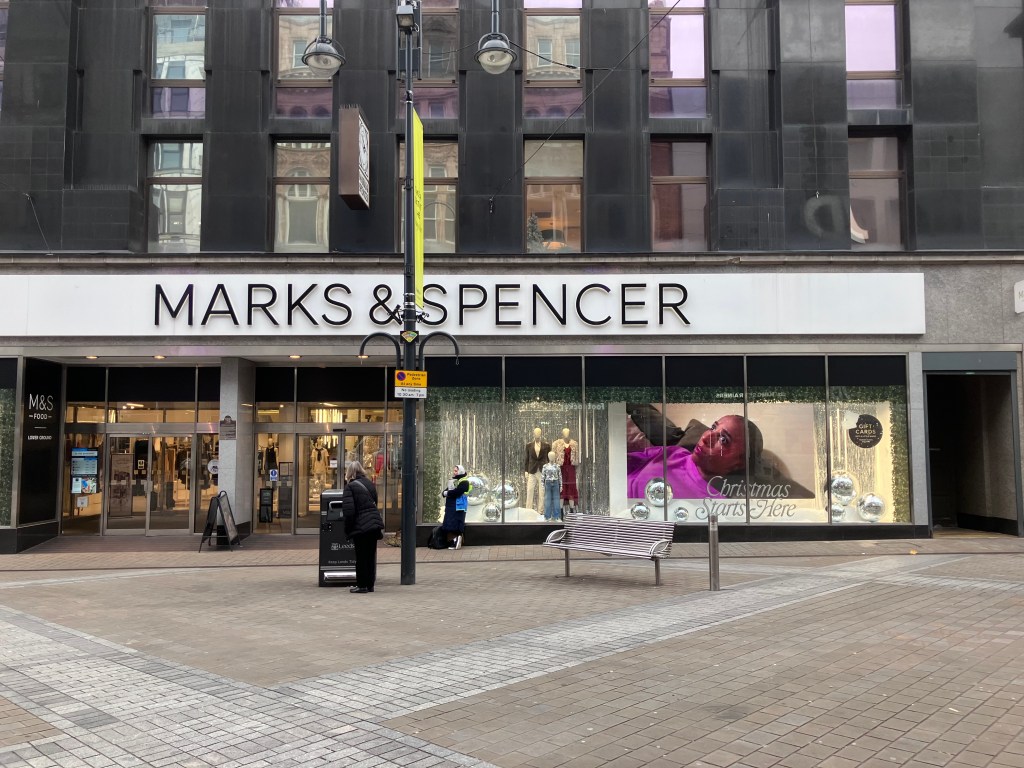
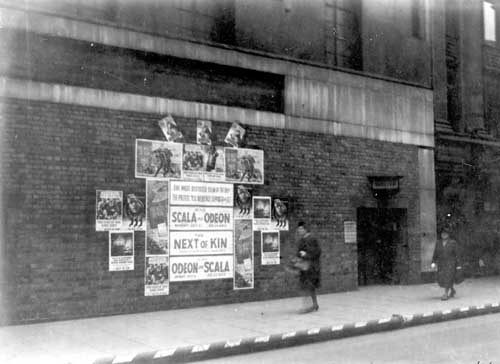
Where was that? Does this look familiar?
Now take a look at this. It was supposed to be the flagship Marks & Spencer store, but it was requisition by the government for the ministry.
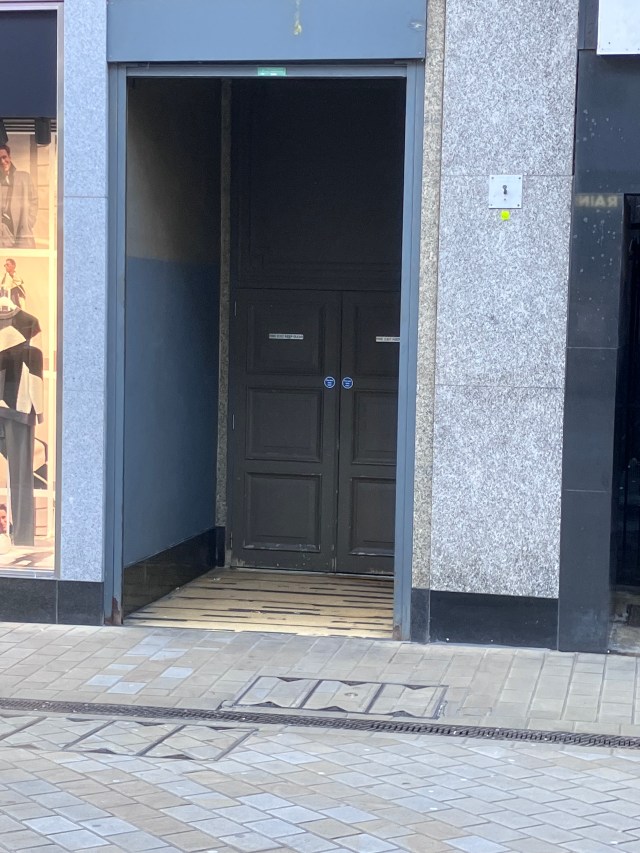
Entrance right here.
The secondment was meant to last three weeks. In that time Cathy proved to be vital to the squad. Working in plain clothes, with her local knowledge, her skills have chance to blossom and the period is extended until she’s there for the duration.
But there’s one other thing she does. Every Friday evening, from 6-10, she’s a firewatcher at the top of Matthias Robinson’s department store, just up Briggate (it became Debenhams, and just reopened as Flannels).
There have been air raids, but Leeds has escaped the horrors inflicted on other British cities – so far. But how long can that last?
Meanwhile, Cathy and the men in SIB are going to have a very big problem. The first inkling is the return of her brother, who moved to London as soon as he could and is, he’s told the family, a civil servant…well, read for yourselves.
From the corner of her eye, Cathy caught sight of someone else entering the room. Her eyes widened in disbelief. He wasn’t anyone she’d ever expected to see in this place. She folded her arms and glared at him.
‘What the hell are you doing here?
Daniel Marsden was five years older than her, the clever boy who won the scholarship to grammar school. The one who passed everything without seeming to do a stroke of work while she studied deep into the night, struggling with her lessons and failing half her exams.
He was the boy people noticed. They remembered him, asked after him, always full of praise, with Cathy a poor second. When Dan landed a Civil Service job and moved down to London, she’d said nothing, but deep inside she’d been glad to see the back of him. After so many years she had the chance to move out of her brother’s shadow. Even now, his Christmas visits each year felt like more than enough time together, watching everyone gather round him. She’d been quietly relieved when he’d said there was too much going on at the ministry last December to be able to come.
Now he was standing in the office where she worked. He smiled.
‘I like the way you’ve had your hair done. It suits you.’
Cathy felt herself bristle. At twenty-six, she’d spent four years as a woman police constable, then two more as a sergeant, before her secondment to SIB and a move into plain clothes. She’d had to fight for respect every step of the way. It had been the same when she started here. She’d needed to work hard to make the squad accept her. To understand that a woman could do this job. Cathy wasn’t going to let her brother dismiss all that with a flippant comment. Just the sight of him here, where she’d built a place for herself, made the excitement and pride at finding Dobson wither away.
‘I’m so very glad you approve.’
Dan shifted his glance away.
‘He’s been sent,’ Faulkner told her. ‘We’re working with him.’
She turned, fire in her eyes. Like the other men in SIB, Adam Faulkner had been a police detective before the war. He’d been in London, a member of the Flying Squad. They were famous, the best Scotland Yard had; everybody in the country had heard of them. He’d joined the army, eager to defend his country, only to find himself shuffled into the military police. Recruited for the Special Investigation Branch when it was formed the year before, last July he’d been posted to Leeds to set up this new squad. A sergeant, like her, but his was an army rank. A good, fair boss.
‘Sent?’ Cathy asked. ‘What do you mean, sent?’
Faulkner closed his eyes for a second. ‘Your brother is with the Security Service,’ he said.
I hope you’re intrigued by a female character front and centre in a Leeds WWII thriller. If you’re registered there with my publisher, No Precious Truth will soon be available to read on NetGalley, in exchange for an honest review. If you’re not registered and fancy it, drop me a line and I’ll arrange it.
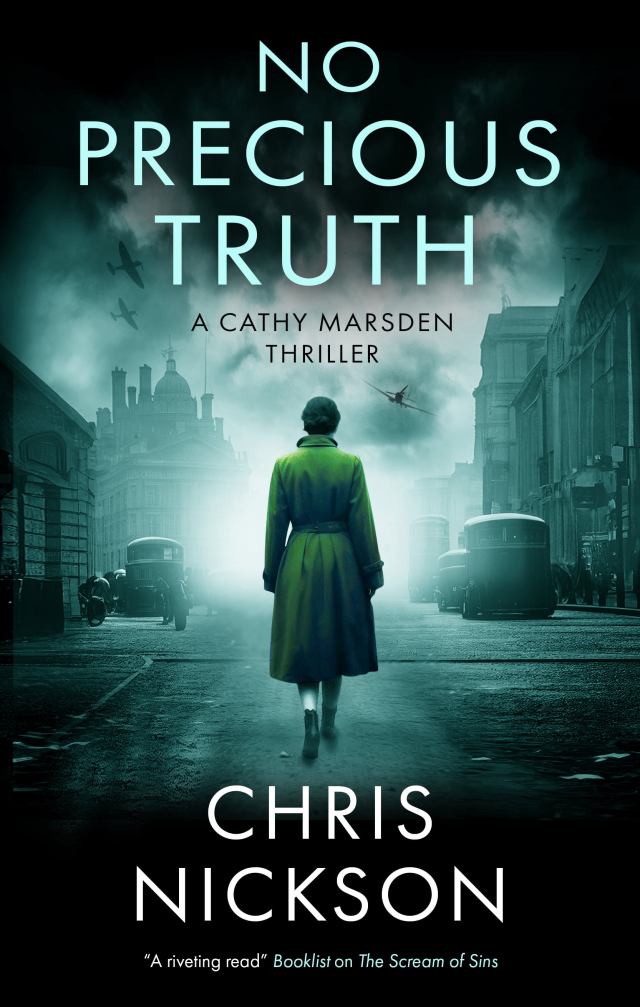
Or you could pre-order it, of course. Amazon has the Kindle edition of No Precious Truth pretty cheap in the UK and US. UK version here. In the UK, the cheapest hardback price is here. The cover’s pretty great, too.
And of course, the Kindle version of the latest Simon Westow book, Them Without Pain, is pretty decently priced in the UK. Find it here. The hardback is just over a tenner, too.
One final thing: Cathy arrives with her own soundtrack. Find the playlist here, but be prepared to dance and jitterbug.




















 Chris Nickson