I hadn’t intended to post anything this week, but…
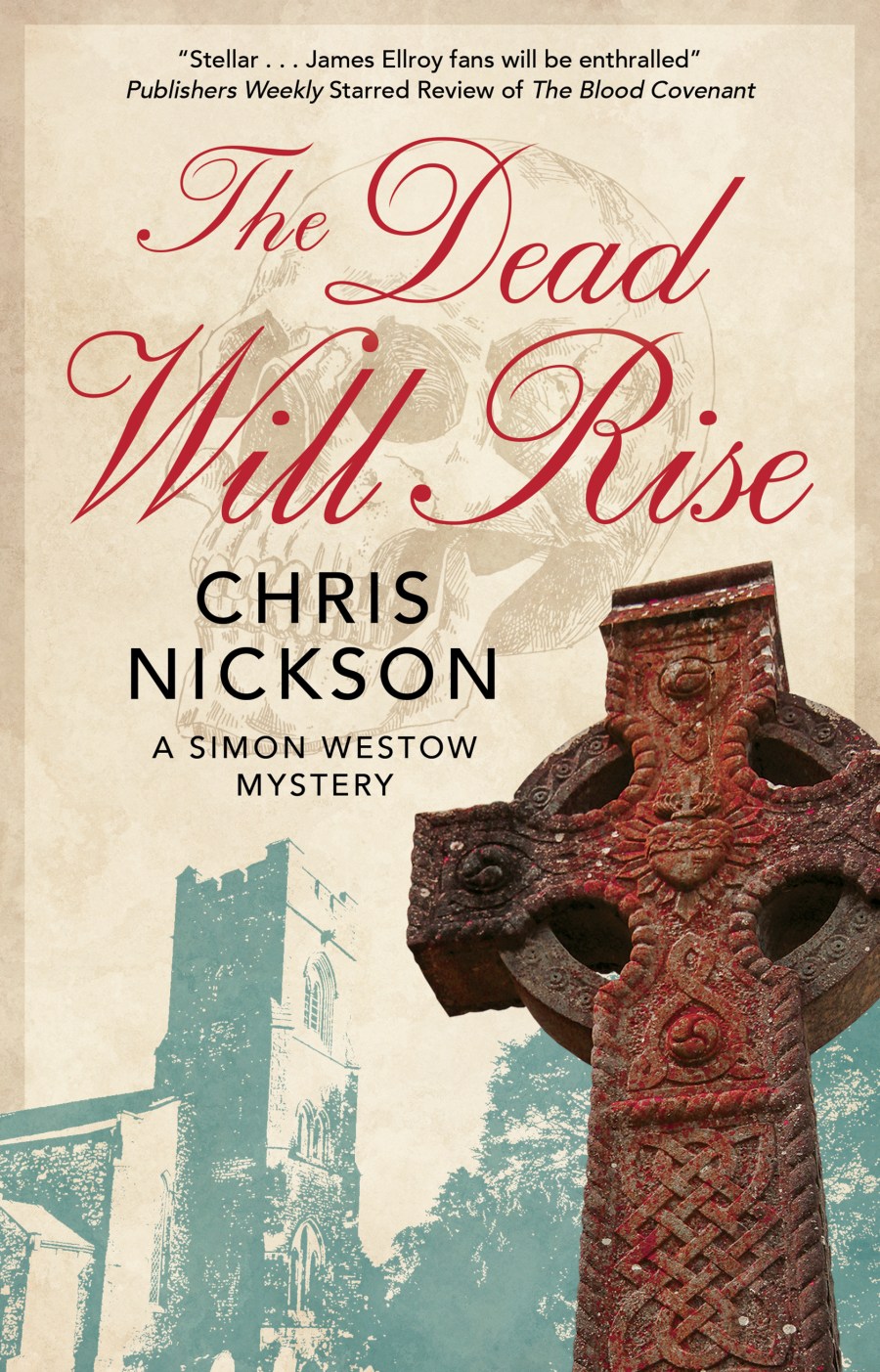
The first review for The Dead Will Rise is set to appear. The book isn’t out until March, but the US trade magazines get an early start, and Publishers Weekly is one of the biggest.
Anyway, rocked on my heels to get it so soon, but more to have a starred review. The fourth star in a row for Simon Westow, Jane and Rosie. Called “excellent fifth whodunit in the series. “Nickson keeps the story line intriguing despite the focus on a crime other than murder as he further develops his leads,” the reviwer says, calling the book a “gritty and surprise-filled mystery.”
Wow. Just wow. That’s possibly the best Christmas present I could receive.
Oh – I’ve almost finished the draft on the next one, too, tentative titled The Scream Of Sins.
We’re close to the end of 2022, hard to believe. That means it’s time to take a peek into what the next 12 months promises in books. Well, my books. Before I do, though, I’d like to recommend the best thing I’ve read this year. It’s Demon Copperhead, by Barbara Kingsolver. A modern Appalachian retelling on David Copperfield, it’s both harrowing and redemptive and very beautifully written. Tell them I sent you (and it’s not too late to catch up with Thomas M Atkinson’s Tiki Man, in my estimation the best thing to appear in 2021).
So…
March is set to bring the fifth Simon Westow book, The Dead Will Rise. It’s a series that definitely grows dark; by now it’s living up to the Regency Noir tag I gave it.
What’s it about? Here’s the blurb.
Leeds. April, 1824. Wealthy engineer Joseph Clark employs thief-taker Simon Westow to find the men who stole the buried corpse of Catherine Jordan, his employee’s daughter.
Simon is stunned and horrified to realize there’s a gang of bodysnatchers in Leeds. He needs to discover who bought Catherine’s body and where it is now. As he hunts for answers, he learns that a number of corpses have vanished from graveyards in the town. Can Simon and his assistant Jane bring the brutal, violent Resurrection men who are selling the dead to medical schools to justice and give some peace to the bereft families?
In case you’re wondering, there really were bodysnatchers in Leeds. But that’s a tale for another time.
Then, next autumn, there’s the big one: Rusted Souls, the eleventh and final Tom Harper. It takes place in 1920, in the aftermath of the Great War and the Spanish flu. It’s 30 years since the series began with Gods of Gold and now Tom has become Chief Constable.
This book mean a lot to me. I’ve spent three decades with the Harpers. They’re family to me, and saying goodbye was hard. I’ve written in the region of 800,000 words about them. Being able to round it properly was important to me, and I feel I’ve done them justice. But time will tell. They’re crime novels, a saga of a family, but also an exploration of a changing Leeds, I think. I’m proud to have written these. No cover design yet
But that’s all for next year. Meanwhile, I wish you and your happy holidays and a peaceful, healthy New Year – and thank you for reading. And remeber – books make great gifts, for yourself as well as others.
The note was short: Meet me outside the Moot Hall tomorrow at seven in the morning.
Jane read it twice and set it aside.
But she was there, wrapped in her heavy green cloak with the hood pulled over her hair. She stamped her feet against the February cold and waited for Simon.
He arrived with the final toll of the church bell for the hour, a smile on his face as he said, ‘Come with me.’
Why? What did he want? He knew something. She followed quickly, curious to find out.
No more than a few yards. He stopped by one of the stone buildings of Middle Row, a tailing of workshops behind the Moot Hall, leading up Briggate. They’d been empty for a few years. Another week or two and all this would be pulled down, along with the hall, making space to erect a new Corn Exchange.
The Moot Hall with Middle Row behind
Simon produced a key and unlocked the heavy old wooden door of one of the workshops. No telling how long these had stood here. As Simon pushed the door open, she could smell the mustiness and the age of the place.
‘What is it?’ she asked.
‘It used to belong to a man named Arthur Mangey.’
‘Who was he? Nobody’s been in there for a long time. Years.’
‘This was a long, long time ago. Let me light the lantern.’ It flared; he trimmed the wick and lowered the glass shade. ‘Come in and close the door. We don’t want the whole town knowing. Not yet.’
She gazed around. A small, barred window high in one wall, all the glass gone. Cobwebs pale and thick in the corners and draped across the walls. Dried leaves like a rug on the floor. A heavy wooden bench was the only furniture.
‘Constable Porter and I came in here yesterday. A chance to look around before it’s rubble.’
She didn’t understand. It was nothing more than an empty, derelict room. Stone on three walls, old wooden panelling on the fourth. No mystery, nothing to see. What was going to interest Leeds about that?
‘Watch,’ Simon said. He reached into the corner, moved something, and with a click, some of the panelling moved out like a draw. She drew in her breath with a gasp. ‘We found it by accident. Sheer luck.’ He held up the lantern and grinned. ‘Take a look.’
A dark, airless room that felt heavy with history. The lantern gave the only light. Another bench.
‘See?’ he asked.
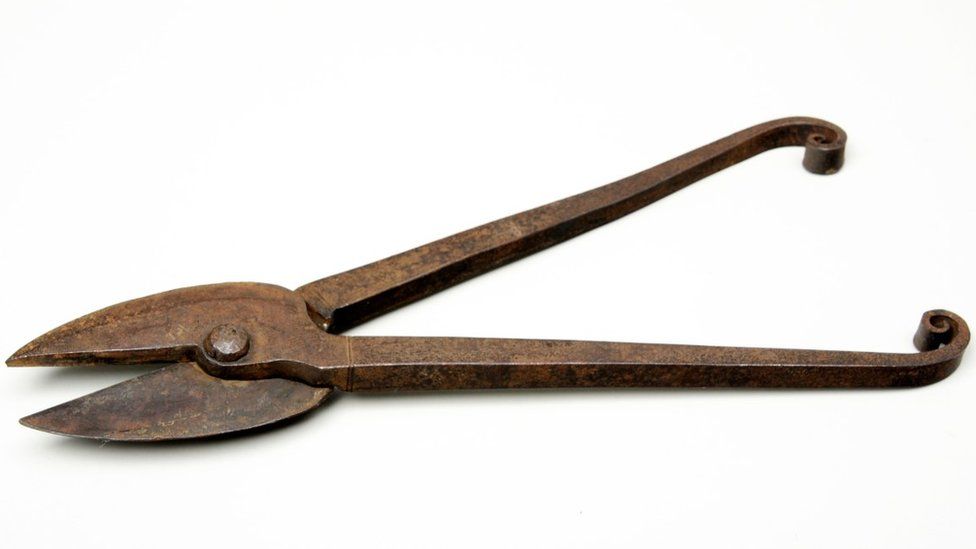
Two pairs of shears on the wood, as if someone had put them down a few minutes earlier. Some small, tarnished chips of metal in a shallow tin bowl, black with age.
‘What are they?’ She kept her hands by her side, scared that someone might reach from the past and grab her if she tried to touch anything.
‘Silver. There was a coin. Porter took it and showed it to old Wilf Harrison. You know him, the jeweller on Vicar Lane. He says it dates back to Queen Elizabeth. More than two hundred years. Someone was clipping the edges from coins in here. A little bit of silver from quite a few, melt them down and you’ve made some money.’
Jane stared. Two hundred years. Beyond her comprehension.
‘Mangey was a goldsmith and silversmith. He was used to working with precious metals.’
‘It was true, then,’ Mrs Shields sighed as Jane told her what she’d seen.
‘What was?’
‘The story about the secret room. My grandmother heard it from her mother when she was a girl. She told me when…I suppose I was 10 or 11. We were walking down Briggate and passed Middle Row.’
‘Tell me. Please.’ She knew she sounded like an eager child, but she didn’t care.
‘This all happened over a hundred years ago-’
‘Simon said the coin is over two centuries old.’
Catherine Shields smiled. ‘Maybe it is, child, but I can only tell you what Grandmama said to me. Have you heard of the Leeds Mace?’
The Leeds Mace
Jane frowned. ‘No, what is it?’
‘It’s big, made from silver. Very beautiful. They bring it out for ceremonial occasions. It was made by Alfred Mangey. He worked in gold and silver, and he had that workshop on Middle Row. The one you were in this morning.’
‘If he worked in silver, why would he clip coins? He was already rich, wasn’t he?’
‘I don’t know, child.’ She reached out and stroked Jane’s arm. ‘People are greedy or maybe they want to do things for other reasons.’
‘How did anyone find out he was doing it?’
‘They did. At least, that’s what I was told. He was accused of forgery by someone and tried in York. There wasn’t any evidence, but they found him guilty.’
‘What happened then?’
Mrs Shields’ mouth tightened. ‘They hung him. Forgery was treason. He died a traitor. Evidently plenty of people thought he was innocent.’
‘But the room…’ Jane began.
‘Yes. That seems to end it all, doesn’t it?’
‘Yes.’
‘It won’t, though. You can guarantee that. People will always wonder if those things were planted by the man who accused him.’ She exhaled slowly ‘We’ll never know, will we?’
The story of Arthur Mangey is real. He was hung in 1696 after being accused of forgery by a shoemaker named George Norcross. But it was only during demolition of Middle Row in 1825 that the secret workshop was discovered.
The Moot Hall and Middle Row in the middle of Briggate
Had Norcross planted the evidence? He’d never have been able to tell people about the secret room without giving himself away. We will simply never have a proper answer.
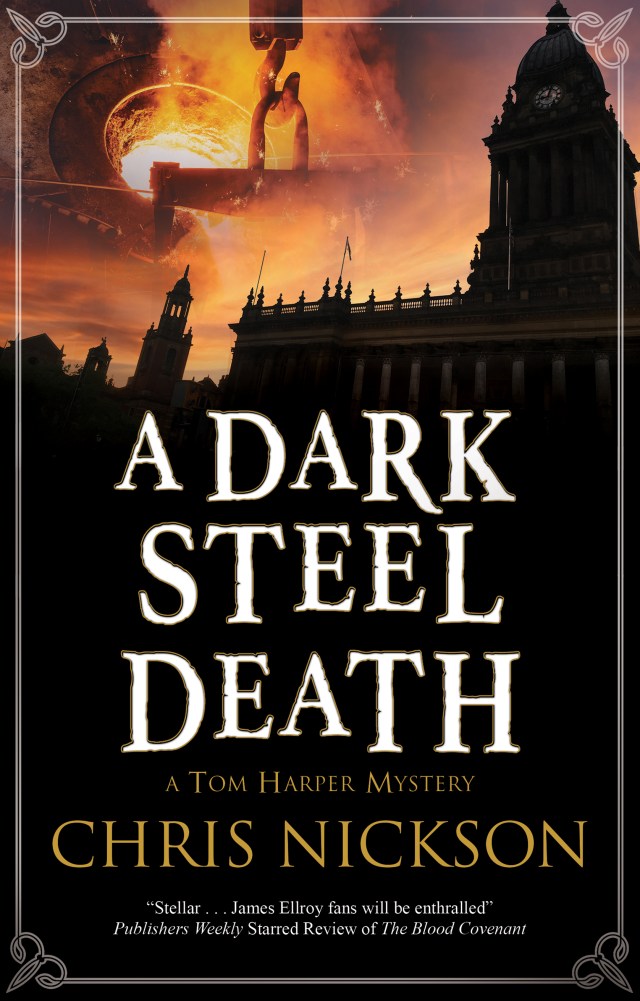
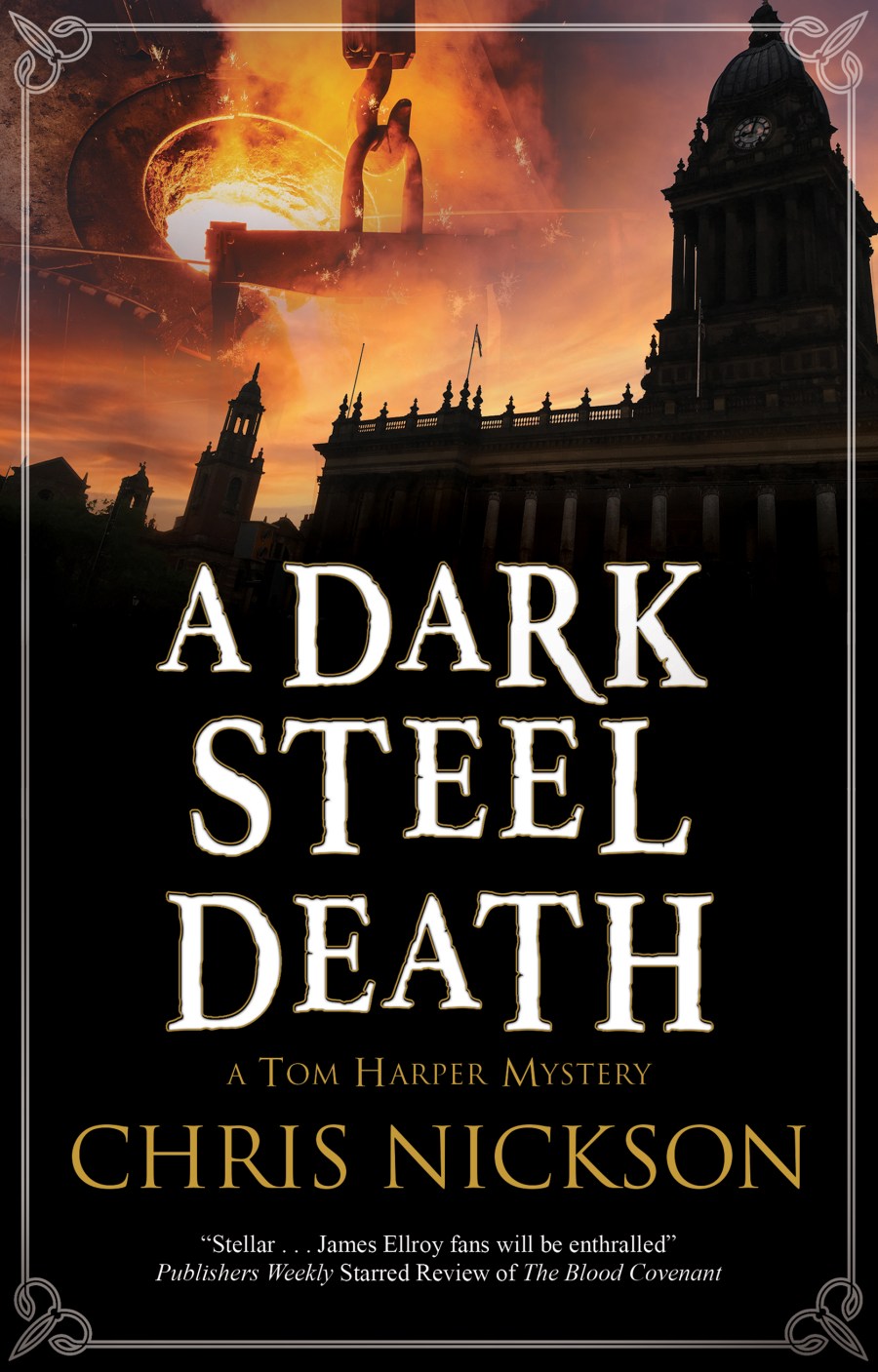
Forgive the small ad, but A Dark Steel Death has been out for a month now and I would be very grateful if you would buy a copy – if you can afford it – or ask your library to stock it. Once you’ve read it, please leave a review, good or bad, somewhere. Honestly, they all help. Thanks.
It’s about 16 years since I wrote my first published novel, The Broken Token – it took a while to find someone willing to put it out. But for some reason, I’ve remembered that I created a set of rules for myself back then. I’d read plenty of crime novels and I was tired of the loner, heavy drinking detective, and so much that went along with it.
My main character would be married. Most are. Since then, only one of my protagonists hasn’t been married on quickly on the way there. I wasn’t trying to be different, simply to reflect life. And most have had happy marriages, with or without children.
I decided that anyone could die. Again, it was simply life. People die at all ages, for all manner of reasons. Within the business of enforcing the law, there’s always a greater chance of violence. I kept that rule throughout the Richard Nottingham series (and one death brought quite a few variations on “you bastard”). I ditched it for the Tom Harper books, because conditions and life expectancy had improved in a century and a half, although things do happen, like Billy Reed’s heart attack. And the main characters have stayed alive (so far) in the Simon Westow series. I’ll say nothing else about that.
The characters have lives outside their work. We all do, and they’re often more important than anything else. They round out the people, make them human and three-dimensional. Know that and you know them and you’re even more willing to follow them.
The reader has to feel they’ve walked through the place, and experienced that time. All the sighs and smalls and noise. It needs to be alive to be convincing. It’s one reason that most of my books are set in Leeds. It’s the place I feel, that I know through the soles of my shoes. I can sense the different periods of history, like seeing through different layers of time. I can touch them, taste them. All I do is write down that move in my head, including the descriptions of the where and when.
History is important, but it’s more the local than national effect. As we grow into the 20th century, that changes, but as a rule of thumb it’s true. People cared about what affected them directly. How they lived, conditions of houses, money in their pocket. A writer needs to know their history. But to be convincing, it needs to be worn lightly. Woven into the fabric of the story so it falls gently on a reader’s shoulders. No information dumps.
Create people that readers care about. Even the second character need three dimensions. Cardboard doesn’t work.
I still try to live by all of those. But – and it’s a very big but – there also has to be a good, powerful story that will engage people. That’s at the heart of it all.
I try, but it’s only you, the readers, who can say if I succeed.
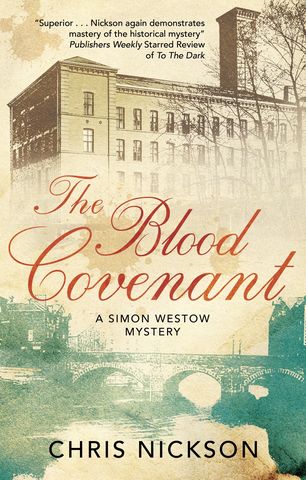
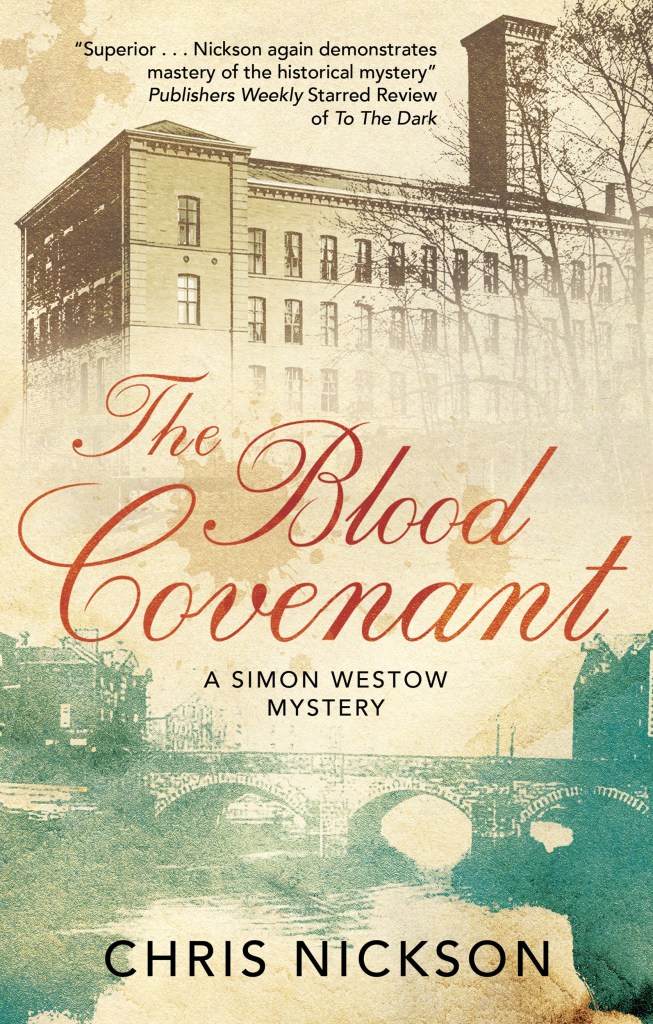
To finish, please indulge me while I ask a favour. My most recent novel, The Blood Covenant, has had the types of reviews a writer can only dream about. The one coming in September, which isn’t far away now, is very good, the 10th Tom Harper novel. Yes, I’d love for you to buy them. Ideally from an independent bookshop, but outlets like Speedy Hen and the Hive in the UK have excellent prices and free postage. Like everyone, though, I know we’re all squeezed and books are a luxury. If you can’t afford it, please order from your local library. If they don’t have it, they will get it in. If every library system in the UK, US, Canada, Australia and NZ ordered copies of both, it would be handsome sales figures. And it would be on the shelves for everyone to read.
Even if you can afford, please consider the library request – that way it’s there for others.
Thank you.
If you have some time to spare – quite a bit of time – I was interviewed for the Working House podcast. You can listen here.
The hardback edition of The Blood Covenant appeared in the UK almost a month weeks ago, and the reviews are arriving.
I’ve been lucky enough to have some outstanding reviews of my books in the past, and I’m grateful for every word written about what I do. But those seem to pale in comparison to the opinions on this one, to the point that it’s hard to believe they’re writing about my work (not about me; that’s entirely different).
The Fully Booked blog has been a supporter of my novels, but this…well, read for yourself: “There is, of course, a noble tradition of writers who exposed social injustice nearer to their own times – Charles Dickens, Charles Kingsley, Robert Tressell and John Steinbeck, to name but a few, but we shouldn’t dismiss Nickson’s anger because of the distance between his books and the events he describes. As he walks the streets of modern Leeds, he clearly feels every pang of hunger, every indignity, every broken bone and every hopeless dawn experienced by the people whose blood and sweat made the city what it is today. That he can express this while also writing a bloody good crime novel is the reason why he is, in my opinion, one of our finest contemporary writers.”
On: Yorkshire isn’t quite as effusive, but even so… “Nickson has a rare talent for historical reproduction, and the filth and horror of the time he writes about is conveyed loud and clear… Nickson is a fine writer”
Yorkshire Bylines has good, practical praise: “The Blood Covenant would be a good book to take on a train or plane ride; the plot is easy to follow, and the story is fast-paced. I read it from cover to cover in one three-hour sitting. Those who like fast-moving action adventure with a hint of mystery and some graphic descriptions of violence will enjoy this book.”
The ebook will appear everywhere at the beginning of February, and publication of the hardback in the rest of the world is at the beginning of March. But two of the US trade magazines, aimed at librarians and bookshops, have ready put out their reviews.
Kirkus Reviews says it’s a “gritty tale of perseverance, cruelty, rage, and redemption not for the faint of heart.”
Publishers Weekly has given it a starred review (it’s here). That in itself can make a writer’s heart jump with joy. But on top of that, what they have to say!
“Nickson’s stellar fourth mystery featuring thief-taker Simon Westlow [sic]… Nickson does a superb job using the grim living and working conditions for the city’s poor as a backdrop for a memorable and affecting plot. James Ellroy fans will be enthralled.”
Honestly, I’m still buzzing from that (I’m trying to figure out the Ellroy comparison), and everything that all the reviewers have written. I’m grateful to them all for wanting to read and write about it. People on Goodreads have been incredibly generous with their praise, too (“Nickson is a master when it comes to historical crime fiction, and together with his phenomenal research, he continually provides a cracking read!”… “Chris Nickson has outdone himself in The Blood Covenant. There’s truly a different tone in this one.”)
And then there’s this from the Morning Star. On the right side of history…
I have no idea how I can ever top these reviews. I shall try.
Meanwhile, I hope they’ll make you read the book. Buy it, borrow it from the library – if they don’t have it, ask them to get a copy; that will let others read it, too.
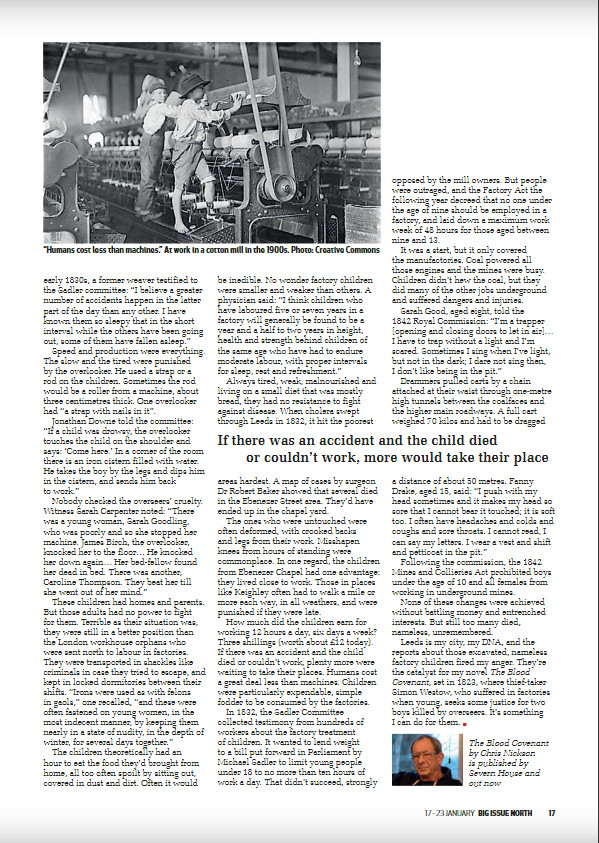
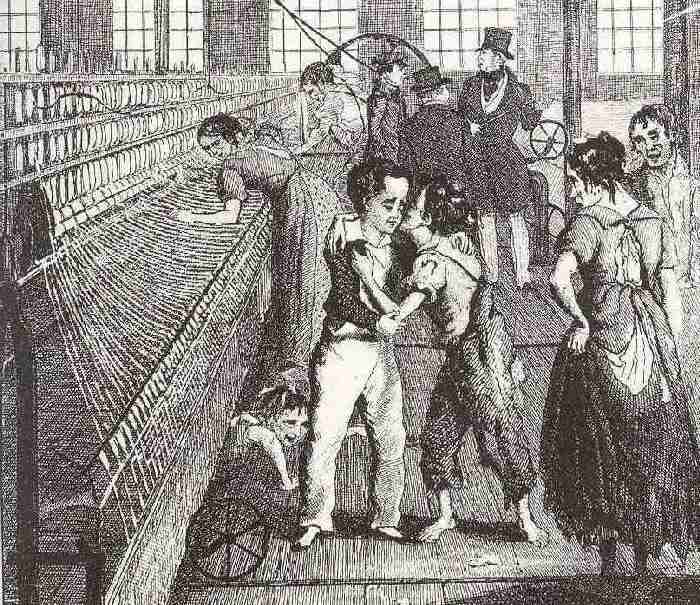
Last month my new novel, The Blood Covenant, was published in the UK. The catalyst for Simon Westow in the book is the brutal deaths of two factory boys at the bullying hands of overeers, which brings back memories of his own childhood in the workhouse and the mills.
This was real, and the dig for the site of what became Victoria Gate shopping centre in Leeds brought up the bodies of local children, factory children, who’d lived short, horrific lives. They weren’t the exception, as testimony to the Sadler Committe in 1832 showed. I’m profoundlky grateful that Big Issue North asked me to write about the reality. It’s in the issue published today (January 17) – and it’s a magazine that’s always worth your money.
The testimony is harrowing, but it’s a window on their lives.
Another short extract from The Blood Covenant that I hope will tempt you into buying a copy (or asking your library to buy one – maybe even both!) Most bookshops seem to have copies now, although it’s not out until the 30th officially. If you ask them nicely, they might well be able to get it to you for Christmas…for online ordering, this place has the cheapest price, with free UK postage, and they can get it straight out.
Jane’s turn this time.
Jane turned off Boar Lane on to Albion Street and knew someone was there. She had the sense of him before she could see anything. Tightening her grip on the hilt of the blade, she peered into the darkness.
Suddenly he was in front of her, no more than three yards away. As if he’d appeared from nowhere. Looming like a giant. Tall, broad as a house. If she allowed him to come close enough, he’d be able to crush the life from her.
The bayonet that usually hung from his belt was in his right hand.
Perkins. Arden’s bodyguard, grinning at the sight of her.
‘You and your boss, you’ve been poking in places where you don’t belong. Causing trouble for Mr Arden’s friend.’
Jane didn’t reply. She was watching him, her mind racing over the advice Dodson the crippled soldier had given her. A dirty fighter, brutal, with years of experience. If he won, he’d leave her for dead without a qualm.
A weak right knee. That was what Dodson had said. Not much, but it was something.
Perkins moved towards her. Only a single pace, but it was enough. He was going to use his size and weight against her. He had to be in his fifties now, grey hair cropped close against his skull; old for work like this. But he still had power. What he’d lost in speed he made up for in trickery.
Jane could see it in his eyes; he believed she was an easy target. A girl who’d have no fight in her. He took another pace forward. She tried to feint to her right, but he was already moving to stop it. Old, but not so slow. And not slipping on the packed, frozen snow.
He wanted to keep her moving backwards until she was pinned against the wall. Once that happened, he could take his time. Finish her as quickly or slowly as he wanted.
She was watching. His eyes, his hands. His feet. They’d give the clues. Even knowing she might die here, she felt calm. She touched the gold ring. A single step back, to see what he’d do. His eyes glinted, as if he already sensed victory.
Good, she thought, let him. Maybe he’d let down his guard a little.
Perkins swung his arm, the bayonet slicing through the air. But that wasn’t the danger; it was a diversion, he’d put no power into it. He was shifting his balance, preparing to kick her. As soon as he raised his foot, she darted forward with a kick of her own.
She put all her weight behind it. She felt the hobnails on the sole of her boot crash into his right knee. The feel of something giving in his leg. He staggered, arms out to try and keep his balance. Mouth shut tight to stifle the cry. Eyes filled with fury and surprise.
She could run. He wouldn’t be able to follow. But if she did that, Jane knew he’d recover and come for her another time. When that happened, she wouldn’t have the smallest chance of staying alive.
The thoughts flew through her head in a moment. No hesitation. She kicked his knee again. This time it gave. He fell on to the pavement, scrambling backwards so he could try to defend himself.
It’s December, which means it’s less than four weeks to Christmas, and a little over that until the UK publication of The Blood Covenant.
Today, or very, very shortly, it will be available to read on NetGalley. If you’re a blogger or reviewer and registered with Severn House (my publisher), it going to be waiting for you.
Or you could pre-order the book and there’s a good chance you’ll have it by Christmas. Here has the best price, with free shipping.
Plenty can’t afford it. Ask your library to buy a copy. That way plenty of people will be able to read it.
It’s not a cosy read. But factory bosses working children 12-14 hours a day, and overseers brutally punishing them isn’t comfortable reading. This isn’t the Regency of Jane Austen or Georgette Heyer. This is Regency Noir
Bringing them some justice…it’s bloody and hard. But worth the pain.
What would you do if they were your kids?
This is a book that means a lot to me. It’s stirred my anger in a way that little else has. If you read it, please leave a review.
Hard to believe that time barrels along so fast, and that The Blood Covenant will be out in just a few weeks, on the 30th of December. If you order it for Christmas, though, there’s a very fair chance it will arrive in time (just a hint and a nudge).
It’s a very angry book, about finding justice for those who’ve been abused. Those who don’t have the power to fright for themselves. For Simon Westow, it’s more than it job, it becomes something very person, and very, very dark. But not only him. Jane, too, is going to have to face demons she thought long since vanished.
Here’s an abridged extract from near the opening. A way to whet your appetite and have you clicking online to order, I hope. Remember, please, every time you buy from an independent bookshop, all the angels cheer. The cheapest price, with free postage, is here.
‘You testified to the commission that was in town three years ago, didn’t you?’ Dr Hey asked
‘Yes,’ Simon answered.
Oh, he’d talked to them. Men sent from London, part of an investigation around the country into child labour and abuse. Simon knew all about that; he still carried the scars on his body. As he spoke, seeing them sitting safe behind their polished table, he relived all the punishments and torture he received as a boy, at the mill, as an inmate of the workhouse. Year after year of it, from the time he was four until he turned thirteen, when he could take no more and walked away, knowing that even death would be better. Just the memory made the skin of his hands turn clammy and his heart beat faster. He’d talked. But he didn’t believe they’d ever really listened.
‘What made you think about that?’ Simon asked
‘A pair of deaths I had to examine recently.’ Hey pulled some papers from the inside pocket of his coat. ‘I made a few notes I wanted you to see. Read them and come to see me when you have chance.’
Back in the old stone house on Swinegate, Simon read as he ate supper, then spent the evening quietly brooding. For once he scarcely paid attention to Richard and Amos, the twins. Little else existed beyond the thoughts in his head.
‘What is it?’ Rosie asked after she’d put the boys to bed.
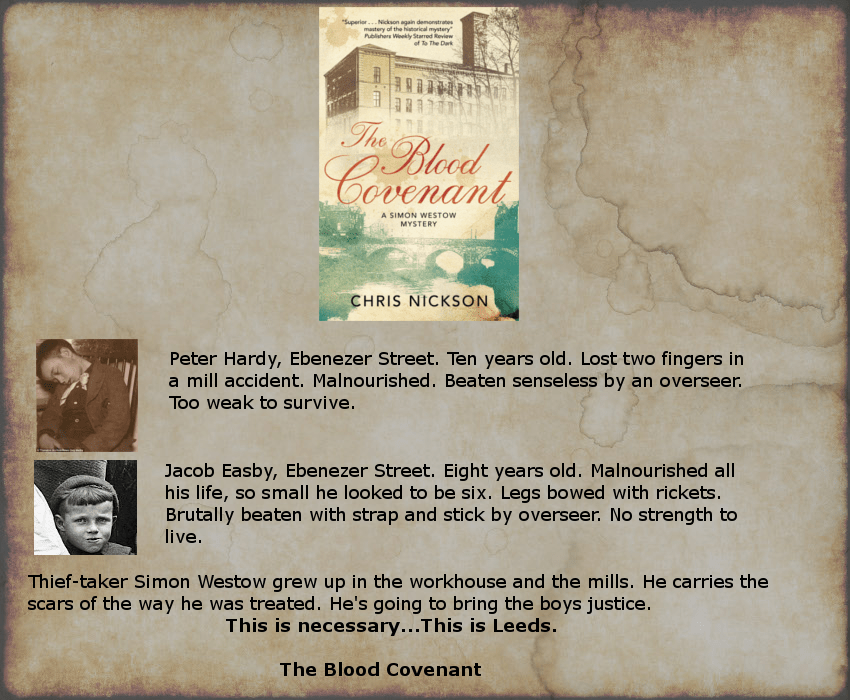
‘No need to worry. It’s nothing like that.’ Simon took a deep breath and told her. ‘He made a copy of what he’d written when he saw the children’s bodies. The older boy was ten. He’d lost two fingers on his left hand when he was younger. His body was covered in bruises, it looked like he’d been beaten with a stick or a strap. It was much the same with the younger one. He was just eight.’
‘Who did it?’ Rosie asked. Her fists were bunched, fingernails digging into her palms.
‘A mill overseer,’ he replied.
‘Which mill?’
Simon shook his head. ‘He didn’t put that in there.’
Now he was out here, walking as he tried to stay ahead of his memories and pain.
The sky had cleared. It was colder now; his breath bloomed in front of his face. The remnants of rain dripped slowly from gutters. The stink of the manufactories had returned to fill the air.
Simon walked.
Damn Hey. He’d released the past from its cage. Now it was out here, hounding him, snapping and snarling at his heels. All these years and still it wouldn’t leave him. But better for Simon to be doing something than be restless and wakeful at home.
He’d gone from Sheepscar across to Holbeck, along the river all the way to the ferry landing as he tried to exhaust his mind. He’d sensed Leeds grow silent around him as people gave up on the last dregs of night. He was tired, his legs ached and his feet were sore. But he knew he’d be out here for a long time yet. Bloody Hey.
Simon made his way past the warehouses on the Calls. Bone-weary, needing to sleep. But the images, the history, the pain kept raging through his head. He was just a few yards from the river, able to hear the water lapping and smell the low, thin perfume of decay.
A sound cut through, the creak of oars in their rowlocks. Late to be out, he thought. Maybe someone was stealing from the barges moored at the wharves. Never mind, he decided; it wasn’t his business. Not until someone paid him to retrieve what might be taken.
‘Grab him under the arms. Get him out of there.’
The night watch, taking care of some drunk who’d fallen in the river. It happened at least once a month. A man would grow fuddled, lose his way and walk into the water. Some jumped, dragged down by despair. A very few were lucky; they were pulled out and survived. Most drowned, found bobbing downstream when morning came.
‘He weighs a bloody ton.’
‘You don’t need to be gentle, he’s already dead. Just grab him. Oh Christ, his throat’s been cut. The constable’s going to want to see this one.’
Simon felt a chill rise through his body, colder than the night. The men were on Pitfall, only a few yards downriver from Leeds Bridge. Two of them, standing and stretching their backs. Between them, lying on the stones, a shape that had once been a man. Simon could make out the jacket and the trousers, soaked and stained by the water. The men from the watch turned at his footsteps, surprised to see another living soul out at this hour.
‘Can I see him?’
One of the men shook his head. ‘You don’t want to do that,’ he said. ‘The dead are never pretty, mister.’
‘I know,’ Simon told him. ‘I’ve seen my share.’
A short silence. In the glow from a pair of lanterns, he caught the two men glancing at each other. A penny for each of them helped make up their minds.
The light caught the corpse’s face. Simon knelt, brushing away some dirt and a piece of cloth that was caught in man’s hair. He lifted the chin. A straight, deep gash across the neck. Clean and quick. But definitely no accident. Murdered and tossed into the river. He hadn’t been dead long, either; it couldn’t be more than an hour or two. Nothing had nibbled at his eyes yet, the flesh still intact and fresh.
He didn’t recognize the face.
One of the men coughed.
‘There’s something else, sir.’ He raised the lantern. ‘You see? Down there.’
The right hand was missing. Severed at the wrist. It looked like a single, swift blow had gone through the bone. For the love of God. Before or after he was dead?
‘The constable will be wondering who you are, sir. He’s going to want to know about someone asking to see the body.’
‘Tell him it’s Simon Westow. The thief-taker. He knows me.’







 Chris Nickson