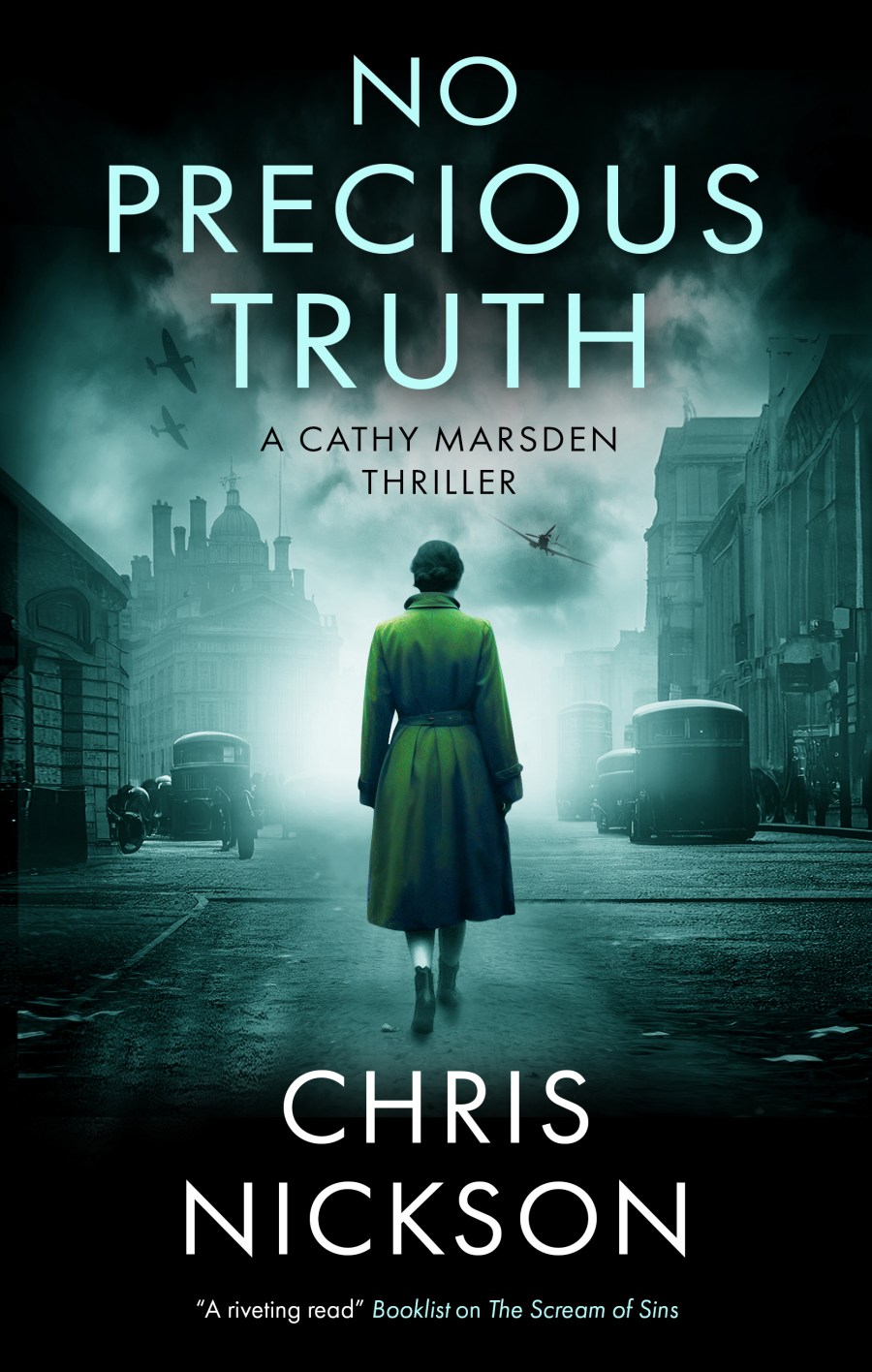
Hard to believe that it’s almost two weeks since the wonderful launch for No Precious Truth. Time’s felt compressed since then. But April has seemed to rush by, as if it was sprinting, so strange after a never-ending March.
A week later and the Yorkshire Post published an interview with me, one that captured me and my writing pretty well, I think.
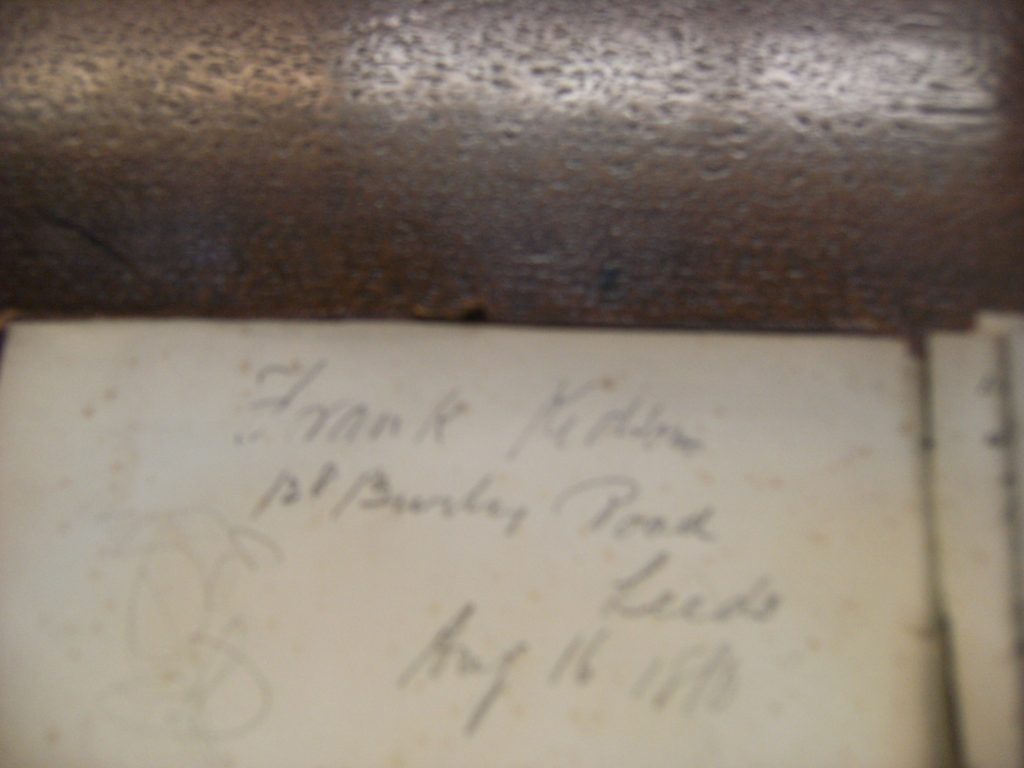
I’d barely caught my breath when I had to write a paper I’d agreed to present at a symposium for music in the Leeds collections, in the new music library (and you really should see it) that’s part of the central library. I’d been asked to talk about Frank Kidson and his materials. A shock to me, as I’m no academic – not even a degree – but I’m a great admirer of Kidson and what he did.
He and his niece and companion, Ethel, are minor characters in the Tom Harper book, The Tin God, where his knowledge of folk song is important in unravelling the clues. He was one of the pioneering Victorian folk song collectors, penning a column about songs in the Leeds Mercury Supplement for a few years and published books on folk music; the most famous is the influential Traditional Tunes, which was largely preciously unknown music, much from Yorkshire, especially Leeds.
Leeds Libraries has an excellent collection, a handwritten biography of him by his niece, his watercolour sketchbook, arrangement of songs he worked on with composer Arthur Grimshaw (son of the famous Leeds painter Atkinson Grimshaw), and much more.
It was an honour to be asked to do this and have the rare luxury of spending time with the materials. I’ve wrote about Kidson for fRoots magazine in 2018 and I was grateful for the chance to spend time with him once more.
The day after was my school reunion. 53 years, although we bulked up the numbers by including the two years below. It was interesting. I’d expected it to be that, so I wasn’t disappointed. I’d seen a couple of the people more recently, and it was good to catch up with them. But I was never part of the mainstream at school, and there were plenty I didn’t recall.
Tomorrow, another symposium, this time at the law school of the University of Sheffield. Talking about crime fiction, so I’ve prepared that paper, even as I’ve been going through the proofs for A Rage Of Souls, the next Simon Westow novel, coming in October.
After that, I’ll be ready to take the long weekend off…
Of course, No Precious Truth hasn’t even been out for a month yet. If you haven’t read it yet, I’d certainly appreciate the sales. Independent bookshops are always best, but wherever you want. And for those on a budget, please, ask your public library to order it in, if they haven’t already. A little about Cathy from the Yorkshire Post interview, just to convince you.
Actually, not quite Annabelle Harper. Still Annabelle Atkinson, a recent widow after her husband Harry died and left her the Victoria. But you’ll see for yourself.
Here were are, Christmas Eve, and this is the last of the Christmas stories dug out from the past. I hope you’ve enjoyed them. Thank you for reading, and for reading/buying/tolerating my books and posts. Happy holidays – what ever you celebrate – to you and those who hold dear. May 2025 be kind to us all and see us in good health.
Thank you again.
Leeds, December 1887
Annabelle Atkinson didn’t want Christmas to arrive this year. She didn’t feel any of the joy or the goodwill this December. It was barely three months since her husband Harry had died; the earth had barely settled on his grave.
They’d had a few good years before the heart attack took him. Now she had to look after the Victoria public house as well as the two bakeries she’d opened. On her own, sometimes she felt like she was drowning.
On Christmas Eve, once the last customer had gone, she intended to bolt the door, closed the curtains, and keep the world away until Boxing Day. She’d never been one to wallow in sadness; if you had a problem you took care of it and carried on. But these last few weeks…she’d been slowly sinking and she knew it. She felt like one of the jugglers in the halls, trying to keep all the plates spinning in the air. Too many of them.
‘Come on,’ she said to Willie Hailsham, taking the empty pint pot from his hand. ‘You’ve had enough. Get yourself off home so your wife can remember what you look like.’
The same with Harelip Harmon, Donald the Steel Man, and Jingling James, always moving the coins around in his pocket. They’d stay drinking all night if anyone would keep serving them.
‘Don’t you have homes to go to?’
It was the nightly routine, almost a comedy act after so long. They drained their glasses, said their goodnights and then the bar was empty. She locked the door, drew down the bolts and let out a long sigh. Glasses to wash, woodwork and brass to polish.
Better get started, she thought. The work’s not going to do itself.
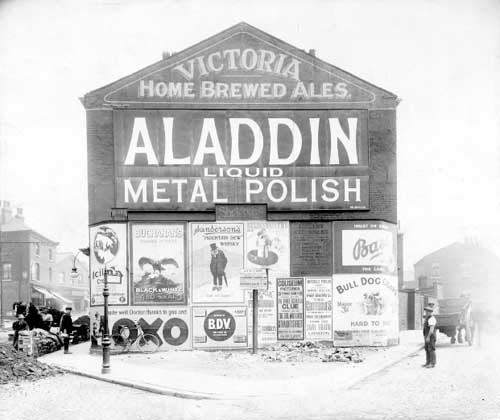
Up a little after three to supervise the baking in the kitchen at the other end of the yard. The last day before Christmas, orders to fill, plenty of demand; the shops would be little goldmines today. And the Victoria would be packed from the time the factories closed.
Gossiping with the girls as they all worked together, mixing, kneading, baking, the smell of fresh loaves filling the air and making her hungry. Back in the rooms over the pub she made breakfast.
This was what hurt most: the silence. There used to be so much laughter here when Harry was alive. It seemed like there was always something to set them off. Now just being here was oppressive, all the weight of ghosts around her.
Dan the barman and Ellen the barmaid were already working hard with polish when she went downstairs. Sleeves rolled up and plenty of elbow grease, they’d be done soon enough. Nothing for her to do here. The dray from the brewery was due at ten, but Dan could take care of that.
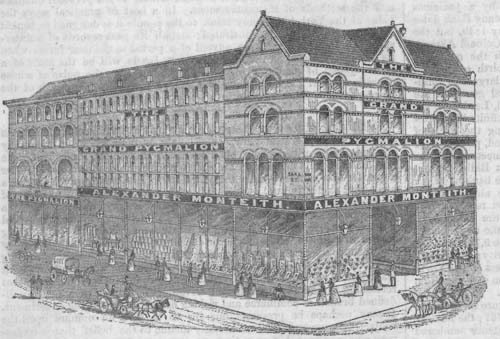
Annabelle put on her cape and picked up her purse. Go into town and have a poke around the shops. An hour or two away might perk her up. But there was no magic in December this year. The pavements were full of people jostling around, weighed down by packages and bags. She felt removed from it all. The displays in the windows of the Grand Pygmalion didn’t make her want to part with her money. She was low, she knew it; a lovely gown or a good hat could usually tempt her. Today, though, there was nothing. No cheer.
Even a stop at the cocoa house for something warm to drink and a slice of cake didn’t help her mood. She trailed back out along North Street, through the Leylands and past the little park, back along to Sheepscar.
Soon enough the Victoria was busy, and it would stay that way until she called time. She took her place behind the bar, smiling, flirting the way she always had, and for a few minutes at least she could forget why she hurt inside.
‘Give over,’ she told one man who insisted he’d be a good husband. ‘I’d wear you out in one night, then I’d have to send you home to your missus.’ It brought laughter. As she walked around, collecting glasses, she brushed hands away, giving the culprits a look. It was all part of running a pub. A game; if you played it well, you were successful. And she had the knack.
Annabelle promised old Jonas free beer for the evening if he played the piano in the corner, and soon half the customers were singing along the favourites from the music hall. It gave her a chance to breathe and Dan could look at the barrels.
By eleven she’d had enough. The pub was still busy, the till was overflowing. But all the noise made her head ache. She needed some peace and quiet for a while. She wanted the place empty.
‘Come on.’ She rang the old school bell she kept under the bar, next to the cudgel for sorting out the unruly. ‘Time for you lot to see your families. They probably don’t believe you exist.’
Slowly, the crowd thinned. Another five minutes and it was down to the usual four still standing and supping. Donald the Steel Man, Willie Hailsham, Jingling James, and Harelip Harmon.
‘That’s enough,’ she told them. Her voice sounded weary. She knew it and she didn’t care. They were regulars, they’d probably been coming in here since they were old enough to peer over the bar. ‘Let’s call it a night, gentlemen, please.’
James slipped off to the privy while she was ushering the others out, wishing them merry Christmas and accepting beery kisses and hugs until they’d gone and she turned the key in the lock.
Then James was there, looking bashfully down at his boots. He was a gentle soul, a widower with grown children. Fifty, perhaps, his hair full white, jammed under his cap.
‘Are you seeing your family tomorrow?’ she asked.
‘Not this year.’ He gave a small shrug. ‘They all have their plans. It’s different now, everyone’s so busy. What about you?’
‘A quiet day. Maybe it’s better that way.’
‘When my Alice died I carried on, same as I always had. The bairns were grown and gone but I still had to work and put a roof over my head.’
‘I know,’ she agreed. The everyday tasks that carried on like a machine. Without thinking, he jingled the coins in his pocket.
‘Then her birthday came around. We never made a fuss when she was alive, well, who could afford to? First we had the little ‘uns, then it didn’t seem to matter so much.’
‘We were the same,’ Annabelle said. ‘No kids, but Harry’s birthday or mine, there was still the pub to run.’
‘Any road, the year she died, on her birthday it suddenly hit me how alone I was. Not just then, but for the rest of my days. Because no one could replace Alice. I had all them years in front of me.’
‘What did you do?’ she asked.
‘I sat there at the table and made myself remember all the good things. How she looked when she smiled, how she sounded when she laughed. The way she were pretty as a picture when we got wed. I said it all like she were sitting there and I was talking to her.’
‘Did it help?’
‘It did. I can tell you’re feeling that way. I can see it in your eyes. I just thought it might help.’ He gave her a smile and bussed her cheek.
‘You said you’re not going anywhere tomorrow?’ Annabelle said.
‘That’s right.’
‘Come round for your tea. It won’t be anything special, mind.’
‘Are you sure?’
‘Yes,’ she said with a smile. ‘I’ll probably sick of my own company by then anyway.’
Maybe making an effort would help. Even a small one.
She locked the door behind him, hearing the jingling of his coins as he walked down the street.
It’s the next-to-last of the Christmas stories. I hope you’re enjoying them. I realise that charity has been a theme in them, along with compassion. No regrets about that. It’s right for the season. Meanwhile, take time over your tea and coffee and mince piece while you look at this. Thank you.
‘Excuse me, luv, do you have one like that in a plum colour?’ Annabelle Harper pointed at the hat on display behind the counter. It was soft blue wool, with a small crown and a wide brim, decorated with a long white feather and trailing lace meant to tie under the chin.
The shop assistant smiled.
‘I’m afraid not, madam. We only have what’s on display. ‘I’m very sorry.’
‘Doesn’t matter.’ She put down her purchases, stockings, bloomers, garters, and a silk blouse. ‘I’ll just take those, please.’
Be polite to everyone, that’s what her mother had said when she was younger, and it was a rule Annabelle had lived by. It cost nothing, and a little honey always ensured good service.
The Grand Pygmalion was packed with people shopping. Women on their own, with a servant along to carry purchases, wives with long-suffering husbands who looked as if they’d rather be off enjoying a drink somewhere.
Four floors, two hundred people to help the customers, wonderful displays of goods. It just seemed to grow busier and busier each year. But it was the only real department store in Leeds. She waited as the girl totted up the totals.
‘I have an account here, luv.’
She saw the quick flicker of doubt and gave a kind smile. Couldn’t blame the lass. She didn’t sound like the type of person with the money to shop here. Then the gaze took in her clothes and jewellery and the girl nodded.
‘Of course, madam. What name is it?’
‘Mrs. Annabelle Harper. The address is the Victoria public house on Roundhay Road.’
Everything neatly packed and tied into a box, she walked out on to Boar Lane. A fortnight until Christmas and it was already cold. Bitter. A wind whistled along the street from the west. All around her she could hear people with their wet, bronchitic coughs. It’d probably snow soon enough, she thought.
Omnibuses, trams, carts and barrows moved along the road, a constant clang of noise. On the corner with Briggate, by the Ball-Dyson clock, a Salvation Army brass band was playing, their trumpets and tubas competing against the vehicles and the street sellers crying their goods.
She pulled the coat closer around her body as she walked, clutching the reticule tight in her hand. Plenty of crime this time of year. Married to a detective inspector, she couldn’t help but hear about it. And she had enough cash with her for something special; she didn’t want to lose that.
Strolling up towards the Headrow, all the lights in the shops were already glowing. Only three and it was almost dark. Roll on spring, she thought, then stopped herself. Never wish the days away. Who used to say that? She racked her brain. Come on, Annabelle told herself, you’re not old enough to forget things yet.
Then it came. Old Ellie Emsworth at Bank Mill. Annabelle was ten, she’d been at the mill a year, working as a doffer, still too young to be on the machines. Six days a week, twelve hours a day for not even two bob a week when all she wanted to be was out there, away from it all. Ellie had worked the loom all her life. She was probably no more than thirty-five but she looked old, worn-down.
‘I know you don’t like it here,’ Ellie had said to her one day as they ate their dinner. Bread and dripping for Annabelle, all her family could afford. ‘But don’t go wishing the days away. They pass quick enough, lass. Soon you’ll wish you had them back.’
She smiled. For a moment she could almost hear Ellie’s voice, rough as lye soap.
People pressed around her as she walked, some of them smiling with all the joy of the season, others glum and po-faced. Christmas, she thought. They’d never had the money to make a proper do of it when she was little. As soon as she had a little, after she’d married the landlord of the Victoria, she’d given presents and spent all she could afford.
Even the Christmas after he died, she’d been determined to put on a brave face. A big meal for friends, presents that saw their eyes shine. It made her happy.
And now she had Tom. She had the wedding ring on her finger and she felt happier than she had in a long, long time. This was going to be their first married Christmas and she was going to buy him something he’d never forget. A new suit. A beautiful new suit.
Along New Briggate, across from the Grand Theatre, the buildings were bunched together. Business on top of business as the floor climbed to the sky. Photographers, an insurance agent, gentleman’s haberdasher. You name it, it was all there if you looked hard enough.
The girl stood in the doorway of number fifteen, a broken willow basket at her feet. At first Annabelle’s glance passed over her. Then she looked again. For a moment she was taken back twenty years. She was ten again and staring at Mary Loughlin. They’d gone to school together, started at the mill together, laughed and played whenever they had chance. The same flyaway red hair that the girl had tried to capture in a sober bun. The same pale blue eyes and freckles over the cheeks. The same shape of her face.
‘Wreath, ma’am?’ The girl held it out, a poor thing of ivy and holly wrapped around a think branch of pine. ‘It’s only a shilling,’ she said hopefully.
Her wrist was thin, the bones sticking out, and her fingers were bare, the nails bitten down to the quick, flesh bright pink from the cold. An old threadbare coat and clogs that looked to be too small for her feet.
‘What’s your name, luv?’
The girl blushed.
‘Please ma’am, it’s Annabelle.’
For a second she couldn’t breathe, putting a hand to her neck. Then, very gently she shook her head.
‘Your mam’s called Mary, isn’t she?’
The girl’s eyes widened. She stared, frightened, tongue-tied, biting her lower lip. Finally she managed a nod.
‘She was, ma’am, yes.’
‘Was? Is she dead?’
‘Yes, ma’am. Three year back.’
Annabelle lowered her head and wiped at her face with the back of her gloves.
‘I’m sorry, luv,’ she said after a while. ‘Now, how much are these wreaths?’
‘A shilling, ma’am.’
‘And how many do you have?’
‘Ten.’
She scrambled in her purse and brought out two guineas.
‘That looks like the right change to me.’ She placed them in the girl’s hand. Before she let go of the money, she asked, ‘What was your mother’s surname before she wed, Annabelle?’
‘Loughlin, ma’am.’
‘I tell you what. There’s that cocoa house just across from the theatre, Annabelle Loughlin. I’d be honoured if you’d let me buy you a cup. You look perished.’
The girl’s fingers closed around the money. She look mystified, scared, as if she couldn’t believe this was happening.
‘Did your mam ever tell you why she called you Annabelle?’
‘Yes ma’am.’ For the first time, the girl smiled. ‘She said it was for someone she used to know when she was little.’
Mrs. Harper leaned forward. Very quietly she said,
‘There’s something I’d better tell you. I’m the Annabelle you’re named for.’
She sipped a mug of cocoa as she watched the girl eat. A bowl of stew with a slice of bread to sop up all the gravy, then two pieces of cake. But what she seemed to love most was the warmth of the place. Young Annabelle kept stopping and looking around her, gazing at the people and what they had on their plates.
She was twelve, she said. Two older brothers, both of them working, and two younger, one eight and still at school, the other almost ten and at Bank Mill.
‘What does he do there?’
‘He’s a doffer,’ the girl said and Annabelle smiled.
‘That’s what your mam and I did when we started. Finally I couldn’t stand it anymore and went into service.’
‘But you’re rich,’ the girl said, then reddened and covered her mouth with her hand. ‘I’m sorry.’
‘I’ve got a bob or two,’ she agreed. ‘I was lucky, that’s all.’ The girl finished her food. ‘Do you want more?’
‘No ma’am. Thank you.’
‘And don’t be calling me ma’am,’ she chided gently. ‘It makes me feel old. I’m Annabelle, the same as you. Mrs. Harper if you want to be formal.’
‘Yes, Mrs. Harper.’
‘What does you da do, luv?’
‘He’s dead.’ There was a sudden bleakness in her voice. ‘Two years before my mam. So me and Tommy, he’s the oldest, we look after everything.’
Annabelle waved for the bill and counted out the money to pay as the girl watched her.
‘What work do you do? When you’re not selling wreaths, I mean.’
‘This and that ma’a – Mrs. Harper.’
‘And nothing that pays much?’ The girl shook her head. ‘You still live on the Bank?’
‘On Bread Street.’
‘Can you find your way down to Sheepscar?’
‘Course I can.’ For a second the bright, cheeky spark she remembered in Mary flew.
‘Good, because there’s a job down there if you want one. I own a pub and a bakery down there, and someone left me in the lurch.’ The girl just stared at her. ‘It’s not charity, you’ll have to work hard and if you’re skive you’ll be out on your ear. But I give a fair day’s pay for a fair days’ graft. What do you say?’
For a second the girl was too stunned to answer. Then the words seemed to tumble from her mouth.
‘Yes. Thanks you ma’am. Mrs. Harper, I mean. Thank you.’
Annabelle looked her up and down.
‘If you’re anything like your mam you’ll be a grand little worker.’
‘I’ll do my best. Honest I will.’
‘I know, luv. You’re going to need some new clothes. And I daresay the rest of your lot could use and bits and bobs, too.’ She took a five pound from her purse and laid it on the table. ‘That should do it.’ The girl just stared at the money. ‘Don’t be afraid of it,’ Annabelle told her. ‘It won’t bite. You buy what you need.’
‘Do you really mean it?’ The words were barely more than a whisper.
‘I do.’ She grinned. ‘When I saw you, it was like looking at Mary all over again. Took me right back. You’re just as bonny as she was.’ She stood, the girl quickly following. ‘You be at Harper’s Bakery at six tomorrow morning. Mrs. Harding’s the manager, tell her I took you on. I’ll be around later.’
‘Yes, Mrs. Harper. And…thank you.’
‘No need, luv. Just work hard, that’s all I need. You get yourself off to the Co-op and buy what you need.’
The girl had the money clenched tight in her small fist. At the door, before she turned away, she said,
‘Mrs. Harper?’
‘Yes, luv?’
‘Sometime, will you tell me what my mam was like when she was young?’
‘You know what? I’d be very happy to do that.’
She watched the girl skip off down the street. Who’d have thought it, Mary calling her lass Annabelle? She shook her head and looked up at the clock. A little after four. She still had time to go to that tailor’s on North Street and order Tom a new suit for his Christmas present.
It was still dark when she finished the baking, and bitter outside the kitchen. She washed the flour from her hands, walked through the yard and unlocked gate that led to Roundhay Road. The draymen would arrive soon enough, the sharp sound of hooves as the horses stopped outside the Victoria. She peeked out into the street. The air was winter-heavy and wet with soot.
It was early but there were already men out walking, on their way to jobs in the boot factories and tanneries, the mills and breweries. The gas lamps offered a faint glow. She turned and caught the silhouette of someone crouched on the doorstep of the pub.
Someone small. A boy.
“Waiting for something, luv?” Annabelle Atkinson asked as she crossed her arms. “We’ll not be open for two hours yet.”
“I’m just sitting,” the lad answered. She could hear the cold in his voice. As she came closer, she was that his face was grubby and he was only wearing a thin shirt and a pair of ragged trousers that left his calves bare, his shoes were held together with pieces of string. He wasn’t local, she was certain of that. Annabelle knew everyone around Sheepscar, each man, woman and child. “No law agin it, is there?” he asked.
“Not if you want to stay there,” she told him. “Warmer inside, though. The oven’s going. Cup of tea. Maybe even breakfast if you’re not too cheeky.”
He was torn, it was plain on his face. The boy was thin as a stick and didn’t look as if he’d had a full meal in days. She didn’t say anything more, deliberately turning away to stare back up the road towards the endless streets of back-to-back houses and factories. December. It would be a good while yet before it was light. As light as it ever became when the air was filled with fog and smoke.
When she looked again he was there, standing close, expectant and wary.
“You’re not having me on, missus?”
“No, luv, in you go.” She watched him run through the yard and into the kitchen. By the time she entered he was already standing by the oven, hands outstretched, soaking in the heat. She didn’t have any bairns of her own. Her husband had been older, then he’d died and she’d taken over running the pub. However it had happened, she’d never caught. Now she was courting again, a man called Tom Harper, a copper of all things, a detective inspector, set to wed next year if she could ever persuade him to pop the question.
She cut two doorsteps of bread, buttered them thickly and placed them on the table in front of him. Before he could grab one she took hold of his tiny wrist and said,
“You’re not eating with those filthy paws. Get them under the tap. Your face, too. We’re not short on soap.”
He returned, skin scrubbed and glowing, grabbing the food before she could say anything more. Annabelle brewed tea, one cup for herself, another for him, milky, with plenty of sugar.
“What’s your name?” she asked.
“Henry, missus,” he answered with his mouth full.
“You can call me Annabelle. Where are you from? I’ve not seen you around before.”
“Me and me da just moved here two day back. We was living in Morley, then me mam and me sister got ill and died and me da started drinking and lost his job so we had to leave.” The words arrived in a rush. “He thought we might do better up here.”
She smiled softly. The lad couldn’t be more than eight. But what had happened to him was no more than had happened in so many families.
“We’d best get you home then, Henry. Your da’ll be worried. Get some food in you and I’ll walk you back.”
“He din’t wake up yesterday, missus.” He said the words flatly.
“What do you mean, pet?”
“He’d had a few drinks the night before so I thought he were asleep. I knew he’d belt me if I tried to wake him up, so I left. When I got back the door were locked and he din’t answer. I don’t know anyone round here so I din’t know where to go.”
“Right,” she said after a minute. “You tell me where you live, Henry and I’ll go and see your Da.” Emma the barmaid came into the kitchen, raising her eyebrows at the sight of the child. “Can you make him something hot?” Annabelle asked. “Bacon and eggs, whatever we’ve got. Poor little sod’s perishing. And see he gets a bath after. I’m off to see his Da.”
“Are you posh, missus?” Henry asked, looking at the servant in awe.
“No, luv,” Annabelle laughed. “I’m not.”
Armenia Grove ended in a big stone wall at the back of the dyeworks. A little further along, Gipton beck ran along past the school, down to the mill pond. Number six was the same as its neighbours, all blackened brick and rotting woodwork, the front door opening as the turned the handle. Henry and his father had the upstairs room at the front, the boy had told her. Locked, just he’d said. She knocked but there was no reply.
Back on the street, Annabelle caught a glimpse of Bert Hardwick and shouted him over before he could duck out of sight.
“There’s a door I need opening,” she said.
He gave her a sheepish glance. “I don’t do that kind of thing no more. I’m over at the brick works now. It’s steady, like.”
She shook her head. “I don’t want to take owt. Just work the lock for me.”
It only took him a few seconds, working with the tip of his pocket knife. Before she could enter, he’d vanished, boots hammering down the stairs. Men, she thought. All bloody useless.
Rags covered the window, blocking out the first light. But she could still see the shape on the floor, huddled under a threadbare blanket. Annabelle spoke his name but he didn’t stir. She reached out to touch his cheek then recoiled with a gasp as soon as her fingers felt his cold skin.
Quietly, she left the house.
Dan the barman was emptying the spittoons and polishing the tables. She asked him to find the beat bobby and take him to the house on Armenia Grove.
“He’ll know what to do.”
She brightened her expression and walked through to the kitchen. Henry was sitting in front of the oven, wearing nothing more than a large towel. Emma had stoked up the fire and washed his clothes; they were strung up on the wooden rack, steaming as they dried.
“You look better all cleaned up,” she told him. “Right handsome.”
“Did you find my Da, missus?”
“I did.” She stood by the chair and took hold of his hand. “What’s his Christian name?”
“Edward,” the boy answered. “But everyone calls him Ted.” Worry flashed across his eyes. “Why, missus?”
She gazed at him for a moment.
“I don’t know how to tell you, Henry, so I’ll just do it straight. Your father’s dead. It looks like he passed away in his sleep. I’m sorry.”
His grip tightened.
“But…” he began, then the words failed him. He began to cry and she cradled him close, rocking him softly until the tears turned to slow hiccoughs.
“Tom, you’ve got to help him.”
He’d arrived after work, close to eight on a dreary evening, exhausted and dirty. He’d ended up chasing a pickpocket out to Marsh Lane, finally bringing him down in the mud that passed for road there. She’d kept a plate warm in the oven for him, the way she always did, hoping he’d visit on the way back to his lodgings.
“Where is he now?” Inspector Harper asked.
“Fast asleep, poor little perisher.” She smoothed the silk gown and with a satisfied sigh, let down her hair so it fanned over her shoulders. The mutter of voices came from the bar downstairs. “He’s all cried out. I finally got him to tell me that his mother’s sister lives in Morley. She’s Temperance, so after his ma died, she wouldn’t have anything to do with his father because he was a drinker. What do you think? Maybe she’d take him in.”
“Maybe. What’s her name?”
“Molly Wild.”
“I can get in touch with the station down there. Someone will let her know. I can’t promise. What about the father?”
“Burial tomorrow up at Beckett Street.”
He shook his head. “You’re paying?”
“Guinea grace,” she told him. “Come on, Tom. He needs to be able to remember his da, doesn’t he?’
“Yes,” he answered slowly. “I suppose so.”
“It’s only money. I have the brass for that.”
Two days passed before the woman arrived. Annabelle had set Henry to work, washing glasses and helping with small tasks in the kitchen. He was an eager little worker, humming as he did whatever he was told. Only when the memories caught up with him would his face crumple and the tears begin. She fed him well and tucked him into the spare bed every night, watching from the doorway until he was asleep.
“There’s a woman outside wanting to talk to you,” Sad Andrew told her as he entered the Victoria. It was a little after ten in the morning, the fog thick as twilight.
“Tell her to come in, then,” she said. “I’m right here.”
“She says she won’t come into a public house.” He mimicked a prim voice and Annabelle sighed, drying her raw hands on an old cloth before pulling a shawl around her shoulders and pasting a smile on her face.
A horse and cart stood at the curb, driven by a man with hunched shoulders and a defeated expression. The woman had climbed down, glancing at the pub with a critical eye. Her bonnet was black, her gown a plain charcoal grey, button boots peeking from the hem.
“You must be Mrs.Wild.”
“I am,” she replied with a sniff.
“I’m Mrs. Atkinson.” The woman’s gaze moved to Annabelle’s hand, no ring on the third finger. “I’m a widow.”
“I see.” Her tone was disapproving. “The police came,” she said as if it was the most humiliating thing that could have happened. “They said Henry’s here and that his father’s dead.”
“That’s right. Do you want to see him?”
The woman stepped back as if she’d been slapped.
“I would never set foot on licensed premises.”
“Then I’m glad not everyone’s like you,” Annabelle said, smiling to take the sting from her words. “I’d be out of business in a week.”
“Was it the drink that killed my sister’s husband?”
“I don’t know, luv. All I did was take the boy in and see that his father was buried. But now you’re here, I’m sure Henry will be glad to have a home with you.”
“We already have five children.”
“Then you’ll hardly notice another.” She tried to make her voice light.
“We have good, God-fearing children.”
“You’ll love Henry. He’s a wonderful little lad.” She paused for a heartbeat. “He’s your own flesh and blood. Your sister’s boy.”
“I don’t know.”
“Tell me something,” Annabelle said. “You strike me as someone who likes to live by the Bible.”
“Of course we do.” Mrs. Wild lifted her head.
“Then what does it say in there about looking after those in need?”
“Don’t you go quoting that to me!” the woman bristled. “I’ll not have that from someone who runs a place like this.”
“What about someone who took your nephew in when he had nowhere else to go and arranged his father’s burial?” It didn’t matter who the woman was or what Annabelle needed from her. No one was going to speak to her that way. “Or doesn’t that count because I own a pub?”
The man on the cart turned.
“Just bring the lad out, missus.” He glared at his wife. “Don’t worry, we’ll look after him proper, won’t we, Molly? Like you said, he’s family.”
She stood on the doorstep of the Victoria, watching them drive away until they vanished into the fog. Henry had clung to her, not wanting to leave, crying once again as his aunt looked on, hawk-faced.
But it was for the best, she told herself. They were family.
For today, a little sidestep from Annabelle to her husband Tom.
He finally found the woman at half-past five on a cold December evening. She was sitting on the pavement, knees clasped against her chest like a small child. Right there on Briggate, in the very centre of Leeds, people moved around her without noticing, without caring, just an impediment as they made their way home.
Detective Inspector Tom Harper bent down next to her.
‘Ada?’ he asked and she turned her head slowly, as if she’d been off and away, thinking of other things.
‘Hello luv,’ she said. ‘Do I know you?’
‘No,’ he told her with a smile, ‘but everyone’s been looking for you. Do you think you can stand up?’
It had started twelve hours before, when a woman had dashed out of her house off St. Peter’s Place. Not even light yet but she was yelling, ‘Mam! Mam! Where are you?’ until the copper on the beat came running.
‘You’ll have the whole street up,’ he told her. ‘What’s the matter? Where’s Ada gone?’
‘If I knew I wouldn’t be shouting for her, would I?’ She gave him a withering look and started to shiver. Just a thin dress with a shawl caught around her shoulders to keep out the winter cold. No stockings, just a pair of clogs on her bare feet. ‘I woke up and looked in on her and she’d gone.’
He looked at her. Constable Earnshaw had been fifteen years on the force, the last five of them around here. It was a poor area, no more than a loud shout from the nick down at Millgarth. Filled with rooming houses, the Mission, a run-down Turkish bathhouse in among the back-to-backs. Too many people crammed into houses that needed to be torn down. But it was what they could afford.
‘Outhouse?’ he asked.
‘I already looked,’ Millie Walker told him. She shook her head, wrapped her arms around herself, trying not to cry. ‘She’s gone again.’
The first time had been the year before. Ada Taylor was old, half-blind, spending more hours lost in the past than she did in the present. She talked to her husband, dead for nigh on twenty years, as if she could see him right there in the room, and to Dollie, Millie’s younger sister who hadn’t lived past the age of eight. Sometimes she was fine, making as much sense as anyone, cackling with the other women who gathered on the doorsteps and gossiped. But when her mind slipped, no one knew how long before it would return. Or even if it would come back.
Everyone in the area kept an eye out for her, leading her back home if she began to wander. One day, though, she managed to just disappear, gone for an hour as people searched, until they found her down by Marsh Lane, standing and talking to someone that no other person could see, calling him granddad, listening to the answers only she could hear.
There’d been two other occasions since. Once at the start of spring, when someone finally spotted her over on Kirkgate, so soaked after a heavy shower of rain that Millie was scared her mother would take a chill and die. Then in the summer when she ended up on the river bank – and God only knew how she’d walked so far with bad knees and swollen ankles – just sitting with her legs dangling and smiling up at the blue sky.
This time, though, there was no telling how long she’d been gone.
‘I felt the sheets in her bed,’ Millie said, ‘and they were cold. Like ice.’ She was trying to keep her face steady and her voice strong. The weather had been bitter the last few days, she could almost taste the snow in the air, along with all the soot and the stink.
‘You get the people out around here,’ Earnshaw told her. ‘Go all around. I’ll get the bobbies out.’ He waited until she gave him a short nod then turned on his heel and dashed away.
Detective Inspector Tom Harper was at the station just before the shift changed at six. All the night men looking ready for their beds, faces red with the cold. And the ones on days looking glum at the idea of twelve hours out in the weather.
‘Sir?’
He looked up, setting aside the report he was writing.
‘Morning, Victor. Time to go home for you, isn’t it?’
They knew each other; Earnshaw had shown him some of the ropes when he’d been a recruit, in the days when he’d been too eager to please and believed everything anyone told him. The older man had helped him quickly rub off some of the green and give him an edge.
‘Not this morning, sir. I’ve got something. And old woman who’s vanished in the night. She’s a bit, well, you know.’
‘How long’s she been gone?’
‘Anytime up to eight hours, sir. That’s the problem. She’s done it before, an’ all.’ He explained quickly, giving a short description of the woman. ‘I thought I’d go back and help out if I can.’
‘What do you need?’
‘I know you get out and about. If you can pass the word, please, sir. I’ve let Sergeant Tollman know. Everyone’s going to be watching for her.’
‘I will,’ Harper promised.
‘Bless you, sir. A few of the lads are going to come with me. Happen we’ll find her soon.’
By dinnertime there was no sign of her.
Harper had had a full morning trying to track a thief who’d broken into at least twenty houses. He had the man’s name, but he’d gone to ground somewhere, nowhere to be found. It was a time to go around the pubs and corners, to ask his quiet questions and mention Ada Taylor as he was leaving. Half the men he talked to couldn’t care – they could trip over her and not give a damn – but others nodded with serious eyes. They remembered their mams and their nanas.
To make it worse, he was working alone; Sergeant Reed was in court, giving evidence in a fraud case and likely to be there all day and half the next.
At three the word reached him. The man he wanted was hiding in an empty cellar on Commercial Street. Sold out for three shillings, and the inspector paid it gladly.
The only way in was a set of steps off Packhorse Yard. At the top he took a deep breath and moved as quietly as possible, keeping one hand against the wall to steady himself. Under his boots he could feel the stone, greasy and slick. One slip and he’d tumble all the way down.
The door at the bottom was pulled to, but gave when he pushed lightly on it. The day was already near dusk, the light dim. Inside it would be black.
God alone knew what the man had in there to protect himself. And all detectives carried were their police whistles. It was going to be bluff.
With a kick, he rattled the door back off the wall.
‘Police, Jem.’ He let his voice ring out. ‘I’ve got three coppers out here who are cold and angry. They wouldn’t mind warming themselves up on you. It’s your choice.’
If he’d been given the wrong information he’d look a right bloody fool. And he’d be getting his money back from someone, no mistake on that.
He waited, flexing his hands into fists. Ready. Harper knew his hearing was poor, all down to a blow six years before. The man could be creeping across the floor right now and he might not even know it.
Then the face was there in the doorway. Dirty, hair ragged, a weeping sore filling one cheek. The inspector grabbed him, turned the man against the wall and snapped on the handcuffs on tight.
One thing done, at least.
Writing out the report took an hour, but at least there was a good coal fire burning in the office. No sign of Ada Taylor, though. The word that she was still missing had rippled through the station. He could only imagine the thoughts going through her daughter’s mind.
Ten past five and the door opened suddenly, Tollman peering through.
‘Disturbance, sir. Corner of Briggate and Boar Lane. Sounds like they need all the help they can get.’
Harper ran full pelt, but it was still four full minutes to reach the scene. Traffic was stopped, omnibuses, carts, and trams all one behind the other. There had to be fifteen coppers already there, truncheons out, herding two groups of youths apart and cracking a head or two. All over bar the shouting and the arrests.
In the December darkness it was time to call it a night. And that was when he saw Ada Taylor.
He helped her up. She was cold, shaky, but she could shuffle along if she clung tight to his arm.
‘You’re like Bert,’ she told him with a coy expression. For a moment the years parted and he could see the pretty young girl she’d been so long ago. ‘You should have seen Bert. He was good-looking, too. I should never have turned him away for Eddie. I’d have had handsome children then.’
The cocoa house was nearby. He helped her inside and bought her a cup, watching as she gazed around the place, not saying a word, drinking with dainty sips.
‘Come on, we’d better get you home,’ he said finally. ‘Your daughter must be beside herself with worry.’
‘I can see your fortune,’ Ada said. It came out of the blue and took him by surprise. The voice didn’t even sound like hers. It was darker, graver, something he couldn’t quite pinpoint. Her eyes seemed to be staring at something far away. ‘You’re never going to be a rich man unless you do one thing.’
He’d play along, he thought. Who knew what was going on inside her head?
‘What’s that?’ he asked.
But as quickly as it arrive, the moment passed. The confusion had returned to her face.
‘Who are you again?’ she asked, sounding like an old woman once more.
‘Someone who’s getting you home. There’s bound to be a hackney outside. You fancy a ride in that, Mrs. Taylor?’
It was the best part of seven o’clock before he climbed the stairs at the Victoria. A long day, but then they all were. Still, he had a thief ready to go to trial and there was someone back with her family. He’d experienced worse.
‘Tom?’ Annabelle called from the kitchen as he opened the door.
He walked in and put his arms around her.
‘Busy day?’ he asked.
‘No more than usual. You look all in.’ She stroked his hair.
‘It was interesting,’ he said. ‘I almost found out how to be rich.’
‘What?’ Her eyes widened. ‘Don’t be so daft. What on earth are you talking about?’
He smiled.
‘Honestly,’ he told her, ‘I wish I knew.’
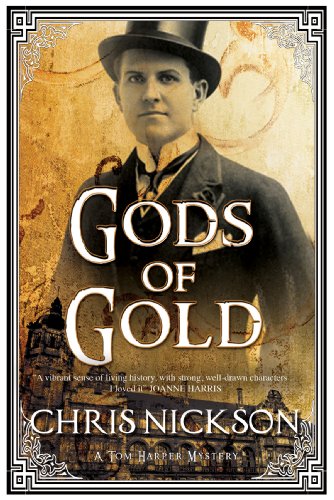
If you like this, there are 11 books in the Tom Harper series, running from 1890-1920, as much about him, his family and Leeds as about crime. The first few are dead cheap on Kindle. Why not treat yourself (or someone else?). Find Gods of God, where it begins, right here.
Annabelle Harper had gone five paces past the man before she stopped. There were beggars everywhere in Leeds, as common as shadows along the street. But something about this face flickered in her mind and lit up a memory. He was despondent, at his wits’ end, but unlike so many, he wasn’t trying to become invisible against the stones, to disappear into the fabric of the city. He might not like he was happy about it, but the man was very much alive. She stopped abruptly, turned on her heel in a swish of crinoline and marched back until she was standing over him, shopping bags dangling from her hands. It was the last day of February, a sun shining that almost felt like spring.
‘You, you’re Tommy Doohan, aren’t you?’
Very slowly, as if it was a great effort, he raised his head. He’d been staring down at the pavement between his legs.
‘I am,’ he answered. His voice was weary, a broad Leeds accent with just the smallest hint of Ireland, easy to miss unless you were familiar with it. He stared up at her, baffled, with his one good eye, the other no more than a small, dark cavern above his cheek. ‘And who might you be? You don’t look familiar.’
‘Annabelle Harper,’ the woman replied. ‘Little Annabelle, when you knew me. Back on Leather Street where we were little.’
His smile was weak. He looked as if the entire weight of the city had pressed down on him and left him small and broken. It had dropped him in this spot
‘That was a long time ago.’
His suit had probably been reasonably smart once. Good, heavy wool, but the black colour had turned dusty and gritty from sitting so long. Cuffs and trouser hems frayed, threads hanging to the ground. Up close, she could see the grime on his shirt, no collar, no tie. The shine had long vanished from his shoes. He was bare-headed, his hair dark, growing wild and unruly. His cap sat upside-down between his thighs. In a rough, awkward attempt at copperplate, the cardboard sign propped against it read: But give that which is within as charity, and then all things are clean for you.
‘Luke,’ she said. ‘Chapter eleven, verse forty-one.’ Annabelle grinned. They’d been in the same class at Mount St. Mary’s School. ‘The nuns must have rapped my knuckles a dozen times over that one. Sister Marguerite would be happy it finally stuck.’
‘Ah, she did the same to me as well. Twenty times, at least. But they’d have a harder time doing that now.’ He held up his right arm, the hand missing two fingers and the thumb.
Annabelle took a slow, deep breath.
‘My God, Tommy, what happened?’
‘Just a little fight with a machine,’ he said wryly. ‘I think I won, though. You should have seen the machine when we finished.’
‘How can you-’ she began, then closed her mouth. She knew the answer deep in her bones. You laughed about it to stop the pain. You joked, because if you didn’t you’d fall off the world and never find your way back. ‘Come on, I’ll buy you a cup of tea.’
‘I can’t let a woman pay for me.’
She dropped the bags and stood, hands on her hips, face set.
‘You can and you will, Tommy Doohan. Get off your high horse. You’d have been happy enough if I’d put a tanner in your cap. Now, up on your feet.’ She looked along the Upper Head Row and across down Lands Lane. ‘We’re going to that place over there. And I’m not taking no for an answer.’
For a moment he didn’t move. But her voice had a razor edge, and he pushed himself to his feet, scooping a couple of pennies and farthing from the cap before he jammed it on his head.
He was tall, towering a good nine inches above her. Close to, he smelt of dirt and decay, as if he might be dying from the inside.
‘I’d carry your bags for you, but one of the paws doesn’t work so well.’
‘Give over,’ she told him, and his mouth twitched into a real smile.
He cradled the mug, as if he was relishing the warmth, only letting go to eat the toasted teacake she’d ordered for him. When he was done, he wiped the butter from his mouth with the back of a grimy hand, then felt in his pocket for a tab end.
They’d been silent, but now Annabelle said: ‘Go on, Tommy, what happened to you?’
‘When I was sixteen, I headed over to Manchester to try my luck. Me and my brother Donald, do you remember him?’
She had the faint recollection of someone a little older, tousle-haired and laughing.
‘What could you do there that you couldn’t here?’
‘It was different, wasn’t it?’ he said bitterly. ‘I’d been a mechanic down at Black Dog Mill, I could fix things, and Donny, well, he was jack of all trades.’ He smoked, then stubbed out the cigarette in the ashtray in quick jabs. ‘We did all right, I suppose. One of the cotton mills there took him on, made him a foreman, earning fair money.’
‘What about you?’
‘Down at the docks. Long hours, but it was a decent wage. Lots of machines to look after. I met a lass, got wed, had ourselves a couple of kiddies.’
‘I’ve got one, too. A little girl.’
Doohan cocked his head.
‘What does your husband do? You look well off.’
‘You’ll never credit it.’ She laughed. ‘He’s a bobby. A detective inspector. And I own a pub. The Victoria down in Sheepscar.’
He let out a low whistle. ‘You’ve turned into a rich woman.’
‘We get by,’ Annabelle said. ‘Anyway, what about your family?’
‘Gone,’ he told her bleakly. ‘About two years back I was working on this crane, you know, hauling stuff out of the boats. The mechanism has jammed. I almost had it fixed when the cable broke. It’s as thick as your arm, made from metal strands. Took the fingers before I even knew it, and a piece flew off into my eye.’ He shrugged. ‘I was in the hospital for a long time. Came out, no job. They told me that since I didn’t have two full hands, I wasn’t able to do the work anymore. Goodbye, thank you, and handed me two quid to see me on my way like I should be grateful.’
‘Where was your wife?’
‘Upped sticks and scarpered with my best mate as soon as someone told her I wasn’t going to be working. Took the children with her. I tried looking round for them for a long time, but I couldn’t find hide nor hair. Finally I thought I’d come back to Leeds. I might have a bit more luck here.’ He sighed. ‘You can see how that turned out. On me uppers on the Head Row. Begging to get a bed.’ He spat out the sentence.
‘Couldn’t your brother help?’ Annabelle asked.
‘Donald was married, and he and his brood had gone off to Liverpool. He has his own life, it wouldn’t be fair. Me mam and dad are dead, but there are a few relatives who slip me a little something.’
She stayed silent for a long time, twisting the wedding ring back and forth around her finger.
‘How long did you work at all this?’
‘Seventeen years,’ Doohan said with pride. ‘Ended up a supervisor before…’ He didn’t need to say more.
‘Do you know Hope Foundry? Down on Mabgate?’
‘I think I’ve seen it. Why?’
‘Fred Hope, one of the owners, he drinks in the pub. He was just saying the other day that he’s looking for engineering people. You know, to run things.’
Doohan raised his right arm with its missing fingers to his empty eye.
‘You’re forgetting these.’
‘No, I’m not. You’ve got a left hand. And your brain still works, doesn’t it?’
‘Course it does,’ he answered.
‘Then pop in and see him tomorrow. Tell him I suggested it.’
He stared at her doubtfully. ‘Are you serious about this?’
‘What do you think?’
‘He’ll say no. They always do.’
‘Happen he won’t. Fred has a good head on his shoulders. He can see more than a lot of people.’ Annabelle opened her purse and pulled out two one-pound notes. ‘Here. It’s a loan,’ she warned him. ‘Just so you can get yourself cleaned up and somewhere decent to sleep. Some food in you.’
‘I can’t.’
She pressed the money into his palm.
‘There’s no saintliness in being hungry and kipping on a bench,’ she hissed. ‘Take it.’
He closed his fingers around the paper.
‘I don’t know what to say. Thank you. I’ll pay you back.’
‘You will,’ she agreed. ‘I know where you’ll be working. And your boss is a friend of mine. Now you’d better get a move on, before the shops shut.’
‘What about…?’ He gestured at the table.
‘Call it my treat. Now, go on. Off with you.’
At the door he turned back, grinning. He seemed very solid, filling the space.
‘Is this what they mean by the old school tie?’
Forgive the self-promotion, but it’s almost Christmas and Amazon has my newest book on sale (I’d prefer you to give your money to a local bookshop but…) for a low price, hardback and Kindle. If you want to give it a try, find it here.
A very quick not to say that while No Precious Truth isn’t out until April 1 next year, if you pre-order it on Kindle, the price is £10.39, as cheap as I’ve seen Amazon go an on unpublished book – they’re running it for $14.99 in the US. The link is here. I know, it’s Amazon, but Kindle is the big format. I have one.
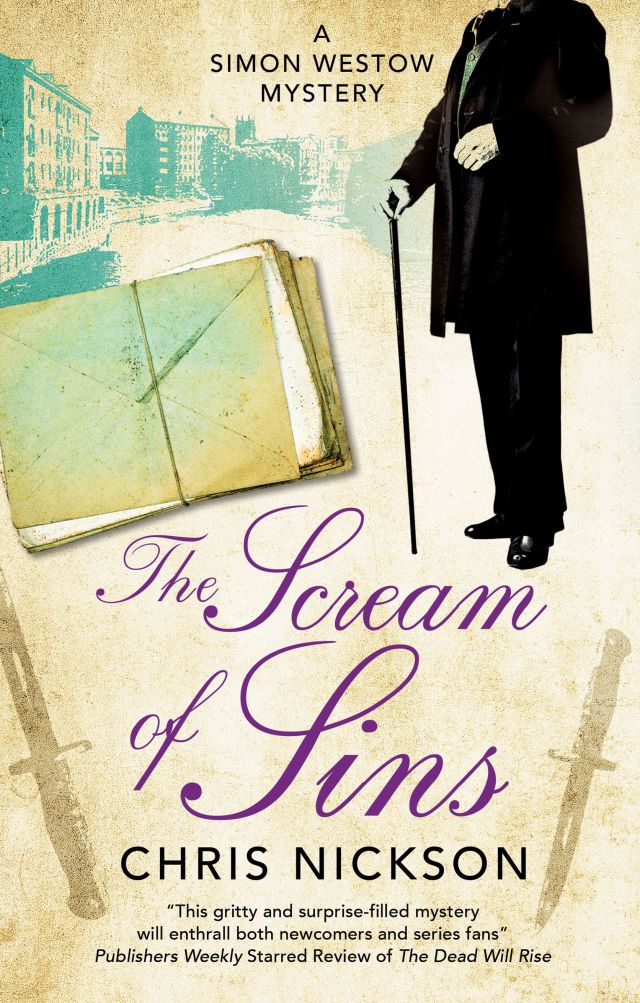
If you’re catching up on the Simon Westow series, The Scream of Sins is currently £12.99 ($11.49). Buy it here. The first two in the series are just £2.99 – quite a deal.
For Tom Harper fans, Rusted Souls, the final book in the series is £10.39 on Kindle ($11.49). Grab it here. The first eight books in the series are all low priced for Kindle.
Look, I’m from Yorkshire. Our wallets squeak when we have to open them. We all need to save money.
While I love Tom and Annabelle Harper dearly, along with Simon Westow, his wife Rosie, Jane and Sally, and can’t imagine them not in my life, there’s someone I all too often forget, and it’s to my shame that I do, especially as he’s the only one who truly existed.
Richard Nottingham, the Constable of Leeds.
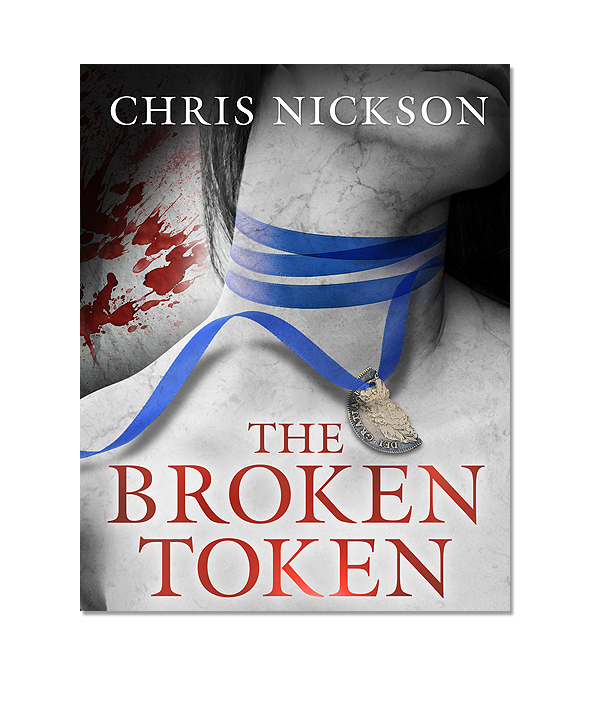
I wrote seven books with him in the role he had in real life (and to settle any possible questions, no there won’t be more). He gave me my start as a published fiction writer with The Broken Token
(which was also an Independent on Sunday best audiobook of the year) and got me a rating as one of the 10 best crime novels of the year for Cold Cruel Winter. All seven of the novels in that series won starred review in Publishers Weekly.
Richard was kind to me, a true inspiration. I’m proud of all those books, of him, and the community around him in Leeds during the 1730s.
From records, I know he was given a reward in the 1690s for informing on a highwayman – and this well before he became the law himself. Maybe it gave him the taste. Or possibly the fact that Walter Nottingham, perhaps his father or brother, was constable before him.
I made what was a title, a sinecure, a man who take part in official processions, into a proto coppers, with the night watch underneath him. He solved crimes. He found himself in danger. I was stretching history, but Richard seemed to enjoy himself doing it.
My Richard had a wife and two daughters. The real one had other children, of course, one of whom was a young woman who went in to marry into the minor nobility. Richard owned property in town. On Kirkgate at first, then Briggate; Leeds was a very small place at that time. People kept arriving, but there were fewer than 10,000 inhabitants.
I have written about the real Richard Nottingham here, with plenty of detail snippets from documents. Sadly, I’ve never found a portrait of him.
Why mention him at all? Most of the books are out of print in hardback, after all (and only the first is available in paper, I believe). But a number of you who came to my work through Tom or Simon might not know about Richard. You might like him.
The ebooks are all pretty cheap, and you’ll discover a family, as well as a place and time that are close to my heart. I always had Leeds, of course, but Richard showed me what to do with it, and that’s a gift I can never fully repay.
I will remind you that if you haven’t read The Scream of Sins yet, it’s been out for a month now – and God, the reviews have been so good it’s amazed me, since it’s so dark. Why not read it and judge for yourself?
I know, I’ve been quiet for a while, and sorry about that. But I’ve been taking time to breathe a bit after the exhibition and event, and I’ve been writing. The next two Simon Westow books (The Scream of Sins and Them Without Pain) are with the publisher – Scream comes out in March – and I’m busy with the WWII novel featuring Woman Police Sergeant Cathy Marsden, currently seconded to the Special Investigation Branch.
The joy is in the research; the couch is a pile of books about the war (I’ve put together something called Cathy’s War Timeline, which is taped to the bookshelf next to the writing table) and I’m learning more and more. The book takes place in early 1941, so I don’t want to go beyond that; I’ll only confuse myself.
Plenty of great little Leeds details in there, like the barrage balloon at St James’s hospital that someone came free from its mooring. People hung on, tied it to a lamp post – and it tore up the lamp post. It was finally brought down near the city centre. How can you not love a tale like that?
Cathy herself is a joy, easing myself into her mind and her life, so I know how that coat feels on her back, how the gas mask case keeps banging against her hip. The walk down the blackout street to home on Brander Road in Gipton. She’s fully alive.
That’s for the future. It doesn’t have a title yet, but it’ll be appearing in summer 2025, a very distant time.
For now, though, the holidays loom, and I hope yours are all good, healthy and peaceful. Meanwhile, there’s a review of the Tom Harper exhibition and event here. If you prefer, here’s an image.
On, and if you haven’t bought it yet, Rusted Souls is a good gift both to give and receive.
No real apologies. After the intense pressure of arranging and putting on the exhibition, then taking it down again, I needed some time to decompress and focus on what I really do – write novels.
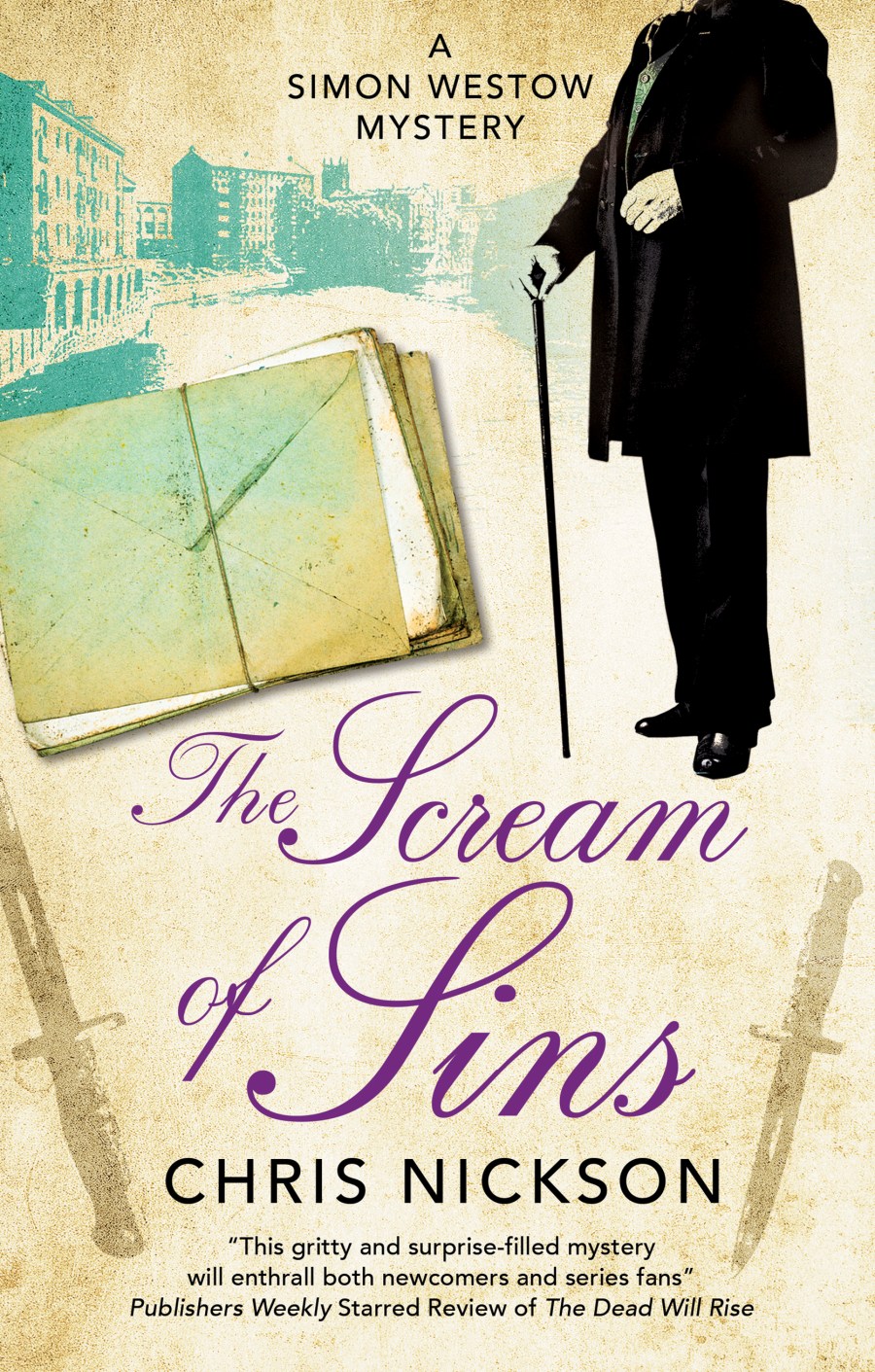
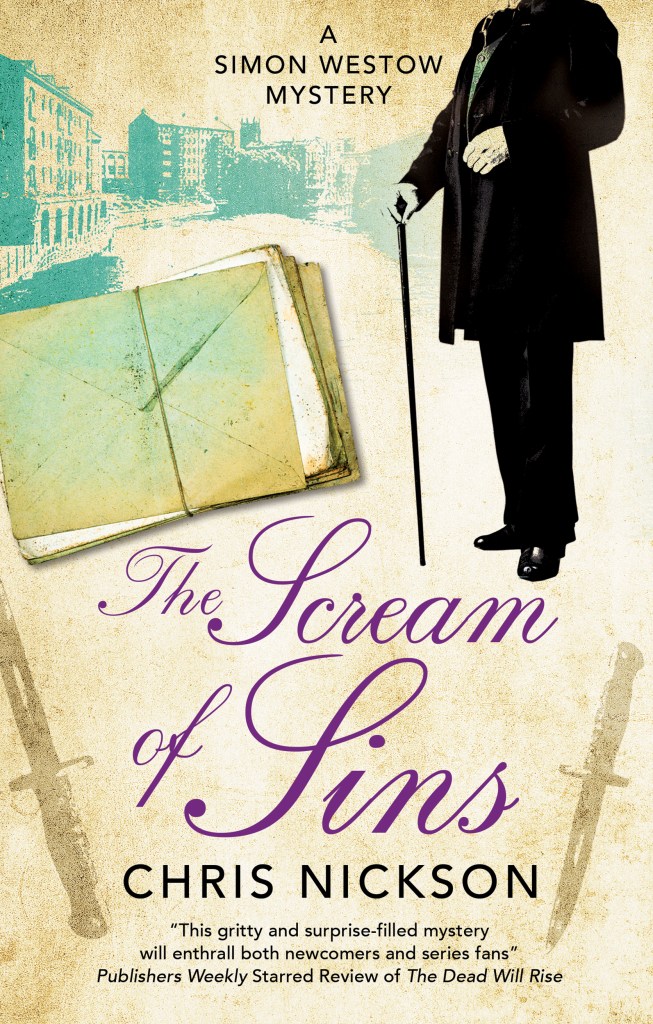
I’ve been busy there, which brings me to the really big news. The first part is that I finished going through the proofs for The Scream of Sins, the next Simon Westow novel, which will be published in March. If you thought the last couple of books in the series were dark, they’re like a day on the beach compared to this. Honestly, I’m immensely proud of it, and the redemption it finds.
Here’s the blurb:
Leeds, October 1824. Thief-taker Simon Westow’s job seems straightforward. Captain Holcomb’s maid, Sophie, has stolen important papers that could ruin the family’s reputation, and he’s desperate for their return. But the case very quickly takes a murderous turn, and it becomes clear the papers are hiding a host of sins . . .
During the search, Simon’s assistant, Jane, hears a horrific tale: men are snatching young girls from small towns for use by the rich. Those who are unwanted are tossed onto the streets of Leeds to survive among the homeless. With the help of an unlikely, deadly new companion, Jane will do everything to discover who’s responsible and make them pay.
Can Simon and Jane recover Holcomb’s letters and get justice for the stolen girls? It becomes a battle that might result in them losing everything . . . including their lives.
And here’s the cover:
The second piece of news is that I’ve signed a contract for, and completed, another Westow novel, called Them Without Pain, due in September next year. I’ll say it’s based on a true incident, and leave it at that for now.
Enough, right? Not quite. People have asked what I’ll do next, how that there will be no more Tom Harper books. I’ve started a new series, set in Leeds in World War II and featuring Police Sergeant Cathy Marsden of Leeds City Police. She lives with her parent on the Gipton estate, and has been seconded to something new, the Leeds squad of the Special Investigation Branch (the SIB really existed), so she’s working in plain clothes. I’m working on the book, greatly enjoying coming to know Cathy, the men she works with, her friends and family. That one is set to appear in June 2025. 2025…it’s science fiction.
In the meantime, I’ve had more people contact me about Rusted Souls than any other book I’ve written. Tom and Annabelle have touched a lot of people, and I thank you all. They’re both still alive within me. You can always buy the book for Christmas. It’s even better from an independent bookshop, too.












 Chris Nickson