The Goldsmith – A Simon Westow Story

The note was short: Meet me outside the Moot Hall tomorrow at seven in the morning.

            Jane read it twice and set it aside.

            But she was there, wrapped in her heavy green cloak with the hood pulled over her hair. She stamped her feet against the February cold and waited for Simon.

            He arrived with the final toll of the church bell for the hour, a smile on his face as he said, ‘Come with me.’

            Why? What did he want? He knew something. She followed quickly, curious to find out.

            No more than a few yards. He stopped by one of the stone buildings of Middle Row, a tailing of workshops behind the Moot Hall, leading up Briggate. They’d been empty for a few years. Another week or two and all this would be pulled down, along with the hall, making space to erect a new Corn Exchange.

The Moot Hall with Middle Row behind

            Simon produced a key and unlocked the heavy old wooden door of one of the workshops. No telling how long these had stood here. As Simon pushed the door open, she could smell the mustiness and the age of the place.

            ‘What is it?’ she asked.

            ‘It used to belong to a man named Arthur Mangey.’

            ‘Who was he? Nobody’s been in there for a long time. Years.’

            ‘This was a long, long time ago. Let me light the lantern.’ It flared; he trimmed the wick and lowered the glass shade. ‘Come in and close the door. We don’t want the whole town knowing. Not yet.’

            She gazed around. A small, barred window high in one wall, all the glass gone. Cobwebs pale and thick in the corners and draped across the walls. Dried leaves like a rug on the floor. A heavy wooden bench was the only furniture.

            ‘Constable Porter and I came in here yesterday. A chance to look around before it’s rubble.’

            She didn’t understand. It was nothing more than an empty, derelict room. Stone on three walls, old wooden panelling on the fourth. No mystery, nothing to see. What was going to interest Leeds about that?

            ‘Watch,’ Simon said. He reached into the corner, moved something, and with a click, some of the panelling moved out like a draw. She drew in her breath with a gasp. ‘We found it by accident. Sheer luck.’ He held up the lantern and grinned. ‘Take a look.’

            A dark, airless room that felt heavy with history. The lantern gave the only light. Another bench.

            ‘See?’ he asked.

            Two pairs of shears on the wood, as if someone had put them down a few minutes earlier. Some small, tarnished chips of metal in a shallow tin bowl, black with age.
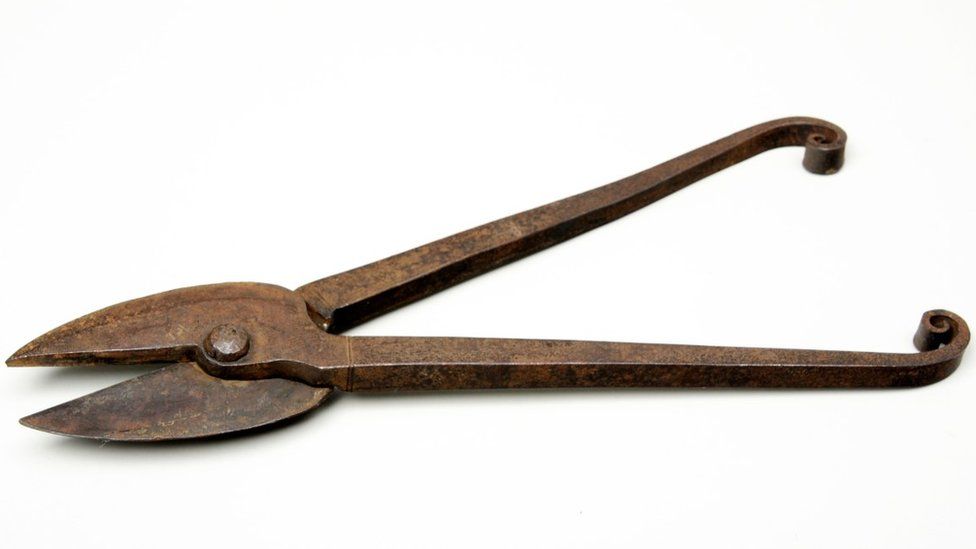
            ‘What are they?’ She kept her hands by her side, scared that someone might reach from the past and grab her if she tried to touch anything.

            ‘Silver. There was a coin. Porter took it and showed it to old Wilf Harrison. You know him, the jeweller on Vicar Lane. He says it dates back to Queen Elizabeth. More than two hundred years. Someone was clipping the edges from coins in here. A little bit of silver from quite a few, melt them down and you’ve made some money.’

            Jane stared. Two hundred years. Beyond her comprehension.

            ‘Mangey was a goldsmith and silversmith. He was used to working with precious metals.’

‘It was true, then,’ Mrs Shields sighed as Jane told her what she’d seen.

            ‘What was?’

            ‘The story about the secret room. My grandmother heard it from her mother when she was a girl. She told me when…I suppose I was 10 or 11. We were walking down Briggate and passed Middle Row.’

            ‘Tell me. Please.’ She knew she sounded like an eager child, but she didn’t care.

            ‘This all happened over a hundred years ago-’

            ‘Simon said the coin is over two centuries old.’

            Catherine Shields smiled. ‘Maybe it is, child, but I can only tell you what Grandmama said to me. Have you heard of the Leeds Mace?’

The Leeds Mace

            Jane frowned. ‘No, what is it?’

            ‘It’s big, made from silver. Very beautiful. They bring it out for ceremonial occasions. It was made by Alfred Mangey. He worked in gold and silver, and he had that workshop on Middle Row. The one you were in this morning.’

‘If he worked in silver, why would he clip coins? He was already rich, wasn’t he?’

            ‘I don’t know, child.’ She reached out and stroked Jane’s arm. ‘People are greedy or maybe they want to do things for other reasons.’

            ‘How did anyone find out he was doing it?’

            ‘They did. At least, that’s what I was told. He was accused of forgery by someone and tried in York. There wasn’t any evidence, but they found him guilty.’

            ‘What happened then?’

            Mrs Shields’ mouth tightened. ‘They hung him. Forgery was treason. He died a traitor. Evidently plenty of people thought he was innocent.’

            ‘But the room…’ Jane began.

            ‘Yes. That seems to end it all, doesn’t it?’

            ‘Yes.’

            ‘It won’t, though. You can guarantee that. People will always wonder if those things were planted by the man who accused him.’ She exhaled slowly ‘We’ll never know, will we?’

The story of Arthur Mangey is real. He was hung in 1696 after being accused of forgery by a shoemaker named George Norcross. But it was only during demolition of Middle Row in 1825 that the secret workshop was discovered.

The Moot Hall and Middle Row in the middle of Briggate

Had Norcross planted the evidence? He’d never have been able to tell people about the secret room without giving himself away. We will simply never have a proper answer.

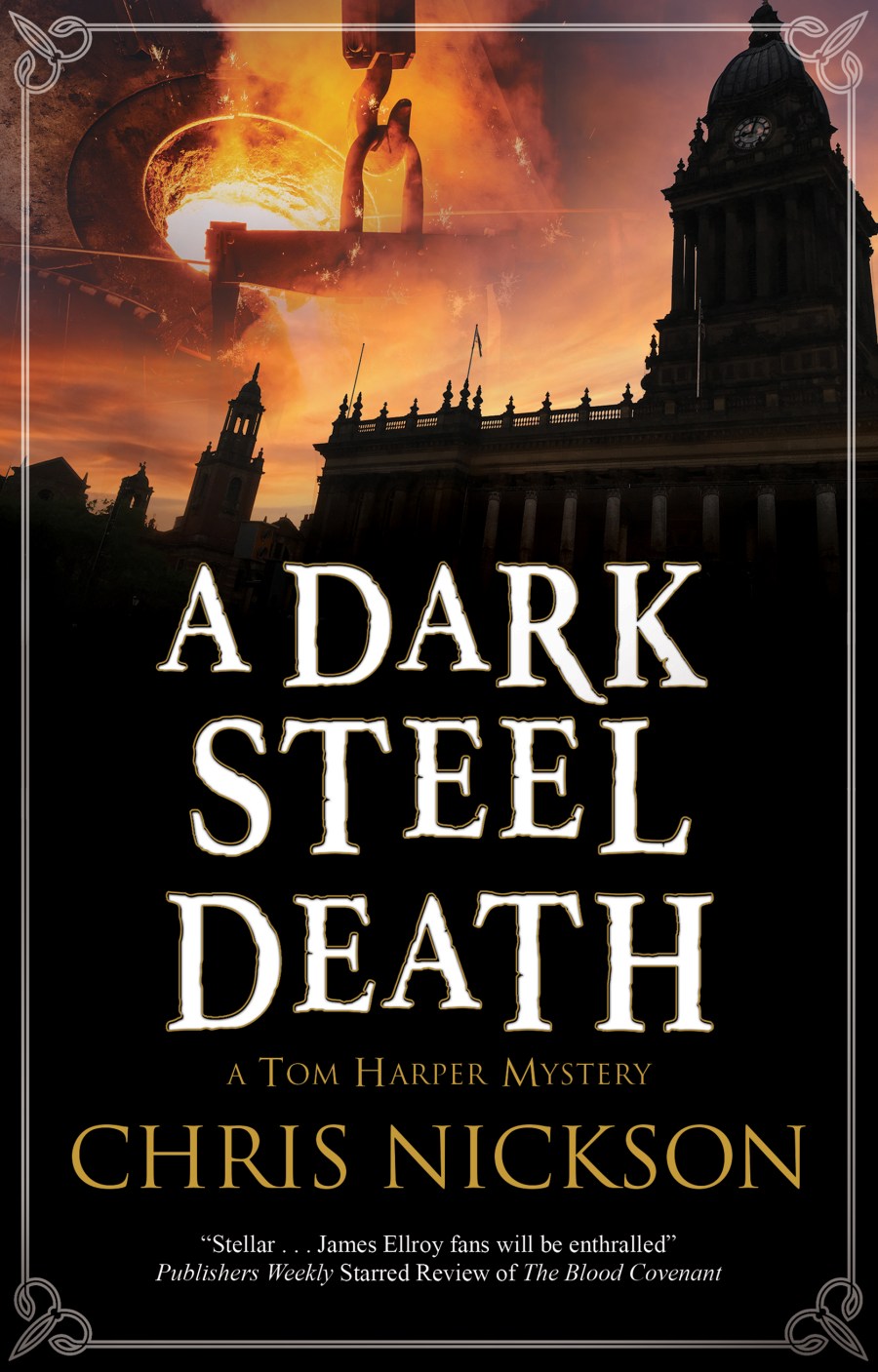
Forgive the small ad, but A Dark Steel Death has been out for a month now and I would be very grateful if you would buy a copy – if you can afford it – or ask your library to stock it. Once you’ve read it, please leave a review, good or bad, somewhere. Honestly, they all help. Thanks.
Gipton Well And A Dark Steel Death

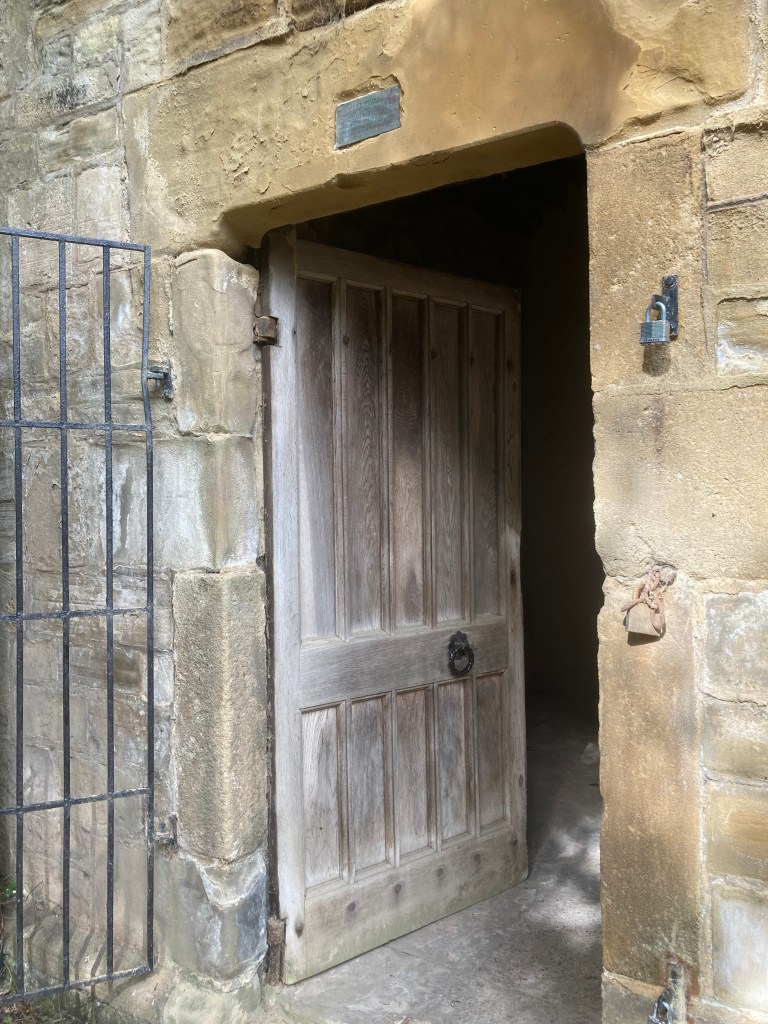
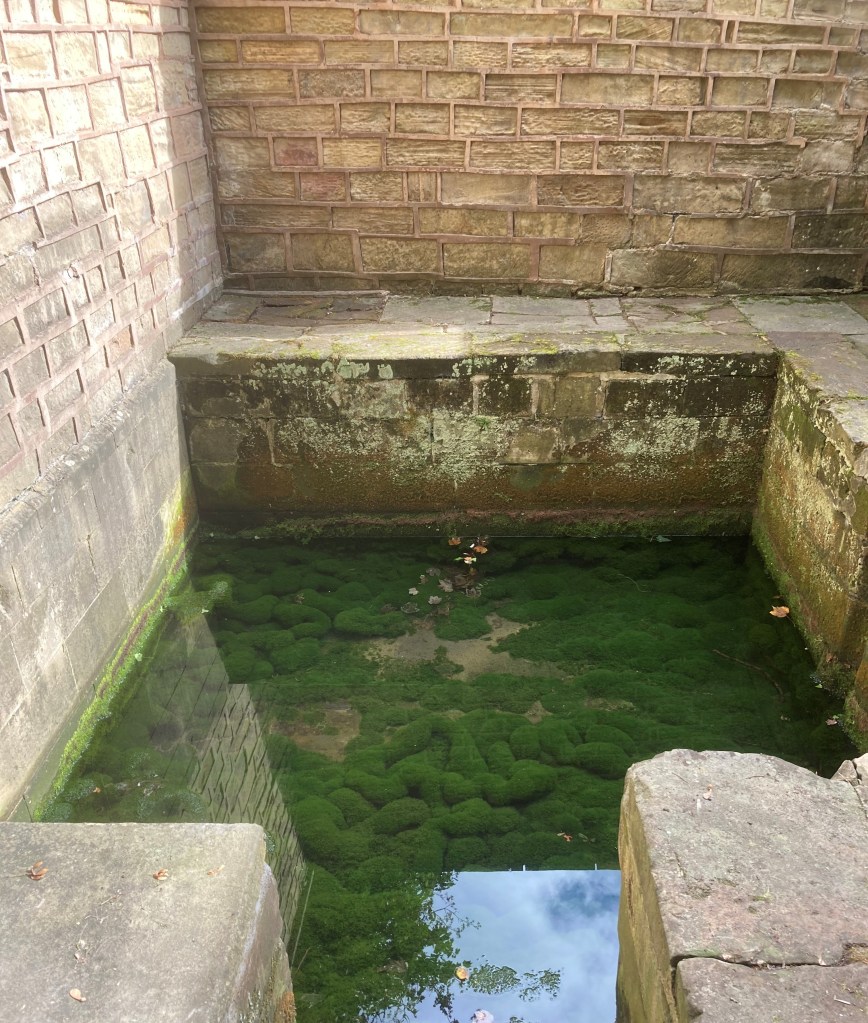
There’s a small place that plays an important role in A Dark Steel Death. Gipton Well, or Gipton Spa Bath House  or Gipton Well and Waddington Bath, to offer the full titles, has its part in the book, although I’m not about to give you any spoilers on exactly what.

It’s one of about 26 wells or spas that once existed around Leeds (including the wonderfully-named Slavering Baby Well in Adel), but are mostly covered over or long forgotten, except in some local names, like Sugarwell in Meanwood).

It was originally built in 1671 by Edward Waddington. His grandfather, Alderman John Thwaites, owned Gledhow Hall, and the well was in the estate; on private property, in other words.

Like so many spas, the water which entered the bath house supposedly had healing properties supposedly head healing properties. Leeds historian Ralph Thoresby brought his son Richard there, attempting to cure him of rheumatism, and that involved sitting in the stone-built cold water bath. Lord Irwin was also a regular visitor.

Next to it was a room with a fire for undressing and warming up after a dip in the plunge pool, with a separate spring with water that could be drunk.

Thoresby referred to the place in his Ducatus Leodiensis, where he states the room with its fire is used “to sweat the patient after bathing”.

Edward Parsons also commended the place in his History of Leeds in 1834, and as late as 1881, Kelly’s Directory noted it was still in use, although now it’s “by people who live in the neighbourhood.”

Shortly after it had fallen into disuse and disrepair, to the extent that when the Honourable Hilda Kitson bought Well House Farm (again, the association with the well), which included the spa, she offered £200 to the Council to keep up the spa. The city bought the spa and the land around it in 1926, just after Gledhow Valley Road had opened a few yards away.

While the building has been there for a long, long time, no one seems sure when the walls around the pool were built; certainly much later. I’ve included them in the book purely for plot reasons.

The Friends of Gledhow Valley Woods (an excellent organisation who also provided much of the historical information from their website. Take a look at it here) have doner a great deal of work on the place, and now it’s surrounded by a metal fence to stop vandalism. However, it was open on Sunday as part of Heritage Open Days, and I was able to go inside and take some photos.

Tom Harper’s spectre didn’t fill the place. But after seeing the pictures you’ll be able to be there with him. And I’m sure you will read the book. Hopefully buy it, too, to make sure the final one in the series in published. Thank you.

When The Russian Revolution Came To Leeds

My newest book, A Dark Steel Death, takes place at the start of 1917. It’s a crime novel, but also a war novel – the war on the home front, where things were bleak. The Battle of the Somme the year before had killed and wounded so many of the young men from Leeds; it was said there wasn’t a street in the city that the fighting there hadn’t touch in some way.

But there was more going on the in the world. In Russia, the February Revolution (actually early March in the modern calendar) began to change everything in the country; November would cause a second, final rupture. In Britain, there was plenty of support from the labour movement, with an event held at London’s Albert Hall, attended by 10,000, with another 5,000 outside.

A second, known as the Leeds Convention, was set for June 3, organised by the United Socialist Council, made up of member of the British Socialist Party, the Independent Labour Party, and the Fabian Society.

I toyed with the idea of having that as the backdrop to a book set in 1917. Possibly one of the delegates might have been murdered, or someone protesting the convention. In the end, portraying the outside events in Russia felt a little too complex, and the idea held echoes of the backstory to Gods of Gold. I feel I made the right decision, but this remains a fascinating bit of Leeds history.

The intention was to hold it in Leeds’ Albert Hall – the big room in what was then the Mechanics’ Institute (now Leeds City Museum).

That was where the problems began. Unsurprisingly, the government didn’t want anything like this to happen in the middle of a war. They feared the idea of revolution could spread. They mooted the idea of banning it completely, but didn’t.

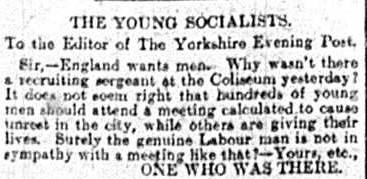
Instead, Leeds City Council refused to allow the use of the Albert Hall and ordered all hotel owners to refuse bookings from delegates, and they seemed to gladly comply. The police banned public meetings; anything to try and prevent things moving ahead (in the on, on the Saturday evening, the police asked hoteliers to sell room to delegates who had nowhere else to sleep). The press had no kind words for the delegates or the subject matter.

However, the Leeds Convention, as it came to be known, did happen. The organisers booked the Coliseum, where Prime Minister Asquith had spoken in 1908 (see The Molten City) and locals opened their homes to delegates.

The local papers came out against the convention, as did some of the national dailies.

The Leeds Weekly Citizen offered a full account of the proceedings, also detailed in the book British Labour and the Russian Revolution (which was reissued in 2017). In the end, 1500 delegates debated four motions. Some big names appeared, including Ramsay MacDonald, Herbert Morrison, Sylvia Pankhurst and Bertha Quinn, who’d go on to become a Labour councillor in Leeds.

Everything went off peacefully, which was more than something else happening in the city over the same weekend – three nights of anti-Jewish rioting. A little about that in weeks to come, another lesser-known and awful incident in the city’s history.

A curious aside: a writer from Leeds was in Russia during and after it all, and came to known the top people. There were rumours that he might also have been a British Intelligence agent as well as a reporter. His name? Arthur Ransome (yes, Swallows And Amazons).

A Dark Steel Death won’t take you inside the Coliseum for the convention, but it will put you on the dangerous and deadly winter streets of Leeds at the start of 1917.

I’d be very grateful if you’d buy a copy or ask your library to stock it.

The Right Note. Or Phrase.

Sorry, but to start off with an aside, A Dark Steel Death is published very soon and I hope you’ll buy it or reserve a copy from your library. I’ve made another video trailer to try and convince you.

Now, on to the main feature…

When I was much younger, I looked up to musicians who could play at blistering speed. Ten Years After on Going Home? Give it to me. The flash of Keith Emerson? Oh yes – saw him live a few times, in fact. But, as I’ve grown older, I’ve learned that so much bluster often covers up the fact that technique can mean saying nothing.

Growing older, I’ve come to realise it’s the right not, and the proper silence that are more eloquent. The quietness of Bill Evans, the two notes from the late Peter Green in Fleetwood Mac that conveyed a world of hurt. The oblique, startling keyboard move of Thelonious Monk. The way Robert Wyatt allows the air into his songs.

It’s much the same with writers. I’ve come across those who overwrite, maybe caught up in language. No doubt it’s good; the critics seems to think so. But we’re all different. It wearies me, the same way that listening to an overbusy guitar solo tires my senses. The same way notes and silence serve a piece of music, not the other way round, then words and spaces are there to serve the story.

There are many kinds of writing of course, just as there are many types of music. My tastes are my own, I’m not trying to impose them on anyone.  I keep trying to hack away the excess in my work and allow the story and the characters to shine through. They’re what matters. If a reader doesn’t actually notice the writing, then I’ve probably succeeded.

Saying Goodbye To Book Family

This morning I finished writing the 11th and final Tom Harper book. It’s a strange feeling to know I’m saying a final farewell to Tom, Annabelle, Mary, Ash and the others. After all, we’ve gone through 30 years together – it takes place in 1920, three decades after Gods of Gold. An awful lot has happened along the way, to Leeds, to the world, and to them. I’ve been their companion for almost a million words.

Curiously, it’s not the first time I’ve written a book with the title Rusted Souls. I completed a version last year, but even as I was working on it, I know Tom deserved to bow out on something better than this. I set it aside and never went back to it, and I know that was the right decision.

This one is the Tom Harper book I was meant to write.

It’s still only a draft. I’m going to allow it to percolate for a few weeks, go back and hopefully make it a better book – probably about the time A Dark Steel Death is officially published (although everyone appears to be selling it already, so do please get your copy or reserve it from your local library). And even then, there’s no guarantee my publisher will want it. Of course, I hope they will, to round things off neatly.

I feel sad to be saying goodbye to people who’ve been such good friends. More than that, they’ve become family. I know them so well, their joys, their sorrows and the pain they have. Strange as it may sound, I feel privileged to have been in their lives.

And please, don’t tell me they’re fictional. I won’t believe you.

A Dark Steel Death – The Video

Leeds, December 5, 1916

The car slid quickly through the streets. Deputy Chief Constable Tom Harper stared out of the window. Leeds was black, a wartime winter-darkness, barely a single thin sliver of light showing through the blackout. A quarter of an hour before, he’d been comfortably asleep in bed, until he was torn out of a dream by the telephone bell. As he hurried to answer, he wondered if it was finally happening: the Zeppelins had come to attack Leeds.

            No. This was worse. Far worse.

            He could see the fire from half a mile away. Flames licked high into the sky. A moment later he smelled the hard, overwhelming stink of cordite.

            ‘Duty sergeant, sir.’ He’d had to press the receiver against his good ear to make out the words. The man’s voice was flat, empty of expression. ‘Our officers at Filling Station Number One rang in. There’s been an explosion. A car is on its way for you.’           

  Filling Station Number One. Everyone around here knew it by a different name – Barnbow.

The book is out everywhere, hardback and e-book, in September. You can pre-order it now.

A Brand New Tom Harper Novel

Later this year, there’s a new Tom Harper book coming. It’s called A Dark Steel Death and it’s set during the First World War…

Leeds. December, 1916. Deputy Chief Constable Tom Harper is called out in the middle of the night when a huge explosion rips through a munitions factory supplying war materials, leaving death and destruction in its wake. A month later, matches and paper to start a fire are found in an army clothing depot. It’s a chilling discovery: there’s a saboteur running loose on the streets of Leeds. 

As so many give their lives in the trenches, Harper and his men are working harder than ever – and their investigation takes a dark twist with two shootings, at the local steelworks and a hospital. With his back against the wall and the war effort at stake, Harper can’t afford to fail. But can he catch the traitor intent on bringing terror to Leeds? 

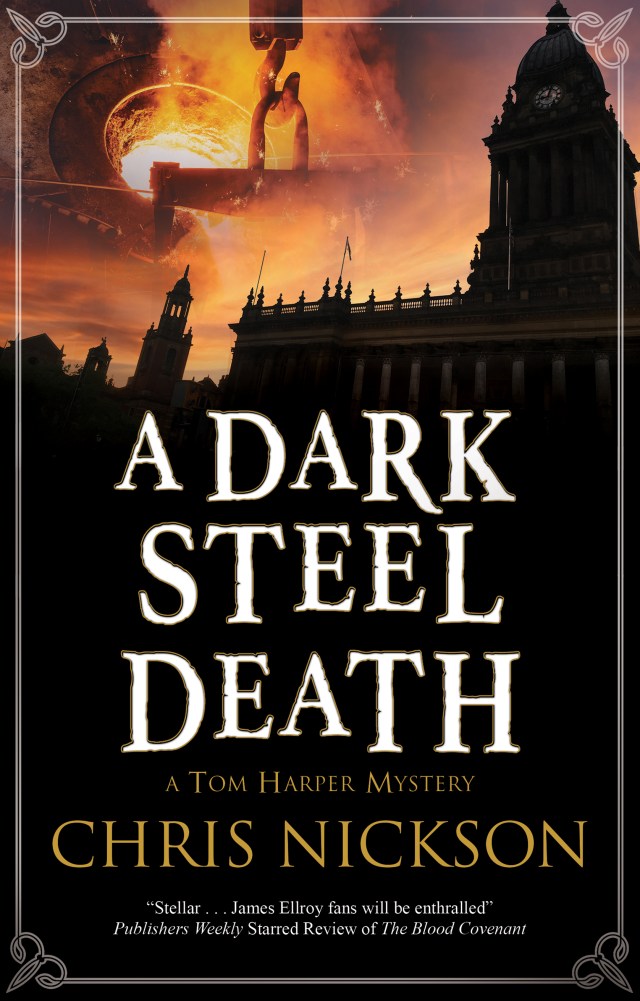
Would you like a very early look at the cover? Scroll down. But first, I’m going to say with pride that the beautiful Leeds Library, the oldest subscription library in Britain, founded in 1768 (read about it here) has listed their most-borrowed titles of the last 30 years, and The Broken Token is in there at number eight, among some huge names. I honestly feel pretty humble.

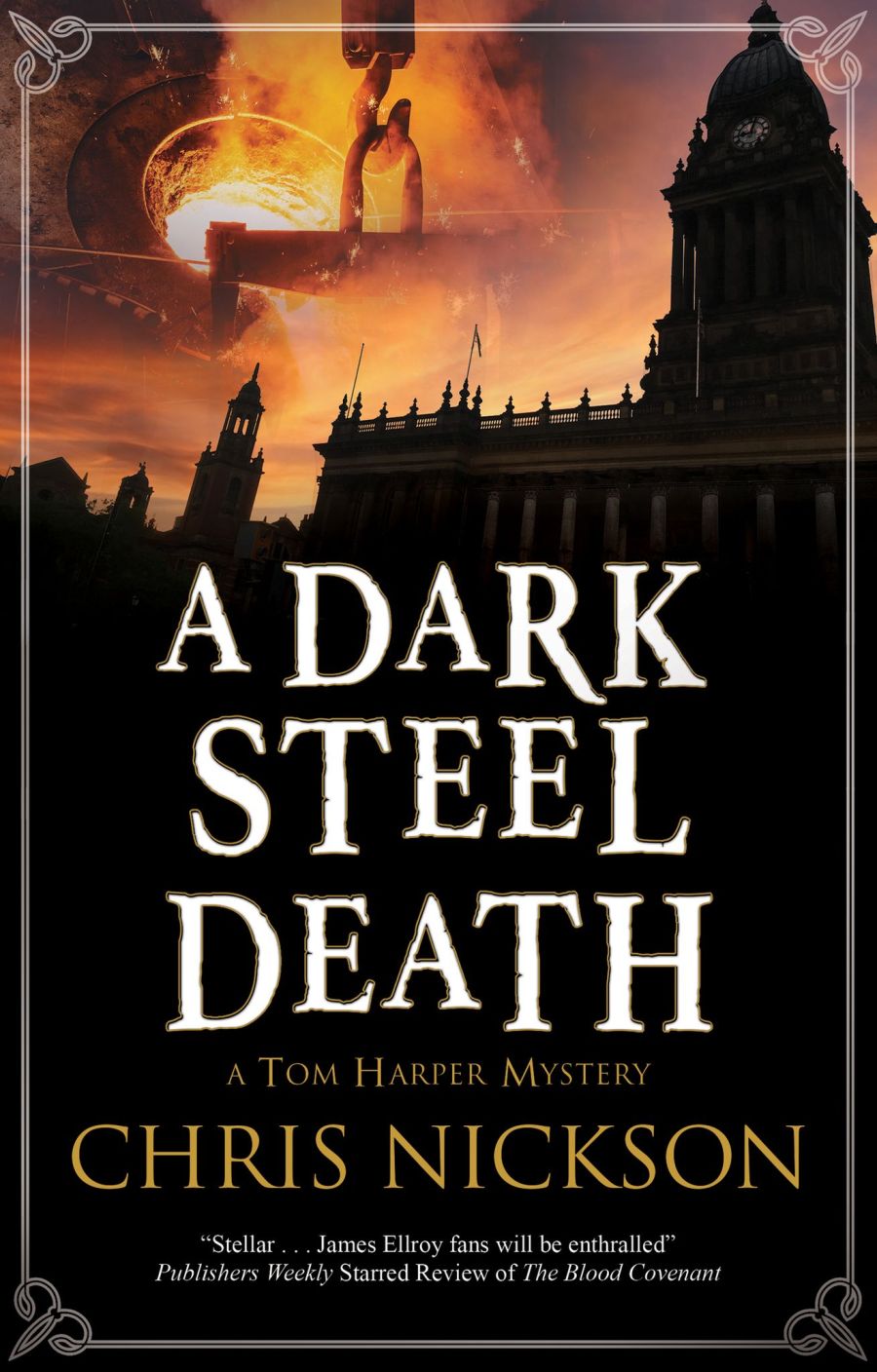
And now for the cover of A Dark Steel Death. What do you think? Please, let me know.

Some Bright News In Dark Times

Even in the brief flurry of sunshine and warmth we’re experiencing in Leeds right now, I know the days are dark. It doesn’t matter where you live. In Seattle, where I spent many years, it’s literally dark and choking with the smoke from the fires up and down the coast and father inland. You’ve probably seen the photos from California and Oregon, where the world looks like part of the apocalypse.

It’s hard not to be downhearted and depressed. I find solace in escaping to my allotment, where nothing else can touch me and I live simply doing the jobs in front of me (this week, stripping the borlotti beans – there are a lot this years, it seems!) and taking down the vice, before preparing that bed for winter. After that, pick blackberries and the rest of the apples. There’s a sense of order, of continuity in it all that makes me happy.

But I do have some more sunshine this week. First to bring you up to speed. The third Simon Westow novel will be published in the UK at the end of December. It’s called To The Dark, and yes, it’s dark indeed. For some reason, it’s not showing up to pre-order on Amazon. However, good independent shops will be glad to take your order, or there’s Speedy Hen, which has the lowest price I’ve seen and free postage. Look here.

What’s it about? I’m glad you asked: The city is in the grip of winter, but the chill deepens for thief-taker Simon Westow and his young assistant, Jane, when the body of Laurence Poole, a petty local thief, emerges from the melting snow by the river at Flay Cross Mill. A coded notebook found in Laurence’s room mentions Charlie Harker, the most notorious fence in Leeds who’s now running for his life, and the mysterious words: To the dark. What was Laurence hiding that caused his death? Simon’s hunt for the truth pits him against some dangerous, powerful enemies who’ll happily kill him in a heartbeat – if they can.

The middle of 2021 will bring Brass Lives, the ninth Tom Harper novel, set in 1913. It features a boy from Quarry Hill in Leeds who went to New York when he was 10 to join his mother. More than a decade on and he’s come back to see his father. Over in America he’s made a reputation as a gangster and a killer. The problem is that death has followed him to Leeds. It’s inspired by Owen ‘Owney’ Madden, whose true story is well worth reading. One of the few in his line of work who retired and lived to a ripe age.

And now….drum roll.

I’ve signed a deal for a fourth Simon Westow, tentatively titled The Blood Covenant, set in 1823. Very likely to appear at the end of 2021 in the UK. And also A Dark Steel Death, the 10th (!) Tom Harper novel, which is set in 1917, and probably out in the middle of 2022 – assuming we’re all alive them.

And no, I won’t tell you more about them. You’ll have to wait.

2022…I’m not even sure I can think that far ahead. But I have to now.