A Brand New Annabelle Harper Christmas Tale

It’s just over a week until Christmas 2025, and the spirit moved me to write a new Annabelle Harper Christmas story. Yes, it’s unashamedly sentimental, but this is the time of year for that. I hope you like seeing Annabelle again, and enjoy her outing.

Leeds, December 1905

‘Give over,’ Annabelle Harper said. ‘The brewery knows better than that.’

‘That’s what the drayman told me when he delivered the beer this morning,’ Dan the barman told her. ‘Swore up and down it was gospel. They’ve got some kind of problem, so they’ll be limited in how many barrels they can let us have between now and early January.’

‘Right,’ she replied. Right.’ Her face was set. She ran the Victoria public house at the bottom of Roundhay Road. To be told just a week before Christmas that she wouldn’t have her proper order when the place was going to be full every night was the last thing she needed.

A glance through the window showed the rain outside was easing. At least that was something; she wouldn’t end up soaked on her way to the brewery. Skirt just short enough not to brush against the pavement. A coat, hat, sturdy button boots and an umbrella and she set of down Sheepscar Street to the brewery. It wasn’t far, just enough distance to work up a temper. Annabelle was a good customer, sold a lot of their beer and expected better treatment, especially at this time of year.

She was so wrapped up, planning what she was going to say, she almost passed the woman hunched in the doorway with a baby against her chest and another little one huddled against her.

‘Can you spare a penny or two, please, missus?’ She had a cracked voice, pleading, face chapped red by the chill in the air.

Annabelle squatted by her; a single glance was enough to tell her everything.

‘How long have you been sleeping out here?’

‘Last night was the second night.’ The woman turned her head away as if she was ashamed.

‘What happened?’

‘Me husband took off with his fancy piece,’ she replied in a mix of sorrow and anger. ‘Without his wage, I couldn’t pay the rent.’ A helpless shrug. ‘The landlord put us.’

Those children needed to be indoors, somewhere away from the cold. Warmer clothes, too, and some hot food in their bellies. The woman…she was downtrodden, as if all her hope had fled with he husband.

‘Do you have any family?’

‘No, missus, not any more. My mam and dad died, and me brother went off with the army and got hisself killed by the Boers down in South Africa. A penny of two would help if you can spare it, missus. I can get them something.’

The young girl at the woman’s side was silent, wide eyes staring up at her. Annabelle knew she could send them up to the workhouse. She was a Poor Law Guardian; they’d find a place on her say-so. But she knew what would happen. The girl would be separated from her mother. No, that wasn’t the solution.

She dug into her bag and took out a notebook and pencil to write a few lines. She ripped out the page and put it in the woman’s icy fingers.

‘Do you know North Street?’ It was close, no more than five minutes’ walk away.

‘Yes, missus. Course’ Her eyes narrowed, suddenly suspicious. ‘Why?’

‘You go to the address on there and talk to Mrs Wainwright. She’ll fix the three of you up with a room. Full board, too.’

‘But I don’t have any money.’

‘All taken care of for the next three months,’ Annabelle told her with a smile. She produced two one-pound notes. ‘Take those and get some clothes for the kiddies. For youself, too, you must be perished.’

‘I can’t-’ she protested.

‘Yes, you can. You’d have taken a couple of pennies. This isn’t much different.’

‘But I-’ The woman stopped to wipe away the tears. ‘You’re an angel, missus.’

Annabelle laughed. ‘More like a devil if you knew me. Now, you get yourself over to Mrs Wainwright and warm up.’

‘Thank you. God bless you, missus.’

‘Don’t,’ Annabelle told her. ‘Have yourselves a good Christmas.’

She strode off, drawing her shoulders back, ready to do battle at the brewery. As she walked, she noticed the gaggle of men standing around a metal bin, burning scraps of wood to keep themselves warm and the women outside the pawnbroker’s shop with its three gold balls, clutching clothes and sheets to pledge to keep their families fed during the week. Plenty of poverty in Sheepscar.

She had money. The pub was a little goldmine and her husband was a Detective Chief Superintendent with Leeds City police, making a decent amount. But she couldn’t help everyone. That was why she’d run to be elected as a Guardian, to try and help the poor who were always so vilified.

Not enough, though. It was never enough.

She made a few detours after reading the Riot Act to the owner of the brewery, leaving him red-faced and full of apologies, making promises that she’d receive her proper order.

            Howard Winthrop ran a chemical plant over near Skinner Lane. The place stank like the devil’s cauldron, Annabelle thought as she wrinkled her nose. But the man had a good heart and plenty of brass.

            She only stayed long enough to invite him to a meeting at the Victoria that evening. The same at Hope Foundry on Mabgate, where she felt overwhelmed by the noise of the machines. She was back behind the bar for the dinner rushing, before popping out to the Prince Arthur just up the road, round to the Pointers, no more than a few yards from her door, then the Roscoe up Chapeltown Road, and finally the vicarage at St Cuthbert’s church.

            Eight o’clock and they were all in the living quarters over the pub, chattering until she called the group to order with a spoon tapping across her glass of gin.

            ‘Thank you for coming at such short notice.’ She looked around the faces, making sure she had their attention. ‘I saw something this morning that almost broke my heart. A mother and her two bairns out on the street. We’re supposed to be the richest country in the world and things like that happen all the time.’ She waited for the objections to flower, then continued. ‘I know we can’t change it all. Not us, sitting here.’ That kept them silent ‘But maybe we can make sure some of them are warm and fed on Christmas Day. Presents for the little ones, too. Look at us here, we’ve all got plenty. More than we need.’ She smiled at them. ‘Money’s not going to do us any good when we’re six feet under, is it? What do you think?’

            ‘What do you have in mind?’ Winthrop asked as he helped himself to more whisky from the bottle on the table.

            ‘We all chip in and put on something bang-up.’ Annabelle nodded to the vicar from St Cuthbert’s. ‘I thought we could have it in your church hall.’

            ‘I imagine we could,’ he agreed after a moment. ‘Not on Christmas Day, though.’ He looked thoughtful. ‘Some of the churchwomen’s guild might be able to help.’

            ‘If they can’t, we’ll take care of it themselves.’ She drew a piece of paper from the pocket of her dress. ‘I’ve put together some ideas. See what you think.’

*

‘Thirty,’ said Reverend Winterson with a contented smile. ‘I’d call that a very fair turnout, wouldn’t you, Mrs Harper?’

            ‘Do you think so?’ Annabelle replied doubtfully. ‘There are two or three times that number who could have used the food and the warmth.’ She glanced through the open door to the kitchen where her husband Tom was covered by an apron, arms deep in the sink as he washed the plates, while their daughter Mary dried them. Helping without a complaint, not even a moan.

            ‘Maybe so, but…’ His voice tailed away as if he wasn’t sure what to say. ‘Thirty is still better than one. We made a difference.’

            ‘To a few.’ She’d hoped for a huge turnout. Free food, presents for the children. Surely there were plenty who wanted that. The church had put up posters had all across Sheepscar, up into Harehills and Burmantofts, down through the Leylands. All very earnest and serious. Full of religion. Very worthy, with a promise of prayers and hymns to celebrate the birth of the Lord. The kind of Godly folderol guaranteed to put people off when what they wanted was pleasure, an hour or two of relief from life’s grimness.

            ‘Some people have an unfortunate, prideful attitude to receiving charity,’ the vicar said with a sigh.

            ‘I suppose they do,’ she said thoughtfully. ‘There’s plenty left over. What are you going to do with it?’

            ‘Distribute it to the needy,’ he answered.

            She smiled. ‘Isn’t that what we’ve just being doing?’ she asked kindly. ‘Look, it’s two days until Christmas. Can you arrange to get it all to the Victoria tomorrow?’

            He raised his eyebrows in astonishment. ‘I imagine I can. Why?’

            She grinned. ‘Stop by for your Christmas dinner and you’ll see.’

*

Word of mouth. No time for anything more: a Christmas party at the Victoria. No airs or graces, no mention of needy or charity. Everybody invited to have a good time. And it was in a pub, more familiar and welcoming than a church to many round here. On Christmas Eve she’d bribed her regulars with free drinks to help give the place a thorough clean and hang up colourful paper chains. Jingling John had arrived with a few holly boughs to hang. By evening the public bar looked festive. She didn’t ask where the scrawny Christmas tree in the corner had come from; sometimes it was prudent not to know.

            Christmas morning, she was up early, making sure everything would be ready. The Victoria wouldn’t be open for paying business today. Annabelle had time to eat breakfast and spend half an hour on gifts. Book and notebooks for Mary, and she looked over the moon to receive them, dashing across the room to hug her parents.

            The girl had embroidered handkerchiefs for each of her parents. Decent work, done with love and duty, but the girl would never make a seamstress, her mother thought. Just as well that she had her sights set on other things. Learning to use one of the new typewriters and starting a secretarial agency. One of the modern jobs. She was clever and ambitious; maybe she’d make a success of it.

            Tom had surprised her the smart set of gold earrings she’d had her eye on for months. She’d never said anything, but he’d been a good, observant policeman. It was nigh on impossible to buy for him; in the end she’d scrambled around, settling on a fancy paisley silk scarf from the Grand Pygmalion.

            On the dot of noon, she unlocked the door. Fires had been burning in the hearths for a couple of hours, every room warm and comfortable. Food on the tables. Nothing hot, but ample to fill plenty of bellies. She just had to hope they’d come.

*

Half an hour and the Victoria was full. Someone was thumping out Nellie Dean on the piano, the big song of the year at the music halls, and voices were singing along, some beautiful and soaring, most hopelessly out of tune. Many of them smiling at her and raising their glasses in a toast.

            Annabelle looked around the happy faces and felt a surge of gratitude.

            A proper Christmas party. There, almost hidden in the corner, eating a mince pie, the woman she’d seen on Sheepscar Street. The one who’d inspired all this. Baby suckling with contentment at her breast, the older daughter playing with a rag doll.

            She felt Tom come up behind her and put his arms around her waist.

            ‘They’re enjoying themselves,’ he murmured in her ear.

            ‘So am I,’ she told him with a happy grin. ‘So am I.’

Remember, if you like this, there are 11 novels featuring Tom and Annabelle Harper. There are also two of mine that came out during the year and make great gifts for yourself or people you like. I’d be grateful…what you decide, have a lovely time and a happy and healthy 2026.

Jingling James – An Annabelle Harper Xmas Tale

Actually, not quite Annabelle Harper. Still Annabelle Atkinson, a recent widow after her husband Harry died and left her the Victoria. But you’ll see for yourself.

Here were are, Christmas Eve, and this is the last of the Christmas stories dug out from the past. I hope you’ve enjoyed them. Thank you for reading, and for reading/buying/tolerating my books and posts. Happy holidays – what ever you celebrate – to you and those who hold dear. May 2025 be kind to us all and see us in good health.

Thank you again.

Leeds, December 1887

Annabelle Atkinson didn’t want Christmas to arrive this year. She didn’t feel any of the joy or the goodwill this December. It was barely three months since her husband Harry had died; the earth had barely settled on his grave.

They’d had a few good years before the heart attack took him. Now she had to look after the Victoria public house as well as the two bakeries she’d opened. On her own, sometimes she felt like she was drowning.

On Christmas Eve, once the last customer had gone, she intended to bolt the door, closed the curtains, and keep the world away until Boxing Day. She’d never been one to wallow in sadness; if you had a problem you took care of it and carried on. But these last few weeks…she’d been slowly sinking and she knew it. She felt like one of the jugglers in the halls, trying to keep all the plates spinning in the air. Too many of them.

‘Come on,’ she said to Willie Hailsham, taking the empty pint pot from his hand. ‘You’ve had enough. Get yourself off home so your wife can remember what you look like.’

The same with Harelip Harmon, Donald the Steel Man, and Jingling James, always moving the coins around in his pocket. They’d stay drinking all night if anyone would keep serving them.

‘Don’t you have homes to go to?’

It was the nightly routine, almost a comedy act after so long. They drained their glasses, said their goodnights and then the bar was empty. She locked the door, drew down the bolts and let out a long sigh. Glasses to wash, woodwork and brass to polish.

Better get started, she thought. The work’s not going to do itself.

Up a little after three to supervise the baking in the kitchen at the other end of the yard. The last day before Christmas, orders to fill, plenty of demand; the shops would be little goldmines today. And the Victoria would be packed from the time the factories closed.

Gossiping with the girls as they all worked together, mixing, kneading, baking, the smell of fresh loaves filling the air and making her hungry. Back in the rooms over the pub she made breakfast.

This was what hurt most: the silence. There used to be so much laughter here when Harry was alive. It seemed like there was always something to set them off. Now just being here was oppressive, all the weight of ghosts around her.

Dan the barman and Ellen the barmaid were already working hard with polish when she went downstairs. Sleeves rolled up and plenty of elbow grease, they’d be done soon enough. Nothing for her to do here. The dray from the brewery was due at ten, but Dan could take care of that.

Annabelle put on her cape and picked up her purse. Go into town and have a poke around the shops. An hour or two away might perk her up. But there was no magic in December this year. The pavements were full of people jostling around, weighed down by packages and bags. She felt removed from it all. The displays in the windows of the Grand Pygmalion didn’t make her want to part with her money. She was low, she knew it; a lovely gown or a good hat could usually tempt her. Today, though, there was nothing. No cheer.

Even a stop at the cocoa house for something warm to drink and a slice of cake didn’t help her mood. She trailed back out along North Street, through the Leylands and past the little park, back along to Sheepscar.

Soon enough the Victoria was busy, and it would stay that way until she called time. She took her place behind the bar, smiling, flirting the way she always had, and for a few minutes at least she could forget why she hurt inside.

‘Give over,’ she told one man who insisted he’d be a good husband. ‘I’d wear you out in one night, then I’d have to send you home to your missus.’ It brought laughter. As she walked around, collecting glasses, she brushed hands away, giving the culprits a look. It was all part of running a pub. A game; if you played it well, you were successful.  And she had the knack.

Annabelle promised old Jonas free beer for the evening if he played the piano in the corner, and soon half the customers were singing along the favourites from the music hall. It gave her a chance to breathe and Dan could look at the barrels.

By eleven she’d had enough. The pub was still busy, the till was overflowing. But all the noise made her head ache. She needed some peace and quiet for a while. She wanted the place empty.

‘Come on.’ She rang the old school bell she kept under the bar, next to the cudgel for sorting out the unruly. ‘Time for you lot to see your families. They probably don’t believe you exist.’

Slowly, the crowd thinned. Another five minutes and it was down to the usual four still standing and supping. Donald the Steel Man, Willie Hailsham, Jingling James, and Harelip Harmon.

‘That’s enough,’ she told them. Her voice sounded weary. She knew it and she didn’t care. They were regulars, they’d probably been coming in here since they were old enough to peer over the bar. ‘Let’s call it a night, gentlemen, please.’

James slipped off to the privy while she was ushering the others out, wishing them merry Christmas and accepting beery kisses and hugs until they’d gone and she turned the key in the lock.

Then James was there, looking bashfully down at his boots. He was a gentle soul, a widower with grown children. Fifty, perhaps, his hair full white, jammed under his cap.

‘Are you seeing your family tomorrow?’ she asked.

‘Not this year.’ He gave a small shrug. ‘They all have their plans. It’s different now, everyone’s so busy. What about you?’

‘A quiet day. Maybe it’s better that way.’

‘When my Alice died I carried on, same as I always had. The bairns were grown and gone but I still had to work and put a roof over my head.’

‘I know,’ she agreed. The everyday tasks that carried on like a machine. Without thinking, he jingled the coins in his pocket.

‘Then her birthday came around. We never made a fuss when she was alive, well, who could afford to? First we had the little ‘uns, then it didn’t seem to matter so much.’

‘We were the same,’ Annabelle said. ‘No kids, but Harry’s birthday or mine, there was still the pub to run.’

‘Any road, the year she died, on her birthday it suddenly hit me how alone I was. Not just then, but for the rest of my days. Because no one could replace Alice. I had all them years in front of me.’

‘What did you do?’ she asked.

‘I sat there at the table and made myself remember all the good things. How she looked when she smiled, how she sounded when she laughed. The way she were pretty as a picture when we got wed. I said it all like she were sitting there and I was talking to her.’

‘Did it help?’

‘It did. I can tell you’re feeling that way. I can see it in your eyes. I just thought it might help.’ He gave her a smile and bussed her cheek.

‘You said you’re not going anywhere tomorrow?’ Annabelle said.

‘That’s right.’

‘Come round for your tea. It won’t be anything special, mind.’

‘Are you sure?’

‘Yes,’ she said with a smile. ‘I’ll probably sick of my own company by then anyway.’

Maybe making an effort would help. Even a small one.

She locked the door behind him, hearing the jingling of his coins as he walked down the street.

Something Free For Christmas

We’re into December and the end of the year is coming up fast.

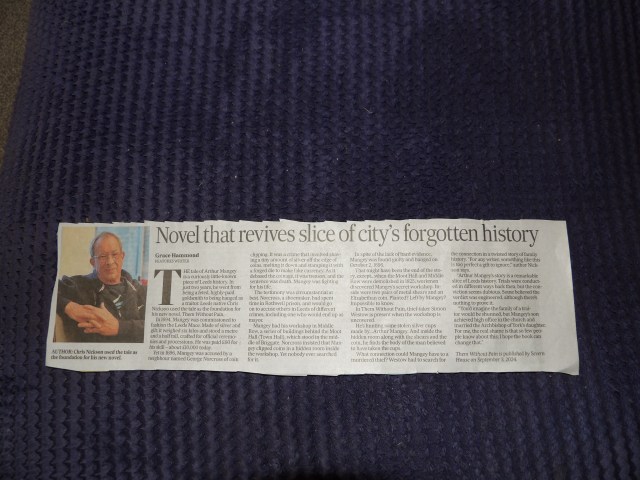
Why don’t we close it out with a competition to win a copy of the latest book of mine, Them Without Pain – unfortunately, postage costs mean it’s UK only.

All you have to do it tell me who had the hidden workshop discovered in the book.  Simply reply with your answer and an email address. I’ll select the winner on Thursday, December 12 and it should hopefully arrive in time for holiday reading.

Bonus points if you can tell me why Leeds is such a great city.

Meanwhile, be well, peaceful and happy. Thank you for reading this and my novels. Even if you don’t win, remember that books make great gifts. And they mean even more if they come from independent bookshops.

It’s That Time…Again

We’re leaping into that season again. Christmas lights switch-ones, Christmas fairs and markets, Thanksgiving in the US, the spectre of Black Friday that lasts for weeks…it all means it’s time to think of presents, and a period when artists of all types tout their works as ideal gifts.

I’m no different standing here like I have a stall in the market and barking out my bargains. But yes, I do feel they’d make good presents for anyone who likes to read, has an interest in history and likes crime novels.

My latest is on sale with Amazon (I know, but…cost of living). At least, it is in the UK. The hardback is £13.61 and the ebook £12.93. That’s a good deal and I still get a full royalty. I’d love to sell more copies of it. I believe it’s a hell of a good story, with great characters, and a foundation in Leeds history (a Leeds goldsmith hanged for treason in 1696) that resonates through the years. You can find it right here – just click the link.

KODAK Digital Still Camera

If you could find your way to buying a copy, even for yourself, I’d be very grateful. And if you don’t have the money, please request it from your local library. They may not have it, but they can order it in.

Above all, though, please enjoy the holidays, be healthy and be well. And thank you for reading.

Happy Holidays

It’s coming, arriving Sunday. I’m not one to celebrate Christmas, although I’m looking forward to reading the new Maggie O’Farrell book I’ve been given – I loved Hamnet – and I know I’ll enjoy the peace and quiet. No venturing into Leeds for the sales or any of that madness. I have what I need, thank you.

I’d like to thank you all for sticking with me and hopefully enjoying the books. Honestly, it means everything. I love it when I hear from people to say they’ve read this or that or a book has made them really feel Leeds. That’s success.

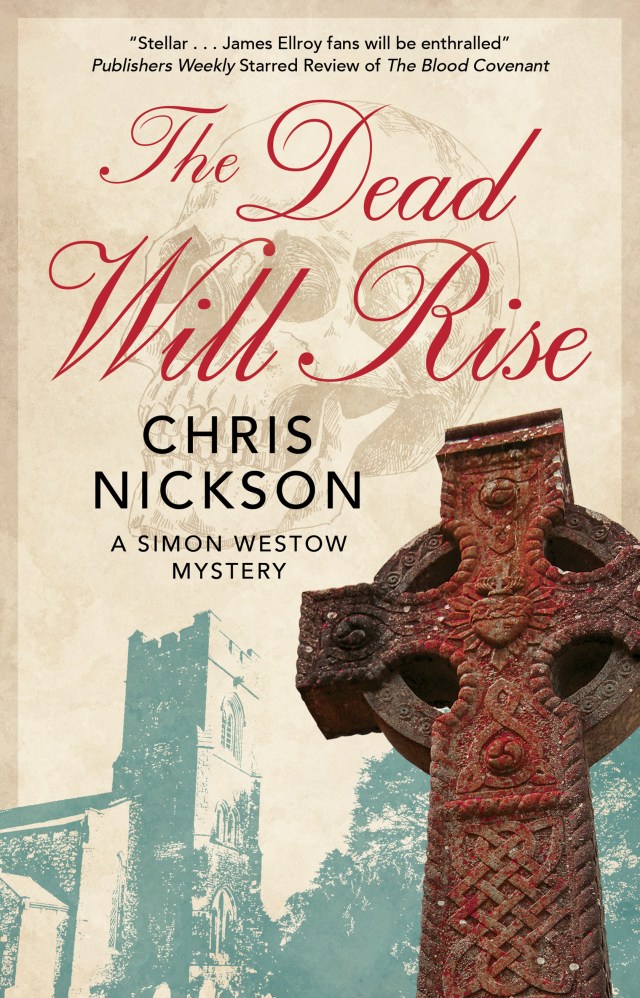
There’s more to come in 2023, a Simon Westow in March and the final Tom Harper in the autumn. Already had the first US review for the Westow, The Dead Will Rise, and it’s a starred review from Publishers Weekly, one of the important trade magazines.

I wish you all happy holidays, whatever you celebrate or don’t celebrate, and a happy and healthy 2023. It has to be better than the last few years, doesn’t it?

And thank you again.

Jingling James – A Christmas Story

It’s not a new Christmas story, a re-run from a few years ago. But this is the season for sentimental repeats, isn’t it? So why not enjoy it with Annabelle? It’s from a time before she knew Tom Harper.

Leeds, December 1887


Annabelle Atkinson didn’t want Christmas to arrive this year. She didn’t feel any of the joy or the goodwill this December. It was barely three months since her husband Harry had died; the earth had barely settled on his grave.

They’d had a few good years before the heart attack took him. Now she had to look after the Victoria public house as well as the two bakeries she’d opened. On her own, sometimes she felt like she was drowning.

On Christmas Eve, once the last customer had gone, she’d bolt the door, close the curtains, and keep the world away until Boxing Day. She’d never been one to wallow in sadness; if you had a problem you took care of it and carried on. But the last few weeks…she’d been slowly sinking and she knew it. She felt like one of the jugglers in the halls, trying to keep all the plates spinning in the air. Too many of them.

‘Come on,’ she said to Willie Hailsham, taking the empty pint pot from his hand. ‘You’ve had enough. Get yourself off home so your wife can remember what you look like.’

The same with Harelip Harmon, Donald the Steel Man, and Jingling James, always moving the coins around in his pocket. They’d stay drinking all night if anyone would keep serving them.

‘Don’t you have homes to go to?’

It was the nightly routine, almost a comedy act after so long. They drained their glasses, said their goodnights and then the bar was empty. She locked the door, drew down the bolts and let out a long sigh. Glasses to wash, woodwork and brass to polish.

Better get started, she thought. The work’s not going to do itself.


Up a little after three to supervise the baking in the kitchen at the other end of the garden. The last day before Christmas, orders to fill, plenty of demand; the shops would be little goldmines today. And the Victoria would be full from the time the factories closed.

Gossiping with the girls as they all worked together, mixing, kneading, baking, the smell of fresh loaves filling the air and making her hungry. Back in the rooms over the pub she made breakfast.

This was what hurt most: the silence. There used to be so much laughter here when Harry was alive. It seemed like there was always something to set them off. Now just being here was oppressive, all the weight of ghosts around her.


Dan the barman and Ellen the servant were already working hard with polish when she went downstairs. Sleeves rolled up and plenty of elbow grease, they’d be done soon enough. Nothing for her to do here. The day from the brewery was due at ten, but Dan could take care of that.

Annabelle put on her cape and picked up her purse. Go into town and have a poke around the shops. Happen an hour or two away would perk her up. But there was no magic in December this year. The pavements were full of people jostling around, weighed down by packages and bags. She felt removed from it all. The displays in the windows of the Grand Pygmalion didn’t make her want to part with her money. She was low, she knew it; a lovely gown or a good hat could usually tempt her. Today, though, there was nothing. No cheer.

Even a stop at the cocoa house for something warm to drink and a slice of cake didn’t help her mood. She trailed back out along North Street, through the Leylands and past Jews’ Park, back along to Sheepscar.

Soon enough the Victoria was busy, and it would stay that way until she kicked them all out. She took her place behind the bar, smiling, flirting the way she always had, and for a few minutes at least she could forget why she hurt inside.

‘Give over,’ she told one man who insisted he’d be a good husband. ‘I’d wear you out in one night, then I’d have to send you home to your missus.’ It brought laughter. As she walked around, collecting glasses, she brushed hands away, giving the culprits a look. It was all part of running a pub. A game; if you played it well, you were successful.  And she had the knack.

Annabelle promised old Jonas free beer for the evening if he played the piano in the corner, and soon half the customers were singing along the favourites from the music hall. It gave her a chance to breathe and Dan could look at the barrels.

By eleven she’d had enough. The pub was still busy, the till was overflowing. But all the noise made her head ache. She wanted peace and quiet for a while. She wanted the place empty.

‘Come on.’ She rang the old school bell she kept under the bar, next to the cudgel for sorting out the unruly. ‘Time for you lot to see your families. They probably don’t believe you exist.’

Slowly, the crowd thinned. Another five minutes and it was down to the usual four still standing and supping. Donald the Steel Man, Willie Hailsham, Jingling James, and Harelip Harmon.

‘That’s enough,’ she told them. Her voice sounded weary. She knew it and she didn’t care. They were regulars, they’d probably been coming in here since they were old enough to peer over the bar. ‘Let’s call it a night, gentlemen, please.’

James slipped off to the privy while she was ushering the others out, wishing them merry Christmas and accepting beery kisses and hugs until they’d gone and she turned the key in the lock.

Then James was there, looking bashfully down at his boots. He was a gentle soul, a widower with grown children. Fifty, perhaps, his hair full white, jammed under his cap.

‘Are you seeing your family tomorrow?’ she asked.

‘Not this year.’ He gave a small shrug. ‘They all have their plans. It’s different now, everyone’s so busy. Are you going to your sister’s?’

‘A quiet day.’ Sometime before the new year she’d slip over to see her sister and the wastrel husband she had. Take some presents for their children. But she wouldn’t pop over to Hunslet and see her brother. He could take a running jump; she’d told him that a few years before. ‘Maybe it’s better that way.’

‘When my Alice died I carried on, same as I always had. The bairns were grown and gone but I still had to work and put a roof over my head.’

‘I know,’ she agreed. The everyday tasks that carried on like a machine. Without thinking, he jingled the coins in his pocket.

‘Then her birthday came around. We never made a fuss when she was alive, well, who could afford to? First we had the little ‘uns, then it didn’t seem to matter so much.’

‘We were the same,’ Annabelle said. ‘Harry’s birthday or mine, there was still the pub to run.’

‘Any road, the year she died, on her birthday it suddenly hit me how alone I was. Not just then, but for the rest of my days. Because no one could replace Alice. I had all them years in front of me.’

‘What did you do?’ she asked.

‘I sat there at the table and made myself remember all the good things. How she looked when she smiled, how she sounded when she laughed. The way she were pretty as a picture when we got wed. I said it all like she were sitting there and I was talking to her.’

‘Did it help?’

‘It did. But I can tell you’re feeling that way. I can see it in your eyes. I just thought it might help.’ He gave her a smile and bussed her cheek.

‘You said you’re not going anywhere tomorrow?’ Annabelle said.

‘That’s right.’

‘Come round for your tea. It won’t be anything special, mind.’

‘Are you sure?’

‘Yes,’ she said with a smile. ‘I’ll probably sick of my own company by then anyway.’

She locked the door behind him, hearing the jingling of his coins as he walked down the street.

Jingling James – An Annabelle Harper Story

It’s a week on stories on the blog. Maybe because The Lean Heart has been out for a fortnight and I want to remind you all to buy it. Or I like revisiting these pieces.

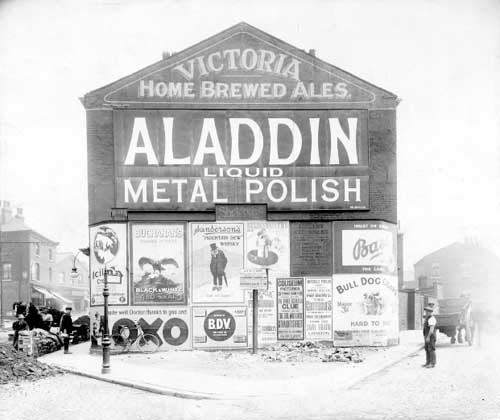
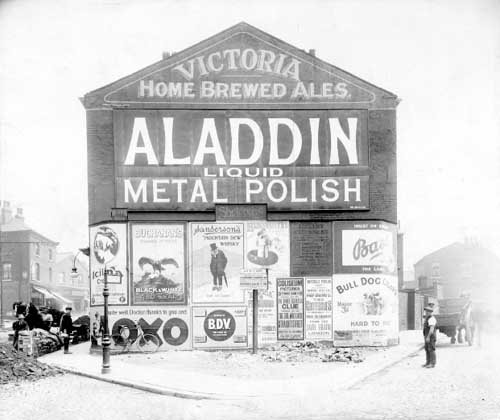
Strictly speaking, this isn’t an Annabelle Harper story. Before she met Tom, Annabelle was married to Harry Atkinson, who owned the Victoria public house on Roundhay road. He died in 1887, leaving her a widow to look after the place alone. This is what happened that Christmas…

victoria-pub

Leeds, December 1887


Annabelle Atkinson didn’t want Christmas to arrive this year. She didn’t feel any of the joy or the goodwill this December. It was barely three months since her husband Harry had died; the earth had barely settled on his grave.

They’d had a few good years before the heart attack took him. Now she had to look after the Victoria public house as well as the two bakeries she’d opened. On her own, sometimes she felt like she was drowning.

On Christmas Eve, once the last customer had gone, she’d bolt the door, close the curtains, and keep the world away until Boxing Day. She’d never been one to wallow in sadness; if you had a problem you took care of it and carried on. But the last few weeks…she’d been slowly sinking and she knew it. She felt like one of those jugglers in the music halls, trying to keep all the plates spinning in the air. Too many of them.

‘Come on,’ she said to Willie Hailsham, taking the empty pint pot from his hand. ‘You’ve had enough. Get yourself off home so your wife can remember what you look like.’

The same with Harelip Harmon, Donald the Steel Man, and Jingling James, always moving the coins around in his pocket. They’d stay drinking all night if anyone would keep serving them.

‘Don’t you have homes to go to?’

It was the nightly routine, almost a comedy act after so long. They drained their glasses, said their goodnights and then the bar was empty. She locked the door, drew down the bolts and let out a long sigh. Glasses to wash, woodwork and brass to polish.

Better get started, she thought. The work’s not going to do itself.


Up a little after three to supervise the baking in the kitchen at the other end of the garden. The last day before Christmas, orders to fill, plenty of demand; the two bakeries she owned would be little goldmines today. And the Victoria would be full from the moment the factories closed.

Gossiping with the girls as they all worked together, mixing, kneading, baking, the smell of fresh loaves filling the air and making her hungry. Back in the rooms over the pub she made breakfast.

This was what hurt most: the silence. There used to be so much laughter when Harry was alive. It seemed like there was always something to set them off. Now just being here was oppressive, all the weight of ghosts around her.


Dan the barman and Ellen the servant were already working hard with polish when she went downstairs. Sleeves rolled up and plenty of elbow grease, they’d be done soon enough. Nothing for her to do. The dray from the brewery was due at ten, but Dan could take care of that.

Annabelle put on her cape and picked up her purse. Go into town and have a poke around the shops. Happen an hour or two away would perk her up. But there was no magic in December this year. The pavements were full of people jostling around, weighed down by packages and bags. She felt removed from it all. The displays in the windows of the Grand Pygmalion didn’t make her want to part with her money. She was low, she knew it; a lovely gown or a good hat could usually tempt her. Today, though, there was nothing. No cheer.

Even a stop at the cocoa house for something warm to drink and a slice of cake didn’t help her mood. She trailed back out along North Street, through the Leylands and past Jews’ Park, back along to Sheepscar.

Soon enough the Victoria was busy. She took her place behind the bar, smiling, flirting the way she always had, and for a few minutes at least she could forget why she hurt inside.

‘Give over,’ she told one man who insisted he’d make a good husband. ‘I’d wear you out in one night, then I’d have to send you home to your missus.’ It brought laughter. As she walked around, collecting glasses, she brushed hands away, giving the culprits a look. It was all part of running a pub. A game; if you played it well, you were successful.  And she had the knack.

Annabelle promised old Jonas free beer for the evening if he played the piano in the corner, and soon half the customers were singing along the favourites from the stage. It gave her a chance to breathe and Dan could look at the barrels.

By eleven she’d had enough. The pub was still busy, the till was overflowing. But all the noise made her head ache. She wanted peace and quiet for a while. She wanted the place empty.

‘Come on.’ She rang the old school bell she kept under the bar, next to the cudgel for sorting out the unruly. ‘Time for you lot to see your families. They probably don’t believe you exist.’

Slowly, the crowd thinned. Another five minutes and it was down to the usual four still standing and supping. Donald the Steel Man, Willie Hailsham, Jingling James, and Harelip Harmon.

‘That’s enough,’ she told them. Her voice sounded weary. She knew it and she didn’t care. They were regulars, they’d probably been coming in here since they were old enough to peer over the bar. ‘Let’s call it a night, gentlemen, please.’

James slipped off to the privy while she was ushering the others out, wishing them merry Christmas and accepting beery kisses and hugs until they’d gone and she turned the key in the lock.

Then James was there, looking bashfully down at his boots. He was a gentle soul, a widower with grown children. Fifty, perhaps, his hair full white, jammed under his cap.

‘Are you seeing your family tomorrow?’ she asked.

‘Not this year.’ He gave a small shrug. ‘They all have their plans. It’s different now, everyone’s so busy. Are you going to your sister’s?’

‘A quiet day.’ Sometime before the new year she’d slip over to see her sister and the wastrel husband she had. Take some presents for their children. But she wouldn’t pop over to Hunslet and see her brother. He could take a running jump; she’d told him that a few years before. ‘Maybe it’s better that way.’

‘When my Alice died I carried on, same as I always had. The bairns were grown and gone but I still had to work and put a roof over my head.’

‘I know,’ she agreed. The everyday tasks that carried on like a machine. Without thinking, he jingled the coins in his pocket.

‘Then her birthday came around. We never made a fuss when she was alive, well, who could afford to? First we had the little ‘uns, then it didn’t seem to matter so much.’

‘We were the same,’ Annabelle said. ‘Harry’s birthday or mine, there was still the pub to run.’

‘Any road, the year she died, on her birthday it suddenly hit me how alone I was. Not just then, but for the rest of my days. Because no one could replace Alice. I had all them years in front of me.’

‘What did you do?’ she asked.

‘I sat there at the table and made myself remember all the good things. How she looked when she smiled, how she sounded when she laughed. The way she were pretty as a picture when we got wed. I said it all like she were sitting there and I was talking to her.’

‘Did it help?’

‘It did. But I can tell you’re feeling that way. I can see it in your eyes. I just thought it might help.’ He gave her a smile and bussed her cheek.

‘You said you’re not going anywhere tomorrow?’ Annabelle said.

‘That’s right.’

‘Come round for your tea. It won’t be anything special, mind.’

‘Are you sure?’

‘Yes,’ she said with a smile. ‘I’ll probably be sick of my own company by then anyway.’

She locked the door behind him, hearing the jingling of his coins as he walked down the street.

A Christmas Tale

I’m not really one for Christmas in my own life. I never have been. But every couple of years I still seem to end up writing a Leeds Christmas story. Don’t ask; I can’t explain it, either.

This time, though, I wanted to do something different. I’m reading Steve Roud’s wonderful Folk Song in England, and the section on Town Waits – the official musicians employed by many towns, who also doubled as the night watch – struck a chord.

Leeds had its Waits back in the 16th century; they’re documented as far back as 1530, and their history might stretch back even further. As well as their watch duties, they played for official occasions and balls, and often undertook private engagements. In the 17th century, certainly, Leeds Waits were popular, as played as fair away as Carlisle and Newcastle. In other words, they must have been good.

And why Elizabethan Leeds? Why not? After all, I said I wanted to do something different.

We do have a revived Town Waits, who perform occasionally. You should see them if you can.

And on a final note before the story, don’t forget that Free From All Danger, the first Richard Nottingham book in over four years, came out recently. It makes a fine gift for family and friends.

Now, sit down with a mince pie, enjoy, and be of good cheer.

-early-music-folk-style

Leeds, 1559

The crisp weeks before Christmas were always fruitful. The musicians of the Town Waits would perform at the balls and parties around Leeds. Dances and tunes, songs and carols, then the last two dances to close the evening before a walk home in the cold darkness with coins jingling in their purses.

Daniel Wakeman tugged his cloak tighter and tucked the fiddle against his body. It was well wrapped, but the night was frosty and he knew the instrument well; if it grew too cold, it would complain by refusing to say in tune tomorrow. It had belonged to his father, a member of the Waits before him, a beautiful piece of work, but temperamental as a young girl.

Tonight had been good. Out in Potternewtown, a crowd that appreciated everything they played, and a generous host. Good food sent from the table and a jug of ale refilled as often as they needed. Then three shiny pennies each to carry home.

‘I’ll tell you what,’ he said to the others, ‘I’ll play there whenever they ask.’

Sam Hardy and Tom Carter laughed. Old John Whittaker said nothing, the same as ever, but he’d always been the quiet sort. They walked on, following the road into town. The last few nights had seen some killing frosts, and the earth was hard and rutted under their shoes. Clear skies and a bight enough moon to see his breath bloom in the air.

‘Did you hear about Pawson?’ Tom asked. ‘Someone’s been saying his wife’s made him a cuckold.’

It was all they needed to set tongues going, the speculation of who and when. Leeds was small, a place where everyone knew all the faces, whether high or low. New folk arrived every week, drawn by the way the wool trade was growing, but most were like Daniel, born in the town and lived there all their lives. He knew Pawson the clothier, he saw him almost every day. His wife span wool for the man. It brought in extra money they always needed. Being in the waits meant the silver badge and a good livery, the blue as dark as the evening sky and the yellow like a June sun, but the pay was small. Six nights a week walking around town, playing soft music to soothe the sleepers, keeping a watch for fire or burglars, then something louder to wake people in the morning. But it was a life full of music, and that was enough for him.

Music was joy. He felt free when he was playing. Even the recorder he used as he walked the street on the night watch. But the fiddle was what he loved. He felt he had a special bond with it. Not like some he heard, scraping to bow over the strings to give a sound that made him wince. His father had taught him well, God rest his soul. He caressed the notes, he made them dance. He couldn’t read a note of music, but he only needed to hear a melody once and he could play it.

But they were all good, even grumbling John, his back bent now under the weight of his bass viol. Sam with his lute, and Tom on the other fiddle. The best in the North, some people said, and who was he to deny it? They played all over, not just the parishes around Leeds, but for milady in Skipton back in the summer and as far away as Newcastle once, and Carlisle. They had a reputation, and he was proud of it.

‘Give us a song, Sam,’ Daniel said. Hardy had the best voice of them all, a sweet tenor that the ladies loved. A moment later, he began:

‘The hunt is up, the hunt is up,’ and they made it into a round, voices echoing loud against the silence of the night. But out here there were none to disturb.

By the time they neared Mabgate, Daniel could feel the cold eating through to his bones. A fancy hose and doublet might look fine enough, but they did little to keep out the bitter winter. Even a thick woollen cloak wasn’t much help. But he was close enough to home; soon he’d be warm again.

It wasn’t the best part of Leeds, not one of the fine houses of Briggate or Kirkgate with their painted timbers and brilliant white limewash, but it suited his pocket. The children were grown and gone to lives of their own; he and Maggie didn’t need much. A room downstairs for living and cooking, another upstairs which held the rough bed he’d built for them and two small chests of clothes. Plenty of room behind to grow most of their food and keep the pig and a pair of chickens. It was more than many possessed. And he didn’t mind the drabs who touted for trade on the road. They were like everyone else, simply trying to scratch a living.

What he did miss, though, was a cat. Theirs had died six months before. Eighteen years old, and a fine mouser in his day. He’d been good company while Daniel practiced on the fiddle in the bedroom and Maggie span downstairs. We all have our time, he thought. That’s how God wills it, and it was a good, long life for a cat.

With hushed goodnights he said his farewells to the other Waits and started along the street, lost in his thoughts.

Then the sound caught his ear. The tiniest mew, so faint he couldn’t even be sure it was real. It came from across the road. He stopped to listen, hoping to hear it again. And just as he did, right in front of him, a slate toppled from the roof, smashing and splintering as it hit the ground exactly where he’d have been walking.

For a moment, Daniel couldn’t catch his breath. God save us all, he thought, and the Lord had spared him for some reason. He felt himself beginning to shake and held the fiddle close. Then he heard the sound again, a little clearer. Over there, in the bushes by Widow Elizabeth’s house.

It was caught in a tangle of briers, a small, cold creature that tried to shy away from his touch. But he was gentle and patient, easing away the thorns until he could lift the kitten and feel its heart pounding hard against his palm.

No more than four weeks old, so thin he could wrap his fingers around its body. He stroked its fur, hearing the smallest start of a purr. Where had it come from? Not from any of the cats around here, he knew that. And it was still to young to be away from its mother.

But it had saved him. It was a gift.

‘Come on,’ Daniel said as he rubbed it head, ‘let’s get you inside. You need something to drink.’

The fire was banked for the night, but still far warmer than the darkness outside. An old rag for a bed. A dish of milk. He watched as the kitten drank, tentatively at first, then greedily.

Daniel put the fiddle away in the cupboard, resting it carefully on the shelf. It was his livelihood and his pleasure; he always kept it secure. He poured a mug of small beer, sitting on the bench to watch the cat. It was standing now, wobbling a little as it explored a little. A few steps around, then back, nose in the dish for more milk before it mewed again, then settled on the cloth.

‘I heard you come in,’ Maggie said from the top of the steps.

‘We have a new cat,’ Daniel said. ‘Come and meet it.’

‘A new cat?’ she asked in surprise as she came down. ‘What made you do that? It barely looks alive.’

‘I had to. This one just kept your husband alive. If it hadn’t cried out, I’d have been brained by a falling slate from the Thompson’s roof. I think it deserves a home after that, don’t you?’

She squatted, staring at the kitten in the faint glow from the fire, then reaching out and stroking it.

‘What are we going to call it?’ she asked.

‘Yule,’ Daniel replied. It seemed right.


A Christmas Tale

For someone who doesn’t care about Christmas, I seem to end up writing a Christmas story every year. Most of them have been little present for the wonderful Leeds Book Club, and you can find them here if you scroll down the page. This time, though, I thought I’d simply put it up here. And, in an even more unusual twist, for once it’s very contemporary. I hope you like it, and happy holidays of whatever kind you celebrate (or none).


For a moment she didn’t even realise she was doing it. Then Kate caught herself, singing along with Joni Mitchell’s “River” as her car idled at the traffic lights. At least it was a depressing Christmas song. This was always the worst time of year. Both her parents had died in December, years apart, and it always brought back memories, some good, most of them bad.

Ahead of her, the decorations glowed along the Headrow. Four o’clock and it was already full dark. She felt as if she’d barely seen daylight today. In the Magistrates’ Court since nine, waiting, then just five minutes of evidence before she was off the stand. At least she could duck off home early for once.

She glanced out of the passenger window. The big tree in front of the Town Hall was lit up, trying to give some spirit to the city. Kate was about to turn away when something caught her eye. A man looking around cautiously before ducking close to the tree and putting down a pack.

A horn beeped and her eyes slid to the rearview mirror. The lights had changed and traffic was moving. Kate put on her indicator, crept round the corner to Calverley Street, then on to the cobbled forecourt. She could still see the man at the bottom of the steps, gazing up to the top of the tree. Kate turned off the engine and suddenly Joni was silent. She took the radio from her briefcase.

‘This is DI Thornton.’

‘Go ahead, ma’am.’

‘Got something at the Town Hall. A man’s just left something under the big tree outside.’

For a few seconds there was nothing from the other end. She could feel her heart beating fast.

‘Sent out the alert, ma’am.’ The voice was tense now. ‘The super wants to know if you’re you sure you saw it?’

Typical Silver Command question. Don’t believe the bloody officer on the scene.

‘I’m certain. I can make it out. I’m parked close. I can still see the man.’

‘Description, ma’am?’

She stared.

‘White, maybe five feet nine. Wearing a parka. It might be green, hard to tell. Looks a little stocky. Dark bobble cap. Wait, he’s starting to walk away.’

‘We’re going to talk to the CCTV centre. Silver Command says they can track him. He wants you to move away from the area.’

Nobody was saying what could be in that package. These days it was safer to assume the worst.

‘There are people all around. What about them?’

‘Units are on the way. They should be there very soon.’

She could make out the distant wail of the sirens. Five or six of them, maybe more.  Another thirty seconds and they’d probably be here; certainly no more than a minute.

‘I’m going to follow him,’ Kate said. She clicked off the radio, dropped it on the seat and locked the car behind her. Cameras were fine, but nothing beat someone on the ground. Someone there and ready to act. Her heels clicked briskly as she walked. In her pocket the phone was buzzing; she switched it to silent.

He was crossing the road and starting to disappear into the throng on East Parade. Kate hurried, ducking through the traffic and ignoring the blaring horns. Too many people around for him to spot her. He hadn’t even looked back, he wasn’t hurrying.

She kept ten yards away, close enough to keep him in easy sight and rush him if it was needed. A glance over her shoulder. Flashing lights all around the Town Hall, traffic stopped on the Headrow. Good, everything was in hand there.

He left the pavement, going over then along South Parade. For a moment she’d been able to see his face as he turned his head. About fifty, jowly, stubble on his cheeks. Along Park Row, past Becketts Bank, the smokers gathered outside the bar, then on to Bond Street.

Shit.

Kate took out her phone. Five missed calls. She swiped the screen as she walked and pressed the number that had been trying to reach her.

‘What the hell-’

‘Another hundred yards and he’ll be on Commercial Street, sir. How many people do we have close?’

‘Two on Briggate heading your way and another coming up Albion Street. Why-’

Too far away, Kate decided. He needed to be stopped now.

‘I’m moving in on him, sir.’ She ended the call and put the phone back in her pocket.

Deep breath time. Kate could hear the busker on the corner ahead, the old man with the good voice doing his Johnny Cash songs. She walked faster, trying not to run; she didn’t want to panic him. Her heart was pounding so hard she thought it would break her ribs. Kate checked: the handcuffs were in her pocket. Five yards away now. Three. Two.

He went down easily. Before he could even react she had his wrists cuffed behind his back.

‘Police’ she shouted as people stopped to watch. ‘Move away.’

Then she heard the thud of feet as three uniforms came running.

bond-street

No weapon. There was nothing at all, besides his wallet, a couple of pounds in change, and a bloody nose where his face had hit the pavement. He was sitting on the ground, dazed, wrists cuffed behind him.

Kate had laddered her tights, she saw as she squatted to talk to the man. Brand new pair that morning, too.

‘Right, Kenneth.’ She had his wallet open, looking at the driving licence. Kenneth Mitchell. Fifty one. A Belle Isle address. ‘What did you leave under the tree outside the Town Hall?’

‘Eh?’ He squinted at her.

‘You put a package there. I saw you. That’s why we stopped you.’

His face cleared and he smiled.

‘A present,’ he said. ‘For the kiddies.’

‘What?’ She stood again, hands on hips and looked down at him.

‘Me neighbour, like. We were talking and he said wouldn’t it be a good idea if people left presents for the kiddies under that tree? So I bought summat, wrapped it, and came into town. I didn’t mean any harm.’

Christ. She walked few yards away and took out her phone.

‘Detective Inspector…’ Silver Command was purring note, delicious triumph in his voice.

‘He claims he was leaving a present for children, sir.’ Maybe the ground would open up and swallow her so she wouldn’t have to continue this conversation. Kate tapped her foot. Typical luck. No bloody sinkhole.

‘He’s telling the truth. It’s a Fisher Price something or other. You can apologise and let him go. You might take the time to thank him, too, Detective Inspector.’

‘Yes sir.’ Kate swallowed. ‘He had a nosebleed. I’ll have one of the uniforms get a paramedic.’

‘Make sure you do.’ A pause. ‘But good work, eh? These days…’

He didn’t need to finish the sentence. You couldn’t afford to look for the good in people now, only the bad.

‘Thank you, sir.’ Kate ended the call. At least he’d let her off lightly. But it would be all over the station tomorrow.

She turned to look at Mitchell. The cuffs were off now and one of the uniforms was helping him to his feet.

‘I’m sorry, sir. I hope you understand, though, with the ways things are.’ She smiled at him. ‘It was a lovely thought.’

He nodded and she started to walk away.

‘Merry Christmas,’ Mitchell said.

Kate smiled again. ‘Merry Christmas, sir.’


I’ll finish with one of those seasonal reminders that books make wonderful gifts any time of the year, and both The Iron Water and Modern Crimes are still warm-ish off the presses. On Copper Street, the firth Tom Harper novel, comes out in February, and you can pre-order it here.

Thank You

2014 has been a very good year. My first full 12 months back in Leeds, so that it truly feels like home now. A book and the start of a new series with Gods of Gold, which has been receiving some lovely reviews and reader comments. I’m grateful.

Above all, my thanks go to you, the people who read what I write, whether in books or on the blog or in the serials I’ve begun on this site. If you write, you want people to read it, and you have. It means a lot, and when people email to tell me how much they like a book, or even with an historical quibble, I love it. Yes, of course I’d like to sell more books (what author wouldn’t?), but times are tight, and public libraries are free. Please, remember to support them.

So thanks to all of you. And to those you don’t see. I’m grateful to all my publishers, the wonderful staff at Severn House, Mystery Press, and Creative Content, all of whom believe in what I do enough to put it out there. Beyond them, friends and family who put up with me constantly at the computer, and whose support (and sometimes criticism) is vital.

What does 2015 hold? More books. January see the publication of Dark Briggate Blues, a 1950s noir set set in Leeds in 1954 and featuring enquiry agent and jazz lover Dan Markham. In April there’s Twp Bronze Pennies, the second Tom Harper Victorian novel (and yes, Annabelle has a larger role – she assures me that’s how it really was). July brings something different. I’m working with local publishers Armley Press on Leeds, The Biography, which is a history of Leeds in short stories (several of which have already been on my blog) running from 363 CE up to 1963. All of them based in things that really happened, or folk tales, and sometimes real people. I’m trying to put a human face on the history of my hometown.

Of course, I hope you’ll read them. And don’t forget the new serial, The Empress on the Corner. I hope you’ll enjoy them. But above all, thank you for being with me this far. Have a wonderful Christmas and a peaceful, prosperous and healthy 2015.