I’m not really one for Christmas in my own life. I never have been. But every couple of years I still seem to end up writing a Leeds Christmas story. Don’t ask; I can’t explain it, either.
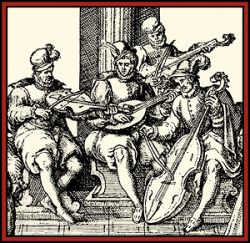
This time, though, I wanted to do something different. I’m reading Steve Roud’s wonderful Folk Song in England, and the section on Town Waits – the official musicians employed by many towns, who also doubled as the night watch – struck a chord.
Leeds had its Waits back in the 16th century; they’re documented as far back as 1530, and their history might stretch back even further. As well as their watch duties, they played for official occasions and balls, and often undertook private engagements. In the 17th century, certainly, Leeds Waits were popular, as played as fair away as Carlisle and Newcastle. In other words, they must have been good.
And why Elizabethan Leeds? Why not? After all, I said I wanted to do something different.
We do have a revived Town Waits, who perform occasionally. You should see them if you can.
And on a final note before the story, don’t forget that Free From All Danger, the first Richard Nottingham book in over four years, came out recently. It makes a fine gift for family and friends.
Now, sit down with a mince pie, enjoy, and be of good cheer.
Leeds, 1559
The crisp weeks before Christmas were always fruitful. The musicians of the Town Waits would perform at the balls and parties around Leeds. Dances and tunes, songs and carols, then the last two dances to close the evening before a walk home in the cold darkness with coins jingling in their purses.
Daniel Wakeman tugged his cloak tighter and tucked the fiddle against his body. It was well wrapped, but the night was frosty and he knew the instrument well; if it grew too cold, it would complain by refusing to say in tune tomorrow. It had belonged to his father, a member of the Waits before him, a beautiful piece of work, but temperamental as a young girl.
Tonight had been good. Out in Potternewtown, a crowd that appreciated everything they played, and a generous host. Good food sent from the table and a jug of ale refilled as often as they needed. Then three shiny pennies each to carry home.
‘I’ll tell you what,’ he said to the others, ‘I’ll play there whenever they ask.’
Sam Hardy and Tom Carter laughed. Old John Whittaker said nothing, the same as ever, but he’d always been the quiet sort. They walked on, following the road into town. The last few nights had seen some killing frosts, and the earth was hard and rutted under their shoes. Clear skies and a bight enough moon to see his breath bloom in the air.
‘Did you hear about Pawson?’ Tom asked. ‘Someone’s been saying his wife’s made him a cuckold.’
It was all they needed to set tongues going, the speculation of who and when. Leeds was small, a place where everyone knew all the faces, whether high or low. New folk arrived every week, drawn by the way the wool trade was growing, but most were like Daniel, born in the town and lived there all their lives. He knew Pawson the clothier, he saw him almost every day. His wife span wool for the man. It brought in extra money they always needed. Being in the waits meant the silver badge and a good livery, the blue as dark as the evening sky and the yellow like a June sun, but the pay was small. Six nights a week walking around town, playing soft music to soothe the sleepers, keeping a watch for fire or burglars, then something louder to wake people in the morning. But it was a life full of music, and that was enough for him.
Music was joy. He felt free when he was playing. Even the recorder he used as he walked the street on the night watch. But the fiddle was what he loved. He felt he had a special bond with it. Not like some he heard, scraping to bow over the strings to give a sound that made him wince. His father had taught him well, God rest his soul. He caressed the notes, he made them dance. He couldn’t read a note of music, but he only needed to hear a melody once and he could play it.
But they were all good, even grumbling John, his back bent now under the weight of his bass viol. Sam with his lute, and Tom on the other fiddle. The best in the North, some people said, and who was he to deny it? They played all over, not just the parishes around Leeds, but for milady in Skipton back in the summer and as far away as Newcastle once, and Carlisle. They had a reputation, and he was proud of it.
‘Give us a song, Sam,’ Daniel said. Hardy had the best voice of them all, a sweet tenor that the ladies loved. A moment later, he began:
‘The hunt is up, the hunt is up,’ and they made it into a round, voices echoing loud against the silence of the night. But out here there were none to disturb.
By the time they neared Mabgate, Daniel could feel the cold eating through to his bones. A fancy hose and doublet might look fine enough, but they did little to keep out the bitter winter. Even a thick woollen cloak wasn’t much help. But he was close enough to home; soon he’d be warm again.
It wasn’t the best part of Leeds, not one of the fine houses of Briggate or Kirkgate with their painted timbers and brilliant white limewash, but it suited his pocket. The children were grown and gone to lives of their own; he and Maggie didn’t need much. A room downstairs for living and cooking, another upstairs which held the rough bed he’d built for them and two small chests of clothes. Plenty of room behind to grow most of their food and keep the pig and a pair of chickens. It was more than many possessed. And he didn’t mind the drabs who touted for trade on the road. They were like everyone else, simply trying to scratch a living.
What he did miss, though, was a cat. Theirs had died six months before. Eighteen years old, and a fine mouser in his day. He’d been good company while Daniel practiced on the fiddle in the bedroom and Maggie span downstairs. We all have our time, he thought. That’s how God wills it, and it was a good, long life for a cat.
With hushed goodnights he said his farewells to the other Waits and started along the street, lost in his thoughts.
Then the sound caught his ear. The tiniest mew, so faint he couldn’t even be sure it was real. It came from across the road. He stopped to listen, hoping to hear it again. And just as he did, right in front of him, a slate toppled from the roof, smashing and splintering as it hit the ground exactly where he’d have been walking.
For a moment, Daniel couldn’t catch his breath. God save us all, he thought, and the Lord had spared him for some reason. He felt himself beginning to shake and held the fiddle close. Then he heard the sound again, a little clearer. Over there, in the bushes by Widow Elizabeth’s house.
It was caught in a tangle of briers, a small, cold creature that tried to shy away from his touch. But he was gentle and patient, easing away the thorns until he could lift the kitten and feel its heart pounding hard against his palm.
No more than four weeks old, so thin he could wrap his fingers around its body. He stroked its fur, hearing the smallest start of a purr. Where had it come from? Not from any of the cats around here, he knew that. And it was still to young to be away from its mother.
But it had saved him. It was a gift.
‘Come on,’ Daniel said as he rubbed it head, ‘let’s get you inside. You need something to drink.’
The fire was banked for the night, but still far warmer than the darkness outside. An old rag for a bed. A dish of milk. He watched as the kitten drank, tentatively at first, then greedily.
Daniel put the fiddle away in the cupboard, resting it carefully on the shelf. It was his livelihood and his pleasure; he always kept it secure. He poured a mug of small beer, sitting on the bench to watch the cat. It was standing now, wobbling a little as it explored a little. A few steps around, then back, nose in the dish for more milk before it mewed again, then settled on the cloth.
‘I heard you come in,’ Maggie said from the top of the steps.
‘We have a new cat,’ Daniel said. ‘Come and meet it.’
‘A new cat?’ she asked in surprise as she came down. ‘What made you do that? It barely looks alive.’
‘I had to. This one just kept your husband alive. If it hadn’t cried out, I’d have been brained by a falling slate from the Thompson’s roof. I think it deserves a home after that, don’t you?’
She squatted, staring at the kitten in the faint glow from the fire, then reaching out and stroking it.
‘What are we going to call it?’ she asked.
‘Yule,’ Daniel replied. It seemed right.