1890 – An Annabelle Harper Christmas Story

It’s the next-to-last of the Christmas stories. I hope you’re enjoying them. I realise that charity has been a theme in them, along with compassion. No regrets about that. It’s right for the season. Meanwhile, take time over your tea and coffee and mince piece while you look at this. Thank you.

‘Excuse me, luv, do you have one like that in a plum colour?’ Annabelle Harper pointed at the hat on display behind the counter. It was soft blue wool, with a small crown and a wide brim, decorated with a long white feather and trailing lace meant to tie under the chin.
The shop assistant smiled.

‘I’m afraid not, madam. We only have what’s on display. ‘I’m very sorry.’

‘Doesn’t matter.’ She put down her purchases, stockings, bloomers, garters, and a silk blouse. ‘I’ll just take those, please.’

Be polite to everyone, that’s what her mother had said when she was younger, and it was a rule Annabelle had lived by. It cost nothing, and a little honey always ensured good service.

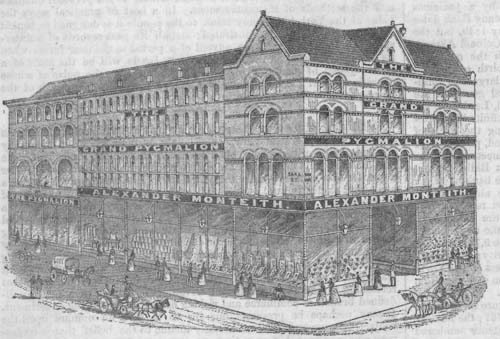
The Grand Pygmalion was packed with people shopping. Women on their own, with a servant along to carry purchases, wives with long-suffering husbands who looked as if they’d rather be off enjoying a drink somewhere.

Four floors, two hundred people to help the customers, wonderful displays of goods. It just seemed to grow busier and busier each year. But it was the only real department store in Leeds. She waited as the girl totted up the totals.

‘I have an account here, luv.’

She saw the quick flicker of doubt and gave a kind smile. Couldn’t blame the lass. She didn’t sound like the type of person with the money to shop here. Then the gaze took in her clothes and jewellery and the girl nodded.

‘Of course, madam. What name is it?’

‘Mrs. Annabelle Harper. The address is the Victoria public house on Roundhay Road.’

Everything neatly packed and tied into a box, she walked out on to Boar Lane. A fortnight until Christmas and it was already cold. Bitter. A wind whistled along the street from the west. All around her she could hear people with their wet, bronchitic coughs. It’d probably snow soon enough, she thought.

Omnibuses, trams, carts and barrows moved along the road, a constant clang of noise. On the corner with Briggate, by the Ball-Dyson clock, a Salvation Army brass band was playing, their trumpets and tubas competing against the vehicles and the street sellers crying their goods.

She pulled the coat closer around her body as she walked, clutching the reticule tight in her hand. Plenty of crime this time of year. Married to a detective inspector, she couldn’t help but hear about it. And she had enough cash with her for something special; she didn’t want to lose that.

Strolling up towards the Headrow, all the lights in the shops were already glowing. Only three and it was almost dark. Roll on spring, she thought, then stopped herself. Never wish the days away. Who used to say that? She racked her brain. Come on, Annabelle told herself, you’re not old enough to forget things yet.

Then it came. Old Ellie Emsworth at Bank Mill. Annabelle was ten, she’d been at the mill a year, working as a doffer, still too young to be on the machines. Six days a week, twelve hours a day for not even two bob a week when all she wanted to be was out there, away from it all. Ellie had worked the loom all her life. She was probably no more than thirty-five but she looked old, worn-down.

‘I know you don’t like it here,’ Ellie had said to her one day as they ate their dinner. Bread and dripping for Annabelle, all her family could afford. ‘But don’t go wishing the days away. They pass quick enough, lass. Soon you’ll wish you had them back.’

                She smiled. For a moment she could almost hear Ellie’s voice, rough as lye soap.

                People pressed around her as she walked, some of them smiling with all the joy of the season, others glum and po-faced. Christmas, she thought. They’d never had the money to make a proper do of it when she was little. As soon as she had a little, after she’d married the landlord of the Victoria, she’d given presents and spent all she could afford.

                Even the Christmas after he died, she’d been determined to put on a brave face. A big meal for friends, presents that saw their eyes shine. It made her happy.

                And now she had Tom. She had the wedding ring on her finger and she felt happier than she had in a long, long time. This was going to be their first married Christmas and she was going to buy him something he’d never forget. A new suit. A beautiful new suit.

                Along New Briggate, across from the Grand Theatre, the buildings were bunched together. Business on top of business as the floor climbed to the sky. Photographers, an insurance agent, gentleman’s haberdasher. You name it, it was all there if you looked hard enough.

                The girl stood in the doorway of number fifteen, a broken willow basket at her feet. At first Annabelle’s glance passed over her. Then she looked again. For a moment she was taken back twenty years. She was ten again and staring at Mary Loughlin. They’d gone to school together, started at the mill together, laughed and played whenever they had chance. The same flyaway red hair that the girl had tried to capture in a sober bun. The same pale blue eyes and freckles over the cheeks. The same shape of her face.

                ‘Wreath, ma’am?’ The girl held it out, a poor thing of ivy and holly wrapped around a think branch of pine. ‘It’s only a shilling,’ she said hopefully.

                Her wrist was thin, the bones sticking out, and her fingers were bare, the nails bitten down to the quick, flesh bright pink from the cold. An old threadbare coat and clogs that looked to be too small for her feet.

                ‘What’s your name, luv?’

                The girl blushed.

                ‘Please ma’am, it’s Annabelle.’

                For a second she couldn’t breathe, putting a hand to her neck. Then, very gently she shook her head.

                ‘Your mam’s called Mary, isn’t she?’

                The girl’s eyes widened. She stared, frightened, tongue-tied, biting her lower lip. Finally she managed a nod.

                ‘She was, ma’am, yes.’

                ‘Was? Is she dead?’

                ‘Yes, ma’am. Three year back.’

                Annabelle lowered her head and wiped at her face with the back of her gloves.

                ‘I’m sorry, luv,’ she said after a while. ‘Now, how much are these wreaths?’

                ‘A shilling, ma’am.’

                ‘And how many do you have?’

                ‘Ten.’

                She scrambled in her purse and brought out two guineas.

                ‘That looks like the right change to me.’ She placed them in the girl’s hand. Before she let go of the money, she asked, ‘What was your mother’s surname before she wed, Annabelle?’

                ‘Loughlin, ma’am.’

                ‘I tell you what. There’s that cocoa house just across from the theatre, Annabelle Loughlin. I’d be honoured if you’d let me buy you a cup. You look perished.’

                The girl’s fingers closed around the money. She look mystified, scared, as if she couldn’t believe this was happening.

                ‘Did your mam ever tell you why she called you Annabelle?’

                ‘Yes ma’am.’ For the first time, the girl smiled. ‘She said it was for someone she used to know when she was little.’

                Mrs. Harper leaned forward. Very quietly she said,

                ‘There’s something I’d better tell you. I’m the Annabelle you’re named for.’

She sipped a mug of cocoa as she watched the girl eat. A bowl of stew with a slice of bread to sop up all the gravy, then two pieces of cake. But what she seemed to love most was the warmth of the place. Young Annabelle kept stopping and looking around her, gazing at the people and what they had on their plates.

                She was twelve, she said. Two older brothers, both of them working, and two younger, one eight and still at school, the other almost ten and at Bank Mill.

                ‘What does he do there?’

                ‘He’s a doffer,’ the girl said and Annabelle smiled.

                ‘That’s what your mam and I did when we started. Finally I couldn’t stand it anymore and went into service.’

                ‘But you’re rich,’ the girl said, then reddened and covered her mouth with her hand. ‘I’m sorry.’

                ‘I’ve got a bob or two,’ she agreed. ‘I was lucky, that’s all.’ The girl finished her food. ‘Do you want more?’

                ‘No ma’am. Thank you.’

                ‘And don’t be calling me ma’am,’ she chided gently. ‘It makes me feel old. I’m Annabelle, the same as you. Mrs. Harper if you want to be formal.’

                ‘Yes, Mrs. Harper.’

                ‘What does you da do, luv?’

                ‘He’s dead.’ There was a sudden bleakness in her voice. ‘Two years before my mam. So me and Tommy, he’s the oldest, we look after everything.’

                Annabelle waved for the bill and counted out the money to pay as the girl watched her.

                ‘What work do you do? When you’re not selling wreaths, I mean.’

                ‘This and that ma’a – Mrs. Harper.’

                ‘And nothing that pays much?’ The girl shook her head. ‘You still live on the Bank?’

                ‘On Bread Street.’

                ‘Can you find your way down to Sheepscar?’

                ‘Course I can.’ For a second the bright, cheeky spark she remembered in Mary flew.

                ‘Good, because there’s a job down there if you want one. I own a pub and a bakery down there, and someone left me in the lurch.’ The girl just stared at her. ‘It’s not charity, you’ll have to work hard and if you’re skive you’ll be out on your ear. But I give a fair day’s pay for a fair days’ graft. What do you say?’

                For a second the girl was too stunned to answer. Then the words seemed to tumble from her mouth.

                ‘Yes. Thanks you ma’am. Mrs. Harper, I mean. Thank you.’

                Annabelle looked her up and down.

                ‘If you’re anything like your mam you’ll be a grand little worker.’

                ‘I’ll do my best. Honest I will.’

                ‘I know, luv. You’re going to need some new clothes. And I daresay the rest of your lot could use and bits and bobs, too.’ She took a five pound from her purse and laid it on the table. ‘That should do it.’ The girl just stared at the money. ‘Don’t be afraid of it,’ Annabelle told her. ‘It won’t bite. You buy what you need.’

                ‘Do you really mean it?’ The words were barely more than a whisper.

                ‘I do.’ She grinned. ‘When I saw you, it was like looking at Mary all over again. Took me right back. You’re just as bonny as she was.’ She stood, the girl quickly following. ‘You be at Harper’s Bakery at six tomorrow morning. Mrs. Harding’s the manager, tell her I took you on. I’ll be around later.’

                ‘Yes, Mrs. Harper. And…thank you.’

                ‘No need, luv. Just work hard, that’s all I need. You get yourself off to the Co-op and buy what you need.’

                The girl had the money clenched tight in her small fist. At the door, before she turned away, she said,

                ‘Mrs. Harper?’

                ‘Yes, luv?’

                ‘Sometime, will you tell me what my mam was like when she was young?’

                ‘You know what? I’d be very happy to do that.’

                She watched the girl skip off down the street. Who’d have thought it, Mary calling her lass Annabelle? She shook her head and looked up at the clock. A little after four. She still had time to go to that tailor’s on North Street and order Tom a new suit for his Christmas present.

Wonderland

Wonderland – 1884

They chose us careful enough. Interviewed by a matron and by the manager, Mr. Monteith himself. Not just questions, but our elocution and deportment, as well as our behaviour. Mr. Monteith explained that he had a standard he expected at such a place as Monteith, Hamilton and Monteith, and the matron, Miss Hardisty, nodded her agreement.
The customer, he said, must feel like royalty. His girls would be well turned-out. Anyone who wasn’t would be sent home without pay, and if it happened twice, that would be the end of her employment.
He was a very neat man, Mr. Monteith. Precise in his speech and his dress. He wore a frock coat. You don’t see that too often any more. His teeth and his fingernails were clean, and his hair had a light sheen of pomade. At first I thought he looked more like a mannequin than a man. But once he began talking about this department store, you could see the passion in his eyes. Perhaps it was strange to become so excited about a thing like that, but that’s how he was.
I knew how to behave. I’d spent seven years in service, since I was nine years old, and I had excellent references to prove it. Scullery maid, upstairs maid, then a ladies’ maid, I’d done it all. Good teachers I’d had, too. This shop work would be easier. It would pay better and I’d be in my own bed every night, instead of going back to visit my parents one afternoon a week.
Mr. Monteith read each reference carefully, nodding his head at a phrase here, a word there. He passed them to Miss Hardisty. She glanced at them quickly then sat, smiling.
Finally he raised his head. He’d made a decision.
‘Miss Allison, your Christian name is Victoria, is that correct?’
‘Yes sir. I was named for the Queen.’
‘Well, Miss Allison, I’d be gratified to offer you a position with us at the terms I outlined to you at the beginning of this interview. You seem to be an ideal candidate.’ His face was serious, eyes intent upon me. ‘Do you wish to join us?’
‘Yes sir, I do.’ I was beaming and trying to sound calm, but inside I wanted to shot for joy. Working in a place like this? It would be like coming to some magic land every day.
‘Excellent.’ He gave a quick smile, as if he was unused to the gesture. ‘Miss Hardisty will show the department store, assign you your duties and see that you receive your uniform.’
‘Thank you, sir.’ I offered him a small curtsey, not quite sure what to do.
‘You’ve had experience as a ladies’ maid. I think perhaps a position in the ladies’ wear department, don’t you?’ He looked vaguely at Miss Hardisty.
‘Absolutely,’ she agreed quickly. ‘Come along, Miss Allison. You need to learn where everything is.’
She walked away briskly and I hurried to follow. She wore a cotton dress, no bustle, walking with her back very straight and shoulders back, hair gather in a tight bun at the back of her head.
‘We shall have two hundred staff by the time we open,’ she told me. ‘Young ladies and young gentlemen. I trust I don’t need to say that we shall frown upon any fraternisation.’
‘Of course, miss,’ I agreed. But I knew the rule was unlikely to work, and was glad about it.
Men in brown coats or heavy aprons were setting out the good according to a plan. Monteith’s covered four floors in a new building that still smelt of distemper. On the top floor, workmen were still laying the carpet and we had to walk gingerly around them, trying to ignore their comments.
The department store was larger than any building I’d been in before. Girls I knew talked about the size of Temple Mill, but I didn’t see how it could compare to this.
‘You will be working on the second floor, Miss Allison. As Mr. Monteith said, we expect the highest standards for our girls. Politeness to the customers at all times and very prompt service. It will be our hallmark.’
It took more than an hour to explore the whole place. Four floors. Four! I felt sure I’d be lost every day when I made my way around. Not only was there the area open to the public, but also behind the doors, where we kept our stock, and a cafeteria for staff in the basement, along with lockers where we might keep our valuables.
Outside, in the spring air, I looked around. I followed the tall plate glass windows around on to Boar Lane. I was going to be working here. I wanted to sing, to laugh. But I knew I had to act with decorum now.

I began work the next Monday. Still a week to go before the opening, and we were bustling round, preparing everything. You men were working in the windows to create the displays. The inside of the glass had been covered with newspaper so that people outside could see. It was a smart idea, I thought. It created a sense of anticipation. On the second floor we were arranging the clothing, making everything tempting and just so.
Each morning I was proud to change into my uniform and present myself for inspection to the floor supervisor, Miss Adams. She was as demanding as any sergeant-major, looking at our nails and the shine on our shoes, as well as the arrangement of our hair and the cleanliness of our clothes.
‘She’s a right madam,’ Catherine said to me as we set out blouses on one of the counters. We’d been assigned to work together, and for the first day I’d been unsure. But Catherine was a few years older than me, and worldly in a way I wasn’t. She been in a mill, she’d been in service, and she’d worked in a milliner’s shop before. She understood life.
‘Is she?’ I asked. When I worked for the family in Chapel Allerton we’d had the same kind of inspection each day.
‘Course she is. Look at her, she’s like a dried up prune. Probably never had a night’s fun in her life.’ She winked. ‘You know what I mean?’
I stifled a giggle.
‘You know what people are calling this place?’ Catherine asked.
‘What?’ I hadn’t heard. To me it was Monteith’s.
‘The Grand Pygmalion. I was down at the music hall last night with my young man, and someone said they thought it was going to be like one of those Eastern bazaars, some of everything.’
I started to laugh, stifling it when Miss Adams glared at me from the other end of the floor.
‘Why don’t you come out with us on Saturday?’ Catherine asked impulsively. ‘They’ll have the new turns on at the halls. I can ask my Jimmy to bring one of his mates if you like. If you don’t have someone that is.’
I didn’t. I’d broken off with the boy I’d been seeing at the start of the year. I don’t know why, but everything he said started to annoy me. And Saturday we’d have our first pay packets.
‘All right,’ I agreed. ‘Why not?’ It could be fun after a week of work. My mother wouldn’t mind, as long as I wasn’t too late home.

They worked us hard. We earned our money that week, I have to say. Carrying boxes, arranging the goods in the most becoming way. Then doing them over and over after Miss Adams found fault with our work.
By five o’clock on Saturday I was ready for it to end. Everything would be different on Monday, once the customers started coming in. Catherine and I changed out of our uniforms into our best clothes, everything carefully hung in the lockers so it wouldn’t crease. She took her time, changing her hairstyle once, then again, until I was afraid the lads would have given up on us.
‘Come on,’ I chivvied as she put on her cape.
‘Always better to keep them waiting,’ she told me. ‘Just makes them more eager to see you. If you’re on time they’ll just take you for granted.’
Maybe she thought so; I wasn’t as certain.
We met them in one of the gin palaces on Boar Lane, down near the railway stations. Bright lights, the brass and wood all shining, voices loud and happy to be free after a week of work. I met Jimmy. He has good-looking, but in an obvious way. And he knew it, cocky and sure of himself.
His friend, John, was different. Chalk and cheese, the two of them. Quiet, not so talkative. At first I thought this was going to be a waste. But after an hour and a couple of pints he began to smile a bit more.
We stopped for fish and chips then went on to the Pleasure Palace on Lands Lane. Laughed at the comedians, even though half their jokes were as old as my granddad. We had a good singalong and oohed and aahed at the acrobats. Another round of drinks in the intermission.
When it was all done, and Catherine and Jimmy wanted to be off on their own to canoodle, John offered to escort me home.
‘It’s quite a way to Wortley,’ I told him doubtfully. ‘And the omnibus goes right to the end of our road.’
But he insisted. It was warm enough to sit on the top deck. Couldn’t see the stars, though, just like most nights. Too much soot and haze in the air.
We had a chance to talk. He was a fitter over at Hunslet Engine Company, but he’d scrubbed up well. It was a skilled trade, he told me proudly. He’d finished his apprenticeship and he had his eye on becoming a foreman eventually. Maybe even open his own little shop one day, making specialist parts. There was a future in that.
He was serious, but he liked to smile, too.
He walked me almost to the door. I stopped him going any further. If my mam saw him there’d only be questions later. I wasn’t ready for that.
‘Do you think…’ he began and I waited. ‘You know, maybe I could see you again.’
‘I’d like that,’ I told him.
His eyes widened. I think I’d surprised him.
‘Next Saturday?’ he asked tentatively.
‘All right. Why don’t you meet me outside work and we can decide what we want to do.’

Monday morning we had to report to work early. Miss Hardisty and Miss Adams looked us over carefully. No smudges, nothing out of place on our uniforms. Then we all had to parade down to the ground floor where Mr. Montheith was waiting to address us.
‘We’re here at the start of a remarkable enterprise,’ he said. He was smiling widely and almost hopping from one leg to the other, he was that excited. ‘There has never been a place like this in Leeds before. We’re creating a wonderland of shopping.’
He carried on for another five minutes about this and that, until everyone was fidgeting, just ready for him to open the doors. They’d taken the newspaper off the windows earlier, so pedestrians could see a few of the things we had for sale.
Catherine and I looked at each other, both of us trying not to giggle.
Finally he was done.
‘Ladies and gentlemen, please return to your stations,’ Mr. Monteith told us and pulled the watch from his waistcoat. ‘We shall open in four minutes.’

I could hear the clank of the lift and the sound of feet on the marble stairs leading up to our floor. A woman in an expensive hat and a fox stole came towards me. I smiled.
‘Good morning, madam. How may I help you?’

Historical Note: Monteith, Hamilton and Monteith opened oat the junction of Boar Lane and Trinity Street in the 1880s. It was billed as the first department store in Leeds, although that honour might have belong to the Co-op on Albion Street. But it was certainly the biggest, with four floors and 200 staff. It brought London shopping to Leeds and offered a huge array of goods. It’s ironic, perhaps, or maybe simply a continuing thread of history that Trinity Shopping Centre occupies much the space today.

Wonderland – A Leeds Shopping Story

It’s the season for people to pack the shops in town and spend their money on Christmas presents, on bits and baubles. There have been shops in Leeds since at least 1207. But towards the end of the 19th century, retail took a giant leap with the opening of Monteith, Hamilton & Monteith – essentially the first department store in Leeds, known to everyone as the Grand Pygmalion. So, in the spirit of the shopping season, here’s a Leeds short story for you.

They chose us careful enough. Interviewed by a matron and by the manager, Mr. Monteith himself. Not just questions, but our elocution and deportment, as well as our behaviour. Mr. Monteith explained that he had a standard he expected at such a place as Monteith, Hamilton and Monteith, and the matron, Miss Hardisty, nodded her agreement.
The customer, he said, must feel like royalty. His girls would be well turned-out. Anyone who wasn’t would be sent home without pay, and if it happened twice, that would be the end of her employment.
He was a very neat man, Mr. Monteith. Precise in his speech and his dress. He wore a frock coat. You don’t see that too often any more. His teeth and his fingernails were clean, and his hair had a light sheen of pomade. At first I thought he looked more like a mannequin than a man. But once he began talking about this department store, you could see the passion in his eyes. Perhaps it was strange to become so excited about a thing like that, but that’s how he was.
I knew how to behave. I’d spent seven years in service, since I was nine years old, and I had excellent references to prove it. Scullery maid, upstairs maid, then a ladies’ maid, I’d done it all. Good teachers I’d had, too. This shop work would be easier. It would pay better and I’d be in my own bed every night, instead of going back to visit my parents one afternoon a week.
Mr. Monteith read each reference carefully, nodding his head at a phrase here, a word there. He passed them to Miss Hardisty. She glanced at them quickly then sat, smiling.
Finally he raised his head. He’d made a decision.
‘Miss Allison, your Christian name is Victoria, is that correct?’
‘Yes sir. I was named for the Queen.’
‘Well, Miss Allison, I’d be gratified to offer you a position with us at the terms I outlined to you at the beginning of this interview. You seem to be an ideal candidate.’ His face was serious, eyes intent upon me. ‘Do you wish to join us?’
‘Yes sir, I do.’ I was beaming and trying to sound calm, but inside I wanted to shot for joy. Working in a place like this? It would be like coming to some magic land every day.
‘Excellent.’ He gave a quick smile, as if he was unused to the gesture. ‘Miss Hardisty will show the department store, assign you your duties and see that you receive your uniform.’
‘Thank you, sir.’ I offered him a small curtsey, not quite sure what to do.
‘You’ve had experience as a ladies’ maid. I think perhaps a position in the ladies’ wear department, don’t you?’ He looked vaguely at Miss Hardisty.
‘Absolutely,’ she agreed quickly. ‘Come along, Miss Allison. You need to learn where everything is.’
She walked away briskly and I hurried to follow. She wore a cotton dress, no bustle, walking with her back very straight and shoulders back, hair gather in a tight bun at the back of her head.
‘We shall have two hundred staff by the time we open,’ she told me. ‘Young ladies and young gentlemen. I trust I don’t need to say that we shall frown upon any fraternisation.’
‘Of course, miss,’ I agreed. But I knew the rule was unlikely to work, and was glad about it.
Men in brown coats or heavy aprons were setting out the good according to a plan. Monteith’s covered four floors in a new building that still smelt of distemper. On the top floor, workmen were still laying the carpet and we had to walk gingerly around them, trying to ignore their comments.
The department store was larger than any building I’d been in before. Girls I knew talked about the size of Temple Mill, but I didn’t see how it could compare to this.
‘You will be working on the second floor, Miss Allison. As Mr. Monteith said, we expect the highest standards for our girls. Politeness to the customers at all times and very prompt service. It will be our hallmark.’
It took more than an hour to explore the whole place. Four floors. Four! I felt sure I’d be lost every day when I made my way around. Not only was there the area open to the public, but also behind the doors, where we kept our stock, and a cafeteria for staff in the basement, along with lockers where we might keep our valuables.
Outside, in the spring air, I looked around. I followed the tall plate glass windows around on to Boar Lane. I was going to be working here. I wanted to sing, to laugh. But I knew I had to act with decorum now.

I began work the next Monday. Still a week to go before the opening, and we were bustling round, preparing everything. You men were working in the windows to create the displays. The inside of the glass had been covered with newspaper so that people outside couldn’t see. It was a smart idea, I thought. It created a sense of anticipation. On the second floor we were arranging the clothing, making everything tempting and just so.
Each morning I was proud to change into my uniform and present myself for inspection to the floor supervisor, Miss Adams. She was as demanding as any sergeant-major, looking at our nails and the shine on our shoes, as well as the arrangement of our hair and the cleanliness of our clothes.
‘She’s a right madam,’ Catherine said to me as we set out blouses on one of the counters. We’d been assigned to work together, and for the first day I’d been unsure. But Catherine was a few years older than me, and worldly in a way I wasn’t. She been in a mill, she’d been in service, and she’d worked in a milliner’s shop before. She understood life.
‘Is she?’ I asked. When I worked for the family in Chapel Allerton we’d had the same kind of inspection each day.
‘Course she is. Look at her, she’s like a dried up prune. Probably never had a night’s fun in her life.’ She winked. ‘You know what I mean?’
I stifled a giggle.
‘You know what people are calling this place?’ Catherine asked.
‘What?’ I hadn’t heard. To me it was Monteith’s.
‘The Grand Pygmalion. I was down at the music hall last night with my young man, and someone said they thought it was going to be like one of those Eastern bazaars, some of everything.’
I started to laugh, stifling it when Miss Adams glared at me from the other end of the floor.
‘Why don’t you come out with us on Saturday?’ Catherine asked impulsively. ‘They’ll have the new turns on at the halls. I can ask my Jimmy to bring one of his mates if you like. If you don’t have someone that is.’
I didn’t. I’d broken off with the boy I’d been seeing at the start of the year. I don’t know why, but everything he said started to annoy me. And Saturday we’d have our first pay packets.
‘All right,’ I agreed. ‘Why not?’ It could be fun after a week of work. My mother wouldn’t mind, as long as I wasn’t too late home.

They worked us hard. We earned our money that week, I have to say. Carrying boxes, arranging the goods in the most becoming way. Then doing them over and over after Miss Adams found fault with our work.
By five o’clock on Saturday I was ready for it to end. Everything would be different on Monday, once the customers started coming in. Catherine and I changed out of our uniforms into our best clothes, everything carefully hung in the lockers so it wouldn’t crease. She took her time, changing her hairstyle once, then again, until I was afraid the lads would have given up on us.
‘Come on,’ I chivvied as she put on her cape.
‘Always better to keep them waiting,’ she told me. ‘Just makes them more eager to see you. If you’re on time they’ll just take you for granted.’
Maybe she thought so; I wasn’t as certain.
We met them in one of the gin palaces on Boar Lane, down near the railway stations. Bright lights, the brass and wood all shining, voices loud and happy to be free after a week of work. I met Jimmy. He has good-looking, but in an obvious way. And he knew it, cocky and sure of himself.
His friend, John, was different. Chalk and cheese, the two of them. Quiet, not so talkative. At first I thought this was going to be a waste. But after an hour and a couple of pints he began to smile a bit more.
We stopped for fish and chips then went on to the Pleasure Palace on Lands Lane. Laughed at the comedians, even though half their jokes were as old as my granddad. We had a good singalong and oohed and aahed at the acrobats. Another round of drinks in the intermission.
When it was all done, and Catherine and Jimmy wanted to be off on their own to canoodle, John offered to escort me home.
‘It’s quite a way to Wortley,’ I told him doubtfully. ‘And the omnibus goes right to the end of our road.’
But he insisted. It was warm enough to sit on the top deck. Couldn’t see the stars, though, just like most nights. Too much soot and haze in the air.
We had a chance to talk. He was a fitter over at Hunslet Engine Company, but he’d scrubbed up well. It was a skilled trade, he told me proudly. He’d finished his apprenticeship and he had his eye on becoming a foreman eventually. Maybe even open his own little shop one day, making specialist parts. There was a future in that.
He was serious, but he liked to smile, too.
He walked me almost to the door. I stopped him going any further. If my mam saw him there’d only be questions later. I wasn’t ready for that.
‘Do you think…’ he began and I waited. ‘You know, maybe I could see you again.’
‘I’d like that,’ I told him.
His eyes widened. I think I’d surprised him.
‘Next Saturday?’ he asked tentatively.
‘All right. Why don’t you meet me outside work and we can decide what we want to do.’

Monday morning we had to report to work early. Miss Hardisty and Miss Adams looked us over carefully. No smudges, nothing out of place on our uniforms. Then we all had to parade down to the ground floor where Mr. Montheith was waiting to address us.
‘We’re here at the start of a remarkable enterprise,’ he said. He was smiling widely and almost hopping from one leg to the other, he was that excited. ‘There has never been a place like this in Leeds before. We’re creating a wonderland of shopping.’
He carried on for another five minutes about this and that, until everyone was fidgeting, just ready for him to open the doors. They’d taken the newspaper off the windows earlier, so pedestrians could see a few of the things we had for sale.
Catherine and I looked at each other, both of us trying not to giggle.
Finally he was done.
‘Ladies and gentlemen, please return to your stations,’ Mr. Monteith told us and pulled the watch from his waistcoat. ‘We shall open in four minutes.’

I could hear the clank of the lift and the sound of feet on the marble stairs leading up to our floor. A woman in an expensive hat and a fox stole came towards me. I smiled.
‘Good morning, madam. How may I help you?’

Historical Note: Monteith, Hamilton and Monteith opened at the junction of Boar Lane and Trinity Street in the 1880s. It was billed as the first department store in Leeds, although that honour might have belong to the Co-op on Albion Street. But it was certainly the biggest, with four floors and 200 staff. It brought London shopping to Leeds and offered a huge array of goods. It’s ironic, perhaps, or maybe simply a continuing thread of history that Trinity Shopping Centre occupies much the space today.