On Rhubarb Fields and Urban Agriculture

I had the pleasure of talking to a University of the Third Age group yesterday. I talked about my different series of books, including the importance of the old Victoria pub at the bottom of Roundhay Road (for anyone who doesn’t know: in my Victorian books it’s owned by Annabelle, the wife of the main character, Detective Inspector Tom Harper). From the 1920s to the 1940s it was actually run by my great-grandfather, and my father, who lived in Cross Green, used to go there regularly. Up where the family lived he could play piano for as long as he wanted, which was bliss to him.

After the talk a woman came up and told me she’d grown up on Manor Street, which is right by the Victoria in Sheepscar. Nowadays most of the area is builders’ merchants or light industry, but in those days it was streets of back-to-back housing. Except, she reminded me, the rhubarb fields. My father had mentioned them, although they’re hard to image when you go by on the bus now. He said they were part of the Victoria’s garden, but perhaps he misremembered (or I did). Maybe it was a proper rhubarb farm that belong to someone; I don’t know. After all, Leeds nudges against the famous Rhubarb Triangle.

It set me to wondering how many empty spaces within Leeds were cultivated. Not the Dig for victory campaign of World War II or the austerity years that followed, but long before that. Back-to-backs and terraced houses didn’t have anywhere to grow food. The allotment system as we know it today really started in the 19th century. The intention was to have plots for those without gardens, where they could grow food. A grand idea (I have an allotment myself), but there weren’t enough for everyone. Inevitably there was waste ground, and almost certainly people used it, just as people almost certainly kept pigs. There are records of the Irish on the Bank doing that in the first half of the 19th century – in their houses – and think of the film A Private Function.

Unofficial urban agriculture was almost certainly thriving. For some it was probably the only way to ensure their families received an adequate diet. Remember, too, that from the late 1700s there was a constant movement of people from the countryside to Leeds in search of work. These people and their children would have been used to growing things and many would have sought out spaces where they could do just that.

I’d be very interested to hear stories and memories of empty spaces in Leeds that were put to this kind of use. Please send them, or if you know of any articles/books relating to this, let me know. Perhaps we can put together a map of sorts.

rhubarb

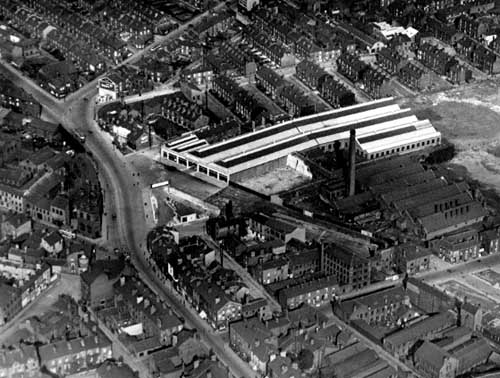
The photo is courtesy of Leodis. It shows Sheepscar Sctreet with the large Appleyard garage. At the corner of Roundhay Road (towards the top left) you can see the Victoria pub proudly wearing its Tetley sign. The space behind the garage, and probably much of the area where it was built, would probably have been rhubarb fields.

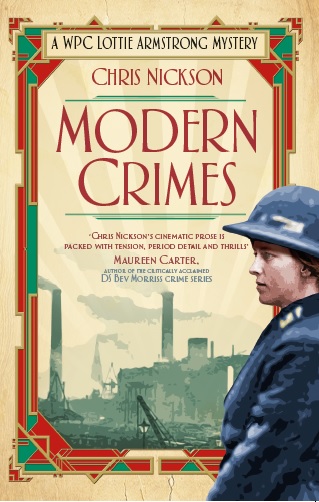
I’m sure you’re sick of me telling you, but…yes, I have a new book out, set in Leeds in the 1920s. A crime novel based on the first policewomen here. It’s called Modern Crimes, and Lottie Armstrong is front and centre. You might like it (and the ebook is very cheap).
Lottie cover

The Soul Awakes

Annabelle Harper. A successful woman, with the Victoria public house at the bottom of Roundhay Road and three bakeries, all of them making money. Respected all around Sheepscar, she’s become the empress on the corner, and happily married to Detective Inspector Tom Harper.

And then a political awakening. But simpler to let her tell you herself. Better yet, come down this Saturday and here her tell it to you. You can get tickets here.

DSCF1780


I’m going to tell you a story…


I still can’t quite believe it happened, although I know it did. We had a coalman who used to deliver to the pub. He retired and a new one showed up. Cocky little devil. Thought he could fob me off with stuff that wasn’t worth the money. When I told him I wasn’t standing for it, he told me that maybe my husband needed to give me a clout or two. I picked up a shovel and I swear I’d have gone for him if he hadn’t turned and run off. I needed to take a walk to try and calm myself down. I ended up by the outdoor market – couldn’t even remember getting there. I must have looked a sight because this woman came up, a little old dear, and asked if I was all right. “Looks like a man’s got to you,” she said. She put a pamphlet in my hand. Votes for Women. All I did was glance down at the title, couldn’t have been more than a second. Blow me down if she didn’t disappear. Like I’d dreamed her up. But I had the pamphlet. Took it home. A fortnight later and I had the parlour full of books. I wanted to know it all. Those words I read…it was like someone had looked into my head and put everything I’d thought down on paper. It made sense. Me, I’d hardly read a book in my life. Who had the time? Once I was done with school, I was too busy working. Now I was sitting there going through them like the pages were the most important thing in the world. And Tom, bless him, he took it all in his stride. Didn’t even blink when I started going to the suffragist meetings. I was worried what the police might think, an officer’s wife involved in all that. He told me to go ahead, to do what I felt was right. I did. I listened. I liked what they had to say. But most of them, they’d never needed to do a day’s graft. They’d never had to try and feed a family on a mill girl’s wages. Course, it wasn’t long before I was up on my hind legs, saying this or that. Putting me two pen’orth in. That was how I met Miss Ford. She was in charge of it all. She’d worked with the unions, helped with strikes. People respected her. Mind like a razor, sharp as you like, and a heart as big as Yorkshire. She sat me down. Told me I could make a good speaker for the Suffrage Society. I thought she was joking, that it was her way of gently telling me to shut my mouth. But she was serious. I didn’t know which way to look. And she made me think that I did have something to give. Something different. I said yes, then I wished I hadn’t. My mind was whipping backwards and forwards like nobody’s business: I was going to back out. I was going to do it. Then everything I tried to write sounded so false. Be yourself, Tom told me. Who was I? A jumped-up piece of muck from the Bank whose husband had left her a pub. What did I have to tell anyone?  It wasn’t as if I knew any answers. Even when I was up on that podium I wasn’t sure I could go through with it. My teeth were chattering so hard they must have heard it in London. Then someone was saying my name and people were looking at me and it was too late to run away.  

Well, now I know what it must be like to be on the halls. I feel like I should sing a song or something. You don’t know me. No reason you should, really. I run a public house in Sheepscar. Nothing grand but it pays the bills. And I grew up on the Bank, on Leather Street. I know what they say: you grow up on the Bank and you’ll never amount to anything. I’ve heard it all my life. I started out in the mills when I was nine. It’s a hard life, I can tell you that right now. Moved into service a few years later because it paid better and it wasn’t as dangerous. I’m still not above scrubbing a floor if it needs it, or giving something a cleaning. Most of the girls I played with ended up doing the same. Maids or mills. If I ever see them now, the ones who are married have five or six children and husbands who bring in next to nothing every week. They survive, and that’s all they do. It’s down to the pawnbroker with the good clothes of a Tuesday morning so they can last until their men are paid. Redeem everything Friday evening. Do you know what they wish for when they’re walking down the street holding everything of value that they own? That their little ones will have something better. But they won’t. Do you know why not? Because there’s no one to speak up for them. They live, they die. Probably half of the girls I played hopscotch with when I was in pinafores are in the ground now. I’m not saying having the vote would put everything right. I’m not a fool. Men will still run things, same as they always have. There’ll still be more poor people than you can shake a stick at. But at least we’ll have a say. All of us. That’s the women on Leather Street, where I grew up, as much as anyone here. Maybe they need it even more than us. I’ll tell you something else. Every day, every single day, I see women with all the hope gone from their faces. It’s been battered away long before they’re old enough to work. And we need hope. That’s why every woman needs the vote. Every man, too. The only way those men standing for Parliament will ever do anything is if they need our votes to win. Half their promises will still vanish into thin air. Of course they will, they always do. And they still won’t do anything more than they absolutely have to. (Pause) But for the first time they’ll have to listen to us.

And that was it. I couldn’t believe I’d said it all. Couldn’t believe I’d made that much sense. At least I wasn’t shaking anymore. And to see their faces and hear them clapping, well, it didn’t seem like that could be for me. But Miss Ford must have liked it – she wanted me to start speaking regularly. I had to take a deep breath before I said yes. As soon as I agreed to that, she started talking about having me on the committee. Give them an inch and they want a mile. I said no. All that travelling hither and yon. Not when I had the pub and the bakeries. And…

I was up the duff. Couldn’t be. That’s what I thought at first. After all, I hadn’t caught before. I thought the miscarriage meant I couldn’t. So I wasn’t about to say anything till I was sure. Not tempting fate. And I was older, not one of the young lasses popping them out. Tom, he was over the moon. (Smiles) Once he picked his jaw off the floor, any road. From the way he tried to look after me you’d think no one had ever had a bairn before. You have thought I was the best family china. How do you think you got here, I asked him finally? And your ma, and all those before her. It’s nature. That shut him up and he let me get on with things. There was work to do. I tell you what, nature decided to make hard work of me in the end. It had the last laugh. The best part of twenty-four hours in labour. Sweating and cursing and screaming. I was holding the midwife’s hand so hard I’m surprised I didn’t break her fingers. But it was worth it. Called her Mary, after Mary McLaughlin I grew up with on Leather Street. That’s right, I’m talking about you. Bit over a year now and into everything when she’s awake. Daren’t take your eyes off her for a moment. Talk to her da and you’d think butter wouldn’t melt. He’d learn quick enough if he spent all day with her. She won’t want for anything, I’ve already made sure of that. She’s lucky. I have the brass. Not like most round here, where the hunger never leaves the eyes. But I’m going to make sure she knows what the world is really like outside the door. She needs that. I owe her that. I’ve not forgotten all those years when I was muck. Scratch me hard enough and it’s still under there. I want my Mary to have the things I never did. The vote. Rights. A life that doesn’t have to depend on a fella. The things that matter. Might as well wish for the moon, eh? It’s like having a tiny hammer and chipping away at a big block of stone. You keep doing it and nothing seems to happen. But you keep believing that one day the stone will just fall apart. Maybe I can get in a few blows. Do my bit. Yes, I speak at meetings. Maybe it helps, I don’t know. I sold the bakeries. Miss Ford asked me to be secretary of the Suffrage Society. No going out of Leeds, she promised. Aye, I thought, I can do that. But there weren’t enough hours in the day to do everything, not with this one scampering around. The shops gave me what I needed. But maybe I didn’t need that any more. I’ll never get rid of this place, though. The Victoria, it’s home. Don’t want anywhere else. They’ll have to carry me out of here in a box. Won’t be for a long time yet, not if I have anything to do with it. Too much to do. And here I am, barely started. Up from the muck and still a long way to go. What I’ve learned: you do what you have to do. You get on with it.

In Memory of the Leylands – it’s not always about the Great and the Good

Cities change. It’s their nature. They grow. The old comes down and the new rises up, taller, grander, glossier than ever. We hang on to bits of our history as slender reminders but we junk most of our past as if it was rubbish.

And fine, there’s much that should go. The slums are a prime example, those Brutalist office buildings (what were we thinking?), the tower blocks of flats that stand like abominations and threats to the idea of community. But, and it’s a big but, when we tear them all do, we lose sight of who we were and how we got here.

Several months ago I took a walk around Hunslet, Cross Green and on to Marsh Lane in Leeds, on the trail of my ancestors, addresses from census records. Some of the houses still exist – inner city, you’d call them now – but many more have vanished. Big swathes of Hunslet are now for business, not housing (factories and houses used to stand cheek by jowl in the 19th and early 20th century). The old places that remain are derelict, boarded up.

My upcoming book, Two Bronze Pennies, takes place largely in the Leylands, an area that no longer exists on any map of Leeds (much like the place known as the Bank, now Richmond Hill). It runs in a triangle from an area more or less north of Eastgate, bounded on one side by North Street (give or take), and on the other by Regent Street, meeting close to Sheepscar. It was a working-class area, and when Jewish immigrants arrived, this was where they settled, to the degree that it was almost a ghetto. Yiddish was the lingua franca there, the common European Jewish tongue that people of all nationalities used.

They came…and came…and came. In the early years of the 20th century, more than 10,000 of them were packed into the area. Prejudice meant they were safer together. Most worked in tailoring, in the sweatshops dotted around the Leylands, sewing for 12 or 15 hours a day, most of the garments for the big manufacturers who didn’t want to employ Jews in their factories. Male, female, young, old, everyone worked.

Those who acquired some money moved a little farther from the city centre, into Chapteltown – then very genteel and after that to Moortown, Roundhay, and Alwoodley. The relentless march of the middle classes. But human nature means that not everyone is a success. We don’t all make money.

At that time Leeds’ money was still based on manufacturing. We’d been one of the cradles of the Industrial Revolution, one of the great cities of Empire. But one war saw the decline of much of that, and a second was the nail in the coffin. Look at the skyline now and it’s dominated by office buildings, not chimneys. The houses in the Leylands were classified as slums – and indeed, they were – and finally all tumbled down. Those still living there moved out to new housing estates. Better living, less community.

And all that ground? You won’t find any houses in it. That memory has gone with the bricks. It’s small industry these days. The cries of children yelling in Yiddish on the street are a distant echo of memory. The Polish synagogue, the Great synagogue – they just exist in tales now.

These days it’s…anonymous. Of course, much of Leeds is becoming that way. More shiny shopping for the consumer-led economic recovery.

But if you didn’t know about it, you wouldn’t have a clue now that the Leyland ever existed. It’s been neatly erased from history by the planners, and with it so much of the city’s history, and the fact that the area gave sanctuary to people fleeing pogroms and seeking hope, a better life that many found.

It’s as if those people sitting and working out how our cities should look forgot that the biggest contribution to life isn’t made the those considered to be the great and the good. How can we know where we’re going if we choose to forget the path that brought us here?

You can read about Two Bronze Pennies here or read an extract here.

You Don’t Know Tom Harper, Do you?

But you will. Well, I hope you will, once Gods of Gold is published (end of August in the UK). Anyone coming in after Richard Nottingham has big shoes to fill. But almost 160 years after Richard, perhaps Inspector Tom Harper is the man to do it.

Although he’s the central character in the new series, he wasn’t the first one to leap out at me fully-formed. That was his fiancée, Annabelle Atkinson, a widow of about 30 who runs the Victoria pub at the bottom of Roundhay Road in Leeds. She’d been in a short story I wrote, Annabelle Atkinson and Mr Grimshaw and she began to haunt me. But she wasn’t yet the Annabelle of the book. There was still a way to go.

And she had more to tell me.

It clicked into place when I realised she ran the Victoria. It’s a pub that really existed until a few years ago, and the building is still standing. The woman who really ran it was a distant relative – at least around 1920. My father, who lived in Hunslet, would spend his summers there, as it had a big garden, and a piano where he could practice to his heart’s content. She also owned a few bakeries in the area and did a little moneylending; a consummate businesswoman, and a strong, independent woman who’d started out as a servant in the pub, married the owner for love, then run the business herself after she died.

I had her. That was a beginning.

After that, I happened to read about the Leeds Gas Strike of 1890. It was a blatant attempt by the Gas Committee of Leeds Council to save money by basically firing workers then hiring fewer of them back at a lower wage and under terms that largely deprived them of their rights, a move that resonates so much with what’s happening everywhere today.

The difference is that the strikers won. The Gas Committee had to capitulate. Hard to imagine that happening these days. Who wouldn’t want to write about a situation like that?

And that was where Tom Harper walked in. He had to be somewhat political, and on the left end of the spectrum. So he’d be a working class lad. And he needed a detective. From there, he simply came together. He’d grown up in the Leylands, just north of the town centre, before it became a Jewish area. He’d lived in a back-to-back house, left school when he was nine to work rolling barrels at Brunswick Brewery. But he wanted to be a policeman. He’d educated himself by borrowing books from the public library and finally, when he was 19, he’d joined Leeds Police. He’d spent six years on the beat, covering the courts and yards between Briggate and Lands Lane. His parents had died, his sisters were happily married, and he lived in lodgings just off Chapeltown Road.

And there was Tom. Of course, he couldn’t do everything alone, but there’s more to come in the book, of course. And he still had to meet Annabelle and the two of them had to become close…you’ll have to read Gods of Gold to discover all that, though.

Leodensians And Unconvention

So we’re in. We’re Leodensians – in my case, again. After what turned out to be months of solicitors and leasehold companies taking their time, moving day arrived Friday and the completion and physical move went as smoothly as something like that could (I’m still missing a box of clothes but it’s probably with so many other boxes in the garage). The weather’s even co-operated, with glorious sunshine for the last couple of days. Thank you, Leeds.

Then yesterday saw the launch of my new novel Fair and Tender Ladies at the 2013 Book Crossing Unconvention. Taking the bus into town, down roads that were once so familiar, I realised that yes, I did live here now. The event was a great success – wonderful audience and such avid readers – and an extra frisson on the bus journey home as I realised the vehicle would go past the building that had once been the Victoria pub in Sheepscar, an important place in my next novel.

To top it all off, a fairly long walk through Roundhay. Not the park; we’ve been there several times on recent trips up here, and there will be many, many chances to explore it all. No, this took us to the stunning specialty gardens, with the Monet and Alhambra gardens being outstanding, then along Old Park Road, down the ginnel by Roundhay School that was my way home when I was a pupil there, back along Gledhow Lane and over Soldiers’ Field. Quite literally retracing so many steps of my youth, remembering when we threw cherry pits at a house and the owner chased us back to school, the trek every other week to the gold club (it was better than playing rugby) or the tennis courts (an interest that last for one summer term after I’d been knocked out by a cricket ball).

From the end of our drive, we look out over acres and acres of playing fields. If there tress weren’t there, my old school would be in sight. It’s strange to come full circle this way, to walk into the ghost of my teenage years. I’d never really expected it, but over the last few months my excitement at returning has risen. And now I’m so happy to be back.