Rogation Day Part 3

This really is turning into a serial, and I’ll be as interested as you to discover where it’s going. Elizabethan Leeds has its charms – but it seems to be a deadly place, filled with secrets for Gil Craven and the watch to uncover.

Id you missed the first two parts, don’t worry. Part one is here, and the second part here. Now relax and enjoy the story.

            So many things I needed to do: start the hunt for Tenche’s killer, find Richard, write to Walsingham’s man in the West Riding. But the widow might be known something.

            ‘I’ll come with you,’ I decided. Sykes stared at me for a moment, his distaste showing, before he nodded.

            ‘If you must, Craven.’

3

‘Madam,’ Sykes said as he entered the hall of the house on Briggate. He swept off his cap and bowed; I did the same.

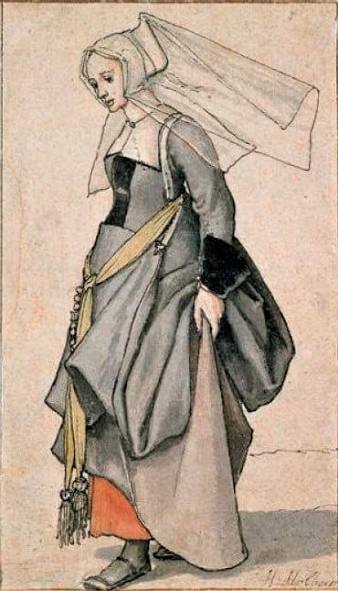
            Mary Tenche knew. She’d been crying, eyes rimmed with red, a good lawn handkerchief clutched in one fist. She was dressed for home, hair covered with a starched white coif, a plain gown and kirtle, slippers on her feet. She was a small woman, in her late thirties, with dark hair and smoky eyes, the mistress of a handsome home. A fire burned in the hearth, the chimney drawing well. A pair of painted hangings added colour to the walls. Glazed windows overlooked the plot behind the building, a view over a stone building where the merchant warehoused his cloth, the small counting house behind, then the garden. The man might have been cloth searcher for his year, but he’d made a pretty penny before all that.

            ‘My condolences, madam,’ I said and she dipped her head in acknowledgement. I’d heard the rumours, that it hadn’t been a loving marriage. Doubtless Sykes knew the same thing; he wouldn’t have been here otherwise, with an eye on his chances.

Three children alive, the elder boy apprenticed to a merchant in Antwerp, learning the other end of the business. The second was starting to learn the trade with John Faulkner, down at his dye works on the river. Jane, the girl, was ten, already betrothed to Henry Atkinson, a merchant’s son, aged just twelve. A few years yet before the ceremony.

‘Was your husband at home last night?’ I asked. Sykes glared at me. He wanted her to himself, a chance to press his suit and its advantages while she was at her weakest.

‘No,’ she answered. Her voice was low and husky. ‘He said he had to meet someone.’ She raised her gaze to stare at me. ‘When I woke this morning, he wasn’t here.’

‘Did you mention it to anyone?’

She shook her head. ‘It wasn’t the first time.’

‘Who was he meeting, madam?’

‘He didn’t tell me. He never discussed his business at home.’

Talk was that Tenche had a lover; it would be easy enough to discover her name. The servants likely knew it. They saw more than their betters imagined. I’d inquire of them in a few minutes, away from Skyes.

‘I’m sorry to have to ask questions at this time, madam,’ I said. ‘Was he having any problems with his work?’

‘Nothing he mentioned.’

One final thing. ‘Did he know Richard Harding?’

‘Who?’

It was the answer I’d expected.

‘No matter, madam. Thank you.’

            Skyes gave a grim, satisfied smile as I bowed and left.

The servants had gathered in the buttery, the oldest part of the house where they kept the ale and wine. A fine place for gossip, although the chatter dropped to nothing as soon as they saw me.

            ‘Mistresses-’ I began, but Elizabeth Carr, the maid, cut me off.

            ‘Here about the master, Gil Craven?’ She was an older woman with a harsh tongue she curbed around the Tenches. A gown that had probably once belonged to Mrs Tenche, worn now, the colours faded, covered with an apron that cover her from neck to feet.

            ‘I am.’

            ‘Murder. That’s what people are saying.’

            ‘It’s true enough,’ I admitted.

            ‘Terrible.’ She shook her head, although curiosity gleamed in her eye. ‘How did it happen?’

            I countered with a question of my own.

            ‘He went out last night. Mrs Tenche says he didn’t return. Do you know where he was?’

            The cook, Hannah Oliver, gave Sarah, the younger maid, a quick warning look before she could speak.

            ‘You know,’ I said. ‘Tell me, I’ll find out sooner or later.’ I pressed my lips together. ‘I’m looking for his murderer.’

            ‘Catherine Warden,’ Sarah spoke the name in a rush before the others could stop her.

            A widow. A woman of middling wealth, left enough money not to need to pinch her pennies. She’d shown no inclination to marry, content with the freedom her status brought. Tenche had been her lover. He’d kept it quiet from the town. But of course his servants knew.

            ‘How long?’ I asked. But they looked away. Sarah’s cheeks were a broad, blushing red. I’d get little more from them out of loyalty to their mistress. No matter. I had a thread I could twitch. ‘God’s blessings on you,’ I said as I left.

The curious had gone from the house of pleas. The curate and churchwardens had left to finish beating the parish bounds. The members of the Waits had stayed, sipping small beer, wondering what to do and looking to me for guidance as I came through the door.

            Thomas Dawson’s face was still pale; the first body he’d really seen. Rolly raised his eyebrows, a man who’d experienced more than most of us, one who’d served time in the navy under John Hawkins, a crewman on the commander’s second slaving voyage from Africa to the New World. He’d come home to Leeds with money in his pocket, never speaking about his experience, spending fast and wide and drinking like a man whose desire was to forget.

            ‘Tom, I want you to stand guard here. I imagine the undertaker will arrive this afternoon. The widow will inform him.’

            A reluctant nod as he sat on a bench, turning away from the corpse.

            ‘What about me?’ Rolly asked.

            ‘Talk to the people in the cloth warehouses,’ I told him after a moment. ‘See if they know whether Tenche had any business problems. Come and find me later.’

            ‘Right.’ Before he could stand, the door opened wide and Richard Harding strode in, a tall, sallow man, hair drawing back on his scalp and a frightened look on his face/

            ‘Where the devil have you been?’ I asked.

Thefourth part will arrive in a week or two – if you want it. Meanwhile, both the Cathy Marsden WWII novels, No Precious Truth and The Faces Of The Dead are currently £1.99 on Kindle – the first is just 99p (free with Kindle Unlimited). That’s two books for around the price of a coffee. You’re not likely to find a better bargain this week. I truly hope you’ll but them – because they’re good. I sweated blood and tears over those books!

Rogation Day Part 1

Something poossibly a little new, heading back to Tudor times (a first for me)

Leeds, April 1578

People disappear. One minute they could be standing there, and you turn away to do something. When you look back, they’ve vanished. No sign, not a trace. The gospels don’t say it can happen, but so many of us know it to be true. Not an illness that can kill a man in a moment, but alchemy. Witchcraft, mayhaps.

            I’d called for Richard Harding that morning. Knocked on his door, no reply. Slipped the latch and entered, calling his name. The night before we’d been drinking at the alehouse on Timble Bridge, and I’d watched him away to his bed.

            And now…his bed was neat, the table clear and cleaned. His pipe and tabor sat by the hearth, ready for this morning. The leather bag, tools for his carpenter’s trade, by the bed. No hint of Richard. Chamber pot empty, no sign of him in the garden at the back. As if he’d never come home last night.

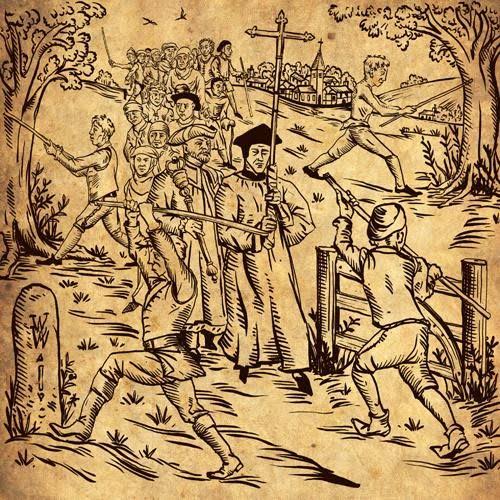
            We were both members of the Town Waits, the musicians who entertained at every occasion, with the silver badges to wear on our coats. Today, Rogation Wednesday, we were to play for the beating of the parish bounds. We did it every year on this day, a tradition that went back beyond our grandfathers and their grandfathers to…who knew when?

            I bellowed his name again. The room answered me with silence. One minute here, another…nowhere to be seen. I hunted through the small house, not that there was anywhere to hide. Out into the garden but he wasn’t there.

            Gone.

            The Parish Church at the bottom of Kirkgate was starting to ring the hour. I had to leave. Richard was a steady soul, busy with work and taking pleasure in playing music. Not one for foolish tricks like this. I sighed, tucked my fiddle under my arm, closed the door and hurried off.

I could have happily kicked young Thomas Dawson down the hill. We were processing along the track, the next mark on the parish bounds no more than half a mile ahead of us, and he struck up a mournful air on the shawm. He’d probably just learned the tune, eager to try it out for people. But it was too slow to keep the people moving.

            I glanced back over my shoulder. Rolly Grimshaw nodded, then raised the sackbut to his mouth, worked the slide and began to blow. Reluctantly, I tucked the fiddle under my chin and joined in. Only three of us from the Leeds Waits out here as we beat the parish bounds. The other four would join us tonight for the big ball out at Temple Newsam.

            Rogation Day, and at least there was some warmth in the sun. It had been a pitiful start to spring, bad for the crops. You could see the slow growth in the fields. The weather had only improved in the last fortnight. A few half-garbled mutterers claimed it was God’s displeasure at Queen Bess from turning away from the old religion Queen Mary had brought back. I knew who they were. Let them talk; I had no time for idle tongues.

A broad blue ribbon was tied to the tree to mark it out as the parish edge. A good crowd this year followed us, almost forty people, the children dancing and jigging to the music, weaving in and out between their parents and the others.

Still no sign of Richard. That worried me. We’d been friends since we were children, both old enough to be widowed and aware of less time ahead of us than behind. We knew each other’s minds and hearts. He was a dependable man.

What had happened to him?

            Women were pouring mugs from the cask of ale waiting for us. I was ready for something wet in my throat after all the walking. Finally the curate raised his hand and I nodded the others to a halt at the end of the phrase.

            No vicar this year. He’d twisted his ankle and was sitting at home, being waited on by his servant. Instead, it was Curate Gill conducting the prayer and greedily looking over the field to imagine the church’s tithe at harvest time. A young man, barely old enough to need a shave, but this was his second year in Leeds. Affable enough, even if he was ambitious to wear a bishop’s mitre one day. It would never happen; the family didn’t know the right people.

            As he spoke, I ducked away, pulling my tankard out of my jerkin before sinking it in the cask. Good ale, Widow Wharton’s brew by its taste, a few herbs in there to give it a kick. And very welcome. We’d kicked up enough dust as we walked to leave me parched. Finished, I flung out the dregs and put it back in the jerkin. No doublets for the likes of us, no fancy gowns on top. Good leather kept you warmer, with the silver badge of the owls and fleece all the uniform we needed. I cocked an ear. The prayer had become a sermon. Ample time to rosin up my bow.

            The fiddle had belonged to my father. A better musician than me with an ear for anything. Listen once and he was note-perfect on the tune. I apprenticed with him for a year, then with Geoffrey Farrar in Ripon before coming back to Leeds and taking my father’s place leading the Waits when he died. I’d never play as well as him, but I had a good mind for creating melodies that people would remember. To make them cry or make them dance. Something for every occasion. Even out here.

            This was my thirtieth year of beating the parish bounds. No one knew exactly how the ceremony began, or how long ago. Still, it was good for the children to learn where they lived. For the rest of is, it was a chance to see how the land had changed. Not that it did. Arable fields around and the sheep enjoying the grass higher up the hill.

            Curate Gill was still talking, so I wandered away. I had the faint memory of a stream on the far side of a hawthorn hedge further down the slope. It ran down to Lady Beck, little more than a trickle, but a good place to piss. The bushes were there, exactly where I recalled. But something must have dammed the stream. The water had pooled, dirty and thick, all the ground around it like a bog.

            Strange. I tucked the violin under my arm and picked my way along the slope. Something was blocking the stream., no doubt about that. I could see it, a dark, sodden mound. A yard or two closer and I knew what it was.

            Something wrapped in a pack sheet used for woollen cloth.

            ‘Down here.’ I tried to call out the words, but they came in a croak. A deep breath and I tried again. Then a third time, loud enough to draw attention. Soon they were all scrambling down the hill, every one of them with showers of questions that halted as soon as they saw it. Rolly drew his knife and sliced through the heavy sheet..

            The body was face down, hair and clothes stained with mud. Yesterday it had rained; the stream would have gathered around him.

            It was Rolly who squatted by the corpse and turned it over. A gasp from some. Shrieks from others. We all knew him. Walter Tenche, the cloth searcher.

            Suddenly they were all talking: where they’d seen him last, when it was who had he been with, anything and everything.

            ‘Wait,’ I shouted. The curate stood, mumbling a prayer, looking lost and frightened by death. ‘We need an inquest and to raise the hue and cry.’ I glanced around their faces. ‘All of you are the jury. The best thing is to take him back to town. Peter, Robert, can you make a hurdle and carry him?’

            They were shepherds, cutting and bending willow for jobs was something they knew well. A nod and they were on their way.

            The Waits also served as the night watch, for whatever crime there was in a small place like Leeds. Drunkenness, mostly. A fight. Adulterated bread, which saw the baker in the stocks. Two murders in my three decades doing this. A man killing his neighbour, and the other never solved. Person or persons unknown.

            We’d need to examine Tenche before declaring anything. But bound inside a sheet and hidden like this, what could it be but murder? What I knew and the others didn’t was that Tenche still clung to his Catholic faith, keeping his worship secret. Always a danger in these times.

            I knew because I was Secretary Walsingham’s man in Leeds, a spy here for the queen, reporting on recusants and strangers who arrived. In a country with so many vagrants on the road, any man could be a problem.

Please, let me know what you think, whether it’s worth penning any more of this in idle moments.

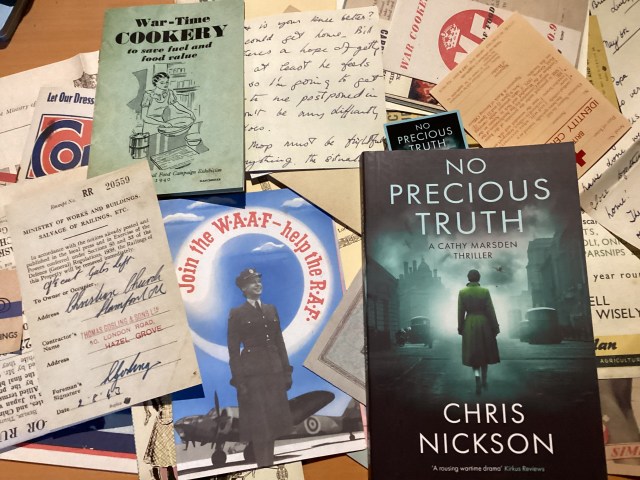
Meanwhile, both the Cathy Marsden WWII novels, No Precious Truth and The Faces Of The Dead are currently £1.99 on Kibdle (free with Kindle Unlimited). That’s two books for around the price of a coffee. You’re not likely to find a better bargain this week. I truly hope you’ll but them – because they’re good. I sweated blood and tears over those books!

Thank you.

A Christmas Tale

I’m not really one for Christmas in my own life. I never have been. But every couple of years I still seem to end up writing a Leeds Christmas story. Don’t ask; I can’t explain it, either.

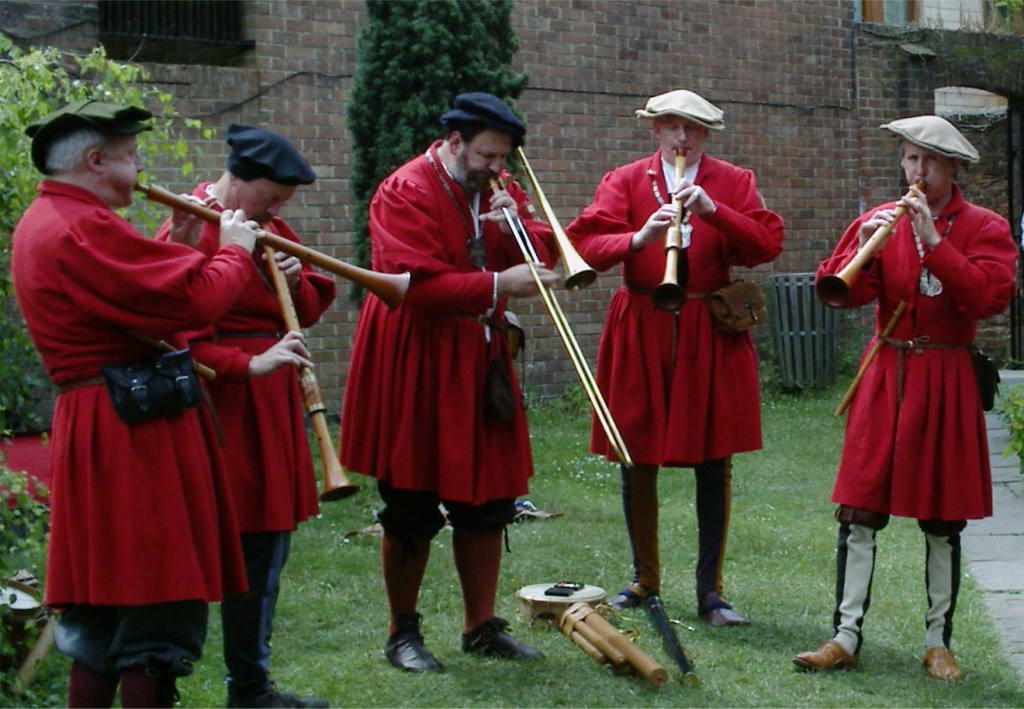
This time, though, I wanted to do something different. I’m reading Steve Roud’s wonderful Folk Song in England, and the section on Town Waits – the official musicians employed by many towns, who also doubled as the night watch – struck a chord.

Leeds had its Waits back in the 16th century; they’re documented as far back as 1530, and their history might stretch back even further. As well as their watch duties, they played for official occasions and balls, and often undertook private engagements. In the 17th century, certainly, Leeds Waits were popular, as played as fair away as Carlisle and Newcastle. In other words, they must have been good.

And why Elizabethan Leeds? Why not? After all, I said I wanted to do something different.

We do have a revived Town Waits, who perform occasionally. You should see them if you can.

And on a final note before the story, don’t forget that Free From All Danger, the first Richard Nottingham book in over four years, came out recently. It makes a fine gift for family and friends.

Now, sit down with a mince pie, enjoy, and be of good cheer.
-early-music-folk-style

Leeds, 1559

The crisp weeks before Christmas were always fruitful. The musicians of the Town Waits would perform at the balls and parties around Leeds. Dances and tunes, songs and carols, then the last two dances to close the evening before a walk home in the cold darkness with coins jingling in their purses.

Daniel Wakeman tugged his cloak tighter and tucked the fiddle against his body. It was well wrapped, but the night was frosty and he knew the instrument well; if it grew too cold, it would complain by refusing to say in tune tomorrow. It had belonged to his father, a member of the Waits before him, a beautiful piece of work, but temperamental as a young girl.

Tonight had been good. Out in Potternewtown, a crowd that appreciated everything they played, and a generous host. Good food sent from the table and a jug of ale refilled as often as they needed. Then three shiny pennies each to carry home.

‘I’ll tell you what,’ he said to the others, ‘I’ll play there whenever they ask.’

Sam Hardy and Tom Carter laughed. Old John Whittaker said nothing, the same as ever, but he’d always been the quiet sort. They walked on, following the road into town. The last few nights had seen some killing frosts, and the earth was hard and rutted under their shoes. Clear skies and a bight enough moon to see his breath bloom in the air.

‘Did you hear about Pawson?’ Tom asked. ‘Someone’s been saying his wife’s made him a cuckold.’

It was all they needed to set tongues going, the speculation of who and when. Leeds was small, a place where everyone knew all the faces, whether high or low. New folk arrived every week, drawn by the way the wool trade was growing, but most were like Daniel, born in the town and lived there all their lives. He knew Pawson the clothier, he saw him almost every day. His wife span wool for the man. It brought in extra money they always needed. Being in the waits meant the silver badge and a good livery, the blue as dark as the evening sky and the yellow like a June sun, but the pay was small. Six nights a week walking around town, playing soft music to soothe the sleepers, keeping a watch for fire or burglars, then something louder to wake people in the morning. But it was a life full of music, and that was enough for him.

Music was joy. He felt free when he was playing. Even the recorder he used as he walked the street on the night watch. But the fiddle was what he loved. He felt he had a special bond with it. Not like some he heard, scraping to bow over the strings to give a sound that made him wince. His father had taught him well, God rest his soul. He caressed the notes, he made them dance. He couldn’t read a note of music, but he only needed to hear a melody once and he could play it.

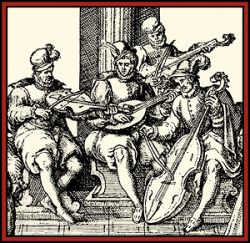
But they were all good, even grumbling John, his back bent now under the weight of his bass viol. Sam with his lute, and Tom on the other fiddle. The best in the North, some people said, and who was he to deny it? They played all over, not just the parishes around Leeds, but for milady in Skipton back in the summer and as far away as Newcastle once, and Carlisle. They had a reputation, and he was proud of it.

‘Give us a song, Sam,’ Daniel said. Hardy had the best voice of them all, a sweet tenor that the ladies loved. A moment later, he began:

‘The hunt is up, the hunt is up,’ and they made it into a round, voices echoing loud against the silence of the night. But out here there were none to disturb.

By the time they neared Mabgate, Daniel could feel the cold eating through to his bones. A fancy hose and doublet might look fine enough, but they did little to keep out the bitter winter. Even a thick woollen cloak wasn’t much help. But he was close enough to home; soon he’d be warm again.

It wasn’t the best part of Leeds, not one of the fine houses of Briggate or Kirkgate with their painted timbers and brilliant white limewash, but it suited his pocket. The children were grown and gone to lives of their own; he and Maggie didn’t need much. A room downstairs for living and cooking, another upstairs which held the rough bed he’d built for them and two small chests of clothes. Plenty of room behind to grow most of their food and keep the pig and a pair of chickens. It was more than many possessed. And he didn’t mind the drabs who touted for trade on the road. They were like everyone else, simply trying to scratch a living.

What he did miss, though, was a cat. Theirs had died six months before. Eighteen years old, and a fine mouser in his day. He’d been good company while Daniel practiced on the fiddle in the bedroom and Maggie span downstairs. We all have our time, he thought. That’s how God wills it, and it was a good, long life for a cat.

With hushed goodnights he said his farewells to the other Waits and started along the street, lost in his thoughts.

Then the sound caught his ear. The tiniest mew, so faint he couldn’t even be sure it was real. It came from across the road. He stopped to listen, hoping to hear it again. And just as he did, right in front of him, a slate toppled from the roof, smashing and splintering as it hit the ground exactly where he’d have been walking.

For a moment, Daniel couldn’t catch his breath. God save us all, he thought, and the Lord had spared him for some reason. He felt himself beginning to shake and held the fiddle close. Then he heard the sound again, a little clearer. Over there, in the bushes by Widow Elizabeth’s house.

It was caught in a tangle of briers, a small, cold creature that tried to shy away from his touch. But he was gentle and patient, easing away the thorns until he could lift the kitten and feel its heart pounding hard against his palm.

No more than four weeks old, so thin he could wrap his fingers around its body. He stroked its fur, hearing the smallest start of a purr. Where had it come from? Not from any of the cats around here, he knew that. And it was still to young to be away from its mother.

But it had saved him. It was a gift.

‘Come on,’ Daniel said as he rubbed it head, ‘let’s get you inside. You need something to drink.’

The fire was banked for the night, but still far warmer than the darkness outside. An old rag for a bed. A dish of milk. He watched as the kitten drank, tentatively at first, then greedily.

Daniel put the fiddle away in the cupboard, resting it carefully on the shelf. It was his livelihood and his pleasure; he always kept it secure. He poured a mug of small beer, sitting on the bench to watch the cat. It was standing now, wobbling a little as it explored a little. A few steps around, then back, nose in the dish for more milk before it mewed again, then settled on the cloth.

‘I heard you come in,’ Maggie said from the top of the steps.

‘We have a new cat,’ Daniel said. ‘Come and meet it.’

‘A new cat?’ she asked in surprise as she came down. ‘What made you do that? It barely looks alive.’

‘I had to. This one just kept your husband alive. If it hadn’t cried out, I’d have been brained by a falling slate from the Thompson’s roof. I think it deserves a home after that, don’t you?’

She squatted, staring at the kitten in the faint glow from the fire, then reaching out and stroking it.

‘What are we going to call it?’ she asked.

‘Yule,’ Daniel replied. It seemed right.


Remember, Remember – A Leeds Story

We’re less than a month away from Bonfire Night now. Very soon they’ll start building the pyramid of pallets on Soldiers Field, and on the night there’ll be a grand ooh and aah, when it goes up and all the fireworks begin bursting in the air.

But there was one Bonfire Night that stands out from the others in Leeds’ history – back in 1745. The news that everyone feared arrived that night, that the Scots under Bonnie Prince Charlie – the Young Pretender, as he was known – had crossed the border at Carlisle.

Perhaps some had other things on their minds, though…

REMEMBER, REMEMBER – 1745

He fitted the new string on the fiddle and tightened the peg slowly, plucking it over and over as his wrist moved the tuner until it was close to a G. It would keep going flat during the evening and he’d have to re-tune. But it couldn’t be helped. At least it was the bottom string; he’d just try and use it as little as possible.
“Are you ready, Joshua Walker?” Toby called from outside the door.
“Aye,” he said. “Ready and willing.”

By eight, all the bonfires were burning well, sparks rising up into the darkness, people drinking and passing around the jugs of ale from one person to the next. Josh Walker locked the fiddle away in his room, safe from harm.
In the end it had all gone well. The string had been fair with him, staying in tune until a piece was done, and then all through the procession from the Assembly room up to the big fire on the open ground across from St. John’s. He’d been paid and given his share of scraps from the banquet, enough to feed him for a day if he was careful.
He walked up Briggate, the cudgel swinging from his wrist, eyes alert. It was a night for celebration, one where folk stayed out late, even the children. But who wouldn’t want to remember someone trying to blow up Parliament and all those down in London who only cared for themselves. Even if the plotters were all Papists, they’d done something right.
He rubbed the sleeve of his heavy greatcoat over the Town Waits badge, seeing it shine in the light from the bonfire. He was proud of that. It meant he made his living from the fiddle. Well, that and being part of the night watch, but he’d never heard of anyone earning enough money just from music.
After five years of doing this he knew what to expect. The apprentices would have their plans, staying out long after good folk were off to their beds. They’d be looking for a fight and before it was all done the night watch would give them one. There’d be some broken heads and a few waking up in gaol. The new gaol, they still called it, although it had been built before he was born.
They needed to learn some new tunes before Christmas, he thought. It was always a busy season, a time to line the pockets by playing balls and parties all over town. Last year they’d been invited out to Temple Newsam, the year before as far as Harrogate. He’d made enough to buy a new dress for his wife and clothes for his children. Roger was five and he’d just started the lad playing the fiddle, some simple fingering and learning how to hold it, exactly the way his own father had taught him.
He didn’t read music, none of the Waits did, but he had a quick ear. All he needed was to listen to something twice and he could play it, every note perfect. The others would pick it up from him and within half an hour they’d have it arranged and ready to perform. There was a melody he’d had in his head for days, one that wouldn’t go away. Josh was still trying to decide if he’d heard it somewhere or if it was a gift from God. He hummed it as he walked.
So far it had all been quiet. Several people had shot off muskets and fowling pieces, but no one had been hurt. No children had fallen into the flames, there hadn’t been any fights…all the trouble would happen later, once the families had drifted away. And it would come, it did every year. But then they’d be ready for it. This year, perhaps, the apprentices would at least manage to hit the statue of Queen Anne with their stones, unless they were already too drunk.
He stood close to the large fire, watching the shadows jump and warming his bones. Someone passed him a jug and he took a drink of ale, good twice-brewed that went down perfectly. He started to amble away, then turned at the sound of hooves. Someone riding in along the Newcastle Road.
He stood at the side, a hand raised, hoping they saw him. Three horses, together, slowing to a canter as they reached the houses.
“Welcome, friends,” Josh called loudly. “What brings you here so late?”
The man in front reined in close, his mount wet with sweat and wild-eyed. The two behind kept their distance, the animals pawing the ground as they breathed heavily.
“I need to speak to the magistrates,” the man said urgently. “There’s important news.”
People had begun to drift over from the fire, curious about the newcomers and pressing closer to see their faces.
“I know him!” someone shouted from the back of the crowd. “It’s that preacher.”
Josh looked up sharply. The horse moved enough for the light to catch the man’s face. Aye, it was true enough, Josh thought. That was John Wesley. Two months before they’d been quick enough to pelt him with stones when he stood up to speak. Now they were pressing close to hear whatever news he might be carrying.
“I’ll take you,” Josh told him, turning to see Theosophus Johnson and Robert Newman at his side, their cudgels at the ready. “Gentlemen,” he said to the riders, “follow me.”
He’d heard some of the aldermen talking about the Rose and Crown when they’d gathered to light the bonfire. With luck, a few of them might still be there. It was no more than two hundred yards, the light from the flames bright enough to guide them.
The stable lad came out as soon as he heard voices, taking the beasts as Josh led the men inside. Six of the aldermen were gathered around the table closest to the fire. Some of them looked close to sleep, heads lolling, while three of them laughed and drank. Almost a dozen empty bottles sat between them. Josh coughed, hoping one of them would notice him, then again, louder, when no one turned his head.
“Sirs,” he said in the voice he used to keep order in the town, and waited until the men quieted. Eyes blinked open. “Mr. Wesley’s arrived with important information.”
The preacher stepped forward. He stood tall, looking down with distaste.
“I’ve just come down from the north. People are fleeing. I’ve been told that the Pretender’s crossed by Carlisle. He’s in England. You need to prepare, sirs.”
There was a brief moment of silence, when time seemed to stand still, then a babble of voices, each one trying to rise above all the others. Josh saw a couple of men slip out. In the room, Alderman Atkinson tried to calm the noise.
He’d heard all he needed. The Scots were south of the border, the Jacobites were coming. He walked out into the night, the fires still burning. But the crowds had gone, simply vanished into the darkness. A few young men wandered, but they looked lost, without purpose.
He marched down Briggate. What would he do if the Scots arrived? Would he take up a sword and fight? Or would he take his wife and his children on the road south, hoping to find safety somewhere.
Suddenly the tune came back into his mind. It was transformed this time, martial and stirring, an accompaniment to his steps. Yes, he thought, this is it. He could already hear the other instruments. It would be excellent for the upcoming balls. If any of them were still here.