Who Is Cathy Marsden of No Precious Truth?

Next April sees the publication of No Precious Truth, the first in a series featuring Woman Police Sergeant Cathy Marsden, who’s part of the Special Investigation Branch’s squad in Leeds.

But how did a woman serving in Leeds City Police end up there?

Here’s Cathy’s story. It’s the first in a series of posts about Leeds in World War Two to prepare you for next year. A little taste, if you will.

September, 1940

‘Sorry if I’m late, ma’am. I came as soon as I knew you were looking for me.’

            ‘I thought someone would find you soon enough.’ Inspector Harding sat behind her desk, all her papers carefully squared and ordered. After fifteen years of steady work on the force, she’d risen to be in charge of the women police constables.

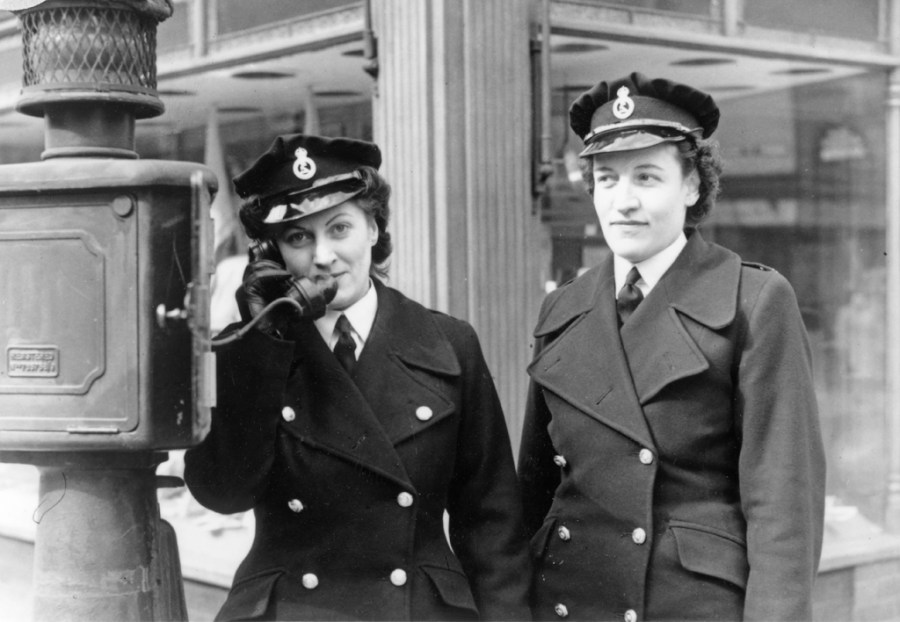
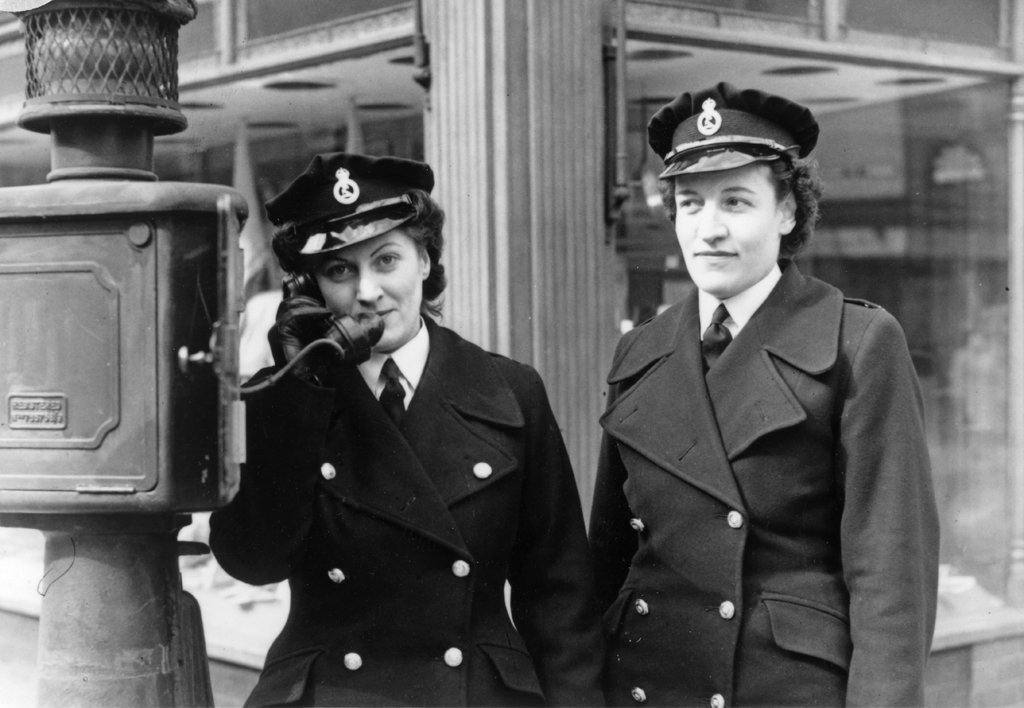
            From Flickr

‘Have I done something wrong, ma’am?’ The question had gnawed at her as she hurried up Briggate and the Headrow. She couldn’t imagine what, but…

            Harding couldn’t help herself; she had to laugh. ‘No, Sergeant. It’s nothing like that. Sit down.’

‘Ma’am?’ Harding was always friendly, but one for order and boundaries.

‘Please, take a seat, Sergeant.’

Once Cathy was perched on the edge of her chair, the inspector began.

‘I’ve been watching you these last few months. I don’t know what’s changed, but you don’t look happy in the job.’

‘Ma’am?’ she said again. Had it been that obvious? And what was so urgent about a heart-to-heart? Something like this could wait until the end of shift.

‘Please, Marsden. I wasn’t born last week. It’s been obvious.’

‘If my work isn’t up to snuff-’

‘You work is as good as it’s always been. You been on the force for six years?’

‘Yes, ma’am.’ Where was the woman going with this?

‘Something’s shifted. It seemed as if it happened when we received those men who’d survived Dunkirk.’

That was all it took. She hadn’t intended to say much, but once she began, it all flooded out.

‘Well,’ Harding said in an easy voice when Cathy finished, ‘I think what we do is important. But I can understand how you feel.’ She took a cigarette case from her breast pocket and offer one to Cathy before lighting her own and blowing a think plume of smoke to the ceiling. ‘Tell me, if I can offer you something different, some far from your routine that might change things in the country a little, what would you say?’

‘I don’t know.’ Her mind was racing. She didn’t understand what the inspector meant. ‘What is it, ma’am?’

‘How would you fancy working in plain clothes for a little while?’

            ‘Me?’ she asked in disbelief. There were only eight women police officers in Leeds, and not a single one of them was in CID. Never had been, and never would be, if the top brass had their way. That was strictly male territory. A few forces had women detectives, but it would be a cold day in hell before it happened here. As it was, twenty years after the first policewoman was appointed in Leeds, they were still barely tolerated in uniform. ‘How?’

             ‘Have you ever heard of an outfit called the SIB? The Special Investigation Branch?’

            ‘No, ma’am.’ All her thoughts was spinning. After the way CID had treated her yesterday, she was suspicious. What would these SIB people expect her to be, the tea girl?

            ‘I’m not surprised. They only started up in the spring. They’re more or less the military police version of CID.’ She paused and gave a short, reassuring smile. ‘Different, though. They investigate crimes involving soldiers.’ Harding held up her finger before Cathy could open her mouth. ‘They have a big operation that’s just begun here. The head of their squad, Sergeant Faulkner, came to see me first thing about seconding a WPC to them for it. They need someone who knows Leeds very well. It might be exactly what you need.’

            ‘Why a policewoman, ma’am?’

            ‘Someone who’s used to disciplined thinking and can obey orders. Well trained.’

            That made a curious kind of sense. But: ‘Why me?’

            Harding gave a kindly smile. ‘Eighteen months ago you were promoted to sergeant. I fought for that because you’re the best I have. You’re a natural leader. The others ask you questions, they listen to you. They look up to you.’ Cathy blushed, feeling the heat rise on her face. ‘You’re very observant. You have a real way with people, too. You put them at ease. They open up when you talk to them. I don’t want you to leave the police. If I second you to SIB for their operation, I believe you’ll come back refreshed and raring to go. If not, then leave the police and find something else. Does that sound fair?’

            Cathy stayed silent for a long time as fears and hopes chased each other around her head.

‘Do you honestly think I can do it, Ma’am?’

            Another smile, this one glowing with satisfaction. ‘My reputation is one the line, Marsden. If I wasn’t certain, I’d never have put you forward for it.’

            She scribbled an address on a scrap of paper and pushed it across the desk. ‘Go here and talk to Sergeant Faulkner. He’s expecting you. The SIB have their own office, separate from the army and us.’

            Cathy tucked it in her uniform pocket, stood and saluted. ‘Yes, ma’am.’

            ‘There’s one condition, and I made this very clear to Sergeant Faulkner: if I need you back for something, the police take precedence. You understand?’

            ‘Yes, ma’am. And thank you.’

            ‘Go and show them what you’re made of, Sergeant.’

Meet Cathy Marsden

Coming next May – months away, I know, but it’ll be here before we know it – you’ll be able to meet Woman Police Sergeant Cathy Marsden, seconded to the Leeds squad of the Special Investigation Branch for the duration of the war.

The SIB was real, and still exists, broadly investigating that area where military and civil crime meet, and there was a fair bit of it back then. But that’s not their focus this time…

It’s 1941, with things looking bleak. When Cathy’s older brother Dan arrives, an intelligent youung man who’d disappeared down to London as soon as he could to become a civil servant, he has a new job for them. It turns out he’s not quite the civil servant he claimed on his annual visits home; he ended up in MI5 and was the recruited to work for the XX Committee, a brand-new unit charged with turning German spies caught trying to enter the country into double agents. But one in his charge has escaped and is heading for Leeds to sabotage the war effort.

They have to catch him before he can act. Failure is not an option.

The cover copy: As the war rages across Europe, Police Sergeant Cathy Marsden’s life since she was seconded to the Special Investigation Branch has remained focused on deserters and home-front crimes. Until now.

Things take a chilling turn when Cathy’s civil servant brother, Dan, arrives from London with a dark secret: he is working for the XX Committee – a special MI5 unit set up to turn German spies into double agents. But one of these agents has escaped and is heading for Leeds, sent to destroy targets key to the war effort. Suddenly Cathy and the squad are plunged into an unfamiliar world of espionage and subterfuge.

With the fate of the country and the war in the balance, failure is not an option, and Cathy must risk everything, including her own life, to stop a spy.

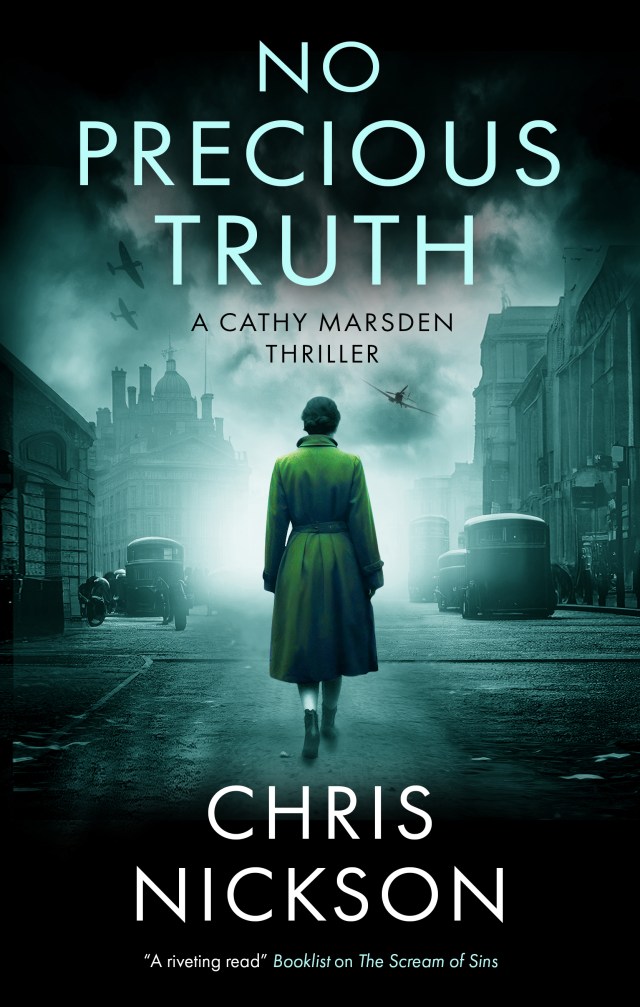
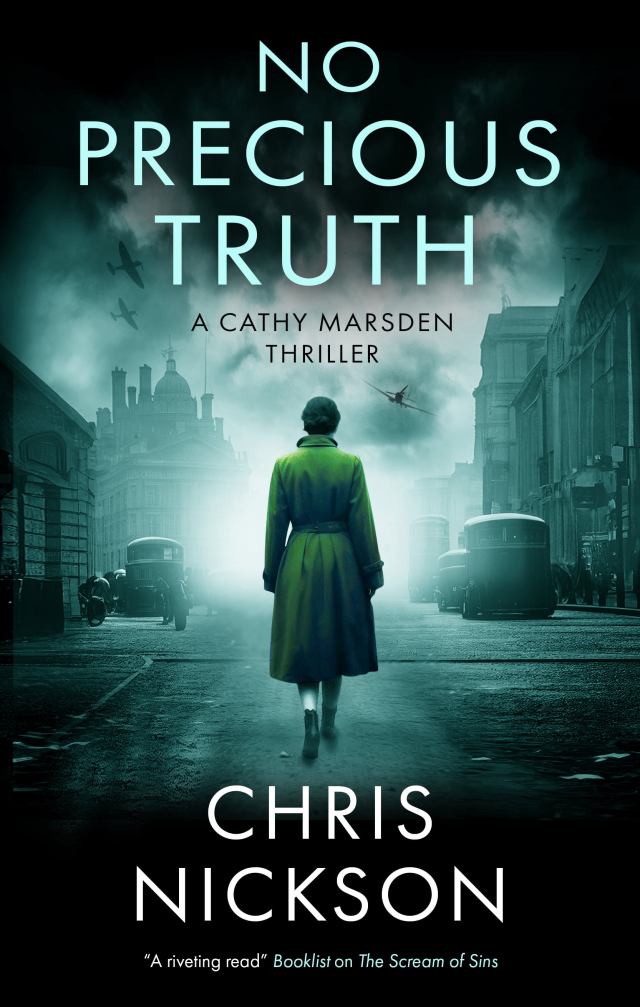
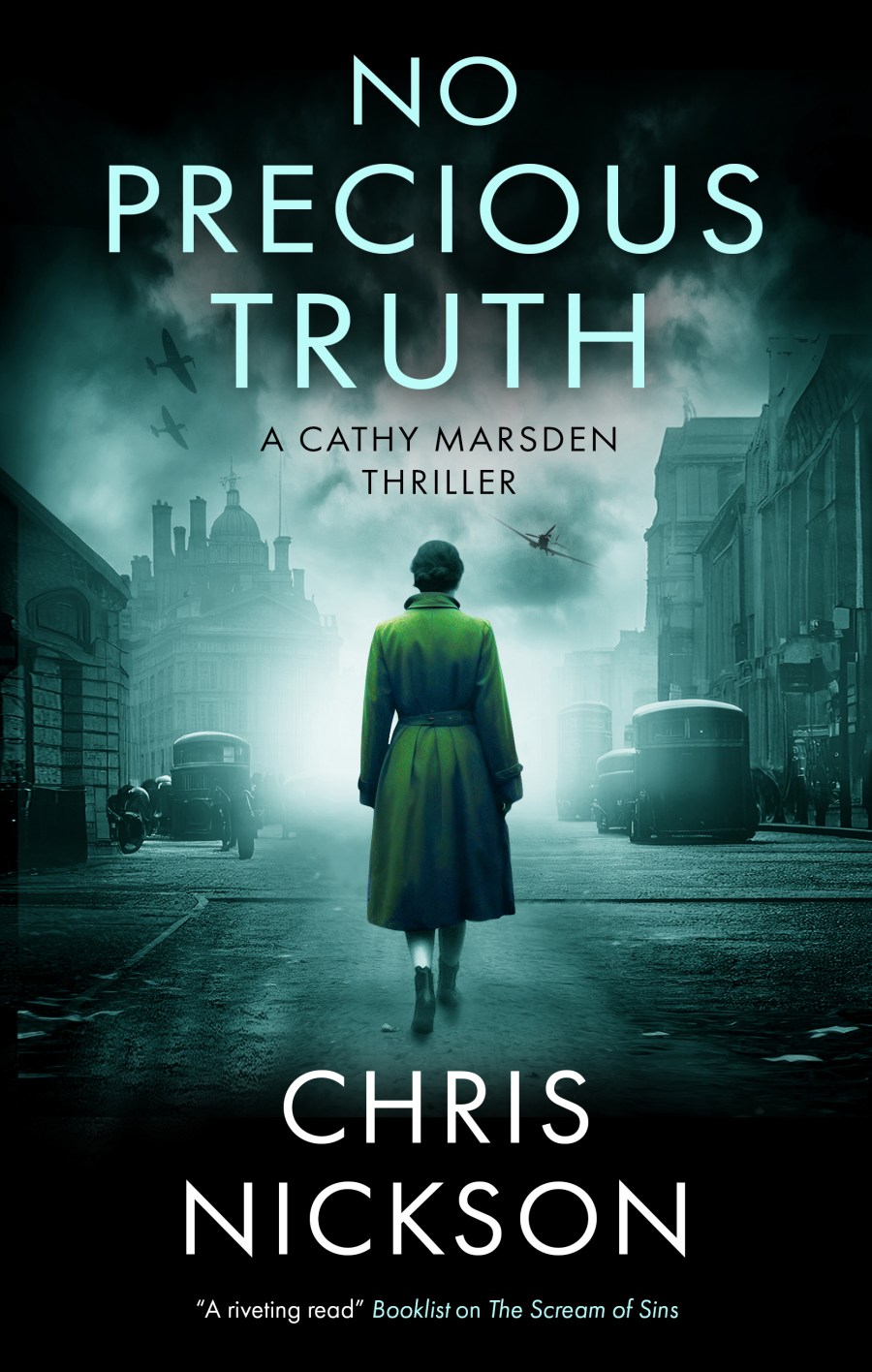
And the very wonderful cover:

Meanwhile, please don’t forget that Them Without Pain is still brand-new and itching for you to read it. One reviewer called it my “best Westow yet” and who am I to disagree. All your favourite outlets and libraries will have it…

A Wish For Happiness

I know, I’ve been quiet for a while, and sorry about that. But I’ve been taking time to breathe a bit after the exhibition and event, and I’ve been writing. The next two Simon Westow books (The Scream of Sins and Them Without Pain) are with the publisher – Scream comes out in March – and I’m busy with the WWII novel featuring Woman Police Sergeant Cathy Marsden, currently seconded to the Special Investigation Branch.

The joy is in the research; the couch is a pile of books about the war (I’ve put together something called Cathy’s War Timeline, which is taped to the bookshelf next to the writing table) and I’m learning more and more. The book takes place in early 1941, so I don’t want to go beyond that; I’ll only confuse myself.

Plenty of great little Leeds details in there, like the barrage balloon at St James’s hospital that someone came free from its mooring. People hung on, tied it to a lamp post – and it tore up the lamp post. It was finally brought down near the city centre. How can you not love a tale like that?

Cathy herself is a joy, easing myself into her mind and her life, so I know how that coat feels on her back, how the gas mask case keeps banging against her hip. The walk down the blackout street to home on Brander Road in Gipton. She’s fully alive.

That’s for the future. It doesn’t have a title yet, but it’ll be appearing in summer 2025, a very distant time.

For now, though, the holidays loom, and I hope yours are all good, healthy and peaceful. Meanwhile, there’s a review of the Tom Harper exhibition and event here. If you prefer, here’s an image.

On, and if you haven’t bought it yet, Rusted Souls is a good gift both to give and receive.

And Now for Something…

I’m happy. We have an almost[-firm date for our move back to Leeds, only the better part of two months after we expected it to happen. But better late, etc….and my copies of Fair and Tender Ladies have arrived, with its wonderful cover.

On an unrelated note, in recent weeks I’ve been reading a great deal about the 1950s. It’s the decade when I was born, so I assumed I knew it well. Wrong. Seems I knew next to nothing. But my reading sparked an idea. Or the start of one. Like they say in music, it goes something like this….(no apologies for typos – it’s rough). Let me know what you think. Please.

CHAPTER ONE

He was falling, falling, somewhere between heaven and earth. He reached out but there was nothing to hold on to, only the feeling of tumbling through space. Pictures spun and twirled in his head, things he could quite place before they moved on. A face, a building, a hand.

Then he landed.

It jolted the breath out of him. His skull banged down hard and a shock of pain ran through his body. For a moment he could do nothing. All he could manage was to lie there, trying to gulp in air and stop the nausea rising.

Finally it passed and he was breathing steadily. He rolled gently onto his side and opened his eyes. He was lying on the pavement, the flagstones shiny and wet against his cheek. It was night and he couldn’t remember what had happened.

The next he knew, something was pushing gently against his ribs.

“If you can stand up and walk away, I’ll not arrest you, lad.” He blinked, trying to bring the figure into focus. A copper, he saw finally, with the pointy hat and the black boots that shone in the streetlights. “Had a skinful, have you?”

He didn’t try to answer, but sat up, his head drumming with every movement. One hand against the wall, he eased himself upright, pausing until the dizziness passed.

“I’m sorry, officer, I don’t know what happened,” he said honestly, rubbing the gash by his temple, then the bump at the back of his skull, wincing at the tenderness.

“It’s alright, sir.” The policeman’s mile was almost hidden by his thick moustache. “Couldn’t let you sleep there all night, that’s all.” He bent and picked a trilby from the ground, dusting it off with large hands. “This yours, is it?”

“Yes. Thank you.”

“Get yoursen home, that’s my advice. You’ll be feeling it in the morning.” He gave a brief nod. “Goodnight, sir.”

“Goodnight. And thank you.”

He waited until the constable had disappeared around the corner, brushing the worst of the damp and the dirt from his suit and picking gravel out of his palms. Then he felt inside his jacket, checking the wallet was still there, and the watch still on his wrist.

His head hurt like buggery but it was beginning to clear. Looking round, he knew exactly where he was, on Merrion Street, the ABC cinema dark at the bottom of the hill. He moved his fingers gingerly around the lump on the back of the head.

Why had someone coshed him?

CHAPTER TWO

All around, Leeds was quiet, two in the morning and barely a sound, the shop windows dark. He sat in the old Anglia, window rolled down, and smoked a cigarette. Men had taken a swing at him before; it came with being an enquiry agent. But no one had ever used a cosh. Why? There was nothing unusual on the books. Just the usual divorces and frauds that paid the bills.

Finally he pulled out the choke then turned the key in the ignition, pressing down on the accelerator as the engine caught. There was no traffic, just a few lights shining behind curtains where sleep wouldn’t come.

In Chapel Allerton he turned onto Town Street, then down the alley between the police station and the Nag’s Head, parking by a brick house. Inside, he climbed carefully to the third floor, avoiding the tread that squeaked, and let himself into the flat.

It was a small place, no more than a bed-sitting room with a sink and gas ring in one corner, the bathroom and toilet on the landing, perched at the top of the stairs. From the window he looked down on the graveyard. But it was his and a damn sight better than the lodgings.

He stripped off the suit, examining the material and hoping against hope that the dry cleaner would be able to rescue it. It was good worsted, better than any fifty shilling job. He’d bought it right after National Service, a sly deal that didn’t involve clothing coupons, and it had worn well.

Sod it, he needed to sleep.

He woke as the early sun streamed on his face. He clawed his way out of a dream, opening his eyes as he sat up, stopping as something seared behind his eyes.

By nine he’d washed and dressed. He couldn’t do much about the dark circles under his eyes but he’d shaved and cleaned up the cut on his temple. At least he no longer looked like he’d spent a week on the razzle.

He parked the Anglia on King Charles Street and walked down Lands Lane. Everyone he passed seemed subdued. The third of September. It was a date none of them could forget. The start of the war and thoughts of lost comrades, fathers, sons, brothers.

He’d been ten, called in from a Sunday morning playing in the garden just as his sister was dragged down from his bedroom. He’d sat cross-legged, picking at a scab on his knee as Chamberlain’s voice came out of the radio. When the speech had finished, his father had looked at his mother and simply said, “That’s it, then.”

He was a bright enough lad, set for a scholarship to grammar school. He knew what war meant. Or he believed he did. All the bravery of Empire, the things he’d been taught in schools. It wasn’t until he did his time in the army that he learned the brutal truth. The empty faces, the ruins as far as he could see. He spent a winter there, working in military intelligence. He saw the people freeze and work and scrabble for anything resembling a normal life. What they taught him at Roundhay, death and glory and greatness, it was all bollocks. Dead was nothing more than dead, another memory and a poppy in November.

“Good morning, Mr. Markham.”

He glanced up, thoughts vanishing behind him.