A Medieval Trip and Church Wall Paintings

It’s been several years since we went up to Richmond. Well before the pandemic, in fact. It’s a glorious market town in North Yorkshire with a spacious market square and a fabulous Norman castle, a perfectly picturesque place

After so long, it was definitely time to go again. But first, a detour. Someone had told my partner about Easby Abbey, fairly close to Richmond – you can walk there along the river in about 40 minutes. I’d never heard of the place, but a quick search showed it, with the ancient church of St. Agatha alongside. Everything free.

Pulled into the car park and had a quick chat with the man who’d been picking rubbish.

‘I’ll open it up for you,’ he said, and unlocked the church.

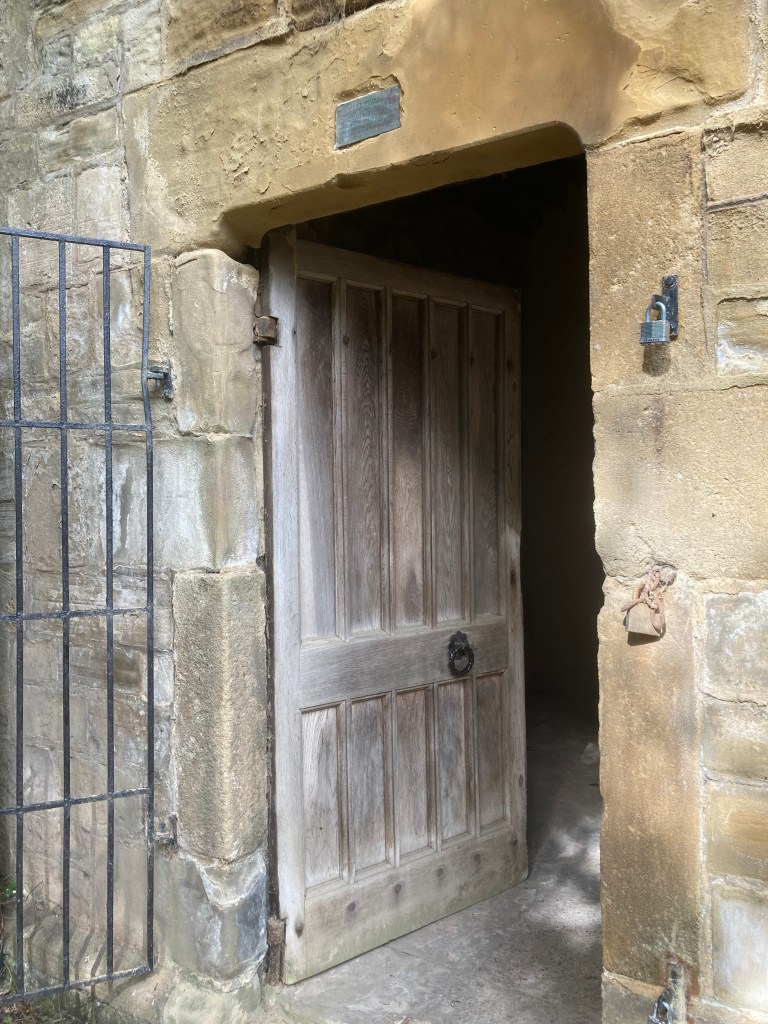
Church porch

Stepping inside was a revelation. The earliest part dates from not long after William the Conqueror invaded, and the font is also Norman, as are the stone benches by it – the only early seating in churches.

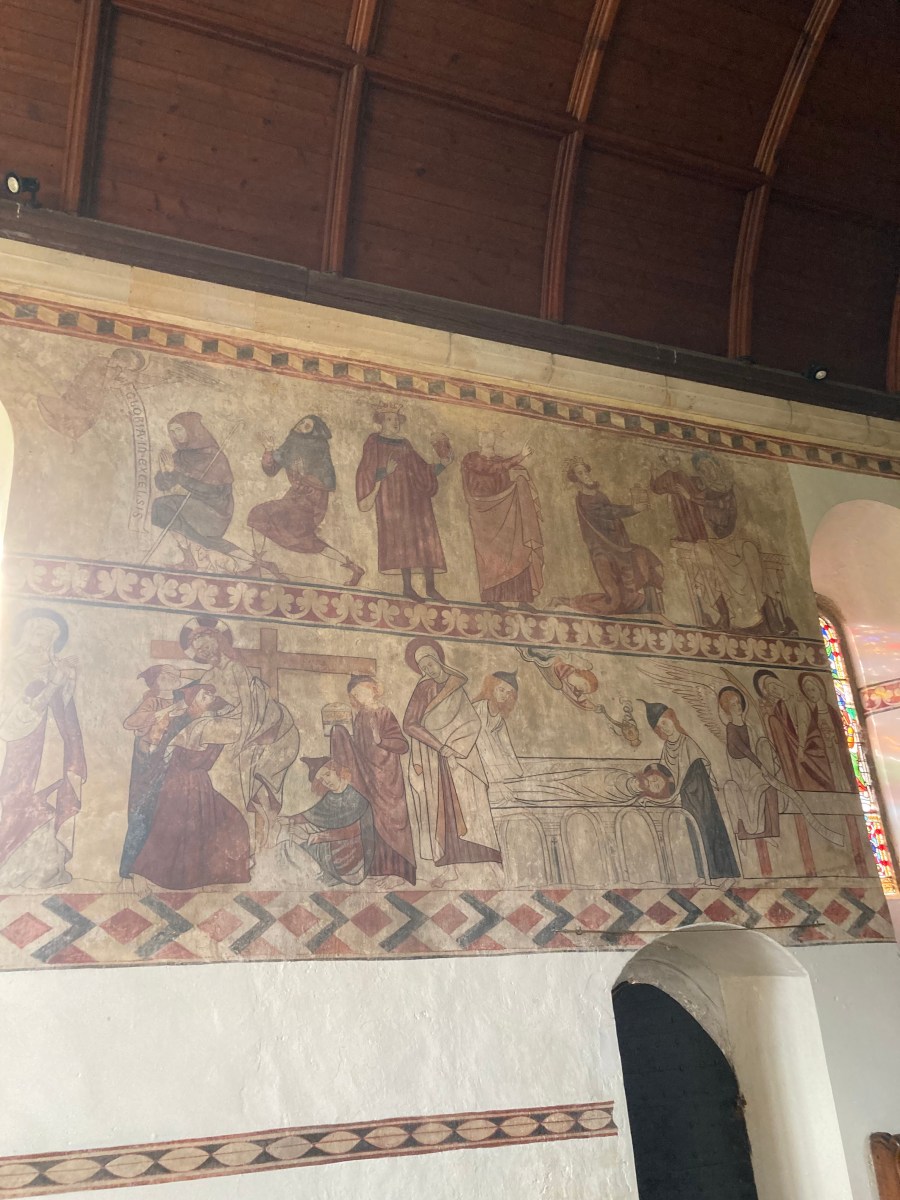
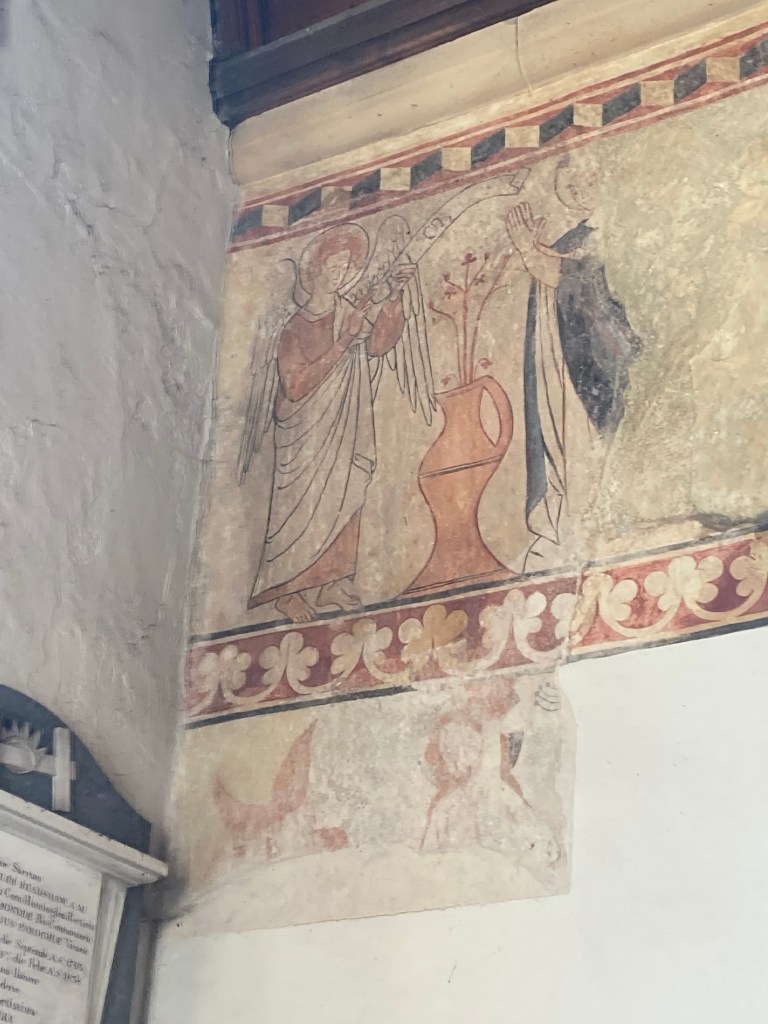
But the true glory is in the medieval wall paintings. They’d been covered over, probably to protect them during the Reformation or Civil War, to be uncovered in Victorian times and restored in the 1990s.
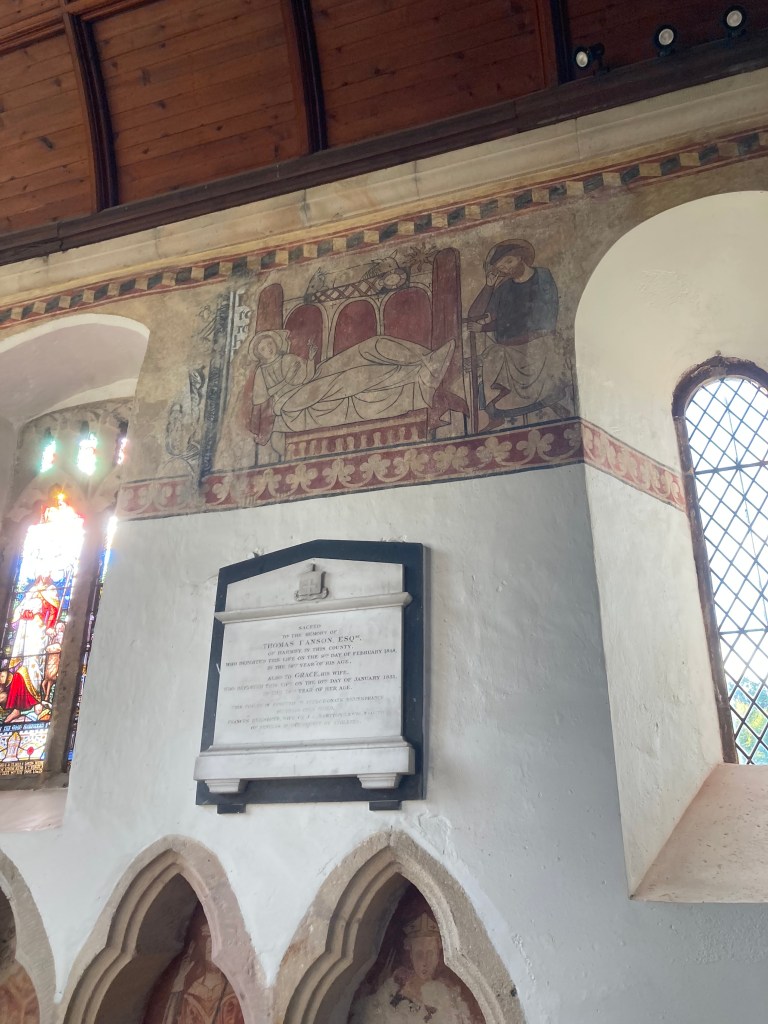
Nativity
Annunciation
Entombment

It’s estimated that the paintings date from around 1250 CE and tell different stories from the Bible. In those times, few could read, and the number that could read Latin – the only language in which the Bible was available here – was smaller still. Not even all priests would have been fully literate. Think of these paintings as holy comics or cartoons to tell the stories to the congregation.

The Garden of Eden
The Seasons (note medieval dress)

It also boasts a (not especially great) replica of the Easby Cross. The original was found in the walls during work almost a century ago and sold to the V&A Museum in London. However, the design is quite something, as is the age, going back to the late 700s, making it an excellent example of a Saxon cross and probably from the first church on the site.
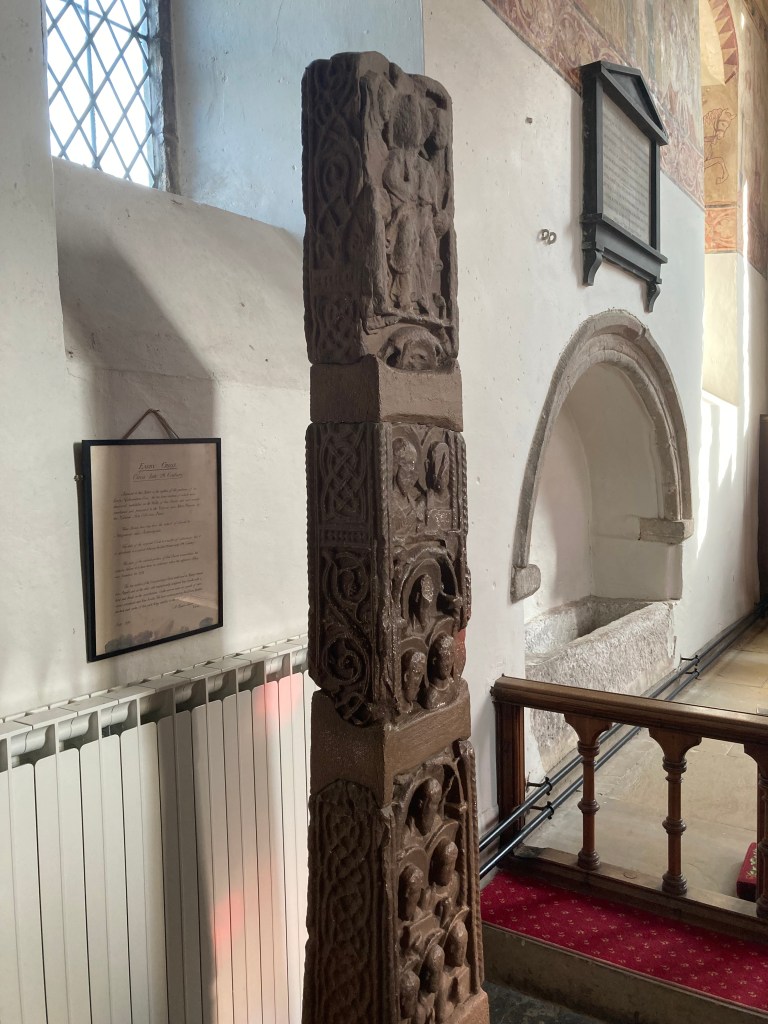
Easby Cross

The church, restored a few times, is in a remarkably fine state; it really does take the breath away. After all, this isn’t even a church in a market town. It’s in an isolated hamlet. The name Easby derives from the Norse name Esi and the suffix by, meaning farm. At the time it was built, the entire parish held perhaps a hundred people.

It stands cheek and jowl by the ruins of Easby Abbey, which was built almost a century after the Norman part of the St. Agatha’s church. The abbey was a regional home to the Premonstratensian Order of regular canons, more widely known as the White Canons for the colour of their habits. They would have served as priests at St. Agatha’s and other churches all across the lands donated to them, and often distributed food where it was needed. They weren’t monks – their services was outside the abbey, not a contemplative life within the walls.
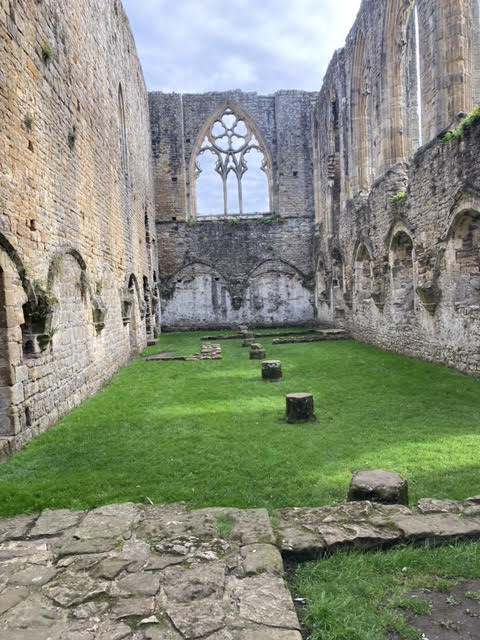
Easby Abbey Refectory

Even so, it’s a large place, one that lasted until the Dissolution in 1536, when those still there were granted pensions and sent on their way. The abbey slowly crumbled after that, and local would have taken stone for their own building projects. Yet even in the ruins there’s a sense of history; you can almost hear the voices of the canons.

The Walk by Richmond Castle

What about Richmond? Great to see again, of course. It’s hardly changed, which is perhaps good. But the day was easily dominated by Easby.

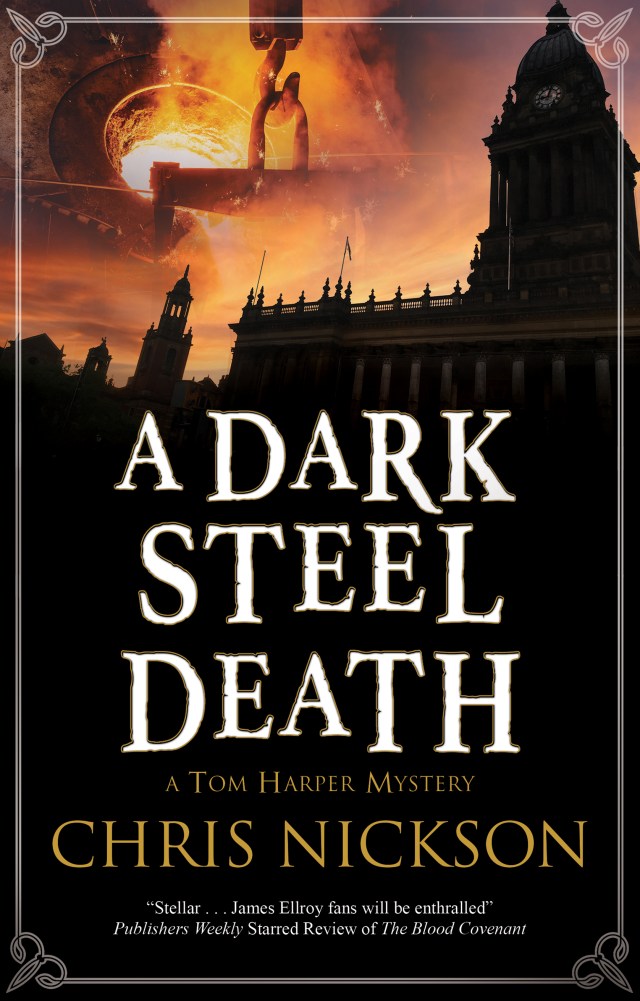
Yes, a lovely detour to medieval times. But, please, I hope you’ll remember that A Dark Steel Death is now out.

Gipton Well And A Dark Steel Death

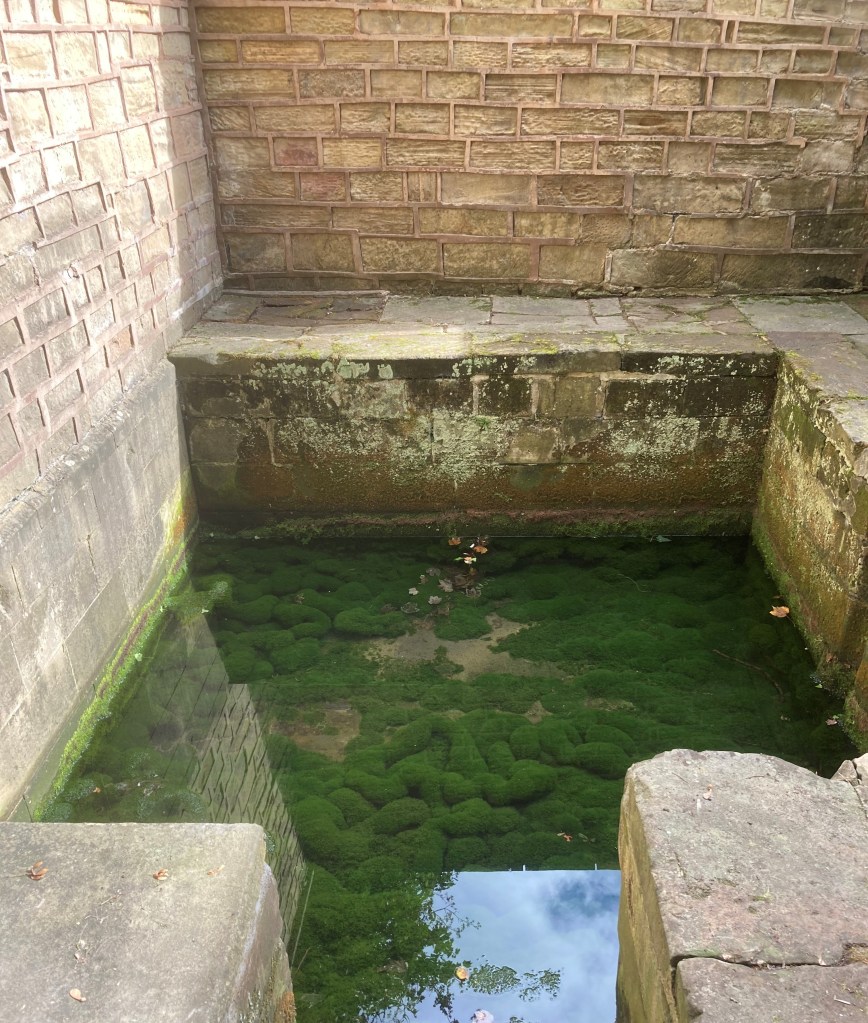
There’s a small place that plays an important role in A Dark Steel Death. Gipton Well, or Gipton Spa Bath House  or Gipton Well and Waddington Bath, to offer the full titles, has its part in the book, although I’m not about to give you any spoilers on exactly what.

It’s one of about 26 wells or spas that once existed around Leeds (including the wonderfully-named Slavering Baby Well in Adel), but are mostly covered over or long forgotten, except in some local names, like Sugarwell in Meanwood).

It was originally built in 1671 by Edward Waddington. His grandfather, Alderman John Thwaites, owned Gledhow Hall, and the well was in the estate; on private property, in other words.

Like so many spas, the water which entered the bath house supposedly had healing properties supposedly head healing properties. Leeds historian Ralph Thoresby brought his son Richard there, attempting to cure him of rheumatism, and that involved sitting in the stone-built cold water bath. Lord Irwin was also a regular visitor.

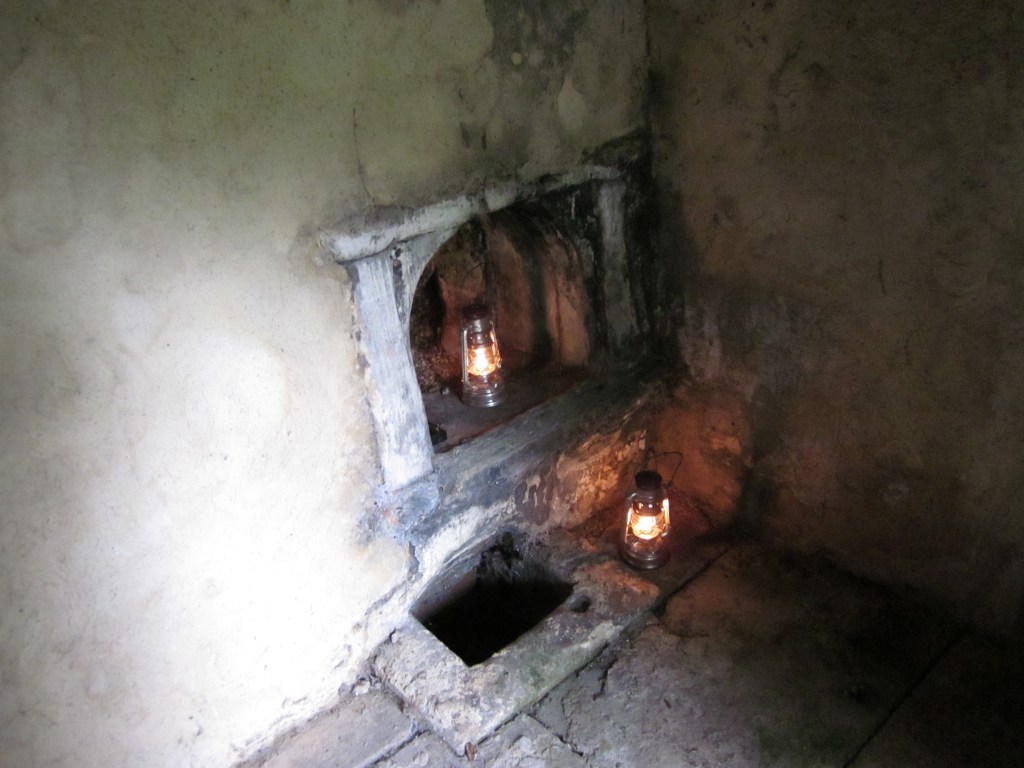
Next to it was a room with a fire for undressing and warming up after a dip in the plunge pool, with a separate spring with water that could be drunk.

Thoresby referred to the place in his Ducatus Leodiensis, where he states the room with its fire is used “to sweat the patient after bathing”.

Edward Parsons also commended the place in his History of Leeds in 1834, and as late as 1881, Kelly’s Directory noted it was still in use, although now it’s “by people who live in the neighbourhood.”

Shortly after it had fallen into disuse and disrepair, to the extent that when the Honourable Hilda Kitson bought Well House Farm (again, the association with the well), which included the spa, she offered £200 to the Council to keep up the spa. The city bought the spa and the land around it in 1926, just after Gledhow Valley Road had opened a few yards away.

While the building has been there for a long, long time, no one seems sure when the walls around the pool were built; certainly much later. I’ve included them in the book purely for plot reasons.

The Friends of Gledhow Valley Woods (an excellent organisation who also provided much of the historical information from their website. Take a look at it here) have doner a great deal of work on the place, and now it’s surrounded by a metal fence to stop vandalism. However, it was open on Sunday as part of Heritage Open Days, and I was able to go inside and take some photos.

Tom Harper’s spectre didn’t fill the place. But after seeing the pictures you’ll be able to be there with him. And I’m sure you will read the book. Hopefully buy it, too, to make sure the final one in the series in published. Thank you.

When The Russian Revolution Came To Leeds

My newest book, A Dark Steel Death, takes place at the start of 1917. It’s a crime novel, but also a war novel – the war on the home front, where things were bleak. The Battle of the Somme the year before had killed and wounded so many of the young men from Leeds; it was said there wasn’t a street in the city that the fighting there hadn’t touch in some way.

But there was more going on the in the world. In Russia, the February Revolution (actually early March in the modern calendar) began to change everything in the country; November would cause a second, final rupture. In Britain, there was plenty of support from the labour movement, with an event held at London’s Albert Hall, attended by 10,000, with another 5,000 outside.

A second, known as the Leeds Convention, was set for June 3, organised by the United Socialist Council, made up of member of the British Socialist Party, the Independent Labour Party, and the Fabian Society.

I toyed with the idea of having that as the backdrop to a book set in 1917. Possibly one of the delegates might have been murdered, or someone protesting the convention. In the end, portraying the outside events in Russia felt a little too complex, and the idea held echoes of the backstory to Gods of Gold. I feel I made the right decision, but this remains a fascinating bit of Leeds history.

The intention was to hold it in Leeds’ Albert Hall – the big room in what was then the Mechanics’ Institute (now Leeds City Museum).

That was where the problems began. Unsurprisingly, the government didn’t want anything like this to happen in the middle of a war. They feared the idea of revolution could spread. They mooted the idea of banning it completely, but didn’t.

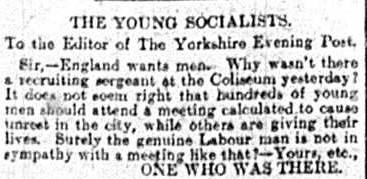
Instead, Leeds City Council refused to allow the use of the Albert Hall and ordered all hotel owners to refuse bookings from delegates, and they seemed to gladly comply. The police banned public meetings; anything to try and prevent things moving ahead (in the on, on the Saturday evening, the police asked hoteliers to sell room to delegates who had nowhere else to sleep). The press had no kind words for the delegates or the subject matter.

However, the Leeds Convention, as it came to be known, did happen. The organisers booked the Coliseum, where Prime Minister Asquith had spoken in 1908 (see The Molten City) and locals opened their homes to delegates.

The local papers came out against the convention, as did some of the national dailies.

The Leeds Weekly Citizen offered a full account of the proceedings, also detailed in the book British Labour and the Russian Revolution (which was reissued in 2017). In the end, 1500 delegates debated four motions. Some big names appeared, including Ramsay MacDonald, Herbert Morrison, Sylvia Pankhurst and Bertha Quinn, who’d go on to become a Labour councillor in Leeds.

Everything went off peacefully, which was more than something else happening in the city over the same weekend – three nights of anti-Jewish rioting. A little about that in weeks to come, another lesser-known and awful incident in the city’s history.

A curious aside: a writer from Leeds was in Russia during and after it all, and came to known the top people. There were rumours that he might also have been a British Intelligence agent as well as a reporter. His name? Arthur Ransome (yes, Swallows And Amazons).

A Dark Steel Death won’t take you inside the Coliseum for the convention, but it will put you on the dangerous and deadly winter streets of Leeds at the start of 1917.

I’d be very grateful if you’d buy a copy or ask your library to stock it.

A Dark Steel Death And Gledhow Woods

At the weekend we walked in Gledhow Valley Woods. Nothing unusual in that. It’s not far from home, a pleasant stroll along Gipton Beck to the past the bridge that leads to the majestic sweep of the carriage drive and up to the old Gledhow Hall, and finally to the lake.

I know it well. We moved to a place right across from it when I was 11. My path to and from school was through the woods. I walked the dog there. Until I was 18 and moved away, I was in there every day. It was my playground, really.

So what, you think. We all have those.

Here’s where my history and my fiction intertwine. This ground is also where the climax of A Dark Steel Death (officially published tomorrow) happens. During World War I, Gledhow Hall became a Voluntary Aid Detachment hospital, one of many in Leeds treating casualties from the front, and…no, no spoilers.

You’ll have to buy the book or borrow it from the library. But it plays out along the woods and all the way to Gipton Spa and Bath House.

Walking, it’s impossible not to remember things that happened to me there. Being chased through the woods when I was a teenager by a skinhead with an axe. More innocently, my dog Mickey chasing a goose down the long hill to the lake, only to find himself unable to stop in time and belly-flopping into the water.

Winter sledging.

A small dip in the lake myself – just one leg below the knee, but it was enough.

A trail to ride my bike. An open area to play football with myself, and all too often having to climb down into the back to retrieve the ball.

I was lucky, having so much green so close. Back then, I had no idea of the history, or the fact that that road along the bottom of the valley was less than 50 years old. It was simply the woods.

Now, I know so much more about the history. The stone bridge near the top of the hill known as Little Switzerland makes for a thin road.

But it was constructed for one man – Jeremiah Dixon, who owned Gledhow Hall. You can see his initials and the date carved into the bridge.

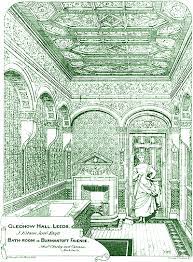
Like so much around Leeds, the land had once belong to Kirkstall Abbey, but with the Dissolution of the Monasteries, it was sold into private hands. Dixon bought the hall in 1763 or 4 and had the bridge built five years later (the date is carved in the sone) to connect his house to his pleasure gardens and ice house on the other side of Gledhow Lane. A later owner, James Kitson, would commission the breathtaking bathroom of hand-painted Burmantofts faience tile (this image doesn’t do it justice).

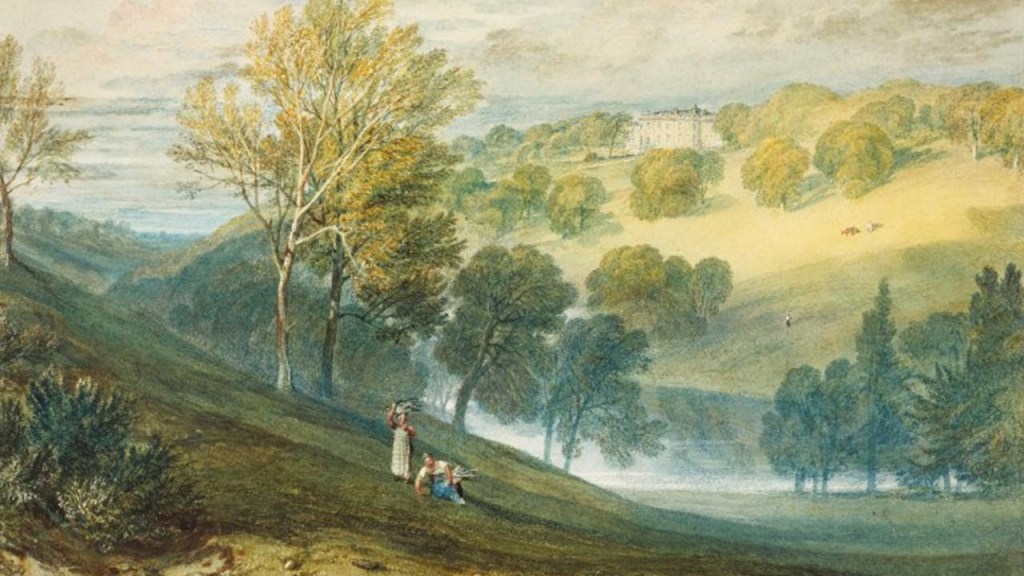
Early in the 1800s, Turner painted the hall, the lake and some of the grounds from the other side of the valley, giving the scene a sweetness and romance that captures some of the sweep. One hundred years later, Tom Harper would be pursuing a killer through there, the ground neglected and overgrown.

Several decades after that, I’d be watching my dog desperately try to stop himself tumbling into the water. Fast-forward even further and we’d be walking along, watching the ducks in the lake.

Time past and time passing, as a Yorkshire songwriter once sang.

Oh, and please don’t forget to buy your copy of A Dark Steel Death, please. Independent bookshops need your business. But this place has the cheapest price and free postage. Thank you.

The Right Note. Or Phrase.

Sorry, but to start off with an aside, A Dark Steel Death is published very soon and I hope you’ll buy it or reserve a copy from your library. I’ve made another video trailer to try and convince you.

Now, on to the main feature…

When I was much younger, I looked up to musicians who could play at blistering speed. Ten Years After on Going Home? Give it to me. The flash of Keith Emerson? Oh yes – saw him live a few times, in fact. But, as I’ve grown older, I’ve learned that so much bluster often covers up the fact that technique can mean saying nothing.

Growing older, I’ve come to realise it’s the right not, and the proper silence that are more eloquent. The quietness of Bill Evans, the two notes from the late Peter Green in Fleetwood Mac that conveyed a world of hurt. The oblique, startling keyboard move of Thelonious Monk. The way Robert Wyatt allows the air into his songs.

It’s much the same with writers. I’ve come across those who overwrite, maybe caught up in language. No doubt it’s good; the critics seems to think so. But we’re all different. It wearies me, the same way that listening to an overbusy guitar solo tires my senses. The same way notes and silence serve a piece of music, not the other way round, then words and spaces are there to serve the story.

There are many kinds of writing of course, just as there are many types of music. My tastes are my own, I’m not trying to impose them on anyone.  I keep trying to hack away the excess in my work and allow the story and the characters to shine through. They’re what matters. If a reader doesn’t actually notice the writing, then I’ve probably succeeded.

Saying Goodbye To Book Family

This morning I finished writing the 11th and final Tom Harper book. It’s a strange feeling to know I’m saying a final farewell to Tom, Annabelle, Mary, Ash and the others. After all, we’ve gone through 30 years together – it takes place in 1920, three decades after Gods of Gold. An awful lot has happened along the way, to Leeds, to the world, and to them. I’ve been their companion for almost a million words.

Curiously, it’s not the first time I’ve written a book with the title Rusted Souls. I completed a version last year, but even as I was working on it, I know Tom deserved to bow out on something better than this. I set it aside and never went back to it, and I know that was the right decision.

This one is the Tom Harper book I was meant to write.

It’s still only a draft. I’m going to allow it to percolate for a few weeks, go back and hopefully make it a better book – probably about the time A Dark Steel Death is officially published (although everyone appears to be selling it already, so do please get your copy or reserve it from your local library). And even then, there’s no guarantee my publisher will want it. Of course, I hope they will, to round things off neatly.

I feel sad to be saying goodbye to people who’ve been such good friends. More than that, they’ve become family. I know them so well, their joys, their sorrows and the pain they have. Strange as it may sound, I feel privileged to have been in their lives.

And please, don’t tell me they’re fictional. I won’t believe you.

A Very Limited Time Offer On The Crooked Spire

In May, The Crooked Spire reached the stage in Chesterfield as a murder-mystery musical. Very professional produced, too. Back then, I said the company that did it has plans to make it available online.

Well, that time has just about come – but it’ll only be for a short while. From tomorrow (July 8), one of the performances of the show will be available via for one month only. Please book your tickets here. However, you should be aware that it’ll cost £8 to view. A very fair sum, given the work that so many people put into it.

If you decide to watch it, I hope you’ll enjoy it. I know that when I saw it, they did a cracking job.

My Books, My Rules

It’s about 16 years since I wrote my first published novel, The Broken Token – it took a while to find someone willing to put it out. But for some reason, I’ve remembered that I created a set of rules for myself back then. I’d read plenty of crime novels and I was tired of the loner, heavy drinking detective, and so much that went along with it.

My main character would be married. Most are. Since then, only one of my protagonists hasn’t been married on quickly on the way there. I wasn’t trying to be different, simply to reflect life. And most have had happy marriages, with or without children.

I decided that anyone could die. Again, it was simply life. People die at all ages, for all manner of reasons. Within the business of enforcing the law, there’s always a greater chance of violence. I kept that rule throughout the Richard Nottingham series (and one death brought quite a few variations on “you bastard”). I ditched it for the Tom Harper books, because conditions and life expectancy had improved in a century and a half, although things do happen, like Billy Reed’s heart attack. And the main characters have stayed alive (so far) in the Simon Westow series. I’ll say nothing else about that.

The characters have lives outside their work. We all do, and they’re often more important than anything else. They round out the people, make them human and three-dimensional. Know that and you know them and you’re even more willing to follow them.

The reader has to feel they’ve walked through the place, and experienced that time. All the sighs and smalls and noise. It needs to be alive to be convincing. It’s one reason that most of my books are set in Leeds. It’s the place I feel, that I know through the soles of my shoes. I can sense the different periods of history, like seeing through different layers of time. I can touch them, taste them. All I do is write down that move in my head, including the descriptions of the where and when.

History is important, but it’s more the local than national effect. As we grow into the 20th century, that changes, but as a rule of thumb it’s true. People cared about what affected them directly. How they lived, conditions of houses, money in their pocket. A writer needs to know their history. But to be convincing, it needs to be worn lightly. Woven into the fabric of the story so it falls gently on a reader’s shoulders. No information dumps.

Create people that readers care about. Even the second character need three dimensions. Cardboard doesn’t work.

I still try to live by all of those. But – and it’s a very big but – there also has to be a good, powerful story that will engage people. That’s at the heart of it all.

I try, but it’s only you, the readers, who can say if I succeed.

To finish, please indulge me while I ask a favour. My most recent novel, The Blood Covenant, has had the types of reviews a writer can only dream about. The one coming in September, which isn’t far away now, is very good, the 10th Tom Harper novel. Yes, I’d love for you to buy them. Ideally from an independent bookshop, but outlets like Speedy Hen and the Hive in the UK have excellent prices and free postage. Like everyone, though, I know we’re all squeezed and books are a luxury. If you can’t afford it, please order from your local library. If they don’t have it, they will get it in. If every library system in the UK, US, Canada, Australia and NZ ordered copies of both, it would be handsome sales figures. And it would be on the shelves for everyone to read.

Even if you can afford, please consider the library request – that way it’s there for others.

Thank you.

If you have some time to spare – quite a bit of time – I was interviewed for the Working House podcast. You can listen here.

A Dark Steel Death – The Video

Leeds, December 5, 1916

The car slid quickly through the streets. Deputy Chief Constable Tom Harper stared out of the window. Leeds was black, a wartime winter-darkness, barely a single thin sliver of light showing through the blackout. A quarter of an hour before, he’d been comfortably asleep in bed, until he was torn out of a dream by the telephone bell. As he hurried to answer, he wondered if it was finally happening: the Zeppelins had come to attack Leeds.

            No. This was worse. Far worse.

            He could see the fire from half a mile away. Flames licked high into the sky. A moment later he smelled the hard, overwhelming stink of cordite.

            ‘Duty sergeant, sir.’ He’d had to press the receiver against his good ear to make out the words. The man’s voice was flat, empty of expression. ‘Our officers at Filling Station Number One rang in. There’s been an explosion. A car is on its way for you.’           

  Filling Station Number One. Everyone around here knew it by a different name – Barnbow.

The book is out everywhere, hardback and e-book, in September. You can pre-order it now.