We’re close to the end of 2022, hard to believe. That means it’s time to take a peek into what the next 12 months promises in books. Well, my books. Before I do, though, I’d like to recommend the best thing I’ve read this year. It’s Demon Copperhead, by Barbara Kingsolver. A modern Appalachian retelling on David Copperfield, it’s both harrowing and redemptive and very beautifully written. Tell them I sent you (and it’s not too late to catch up with Thomas M Atkinson’s Tiki Man, in my estimation the best thing to appear in 2021).
So…
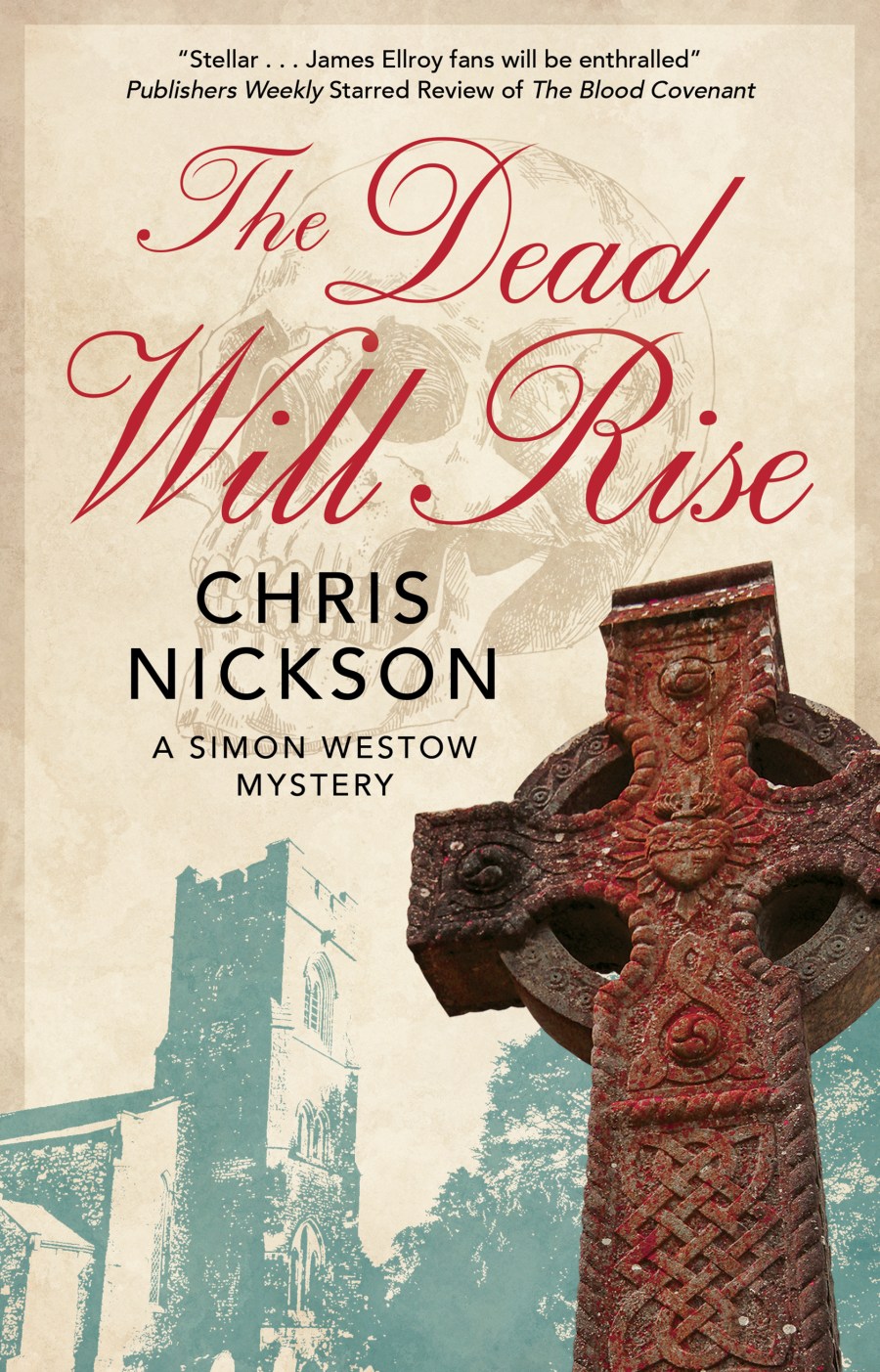
March is set to bring the fifth Simon Westow book, The Dead Will Rise. It’s a series that definitely grows dark; by now it’s living up to the Regency Noir tag I gave it.
What’s it about? Here’s the blurb.
Leeds. April, 1824. Wealthy engineer Joseph Clark employs thief-taker Simon Westow to find the men who stole the buried corpse of Catherine Jordan, his employee’s daughter.
Simon is stunned and horrified to realize there’s a gang of bodysnatchers in Leeds. He needs to discover who bought Catherine’s body and where it is now. As he hunts for answers, he learns that a number of corpses have vanished from graveyards in the town. Can Simon and his assistant Jane bring the brutal, violent Resurrection men who are selling the dead to medical schools to justice and give some peace to the bereft families?
In case you’re wondering, there really were bodysnatchers in Leeds. But that’s a tale for another time.
Then, next autumn, there’s the big one: Rusted Souls, the eleventh and final Tom Harper. It takes place in 1920, in the aftermath of the Great War and the Spanish flu. It’s 30 years since the series began with Gods of Gold and now Tom has become Chief Constable.
This book mean a lot to me. I’ve spent three decades with the Harpers. They’re family to me, and saying goodbye was hard. I’ve written in the region of 800,000 words about them. Being able to round it properly was important to me, and I feel I’ve done them justice. But time will tell. They’re crime novels, a saga of a family, but also an exploration of a changing Leeds, I think. I’m proud to have written these. No cover design yet
But that’s all for next year. Meanwhile, I wish you and your happy holidays and a peaceful, healthy New Year – and thank you for reading. And remeber – books make great gifts, for yourself as well as others.
This morning I finished writing the 11th and final Tom Harper book. It’s a strange feeling to know I’m saying a final farewell to Tom, Annabelle, Mary, Ash and the others. After all, we’ve gone through 30 years together – it takes place in 1920, three decades after Gods of Gold. An awful lot has happened along the way, to Leeds, to the world, and to them. I’ve been their companion for almost a million words.
Curiously, it’s not the first time I’ve written a book with the title Rusted Souls. I completed a version last year, but even as I was working on it, I know Tom deserved to bow out on something better than this. I set it aside and never went back to it, and I know that was the right decision.
This one is the Tom Harper book I was meant to write.
It’s still only a draft. I’m going to allow it to percolate for a few weeks, go back and hopefully make it a better book – probably about the time A Dark Steel Death is officially published (although everyone appears to be selling it already, so do please get your copy or reserve it from your local library). And even then, there’s no guarantee my publisher will want it. Of course, I hope they will, to round things off neatly.
I feel sad to be saying goodbye to people who’ve been such good friends. More than that, they’ve become family. I know them so well, their joys, their sorrows and the pain they have. Strange as it may sound, I feel privileged to have been in their lives.
And please, don’t tell me they’re fictional. I won’t believe you.
Later this year, there’s a new Tom Harper book coming. It’s called A Dark Steel Death and it’s set during the First World War…
Leeds. December, 1916. Deputy Chief Constable Tom Harper is called out in the middle of the night when a huge explosion rips through a munitions factory supplying war materials, leaving death and destruction in its wake. A month later, matches and paper to start a fire are found in an army clothing depot. It’s a chilling discovery: there’s a saboteur running loose on the streets of Leeds.
As so many give their lives in the trenches, Harper and his men are working harder than ever – and their investigation takes a dark twist with two shootings, at the local steelworks and a hospital. With his back against the wall and the war effort at stake, Harper can’t afford to fail. But can he catch the traitor intent on bringing terror to Leeds?
Would you like a very early look at the cover? Scroll down. But first, I’m going to say with pride that the beautiful Leeds Library, the oldest subscription library in Britain, founded in 1768 (read about it here) has listed their most-borrowed titles of the last 30 years, and The Broken Token is in there at number eight, among some huge names. I honestly feel pretty humble.
And now for the cover of A Dark Steel Death. What do you think? Please, let me know.
A lovely, romantic name that conjures up country air and the scent of flowers. Quite bucolic.
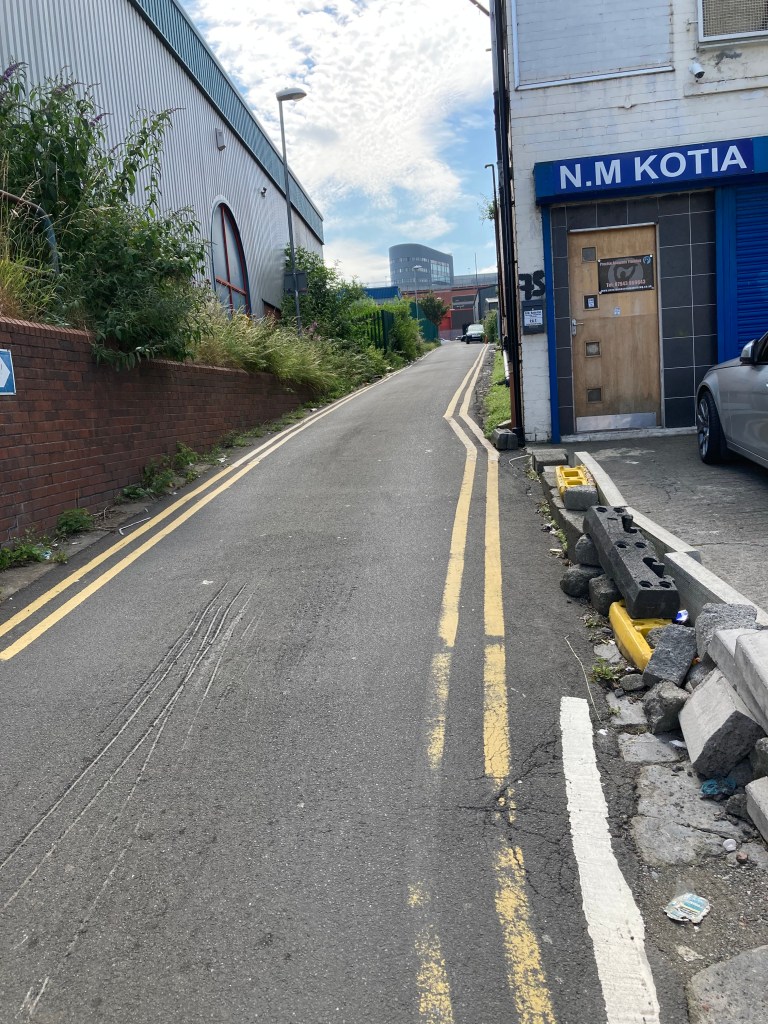
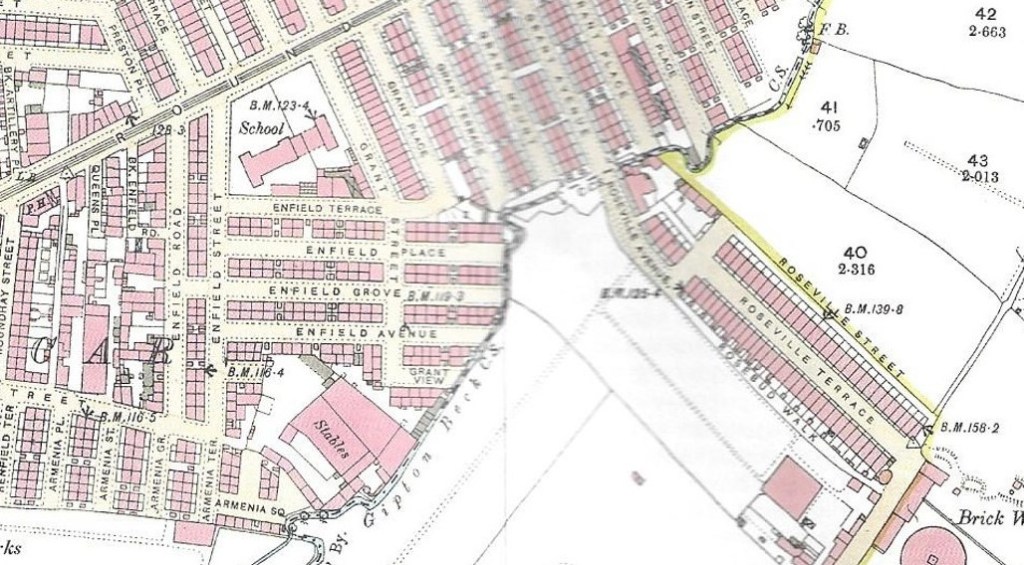
Except for the fact that it stands on the edge of Sheepscar, running between Roseville Road and Dolly Lane Not long ago it was a short street of terraced houses, their brickwork covered with soot and smut. It’s little more than a good stone’s throw from the Victoria, the public house on Roundhay Road that Annabelle Harper runs in my Tom Harper novels; Rosebud Walk even gets a mention in one of them.
This is how the area looked in 1903. You can’t quite see the street, it’s off to the right.
This is the way it looks now. Not exactly pretty or rose-filled, is it? You at that low wall with the street sign? That’s the wall at the right-hand edge of the 1903 picture.
Yet it wasn’t always this way. Rosebud Walk has a history that reaches to the early part of the 19th century, and back then it earned its name.
We think of Sheepscar as part of the inner city, transformed from working-class housing into light industrial estate. At the beginning of the 19th century, it was countryside; hardly more than a few houses and farms. It had a bridge over the beck, carrying a turnpike road heading north towards Harrogate. A rapeseed oil mill and a ground redwood mill, along with the dye works, were the only businesses. The area, according to historian Ralph Thoresby, was “mostly inhabited by clothiers” – men who. wove wool into cloth and took it into Leeds to sell at the cloth market.
In 1810 another major road was constructed, branching off the turnpike just north of the bridge towards Wetherby – what we know today as Roundhay Road and the A58.
Nine years later, a cavalry barracks, locally known as Chapeltown Barracks, was erected over 11 acres to the east of the Harrogate turnpike and north of the Roundhay turnpike.
Curiously, this didn’t bring an immediate flux of businesses to Sheepscar. The trade directory for 1823 lists a pair of grocers, a seed crusher, a whitesmith, a painter, Holroyd’s dye works, and one cloth dresser. By 1828, a joiner was listed in Skinner Lane. They were the sole tradesmen listed in the area.
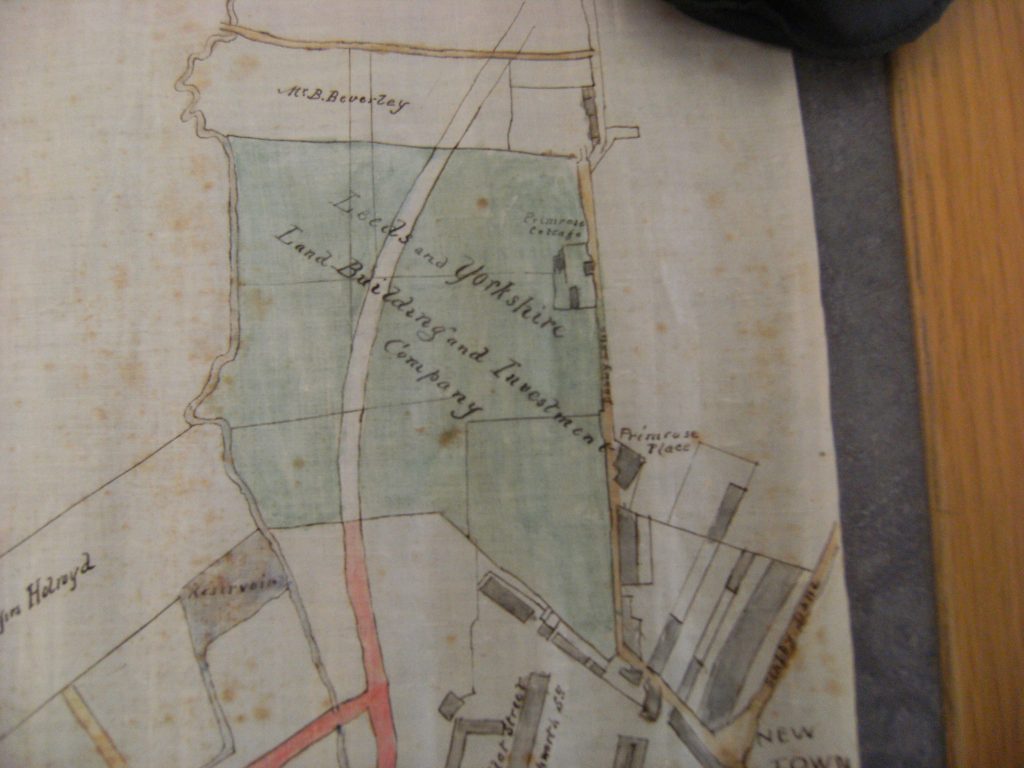
By 1834, there was a little more, but this was still very much well outside Leeds. A map from 1834 shows that the few buildings were clustered around the junction where the Roundhay turnpike, Sheepscar Lane, and Manor Street came together. But there was a new addition.
A little further up the turnpike you’ll notice a tea and pleasure garden across from the barracks, probably for the officers and their families. Owned by Mr B Beverley, it extended to Gipton Beck and beyond, stretching the track that would soon be called Dolly Lane.
This map from 1837 shows the extent of Beverly’s holdings. By this time they only seem to extend from Gipton Beck at the west to Dolly Lane in the east.
By 1839, the tea garden is listed on Roundhay Road, and run by Edward West.
Let’s move on to 1847. The tea garden has a name now – Rosebud Garden – and a house called Rosebud stands by to Gipton Beck. At this point the water would still be pure there, before it reached the piggery at the end of Manor Street and Holroyd’s Dye Works.
A path connects the garden to Roundhay Road and the barracks. Sadly, we have no information as to what the tea gardens were like. Very likely there was entertainment, musicians playing, possible more, but we’ll never know the details.
Rosebud Gardens still existed in 1866, and the house named Rosebud was still there. Even at that point, there was very little building in Sheepscar. It would have been green, the air reasonably clean, pretty much semi-rural.
Everything began to change soon after, in 1870. The streets began to rise up in Sheepscar. Housing for the growing numbers of the working classes, back-to-backs and through terraces. By 1890 Rosebud Gardens had gone. The top boundary was now Roseville Street, and the bottom had become Rosebud Walk, a line separating the backyards of Roseville Terrace from the land behind. That name would be the only way the place would live on.
By 1906 it was even more hemmed in, with the Keplers to the north, and then the Andersons as Harehills grew.
That was how it would stay for a few decades, until the demolition of Sheepscar. Roseville Terrace has been pulled down, although one side of Roseville Street remain.
And Rosebud Walk is there, a single lane through from Dolly Lane to Roseville Road. Not even a memory of the tea garden, or even of the houses that were once there. Only a name.
Yes, as June arrives and summer really seems to be here – 23C yesterday and the allotment is grateful! – the times is paxssing quickly. In just over three weeks, Brass Lives will be published in the UK (ebook everywhere on August 1, and US hardback publication in September, I believe).
It’s the first time I’ve used a real, well-known person as the foundation for a major character, and given his life the kind of turn it never had.
Who? A Leeds-born man who moved young to New York and become notorious as a gangster and bootlegger – and as a killer. Owen Madden. Here’s a short film I made about him in my other role as writer-in-residence at Abeey House Museum. He really is a fascinating person.
My version of him, Davey Mullen, is a little different.
Why not read it and find out? This place has the cheapest price, and free shipping (and they’re not Amazon).
It’s just four weeks until Brass Lives, the ninth Tom Harper novel, is published. Set in 1913, it features Davey Mullen, who was born in Leeds but moved to New York as a child. Now 21, he’s a gangster, a killer, recuperating from an ambush in Manhattan, where he was shot 11 times and left for dead.
Mullen – based on a real figure, Owen Madden – is supposedly back to visit his father, who remained in Leeds. The New York police have warned Leeds, and Tom, now Deputy Chief Constable, has uniforms tailing Mullen. But he’s still surprised when the man shows up at the Victoria one night…
He’d finished his supper and poured the last cup of tea from the pot when Dan the barman came up the stairs to the parlour.
‘I’m sorry to bother you, Tom, but there’s a man downstairs asking for you.’
That was unusual; people rarely sought him out at home. ‘Not one of my lot, is it?’ he asked. Maybe they’d found Fess. No, couldn’t be, Harper thought; they’d have telephoned.
‘This one’s definitely not a copper.’ Dan frowned. ‘You ask me, he’s got the smell of crime about him. Young and big. Talks strange, too. Like he’s from Leeds but with something else on top that I don’t recognize.’
Harper gave a grim smile. Mullen had decided to come to the Victoria.
‘Thanks, Dan. I’ll be down in a minute.’
Annabelle was watching him. ‘You know who it is, don’t you?’
‘I can take a good guess. It’s that man I told you about, the one from New York. Mullen.’
‘The one who’s killed people.’
‘Yes.’
‘Here. In my pub.’ She glared and started to rise.
‘Give me a minute before you come down,’ he asked. ‘Don’t worry, I’ll make sure he doesn’t cause any trouble.’
‘He’d better not.’
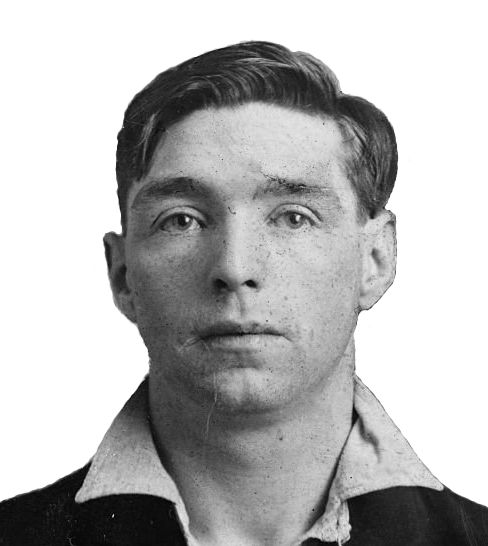
Mullen was sitting at a table with his back to the wall, a pint of beer in front of him. He had the handsome, dark Irish looks that he’d shown in his police photograph, wearing an expensive grey suit that fitted him flatteringly, with a soft collared shirt and a brilliant red silk tie fastened with a gold pin. Flaunting his money in his clothes.
He sat with his legs crossed, shining black shoes catching the light, looking at faces and assessing their eyes for danger as Harper settled across from him.
‘You’re safe enough in here. From the customers, at least.’
A dip of the head in acknowledgement.
‘This must be different from the places you’re used to at home,’ Harper said.
Mullen grinned and showed his good, even teeth. ‘A bar’s a bar, doesn’t matter where you put it. Sláinte.’ He took a long drink of bitter. ‘I’ll tell you this, though: the Americans have a long way to go before they can brew beer like the English.’ He stared at the glass. ‘And Leeds is home, after a fashion.’
‘Some parts of it might be. But not this place. What brings you out here?’ Harper’s voice was sharper, his face hard.
‘A man told me that you lived above a public house. I was curious to take a look and see what kind of deputy chief constable would do that. Anyway, it’s only a short stroll from Somerset Street. Perfect for a summer’s evening.’
Harper saw the man’s gaze shift and his smile broaden.
‘This is the woman who owns the public house,’ he said.
‘Mrs Harper.’ Mullen stood. For the briefest moment, he looked awkward and self-conscious, as if he wasn’t quite sure how to act around a woman. ‘A pleasure to meet you. You have a very welcoming pub here.’
She sat, never taking her eyes off him. ‘Are you enjoying your visit to England, Mr Mullen?’
‘I am, ma’am. I’m enjoying being back and seeing my father again.’ Dan was right, Harper thought; there was still a definite trace of Leeds in his voice, somewhere deep in the bedrock. But much of it had been overlaid by the nasal New York cockiness. ‘I got to say, it’s changed a lot in ten years.’
‘How is your father?’ Harper asked, as if he hadn’t seen a report on Francis Mullen just the day before. The man spent the better part of his time drunk. He’d been kicked out of two beershops for trying to start fights.
‘Happy to see me,’ Mullen replied after a moment.
‘I don’t know if you’ve heard, but there’s another American in Leeds at the moment. Someone called Louis Fess. He’s from New York, too. Maybe you know him.’
He’d dropped the name drop to see Mullen’s reaction. It was a pleasure to watch the way his face shifted: anger first, then worry, and finally a snapped-on grin of bravado. All in the course of a second or two. Interesting; he hadn’t known that Fess was here.
Mullen ran a hand down his jacket, smoothing the material. ‘No,’ he said, ‘it don’t mean anything.’
Maybe that worked on the American police, but it wouldn’t fool any copper in Leeds. He knew exactly who Fess was, and he wasn’t pleased to hear the name. No surprise, since he was from a rival gang.
‘A suggestion,’ Harper said as the man drained the rest of his pint in a single swallow. ‘Actually, it’s more like an order. You’re going to take out that gun very carefully and leave it with me.’
‘Why?’ The man’s body stiffened, as if he was preparing for a fight.
‘First of all, you spent a lot of money on that suit and it’s ruining the cut. It’s also illegal under the 1903 Pistols Act. Do you have a licence for the weapon?’
‘I didn’t know I needed one.’
It was a lie, it showed in his eyes. He wanted to be challenged.
‘If the barrel is shorter than nine inches, the law says that you do. Since you’re a visitor here, we’ll let that pass as long as you leave the weapon here.’
For a moment, Mullen didn’t move and Harper could feel the tension grow around him. Then he reached into his pocket, brought out the gun with the barrel between his fingers and placed it on the table.
‘Satisfied?’
‘For now. Thank you.’
The outside door opened and Mary entered, waving before she disappeared upstairs.
‘Is that your daughter? Mary, right?
Annabelle turned her head to stare into his eyes. ‘I tell you what, luv, now it’s my turn to make a suggestion.’ Her voice was iron. ‘Only mine’s an order, too. You’re going to forget you ever knew her name, or that you saw her. And if you show your face in here again, I’ll bounce you out on to Roundhay Road by the seat of your fancy trousers before you can say Jack Robinson.’ She stalked away.
Mullen glared but said nothing. Harper watched as the man stifled his anger. No one would dare talk to him like that in America; he’d tear them apart for the sport of it. But New York was half a world away. He was in Leeds now. The rules were different and he was powerless.
‘I think your wife has taken against me.’
‘Very perceptive, Mr Mullen. There are plenty of other places to drink in town. You’d do better in one of those. I’m sure you can find your way back to where you’re staying. The Metropole, isn’t it?’ He stood. ‘I’ll wish you goodnight.’
The constable following Mullen was standing outside the Victoria, watching his quarry stride furiously away. Harper stood next to him. ‘Make sure you don’t let him out of your sight.’
Brass Lives is published in hardback in the UK on June 24 (7 September in the US). You can pre-order it here (cheapest price and free postage). Prefer ebooks? Here’s the Kindle link (available worldwide August 1)
If you’re on NetGalley and authorised for Severn house releases, you can find it here.
In Brass Lives, set in 1913 Tom Harper – promoted now to Deputy Chief Constable – finds himself face with Davey Mullen. He’d left Leeds when he was a boy to join his mother in New York. Over there he’d become a gangster, a killer. Ambushed by another gang in Manhattan, he was shot 11 times and left for dead.
They should have finished the job. Now it’s his would-be assassins who are in the morgue, while Mullen is back where he began, in Leeds. To visit his father, he claims. But death seems to have taken passage with him, and Harper needs to discover the truth and stop all the killing that threatens to take over Leeds.
Davey Mullen is based on Owen Madden. He was born on Somerset Street to parents of Irish descent. He did follow his mother to New York when he was 10, and he did jon a gang, the Gophers. He developed a reputation for violence and murder.
He really was shot 11 times outside a dancehall, and he survived.
Did he come back to Leeds under another name? Maybe he did…
It’s just a few weeks until Brass Lives is published. You can pre-order from all the usual places…but buying it from a real bookshop would be a lovely gesture. After being closed for so long, they need the business.
Lastly, if you’re new to the series – this is the ninth book – you can make an easy start, as the ebook of the first novel, Gods of Gols, is just 82p (99c) on all platforms. Here’s the Kindle link.
There’s a new Tom Harper book coming. The UK hardback publication is June 24th. While I don’t have another date dates, a fair guess would be global ebook publication on August 1, and US hardback on September 1.
Just to whet your appatites, here’s a little bit about it:
Leeds. June, 1913. Tom Harper has risen to become Deputy Chief Constable, and the promotion brings endless meetings, paperwork, and more responsibilities. The latest is overseeing a national suffragist pilgrimage passing through Leeds on its way to London that his wife Annabelle intends to join. Then a letter arrives from police in New York: Davey Mullen, an American gangster born in Leeds, is on his way back to the city, fleeing a bloody gang war.
Despite Harper’s best efforts to keep an eye on him, Mullen’s arrival triggers a series of chilling events in the city. Is he responsible for the sudden surge in crime, violence and murder on Leeds’s streets? Tom has to become a real copper again and hunt down a cold-blooded killer, even as his world starts to crack apart at home.
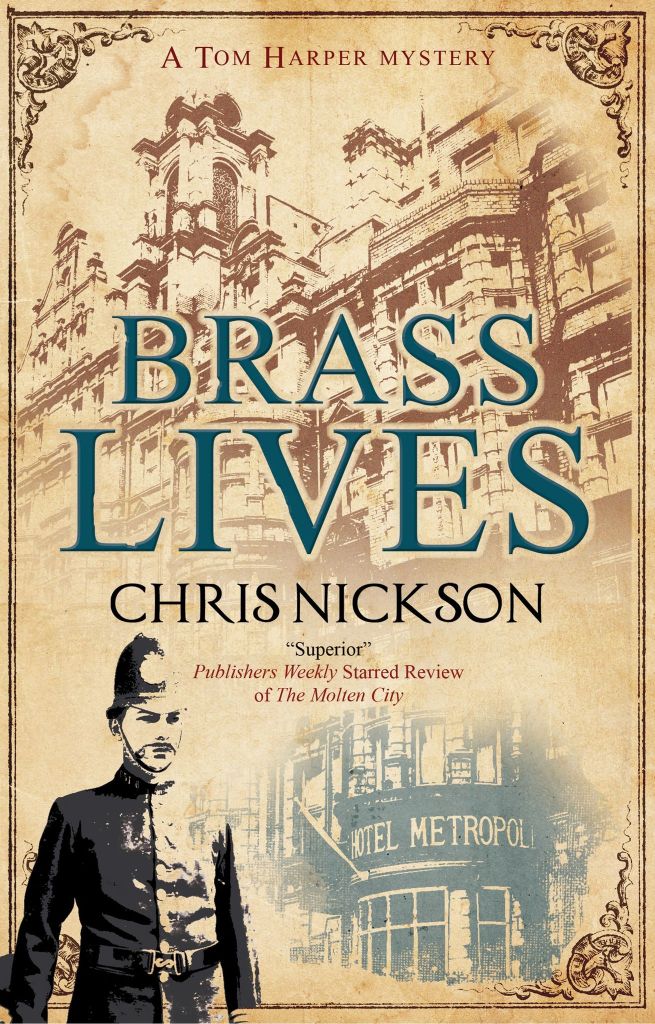
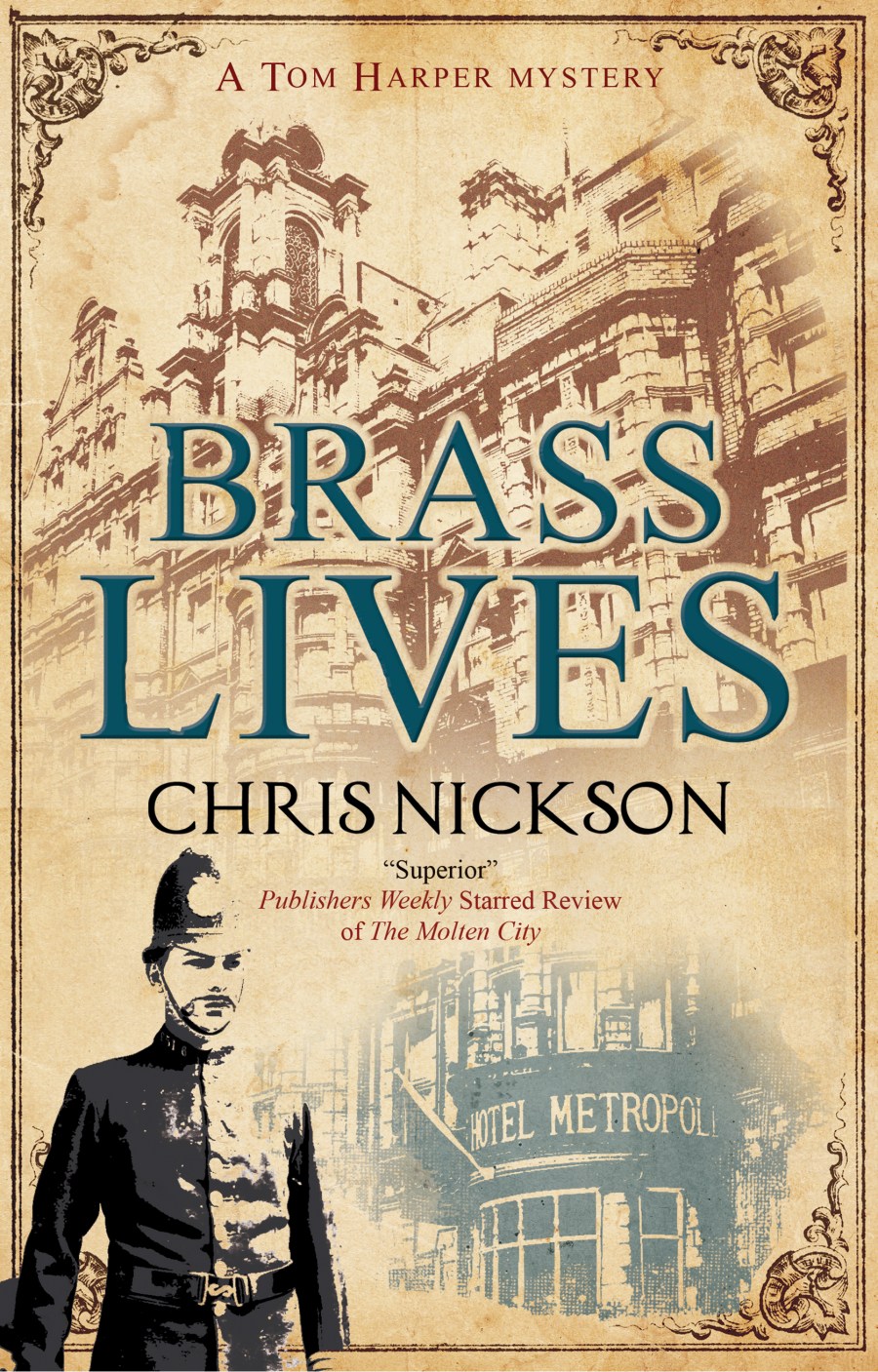
Do you want to see the cover?
Sure you do, it’s absolutelt splendid.
Isn’t that great? The character of Davey Mullen is based on Owen Madden, a Leeds lad who did become a New York gangland figure. He owned the Cotton Club, and went on to die peacefully at a ripe age. A fascinating made – read about him here
Even in the brief flurry of sunshine and warmth we’re experiencing in Leeds right now, I know the days are dark. It doesn’t matter where you live. In Seattle, where I spent many years, it’s literally dark and choking with the smoke from the fires up and down the coast and father inland. You’ve probably seen the photos from California and Oregon, where the world looks like part of the apocalypse.
It’s hard not to be downhearted and depressed. I find solace in escaping to my allotment, where nothing else can touch me and I live simply doing the jobs in front of me (this week, stripping the borlotti beans – there are a lot this years, it seems!) and taking down the vice, before preparing that bed for winter. After that, pick blackberries and the rest of the apples. There’s a sense of order, of continuity in it all that makes me happy.
But I do have some more sunshine this week. First to bring you up to speed. The third Simon Westow novel will be published in the UK at the end of December. It’s called To The Dark, and yes, it’s dark indeed. For some reason, it’s not showing up to pre-order on Amazon. However, good independent shops will be glad to take your order, or there’s Speedy Hen, which has the lowest price I’ve seen and free postage. Look here.
What’s it about? I’m glad you asked: The city is in the grip of winter, but the chill deepens for thief-taker Simon Westow and his young assistant, Jane, when the body of Laurence Poole, a petty local thief, emerges from the melting snow by the river at Flay Cross Mill. A coded notebook found in Laurence’s room mentions Charlie Harker, the most notorious fence in Leeds who’s now running for his life, and the mysterious words: To the dark. What was Laurence hiding that caused his death? Simon’s hunt for the truth pits him against some dangerous, powerful enemies who’ll happily kill him in a heartbeat – if they can.
The middle of 2021 will bring Brass Lives, the ninth Tom Harper novel, set in 1913. It features a boy from Quarry Hill in Leeds who went to New York when he was 10 to join his mother. More than a decade on and he’s come back to see his father. Over in America he’s made a reputation as a gangster and a killer. The problem is that death has followed him to Leeds. It’s inspired by Owen ‘Owney’ Madden, whose true story is well worth reading. One of the few in his line of work who retired and lived to a ripe age.
And now….drum roll.
I’ve signed a deal for a fourth Simon Westow, tentatively titled The Blood Covenant, set in 1823. Very likely to appear at the end of 2021 in the UK. And also A Dark Steel Death, the 10th (!) Tom Harper novel, which is set in 1917, and probably out in the middle of 2022 – assuming we’re all alive them.
And no, I won’t tell you more about them. You’ll have to wait.
2022…I’m not even sure I can think that far ahead. But I have to now.
Just this week, my publisher put up a blog interview with me about what these last 10 years of publishing books has been like. You can read it right here. It touched on a few things, book things, but to my amazement, the decade has stretched beyond that.
There have been a couple of plays, The Empress On The Corner, a one-women play about Annabelle Harper and her life, with scenes performed at various places in Leeds. One was filmed at the Hark To Rover pub in Abbey House Museum.
New Briggate Blues was commissioned by Leeds Jazz Fest in 2018. It featured Dan Markham (Dark Briggate Blues) and revolved around memories of Studio 20 Jazz Club in Leeds. Two characters plus a live jazz quintet, and both performances sold out.
The biggest thing, though, came with my involvement in The Vote Before The Vote, an exhibition at Leeds Libraries about the Victorian Leeds women who worked towards suffrage. It coincided with the publication of The Tin God, when Annabelle Harper runs to become a Poor Law Guardian. I wasn’t the historian who did most of the work, but I helped, and I’m hugely proud to be have been part of it – and that Annabelle wrote herself into Leeds history.
Of the books, perhaps the thing that truly blew me away happened in 2011, when Cold Cruel Winter, my second novel, was named one of the 10 best mysteries of the year by Library Journal. I was quite literally speechless for a while.
So what lies ahead? Here’s a taster:
“The end of this year brings the third Simon Westow novel, To The Dark, then a new Tom Harper, Brass Lives, sometime next summer. I’ve just finished writing A Dark Steel Death, the tenth Harper mystery. I couldn’t comment on rumours that I’m making headway in the final Harper book…”
And here’s the cover for TO THE DARK. What do you think?
Finally, a bit of micro fiction.
He poured hot water into the bowl, watching the soap bubble. Pushed the masks down with a spoon. Once it cooled he’d rinse them off, wring them out and hang them to dry. This is how we live now, he thought. This is how we stay alive.









 Chris Nickson