The Soul Awakes

Annabelle Harper. A successful woman, with the Victoria public house at the bottom of Roundhay Road and three bakeries, all of them making money. Respected all around Sheepscar, she’s become the empress on the corner, and happily married to Detective Inspector Tom Harper.

And then a political awakening. But simpler to let her tell you herself. Better yet, come down this Saturday and here her tell it to you. You can get tickets here.

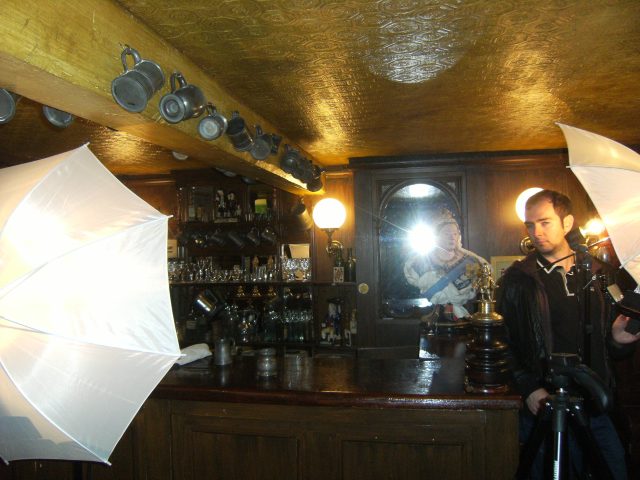
DSCF1780


I’m going to tell you a story…


I still can’t quite believe it happened, although I know it did. We had a coalman who used to deliver to the pub. He retired and a new one showed up. Cocky little devil. Thought he could fob me off with stuff that wasn’t worth the money. When I told him I wasn’t standing for it, he told me that maybe my husband needed to give me a clout or two. I picked up a shovel and I swear I’d have gone for him if he hadn’t turned and run off. I needed to take a walk to try and calm myself down. I ended up by the outdoor market – couldn’t even remember getting there. I must have looked a sight because this woman came up, a little old dear, and asked if I was all right. “Looks like a man’s got to you,” she said. She put a pamphlet in my hand. Votes for Women. All I did was glance down at the title, couldn’t have been more than a second. Blow me down if she didn’t disappear. Like I’d dreamed her up. But I had the pamphlet. Took it home. A fortnight later and I had the parlour full of books. I wanted to know it all. Those words I read…it was like someone had looked into my head and put everything I’d thought down on paper. It made sense. Me, I’d hardly read a book in my life. Who had the time? Once I was done with school, I was too busy working. Now I was sitting there going through them like the pages were the most important thing in the world. And Tom, bless him, he took it all in his stride. Didn’t even blink when I started going to the suffragist meetings. I was worried what the police might think, an officer’s wife involved in all that. He told me to go ahead, to do what I felt was right. I did. I listened. I liked what they had to say. But most of them, they’d never needed to do a day’s graft. They’d never had to try and feed a family on a mill girl’s wages. Course, it wasn’t long before I was up on my hind legs, saying this or that. Putting me two pen’orth in. That was how I met Miss Ford. She was in charge of it all. She’d worked with the unions, helped with strikes. People respected her. Mind like a razor, sharp as you like, and a heart as big as Yorkshire. She sat me down. Told me I could make a good speaker for the Suffrage Society. I thought she was joking, that it was her way of gently telling me to shut my mouth. But she was serious. I didn’t know which way to look. And she made me think that I did have something to give. Something different. I said yes, then I wished I hadn’t. My mind was whipping backwards and forwards like nobody’s business: I was going to back out. I was going to do it. Then everything I tried to write sounded so false. Be yourself, Tom told me. Who was I? A jumped-up piece of muck from the Bank whose husband had left her a pub. What did I have to tell anyone?  It wasn’t as if I knew any answers. Even when I was up on that podium I wasn’t sure I could go through with it. My teeth were chattering so hard they must have heard it in London. Then someone was saying my name and people were looking at me and it was too late to run away.  

Well, now I know what it must be like to be on the halls. I feel like I should sing a song or something. You don’t know me. No reason you should, really. I run a public house in Sheepscar. Nothing grand but it pays the bills. And I grew up on the Bank, on Leather Street. I know what they say: you grow up on the Bank and you’ll never amount to anything. I’ve heard it all my life. I started out in the mills when I was nine. It’s a hard life, I can tell you that right now. Moved into service a few years later because it paid better and it wasn’t as dangerous. I’m still not above scrubbing a floor if it needs it, or giving something a cleaning. Most of the girls I played with ended up doing the same. Maids or mills. If I ever see them now, the ones who are married have five or six children and husbands who bring in next to nothing every week. They survive, and that’s all they do. It’s down to the pawnbroker with the good clothes of a Tuesday morning so they can last until their men are paid. Redeem everything Friday evening. Do you know what they wish for when they’re walking down the street holding everything of value that they own? That their little ones will have something better. But they won’t. Do you know why not? Because there’s no one to speak up for them. They live, they die. Probably half of the girls I played hopscotch with when I was in pinafores are in the ground now. I’m not saying having the vote would put everything right. I’m not a fool. Men will still run things, same as they always have. There’ll still be more poor people than you can shake a stick at. But at least we’ll have a say. All of us. That’s the women on Leather Street, where I grew up, as much as anyone here. Maybe they need it even more than us. I’ll tell you something else. Every day, every single day, I see women with all the hope gone from their faces. It’s been battered away long before they’re old enough to work. And we need hope. That’s why every woman needs the vote. Every man, too. The only way those men standing for Parliament will ever do anything is if they need our votes to win. Half their promises will still vanish into thin air. Of course they will, they always do. And they still won’t do anything more than they absolutely have to. (Pause) But for the first time they’ll have to listen to us.

And that was it. I couldn’t believe I’d said it all. Couldn’t believe I’d made that much sense. At least I wasn’t shaking anymore. And to see their faces and hear them clapping, well, it didn’t seem like that could be for me. But Miss Ford must have liked it – she wanted me to start speaking regularly. I had to take a deep breath before I said yes. As soon as I agreed to that, she started talking about having me on the committee. Give them an inch and they want a mile. I said no. All that travelling hither and yon. Not when I had the pub and the bakeries. And…

I was up the duff. Couldn’t be. That’s what I thought at first. After all, I hadn’t caught before. I thought the miscarriage meant I couldn’t. So I wasn’t about to say anything till I was sure. Not tempting fate. And I was older, not one of the young lasses popping them out. Tom, he was over the moon. (Smiles) Once he picked his jaw off the floor, any road. From the way he tried to look after me you’d think no one had ever had a bairn before. You have thought I was the best family china. How do you think you got here, I asked him finally? And your ma, and all those before her. It’s nature. That shut him up and he let me get on with things. There was work to do. I tell you what, nature decided to make hard work of me in the end. It had the last laugh. The best part of twenty-four hours in labour. Sweating and cursing and screaming. I was holding the midwife’s hand so hard I’m surprised I didn’t break her fingers. But it was worth it. Called her Mary, after Mary McLaughlin I grew up with on Leather Street. That’s right, I’m talking about you. Bit over a year now and into everything when she’s awake. Daren’t take your eyes off her for a moment. Talk to her da and you’d think butter wouldn’t melt. He’d learn quick enough if he spent all day with her. She won’t want for anything, I’ve already made sure of that. She’s lucky. I have the brass. Not like most round here, where the hunger never leaves the eyes. But I’m going to make sure she knows what the world is really like outside the door. She needs that. I owe her that. I’ve not forgotten all those years when I was muck. Scratch me hard enough and it’s still under there. I want my Mary to have the things I never did. The vote. Rights. A life that doesn’t have to depend on a fella. The things that matter. Might as well wish for the moon, eh? It’s like having a tiny hammer and chipping away at a big block of stone. You keep doing it and nothing seems to happen. But you keep believing that one day the stone will just fall apart. Maybe I can get in a few blows. Do my bit. Yes, I speak at meetings. Maybe it helps, I don’t know. I sold the bakeries. Miss Ford asked me to be secretary of the Suffrage Society. No going out of Leeds, she promised. Aye, I thought, I can do that. But there weren’t enough hours in the day to do everything, not with this one scampering around. The shops gave me what I needed. But maybe I didn’t need that any more. I’ll never get rid of this place, though. The Victoria, it’s home. Don’t want anywhere else. They’ll have to carry me out of here in a box. Won’t be for a long time yet, not if I have anything to do with it. Too much to do. And here I am, barely started. Up from the muck and still a long way to go. What I’ve learned: you do what you have to do. You get on with it.

When You’re Muck – From Mill To Maid

For working-class girls in Victorian Leeds, there were two options, mills or maids. It wasn’t an easy life, there were no luxuries.

For Annabelle Harper, the mill was purgatory. Maybe becoming a maid might be better. Her experience was that of so many girls. This is a fragment of her story. To know more, come and see The Empress on the Corner.

PhotoFunia-1463832187

When you’re muck, you’re muck. Soon as they see you, everyone knows it and they don’t forget it. Not them upstairs, the ones who pay for it all. I mean down in the servants’ hall. Got a pecking order so strict you’d think Moses had handed it down himself. And right at the bottom was muggins here. Scullery maid. Up before anyone to lay a fire, put the kettle on the range and make tea, and God help you if you’re late. Scrub the pans after every meal. But not the good china, because I can’t be trusted with it. Can’t even eat with the other servants. Dish the food out to them, clear it away when they’re done, then skulk away in a cubbyhole with whatever’s left. Mills or maids? When you’re muck it doesn’t seem to make much difference. I found that out soon enough. Kitchen maid, downstairs maid, it’s like climbing a ladder. You go up rung by rung. But very slowly. The lass who replaced me in the scullery lasted a fortnight. Can’t say I blame her. If I’d an ounce of sense I’d have done exactly the same thing. But I was bloody-minded. I wasn’t going home with me tail between me legs. I wasn’t going to give me da the satisfaction. They could have set me to shovelling the sewers and I wouldn’t have left. Sixteen and I’m finally an upstairs maid. Polish the glass on the windows, look out and there’s the whole world in front of you. Out towards Otley, that big valley just spread there, all green. I used to gaze out at that every minute I could get. Didn’t matter the season. Because that looked like freedom. The little farmhouses with the smoke curling up to the sky. I used to think if I could just live in one of those places I could be happy for the rest of me life. My brain must have been addled. As if a life in the back of beyond with mud and pigs and cows would ever be anything for me. Then the housekeeper would come along, all silent because the rugs were so thick. She’d give me a clout and tell me to get back to work.

I turned seventeen and I was used to the job. I should have been by then, five years there. That house had become my world. Half day off every other week. Walk into Leeds to see me da and me family. An hour sitting in silence, then the walk back.  Maybe visit a lass or two I knew who worked at Black Dog. Didn’t tell them I was still sharing a bed with one of the other maids up in the attic. Or that the second son of the house had started noticing me. Some things you’re better off keeping to yourself. He had hands everywhere. Didn’t think he had to take no for an answer. Wasn’t too bad at first. I threatened to tell his ma and he left me alone for a few weeks. But all I had was empty words. I knew that and he realised it soon enough. After that he didn’t care. Why would he? I couldn’t do anything. Pinched my bum until it was black and blue. His family owned mills. They had the money, they had the power. I was just muck. I knew what was going to happen. Might as well have been written right there on the wall. I knew, but that didn’t mean he was going to get it easy. I’d make damn sure he’d never want to come for me again. I fought him. I made him pay. I bit, scratched, shouted. Went for his eyes. Hurt him. For all the good it did. He was always going to win. His kind always does. Once he started it wasn’t even a minute and he was done. I’ll never forget the sneer on his face as he buttoned himself up. I told him that if he ever came back and tried that again I’d slide a knife across his throat and let him bleed like a pig at slaughter. I spat in his face. I wasn’t going to let the tears start while he was there. I wasn’t going to let him see me weak. He might have got what he wanted but I wasn’t going to give him any bloody satisfaction. Then he was gone and I was lying there, crying my eyes out, pushing my face into the pillow. Did anyone come? Course they didn’t. I hurt right enough. Not just in my body. Here. And here. And when I was cried out I wiped my eyes and I had to make the bed where he’d had me, as if nothing had happened. Had to make it the next day, too, and all the ones after, and pretend nothing had happened there. But I’ll tell you what, he never tried it on with me again. I kept a knife in my pocket, just in case. I’d have hung for him, I’d have done it without thinking. I thought I’d hated people before that, but it didn’t even compare. I wasn’t about to leave, though. That would be running. Instead he was going to have to see me every day, to have his guilt staring him in the face. I was going to be there to remind him of what he’d done. He didn’t come sniffing round me and he didn’t bother any of the other girls. That was something. It wasn’t ever going to be over, of course. As long as I saw him, as long as I had to clean that room, it was like ripping the wound open again every day. But I’d do that, I’d grit me teeth and change the sheets and put on a smile for as long as it took to throw it all back at him. When you’re muck, though, nothing goes right. Six week later and I hadn’t come on yet. I knew what that meant. Up the spout, bun in the oven, whatever you want to call it. Not that I was going to say a word. Soon as the mistress heard she’d be throwing her hands up in horror, telling me how wicked I was. They’d have me out on me ear before you could say Jack Robinson, and not a word of a reference. Problem is, you can only go so long before people can tell. A question or two from the housekeeper and that was that. Didn’t even get the pleasure of telling the mistress it was her precious boy who’d caused it. Not that she’d have believed me or done owt about it. If you had money you were untouchable. I was on my way, wages paid, everything I had wrapped up in a shawl. God, it were like something from one of them penny novelettes. Should have seen my da’s face when I turned up on the doorstep. “Got the sack, have you? Don’t be thinking you can loll around here all day.” Aye, that’s the sort of welcome a daughter needs. He was always on at me. Put money in for me keep. Cook for him. Wash the pots and the clothes. I did me bit. He was down the pub when it happened. Where else would he be of a night? I’d just finished all the jobs and I was going to put me feet up. All of a sudden I had a pain like someone was trying to tear my insides out. Couldn’t hardly stand. I looked down and I saw blood. I didn’t know one body could have that much of it inside and it was all coming out. I knew what was happening but it didn’t matter. All I could think was ‘I’m going to die.’ I must have started screaming blue murder. I don’t know, I don’t remember. The next thing I knew old Mrs. Riley from next door was there. Sixteen stone if she was an ounce and a voice that could strip paint. But she looked after me. Got a pair of women in to help, then bullied a doctor into coming to Leather Street. That might have been a first. Stayed with me until me da rolled back and told him to take care of me or else. I’d lost the babby, of course. For the best, that’s what I reckoned. Didn’t stop me crying like a little lass, though. It kept coming back, that empty feeling like something had been stolen from me. And all the time me da was saying I had to get myself well and find some work. That let me know how welcome I was. And soon as I could, I started looking. Anything that got me away from him. Then I ran into Mary McLaughlin when I went for a quarter of tea to the shop. She told me they were looking for someone to work at the Victoria in Sheepscar.

So, About That Play…

PhotoFunia-1463832187


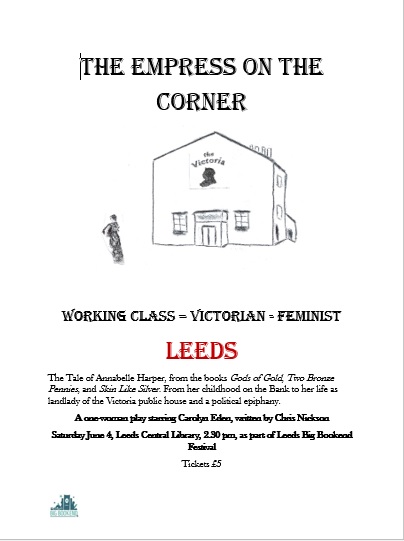
Some of you (hopefully all of you) know that I have a play on soon. It’s called The Empress on the Corner, and it’s Annabelle Harper’s story. Yes, that Annabelle from Gods of Gold, Two Bronze Pennies, and Skin Like Silver. If you don’t know about the play, you can find out here – it’s on June 4 as part of Leeds Big Bookend festival, with Carolyn Eden as Annabelle.

We’re presenting part of it: a couple of scenes live, script-in-hand (you won’t even notice the script), one as an audio play, and one on video. It allows the audience to see the possibilities of the production. Each scene will be put in context, and you’ll come away feeling you know Annabelle.

DSCF1780

On Friday we recorded the audio section. Then, on Saturday, thanks to the people at Abbey House Museum and Bob Jordan of Obverse Films, we recorded the video.

DSCF1764

Magical? Absolutely. In costume, with the hair and makeup just so, it was Annabelle speaking. Once the video is edited it’ll be on YouTube, of course, as a teaser for the play or for the many things it might become in time.

DSCF1774

Every Saturday Night It Was The Old Tunes

When you have nothing, you make your pleasures out of the air and memories…life for the Irish on the Bank in Victorian times. Annabelle Harper knows…

When I was a lass, every Saturday night was the old tunes, the ones Sean Doughty had learned when he was a lad and brought over from Ireland with him. Half of Leather Street would get together. We all went, from tiny babbies to the old women with no teeth who could only sit in their chairs and drool and smile. Folk would bring something, if they had owt. There’d be a bucket or two of beer, maybe summat to eat, then Sean would tighten up his bow, tuck the fiddle under his chin and put it in tune. He didn’t play well and time hadn’t made him any better. But it didn’t matter. Everybody loved it. He had his fast pieces for dancing, and it felt like all the heavy boots and clogs crashing down would go right through the floor. Then he had slower ones for singing. I can still hear the way all the voices used to grow more and more drunk as the night went on.
I must have gone there when I was still in my mam, but the first time I remember was when I was three. Martin O’Leary pulled my braid so hard that I cried. I was so proud of my hair back then, a right little madam. I’d get me ma to brush it every night and watched meself in that little scrap of mirror we had.
He tugged it; I thought it had come off in his hand and I started to scream. The music stopped and everything went quiet as death. “What’s got into you?’ me mam said, but I was crying so hard that I couldn’t tell her. When it all came out, she gave me a clout for interrupting things, and there was a harder one for Martin.
Like it or not, we were dragged there every week. Probably the same on streets all over the Bank. Happen it was just a chance for everyone to forget that none of them had a pair of ha’pennies to rub together. Maybe for one night in the week they deserved a good time. Even us young ‘uns had fun when we weren’t chafing to be somewhere else. The grown-ups used to talk about Ireland. Not that half of them had ever seen it, or ever would. Most of them had grown up over here. But that was how it was. From the moment we were born it was drilled into us: Ireland was paradise itself. It was the promise of heaven. Erin. Green, beautiful fields. Waters. Mountains. All those legends of the past: Finn MacCool and Brian Borru. We took it in with our mammy’s milk. Wise men and great warriors, and Ireland done down and brought low by the English. Me, I didn’t care. Leeds was my home. It was all I knew. All that mattered. Who needed the Rock of Cashel when I had York Road, the Headrow, and Hunslet? This was my world, the only one I was ever likely to know.  As far as I was concerned, I’d be lucky enough if I ever made it off the Bank, never mind some other town or country. I knew exactly where I was headed: Black Dog Mills. Same as every other lass at school. Didn’t even need to be told. Mills or maids – that was how life was. Mills or maids.

It’s Annabelle’s World…

…but she’d like you to come and visit.

A few years ago (Four? Five?) I was looking at one of my favourite paintings, Reflections On The Aire: On Strike, 1879, by Leeds artist Atkinson Grimshaw and a story came to me, fully formed, out of the ether.

That was my introduction to Annabelle. Annabelle Atkinson, she was then, sitting and looking at the picture with me, telling me how it came about that she was in it, looking back a decade to that days she stood on the banks of the river to be sketched.

Aire_1997579i

We met again when I settled down to write Gods of Gold, set during the Leeds Gas Strike of 1890. She was Annabelle Harper then, freshly married, flushed with happiness but with her feet firmly planted on the ground. With a flourish of her silk gown as she sat, she pushed me over on the chair.

‘I was there, luv,’ she told me. ‘I saw it all happen. Come on, I’ll tell you about it.’

Since then, we’ve spent quite a lot of time together. She’s in three of my published novels – Gods of Gold, Two Bronze Pennies, and Skin Like Silver. The fourth, The Iron Water, comes out in July, and I’m working on the fifth. I’ve shared the way Annabelle has blossomed. She’s the emotional centre of the novels in so many ways. She’s become a canny, successful businesswoman and a member of the Leeds Women’s Suffrage Society – and one of its speakers.

It was one of her Suffragist speeches, brought to breathing, passionate life by Carolyn Eden at the launch of Skin Like Silver, that was the catalyst for the play The Empress on the Corner.

CVVRkOpWoAAOj_y

‘That’s her,’ Annabelle told me the day after the launch. ‘She’s the one to be me. Now, you, you’d better start telling my story. Are you listening? I’ll begin.’

I didn’t have a choice – when you have someone like Annabelle, she dictates what will happen. And so I wrote her story. Or perhaps I simply wrote down what she dictated.

The presentation is still a work in progress, and it will be sections of the complete play, not the entire thing. But it’s the story of growing up in a poor Irish family on the Bank in Leeds in the mid 1800s. Of having two choices in life, mills or maids. Of luck, of taking the chance to use her good mind. Of understanding that there’s more, that she can raise her voice for others.

It’s a Leeds story. It’s a political story. It’s a love story. But above everything, it’s Annabelle’s story.

And she reckons you need to come and see it. Believe me, I’ve learnt, you don’t argue with Annabelle, she’ll win in the end.

So you’d better go here to buy your ticket and we’ll see you on June 4, 2.30 pm at Leeds Central Library. It’s part of the wonderful Leeds Big Bookend festival.

Annabelle has her ticket. She’ll be on the side of the front row, with a big grin on her face, pleased as punch. Say hello to her after they play.

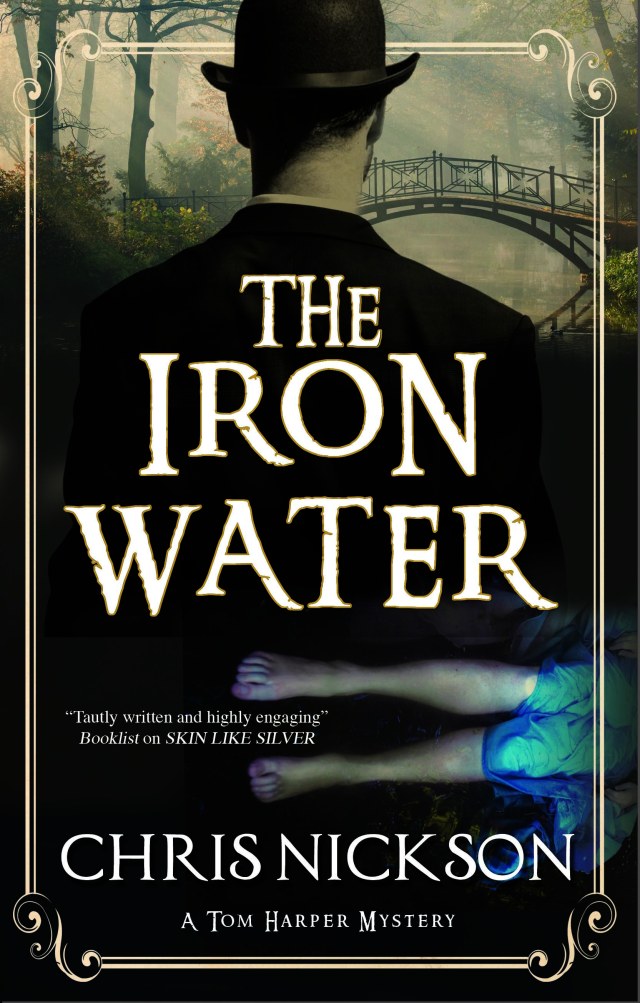
The Iron Water – Cover Story

Coming in July – in the UK, at least – is the fourth Tom Harper novel (and yes, Annabelle Harper is very much a part of things), The Iron Water.

Detective Inspector Tom Harper is witnessing the demonstration of a devastating new naval weapon, the torpedo, at Roundhay Park. The explosion brings up a body in the lake, a rope lashed tightly around its waist.

At the same time, dredging operations in the River Aire are disrupted when a woman’s severed leg floats to the water’s surface, still wearing a stocking and boot. Could the two macabre discoveries be connected?

Harper’s investigations will lead him right to the heart of the criminal underworld that underpins the city – and into the path of a merciless killer.

Why am I mentioning this? Because my publisher, Severn House, has just sent me the cover image their designer has created. And yes, I think it’s great. I hope you will, too…

the iron water 4 blue legs

The Play’s The Thing

Empress 4

Book your ticket here.

Last year, at the launch of the third Tom Harper novel, Skin Like Silver, an actor named Carolyn Eden became Annabelle Harper, giving a speech of suffragism that Annabelle delivers in the book.

She inhabited the character and brought to life a woman who’s lived in my head for a few years now. I’ve tried to tell Annabelle’s story in fiction, but suddenly I saw another way. A play. A one-woman play.

The process of rehearsals has tentatively begun with a read-through and we’ll be moving ahead. The good people at Leeds Big Bookend will be giving us a chance to show some of it on June 4 at 2.30 pm in Leeds Central Library. It’s a work in progress, an exclusive preview. You’ll have a chance to see where it’s going, to become part of Annabelle’s story.

Made in Leeds TV have plans to film Annabelle’s story at historic locations around Leeds and she seems to be drawn to radio too. There’s no substitute for the live experience, but you might be treated to a sharing of more than the stage version as the project develops.

It’s a picture of working-class Leeds in the 19th century, from the grinding poverty of the Bank to relative prosperity as the landlady of the Victoria public house in Sheepscar, and her awakening to the world, to feminism and politics. It’s a story for all of today, as much for today as more than a century ago.

The pleasure and love along with pain. And hope. Because every story needs outrageous hope. Tickets are now on sale, and it will be worth your while. Annabelle will be very much alive in front of you.

You can find out more and book your tickets here.

You need to come.

The Play’s The Thing

At the start of December, during the launch for Skin Like Silver, the latest Tom Harper novel, an actress took on the role of Annabelle Harper for a couple of minutes, delivering the Suffragist speech she gives in the book.

The idea ignited something in me. I’ve wanted to tell Annabelle’s story for a long time – she’s one of those characters who refuses to leave me alone. I’ve tried on the page but it’s never caught fire.

But on the stage, with actress Carolyn Eden reprising the role…that could work. And I started writing. I’m still writing, but the whole piece has a real shape  at this point. It’s alive.

And now I can tell you that The Empress on the Corner, the one-woman show about Annabelle Harper, will be staged at Leeds Big Bookend festival in early June. It’s a big step for me to move away from the page. But I do love a challenge.

It’s the story of a woman in life, love, politics. And it’s a story about Leeds, too. In Annabelle the two are interwined. How she grows and grabs life and independence.

Of course, I hope you’ll come….and to remind you of the catalyst, here’s Carolyn’s note-perfect portrayal of Annabelle

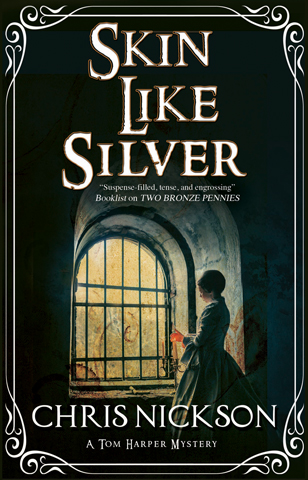
Skin Like Silver…Is Apparently Out

Skin Like Silver might not officially be published for a week yet, but the advance review copies are out and it looks as if quite a few places already have it on sale.

9780727885708

So what are you waiting for?

Seriously, though, I’m astonished and pleased by the positive response so far.

“Chris Nickson does a fantastic job in mixing fact with fiction, creating a vivid image of what life was like in Leeds during the nineteenth century. It was easy to imagine the stark contrast between the privileged Carr family and the unfortunates dwelling in the crowded back streets.
The ending sets up the next installment nicely; definitely worthy of a five-star rating!”

“I love the period detail as well as the historical facts that the crime aspects of these stories are intertwine with. This 3rd Victorian Police Procedural is an extremely fine work and I heartily recommend it to all who appreciate historical mysteries.”

“Give yourself the treat of reading this novel and entering Harper’s world. Then, if you enjoy yourself—and I’m sure you will—give yourself the added treat of seeking out a copy of Two Bronze Pennies as well.”

Words like those are the kind of thing any author wants to hear when they send their baby out into the world. I’m proud of all my published work, but this, to me, has something more. It’s the most complete book I’ve ever written, in some ways as much Annabelle as Tom, and the Leeds of 1891. Real people like Tom Maguire and Isabella Ford, both of whom would soon be involved in the founding of the Independent Labour Party, are between the pages here. I hope the Leeds of the book is a place the reader can see and smell and hear.

I’m biased, of course I am. But if you want to read it and leave a review – an honest one, be it good or bad – I’d be very grateful.

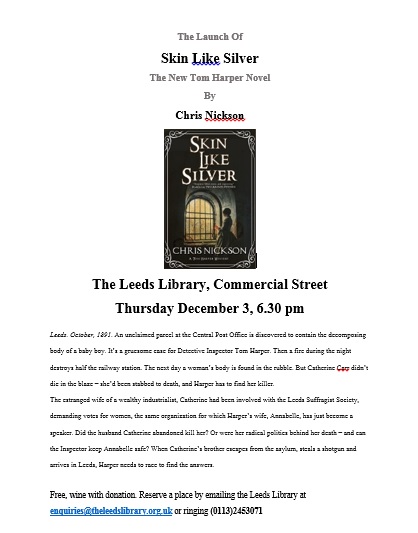
If you’re anywhere close to Leeds on Thursday, December 3, please do come to the launch for the book. It’s free, at the Leeds Library on Commercial St. There will be entertainment, wine, more on the book – and you’ll travel back in time while you’re there. Promise.

skinl1

Louis Le Prince The Vanishing Man Of Film

I’m thrilled that The First Film is coming out, making the case for Louis Le Prince making the first moving pictures in Leeds. That alone is wonderful, giving the man his due. But there’s another part to the tale – his mysterious disappearance in 1890. No trace of him has ever been found. And that’s how he comes into Two Bronze Pennies. Here are a couple of short extracts, just to give you the flavour of it…

In bed a little later, she lay in the crook of his arm, her hair spread out across the pillow.

‘I have to meet the French copper tomorrow,’ he said.

Annabelle stirred a little and placed a hand on his chest, right over his heart.

‘Is this that Le Prince thing?’ she asked.

‘For whatever it’s worth. I doubt there’s anything for him to find here.’ It was all going to be a waste of time, he felt sure of that.

‘I met him once, you know.’

Harper raised his head. ‘Le Prince? You never told me that.’

‘There’s plenty you don’t know about me yet, Tom Harper.’ She was lost in thought for a few moments. ‘It must have been four or five years back now. His wife was involved with some charity. They were having a do up at the cavalry barracks and I was invited.’

‘You? Why?’

She shrugged. ‘I gave them a little money. Anyway, he was there with her.’

‘What was he like?’

‘Pleasant enough, I suppose. We only exchanged a couple of words. He was very French. I liked his wife, though. No side on her at all.’

‘Did you ever see the moving pictures he made?’

‘No. I wanted to. Old Charlie Turner – you know, the one who owns Hope Foundry – he offered to take me, but I don’t know, there must have been something else I had to do. He told me he couldn’t believe his eyes.’ She shifted slightly in the bed. ‘What time does this fellow get in tomorrow?’

‘Just after twelve.’

‘Why don’t you bring him back here for his dinner? I’ve got a nice piece of beef. I’ll give him some Leeds hospitality if you like.’

*****

Couples and families moved away from the platform. A pair of businessmen with shiny top hats and determined frowns passed him. All that remained was a man on his own, carrying a valise and shambling along.

His hair was long, all the way to the collar of his heavy greatcoat, and a battered hat was pulled down tight on his head. He looked around, curiosity in his eyes. Harper lifted a hand in greeting and the man began to stride towards him.

‘Captain Muyrère?’

‘You’re Inspector Harper?’

They shook hands, Muyrère’s as big as a bear’s paw. His moustache was shaggy, as unkempt as the rest of him. But he seemed perfectly comfortable with himself.

‘Call me Tom, please. I’m here to help you.’

‘Bertrand. Muyrère. From Dijon.’

He spoke English clearly and fluently, the accent no more than an undertone. He stood a good four inches taller than Harper and at least three stone heavier. But he carried himself well, his gaze seeking out all the sights around him.

‘I can take you to your hotel.’

‘Good.’ Muyrère smiled. ‘But first, please, a cup of tea. Train journeys always make me thirsty.’

‘Of course.’

Sitting in the Express Tea Room on Wellington Street he was surprised at the way the man seemed to relish the drink, sipping deeply then lighting a cigar. His eyes twinkled with amusement.

‘You’re wondering, Tom. I can see it on your face. All those questions. Why do I speak English well, why do I like tea?’

Harper laughed. ‘That obvious?’

Muyrère cocked his head. ‘We’re policemen, we read people, monsieur, it’s our job. I lived in London for three years after the war. I learned the language and I came to appreciate your drink.’ He raised the cup in a toast.

‘War?’ He couldn’t remember a war.

‘Twenty years ago, Inspector.’ He smiled kindly. ‘You were no more than a child then. I was in the French army. The Prussians beat us.’ His eyes clouded at the recollection. ‘So many men died. Good men, some of them. I decided it was best to leave France for a while.’ Muyrère shrugged. ‘I went back and became a policeman. And now I’m trying to find out what happened to Monsieur Le Prince.’ He finished the tea. ‘I’m in your hands, Inspector.’

Harper had booked the captain into the Old Hall Hotel on Woodhouse Lane. As they entered, he glanced back to look at the Cork and Bottle on the Headrow.

The hotel room was small but comfortable – a good mattress, clean, the bedding fresh and aired. Muyrère nodded his approval and left the case on the bed.

‘What now, Tom?’

‘My wife wondered if you’d like to join us for Sunday dinner. She thought you might not know England.’

The Frenchman bowed his head slightly.

‘I’d be honoured, of course.’ He patted his belly. ‘I have a rule, never refuse a meal.’

‘Have you just come over from Dijon?’

‘No.’ The man grinned. ‘I have friends in London. I spent Christmas with them. I needed to talk to Scotland Yard.’

‘Have you learned much yet?’

Muyrère shrugged once more, a gesture that seemed to say everything and nothing.

‘Time will tell.’ He pulled out his pocket watch. ‘And now… your wife will be expecting us?’

A hackney took them out along North Street. Muyrère stared with eager curiosity at the factories and the cramped back-to-back houses, saying nothing but taking it all in. He gave a quizzical look when the cab stopped outside the Victoria, then followed Harper inside and up the stairs.

Annabelle bustled out of the kitchen when she heard them, removing her apron and tossing it on the back of a chair. She was flushed with the heat of cooking, but dressed in her favourite gown, the dark red and blue that set off her features. Her hair was up, elaborately pinned, and she was wearing the jet pendant.

‘Madame Harper,’ Muyrère said, taking her hand between both of his and kissing her lightly on the cheek. ‘Thank you for your invitation. It smells delicious.’

She smiled. ‘Sit yourself down. The Yorkshires are almost done. Tom, take his coat and pour him a drink. I’ve even got a bottle of wine. I thought you might like that, being French.’

They talked about life, about France and Leeds. About everything but work. Muyrère was charming and funny, praising the food and the cook, clearing his plate of the Yorkshire pudding with onion gravy, then the beef, potatoes and vegetables. He only shook his head when Annabelle suggested pudding.

‘Madame, you’ve filled me. No more, but thank you.’

He drank slowly, savouring the wine and smoking another cigar as the others ate.

‘Annabelle met Le Prince,’ Harper said.

‘Really?’ He stared at her with interest. ‘I never had the chance. What did you think of him?’

She reddened a little. ‘About all we said was “How are you?”. He seemed nice enough. I liked his wife, though. Poor thing must be sick with worry.’

‘He really just vanished?’ Harper asked. ‘That’s what I read.’

Muyrère nodded and lit a thin cigar. ‘His brother claims he saw him on to the train in Dijon. When it arrived in Paris, no Le Prince, no luggage.’ He raised his eyebrows. ‘Other people saw someone board, too. I talked to porters at the stations on the line. No one remembers him getting off.’

‘Are you sure the brother’s telling the truth?’ Harper asked. It was the obvious place to start.

‘No one can say it was definitely Louis who boarded. No one else talked to him.’ The man chose his words carefully.

‘No sign of a body in Dijon?’

‘Nothing. We searched the brother’s house, his business. And no sign of the camera.’

‘Very strange,’ the inspector admitted. ‘Have you talked to the passengers on the train?’

Muyrère moved his head from side to side. ‘The ones I could find. No one saw anything.’ He gave a small, wry smile. ‘Of course.’

Harper understood. Finding witnesses was always difficult. Reliable ones were even rarer.

‘Was he on his way back here?’ Annabelle asked.

‘No, madame. To America.’ Muyrère sighed. ‘Now we come to the difficult part. Two years ago, Le Prince was granted patents on his moving picture camera over here and in America.’ He held up a single finger. ‘That was for his camera with sixteen lenses. But he’s developed a new camera with just one lens, and he wanted a patent on that.’

‘But if he’s invented it, what’s wrong with that?’ Annabelle asked with a frown.

‘Nothing,’ Muyrère agreed. ‘But there are others seeking a patent on cameras that do the same thing. Powerful men in France and America.’

‘That’s enough to make you wonder,’ Harper said.

‘It is, Inspector.’ The voice was slow. ‘I’ve never come across anything like this before. Have you?’

‘No.’ He didn’t envy the man his job. Three countries and business rivalries? How could anyone solve that? He was on a hiding to nothing.

‘And I hope you never will,’ Muyrère chuckled. ‘Believe me, monsieur, you don’t want it. Theft, burglary, murder. Those I understand. But this… I don’t think we’ll ever know the truth. Not the whole truth.’ He gave his shrug once more and stood. ‘Now, if you’ll forgive me, I’m tired. Trains might be fast but they’re not so comfortable. Madame, thank you again. Tom, we’ll work tomorrow?’

‘I’ll come to the hotel at eight.’

Merci.’