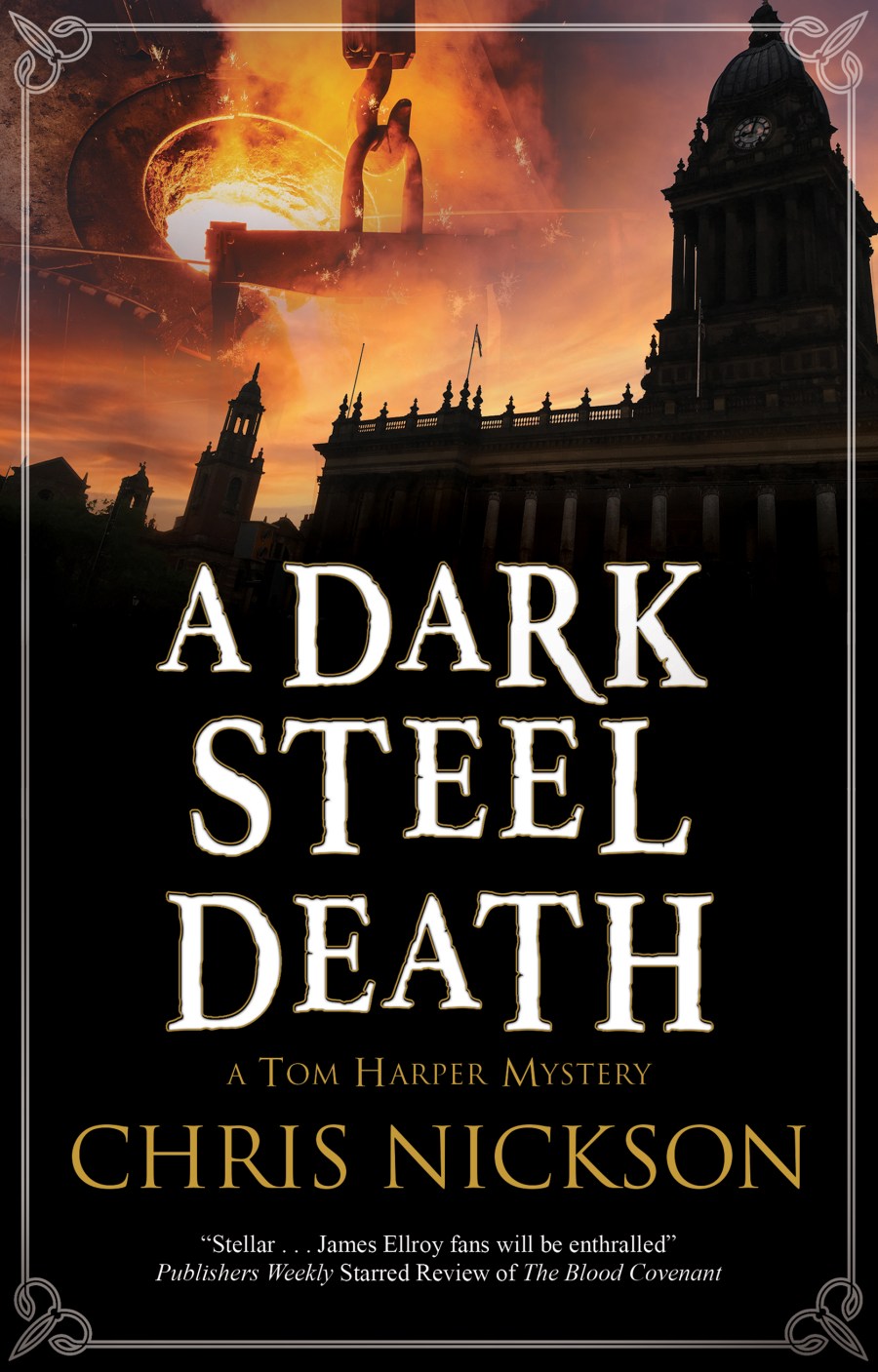
Thinking About Richard Nottingham

While I love Tom and Annabelle Harper dearly, along with Simon Westow, his wife Rosie, Jane and Sally, and can’t imagine them not in my life, there’s someone I all too often forget, and it’s to my shame that I do, especially as he’s the only one who truly existed.

Richard Nottingham, the Constable of Leeds.

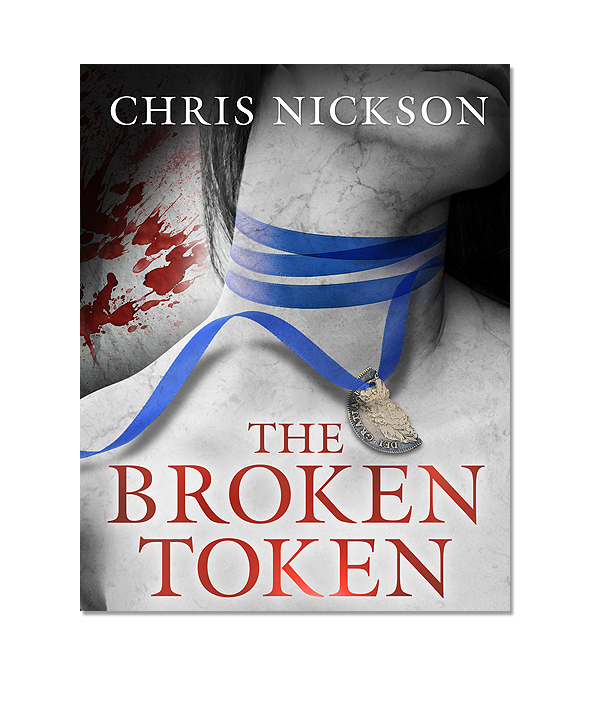
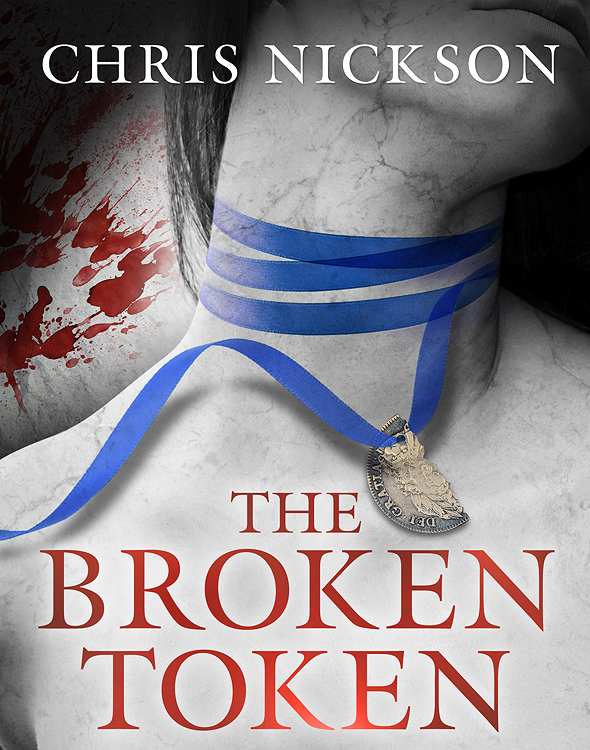
I wrote seven books with him in the role he had in real life (and to settle any possible questions, no there won’t be more). He gave me my start as a published fiction writer with The Broken Token

(which was also an Independent on Sunday best audiobook of the year) and got me a rating as one of the 10 best crime novels of the year for Cold Cruel Winter. All seven of the novels in that series won starred review in Publishers Weekly.

Richard was kind to me, a true inspiration. I’m proud of all those books, of him, and the community around him in Leeds during the 1730s.

From records, I know he was given a reward in the 1690s for informing on a highwayman – and this well before he became the law himself. Maybe it gave him the taste. Or possibly the fact that Walter Nottingham, perhaps his father or brother, was constable before him.

I made what was a title, a sinecure, a man who take part in official processions, into a proto coppers, with the night watch underneath him. He solved crimes. He found himself in danger. I was stretching history, but Richard seemed to enjoy himself doing it.

My Richard had a wife and two daughters. The real one had other children, of course, one of whom was a young woman who went in to marry into the minor nobility. Richard owned property in town. On Kirkgate at first, then Briggate; Leeds was a very small place at that time. People kept arriving, but there were fewer than 10,000 inhabitants.

I have written about the real Richard Nottingham here, with plenty of detail snippets from documents. Sadly, I’ve never found a portrait of him.

Why mention him at all? Most of the books are out of print in hardback, after all (and only the first is available in paper, I believe). But a number of you who came to my work through Tom or Simon might not know about Richard. You might like him.

The ebooks are all pretty cheap, and you’ll discover a family, as well as a place and time that are close to my heart. I always had Leeds, of course, but Richard showed me what to do with it, and that’s a gift I can never fully repay.

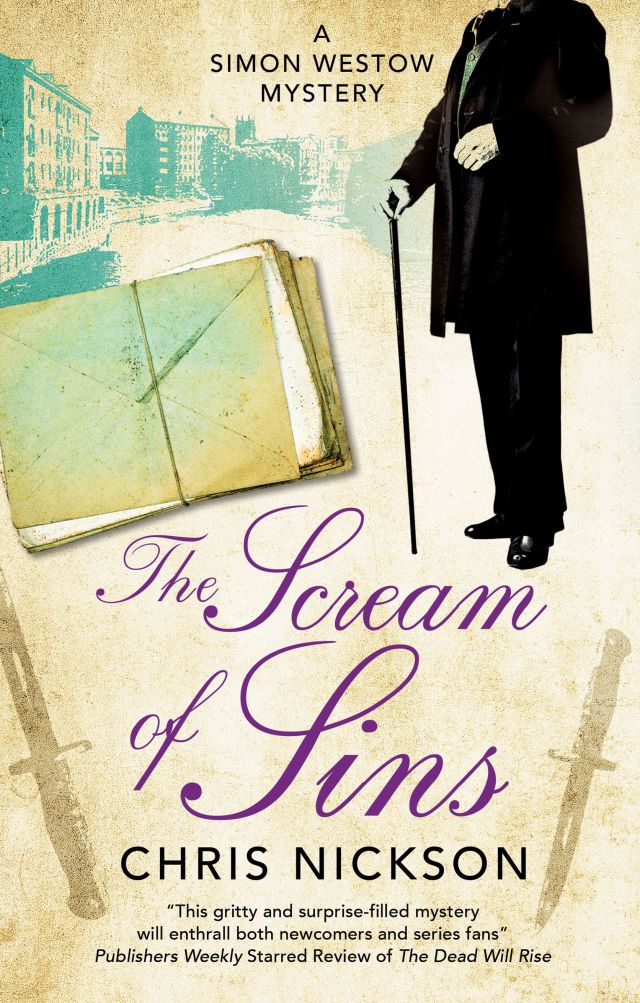
I will remind you that if you haven’t read The Scream of Sins yet, it’s been out for a month now – and God, the reviews have been so good it’s amazed me, since it’s so dark. Why not read it and judge for yourself?

The Tale Of The Unpublished Novels

It’s Sunday and tipping down with rain. Much as I’d love to be out at my allotment, there’s not a chance today.

That means it’s time for a story. A true story about the unpublished novels that preceded The Broken Token. Make a cup of tea, grab a biscuit and pull up a chair, because there were a few of them.

The first came when I was 20. I’d married an American and were we living in a bedsit in Hyde Park – the Leeds one, of course. I’d written poetry, which in retrospect was only slightly better than the usual teenage angst, and some short stories. It was time for my big artistic statement. A novel.

I’d read quite a bit of Richard Brautigan and hooked into that style, as best I could. The problem is that I wasn’t a San Francisco Beat/hippie guy who with a highly skewed, often surreal worldview. I was a 20-year-old Brit who had nowhere near the experience of the world as I believe I did. It probably had a title, but I don’t remember it.

The second came after we moved to the US, living in my wife’s hometown of Cincinnati. I was probably two or three years older. We’d bought a very cheap wreck of a house, we were both working. I’d been reading a lot more American crime novels, people like Michael Z Lewin, who books too place in Indianapolis, about 100 miles away. Bear in mind that this is heading towards the late 70s, a more innocent time. And a much more innocent your Brit, who still had a lot of growing up to do. Never mind that I believed that life had hardened me to my core.

The novel wasn’t completely awful. Hard boiled? No. Scarcely soft-boiled. Someone saw something in it and offered to put it out as a YA if I’d make some (a lot of) changes. I didn’t, and now I’m grateful. The title is lost in the mists of time, but the PI was called Steve Holzer.

There followed a more mainstream, autobiographical novel that was so much of a nothing that I can’t recall the plot. Thankfully, probably. After that, The Ohio Boy, about a talented young Ohio poet who was determined on self-destruction through alcohol. I knew nothing about alcoholism back then and didn’t really research. The poems were the ones I’d written a few years before, still seen through rose-coloured glasses. Unsurprisingly, nobody was interested.

After that? Career Opportunities, an American recalling student days in London and his involvement with the punk scene in 76-77. I still have it somewhere. Never reread it; I don’t need the humiliation. I knew about punk from records and the music papers (this was around 1980, long before any books about it all). I didn’t know London. What could go wrong?

A long gap followed. Divorce, and a move out to Seattle on the West Coast. A few short stories, a couple of one-act plays, then diving into becoming a music journalist, married again, with a young kid and a mortgage, writing a lot of quickie unauthorised celebrity bios. I was back in Leeds regularly to see my parents and picking up books on Leeds history, old enough to start really learning about it.

The result was The Cloth Searcher, an historical novel set in Leeds in the 1730s, with Richard Nottingham as a secondary character. I was stumbling towards something and nearly there, in the opinion of an agent who read it.

“Go and write something else and let me see it,” she said.

I did. That was The Broken Token, and the start of all that’s happened since.

Hey, time to wake up.

To remind you, The Scream of Sins is out there now. I’d be very grateful if you could buy a copy or borrow one from the library. If they don’t have it, ask them to get one in – others can read it after you.

Richard Nottingham…For Christmas

As we all know, that time is coming in a few weeks. Not my favourite season, but it’s going to happen regardless.

However, it does mean presents and books make great gifts. So please forgive a few weeks of shameless self-promotion ahead…

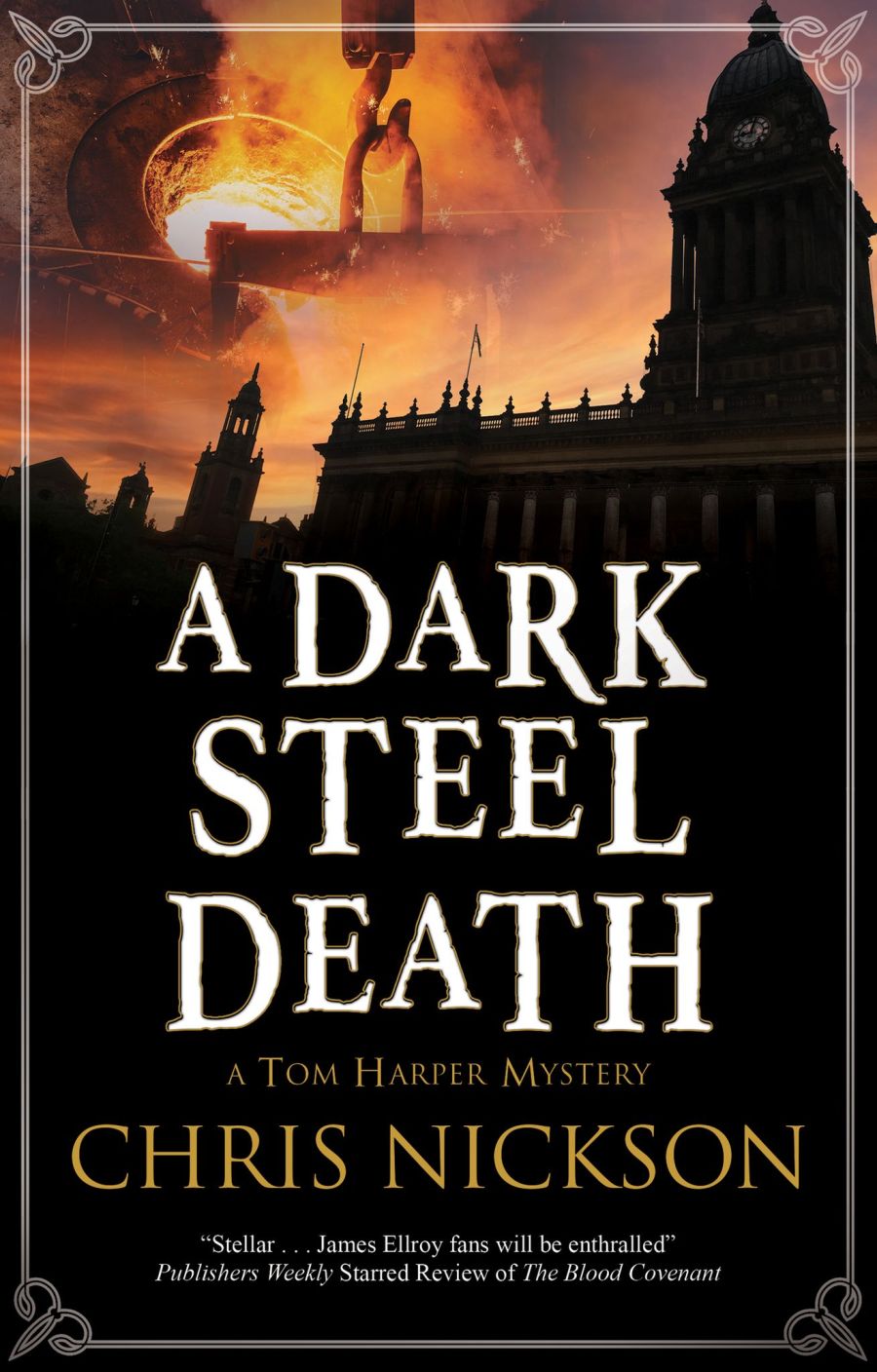
For the last few years I’ve focused to the Tom Harper and Simon Westow books – I’m working on the sixth book with Simon and Jane, and the big news is that my publisher has accept Rusted Souls, the 11th and final book in the Tom Harper series. It’ll be out next autumn.

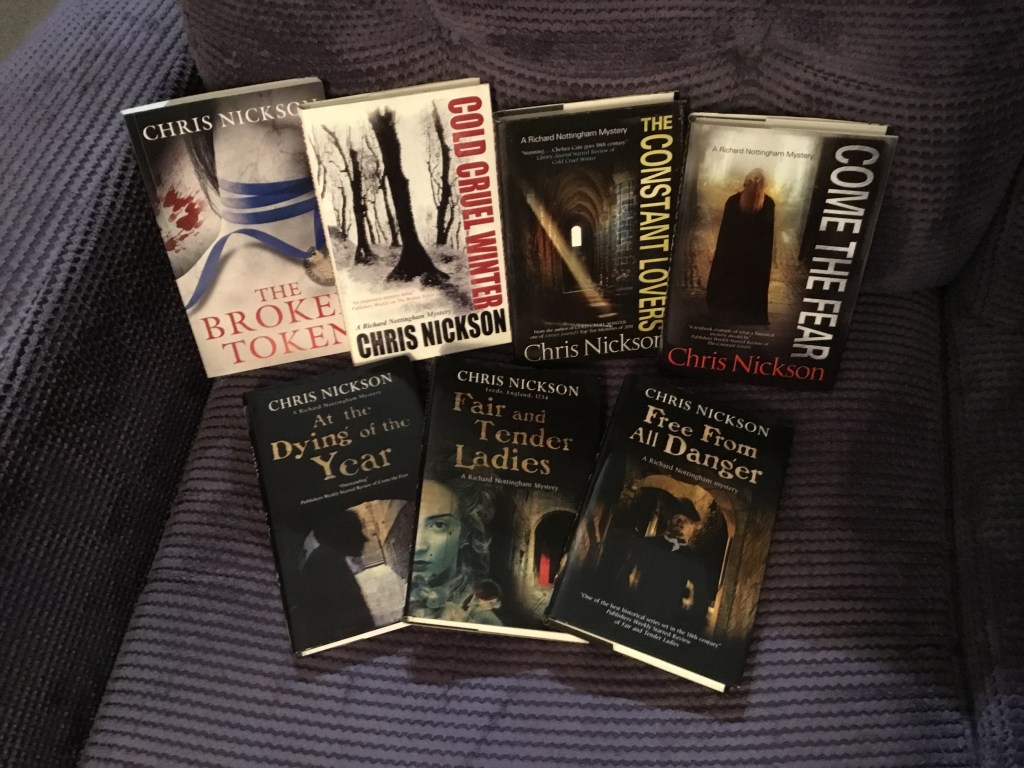
Before those, though, was another series, the first of my published novels, with Richard Nottingham, Constable of Leeds, as the main character. His family were important in the books, especially his daughter Emily, and also his deputy, John Sedgwick.

They’re set in Leeds, but in the 1730s, just as the town is grown wealthy off the wool trade. Well, the merchants are. For ordinary people, life is always a battle. It’s a small place, around 7,000 people, dominated by Kirkgate and Briggate.

Richard lives on Marsh Lane, crossing Timble Bridge, down near the Parish Church, to come to the jail. That’s by the top of Kirkgate, next to the White Swan on the corner of Briggate.

It was, perhaps, an unusual setting for a series of crime novels. But Leeds is my home. I feel it and I wanted to bring the place to life, to make readers feel they’d walked the streets, heard the voice, smell all the stink of life. All in the framework of a crime novel.

What many don’t know is that Richard Nottingham was real. He was the constable from 1717-1737, although it would be a largely ceremonial role in reality. He was a somewhat elusive figure in life. I spent time trying to track him down and wrote about it here – there’s just enough to be fascinating and make me want to known much more.

There are seven books in the series. Each one of them received a starred review from Publishers Weekly, which I’m told is very rare. Although virtually all are out of print in hardback, most are available in paperback. All are there as ebooks in every format. The Broken Token is also an audiobook (and one of the Independent on Sunday’s Audiobooks of the Year for 2012).

I have a very soft spot for Richard, and not just because he helped me into this fiction business. He’s a genuinely good man, someone I could wish to be. People still occasionally ask if I’ll write another with him. I won’t. At the end of Free From All Danger I left him happy. He deserves that.

If you haven’t tried him, please take a look. The ebooks are pretty cheap, and they’ll fill a dark winter evening. For those who are squeezed…ask the library; they should have them in stock to borrow.

My Books, My Rules

It’s about 16 years since I wrote my first published novel, The Broken Token – it took a while to find someone willing to put it out. But for some reason, I’ve remembered that I created a set of rules for myself back then. I’d read plenty of crime novels and I was tired of the loner, heavy drinking detective, and so much that went along with it.

My main character would be married. Most are. Since then, only one of my protagonists hasn’t been married on quickly on the way there. I wasn’t trying to be different, simply to reflect life. And most have had happy marriages, with or without children.

I decided that anyone could die. Again, it was simply life. People die at all ages, for all manner of reasons. Within the business of enforcing the law, there’s always a greater chance of violence. I kept that rule throughout the Richard Nottingham series (and one death brought quite a few variations on “you bastard”). I ditched it for the Tom Harper books, because conditions and life expectancy had improved in a century and a half, although things do happen, like Billy Reed’s heart attack. And the main characters have stayed alive (so far) in the Simon Westow series. I’ll say nothing else about that.

The characters have lives outside their work. We all do, and they’re often more important than anything else. They round out the people, make them human and three-dimensional. Know that and you know them and you’re even more willing to follow them.

The reader has to feel they’ve walked through the place, and experienced that time. All the sighs and smalls and noise. It needs to be alive to be convincing. It’s one reason that most of my books are set in Leeds. It’s the place I feel, that I know through the soles of my shoes. I can sense the different periods of history, like seeing through different layers of time. I can touch them, taste them. All I do is write down that move in my head, including the descriptions of the where and when.

History is important, but it’s more the local than national effect. As we grow into the 20th century, that changes, but as a rule of thumb it’s true. People cared about what affected them directly. How they lived, conditions of houses, money in their pocket. A writer needs to know their history. But to be convincing, it needs to be worn lightly. Woven into the fabric of the story so it falls gently on a reader’s shoulders. No information dumps.

Create people that readers care about. Even the second character need three dimensions. Cardboard doesn’t work.

I still try to live by all of those. But – and it’s a very big but – there also has to be a good, powerful story that will engage people. That’s at the heart of it all.

I try, but it’s only you, the readers, who can say if I succeed.

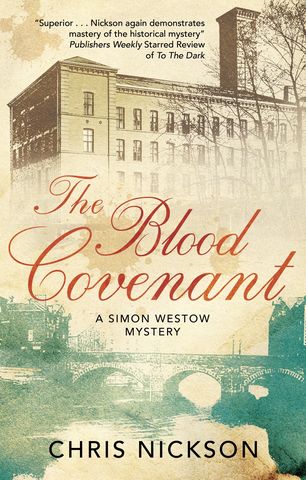
To finish, please indulge me while I ask a favour. My most recent novel, The Blood Covenant, has had the types of reviews a writer can only dream about. The one coming in September, which isn’t far away now, is very good, the 10th Tom Harper novel. Yes, I’d love for you to buy them. Ideally from an independent bookshop, but outlets like Speedy Hen and the Hive in the UK have excellent prices and free postage. Like everyone, though, I know we’re all squeezed and books are a luxury. If you can’t afford it, please order from your local library. If they don’t have it, they will get it in. If every library system in the UK, US, Canada, Australia and NZ ordered copies of both, it would be handsome sales figures. And it would be on the shelves for everyone to read.

Even if you can afford, please consider the library request – that way it’s there for others.

Thank you.

If you have some time to spare – quite a bit of time – I was interviewed for the Working House podcast. You can listen here.

An Interview, Teaching, A Book

10 years

February has barely begun, but it feels like a flying start.

I’ll begin with the teaching. I’m involved in the Leeds Year of Reading, and proud to be part of it. Because of that, yesterday I went in and taught two writing workshops to students at my old school. Truthfully, it felt as if I’d achieved one of my ambitions. My day there was long ago, but I received an excellent education, and some of the English teachers were among the first to encourage my writing. This is some small way I can give something back and I greatly enjoyed it, even if I’m not one of nature’s teachers.

Secondly, the interview. It’s with Mystery People. You can read online here, but i’m also posting it in full here. It’s quite lengthy and conducted by the woman who first publishe me – she put out The Broken Token 10 long years ago.

And that leads on to the book. As I’ve said (often), The Molten City comes out at the end of March. And that month will also see The Broken Token available in print again, after so long as just an ebook or audiobook.

9781906790844

And the 10th anniversary celebrations are just beginning!

The Return Of The Broken Token


10 years

Next spring marks the 10th anniversary of the publication of my first novel, The Broken Token (I’m pretty certain that the launch took place on May 10 – in Leeds, of course). I’d certainly never imagined all the things that have happened since, and all the book that have come out. At that time, I was working on the second in the series.

My small publisher sold out to a larger independent publisher later that year, and they understandably didn’t want the back catalogue, so physical copies of the book quickly vanished.

Thanks to Creative Content, it’s been available ever since as an ebook and an award-winning audiobook, named one of the Independent on Sunday’s 10 Best Audiobooks of 2012.

And now, to make the tenth anniversary, it’s coming back into print as a paperback. Creative Content approached me, and I’m very happy to continue our partnership. It’ll be a trade paperback, priced at £9.99, and should be available from February. Richard Nottingham will be back!

However, I do still have one mint copy of the original paperback, which I’ll be giving away in a contest next spring. That’s real collector’s value. I’m serious; someone on Amazon is offering a new copy for £161. You’ll need to stay turned to find out all the details.

Meanwhile, here’s the cover of the new paperback:

9781906790844

How Do I Rate My Books?

As you hopefully know, I have a new book coming out next week (it called The Hanging Psalm, in case you weren’t aware). Take a big breath time, it’s the start of a new series, and my publisher has just accepted the follow-up, which will be appearing in a year’s time (I know, it’s hard to think that far in advance).

When something like that happens, though, I tend to look at those titles on my bookshelf with my name on them and have a think about them. It’s very rare for me to go back and re-read any. Certainly not for pleasure; I might have forgotten the details of the plots, but not the months of work that went into each one. If you’re a writer, by the time you’ve written something, revised it, gone through the publisher’s edits and then the proofs, you’re pretty much sick of seeing it.

But I have a surprising number of books out there. Quite often it astonishes me, makes me wonder just how that happened. And it makes me wonder what I think of them in retrospect. So, it’s time for an honest assessment.


I started out with the Richard Nottingham books. The Broken Token took several years to see the light of day. It was finished in 2006 and finally appeared four years later. In my memory, it’s curiously poetic, as is most of the series, a style that seemed to fit the character and the times – Leeds in the 1730s, for those who don’t know. Cold Cruel Winter was named one of the Mysteries of the Year by Library Journal, something that floored me. It’s a book that came from a single fact – the trial transcripts of executed men were sometimes bound in their skin. What crime writer wouldn’t relish doing something with that? And it was where I began to explore the grey area between right and wrong. The third book, The Constant Lovers, has its points, but taking Richard out of Leeds, even if it’s just into the surrounding villages, was probably a misstep. It diffused the focus. Leeds, tight and dense, is his milieu, and he’s been back in there ever since. The standout in the series for me, though, will always be At the Dying of the Year. It was the hardest to write, the one that cut deepest into me and left me depressed for a while afterwards. But the emotions are very raw and real on every page. Even thinking about it now, I can still feel them. Returning to Richard after a few years with Free from All Danger felt like a homecoming of sorts. I’d originally intended eight books in the series. That was number seven, but it left him at the end with some share of happiness, and God knows he deserves that.

I do have a soft spot for the pair of novels featuring Lottie Armstrong (Modern Crimes and The Year of the Gun). She’s so vibrant and alive, both as a young woman and in her forties. It’s impossible not to like her. The problem is that I painted myself into a corner; it’s impossible to ever bring her back, although she seems quite happy to leave things as they are. In different ways, I’m hugely proud of them both, and particularly of Lottie. I still feel she might pop in for a cup of tea and a natter.

The Dan Markham books (Dark Briggate Blues and The New Eastgate Swing) book came after re-reading Chandler once again and wondering what a private detective novel set in the North of England would be like. I found my answers. The original is the better book, harder and more real, and it spawned a play, to my astonishment. The second certainly isn’t bad, but it doesn’t quite catch the pizazz of the first.

Then there are the anomalies – a three-book series set in medieval Chesterfield. The first came as a literal flash on inspiration, the others were harder work, and the difference shows. I lived down by there for a few years, I like the town itself and I think that shows. There’s also a pair of books set in Seattle in the 1980s and ‘90s that hardly anyone knows about – they’re only available on ebook and audiobook. But I spent twenty years in that city, a big chunk of my life, and I loved it. I was involved in music as a journalist (still am, to a small degree), and the novels, still crime, are part of that passion. You know what? I still really believe in them. They’re pretty accurate snapshots of a time and place, and the scenes that developed in the town – the way music itself was a village in a booming city.

The Dead on Leave, with Leeds in the 1930s of the Depression, was a book born out of anger at the politics around and how they seem to be a rehash of that period. It’s a one-off, it has to be, but I do like it a lot – more time might change my view, but honestly, I hope not.

And that brings me to Tom and Annabelle Harper. I’m not quite sure why, but I feel that they’re maybe my biggest achievement to date. That’s a surprise to me, given that I swore I’d never write a book set in Victorian times. Yet, in some ways they feel like the most satisfying. More complex, yet even more character-driven. And I think someone like Annabelle is the biggest gift anyone can be given. She’s not the focus of the novels, but she walks right off the page, into life. I didn’t create here – she was there, waiting for me. And what feel like the best books in the series are the ones that involve her more, in an organic way: Skin Like Silver and The Tin God. Not every book works as well as I’d hoped; in Two Bronze Pennies I don’t think I achieved what I set out to do. My ambition was greater than my skill. But maybe I’m getting there. The next book in the series, The Leaden Heart, takes place in 1899, the close of a century, and I feel I’m starting to do all my characters real justice. I’m currently working on one set in 1908, so the 20th century is already here, and I still want to take them to the end of World War I, a natural closing point for the series. I feel that I’m creating not only good crime novels, and I strive to make each one quite different, but also a portrait of a family in changing times – and also a more complete picture of Leeds.

And that’s always been the subtext, although it took me a long time to realise it. Leeds is the constant, the character always in the background, changing its shape and its character a little in each era. And I’m trying to portray that, to take the readers there, on its streets, with their smells and noises. I’m hoping to have a novel set in every decade from 1890s-1950s (maybe even the ‘60s, if inspiration arrives), to show how the place changed.

In a way, the nearest I’ve come to running after the character that is Leeds and its essence is a collection of short stories, Leeds, the Biography, even if I didn’t realise it at the time. It’s based on anecdotes, snippets of history, and folk tales, and runs from 360 CE to 1963. For the most part, they’re light tales. But one has resonance – Little Alice Musgrove. That still stands as a good story (you can probably find it online)

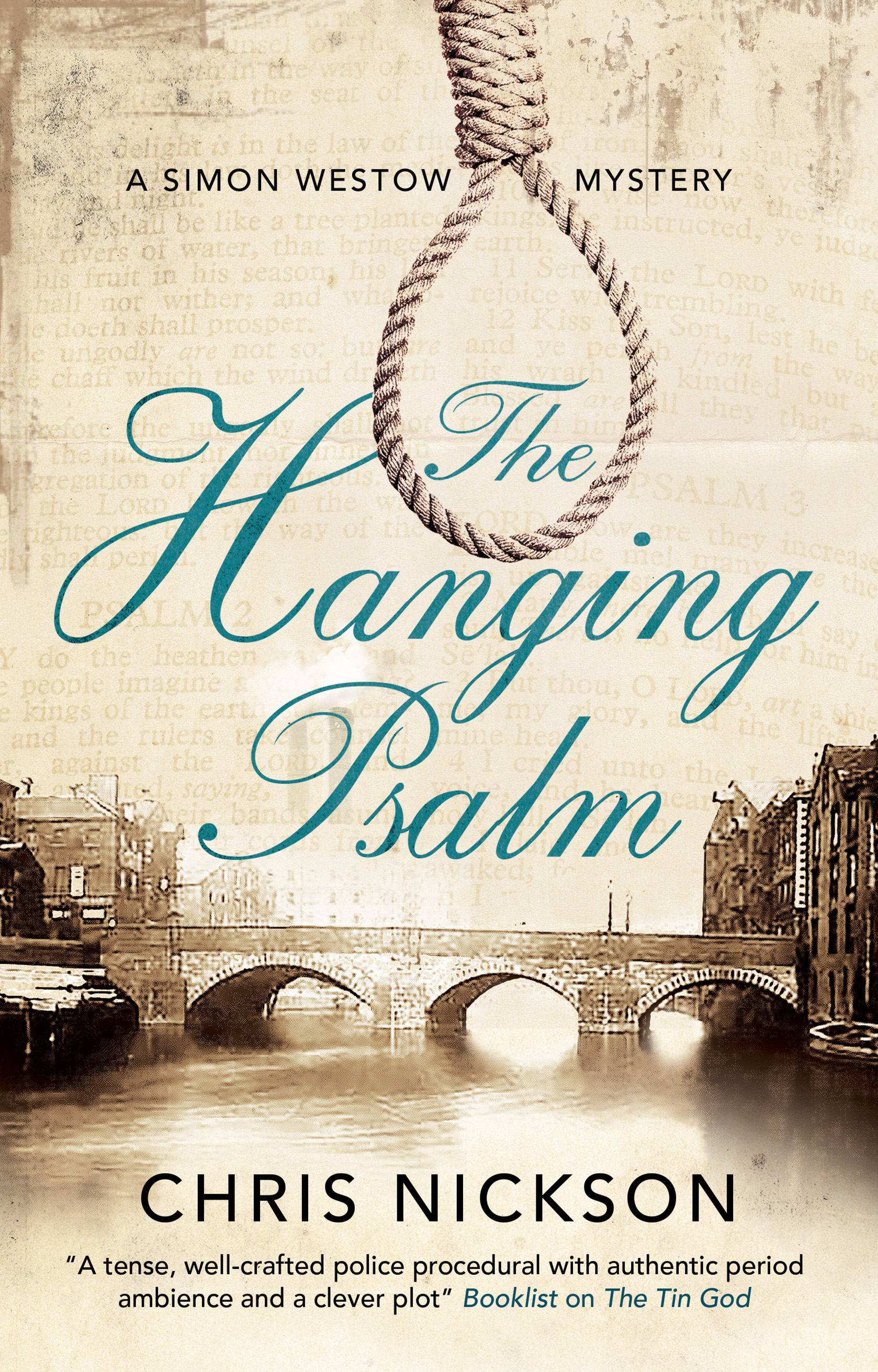
But with The Hanging Psalm, out next week, I’m going back to an unexplored place, Leeds in the 1820s, when the Industrial Revolution was still quite new. The Regency, although there’s very little gentility to it; better to describe it as Regency Noir. The book is still too fresh for me to asses it fairly. But I do know how electric it felt to write. So I’m hopeful it will stand the test of time in my mind…and in the meantime, I hope you’ll buy it (definitely buy it if you can!) or borrow it from the library and enjoy it.
Hanging Psalm revised

That’s Somethin’ Else

A little less than five years has passed since Creme de la Crime took a chance on me and published the first Richard Nottingham book, The Broken Token. Someone believe in my writing enough to put an entire novel in print and get it out there. It’s impossible to describe how it felt at the launch in May 2010. Proud doesn’t come close. My only regret was that my parents weren’t alive to see it.

Now, in little less than a month I have another new book out, and there have been a fair few in between. Since I was given that first opportunity, I grasped it hard, and I’m immensely grateful that people what to publish and to read what I write.

I write every day. Every single day of the year. It’s what I do. I’m many things, as we all are, but writer is very close to the top, if not right at the peak. I love to write. It’s a pleasure. It’s an honour. I still do a fair bit of writing about music, my avocation, but the focus is on the novels.

Overnight success is rarely that. Writing is a craft to be mastered, and that takes time. We never master it, not really. We just keep trying. I know I am. I attempt new things. Some work, some don’t. And I keep trying to gain readers, one by one, and hang on to those who like my work.

Bit by bit, I try to move ahead. I’ll never be a bestseller. I’ll never win the Nobel Prize for Literature (my hope when I was in my teen and foolish). I’ve found what I do and it took long enough. But the movement is there and in the last 12 months it seems to have been a giant stride, first with Gods of Gold, then with Dark Briggate Blues. Lovely reviews, press coverage, plenty of people at the launches and events I’ve done. That’s incredibly heartening.

Both books are up for the CWA Historical Dagger. I may win, I may not – there are plenty of betters writers out there. Dark Briggate Blues is up for a Regional Read.

I’m lucky, I have publishers who believe in me. I’m not lost somewhere in the mid-list of some publishing giant. I can phone the publishers I deal with and talk to them. They do all they can to push the books with excellent publicists. I’m proud of everything I’ve put out. I’ve made many wonderful friends and had their support and had the chance to know and befriend writers who’ve influenced me. That’s pretty amazing to me.

But today, today felt like a quantum leap. I had to go into Waterstones in Leeds – the local branch of a national chain where I held the launch for Dark Briggate Blues and recently did a signing. My books weren’t on the shelf. No, the manager told me, and showed me. One is displayed on a table. And then he showed me something else. My books have their own table in the crime section, because they’re selling so well. Only two of them at present, because the third they stock is currently sold out. And they’ll be getting in the hardback of Two Bronze Pennies when it’s published.

I was amazed. In fact, I walked out without taking a picture of it. A few steps before I realised my stupidity and walked back in. Success isn’t a fortune in money. This is what it looks like. And thank you all.

Wastones table