Thank You and A Sense of Place

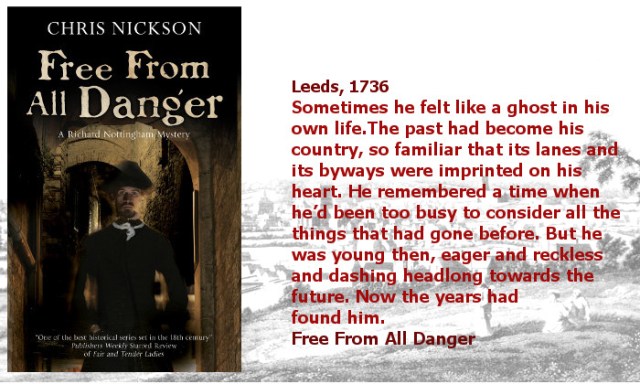
I hope you won’t mind if I begin with a bit of self-congratulation: Publisher’s Weekly has given Free From All Danger a starred review. I’m immensely proud of that for a couple of reasons.  First, it’s impossible to know what any reader will make of what a writer does, so something that positive means a great deal. Secondly, it’s the seventh in the series, arriving four years after the last one. That’s quite a space of time. All the previous six achieved starred reviews, so there’s a giant sigh of relief that they like this one as much. Richard Nottingham is older this time around, a changed man in some ways. I’m just happy people still like him.

Anyway…Christmas and the end of 2017 are just a few days away. I wanted to wish you all a lovely time, and a happy, healthy 2018 – and to thank you for your support. I really do value it.

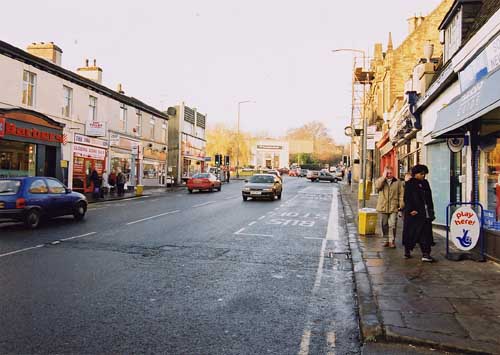
At this time of year I like looking around Leeds and thinking about my family connections to the place. They crop up quite a bit in my novels. References I know, that I enjoy putting in.

The biggest is probably the Victoria pub from the Tom Harper novels. Annabelle is the landlady, but from the 1920s to the 1940s, it was my great-grandfather who ran the place. My father lived in Cross Green, and as a boy he’d walk over in the summer so he could go upstairs and play the piano for hours on end. Impossible not to celebrate a connection like that.

victoria pub

In fact, a little of the idea of including the place at all came from a book he wrote, that was never published. His main character was a female servant from Barnsley who came to a pub in Sheepscar as a servant. She ended up running the place and owning three bakeries. His maternal grandparents were from Barnsley, and originally ran a pub in Hunslet before taking over the Victoria. And, in the Harper series, Annabelle runs, then sells, three bakeries. So thank you, Dad. You have me a lot in that.

victoria1

Dan Markham’s flat in Chapel Allerton (Dark Briggate Blues) is in the building where my parents made their first home, and where I spent my first year. Curiously, a reader told me once that her daughter was living there now. His office on Albion Place is where my father had his office.

2004113_45626467

Lottie Armstrong’s house in The Year of the Gun is the house where I grew up. The present owner graciously showed me around, and it’s very much the same as it was, I’m pleased to say.

It’s four years now since I moved back to Leeds, and honestly, I’ve never felt more connected to a place in my life.

The Real Leeds Voices From History

Several weeks ago, I was talking to a gentleman who works in the Local and Family History Library at Leeds Libraries. We discussed the lack of authentic Leeds voices in our local history (among other things). There is a book called Leeds Describ’d, but so many of the pieces in there are from outsiders describing the town.

In the last few days I looked through the Leeds books on my shelves and put this together. It’s far from exhaustive, and other people have done the heavy lifting, really. But this is Leeds in the words of the people who lived here, the condition of the place, how they lived, how they worked. A little window into history, I hope.

The Cost of keeping Roundhay Park, 1373
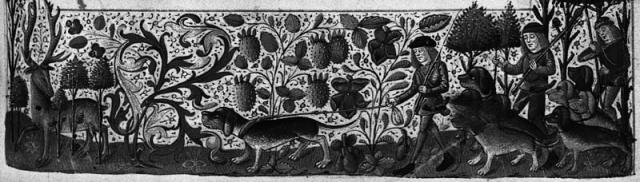
roundhay hunting

In medieval times, Roundhay Park was used for hunting, and was much bigger than it is today. There was boundary fence. In the accounts of Robert de Halton, reeve, there’s an indication of some of the yearly work.

And in the wages of five men cutting brushwood and other trees for feeding the deer in the winter season of this year, in the park of Roundhay, viz, each of them at different times for forty days, at 2d per day.

And in six cartloads of hay to support the deer in the ensuing winter, in a place called le Stannk – 20s.

And in the hire of one cart to carry the hay from le Stannk to the Grange within the park by six turns at 8d a turn.

And in the wages of one man driving the said cart and helping to stow the said hay in the Grange, for four days, taking by the day 3d-12d for this year.


A Handfasting in Headingley, 1563

Handfasting was a form of marriage, and still practiced in Elizabethan times. This comes from evidence given to the Consistory Court of the Archbishop of York by Thomas Whitehead, regarding the union of Edward Walker and Anne Hobson. The meeting described took place in the garden area of what is now the Original Oak.

Walker: Ye know that you and I have had communication together for marriage howe saye you nowe is there any man that you beare any better favour unto than you beare unto me and the said Anne answering said no and further said unto the said Edward that he shulde be more welcome to her company than any other man shulde be using himself lyke and honest man. And then & there the said Edward Walker said unto the said Anne Hobson yf You be contented to sticke to me as I am contented to sticke to you we will make no more to do but take wittnes & go throw with the matter. Whereunto the said Anne consented. And then and there the said Eward Walker toke the Examinant [Whitehead, the witness] to be wittnes for him & the said Anne toke William Smythe to be witness for her.


An End to Three Plotters, 1664

farnley wood

After the restoration of the monarchy in 1660, a Republican plot to overthrow Charles II was discovered – the Farnley Wood Plot – and a number of men sentenced to death. Three of them, Robert Atkins, John Errington and Henry Wilson escaped to Leeds, where they were arrested in an inn and hung in chains on Chapeltown Moor. But that wasn’t the end of their punishment, according to a contemporary account:

…their 3 heads were cut off and put into a cloth bagg by the executioner, Peter Mason, a Notorious Villain, by occupation a Joyner at yt day brot in a cart to Leeds and all yt night lay in a flask full of water in the prison to suck out all the blood. 20. Jan, 1664, being Wednesday all there heads were sett upon the Moot hall end, severally fixed upon 3 spikes of iron.


Servants, 1704

Any large house required a small army of servants to keep it running. But those employed hard to work hard for their wages, as this agreement between Sir Walter Claverley of Esholt Hall and Joseph Mawde shows.

Agreed with Joseph Mawde to serve me one year from this day, for which he is to have £5, and 20s to buy him a frock with for brewing, & a livery, vizt, coat, waistcoat, breeches, hat & stockings: & his imployment is to be, to look at all the stables, horses & mares, both in the house & pastures, & keep the fold clean & also the pheasant garden & little garden within the pales of the fold, & to see the trees to be therein nailed any time on occasion, & also to keep the court before the hall door clean, & grass places in good order, & also to brew the master all his drink, to keep the jack in order, to take care of the calash & drive it, to keep the boat carefully locked, cleaned & dressed, to wait at table when occasion, &, if he does not his best, but neglects these things, to have no wages.


The Tenter Cutter, 1713

tenter

Cloth was a vital part of the Leeds economy for centuries, and it was stretched using hooks on tenter poles set in open land. Anyone interfering with the process, from spinning to sale, could expect rough treatment and swift justice. From the Memoranda Book of John Lucas.

Friday 24 July, about 9 o’clock in the evening one Matthew Bailey who lived in Meadow Lane but was one of those persons called kerseymen was taken in the act of cutting tenter in the Millgarth. He had been suspected to follow that trade long he was apprehended that night, and the next day, was sent to York and it being Assize time Mr Mayor went to York early on Monday morning and got him tried that forenoon where he was cast, and in the afternoon he had sentence past on him to be transported.


Trying to Avoid a Hanging, 1748

From the of Births, Marriages and Deaths for Leeds Parish Church 1748/9. Josiah Fearne was the first (only) Lord of the Manor of Leeds to be executed – and his is a great story. But it’s the length of this entry that makes it unusual. The murder took place at Nether Mills on Fearn’s Island.

Tho. Grave, Nether Mills, buried 4th March 1748/9

N.B. Tho. Grave was most barbarously murdered in his own House, by a domineering, villainous Lord of the Manor, Josiah Fearn, 24 Feb., 1748, with four wounds in his Body, of which he died 2 Mar. Fearne was taken and committed to York Castle and tried before Sr Tho. Burnett, was convicted, condemned, and hanged 25 Mar., 1749.

Soon after Fearne was condemned, he sent an Attorney to Mrs Grave to offer her Twenty Pounds a Year for Life or for Twenty Years to come at her own Option, in case she wou’d sign a Petition to the Judge in his Favour (which Fearn said was a Sufficient Recompense for the Injury he had done to her and her Eight Children), but she prudently declined the Offer, well knowing there is no Satisfaction to be made for ye Blood of a Murderer.

This probably is the First Lord of the Manor of Leedes that has made his Exit at the Gallows and God Grant he may be the last. Fearne’s Temper was extremely rigid to the poor and his Dependents, that he was dreaded by All, but beloved by None. He was buried at Clifton, near York, 31 Mar.


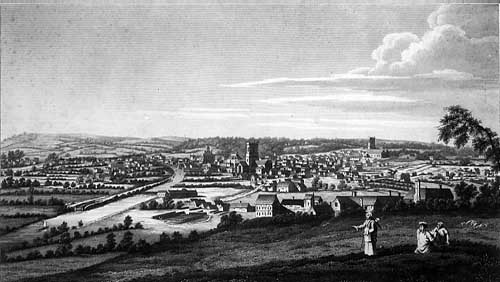
Highway Robbery, 1774
c18 leeds

Crime has always been with us, but reports of highwaymen around Leeds are quite uncommon. This is from a newspaper, possibly the Leeds Intelligencer.

On December 27th, 1774, as the daughter of an eminent butcher of this town was returning, in company with a servant maid, from Chapeltown, they were stopped by a footpad, who presented a pistol, with the words, “Your money or your life”. Not assenting immediately, he searched their pockets and took from them one shilling, three halfpence, and a silver thimble and then gracefully retired.


Poverty, 1797

Anonymous

Cellarts, Garrets and such like Places, exhibit…abodes of human Misery, the wretched Inhabitants are frequently found either exerting the last Efforts of Nature to support themselves…or languishing under the most powerful Influence of complicated Disease.


Poor Trade, 1826

The Leeds wool trade was in dire straits in the 1820s. In a letter to his brother, merchant Joshua Oates was frank about the situation.

I have actually suspended what? payment? No! not exactly, but I have suspended purchases of every description except bread, meat and potatoes, and I have driven clothiers away with a “can’t you call again next month?”….there is literally next to nothing doing by our foreign merchants and such numers of them are in back water that I should hardly know where to begin with introductions – it is                                         said by the Dyers and clothiers that with the exception of six or eight houses in Leeds no payments have been made since last November.


The Irish in Leeds, 1842

BakerR

Dr. Baker, the Medical Officer, had done wonderful work after the cholera epidemic in 1832. Throughout the 1830s and 40s, many Irish people came to Leeds, many settling on the Bank (Richmond Hill). In 1842 he wrote about them.

In the houses of the Irish poor, of which there are a great many in Leeds, who work in factories and are engaged in weaving by hand plaids and other stuff goods, there is a general state of desolation and misery…They are mainly employed in plaid-weaving and bobbin-winding, and in some of the mills of the town, of whose population they compose no inconsiderable amount, especially those departments of mill-labour which are obnoxious to English constitutions and to some unendurable. To such an extent, indeed, has the employment of the Irish been carried in Leeds, that, in 1835 and 1836, many of the flax-mills would have been obliged to stand for want of hands, but for the influx of Irish labourers which then took place.


The Children of the Poor, 1849

Angus Bethune Reach was a Manchester journalist on the Morning Chronicle. In 1849, with the Relieving Officer, he went to some houses in Leeds. In one, he found three children picking ropes apart. The family had been receiving parish relief for seven years. The oldest of the children was eight.

Where’s your mother?

Gone out to try and get some washing to do.

Where’s your father?

In the Fleece – that’s a public house. Ah! Mother told he had better not go today for you (to the relieving officer) would be very likely to come round; but he wouldn’t stay.

What does your father do?

Sweeps the streets sometimes.

But does he not help you pick these ropes?

No; he wouldn’t do that. He makes us do that.

What do you get for picking?

Fourpence a stone but I give it all to my mother.

Do you go to school?

Only on Sundays. I must work, you know. I can’t read yet. But my little brother goes to school on week-days. Parson pays for him. Only sometimes they keeps him at home to help in picking. He can’t read either.

And is not the other little boy your brother?

Oh no! He only comes in to help us pick.

Do you like picking?

No, because it makes me poorly. The dust gets into my eyes and down my throat, and makes me cough. Sometimes, too, it makes me sick. I can’t keep at the work very long at a time, because of that.

You say you give all you earn to your mother Does she never let you have a penny for yourself?

Sometimes.

And what do you do with it?

I buys bread.


A Pint and a Death, 1856

Drink and violence were as common in Victorian times as they are now, especially on a Saturday night when men had been paid. This is a deposition to an inquest into the death of John Mensey, from Robert Madden, the landlord of the Yorkshire Hussar on Union Street.  Both men lodged on Lower Brunswick Street, and the fight took up again there, lasting until one am. A verdict of manslaughter was returned.

On Saturday night the deceased and Patrick King came together to my house, about ten o’clock at night. They appeared to have had some beer, but were sober. Whilst in my house, they played at dominoes, and about half-past eleven they quarrelled over the game. The deceased got up and put himself into a fighting attitude. King did not seem disposed to fight, and the deceased called him a coward. King replied, “Well, I’ll be a coward.” Mensey then sat down. They continued to have high words up to twelve o’clock, when I requested them to go. I followed them to the door, and when they got outside they began to fight. I requested some persons present to assis me in separating them. At that time they had fallen to the ground. We assisted them up, and immediately afterwards they fought again; but I cannot say who began it. They had then taken off their coats. Both fell again, and were again separated. King then went towards Vicar-lane and Mensey went in the opposite directions towards his lodgings. The deceased and King were fresh, but able to walk. I heard King say that he didn’t want to fight, but he would not be “put upon.” After they separated, I saw no more of them.


The Omnibus, 1857

In some ways, perhaps, bus travel doesn’t change much. This is an letter to the Leeds Mercury about the early, horse-drawn omnibuses.

I have had the misfortune to ride with people half drunk, three quarters drunk, quite drunk, noisy drunk, sleepy drunk, dead drunk. The omnibus, unfortunately for some of us, passes two or three places of resort in Briggate and elsewhere, where men is respectable positions congregate of an evening to talk and tipple, then ride home in a public conveyance to the disgust of all decent people. Could not a tippler’s omnibus be started for these should-be-gentlemen? I am not a teetotaller, but I hate to sit in a small compartment of about 4 feet wide by 6 feet long, with two, perhaps three redolent gentlemen trying to talk without stuttering, but none of whom could pronounce intelligibly the word ‘statistics’, if it were to save his life.


The Places of Crime, 1859

A police report noted:

120 houses of ill-fame; 30 public houses; 50 beerhouses; and seven coffee shops, all being resorts for thieves and prostitutes. There are also 120 low lodging houses which accommodate 622 persons nightly, several of them of questionable character requiring the attention of the police.


Death and the Ballad, 1885

When William Snowden’s keel boat, the Edward & William, capsized at Whitton Sands in 1885, only one man seemed to survive. But his wife and three children remained trapped in a pocket of air on the boat, and were freed after seventeen hours. Two of the children died on board. Mrs. Snowden and one child survived. A ballad was written and sold in Leeds to raise money for them.

The Keel to Leeds returning from Grimsby we are told,
In charge of Chaptain Snowden a sailor young & bold.
And in the vessel down below his sleeping children lay,
And two with him to sleep in death upon the coming day.

Soon come the shock, the keel overturned the husband’s spirits fled,
His gallant heart’s ceased beating he is numbered with the dead.
The mother clutched her little ones that slept so peacefully,
And tried, so hard to save them but alas twas not to be…

The water rose about her and higher still it came
The little arms are around her neck and she calls each one by name.
But when the water sunk again she knew one spirit fled,
And called her little Lizzies name but ah! her child was dead…

At last they hear her knocking and willing hands contrive
To save the mother and the only one she’s left alive.
What tongue can tell her feelings or who shall know her grief,
Pray God in all her mercy send her stricken heart relief.


Tom Maguire, 1886

Tom-Maguire-Leeds-gas-workers

Maguire was one of the most important – and largely unheralded – figures in late 19th century Leeds politics. He was a union organiser, a proud proponent of Socialism, and played a vital role in the formation of the Independent Labour Party in 1893. He made his living as a photographer’s assistant and died penniless on Quarry Hill in 1895 at the age of 29. This reminiscence comes from Alf Mattison:

My first meeting with Tom Maguire was also the occasion of my first acquaintance with socialism. It must have been sometime early in 1886 that, strolling through the Market-place of Leeds, my attention was attracted to a pale but pleasant featured young man, who in a clear voice began speaking to a motley crowd. After listening for a while I began to feel a strange sympathy with his remarks, and – what is more – a sudden interest in and liking for the speaker; and I remember how impatiently I waited for his reappearance on the following Sunday. A few months later I joined ‘the feeble band, the few’ and became a member of the Leeds branch of the Socialist League…


Jewish Labour, 1885

Published in Arbeiter Freund, this is a strong reminder of the collective action taken by Jewish tailors in the Leylands in 1885. Many came from Poland and Russia and settled in the triangle of the Leylands, a network of streets running just north of the city centre towards Sheepscar. This is possibly an outside voice, but sheds some valuable political light.

In the history of the Jewish labour movement in England, Leeds will, without doubt, occupy one of the nicest places, if not, indeed, the first place. And, in truth, whilst in some other towns such as Manchester, Liverpool, Glasgow, Nottingham, Birmingham and others, the Jewish workers are not even organised in societies, or are entirely beneath the heel of the masters, having entirely surrendered their free will to them, the Leeds workers have, in this regard, made enormous progress. They have not stopped at this…they have decided to open a co-operative grocery shop, and, by this means, to free themselves from the shopkeepers, butchers, ritual slaughterers, milk-and-butter dealers, etc., who live and get fat on the sweat of the workers like rats on a living corpse.


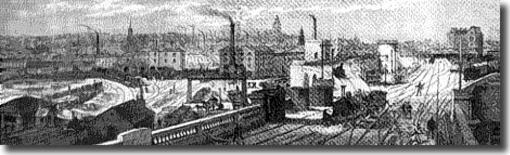
Criminals, 1892
victorianleeds

The Chief Constable requested more officers to cover the increased area of Leeds and deal with all the urban problems.

In the Borough residing at present are 21 known convicts, 17 persons under police supervision, 335 suspected persons, i.e., persons who seldom or never work, but loaf about the streets, watching persons getting into or out of tramcars with a view to picking pockets, or frequently following women who are of loose repute, and who entice men into secluded spots where they are robbed and ill treated by the man or men and woman.

Places to be most avoided are the Dark Arches, Swinegate, Whitehall Road, or anywhere behind the Queen’s and Great Norther Hotels.


A Hunslet Home, 1894

The booklet Hypnotic Leeds appeared in 1894, a polemic about the problems the working-classes in Leeds lived with every day. This was written by Joseph Clayton, a blanket-raiser who lived in Hunslet.

The typical workman’s house in Leeds has one living room, adorned with sink and taps for washing purposes, two bedrooms, and an attic in which is possibly a bath. The bath is the one redeeming point, and the corporation should insist on it being built in every house.

The sink and taps on the other hand are depressing in a sitting room, and the smell of the atmosphere of the weekly wash not conducive to health of mind or body. If we prefer to dry our clothes across the street and not indoors we may gratify our neighbours’ curiosity as to the condition and quality of our under-clothing, but the smoke of Leeds resents our brandishing clean clothes in the open air and showers down smuts. Of the necessary sanitary arrangements of every dwelling-house – it is difficult to speak calmly in Leeds. Our ashpits which adorn the street are the resting place for decayed vegetable matter, and domestic refuse generally; the stench from them is probably a sweet smelling savour to the arch fiend, but it is poison to the children who play around them.


The Machine Girl’s Life, 1896

This comes from Richard Sheracy’s superb expose, The White Slaves of England: The Slipper-makers and Tailors of Leeds, published in Pearson’s Magazine.

I come in at 8am. If I’m late I’ll be fine 1d or 2d. There will be nothing for me to do. Then I’ll sit at my machine doing nothing till half-past twelve. Then I’ll ask the foreman if I may go home. He’ll say: “No, there’s orders coming up after dinner.” Dinner? I probably haven’t any, knowing work was slack and expecting to get home. So I go without. At half-past one, I’ll go back to my machine and sit doing nothing. Foreman will say “Work hasn’t come up yet.” I have to sit at my machine.

Once I fainted from hunger, and asked to be allowed to go home, but they wouldn’t let me, and locked me up in the dining-room. I stay at my machine till 3 or 4. Then the foreman will say, as though he were conferring a favour: “The orders don’t seem to be going in, you can go home till the morning.” And I go home without having earned a farthing. Sometimes work may come in the afternoon, and then I will stay on till 6.30, earning wage for the last two or three hours.


The Traffic Problem, 1898

A report by the Chief Constable.

The rowdyism in Briggate is a matter most difficult to deal with owning to the number of people using this busy thoroughfare, it being next to impossible to keep people to the right of the pavement, arising from the great number of side passages leading in and out of Briggate. On the 7th January 1898, a number of men were placed in Briggate to note particularly the number of vehicles and pedestrians passing. They watched from 8.20pm to 8.30pm at one point not exceeding 30 yards, on the west side of Briggate and noted 2,306 pedestrians, 3 omnibuses, 10 tramcars, 3 four wheeled cabs, 6 hansoms ans 2 post mail carts.

The Club for Mill Girls, 1890s

To try and keep mill girls out of the gin palaces and music halls, and on the straight, narrow path, middle class women would set up clubs for them with wholesome activities. Several existed in Leeds in the 1890s.

We have taken a large room and made it look as tempting as we can, with bright curtains and some pictures, and above all a very fair piano, which to our musical Yorkshire girls is an endless source of pleasure.


The Old Market Cross and the Fish, 1897

The market cross had stood at the top of Briggate since the 1600s, but was demolished tin the 19th century. More Annals of Leeds contains a reminiscence vaguely about it by Mr. William Campbell.

Between the south end of the cross and the noth end of the Middle Row was the fish market. I have a vivid recollection of a jolly good natured looking fishwife who had the principal stall near the cross. Returning one day from taking my father’s dinner, I stood watching the woman empty a hamper of fish, when taking out a fair sized cod, she remarked, “There’s been a devil at that fish.” A large piece had apparently been bit off its shoulder. Looking at me, she said, “Here, my bonnie lad, take that home to your mother, and tell her to boil it for your dinner; it’s no worse for having that piece bitten out.” I scarcely need say I ran all the way to Woodhouse with the fish, and how welcome it was. My father was employed by a corn merchant; his wages were 15s a week, out of which a family of seven had to be supported. His hours of work were much nearer sixteen per day than eight. A dinner of boiled fish was a treat to us. The fish market was held on Thursdays, and I may say that fish was sold much cheaper in those days than it is now.

Hunslet, 1930s

In Memories of Distant Days (1989) Carrie Stocks wrote about growing up in Hunslet in the 1930s.

We were surrounded by factories and work shops. At the bottom of our street was Belinda Street; Bromley’s Coffee Works was in the middle of Belinda Street and the smell of coffee hung round most of the day. Alongside was Lax and Shaw’s Glass Storage Depot so the chink of glass bottles could be heard. The smell from the Lead Works of Wilson and Jubb also permeated the surroundings, as they were a few yards higher up the street.

In Church Street was the Chemical Works; they threw out a yellow dust which settled on the pavements, roads and gardens, and gave off a smell of sulphur. On Low Road opposite my school was the Hygenol Soap Works where they manufactured disinfectants, polish and soap. A little further along the road was the Coglan Iron and Steel Works, giving out loud sounds of metal being beaten by trip hammers.

The Wireworks and the Nail Mill with machines working loudly were on Penny Hill, and on the wind came the smell of fish and leather from the Fish Canneries and Tanneries just over Balm Road Bridge.

A Play With Live Jazz

I’ve been sitting on this news for a while, but as the official announcement was made today, I’m very pleased to tell you that my play, New Briggate Blues, commissioned by Jazz Leeds, will be performed next July as part of JazzLeedsFest 2018.

It features Dan Markham, the Leeds enquiry agent from Dark Briggate Blues and The New Eastgate Swing, along with his wife, Carla, as well as a live jazz quintet, who will perform during the play.

It’s very much a celebration of Studio 20, the Leeds jazz club that features heavily in both books, and will be directed by Ray Brown.DBB cover crop

A Christmas Tale

I’m not really one for Christmas in my own life. I never have been. But every couple of years I still seem to end up writing a Leeds Christmas story. Don’t ask; I can’t explain it, either.

This time, though, I wanted to do something different. I’m reading Steve Roud’s wonderful Folk Song in England, and the section on Town Waits – the official musicians employed by many towns, who also doubled as the night watch – struck a chord.

Leeds had its Waits back in the 16th century; they’re documented as far back as 1530, and their history might stretch back even further. As well as their watch duties, they played for official occasions and balls, and often undertook private engagements. In the 17th century, certainly, Leeds Waits were popular, as played as fair away as Carlisle and Newcastle. In other words, they must have been good.

And why Elizabethan Leeds? Why not? After all, I said I wanted to do something different.

We do have a revived Town Waits, who perform occasionally. You should see them if you can.

And on a final note before the story, don’t forget that Free From All Danger, the first Richard Nottingham book in over four years, came out recently. It makes a fine gift for family and friends.

Now, sit down with a mince pie, enjoy, and be of good cheer.

-early-music-folk-style

Leeds, 1559

The crisp weeks before Christmas were always fruitful. The musicians of the Town Waits would perform at the balls and parties around Leeds. Dances and tunes, songs and carols, then the last two dances to close the evening before a walk home in the cold darkness with coins jingling in their purses.

Daniel Wakeman tugged his cloak tighter and tucked the fiddle against his body. It was well wrapped, but the night was frosty and he knew the instrument well; if it grew too cold, it would complain by refusing to say in tune tomorrow. It had belonged to his father, a member of the Waits before him, a beautiful piece of work, but temperamental as a young girl.

Tonight had been good. Out in Potternewtown, a crowd that appreciated everything they played, and a generous host. Good food sent from the table and a jug of ale refilled as often as they needed. Then three shiny pennies each to carry home.

‘I’ll tell you what,’ he said to the others, ‘I’ll play there whenever they ask.’

Sam Hardy and Tom Carter laughed. Old John Whittaker said nothing, the same as ever, but he’d always been the quiet sort. They walked on, following the road into town. The last few nights had seen some killing frosts, and the earth was hard and rutted under their shoes. Clear skies and a bight enough moon to see his breath bloom in the air.

‘Did you hear about Pawson?’ Tom asked. ‘Someone’s been saying his wife’s made him a cuckold.’

It was all they needed to set tongues going, the speculation of who and when. Leeds was small, a place where everyone knew all the faces, whether high or low. New folk arrived every week, drawn by the way the wool trade was growing, but most were like Daniel, born in the town and lived there all their lives. He knew Pawson the clothier, he saw him almost every day. His wife span wool for the man. It brought in extra money they always needed. Being in the waits meant the silver badge and a good livery, the blue as dark as the evening sky and the yellow like a June sun, but the pay was small. Six nights a week walking around town, playing soft music to soothe the sleepers, keeping a watch for fire or burglars, then something louder to wake people in the morning. But it was a life full of music, and that was enough for him.

Music was joy. He felt free when he was playing. Even the recorder he used as he walked the street on the night watch. But the fiddle was what he loved. He felt he had a special bond with it. Not like some he heard, scraping to bow over the strings to give a sound that made him wince. His father had taught him well, God rest his soul. He caressed the notes, he made them dance. He couldn’t read a note of music, but he only needed to hear a melody once and he could play it.

But they were all good, even grumbling John, his back bent now under the weight of his bass viol. Sam with his lute, and Tom on the other fiddle. The best in the North, some people said, and who was he to deny it? They played all over, not just the parishes around Leeds, but for milady in Skipton back in the summer and as far away as Newcastle once, and Carlisle. They had a reputation, and he was proud of it.

‘Give us a song, Sam,’ Daniel said. Hardy had the best voice of them all, a sweet tenor that the ladies loved. A moment later, he began:

‘The hunt is up, the hunt is up,’ and they made it into a round, voices echoing loud against the silence of the night. But out here there were none to disturb.

By the time they neared Mabgate, Daniel could feel the cold eating through to his bones. A fancy hose and doublet might look fine enough, but they did little to keep out the bitter winter. Even a thick woollen cloak wasn’t much help. But he was close enough to home; soon he’d be warm again.

It wasn’t the best part of Leeds, not one of the fine houses of Briggate or Kirkgate with their painted timbers and brilliant white limewash, but it suited his pocket. The children were grown and gone to lives of their own; he and Maggie didn’t need much. A room downstairs for living and cooking, another upstairs which held the rough bed he’d built for them and two small chests of clothes. Plenty of room behind to grow most of their food and keep the pig and a pair of chickens. It was more than many possessed. And he didn’t mind the drabs who touted for trade on the road. They were like everyone else, simply trying to scratch a living.

What he did miss, though, was a cat. Theirs had died six months before. Eighteen years old, and a fine mouser in his day. He’d been good company while Daniel practiced on the fiddle in the bedroom and Maggie span downstairs. We all have our time, he thought. That’s how God wills it, and it was a good, long life for a cat.

With hushed goodnights he said his farewells to the other Waits and started along the street, lost in his thoughts.

Then the sound caught his ear. The tiniest mew, so faint he couldn’t even be sure it was real. It came from across the road. He stopped to listen, hoping to hear it again. And just as he did, right in front of him, a slate toppled from the roof, smashing and splintering as it hit the ground exactly where he’d have been walking.

For a moment, Daniel couldn’t catch his breath. God save us all, he thought, and the Lord had spared him for some reason. He felt himself beginning to shake and held the fiddle close. Then he heard the sound again, a little clearer. Over there, in the bushes by Widow Elizabeth’s house.

It was caught in a tangle of briers, a small, cold creature that tried to shy away from his touch. But he was gentle and patient, easing away the thorns until he could lift the kitten and feel its heart pounding hard against his palm.

No more than four weeks old, so thin he could wrap his fingers around its body. He stroked its fur, hearing the smallest start of a purr. Where had it come from? Not from any of the cats around here, he knew that. And it was still to young to be away from its mother.

But it had saved him. It was a gift.

‘Come on,’ Daniel said as he rubbed it head, ‘let’s get you inside. You need something to drink.’

The fire was banked for the night, but still far warmer than the darkness outside. An old rag for a bed. A dish of milk. He watched as the kitten drank, tentatively at first, then greedily.

Daniel put the fiddle away in the cupboard, resting it carefully on the shelf. It was his livelihood and his pleasure; he always kept it secure. He poured a mug of small beer, sitting on the bench to watch the cat. It was standing now, wobbling a little as it explored a little. A few steps around, then back, nose in the dish for more milk before it mewed again, then settled on the cloth.

‘I heard you come in,’ Maggie said from the top of the steps.

‘We have a new cat,’ Daniel said. ‘Come and meet it.’

‘A new cat?’ she asked in surprise as she came down. ‘What made you do that? It barely looks alive.’

‘I had to. This one just kept your husband alive. If it hadn’t cried out, I’d have been brained by a falling slate from the Thompson’s roof. I think it deserves a home after that, don’t you?’

She squatted, staring at the kitten in the faint glow from the fire, then reaching out and stroking it.

‘What are we going to call it?’ she asked.

‘Yule,’ Daniel replied. It seemed right.


Free From All Danger – The Launch

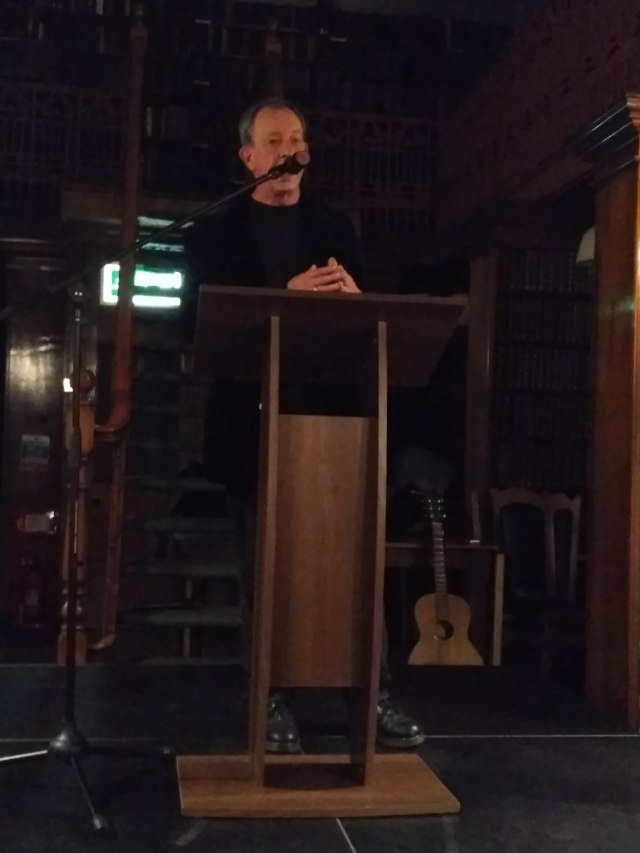
On Thursday I officially launched Free From All Danger. You know that, of course; I’ve been talking about it for a long time.

It was a great evening, about 50 people turned up (some joined the Leeds Library on the spot; others plan to do so very soon, which makes me happy).

IMG_1868

The audience arrives

And it all finished up with the splendid Hill Bandits performing an aching, grieving version of Our Captain Cried – the song that gives the book its title.

IMG_20171109_193438

The Hill Bandits

And people enjoyed the performance. Some said they’d never come across anything quite like it before, the mix of words and music. And the music (composed and recorded by an old friend, Chris Emmerson, with the fiddle piece behind Con the Blind Fiddler composed and performed by Hal Parfitt-Murray of the Danish band Basco) was excellent, atmospheric, and moving at times.

DSCF2047

The author and composer share a moment

I know many of you couldn’t be there. And I didn’t want the moment to simply vanish. After all, I’d put in a month’s rehearsal to try and make sure the timings worked. It was more intense than I’d expected, a huge step outside my usual comfort zone.

Over the weekend I recorded a version of the soundtrack. Nothing fancy on the voice, just dry, using the mic on my computer, then a quick mixdown with the music. I hope you’ll fancy giving it a listen:

One small warning. It will eat up 25 minutes of your time.

Meanwhile, I’ve included a few pictures from the event. Thanks to all who came, to the Leeds Library and Leeds Big Bookend, and Waterstones for coming and selling copies of the book.

IMG_20171109_190553

Just remember, that time of year is coming soon, and books make great gifts. Especially, I’m told, crime novels set in Leeds in the 1730s. Would I steer you wrong?

Free From All Danger 1

On the publication of Free From All Danger

Today, Free From All Danger, the seventh novel to feature Richard Nottingham, the Constable of Leeds in the 1730s is published.

It feels as if I’ve been waiting for this for a long, long time.

In many ways, I have. His last outing, in Fair and Tender Ladies, was more than four years ago. But coming back to him was like visiting a close friend. One who’s older, wearier, who looks at life a little differently.

Richard and I, we knew we had unfinished business. I’d originally planned to have eight books in the series, enough to tell his story properly, to let it unfold. Of course, it’s not simply about him. The books have always been about relationships. With family, with the men who work for him and the people in Leeds. They sit at the heart of it all, just as they do in life.

FFinvitation pic4

It’s a period that’s been sadly unexplored in fiction, especially in mysteries. But in Leeds, it was a decade of change, as the town began to grow fat on the sale of woollen cloth, and the merchants became the men who ran everything. And the poor…stayed poor. More of them, drawn by the chance of making a fortune. But opportunity was a rare thing.

It’s always been the lives of the poor that have interested me. They go unremarked and unremembered. Curiously, even Richard Nottingham, who was a real person, and a privileged one, seems to have left no trace; I’ve been unable to find any mention of his death (or birth, for that matter) in any parish register. If I make readers feel what life was like for those in Leeds at the time, then maybe I’ve done something right.

Of course, I’d love for people to buy the book. But I also understand that hardbacks are outside the price range of many. The ebook will appear on February 1, 2018, when the book is published in America. Or reserve it at your library. If they don’t have it, ask them to order a copy. Honestly, it all helps. If you don’t know the series, they’re waiting out there for you.

Finally, if you’re in Leeds on November 9, come to the book launch. It’s free, of course, a performance piece with a specially-composed soundtrack and a little live music at the end. At The Leeds Library on Commercial Street, 7pm. Email them and reserve a seat, though.

Richard and I both thank you.

Free From All Danger – Once More

Two weeks from today, Free From All Danger will be published. It feels as if I’ve waited a long time for this. I have, really. It’s four and a half years since the last Richard Nottingham novel. Back then, Richard and I knew we still had some unfinished business.

So it deserves a big launch. November 9 it will have one, with a specially-composed soundtrack and some live music, to be held at the glorious Leeds Library, the oldest subscription library in England. The event is free; all you need to do is reserve a seat. Waterstones will bring copies of the book for you to buy, of course.

Two weeks,,,fourteen days. In the meantime, I’ve made another trailer for the book, to give a feel of it…


And here’s the first one that I did a few months ago…

(Two days later I’ll be taking parting in a second performance of It Happened At Leeds, about the Leeds Convention of 1917, at Chapel FM in Seacroft. Pay as you feel.)


Free Time Travel

Books are portals to other places, other times. They possess that fragment of magic to transport a reader, to wrap them in another world.

I hope that’s what I’ve managed with Free From All Danger. To take you to 1736, to walk through Leeds with Richard Nottingham, to see the place through his eyes as he returns as Constable. To hear the noise, smell it all, see the faces…

Some of might have have read the previous six books in the series. The last appeared in 2013, more than four years ago. At the end of the last book, Fair and Tender Ladies, Richard retired.

But things change, live never stands still, and circumstances bring him back. The big question for him is whether he can still do the job…


“Sometimes he felt like a ghost in his own life. The past had become his country, so familiar that its lanes and its byways were imprinted on his heart. He remembered a time when he’d been too busy to consider all the things that had gone before. But he was young then, eager and reckless and dashing headlong towards the future. Now the years had found him. His body ached in the mornings, he moved more slowly; he was scarred inside and out. His hair was wispy and grey and whenever he noticed his face in the glass it was full of creases and folds, like the lines on a map. Sometimes he woke, not quite sure who he was now, or why. There was comfort in the past. There was love.

Richard Nottingham crossed Timble Bridge and started up Kirkgate, the cobbles slippery under his shoes. At the Parish Church he turned, following the path through the yard to the graves. Rose Waters, his older daughter, married and dead of fever before she could give birth. And next to her, Mary Nottingham, his wife, murdered because of his own arrogance; every day he missed her; missed both of them. He stooped and picked a leaf from the grass by her headstone. October already. Soon there would be a flood of dead leaves as the year tumbled to a close.”


Bringing Richard back was like spending time with an old, trusted friend and a long time away. I treasured it. I value Richard, his family, and I want to take you with me to spend time with them, to live their lives.

My copies of the book arrived on Monday, and it was a thrill hold hold one, to open it. By now, you’d think I’d be used to it. But this is…special. Some of you had emailed to ask when Richard would return. Here’s your answer.

The book is published in the UK on October 31 – four months later elsewhere. If you’re close to Leeds on Thursday, November 9, I hope you’ll come to the launch for it, at the Leeds Library on Commercial St (the oldest subscription library in England, in the same building since 1808. There will be a specially-composed soundtrack, and some live music. Starts at 7 pm, and I’d love to fill the place…

Obviously, I hope you’ll buy the book. I’d love that. But I know that many can’t afford it. Borrow it from your library – support libraries in every way you can. If they don’t have it on order, request it…

More than anything, I hope you enjoy it. And thank you, because without readers, writers are nothing.

Free From All Danger 1

The Hanging Psalm, Part 2

When I put the opening to The Hanging Psalm on here (the previous blog entry – scroll down to read), it brought some interesting reactions.

It’s still moving ahead, and looking a bit more like a book – although that always remains to be seen. I start many more things than I complete.

But I thought I’d give you one more taste of it, as the plot and characters open out a little. So, please, tell me what you think.


As he left the Moot Hall, Simon curled his hands into fists and pushed them into the pockets of his trousers. Briggate was thick with carts and people. He moved between them without noticing. His head was filled with the faces from the past. The children who fainted after working for twelve hours without food or water, because the overseer wanted the most from them. The boy who lost three fingers in a machine, just standing and staring at the stumps, not able to say a word.

And finally, the day he carried a girl back to the workhouse, the bloody patch steadily growing on her skirt after two men had their pleasure with her during their dinner break. Catherine, just turned eleven the week before; that was the all he ever knew about her. She moaned in his arms, in too much pain to cry.

He was thirteen, grown big and strong and defiant. He pushed the door of the matron’s office wide, and gently lay Catherine on her desk. The woman was protesting, shouting, but he didn’t want to hear anything she had to say. Simply turned on his heel. He was never going back.


There was still an April chill in the air as he stood and gazed down on the river. The water moved slowly, stinking and dirty. Swirls of red and ochre and blue eddied on the surface, waste from the dyeworks. The body of a dead dog bobbed lazily up and down in the current.

Simon took off his hat and ran a hand through his hair. He needed to let his thoughts ebb away. He needed to forget. To let the fire burn down to embers again.

From the corner of his eye he noticed a movement, a shadow.

‘It’s only me.’ The girl kept a wary distance, eyes on him. She was thirteen, older perhaps, maybe even younger. As invisible as any of the children who roamed the streets in Leeds. An old, patched dress that was too small for her. Stockings that were more holes than wool, battered clogs on her feet. Dirty face and hands and a grubby cap covering blonde hair. ‘The missus sent me after you. I saw you leave the Moot Hall and followed you down. You’re all dressed up today.’

Simon had worn his good suit, the short, double-breasted jacket in fine worsted with long swallowtails and tight, narrow trousers. A ruffle at the front of his shirt and a tall-crowned hat with its curled brim on his head. He’d wanted to make an impression, to show that a boy from the workhouse could be a success. But by now he probably didn’t even exist for them.

‘What does she want?’ He took a breath, tasting the soot that spewed from the factory chimneys. Slowly, he felt the anger recede.

‘Someone’s waiting to see you. Looks like a servant, I caught a glimpse before she sent me out.’ She waited a moment. ‘Are you coming?’

‘Tell her I’ll be there soon.’

He watched her move, melting into the press of people. Who noticed a child? Who noticed a girl? That was what made Jane so useful. She could follow without being seen, she could overhear a conversation without anyone realising she was close.

Simon gazed around. Grim faces everywhere. People who looked as if they were just clinging on to life. He began to walk.


The house stood on Swinegate, right on the curve of the street. He could hear Rosie in the kitchen, talking to the twins as she worked. She raised her head as he entered, pushing a lock of hair away from her cheek. An apron covered her muslin dress. She brought the knife down sharply on a piece of meat.

‘Jane found you?’

‘She did. Where is he?’

‘I gave him a cup of ale and left him in the front room. Arrived about half an hour ago.’

Simon nodded.

‘How was it?’ she asked.

‘Give them three lifetimes and they’d never understand. All it did was drag up the past.’

She gave him a tender smile.

‘It’ll fade again. It always does, Simon.’

‘I suppose it will.’ She was right; it always had before. His sons peered at him around the corner of the table, two identical heads. He stuck out his tongue and they began to laugh. They were the best medicine he knew.


The smile vanished as he opened the door and walked into the front room. The man in the chair jerked his head up at the sound as if he’d been sleeping.

‘I’m Simon Westow. You wanted to see me?’

‘My master does.’

Jane was right. He was a servant. But a trusted one, if they were sending him here. Older, with sparse grey hair and a grave, formal manner to match his dark clothes.

People didn’t seek Simon out. They placed a notice in the Mercury or Intelligencer for their stolen property. He found it, returned it, and gave them the name of the thief. In exchange, he received the reward. If they chose to prosecute, they could take their chances in court.

That was how a thief taker worked. No one came here for his services.

‘Who’s your master?’

‘He’d rather not be identified yet.’ The man gave a forbidding smile. ‘But he’d like to meet you today.’

‘Why?’

‘It’s a delicate matter. He’d prefer to tell you himself.’ The man reached into his waistcoat pocket with two long fingers and drew out a sovereign. ‘He believed this might convince you.’

The gold felt heavy in his palm. Solid. Real.

‘Where and when?’

‘Three o’clock. Do you know Drony Laith?’

‘Yes.’ Out beyond Gott’s big mill at Bean Ing. Just woods and fields, where the town ended and the countryside began.

The man stood and gave a small bow.

‘What would you have done if I’d refused?’ Simon asked.

‘My master gave me a second sovereign. He’ll see you at three.’


He tossed the coin. It skittered across the kitchen table. Rosie’s had moved swiftly and it vanished, disappearing into the pocket of her skirt.

‘Handsome money,’ she said. ‘What’s it for?’

‘I’ll find out this afternoon.’ He poured a mug of ale and drained half of it in a gulp. She kneaded the bread dough, fingers spread as she pushed it down. She’d given the boys a small scrap; they sat, stretching it between them until it snapped, then starting over again.

This was where he felt complete. This was home.

Rosie began to shape the loaves, concentrating on her work. She’d blossomed, he thought, so different from the girl he’d seen sitting at the side of the road twelve years before, staring helplessly at a mile marker.

‘Can you help me, mister?’ she’d asked. ‘Does it say which way to London? I can’t read it.’

He’d told her, but she didn’t start walking. Instead, he sat next to her and they began to talk. She was still here. Now, though, she knew her letters and her numbers. He’d taught her, the same way he’d taught himself after he left the workhouse. And she learned quickly. His pupil, after a while his lover, and finally his wife.

‘Do you have any idea who sent him?’ Deftly, she slid the loaves into the oven.

‘Not yet. Has Jane come back?’

‘I heard her go upstairs.’


He knocked quietly, waiting for her reply. The attic was almost bare, just a bed, a basin and jug on a small table, and a haze of ragged curtain covering the window.

She’d been here for two years, yet there was nothing of her in the room. As soon as she walked out, it was empty. But he understood. Own nothing you couldn’t carry. A portable life, always ready to move, to run. Until he met Rosie, he’d been exactly the same.

‘I saw him leave.’

‘Go out to Drony Laith,’ Simon said. ‘I’m meeting his master there at three.’

He didn’t need to tell her to keep out of sight. It was habit for her; she’d learned it on the streets. Don’t let anyone see you steal. Keep clear of authority. Get caught and you’d be in chains, waiting for Botany Bay or the noose.

‘I know his face. He works for John Milner.’

Interesting. Milner had property all over Leeds, and investments in two of the manufactories that had gone up since Napoleon’s defeat. They’d never spoken, but Simon seen him in town, a sour prig of a man with a miserly face.

But what property had he lost that needed to remain such a secret?

‘Let me know if anyone goes along with him or if anyone’s following.’

The girl nodded.

‘Dinner will be ready soon.’

The Hanging Psalm

Leafing through a book a few days ago, I landed on the phrase ‘the hanging psalm’; it’s Psalm 51, intoned as a convict stood at the foot of the gallows, waiting to have the noose placed around his neck.

More than that, it was a wonderful title for a book.

And suddenly I had a story. How far it will go remains to be seen (of course). But for the moment, it’s roaring like a train. This is the beginning. I didn’t make up these facts. They’re from testimony to a commission, and they’re far more brutal than anything from my imagination.

What do you think?

Leeds, 1820


They were grave men. Sober men, neat in their black coats, white stocks snowy at the neck. Important people, businessmen, landowners who believed that wealth and position meant they knew about life. Three of them together at the polished table, papers arranged in piles before them. The one in the middle spoke.

‘Your name is Simon Westow. Is that correct?’

He waited for a moment before he answered. Let them look at me. Let them see me.

‘That’s right.’

‘How old are you?’

‘Thirty in July. If I was told the truth.’ He wasn’t about to call them sir. If they wanted his respect, let them bloody earn it.

‘You were in the workhouse, I believe?’ The man kept his voice even, reading from the sheet in front of him.

‘Went when I was four, after my mam and dad died.’ He could hear the scratch of a pen as the clerk in the corner took down his answers.

‘How did they treat you? When did they put you out to work?’

‘Are you really sure you want to know that?’

It made them stop. Just for a second. But he had their attention. The man behind the desk smiled.

‘That’s why we’re here. Our aim is to find out about child labour.’ A slight pause. ‘But you must know that. It was made perfectly clear to you.’

Oh yes, he thought. Perfectly.

‘They set us on at the mill when we were six, and let the manufactories do their worst.’

‘And what might their worst be? How often were you beaten?’

‘Regularly,’ Simon said. ‘Boys and girls alike.’

The man looked down and shuffled a few of his papers.

‘More than once the overseer made us take off our shirt, climb into one of the bins on the floor, and he’d hit us with his stick until we were bloody.’ He let his words remain calm as the images raced through his mind. The facts could speak loudly enough.

‘What else?’

‘They’d tie a two-stone weight to our backs and make us work. Two of them for the bigger lads.’

‘I see.’ They looked a little uncomfortable now, all three of them shifting on their seats. Good.

‘There was one boy who could never work fast enough. He tried hard, but he couldn’t manage it. Every week the overseer hung him from a beam by his wrists and beaten with a strap on his back to try and teach him a lesson.’

‘Did he improve?’

‘He died. He was seven years old.’

‘I see.’ The men were staring now. The clerk had stopped his writing. The only sound in the room was the soft tick of the clock. But he hadn’t finished yet.

‘Once they took a vise, a pair of them, and screwed one to each of my ears. Then they had me work half the day with them in place.’

‘Why would they do that?’

‘For their own amusement. I still have the scars.’

But they wouldn’t want to see, he knew that. He’d leave this room and they’d try to forget everything he told them. Maybe it would come back in their dreams tonight. Every night. Exactly the way it had for him.

‘Don’t you want to know where it happened?’ Westow asked.

‘That’s not part of this inquiry. We’re here to discover, not blame people for things that happened in the past.’ His voice changed, becoming gentler, trying to appease. ‘How long did you work there?’

‘Until I was thirteen. Seven years.’

‘Thank you, Mr. Westow.’

He stood, back straight, and walked to the door. A final question stopped him.

‘What is your occupation now?’

He turned to stare at them. ‘I’m a thief taker.’

Hanging Psalm revised