The Real Richard Nottingham

I’ve been writing about Richard Nottingham for quite a few years now – he first appeared as a secondary character in an unpublished novel on mine written started in 2004 (the central character, as a curiosity, was a Leeds wool merchant named Tom Williamson).

In that time, I’ve been caught up in Richard Nottingham, the character. But he was a real person, the Constable of Leeds from 1717-1737. Now, with the seventh book about him due out later this year, I thought I was well past time I tried to find out a little about the man himself.

Sadly, there’s very little information. He became Constable and Gaoler of Leeds on May 18, 1717, and left that post on October 11, 1737. Richard took over the position from William Nottingham, who would seem to have been the first Constable to Leeds.

But the Nottingham family isn’t especially notable in the parish of Leeds. The Parish Register contains no mention of William, and Richard doesn’t come up until his marriage to Jane Wood on January 4, 1676, at Leeds Parish Church. At the point she was 21.

marriage

How old was he then? At the very least he’d be 16, which means that the latest he could have been born was 1660, the year of the Restoration of the Monarchy; very likely he was older than that, and older than his bride.

The couple, shown as living on Kirkgate, began having children the following year. Elizabeth first, born August 8, 1677, Hannah in July 1679, Richard in 1683, John in 1685, Mary in 1687, Jane in 1689 (died 1694), another Richard in 1691 (died 1694), Samuel in 1692, and finally another Jane, who apparently was born and died in a matter of days in 1694 – and that was an awful year for the family, losing several children in just a few months (a couple of decades later, two of Samuel’s children would die while still infants, something sadly common at the time). Was there an illness? Two more children seem to have followed, Jean in 1696, and Frances in 1697.

Although the family initially lived on Kirkgate, by 1692, with Samuel’s birth, they’d moved to Briggate (or Bridgegate, as it was written in the register), and they’re not listed in the assessment of July 1692 on Kirkgate to help pay for the war (records for Briggate need to be checked). Briggate would seem to be where they stayed for the rest of their lives, and he appears in the rates for 1726 on Briggate.

rates

It’s impossible to be certain  – this is in the days before real birth, marriage, and death certificates – but it appears that Jane Nottingham died in 1715, and was buried on March 28. Richard Nottingham himself died in 1740, buried at Leeds Parish Church on May 18. No cause of death listed; the only information is that he still lived on Briggate.

burial

Given that he only left his position as Constable three years before, he must have stayed in post until he was well into his seventies. Perhaps it’s just as well that the role was ceremonial, rather than being a working man. I’ve searched the churchyard, but no gravestone remains, which is no real surprise, given the upheavals there during the 19th century.

Yet Richard is a very elusive man. It’s impossible to gain any sense of how he might have been as a person, in spite of his very public role for two decades. And William only gains one mention in the records, in 1713, when he took part in a procession to celebrate the peace signed with France in Utrecht. There’s more to dig into, of course – wills, rates, and so on. But so far it seems to be a life that left few traces.

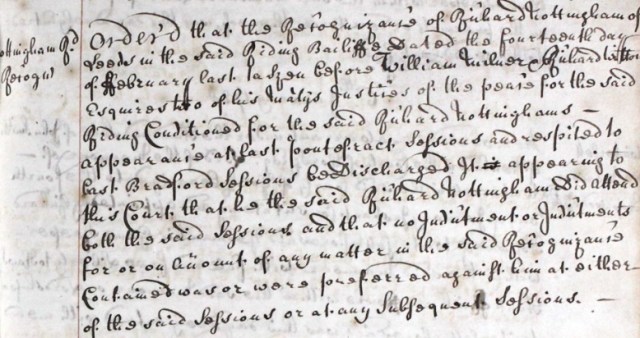
Richard, though, appears a number of times in the Quarter Sessions records. First in 1695, when he awarded money for pointing out men who are highway robbers. The amount was £20  – in today’s terms close to £2800.

1695

Three years later he’s there again. Interesting, this time he’s given the title of Deputy Constable, some nine years before appointed to position of Constable.
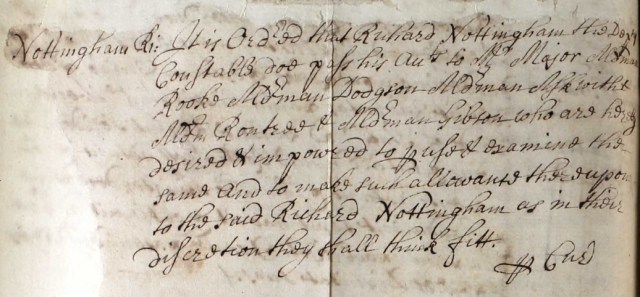
1698

When in office, it seems that things didn’t always run smoothly. In 1723 a warrant for his arrest by the bailiffs was issued, and he’d failed to execute an arrest warrant on someone. Sir William Lowther, the first Baronet of Swillington, was the member of Parliament for Pontefract and a former High Sheriff for Yorkshire.
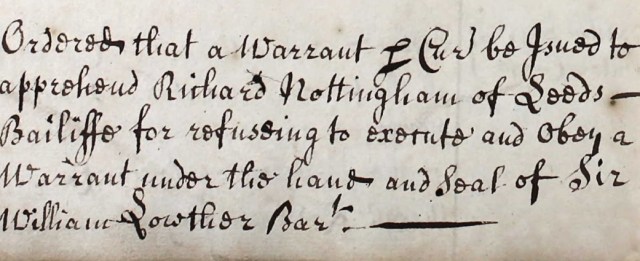
1723

A year later he’s obviously back in good graces.

1724


1728

These are wonderful snippets. Did that first reward urge him towards becoming Deputy Constable? What was the reason he never made that arrest? We’ll never know, and an some ways, though, perhaps it good that the real Richard Nottingham remains so nebulous. It would seem that he had money: his oldest child, Elizabeth, married John Wombwell, the second son of Baron Wombwell, and one of their children became a consul. She died in 1745, at the age of 63. But the money might have drained away. In the 1760s Richard’s son Samuel lived in one of the backside houses off Briggate, in a property with low rateable value; just 20 years earlier, Samuel had occupied a house fronting on Briggate with a much higher value.

So far I haven’t managed to find a copy of the Leeds Mercury from May 1740 that might carry an obituary with more details. However, Leeds Libraries do have it on microfilm, so hopefully more details will be forthcoming next week!

Even if Richard never married a Mary or had Rose and Emily as daughters, he’s very much alive to me, at least the version who exists in my head. And as no portraits exist, he can only look the way we imagine him.

Richard Nottingham – the fictional one – will return in Free From All Danger, to be published in the UK on October 28, 2017.

Chance Encounter

Tomorrow, On Copper Street, the fifth of my Leeds Victorian novels, is published. Like the rest of the series – and like my Richard Nottingham books, set in Leeds 150 years earlier – the social conditions of the people, and the city itself are vital parts of the story. Yes, they’re mysteries, crime novels, but with a Dickensian social conscience. For me, it’s impossible to look at the past without seeing the dirt, smelling the stink, and hearing the pain of so many who lived there.

The books are, perhaps, a way to offer some sort of memorial to the unremembered, the ones who, like my own great-great grandparents, were buried in common graves.

But first, to whet your appetite for On Copper Street, how about a new Annabelle Harper short story?

Leeds, 1896


She’d gone five paces past the man before she stopped. There were beggars everywhere in Leeds, as common as shadows along the street. But something about this face flickered in her mind and lit up a memory. He was despondent, at his wits’ end, but unlike so many, he wasn’t trying to become invisible against the stones, to disappear into the fabric of the city. He might not like it, but the man was very much alive. She stopped abruptly, turned on her heel in a swish of crinoline and marched back until she was standing over him, shopping bags dangling from her hands. It was the last day February, a sun shining that almost felt like spring.

‘You, you’re Tommy Doohan, aren’t you?’

Very slowly, as if it was a great effort, he raised his head. He’d been staring down at the pavement between his legs.

‘I am,’ he answered. His voice was weary, a Leeds accent with just the smallest hint of Ireland, easy to miss unless you were familiar it. He stared up at her, baffled, with his one good eye, the other no more than a small, dark cavern above his cheek. ‘And who might you be? You don’t look familiar.’

‘Annabelle Harper,’ the woman replied. ‘Annabelle Feeney, when you knew me. Back on Leather Street.’

His smile was weak. He looked as if the entire weight of the city had pressed down on him and left him small, broken. It had dropped him in this spot

‘That was a long time ago.’

His suit had probably been reasonably smart once. Good, heavy wool, but the black colour had turned dusty and gritty from sitting so long. Cuffs and trouser hems frayed, threads hanging to the ground. Up close, she could see the grime on his shirt, no collar, no tie. The shine had long vanished from his shoes. He was bare-headed, his hair dark, growing wild and unruly. His cap sat upside-down between his thighs. In a rough, awkward attempt at copperplate, the cardboard sign propped against it read: But give that which is within as charity, and then all things are clean for you.

‘Luke,’ she said. ‘Chapter eleven, verse forty-one.’ Annabelle grinned. They’d been in the same class at Mount St. Mary’s School. ‘The nuns must have rapped my knuckles a dozen times over that one. Sister Marguerite would be happy it finally stuck.’

‘Ah, me as well. Twenty times, at least. But they’d have a harder time doing that now.’ He held up his right arm, the hand missing two fingers and the thumb.

Annabelle took a slow, deep breath.

‘My God, Tommy, what happened?’

‘Just a little fight with a machine,’ he said wryly. ‘I think I won, though. You should have seen the machine when we finished.’

‘How can you-’ she began, then closed her mouth. She knew the answer deep in her bones. You laughed about it to stop the pain. You joked, because it you didn’t you’d fall off the world and never find your way back. ‘Come on, I’ll buy you a cup of tea.’

‘I can’t let a woman pay for me.’

She dropped the bags and stood, hands on her hips, face set.

‘You can and you will, Tommy Doohan. Get off your high horse. You’d have been happy enough if I’d put a tanner in your cap. Now, get on your feet.’ She looked up and down New Briggate. ‘There’s a place over there, across from the Grand. And I’m not taking no for an answer.’

For a moment he didn’t move. But her voice had a razor edge, and he pushed himself to his feet, scooping a couple of pennies and farthing from the cap before he jammed it on his head.

He was tall, towering a good nine inches above her. Close to, he smelt of dirt and decay, as if he might be dying from the inside.

‘I’d carry your bags for you, but one of the paws doesn’t work so well.’

‘Give over,’ she told him, and his mouth twitched into a real smile.


He cradled the mug, as if he was relishing the warmth, only letting go to eat the toasted teacake she’d ordered for him. When he was done, he wiped the butter from his mouth with the back of a grimy hand, then felt in his pocket for a tab end.

They’d been silent, but now Annabelle said: ‘Go on, Tommy, what happened to you?’

‘When I was sixteen, I headed over to Manchester to try my luck. Me and my brother Donald, do you remember him?’

She had the faint image of someone a little older, tousle-haired and laughing.

‘What could you do there that you couldn’t here?’

‘It was different, wasn’t it?’ he said bitterly. ‘I’d been a mechanic down at Black Dog Mill, I could fix things, and Don, well, he was jack of all trades.’ He smoked, then stubbed out the cigarette in quick jab. ‘We did all right, I suppose. One of the cotton mills there took him on, made him a foreman, earning fair money.’

‘What about you?’

‘Down at the docks. Long hours, but a decent wage. Lots of machines to look after. I met a lass, got wed, had ourselves a couple of kiddies.’

‘I’ve got one, too. A little girl.’

Doohan cocked his head.

‘What does your husband do? You look well off.’

‘You’ll never credit it.’ She laughed. ‘He’s a bobby. A detective. And I own a pub. The Victoria down in Sheepscar.’

He let out a low whistle.

‘You’ve turned into a rich woman.’

‘We get by,’ Annabelle said. ‘Anyway, what about your family?’

‘Gone,’ he told her bleakly. ‘About two years back I was working on this crane, you know, hauling stuff out of the boats. The mechanism has jammed. I almost had it fixed when the cable broke. It’s as thick as your arm, made from metal strands. Took the fingers before I even knew it, and a piece flew off into my eye.’ He shrugged. ‘I was in the hospital for a long time. Came out, no job. They told me that since I didn’t have two full hands, I wasn’t able to do the work any more. Goodbye, thank you, and slipped me two quid to see me on my way like I should be grateful.’

‘Where was your wife?’

‘Upped sticks and scarpered with my best mate as soon as someone told her I wasn’t going to be working. Took the children with her. I tried looking round for them for a long time, but I couldn’t find hide nor hair. Finally I thought I’d come back to Leeds. I might have a bit more luck here.’ He sighed. ‘You can see how that turned out. On me uppers on New Briggate. Begging to get a bed.’ He spat out the sentence.

‘Couldn’t you brother help?’ Annabelle asked.

‘Donald was married, and he and his brood had gone off to Liverpool. He has his own life, it wouldn’t be fair. Me mam and dad are dead, but there are a few relatives who slip me a little something.’

She stayed silent for a long time, twisting the wedding ring back and forth around her finger.

‘How long did you work at all this?’

‘Seventeen years,’ Doohan said with pride. ‘Ended up a supervisor before…’ He didn’t need to say more.

‘Do you know Hope Foundry? Down on Mabgate?’

‘I think I’ve seen it. Why?’

‘Fred Hope, one of the owners, he drinks in the pub. He was just saying the other day that he’s looking for engineering people. You know, to run things.’

Doohan raised his right arm with its missing fingers to his empty eye.

‘You’re forgetting these.’

‘No, I’m not. You’ve got a left hand. And your brain still works, doesn’t it?’

‘Course it does,’ he answered.

‘Then pop in and see him tomorrow. Tell him I suggested it.’

‘Are you serious about this?’

‘What do you think?’

‘He’ll say no. They always do.’

‘Happen he won’t. Fred has a good head on his shoulders. He can see more than a lot of people.’ Annabelle opened her purse and pulled out two one-pound notes. ‘Here. It’s a loan,’ she warned him. ‘Just so you can get yourself cleaned up and somewhere decent to sleep. Some food in you.’

‘I can’t.’

She pressed the money into his palm.

‘There’s no saintliness in being hungry and kipping on a bench,’ she hissed. ‘Take it.’

He closed his fingers around the paper.

‘I don’t know what to say. Thank you. I’ll pay you back.’

‘You will,’ she agreed. ‘I know where you’ll be working. And your boss. Now you’d better get a move on, before the shops shut.’

‘What about…?’ He gestured at the table.

‘Call it my treat. Now, go on. Off with you.’

At the door he turned back, grinning. He seemed very solid, filling the space.

‘Is this what they mean by the old school tie?’

fd6e893b-1a79-4ca0-b893-31bff3118253

History, Raging About Leeds, and On Copper Street

It’s just seven days now until the publication on On Copper Street, continuing the story of Tom Harper and his wife Annabelle in 1890s Leeds. Strangely, it feels as if I’ve been waiting an eternity for this day, although rationally I know it’s not that long since The Iron Water appeared.

I wrote a little about what suffuses the book here, and that sense of mortality is bound to become part of anyone work as they grow older. Even raging against the light or refusing to go gentle into that good night is an admission of it. And that’s fine; after all, death is just one act in life. Whether it’s the final one is something we’ll all find out when it happens to us.

On Copper Street isn’t the end for Tom Harper. I have very definite plans for him – for the two of them, really. There’s still plenty of late Victorian Leeds to explore. The city is in constant flux, still proud, still growing, still a centre of industry. And that new century isn’t far away, beckoning on the horizon. Tom and Annabelle will still only be in their 30s when it arrives. They have years ahead of them.

Much of ‘old Leeds’ still survived then – Richard Sykes’ house on Briggate, dating from the 1500s, and the old bow-windowed shop on Lower Briggate, just as two examples. Many of the courts and lanes still existed and were in daily use. As a new city, Leeds was on the cusp, wanting to be modern and look ahead, but not yet ready to quit the past. The thousands of back-to-back houses that were built for working families were only supposed to last for 70 years. Next time you drive around Harehills or Kirkstall or Hunslet or Armley, think about that. 70 years.

At some point in the 20th century, though, Leeds made a strange bargain with fate. As far as possible, it decided to sacrifice much of its history to the gods of commerce. The grand Victorian buildings could remain, and those that daren’t be demolished, like St. John’s and Holy Trinity churches. But everything else was fair game, deemed to stand in the way of progress. The slums were no loss, of course, and that redevelopment was welcome.

Cities change, of course. They evolve like organisms, like a species. But the past is a vital part of that evolution. It tells us where we came from and can offer hints of where we’re going.

But all too often, in its rush to become the Northern capital of retail, finance, and students, it’s as if those who run this city are ashamed of its history. Two decades or so ago there was the idea of tearing down Kirkgate Market, one of Leeds’ great jewels. Even now, it’s ridiculously shortchanged as the council bows at the glittering altar of Victoria Gate. Kirkgate – the street – is only just beginning to take the first steps back from years of being run-down.

The past that’s largely being ignored, of course, is that of the ordinary people. Those great Victorian buildings were monuments to wealth, to prosperity, and in their turn replaced something older and humbler. But these days, those running Leeds seem to genuflect at the slightest tinkle of coins. The ordinary people never mattered that much – you’ll be hard pressed to find many of their voices recorded in the history of Leeds – but now they seem to be actively pushed aside for the glitter of gold.

Nothing can redress that balance. But I try, at least to some small degree, in my books. The ordinary folk, the ones who’ve left no trail through history, are celebrated. Maybe something like On Copper Street reflects Leeds as it really was. We can’t turn back the clock, and we probably wouldn’t want to, but we dash recklessly after the new and shiny at our own peril.

By the way, after nosing around a little, this seems to be the cheapest place to buy On Copper Street. And I hope you will, of course, or borrow it from your local library, while they still exist (if you’d care to leave a review somewhere I’d be very grateful, too). Perhaps it’ll make you think a little, about life and death, and about history.

Thank you.

fd6e893b-1a79-4ca0-b893-31bff3118253

The Fall Of Empire

It’s Valentine’s Day, I know, but this little story has nothing to do with romance. Sorry, hazard of the job for a crime writer.


Someone was coming for him.

He didn’t know who, he didn’t know exactly when, but he felt it. Over his shoulder like a creeping shadow.

That was how it went. You made a name for yourself, climb to the top of the pile, and you became a target. Someone eager to earn a reputation would want to take you down.

Dirty business, crime.

Peter Thorn smiled. The newspapers had done their damnedest and failed. They’d done everything but name him; the libel laws had stopped that. The coppers had tried, but the ones he hadn’t bought off weren’t clever enough.

But some things you couldn’t outrun.

Too many people back from the war, walking round with their demob suits and souvenir weapons from Germany or the Pacific. Some of them hungry for a little fame.

He’d give them a chance. And he’d beat them.

That was why he was sitting in this Sheepscar boozer long after time had been called. Door unlocked, landlord and his wife safely tucked away upside. Bodyguards told to wait in a club; he’d ring when he needed them. You didn’t remain boss by hiding. You faced up to trouble.

the_pointer_-_sheepscar_street_south_-_geograph-org-uk_-_580967

Thorn had a glass of whisky on the bar, a Colt automatic beside it. Another weapon in the pocket of his suit.

He’d done well during the war. Staying out of the forces was too easy. A little money distributed here and there and he might as well have been invisible. Then it was black market petrol, coupons, this and that as he put together a small mob and made himself rich.

Now all those who’d been patriotic enough to do their bit were back and ready to stir things up.

He sipped the whisky and took a draw on the cigarette. He heard the door of the pub groan open and turned, ready.

‘Thank God it wasn’t locked,’ she said as she came in and gazed around. About thirty, he guessed, dark hair, looking scared and holding a handbag close. ‘I’m lost.’

‘Can I help you, love?’

‘A man was giving me a lift and he started…’ She blushed. ‘You know. So I got out and ran.’

‘He won’t try anything in here, believe me.’ Thorn smiled. He’d always liked a pretty face. ‘You’re safe enough.’ He raised the glass in a toast. ‘Help yourself if you want one.’

She stayed close to the door, undecided.

‘What’s your name, love?’

‘Peggy,’ she replied as he picked up the cigarette from the ashtray. ‘Peggy Walker.’

He stopped with the arm halfway to his mouth.

The woman dropped the handbag. She was holding a gun, her arm steady.

‘Tom was my brother.’

‘He had it coming.’

She ignored him.

‘Funny, the skills you pick up in the WAAFs. Never underestimate a woman.’

His hand began to move towards his pocket.

The blast was loud. He slid off the stool and on to the floor as the door creaked shut.

In Praise Of…Candace Robb

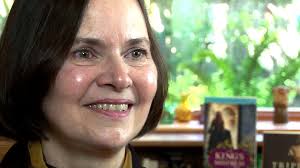
Every writer has influences. In some cases it can be style, in others, on the way a writer approaches their work. I have several, but one of the most lingering is the historical crime novelist Candace Robb.

I first came across her work about 20 years ago. I was still living in Seattle then, and came across a couple of her books at my local library. They were set in York, always one of my favourite cities, and in the 1300s, a very interesting time. I borrowed them, devoured them, and after that devoured the rest of her Owen Archer series, followed by her three Margaret Kerr books. In terms of language they were spot-on that I assumed they were written by someone local, someone who understood the place and its people in her bones.

candace

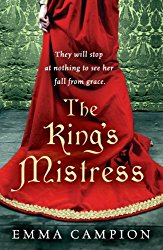
Fast forward quite a few years. My partner came across a book about Alice Perrers called The King’s Mistress and raved about it. I read it, curious because Perrers had been a minor character in one of the Owen Archer novels. It was as good as she said. A little digging online showed that the author, Emma Campion, was…Candace Robb. And she didn’t live in York at all. She lived in Seattle. More than that, she’d grown up in Cincinnati, where I spent a decade before moving out to the West Coast.

51yiq2pneyl-_uy250_

It was kinda weird.

By then I had a few historical crime novels of my own out on the shelves, the first volumes in my Richard Nottingham series. And the way Candace made family relationships such an important part of her novels had affected the way I put together my books. I owed her a debt.

I dropped her an email. She replied. And out of that, we’ve become good friends. We’ve never met, although we’ve been in the same cities at the same time before.  I’ve continued writing, and so has she: first another big historical, A Triple Knot, about Joan of Kent, and last year The Service of the Dead, the first in a new series set in York, featuring Kate Clifford, a young widow (that will see UK publication this year, while the second will be published soon in the US). I’ve read it; it’s every bit as good as her Owen Archer novels, which are my favourites.

service-of-the-dead-kd2b-rev

She’s an academic, a scholar with a very deep knowledge of the Middle Ages and especially of York, a city that seems to run in her blood. Everything detail is impeccably researched, but the scholarship is always in service of the story. It’s finely woven in – another influence she’s had on my work (well, I hope I’ve succeeded). And, most importantly for anyone writing about another time and place, she takes you there. When you read, you’re moving through York (or other places) in the 14th century. You can smell it, you can taste it. That’s a rare, precious quality.

the-apothecary-rose-small1

This June, Candace will be in England. She has an event – maybe more – in York. But happily she’s also going to do an ‘In Conversation With…’ in Leeds, on June 8 at the Leeds Library, a pop-up event by Leeds Big Bookend. I feel especially lucky, because I’m the one who’ll be asking her the questions.

For those who enjoy what I write, come along if you can, and discover one of the best historical crime writers. Or, if you’re a fan of hers – discover her if you don’t already know her work – this will be a treat.

The Modern Faust, Imagined

He had…everything. But he had nothing. The money his father left him made him wealthy. It made him desired. It made him powerful.

But he knew there were many who didn’t care. Up here, looking down over New York, he wanted more. Things that would make it impossible for them all to ignore him. He had dreams. His name everywhere: on buildings, on television, on people’s lips. To be known, to be celebrated. To be loved. To be better than anyone else. Now that was a real American dream.

He heard a small cough and turned away from the window. A man was standing there. Sharp suit, shoes gleaming, black hair slicked down, dark, deep-set eyes.

‘How did you get in here?’

The man waved his hand, as if it didn’t matter.

‘I hear you like to make deals.’

‘Well, yeah.’ He smiled, flattered. ‘I do. But good ones, you know. No crap.’

Okay, there’d been one deal, a couple of years before. And his father had loaned him money when things looked like they’d fall apart. Back before the old guy died. But one was a start. He had his eye on plenty more.

‘Of course.’ The man smiled and his tongue flicked across his lips. ‘You’re ambitious.’

‘Hell, yeah.’ He sat behind the desk. Old polished wood. It had class. It had authority. ‘So who are you, anyway?’

‘Call me…’ He pursed his lips. ‘Michael will do. My boss has been watching you. He thinks we can make a deal.’

‘Yeah?’ He was interested. Intrigued. He could seen the power that flowed out of the man. ‘What kind of a deal?’

‘A good one, naturally. Good for all of us.’

‘What do I get out of it?’ he asked.

‘Tell me,’ Michael said, ‘what would you like?’


‘It’s possible.’

He’d opened up to this strange guy. Unlike him. But there was something…he sat up straighter and ran a hand through his hair.

‘And what do you get? I mean, there’s got to be something. A lot.’

‘We get…power. What else is worthwhile?’ Michael asked.

‘Money,’ he answered without hesitation.

‘Anyone can get money. Are you interested?

‘Yes.’

‘There’s a contract, naturally.’

‘I need to show it to my lawyer.’

Michael shook his head. ‘No lawyer. Not this time. Let’s say he wouldn’t believe it. If you want this enough, sign it.’ He reached into his pocket and drew out a sheaf of papers. ‘Everything’s straightforward.’


He looked at the photograph on the wall. That was the real crowd. That was what he’d seen when he looked. Not what they were saying in the media. They hated him because he’d won, because they hadn’t wanted him.

So he’d sent his people out to tell them to shut up. They had to learn who was in charge now.

In the background, the television played. He heard his name and watched for a minute.

What did they think, that it had been easy getting here? The bankruptcies he’d had to work around, the people who did bad work and complained when he didn’t pay them. And Jesus, some of the women…but he’d made it happen.

He had.

Yeah, some of the people didn’t like him. But they’d learn. He rubbed a speck of dust off the picture frame and saw a face reflected in the glass.

‘What-’

‘It’s been a little while. Congratulations.’

The man – what was his name? Martin? Michael? Something like that – didn’t look a day older. Maybe even younger. He must have the best plastic surgeon.

‘What do you want? I could have the Secret Service come in and kill you.’

‘But you won’t.’

‘You want to bet?’

‘We can, if you wish. But I rarely place wagers. I prefer certainties.’

‘What are you doing here, anyway. After that time in New York and that contract thing I never heard from you again.’

‘You didn’t hear directly,’ Michael corrected him. ‘But who do you think eased you out of those scandals? Who had a word with some judges? Who led the way around everything?’ He paused a moment. ‘Who do you think put you here?’

‘I did that. Me. Look at it.’ He pointed at the picture. ‘They came because of me.’

‘No,’ Michael told him. ‘They came because of us.’

‘No.’ He was certain of it. He’d done it. By himself. He’d believe and he’d made others believe. ‘And that contract, you can forget it. I’ve got the best lawyers-’

‘Believe me, you don’t. My boss has always made sure he uses the very best. That contract is unbreakable. Anyway,’ he said, glancing at his watch, ‘it’s time for us to go.’

‘What? What do you mean?’ He could believe this.

‘You should have looked at the fine print. I said you’d get what you wanted. I didn’t say you’d keep it. Really, the devil is in the details.’

The Death of Tom Maguire

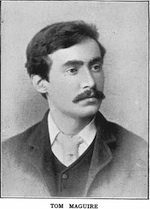
Next month On Copper Street, the fifth book in my Victorian series, will be published. One ongoing minor character has been Tom Maguire, a real person, and one of the unsung heroes of British politics, and one of the greatest unknowns ever to come from Leeds.

He discovered socialism in the 1880s and became a firebrand speaker, rousing the men and helping them win strikes. He was someone who helped in the formation of the Independent Labour Party, only to find himself sidelined by others with more of a taste for power. Tom Maguire died in Leeds in 1895. This is an extract from the new book. The circumstances of Maguire’s are true to reports of the time.

tom-maguire-lead


‘I had word about something while you were gone,’ Superintendent Kendall said.

‘What?’ From his expression, it couldn’t be anything good.

‘Tom Maguire. They found him dead at home. You knew him quite well, didn’t you?’

Knew him and liked him. Maguire had organized the unions. He’d helped them win their strikes, and he’d been there at the birth of the Independent Labour Party two years before. All that and not even thirty yet. But politics never paid the bills; he’d earned his money as the assistant to a photographer up on New Briggate.

‘How?’ The word came out as a hoarse croak. Surely no one would hurt him…

‘Natural causes,’ the superintendent said. ‘The doctor’s there now. I said we’d send someone over.’

‘I’ll go,’ Harper said.

‘A couple of friends called to see him this morning. Nobody had heard from him in a few days. The door was unlocked. They walked in and he was there…’


He knew Maguire had a room on Quarry Hill, no more than two minutes’ walk away from Millgarth, but Harper had never been in the place before; they’d always met in cafés and pubs and union offices. It was up two flights of rickety, dangerous stairs in a house that reeked of overcooked cabbage, sweat, and the stink from the privy next door. How many others lived in the building, Harper wondered? How many were packed into the rooms? How many more had lost their hope and will in a place like this?

The door to the room was open wide. The table was piled with books and magazines and notebooks. Politics, poetry, all manner of things. A few had slid off, scattered across the bare wooden floor. No sink, just a cheap cracked pitcher with a blue band and a bowl. A razor and leather strop, shaving brush and soap. A good, dark wool suit hung on one nail, a clean shirt on another.

That was the sum total of the man’s life.

The doctor was finishing his examination, wiping his hands on a grubby piece of linen. The inspector tried to recollect his name. Smith? That seemed right. An older man. Not uncaring, but hardened by the years. They’d met a few times before, always in situations like this.

‘He’s not one to trouble the police, Inspector.’ Dr Smith closed his bag. ‘Pneumonia. Sad at his age but nothing suspicious.’ He said good day, and the sound of his footsteps on the stair slowly faded away.

Harper could feel the cold all the way to his bones, as if there’d been no heat in here for weeks. The hearth was empty, carefully cleaned, but not a speck of coal in the scuttle. He opened a cupboard. The only thing on the shelf was a twist of paper that held some tea. No food. Nothing at all to eat.

The bed was cheap, pushed into the corner. A thin, stained mattress. Maguire lay under a grubby sheet and a threadbare woollen blanket. On top of that lay a heavy overcoat to give more warmth.

Two bodies in their beds, he thought. So different, he thought, but the ending was just the same. The doctor had covered the man’s face, trying to offer a little decency against the brutality of death. Harper pulled it gently away. The policeman inside needed to see for himself. Maguire’s skin was so pale it barely seemed to be there. His eyes were closed. No lustre in the ruddy hair.

A gust of wind rattled the window. Tom Maguire dead. No heat, no food. And no one to really care. Maguire had been ill; Harper had heard that. But this? How could he have died with nothing and no one around him?

Harper laid the sheet back in place. He’d liked the man. He was honest, he had principles and convictions that didn’t bend with the wind or the chance to line his pockets. He’d believed in the working man. He’d believed in the power to change things.

Very quietly, as if a loud sound might cause the corpse to wake, Harper pulled the door to. He started the walk out to the Victoria public house in Sheepscar. He needed to tell Annabelle.


‘Did you see him?’ she asked. ‘His body?’ He nodded.

When he entered she’d been standing by the window in the rooms above the bar she owned, gazing down at Roundhay Road. At first she didn’t even turn to face him and he knew. The word must have spread like ripples across Leeds: Tom Maguire was dead.

His eyes searched around for their daughter, Mary.

‘I asked Ellen to take her out for a little while,’ Annabelle said.

He put his hands on his wife’s shoulders. ‘I’m sorry,’ he said. He tried to pull her close but she didn’t stir.

‘I knew he was poorly. I should have gone down to see what I could do.’ Her voice was tight and hard. Blaming herself, as if she could have kept him alive. ‘I could have done something.’

What could he tell her? She’d known Maguire all her life. They’d grown up a few streets apart on the Bank, Annabelle a few years older. Life had taken them in different directions, then politics had brought them together again after she began speaking for the Suffragist Society.

Annabelle began to move away, ready to gather up her hat and shawl. ‘I can go over there now. I’ll see what I can do.’

Harper shook his head. ‘Don’t. There’s nothing. Honestly.’ If she saw how Maguire had lived and the way he died, then she’d never forgive herself. He put his arms around her, trying to find some words. But they wouldn’t come, just thoughts of a barren, bitter room.

He thought back over things he’d heard in the last few months. Word was that the new Labour Party was pushing Maguire away, that he was the past, not the future. He’d been seen out drinking a fair few times, so far gone that people had to help him home. That wasn’t the man he’d known, not the one he’d want to remember. It certainly wasn’t the one he’d watched who inspired hundreds of labourers with a speech on Vicar’s Croft and helped win them a cut in working hours. Not the man who led the gas strike like a general and beat the council. And definitely not the shyly humorous man he talked to in the café by the market. That was the Maguire who’d remain in his memory.

on-copper-street

The Tale of Henry Bridger: A Beginning

This is all as true as any gospel the parson will preach. The facts are all there to be checked by those who want.

Or perhaps it’s not. After all, ask anyone and they’ll tell you that I walk through this life on paths made of lies. My wife will confirm that, and roll her eyes as she says it.

So the choice is yours.

My name in Henry Bridger, and I was born in this town of Leeds in eighteen hundred and fifteen. My mother, God rest her for she must be dead now, said it was the joyful news of Wellington’s victory that brought on the birth, although she wasn’t close to term.

I came out so small and weak and they didn’t think I’d survive. But I must have been determined to cling to life and now I’m as hale and hearty as any man. More than many. And luckier than the brothers and sisters who came after me. None of them lasted more than a year. They’re all in the churchyard, although I don’t know where. Like so many others, we didn’t have the money for a headstone.

My father had come from the country to look for work. There was money in the towns and he thought he’d go home a rich man in a few years. But a farm labourer wasn’t about to find money, only a job in one of the new manufactories that spit their smoke and soot from a hundred chimneys. I remember seeing him go through the gates and it was like a man walking into the entrance of Hell.

He only came truly alive on Sunday, taking us to the Baptist Church, where men with wild eyes preached. It seemed to give him his strength for the week. On Monday morning he’d leave our room with his shoulders back and a smile on his face.

It should have been my fate, too. The masters of the places liked their children. We were small, we were quick, they could beat us when they wanted, and they didn’t have to pay us as much. For two years it was what I did, staying at the job until I was dead on my feet each night, only to be brought back by a blow from the overseer’s quirt.

By the time I was eight, I knew I couldn’t do this and keep alive. If I stayed another year I’d be dead.


I’d seen where they gathered, those boys and girls. Some smaller than me, others bigger, almost grown up. It was by the bridge, near the steps that led down to the bridge. No one ever told me, but I knew what they did. They survived however they could.

I disappeared. Left work on my dinner and never went back. My parents would miss me, or the wage I brought home. But like that baby who fought, I was going to keep myself alive.

2017, And My Year Ahead

So here we are, tiptoeing into 2017, casting a cautious eye at its possibilities, a little hopeful, a little wary that it might be more brutal than 2016. But the only thing my prognostications and the tea leaves are telling me is about the books I have coming up this year. Sorry I can’t help on lottery numbers or Grand National winners. I’m just not that good.

I write every day. I do it because it’s what I love and I have things to say. I’ve been lucky, so far at least, that publishers have wanted to put them in print and some people enjoy them. You have no idea how grateful I am for that.

I still have things to say, tales to tell. But there’s a strange alchemy that turns life into fiction, an odd transmutation. Late in February the fifth of my Tom Harper novels, On Copper Street,  comes out in the UK. Except that underneath everything, it’s not a Tom Harper book at all; that’s just the cloak it wears. Early last year, in the space of two weeks, I received news that three different friends had all been diagnosed with cancer. By then, 2016 was already whittling away at some of the icons of my generation. My friends, I’m pleased to say, are still here and seem to be doing well. But this book became my way to cope with it all, my way of understanding. Maybe even of accepting, I don’t know. It’s a way to reach down to the truth of it as it hits me, of that balance between life and death.

That, I know, probably doesn’t explain much. But for now, it’ll have to do. Oh, and if you’re especially eager, the best price for it seems to be here.

on-copper-street

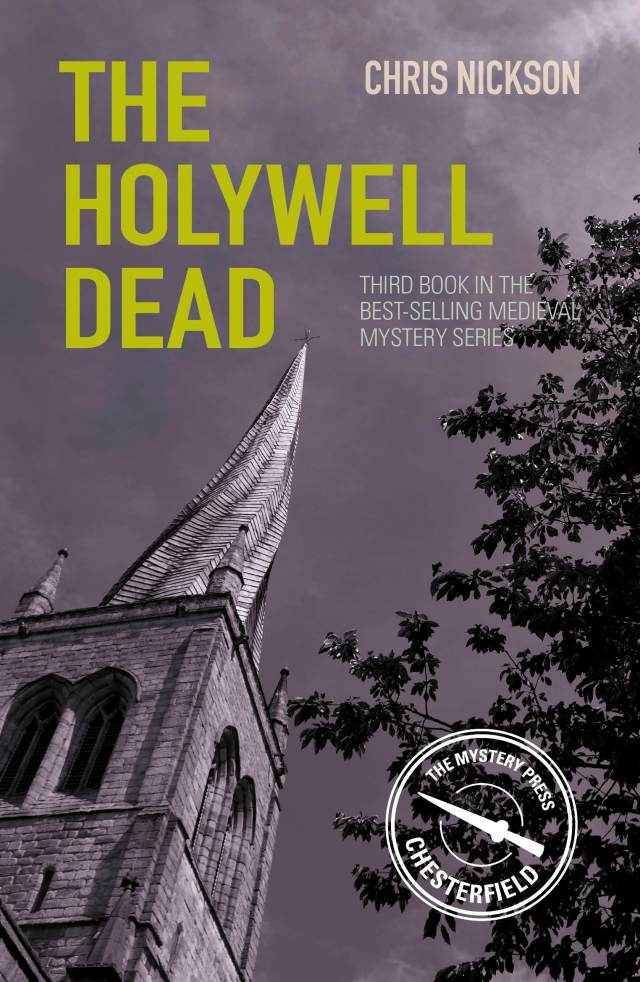
This summer there’s the third, and last, Chesterfield book with John the Carpenter, The Holywell Dead. For a man who came to me in an instant on the A61, driving through Chesterfield, he feels to have been around a while. We still had a little unfinished business, I was aware of that. Not just him, but Walter, Katherine, Martha, even Coroner de Harville. Their stories had further to run. Not that much…maybe just enough. The limits of a small town and a man who’d rather work with wood than find murderers were closing in. And it ends, I hope, in a fairly apocalyptic fashion, bowing out on a high note. I’ve enjoyed my time in the 14th century with him, but we’ve walked as far as the fork in the road and he’s taken one path and I’ve trodden along the other.

9780750979955

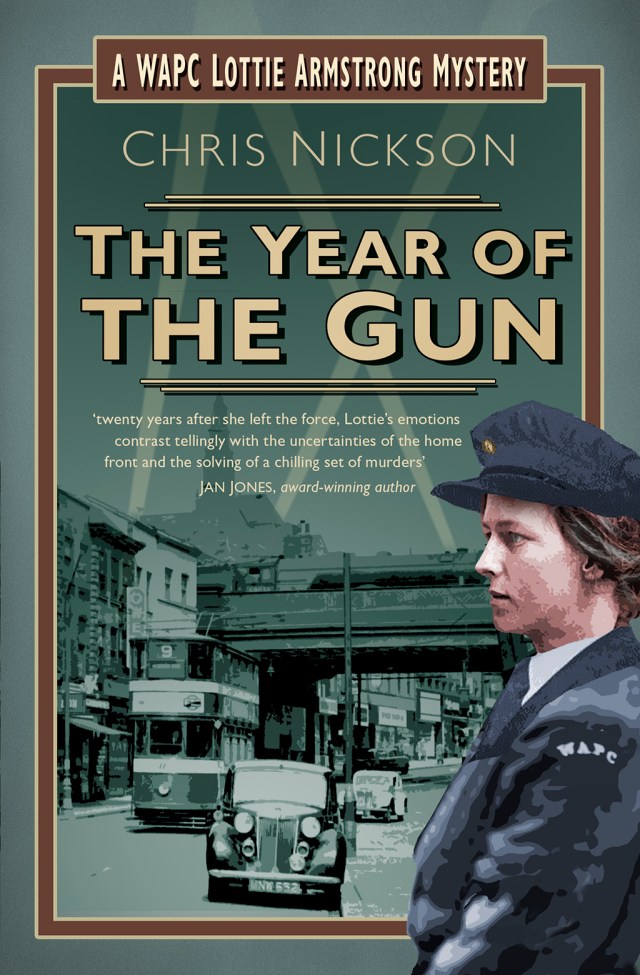
Then there’s my second – and again, last – visit with Lottie Armstrong in The Year of the Gun. I didn’t have a choice about it. She insisted. Her presence haunted me after I’d completed Modern Crimes, so that she had to come back. But the woman I visited again was older, in her forties, and experiencing World War II in Leeds. There was a vibrancy about her, so extraordinary by being ordinary. She had this other adventure to tell me about; all I had to do was listen and note it all down. But she wasn’t going to let me be until she’d finished the tale. As I said, the choice was taken out of my hands.

the-year-of-the-gun-new-fcp

And finally, in late November there will be Free from All Danger, the seventh Richard Nottingham book. It’s still unfolding, not quite all written yet. But I’ve known for a long time that Richard had more to say, and I’m glad he has the chance. By the time it appears, it will be four years since the last volume in the series.

I’m not a fan of endless series with the same character. It’s rare to be able to pull that off, although one or two writers do manage it with some depth. But as characters age, some edges get rounded, while others splinter a little and grow jagged and sharp. Some surfaces harden and other become softer. Those are the hallmarks, far more than the lines on the face or the lack of hair.

Richard has been away, but as he comes back it’s a chance to see how Leeds and the world has changed, and what his place in this might be. The old rubbing up against the new and how they can work together.

In many ways, Richard struck me early on as being like the straight-arrow sheriff in a Western, with his strong sense of good and evil. That changed somewhat over the course of the books, and the grey areas lapped so strongly into the black and the white. But coming out of retirement, how will he find everything now? Is he still sharp enough? More than that, where does he fit? And part of that is me, and my own sense of mortality, heavily tempered by the last 12 months, and the knowledge that new generations are shaping the world, while those of us who are older become more and more like bystanders, slightly out of time.

If the series had continued without a break, this wouldn’t have been the book I’d have written. So I hope that gap, that distance, has served us well.

Tom (and Annabelle, naturally), John, Lottie, Richard – they’re all as alive to me as anyone I talk to in a shop or over coffee. They’re friends, confidantes. And sometimes their books refract bits of the present into the past. Sometimes reflections of history, sometimes my own present, my thoughts and emotions. That transmutation that fiction can give.

And that offers a little background to the work of mine that’s appearing in the next 12 months. Of course, I hope they entertain, which is what they should do, and if they don’t manage that, then I’ve failed as a fiction writer. But there’s a backstory to each one, too, and maybe knowing it will offer a little more richness to the books.

Families, Eh?

It’s that time of year when, for better or worse, when families come together. You can’t choose the people you’re related to. Or those who came before you. And in some ways, those ancestors can be the most interesting – at least to me. The tales you’ll never hear, the snippets that are passed down (and maybe become twisted in a generational game of Chinese whispers).

I’m sure you have folks who are every bit as interesting (and maybe more so).

I had a great-uncle named Urban Bowling. I never knew him, but when I was digging into my family tree, it was a name that struck me. Married to a woman called Marjorie Cassy Adelina (here many siblings had equally flowery names).

Urban was born around the start of the 20th century, my maternal grandmother’s brother. I don’t know much more about him, other than he died before I was born. But really, with a name like that, he’s someone I would have liked to meet.

It was interesting to delve into that side of the family. My grandfather, quite a Victorian figure, one who believed children should be seen and not heard, was a man who’d made himself a success. Going back a couple of generations further, his family had been dirt poor in Leeds, like so many. Even his own father hadn’t been well off. But he…well, somehow he managed to pull himself up and became the area manager for Dunlop.

With poor eyesight, he’d spent the First World War as a special constable instead of in the trenches. By the early 1930s he had a good house – a semi in Alwoodley – and my mother was attending Leeds Girls’ High School, about as posh as you could get here. The family had a maid and a chauffeur, and in the midst of the Depression they could afford to take holidays in Torquay and the Isle of Man.

scan0001

My mother aged 15, second from left on couch, and family, 1934. No idea if Urban Bowling is present.

That was a far cry from my father’s family, descended from Isaac Nickson, who arrived in Leeds in the 1820s with his wife and family and set up shop as a butcher. Before that he’d been in Malton running an inn, and somewhere out in the country, doing the same thing, and appeared to leave in cloudy circumstances.

His male descendants mostly became painters and decorators: two of the brothers went into business together, while others seemed to work on their own, most of them settling around Meanwood or Sheepscar for a while. One lived in Holbeck (he died and his wife took over the business in the 1860s, apparently doing quite well, as she employed seven men), and another made his home in Cross Green.

That’s where Harold, my paternal grandfather was born. The woman he married lived just down the hill in Hunslet, where her father ran the Royal Oak (that same man would go on to run the Victoria in Sheepscar for 20 years, for those who’ve read my Tom Harper books). They married in July 1914 and my father was born in November; I’m sure you can figure out why they wed.

From the few stories I’ve heard (and from the Saturday mornings I had to spend with him when I was young as my father visited – by then he was in Bradford, where he’d die) he was a daunting man; he certainly terrified me and seemed to cow my father, by then in his forties. My grandfather liked to drink a bit a gamble. His big win came in 1921 – a mill in Dublin. He packed up his family, a wife and two sons, and moved there. Not the best time to be English in Ireland. A year later they were back in Cross Green.

Sometimes he wouldn’t give his kids any pocket money for weeks, then, when he was flush, or had a few, he’d make them a present of half a crown each, a fortune for a boy in those days.

It was a very working-class neighbourhood. My father and his brother both won scholarships to Cockburn High School, leaving, like most pupils, at 14.

But I never knew my father to have any real trace of a broad Leeds accent, as if he’d worked hard to erase those roots. For part of his life he was a salesman, a commercial traveller. Perhaps he thought it would help in the business (and earlier he’d been a cinema manager). It never occurred to me to ask. I do recall, though, that he had a book on Pelmanism, as well as Dale Carnegie’s How to Win Friends and Influence People. Somehow, changing an accent through force of will fits in with that.

And to finish by going back to that Tom Harper thread: in the 1890s I had a distant relative who was a Leeds copper. Joined up when he was 26, after being a plumber. But he only lasted on the force for a couple of years. Why he left, I don’t know. Yet.