Rogation Day Part Four

After missing last week, I’m back with the fourth episode of the Elizabethan serial. Need to catch up or refresh your memory? Just scroll down for the earlier parts…

            ‘I was busy,’ he replied as if it was nothing at all and glanced at the body. ‘Why would anyone murder Tenche?’

            ‘If we knew that, we’d know who did it,’ I replied sharply. He’d missed the beating of the bounds, vanished without trace for a few hours when I needed him as part of the Waits and the watch.

            ‘What about his wife?’ He peered down at the wounds, frowning. I told him the little we knew.

‘Alderman Skyes is with her now.’ That made him raise his eyebrows.

‘Putting his case for a quick marriage?’

‘None of my business. If you want to help, see if you can discover where Tenche went last night.’

He gave me a doubtful look, opened his mouth as if to speak, then nodded and left. What could I make of that? I’d think about it later, when I had time. For now I had to inform people about the murder, then be out there hunting for the killer.

4

At home, the little house on Marsh Lane, on the other side of the beck from the town, I penned letters, one to the county sheriff, the second to Walsingham’s man in the West Riding, detailing what little I knew about Tenche’s murder, the possible reasons behind it, and those who might be suspects. I’d never written a good hand, but it was legible. After I read each one through, I sanded and folded them and applied the official seal of the watch before locking my door and walking back into Leeds and leaving the letters with Harmon Javeson at his shop on Vicar Lane.

            It was a place of oddments and curiosities that nobody was likely to buy. A horse harness where the leather was cracked. An empty old wooden scabbard with an inscription that had faded beyond reading. More, much more. Everything covered in a patina of dust, cobwebs hanging in the corners of the ceiling, so ancient the spiders had dried to husks.

            But Harmon didn’t need to sell anything. He was Lord Cecil’s man, the government’s eyes and ears around here, paid to pass on information, to keep aware of all that was happening. He was older than me, with lank, grey hair and wisps of a white beard, looking like someone in need of a hearty meal.

            I passed over the letters. He’d arrange the delivery and pass on any reply.

            ‘Bad business, yon. Word’s all over.’ He shook his head. ‘Walter Tenche.’

            ‘Any ideas?’ I asked, but he shrugged in reply. He’d always been a miser with his thoughts, keeping them to himself until he could play them to advantage.

            As I turned away, hand on the doorknob, he said: ‘The upright man’s looking for you.’

            ‘Is he now? I’m easy enough to find.’

            Everyone called him the Upright Man. There were probably some who didn’t know his real name. Bartlett Wilson. Sly as the devil, cunning. He ran much of the crime in Leeds, with the young cutpurses and whores all giving him some of their takings, on pain of beatings or worse. If they were caught, they knew to take their punishments and not mention his names. A sentence of hanging over on Gallows Hill meant Wilson would tend to their families if they kept their mouths shut. For a while, at least, then his care would ebb to nothing.

            He was the bane of my life; I’d never mange to catch him in crime; out of fear, nobody peached. He had money, a home, such as the hovel was. I couldn’t charge him as a vagabond. Very careful about showing his hand. We kept a distance from each other.

            Why would he want to see me?

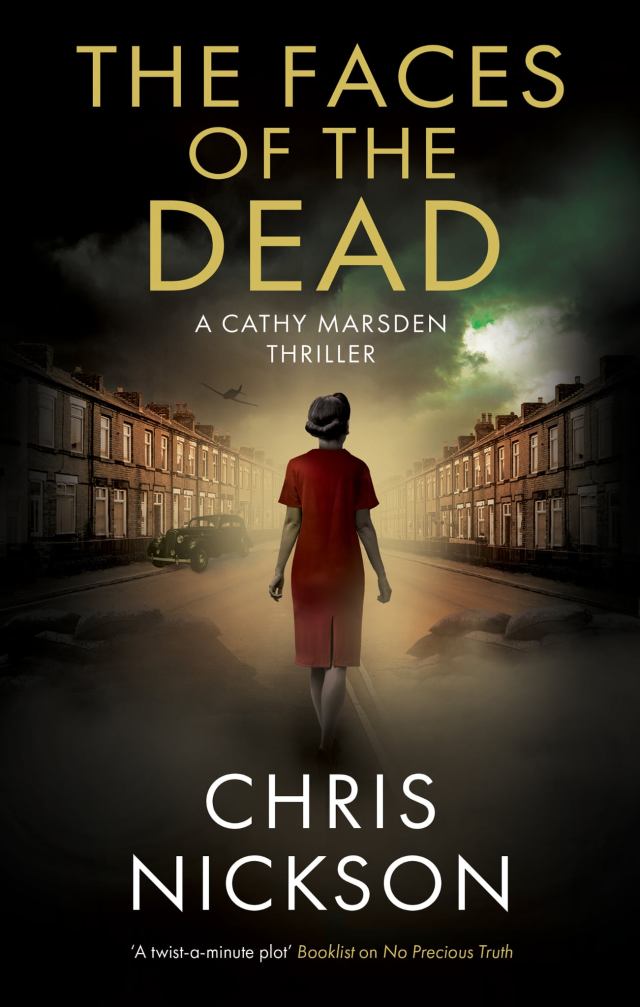
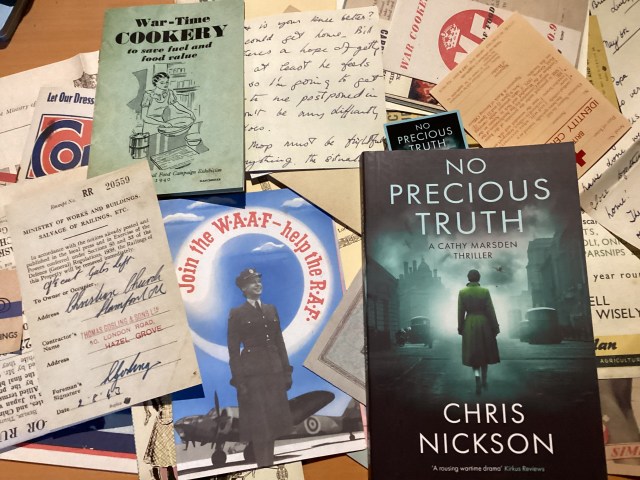
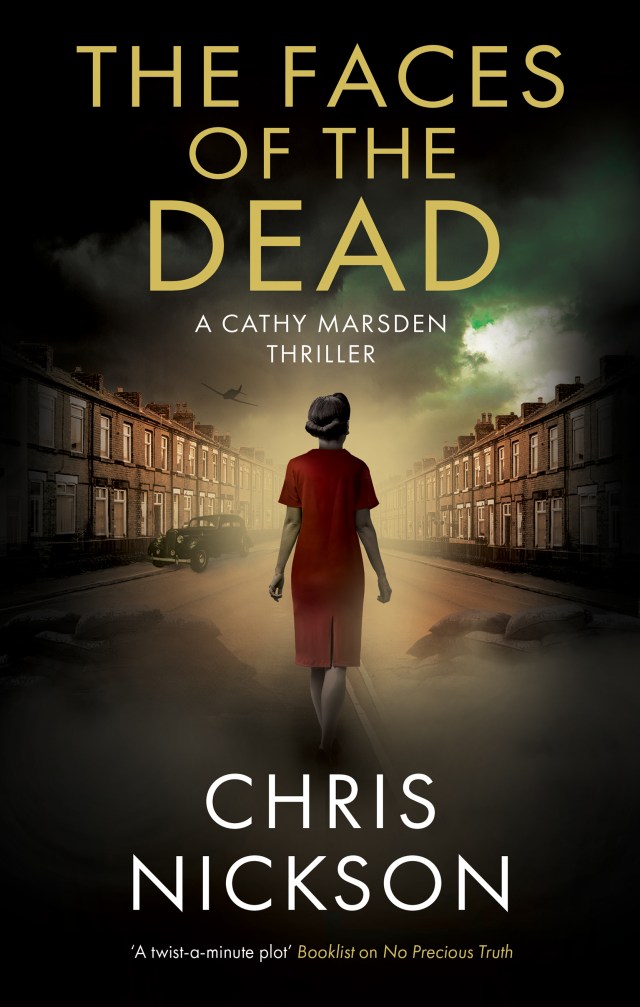
The fifth part will arrive in a week or two – if you want it. Meanwhile, both the Cathy Marsden WWII novels, No Precious Truth and The Faces Of The Dead are currently £1.99 on Kindle – the first is just 99p (free with Kindle Unlimited). That’s two books for around the price of a coffee. You’re not likely to find a better bargain this week. I truly hope you’ll but them – because they’re good. I sweated blood and tears over those books!

Rogation Day Part 3

This really is turning into a serial, and I’ll be as interested as you to discover where it’s going. Elizabethan Leeds has its charms – but it seems to be a deadly place, filled with secrets for Gil Craven and the watch to uncover.

Id you missed the first two parts, don’t worry. Part one is here, and the second part here. Now relax and enjoy the story.

            So many things I needed to do: start the hunt for Tenche’s killer, find Richard, write to Walsingham’s man in the West Riding. But the widow might be known something.

            ‘I’ll come with you,’ I decided. Sykes stared at me for a moment, his distaste showing, before he nodded.

            ‘If you must, Craven.’

3

‘Madam,’ Sykes said as he entered the hall of the house on Briggate. He swept off his cap and bowed; I did the same.

            Mary Tenche knew. She’d been crying, eyes rimmed with red, a good lawn handkerchief clutched in one fist. She was dressed for home, hair covered with a starched white coif, a plain gown and kirtle, slippers on her feet. She was a small woman, in her late thirties, with dark hair and smoky eyes, the mistress of a handsome home. A fire burned in the hearth, the chimney drawing well. A pair of painted hangings added colour to the walls. Glazed windows overlooked the plot behind the building, a view over a stone building where the merchant warehoused his cloth, the small counting house behind, then the garden. The man might have been cloth searcher for his year, but he’d made a pretty penny before all that.

            ‘My condolences, madam,’ I said and she dipped her head in acknowledgement. I’d heard the rumours, that it hadn’t been a loving marriage. Doubtless Sykes knew the same thing; he wouldn’t have been here otherwise, with an eye on his chances.

Three children alive, the elder boy apprenticed to a merchant in Antwerp, learning the other end of the business. The second was starting to learn the trade with John Faulkner, down at his dye works on the river. Jane, the girl, was ten, already betrothed to Henry Atkinson, a merchant’s son, aged just twelve. A few years yet before the ceremony.

‘Was your husband at home last night?’ I asked. Sykes glared at me. He wanted her to himself, a chance to press his suit and its advantages while she was at her weakest.

‘No,’ she answered. Her voice was low and husky. ‘He said he had to meet someone.’ She raised her gaze to stare at me. ‘When I woke this morning, he wasn’t here.’

‘Did you mention it to anyone?’

She shook her head. ‘It wasn’t the first time.’

‘Who was he meeting, madam?’

‘He didn’t tell me. He never discussed his business at home.’

Talk was that Tenche had a lover; it would be easy enough to discover her name. The servants likely knew it. They saw more than their betters imagined. I’d inquire of them in a few minutes, away from Skyes.

‘I’m sorry to have to ask questions at this time, madam,’ I said. ‘Was he having any problems with his work?’

‘Nothing he mentioned.’

One final thing. ‘Did he know Richard Harding?’

‘Who?’

It was the answer I’d expected.

‘No matter, madam. Thank you.’

            Skyes gave a grim, satisfied smile as I bowed and left.

The servants had gathered in the buttery, the oldest part of the house where they kept the ale and wine. A fine place for gossip, although the chatter dropped to nothing as soon as they saw me.

            ‘Mistresses-’ I began, but Elizabeth Carr, the maid, cut me off.

            ‘Here about the master, Gil Craven?’ She was an older woman with a harsh tongue she curbed around the Tenches. A gown that had probably once belonged to Mrs Tenche, worn now, the colours faded, covered with an apron that cover her from neck to feet.

            ‘I am.’

            ‘Murder. That’s what people are saying.’

            ‘It’s true enough,’ I admitted.

            ‘Terrible.’ She shook her head, although curiosity gleamed in her eye. ‘How did it happen?’

            I countered with a question of my own.

            ‘He went out last night. Mrs Tenche says he didn’t return. Do you know where he was?’

            The cook, Hannah Oliver, gave Sarah, the younger maid, a quick warning look before she could speak.

            ‘You know,’ I said. ‘Tell me, I’ll find out sooner or later.’ I pressed my lips together. ‘I’m looking for his murderer.’

            ‘Catherine Warden,’ Sarah spoke the name in a rush before the others could stop her.

            A widow. A woman of middling wealth, left enough money not to need to pinch her pennies. She’d shown no inclination to marry, content with the freedom her status brought. Tenche had been her lover. He’d kept it quiet from the town. But of course his servants knew.

            ‘How long?’ I asked. But they looked away. Sarah’s cheeks were a broad, blushing red. I’d get little more from them out of loyalty to their mistress. No matter. I had a thread I could twitch. ‘God’s blessings on you,’ I said as I left.

The curious had gone from the house of pleas. The curate and churchwardens had left to finish beating the parish bounds. The members of the Waits had stayed, sipping small beer, wondering what to do and looking to me for guidance as I came through the door.

            Thomas Dawson’s face was still pale; the first body he’d really seen. Rolly raised his eyebrows, a man who’d experienced more than most of us, one who’d served time in the navy under John Hawkins, a crewman on the commander’s second slaving voyage from Africa to the New World. He’d come home to Leeds with money in his pocket, never speaking about his experience, spending fast and wide and drinking like a man whose desire was to forget.

            ‘Tom, I want you to stand guard here. I imagine the undertaker will arrive this afternoon. The widow will inform him.’

            A reluctant nod as he sat on a bench, turning away from the corpse.

            ‘What about me?’ Rolly asked.

            ‘Talk to the people in the cloth warehouses,’ I told him after a moment. ‘See if they know whether Tenche had any business problems. Come and find me later.’

            ‘Right.’ Before he could stand, the door opened wide and Richard Harding strode in, a tall, sallow man, hair drawing back on his scalp and a frightened look on his face/

            ‘Where the devil have you been?’ I asked.

Thefourth part will arrive in a week or two – if you want it. Meanwhile, both the Cathy Marsden WWII novels, No Precious Truth and The Faces Of The Dead are currently £1.99 on Kindle – the first is just 99p (free with Kindle Unlimited). That’s two books for around the price of a coffee. You’re not likely to find a better bargain this week. I truly hope you’ll but them – because they’re good. I sweated blood and tears over those books!

Rogation Day Part 2

A number of you seemed to like the first part of Rogation Day, which I posted last week (if you missed it, catch up here). Here’s the second installment, and it appears to be turning into a serial. That’s both good and bad. I nered to keep it going and make sure there’s enough to keep you interested. But I’m also getting caught up in the tell of it and what might happen. No, honestly, I don’t know; I’m truly making it up as I go. But Elizabethan Leeds is a new era for me, so we’ll discover it together, shall we?

Meanwhile, on with Part 2…

            ‘Where should we take him, Gil?’ I was the inspector of the night watch; the decision and the investigation was mine.

            I thought for a moment. ‘The house of pleas,’ I said. Plenty of room to gather the witnesses and hear testimony and have a proper view of the corpse. ‘Everyone there and wait.’

            They made their way in twos and threes, reluctant to be a part of this. But this was murder, plain to everyone with eyes in their face.

            My mind was galloping. Men ended up in brawls, wounded in pain. That usually came after drinking. Straightforward crimes. This was going to be much harder.

     I strode out ahead of the others, back into Leeds along Mabgate, banging on Richard’s door once again before going in. I knew I’d find nothing, but I had to check.

            Tenche dead, Richard missing. I didn’t know of any connection between them, but there had to be something; I’d never believed in coincidence.

2

The body was laid out along the table and stripped, just a sheet for modesty. I’d sent for the coroner, Mr Bateson, to come and examine it, offer his judgement, and given a boy a farthing to gather the aldermen. I could hear voices outside as a crowd gathered, drawn by the horror of the news.

            ‘He was stabbed.’ Bateson’s words filled the expectant silence in the room. He was the apothecary, the only man in Leeds with any knowledge of medicine. ‘There, under his ribs.’ The man pointed it out for everyone to see before turning to me. ‘My fee?’

            God’s love. A lost life in front of him and all he could consider was a few pennies.

            ‘Send your bill,’ I told him. ‘You’ll be paid.’

            As soon as he’d gone, I raised my voice. ‘Any doubt this was murder?’ Nobody dissented.

            We needed to find the killer, and the reason. Tenche’s Catholicism, or his position as cloth searcher? Where was Richard? With each passing moment, my doubts grew.

Richard had never been in a fight, as peaceable a man as they came. A fine musician and a good carpenter; he’d completed his apprenticeship, never an argument with his master, and solid in his work. Our wives died within a year of each other, his Bertha in her childbed after a stillborn baby, my Lizzie taken by the sleeping sickness. Neither of us had remarried. We’d never discussed it, but I suspect our reasons were the same: we couldn’t face heartbreak again. Both of us were find alone, meeting two or three evenings a week to practice with the Waits or play for dances. A few drinks afterwards.

            Not a violent bone in his body. What had happened to him?

I noticed Alderman Sykes stood at the back of the hall, looking quizzically down at the floorboards, hat in his hand, the plumes fluttering as they caught the small breeze from the open window. He was well-dressed as ever, a black doublet, sleeves artfully slashed to display the blood red material beneath. Black hose and buckled shoes, a small white ruff around his neck. The starched pleats neatly ironed.

   I pulled off my cap as I approached him, bowing my head for a moment.

            ‘Good morrow to you, master.’

            ‘Hardly that with Tenche dead,’ he said.

            ‘It’s murder.’

            ‘I see.’         

‘We’ll need to tell his wife,’ I said.

            ‘I imagine she already knows,’ he replied. ‘Don’t you think the whole town will have heard by now, Gil Craven?’

            ‘Mrs Tenche might have information to guide us, sir.’

            ‘Possibly,’ he agreed after a few seconds’ consideration. ‘She’ll need to arrange the burial.’

            ‘You knew him well, didn’t you?’

            ‘I knew him,’ he said cautiously. ‘I wouldn’t say well.’

            In a town like Leeds, every face was familiar. With a little over three thousand souls, each day you saw the same folk day after day. Friendships, though, were different. I’d often seen Sykes and Tenche in the alehouses, heads together as they talked.

            ‘Do you think it had to do with his position?’ Sykes asked.

            ‘I don’t know, sir. That’s why I need to ask questions.’

            He nodded. Walter Tenche had been serving his year as cloth searcher. It was a position of honour among the merchants, voted by the others for his honesty and integrity. He examined the cloth offered for sale on Leeds Bridge on market days, every Tuesday and Saturday, making sure the quality of the worsted and northern dozens was high enough to be sold as Leeds cloth. We didn’t have guilds like York, so our merchants could sell more cheaply. The cloth searcher could refuse pieces and ensure the reputation of everything offered here was high. A dispute over that could well be a reason for murder.

            Sykes was a merchant. He’d been born to it. His father had made money in the wool trade and Charles Sykes has seen business expand. He’d built a stone loom house behind his home on Briggate, three apprentices working for him. A wealthy man with a heavy purse dangling from his belt, next to the sharp dagger in its sheath.

            He was very aware of his status in the town, but a good man for all that. Did he know about Tenche’s hidden Catholicism? Unless it was important, that was something I hoped to keep quiet; no need for it to taint him in death.

            ‘I’ll go and see his widow,’ Sykes said. I could see the calculation behind his eyes. He had three children, the oldest ten; his wife had died last year. Mrs Tenche had two young children of her own. Very soon she would need the protection and money of a husband.

The third part will arrive in a week or two – if you want it. Meanwhile, both the Cathy Marsden WWII novels, No Precious Truth and The Faces Of The Dead are currently £1.99 on Kindle – the first is just 99p (free with Kindle Unlimited). That’s two books for around the price of a coffee. You’re not likely to find a better bargain this week. I truly hope you’ll but them – because they’re good. I sweated blood and tears over those books!

Happy Birthday To Leeds

Last week Leeds turned 400.

After a fashion, that’s true. I hope you raised a glass and cut some cake to wish it happy birthday.

Really, though, the place is a lot older than that. It might well be the Loidis mentioned by the Venerable Bede in his eighth century Ecclesiastical History of the English People, and was beyond doubt the Leodis where the Normans built a stockade and planted a garrison of troops (where Mill Hill now stands)

It’s the town where Maurice Peynel, the lord of the manor, created our best-known street, Briggate, in 1208 as a way to raise money.

It’s all of those things. But it’s 400 years since Leeds was granted its first charter by Charles I in 1626.

What did that mean? Governance. Until then, Leeds had been a small market town, like many others across the country. The charter transformed it into a self-governing borough with a council run an alderman, burgesses and councillors.

Not everybody praised the idea; many small traders opposed it, as it concentrated power in the council. However, Sir John Savile persuaded the powers in London to grant the charter (he also became the first alderman). The charter covered all 21,000 acres of the parish of St Peter (the Parish Church), allowing it to levy fines, acquire property, make bye-laws and hold courts, things we now take for granted.

However…being Leeds the tale couldn’t be straightforward

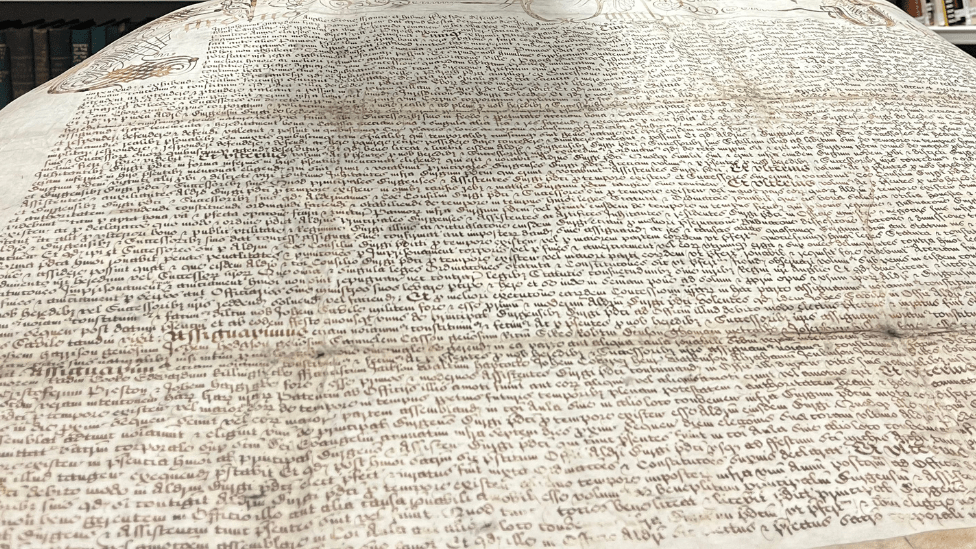
Sometime early in the Civil War, which began in 1642, the copy of the charter in Leeds disappeared; it’s never been found. In 1646 a replacement was requested and delivered. You can view the entire charter here. It’s written in legal Latin, but there is a translation.

But that’s not the close of the story…there’s another twist to come.

That copy vanished, too, to be purchased by a bookseller in Kent who promptly lost in behind a bookcase. When he found it again, in 1950, he decided the piece of vellum would make an attractive lampshade. Until he had an expert look at it and discovered exactly what he had.

Leeds Corporation offered him £10 10s (£10.50) for it, but the bookseller donated it to the city – Leeds was granted city status by Queen Victoria in 1893 – and it now sits in West Yorkshire Archives alongside the second charter granted to Leeds by Charles II in 1661, after he ascended to the throne following the Interregnum.

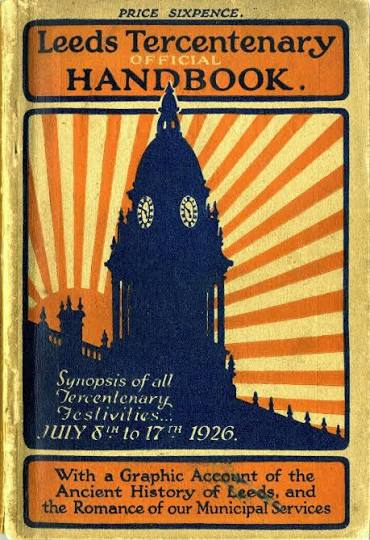
Leeds is celebrating these 400 years, as well it might. The 300 year anniversary was a big affair, with displays in Roundhay Park and more, even a book to serve as a commemoration.

 This year includes all manner of events and I’m proud to be a part of it, giving a talk at 1pm on Wednesday, September 23, at Leeds Central library on Alice Mann. I’ve written about here before – you can read it here. It’s a free event; I hope you can come.

Anyway, a week later, but happy birthday Leeds.

While it’s not the chater, you can read a little slice of Leeds historcial fiction set in 1944 with The Faces Of The Dead, the second cathy Marsden book. It’s just £1.99 on Kindle (cheap in the US, too), as is it predecessor.

Here endeth the Leeds history lesson.

A Guest Meditation On Historical Fiction

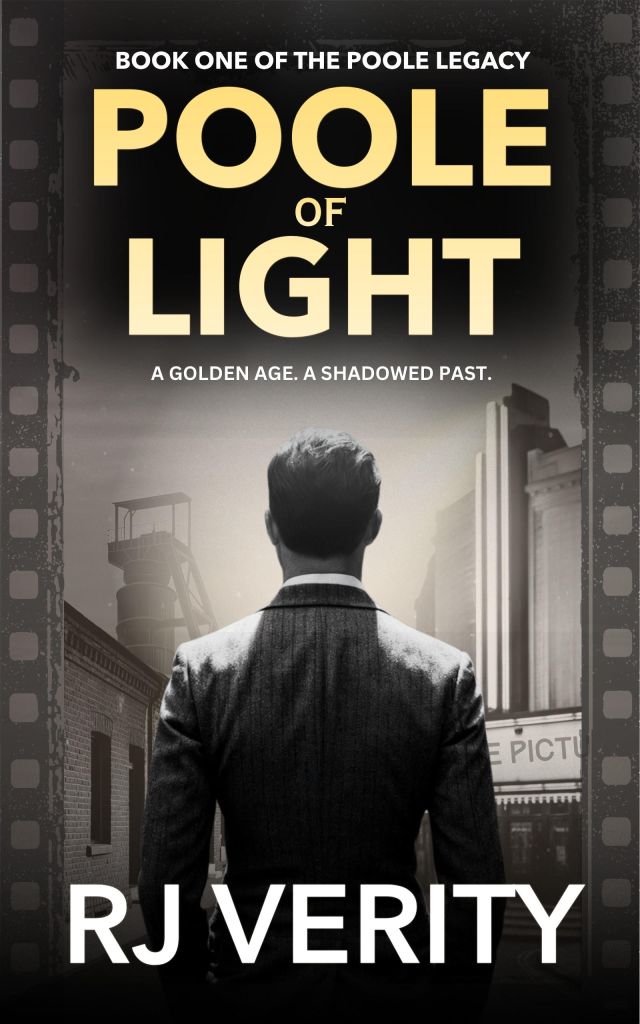
When RJ Verity contacted me, I was gratified to discover someone else writing about the Leeds of 80 years ago. Her take is very different to mine – no crime. Instead, her novel, Poole of Light, revolves around the cinema of the 1930s and 40s, one my father knew well, as manager of the Shaftesbury and the ABC for a few years after WWII.

She proposed a guest blog post, and I readily agreed. She’s written a good book, and her world dovetails well with Cathy Marsden. Maybe she met some of those characters – who can tell?

The Cinema Manager’s Granddaughter

Guest post by RJ Verity, author of Poole of Light

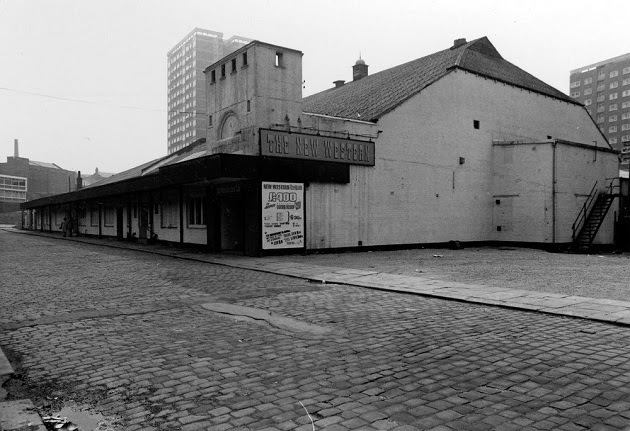
When Chris Nickson and I first made contact, we quickly discovered we were circling some of the same territory – not just the Leeds of the 1930s and 40s, but something more specific. His father had managed cinemas in the city. My grandfather had too: the Pictodrome and the Palace Picture Hall (shown below), both in Armley.

It is, as Chris put it, a small world.

My own connection is not incidental to my novel. It is, in many ways, the reason my novel exists. My grandfather had chauffeured for a large household in Leeds before becoming a cinema manager. My grandmother worked as a housekeeper in the same house. My father was a teenage projectionist and – through ability and the particular luck of timing – won a grammar school place at Roundhay before training as a doctor. One generation to the next, each one a little further from where it had started.

What struck me was how much depended not on privilege or connection, but on small chances seized at the right moment.

That fragility is at the heart of my debut novel, Poole of Light. The book starts in 1913, in a mining town in County Durham. My protagonist, Jem Poole, is ten years old – he has no money and no obvious future except working down the pit. One day he steals a glimpse through a curtain and sees a moving picture for the first time, and that moment of wonder brings him to the heart of the British cinema industry.

Leeds becomes central to his story. It is where he moves to as a boy, builds his life, and where tensions between ambition and identity play out across the decades. I came to Leeds not as a Loiner – I grew up in nearby Wakefield – but as a little girl who visited her grandparents in Roundhay often enough to know its streets. I understood later that those streets had shaped the people who shaped me.

The cinemas mattered. Not just as places of entertainment, but as institutions with a particular role in working-class life. They were warm and inviting during dark winter evenings. They offered glamour to people whose daily lives offered very little. A cinema manager in Armley in the 30s and 40s was not a grand figure – but he was a custodian of something that genuinely mattered to his community.

I find that writing historical fiction has a circular effect on my life. I know something about my past – stories half-told at family dinners – and am drawn to it. Then I research, I create characters, and somehow those characters reveal something more about my own history. And since releasing Poole of Light last September, I’ve been overwhelmed by the people who have reached out – wanting to talk about their own memories of Leeds, and what it meant to them.

Perhaps that is what historical fiction does best – it gives people permission to remember. Chris and I write about Leeds from different angles, but we are both, in our own way, still holding something of it. When I discovered that cinemas ran in both our families, it felt less like a coincidence and more like a confirmation that the past has a way of finding the people who are looking for it.

Poole of Light is available on Amazon now. You can buy it here. Poole of Honour, the second novel in The Poole Legacy trilogy, publishes on 15 September 2026.

And, while we’re in the 1940s, the second Cathy Marsden book, The Faces Of The Dead, is just £1.99 on Kindle, or free if you have Kindle Unlimited.

Publication And An Unsung Hero

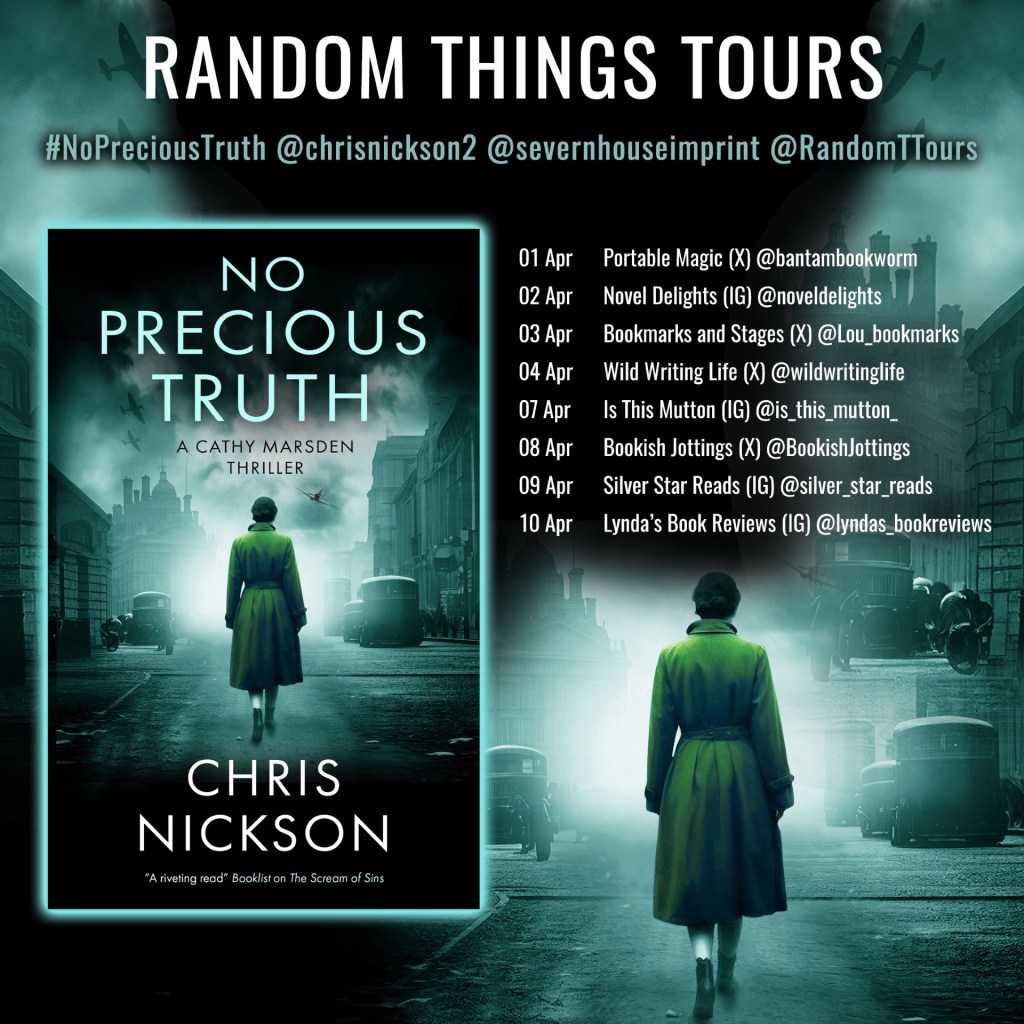
Just a week until No Precious Truth is published (April 1, and I hope that’s not an omen!). It’s seemed so distant for so long, and now it’s barrelling down on me at a rate of knots.

Things are in place. I have a new review from Booklist that says the book has a “likable heroine, a twist-a-minute plot, and heart-wrenching details about the effects of war make this a good choice for fans of historical wartime mysteries.”

I’ll definitely take that. Meanwhile out of the blue, the Promoting Crime Fiction website has declared an as “Unsung Hero Of Crime Fiction.” I’m flattered, but I don’t feel very heroic. Read it here.

The blog tour begins on publication days. Eight stops, eight different reviews, all posted online (mostly Instagram, I believe). Keep your eyes peeled for them.

I’ve taken out ads, putting my money where my mouth is because I believe in this book.

There’s going to be a launch. It’s on Thursday, April 17th, from 6-7 pm. It’s going to be held at Kirkstall Forge, which features in the book. They’ll have some photos and artefacts from the war. I’ll be bringing replica documents from the war, as well as newspapers. Truman Books will be there to see you copies of the book.

And there will be a special cake.

You’re invited. If you’re close, come along. Plenty of parking, or the Forge has its own little railways station, just five minutes on the train from Leeds.

If you really can’t wait until then to read No Precious Truth, why not buy it from your local indie bookshop, or Speedy Hen has the cheapest price for the hardback, with free UK postage. Go here and get it.

Thank you all so much.

File written by Adobe Photoshop? 4.0

The Tale Of The Unpublished Novels

It’s Sunday and tipping down with rain. Much as I’d love to be out at my allotment, there’s not a chance today.

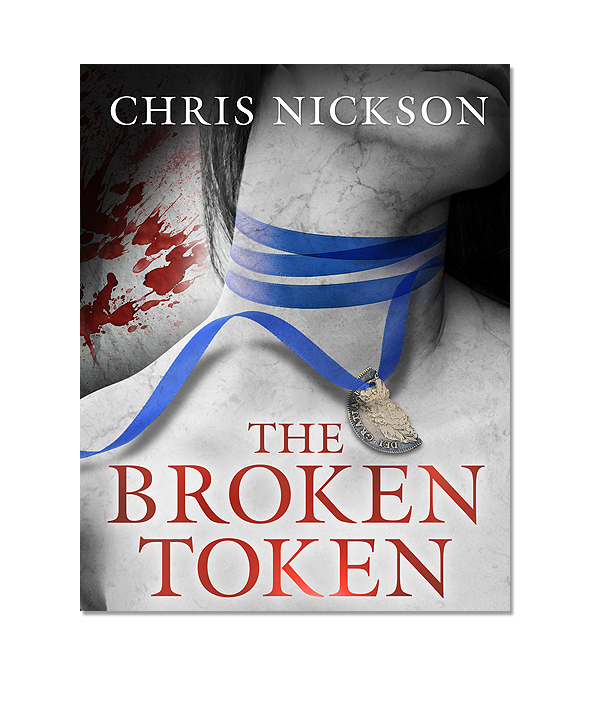
That means it’s time for a story. A true story about the unpublished novels that preceded The Broken Token. Make a cup of tea, grab a biscuit and pull up a chair, because there were a few of them.

The first came when I was 20. I’d married an American and were we living in a bedsit in Hyde Park – the Leeds one, of course. I’d written poetry, which in retrospect was only slightly better than the usual teenage angst, and some short stories. It was time for my big artistic statement. A novel.

I’d read quite a bit of Richard Brautigan and hooked into that style, as best I could. The problem is that I wasn’t a San Francisco Beat/hippie guy who with a highly skewed, often surreal worldview. I was a 20-year-old Brit who had nowhere near the experience of the world as I believe I did. It probably had a title, but I don’t remember it.

The second came after we moved to the US, living in my wife’s hometown of Cincinnati. I was probably two or three years older. We’d bought a very cheap wreck of a house, we were both working. I’d been reading a lot more American crime novels, people like Michael Z Lewin, who books too place in Indianapolis, about 100 miles away. Bear in mind that this is heading towards the late 70s, a more innocent time. And a much more innocent your Brit, who still had a lot of growing up to do. Never mind that I believed that life had hardened me to my core.

The novel wasn’t completely awful. Hard boiled? No. Scarcely soft-boiled. Someone saw something in it and offered to put it out as a YA if I’d make some (a lot of) changes. I didn’t, and now I’m grateful. The title is lost in the mists of time, but the PI was called Steve Holzer.

There followed a more mainstream, autobiographical novel that was so much of a nothing that I can’t recall the plot. Thankfully, probably. After that, The Ohio Boy, about a talented young Ohio poet who was determined on self-destruction through alcohol. I knew nothing about alcoholism back then and didn’t really research. The poems were the ones I’d written a few years before, still seen through rose-coloured glasses. Unsurprisingly, nobody was interested.

After that? Career Opportunities, an American recalling student days in London and his involvement with the punk scene in 76-77. I still have it somewhere. Never reread it; I don’t need the humiliation. I knew about punk from records and the music papers (this was around 1980, long before any books about it all). I didn’t know London. What could go wrong?

A long gap followed. Divorce, and a move out to Seattle on the West Coast. A few short stories, a couple of one-act plays, then diving into becoming a music journalist, married again, with a young kid and a mortgage, writing a lot of quickie unauthorised celebrity bios. I was back in Leeds regularly to see my parents and picking up books on Leeds history, old enough to start really learning about it.

The result was The Cloth Searcher, an historical novel set in Leeds in the 1730s, with Richard Nottingham as a secondary character. I was stumbling towards something and nearly there, in the opinion of an agent who read it.

“Go and write something else and let me see it,” she said.

I did. That was The Broken Token, and the start of all that’s happened since.

Hey, time to wake up.

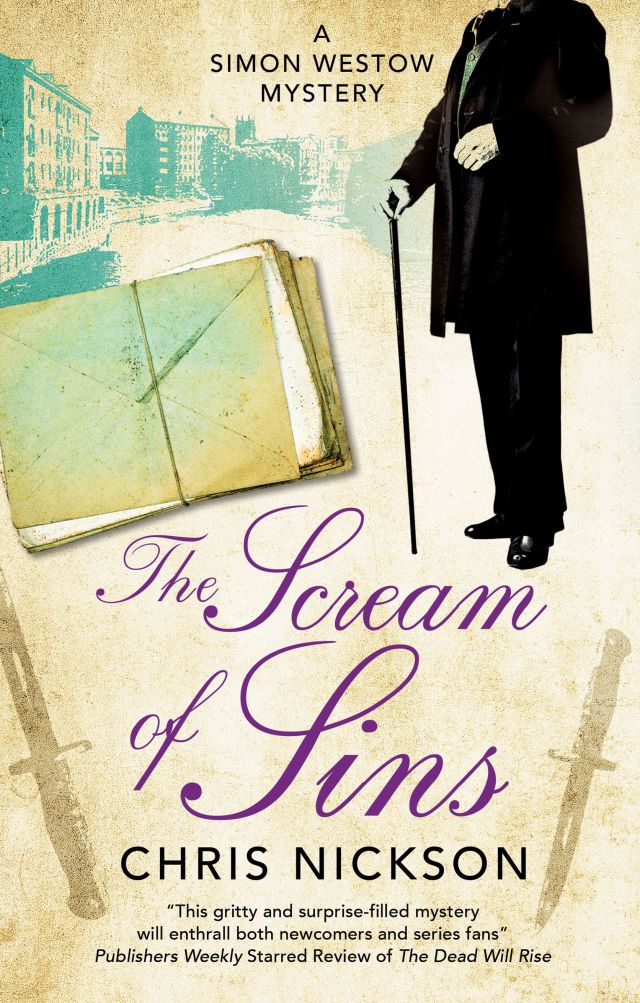
To remind you, The Scream of Sins is out there now. I’d be very grateful if you could buy a copy or borrow one from the library. If they don’t have it, ask them to get one in – others can read it after you.

On Being Cheap

I’m cheap. Well, of course I am, I come from Yorkshire; it’s in my DNA. And it’s quite true, I never pay more for something that necessary. I shop around. I’m unlikely to ever be a John Lewis customer.

That said, I do prefer to buy from independent shops, or those that pay their full whack of taxes. Things being what they were, though, sometimes a bargain from elsewhere can be too good to refuse.

Right now – and I don’t know how long it will last – a couple of my books are very cheap on Amazon.

The Tin God is a little over £2 on Amazon, both in hardback and for Kindle. It costs less that I can for my coffee at La Botega Milanese when I go into town. And, much as I like their coffee, a book lasts longer. This is one of my favourites, as Annabelle Harper becomes such a central character, and it reflects the local politics of the time – and the way women struggled for the vote. The offer is only in the UK (sorry) and you can find it here.

The Hanging Psalm is also cheap, although, costing more than £4 in both formats, it not quite as much of a bargain. But that price for a hardback? I’m astonished. Here is the page.

I don’t know who’s behind it, whether it’s Amazon or my publisher. But if you’ve been thinking of buying, I doubt there will be a better time. I have no idea how long the prices will last.

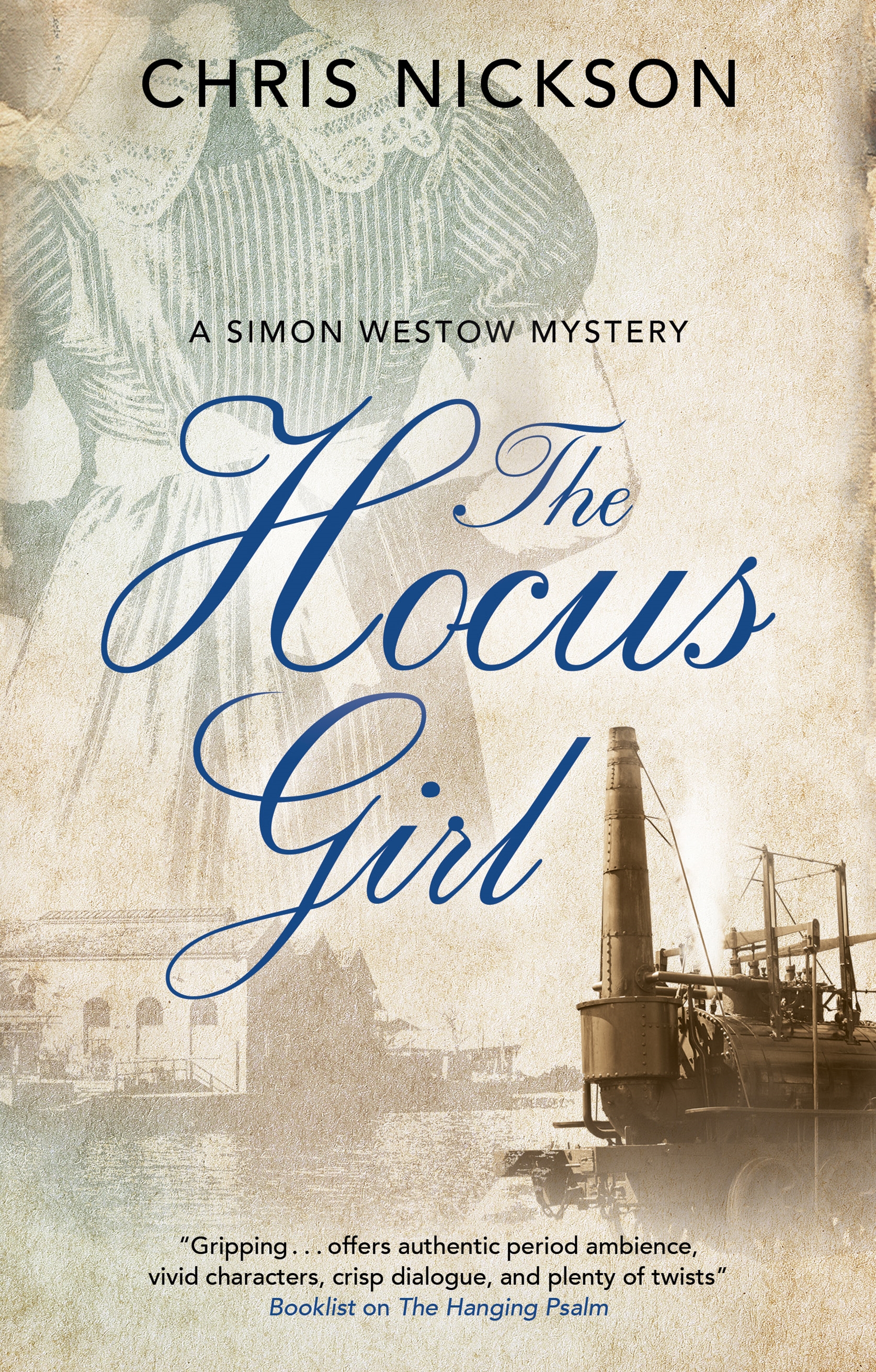
The Hanging Psalm is the first Simon Westow book. The second, called The Hocus Girl, comes out at the end of next month. It features undercover government agents (based on a true story from the period – nothing changes), Joshua Tetley about to open his brewery, a real-life female preacher, and the world’s first locomotive able to carry loads. It’s currently available to order for £15.66 right here – definitely the cheapest price around.

Time to go back to being personally cheap…

Hocus Girl final

A Christmas Book Guide

It never hurts to have a handy book guide, does it, especially with Christmas drawing closer and all those presents to buy.

So…I thought it best to put all of mine in order for you. You never know, you might have missed one along the way.

Okay, this is done in a light-hearted manner. I hope you will buy family/friends/yourself books for Christmas. I’ll be especially happy if one of two of them are mine. But whoever penned them, books make great gifts, and reading is one of the most wonderful things you can do.

Please, enjoy yourself and remember, you can collect the whole set.


Richard Nottingham Books

Historical crime set in Leeds in the 1730s, and featuring Richard Nottingham, the Constable of the town (and that was the constable’s name at the time).

The Broken Token – long out of print, still available as ebook and audiobook. I do have two used                            paperback copies for £3 each, plus postage.

Cold Cruel Winter

The Constant Lovers

Come the Fear

At the Dying of the Year

Fair and Tender Ladies

All of these are available as ebooks, some still in print as hardback, and Fair and Tender Ladies can also be bought as a trade paperback.

Tom Harper Books

Crime novels, Victorian Leeds, with a touch of politics and Detective Inspector Harper’s forthright wife, Annabelle, the landlady of the Victoria public house in Sheepscar.

Gods of Gold

Two Bronze Pennies

Skin Like Silver

All available in hardback and ebook (Skin only in hardback at present). Gods of Gold is also available in trade paperback.

John the Carpenter

Chesterfield in the 1360s. Intrigue, murder, and a carpenter who’s more use to the coroner as an investigator than working with wood.

The Crooked Spire

The Saltergate Psalter

Both available in paperback and ebook

Dan Markham

Enquiry agent Dan Markham finds himself out of his depth in 1950s Leeds noir. Death with a jazz soundtrack.

Dark Briggate Blues

Available in paperback and ebook.

Laura Benton

Seattle music journalist whose passions end up taking her down some dark, unexpected paths. And yes, I was a music journalist in Seattle for several years.

Emerald City

West Seattle Blues

Both available on ebook and audiobook. No print editions.

Leeds, The Biography

Not quite history, this is the road less travelled, the history of the place told in short stories that take place between 300 AD and 1963. My first non-crime book.

Leeds, The Biography: A History of Leeds in Short Stories

Available in paperback and ebook.

Tales Within A Tale 7 – A Teaser

Now it’s just four weeks until Skin Like Silver is published in the UK. That’s still plenty of time to introduce you to some of the characters. Not Tom Harper or Annabelle, not Billy Reed or Superintendent Kendall. Not even Ash. But some of the others who populate this book – there are over 60; I counted.

They’re relatively minor characters, but they all have their stories to tell. About once a fortnight until publication you’ll get to meet some of them. One of them could well be a killer. Or perhaps not. But when you read the book and come across them, you can smile and say ‘I know you.’

Read the first Tale within a Tale, about Patrick Martin, here, the second with Robert Carr here, the third with Miss Worthy here, the fourth with Barbabas Tooms here, the fifth with John Laycock here, and the six with Samuel Sugden here.

This time it’s a little different, a short teaser that tells you how the books gets its name.

And, of course, you can read more about Skin Like Silver here.

Like what you see? Order your copy here (this is currently the cheapest price by far!).

9780727885708

Harper stood in the superintendent’s office the next morning. His palms were bandaged and tender but they’d mend in a few days. Annabelle has fussed around him, putting on a lotion that burned before it soothed. He ached all over.

‘I need you down to have a look at that fire,’ Kendall told him. ‘Take Ash with you.’

‘I thought they’d put it out.’

‘They have. I want to make sure it wasn’t anarchists who caused it.’

The man was as immaculately turned-out as ever, suit pressed, moustache and side whiskers trimmed, the crease in his trousers as sharp as a blade. But his face was lined with worry.

‘I thought they were all talk,’ Harper said.

‘They are,’ the superintendent replied. ‘But you know how it happens. All it needs is one hothead taking that “assault on the system” line of theirs to heart.’ He shook his head. ‘Stupid. Work with Dick Hill until he’s established a cause. Just in case.’

‘Yes, sir. I have that dead baby, too.’

‘I know. What have you found?’

‘Nothing.’ He paused, thinking of the tiny corpse on the table. ‘Honestly, I’m not sure if we ever will.’

‘Keep trying, anyway. Your hands, Tom…’

‘From the pumps yesterday.’ He held them up. ‘Blisters. They’ll heal soon enough.’

‘You’d think the criminals would have been running free, what with every officer down there,’ Kendall said. He took his pipe from his waistcoat pocket and lit it with a match. ‘But there was nothing reported.’ He arched his eyebrows. ‘Think about that. Not a single crime anywhere in Leeds.’

There was just enough of a breeze to bring a sense of freshness, the hint that autumn might arrive soon. Harper walked side by side with Ash, the constable quiet as they passed the Corn Exchange. Carts clattered quickly along Duncan Street. Piles of horse dung were flattened on the road. Men ran, pushing barrows piled with goods to deliver. A tram rolled by with the grinding sound of wheels in the iron tracks. The air smelt burnt and dead as they neared the station.

‘How did you like the inspection?’ Harper asked.

‘It was right enough, sir.’ He gave a small grin. ‘My missus thought I looked that smart all dressed up.’

‘Mine made me have a photograph taken wearing it.’

‘They must love the top hats, those women.’ He shook his head and tapped his old bowler. ‘Me, I’m more comfortable in this.’ He paused. ‘I heard one of the firemen died yesterday.’

The inspector nodded. ‘When the platforms collapsed. Nothing anyone could do. They couldn’t even get in to bring the body out.’

‘Sad business, sir.’

They’d become used to working as a team since Reed had left. They functioned well together, although there’d been little to tax them too hard. All the crimes they’d investigated in the last few months had been straightforward. Profit or passion, and a simple matter to find the culprit.

Harper doubted there’d be much for them here, either. He didn’t believe any anarchists were involved. The only problem would come if Hill said the fire was arson.

New Station was filled with rubble and wreckage. Thick dust clung to piles of bricks, and charred wood still smoked lightly. But passengers were already crowding the three undamaged platforms, craning their necks to see all the ruin, and most of the trains were still running. Harper shook his head in amazement; after all the destruction, he wouldn’t have believed it possible. Or safe.

They found Hill down among the arches that had once supported everything. All the surfaces were black with soot, the smell of fire and destruction heavy and cloying, and he started to cough. A yard or two below them, the River Aire rushed by.

‘Hello, Dick,’ Harper said. ‘We’ve been sent down to help.’

Inspector Hill looked haunted. He was still wearing the uniform he’d had on when the blaze began. There were rents along the seams, the blue so covered with dirt that it seemed to have no colour at all. Dark rings lined his eyes.

‘Tom,’ he answered and let out a sigh. ‘We just brought out that man who died. Schofield.’

‘One of yours?’

Hill shook his head. ‘He worked on the one the insurance company engines. The floor just gave way underneath him.’ He stared up at the sky. ‘Ten years and I’ve never seen anything like it. As best as we can guess, he must have crawled forty feet after he fell. Almost made it out, too, poor bugger. It’s a miracle there was only one, really.’

‘Any idea where it started yet, sir?’ Ash broke the silence that grew around them.

‘Oh, we know that.’ Hill pointed to an empty space, nothing left at all. ‘You see that? It used to be Soapy Joe’s warehouse. Packed full of tallow and resin. Tons of the bloody stuff. That’s where it began. And that’s why it burned so hard and long. Once that went up there wasn’t a chance.’

‘What caused it?’ Harper asked.

Hill shrugged. ‘A spark? An accident? Deliberate? There’s not enough left to tell. I wouldn’t even like to guess. The best I’m ever going to be able to say is that it happened. It’s nothing to worry CID, anyway.’

‘The superintendent wondered about anarchists.’

‘I don’t see it.’ He shook his head wearily. ‘Honestly, Tom, I don’t. I’m going to dig around but I don’t think I’ll find any evidence of anything.’

‘You should get some sleep, Dick.’

‘Later.’ Hill brushed the idea away. ‘I need to take care of a few things first. We’ve never had anything as bad as this before in Leeds.’ He waved at hand at the damage. ‘Look at it. It’s going to cost a fortune to rebuild. But the railway’s already had engineers out this morning. Can you believe that?’

‘They want to be making money again,’ Harper said.

‘Sir! Sir!’ The shout echoed off the stone, making them all turn. A fireman was picking his way through the mounds of stone and brick. ‘There’s another body down here. It looks like a woman.’

They ran, scraping their way over the debris. Dust rose around them as they scrambled.

‘Over here,’ the man called. He was standing by a pile of rubble. ‘You can just see her foot over there.’

They gazed. Half a button boot, the leather torn clean away to show bloody flesh. The rest of her was buried under chunks of concrete.

‘Must have collapsed right on top of her,’ Hill said grimly, taking off his uniform jacket. ‘Let’s get this shifted.’

Ash glanced at Harper’s bandaged hands.

‘Will you be all right, sir?’

‘I’ll manage,’ the inspector told him as he stared at the foot.

It took them a quarter of an hour to move everything, sweating and grunting. Blood seeped through Harper’s bandages. He grimaced and worked on.

‘Christ,’ Hill said quietly.

Most of her clothes had burned away. Her hair was gone. She was part-flesh, burned and black. But it was the rest of her that made them draw in their breath. Patches of metal across her body that glinted in the light. Skin like silver: the thought came into his head.

‘What..?’ At first he didn’t even realize he’d spoken.

‘Must have been the girders,’ Hill said. He couldn’t take his eyes off the body. ‘They melted in the heat and the metal dripped down on her.’ He wiped a hand across his mouth. ‘I just hope to God she was already dead.’

Harper took a deep breath and squatted, moving this way and that around the corpse. Only the shape and size of the body and the torn button boot showed she’d once been female. Now… he could scarcely believe what he saw. It was grotesque. A statue of death. He shuddered as he stood again.

‘What the hell was she doing down here?’ he wondered.