Modern Crimes – A Taster

Out on September 7. Remember, since a study shows that reading can lengthen your life, reading this book might help you live longer. It’s a thought.

And maybe you’ll love Lottie. I do.

Oh, last thing. The publisher has decided to make the ebook version nice and cheap. I prefer a hard copy, but grab it while you can. Lottie’s depending on you, So is your life.

Here’s the book trailer and the start of the novel, just to whet your appetite.

Leeds, 1924

As she walked into Millgarth Police Station, Charlotte Armstrong nodded to the desk sergeant then strode back along the corridor to the matron’s office. The day shift of bobbies had already gone on patrol and the building was quiet. She rested her hand on the doorknob, took a deep breath and straightened her back.

‘Good morning, ma’am. WPC Armstrong reporting.’

Mrs Maitland looked up, giving her a quick inspection. She was a pinch-faced woman in her late forties, dark hair going grey and pulled back into a tight bun. She’d never mentioned Mr Maitland, but in two years the woman had never revealed anything personal; the job seemed to be her life. She was here first thing in the morning and long into the evening, as if she had no better place to be.

‘There’s a hair on your jacket, Armstrong.’

Lottie looked down. One hair, dark blonde, hers. She plucked it away, annoyed at herself and at the matron.

‘Sorry, ma’am.’ She stayed at attention.

Maitland returned to the letters on her desk. This was her way. Keeping someone waiting was the way to enforce discipline.

The door opened and Cathy Taylor marched in. She was late and she knew it. Lottie could see it in her eyes. But she just winked, stood to attention and said, ‘WPC Taylor reporting, ma’am.’

‘You were supposed to be here at eight, Taylor,’ Mrs Maitland said.

‘Sorry, ma’am, my watch must be running slow.’

The matron sniffed. There were only two women constables in Leeds and she had to keep them in order.

‘Well, since you’re finally here, I have a job for the pair of you.’ She scribbled an address on a piece of paper. ‘Go and see her. She runs a home for unmarried mothers. One of her girls has been acting strangely and causing a fuss.’ She stared at the pair of them. ‘What are you waiting for? Off you go.’


‘It’s in Woodhouse, we might as well walk,’ Cathy said as they set out up the Headrow. She folded the note and put it in her uniform pocket. Early September but it was already feeling like autumn, enough of a nip in the morning air for their breath to steam. ‘Bet you the girl’s just gone off to find some fun. It’s always old cows who run those places.’

‘At least it makes a change from talking to prossies or chasing lads playing truant.’ Lottie sighed. She loved the job, but she wished the force would let them do more, rather than treat them like delicate flowers with tender sensibilities.

Still, it was better than working in a mill or being a housewife. Like so many others, she’d developed a taste for freedom when she worked. Earning her own money, that was important. Stuff the vote. The government had only given it to women over thirty; she still had five years to go.

Lottie had been a clerk at the Barnbow munitions factory in Cross Gates during the war. 1916, she was just seventeen, fresh in the job with everything to learn, newly promoted from the factory. But she’d managed, even finding time to flirt with the procurement officers who came to check things.

Geoff had been one of them. Shy, diffident, still limping badly from a wound he’d suffered the year before at Gallipoli. He had a modest charm about him, like he had nothing to prove. In his uniform he looked quite dashing.

Lottie was the one who made the running. Someone had to and he wasn’t the type to put himself forward. On his third visit to the factory she’d suggested an outing to the pictures, watching him blush as she spoke. From there it had taken two years until they reached the altar. By then the fighting was over and he’d returned to his job in the Dunlop area office.

She tried to become a housewife, but life chafed around her. Other women were having babies but Geoff’s injuries meant she never would. Lottie needed something, but there was nothing that appealed, until the Leeds Police advertised for policewomen. They particularly wanted married women. And suddenly life excited her again.


‘You’ll be getting yourself shot if you keep coming in late,’ Lottie warned.

Cathy pouted. ‘It was only a couple of minutes. Anyway, Mrs Prissy wouldn’t know what to do if she didn’t have something to complain about.’ She stifled a yawn with the back of her hand.

‘Late night?’

‘I went to the pictures with my friends, then they wanted to go on dancing so I couldn’t say no.’

Cathy was twenty-four, a year younger than Lottie, with a husband who was gone most of the year in the merchant marine. No children. Hardly a wonder she liked to be out a few nights a week, dancing and flirting and enjoying herself. Married but single, she called it with a small laugh.

Lottie had gone with her a couple of times after work, changing into civvies at the station then on to a see a film at the Majestic. It had been fun, but not something she’d want to do often. Cathy had wanted to carry on, to have a cocktail. God only knew where she found the energy. By the end of a shift all Lottie wanted was to be at home and off her feet. When the working week was over, she was exhausted. She was lucky to stay up until ten, never mind the wee hours.

But Cathy wanted to embrace life. She was pretty enough for a portrait, always getting looks from men. She wore her hair in a modern bob, and had a pair of shapely legs and that bony, modern figure that always made Lottie feel huge in comparison.

‘What are you going to do when your Jimmy comes home?’ Lottie had asked her. ‘You can’t go gadding about then.’

‘We’ll enjoy our time together. After a month he’ll ship out again. Don’t get me wrong: I love him and I’d never, you know… but I can’t sit at home every evening, can I? He wouldn’t want me to, anyway.’

They matched each other step for step along Woodhouse Lane and out past the university, going towards the Moor, with its library and police sub-station on the corner.

‘Down here,’ Cathy said, turning briskly along Raglan Road, followed by the first right and second left. She scratched at her calf through the skirt. ‘God, I wish they’d do something about this uniform. It’s not bad enough that it itches, it’s so heavy, too. Like wearing a battleship. This is it. Thirty-six.’

On a street of imposing terraced houses, this one loomed on the corner, detached, standing apart at the back of a long, neat garden and looking out over the Meanwood valley, with all the factories and chimneys spewing smoke into the air. Hardly an inspiring view, Lottie thought.

She knocked and waited. Some lovely stained glass in the window; she wouldn’t mind that at home. She was miles away when the knob turned and a small woman in an apron stared up at her.

‘I was wondering how long it would take the police to get here.’ There was no welcome in the voice. The woman raised an eyebrow and stood aside. ‘Well, are you coming in or do we do it all on the street?’

Lottie led the way, following an open door into a neat parlour. A Sunday room, still smelling of wax, the wood on the furniture gleaming.

‘Go on, sit yourselves down.’ The woman bustled around, flicking off some non-existent dust.

‘You run a home for unwed mothers here, Mrs…’ Lottie said.

‘Allen,’ she answered briskly. ‘Yes, I do. It’s a Christian thing to do, and I try to put on them on the right path.’ She sat very primly, back straight, her stare direct.

‘One of your girls has been causing problems, is that right?’ She took her notebook and pencil from her pocket.

‘She has. Then she went out and didn’t come back last night. No word this morning, either.’

That was bad; a missing girl. Lottie’s eyes flickered towards Cathy, and she felt a prickle of fear.

‘Could you tell us a little bit about her, Mrs Allen? Her name, what she looks like, where she’s from.’ Lottie smiled. She kept her voice calm and even. There was usually a simple explanation.

‘She’s called Jocelyn Hill. Seventeen, but she could easily pass for younger. You know the type, looks like butter wouldn’t melt, but she’s a sly little thing. Always out for a chance. A bit extra food, this and that.’ She shook her head in disgust. ‘Half of me wishes I’d never taken her in.’

‘What does she look like?’ Cathy asked. She liked facts, something solid.

‘Only about five feet tall, I suppose. Dark hair in one of those bobs they all seem to wear. Like yours,’ she added. ‘Thin as you like, no figure on her at all. Apart from the baby, of course.’

‘How far along is she?’ Lottie wondered.

‘Eight months,’ Mrs Allen replied, ‘so it’s not like she can hide it.’

‘Has she gone missing before?’

‘Of course not.’ She snorted. ‘They all know the rules when they arrive. No going out, only family to visit, in bed by ten. Break a rule once and they’re gone. I won’t stand for it otherwise. I give them a warm, clean place to have their children and I help find good homes for the little ones. I’m not about to let them take advantage of me.’

‘Have you had others disappear, Mrs Allen?’ Cathy asked quietly.

‘Only the one,’ the woman said after a while. ‘Three years ago. But she was a wild one, wouldn’t ever settle down here. Jocelyn liked to push things, but she was nothing like that.’

‘Where did she come from?’ Lottie had her pencil poised, ready to take down the address. Mrs Allen took a ledger from one of the empty bookshelves, found a pair of glasses in her pocket and began to search.

‘Here we are.’ She read out an address in Cross Green. Lottie glanced towards Cathy and saw a tiny shake of the head.

‘Thank you,’ she said, standing. ‘Is it possible to take a look in her room? Perhaps we could talk to some of the other girls who knew her?’

‘Nothing to see in the room,’ the woman told them. ‘I’ve already packed her case. If she shows up at the door she’s out on her ear. And she never really got along with the others. Kept herself to herself.’

‘Maybe a look in her case, then…’ Lottie suggested.

‘Two dresses and some underwear that’s as flimsy as nothing. Not hard to see how she ended up this way, is it?’


The door closed quickly behind them. As they walked back along the street Cathy looked over her shoulder.

‘She’s watching us from the front window.’ She shivered a little. ‘Blimey, I think I’d run off from that place, too. She’s…’

‘Strange?’ Lottie suggested.

‘Worse than that. Did you smell it in the hall?’

‘You mean the mothballs?’ She crinkled her nose. ‘She must have them everywhere.’

‘I could feel the joy being sucked out of me as soon as I walked through the door.’

They didn’t even need to talk about where they were going next. Over to Cross Green to see if Jocelyn Hill had gone home. A tram back into the city centre, then a walk through the market and up the hill towards St Hilda’s and Cross Green.

Wherever they went, people stopped to look at them. Policewomen were still a novelty in Leeds. By now Lottie was used to it. If she had sixpence for every time someone had asked if she was a real rozzer, she’d be a rich woman. She was every bit as real as the beat bobbies out there. Probably better at her job than half of them, too.

Even Lottie’s mother had been doubtful about her taking the job. It wasn’t becoming, she said. Not like marrying a grocer three months after being widowed and upping sticks to Northallerton. That was perfectly acceptable.


There was nothing inspiring about Cross Green. Not even much that was green. Street after street of tired people and back-to-back houses. Small groups of men hung around on the street corners and outside the pubs. Far more than there should have been, Lottie thought. But what were they supposed to do when there weren’t any jobs?

The men who fought had been promised a home fit for heroes. Fine words, but if they’d built any homes it hadn’t been in Leeds. There had been jobs when the women were sacked, but not much of that work had lasted. According to the newspapers it was the same all over the country.

There was nothing she could do about that. Lottie was just glad Geoff’s position was secure. And that she had work of her own.

‘You’re miles away,’ Cathy said.

‘Sorry.’

They passed another group of men and she was aware of them watching her backside as she walked. Someone said something in a low voice and there was a flurry of laughter.

‘Ten to one that was a mucky remark.’

‘More like two to one.’ Cathy smiled. ‘Look on the bright side. At least they noticed.’

Lottie wasn’t too certain. Just because that was part of life she didn’t have to like it.

‘Charlton Street,’ she said. ‘Down here.’

It was close to the railway embankment. Number nine stood towards the far end, exactly like its neighbours on either side. She assessed it quickly: dirty windows, mud on the doorstep. No pride in the place.

‘Ready?’ she asked.

‘As I’ll ever be,’ Cathy said.

The woman who opened the door stared at them with folded arms and a glare on her face.

‘He can’t have done too much wrong if they’re sending the lasses out,’ she said with a sneer. ‘What is it this time?’

‘Jocelyn,’ Lottie said. ‘Is she here?’

‘Here?’ The woman’s expression moved from surprise to panic. ‘Why would she be here? Oh God, something’s happened, hasn’t it?’

‘Why don’t we talk inside?’ It was a gentle question, and Mrs Hill gave a short nod, leading them back to the scullery. A scarred wooden table, battered chairs. Stone sink and a blackleaded range. How many of these had she seen in the job?

‘Right.’ The woman had gathered herself. ‘You’d better tell me what’s going on. What’s happened to our Jocelyn?’

‘She left the home last night and hasn’t come back.’

‘Stupid little bitch.’ She spat out the words like venom. ‘I told her it were for her own good.’

‘Why don’t you tell me about it?’ Lottie suggested. ‘Then we can find her.’ She gave Cathy a look: make some tea. As she started to bustle around, Mrs Hill was looking down and biting her lip.

‘Why did you send Jocelyn over there?’ Lottie asked softly but the answer was obvious. Woodhouse was far enough away that no-one would recognise her.

‘She got herself in the family way. Why the bloody hell do you think?’ The woman sneered. ‘It weren’t for the fun of it. Didn’t want everyone round here talking about us like that.’

‘Have you talked to her since she went there?’ It had been a while; there must have been some contact.

‘Oh aye, I pick up the telephone every day and we have a natter.’ She snorted. ‘Course I haven’t. Don’t have time to write letters. She wouldn’t answer if I did, anyway.’

Lottie tightened her lips.  ‘Mrs Hill, do you have any idea why she might have run off, or where she might have gone?’

‘Not really. But once our Jos gets an idea in her head there’s no shifting it.’ She shrugged. ‘Been that way since she was little.’

‘Do you have any idea at allwhere she might have gone?’

‘Not really.’ She reached into the pocket of her apron, took out a packet of cigarettes and lit one, just as Cathy put three mugs of tea on the table. The woman heaped in two spoonfuls of sugar and took a long drink. ‘I’ll tell you what, I’ll swing for her if she’s done owt daft.’

‘What about the baby’s father? Could she have gone to him?’

‘Possibly,’ Mrs Hill admitted. ‘She’d never say who it were, though, not even when her dad took a belt to her.’

‘No idea who it could be?’

‘One or two.’

And they could easily deny it, Lottie thought. Not much help at all.

‘What about her friends? Who are they?’

‘You’d do best talking to Elizabeth Townend and Eileen Donnelly, then. Thick as thieves, the three of them.’ She gave a dark glance. ‘I’ll warn you, though, they wouldn’t tell me owt.’

‘Where do I find them, Mrs Hill?’

Lottie cover

One More Richard Nottingham Story

This is the last of the Richard Nottingham stories I have sitting on the hard drive. Called December, I probably wrote it as a Christmas story for Leeds Book Club in 2012, and it’s just been sitting there quietly ever since. So it’s time it saw daylight again.

Will there be more? I’ve a feeling there will. I’m just not sure when.

The frost lay heavy on the grass and the branches as he walked towards Timble Bridge, his breath blooming wide in the air. The dirt was hard under his boots and the air bitter against his face. Richard Nottingham pulled the greatcoat more tightly around his body and walked up Kirkgate.

It was still dark, dawn no more than a line of pale sky on the eastern horizon. In some houses the servants were already up and labouring, plumes of smoke rising from a few chimneys. At the jail he checked the cells, seeing a drunk who’d been pulled from the street and a pair brought in by the night men for fighting at an alehouse. Another quiet night.

He pushed the poker into the banked fire and added more of the good Middleton coal kept in an old scuttle nearby. As warmth filled the room he removed the coat and settled to work. So far the winter had been gentle, he thought, but it was still only December. Come January and February, once the bitter weather arrived, the poor would freeze and die.

It was the same every year, he thought sadly. He’d been Constable of the City of Leeds long enough to know that all too well. When the cold bit it was always those without money who paid the price.

Down on Briggate the weavers would be setting up their trestles for the cloth market. They’d be laying out the lengths ready for the merchants, then eating their Brigg End Shot breakfast of hot beef and beer in the taverns, close enough to the door to keep a wary eye on their goods. He’d go down there before the bell rang to show the start of trading, walking around to watch for cutpurses and pickpockets, hearing the business of Leeds carried out in low whispers, thousands of pounds changing hands quietly in an hour.

He fed a little more coal onto the fire and straightened as the door swung open, bringing in a blast of chill air.

“Morning, boss,” said John Sedgwick, edging closer and holding his hands out as if he was trying to scoop up the heat. He’d been the deputy constable for little more a year, still eager and hardworking, a lanky, pale lad with pock marks fading on his cheeks.

“Looks like you had an easy time of it last night,” the Constable said.

“Aye, not too bad,” he agreed, pouring himself a mug of ale. “You know what it’s like. As soon as the nights turn chilly they stay by their hearths at night.”

“You wait. It’s Saturday, they’ll all be out drinking come evening,” Nottingham warned him. “You’ll have your hands full then.” He shook his head. “Get yourself home, John. Have some sleep.”

The deputy downed the ale and wiped the back of his hand across his mouth. “I’ll be glad to see my bed, right enough. I might even warm up for a few hours.”

Alone, Nottingham wrote his daily report for the mayor, nothing more than a few lines. He delivered it to the Moot Hall, the imposing building that stood hard in the middle of Briggate. The city was run from there, from rooms with polished furnishings and deep Turkey carpets that hushed the dealings and the sound of coins being counted. He gave the paper to a sleepy clerk and made his way down the street just as the Parish Church bell rang the half hour to signal the start of the cloth trading.

The merchants were out in their expensive clothes, the thick coats of good cloth, hose shining white as a sinless day and shoes with glittering silver buckles. They were moving around the stalls, making their bargains and settling them with a swift handshake before moving on to the next purchase. He saw Alderman Thompson softly berating a clothier, his face red, trying to beat the man down in price in his usual bullying manner.

The alderman glanced around, noticed him and glared. There was bad blood between them and Thompson was loath to forget it, a man who kept grudges in his mind like a ledger. But the man had been a fool, trying to cheat a whore of the few pennies that would have been food and shelter for her. The girl had complained and the Constable had confronted the man in front of his friends, shaming him, forcing the money from his pocket and passing it on to the lass.

He knew what he’d risked, the enmity of a man who was powerful on the Corporation. But the girl had earned her payment and deserved it; the man could afford it easily enough.

The Constable walked up and down the road, alert for quick movements, but there was nothing. He settled by the bridge, leaning on the parapet and looking at the rushing black water of the Aire. How many bodies had they pulled out of the river this year? Twenty, perhaps? Enough to lose count, certainly. Those who couldn’t cope any more with life and had found refuge in the current, the ones who’d drunk too much and fallen in, unable to get out again. There was always death, always hopelessness.

He shook his head and started to make his way back to the jail. Atkinson was striding out, thirty yards ahead of him. A girl running headlong down the street crashed into the man, and he batted her away idly with his arm, sending her tumbling before uttering a loud curse moving on.

The girl picked herself up and began to walk. As she passed, Nottingham took her by the arm.

“You shouldn’t have done that,” he told her, his grip tight.

“Done what?” she asked, the fright in her eyes as she raised her eyes to him and tried to pull away. She was young, no more than thirteen, thin as March sunlight, cheeks sunken from hunger, wearing nothing more than an old, faded dress and shoes where the upper was coming away from the soles. Her flesh was cold under his touch, puckered in goose pimples.

“You know exactly what you did. You cut his purse.”

“I didn’t,” she protested and began to struggle.

“Do you know who I am?” he asked gently. She shook her head, her mouth a tight, scared line. “I’m the Constable of Leeds. I think you’d better come along with me.” She tried to wriggle away, but his hand was firm on her. After a few moments she gave up, hanging her head and shuffling beside him.

The jail was warm, the fire burning bright and loud. He sat her down then held out his hand for the purse. Reluctantly, she brought it from the pocket in her dress and gave it to him.

“What’s your name?” he asked.

“Elizabeth, sir.” Now, with the cells so close she could see them, she was shivering in spite of the heat. “What’s going to happen to me?”

“Nothing just yet,” he assured her. “But I can’t make you any promises, Elizabeth. Where do you live?”

“Nowhere, sir.” He looked at him. “Me and my man and my sisters, we sleep where we can.” It was a familiar tale, one he’d heard so many times before, one he’d lived himself when he was young.

“How many of you?”

“Five, sir.”

He nodded at the purse. “How long have you been doing that? And give me an honest answer,” he warned.

“Two month, sir. But I’ve only managed to take three,” the girl pleaded.

He sat back, pushing the fringe off his forehead then rubbing his chin. “When did you last eat?”

“Thursday.”

“How old are your sisters?”

“Nine, seven and six, sir.”

“What happened to your father?”

“He died, sir. A horse kicked him in the head during the summer.” He could see the beginning of tears in her eyes.

“What was his name?” Nottingham wondered.

“William Marsden, sir. He worked at the stables.”

He remembered the name and the incident. The man had been a farrier, experienced and good at his trade. He’d been about to put fresh shoes on a horse when it reared, the sharp hoof catching him on the temple. He’d died instantly. “Doesn’t your mam work?”

“She has a bad leg, sir, she can’t walk proper.”

“And what about you? You’re old enough.”

“I’ve tried to find work, sir, but no one has anything.” The girl raised her chin defiantly. “I have, sir, honest.”

He stared at her face. All the guile vanished now, leaving a terrified girl who knew she could be sentenced to hang for what she’d done. He hesitated for a long moment, then said, “When you leave here, go next door to the White Swan. Talk to Michael and tell him the Constable sent you. He needs a girl to help there. It won’t pay much, but it’s better than nothing.”

Her eyes widened in astonishment and happiness as she began to understand he was letting her go. “Thank you, sir. Thank you. Do you really mean it, sir?”

He nodded, weighing the purse in his hand. It was heavy enough. With a small movement he tossed it to her. As she caught it, her mouth widened into a silent O.

“Rent a room for all of you and buy some food. Now go.”

He stood at the window, watching her in the street, looking back in disbelief before she vanished into the inn. Off to the west the clouds were heavy and pale as pearls. If they came in there’d be snow later.


I hope you won’t mind me going on about it, but another favourite character of mine, Annabelle Harper, takes to the stage in June. Seats are limited, and if you’re near Leeds I hope you’ll book a ticket here.

Another Story

You’ve enjoyed the Richard Nottingham (and Amos Worthy) stories I’ve posted. Here’s another one, called Home. It’s appeared in a couple of anthologies, but many of you won’t have seen it. Richard’s mentioned, but he’s not part of the tale. Well, read it and see for yourselves…and if you spot one or two similarities with Cold Cruel Winter, perhaps it’s no surprise. This came first.

Revenge.

He savoured the word on his tongue, letting it run like an infection through his veins, thinking it remarkable what a fire burning in a man could do. It could keep him alive all these long years away and then bring him back home.

‘Nicholas Andrews, I sentence you to seven years’ transportation,’ the judge had intoned, allowing himself a merciful smile at keeping another felon from the gallows dance, and all for the crime of cutting a few purses. He could still hear the words with their smug inflection and feel his hands gripping the polished wood of the dock.

He’d expect things to be bad, but the truth proved far more cruel than anything he could have imagined. Puking his empty guts out in the hold of the ship, fettered hard and helpless as the guards and sailors taunted him. Then, in Jamaica, a heat so harsh and hellish he thought it might burn the skin from his back, so intense the thought the devil was pricking his lungs. They’d set him to work cutting the sugar cane, day after day out in the steaming, stinking fields, wounds from the machete festering on his hands and arms, healing slowly and painfully as he prayed with quiet fury for his preservation. For the chance of revenge.

He survived two bouts of fever, raving off his head and swearing murder, so they told him later as he lay in bed, thin as a pauper’s dog and so weak he couldn’t even raise his hand to take they drink they offered.

It was education that saved him, those brief years he’d hated of sums beaten into his skull and making his letters. After the clerk died, the plantation owner needed someone who could read and write and Nick had pushed himself forward, grovelling and despising himself for his arse-licking words, but knowing it was better – that anything was better – then serving the rest of his sentence in the cane.

The job became his life, and he was good at it, quickly trusted for his accurate accounting and good hand. The master never suspected the occasional coins he filched and buried in the dirt beneath a tree.

Every single morning he formed his lips to spit the name of the man he hated – Richard Nottingham, Constable of Leeds, the man who’d caught him, put him in gaol and landed him here. Once he was home again he’d have Nottingham’s blood for that. Seven deep cuts from the knife, one for each year he’d been gone, the last gentle and loving across the throat so he could watch the man’s life bubble away in hopeless breaths. And tell him just why before he died.

When his freedom finally came, the days ticking slow like a clock running down, the ticket of leave in the pocket of his threadbare coat, the owner asked him to stay. Nick looked at him as if the words made no sense. All he knew now was home and the flame burning strong and hot in his heart.


The ship landed in Liverpool in January 1732. The money he’d stolen at the plantation had paid for his passage and his food, hard tack riddled with weevils and small beer turned sour before the gale-ridden crossing was halfway complete.

He arrived penniless to an England that seemed like a foreign land, in the grip of a bitter, bruising winter which had no mercy. But Nick didn’t worry about the weather. One thing drove him on, a coal in his gut to keep him warm. It was no work at all for him to cut the purses of a pair of drunken sailors, the skills of his old life still sharp. He ignored the port whores, all pox-ridden, rowdy and consumptive, and bought a hot meal and a bed for the night instead. In the mirror he caught a glimpse of himself, his shoulders stooped, face dark from the sun and lined, hair matted and hanging to his shoulders, thin and grey though he wasn’t yet thirty. He pulled the worn blanket over his body. There were fleas in the sheets, but at least the bed didn’t rock and shiver in the waves. The next morning, without a second thought, he turned his back on the coast and began walking east.

By the time he reached Winnat’s Pass the pain from the cold weather had seared to his bones and his old boots were ribbons of leather, feet flayed and bloody from the stones and ice on the roadway. But he was lucky, finding a stranger for company whose corpse at least provided new shoes, even if it added nothing to his small supply of coins; when the snow melted in the spring they’d find the body and never know what happened.

From Sheffield he made his way north, face set tight against the snow and the chill, the ragged coat held tight around his body as the gusts tore at his cheeks more brutally than any overseer’s whip.

He passed Wakefield in the early dusk. His money was running precious thin and he was looking at a hungry, freezing night burrowed in a copse when he saw the farmer, a florid man with ugly, fat thighs jiggling in his breeches as he walked briskly home through the fields.

It took little to slice him, pull the body into the trees and take the rich, warm coat. There were coins in the waistcoat, enough to see him to Leeds.

Back to his home.

Back to Richard Nottingham.

Back to kill.


He crossed Leeds Bridge in the late morning, blending with the market crowds, and heard the traders shilling their wares up on Briggate. The snow piled against the houses and walls, the slush icy and treacherous in the streets. He could smell the tannery on Swine Gate and the rich earthiness and piss of the dye works down by the river. For a small moment he stopped to stare up at the bulk of the new, graceful Holy Trinity Church. Soon he was at the top of Kirkgate, watching silently as people lurched and slid around him.

He’d been standing there for nigh on two hours, his feet feeling as though he was still shackled and his hands numb from the wind’s frigid tongue, when the Constable emerged. Slowly he followed, unnoticed and invisible in the throng, beyond the Moot Hall with its bloody, metallic tang of butchers on the ground floor, up to the Head Row. He watched through the window as Nottingham entered Garroway’s Coffee house, hailed some men and sat with them. Steam blurred his view through the glass and he walked on.

He’d seen what he needed, and closed his eyes as a smile creased his lips. The man was still alive, still here.

He could do it tonight, he could watch in the darkness as the blood stained the snow, then he could breathe out and live again.

His fingers twitched.

No, not tonight.

He wanted the act to last, for each moment to fill him so the memories could tumble over him in all the evenings to come.

Slowly, almost carelessly, he strolled back down Briggate. He passed the Rose and Crown, once his haunt, and walked on to the Talbot.

Inside the door the noise overwhelmed him like a wave and he stood still, eyes flickering with suspicion across a press of faces. Fire leapt in the large hearth, the heat inviting and irresistible. He pushed his way onto the corner of a bench near the blaze. As one of the serving girls swept by he ordered ale and stew, the cracked, awkward sound of his own voice surprising him.

Tomorrow he’d do it. The debt would be paid, he could leave Leeds and truly feel like a free man.

The warmth of the food and the sharp crackle of the logs left him weary. He needed a bed, he needed sleep; in this city that would pose no problem. First, though, he needed a woman.

The last time had been two years before. As a present to celebrate Christmas the master had presented him with a slave for one night. She lay, brown eyes wide and empty, silent as he forced himself on her. When he woke the next morning he was alone, and only the heady smell of her in the thick dawn air assured him that it hadn’t been a dream.

Outside the inn, the sky had stilled with early darkness. His breath clouded the air and his soles crunched over ice as a few flakes of snow fluttered half-heartedly.

She stood half on Briggate, at the corner of a yard whose name he didn’t recall. Her face was in shadow, a pathetic, patched shawl drawn across her shoulders, moonlight picking out the pale skin of her bony arms. He moved closer, astonished to find his heart pumping fast.

‘Looking to warm yoursen up a bit, are you?’ She tried to sound cheery but her voice quavered with the chill.

He nodded.

‘Down here then love.’

He followed her into the tight entrance to the yard, still in sight of the street. As she turned towards him, a sense of relief in her smile, her hands already hoisting her skirts, he rested his blade lightly against her throat so that a paint line of red drops bloomed on her skin.

He didn’t need words; she understood. He pushed her back against the wall, tore at her clothes and entered her. Her eyes opened wider, the blank, hopeless stare an echo of the girl in Jamaica. It was only seconds later that his backhanded blow sent her to the floor, still mute, and he dashed back into Briggate, tying his breeches.


It was God’s joke, he decided, that he’d end up in a rooming house in the same yard where he’d been a boy, before his parents had died of the vomiting sickness and he’d made his way on the streets. He glanced at the old door as he passed, but any memories were held like secrets behind the wood. It was just for one night then he’d be finished here, on his way to York or London, to anywhere a man could disappear and start life anew. There was only one tie here and he’d loosen it soon enough.

The dank room already held two men with ale heavy on their breath, their sleeping farts sweetening the air. He lay on the straw pallet fully clothed, the wretched rag of a blanket over him, and drifted away.


Something cold and metallic was pushing against his mouth. Confused, still sleep-drunk, he struggled to open his eyes, pawing at his face with one hand.

‘Sit up.’

The words came as a command, colder than the bitter air in the room. Without even thinking, he obeyed. Thin, early light came through a window covered by years of grime.

The man towered over him, seeming to fill the space, his presence full of menace. He was tall, with unkempt grey hair, his face lined, but his back was straight and his chest wide under dirty clothes. One large fist held a silver-topped walking stick lightly.

He knew who this was; it was impossible to have ever lived on the edge of the law in Leeds and not know. Amos Worthy.

‘I hear you were with one of my girls last night.’ The man’s eyes were dark, his voice slow, as deep and resonant as any preacher. ‘You didn’t pay her. I can’t allow that.’ He paused, letting the words hang ominously in the air. ‘But then you had to cut her as well, didn’t you? So now I have to make an example of you.’

Nick started to reach for the knife in his pocket. The man simply shook his head once and gestured over his shoulder. A pair of thickset youths, their faces hard and scarred, arms folded, stood inside the door. The two other beds were empty.

‘I know who you are,’ the man said, speaking softly and conversationally. ‘Oh aye, you’ve got the Indies burned on your face, Nick Andrews. Seven years is a long time away from home. But happen it’s not long enough.’

All he could do was nod. Whatever words he’d once possessed had deserted him. Worthy was offhand, easy in his certainty and Nick felt the piss burn hot down his leg as his bladder emptied. He was going to die here, in this room, in this bed, before he could finish his work. And all for a few short seconds with a whore.

‘All that time doesn’t seem to have made you any wiser, laddie. Just back, are you?’

Nick nodded again.

‘It’ll be a short homecoming, then.’ He raised his thick eyebrows. ‘You crossed me. You can’t do that here.’

He brought his stick down hard. Nick saw it fall, quick, effortless, but it burst his nose, the shock of pain hard and sudden, blood gushing chokingly into his mouth.

‘You can kill him now, boys. You know what to do with the body.’


Sanctuary

Plenty of you seemed to enjoy the Richard Nottingham story I posted last week. So I dug deep and discovered this…maybe you’ll like it as much.

Leeds, 1731

Outside, the wind was howling up a gale, bruising and battering. It whipped against the window, rattling it in the loose frame, and hammered sharply against the door. Night had fallen and any folk with sense were indoors, gathered close by their hearths. Winter was announcing its arrival.

Richard Nottingham, Constable of Leeds, stirred up the embers of the fire at the jail, watching the coals glow rich and red as the sparks leaped up the chimney. He rubbed his hands together, trying to pull some warmth into his flesh. He’d been out all day hunting a killer.

Ten people in the Packhorse had seen the murder happen the night before. Simon Walsh, deep in his cups, had started an argument. Those who knew him always kept their distance once he started drinking. He was a big man, violent when the mood and the ale took him. From all the Constable had learned, Walsh had begun shouting at a small man, a stranger, just words to begin, turning quickly to pushing and goading, until the man drew a knife to defend himself. Then Simon had pulled his own weapon, cutting and slashing, the rage gathering him up, until the stranger was dead.

Only then, as the blood lust faded from his mind, had he seen what he’d done. He’d run from the inn, no one brave enough to challenge him. And now it was the job of Nottingham and his men to find him.

The Constable had been called from his bed in the middle of the night and had worked ever since. He was chilled to his marrow, ready to go home to his wife and daughters and leave Simon to freeze to death out there. But he knew he couldn’t do that. They’d keep going until they found him and he was in a cell.

Nottingham poured some ale into a mug and drank it slowly while the warmth of the fire began to soak through him. Another ten minutes and he’d go back out.

He’d just started to pull the greatcoat around himself when the door opened and John Sedgwick, the deputy, appeared, breathless, his face flushed with running.

‘We’ve got him, boss. He’s down at the new church.’

‘Do you have someone guarding the place?’

‘Front and back.’ He hesitated, frowning.

‘What?’ Nottingham asked.

‘He’s taken a girl in with him. Pulled her off the street when we chased him there.’

‘Right,’ the Constable decided quickly. ‘You go and find Mr. Scott, the vicar. I’ll go and talk to Simon. He’ll be sober by now. He’s scared.’

‘Every right to be. He’s going to hang for this.’ He paused for a moment. ‘Better be armed, boss. You know what he can be like.’

Nottingham took a sword from the cupboard on the wall and strapped on the belt, then handed the other to the deputy. ‘You too, John. Just in case.’


The air had turned even colder, the wind brisker, more piercing than before. Their breath made small clouds as they walked down Briggate and along Boar Lane where Holy Trinity, the new church, had been built just two years earlier, its pale stone not yet blackened by all the soot, the strange wooden steeple rising up towards heaven.

The Constable pushed open the heavy wooden door and walked into the porch, then through to the nave. His boots clattered on the tile floor. Candles were lit by the altar and he could see Walsh sitting there, a young woman crumpled at his feet where she’d fainted. He was stroking her hair gently and looked up at the sound.

‘I’ve not hurt her,’ Simon said. He was close to fifty, a good ten years older than Nottingham, bigger and stronger, with thick arms that could effortlessly pick up and carry a bale of cloth. His coat was ragged, parting at some of the seams, his linen grimy. The ragged waistcoat had been sewn for a smaller man. It hung open, the tails flapping over his thighs. Walsh wore heavy boots and thick worsted hose, the breeches torn at the knee and covered in mud. ‘I wouldn’t, neither. I just wanted them to leave me be to come in here. That’s why I took hold of her. And then she went and did that.’ He seemed astonished by her behaviour.

The Constable strode forward until barely two yards separated the men. In the soft, flickering light he could see the girl’s chest rise and fall as she breathed, and her eyelids started to move. He crouched, reaching out to take her hand in his own.

‘You’re going to be fine, love.’ He kept his voice low and gentle, rubbing small circles on her skin and watching as she slowly came to, eyes blinking. Who could blame her for her fear? ‘I’m the Constable,’ he told her. ‘You don’t have to worry now. You’re safe now.’

Her eyes opened quickly, terrified, and she looked around in a panic. Seeing Walsh, she opened her mouth to scream and tried to push herself away.

‘He’s not going to do anything,’ Nottingham assured her. ‘I promise. I’m here.’ As she turned to stare at him, he smiled. ‘What’s your name?’ he asked.

‘Martha,’ she answered, her voice just a croak. She swallowed hard. ‘Martha, sir.’

‘Try not to worry, Martha. Mr. Walsh won’t hurt you. Can you stand?’

‘I think so.’

He helped her to her feet. For a moment she was unsteady, holding hard on to his arm, then she breathed in and nodded.

‘My men are waiting outside,’ he said. ‘Just go out and they’ll look after you.’

She glanced back at Walsh.

‘You’re safe. He’s not going to hurt you. I’ll make sure he doesn’t do anything.’ He waited until she gave another small nod. He heard her footsteps as she scurried away, the sound of the door closing booming in echoes around the church.

‘Right, it’s just you and me, then, Simon,’ the Constable said. He leaned against one of the box pews, the carefully polished wood gleaning in the light.

‘Did I kill him?’ Walsh’s eyes were empty, his mouth little more than a pinched line. He was a man who’d always worked with his body, not his mind; he acted first and thought after. ‘Last night. The man.’

‘You know full well you did. You knew it back then after you’d attacked him. Why else would you run?’

‘Aye.’ Walsh agreed, rubbing his hand across the back of his neck.

‘Why? Why did you do it, Simon?’ He’d caused trouble often enough, but in the past it had always been fists and feet, bloody but never deadly.

He glanced up, a regretful look on his face.

‘I don’t know, Mr. Nottingham. I swear I don’t. It were the ale. It were in me.’

‘Do you know who he was?’

Walsh shook his head, grimacing as if he didn’t want to hear the answer.

‘His name was Tom Dunn,’ the Constable said. ‘He’d not even been here a month. Came down from Malton with his wife and baby girl hoping to make a little money and a decent life. I had to go and tell them last night.’ He saw Simon look at the floor. ‘The little one’s not even two and the wife is carrying again.’

The words filled the church, falling slowly away to silence.

‘You’re going to hang for this, Simon.’

‘Nay, Mr. Nottingham.’ He could hear the pleading in the man’s voice, the sorrow and remorse. ‘You can’t do that. I didn’t mean to hurt him. It weren’t me. You know what I’m like.’

‘You killed him. Ten people saw you do it.’

‘There’s none of them tried to stop me!’

‘Look at yourself,’ the Constable said angrily. ‘Who could stop you when you’ve a fury on you? You’d have murdered them, too.’

‘Will you tell his wife I’m sorry? Tell her I didn’t mean to do it.’

‘Words aren’t going to help her, Simon.’

Walsh moved his hand and Nottingham stiffened, ready to draw his sword. Instead the man reached into the pocket of his breeches, pulling out as few coins and tossing them on the floor. ‘Give her that. It’s all as I’ve got.’

The Constable sighed.

‘Come on, Simon, it’s time to go. You’ve led us a pretty dance all day but it’s enough now.’

Walsh didn’t stir.

‘You know that’s not right, Mr. Nottingham.’

‘What isn’t?’ He didn’t understand.

‘I’m in a church. I’m by the altar.’ He gave a smile.

‘What are you trying to say?’

‘It’s the law, I’ve got sanctuary here.’ He pronounced the word slowly, unfamiliar and awkward, something heard years before and faintly recalled. ‘Why do you think I came here? It’s the law. Me granddad told me where I were a little ‘un.’

Nottingham sighed. Now it made sense.

‘No, Simon, it’s not the law. I don’t know what he said to you, but it was wrong.’

Walsh looked up, pain and fear filling his eyes.

‘He’d not have lied to me,’ he said sharply. ‘He were a good man.’

‘Long ago churches used to offer sanctuary,’ the Constable explained, watching as the man cocked his head. ‘That part’s right. But it’s all in the past. They changed that law more than a century ago.’

The candles lit a tear falling down the man’s cheek.

‘You’d not lie to me, Mr. Nottingham?’

‘No, Simon,’ he answered softly. ‘You know I wouldn’t.’

Walsh rose slowly, pushing himself off the floor with strong arms until he was upright, his shoulders slumped.

‘You know it has to be this way, don’t you?’ the Constable asked and waited as the man nodded his acceptance. ‘You can walk out next to me. Mr. Sedgwick’s out there. We’ll take you to the jail.’

Waving Goodbye – A New Story

It’s been quite a while since I wrote a new short piece of fiction. Especially one set in the present day. And this one…well, the streets that are named are in Leeds, but it’s not exactly a Leeds story; it could be anywhere. There’s a crime, but it’s old, and…well, see for yourself…


He was always ahead of her. It didn’t matter what time she left in the morning to go to school, he’d be there. Sometimes it was just twenty yards, so she could make out the shape of the blazer tight against his shoulder blades and the hands jammed in the pocket of his blazer, the headphones of his Walkman clamped over his curly hair. Other times he’d already be a hundred yards away, moving at his steady pace, hardly more than an idea in the distance.

She knew his name – Charlie Pearce. He lived two streets away in a semi-detached house with brown paint and a neat garden; Kate passed it every time she went to the shops and always glanced in, hoping for a quick glimpse of him at home. But all she ever saw through the windows was a front room with floral wallpaper, a curio cabinet and a polished walnut sideboard.

He was fourteen, a year older than her, another planet. She was skinny, blonde, almost hidden inside her uniform. Unnoticed. Just a girl with her satchel and her dreams.

And every morning he was there, in front of her.

Until one day he wasn’t.


How often had she walked along here in the last ten years? Fifty times? It had started when she became a detective constable and even with greater promotion, the compulsion remained. Detective Inspector and she still drove over, parked the car, and followed the route, imagining him there, walking while she trailed behind.

Some things she could never let go. Some strands of the past clung tight.


They found him within twelve hours, his body in the small tunnel that went under the road. Thirty years ago and they’d still never caught anyone for his murder. Never had a sniff of a suspect, by all accounts.

It had been all over the papers back then, on Look North, BBC News, everywhere, about the boy brutally killed in Gledhow Valley Woods. For the rest of the school year her father had driven her to school every morning. Teachers patrolled on the way home. And finally it had faded to nothing. People stopped caring. It became history and they forgot. Charlie Pearce was dead – who was he, anyway? His parents moved quietly away. Someone else bought the house and painted all the woodwork dark green.

Time passed.

Kate Thornton couldn’t forget. Every morning the boy walked ahead of her.


She’d warned her Chief Superintendent the operation didn’t have a chance of success. She had enough time in Major Crimes to have a feel for things. Longer than him. But time after time he refused to listen; all he saw was glory ahead, taking down a gang bringing in cheap cigs, booze, and sex workers from Eastern Europe.

‘Come on, guv. They’ve already changed their plan twice,’ she told him one morning. ‘They know something’s going on.’

‘Don’t worry. It’ll be fine,’ he said. That look of contempt. She was a woman, she couldn’t understand anything like this. ‘We’ll have them. Just you wait and see.’

Yeah, right.

She waited, forced to sit and watch as it all turn to shit. Exactly as she said. Once it was over the accusations and recriminations began. The Chief Super retired two days before the investigation began, pension intact, no charges, no questions to answer. She didn’t have that luxury. Only twenty-one years on the job. At least they didn’t bounce her off the force. Small mercies, Kaye thought angrily. Small bloody mercies. It might have been better if they had. Instead they sent her to the Grave.

The Cold Case Unit, the place where they’d bury her career.

Inspector Kate Thornton knew she’d arrived with an attitude, a chip the size of the world on her shoulder. But she’d still turned up in a smart business suit, hair and makeup just so and a smile on her lips, even if it couldn’t reach her eyes. The bastards wouldn’t grind her down.

After a day she was willing to concede she had a good crew. The DS, Tommy Hallam, was capable, happy working here, and pair of detective constables, Shaw and Wilcross, were more than time servers. Shaw was young, constantly trying to prove himself and be transferred to something with more action. Wilcross was a woman in her fifties, full of experience, although the fire had gone from her heart. But knowledge was sometimes better than passion.

‘Right,’ Kate said, after Hallam had shown her around the office. ‘Where do I begin? What are we working on?’

‘Couple of things on the go, guv,’ he told her. She could see the wariness in his eyes, not sure what to make of her yet. He’d have heard – God, everyone would have heard what happened – and he’d keep his distance for now, wondering just how toxic she might be. ‘I gave Shaw the one where there’s a good chance of a result.’ He gave a quick grin. ‘Give the lad some encouragement. Wilcross has the other, but it doesn’t look as if it’s panning out.’

‘Only two cases?’ she asked, hardly believing it. In Major Crimes they were always hard pressed to juggle everything.

‘The boss used to pick them and dole them out.’ Hallam shrugged. ‘But he’s been gone for a month now. That’s going to be your job.’

‘I see.’ DI Turnbull, the man who’d had this post before her, had suffered a stroke. Collapsed in the corridor on his way to a meeting. If he ever returned, it wouldn’t be for a long time. It looked as if it was all up to her. ‘What are the criteria?’

‘Sometimes other departments send us cases where new evidence has come up. Other than that, it’s pretty much your choice.’

‘Is that right?’ For the first time, the new post caught her interest.


‘Is that the complete file?’

Three arch folders, all of them full to overflowing with papers and reports.

‘Every scrap.’ Sheila Wilcross pushed the glasses back up her nose. ‘I remember when that happened.’

‘So do I,’ Kate said bleakly, staring at the pile in front on her. She put on her glasses. Right, Charlie Pearce, she thought, you and I are finally going to get acquainted.

It took three days to go through everything, reading at work, then taking more of it home to fill the evenings, sorting papers on the dining table while Martin complained about having to eat dinner on his lap.

‘Work,’ she said, standing in the doorway of the kitchen with her hands of her hips. Combative, defiant. ‘If bastards are going to shove me in Cold Cases, I’m going to make a bloody success of it.’ No mention of what made this case so special. He looked into her face for a moment, smiled and kissed her. Thank God for men like that. At least he was on her side.

Back when it all happened she’d tried to follow everything on television and in the papers. Quietly, secretly, so it wouldn’t disturb her parents. But the things that had been reported weren’t even been the tip of the iceberg. Now she understood. It had been a huge investigation, one that lasted the best part of a year before they admitted defeat. Hundreds of statements, most of them a waste of time and paper, not even a germ of relevance to the murder. Charlie’s teachers, his classmates, his friends. She read every single one of them.

By the time she finished he was less of a mystery. More than the figure always walking ahead of her. She knew he was good at geography and English, lazy at French and maths, hated PE and games. That he’d taken piano lessons for a couple of years when he was young, before the family had moved from Sheffield to Leeds, and he was saving up to buy a Casio synthesiser and start a band.

There were photos of him, dozens of them: alive, happy, relaxed, one blown up from the class picture, wearing his blazer and school tie, looking as if he’d vainly tried to tame the curly hair for the photographer. She took her time over each one, letting the knowledge and the images sink in. But she wasn’t thirteen any more. She looked at them with a copper’s eye.

There were even more photographs of the crime scene, the body in the tunnel under Gledhow Lane. Distance and close-ups, horrific and blinding. They needed to be stark. They had to show it all, the violence, the injuries. Then she looked at the pathologist’s report, all the details of the post-mortem. All the dreams and hopes Charlie had once cherished were stripped away by death, nothing left but facts. It had been brutal, far more than the press could ever report. She’d seen enough terrible deaths in her time on the force, from traffic accidents to murder, and this was up there with the worst. Jesus. If there’d been even a hint of all this when she was young, her nightmares would have never ended. She looked at the photographs again. Poor Charlie, poor sweet, silent Charlie.


The next morning she parked the car on the street where she’d been raised. Thirty years on, the population must have changed completely. The houses all had new windows, a few had added loft extensions, peeking out over the roofs like large eyes. So familiar but oh so different. As she walked past the place she’d once lived, Kate couldn’t resist a glance. Vases in the front window, deep red curtains pulled back, the room in shadow. But after a moment she wasn’t looking the present any longer;. Instead, she saw the past. The frosted glass door between the lounge and dining room that always crept open no matter how often it was pulled closed. The little ridge of carpet up on the landing her father promised to fix but never did. The view from her bedroom down into the neighbour’s back garden.

A second and they’d all vanished again. She was marching along, looking around. Even though every paving stone felt familiar under her feet, this time she was thinking hard as she moved.

Charlie would have come along here, the way he always did. His parents said he’d gone early that morning, rushing through breakfast and out of the house. He hadn’t given a reason and they hadn’t pushed it; there hadn’t seemed to be any need.

Kate pictured him ambling along, the fists in his pockets, headphones filling his head with sound, oblivious to the world. With music playing he’d never have heard someone coming up behind him.

For about a hundred yards the pavement was out of sight of any buildings. Simply woods, trees, hedges, the stream just down a steep bank. It was exactly the same as it had been then. No new blocks of flats, no houses. Once he was down in the stream he’d have been hidden from sight.

And on that morning she hadn’t been there, behind him. If she had, he might have been safe. He might still have been alive today.

They’d never found the Walkman or the headphones. There’d been a plastic cassette case in the breast pocket of his blazer. Def Leppard, Pyromania. They police has put notices all along the road, asking drivers if they’d seen anything that morning. They’d never had a single response that proved helpful.

So far she had nothing to add to the initial investigation. That was fine; early days yet, she’d barely begun. Kate hasn’t expected a sudden breakthrough. Anyway, as Tommy Hallam told her on that first day in the office, with cold cases there was never a rush.


The detective who led the investigation was long since dead. So was his deputy. Glenn Harris had been a DS then, one of the team that found Charlie’s corpse, and he was still alive, living quietly in a small bungalow close to Moor Allerton golf course. A bag of clubs, woollen covers over the heads of the drivers, sat in the hall. But he didn’t look like a man who could play much these days. His body seemed withered, as if it was slowly withdrawing into itself; few traces of the vibrant man he’d been in 1985 remained. Thin hair was combed hopefully across a pink scalp. Liver spots were splayed like large dots across the back of his hands. Yet his eyes were had a light in them and his memory was lively, sharp and full of detail.

‘Can’t forget it,’ he told her. ‘God knows there were times I wanted to, back when every day was full of it.’ He exhaled slowly, letting it all go again. ‘So what made them pull it out again after all this time?’

‘I was the one who did it,’ Kate answered. ‘My choice.’

That seemed to pique his curiosity. He stared at her, squinting his eyes as if he was trying to see something that was no longer there.

‘Why? You must have been, what, about the same age as him?’

‘A year younger. I used to take the same way to school. I never spoke to him. He’d always be in front of me. He probably didn’t even know I was there.’

Harris tilted his head a little.

‘So what is it? There but for the grace..?’

‘No,’ she told him. ‘Nothing like that.’ Even immediately after it happened, Kate had never felt she could have been the victim, that she might have been in danger. It didn’t come into her head, as if she needed to believe that Charlie had been the target. She still felt that. The death had been too violent to be random. ‘What were your impressions? The ones that didn’t make your report.’

He sighed.

‘It’s a long time ago. But it was the sense of excess that I never understood. The way he was murdered, it was overkill. Sudden, it seemed crazy.’ He paused. ‘Did anyone talk to you at the time?’

‘No one. I was late that morning. I didn’t see him.’

‘I’m still surprised we never questioned you.’

‘Maybe my parents wanted to shield me.’ She’d wondered about that. But she’d never told anyone about walking behind Charlie every morning. Maybe the explanation was completely innocent.

‘Do you remember anyone hanging round or following on other mornings?’ Harris asked.

‘You don’t know how often I’ve thought about that’ Kate said. ‘But no, I really don’t think there was ever anyone, just some kids on their way to school. You never found the Walkman or the headphones.’

‘For a while someone had the idea he might have been killed him for them,’ Harris said slowly. ‘I always thought it was stupid. That was the problem; we didn’t have any motive at all. It didn’t even look as if he’d struggled much, from what I recall.’

‘You didn’t make any headway at all? No suspects off the record?’ It happened; Kate knew that, how galling every officer found it. Especially in a case like this, a teenager with all those years ahead. Still a kid, really.

‘No. God knows, we tried everything we knew. The guv was desperate to have it solved.’ He gave an old man’s shrug, neat inside his sports jacket. ‘We even brought in a DCI from Derbyshire to go over everything. He couldn’t see that we’d done anything wrong. These are the ones that rankle, aren’t they?’

‘Yes,’ Kate agreed. She’d had one like that herself, when she was a DC. An old woman murdered in her home. Not even a trace of a suspect. Still unsolved. ‘It’s not that they got away, it’s that you can’t even find anywhere to look.’

‘You know the parents killed themselves?’

‘What?’ That took her by surprise; it hadn’t been in the file.

‘Must have been ten years later. Around there. They moved away, somewhere in Wales, I think. I got a phone call from the force over there. Seems it had all become too much and they just turned on the gas one light. Lucky there wasn’t an explosion. Anyway, some bright soul over there did a little digging and let me know.’

‘I had no idea. It wasn’t in the file.’ God, that was so sad, carrying the pain for so long until you just couldn’t bear it anymore.

‘Still, you’ve got all this DNA now,’ Harris said. ‘You can test for everything under the sun.’

‘You’ve been watching too much television,’ she told him with a quiet snort. ‘We’re not CSI Leeds. You have to fight for any tests you want. And the results take forever.’ Charlie’s clothes, the parings from under his nails, they’d been bagged and tucked away all this time. She’d written up a request to have everything tested. DNA, the full spectrum. Yes, she told the Chief Super when he rang with his questions, she knew exactly how expensive it was. And yes, she knew how the bloody Home Office was cutting the budgets like a pirate on a drunken rampage. Kate listened as he ranted, imagining the red face and the veins bulging in his neck. She let him wind down, and once he was deflated, pointed out that nothing else had worked and they’d never tried this. Grudgingly, he’d agreed. It had better bring results, he warned her.


It was the lowest priority at the lab. Four weeks, and that depended on nothing urgent coming in. But there was no rush, except in her mind. She should have had it printed and put up on the office wall: Hurry up and wait.


She started a pair of other investigations, keeping Charlie Pearce simmering along. She did manage to track down one more man from the force who’d been involved with the case. Jack Davis had been a PC then, just two years on the job then. He’d been on the scene fifteen minutes after the body was discovered.

These days he was retired; he’d finished his thirty years as an inspector down in Somerset, and now he had a shiny new business as a security consultant.

Davis remembered it all so clearly that he might have been looking in his notebook. But he’d given a complete statement then, and again later. No one had touched the body before the evidence people and pathologist arrived. He’d still swear to it. He’d stood in the water, freezing in his wellies, until they arrived and began taking pictures.

The stream flowed through a tunnel almost large enough to stand erect. Rocks and debris had accumulated along the bottom. He could remember Durex wrappers and sodden cigarette packets. The body was mostly in the water. He imagined it had washed most of the blood away. But what was left…

‘Christ, it was a mess,’ he said, and she could hear him choking down the sorrow. ‘Never saw another as bad as that. Not even with the RTAs we had down on the M5. I hope you have better luck finding the killer than we did back then.’


Kate had never known about Tom Pearce when she was a teenager. She hadn’t even imagined him that he existed. He was six years older than Charlie, already an adult, beyond reach. When his younger brother was murdered, Tom was crewing a yacht between Freeport and Antigua in the Caribbean.

He was been interviewed when he returned for the funeral. No suspicion, a matter of course, nothing more, ticking a box.

He’d lived back in England for more than twenty years now. An estate agent with his own company in the Home Counties. He was the only link left to the family. As close as she’d ever come to Charlie himself.

On the phone, Tom Pearce had a hale and hearty voice that grated immediately. That much bonhomie couldn’t be real, Kate thought.

‘We’ve re-opened the case,’ she told him.

‘Why? Is there something new?’ He sounded suspicious. ‘No one’s mentioned anything to me.’

‘We’re simply taking a look at it. Maybe there was something we missed at the time. That’s why I’m ringing, actually.’

‘I wasn’t even here when it happened.’

‘I know, sir. But you were brothers. Brothers talk sometimes. And you must have spent time with your parents before they…’ She didn’t want to mention the suicide. ‘…died. Maybe there was something they’d never said.’

Pearce took his time answering, choosing his words very carefully.

‘You have to understand, Inspector, I was very much the black sheep of the family. I argued non-stop with my parents, left school at sixteen, and I was gone from home as soon as I could. I hadn’t been in touch with any of them for well over a year when Dad sent the telegram about Charlie. I hadn’t exchanged any letters with him. We were six years apart, we’d never really known each other.’

‘What about after you came back to live? Did you talk to your parents then?’ You must have, Kate thought. People mellowed as they aged; old arguments meant nothing, forgotten.

‘The only time I saw them was at their funeral.’ His voice was cold. ‘And if there’d been a way out of that I’d have taken it.’

There had to be some sort of dark story behind all that. But she wasn’t go to ask, it didn’t matter to her case.

‘I see.’

‘I’m sorry, Inspector, but I really can’t help you at all. Is there anything else?’

Of course there wasn’t, and he knew it. Just a way of ending the conversation. Nothing there. One more avenue closed.


‘We never crack them from old interviews, boss,’ Hallam told her. They were in the canteen at the new headquarters on Elland Road, a warm fug of steam filling the room and causing condensation on the windows. ‘The memories are too fixed.’

She’d come to appreciate the man. He was a good, solid DS, organised and bright. She might not want to be in Cold Cases but without him it would have been much worse.

‘What, then?’ Kate asked. She’d munched through a Kit Kat, the wrapped crumpled on the table. There were a couple of sips left in the coffee cup, then she’d go back to work.

‘New evidence, really.’ He rubbed his chin. ‘A witness comes forward who hadn’t said anything before. DNA, fibres on the clothes, although God knows how you persuaded them to spring for it, the way they’re cutting funding.’

‘I know where some of the bodies are buried,’ Kate told him with a grin. Just not enough of them, she thought, or ones that were important enough.

‘It might turn up something you can use. I’ve got to be honest, guv, thirty years is a real stretch, especially for a first case.’

‘I’m discovering that,’ she admitted. ‘How long have you been working these, anyway?’

‘Bit over five years now.’ He shook his head, a rueful expression on his lips. ‘I asked for it, believe it or not. All the stress in CID was killing me. Headaches, depression. I like being on the force, but I needed something different. It was my wife who suggested it. I had to get out of child crimes. I applied and they near enough bit my hand off to say yes. It suits me.’

‘Good success rate?’

‘That’s the knack.’ He winked. ‘You go through and pick the ones that seems like good possibilities. You get a nose for it after a while.’

‘I daresay I’ll have the time to learn.’

Hallam gave a small cough.

‘I heard about that.’

‘You and all of West Yorkshire Police.’

‘It was bad luck,’ he said. ‘I’m sure they know that. You were the scapegoat.’

‘Thanks,’ Kate told him. ‘I appreciate that.’ She looked at her watch. ‘Come on. The others will think we’ve eloped.’


It left her hopeful. She could crack this. But another three hours of trying to track down old witnesses and finding nothing but blank responses or death notices left a sour, sad taste in her mouth. Dead end. Dead end. Dead end. By the time she arrived home she felt bleak. The hollow feeling in the pit of her stomach.

Martin spotted the mood as soon as she walked into the house. She tossed her keys on to the table. They skittered across and fell the floor. He looked up, pen poised above the essay he was marking..

‘I’ve seen people look happier at funerals.’

‘Don’t.’ Kate glared. ‘Just don’t.’

‘OK.’ He gave her another glance then his eyes moved back to the printout.

‘This case,’ she said, ‘it’s fucked.’

He sat back, folding his arms, mouth pursed. He was lean, hair just starting to recede, with a kind face, laughter lines radiating from his eyes. Those were what had attracted her in the first place and made her believe that he was someone who could make her happy. Ten years together and she hadn’t been wrong.

She watched Martin walk to the sideboard and poured a shot of Jack Daniels into a glass. Into the kitchen for a healthy dash of coke to go with it. Her drink. It made her feel cool, like a rock chick, as if she could reach out and clutch the last shreds of her twenties, even if that ship had sailed a long, long time ago. Nowadays if she three of them, she spent the next two days paying the price. The forties were a bastard. God knew what her fifties would be like.

‘Right,’ he said as he handed it to her. ‘Tell me about it. You know you want to. You’re pissed off.’

She took a swig, swallowed, and exhaled slowly. It glowed in her throat and warmed her stomach.

‘So what is it about this case in particular?’ Martin asked.

‘It’s the first one I picked in charge of the unit. I want to solve it.’

He stared at her.

‘I get that, but why did you pick it? What is there about this one?’

Perhaps it was time to tell him. He’d always been open with her, more than she could ever manage. He must have known she still kept little pockets of her past hidden away. But he never pushed or probed, willing to let them come when she was ready. Over the years she’d revealed a few – the abortion at uni, the year she shoplifted just to see what it was like, never caught, never even suspected. All before she joined the force, of course.

She’d always kept Charlie Pearce to herself, though. Maybe now she needed to give him up, to bring her out of her memory.

But not here; not at home. Somewhere less personal, where she could try to leave the words behind when she’d finished.

‘Come on,’ she said. ‘Let’s go for a pizza and I’ll tell you all about it.’


‘So that’s it?’ he asked when she finished. He’d been toying with the wine glass, the plate pushed to one side. They finished eating before she told her story. Halting at first, then a flow as he listened intently, his eyes on her face.

‘I know. Stupid, isn’t it?’

‘No,’ Martin said. ‘It’s natural. It was a mystery back then and you want to explain it. That’s a basic human instinct. We don’t like mysteries, the unexplained, especially in our own lives. We need to know.’

Kate took a sip of red, running it round her mouth.

‘The problem is that I’m not getting anywhere.’

‘So you feel like a failure.’

She nodded sadly.

‘Yeah. That’s pretty much it.’

Martin pinched his lips together, concentrating.

‘Do you think you can find out who did it?’ he asked after a moment. ‘Really?’

‘Honestly?’ She weighed it up. ‘I don’t know. I want to…’

‘This new job, everything that happened in the last case. You want to show everyone how well you can handle things.’

True, Kate thought. She was aching to impress, to remind everyone just how good she was at her work. Something to prove. Something big.

‘I suppose.’ That was as much as she’d say, even to him. Suddenly she’d had enough. She didn’t want to discuss it any more. Martin knew; that was enough for now.


Every morning she checked the post, hoping the results would arrive. Every morning she was disappointed. Four weeks dragged out to five, then six.

Kate had her first cold case success. It was pure luck, but just as sweet for that. An anonymous letter grassing up a man who’d killed another in a brawl in a city centre bar eight years before. Caught him with a broken glass, opening the carotid artery; he’d bled to death before the ambulance arrived.

It only took five minutes of questioning before the man admitted everything. Didn’t even want a brief. It all tumbled out, words upon words, as if she’d cracked the dam and now the flow wouldn’t stop. He looked a hard case, with his shaved head, a web tattooed on his neck and gym biceps bulging under a knock-off Manchester United top. Crack the shell and he was soft inside. The guilt must have been crushing him all this time, Kate decided as he was led away to be charged.

She didn’t feel any pity, though. He killed and tried to hide it. He had it coming.


Until she ripped open the envelope she didn’t realise how much she’d been hoping these results would bring her the answers. With no luck anywhere else, she was depending on them. Kate held her breath as she pulled out the sheaf of papers and placed them on her desk.

The summary first, then the details. Her mouth was dry and she tried to swallow.

Good news: they’d been able to extract some DNA from Charlie’s blazer. It matched a sliver of skin under his fingernails. So he’d managed to fight a little, Kate thought. He’d tried, at least.

But what they had didn’t match anything in the national database.

She read through sheet after sheet, hoping something else in there might give her the smallest glimmer of hope. There was evidence. Minute traces of fabric that probably came from a jumper. They hadn’t possessed the technology to discover all this at the time. Yet without a match it was as useless as no result at all.

Kate sat back in her chair, eyeing it all. Trying to think. She knew right down to the penny how much this had all cost; the Chief Superintendent made quite certain of that. When he rang and asked for progress she was going to have to tell him something. Put a spin on it and make it seem they’d got their money’s worth.

When she’d first asked for Charlie Pearce’s file, she’d envisioned herself as his avenger, someone who could bring him some justice after all this time. A woman with the ability solve a 30-year-old crime.

Now that all looked like dust.

She knew that somewhere in that morass there was young Kate, too, thirteen and wanting answers to questions she didn’t even understand yet. She couldn’t even offer any comfort to that girl from the past.


Kate had been lucky. When she started in plain clothes, Carol Walton had decided to take her under her wing. Taught her, rubbed off some of the green. She’d done a good job, too. Toughened her up, made her harder, but without losing any of the compassion that kept you human in the job. She’d taken time to show her the way things really happened on the force, not what they taught on the courses.

What would Carol do now?

It was easy enough to find open. She swiped the mobile screen, found the name and pressed the button. Thirty seconds later the familiar voice was on the other end of the line, sounding as if she was standing in the middle of a gale.

‘Took you long enough to ring.’ There was a mix of resentment and good humour in the voice. ‘I heard what they did. Hung you out to dry by all accounts.’

‘I’m sorry. I should have called.’ After the investigation, its findings and the new assignment, she hadn’t wanted to talk to anyone. ‘Where the hell are you?’

‘Near the cob at Lyme Regis. We’ve had an incident, you might say.’ She was a DCI in Dorset now, just handling important crimes herself and leaving the day-to-day to those under her. ‘I’m sorry, kiddo. You know that.’

‘Thanks.’ It was done. No going back and no point in talking about it. Even so, the words made her feel good. ‘Listen, I’ve got a bit of a problem.’

‘Wouldn’t be coppering if you didn’t. Come on, tell Aunt Carol all about it.’


Sound advice. But that was the way Carol’s mind worked. Practical but always sizing up the angles. It was why she was so good at her job. She’d never have let her boss proceed with a dodgy case. And if she couldn’t stop him, she’d have been talking to people, making allies for when the inevitable collapse happened. Covering her arse. Kate had never been that…political, she supposed it was. She was a police officer; she solved crimes, she didn’t play headquarters games.

‘So the results don’t do a damn thing to help you,’ Carol said.

‘The whole thing’s right back where it was thirty years ago.’

‘Then you’re no worse off than when you began, are you? Come on, Kate, you know how it goes. Sometimes you try everything and get nowhere. Can you imagine what our resolution rate would be like if criminals weren’t stupid and we didn’t have luck?’

She smiled. It was true. There were pieces of good detective work, but fewer than they ever let on.

‘You went through channels for the tests?’ Carol asked.

‘The Chief Super signed off for them. Gave me the usual “Don’t go asking for more.” I was just packing up this afternoon when he rang to give me a rocket over how many I’d ordered.’

‘But he approved them in writing?’

‘Uh-huh,’ she said. ‘Every single one. I emailed him the authorisation so he could see for himself. Then he had the nerve to ask what I was going to want next.’

‘That something. At least you didn’t lose.’

‘Maybe not. I don’t feel like I won, though.’

‘You can’t, it’s impossible,’ Carol told her briskly. ‘No such thing as a win against the brass. Lose or draw, those are the options. You came away a score draw. Take that and be happy with it. You didn’t tell him the results were useless, did you?’

‘Of course not. I’m not an idiot. I glided around it.’

‘That’s better. For a minute there I thought you’d forgotten everything I taught you.’

‘What about the case, though?’ Kate asked. She could hear a gust of wind and the crash of waves.

‘How much do you have invested in it?’

‘Manpower, you mean? Or time.’

‘That. And emotion.’ She was shrewd. Always cut through to the bone.

‘Quite a bit of that.’

‘The longer you stick with it, the harder it will be to walk away. You have to know when to cut your losses.’

A little dose of Carol Walton was always good for the soul. Even if there was nothing good in the words, Kate was still smiling when she slipped the phone back into her jacket.


A week. Two. Three and more. The days seemed to tick by, to bleed into one another, only the Saturdays and Sundays to distinguish them. Kate had other cases, requests from departments around West Yorkshire. Demands on her time. Charlie Pearce stayed on the back burner, given a stir and a shake when she had a minute. But as the unit became busier again, time grew precious.

He never left her mind, though.

She felt like she knew him now. The boy who’d been such a mystery back then, always walking away from her thirty years before, had become a person. She could almost hear his voice as she looked at the photographs of him alive. And when she saw the pictures of the crime scene she could imagine the silence broken only by the trickle of water along the tunnel.

Finally, one Friday afternoon, Kate left the office early and parked once more by the house where she’d grown up. It was warm enough to leave her coat on the back seat, the air gentle and mild. She began to walk to the corner where the roads all met, then down the hill towards the woods.

She could keep the file open, hold the case as active. That was easily enough done. A poke around every now and again to look at the DNA database. After all, it was growing every single day.

Yes, she could do that. But the chances of every finding the murderer were slim and growing weaker with every year that passed. He might be as dead as Charlie Pearce by now, a skeleton in a grave or ashes tossed into the wind, the secret vanished.

Who was she doing it for, anyway? She thought she’d had an answer to that when she began. Now, though…

The soles of her shoes slapped down on the paving stones, a slow, restful rhythm. She crossed Gledhow Valley Road, the woods and the stream off to the side. It was still too early for the schoolchildren to be out, but a hundred yards or so in front she saw one.

A boy. Curly, untidy hair, hands jammed into his blazer pockets. Kate speeded up. Longer strides, moving faster. The young man was in no hurry, ambling along, but he seemed to be farther ahead now.

She almost called out a name. Almost. Then she stopped, looked away and back again. He’d become just a speck in the distance.
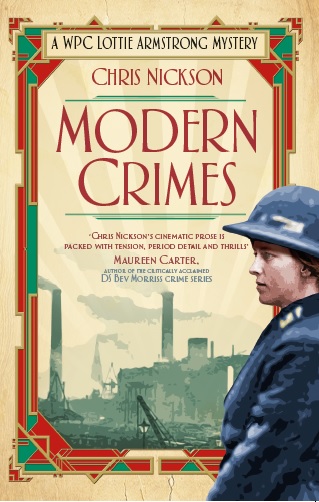
Tales Within A Tale 7 – A Teaser

Now it’s just four weeks until Skin Like Silver is published in the UK. That’s still plenty of time to introduce you to some of the characters. Not Tom Harper or Annabelle, not Billy Reed or Superintendent Kendall. Not even Ash. But some of the others who populate this book – there are over 60; I counted.

They’re relatively minor characters, but they all have their stories to tell. About once a fortnight until publication you’ll get to meet some of them. One of them could well be a killer. Or perhaps not. But when you read the book and come across them, you can smile and say ‘I know you.’

Read the first Tale within a Tale, about Patrick Martin, here, the second with Robert Carr here, the third with Miss Worthy here, the fourth with Barbabas Tooms here, the fifth with John Laycock here, and the six with Samuel Sugden here.

This time it’s a little different, a short teaser that tells you how the books gets its name.

And, of course, you can read more about Skin Like Silver here.

Like what you see? Order your copy here (this is currently the cheapest price by far!).

9780727885708

Harper stood in the superintendent’s office the next morning. His palms were bandaged and tender but they’d mend in a few days. Annabelle has fussed around him, putting on a lotion that burned before it soothed. He ached all over.

‘I need you down to have a look at that fire,’ Kendall told him. ‘Take Ash with you.’

‘I thought they’d put it out.’

‘They have. I want to make sure it wasn’t anarchists who caused it.’

The man was as immaculately turned-out as ever, suit pressed, moustache and side whiskers trimmed, the crease in his trousers as sharp as a blade. But his face was lined with worry.

‘I thought they were all talk,’ Harper said.

‘They are,’ the superintendent replied. ‘But you know how it happens. All it needs is one hothead taking that “assault on the system” line of theirs to heart.’ He shook his head. ‘Stupid. Work with Dick Hill until he’s established a cause. Just in case.’

‘Yes, sir. I have that dead baby, too.’

‘I know. What have you found?’

‘Nothing.’ He paused, thinking of the tiny corpse on the table. ‘Honestly, I’m not sure if we ever will.’

‘Keep trying, anyway. Your hands, Tom…’

‘From the pumps yesterday.’ He held them up. ‘Blisters. They’ll heal soon enough.’

‘You’d think the criminals would have been running free, what with every officer down there,’ Kendall said. He took his pipe from his waistcoat pocket and lit it with a match. ‘But there was nothing reported.’ He arched his eyebrows. ‘Think about that. Not a single crime anywhere in Leeds.’

There was just enough of a breeze to bring a sense of freshness, the hint that autumn might arrive soon. Harper walked side by side with Ash, the constable quiet as they passed the Corn Exchange. Carts clattered quickly along Duncan Street. Piles of horse dung were flattened on the road. Men ran, pushing barrows piled with goods to deliver. A tram rolled by with the grinding sound of wheels in the iron tracks. The air smelt burnt and dead as they neared the station.

‘How did you like the inspection?’ Harper asked.

‘It was right enough, sir.’ He gave a small grin. ‘My missus thought I looked that smart all dressed up.’

‘Mine made me have a photograph taken wearing it.’

‘They must love the top hats, those women.’ He shook his head and tapped his old bowler. ‘Me, I’m more comfortable in this.’ He paused. ‘I heard one of the firemen died yesterday.’

The inspector nodded. ‘When the platforms collapsed. Nothing anyone could do. They couldn’t even get in to bring the body out.’

‘Sad business, sir.’

They’d become used to working as a team since Reed had left. They functioned well together, although there’d been little to tax them too hard. All the crimes they’d investigated in the last few months had been straightforward. Profit or passion, and a simple matter to find the culprit.

Harper doubted there’d be much for them here, either. He didn’t believe any anarchists were involved. The only problem would come if Hill said the fire was arson.

New Station was filled with rubble and wreckage. Thick dust clung to piles of bricks, and charred wood still smoked lightly. But passengers were already crowding the three undamaged platforms, craning their necks to see all the ruin, and most of the trains were still running. Harper shook his head in amazement; after all the destruction, he wouldn’t have believed it possible. Or safe.

They found Hill down among the arches that had once supported everything. All the surfaces were black with soot, the smell of fire and destruction heavy and cloying, and he started to cough. A yard or two below them, the River Aire rushed by.

‘Hello, Dick,’ Harper said. ‘We’ve been sent down to help.’

Inspector Hill looked haunted. He was still wearing the uniform he’d had on when the blaze began. There were rents along the seams, the blue so covered with dirt that it seemed to have no colour at all. Dark rings lined his eyes.

‘Tom,’ he answered and let out a sigh. ‘We just brought out that man who died. Schofield.’

‘One of yours?’

Hill shook his head. ‘He worked on the one the insurance company engines. The floor just gave way underneath him.’ He stared up at the sky. ‘Ten years and I’ve never seen anything like it. As best as we can guess, he must have crawled forty feet after he fell. Almost made it out, too, poor bugger. It’s a miracle there was only one, really.’

‘Any idea where it started yet, sir?’ Ash broke the silence that grew around them.

‘Oh, we know that.’ Hill pointed to an empty space, nothing left at all. ‘You see that? It used to be Soapy Joe’s warehouse. Packed full of tallow and resin. Tons of the bloody stuff. That’s where it began. And that’s why it burned so hard and long. Once that went up there wasn’t a chance.’

‘What caused it?’ Harper asked.

Hill shrugged. ‘A spark? An accident? Deliberate? There’s not enough left to tell. I wouldn’t even like to guess. The best I’m ever going to be able to say is that it happened. It’s nothing to worry CID, anyway.’

‘The superintendent wondered about anarchists.’

‘I don’t see it.’ He shook his head wearily. ‘Honestly, Tom, I don’t. I’m going to dig around but I don’t think I’ll find any evidence of anything.’

‘You should get some sleep, Dick.’

‘Later.’ Hill brushed the idea away. ‘I need to take care of a few things first. We’ve never had anything as bad as this before in Leeds.’ He waved at hand at the damage. ‘Look at it. It’s going to cost a fortune to rebuild. But the railway’s already had engineers out this morning. Can you believe that?’

‘They want to be making money again,’ Harper said.

‘Sir! Sir!’ The shout echoed off the stone, making them all turn. A fireman was picking his way through the mounds of stone and brick. ‘There’s another body down here. It looks like a woman.’

They ran, scraping their way over the debris. Dust rose around them as they scrambled.

‘Over here,’ the man called. He was standing by a pile of rubble. ‘You can just see her foot over there.’

They gazed. Half a button boot, the leather torn clean away to show bloody flesh. The rest of her was buried under chunks of concrete.

‘Must have collapsed right on top of her,’ Hill said grimly, taking off his uniform jacket. ‘Let’s get this shifted.’

Ash glanced at Harper’s bandaged hands.

‘Will you be all right, sir?’

‘I’ll manage,’ the inspector told him as he stared at the foot.

It took them a quarter of an hour to move everything, sweating and grunting. Blood seeped through Harper’s bandages. He grimaced and worked on.

‘Christ,’ Hill said quietly.

Most of her clothes had burned away. Her hair was gone. She was part-flesh, burned and black. But it was the rest of her that made them draw in their breath. Patches of metal across her body that glinted in the light. Skin like silver: the thought came into his head.

‘What..?’ At first he didn’t even realize he’d spoken.

‘Must have been the girders,’ Hill said. He couldn’t take his eyes off the body. ‘They melted in the heat and the metal dripped down on her.’ He wiped a hand across his mouth. ‘I just hope to God she was already dead.’

Harper took a deep breath and squatted, moving this way and that around the corpse. Only the shape and size of the body and the torn button boot showed she’d once been female. Now… he could scarcely believe what he saw. It was grotesque. A statue of death. He shuddered as he stood again.

‘What the hell was she doing down here?’ he wondered.

Skin Like Silver – The Video

Well, not quite the video, but at least the video trailer.

The book isn’t out until November, but this is part of the head start. If you want a review copy, register with NetGalley and my publisher, Severn House. They should be available in October. And buy the book when it’s published, of course!

I believe in this book. I feel it’s the most compete book I’ve ever written.

In the meantime, maybe this will whet your appetite.

Go on, have a listen

The best way to enjoy a book is to feel part of it, to be immersed in it. Well, that’s how it works for me.

With that in mind, here’s a teaser from Two Bronze Pennies, just enough to whet your appetites, I hope, and all read by my own fair larynx.

https://soundcloud.com/chris-nickson-5/tbp

Go on, have a listen.

And after that you can buy it here – the best price I’ve seen – with free worldwide delivery.

And of course, don’t miss the online global launch, 6pm UK time, Sunday May 24. Click the link below and you’re in. No leaving home, no getting dressed up. Read all about it here.

https://www.concertwindow.com/89118-chris-nickson

Two Bronze Pennies – A Short Extract

You know – don’t you? – that my second Tom Harper novel, Two Bronze Pennies, comes out in the UK at the end of April (August/September elsewhere). Much of it is set in the Leylands, that area just north of the city centre where most of the Jewish immigrants settled when they came to Leeds.

Just to whet your appetite, here’s the opening few pages. Tom, Annabelle, Billy Reed, the Victoria – a dead body and men speaking in Yiddish. Go on, you know you want to….

One

‘Have you heard a word I said, Tom Harper?’

‘Of course I have.’ He stirred and stretched in the chair beside the fireplace. ‘You were talking about visiting your sister.’

Annabelle’s face softened. ‘It’ll only be for an hour. We can go in the afternoon, after we’ve eaten.’

‘Of course,’ he told her with a smile. He was happy, finally at home and warm for the first time since morning.

He’d spent the day chasing around Leeds on the trail of a burglar, no closer to catching him than he’d been a month before. He’d gone from Burley to Hunslet, and never a sniff of the man. But it was better than being in uniform; half the constables had been on patrol in the outdoor market, cut by the December wind as they tried to nab the pickpockets and sneak thieves. It was still blowing out there, howling and rattling the window frames. As a police inspector, at least he could take hackney cabs and omnibuses and dodge the weather for a while.

Tomorrow he was off duty. Christmas Day. For the last five years he’d worked it. Not this time, though. Christmas 1890, the first together with his wife. He turned his head to look at her and the wedding ring that glinted in the light. Five months married. Annabelle Harper. The words still made him smile.

‘What?’ she asked.

He shook his head. ‘Nothing.’

He often glanced at her when she was busy, working in the kitchen or at her desk, going through the figures for her businesses. Sometimes he could scarcely believe she’d married him. Annabelle had grown up in the slums of the Bank, another daughter in a poor Irish family. She’d started work here in the Victoria public house and eventually married the landlord. Six years later, after he died, everyone advised her to sell. But she’d held on and kept the place, trusting her instincts, and she’d built it into a healthy business. Then she’d seen an opportunity and opened bakeries in Sheepscar and Meanwood that were doing well. Annabelle Harper was a rich woman. Not that anyone round here called her Mrs Harper. To them she’d always be Mrs Atkinson, the name she’d carried for so long.

Whatever they called her, she was his.

‘You look all in,’ she told him.

Harper gave a contented sigh. Where they lived, in the rooms over the pub, felt perfectly comfortable, curtains drawn against the winter night, the fire in the hearth and the soft hiss of the gas lights. He didn’t want to move.

‘I’m cosy,’ he said. ‘Come and give me a cuddle.’

‘A cuddle? You’re lucky I put your supper on the table.’

She stuck out her tongue, her gown swishing as she came and settled in his arms. He could hear the voices in the bar downstairs. Laughter and a snatch of song from the music halls.

‘Don’t worry,’ she told him. ‘I’ll send them on their way early tonight. They all have homes to go to. Then we can have some peace and quiet.’

But only for a few hours. Annabelle would be up before dawn, the way she always was, working next to the servants, stuffing the goose that was waiting in the kitchen, baking the bread and preparing the Christmas dinner. Dan the barman, the girls who worked for her, and God knew who else would join them at the table. They’d light candles on the tree, sing, laugh, exchange gifts and drink their way through the barrel of beer she’d set aside.

Then, after their bellies were full, the two of them would walk over to visit her sister, taking presents for Annabelle’s nieces and nephews. For one day, at least, he could forget all the crime in Leeds. Billy Reed, his sergeant, would cover the holiday. Then Harper would  return on Boxing Day, back to track down the damned burglar.

Annabelle stirred.

‘Did you hear that?’ she asked.

‘What?’

He gazed at her. He hadn’t heard a thing. Six years before, while he was still a constable, he’d taken a blow on the ear that left him partially deaf. The best the doctor could offer was that his hearing might return in time. But in the last few months, since autumn began, it had grown a little worse. Sometimes he missed entire sentences, not just words. His ear simply shut off for a few seconds. He’d never told anyone about the problem, scared that it would go on his record.

‘On the stairs.’

He listened. Still nothing. Then someone was knocking on the door. Before he could move, she rose swiftly to answer it.

‘It’s for you.’ Her voice was dark.

He recognized the young constable from Millgarth station. One of the new intake, his uniform carefully pressed, cap pulled down smartly on his head and face eager with excitement. Had he ever looked as green as that?

‘I’m off duty—’ he began.

‘I know, sir.’ The man blushed. ‘But Superintendent Kendall told me to come and fetch you. There’s been a murder.’

Harper turned helplessly to Annabelle. There’d be no visit to her sister for him tomorrow.

‘You go, Tom.’ She kissed him on the cheek. ‘Just come home as soon as you can.’

Two

The cold clawed his breath away. Stars shone brilliantly in a clear sky. He huddled deeper into his overcoat and pulled the muffler tight around his neck.

‘What’s your name?’ Harper asked as they started down the road.

‘Stone, sir. Constable Stone. Started three month back.’

‘And where are we going, Mr Stone?’

‘The Leylands, sir.’

Harper frowned. ‘Whereabouts?’

‘Trafalgar Street.’

He knew the area very well. He’d grown up no more than a stone’s throw from there, up on Noble Street. All of it poverty-scented by the stink of malt and hops from the Brunswick Brewery up the road. Back-to-back houses as far as the eye could see. A place where the pawnbrokers did roaring business each Monday as housewives took anything valuable to exchange for the cash to last until Friday payday.

In the last few years the area had changed. It had filled with Jewish immigrants; almost every house was packed with them, from Russia and Poland and countries whose names he didn’t know, while the English moved out and scattered across the city. Yiddish had become the language of the Leylands. Only the smell of the brewery and the lack of money remained the same.

‘Step out,’ he told the constable. ‘We’ll freeze to the bloody spot if we stand still.’

Harper led the way, through the memory of the streets where he used to run as a boy. The gas lamps threw little circles of light but he hardly needed them; he could have found his way in pitch blackness. The streets were empty, curtains closed tight. People would be huddled together in their beds, trying to keep warm.

As they turned the corner into Trafalgar Street he caught the murmur of voices. Suddenly lights burned in the houses and figures gathered on their doorsteps. Harper raised his eyes questioningly at Stone.

‘The outhouses, sir. About halfway down.’

The cobbles were icy; Harper’s boots slipped as he walked. Conversation ended as they passed, men and women looking at them with fearful, suspicious eyes. They were goys. Worse, they were authority.

They passed two blocks of four houses before Stone turned and moved between a pair of coppers, their faces ruddy and chilled, keeping back a small press of people. Someone had placed a sheet over the body. Harper knelt and pulled it back for a moment. A young man, strangely serene in death. Straggly dark hair, white shirt without a collar, dark suit and overcoat. The inspector ran his hands over the clothes, feeling the blood crusted where the man had been stabbed. Slowly, he counted the wounds. Four of them. All on the chest. The corpse had been carefully arranged, he noticed. The body was straight, the arms out to the sides, making the shape of a cross. Two bronze pennies covered the dead man’s eyes, the face of Queen Victoria looking out.

Harper stood again and noticed Billy Reed talking to one of the uniforms and scribbling in his notebook. The sergeant nodded as he saw him.

‘Do we know who he was?’

‘Not yet.’ Reed rubbed his hands together and blew on them for warmth. ‘Best as I can make out, that one found him an hour ago. But I don’t speak the lingo.’ He nodded towards a middle-aged man in a dark coat, a black hat that was too large almost covering his eyes. ‘He started shouting and the beat bobby came along. They called me out.’ He shrugged. ‘I told the super I could take care of it but he wanted you.’ His voice was a mixture of apology and resentment.

‘It doesn’t matter.’

It did, of course. He didn’t want to be out here with a corpse in the bitter night. He’d rather be at home with his wife, in bed and feeling the warmth of her skin. But Kendall had given his orders.

The man who’d found the body stood apart from the others, head bowed, muttering to himself. He scarcely glanced up as Harper approached, lips moving in undertone of words.

‘Do you know who the dead man is?’ he asked.

Er iz toyt.’ He’s dead.

‘English?’ the inspector asked hopefully, but the man just shook his head. He kept his gaze on the ground, too fearful to look directly at a policeman.

Velz is dayn nomen?’ The Yiddish made the man’s head jerk up. What’s your name?

‘Israel Liebermann, mayn ir,’ the man replied nervously. Sir. Growing up here it had been impossible not to absorb a little of the language. It floated in the shops and all around the boys that played in the road.

Ikh bin Inspector Harper.’

A hand tapped him on the shoulder and he turned quickly to see a pair of dark eyes staring at him.

‘What?’ He had the sense that the man had spoken; for that moment he hadn’t heard a word. He swallowed and the world came back into both ears.

‘I said it was a good try, Inspector Harper. But your accent needs work.’ The voice was warm, filled with kindness. He extended his hand and Harper took it.

‘I’m Rabbi Feldman.’

The man was dressed for the weather in a heavy overcoat that extended almost to his feet, thick boots, leather gloves and a hat pulled down to his ears. A wiry grey beard flowed down to his chest.

A gust of wind blew hard. Harper shivered, feeling the chill deep in his marrow.

‘If you think this is cold, you never had a winter in Odessa.’ The rabbi grinned, then his face grew serious. ‘Can I help at all?’

‘Someone’s been murdered. This gentleman found him.’

Feldman nodded then began a conversation in Yiddish with Liebermann. A pause, another question and a long answer.

He’d heard of the rabbi. Everyone had. Around the Leylands he was almost a hero. He was one of them; his family had taken the long march west, all the way to England, when the pogroms began. He understood their sorrows and their dreams. In his sixties now, walking with the help of a silver-topped stick, he’d been head of the Belgrave Street Synagogue for over ten years. He taught in the Hebrew school on Gower Street and met with councillors from the Town Hall. He was man of mitzvahs, good deeds. Portly and gentle, with quiet dignity, he was someone in the community, a man everybody respected.

‘He says he needed the outhouse just before ten – he’d looked at his watch in the house so he knew what time it was. He put on his coat and came down.’ Feldman smiled. ‘You understand, it’s cold in these places. You try to finish as soon as possible. When he was done he noticed the shape and went to look. That’s when he began to yell.’

‘Thank you,’ Harper said, although it was no more than they already knew.

‘Murder is a terrible business, Inspector.’ The man hesitated. ‘Is there anything else I can do?’

‘We still don’t know the name of the dead man.’

‘May I?’ Feldman gestured at the corpse. Harper nodded and one of the constables drew back the sheet again.

Mine Got.’ He drew in his breath sharply.

‘Do you know him?’

It was a few seconds before the rabbi answered, staring intently at the face on the ground. Slowly he took off the hat and tugged a hand through his ragged white hair.

‘Yes, Inspector,’ he said, and there was the sadness of lost years in his voice. ‘I know him. I know him very well. I gave him his bris and his bar mitzvah. He’s my sister’s son.’

His nephew. God, Harper thought, what a way to find out.

‘I’m sorry, sir. Truly.’

The man’s shoulders slumped.

‘He was seventeen.’ The rabbi shook his head in disbelief. ‘Just a boychik. He was going to be the one.’ Feldman tapped a finger against the side of his head. ‘He had the smarts, Inspector. His father, he was already training him to run the business.’

‘What was his name, sir? I need to know.’

‘Abraham. Abraham Levy.’ The rabbi rummaged in a trouser pocket, brought out a handkerchief and wiped his eyes. ‘Why?’ he asked quietly. ‘Why would someone kill anyone who was so young?’

And Two Bronze Pennies is now available to order ahead of its publication on April 30. Follow this link.

So Why Do I Write Historical Crime?

A number of times people have asked me why I choose to write historical crime novels. The crime part is easy to answer: it offers a good moral frame work on which to rest a novel. All fiction is about conflict in one form or another, and crime – good vs. evil – reduces it to the basics. But it also gives a chance to explore that nebulous grey area between the two, which can be the most interesting.
But historical…well, for me there are a number of reasons. I’m a history buff, most particularly a Leeds history buff. So it’s an excuse to delve into that world. But there’s far more.
I lived abroad for 30 years, and I’ve been back almost 10. That means I haven’t been there for the development of speech patterns in England. And to write convincing dialogue you need to be sure of that. I have no problem with American speech – I have novels set in the ‘80s and ‘90s there – but less in England. By going back in time, to an era that’s closed and over, it’s much easier to capture the speech of the period.
Many of my books are set in Leeds, and that gives me the chance to show how the city has changed over the years, from the 1730s to the 1950s. I try to make Leeds a character in the book, but the Leeds of 1890, industrialised and full of dark, Satanic mills, is a far cry from 1731, when the population was around 7,000 – hardly more than a village. And by 1954 and Dark Briggate Blues it’s changed completely again as we enter a post-industrial age.
And yet there’s continuity, is the layout and names of the streets in the city centre. Richard Nottingham could find his way around 160 years later, and Tom Harper from Gods of Gold would find Dan Markham Leeds relatively familiar. That sense of a thread running through it all is very attractive to a writer.
Going back in time offers the opportunity to view current events through the prism of history. The contracts handed to the gas workers that sparks the Gas Strike which is the backdrop of Gods of Gold has strong echoes in today zero-hours contracts. The anti-Semitism and xenophobia that lies at the heart of the upcoming Two Bronze Pennies can be seen in the rise of the right, Islamophobia and the very recent rise of a fresh wave of anti-Semitism.
Sometimes it’s none of that at all. Dark Briggate Blues was me asking ‘what would a 1950s English provincial noir be like?’ and offering one possible answer.
Technology and life moves so quickly that a contemporary novel can quickly seem dated. No mobile phones on computers in the ‘80s or ‘90s. We’ve only really relied on the Internet since the beginning of this century. Social media is just a few years old, and smartphones only became widespread after 2010. If you write today’s world, it’s changed by tomorrow. Setting a novel in the past, people know going in where they stand. It can’t seem dated because, in a way, it’s timeless, a scene set in amber.
And there’s one final reason. Today we rely on DNA, forensics, all manner of this and that to solve crimes. That’s fine – the tools are there, use them. But for a writer (and hopefully a reader), forcing the main character to use his wits and his brain is far more satisfying.