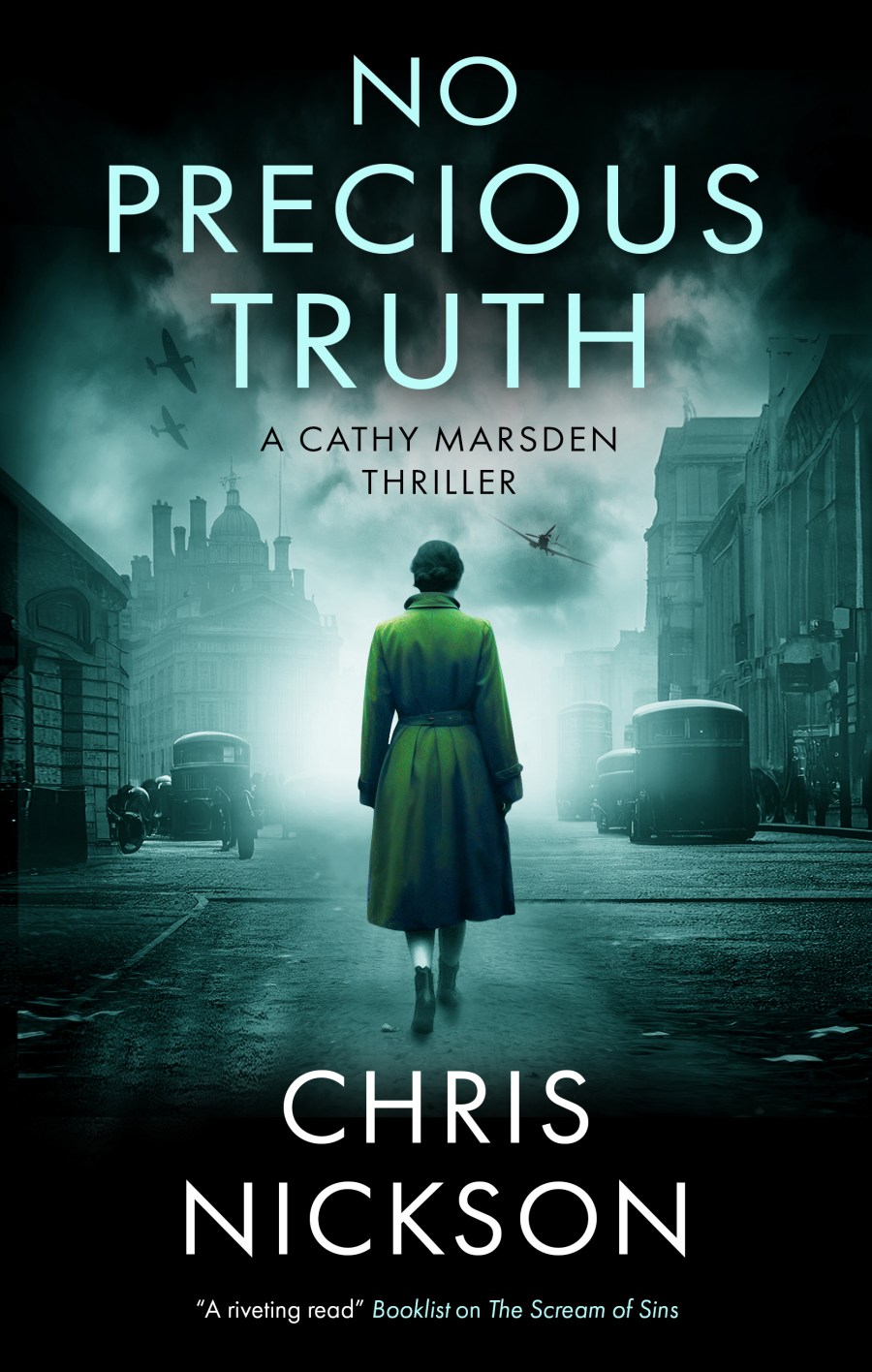
Who Is Cathy Marsden of No Precious Truth?

Next April sees the publication of No Precious Truth, the first in a series featuring Woman Police Sergeant Cathy Marsden, who’s part of the Special Investigation Branch’s squad in Leeds.

But how did a woman serving in Leeds City Police end up there?

Here’s Cathy’s story. It’s the first in a series of posts about Leeds in World War Two to prepare you for next year. A little taste, if you will.

September, 1940

‘Sorry if I’m late, ma’am. I came as soon as I knew you were looking for me.’

            ‘I thought someone would find you soon enough.’ Inspector Harding sat behind her desk, all her papers carefully squared and ordered. After fifteen years of steady work on the force, she’d risen to be in charge of the women police constables.
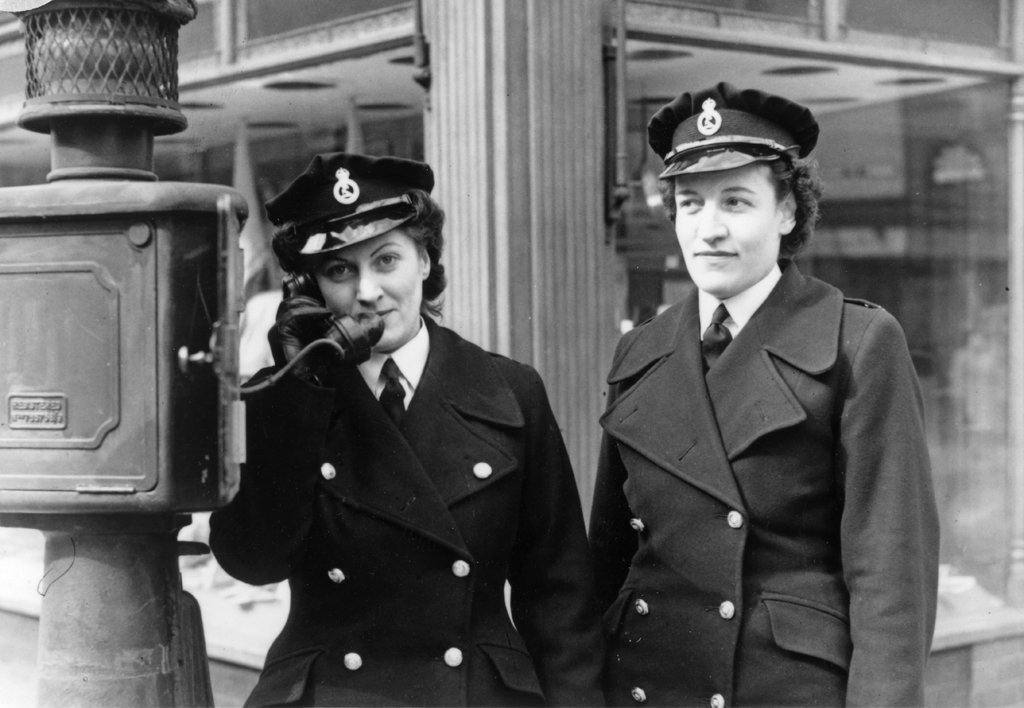
            From Flickr

‘Have I done something wrong, ma’am?’ The question had gnawed at her as she hurried up Briggate and the Headrow. She couldn’t imagine what, but…

            Harding couldn’t help herself; she had to laugh. ‘No, Sergeant. It’s nothing like that. Sit down.’

‘Ma’am?’ Harding was always friendly, but one for order and boundaries.

‘Please, take a seat, Sergeant.’

Once Cathy was perched on the edge of her chair, the inspector began.

‘I’ve been watching you these last few months. I don’t know what’s changed, but you don’t look happy in the job.’

‘Ma’am?’ she said again. Had it been that obvious? And what was so urgent about a heart-to-heart? Something like this could wait until the end of shift.

‘Please, Marsden. I wasn’t born last week. It’s been obvious.’

‘If my work isn’t up to snuff-’

‘You work is as good as it’s always been. You been on the force for six years?’

‘Yes, ma’am.’ Where was the woman going with this?

‘Something’s shifted. It seemed as if it happened when we received those men who’d survived Dunkirk.’

That was all it took. She hadn’t intended to say much, but once she began, it all flooded out.

‘Well,’ Harding said in an easy voice when Cathy finished, ‘I think what we do is important. But I can understand how you feel.’ She took a cigarette case from her breast pocket and offer one to Cathy before lighting her own and blowing a think plume of smoke to the ceiling. ‘Tell me, if I can offer you something different, some far from your routine that might change things in the country a little, what would you say?’

‘I don’t know.’ Her mind was racing. She didn’t understand what the inspector meant. ‘What is it, ma’am?’

‘How would you fancy working in plain clothes for a little while?’

            ‘Me?’ she asked in disbelief. There were only eight women police officers in Leeds, and not a single one of them was in CID. Never had been, and never would be, if the top brass had their way. That was strictly male territory. A few forces had women detectives, but it would be a cold day in hell before it happened here. As it was, twenty years after the first policewoman was appointed in Leeds, they were still barely tolerated in uniform. ‘How?’

             ‘Have you ever heard of an outfit called the SIB? The Special Investigation Branch?’

            ‘No, ma’am.’ All her thoughts was spinning. After the way CID had treated her yesterday, she was suspicious. What would these SIB people expect her to be, the tea girl?

            ‘I’m not surprised. They only started up in the spring. They’re more or less the military police version of CID.’ She paused and gave a short, reassuring smile. ‘Different, though. They investigate crimes involving soldiers.’ Harding held up her finger before Cathy could open her mouth. ‘They have a big operation that’s just begun here. The head of their squad, Sergeant Faulkner, came to see me first thing about seconding a WPC to them for it. They need someone who knows Leeds very well. It might be exactly what you need.’

            ‘Why a policewoman, ma’am?’

            ‘Someone who’s used to disciplined thinking and can obey orders. Well trained.’

            That made a curious kind of sense. But: ‘Why me?’

            Harding gave a kindly smile. ‘Eighteen months ago you were promoted to sergeant. I fought for that because you’re the best I have. You’re a natural leader. The others ask you questions, they listen to you. They look up to you.’ Cathy blushed, feeling the heat rise on her face. ‘You’re very observant. You have a real way with people, too. You put them at ease. They open up when you talk to them. I don’t want you to leave the police. If I second you to SIB for their operation, I believe you’ll come back refreshed and raring to go. If not, then leave the police and find something else. Does that sound fair?’

            Cathy stayed silent for a long time as fears and hopes chased each other around her head.

‘Do you honestly think I can do it, Ma’am?’

            Another smile, this one glowing with satisfaction. ‘My reputation is one the line, Marsden. If I wasn’t certain, I’d never have put you forward for it.’

            She scribbled an address on a scrap of paper and pushed it across the desk. ‘Go here and talk to Sergeant Faulkner. He’s expecting you. The SIB have their own office, separate from the army and us.’

            Cathy tucked it in her uniform pocket, stood and saluted. ‘Yes, ma’am.’

            ‘There’s one condition, and I made this very clear to Sergeant Faulkner: if I need you back for something, the police take precedence. You understand?’

            ‘Yes, ma’am. And thank you.’

            ‘Go and show them what you’re made of, Sergeant.’

A Wish For Happiness

I know, I’ve been quiet for a while, and sorry about that. But I’ve been taking time to breathe a bit after the exhibition and event, and I’ve been writing. The next two Simon Westow books (The Scream of Sins and Them Without Pain) are with the publisher – Scream comes out in March – and I’m busy with the WWII novel featuring Woman Police Sergeant Cathy Marsden, currently seconded to the Special Investigation Branch.

The joy is in the research; the couch is a pile of books about the war (I’ve put together something called Cathy’s War Timeline, which is taped to the bookshelf next to the writing table) and I’m learning more and more. The book takes place in early 1941, so I don’t want to go beyond that; I’ll only confuse myself.

Plenty of great little Leeds details in there, like the barrage balloon at St James’s hospital that someone came free from its mooring. People hung on, tied it to a lamp post – and it tore up the lamp post. It was finally brought down near the city centre. How can you not love a tale like that?

Cathy herself is a joy, easing myself into her mind and her life, so I know how that coat feels on her back, how the gas mask case keeps banging against her hip. The walk down the blackout street to home on Brander Road in Gipton. She’s fully alive.

That’s for the future. It doesn’t have a title yet, but it’ll be appearing in summer 2025, a very distant time.

For now, though, the holidays loom, and I hope yours are all good, healthy and peaceful. Meanwhile, there’s a review of the Tom Harper exhibition and event here. If you prefer, here’s an image.

On, and if you haven’t bought it yet, Rusted Souls is a good gift both to give and receive.

Big, Big, Big News

I know I’ve been quiet for a while.

No real apologies. After the intense pressure of arranging and putting on the exhibition, then taking it down again, I needed some time to decompress and focus on what I really do – write novels.

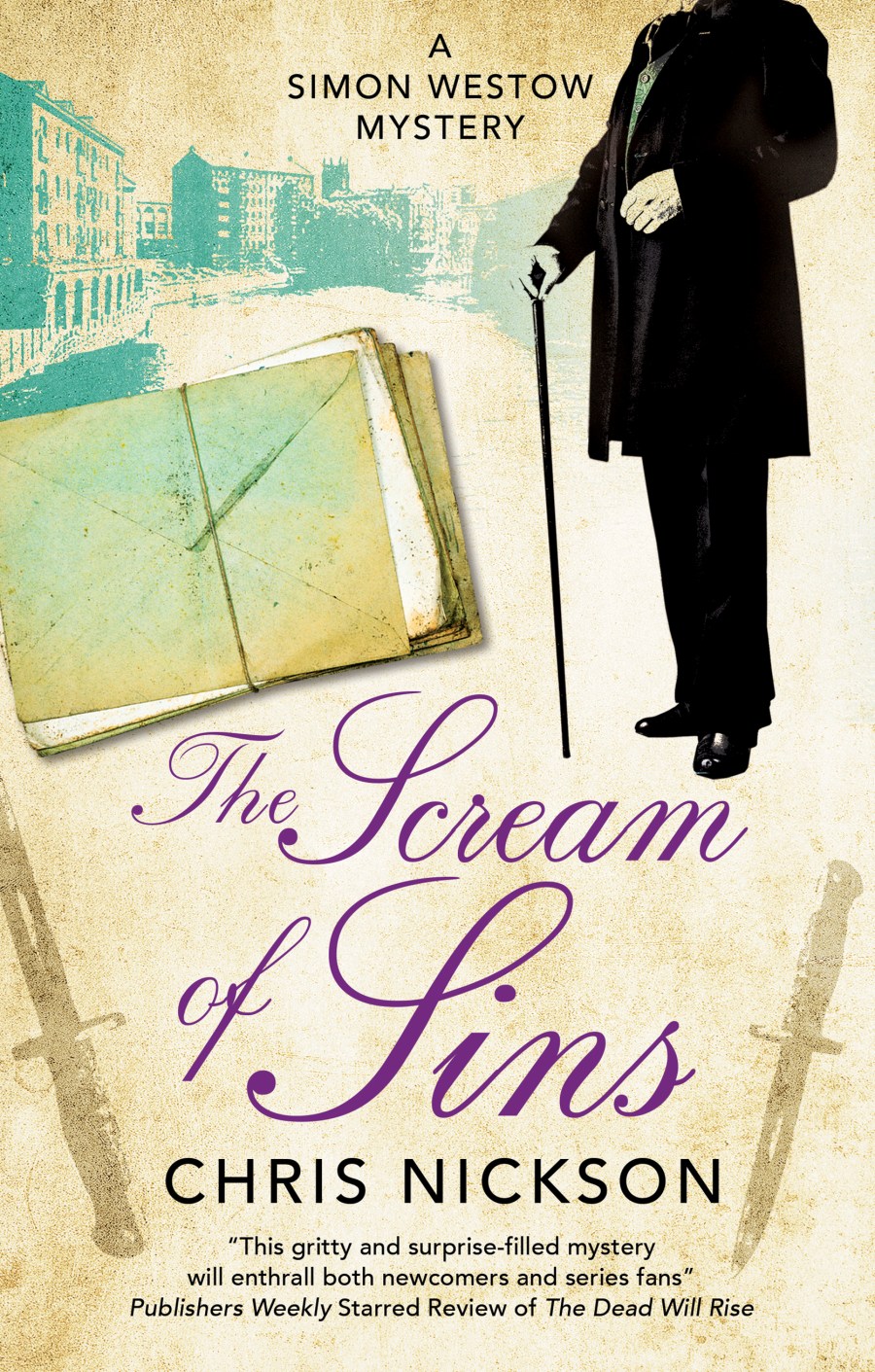
I’ve been busy there, which brings me to the really big news. The first part is that I finished going through the proofs for The Scream of Sins, the next Simon Westow novel, which will be published in March. If you thought the last couple of books in the series were dark, they’re like a day on the beach compared to this. Honestly, I’m immensely proud of it, and the redemption it finds.

Here’s the blurb:

Leeds, October 1824. Thief-taker Simon Westow’s job seems straightforward. Captain Holcomb’s maid, Sophie, has stolen important papers that could ruin the family’s reputation, and he’s desperate for their return. But the case very quickly takes a murderous turn, and it becomes clear the papers are hiding a host of sins . . .

During the search, Simon’s assistant, Jane, hears a horrific tale: men are snatching young girls from small towns for use by the rich. Those who are unwanted are tossed onto the streets of Leeds to survive among the homeless. With the help of an unlikely, deadly new companion, Jane will do everything to discover who’s responsible and make them pay.

Can Simon and Jane recover Holcomb’s letters and get justice for the stolen girls? It becomes a battle that might result in them losing everything . . . including their lives.

And here’s the cover:

The second piece of news is that I’ve signed a contract for, and completed, another Westow novel, called Them Without Pain, due in September next year. I’ll say it’s based on a true incident, and leave it at that for now.

Enough, right? Not quite. People have asked what I’ll do next, how that there will be no more Tom Harper books. I’ve started a new series, set in Leeds in World War II and featuring Police Sergeant Cathy Marsden of Leeds City Police. She lives with her parent on the Gipton estate, and has been seconded to something new, the Leeds squad of the Special Investigation Branch (the SIB really existed), so she’s working in plain clothes. I’m working on the book, greatly enjoying coming to know Cathy, the men she works with, her friends and family. That one is set to appear in June 2025. 2025…it’s science fiction.

In the meantime, I’ve had more people contact me about Rusted Souls than any other book I’ve written. Tom and Annabelle have touched a lot of people, and I thank you all. They’re both still alive within me. You can always buy the book for Christmas. It’s even better from an independent bookshop, too.

The Dead On Leave (Again)

Last month The Dead On Leave, my novel set in Leeds in 1936, was published. It’s out there, £7.99 in paperback, cheaper on ebook, and yes, I do think you should read it. It is – I hope – an honest picture of a city gripped by the Depression and trying to find its way in a country that’s changed and threatens to leave it behind.

It’s also about the rise of fascism, which didn’t make much headway in the country, thanks to the efforts of many good people, and a population that rejected it. Between those two things, it’s something of a mirror to the present – although the book doesn’t try to offer any lessons.

But it’s still a good read, if I say so myself. So tempt yourselves with a bit more of it…

1930s boar lane 2

‘You know people in the Communists, don’t you, Raven?’ Kennedy asked quietly as he put another match to his pipe.

‘Only one man, sir.’

‘Have a word with him, will you? See what he can tell you.’

‘Yes sir.’

*

He knew where he’d find Johnny Harris. Six o’clock on the dot and he’d walk under the Magnet Ales sign into the Pointer in Sheepscar. Harris worked at the boot factory near the bottom of Meanwood Road, operating the machine that attached the upper to the sole. He’d done it for so many years that his skin on his palms was as tough and callused as the boots he made and he’d never be able to scrub away the smell of leather.

Harris had fought in the war, Gallipoli first, then the trenches, from the Somme all the way to Armistice Day. He’d seen the very worst and come back to a promise of a home fit for heroes, words that were nothing more than lies. As soon as they evaporated into thin air he’d joined the Communists and stayed loyal all through the purges in Russia, never wavering in his belief, working his way up to local party secretary.

Raven had grown up with Harris’s younger brother, Paul, the pair of them at school together. The families lived a street apart; he’d known them all his life. But it was only in the last few years he’d had much to do with Johnny.

Harris was a tough man, loud, always ready to argue his point. He read a great deal, his back-to-back house on Manor Road crammed with books. All communist, all biased, but Harris believed with the true fervour and devotion of a convert.

He’d been one of the organisers of the demonstration against the Blackshirts on Holbeck Moor. Harris probably counted the violence as a victory. But Raven hadn’t come to argue the finer points of politics as he parked the Riley by the library at the bottom of Roundhay Road. He needed information.

Harris was leaning on the bar, his broad back to the room, savouring his first pint after work. Another half hour and he’d go home to his wife and two daughters and be a loving husband and father when he wasn’t doing party work. But this was his time.

‘Give him another,’ Raven told the barman. ‘I’ll have a lemonade.’

With a wary look at the policeman’s scarred face, the man nodded.

‘You must be on duty.’ Harris didn’t even raise his head. ‘You’d be on the pints otherwise.’

‘They’re slave-drivers.’ The drinks arrived. Raven raised his glass. ‘Good health.’

‘I’ll drink to that.’ Harris pushed himself upright. He had large hands and heavily muscled arms. At first glance he looked to be a big, dangerous man. But there was a twinkle at the back of his eye and usually a smile playing around his mouth. He sipped the head from the drink with a wink. ‘I’ll accept the beer because it’s depriving the capitalist state of money it might use to exploit the people.’

‘Yesterday…’ Raven began.

‘A success.’ Harris interrupted. ‘We sent them packing.’

‘I was there. I saw it.’

Harris grinned. ‘You didn’t go on your own time, I bet.’

‘Don’t be daft. I wouldn’t waste a Sunday. But someone else was there of his own volition.’

‘That body in the paper today?’ Harris asked.

‘Yes.’

‘Was he one of ours?’

‘Not at all. A fan of Mosley. He was a means test inspector.’

The man stayed quiet, tearing a soggy beermat into tiny pieces.

‘What are you suggesting, Urban?’ Harris asked quietly. ‘That we were responsible?’

‘No,’ Raven answered slowly. ‘I’m asking, that’s all. Have you heard anything?’

‘Not a dicky bird.’ He took a long sip, draining half the beer. ‘How was he killed?’

‘Strangled with an electrical cord.’ Raven saw the man flinch and his fingers tighten around the glass.

‘None of my lot would do that.’

‘You don’t know for sure, Johnny. We have to find the killer and we’re going to need help.’

Harris pursed his lips. It would be hard for him to help the authorities. It went against everything he believed. But if the killer turned out to be a party supporter and he did nothing to help…

‘I don’t see it,’ he said finally. ‘Not a communist.’

‘Someone murdered him. And it’s a cold-blooded way to die. Brutal.’ Raven finished the lemonade. ‘I’d appreciate the assistance, Johnny, but I’ll leave it to your conscience.’

‘You’re a bastard, Urban, putting me on the spot.’ He shrugged. ‘Let me ask a few questions, all right? But I’m certain it wasn’t any of my people.’

‘Thank you.’

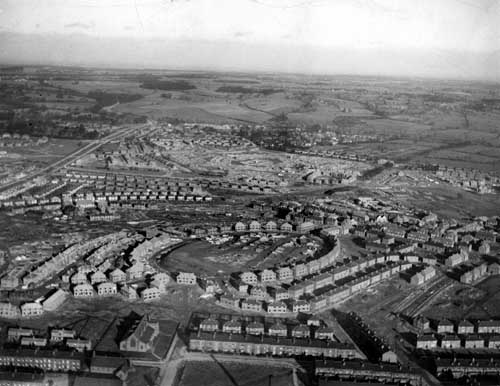
1930s gipton estate

No car for the journey home today; the police would never be that generous. Probably for the best, anyway. He’d only end up with a curious crowd outside the house, staring at the only car on the estate. Jim Green, all the way down on Coldcotes Drive, had a motorbike, but he’d bought it as a wreck and rebuilt it himself.

Raven had to wait for one of the Lance-Corporal trams, half-dozing as it clanked along York Road.

No lights on at home, but there was the smell of cooking in the kitchen. A note on the living room table read: Gone to the pictures with Gladys. Your tea’s in the oven. At least there was food, he thought. And some peace and quiet.

He ate, then left the plate in the sink. Kettle on the hob to make a cup of tea, staring out over the garden as he drank. There was too much to think about on this case. All they had was a jumble of pieces. He couldn’t even see all of them yet.

Maybe Johnny would come up with something. If there was even anything to find. Perhaps a bobby going through the list of Benson’s claimants would find a man so torn by guilt that he confessed. Right, he thought as he looked into the growing darkness, and they’d see pigs flying over the Town Hall in the morning. This was going to be slow and difficult and it was going to be painful.

1930s albion street

The Dead on Leave (1)