In The Courts And Yards Of Leeds

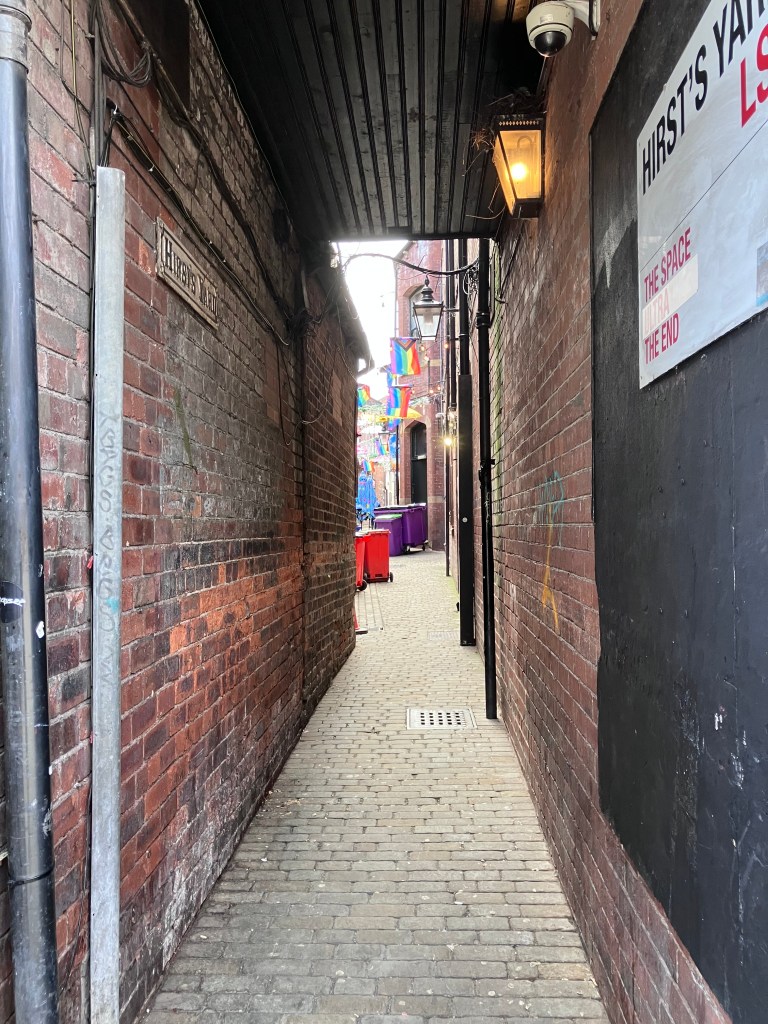
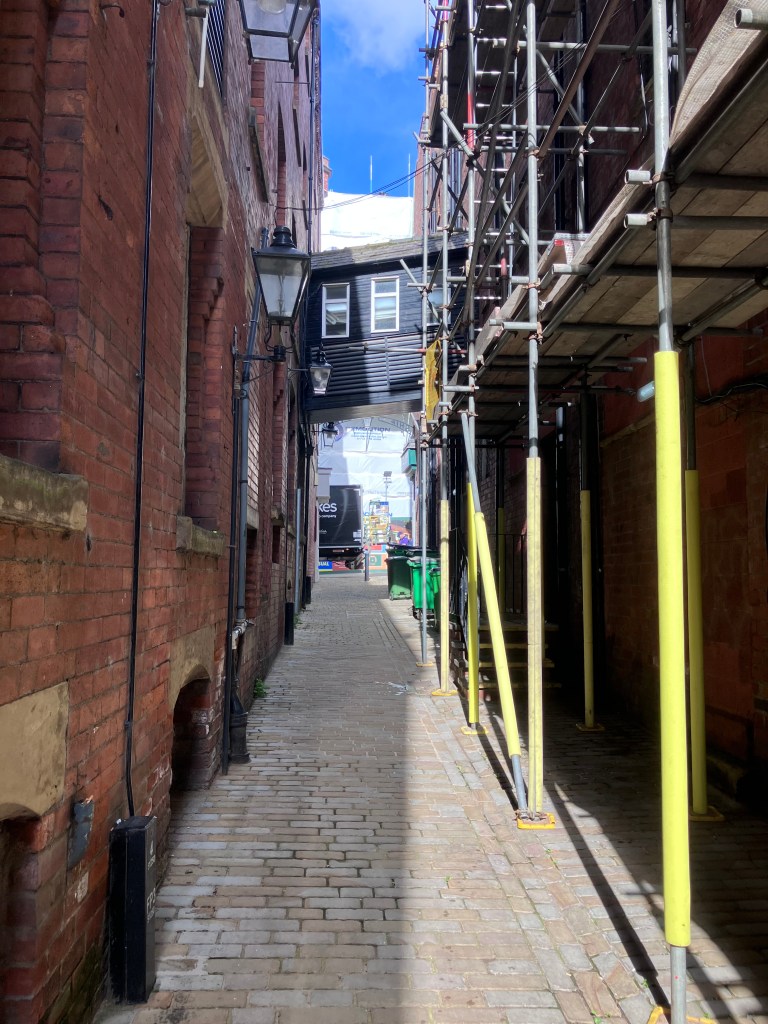
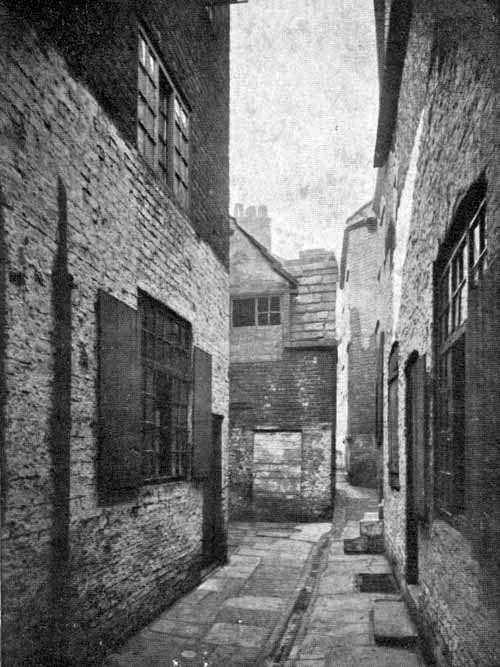
If you’ve read any of my books, you’ll have come across the courts and yards that ran off Briggate. There were dozens of them; this 1847 map of Lower Briggate gives an indication.

Development over the years has done away with most of them, and in many cases, that’s no bad thing. They were cramped, awkward spaces, originally intended for workshops, counting houses and warehouses when Briggate was first laid out in 1208.

But times and needs changed. Leeds began to grow rich off just as the fields that had sustained small farmers were enclosed by landlords who could graze sheep and make more money from their estates. People arrived in town hoping for streets paved with gold, and that trickle became a torrent with the Industrial Revolution.

They all needed somewhere to live. The first back-to-back houses appeared around the start of the 19th century. But long before that, these courts and yards of Leeds had become places for people to live. For artisans and labourers, they offered a home. For the prostitutes, the bottleneck openings were a place to stand and ply their trade.

Some led to inns and taverns. But even so, along the yard you’d find small businesses with their offices and many living in rooms.

They became an inimitable part of Leeds, an accidental growth that came to typify Leeds. They were just off Briggate; plenty ran of Kirkgate and the Upper and Lowerhead Row. Each had its character, its citizens, its grievances and joys.

Few remain now, and those are home to bars and clubs. A handful from what was once part of everyday life. Given the way Leeds has carelessly laid waste to much of its past, I’m grateful these remain.

Take a look at a few. My characters have walked down most of these. Simon Westow, Jane and Sally have. Did I mention they’ll be doing it for one last time in October, when A Rage Of Souls is published. Come along and walk with them. Don’t forget a stroll down Green Dragon Yard, too. Pre-order it right here.

Thinking About Richard Nottingham

While I love Tom and Annabelle Harper dearly, along with Simon Westow, his wife Rosie, Jane and Sally, and can’t imagine them not in my life, there’s someone I all too often forget, and it’s to my shame that I do, especially as he’s the only one who truly existed.

Richard Nottingham, the Constable of Leeds.

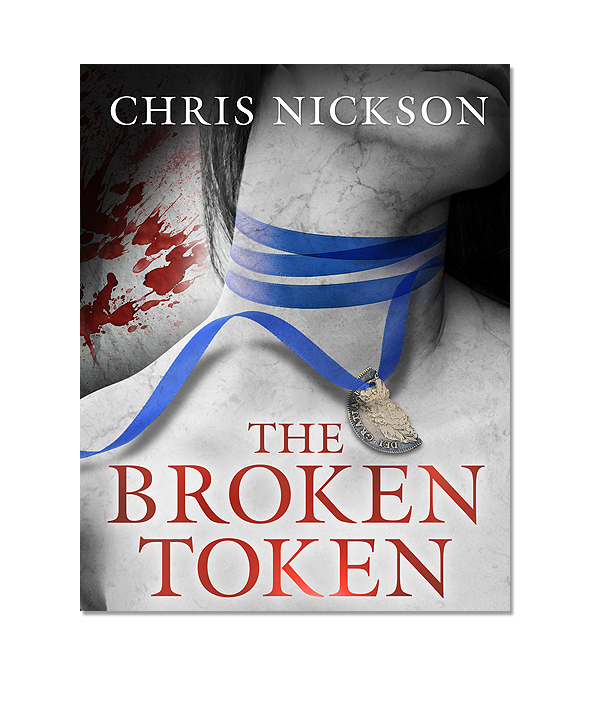
I wrote seven books with him in the role he had in real life (and to settle any possible questions, no there won’t be more). He gave me my start as a published fiction writer with The Broken Token

(which was also an Independent on Sunday best audiobook of the year) and got me a rating as one of the 10 best crime novels of the year for Cold Cruel Winter. All seven of the novels in that series won starred review in Publishers Weekly.

Richard was kind to me, a true inspiration. I’m proud of all those books, of him, and the community around him in Leeds during the 1730s.

From records, I know he was given a reward in the 1690s for informing on a highwayman – and this well before he became the law himself. Maybe it gave him the taste. Or possibly the fact that Walter Nottingham, perhaps his father or brother, was constable before him.

I made what was a title, a sinecure, a man who take part in official processions, into a proto coppers, with the night watch underneath him. He solved crimes. He found himself in danger. I was stretching history, but Richard seemed to enjoy himself doing it.

My Richard had a wife and two daughters. The real one had other children, of course, one of whom was a young woman who went in to marry into the minor nobility. Richard owned property in town. On Kirkgate at first, then Briggate; Leeds was a very small place at that time. People kept arriving, but there were fewer than 10,000 inhabitants.

I have written about the real Richard Nottingham here, with plenty of detail snippets from documents. Sadly, I’ve never found a portrait of him.

Why mention him at all? Most of the books are out of print in hardback, after all (and only the first is available in paper, I believe). But a number of you who came to my work through Tom or Simon might not know about Richard. You might like him.

The ebooks are all pretty cheap, and you’ll discover a family, as well as a place and time that are close to my heart. I always had Leeds, of course, but Richard showed me what to do with it, and that’s a gift I can never fully repay.

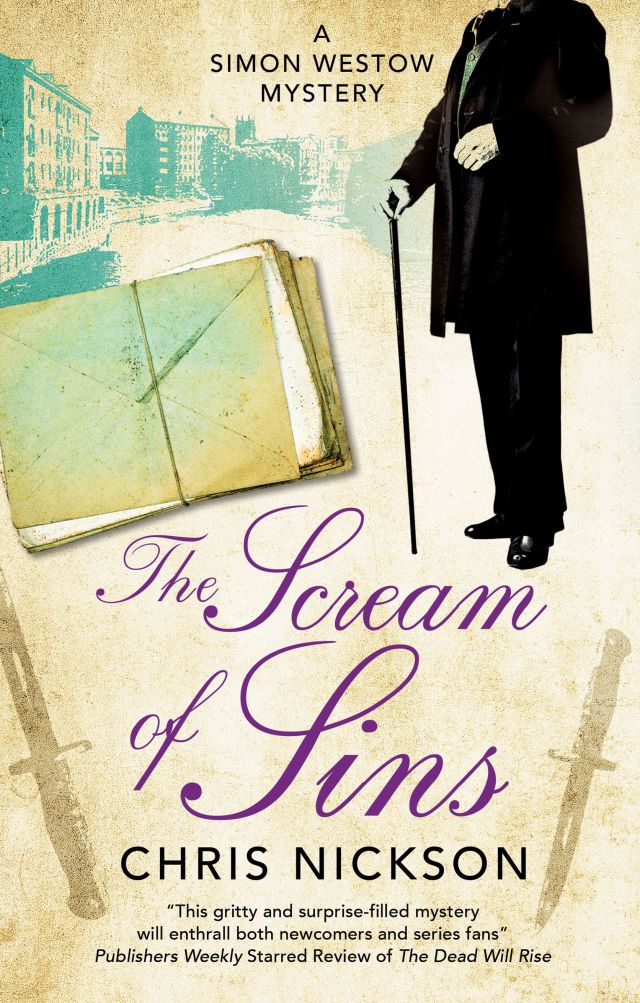
I will remind you that if you haven’t read The Scream of Sins yet, it’s been out for a month now – and God, the reviews have been so good it’s amazed me, since it’s so dark. Why not read it and judge for yourself?

Psst, Got A Minute?

Just over two-and-a-half minutes, actually. I want to take you on a walk up Leeds’ oldest street, Kirkgate. I’ve written about it so many times, but there are many of you who don’t know Leeds, so this gives you a chance to really see it.

I might well do more of these short walks. After all, this is my city, and I’m proud of it. I wrote about it, and this is another way to share it, but really, give you a little of its history.

The oldest part of Leeds – it all began here.
Some more of Kirkgate, the oldest street here – and once the richest.

Hopefully, that helps bring it alive for you. I hope you enjoy

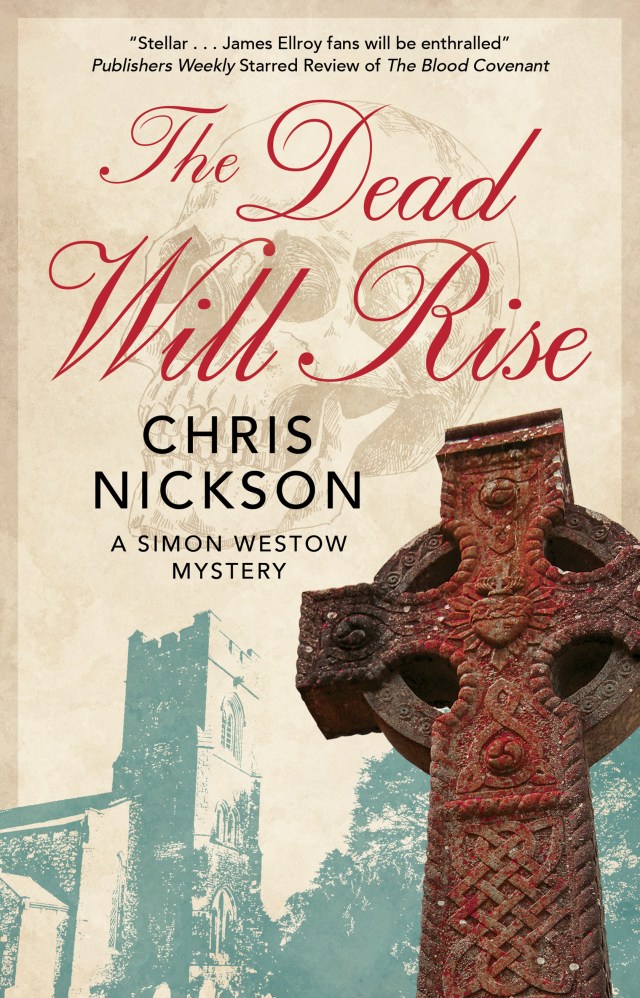
And just a reminder that my new book The Dead Will Rise, comes out in a couple of weeks. Currently, Amazon UK and Bol both seem to have messed up the pricing and are charging way over the proper price. Hopefully that will be resolved very soon, but please buy it – just from someone else. Ideally an independent, and if you can’t, Speedy Hen has the cheapest price and UK postage (£17.63 as I write this) and Book Depository has free worldwide postage (£19.50 as I write).

Thank you.

Everything Safe: Urban Raven, 1939


10 years

Continuing these 10 years of publishing crime novels set in Leeds, I’m moving back in time a little to revisit Detective Sergeant Urban Raven, the main character in The Dead on Leave.

That book took place in 1936. We’ve moved on a bit, to 1939, with the shadow of war hanging very dark over Britain.

Leeds, April 1939


‘I’m coming in,’ Raven shouted. ‘Just me, I’m a policeman and I’m not armed. No need to take a pot shot at me, all right?’

He waited, but there was no reply. He’d never really excepted one. He tapped the trilby down on his head, tightened the belt on his gaberdine mackintosh and took a deep breath. Nothing to worry about. The lad would be too scared to fire again, and he certainly wouldn’t dare fire at a copper.

He turned and looked at the other. Detective Inspector Mortimer and DC Noble standing behind the black Humber Super Snipe, and the three constables waiting for orders.

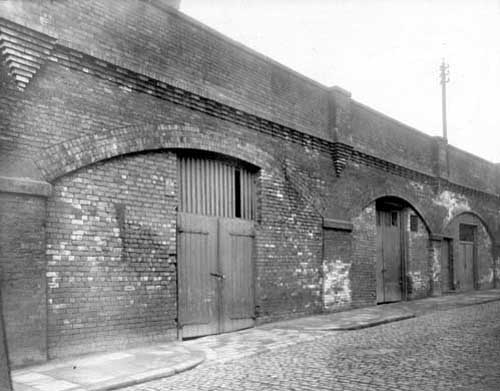
A deep breath and he began to walk across the cobbles. At the top of the embankment a train hurried by in a flurry of steam and smoke. Detective Sergeant Urban Raven put his hand on the doorknob of the workshop under the railway arch, paused for a fraction of a section, then turned it.

He stood, silhouetted by the daylight on Kirkgate.

The gun boomed.


The world was damp. It seemed to cling to him. Rain had fallen every day since the beginning of the month, sometimes heavy, sometimes no more than a mist. But it was always there. Everything seemed brown or grey in the city centre. People moved purposefully heads down. Nobody idled or stared and smiled.

Urban Raven didn’t mind. If they never looked, he’d be perfectly happy. His face bore the thick scars and shiny skin of plastic surgery. In France, October 1918, he’d been badly burned when a German shell exploded in a fuel dump. Two decades on and he was still all too aware of the effect he had, the way people glanced at him, then hurriedly turned their heads away. Sometimes he even imagined he saw disgust on his wife’s face. Or it might have been pity. Hard to tell which was worse. It seemed easier to think about work. There was always plenty to do.

War was coming. Chamberlain had claimed he brought them all peace in his time, but everyone knew the truth. All the young men on the police force would go into the services. Everything would fall on the shoulders of old-timers like him, on the policewomen and Specials. The only question was when the axe would fall. Soon, people agreed, soon; it seemed they were holding their breath.

Raven knew about some of the preparations, the amount of re-armament, civil servants preparing for a flood of army volunteers. He’d helped with checking the records on aliens around Leeds; come the declaration of hostilities and they’d quietly visit some of them and send them off to internment camps.

But right now, as he walked through Harehills, up Hovingham Avenue to Dorset Road, it all felt a long way off. It might never happen.

He rapped on the door of number seventeen, one more terraced house in a long row of them. Nobody answered. But someone was inside. He felt sure of it; he could feel them there, hiding away until he left.

Raven knocked once more, then went back down the street, glancing over his shoulder. No one had appeared. No twitch on the curtains to show he was being watched.

Easy enough to slip down the ginnel. The wall at the back of the yards was tall enough to hide him. He counted his way along, then placed his hand on the latch of the gate he wanted.

Even before he could press down, someone pulled it open and he was face-to-face with Bert Dawson, watching the man’s jaw drop in astonishment. Collywobbles, that was his nickname. The slightest thing and he’d start shaking with worry.

‘Fancy meeting you here,’ Raven said with a smile. ‘You’re just who I wanted to see.’

‘You should have come to the front door, Sergeant Raven. I was just off to the shop.’ But he was already shaking like an old man.

‘Happen I can save you the trip. We’ll have a cup of tea down at headquarters and you can tell me about those robberies you’ve been on lately. You made off with a nice little haul, by the sound of it.’


The CID office was upstairs in the Central Library, and Raven marched Dawson up the wide tiled steps.

‘You see, Collywobbles, you’re moving up in the world. Getting yourself charged in a place like this, not the local nick. You should be pleased.’

He’d just finished taking the statement when Mortimer popped his head round the door.

‘Have a uniform take him down to the bridewell.’

By the time he reached the office, men were already shrugging into their overcoats and pushing their hats over their eyes.

‘What is it?’

‘Wages robbery,’ Mortimer said. ‘Down at Hope Foundry. Two thieves and a driver. They had a sawn-off shotgun. Fired it. A couple of clerks were hit, one’s in bad shape. They got away, but they’re in a workshop in the railway arches on The Calls.’

‘Are we signing out any weapons?’ DC Noble asked.

‘Already done, lad. We have a trained marksman down there.’
arches

Three of them in the plain black car, Mortimer driving. No bells ringing. Everything quiet. He weaved in and out of the traffic on the Headrow and Vicar Lane, halting by the police roadblock on Harper Street.

‘Are they all still in there?’ Raven asked the sergeant in charge.

‘Witnesses said one of them scarpered as soon as they pulled up. We’ve got a description and we’re hunting for him now. But the shooter’s still inside.

‘What do you want to do, sir?’ Raven asked Mortimer.

‘First of all we’re going to evacuate all those businesses other arches. We don’t want any civilians around if there are people with guns. Take care of it,’ he order the uniformed sergeant. ‘After that, about all we can do is tell them the police are here so they should come out and surrender.’ He lit a cigarette and shrugged. ‘It’s all rather like a gangster film, but I don’t see what choice we have.’

A train rattled along, gathering speed as it left the station and going east. Smuts of soot settled all around them.

‘Do we have any idea how much they took?’

‘Well over a thousand,’ Mortimer answered as he blew out smoke. ‘Hardly pocket money, is it?’ He glanced around. ‘The marksman is upstairs in the warehouse across the street. He’ll be ready if we need him.’

‘Let’s hope we don’t, sir.’ Raven stared at the door. Big and broad for a motor car to fit through. Made of corrugated iron, like the rest of the covering over the arch. Worn and rusted. A tiny window to let in a little light. A thought struck him. ‘Could we cut off their electricity? Do that and it’ll be pitch black in there.’

‘We will if they don’t surrender,’ Mortimer agreed. ‘We’ll get someone down here, just in case.’

A young constable ran up and spoke quietly to Noble. The man frowned.

‘One of the clerks who was shot at the foundry has died. A girl, not even twenty.’

‘They’ll hang for that.’

‘Tell them, sir?’

Mortimer shook his head. ‘Not until they’re out and we have the weapon. They won’t give up otherwise.’

The sergeant dashed up, face red from running. ‘All the other arches are empty, sir.’

Inspector Mortimer picked up a megaphone and began to speak. It made his voice ring around the street. They’d be able to hear him clearly in the arch. A simple offer, a promise of fair treatment if they gave themselves up.

The silence hung heavy when he finished. Nothing from inside.

‘Electricity, sir?’ Raven said after they’d heard no sound for two full minutes.

‘Yes,’ Mortimer replied. He kept his gaze on the arch, finishing one cigarette and replacing it immediately with another.

It didn’t take long. The man was up the pole and back down again in the blink of an eye.

‘It’ll be like the dead of night in there for them,’ he said as he hitched up his leather tool belt and pulled down his cap. ‘You need me for owt else?’


Over the next two hours, Mortimer used the megaphone twice more. But there never any answer from inside.

Raven began to walk, flowing the pavement around the embankment where the old gravestones from the Parish Church burial ground cover the grass. No way out on the other wide. The killers were trapped in there. But not in any hurry to come out.

‘I don’t know about you, sir, but I don’t want to spend the rest of the day here,’ he said.

‘Any good ideas?’ Mortimer asked.

‘March in and drag them out.’

The inspector shook his head. ‘They have a gun and not much to lose right now.’

‘We can take go in. It might take them by surprise.’ He glanced across the street to the marksman waiting in the window, his rifle tight against his shoulder. ‘Just make sure he’s ready.’

‘Are you sure?’

‘What’s the choice, sir?’ Raven said. ‘Go in mob-handed? We risk losing more men that way. If we try to wait them out, they’ll be firing when they open the door. And God knows when that might be.’

‘I can’t order you to do it, Sergeant.’

‘I know, sir. I’m volunteering.’

If they killed him, what would that matter? No more looking at the face in the mirror every morning. No more thinking that his wife couldn’t stand to see him. She’d be able to find herself someone who looked normal.

He liked his job, he enjoyed being a detective. But if this was it…at least he wouldn’t pass the young lads on the street and wonder which of them might end up like him after the next war. And it was coming soon enough…

Mortimer cocked his head, as if he could read all the thoughts in Raven’s head.

‘If that’s what you want.’

‘It is, sir.’


A deep breath and he began to walk across the cobbles. A train crossed overhead in a flurry of steam and smoke. Detective Sergeant Urban Raven put his hand on the doorknob of the workshop under the railway arch, paused for a fraction of a section, then turned it.

He stood, silhouetted by the light on Kirkgate.

The gun boomed.

A pause, then it fired again.


The smell of cordite. Thick smoke that made him cough. His ears rang; he couldn’t hear a thing.

But he wasn’t hit. No wounds at all.

As the air began to clear, he could see them. A pair of young men in cheap, flashy suits, gaudy Prince of Wales checks. They were lying on the floor, sprawled on their back and staring into eternity. They shotgun lay between them.

Christ, he thought. He’d expected the worst, but not that.

Christ.

‘It’s me,’ he called. ‘I’m coming out, Everything’s safe in here.’

The Dead on Leave is available in paperback and as an ebook.

The Dead on Leave (1)

The Character Of Leeds

Last Saturday I was invited to give a talk to  the Family History Section of the Yorkshire Archaeological & Historical Society on Leeds as a character. Something to set me thinking about this place I love and how to define and describe it. I made plenty of notes, and soon very away from them.

But this is a more condensed and controlled version…

A couple of reviewers suggested that if you cut me open, the words Leeds would run through me like Blackpool through a stick of rock. I’m not suggesting anyone does that, of course, but I think it does sum up to an extent how I feel about the damned, bloody place.

Leeds is a character in my novels. A shifting one, from 1730 to 1957, as the town’s grown and grown, swallowing up more ground than anyone could have imagined.

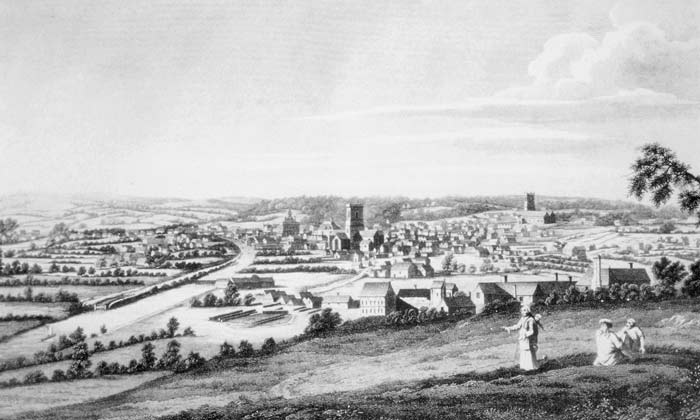
Celia Fiennes (1698), Daniel Defoe (1720), Thomas Gent (1733), Richard Pococke (1750) and others throughout the 18th century praised Leeds for its buildings and its market.

That Leeds has a lovely aspect. Take a look at the prospects drawn from Cavalier Hill or across the river, and we’re genteel and beautiful. It wasn’t, of course; you simply didn’t see the poor.

1715prospect

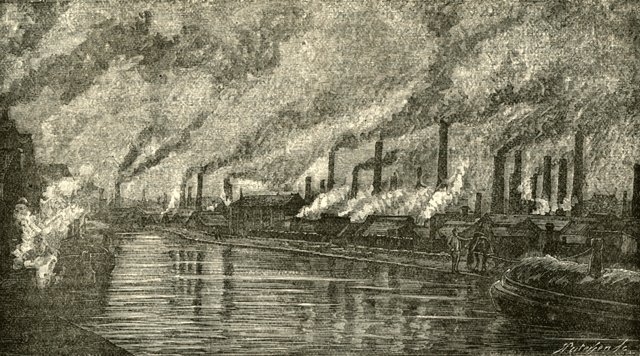
Yet it’s the results of the industrial revolution that have defined Leeds, where we really start to take on our character and identity. Forged it, if you like. Bean Ing, Temple Mill, the Round foundry. Perhaps it’s no coincidence that the most Yorkshire of sayings is ‘where there’s muck, there’s brass.’

In 1828 a German nobleman, described “a transparent cloud of smoke was diffused over the whole space…a hundred hot fires shot upwards into the sky and as many towering chimneys poured forth columns of black smoke” over Leeds.

10 years later, Barclay Fox noted “a vast dingy canopy formed by the impure exhalation of a hundred furnaces. It sits on the town like an everlasting incubus, shutting out the light of heaven and the breath of summer. I pity the poor denizens. London is a joke to it. Our inn was consistent with its locality; one doesn’t look for a clean floor in a colliery or a decent hotel in Leeds.”

leeds late c19

And just this year a WHO report noted that people in Leeds endure worse levels of air pollution than many parts of the country, including London.

Engels, Dickens, and many others saw the dirt and human misery in Leeds. It was hardly a secret.

1842 Report of Robert Baker, town surgeon, after the cholera epidemic. In Boot and Shoe Yard, the commissioners removed 75 cartloads of manure from the yard. Human excrement. The houses here were reputed to pay the best annual interest of any cottage property in the borough.

Yet there are plenty of beautiful architectural examples of Victorian wealth and civic buildings. The Town Hall, the Corn Exchange, the Pearl Assurance building and many more. Leeds is a dichotomy.

We might not have cartloads of manure sitting in the ginnels any more. Maybe we don’t have the pea-souper fogs and our shirt collars aren’t black by the time we get home from work, but Leeds is a dirty as it was 150 years ago.  We have a different kind of pollution. Most of the industries have long gone. We build very little now. But we transport, often ourselves, to get to a job that sells things or moves it, or is involved in digital business. But the bad air has the same effect. The hangover of the dirty old town won’t disperse. The difference is that the powers that be have put their eggs in tow baskets – digital and retail.

There is continuity, though. So many of the old poor neighbourhoods remain the new poor neighbourhoods, the donut of despair that surrounds the city centre. Some don’t really exist any more, of course. We don’t have the Leylands and Sheepscar is all warehouses now. But you walk on those streets and you can hear the faint echoes of the people who made their lives there, in English, or the Irish accent of the Bank, or the Yiddish outside the corner shop on Copenhagen Street.

Buildings create a place, but it’s the people who give it character.

While we remember the great and the good, the Thoresbys, the Gotts, the Marshalls and Murrays, it’s the ones without memorials or their names in the history books who really made Leeds. They worked the machines and the looms, they built those grand places on Park Row. People like that are where I find my character of Leeds.

When I look at the city, I see it in layers that build one up the other. Zara at the top of Kirkgate? Take away that building and what was there before and before and you reach the White Swan Inn and the gaol where Richard Nottingham – a real person, not just my creation – was constable. The strange thing is that while virtually every building would be alien to him, his feet would readily find their way around a number of the streets between the Headrow and the river. That layout hasn’t changed a bit. But it might be the only thing that’s remained the same.

In many ways, our history began, not with the founding of Briggate or a settlement growing up around the church on Kirkgate, but with the opening of Bean Ing Mill. That’s when people began pouring in. We’re children of the industrial revolution. Whatever history we had remade itself in the machine age. It’s probably one reason why Leeds has very few folk tales. There’s Jenny White’s Hole, but even that seems 19th century, and the Town Hall lions – the same. About the only old one isn’t even a tale, more a little joke that John Harrison, the merchant and benefactor, loved cats so much that when he had his house built on Briggate, at the corner of what’s not Duncan Street, he had holes cut in all the interior doors so the cats could move around freely.

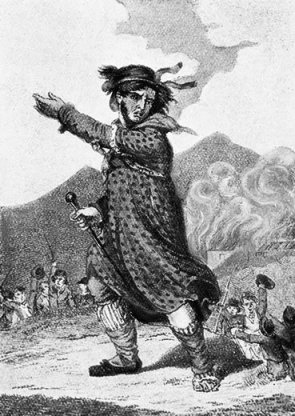
That said, there is one small story, not a folk tale, that someone typifies Leeds to me. In 1812, with corn prices high, there was a riot during the market in on Briggate to protest the prices ordinary folk had to pay in order to eat. It was led by a figure named Lady Ludd – the Luddites or machine breakers were feared working-class figures back then.

lady ludd

Now, Lady Ludd might well have been a man in a frock and boots and rouge. Or it might actually have been a woman. The rumours still persist that it was either radical bookseller James Mann or his wife Alice. It doesn’t matter either way, although I do like the idea of a man in bad drag leading a rioting mob. It does my heart good.

We were bolshie long before the word was invented. Leeds was a hotbed of radicalism – pretty much from the start of industrialisation. The Northern Star was published here, we were important in the history of Chartism. From the 10-hour act to the later part of the century when Isabella Ford and Tom Maguire worked with unions to get better pay and eight-hour days, Leeds people have stood up for their rights.

We love a good riot, even over dripping. When Mosley brought his fascists to town, 30,000 Leeds people went out to Holbeck Moor to let him know he wasn’t welcome. We stand up and be counted and we’ll make fun of and humiliate those who get above themselves. Humour has long been a British weapon, but round here we’ve refined it into a deadly one.

I’m lucky. The factor that my writing covers more than 200 years in Leeds gives me the chance to look at it in different eras. Of course, you could ask why I set most of my books in Leeds. To me, the answer is simple. I grew up here, I moved back here. I know the streets, I’ve walked them, I know how they feel under the soles of my shoes. I know how all the pieces fit together. I understand the people, I don’t have to imagine their voices, I can hear them in my ear.

Leeds History – The Ice Fair

After Beyond Guardian Leeds shut up shop last month, I promised I’d keep going with a little Leeds history. Being a man of my word, here’s January’s edition.

We’ve been lucky in our winters lately. Some snow and cold last winter, but nothing like those during history. And if your parents or grandparents have ever said how bad 1963 or 1947 was, even they don’t know how bad winter can be.

The tail end of the 17th century was a little ice age in Britain. The winters were truly brutal and cold. In Leeds, the winter of 1683/84 was the real one for the record books. It was the year the River Aire froze.

It didn’t simply freeze, the ice was thick enough and lasted long enough to hold an ice fair on it. Stalls, markets, hot foods – and probably hot mulled wine – were erected on the ice, and most of the population, which would have been around 3,000, came to enjoy themselves. In all likelihood the Town Waits or musicians would have played at times and dignitaries been on show.

There was no river trade at this time. It was truly impassable, so the vessels that would have moved goods all the wall to Hull couldn’t penetrate. It’s almost certain that the cloth market would have been suspended, as the weavers would have found the roads impassable from their outlying villages. Grand and interesting it might have been, but it also meant that Leeds ground to a halt.

How far did the ice extend? We’ll never know for sure, but Leeds historian Ralph Thoresby recounted that he and a friend strode on to the ice at the mills below the Parish Church at the bottom of Kirkgate, then walked along the ice under Leeds Bridge and all the way to the Upper Dam, which is more or less where the railway station is today.

While ice fairs became almost annual events for a few years down in London as the Thames froze in this period, this is the only year Leeds was ever hit so hard. So, no matter what January or February do, just remember that it could be a great deal worse.