A Week Of Big News – Literally

Definitely been quite a week for me, Tom and Annabelle, and Rusted Souls. The first part I’ve known for a little while, but had to wait until it was published.

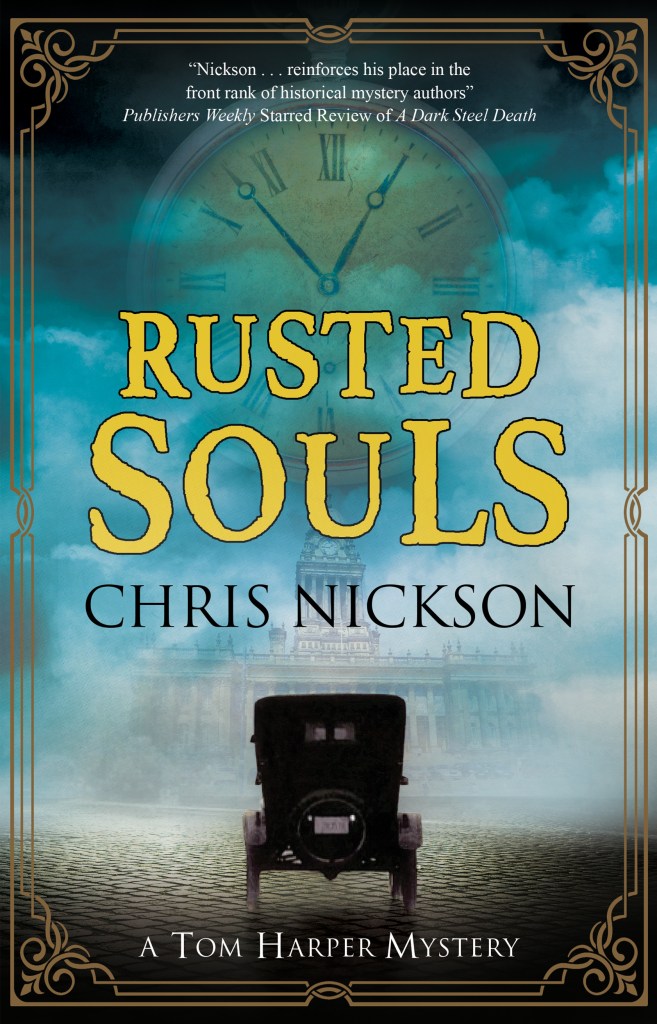
Booklist, one of the big US trade magazines, put out its review of Rusted Souls. Both Publishers Weekly and Kirkus Reviews had given it starred reviews – could it do the treble? Not quite, although it’s everything but. How about this?

“Nickson’s excellent historical police procedural shows what
policing was like before computers, surveillance cameras, and national crime databases, and
while readers may find the pacing slow in the first part of the story, they will soon be utterly
gripped by a riveting, very human, very heartbreaking story with suspense, fast-paced action,
vivid characters, and an unexpected tearjerker of an ending in this last book of Nickson’s
magnificent Tom Harper series.”

Wow, right?

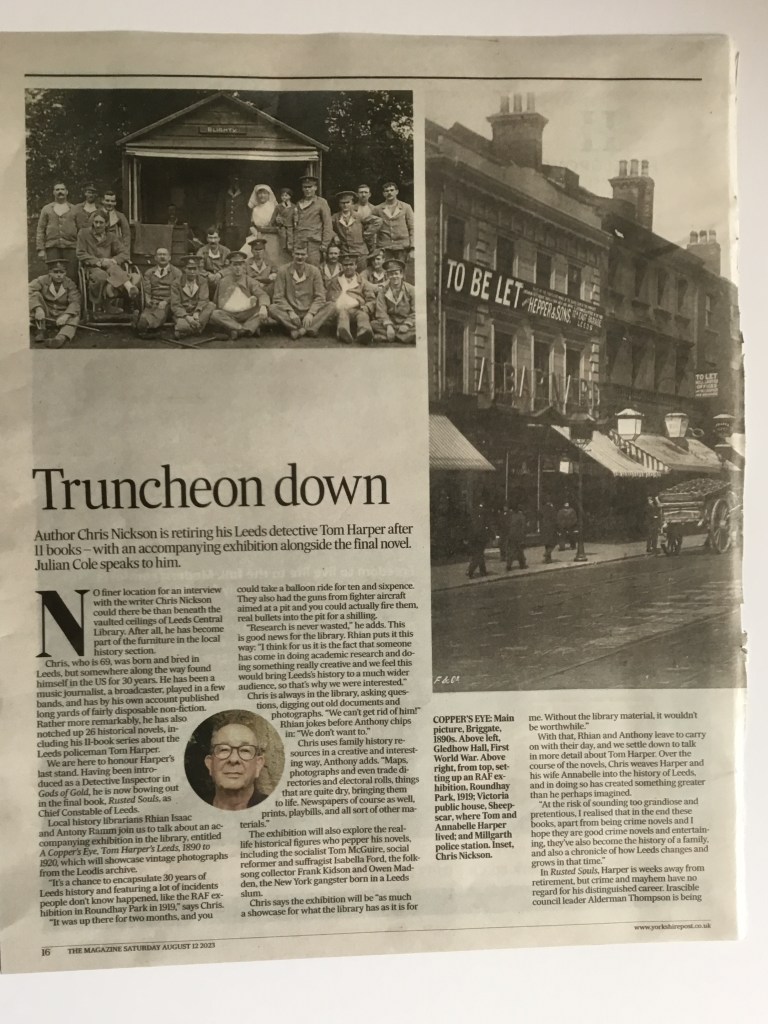
That’s the kind of thing to make a heart sing. But then, on Saturday, the Yorkshire Post published a two-page feature on me, Rusted Souls, the Tom Hraper series, and the upcoming exhibition I’m preparing based on the books, called A Copper’s Eye: Tom Harper’s Leeds, 1890-1920. Quite something.

Don’t forget that Rusted Souls is out next month (but shops are selling it already). If you can afford it, I’d greatly appreciate you buying a hardback or ebook of it. If not, your library will gladly order it it for you.

Thank you – and I’m still over the moon.

The Week Of Wonders

It’s been quite a week – well, a week and a half, really. Today I’m just going to stop and catch my breath, because I feel I’ve been going full tilt.

It all began with my publisher sending me the review for Rusted Souls from Publishers Weekly, one of the big US literary trades. A good review in the trades can certainly boost sales. So I’d been waiting nervous, even though the book isn’t out until September 5. And…it was a starred review. What I’d been dreaming and crossing my fingers to have.

“It all culminates in a knockout conclusion that showcases Nickson’s unique blend of intricate plotting and well-rounded character development.”

Wow.

Then a meeting with Leeds Libraries to finalize details for the exhibition A Copper’s Eye: Tom Harper’s Leeds, 1890-1920. It’s going to run in the Family History Library at Leeds Central Library from September 25 to October 7, with photos from the Leodis archive, artefacts and more to illustrate the real incidents and people from the books. The event will have a few guests to spotlight items, plus a recorded song by Jennifer Reid (Gallows Pole), who’s set a poem by Leeds socialist politician Tom Maguire to music.

Then another review from the US trades, Kirkus Reviews. I was overwhelmed when they gave it a starred review, sating “The 11th and final installment of Nickson’s Tom Harper series ties up all the loose ends and breaks your heart…an excellent procedural paints a painfully accurate portrait of dealing with dementia.”

I was floating – I’m sure you can imagine.

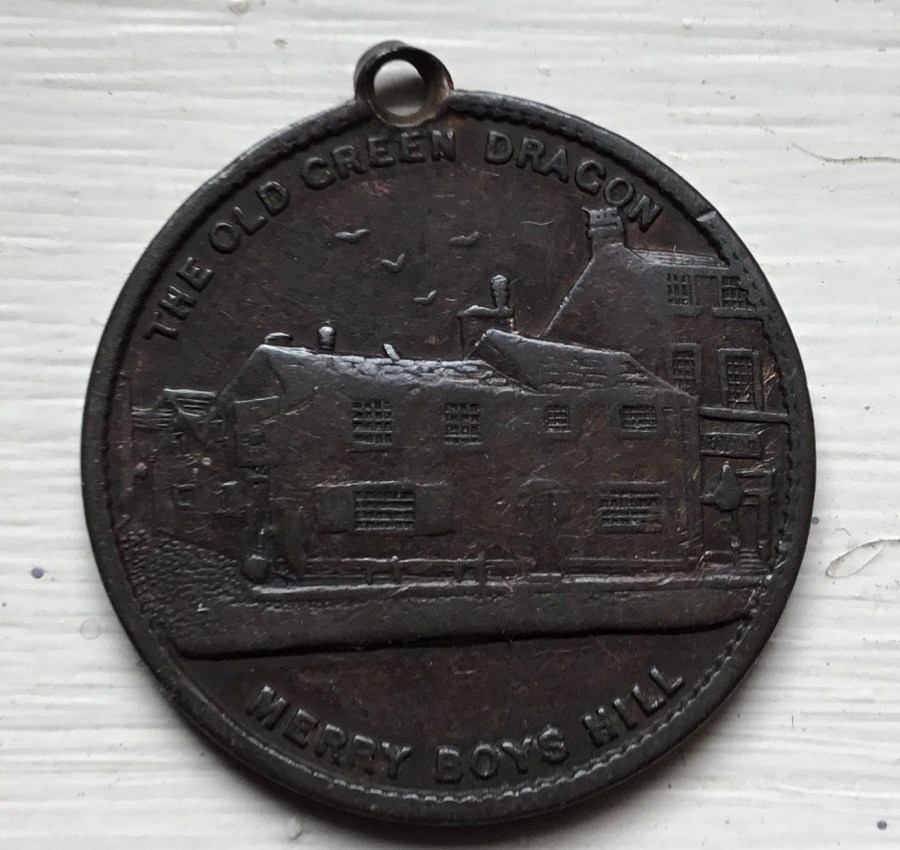
Then, on eBay, I discovered a token for the Green Dragon Inn, in Leeds. In the Simon Westow novels, Jane lives in a cottage with Mrs Shields located behind Green Dragon Yard. What could I do? I bought it.

The real highlight came last Friday. I’d discovered online that a former English teacher of mine would be visiting my old school, and an old classmate happened to have his email. The teacher is someone I’ve long wanted to thank, because he was the first to encourage my writing. I emailed, and he remembered me. Not only that, he told me that way back then, he’d sent some of my poems to a New Writing programme on Radio Leeds, although nothing ever happened.

By the time we briefly met on Friday at the school, he was halfway through the second of my books that he’d read, and I gave him two more. And finally I had a chance to say thank you to a teacher who helped change my life.

Finally, yesterday I was interviewed for a piece about Rusted Souls, the Tom Harper series and the exhibition for an article to appear in a few weeks in the Yorkshire Post. Details to follow…

You can pre-order Rusted Souls in hardback – here is the cheapest price, with free UK postage. If you haven’t started the series yet, the first two books, Gods of Gold and Two Bronze Pennies, are under £3 on Kindle in the UK.

Happy Holidays

It’s coming, arriving Sunday. I’m not one to celebrate Christmas, although I’m looking forward to reading the new Maggie O’Farrell book I’ve been given – I loved Hamnet – and I know I’ll enjoy the peace and quiet. No venturing into Leeds for the sales or any of that madness. I have what I need, thank you.

I’d like to thank you all for sticking with me and hopefully enjoying the books. Honestly, it means everything. I love it when I hear from people to say they’ve read this or that or a book has made them really feel Leeds. That’s success.

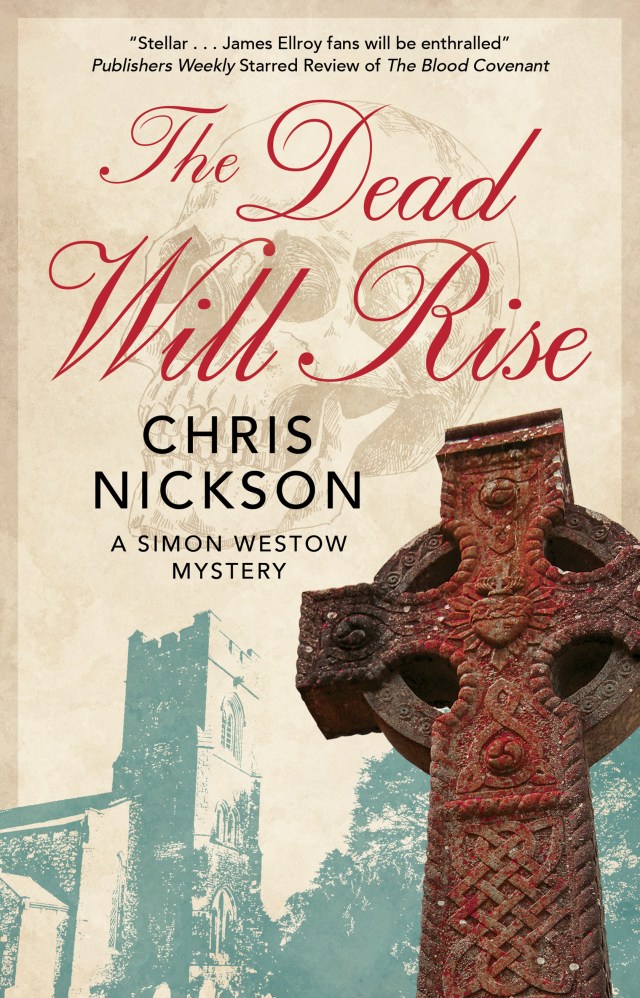
There’s more to come in 2023, a Simon Westow in March and the final Tom Harper in the autumn. Already had the first US review for the Westow, The Dead Will Rise, and it’s a starred review from Publishers Weekly, one of the important trade magazines.

I wish you all happy holidays, whatever you celebrate or don’t celebrate, and a happy and healthy 2023. It has to be better than the last few years, doesn’t it?

And thank you again.

The Dead Will Rise – First Review

I hadn’t intended to post anything this week, but…

The first review for The Dead Will Rise is set to appear. The book isn’t out until March, but the US trade magazines get an early start, and Publishers Weekly is one of the biggest.

Anyway, rocked on my heels to get it so soon, but more to have a starred review. The fourth star in a row for Simon Westow, Jane and Rosie. Called “excellent fifth whodunit in the series. “Nickson keeps the story line intriguing despite the focus on a crime other than murder as he further develops his leads,” the reviwer says, calling the book a “gritty and surprise-filled mystery.”

Wow. Just wow. That’s possibly the best Christmas present I could receive.

Oh – I’ve almost finished the draft on the next one, too, tentative titled The Scream Of Sins.

Richard Nottingham…For Christmas

As we all know, that time is coming in a few weeks. Not my favourite season, but it’s going to happen regardless.

However, it does mean presents and books make great gifts. So please forgive a few weeks of shameless self-promotion ahead…

For the last few years I’ve focused to the Tom Harper and Simon Westow books – I’m working on the sixth book with Simon and Jane, and the big news is that my publisher has accept Rusted Souls, the 11th and final book in the Tom Harper series. It’ll be out next autumn.

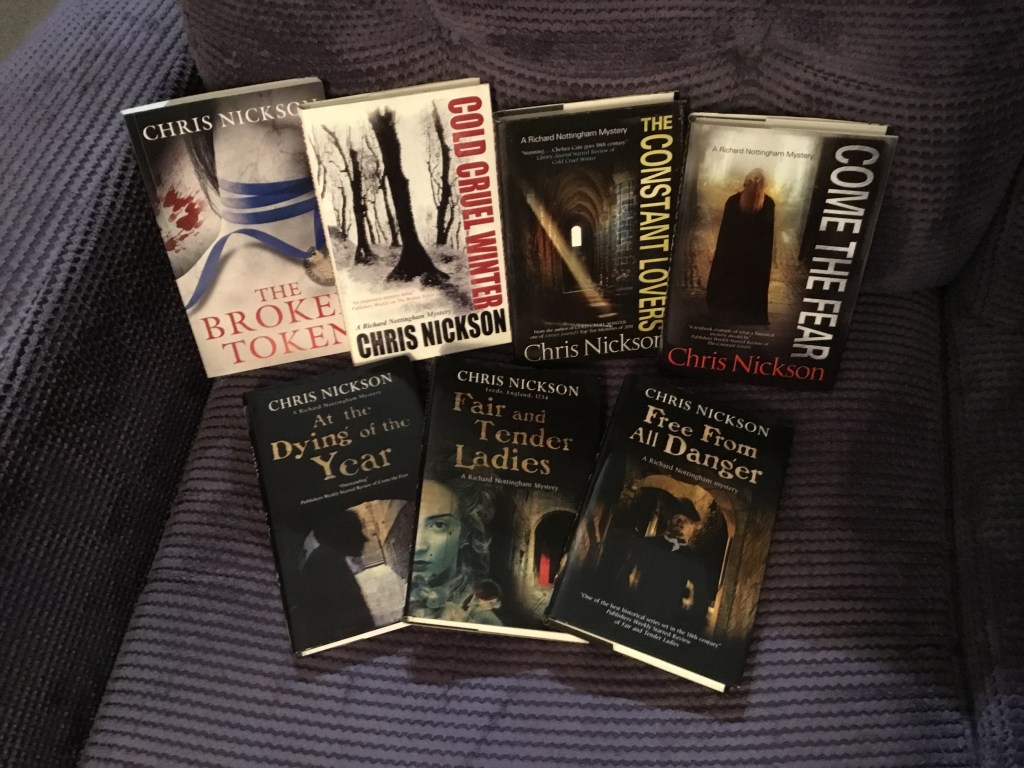
Before those, though, was another series, the first of my published novels, with Richard Nottingham, Constable of Leeds, as the main character. His family were important in the books, especially his daughter Emily, and also his deputy, John Sedgwick.

They’re set in Leeds, but in the 1730s, just as the town is grown wealthy off the wool trade. Well, the merchants are. For ordinary people, life is always a battle. It’s a small place, around 7,000 people, dominated by Kirkgate and Briggate.

Richard lives on Marsh Lane, crossing Timble Bridge, down near the Parish Church, to come to the jail. That’s by the top of Kirkgate, next to the White Swan on the corner of Briggate.

It was, perhaps, an unusual setting for a series of crime novels. But Leeds is my home. I feel it and I wanted to bring the place to life, to make readers feel they’d walked the streets, heard the voice, smell all the stink of life. All in the framework of a crime novel.

What many don’t know is that Richard Nottingham was real. He was the constable from 1717-1737, although it would be a largely ceremonial role in reality. He was a somewhat elusive figure in life. I spent time trying to track him down and wrote about it here – there’s just enough to be fascinating and make me want to known much more.

There are seven books in the series. Each one of them received a starred review from Publishers Weekly, which I’m told is very rare. Although virtually all are out of print in hardback, most are available in paperback. All are there as ebooks in every format. The Broken Token is also an audiobook (and one of the Independent on Sunday’s Audiobooks of the Year for 2012).

I have a very soft spot for Richard, and not just because he helped me into this fiction business. He’s a genuinely good man, someone I could wish to be. People still occasionally ask if I’ll write another with him. I won’t. At the end of Free From All Danger I left him happy. He deserves that.

If you haven’t tried him, please take a look. The ebooks are pretty cheap, and they’ll fill a dark winter evening. For those who are squeezed…ask the library; they should have them in stock to borrow.

A Journey Through The Past And Back Again

Sometimes life holds out a little magic, and all you have to do is grab it.

Looking back into my family history, I’d reached the late 1700s, and I seemed to be stuck there. Digging into a different family history site recently, I struck lucky. Suddenly I was tumbling back and back through time. All the way to 1545, in fact. 250 years in a day.  It felt like being the Doctor, but without the life-threatening adventures, Daleks, or sonic screwdriver.

I discovered that my family has in roots in Westow. I’d never heard of it before, but it’s a tiny village (current population 339) near Kirkham Priory, and five miles from Malton. 1545 was the first Nickson birth recorded there, but keeping births, marriages, and deaths in Parish Registers only became law in 1538; they could well have been there for centuries before that.

John Nickson was the first, then his son Thomas, born in 1587, and his son Thomas, who arrived in 1617. William came in 1660, Richard in 1692, another Richard in 1729, And then Isaac in 1752. One of his children – had had seven – was yet one more Isaac, who came squalling into the world in 1785, hanging around until 1857.

That Isaac is pivotal to the family tale. He certainly broke away from Westow. Around 1720 he ran an inn called the Golden Lion in Malton, five miles from home, and somewhere around the middle of the decade decided to try his luck in Leeds, taking his wife and children with him. That’s how we came to this town.

The descendants remained. Isaac himself went back to Westow to die in 1857, so the pull of the place and his forbears must have been strong. Or perhaps he’d simply had enough of life in a noisy, dirty town that was growing by the day, with its dark Satanic mills, industry, and crime.

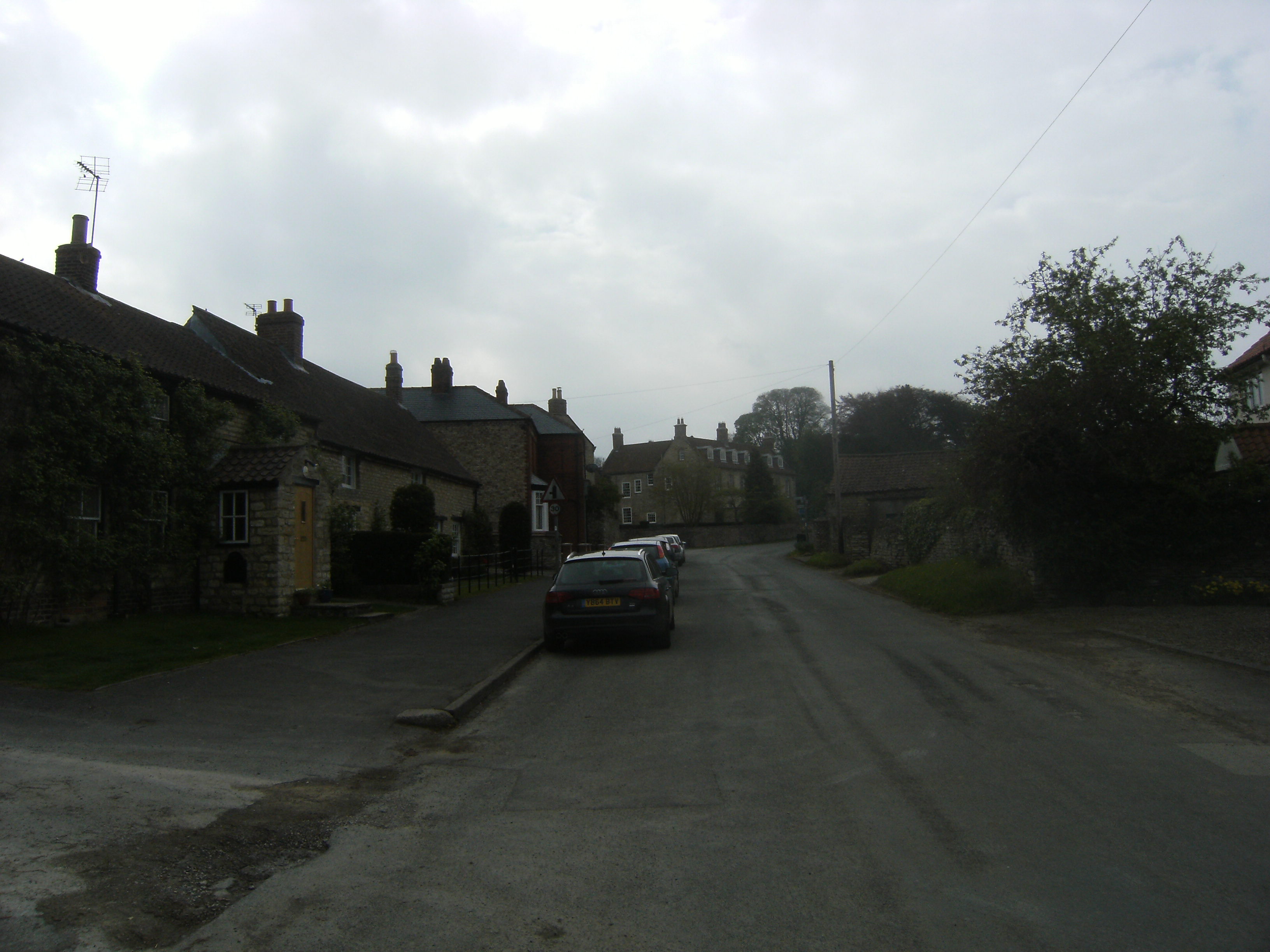
On Saturday I visited Westow. A pilgrimage of sorts, if you like. I needed to see the place, to sense if there was any atavistic tug. It’s barely a village, really more a hamlet. There’s a pub, but no shop. Some old buildings along the main street, which is pretty much the only street. It’s peaceful, bucolic, surround by fields, deep in the heart of arable farming country.
DSCF1887

A number of the places look as if they were probably standing when Isaac struck out for Malton. Did he live in any of these houses? There’s no way to tell, and ultimately it doesn’t matter. Too many other generations of stories will have filled the stones since then.

And there’s an old hall, of course, as there should be in every village. Safe to say my family never lived there.

DSCF1889

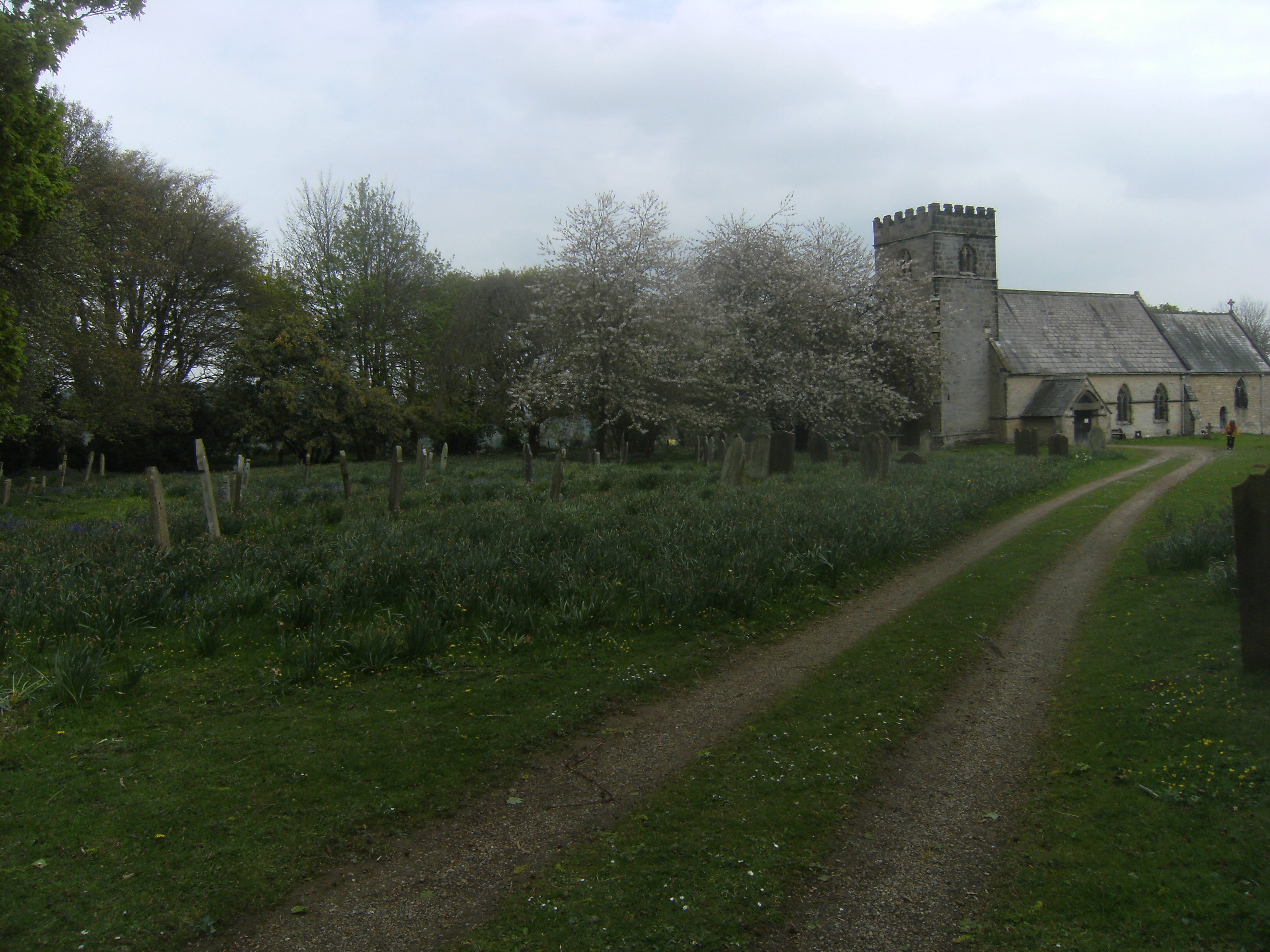
The church is about a mile away, equidistant between the two villages it serves. The old Norman tower still stands, I’ve read, but the rest is newer, rebuilt from the original stones. It was locked, but what I wanted was outside: the graveyard.
DSCF1891

It was always hopeful thinking to imagine I’d see a Nickson headstone. Maybe Isaac’s after he returned to die. But no, not a single mention of Nickson. Yet, that was fine, I realised as we drove away. I’d seen the place, I’d walked some of the same earth they did all those centuries before. Now I knew.

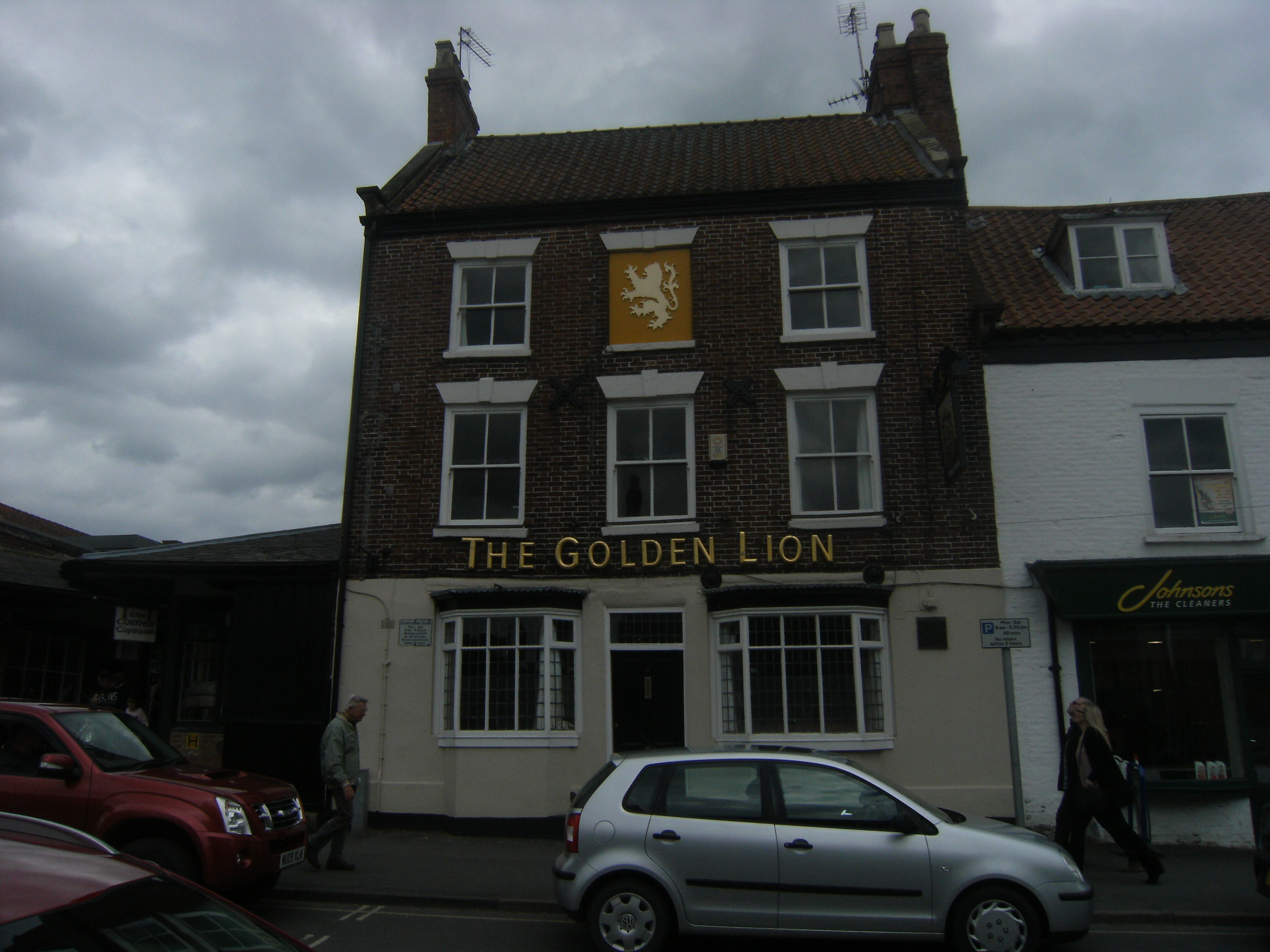
From there, to Malton. The Golden Lion still stands in the marketplace. It’s been empty for a few years, apparently, but still in good condition. I stood across the street as I took a picture and looked up at the two floors above the bar, thinking that Isaac and his family lived and slept there. They had joy, they had pain there. That single upward glance seemed to cross 200 years in a heartbeat.
DSCF1892

That’s what I try to do as a writer. I try to bring the past alive, to make the people breathe in the here and now. It’s a way to try and commemorate people who would otherwise be unremembered. Many are fictional, of course, but some did live.

Like all writers, I love hearing from readers who enjoy the work, for whom the people who spring out of my head seem real (so please keep the emails coming). And good reviews are heartening. Two that arrived in the last week for On Copper Street, out in America as an ebook on June 1) made me happy. Booklist gave it a starred review and call the series “top-notch,” writing: “the story features meticulously researched period detail; a strong sense of the social, economic, and political situation at the time.” Publishers Weekly noted: “Nickson successfully creates an intimacy between the characters and the reader by showing, with each successive book, how his protagonists grow and change as they face life’s milestones: marriage, children, promotions at work, and the death of dear friends.” And past is place as well as people. The Fully Booked blog wrote: “When the sad time comes for Chris Nickson to shuffle off this mortal coil you will probably find the word ‘Leeds’ engraved on his heart. His knowledge of the city encompasses every nook and cranny, every church, chapel and graveyard, every legend, every tall tale, every dark hour and every moment of joy.” It’s not the first time someone has said I have Leeds in my core. But it’s probably true. I came back here after almost 40 years away. Isaac Nickson had his Westow, the place that called him home. I have Leeds.

Yes, those reviews make me feel I’m doing something right in my writing.

As I said at the start, sometimes life holds out a little magic.

Asking Your Indulgence

Forgive me. I hope you’ll indulge me for a minute or two. On Friday my publisher forward me a review of my new novel, Fair and Tender Ladies, from Publishers Weekly, a journal aimed at the publishing trade, including most bookseller and libraries, in the US.

The review itself (more of that at the end) was gratifying. But what lifted my heart more than anything was the fact that all six of the Richard Nottingham novels have received starred reviews there. I’d never expected that. No writer does. We sit at the computer and do our best, day after day and hope someone gets it. That’s all we can do.

I was lucky. Finally Lynne Patrick, then the publisher of Crème de la Crime and now my editor and friend, liked The Broken Token and too a chance of putting it out. Then Severn House, which bought the imprint, kept publishing the books.

Now I have this body of work, and these reviews. I sometimes used to scoff at people who were humbled by praise. Not anymore. I feel humbled myself and not quite sure how it all happened.

Oh, the review…

“Effective portrayals of brutality and genuine emotion and loss distinguish Nickson’s well-crafted sixth Richard Nottingham novel (after 2013’s At the Dying of the Year). In 1734, Nottingham, Constable of the City of Leeds, carries out his duties despite his wife’s devastating death. His hopes for fulfillment now lie with his grown daughter, Emily, who has opened her own school for the poor, and who is seriously involved with Rob Lister, one of Nottingham’s assistants. He fears for Emily’s safety after vandals attack her school. Meanwhile, several people die unnaturally, including Jem Carter, a man who was searching for his 16-year-old sister. In addition, a former crime lord returns to town, and Nottingham again has to navigate a prickly relationship with his bosses. The author’s willingness to shake up the status quo marks this as one of the best historical series set in the first half of the 18th century.”

Thank you.