A Brand New Annabelle Harper Christmas Tale

It’s just over a week until Christmas 2025, and the spirit moved me to write a new Annabelle Harper Christmas story. Yes, it’s unashamedly sentimental, but this is the time of year for that. I hope you like seeing Annabelle again, and enjoy her outing.
Leeds, December 1905

‘Give over,’ Annabelle Harper said. ‘The brewery knows better than that.’

‘That’s what the drayman told me when he delivered the beer this morning,’ Dan the barman told her. ‘Swore up and down it was gospel. They’ve got some kind of problem, so they’ll be limited in how many barrels they can let us have between now and early January.’

‘Right,’ she replied. Right.’ Her face was set. She ran the Victoria public house at the bottom of Roundhay Road. To be told just a week before Christmas that she wouldn’t have her proper order when the place was going to be full every night was the last thing she needed.

A glance through the window showed the rain outside was easing. At least that was something; she wouldn’t end up soaked on her way to the brewery. Skirt just short enough not to brush against the pavement. A coat, hat, sturdy button boots and an umbrella and she set of down Sheepscar Street to the brewery. It wasn’t far, just enough distance to work up a temper. Annabelle was a good customer, sold a lot of their beer and expected better treatment, especially at this time of year.

She was so wrapped up, planning what she was going to say, she almost passed the woman hunched in the doorway with a baby against her chest and another little one huddled against her.

‘Can you spare a penny or two, please, missus?’ She had a cracked voice, pleading, face chapped red by the chill in the air.

Annabelle squatted by her; a single glance was enough to tell her everything.

‘How long have you been sleeping out here?’

‘Last night was the second night.’ The woman turned her head away as if she was ashamed.

‘What happened?’

‘Me husband took off with his fancy piece,’ she replied in a mix of sorrow and anger. ‘Without his wage, I couldn’t pay the rent.’ A helpless shrug. ‘The landlord put us.’

Those children needed to be indoors, somewhere away from the cold. Warmer clothes, too, and some hot food in their bellies. The woman…she was downtrodden, as if all her hope had fled with he husband.

‘Do you have any family?’

‘No, missus, not any more. My mam and dad died, and me brother went off with the army and got hisself killed by the Boers down in South Africa. A penny of two would help if you can spare it, missus. I can get them something.’

The young girl at the woman’s side was silent, wide eyes staring up at her. Annabelle knew she could send them up to the workhouse. She was a Poor Law Guardian; they’d find a place on her say-so. But she knew what would happen. The girl would be separated from her mother. No, that wasn’t the solution.

She dug into her bag and took out a notebook and pencil to write a few lines. She ripped out the page and put it in the woman’s icy fingers.

‘Do you know North Street?’ It was close, no more than five minutes’ walk away.

‘Yes, missus. Course’ Her eyes narrowed, suddenly suspicious. ‘Why?’

‘You go to the address on there and talk to Mrs Wainwright. She’ll fix the three of you up with a room. Full board, too.’

‘But I don’t have any money.’

‘All taken care of for the next three months,’ Annabelle told her with a smile. She produced two one-pound notes. ‘Take those and get some clothes for the kiddies. For youself, too, you must be perished.’

‘I can’t-’ she protested.

‘Yes, you can. You’d have taken a couple of pennies. This isn’t much different.’

‘But I-’ The woman stopped to wipe away the tears. ‘You’re an angel, missus.’

Annabelle laughed. ‘More like a devil if you knew me. Now, you get yourself over to Mrs Wainwright and warm up.’

‘Thank you. God bless you, missus.’

‘Don’t,’ Annabelle told her. ‘Have yourselves a good Christmas.’

She strode off, drawing her shoulders back, ready to do battle at the brewery. As she walked, she noticed the gaggle of men standing around a metal bin, burning scraps of wood to keep themselves warm and the women outside the pawnbroker’s shop with its three gold balls, clutching clothes and sheets to pledge to keep their families fed during the week. Plenty of poverty in Sheepscar.

She had money. The pub was a little goldmine and her husband was a Detective Chief Superintendent with Leeds City police, making a decent amount. But she couldn’t help everyone. That was why she’d run to be elected as a Guardian, to try and help the poor who were always so vilified.

Not enough, though. It was never enough.

She made a few detours after reading the Riot Act to the owner of the brewery, leaving him red-faced and full of apologies, making promises that she’d receive her proper order.

            Howard Winthrop ran a chemical plant over near Skinner Lane. The place stank like the devil’s cauldron, Annabelle thought as she wrinkled her nose. But the man had a good heart and plenty of brass.

            She only stayed long enough to invite him to a meeting at the Victoria that evening. The same at Hope Foundry on Mabgate, where she felt overwhelmed by the noise of the machines. She was back behind the bar for the dinner rushing, before popping out to the Prince Arthur just up the road, round to the Pointers, no more than a few yards from her door, then the Roscoe up Chapeltown Road, and finally the vicarage at St Cuthbert’s church.

            Eight o’clock and they were all in the living quarters over the pub, chattering until she called the group to order with a spoon tapping across her glass of gin.

            ‘Thank you for coming at such short notice.’ She looked around the faces, making sure she had their attention. ‘I saw something this morning that almost broke my heart. A mother and her two bairns out on the street. We’re supposed to be the richest country in the world and things like that happen all the time.’ She waited for the objections to flower, then continued. ‘I know we can’t change it all. Not us, sitting here.’ That kept them silent ‘But maybe we can make sure some of them are warm and fed on Christmas Day. Presents for the little ones, too. Look at us here, we’ve all got plenty. More than we need.’ She smiled at them. ‘Money’s not going to do us any good when we’re six feet under, is it? What do you think?’

            ‘What do you have in mind?’ Winthrop asked as he helped himself to more whisky from the bottle on the table.

            ‘We all chip in and put on something bang-up.’ Annabelle nodded to the vicar from St Cuthbert’s. ‘I thought we could have it in your church hall.’

            ‘I imagine we could,’ he agreed after a moment. ‘Not on Christmas Day, though.’ He looked thoughtful. ‘Some of the churchwomen’s guild might be able to help.’

            ‘If they can’t, we’ll take care of it themselves.’ She drew a piece of paper from the pocket of her dress. ‘I’ve put together some ideas. See what you think.’

*

‘Thirty,’ said Reverend Winterson with a contented smile. ‘I’d call that a very fair turnout, wouldn’t you, Mrs Harper?’

            ‘Do you think so?’ Annabelle replied doubtfully. ‘There are two or three times that number who could have used the food and the warmth.’ She glanced through the open door to the kitchen where her husband Tom was covered by an apron, arms deep in the sink as he washed the plates, while their daughter Mary dried them. Helping without a complaint, not even a moan.

            ‘Maybe so, but…’ His voice tailed away as if he wasn’t sure what to say. ‘Thirty is still better than one. We made a difference.’

            ‘To a few.’ She’d hoped for a huge turnout. Free food, presents for the children. Surely there were plenty who wanted that. The church had put up posters had all across Sheepscar, up into Harehills and Burmantofts, down through the Leylands. All very earnest and serious. Full of religion. Very worthy, with a promise of prayers and hymns to celebrate the birth of the Lord. The kind of Godly folderol guaranteed to put people off when what they wanted was pleasure, an hour or two of relief from life’s grimness.

            ‘Some people have an unfortunate, prideful attitude to receiving charity,’ the vicar said with a sigh.

            ‘I suppose they do,’ she said thoughtfully. ‘There’s plenty left over. What are you going to do with it?’

            ‘Distribute it to the needy,’ he answered.

            She smiled. ‘Isn’t that what we’ve just being doing?’ she asked kindly. ‘Look, it’s two days until Christmas. Can you arrange to get it all to the Victoria tomorrow?’

            He raised his eyebrows in astonishment. ‘I imagine I can. Why?’

            She grinned. ‘Stop by for your Christmas dinner and you’ll see.’

*

Word of mouth. No time for anything more: a Christmas party at the Victoria. No airs or graces, no mention of needy or charity. Everybody invited to have a good time. And it was in a pub, more familiar and welcoming than a church to many round here. On Christmas Eve she’d bribed her regulars with free drinks to help give the place a thorough clean and hang up colourful paper chains. Jingling John had arrived with a few holly boughs to hang. By evening the public bar looked festive. She didn’t ask where the scrawny Christmas tree in the corner had come from; sometimes it was prudent not to know.

            Christmas morning, she was up early, making sure everything would be ready. The Victoria wouldn’t be open for paying business today. Annabelle had time to eat breakfast and spend half an hour on gifts. Book and notebooks for Mary, and she looked over the moon to receive them, dashing across the room to hug her parents.

            The girl had embroidered handkerchiefs for each of her parents. Decent work, done with love and duty, but the girl would never make a seamstress, her mother thought. Just as well that she had her sights set on other things. Learning to use one of the new typewriters and starting a secretarial agency. One of the modern jobs. She was clever and ambitious; maybe she’d make a success of it.

            Tom had surprised her the smart set of gold earrings she’d had her eye on for months. She’d never said anything, but he’d been a good, observant policeman. It was nigh on impossible to buy for him; in the end she’d scrambled around, settling on a fancy paisley silk scarf from the Grand Pygmalion.

            On the dot of noon, she unlocked the door. Fires had been burning in the hearths for a couple of hours, every room warm and comfortable. Food on the tables. Nothing hot, but ample to fill plenty of bellies. She just had to hope they’d come.

*

Half an hour and the Victoria was full. Someone was thumping out Nellie Dean on the piano, the big song of the year at the music halls, and voices were singing along, some beautiful and soaring, most hopelessly out of tune. Many of them smiling at her and raising their glasses in a toast.

            Annabelle looked around the happy faces and felt a surge of gratitude.

            A proper Christmas party. There, almost hidden in the corner, eating a mince pie, the woman she’d seen on Sheepscar Street. The one who’d inspired all this. Baby suckling with contentment at her breast, the older daughter playing with a rag doll.

            She felt Tom come up behind her and put his arms around her waist.

            ‘They’re enjoying themselves,’ he murmured in her ear.

            ‘So am I,’ she told him with a happy grin. ‘So am I.’

Remember, if you like this, there are 11 novels featuring Tom and Annabelle Harper. There are also two of mine that came out during the year and make great gifts for yourself or people you like. I’d be grateful…what you decide, have a lovely time and a happy and healthy 2026.

To Sheepscar And Beck

Sheepscar Beck, said Ralph Thoresby, the first historian of Leeds, “is the nameless water, that Mr William Harrison, in his description of Britain, (published in the reign of Queen Elizabeth), mentions as running into the Aire, on the north side of Leeds, from Wettlewood (as it is misprinted for Weetwood), This beck proceeds from a small spring up on the moor, a little above Adel, and yet had some time ago [previous to1714], eight mills upon it, in its four miles’ course. The first is that of Adel near unto which is the Roman camp, and the vestigial of the town lately discovered; and the last before its conjunction with the Aire is this at Sheepscar, which above eighty years ago [before 1714] was employed for the grinding of red wood, and making rape oil, then first known in these parts. It was converted into a corn mill in the late times, but upon the Restoration, when the king’s mills recovered their ancient soke, it dwindled into a paper mill, not for imperial, but for that coarse paper called “emporetica”, useful only for chapmen to wrap wares in. It was afterwards made a rape mill again, as it now stands.”

            It’s worth pointing out that Thoresby made an unsuccessful investment in the Sheepscar rape oil mill and lost quite a chunk of his capital.

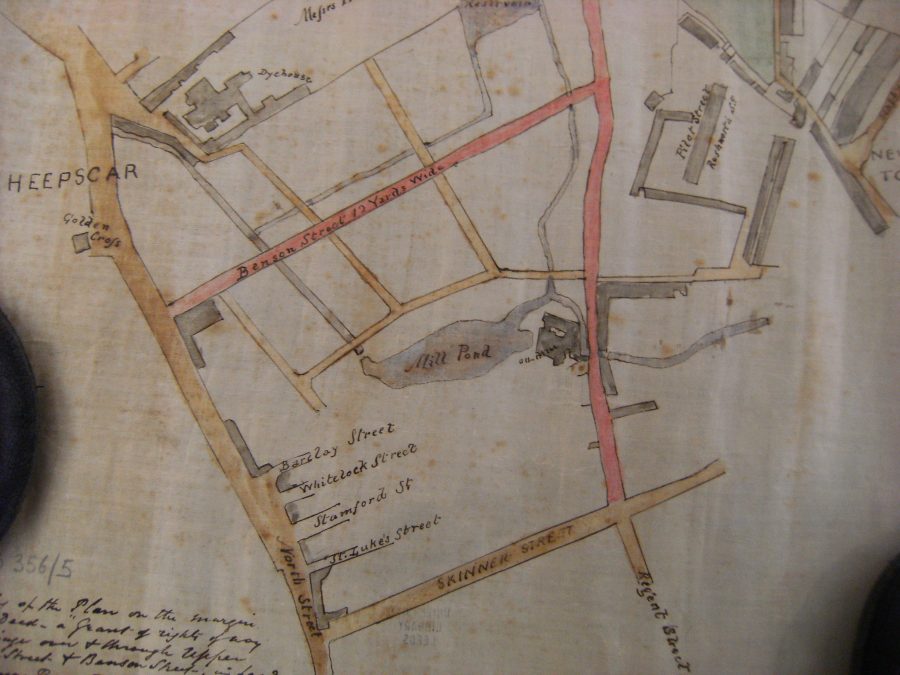
            Sheepscar Beck is actually one of two streams that meet near the bottom of the area (along the way it’s also known as Meanwood Beck on its trail across the area from its proper origin on Ilkley Moor). It comes in the from northwest, while Gipton Beck arrives from the north. It’s most clearly illustrated on the most ancient map of Leeds, created for a court case in the 1570s, where Gipton Beck is mysteriously called Newton Beck (the new New Town for part of the area didn’t appear until later).

            Together, they become Lady Beck, or Timble Beck, going down Mabgate, then through Leeds (Timble Bridge, covered over more than a century ago, crossed the water at the bottom of Kirkgate) to reach the River Aire close to Crown Point Bridge.

Sheepscar Beck on the left, meets Gipton Beck

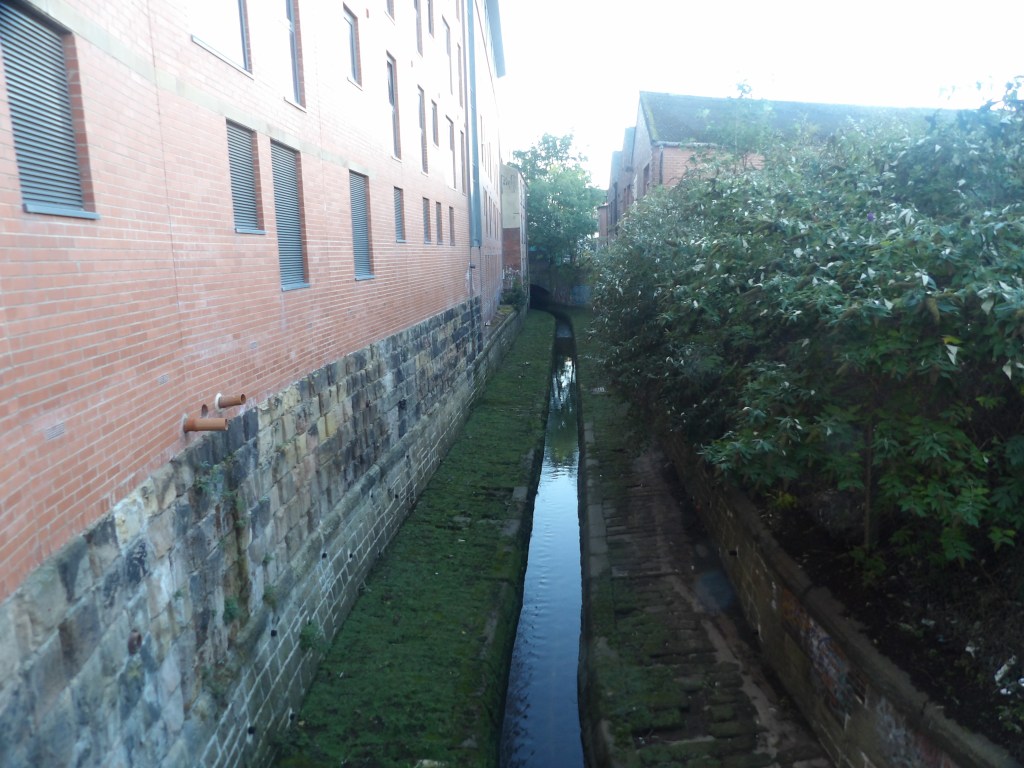
            Early on it ran as free as if had been in the country, but as Leeds expanded, the beck was culverted and largely covered over. However, you can still see a few traces at the bottom of Sheepscar, where the two streams meet and the mill pond would have been, just below Bristol Street.

            It’s also easy to track here and there along Mabgate – a bridge crosses it on Hope Street – before one final glimpse as it vanishes underground, not too far from the Eastgate roundabout.

Going underground

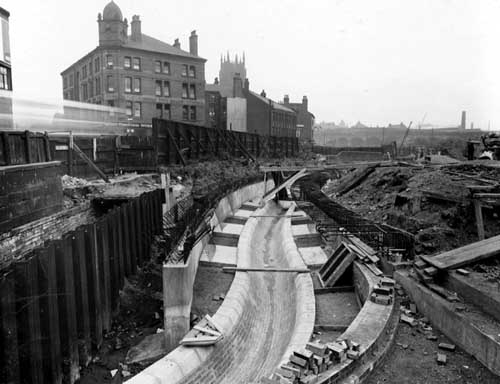
The culverting and covering of Timble Beck was a massive undertaking, as this picture shows.

Where Timble Bridge once stood.

By several names, beck and bridge have featured in any number of my books. It was a totem throughout the Richard Nottingham series, and has played a large role in the Simon Westow books. For the most part, Leeds hasn’t been kind to its own history, treating it as something in the way instead of worth saving.

But the beck, or what few bits you can still see, is history right under your feet. It’s powered mills, it’s flowed through the history of this place. These days it’s greatly diminished, but the role it played in helping Leeds develop, especially Leeds industry, is huge.

Lady Beck/Timble Beck

Since you’ve read this far, can I put in a quick plug for my upcoming book, A Rage Of Souls, which will be published October 7. It’s the eighth and final Simon Westow, every bit as dark and explosive as you could wish. Please ask your library to buy a copy, and you can pre-order it for yourself right here. Thank you and keep Leedsing. If that’s’ not a word, it should be.

Leeds Changes, But It Stays The Same, too

It’s been quite a week for a discombobulated, terrifying world. I’ve done something that grounds me: walking in Leeds and finding some joy and hope in its past and present.

It came as someone in Madison, Wisconsin wrote a blog post about my love of Leeds that says “what makes Nickson’s series stand out is the portrait of the city itself—a place largely off the beaten path for many crime readers—as it progresses from a regional center of the wool and agricultural trade to sprawling industrial boom town bursting with late Victorian optimism. They’re a unique option to read the life of a city through one of its native sons, through the imagined stories of its crimes.”

It came as a surprise, but a gratifying one. You can read it all here.

Sunday took me around what’s left of the Leylands, the area where so many of the Jewish immigrants settled when they first arrived here. Walking along Nile Street, it was easy to imagine the place as it would have been 120 years ago, alive with chatter in Yiddish, the constant buzz of sewing machines making suits in the sweat shops. The smell of baked goods, the unfamiliar foods, adverts in Yiddish. A world alive with ideas and things that people had brought with them. All gone now.

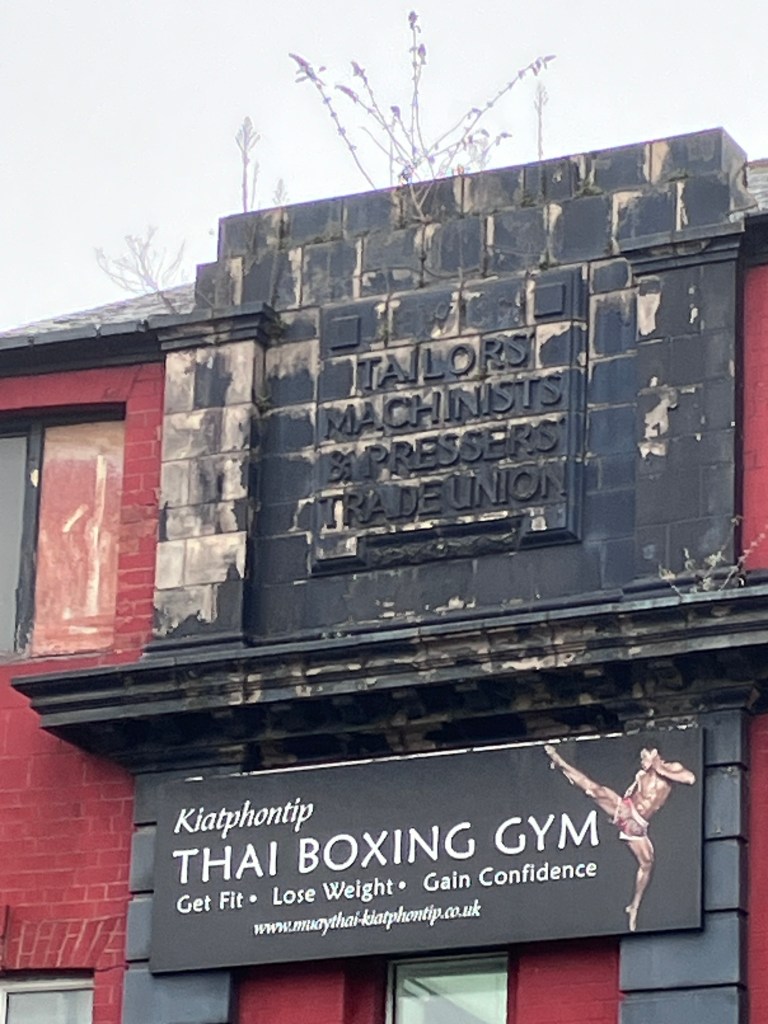
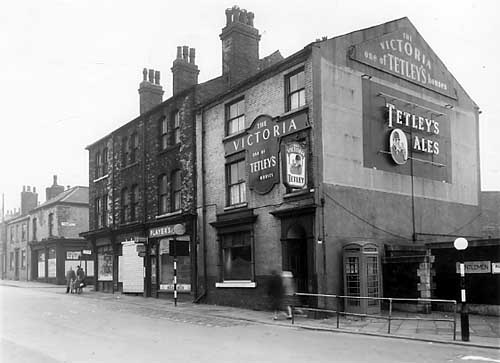
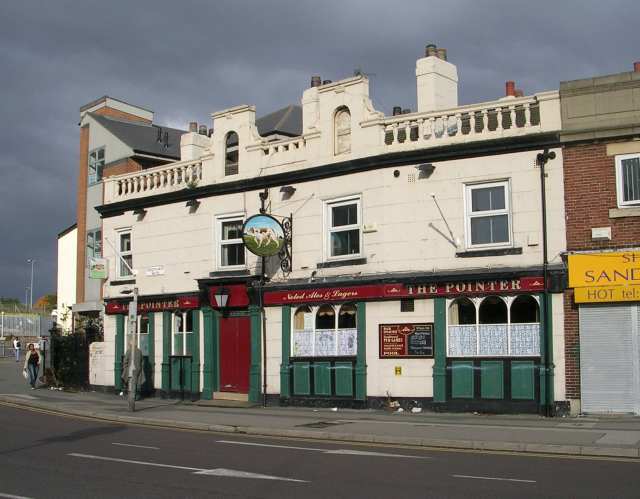
From there, to Sheepscar, another place that’s been mostly gutted. A few things remain, the old Victoria public house, of course, now something completely different. The Pointers in, now a restaurant. The old Newtown cinema on Cross Stamford St., which could hold over 700 people, Next to it, union premises.

Walking by there, I smelled baking on a Sunday morning and found a Middle Eastern supermarket, quite busy (although no houses are close). All kinds of halva in the bakery, plus so much more. I bought a U-shaped tune of meat (lamb?) baked in philo dough. Around me, everyone was speaking Arabic.

It was wonderful, a continuation, a renewal of a scene that would have happened half a mile and 120 years away. In some small way, it reaffirmed my faith in Leeds. Things so change, but underneath, so much stays the name in my city of immigrants.

Running through it all, the constancy of Sheepscar Beck.

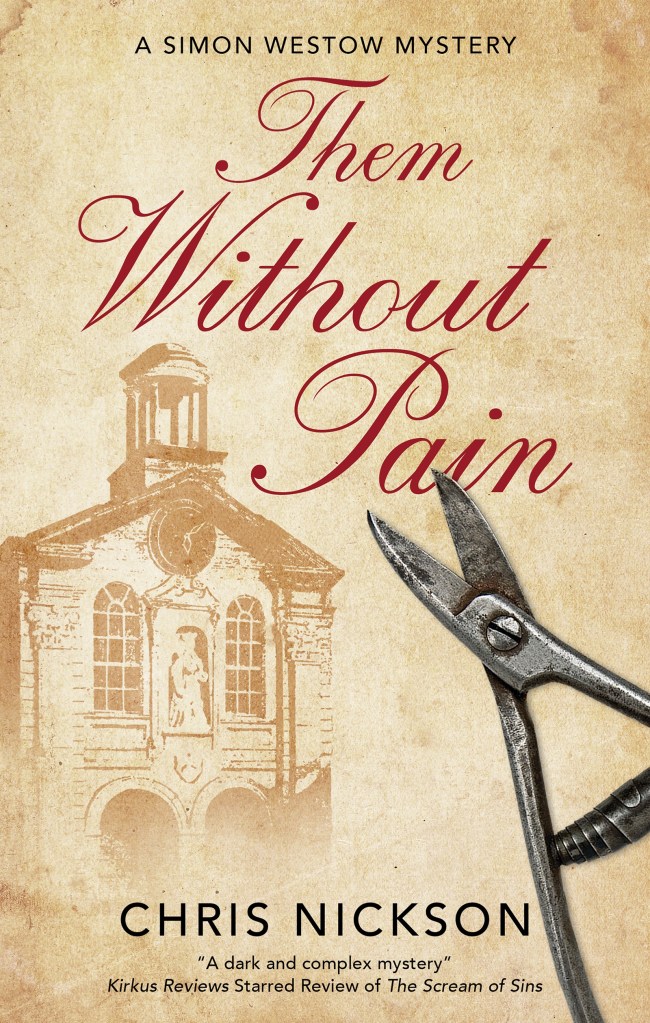
Finally, Amazon has the ebook and hardback of Them Without Pain on a very good sale right now. UK only, I’m sorry to say. But if you’ve been thinkinig of buying it, or want to make it a Christmas gift for someone, this is the time. You can find it here.

The Tale Of Rosebud Walk

Let me tell you a story…

…but it’s not about a person. It’s about a place.

A street called Rosebud Walk.

In Leeds. Of course.

A lovely, romantic name that conjures up country air and the scent of flowers. Quite bucolic.

Except for the fact that it stands on the edge of Sheepscar, running between Roseville Road and Dolly Lane Not long ago it was a short street of terraced houses, their brickwork covered with soot and smut. It’s little more than a good stone’s throw from the Victoria, the public house on Roundhay Road that Annabelle Harper runs in my Tom Harper novels; Rosebud Walk even gets a mention in one of them.

This is how the area looked in 1903. You can’t quite see the street, it’s off to the right.

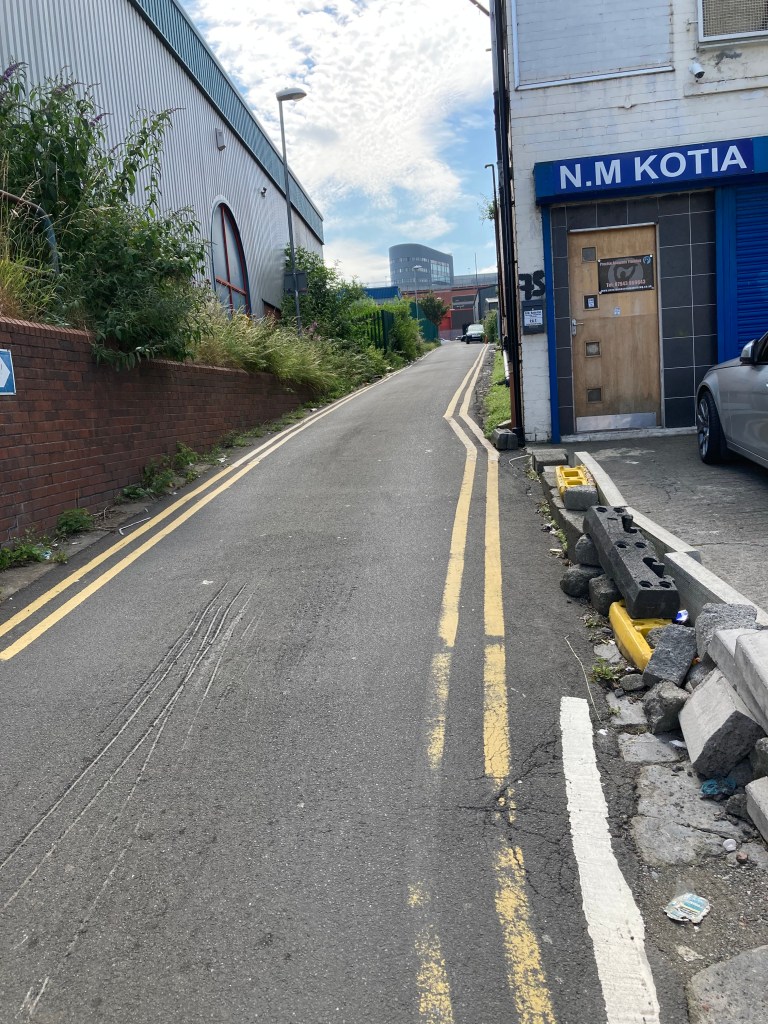
This is the way it looks now. Not exactly pretty or rose-filled, is it? You at that low wall with the street sign? That’s the wall at the right-hand edge of the 1903 picture.

Yet it wasn’t always this way. Rosebud Walk has a history that reaches to the early part of the 19th century, and back then it earned its name.

We think of Sheepscar as part of the inner city, transformed from working-class housing into light industrial estate. At the beginning of the 19th century, it was countryside; hardly more than a few houses and farms. It had a bridge over the beck, carrying a turnpike road heading north towards Harrogate. A rapeseed oil mill and a ground redwood mill, along with the dye works, were the only businesses. The area, according to historian Ralph Thoresby, was “mostly inhabited by clothiers” – men who. wove wool into cloth and took it into Leeds to sell at the cloth market.

In 1810 another major road was constructed, branching off the turnpike just north of the bridge towards Wetherby – what we know today as Roundhay Road and the A58.

Nine years later, a cavalry barracks, locally known as Chapeltown Barracks, was erected over 11 acres to the east of the Harrogate turnpike and north of the Roundhay turnpike.

Curiously, this didn’t bring an immediate flux of businesses to Sheepscar. The trade directory for 1823 lists a pair of grocers, a seed crusher, a whitesmith, a painter, Holroyd’s dye works, and one cloth dresser. By 1828, a joiner was listed in Skinner Lane. They were the sole tradesmen listed in the area.

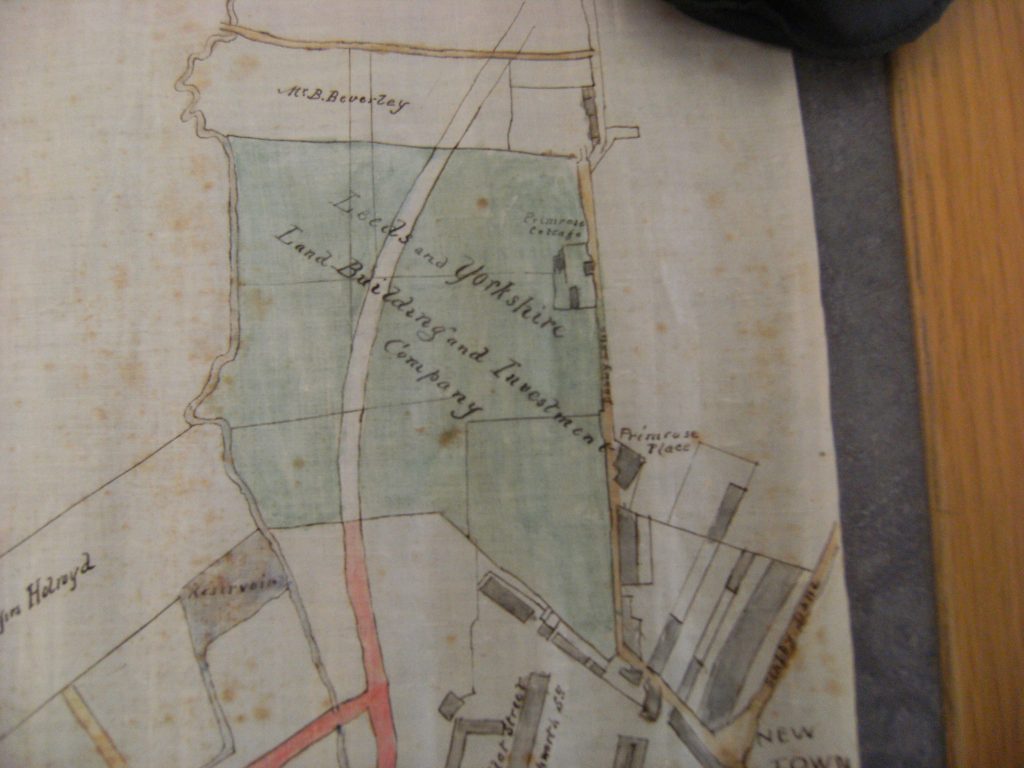
By 1834, there was a little more, but this was still very much well outside Leeds. A map from 1834 shows that the few buildings were clustered around the junction where the Roundhay turnpike, Sheepscar Lane, and Manor Street came together. But there was a new addition.

A little further up the turnpike you’ll notice a tea and pleasure garden across from the barracks, probably for the officers and their families. Owned by Mr B Beverley, it extended to Gipton Beck and beyond, stretching the track that would soon be called Dolly Lane.

This map from 1837 shows the extent of Beverly’s holdings. By this time they only seem to extend from Gipton Beck at the west to Dolly Lane in the east.

By 1839, the tea garden is listed on Roundhay Road, and run by Edward West.

Let’s move on to 1847. The tea garden has a name now – Rosebud Garden – and a house called Rosebud stands by to Gipton Beck. At this point the water would still be pure there, before it reached the piggery at the end of Manor Street and Holroyd’s Dye Works.

A path connects the garden to Roundhay Road and the barracks. Sadly, we have no information as to what the tea gardens were like. Very likely there was entertainment, musicians playing, possible more, but we’ll never know the details.

Rosebud Gardens still existed in 1866, and the house named Rosebud was still there. Even at that point, there was very little building in Sheepscar. It would have been green, the air reasonably clean, pretty much semi-rural.

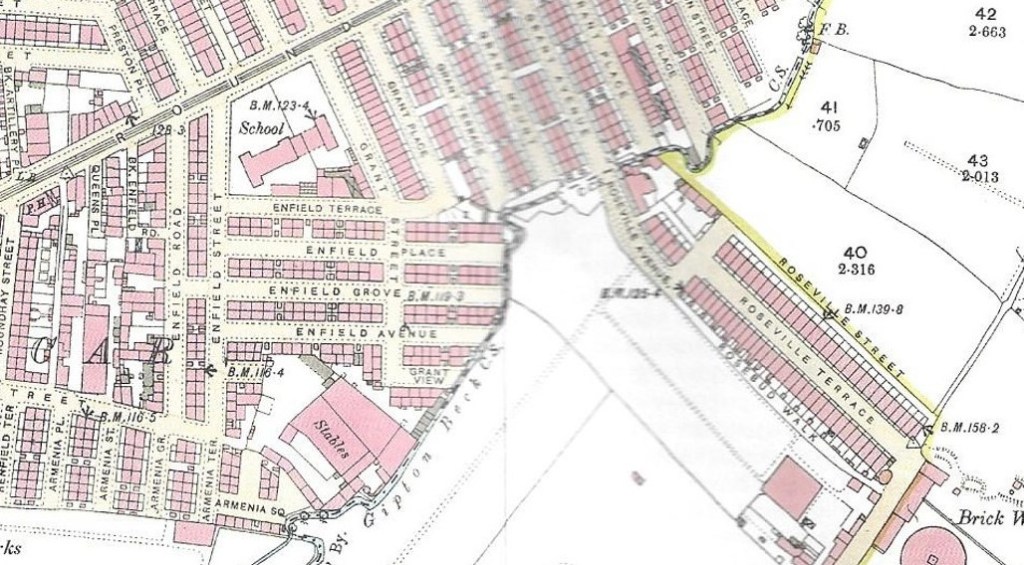
Everything began to change soon after, in 1870. The streets began to rise up in Sheepscar. Housing for the growing numbers of the working classes, back-to-backs and through terraces. By 1890 Rosebud Gardens had gone. The top boundary was now Roseville Street, and the bottom had become Rosebud Walk, a line separating the backyards of Roseville Terrace from the land behind. That name would be the only way the place would live on.

By 1906 it was even more hemmed in, with the Keplers to the north, and then the Andersons as Harehills grew.

That was how it would stay for a few decades, until the demolition of Sheepscar. Roseville Terrace has been pulled down, although one side of Roseville Street remain.

And Rosebud Walk is there, a single lane through from Dolly Lane to Roseville Road. Not even a memory of the tea garden, or even of the houses that were once there. Only a name.

Rosebud.

It could almost be Orson Welles…

How Lilian And Clara Nickson Nearly Became TV Stars

Intriguing title, isn’t it? And I’ll get to that in just a moment.

First, the lovely people at the Light on Leeds podcast had me on their blog, witting about Leeds. If you want to listen, just click on this link

A couple of months ago I areceived an email from production company  making a series of documentaries about Victorian shop girls. They hoped to do one episode  in Leeds. Somehow, when they were searching online they came up with my name and dropped me a line. Did I know the stories of any shop girls in Leeds during that time?

Well yes, I did. Almost.

My tale was just that wee bit later, from the Edwardian era, regarding Clara Nickson and her two daughters, most paprticularly the oldest, Lilian.

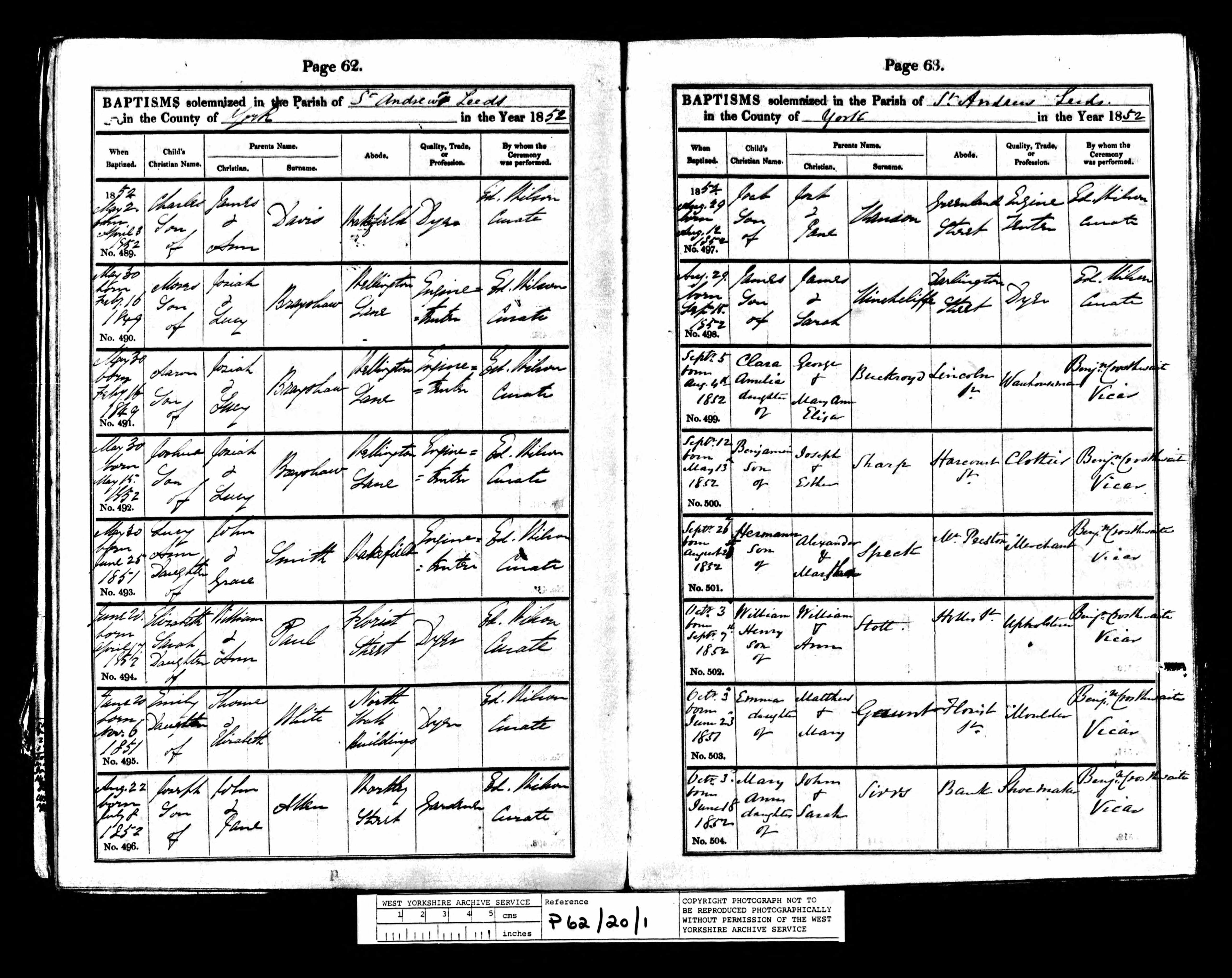
Clara was born Clara Amelia Buckroyd on August 8, 1852, to George and Mary Ann Eliza Buckroyd on Lincoln Place. He is listed as a warehouseman.

Clara birth

By the 1861 census, however, the family is on Reuben St, and George is a grocer.

Clara 1861 census

By 1871 they’re at a different address on the same street. George is still a grocer, but Clara is making her living as a weaver, and probably also helping in the shop.

Clara 1871 census

On January 1, 1877, Clara enters the Nickson family, when she marries Robert Hewson Nickson. Like his father George, who died 10 years earlier, Robert is a painter and decorator. His mother has successfully run the business since his father’s death, and the 1871 census shows her employing seven men and a boy; no mean feat for a woman in Victorian times. The year Robert and Clara were wed, his mother remarried and he took over the business.

Clara wedding

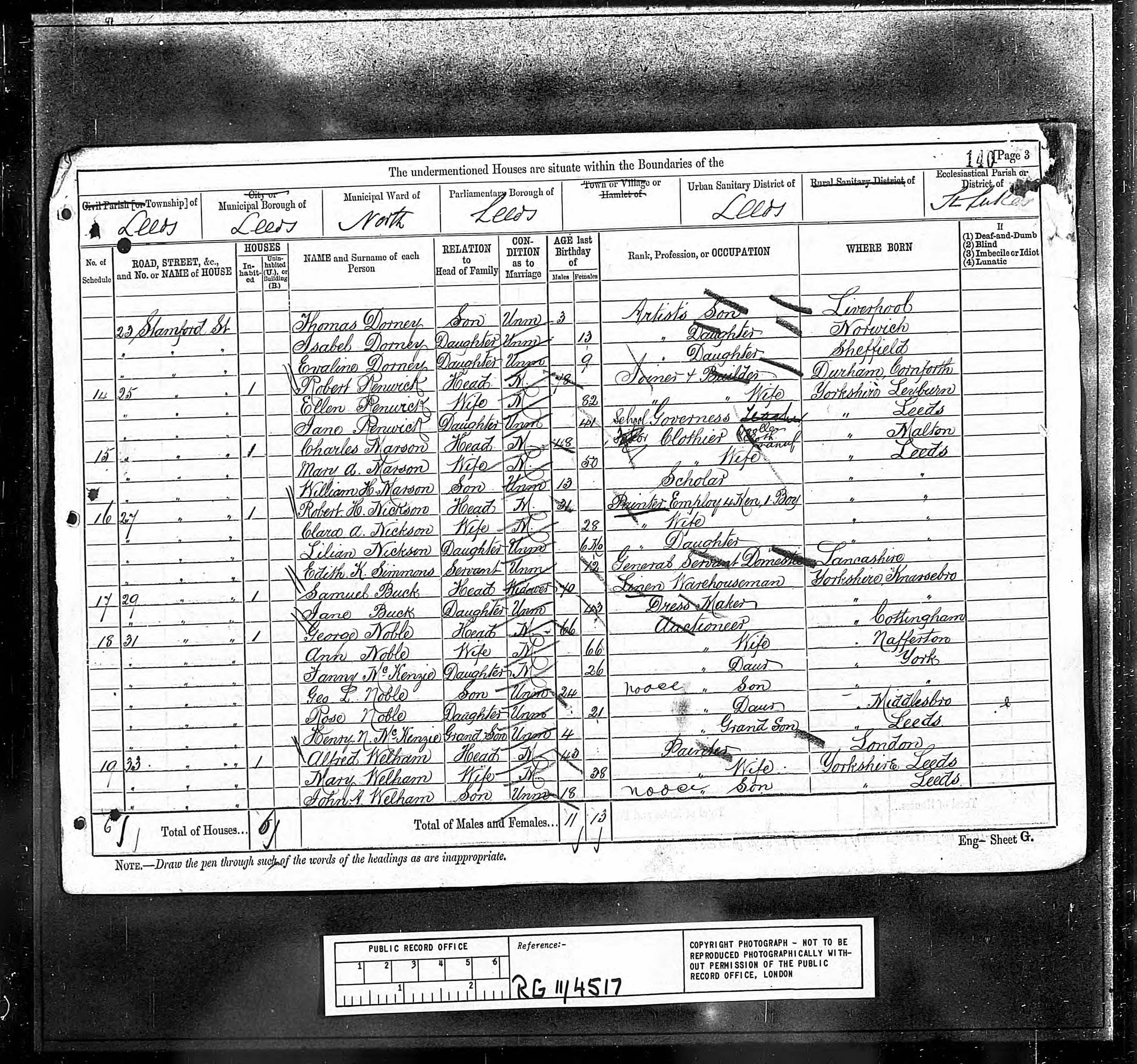
Clara gave birth to three children. George came into the world in 1878 and died the following year. Lilian was born October 1880. The 1881 census shows the family living on Stamford Street in Sheepscar.

stamford-street

Stamford St.

This would be a plain terraced house. But the business was doing well, as they had a servant, 12-year-old Edith K. Simmons. Another daughter, Irene, arrived in 1885.

Clara Irene baptism

Clara Lilian 1881 census

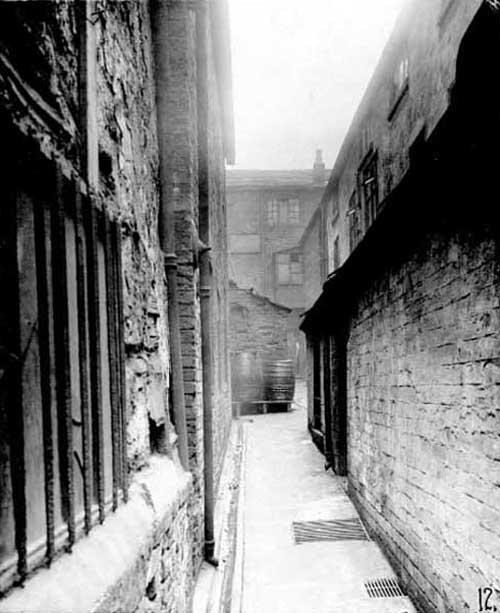
Robert had his work premises in Lonsdale Yard, on the Lowerhead Row in the centre of Leeds (also known as Bradley’s Yard). He died in 1893, leaving £331.19s.5d – the equivalent of £40,000 in today’s money, a very respectable sum for a working-class man.

lonsdales-yard

Lonsdale Yard

Like her mother-in-law before her, Clara ran the business after her husband’s death, and she’s listed as a painter and decorator with her premises at 5 Lonsdale Yard in a trade directory.

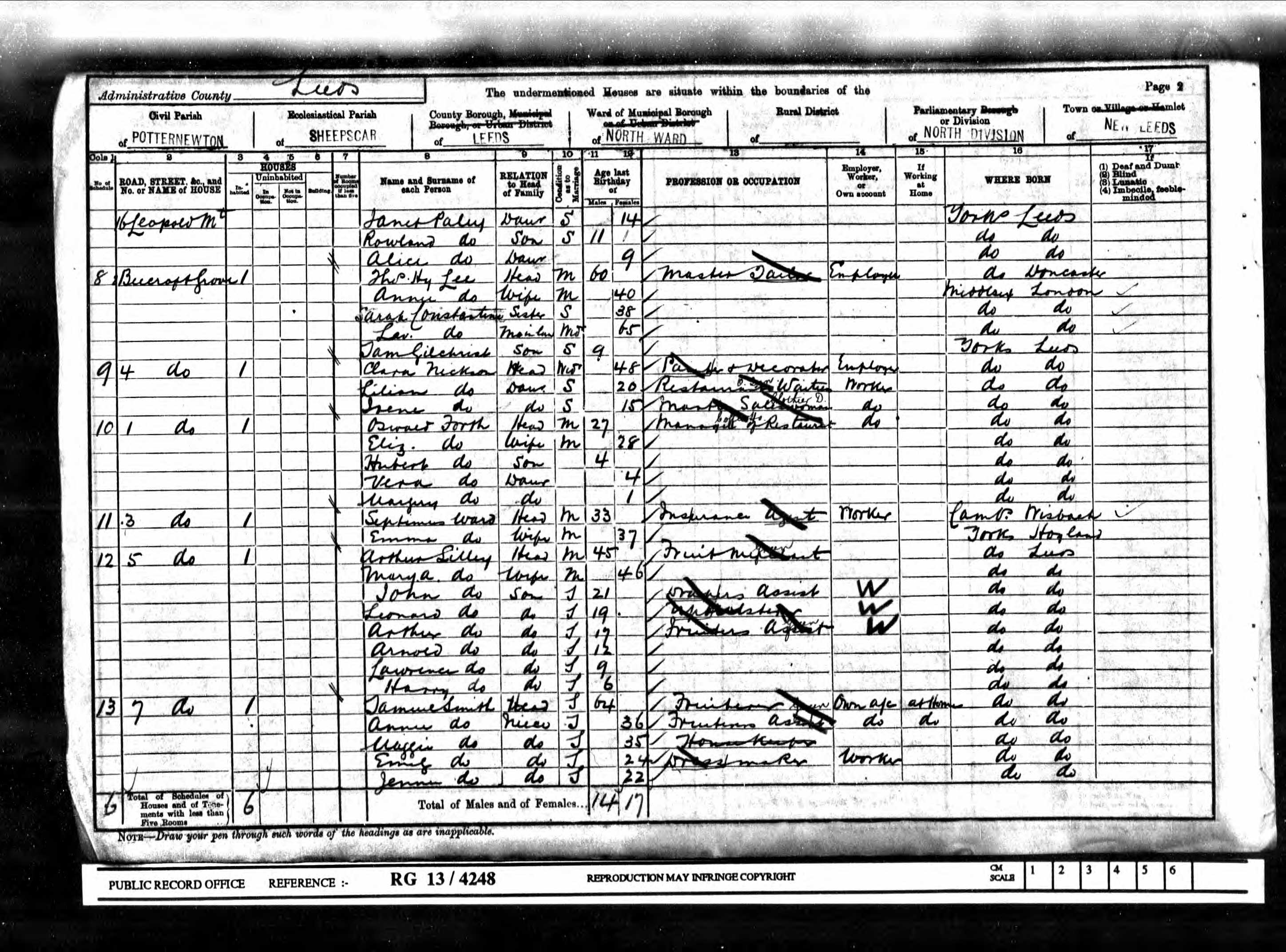
The 1901 census shows her living at 4, Beecroft Grove in Chapeltown, and still continuing the business. Notably there was no longer a servant in the house.

Lilian Nickson 1901 census

By this time, Lilian is 20 and working as a restaurant waitress, while Irene is 15 and a clothier and saleswoman – very likely working in a clothing shop.

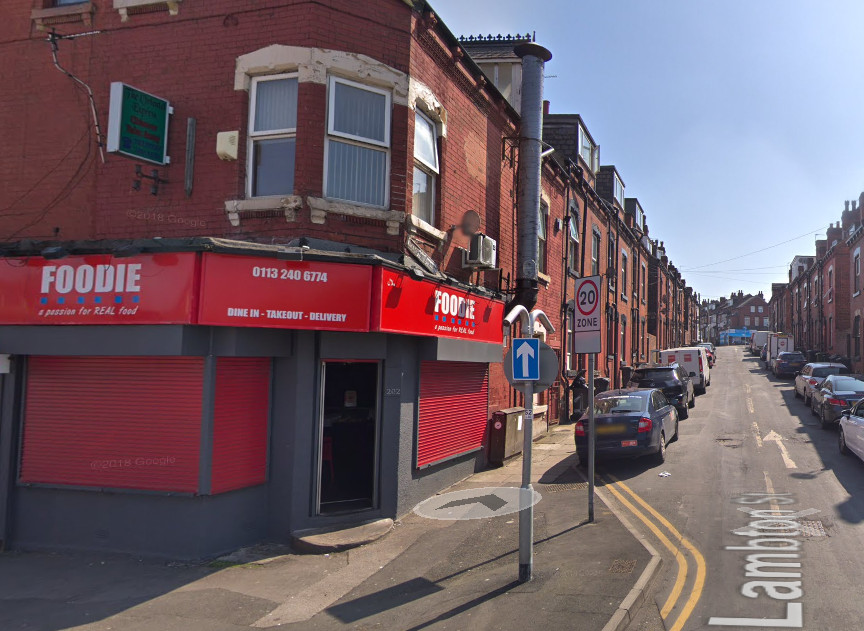
It must have been a year of big changes. By 1902, Clara no longer has the painting and decorating business. Instead, she’s now a boot maker and dealer and draper (with a sideline arranging servants for families), and her premises are at 204 Roundhay Road in Harehills.

clara-bootmaker

Roundhay Rd

204 Roundhay Rd today

At that time, much of Harehills was relatively new, a mix of good villas for clerks, terraced and back-to-back housing. She probably sold the decorating business as a going concern and possibly used some of what her husband had left as capital for her new venture.

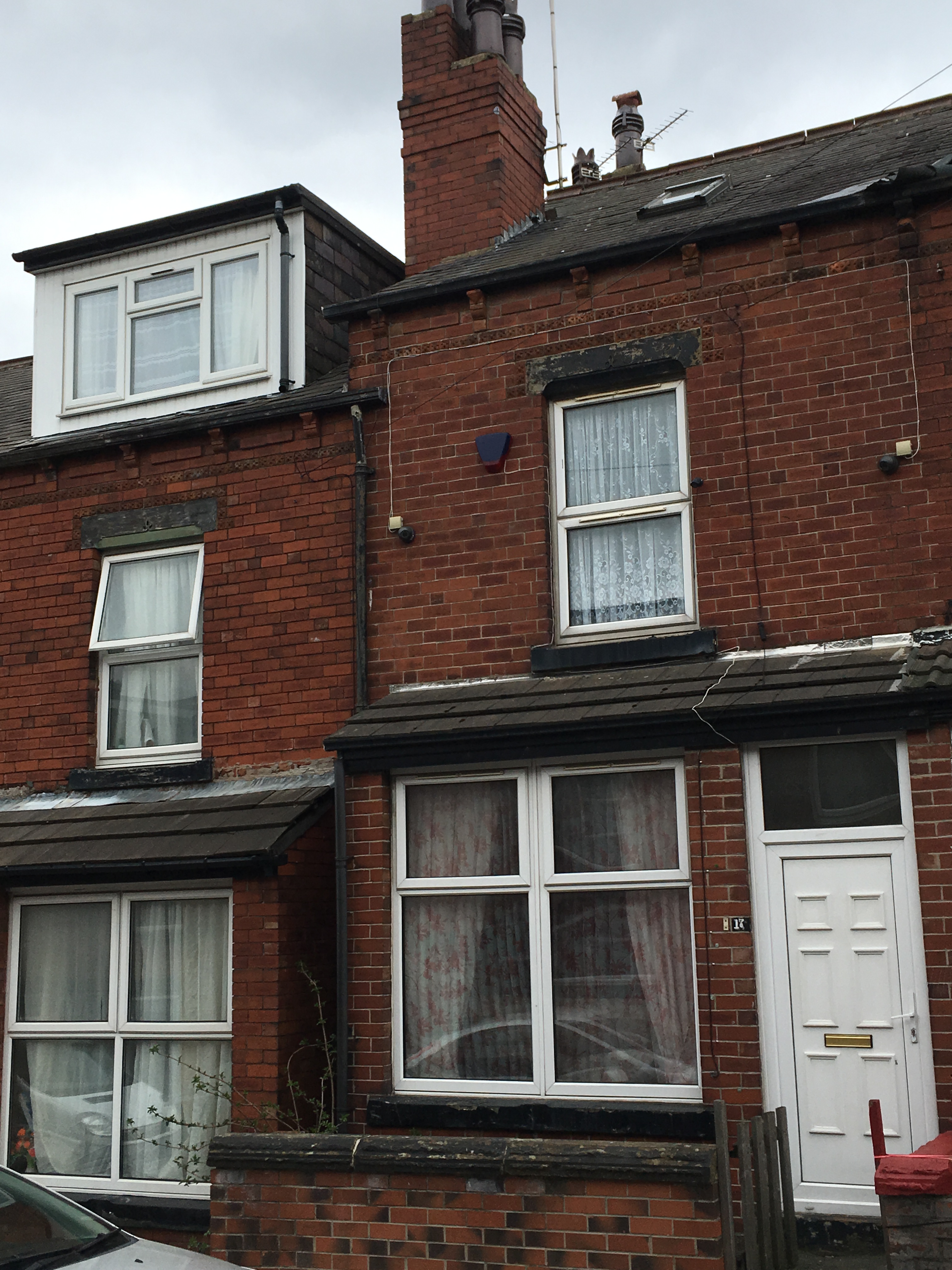
Clara kept the business going for several years, although she did move. By 1907 she was living at 17, Dorset Road. This was a through terrace at the top end of Harehills on the new Hovingham estate, a definite upward move from Sheepscar.

Dorest Rd

Both Lilian and Irene are with her. Both have been working with Clara in the shop. Irene, of course, already had retail experience, But in 1909 she married a man from Chorlton, near Manchester and moved there.

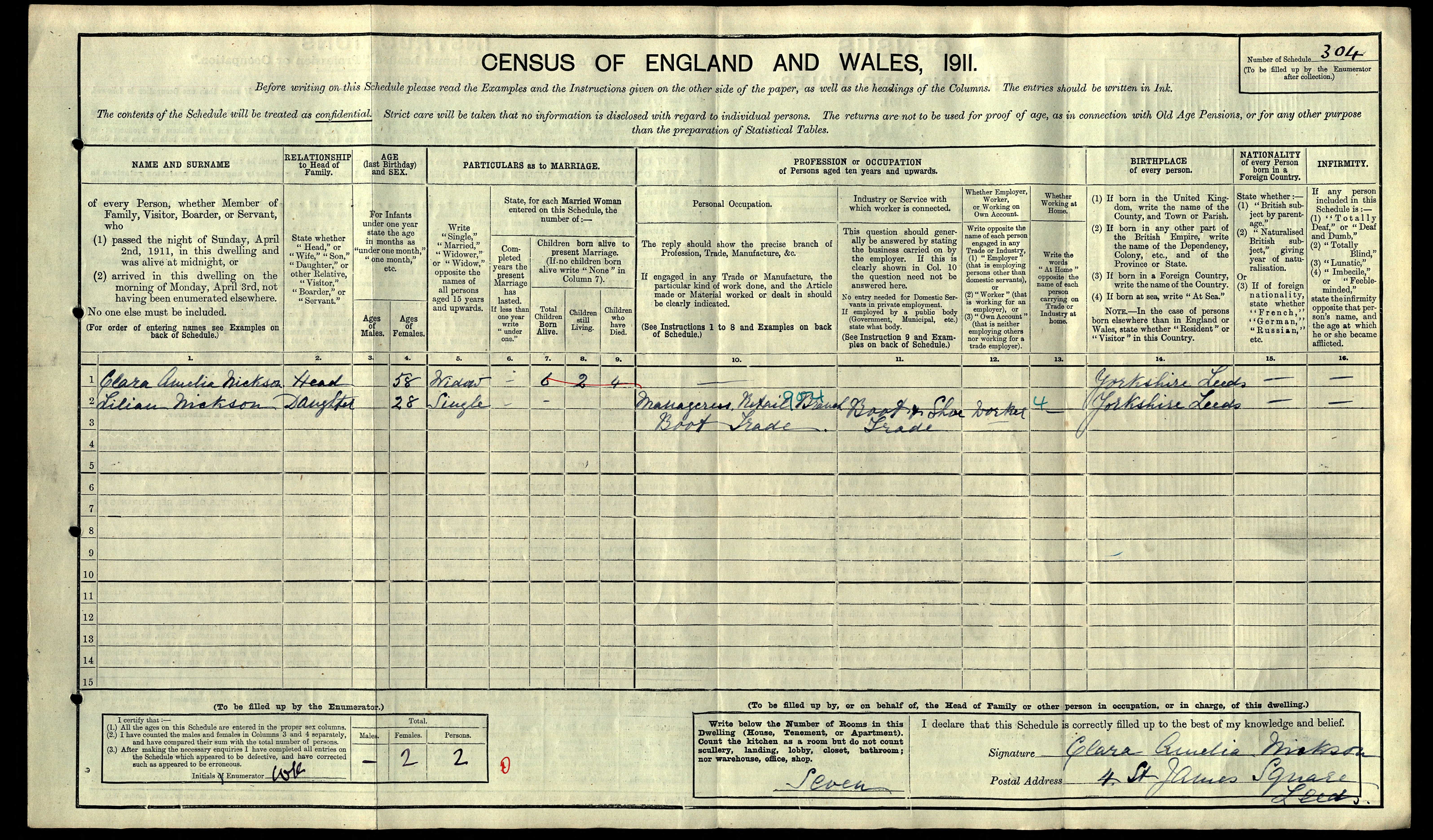
By the 1911 census, Clara had sold her business and moved to 4, St. James’ Square. The street is now demolished, but it stood on the site of what became the Civic Hall. At 58 she was retired and keeping house for Lilian.

St james sq

St. James’ Square

Her daughter had used the real experience well and at 28 had become a “manageress, retail branch of boot trade.” At this time, Leeds was the biggest maker of boots in the country (as opposed to shoes, where Northampton had the title). Working men wore boots, as did many woman, along with clogs. They were big business.

Lilian Nickson 1911 census

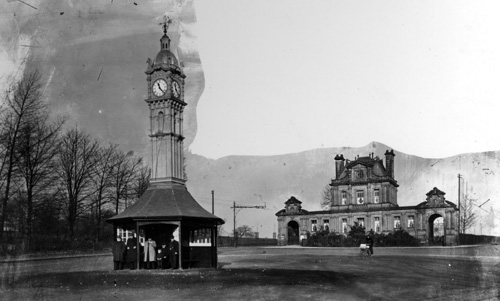
Lilian was working in the city centre, so moving to a more central location made sense. However, mother and daughter moved on from there. 1914 saw them at 14 Oakwood Drive, in the very leafy suburb of Roundhay, very close to Roundhay Park. The area had only recently become part of Leeds, and it was only in the previous decade that it had started to be developed. The street stood about 200 yards up Oakwood Lane from Oakwood Clock and the lodge at the entrance to the park.

2011112_172870

Oakwood Clock, 1914

They would be moving again, as Lilian married in September 1914, just five weeks after the beginning of World War I. Her husband, Henry Corrigan Smith, was 35, a tailor who lived in Southport. By now Lilian was 33, quite old for a woman to marry, although war, as always, changed everything. On the marriage certificate Lilian is shown as not working; this could mean that she’d already left her job to marry.

Henry was getting a package, not just a wife, but also a mother-in-law; Clara lived with the couple in Southport until she died in 1919. Henry passed away in 1929, but Lilian survived until the end of the 1950s.

Sadly, I have no photos of Clara, Robert, Lilian, or Irene. All I have is admiration. Retail was part of their lives, but Clara did much more than that, managing a very masculine business for almost a decade when times were not kind to women, then opening a shop and going into retail – which must, in some way, have taken her back to her childhood.

But by the time she stopped working, Clara had achied something quite remarkable for a women essentially on her own – she’d ascended from the working-class to the middle-class.

And, of course, since you’re here, please don’t forget this. It’s been getting wonderful reviews, the best I’ve ever had, with trade magazines in the US calling it “superlative” and my “best”

large old paper or parchment background texture
old paper or parchment


The Leaden Heart On Tour (And A Video)

32 days…just over four weeks and The Leaden Heart will be leaping out of the publisher’s hands and into the shops.

It’s the seventh Tom Harper book. Over the course of the series he’s risen from Detective Inspector to Detective Superintendent, in charge of ‘A’ Division, Leeds City Police, based at Millgarth. It’s 1899, and that promotion happened four years earlier, but he’s still the same Tom. He and Annabelle still live at the Victoria public house in Sheepscar, which she owns. She’s two years into a term as Poor Law Guardian, very involved in her work.

But Tom’s life is about to undergo seismic changes, when his old colleague Billy Reed telephones from Whitby. His brother has died, he’s coming to Leeds and needs a place to stay for a few days.

Going through his brother’s papers, Billy discovers more than he wanted to know. And Tom Harper learns that crimes have been going on in Leeds that he never even knew about. As he tries to put an end to it, the violence becomes ever more brutal.

That’s the essence, and I’ve put together a video trailer. I think it gives some of the atmosphere of the novel and the time…

The Leaden Heart will be available for reviewers and bloggers on NetGalley from the beginning of March. If you’re on there, please request a copy (or drop me a line if you need help).

You can pre-order on Amazon, although both Speedy Hen and Hive are much cheaper and don’t charge postage. And the ebook will be available globally from May 1.

Finally…The Leaden Heart is going on tour over the next couple of months. These are the dates and it looks as if there may be more to come. If you can, why not come along? All the events are free….no tour tee shirts I’m afraid – but there will be merchandise (books!)

Thursday, March 7, 2019, 1:10pm-1:50pm, Holy Trinity Church, Boar Lane, Leeds. Part of Leeds Literature Festival.

Saturday, May 11, Leeds Central Library, (time tbc) #foundfiction festival.

Thursday, May 16, 2019, the Leeds Library, Commercial St., Leeds, 6.30-8pm. In conversation with Candace Robb and Sara Porter (editor, Severn House)

Tuesday, May 21, 2019, De Grey Lecture Theatre, York St. John’s University 6-8pm. In conversation with Candace Robb and Kate Lyall Grant (publisher, Severn House)

Saturday, June 8, 2019, Yorkshire Archaelogical Society, Swarthmore  Education Centre, Clarendon Rd, Leeds, 11 am

large old paper or parchment background texture

Finding The Leaden Heart – The Tin God

Tom Harper is returning very soon – just over a month from now – but it’s impossible for me to look ahead to The Leaden Heart without glancing back at The Tin God.

the tin god 4a

I’m immensely proud of this book, not only for what it is, but the things it spawned. It celebrated real history, women being able to vote and stand as candidates in some local elections, an event that was the first real step on the road to the democracy we understand these days. And Annabelle Harper was at the heart of it, running to be a Poor Law Guardian for the Sheepscar ward. She was one of seven working-class women around the city running to be Guardians.

But there was a man who would do anything to keep women out of politics. Anything at all.

That didn’t stop Annabelle giving speeches – like this one.

The clues the man left at every scene were snippets of folk songs, so Harper consulted a local song collector, a real name named Frank Kidson. Out of this book came this article I wrote on the man:

And, of course, a playlist of music he’d collected that featured in the book.

For once, Annabelle really did take centre stage, even if it was Tom and his men who had to solve the crime. She had to try and be fearless, not easy when someone was trying to kill you.

The book was launched at an exhibition called The Vote Before The Vote. I was incredibly proud to be involved with it, celebrating those Victorian Leeds woman who were working for the vote and women’s rights before the Suffragettes appeared in 1903. I was even more proud that Annabelle had her own board as part of it. From fiction, she’d stepped directly into Leeds history. She’d have been over the moon.

That launch even sparked a film of its own, a glorious mystery from film maker Daisy Cale.

The book was a gift. It came to me in a flash when a historian friend – who actually curated The Vote exhibition – said ‘Why doesn’t Annabelle run for office?’ After that it was all so clear.

I did my only blog tour for the book, and it received some glowing reviews – and even a wonderful review in the Morning Star. These are some snippets or click here to read more.

reviews

It left me with a problem, however. How do I top it? Can I top it?

The Leaden Heart is my attempt at doing just that. You’ll be the only ones who can judge whether I succeed. And you can do it soon – even pre-order the book…

51030754_281546519188662_3542984282714669056_n

The Holy City: An Annabelle Harper Story

Leeds, Summer 1898


No rest for the wicked, Annabelle Harper thought as she picked up the post. A card on top with a view of Masham. Jotted on the back: Staying here tonight. There’s a brewery, it smells like when I worked at Brunswick’s! Beautiful weather, we’ll come home brown as berries. Love, Tom. And underneath, in a careful hand: And Mary.

KNA-Early-Postcard-Silver-Street-Masham-North-Riding

She smiled and placed it on the mantlepiece with the other two. One a day, exactly as he’d promised. High summer, 1898, and her husband had taken their daughter on holiday to the Dales. He had a week’s leave, school had finished. But no chance for a Poor Law Guardian to take a little time away.

Three people had needed assistance yesterday, two the day before, five on Monday. That was always the worst day. Wages spent, everything worth even a couple of pennies hauled off to the pawnshop. Some she’d been able to help. Others she’d had to turn away, hurting at the hopelessness on their faces. Things were always bad in Sheepscar. Worse in other parts of Leeds, she knew that. But a year of this work had shown her that not everything was possible. She’d learned to steel her heart; sometimes she had no choice.

But she was the won who’d wanted to run for the position. She’d won the vote, and now she had to do the job. A pile of papers sat on the table needing her attention. Reports from the workhouse, minutes from the last Guardians meeting. And barely a minute to read them. She glanced at the clock, then strode over to the mirror, pinning her hat in place before she wrapped a light shawl around her shoulders.

Downstairs, the bar at the Victoria was quiet. A couple of older men ekeing out the boredom of their days by playing game after game of dominoes and cribbage while they sipped at halves of mild. A quick word with Dan the barman, a pull of the door and she came out into the clatter and din of Roundhay Road. Already warm, the sky hazy, the streets heavy with soot and dust and all the stink of industry.

Annabelle had barely started walking when a man called her name. She turned, seeing Reverend Fletcher hurrying to catch up to her. He looked like a figure of fun, a large man with a red, florid face above the dog collar and a belly that wobbled as he tried to move quickly. But he was a good soul, doing what he could to help the poor in his parish. She couldn’t help but have a soft spot for him.

‘Mrs. Harper. I’m glad I caught you.’ Just ten yards and he was already out of breath, she thought. He lifted his straw hat and panted.

‘Pleased to see you, too, Reverend. If there’s something you need, you’d better walk with me, I’m already late.’ She nodded towards the distance. ‘I’m due at the workhouse in a quarter of an hour.’

‘Of course.’

She kept a brisk pace, nodding at shopkeepers and folk she saw on the way to the junction with Enfield Street. He had to move quickly to keep pace.

‘There’s someone I’d like you to see, if you’d be so good,’ Fletcher said.

‘One of your flock? Is the family having money problems? Out of work?’

He hesitated before answering, just long enough to make her turn her head and stare.

‘No, it’s nothing like that. He’s only been in Leeds for a few weeks now, still has a pound to his name.’

She stopped, hands on her hips.

‘I don’t understand, then. What do you need with a Guardian?’

‘He’s staying at the Vicarage. With his wife and children.’ A shy smile crossed Fletcher’s face. ‘If you could call around later. Just for a minute or two. I’d be very grateful.’

Annabelle narrowed her eyes. ‘You’re being very cagey. What’s it all about?’

Fletched tightened his mouth, then shook his head. ‘I’d rather you made up your own mind. Shall we say this afternoon?’ He raised his hat again, turned and strode away.

Always someone, she thought as the made her way through the back streets and up the hill to the workhouse.

annabellefrom book_3

By the time she walked back out into the air, she was fuming. The same thing as ever: the sheer ignorance of the male Guardians. No clue what women needed when they had their monthlies. Half of them probably didn’t even know such a thing existed; if they ever found out, they’d be terrified.

She breathed deeply, standing until she could feel the pounding in her chest slow down, then crossed the street to Beckett Street Cemetery. The only piece of green around here. A moment or two by Tom Maguire’s headstone, thinking of the man, wondering what he’d make of her now. Then to a bench that nestled in a spot of sunlight.

maguire stone

A few minutes and she was composed again, all the anger tamped down for another few days. Until the next time she visited.

Annabelle stood, dusted off her gown and started to walk home. A quick stop at a bakery for a tongue sandwich and a fancy to go with her tea later. It was only as she strolled down Rosebud Walk, brown paper bags in hand, that she remembered she’d agreed to go and see Reverend Fletcher’s visitor. Pushed into it, more like.

Well, that was the afternoon going through the pub accounts up the spout.

annabellefrom book_3

St. Cuthbert’s sat in the sun. The hall had been rebuilt after last year’s bomb. She only had to look at it to remember the noise that filled her head that evening, all the smoke, the stink of gunpowder, and the broken body of Mr. Harkness, the caretaker.

cuthberts

Annabelle straightened her shoulders, trying to put the past to the back of her mind, and brought her hand down on the knocker of the vicarage.

‘Hello, Mrs. Harper, luv,’ the housekeeper said with a warm smile. ‘He said you might be dropping in. Always a pleasure to see you.’

‘He asked me to come and meet your guest.’

‘Yes.’ The woman’s face clouded. ‘Well…’

‘A strange one?’ Annabelle asked.

‘You could say that.’ She frowned as stood aside, wiping her hands on her apron. ‘Come on through, luv. He’s in the back parlour.’

‘What about his wife and children?’

‘Child,’ the woman corrected her. ‘They’re out,’ she said darkly.

annabellefrom book_3

Annabelle blinked in the bright sunlight and started to walk down the street. She stopped, half-turned, then carried on towards home.

Well, she’d certainly never met anyone like that. Even when she was sitting upstairs at the Victoria with a cup of tea, she still didn’t have a clue what to make of him. Who on earth would walk all the way from London because God had told him to bring the light to the people of Leeds? If he’d come alone it would be bad enough, but to drag a wife and two-year-old boy with him…

annabellefrom book_3

His name was Harry Walton. He was small, shifty, not much to him, probably no taller than five feet three, skin and bone from weeks on the tramp. But there was an intensity to his eyes that worried her. In his voice, too. He spoke with the kind of certainty she’d heard before in con men with something to sell. But he didn’t seem to want anything.

‘Leeds is the holy city. The Lord told me that.’ He stared straight at her as her spoke, unblinking behind his spectacles.

‘The holy city?’ Annabelle asked. ‘What’s that supposed to mean? I’ve lived here all my life. Take it from me, there’s nothing holy about it.’

‘The people here will be saved if they rid themselves of evil. God told me. That’s why He sent me here, to reform them.’

Round and round for more than half an hour, until she felt overwhelmed, her head spinning.

‘What about your family?’ she asked finally.

‘They go where I go.’ He spoke the words with absolute finality, as if they’d been ordained. Maybe he believed they had.

Time to see about that, Annabelle thought as she finished the cup of tea and carried it through to the kitchen. See what the woman felt about it all. The pastry sat, barely touched on the plate. Too dry, no flake to the crust. If Mary had been here, she’d have wolfed it down. That girl had an appetite like a gannet.

annabellefrom book_3

This time the reverend answered the door himself. He looked surprised to see her, recovering his manners after a second.

‘Come in, Mrs. Harper. Come in. Forgive me, the housekeeper told me you were here this afternoon.’

‘I was,’ she answered with a soft smile. ‘I’ve come back to see the man’s wife.’

‘Ah,’ Fletcher said. ‘And what did you make of the gentleman?’

‘Honestly?’ she said. ‘Happen he believes everything he says. But holy city and cleansing the place, reforming it? I think he’s got something up his sleeve that we haven’t seen yet. Either that or he’s a bit touched.’

‘Men of God have often been viewed that way.’

‘Is that what you think he is?’ she asked.

Reverent Fletcher spread his hand, palms upwards.

‘I wish there was a way to know. But he’s right that we need to be rid of sin here, isn’t he?’

‘What? Like drinking?’ She had a twinkle in her eye. He knew exactly what she did for money.

He laughed. ‘Wine is there in the Bible, Mrs. Harper. Jesus even changed water into it at a wedding feast.’

‘He’d be welcome at the Victoria to do that any night he wants, although they’d prefer it was beer,’ she said, and suddenly realised she might have gone too far. ‘No offense, Reverend.’

‘None taken. I’ll have the lady attend you here, if that’s fine.’

‘Perfect.’

One minute stretched to two, then five, before the door opened and the woman entered.

Not a woman, Annabelle thought. A girl. She had to be thirty years younger than the man. Probably not a day over seventeen, looking shy and cowed.

‘Come on in and sit yourself down.’

Stick legs under a thin cotton dress. Boots with worn soles and woollen stockings she’d darned too many times. Hands as rough as sandpaper.

‘I’m Mrs. Harper. The Reverend asked me if I’d have a word with you and your husband.’ Not quite the truth, but close enough. ‘What’s your name?’

‘Julia.’

‘That’s a pretty name. I like that. My mother lumbered me with Annabelle. I’ve always thought it sounds like it should be the name for a flower.’

The girl was too timid to respond.

‘How long have you been married?’

‘Two years,’ Julia answered. ‘Just after Samuel was born. He’s my son.’ She had the same rounded London vowels as her husband, so strange and out of place. But there was nothing educated about either of them.

‘The reverend said you had a child. A bonny little lad, I bet.’

‘He is.’ Her face came alive. ‘He takes so much time. And he’s always so hungry.’

Annabelle smiled. ‘It doesn’t get any better. My daughter’s six and she has hollow legs.’ She paused for a second. ‘Do you mind if I ask your age, Julia?’

A small hesitation. ‘I’m nineteen.’

That was a lie, Annabelle thought, but she’d let it pass.

‘How do you like being on the tramp?’

‘I don’t.’ Her mouth turned down at the corners. ‘My feet hurt all the time. This is the best place we’ve been since we left London. But I know we’re going to have to find somewhere else soon.’

‘I came and talked to your husband this afternoon, but you and your lad were out. Taking a look around?’

The girl shook her head. ‘Harry sends us out to beg. He says a woman and child bring in more than a man.’

Well, she though, he might have his eyes set on a holy city, but he kept a thought for bringing in the brass.

‘Do you make much?’

‘No,’ she answered. ‘Most of the time a rozzer will come and move us on. I was arrested once, when we were in Birmingham.’ Her face fell at the memory. ‘Seven days of hard labour and they almost took Samuel away from me.’

‘You must love your husband to do all this.’

‘He says it’s a wife’s duty to obey. A woman has to follow a man’s desires.’ She sounded as if she was repeating words she’d heard far too often.

‘How did you end up marrying him? There’s…’

‘I know. He’s a lot older.’ The deadness came back to her. She looked around, as if someone else might have come in and be hiding in the corner, listening. ‘Harry used to play cards with my pa. They worked together.’ Annabelle felt the first prickle up her spine, the sense that she knew exactly what was coming. ‘My pa had a losing night, so he told Harry he could have a poke of me and they’d all be square.’

‘How old were you?’

‘Fourteen.’

‘What about your mam? Where was she?’

‘She left when I was ten,’ Julia said. Her shoulders slumped. ‘Everything was good when she was still there.’

‘You and Harry…’ Annabelle said.

‘He got me…’ She blushed and lowered her gaze. ‘My pa told him he had to marry me to make it right. And pay a him a…something, I don’t remember what.’

‘A dowry?’

‘Yes. I think that was it.’

Annabelle sat quietly, thinking, then asked: ‘Tell me something, luv. Are you happy with Harry?’

‘Happy?’ Julia said, as if she’d never heard the word before, never considered the idea.

‘Do you love him?’

She shook her head, moving it quickly from side to side like a little girl.

‘Not like I loved my mother.’ She leaned forward and her voice softened to a whisper. ‘He hurts me when we…you know… and he hits me if I do something he doesn’t like.’

So much for any kind of holy man. Had his feet near the devil, like so many of them.

‘What do you want? For you and little Samuel?’

‘Want?’ She frowned, confused. ‘I don’t know. No one’s ever asked me that before.’ A moment passed, then she started to answer, voice like a child wishing for the Christmas presents that would never arrive: ‘A place we didn’t have to leave. Enough to eat. Not to ache from walking all the time. Things to make Sammy smile.’

Hardly reaching for the moon. Things any mother wanted. Yet Annabelle knew half the women she saw every week didn’t have them. They turned up to see her, clutching their sorrows close, hiding the bruises they claimed came from walking into doors and filled with the same of asking for something.

Annabelle knew how she must appear to the girl. A grand lady in an elaborate frock and big hat. A Poor Law Guardian with all sorts of power. But Julia was a stranger here, lost in an unfamiliar place. A stranger in her own life, really. She’d never had a chance to grow up the way a child should.

‘Have you ever worked before? What can do you?’

‘I was in a match factory for two years. But it was making me ill so I had to stop. I kept being sick. My pa belted me for that. He didn’t see the use of me if I couldn’t bring in money.’

‘Anything else?’

She blushed hard and stared down at her feet again.

‘Harry had me on the game for a little while. I had to stop when I started to…’ She curved a hand around her belly.

‘I want to ask you something.’

‘You’ve already been asking me things, missus.’

‘I know, but this is…well,’ Annabelle smiled and softened her voice. ‘It won’t go past these four walls, word of honour. If you had your druthers, would you stay with him?’

The girl looked up, pain showing in her eyes.

‘What else could I do? There isn’t anywhere me and Sammy could go.’

‘If someone could find a place. Somewhere safe. Would you stay with him then?’

Julia didn’t hesitate. ‘No. But I can’t go back to my pa. I won’t do that.’

Of course not; he’d beat her and sell her all over again.

‘I know. Look, I can’t make you any promises, but let me see what I can do.’ She took out her purse and counted out three pennies. ‘You buy your little lad something with that. And don’t let your husband know you have it.’

‘I won’t, missus. I swear.’ She clutched the coins in her fist as if they were the most precious gift she’d ever been given. ‘Thank you.’

‘I’ll come and see you tomorrow.’

annabellefrom book_3

Reverend Fletcher closed the front door behind them, staring across at the church.

‘All this talk about the holy city,’ Annabelle began. ‘It’s a con. He’s no more got religion that I have.’

‘But…he sounds so sincere.’

‘That’s his game. Do you want to know the truth. He won that lass from her father in a card game, he’s had her out on the streets.’ She saw him wince. ‘He’s happy to have her and their lad out begging to support him. Does that sound like a man of God to you?’

‘No,’ Fletcher admitted. ‘I suppose I’m gullible. He must have seen it. But what do you want me to do? Throw them all out on the streets?’

‘Give me a day,’ she said. ‘I’ll see what I can come up with for her and the boy. But I’ll tell you this – I won’t lift a finger to help him. If I were you, once they’re gone, I’d toss him out on his ear. Let him find a proper job.’ Her face turned grim. ‘If he doesn’t, I’ll have one of Tom’s men run him in for vagrancy.’

annabellefrom book_3

An evening of bustling around, feeling like she was shuttling from pillar to post and back again. The books would have to wait for another day.

She didn’t sleep well, thrashing around and throwing the covers off in the summer heat. The bed felt too big without Tom here, and the morning was empty of all the bustle of her husband and Mary. Cooking breakfast just for herself seemed like a chore. It left her lonely. She rushed through it, washed the pots and was out of the door by seven. Another postcard from Middleham waiting on the mat. Home on Sunday written on the back. Not long now, she though as she put it in her reticule.

postcard middleham

The problem was finding a place for the girl and her son to live, and someone to look after the boy. There were jobs out there, maybe nothing much, but enough to keep body and soul together.

By dinnertime she’d talked herself hoarse, wheedled, pulled in favours from people she’d helped in the past. Finally she secured the offer of a room for Julia Walton and her son. Just for a month, but the woman in the house was willing to look after Samuel. That would give her the breathing space to find a job and come up with somewhere else to live.

Annabelle paid the month’s lodging. It seemed only fair. She was the one encouraging the girl to leave her husband; this might be enough to help her take that step. All too often she’d seen the way women with no money were too scared to go. God knew she couldn’t help them all, but even one…it was a start. Didn’t matter that she wasn’t from round here. Perhaps it was more important because she was a stranger in Leeds, with no family or friends to turn to. Being alone brought desperation.

One final stop. The tram down to Millgarth police station, a few words and a laugh with Sergeant Tollman on the desk, then through to see Inspector Ash. It seemed strange to see someone else behind her husband’s desk, as if he might never return, instead of due back in a couple of days. He rose, looking confused, as she entered the office.

millgarth

‘Has something happened to the Superintendent?’

She ginned. ‘Don’t worry. You’re not likely to be stuck there past this week. I’ve come to ask a favour. Can you check the past of someone I met? He’s come from London…’

Home. She treated herself to a cup of tea and settled in the chair, unbuttoning her boots and wiggling her feet. Absolute. Just having the chance to sit, a few minutes to herself, seemed like luxury after all the rushing about.

Then the knock on the door, and a young bobby who’d hardly started to shave was standing there.

‘Inspector Ash asked me to bring you this and wait for a reply.’

‘Come in,’ Annabelle told him. ‘There’s still some left in the pot.’ He waited, shifting nervously from foot to foot, not daring to pour himself a cup of tea. ‘Don’t worry, I won’t tell anyone.’

She unfolded the note. Ash’s copperplate was a joy to read, so much better than her own scrawl.

Harry Walton has a record as long as your arm. Currently wanted in London for passing altered cheques. They asked if we could arrest him. Do you know where he is?

No wonder he’d wanted to vanish. She sat at the table, a piece of paper in front of her, and dipped her nib in the inkwell.

St. Cuthbert’s. Best if it’s first thing tomorrow morning.  He’d find out just how holy this city could be.

‘Give that to him with my thanks, will you?’

‘Yes, missus,’ the lad said, blushing as he corrected himself. ‘Mrs. Harper.’

annabellefrom book_3

The same room, the woman in the same thin, faded dress. The only difference was the boy sitting on the floor, spinning the reverend’s globe again and again, mesmerised by it.

‘That’s it,’ Annabelle said as she finished. ‘It’s yours if you want it.’

‘I don’t know what to say,’ Julia told her.

‘You don’t have to say a word. Just put your things in a bag and come with me.’

‘Why, though?’ She stared at Annabelle with suspicion. ‘Why me? Us.’

‘Because you need it. I know, there are plenty who do. All I did was talk to a few folk. It wasn’t much.’ She stood and held out her hand. ‘Ready?’

‘What about Harry?’

‘Believe me, you won’t need to worry about him.’

As the vicarage door closed behind them, the light was starting to drift from afternoon into evening.

‘I’m scared,’ Julia said. Samuel marched beside her, clutching tight to her fingers. ‘I’ve never had to look after myself before.’

‘Seems to me you’ve been doing that for most of your life,’ Annabelle told her. She looked down at the boy and stuck out her tongue until he giggled. ‘This time will be better.’


I hope you liked it. This story takes place the summer after the vents in The Tin God, and a year before The Leaden Heart (out next March).

Remember, books make great gifts, and I’ve had three out this year – The Tin God, The Dead on Leave, and The Hanging Psalm.


So Who Is Annabelle Harper?

Annabelle Harper has really stepped into the limelight with The Tin God. It’s interesting that many reviewers and readers have seen it as her book, rather than a Tom Harper crime novel.

She’s been there all through the series of course. But for those who don’t know about her past, a little piece of fiction to very quickly tell her story…

Leeds, 1898

Annabelle Harper dusted the mantelpiece. By rights it needed doing every day, but she didn’t have the time. Running the Victoria public house downstairs, her work as a Poor Law Guardian and having a six-year-old daughter took up every waking hour. And with her husband being a Detective Superintendent, there was no knowing when he’d be at home.

victoria1

Leeds. It got everywhere. Soot and grit on the windowsills, in the carpets, in the air…it was a losing battle to keep anything clean. Hang out the washing and it was covered in smuts by the time you took it in.

That was the price for prosperity, people said. Maybe they were right. But there was precious little wealth in Sheepscar, just people doing their best to survive, and plenty going under. Yet folk believed the lies, and the ones who told them grew richer.

She picked up the photograph in the silver frame, wiped it carefully, then held it at arm’s length and studied it. How long since she’d really looked at those faces. There she was, carefully posed, back straight as she sat in the chair, wearing the first expensive gown she’d ever owned, her face so young and serious. Standing behind her, one hand resting on her shoulder, Harry Atkinson, her first husband. Much older, the usual twinkle in his eye hidden as he stared seriously at the camera. Thirteen years he’d been gone now. She still thought about him, but only from time to time these days; he seemed like someone from another life. Well, he was, she told herself with a smile, he was. But a good life. Without him, she’d never have had all this. She’d never have met Tom Harper and never have had Mary. You never knew, she thought. You never knew what life was going to do.

Odd flashes of those times ran through her mind. Harry and his wife Elizabeth taking her on as a servant. Elizabeth dying of cancer, vanish right in front of them, inch by inch. The strange courtship she had with Harry, the quick honeymoon in Scarborough, the first time she’d ever seen the sea. The way he taught her how to run a business and how she surprised herself by having a knack for it.

Harry was older, he had a good thirty years older, a man who look at life with his eyes wide open. He’d prepared her for when he’d be gone. And then it happened. Quietly, in his sleep. As soon as Annabelle woke, she knew the life had gone from him. She reached over and stroked his cheek.

‘Oh, you,’ she said as she started to cry. ‘Oh, you.’

The only thing she remembered with absolute clarity preparing for the funeral. The casket was already in the hearse. She just had a few minutes alone up here with his ghost.

Staring at the mirror. The way the light flickered in the gas mantle, reflecting in the jet buttons of her dress. In black, from head to toe. Even the lace and the petticoats and the new leather boots that pinched her feet.

She’d picked the funeral hat off the back of the chair and arranged it on her head, spreading the veil in front of her face. Her hand was raised, ready to pin it all in place, when she tore it off and sent the hat spinning across the room.

She turned to the photograph on the mantelpiece. A shiny silver frame. Herself, sitting with her husband’s hand on her shoulder. Mr. and Mrs. Atkinson.

‘You sod,’ she said quietly. ‘You bloody sod.’

No hand to steady her now.

They’d all be waiting downstairs in the pub. Harry’s sister and her children, Dan the barman, the two servants, and all the neighbours and friends from round Sheepscar. The hearse was outside, the horses with their sober ebony plumes.

She breathed deeply, gathered up the hat and set it in place again, hearing the footsteps on the stairs, then the tentative knock on the door.

‘Annabelle, are you ready, luv?’ Bessie, her sister-in-law. ‘Only it’s time.’

A last glance in the mirror and at the picture.

‘Yes,’ Annabelle Atkinson said. ‘I’m coming.’


A final swipe with the duster and she put the picture back on the mantelpiece, adjusting the angle once, twice, a third time until it seemed just right. She took a deep breath. Then she heard the small footsteps on the stairs and her daughter was shouting at the top of her lungs.

‘Mam, can you give me a hand?’

She shook her head, putting all the past behind her again.

‘Yes,’ Annabelle Harper said. ‘I’m coming.’

annabellefrom book_3

The Tin God is out now in the UK, and on July 1 elsewhere. I hope you’ll buy it – and please, leave a review somewhere. It all helps.

Thank you.

The Fall Of Empire

It’s Valentine’s Day, I know, but this little story has nothing to do with romance. Sorry, hazard of the job for a crime writer.


Someone was coming for him.

He didn’t know who, he didn’t know exactly when, but he felt it. Over his shoulder like a creeping shadow.

That was how it went. You made a name for yourself, climb to the top of the pile, and you became a target. Someone eager to earn a reputation would want to take you down.

Dirty business, crime.

Peter Thorn smiled. The newspapers had done their damnedest and failed. They’d done everything but name him; the libel laws had stopped that. The coppers had tried, but the ones he hadn’t bought off weren’t clever enough.

But some things you couldn’t outrun.

Too many people back from the war, walking round with their demob suits and souvenir weapons from Germany or the Pacific. Some of them hungry for a little fame.

He’d give them a chance. And he’d beat them.

That was why he was sitting in this Sheepscar boozer long after time had been called. Door unlocked, landlord and his wife safely tucked away upside. Bodyguards told to wait in a club; he’d ring when he needed them. You didn’t remain boss by hiding. You faced up to trouble.

the_pointer_-_sheepscar_street_south_-_geograph-org-uk_-_580967

Thorn had a glass of whisky on the bar, a Colt automatic beside it. Another weapon in the pocket of his suit.

He’d done well during the war. Staying out of the forces was too easy. A little money distributed here and there and he might as well have been invisible. Then it was black market petrol, coupons, this and that as he put together a small mob and made himself rich.

Now all those who’d been patriotic enough to do their bit were back and ready to stir things up.

He sipped the whisky and took a draw on the cigarette. He heard the door of the pub groan open and turned, ready.

‘Thank God it wasn’t locked,’ she said as she came in and gazed around. About thirty, he guessed, dark hair, looking scared and holding a handbag close. ‘I’m lost.’

‘Can I help you, love?’

‘A man was giving me a lift and he started…’ She blushed. ‘You know. So I got out and ran.’

‘He won’t try anything in here, believe me.’ Thorn smiled. He’d always liked a pretty face. ‘You’re safe enough.’ He raised the glass in a toast. ‘Help yourself if you want one.’

She stayed close to the door, undecided.

‘What’s your name, love?’

‘Peggy,’ she replied as he picked up the cigarette from the ashtray. ‘Peggy Walker.’

He stopped with the arm halfway to his mouth.

The woman dropped the handbag. She was holding a gun, her arm steady.

‘Tom was my brother.’

‘He had it coming.’

She ignored him.

‘Funny, the skills you pick up in the WAAFs. Never underestimate a woman.’

His hand began to move towards his pocket.

The blast was loud. He slid off the stool and on to the floor as the door creaked shut.