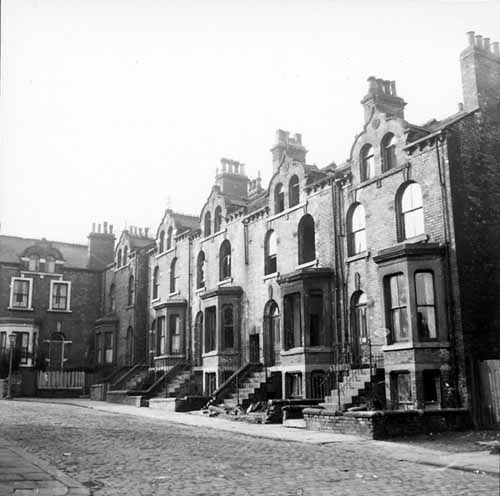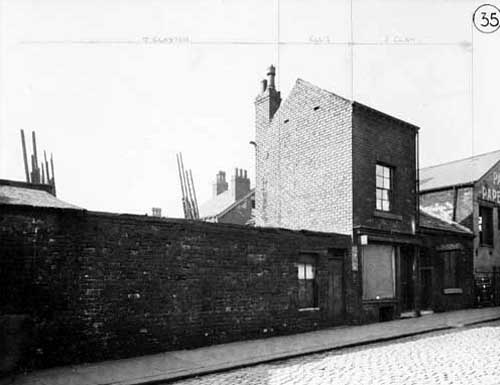
To Sheepscar And Beck

Sheepscar Beck, said Ralph Thoresby, the first historian of Leeds, “is the nameless water, that Mr William Harrison, in his description of Britain, (published in the reign of Queen Elizabeth), mentions as running into the Aire, on the north side of Leeds, from Wettlewood (as it is misprinted for Weetwood), This beck proceeds from a small spring up on the moor, a little above Adel, and yet had some time ago [previous to1714], eight mills upon it, in its four miles’ course. The first is that of Adel near unto which is the Roman camp, and the vestigial of the town lately discovered; and the last before its conjunction with the Aire is this at Sheepscar, which above eighty years ago [before 1714] was employed for the grinding of red wood, and making rape oil, then first known in these parts. It was converted into a corn mill in the late times, but upon the Restoration, when the king’s mills recovered their ancient soke, it dwindled into a paper mill, not for imperial, but for that coarse paper called “emporetica”, useful only for chapmen to wrap wares in. It was afterwards made a rape mill again, as it now stands.”

            It’s worth pointing out that Thoresby made an unsuccessful investment in the Sheepscar rape oil mill and lost quite a chunk of his capital.

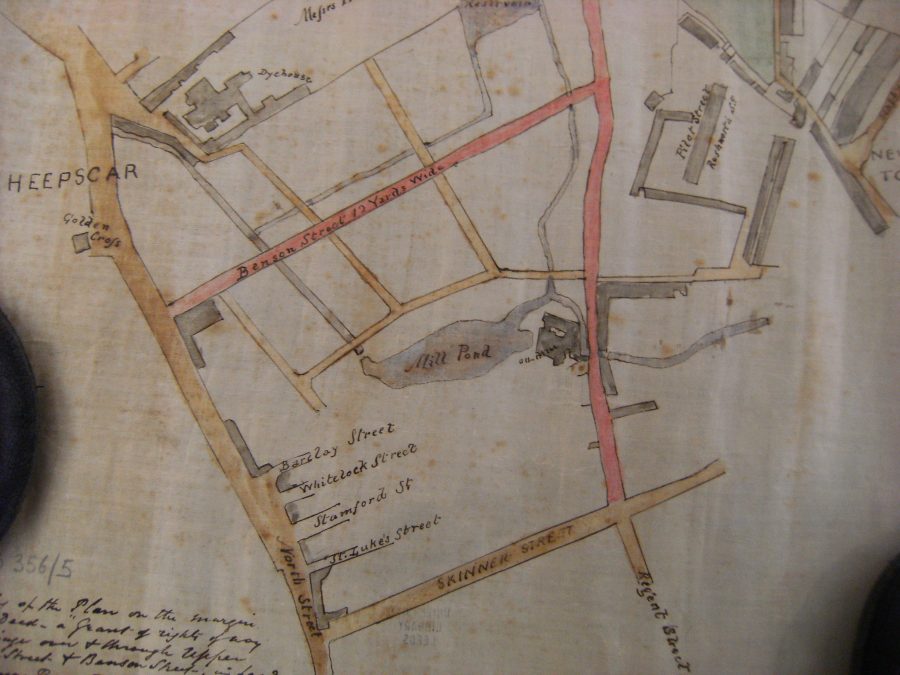
            Sheepscar Beck is actually one of two streams that meet near the bottom of the area (along the way it’s also known as Meanwood Beck on its trail across the area from its proper origin on Ilkley Moor). It comes in the from northwest, while Gipton Beck arrives from the north. It’s most clearly illustrated on the most ancient map of Leeds, created for a court case in the 1570s, where Gipton Beck is mysteriously called Newton Beck (the new New Town for part of the area didn’t appear until later).

            Together, they become Lady Beck, or Timble Beck, going down Mabgate, then through Leeds (Timble Bridge, covered over more than a century ago, crossed the water at the bottom of Kirkgate) to reach the River Aire close to Crown Point Bridge.

Sheepscar Beck on the left, meets Gipton Beck

            Early on it ran as free as if had been in the country, but as Leeds expanded, the beck was culverted and largely covered over. However, you can still see a few traces at the bottom of Sheepscar, where the two streams meet and the mill pond would have been, just below Bristol Street.

            It’s also easy to track here and there along Mabgate – a bridge crosses it on Hope Street – before one final glimpse as it vanishes underground, not too far from the Eastgate roundabout.

Going underground

The culverting and covering of Timble Beck was a massive undertaking, as this picture shows.
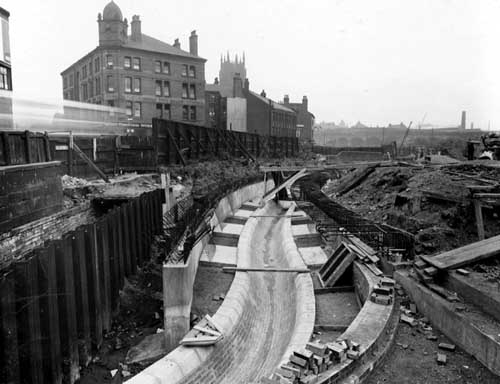
Where Timble Bridge once stood.

By several names, beck and bridge have featured in any number of my books. It was a totem throughout the Richard Nottingham series, and has played a large role in the Simon Westow books. For the most part, Leeds hasn’t been kind to its own history, treating it as something in the way instead of worth saving.

But the beck, or what few bits you can still see, is history right under your feet. It’s powered mills, it’s flowed through the history of this place. These days it’s greatly diminished, but the role it played in helping Leeds develop, especially Leeds industry, is huge.
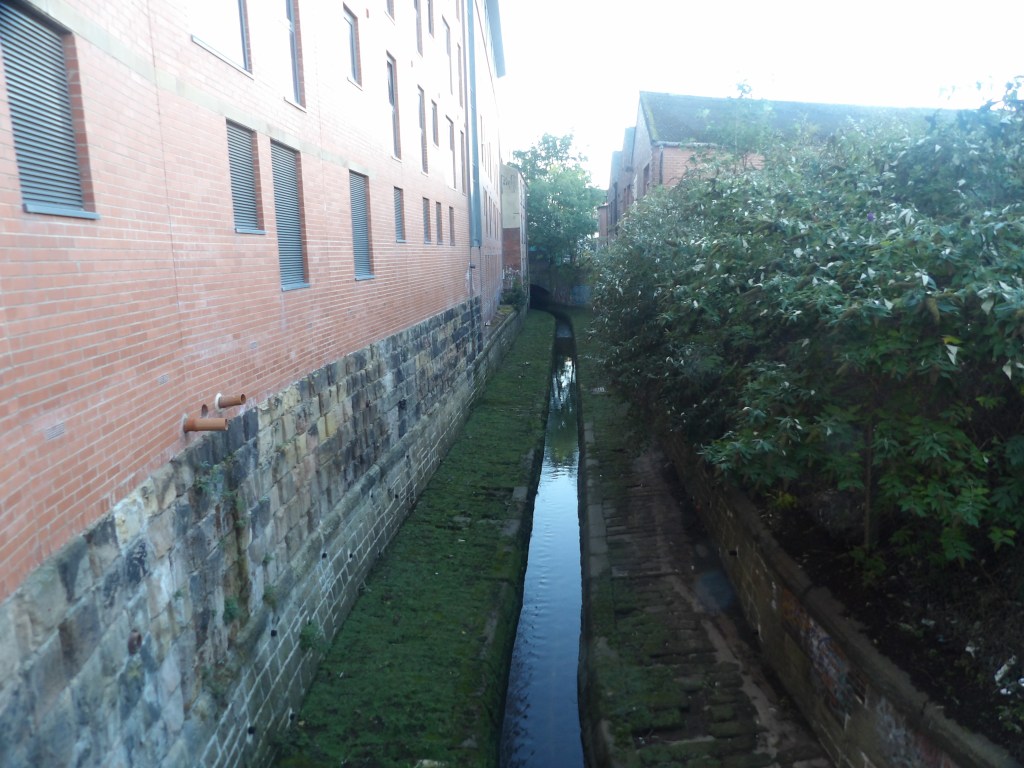
Lady Beck/Timble Beck

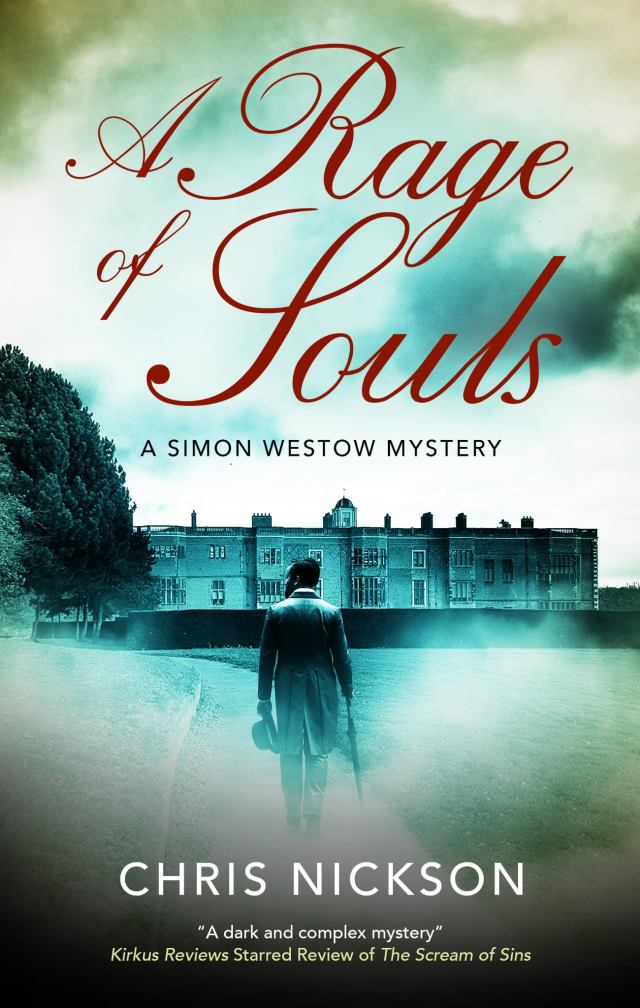
Since you’ve read this far, can I put in a quick plug for my upcoming book, A Rage Of Souls, which will be published October 7. It’s the eighth and final Simon Westow, every bit as dark and explosive as you could wish. Please ask your library to buy a copy, and you can pre-order it for yourself right here. Thank you and keep Leedsing. If that’s’ not a word, it should be.
Richard Nottingham…For Christmas

As we all know, that time is coming in a few weeks. Not my favourite season, but it’s going to happen regardless.

However, it does mean presents and books make great gifts. So please forgive a few weeks of shameless self-promotion ahead…

For the last few years I’ve focused to the Tom Harper and Simon Westow books – I’m working on the sixth book with Simon and Jane, and the big news is that my publisher has accept Rusted Souls, the 11th and final book in the Tom Harper series. It’ll be out next autumn.

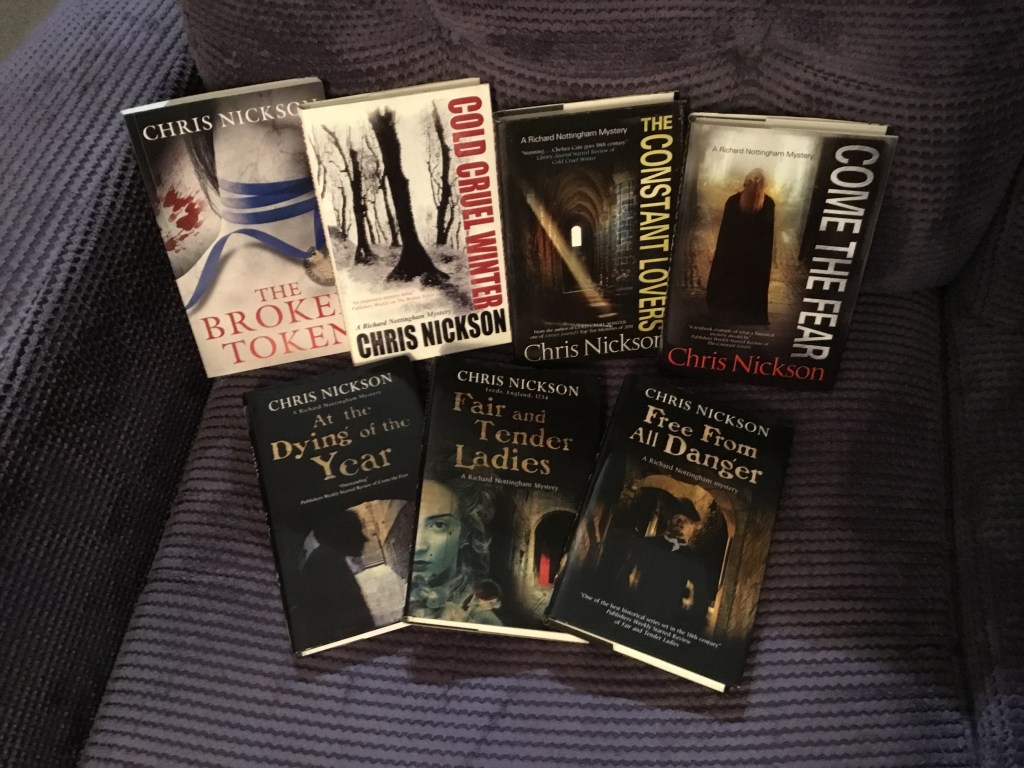
Before those, though, was another series, the first of my published novels, with Richard Nottingham, Constable of Leeds, as the main character. His family were important in the books, especially his daughter Emily, and also his deputy, John Sedgwick.

They’re set in Leeds, but in the 1730s, just as the town is grown wealthy off the wool trade. Well, the merchants are. For ordinary people, life is always a battle. It’s a small place, around 7,000 people, dominated by Kirkgate and Briggate.

Richard lives on Marsh Lane, crossing Timble Bridge, down near the Parish Church, to come to the jail. That’s by the top of Kirkgate, next to the White Swan on the corner of Briggate.

It was, perhaps, an unusual setting for a series of crime novels. But Leeds is my home. I feel it and I wanted to bring the place to life, to make readers feel they’d walked the streets, heard the voice, smell all the stink of life. All in the framework of a crime novel.

What many don’t know is that Richard Nottingham was real. He was the constable from 1717-1737, although it would be a largely ceremonial role in reality. He was a somewhat elusive figure in life. I spent time trying to track him down and wrote about it here – there’s just enough to be fascinating and make me want to known much more.

There are seven books in the series. Each one of them received a starred review from Publishers Weekly, which I’m told is very rare. Although virtually all are out of print in hardback, most are available in paperback. All are there as ebooks in every format. The Broken Token is also an audiobook (and one of the Independent on Sunday’s Audiobooks of the Year for 2012).

I have a very soft spot for Richard, and not just because he helped me into this fiction business. He’s a genuinely good man, someone I could wish to be. People still occasionally ask if I’ll write another with him. I won’t. At the end of Free From All Danger I left him happy. He deserves that.

If you haven’t tried him, please take a look. The ebooks are pretty cheap, and they’ll fill a dark winter evening. For those who are squeezed…ask the library; they should have them in stock to borrow.

Breaking The Old Bonds

Fortunes could change quickly in Victorian England. In a single generation some men could leap beyond tradition. And some women could find power and independence.

It’s hardly a secret that most of my books are set in Leeds. But my family, on both sides, goes back generations here. Leeds and family are pretty much the same thing to me. But how did those ancestors of mine live?

Its turns out to be a question with a few surprising answers.

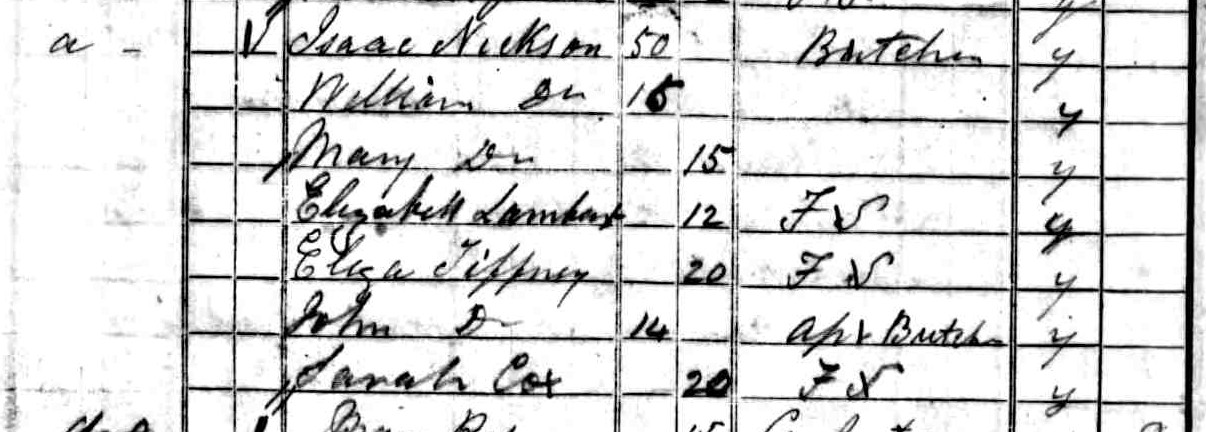
My great-great-great-great grandfather Isaac Nickson was born in 1785 and arrived in Leeds from Malton somewhere around 1826/7, with his wife Jane and six children (two more would be born here). In 1823 he’d been listed in the Malton trade directory as a butcher, with premises on Newbiggin, a trade he carried on in Leeds. How much he made of himself is debatable, at least from his shifting addresses: East Bar, a shop and house on Timble Bridge, 43, Marsh Lane, Garland’s Fold. By 1840, Jane had left him, moving to Rothwell with two of his daughters.


                          By Timble Bridge, late 19th century

1841 census_1

But things grow more interesting with the next generation.

Of his five sons, four became painters and paper hangers. It was a theme that would continue for some of the men into the 20th century. Others had similarly unskilled occupations – heeler and boot repair, tailor’s cutter. Poor men, in other words. My father and his brother were the first to have secondary education, in the 1920s, purely because they won scholarships.

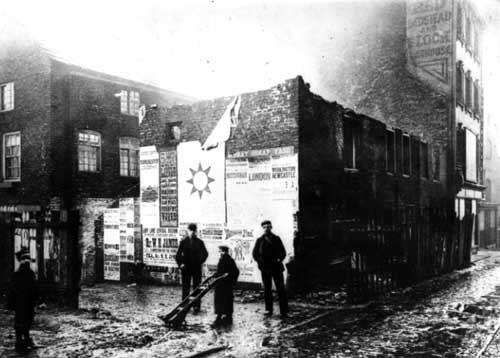
Isaac’s oldest son, also named Isaac (b.1815), and younger brother George (b.1820), were in business together, with premises in Birch’s Yard, 4, Lowerhead Row, advertising themselves as House and Sign Painters, Paper Hangers, Marble Painter Manufacturers.

1848 Issac and George

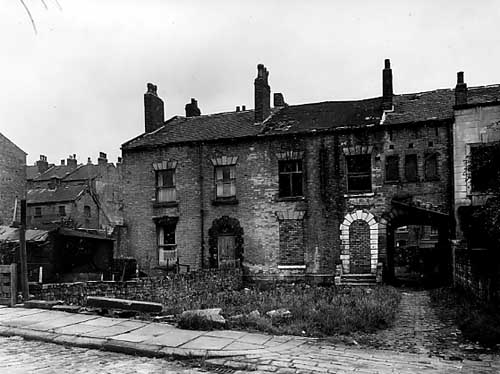
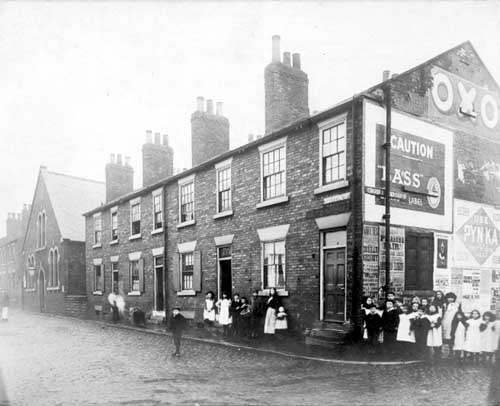
George, who married Mary Caroline Hewson (known as Caroline) in 1839, was at Crimble Row, close to Camp Road.

crimble street

Crimble Row, 20th century

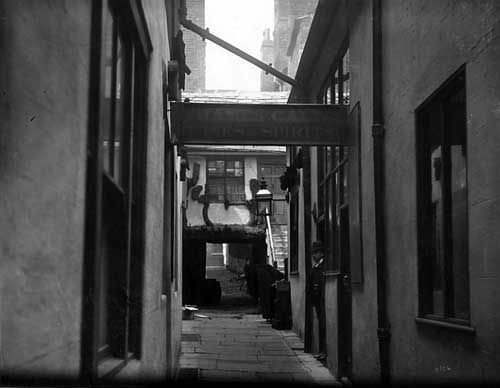
Another brother, William Isaac (b.1824), was also a painter, as was youngest sibling, John (b.1827), who lived first on Lower Brunswick Street, then Vandyke Street, off Regent Street, and had his premises at Ship Inn Yard, off Briggate

ship inn yard

Ship Inn Yard

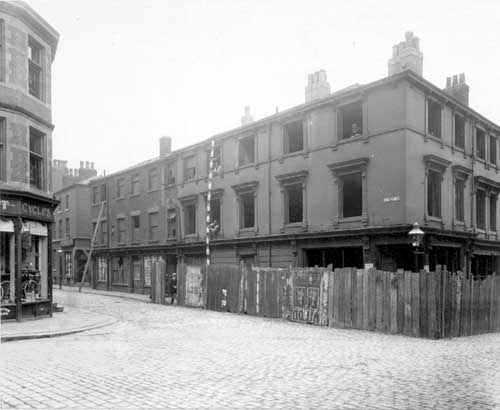
George and Isaac seemed to go their separate ways before George’s death in 1867. Caroline took over George’s business, very rare for a woman in those days, and in the 1871 census she’s shown as employing seven men and two boys – obviously a successful woman. She was living at 200, North Street, and had one servant, 15-year-old Elizabeth Strafford. George was buried at Beckett Street Cemetery, plot 5932. In 1877, Caroline married George Heuthwaite, a widower of Hunslet Road who made his living as a dyer, and she died in Hunslet 20 years later.

birchs yard

Entrance to Birch’s Yard on left, past Dobson’s

Caroline 1868

caroline 1871

North Street

North Street

FullSizeRender (8)

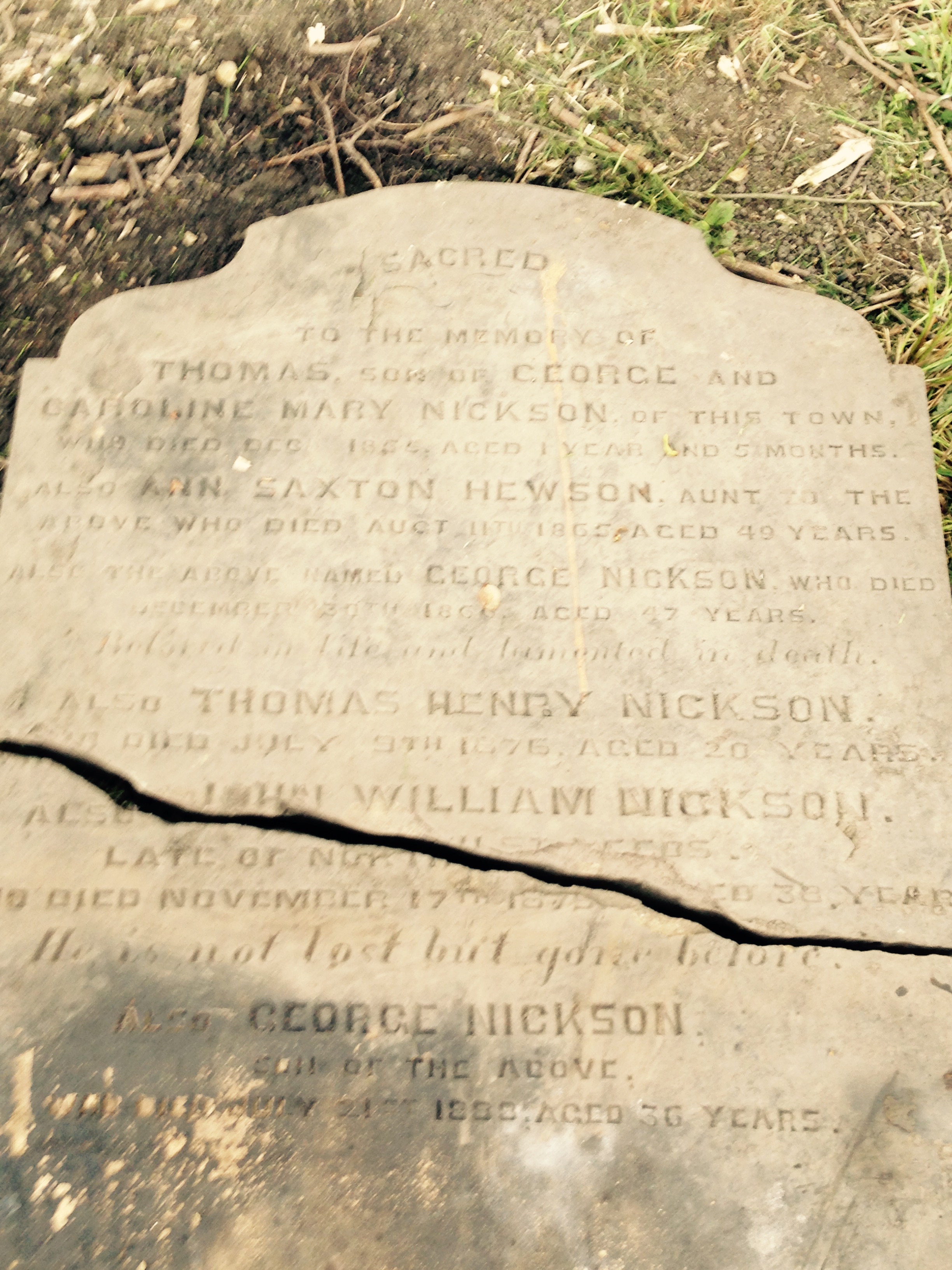
Gravestone for George and Caroline’s son, Thomas. Beckett St. Cemetery

Caroline’s son, Robert Hewson Nickson, probably took over the business and made it pay well, with premises in Lonsdale Yard on the Lowerhead Row (later known as Bradley’s Yard).

robert lonsdale

lonsdales yard

Lonsdale Yard

On his death in 1893 he left £331 19s 5d over £40,000 in today’s money, a staggering figure for a working-class man. Yet they still lived in an ordinary terraced house on Stamford Street, although they had a servant, Edith K. Simmons, aged 12.

stamford street

Stamford Street

In 1901, Robert’s widow, Clara, is listed as a painter and decorator, so she took over the business, although two years later she’d sold it and had a boot making business on Roundhay Road.


Isaac obviously as well as his brother, because in 1868, still living on Wade Lane, he was on the electoral roll, owning property worth more than £50, a large amount. In these days of a universal franchise, it’s difficult to believe how restricted the vote was in the 19th century.

Isaac voter 1868

wade street

Wade Street, 20th Century

Isaac Jr.’s son William Robert was yet another painter. Born in 1837, he learned the trade properly, and the 1861 census lists him as a journeyman painter, so he’d obviously completed his apprenticeship. At that point he was living on Wade Street with his father (although in the census he’s shown as a servant, strangely, and his uncle William is also shown there, again as a servant, although he has his own census listing with his family on Elm Street). But by 1868, he, too, was on the electoral roll.

1861 census2

WR voter 1868

William Robert had his business premises in Wheatsheaf Yard, off Briggate.

entrance to wheatsheaf yard

Entrance to Wheatsheaf Yard

FullSizeRender (10)

Grave of William Robert and three of his children, Beckett Street Cemetery

He died in 1890, but the 1891 census shows his widow Anna (or Hannah) Elizabeth living on the very respectable Ramsden Terrace and running the painting and decorating business – not bad for someone, it was noted, who could not write.

Ann1891

ramsden terrace top of pic

Ramsden Terrace at top of picture

Her son (yet another Isaac) lived with her, following in his father’s footsteps as a painter and decorator.

These are just a few instances, of course. But they show that in Victorian Leeds, it was possible for working men to make the leap across the class barrier to wealth and property. Yet what strikes me as remarkable is the fact that not once, but three times, women took over the businesses, and very male businesses at that. They didn’t give up, didn’t immediately sell them off. And they did it all successfully. In a time when that wasn’t a woman’s role, they showed that women could do it, and do it well. It was possible, for some, to transcend their origins and traditional roles.

Of course, not all the brothers did so well. William Isaac, my great-great-great grandfather, married Charlotte Berry in 1844. They had two children, John William and Martha, and lived on Elm Street, just off York Road in the Bank.

elm street

1871 census

William died in 1883, with no money for a funeral, not even enough for a guinea grave. He’s buried in an unmarked plot at Beckett Street Cemetery. Charlotte moved in with Margaret and her husband in Louisa Street in Hunslet. She died in 1889, and is also buried in a pauper’s grave at Beckett Street.

So, to those who have occasionally expressed surprise that Annabelle Harper in my Victorian series of books would be able to run a business so well, all I can say is that the precedent is right there. No wonder I see it as natural; it’s in the family.

All street images from Leodis.