Alderman Harkness

I’ve posted a couple of Richard Nottingham stories on here over the last couple of weeks and I’m grateful for how well they’ve been received. This isn’t a third, but it’s related – a tale involving his great nemesis, Amos Worthy (if you don’t know him, read the first three Richard Nottingham books). This goes back to a period before Richard is Constable of Leeds; he’s not even mentioned. But I hope you’ll like it anyway.

The young traveller closed the book of maps, stood up and began to look around.

“If you want the jakes it’s out in the yard,” said the man sitting across the table from him. “But I’d not leave that there, it’ll be gone by the time you get back. Den of bloody thieves, this is.”

“Thank you.” He picked up the book and took it with him.

The man shook his head. Some folk had no more brains than chickens, he thought. He pushed his plate away, downed the last of his ale and left the Talbot Inn, pausing only to loosen his breeches a little; the beef had been filling. One of his men lounged outside the door, watching the street with careful eyes, then quickly falling in step behind his employer.

Amos Worthy walked down Briggate, looking straight ahead, the tip of his silver-headed stick tapping on the street. Although he was dressed in shabby clothes, his coat and waistcoat old and stained, his hose dirty, the wig ancient, he knew he was one of the powers in Leeds. Aldermen came to court him, eager to borrow his money for their businesses or make use of his whores. Merchants deferred to him. None would have him at their table, of course. At one time they’d shunned him, back when he was an honest man. Now, at fifty, he was a pimp and procurer, with deep wealth in his coffers.

He turned on to Swinegate, striding easily through the clamour of people at work or making their purchases and went through the plain door to the house, going along to the kitchen, where the fire was lit. The man was already waiting there for him.

“Alderman Harkness,” he said as he settled onto his chair. “What can I do for you?”

Harkness was close to fifty, about the same age as Worthy, a close pink shave on his heavy jowls. In the last decade he’d ballooned into fatness, much larger than Worthy himself. But he strove to hide it in suits of the best cut, intended to flatter, and expensive, colourful silk waistcoats. He’d made his money from selling cloth and consolidated his power as a member of the city’s corporation.

“I need the loan of some money, Mr. Worthy.” At least the man had the decency to look embarrassed at his request, Worthy thought.

“And how much this time, Alderman?” He let his voice hang on the last word to remind Harkness of his position.

“Two hundred and fifty.”

“Two hundred and fifty pounds?” He was astounded by the figure. It was enough to pay for an apprenticeship with a merchant. Even those who did well in the wool trade that was the backbone of Leeds only cleared twice that in a year. “And what do you need that for?”

“It’s a personal matter.” Harkness tried to sound dignified, but Worthy knew the reason. The alderman’s son, George, loved to gamble. He spent his nights at the tables, in York or London, playing cards or hazard. By April each year he’d already lost his annual allowance and came crawling to his father for more. The man needed the money to honour his son’s debts.

“You’re a man of strong appetites, Mr. Harkness.” Worthy leaned back and studied the alderman in his finery. He glanced over at the guard by the back door. “How many times has he had Sophie in the last two months, Tom?”

“Twenty, sir.”

Worthy raised his thick eyebrows.

“Twenty times with one of my whores in two months? You’ve a bull in your breeches, Mr. Harkness. And how much have we charged him, Tom?”

“Nothing,” came the reply.

Worthy sat back and sighed.

“You use my girls for nowt, you already owe me a hundred from last year, and now you’re back at the trough for more. What do you say to that, Alderman Harkness?”

“I’ll pay you back,” he answered brusquely. “I always have before.”

“Aye,” Worthy agreed slowly. He poured himself a mug of ale, pointedly offering none to the other man, and drank it all down in one long gulp. “That was then, though. Times have changed, haven’t they?”

Just a year earlier, in 1714, the merchants and aldermen of Leeds had sworn their allegiance to the new king, George. Less than twelve months later, in June, some folk in the city had celebrated the birthday of the Old Pretender, James Stuart. The church bells had rung for hours and bonfires had burned in joy around the town. The dragoons had come out of their barracks to stop the Jacobite sympathy. In the weeks after, Mayor Pollard and two others had been summoned to London and Alderman Cookson had been briefly arrested. After that Leeds had trodden tenderly and cautiously. Trade was down, no one wanted to be seen to do business with traitors. The merchants were making no money, he knew that for a fact; they’d all come grovelling to him for favours and loans. If it lasted much longer, Leeds would be full of paupers, Harkness included.

“They’ll get better,” the alderman promised. “This’ll blow over soon enough, you wait and see.”

“Oh aye?” Worthy asked. His voice was lightly mocking but his eyes were hard. “And how long do I have to wait?”

“A month…maybe three.”

He could see the main was sweating, the drops standing out on his forehead under the carefully powdered wig. Worthy poured more of the ale and sipped at it, tasting the bitterness in his mouth and relishing it in his throat.

“And if I lend you the money, what’s my guarantee?”

Harkness stood straighter.

“My honour. It’s been good enough for you before,” he said, affronted.

“I already said, times have changed.” He knew that the man would get his money and be deep in his debt in many ways. But let him wait a little for it, he thought. Harkness had been one of those who’d hounded him all those years before. He’d had a shop then, a draper’s, doing fair business and gaining a reputation. Then there’d been the news of his affair with a merchant’s wife – nothing as simple or straightforward as an affair, really; it had been love – and the customers he’d relied upon had abandoned him, until he’d had to start over, running whores and finding a life beyond the law. Did the man in front of him think he’d forgotten all that, written it off to history? “So which will you wager on?” he asked. “One month or three?” He could see relief flood into the man’s expression.

“Three months,” he answered quickly, as Worthy knew he would.

“Same interest as before.”

Harkness nodded.

“Tom will bring you the money,” he said and took another drink. The merchant moved towards the door. “And Mr. Harkness,” Worthy said to his back, “there’ll be no more Sophie until you’ve paid.”


The summer passed, a hot and humid August slowly giving way to the first signs of autumn, fruit dropping from horse chestnut trees to be eagerly gathered by boys, the leaves turning to their bright, dying colours.

As the weather turned, clouds and showers replacing sun and heat, another pimp thought to challenge Worthy’s supremacy. Others had tried and failed, and this one was no different. Worthy led his men in the fight, using his fists and boots, enjoying the red rage that overcame him before taking his knife to the upstart as a lesson. Mercy was softness in his business; men had to know that failure brought only one thing. If he didn’t do that, none would respect or fear him.

When it was over he found out who’d betrayed him to his competitor. It was one of his girls, one who’d tried to cheat him before and paid the price for that transgression with a long scar on her cheek. This time, when he questioned her, she’d stood defiant, saying nothing but spitting in his eye. He’d taken care of her himself, making sure none would ever see her alive again, and that no one would find the body. He knew the rumours would spread and his reputation would grow. It would keep the whores in line and the debtors agreeable.

By the end of October he’d received no word from Harkness about repaying the loan. Worthy had kept his ears open. He knew trade was still painfully slow, the merchants and the city still hurting, purses so tight that they squeaked. Three days remained until the loan was due. The second of November, payable in full with interest. There was time, he told himself. The man might arrive on the day itself. One thing Harkness wouldn’t dare do was play him for a fool; that was a devil’s game.

He kept his own counsel on the matter, the way he did with everything else. Never let any man know your mind, he’d learned, and it had served it well. It kept them guessing and kept them wary.

On the day the money was due he stepped into the parlour of the house on Swinegate before going to dinner. There were cobwebs in the corners of the ceiling and dust on the small table. One of the servants had lit a fire, but no one was allowed to clean in here.

“Hello, mam,” he said to the old woman in the chair. She was hunched over, a small glass clenched in her finger. Her stroked her hair tenderly but she took no notice. She’d had him at fifteen and raised him as well as she could, somehow finding the money for his apprenticeship to a draper. When the respectable folk of the city turned their backs to him, she’d found her sweet oblivion in gin. He’d taken her in, made sure there was always enough of the spirit for her.

She didn’t move, didn’t answer, and soon he left her to her dreams, wherever they might take her. He ate at the White Swan, conducted his business and returned, sitting late in the kitchen and brooding while a blaze roared in the hearth. He finished a jug of ale and refilled it from the barrel, paying no attention to the guard who waited patiently by the back door.

The next morning he sent word to Adam the forger, a note telling him what he needed. He knew the man would do it without question.

Adam brought the documents before evening and Worthy inspected them closely before handing over a gold coin, payment for the work and the silence that would follow it. Nights were coming earlier, he thought as he looked out of the window. All too soon it would be winter once more and he’d feel its bitterness in his bones. Each year seemed colder than the last.

He’d give Harkness until morning to appear.


Worthy rose early, dressing in the clothes he always wore, careless of the stains and smell. Bread, cheese and sliced meat were waiting on the kitchen table, the room already warm from the fire, the way he enjoyed it. Finally he pushed the plate away and motioned to Tom.

No Harkness. No word.

“Go up to the barracks and fetch Lieutenant Marsh,” he ordered. He knew the man would come; Worthy had been generous with his whores and gifts of wine to the man. Marsh had been the officer to quell the celebrations and arrest the men he believed disloyal to the King. He was an ambitious fool, someone who believed fervently in crown and country as he paraded around Leeds in his best uniform and paid court to the young ladies of Leeds before tupping the prostitutes in the back rooms of inns.

It took two hours for the soldier to arrive, the heels of his polished boots clacking on the flagstones of the hallways. He stood on the other side of the table, back straight, his hat clutched under one arm, a quizzical expression in his eyes.

“I believe all the men you arrested over the birthday celebration for the Pretender are free,” Worthy began. He was seated on the stool. He’d put more coal on the fire, making sure that the man would sweat in his fine plumage.

“They are, sir.” Marsh’s voice was loud and abrasive, with the drawl of generations of money.

“You must be disappointed, laddie.”

“Sir?” He looked confused.

“All that work and they’re let go in the end. They’ll not have thanked you in London. Making all that work for them and it comes to nought.”

Marsh was silent. Aye, Worthy thought, he’d have earned himself a black mark or two with that. He smiled.

“Would you like to redeem yourself, Lieutenant?”

“Sir?”

He drew the papers from the deep pocket of his waistcoat. They’d been folded and refolded, the handwriting carefully imitated.

“What would you say if I told you I had proof that someone here had been writing to the Pretender? To James Stuart himself, pledging his loyalty. Of his own desire,” he added carefully, “nowt to do with the city.” Marsh stepped forward eagerly. “What do you think would happen to a man like that?”

He could see the soldier thinking quickly of his own glory.

“He’d be taken to London and tried. If he was guilty, he’d be executed.”

Worthy nodded sagely.

“And as a good subject of his Majesty, it would be my duty to pass on this information, of course.”

“It would.” Marsh held out his hand and Worthy passed over the documents. “What’s the man’s name?”

“Alderman Harkness.”

Sanctuary

Plenty of you seemed to enjoy the Richard Nottingham story I posted last week. So I dug deep and discovered this…maybe you’ll like it as much.

Leeds, 1731

Outside, the wind was howling up a gale, bruising and battering. It whipped against the window, rattling it in the loose frame, and hammered sharply against the door. Night had fallen and any folk with sense were indoors, gathered close by their hearths. Winter was announcing its arrival.

Richard Nottingham, Constable of Leeds, stirred up the embers of the fire at the jail, watching the coals glow rich and red as the sparks leaped up the chimney. He rubbed his hands together, trying to pull some warmth into his flesh. He’d been out all day hunting a killer.

Ten people in the Packhorse had seen the murder happen the night before. Simon Walsh, deep in his cups, had started an argument. Those who knew him always kept their distance once he started drinking. He was a big man, violent when the mood and the ale took him. From all the Constable had learned, Walsh had begun shouting at a small man, a stranger, just words to begin, turning quickly to pushing and goading, until the man drew a knife to defend himself. Then Simon had pulled his own weapon, cutting and slashing, the rage gathering him up, until the stranger was dead.

Only then, as the blood lust faded from his mind, had he seen what he’d done. He’d run from the inn, no one brave enough to challenge him. And now it was the job of Nottingham and his men to find him.

The Constable had been called from his bed in the middle of the night and had worked ever since. He was chilled to his marrow, ready to go home to his wife and daughters and leave Simon to freeze to death out there. But he knew he couldn’t do that. They’d keep going until they found him and he was in a cell.

Nottingham poured some ale into a mug and drank it slowly while the warmth of the fire began to soak through him. Another ten minutes and he’d go back out.

He’d just started to pull the greatcoat around himself when the door opened and John Sedgwick, the deputy, appeared, breathless, his face flushed with running.

‘We’ve got him, boss. He’s down at the new church.’

‘Do you have someone guarding the place?’

‘Front and back.’ He hesitated, frowning.

‘What?’ Nottingham asked.

‘He’s taken a girl in with him. Pulled her off the street when we chased him there.’

‘Right,’ the Constable decided quickly. ‘You go and find Mr. Scott, the vicar. I’ll go and talk to Simon. He’ll be sober by now. He’s scared.’

‘Every right to be. He’s going to hang for this.’ He paused for a moment. ‘Better be armed, boss. You know what he can be like.’

Nottingham took a sword from the cupboard on the wall and strapped on the belt, then handed the other to the deputy. ‘You too, John. Just in case.’


The air had turned even colder, the wind brisker, more piercing than before. Their breath made small clouds as they walked down Briggate and along Boar Lane where Holy Trinity, the new church, had been built just two years earlier, its pale stone not yet blackened by all the soot, the strange wooden steeple rising up towards heaven.

The Constable pushed open the heavy wooden door and walked into the porch, then through to the nave. His boots clattered on the tile floor. Candles were lit by the altar and he could see Walsh sitting there, a young woman crumpled at his feet where she’d fainted. He was stroking her hair gently and looked up at the sound.

‘I’ve not hurt her,’ Simon said. He was close to fifty, a good ten years older than Nottingham, bigger and stronger, with thick arms that could effortlessly pick up and carry a bale of cloth. His coat was ragged, parting at some of the seams, his linen grimy. The ragged waistcoat had been sewn for a smaller man. It hung open, the tails flapping over his thighs. Walsh wore heavy boots and thick worsted hose, the breeches torn at the knee and covered in mud. ‘I wouldn’t, neither. I just wanted them to leave me be to come in here. That’s why I took hold of her. And then she went and did that.’ He seemed astonished by her behaviour.

The Constable strode forward until barely two yards separated the men. In the soft, flickering light he could see the girl’s chest rise and fall as she breathed, and her eyelids started to move. He crouched, reaching out to take her hand in his own.

‘You’re going to be fine, love.’ He kept his voice low and gentle, rubbing small circles on her skin and watching as she slowly came to, eyes blinking. Who could blame her for her fear? ‘I’m the Constable,’ he told her. ‘You don’t have to worry now. You’re safe now.’

Her eyes opened quickly, terrified, and she looked around in a panic. Seeing Walsh, she opened her mouth to scream and tried to push herself away.

‘He’s not going to do anything,’ Nottingham assured her. ‘I promise. I’m here.’ As she turned to stare at him, he smiled. ‘What’s your name?’ he asked.

‘Martha,’ she answered, her voice just a croak. She swallowed hard. ‘Martha, sir.’

‘Try not to worry, Martha. Mr. Walsh won’t hurt you. Can you stand?’

‘I think so.’

He helped her to her feet. For a moment she was unsteady, holding hard on to his arm, then she breathed in and nodded.

‘My men are waiting outside,’ he said. ‘Just go out and they’ll look after you.’

She glanced back at Walsh.

‘You’re safe. He’s not going to hurt you. I’ll make sure he doesn’t do anything.’ He waited until she gave another small nod. He heard her footsteps as she scurried away, the sound of the door closing booming in echoes around the church.

‘Right, it’s just you and me, then, Simon,’ the Constable said. He leaned against one of the box pews, the carefully polished wood gleaning in the light.

‘Did I kill him?’ Walsh’s eyes were empty, his mouth little more than a pinched line. He was a man who’d always worked with his body, not his mind; he acted first and thought after. ‘Last night. The man.’

‘You know full well you did. You knew it back then after you’d attacked him. Why else would you run?’

‘Aye.’ Walsh agreed, rubbing his hand across the back of his neck.

‘Why? Why did you do it, Simon?’ He’d caused trouble often enough, but in the past it had always been fists and feet, bloody but never deadly.

He glanced up, a regretful look on his face.

‘I don’t know, Mr. Nottingham. I swear I don’t. It were the ale. It were in me.’

‘Do you know who he was?’

Walsh shook his head, grimacing as if he didn’t want to hear the answer.

‘His name was Tom Dunn,’ the Constable said. ‘He’d not even been here a month. Came down from Malton with his wife and baby girl hoping to make a little money and a decent life. I had to go and tell them last night.’ He saw Simon look at the floor. ‘The little one’s not even two and the wife is carrying again.’

The words filled the church, falling slowly away to silence.

‘You’re going to hang for this, Simon.’

‘Nay, Mr. Nottingham.’ He could hear the pleading in the man’s voice, the sorrow and remorse. ‘You can’t do that. I didn’t mean to hurt him. It weren’t me. You know what I’m like.’

‘You killed him. Ten people saw you do it.’

‘There’s none of them tried to stop me!’

‘Look at yourself,’ the Constable said angrily. ‘Who could stop you when you’ve a fury on you? You’d have murdered them, too.’

‘Will you tell his wife I’m sorry? Tell her I didn’t mean to do it.’

‘Words aren’t going to help her, Simon.’

Walsh moved his hand and Nottingham stiffened, ready to draw his sword. Instead the man reached into the pocket of his breeches, pulling out as few coins and tossing them on the floor. ‘Give her that. It’s all as I’ve got.’

The Constable sighed.

‘Come on, Simon, it’s time to go. You’ve led us a pretty dance all day but it’s enough now.’

Walsh didn’t stir.

‘You know that’s not right, Mr. Nottingham.’

‘What isn’t?’ He didn’t understand.

‘I’m in a church. I’m by the altar.’ He gave a smile.

‘What are you trying to say?’

‘It’s the law, I’ve got sanctuary here.’ He pronounced the word slowly, unfamiliar and awkward, something heard years before and faintly recalled. ‘Why do you think I came here? It’s the law. Me granddad told me where I were a little ‘un.’

Nottingham sighed. Now it made sense.

‘No, Simon, it’s not the law. I don’t know what he said to you, but it was wrong.’

Walsh looked up, pain and fear filling his eyes.

‘He’d not have lied to me,’ he said sharply. ‘He were a good man.’

‘Long ago churches used to offer sanctuary,’ the Constable explained, watching as the man cocked his head. ‘That part’s right. But it’s all in the past. They changed that law more than a century ago.’

The candles lit a tear falling down the man’s cheek.

‘You’d not lie to me, Mr. Nottingham?’

‘No, Simon,’ he answered softly. ‘You know I wouldn’t.’

Walsh rose slowly, pushing himself off the floor with strong arms until he was upright, his shoulders slumped.

‘You know it has to be this way, don’t you?’ the Constable asked and waited as the man nodded his acceptance. ‘You can walk out next to me. Mr. Sedgwick’s out there. We’ll take you to the jail.’

First Day – A Richard Nottingham Story

I’m not sure why, but Richard Nottingham’s been on my mind a little in recent days. So I dug back and discovered this story I wrote about him. The tale will be four years old next week. Maybe it’s time for the light of day…and if you’ve missed Richard, enjoy…

He woke well before the dawn, his body and his mind quickly alert. Quietly, he eased himself out of the bed, hearing the snores and breathing of the other men in the room. There were eight of them and more elsewhere in the lodging house, the smell of sweat, ale, and sour breath part of the fabric of the walls.

He dressed soundlessly, washed his face and hands and swilled cold water in his mouth before running damp fingers through his wild hair. Downstairs, the two servants were in the kitchen, starting the fire, grumbling and moaning their way into the day.

The air was cool against his face as he walked from Hunslet over Leeds Bridge and into the town. On Briggate a few weavers were already setting up their trestles for the Tuesday morning cloth market, and the taverns were open, doing a steady trade in ale and the Brigg End Shot beef breakfast. None of them paid him any attention.

He turned down Kirkgate and opened the door of a squat building. ‘Hello, sir,’ he said.

The man looked up slowly from the papers on the desk.

‘You’ll not get more money for coming early.’ He nodded at the empty chair. ‘Sit thisen down. I need to finish this.’

Richard Nottingham sat quiet, eyes moving around the room, imagining the cells beyond the thick oak door and the people who might be in them. He was ready for his first day as a Constable’s man.

He waited, watching Will Arkwright work, the Constable’s coat over the back of his chair, bright blue waistcoat snug against his chest, the sleeves of his shirt pushed up to show thick forearms covered in dark hair.  Finally the man put down his quill and sat back, staring at him.

‘You think I took you on because of you da, don’t you?’ he asked.

It was true; Nottingham believed that. His father had been a merchant, not good, not successful, but he’d married into money, and the dowry had kept a kind of prosperity. When he’d discovered his wife was having an affair he’d thrown her out, their son with her, keeping the money and the property for himself. As legal as the day was long, the woman and the child left to starve. She’d sold her body, the only thing she had left, to anyone with a few pennies. In four years she was dead and the lad was on his own. He’d slept where he could, in the woods outside the town, empty houses, in the silent, hidden places with the other outsiders. He learned to fend for himself, to live on the rotten food left at the market and what he could steal.

Now he was twenty, it was the year 1711 and the poacher had turned gamekeeper; he was going to catch the thieves.

‘I don’t know,’ he answered. ‘Did you, sir?’

‘Nay.’ Nottingham felt the man’s eyes on him. ‘Your name’s got nowt to do with it. I’ve been watching you for a while. You’re clever. Not as clever as you think you are, mind,’ he added with a sly grin, ‘but you’ll do. And you can learn.’

‘Yes, sir.’

‘Are you ready, lad?’ the Constable asked.

‘Yes, sir.’

Arkwright grinned.  ‘No need for that. Boss is fine. Come on, I’ll show you round the market.’

Nottingham felt proud as he walked next to the older man, listening carefully as Arkwright pointed out characters among the crowd and among the merchants. As the bell rang and the whispered trading began, the Constable led him all the way to the bridge and looked back up the street.

‘You know how much business is done there, Richard?’ he asked.

‘No, boss.’ He’d never given it much thought.

‘There’ll be thousands of pounds change hands,’ he said. ‘Imagine that.’

He tried, but he couldn’t. His life was measured out in farthings and pennies. A pound was a fortune to him, more money than he’d ever had in his hand.

‘You see him?’ Arkwright pointed out a tall, barrel-chested man who strode up Briggate, looking straight ahead, two younger men following close behind him. The man had his hair cropped close against his skull and walked bareheaded. His clothes might have been good once, but now they seemed old, shabby, worn for too many years.

‘Who is he, boss?’ He’d seen the man around in the inns and shops, but never learned his name.

‘That’s Amos Worthy,’ the Constable said slowly. ‘You stay in this job and you’ll come to know him. And hate it, too. He’s the biggest pimp in Leeds, has the corporation in his pocket.’ He sighed and shook his head. ‘Watch your step with him, he’s a brutal bugger.’

Nottingham thought he knew the town well, living so long among its shadows and secrets, but as Arkwright led him around he began to understand there was so much still to discover. Back at the jail Arkwright poured two mugs of ale and handed one across the desk. ‘There’s all you can drink on top of your wage. It’s good; they brew it at the White Swan next door.’

As they drank, the door opened. The man who entered was big, solid, his thick fists scarred, dark stubble heavy across his cheeks and chin. He nodded at the Constable and helped himself to a drink.

‘This the new one, boss?’

‘Aye, that’s him. I’ve taken him round, now you can teach him well. This is Tom Spencer,’ he told Nottingham. ‘My deputy. Pay attention to him; he’ll be giving you your orders.’

‘Call me Tom,’ he said, smiling and showing the lines around his eyes. He was perhaps thirty, with the weary look of a man who’d seen so much that the world couldn’t shock him.

‘I’m Richard.’

Spencer downed the rest of the ale in a single swallow. ‘Right, we’ve had a cutpurse plaguing people at the market for the last few weeks. Let’s see if we can find him.’

He led the way up Briggate, past the Moot Hall and through the market where women clustered around trestles selling old clothes, pans and wares. Up towards the market cross farmers had their chickens in willow cages and others offered butter or fresh milk.

‘You know about cutpurses?’ Spencer asked and Nottingham nodded but said nothing. No need to say that he’d stolen a few himself when he was desperate, his knife quickly cutting the strings then vanishing into the crowd before the owner could even notice. He knew what to look for, the sudden movement only glimpsed from the corner of the eyes, the gaze that shifted around quickly and awkwardly.

‘We’ll catch this one,’ Spencer said confidently. ‘Little bugger’s getting cocky. The boss almost had him last week but the lad was too fast.’

‘How old is he?’

The other man shrugged. ‘Ten or so, small, thin, pale hair. There’s plenty like him around.’

‘Over there,’ Nottingham said quietly.

‘Where?’

‘By the wall, behind the tinker.’ He’d spotted the boy so easily, seen his concentration and the way he stood, his body tense, on the edge of movement.

‘Could be,’ Spencer allowed warily.

‘It is.’

‘You go one side of him, I’ll take the other,’ the deputy ordered. ‘If he reaches a purse, grab him quick, before he can run.’

It didn’t take long. The boy slid away from the wall, his blade extended. A swift cut and the purse was in his hand as he began to merge into the throng. But Nottingham had was already there, his hand tight  around the lad’s wrist as he tried to squeeze past, lifting him off the ground.

Spencer shook the boy roughly by his collar, twisting his arm behind his back until he gave up the money.

‘You’ll not be doing that again, you little bastard,’ he said with relish. ‘You know where you’re going? Jail and the Indies.’ He paused deliberately, a smile on his face. ‘Unless the hangman wants you to dance for him. You saw who he robbed?’ the deputy asked.

‘No.’

‘Never mind, he’ll soon find he’s poorer.’ He tossed the bag of coins to Nottingham. ‘You take this, I’ll look after him.’ He dragged the boy along the street, pushing people out of the way as Nottingham followed behind, muttering apologies and excuses.

At the jail, Spencer threw the boy into a chair. The lad was petrified, curled in on himself, thin shoulders hunched, tears brimming in his eyes, hands shaking as he looked anxiously between the deputy and Nottingham.

‘What’s your name?’ Spencer asked. When the lad didn’t answer immediately he raised his hand, leering as the boy cowered.

‘Mark, sir,’ he answered finally, lowering his head. The deputy walked up to the boy, took a handful of hair and pulled his head back.

‘How many purses have you snatched?’ he shouted

‘Seven.’ The boy’s voice was little more than a frightened whisper. His whole body was trembling.

Spencer raised his eyebrows and laughed. ‘That’ll be the noose for you, then.’ He inclined his head. ‘In the cell.’ The boy moved away meekly and Nottingham heard the heavy clunk of the lock as the deputy turned the key in the door.

‘You didn’t ask why he did it?’

The deputy shrugged. ‘Doesn’t matter, does it? The little sod’s a thief. We caught him with the purse in his hand. We’ve done our job.’ He smiled once, showing a mouth missing half its teeth. ‘You saw him fast enough, anyway, though. How did you know?’

Nottingham didn’t answer immediately; he daren’t. Finally he simply said, ‘Something about him. It didn’t look right.’ He thought about the boy cowering behind the bars, terrified of what would happen to him but knowing it would be the worst thing he could imagine. ‘He’ll hang?’

‘Like as not.’ Spencer poured himself ale. ‘All we do is catch them. The rest is up to lawyers and judges.’ He scratched his armpit. ‘I don’t give a bugger what they do as long as they’re out of our way.’ He drained the cup and ran a hand across his mouth. ‘Come on, let’s get back out there. I’ll see what I can show you.’


By late afternoon Nottingham had been through parts of Leeds he’d never known, inside the undercroft of the Parish church, around St. John’s and beyond into Town End where a few merchants were building large new houses to flaunt the money they’d made in the wool trade.

‘Take a good look at these,’ Spencer advised. ‘You need to know who runs this city, and it’s not them without anything.’

Nottingham stared at him sharply. ‘What do you mean?’

‘Them with the money pay us,’ the deputy explained patiently, as if to a child. ‘That means we do what they want.’

‘What about the law?’

Spencer spat and gave him a pitying look. ‘One thing about this job, lad, you’ll grow up in a hurry. Who do you think makes the laws? Give it a while, you’ll see what I mean.’

He wasn’t sure what to think. Perhaps the deputy was right and all they did was keep the rich safe. He thought of the cutpurse, alone in the cell, his throat dry with fear. He thought of the bodies he’d seen floating in the River Aire over the years, every one of them poor folk. Nottingham thought of the merchants at the cloth market that morning with their fine clothes and their high manners. He glanced down at what he was wearing, a coat full of holes, hose worn from white to dull, dreary grey, shoes where the uppers were starting to split from the soles. What did he look like? A poor scare-the-crow, not someone with the authority to enforce anything.

They walked slowly down Briggate from the Head Row, all signs of the morning market gone. Businesses were open, their shutters wide, an iron tang of blood rose from the butchers’ shops on the Shambles, and the prostitutes smiled behind their fans at the entrances to the cramped yards that ran back from the street.

‘You wait here,’ Spencer told him, walking up to one of the women and disappearing into the yard with her. Three minutes later he returned, his face flushed, grinning. ‘One of the best things about this job,’ he said. ‘The lasses won’t refuse you. They know what’s good for them.’

Back at the jail the deputy poured more ale and checked on the boy in the cell. ‘Be back here at dawn tomorrow,’ he told Nottingham. ‘You’ve made a good start, you’ll do well here.’


He walked along, lost in thought. He’d been excited after the Constable had taken him on. Not only for the regular wage, but also because he believed he could do something in this place where he’d lived all his life. Maybe he’d even manage find a little justice. He’d explained it all for Mary, the girl he was courting, and revelled to see the joy in her face. What could he tell her now, he wondered? That he’d been wrong? He sighed.

There was still plenty of traffic on Leeds Bridge as he walked back to Hunslet. Carters were leaving the town, the rumble of wheels on cobblestones an undertone to the curses, shouts and laughter.

‘Penny for them, laddie.’

He glanced up at the voice. The man was a little taller than him, his nose broken several times, a sly smile playing across his mouth. But his eyes were hard and empty, telling nothing of his thoughts or his mood.

‘You’re Amos Worthy,’ he said.

‘Aye.’ He nodded lazily and chuckled. ‘Old Arkwright warned you about me, did he?’

‘He told me what you do,’ Nottingham replied coldly.

‘I daresay he did,’ the pimp agreed. ‘And did he point out that if I didn’t do it, someone else would?’ He laughed at the young man’s hesitation. ‘Of course he didn’t. One day as a Constable’s man doesn’t teach you everything about life. There’s still plenty for you to learn.’ He picked at a gap between his teeth with his thumbnail, found a piece of food and wiped it on his greasy, discoloured coat. ‘I knew your father,’ he said, then, as if it was nothing, ‘And your mam, too.’

Nottingham eyed him warily. How did the man know who he was? How had he been connected with his family? Worthy gave a predatory grin.

‘I thought that might make you listen. Happen I’ll tell you sometime. But it’s history, a long time ago.’ He looked the young man up and down. ‘You like working for Arkwright?’ He waited for the answer then laughed. ‘Aye, a day with Tom Spencer and I’d be silent, too.’ He turned away, resting his elbows on the thick parapet of the bridge, looking down at the river. ‘I’ll give you a job if you want it.’

‘Me?’ Whatever he’d expected, it wasn’t this.

Worthy nodded. ‘I’ll pay you better than Arkwright does, too. You’ll not be a rich man but you’ll have some coins in your purse every week.’

‘What would you want me to do for them?’ Nottingham asked flatly. He was certain he knew, but he wanted to hear the man say it himself.

‘Anything I need.’ He looked at the younger man. ‘What did you think? There’s nothing free in this life. And when I give an order I expect it to be carried out.’ His gaze was firm. ‘Whatever it is.’

Nottingham stared back. He wondered about the man in front of him, how he knew about him, what power he had in Leeds.

‘I’ve known Will Arkwright for a long time. He won’t take anyone on just for the sake of it,’ Worthy continued. ‘Nor will I.’

‘So why would you want me?’

The pimp spat down into the river then grinned. ‘Taking his new man is one way to spite the bastard.’

Nottingham didn’t smile. Instead he shook his head slowly. ‘Six years ago you had a girl.’

‘I’ve had a lot of girls, laddie.’

‘She was called Molly. I saw what you did to her when you thought she was cheating you.’

The pimp gave a barking laugh. He seemed amused, not angry. ‘Rich enough to be a man of conscience, are you? But if you’re going to tell a tale, laddie, you ought to tell the whole of it.’

‘What do you mean?’ he asked.

‘I remember that lass, right enough. Swore to you she was honest, did she?

‘Yes. I believed her.’

‘Aye, well, you were young. Never believe everything you hear.’ He snorted. ‘She was taking a pretty penny from me every way she could. Told me she’d stop after I beat her but she didn’t.’ Worthy turned his eye sharply on Richard. ‘You ever wonder why she left suddenly?’ Nottingham shook his head. ‘She had ten pounds of my money in her purse. Ten pounds. Keep her for a year, that would. So think on that before you accuse me.’

‘Why should I believe you?’

Worthy shrugged. ‘You either will or you won’t. Doesn’t matter to me either way.’

‘I think you’re lying.’

‘Think what you want.  It’s all history now.’

‘I’m not going to work for you.’

‘Your choice, laddie. You’ll live to regret it, I’ll tell you that.’

Nottingham thought of Mary and how she’d be eager to hear how his first day as a Constable’s man had gone. If he worked for Worthy, all he’d want would be the shame of silence.

‘No,’ he answered firmly. ‘I don’t think I will.’ He crossed the bridge and walked back to the lodging house.

Meet Lottie Armstrong

It’s official. Contracts signed and returned. Lottie Armstrong will be going public.

Who?

Mrs. Charlotte Armstrong, but everyone calls her Lottie. During the First World War she’d been a Barnbow Canary. But in 1924 she’s become one of the first two policewomen in Leeds. The only problem for WPC Lottie Armstrong is that the very restricted duties – dealing only with women and children – don’t seem quite enough. She has a brain and she wants to use it. But the men in charge don’t seem willing to give her a chance.

Until a girl in a home for unmarried mothers goes missing. And suddenly Lottie Armstrong gets the chance to be a proper copper, a job that takes her into the shadowy world of lesbian Leeds, mixing with the poor, and then out to rub shoulders with the wealthy, the powerful – and the crooked. As well as doing her real job.

Can Lottie do it all? You’ll have to read Modern Crimes, out in September, to find out. But here’s a short extract (followed by a little about the sequel).


So here she is. Meet Lottie Armstrong


‘I told you, a hint’s as far as he’ll go. That’s his idea of co-operation. We need to go up there and look. Ask whoever’s on the beat.’

‘I might have a better idea, sir.’


The space behind the Royal Hotel stank. The bins overflowed and there was a strong stench of urine from somewhere. Lottie paced around, waiting and trying to be patient. The sound of traffic was muffled and distant. A train went by on the embankment, the second in ten minutes, making the earth under her shoes shake as it passed.

Finally the door at the back of the building squeaked open on rusty hinges and a heavy woman emerged. She was dressed in a man’s double-breasted suit, correct down to the collar and tie, shoes polished to a high gloss, her short hair in a brutal shingle cut and pomaded down. Blinking in the light, she lit one of her Turkish cigarettes.

‘Hello, Auntie Betty,’ Lottie said. ‘I haven’t seen you in a while.’


At first McMillan refused to go in. They sat in the car on Lower Briggate and looked across the street at the place.

‘They’ll know I’m a copper as soon as I walk through the door,’ McMillan objected.

‘Well, I can’t. I’m in uniform,’ Lottie reminded him.

He pushed the brim of his hat back.

‘It’s just…’ Then he shook his head and a look of distaste crossed his face.

‘Because they’re different, you mean?’ She chose her words very carefully.

‘Yes. It’s wrong, inverts and mannish girls. It’s not natural.’

‘Sarge,’ she began patiently. ‘John.’ What was the best way to put it? ‘This is the quickest way to get the information. Betty’s lived up on Blackman Lane for years. She knows the place inside and out. Two minutes and she can tell me where we can find Walker.’

‘How do you know her, anyway?’

‘Her niece had a few problems. WPC Taylor and I helped sort them out. Betty came to see us out on patrol and said how grateful she was.’

He glanced at the entrance to the Royal Hotel.

‘All right,’ he agreed reluctantly. ‘We’ll do it like this: you go to the ginnel at the back and wait. I’ll pop in, have a word with her, say you’re need to talk to her. Be as quick as you can. We’ll meet back here.’


‘You’re looking well, Lottie.’ Betty smiled. Everyone called her Auntie, a strangely sexless figure, more man than woman and ending up neither. She was a fixture behind the bar, serving drinks for the homosexuals and lesbians who spent their money there, always ready to advise them on their problems but never finding answers to her own.

‘So do you.’

‘That poor man you sent in looked terrified.’ She gave a chuckle. ‘Kept looking around like someone might eat him.’

‘He’s harmless, Auntie. Just scared, that’s all. Did he tell you I need your help?’

‘Yes.’ She stared at the cigarette as she turned it in her thick fingers. ‘Something about Blackman Lane.’

‘We’re looking for someone who has a place there,’ Lottie said. ‘I don’t know if it’s a flat or a room.’

‘What’s his name?’

‘Ronnie Walker. He’s in his early twenties.’

‘Doesn’t ring a bell,’ the woman answered slowly. ‘They come and go so fast these days.’

‘He drives a Standard sedan.’

‘Oh, him.’ Her face brightened. ‘Number seventeen. He has the attic. What’s he done? Why are you after him?’

‘I can’t tell you, Auntie. And please don’t say a word.’

‘Lips sealed,’ she promised. ‘And I’ll throw away the key.’

‘Thank you. For everything.’ She leaned forward and gave Betty a quick peck on the cheek, seeing the glimmer of loneliness in the woman’s eyes.


Modern Crimes indeed…


20 years on. 1944. The war continues but there’s the first scent of victory in the air. Sooner, rather than later, a second front has to open. Sergeant McMillan is now a Detective Chief Superintendent. He should have retired, but is staying on for the duration. And he’s persuaded Lottie to volunteer for the Women’s Auxiliary Police Corps and become his driver. But either of them know that 1944 is poised to become The Year of the Gun…although it’ll be September 2017 before the book appears.


‘Why are there suddenly so many Americans around?’ Lottie asked as she parked the car on Albion Street. ‘You can hardly turn a corner without running into one.’

‘Are you sure that’s not just your driving?’ McMillan said.

She glanced in the mirror, seeing him sitting comfortably in the middle of the back seat, grinning.

‘You could always walk, sir.’ She kept her voice perfectly polite, a calm, sweet smile on her face. ‘It might shift a few of those inches around your waist.’

He closed the buff folder on his lap and sighed.

‘What did I do to deserve this?’

‘As I recall, you came and requested that I join up and become your driver.’

‘A moment of madness.’ Detective Chief Superintendent McMillan grunted as he slid across the seat of the Humber and opened the door. ‘I shan’t be long.’

She turned off the engine, glanced at her reflection and smiled, straightening the dark blue cap on her head.

Three months back in uniform and it still felt strange to be a policewoman again after twenty years away from it. It was just the Women’s Auxiliary Police Corps, not a proper copper, but still…after they’d pitched her out on her ear it tasted delicious. Every morning when she put on her jacket she had to touch the WAPC shoulder flash to assure herself it wasn’t all a dream.

And it was perfectly true that McMillan had asked her. He’d turned up on her doorstep at the beginning of November, looking bashful.

‘I need a driver, Lottie. Someone with a brain.’

‘That’s why they got rid of me before,’ she reminded him. ‘Too independent, you remember?’ McMillan had been a detective sergeant then: disobeying his order had brought her before the disciplinary board and dismissed from Leeds City Police. ‘Anyway, I’m past conscription age. Not by much,’ she added carefully, ‘but even so…’

‘Volunteer. I’ll arrange everything,’ he promised.

Hands on hips, she cocked her head and eyed him carefully.

‘Why?’ she asked suspiciously. ‘And why now?’

She’d never really blamed him for what happened before. Both of them had been in impossible positions. They’d stayed in touch after she was bounced off the force – Christmas cards, an occasional luncheon in town – and he’d been thoughtful after her husband, Geoff, died. But none of that explained this request.

‘Why now?’ he repeated. ‘Because I’ve just lost another driver. Pregnant. That’s the second one in two years.’

Lottie raised an eyebrow.

‘Oh, don’t be daft,’ he told her. He was in his middle fifties, mostly bald, growing fat, the dashing dark moustache now white and his cheeks turning to jowls. By rights he should have retired, but with so many away fighting for King and country he’d agreed to stay on for the duration.

He was a senior officer, effectively running CID in Leeds, answerable to the assistant chief constable. Most of the detectives under him were older or medically unfit for service. Only two had invoked reserved occupation and stayed on the Home Front rather than put on a uniform.

But wartime hadn’t slowed down crime. Far from it. Black market, gangs, deserters, prostitution. More of it than ever. Robberies were becoming violent, rackets more deadly. Criminals had guns and they were using them.

And now Leeds had American troops all over the place.

The Morning After…

…the night before.

Yesterday was the launch for The New Eastgate Swing, my second novel featuring enquiry agent Dan Markham and set in the Leeds of the 1950s.

I had absolutely no idea how many people might show up, other than the publisher, editor and publicist from Mystery Press would be arriving. No pressure at all.

So when there were 25 of you there, I was overjoyed. You made the effort on a chilly Thursday evening in February, and I’m immensely grateful.

IMG_1424

You listened, you laughed in the right places (i.e., with me not at me), you seemed to enjoy yourselves – although that could have been the free wine – and you mingled after for a chat. The icing on the cake? You bought some books. Some of them might even have been mine.

Thank you all, those who came, those who couldn’t but were there in spirit. I’m grateful and touched by your kindness and support (and my gratitude to Waterstone’s Leeds for hosting the event). It honestly means a lot.

This morning, thinking back over it all, there was only one thing missing. I wish my parents were still here to have gone to these launches. Times involving these books are when I tend to miss them the most. But life goes on, and its ending is part of it, too. Maybe, somewhere, they know.

But to all of you, in the here and now – thank you again.

12510745_10153292555801787_1509743569_o

Waving Goodbye – A New Story

It’s been quite a while since I wrote a new short piece of fiction. Especially one set in the present day. And this one…well, the streets that are named are in Leeds, but it’s not exactly a Leeds story; it could be anywhere. There’s a crime, but it’s old, and…well, see for yourself…


He was always ahead of her. It didn’t matter what time she left in the morning to go to school, he’d be there. Sometimes it was just twenty yards, so she could make out the shape of the blazer tight against his shoulder blades and the hands jammed in the pocket of his blazer, the headphones of his Walkman clamped over his curly hair. Other times he’d already be a hundred yards away, moving at his steady pace, hardly more than an idea in the distance.

She knew his name – Charlie Pearce. He lived two streets away in a semi-detached house with brown paint and a neat garden; Kate passed it every time she went to the shops and always glanced in, hoping for a quick glimpse of him at home. But all she ever saw through the windows was a front room with floral wallpaper, a curio cabinet and a polished walnut sideboard.

He was fourteen, a year older than her, another planet. She was skinny, blonde, almost hidden inside her uniform. Unnoticed. Just a girl with her satchel and her dreams.

And every morning he was there, in front of her.

Until one day he wasn’t.


How often had she walked along here in the last ten years? Fifty times? It had started when she became a detective constable and even with greater promotion, the compulsion remained. Detective Inspector and she still drove over, parked the car, and followed the route, imagining him there, walking while she trailed behind.

Some things she could never let go. Some strands of the past clung tight.


They found him within twelve hours, his body in the small tunnel that went under the road. Thirty years ago and they’d still never caught anyone for his murder. Never had a sniff of a suspect, by all accounts.

It had been all over the papers back then, on Look North, BBC News, everywhere, about the boy brutally killed in Gledhow Valley Woods. For the rest of the school year her father had driven her to school every morning. Teachers patrolled on the way home. And finally it had faded to nothing. People stopped caring. It became history and they forgot. Charlie Pearce was dead – who was he, anyway? His parents moved quietly away. Someone else bought the house and painted all the woodwork dark green.

Time passed.

Kate Thornton couldn’t forget. Every morning the boy walked ahead of her.


She’d warned her Chief Superintendent the operation didn’t have a chance of success. She had enough time in Major Crimes to have a feel for things. Longer than him. But time after time he refused to listen; all he saw was glory ahead, taking down a gang bringing in cheap cigs, booze, and sex workers from Eastern Europe.

‘Come on, guv. They’ve already changed their plan twice,’ she told him one morning. ‘They know something’s going on.’

‘Don’t worry. It’ll be fine,’ he said. That look of contempt. She was a woman, she couldn’t understand anything like this. ‘We’ll have them. Just you wait and see.’

Yeah, right.

She waited, forced to sit and watch as it all turn to shit. Exactly as she said. Once it was over the accusations and recriminations began. The Chief Super retired two days before the investigation began, pension intact, no charges, no questions to answer. She didn’t have that luxury. Only twenty-one years on the job. At least they didn’t bounce her off the force. Small mercies, Kaye thought angrily. Small bloody mercies. It might have been better if they had. Instead they sent her to the Grave.

The Cold Case Unit, the place where they’d bury her career.

Inspector Kate Thornton knew she’d arrived with an attitude, a chip the size of the world on her shoulder. But she’d still turned up in a smart business suit, hair and makeup just so and a smile on her lips, even if it couldn’t reach her eyes. The bastards wouldn’t grind her down.

After a day she was willing to concede she had a good crew. The DS, Tommy Hallam, was capable, happy working here, and pair of detective constables, Shaw and Wilcross, were more than time servers. Shaw was young, constantly trying to prove himself and be transferred to something with more action. Wilcross was a woman in her fifties, full of experience, although the fire had gone from her heart. But knowledge was sometimes better than passion.

‘Right,’ Kate said, after Hallam had shown her around the office. ‘Where do I begin? What are we working on?’

‘Couple of things on the go, guv,’ he told her. She could see the wariness in his eyes, not sure what to make of her yet. He’d have heard – God, everyone would have heard what happened – and he’d keep his distance for now, wondering just how toxic she might be. ‘I gave Shaw the one where there’s a good chance of a result.’ He gave a quick grin. ‘Give the lad some encouragement. Wilcross has the other, but it doesn’t look as if it’s panning out.’

‘Only two cases?’ she asked, hardly believing it. In Major Crimes they were always hard pressed to juggle everything.

‘The boss used to pick them and dole them out.’ Hallam shrugged. ‘But he’s been gone for a month now. That’s going to be your job.’

‘I see.’ DI Turnbull, the man who’d had this post before her, had suffered a stroke. Collapsed in the corridor on his way to a meeting. If he ever returned, it wouldn’t be for a long time. It looked as if it was all up to her. ‘What are the criteria?’

‘Sometimes other departments send us cases where new evidence has come up. Other than that, it’s pretty much your choice.’

‘Is that right?’ For the first time, the new post caught her interest.


‘Is that the complete file?’

Three arch folders, all of them full to overflowing with papers and reports.

‘Every scrap.’ Sheila Wilcross pushed the glasses back up her nose. ‘I remember when that happened.’

‘So do I,’ Kate said bleakly, staring at the pile in front on her. She put on her glasses. Right, Charlie Pearce, she thought, you and I are finally going to get acquainted.

It took three days to go through everything, reading at work, then taking more of it home to fill the evenings, sorting papers on the dining table while Martin complained about having to eat dinner on his lap.

‘Work,’ she said, standing in the doorway of the kitchen with her hands of her hips. Combative, defiant. ‘If bastards are going to shove me in Cold Cases, I’m going to make a bloody success of it.’ No mention of what made this case so special. He looked into her face for a moment, smiled and kissed her. Thank God for men like that. At least he was on her side.

Back when it all happened she’d tried to follow everything on television and in the papers. Quietly, secretly, so it wouldn’t disturb her parents. But the things that had been reported weren’t even been the tip of the iceberg. Now she understood. It had been a huge investigation, one that lasted the best part of a year before they admitted defeat. Hundreds of statements, most of them a waste of time and paper, not even a germ of relevance to the murder. Charlie’s teachers, his classmates, his friends. She read every single one of them.

By the time she finished he was less of a mystery. More than the figure always walking ahead of her. She knew he was good at geography and English, lazy at French and maths, hated PE and games. That he’d taken piano lessons for a couple of years when he was young, before the family had moved from Sheffield to Leeds, and he was saving up to buy a Casio synthesiser and start a band.

There were photos of him, dozens of them: alive, happy, relaxed, one blown up from the class picture, wearing his blazer and school tie, looking as if he’d vainly tried to tame the curly hair for the photographer. She took her time over each one, letting the knowledge and the images sink in. But she wasn’t thirteen any more. She looked at them with a copper’s eye.

There were even more photographs of the crime scene, the body in the tunnel under Gledhow Lane. Distance and close-ups, horrific and blinding. They needed to be stark. They had to show it all, the violence, the injuries. Then she looked at the pathologist’s report, all the details of the post-mortem. All the dreams and hopes Charlie had once cherished were stripped away by death, nothing left but facts. It had been brutal, far more than the press could ever report. She’d seen enough terrible deaths in her time on the force, from traffic accidents to murder, and this was up there with the worst. Jesus. If there’d been even a hint of all this when she was young, her nightmares would have never ended. She looked at the photographs again. Poor Charlie, poor sweet, silent Charlie.


The next morning she parked the car on the street where she’d been raised. Thirty years on, the population must have changed completely. The houses all had new windows, a few had added loft extensions, peeking out over the roofs like large eyes. So familiar but oh so different. As she walked past the place she’d once lived, Kate couldn’t resist a glance. Vases in the front window, deep red curtains pulled back, the room in shadow. But after a moment she wasn’t looking the present any longer;. Instead, she saw the past. The frosted glass door between the lounge and dining room that always crept open no matter how often it was pulled closed. The little ridge of carpet up on the landing her father promised to fix but never did. The view from her bedroom down into the neighbour’s back garden.

A second and they’d all vanished again. She was marching along, looking around. Even though every paving stone felt familiar under her feet, this time she was thinking hard as she moved.

Charlie would have come along here, the way he always did. His parents said he’d gone early that morning, rushing through breakfast and out of the house. He hadn’t given a reason and they hadn’t pushed it; there hadn’t seemed to be any need.

Kate pictured him ambling along, the fists in his pockets, headphones filling his head with sound, oblivious to the world. With music playing he’d never have heard someone coming up behind him.

For about a hundred yards the pavement was out of sight of any buildings. Simply woods, trees, hedges, the stream just down a steep bank. It was exactly the same as it had been then. No new blocks of flats, no houses. Once he was down in the stream he’d have been hidden from sight.

And on that morning she hadn’t been there, behind him. If she had, he might have been safe. He might still have been alive today.

They’d never found the Walkman or the headphones. There’d been a plastic cassette case in the breast pocket of his blazer. Def Leppard, Pyromania. They police has put notices all along the road, asking drivers if they’d seen anything that morning. They’d never had a single response that proved helpful.

So far she had nothing to add to the initial investigation. That was fine; early days yet, she’d barely begun. Kate hasn’t expected a sudden breakthrough. Anyway, as Tommy Hallam told her on that first day in the office, with cold cases there was never a rush.


The detective who led the investigation was long since dead. So was his deputy. Glenn Harris had been a DS then, one of the team that found Charlie’s corpse, and he was still alive, living quietly in a small bungalow close to Moor Allerton golf course. A bag of clubs, woollen covers over the heads of the drivers, sat in the hall. But he didn’t look like a man who could play much these days. His body seemed withered, as if it was slowly withdrawing into itself; few traces of the vibrant man he’d been in 1985 remained. Thin hair was combed hopefully across a pink scalp. Liver spots were splayed like large dots across the back of his hands. Yet his eyes were had a light in them and his memory was lively, sharp and full of detail.

‘Can’t forget it,’ he told her. ‘God knows there were times I wanted to, back when every day was full of it.’ He exhaled slowly, letting it all go again. ‘So what made them pull it out again after all this time?’

‘I was the one who did it,’ Kate answered. ‘My choice.’

That seemed to pique his curiosity. He stared at her, squinting his eyes as if he was trying to see something that was no longer there.

‘Why? You must have been, what, about the same age as him?’

‘A year younger. I used to take the same way to school. I never spoke to him. He’d always be in front of me. He probably didn’t even know I was there.’

Harris tilted his head a little.

‘So what is it? There but for the grace..?’

‘No,’ she told him. ‘Nothing like that.’ Even immediately after it happened, Kate had never felt she could have been the victim, that she might have been in danger. It didn’t come into her head, as if she needed to believe that Charlie had been the target. She still felt that. The death had been too violent to be random. ‘What were your impressions? The ones that didn’t make your report.’

He sighed.

‘It’s a long time ago. But it was the sense of excess that I never understood. The way he was murdered, it was overkill. Sudden, it seemed crazy.’ He paused. ‘Did anyone talk to you at the time?’

‘No one. I was late that morning. I didn’t see him.’

‘I’m still surprised we never questioned you.’

‘Maybe my parents wanted to shield me.’ She’d wondered about that. But she’d never told anyone about walking behind Charlie every morning. Maybe the explanation was completely innocent.

‘Do you remember anyone hanging round or following on other mornings?’ Harris asked.

‘You don’t know how often I’ve thought about that’ Kate said. ‘But no, I really don’t think there was ever anyone, just some kids on their way to school. You never found the Walkman or the headphones.’

‘For a while someone had the idea he might have been killed him for them,’ Harris said slowly. ‘I always thought it was stupid. That was the problem; we didn’t have any motive at all. It didn’t even look as if he’d struggled much, from what I recall.’

‘You didn’t make any headway at all? No suspects off the record?’ It happened; Kate knew that, how galling every officer found it. Especially in a case like this, a teenager with all those years ahead. Still a kid, really.

‘No. God knows, we tried everything we knew. The guv was desperate to have it solved.’ He gave an old man’s shrug, neat inside his sports jacket. ‘We even brought in a DCI from Derbyshire to go over everything. He couldn’t see that we’d done anything wrong. These are the ones that rankle, aren’t they?’

‘Yes,’ Kate agreed. She’d had one like that herself, when she was a DC. An old woman murdered in her home. Not even a trace of a suspect. Still unsolved. ‘It’s not that they got away, it’s that you can’t even find anywhere to look.’

‘You know the parents killed themselves?’

‘What?’ That took her by surprise; it hadn’t been in the file.

‘Must have been ten years later. Around there. They moved away, somewhere in Wales, I think. I got a phone call from the force over there. Seems it had all become too much and they just turned on the gas one light. Lucky there wasn’t an explosion. Anyway, some bright soul over there did a little digging and let me know.’

‘I had no idea. It wasn’t in the file.’ God, that was so sad, carrying the pain for so long until you just couldn’t bear it anymore.

‘Still, you’ve got all this DNA now,’ Harris said. ‘You can test for everything under the sun.’

‘You’ve been watching too much television,’ she told him with a quiet snort. ‘We’re not CSI Leeds. You have to fight for any tests you want. And the results take forever.’ Charlie’s clothes, the parings from under his nails, they’d been bagged and tucked away all this time. She’d written up a request to have everything tested. DNA, the full spectrum. Yes, she told the Chief Super when he rang with his questions, she knew exactly how expensive it was. And yes, she knew how the bloody Home Office was cutting the budgets like a pirate on a drunken rampage. Kate listened as he ranted, imagining the red face and the veins bulging in his neck. She let him wind down, and once he was deflated, pointed out that nothing else had worked and they’d never tried this. Grudgingly, he’d agreed. It had better bring results, he warned her.


It was the lowest priority at the lab. Four weeks, and that depended on nothing urgent coming in. But there was no rush, except in her mind. She should have had it printed and put up on the office wall: Hurry up and wait.


She started a pair of other investigations, keeping Charlie Pearce simmering along. She did manage to track down one more man from the force who’d been involved with the case. Jack Davis had been a PC then, just two years on the job then. He’d been on the scene fifteen minutes after the body was discovered.

These days he was retired; he’d finished his thirty years as an inspector down in Somerset, and now he had a shiny new business as a security consultant.

Davis remembered it all so clearly that he might have been looking in his notebook. But he’d given a complete statement then, and again later. No one had touched the body before the evidence people and pathologist arrived. He’d still swear to it. He’d stood in the water, freezing in his wellies, until they arrived and began taking pictures.

The stream flowed through a tunnel almost large enough to stand erect. Rocks and debris had accumulated along the bottom. He could remember Durex wrappers and sodden cigarette packets. The body was mostly in the water. He imagined it had washed most of the blood away. But what was left…

‘Christ, it was a mess,’ he said, and she could hear him choking down the sorrow. ‘Never saw another as bad as that. Not even with the RTAs we had down on the M5. I hope you have better luck finding the killer than we did back then.’


Kate had never known about Tom Pearce when she was a teenager. She hadn’t even imagined him that he existed. He was six years older than Charlie, already an adult, beyond reach. When his younger brother was murdered, Tom was crewing a yacht between Freeport and Antigua in the Caribbean.

He was been interviewed when he returned for the funeral. No suspicion, a matter of course, nothing more, ticking a box.

He’d lived back in England for more than twenty years now. An estate agent with his own company in the Home Counties. He was the only link left to the family. As close as she’d ever come to Charlie himself.

On the phone, Tom Pearce had a hale and hearty voice that grated immediately. That much bonhomie couldn’t be real, Kate thought.

‘We’ve re-opened the case,’ she told him.

‘Why? Is there something new?’ He sounded suspicious. ‘No one’s mentioned anything to me.’

‘We’re simply taking a look at it. Maybe there was something we missed at the time. That’s why I’m ringing, actually.’

‘I wasn’t even here when it happened.’

‘I know, sir. But you were brothers. Brothers talk sometimes. And you must have spent time with your parents before they…’ She didn’t want to mention the suicide. ‘…died. Maybe there was something they’d never said.’

Pearce took his time answering, choosing his words very carefully.

‘You have to understand, Inspector, I was very much the black sheep of the family. I argued non-stop with my parents, left school at sixteen, and I was gone from home as soon as I could. I hadn’t been in touch with any of them for well over a year when Dad sent the telegram about Charlie. I hadn’t exchanged any letters with him. We were six years apart, we’d never really known each other.’

‘What about after you came back to live? Did you talk to your parents then?’ You must have, Kate thought. People mellowed as they aged; old arguments meant nothing, forgotten.

‘The only time I saw them was at their funeral.’ His voice was cold. ‘And if there’d been a way out of that I’d have taken it.’

There had to be some sort of dark story behind all that. But she wasn’t go to ask, it didn’t matter to her case.

‘I see.’

‘I’m sorry, Inspector, but I really can’t help you at all. Is there anything else?’

Of course there wasn’t, and he knew it. Just a way of ending the conversation. Nothing there. One more avenue closed.


‘We never crack them from old interviews, boss,’ Hallam told her. They were in the canteen at the new headquarters on Elland Road, a warm fug of steam filling the room and causing condensation on the windows. ‘The memories are too fixed.’

She’d come to appreciate the man. He was a good, solid DS, organised and bright. She might not want to be in Cold Cases but without him it would have been much worse.

‘What, then?’ Kate asked. She’d munched through a Kit Kat, the wrapped crumpled on the table. There were a couple of sips left in the coffee cup, then she’d go back to work.

‘New evidence, really.’ He rubbed his chin. ‘A witness comes forward who hadn’t said anything before. DNA, fibres on the clothes, although God knows how you persuaded them to spring for it, the way they’re cutting funding.’

‘I know where some of the bodies are buried,’ Kate told him with a grin. Just not enough of them, she thought, or ones that were important enough.

‘It might turn up something you can use. I’ve got to be honest, guv, thirty years is a real stretch, especially for a first case.’

‘I’m discovering that,’ she admitted. ‘How long have you been working these, anyway?’

‘Bit over five years now.’ He shook his head, a rueful expression on his lips. ‘I asked for it, believe it or not. All the stress in CID was killing me. Headaches, depression. I like being on the force, but I needed something different. It was my wife who suggested it. I had to get out of child crimes. I applied and they near enough bit my hand off to say yes. It suits me.’

‘Good success rate?’

‘That’s the knack.’ He winked. ‘You go through and pick the ones that seems like good possibilities. You get a nose for it after a while.’

‘I daresay I’ll have the time to learn.’

Hallam gave a small cough.

‘I heard about that.’

‘You and all of West Yorkshire Police.’

‘It was bad luck,’ he said. ‘I’m sure they know that. You were the scapegoat.’

‘Thanks,’ Kate told him. ‘I appreciate that.’ She looked at her watch. ‘Come on. The others will think we’ve eloped.’


It left her hopeful. She could crack this. But another three hours of trying to track down old witnesses and finding nothing but blank responses or death notices left a sour, sad taste in her mouth. Dead end. Dead end. Dead end. By the time she arrived home she felt bleak. The hollow feeling in the pit of her stomach.

Martin spotted the mood as soon as she walked into the house. She tossed her keys on to the table. They skittered across and fell the floor. He looked up, pen poised above the essay he was marking..

‘I’ve seen people look happier at funerals.’

‘Don’t.’ Kate glared. ‘Just don’t.’

‘OK.’ He gave her another glance then his eyes moved back to the printout.

‘This case,’ she said, ‘it’s fucked.’

He sat back, folding his arms, mouth pursed. He was lean, hair just starting to recede, with a kind face, laughter lines radiating from his eyes. Those were what had attracted her in the first place and made her believe that he was someone who could make her happy. Ten years together and she hadn’t been wrong.

She watched Martin walk to the sideboard and poured a shot of Jack Daniels into a glass. Into the kitchen for a healthy dash of coke to go with it. Her drink. It made her feel cool, like a rock chick, as if she could reach out and clutch the last shreds of her twenties, even if that ship had sailed a long, long time ago. Nowadays if she three of them, she spent the next two days paying the price. The forties were a bastard. God knew what her fifties would be like.

‘Right,’ he said as he handed it to her. ‘Tell me about it. You know you want to. You’re pissed off.’

She took a swig, swallowed, and exhaled slowly. It glowed in her throat and warmed her stomach.

‘So what is it about this case in particular?’ Martin asked.

‘It’s the first one I picked in charge of the unit. I want to solve it.’

He stared at her.

‘I get that, but why did you pick it? What is there about this one?’

Perhaps it was time to tell him. He’d always been open with her, more than she could ever manage. He must have known she still kept little pockets of her past hidden away. But he never pushed or probed, willing to let them come when she was ready. Over the years she’d revealed a few – the abortion at uni, the year she shoplifted just to see what it was like, never caught, never even suspected. All before she joined the force, of course.

She’d always kept Charlie Pearce to herself, though. Maybe now she needed to give him up, to bring her out of her memory.

But not here; not at home. Somewhere less personal, where she could try to leave the words behind when she’d finished.

‘Come on,’ she said. ‘Let’s go for a pizza and I’ll tell you all about it.’


‘So that’s it?’ he asked when she finished. He’d been toying with the wine glass, the plate pushed to one side. They finished eating before she told her story. Halting at first, then a flow as he listened intently, his eyes on her face.

‘I know. Stupid, isn’t it?’

‘No,’ Martin said. ‘It’s natural. It was a mystery back then and you want to explain it. That’s a basic human instinct. We don’t like mysteries, the unexplained, especially in our own lives. We need to know.’

Kate took a sip of red, running it round her mouth.

‘The problem is that I’m not getting anywhere.’

‘So you feel like a failure.’

She nodded sadly.

‘Yeah. That’s pretty much it.’

Martin pinched his lips together, concentrating.

‘Do you think you can find out who did it?’ he asked after a moment. ‘Really?’

‘Honestly?’ She weighed it up. ‘I don’t know. I want to…’

‘This new job, everything that happened in the last case. You want to show everyone how well you can handle things.’

True, Kate thought. She was aching to impress, to remind everyone just how good she was at her work. Something to prove. Something big.

‘I suppose.’ That was as much as she’d say, even to him. Suddenly she’d had enough. She didn’t want to discuss it any more. Martin knew; that was enough for now.


Every morning she checked the post, hoping the results would arrive. Every morning she was disappointed. Four weeks dragged out to five, then six.

Kate had her first cold case success. It was pure luck, but just as sweet for that. An anonymous letter grassing up a man who’d killed another in a brawl in a city centre bar eight years before. Caught him with a broken glass, opening the carotid artery; he’d bled to death before the ambulance arrived.

It only took five minutes of questioning before the man admitted everything. Didn’t even want a brief. It all tumbled out, words upon words, as if she’d cracked the dam and now the flow wouldn’t stop. He looked a hard case, with his shaved head, a web tattooed on his neck and gym biceps bulging under a knock-off Manchester United top. Crack the shell and he was soft inside. The guilt must have been crushing him all this time, Kate decided as he was led away to be charged.

She didn’t feel any pity, though. He killed and tried to hide it. He had it coming.


Until she ripped open the envelope she didn’t realise how much she’d been hoping these results would bring her the answers. With no luck anywhere else, she was depending on them. Kate held her breath as she pulled out the sheaf of papers and placed them on her desk.

The summary first, then the details. Her mouth was dry and she tried to swallow.

Good news: they’d been able to extract some DNA from Charlie’s blazer. It matched a sliver of skin under his fingernails. So he’d managed to fight a little, Kate thought. He’d tried, at least.

But what they had didn’t match anything in the national database.

She read through sheet after sheet, hoping something else in there might give her the smallest glimmer of hope. There was evidence. Minute traces of fabric that probably came from a jumper. They hadn’t possessed the technology to discover all this at the time. Yet without a match it was as useless as no result at all.

Kate sat back in her chair, eyeing it all. Trying to think. She knew right down to the penny how much this had all cost; the Chief Superintendent made quite certain of that. When he rang and asked for progress she was going to have to tell him something. Put a spin on it and make it seem they’d got their money’s worth.

When she’d first asked for Charlie Pearce’s file, she’d envisioned herself as his avenger, someone who could bring him some justice after all this time. A woman with the ability solve a 30-year-old crime.

Now that all looked like dust.

She knew that somewhere in that morass there was young Kate, too, thirteen and wanting answers to questions she didn’t even understand yet. She couldn’t even offer any comfort to that girl from the past.


Kate had been lucky. When she started in plain clothes, Carol Walton had decided to take her under her wing. Taught her, rubbed off some of the green. She’d done a good job, too. Toughened her up, made her harder, but without losing any of the compassion that kept you human in the job. She’d taken time to show her the way things really happened on the force, not what they taught on the courses.

What would Carol do now?

It was easy enough to find open. She swiped the mobile screen, found the name and pressed the button. Thirty seconds later the familiar voice was on the other end of the line, sounding as if she was standing in the middle of a gale.

‘Took you long enough to ring.’ There was a mix of resentment and good humour in the voice. ‘I heard what they did. Hung you out to dry by all accounts.’

‘I’m sorry. I should have called.’ After the investigation, its findings and the new assignment, she hadn’t wanted to talk to anyone. ‘Where the hell are you?’

‘Near the cob at Lyme Regis. We’ve had an incident, you might say.’ She was a DCI in Dorset now, just handling important crimes herself and leaving the day-to-day to those under her. ‘I’m sorry, kiddo. You know that.’

‘Thanks.’ It was done. No going back and no point in talking about it. Even so, the words made her feel good. ‘Listen, I’ve got a bit of a problem.’

‘Wouldn’t be coppering if you didn’t. Come on, tell Aunt Carol all about it.’


Sound advice. But that was the way Carol’s mind worked. Practical but always sizing up the angles. It was why she was so good at her job. She’d never have let her boss proceed with a dodgy case. And if she couldn’t stop him, she’d have been talking to people, making allies for when the inevitable collapse happened. Covering her arse. Kate had never been that…political, she supposed it was. She was a police officer; she solved crimes, she didn’t play headquarters games.

‘So the results don’t do a damn thing to help you,’ Carol said.

‘The whole thing’s right back where it was thirty years ago.’

‘Then you’re no worse off than when you began, are you? Come on, Kate, you know how it goes. Sometimes you try everything and get nowhere. Can you imagine what our resolution rate would be like if criminals weren’t stupid and we didn’t have luck?’

She smiled. It was true. There were pieces of good detective work, but fewer than they ever let on.

‘You went through channels for the tests?’ Carol asked.

‘The Chief Super signed off for them. Gave me the usual “Don’t go asking for more.” I was just packing up this afternoon when he rang to give me a rocket over how many I’d ordered.’

‘But he approved them in writing?’

‘Uh-huh,’ she said. ‘Every single one. I emailed him the authorisation so he could see for himself. Then he had the nerve to ask what I was going to want next.’

‘That something. At least you didn’t lose.’

‘Maybe not. I don’t feel like I won, though.’

‘You can’t, it’s impossible,’ Carol told her briskly. ‘No such thing as a win against the brass. Lose or draw, those are the options. You came away a score draw. Take that and be happy with it. You didn’t tell him the results were useless, did you?’

‘Of course not. I’m not an idiot. I glided around it.’

‘That’s better. For a minute there I thought you’d forgotten everything I taught you.’

‘What about the case, though?’ Kate asked. She could hear a gust of wind and the crash of waves.

‘How much do you have invested in it?’

‘Manpower, you mean? Or time.’

‘That. And emotion.’ She was shrewd. Always cut through to the bone.

‘Quite a bit of that.’

‘The longer you stick with it, the harder it will be to walk away. You have to know when to cut your losses.’

A little dose of Carol Walton was always good for the soul. Even if there was nothing good in the words, Kate was still smiling when she slipped the phone back into her jacket.


A week. Two. Three and more. The days seemed to tick by, to bleed into one another, only the Saturdays and Sundays to distinguish them. Kate had other cases, requests from departments around West Yorkshire. Demands on her time. Charlie Pearce stayed on the back burner, given a stir and a shake when she had a minute. But as the unit became busier again, time grew precious.

He never left her mind, though.

She felt like she knew him now. The boy who’d been such a mystery back then, always walking away from her thirty years before, had become a person. She could almost hear his voice as she looked at the photographs of him alive. And when she saw the pictures of the crime scene she could imagine the silence broken only by the trickle of water along the tunnel.

Finally, one Friday afternoon, Kate left the office early and parked once more by the house where she’d grown up. It was warm enough to leave her coat on the back seat, the air gentle and mild. She began to walk to the corner where the roads all met, then down the hill towards the woods.

She could keep the file open, hold the case as active. That was easily enough done. A poke around every now and again to look at the DNA database. After all, it was growing every single day.

Yes, she could do that. But the chances of every finding the murderer were slim and growing weaker with every year that passed. He might be as dead as Charlie Pearce by now, a skeleton in a grave or ashes tossed into the wind, the secret vanished.

Who was she doing it for, anyway? She thought she’d had an answer to that when she began. Now, though…

The soles of her shoes slapped down on the paving stones, a slow, restful rhythm. She crossed Gledhow Valley Road, the woods and the stream off to the side. It was still too early for the schoolchildren to be out, but a hundred yards or so in front she saw one.

A boy. Curly, untidy hair, hands jammed into his blazer pockets. Kate speeded up. Longer strides, moving faster. The young man was in no hurry, ambling along, but he seemed to be farther ahead now.

She almost called out a name. Almost. Then she stopped, looked away and back again. He’d become just a speck in the distance.
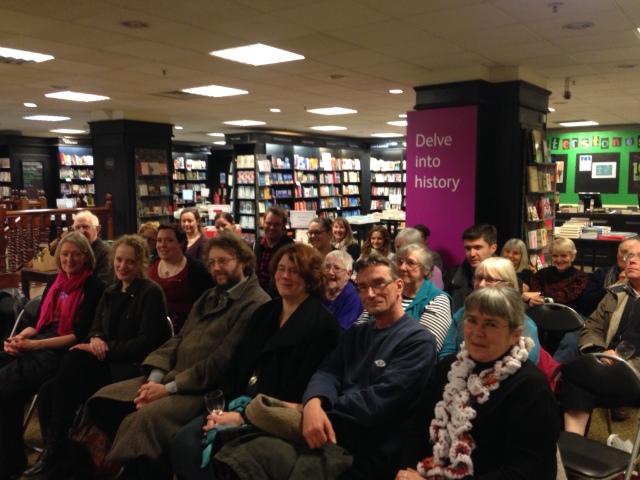
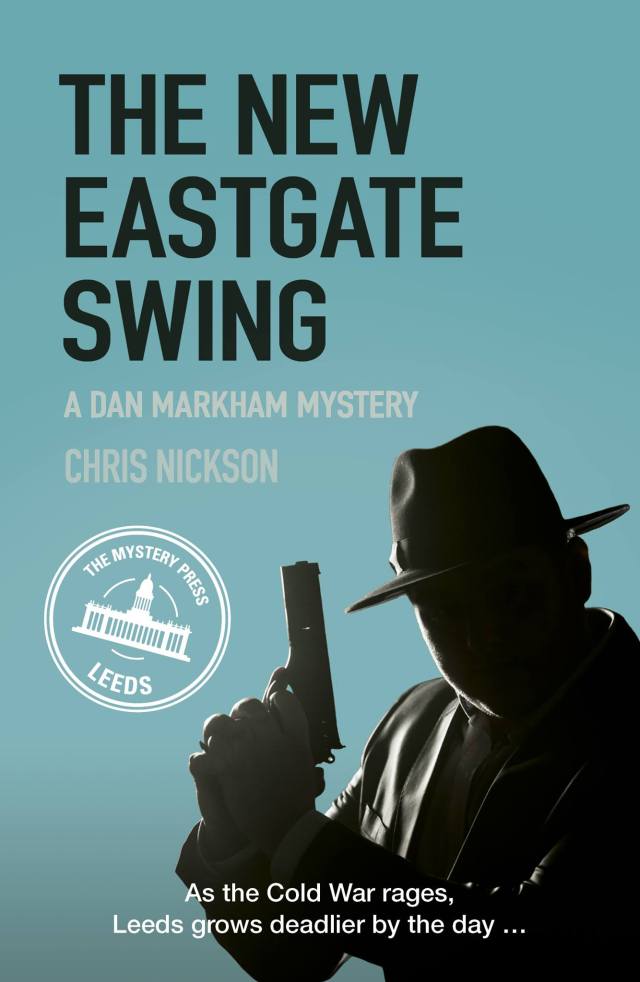
Living On Eastgate Time

Yes, The New Eastgate Swing is officially here, and the launch is just around the corner (Thursday, February 11, 7pm at Waterstone’s in Leeds – with FREE WINE), the perfect place to buy a copy, although other Waterstone’s and vendors are available, of course.

Having given you one taste of the book, here’s another, just enough to twist your arm and make you part with your money, I hope…

He was reading The Quiet American when the telephone rang. Without even thinking, he reached over and lifted the receiver, hearing the coins drop into the box when he answered.

‘Hello Dan, how are you? It’s been a long time.’

The voice was so familiar. He ought to know it … then she gave a soft, throaty chuckle and he could place her. Carla. She’d walked out of his life three years before, caught up and broken by the case that ruined his fingers. There’d been a final meal when she made her farewell and then she was gone. He’d loved her. It had taken months for him to realise that, even longer before her ghost stopped walking through his dreams.

‘I’m doing quite well,’ he answered hesitantly. ‘What about you? Where are you?’

‘I’m down at the station. My train’s been delayed. Look, I don’t suppose you fancy a drink, do you? I have a couple of hours to kill.’

‘Of course.’ He didn’t even need to think about it.

‘Oh good.’ She sounded genuinely pleased. ‘The Scarborough Hotel in a few minutes?’

‘Yes.’

****

Markham surfaced to the sound of banging, not sure where it was coming from as he opened his eyes. Blinking, he glanced at his wristwatch. Five minutes to four. Almost like night outside.

The noise continued, steady and growing louder. The door. Someone was knocking at his door. He struggled up, body still feeling heavy and moving slowly, dragging on shirt and trousers.

‘Hold your bloody horses,’ he shouted.

Dressed, pushing his fingers through his hair, he turned the lock. There was a man in a trilby, cheap suit, and worn mackintosh, a thin Clark Gable moustache over his upper lip. Next to him a copper in uniform, the point of his helmet almost touching the ceiling.

‘Are you Daniel Markham?’ the man in plain clothes asked. He was short, probably the bare minimum for a policeman, with an aggressive, bantam expression on his face.

‘Yes. Why?’

‘I’m Detective Sergeant Anderson, sir. I’d like you to accompany me down to the police station if you’d be so good.’ Everything very polite, but the tone brooked no objection.

‘Why?’ he asked in confusion. ‘What’s happened?’

‘We have reason to believe you might be able to help us in our enquiries.’

‘What enquiries?’ He put a hand against the jamb. ‘If you want me to help you, I want to know with what.’

Anderson glared at him.

‘Do you know a man called Morten Blum?’

He could feel the pit of his stomach sink.

‘I know who he is. I’ve never met him. We were hired to check on him – my partner and I. Why? What’s happened?’

‘He’s dead, sir, and under very suspicious circumstances. If you’d like to get your coat, we can be on our way.’

‘Yes, of course.’ He slipped on a sports jacket, the overcoat on top, and gloves, then turned out the light and locked the door before following them down the stairs.

Christ, what was going on?

****

Moving in a crouch, running through the empty space with his heart in his mouth, it was like being back in the training he’d had at Catterick Camp. The only difference being that there was no sergeant screaming at him.

By the time he reached the building he was gasping for breath and his heart was pounding. He waited for Baker. The only sound was the deep thrum of a generator from somewhere inside.

Then the man was there. He’d moved in silence. Markham could feel breath against his ear and two quiet words: ‘Follow me.’

Baker knew what he was doing. He seemed to go on instinct, to disappear as he moved, almost impossible to spot. His footsteps hardly seemed to disturb the ground. Finally he halted.

‘There’s a door a few yards along. We’ll go in there. Give it ten minutes. If the watchman’s coming, he should have passed by then.’

‘What the hell did you do in the war?’

‘Didn’t I ever tell you? I was in Number 4 Commando. Now keep your head down and stay shtum.’

The seconds seemed to stretch out endlessly. Markham could feel the sweat rolling down his back and his hands were clammy.

Finally there was a nudge in his ribs and a hand gesture. They crept to the door and Baker handed him a torch.

‘Keep that shining on the door whilst I open it.’

The lens was taped so only a pinprick of light showed. He focused the beam on the lock. A few movements and he could hear the tiny click as it freed. The handle turned and he held his breath, praying there was no alarm.

Just silence and they slipped inside. Baker closed the door behind them.

‘We can breathe a bit easier now,’ he said. He sounded relaxed, almost happy. ‘The watchman won’t come inside.’

‘How do you know?’

‘Stands to reason.’ He was still whispering but the words seemed to echo away into the vastness. ‘If there’s something secret in here, they won’t want everyone seeing it.’ He switched his torch back on, letting the light play around on the far walls. ‘This is too big for us to search together. We’ll have to split up. You go to the left. Keep your gloves on and the beam covered.’ He glanced at his watch. ‘Meet back here in half an hour.’

He began. It was nothing more than cavernous, empty space. Each footstep felt as loud as a scream. He kept one gloved hand over the torch lens, giving just enough of a glow to direct him.

A door ahead was unlocked and took him into another part of the factory. This had been divided into smaller rooms. He tried every door. All offices, all empty. A row of them that stretched into the distance. How big was this bloody place, he wondered?

The last door stuck. But it wasn’t locked. Markham put his shoulder against it and pushed. It gave noisily, scraping against the concrete floor. He held his breath, expecting to hear someone running, alerted by the sound. Nothing. There was only silence.

A camp bed, the type he’d seen so often in barracks. Sheets and blankets neatly folded. In one corner a sink with a towel hanging over the edge. And in the air, something familiar. Just very faint, but definitely there.

The smell of Amanda Fox’s perfume.

Markham began to search, opening up the bedding, the towel, looking everywhere for any definite sign she’d been here. On his hands and knees he looked in the corners and along the skirting board. Something glinted under the bed, against the wall. He stretched, fingertips rubbing against it, then pulled it towards him. A gold ring. A wedding ring with some fine engraving and a beautifully set sapphire. He’d seen it before. It had been on her hand the last time she’d come to his office. He slipped it into the side pocket of his battledress trousers, and made sure everything in the room looked the way it had before.

Questions. Too many of them and not enough time. Only fifteen minutes left.

He moved quickly, trying to stay quiet but needing to check everything. Three locked doors; he knocked softly in case she was inside. No answer, only the soft, constant hum of machinery.

And no Amanda Fox.

He was back at the meeting place on the dot of half an hour.

‘I–’ Markham began, but Baker cut him off.

‘You need to see this.’ His voice was sober and chilling. ‘Now, Dan.’

He led the way as if he’d memorised it, barely needing the light. The path twisted and turned until he stood in front of a door.

‘Open it. Use your torch, it’s all right.’

Mystified, he turned the handle and switched on the beam.

The room was as big as a football field, the ceiling high above, lost in the darkness. At first he couldn’t make out what filled the space. Then he realised: boxes. Cardboard boxes, folded, waiting to be assembled. Each one about six feet long and two feet wide. Wave after brown wave of them. Thousands of them.

More than that. Hundreds of thousands of them. Maybe millions.

Markham turned.

‘What …?’

‘They’re coffins.’ Baker’s voice was empty. ‘Bloody cardboard coffins.’

‘But,’ he began and understood he didn’t have anything more to say. He let the light play over everything. There were acres of them.

‘Everything ready for when they drop that nuclear bomb.’ He heard the long sigh. ‘I just wanted you to see it. We’d better get out of here.’

12510745_10153292555801787_1509743569_o

A Taste Of That New Eastgate Swing

It’s just a couple of week until Dan Markham’s back and The New Eastgate Swing is published. It’s 1957, the Cold War is raging, and Markham’s world is going to change. Read about it here…and if you’re in Leeds on February 11, come to the launch at Waterstone’s. There’s even going to be some free wine, I hear.

But in a blatant attempt to whet your appetite, here’s an short extract. Enjoy…


‘I’m sorry,’ she said breathlessly as the waiter pulled out a chair for her. There was a shhh of nylon as she sat. ‘Have you been waiting long?’ The woman held out a hand and he shook it lightly.

‘Not really, Mrs Fox.’

‘Amanda,’ she told him. ‘Please.’

‘Amanda,’ he echoed as she pulled a cigarette from her handbag and he flicked his lighter. ‘Now, what’s all this about?’

She’d arrived late, escorted over by the waiter. In her early thirties, he judged, and wearing a close-fitting grey jersey dress that reached to her knees. It flattered her and she knew it, moving easily on high heels. Dark hair in an Italian cut, subtle makeup and a graceful, Audrey Hepburn face.

He’d had time to sit, staring around the restaurant and smoking. The place was new, fitted out in leather and oak, wanting to appear expensive, solid and timeless. The year before it had been different. Another couple of years it would be something else again.

‘Let’s wait a few minutes for that.’ Her eyes were bright, a deep, mysterious blue. ‘We’ll eat first. I always like pleasure before business, don’t you?’ It was a gentle tease. ‘I’m surprised we’ve never met before.’

‘It’s just how things are, I suppose.’

She carried an air of sophistication, assured, in control. Next to her he felt juvenile, provincial. She ordered quickly, as if she knew the menu by heart. He decided on steak and kidney pie. Very English. Very filling and plain.

‘Then I’m glad to finally change that.’ She flashed a brilliant smile, very white teeth and blood-red lips.

‘You said your husband’s abroad?’

She nodded.

‘Germany. We do quite a bit of business over there, he’s gone a few times each year. Bonn, West Berlin.’ She shrugged. He tried to place her accent. Somewhere in the Home Counties, a good education. But grammar school, not private he decided. Then plenty of polish.

‘I wouldn’t have thought there was much for an enquiry agent over there.’

‘Oh.’ She lit a cigarette and waved the words away in a thick plume of smoke. ‘Still the fallout from the war. Tell me about yourself, Mr Markham.’

‘Dan.’

Amanda Fox nodded her acknowledgement, staring at him coolly.

‘You must have started in this game when you were young.’

‘Seven years ago. I was twenty-one.’

‘Are you good at what you do?’

‘I like to think so,’ he replied with a soft smile.

‘There was some business a while ago, wasn’t there?’ She tapped her cigarette in the crystal ashtray. ‘Before we moved here.’

‘Yes.’ He wasn’t about to say more. If she knew, she’d already read the newspaper clippings and heard the gossip.

The food arrived and they made small talk – the weather, the way traffic grew worse each month – until the plates had been cleared and coffee sat in front of them.

‘Do you know Germany at all?’ Amanda Fox asked as she lit another cigarette and blew smoke towards the ceiling. He tried to read her face but she was giving nothing away.

‘I did my National Service there.’

‘Really?’ Her eyes smiled for a moment. ‘Where were you?’

‘Hamburg, mostly. Some time in West Berlin. I was military intelligence.’

‘Mark was there after the fighting ended. Stayed there for a couple of years, then Vienna. He made some good contacts. Maybe you met him?’

‘Was he an officer?’

‘A captain. Why?’

‘We didn’t mix too much with them.’

‘Of course, sorry. Do you speak the lingo?’

‘A little.’ He’d learned enough to get by. ‘What about you?’ Markham asked. ‘What do you do?’

‘Oh, I just help around the office.’ She said it dismissively, as if she was just a secretary or receptionist. He didn’t believe a word of it.

‘What does your husband do in Germany?’

‘Background stuff, mostly. Checking on people that companies want to bring over. The whole denazification process wasn’t always thorough, shall we say?’ She flashed him another white smile. ‘Mark goes into more depth.’

‘I thought that would be government business.’

‘They farm some of it out. As I said, Mark has contacts.’

He nodded. The old boys’ network in action. The way everything was done in this country.

‘And what would you want from me?’

‘Let me ask you something, Dan. You were in intelligence. Did you have to sign the Official Secrets Act?’

‘Of course.’

‘Good,’ she said with a smile. ‘That makes everything much easier.’

‘Why?’ Suddenly Markham was very suspicious. ‘What do you want?’

‘It’s nothing much. Just keeping an occasional eye on people who end up around here.’

‘People?’ he asked sharply. ‘What people?’

‘Germans who would be useful to our defence industry,’ Amanda Fox glanced around the restaurant before she answered and spoke very quietly.

‘From the West or East?’ That was important.

‘East, of course,’ she replied coolly. ‘We work with the Gehlen people in West Berlin, bring them out, give them new names and backgrounds. I’m sure you can understand why.’

Of course. No one in this country would be happy to have a German around. Not with the war still so close in memory.

‘The government knows?’ He wanted to be certain.

‘It’s their idea, Dan. These men all have good skills.’

‘I don’t understand, why can’t you do it yourselves?’ he wondered.

‘Mark is gone so often. We’re pretty much a one-man band. As I said, I just look after the office. What we need is someone who has the skills and background.’ Now he was certain she knew all about him; this wasn’t lucky dip and hope for the best on her part. ‘We pay generously,’ she added, ‘and it won’t take a great deal of your time.’ She cocked an eyebrow. ‘Does it sound interesting?’

‘Maybe. I’ll need to talk to my partner. He’s ex-police.’

‘All right,’ she agreed, but he saw he’d sprung something unexpected on her.

‘We’ll talk about it and I’ll be in touch.’ He shook her hand as he rose. ‘Don’t worry, he’ll have had to sign the Act, too. I’ll give you a ring on Monday, Mrs Fox.’

‘Amanda,’ she corrected him.

‘Of course. Amanda.’


***


He strolled thoughtfully back through town. There was a weekend eagerness in the Friday afternoon crowds. Women squeezed past the top-hatted doorman to spend their wages at Marshall & Snelgrove’s department store. An older generation sat upstairs in Fuller’s and sipped tea.

He wondered exactly what Amanda Fox and her mysterious husband wanted. More than the job she’d promised, he was certain of that.

Baker hadn’t returned yet. He spent a while cleaning up some of the paperwork, filing notes and pictures and cleaning off his desk. The card table sat there accusingly, a paperback book under one of the legs to keep it steady. They needed something more professional if people were going to take them seriously.

By four he was still on his own, desk clean, everything put away. No rain yet, but the skies were as heavy as slate. Should he wait, or simply call it a day and beat the traffic out on Harrogate Road?

He was just emerging on to the street when he heard a shout and saw Baker turning the corner from Lands Lane.

‘Let’s go and get a cuppa,’ he said as he lumbered close, hands deep in his raincoat pockets, eyes serious.

Upstairs at the Kardomah, Markham ordered coffee from Joyce, the waitress he’d known for years. Tea and a slice of Dundee cake for Baker. He waited until the man had poured sugar into his drink.

‘You don’t look too happy.’

‘Well …’ he began, taking his pipe from a bulging suit pocket and lighting it. ‘I am and I’m not. That Miss Harding was about as helpful as she was yesterday. But I finally got her to let me look at the post that had arrived for our friend in the last few days. She had it locked away in a bureau.’

‘And?’

He pulled out an onionskin aerogramme and let it fall on the table.

‘Just some ‘Dear Occupant’ bumf and this. She didn’t notice me take it. I had a look inside.’

He’d opened it slowly and carefully. Dutch stamps and a Rotterdam postmark. Markham began to read then glanced up quickly.

‘See what I mean?’ Baker asked. ‘That’s Kraut, isn’t it?’

‘It is,’ Markham answered.

‘Why would a Dutchman be writing in German?’

Markham let the question hang as he scanned the words. Either his German was rustier than he thought, or half of this didn’t make sense. He looked again, taking his time, trying to put a meaning to it all. He could follow a few sentences here and there. The rest was gibberish. ‘Did you speak it?’ he asked.

‘Never learnt. Why? What does it say?’

‘That’s the problem. It doesn’t.’

Baker look confused.

‘It’s got to say summat.’

‘A few sentences do. “Took the train to Magdeburg.” Then there’s “Across by Salzwedel.” They’re both in East Germany. A couple more like that, place names in the DDR. The rest is just nonsense.’

‘Are you sure it’s not just you?’

‘Positive.’ He folded the letter. ‘I tell you what, Stephen, we’re in over our heads with this one.’


The telephone was ringing. He blinked his eyes and glanced at the clock on the bedside table. Quarter past five, the luminous hands read. Still pitch dark. Who the hell could it be at this time?

There was a chill in the living room, enough to make him shiver as he lifted the receiver.

‘I hope this is important,’ he said. There was frost on the outside of the window, making the harsh light of the street lamps blurry.

‘I’m not calling you at this hour for my bloody health,’ Baker answered. ‘I’m down at the office. Can you get here?’

‘Why? What is it?’

‘Just get yourself here.’ He hung up, letting the line buzz.

Come And Do The New Eastgate Swing

The first copy of The New Eastgate Swing – the second book to feature Dan Markham (Dark Briggate Blues) set in 1950s Leeds – has arrived in the post. It’ll be in the bookshops early next month, in paperback and waiting for you.

You can read about it here, but there’s jazz, the lingering strands of the Second World War, the growing threat of the Cold War, spies, assassins, and, yes, a touch of 1950s romance.

There’s going to be a launch for the book at 7pm on Thursday February 11 at Waterstone’s on Albion Street in Leeds. It’s free, I promise fun, and, well, FREE WINE. If any of you fancy dressing up in 1950s clothes, there might even be a prize for you.

And did I mention FREE WINE. Maybe I did. But I’m sure you don’t need any inducements. My publisher’s going to be there, so a good turnout would be very much appreciated. And you get FREE WINE.

So come along. Please.

12510745_10153292555801787_1509743569_o

A Generation Betwixt And Between

I’m currently at work on a book set during the Second World War at it’s bought home to me just how tangible that was when I was a child. Born in the mid 50s, the war – it was always The War, as if there could have been no other – was the defining event of my parents’ generation, understandably. It had been a global conflict, one that involved both sexes as women worked or served in the forces. In terms of damage, Leeds escaped relatively lightly, with just nine raids and a few dozen dead. We were lucky.

But the sense of the war was quite tangible to me. There was an air raid shelter at the bottom of our garden. Not the hump-backed Anderson shelter, but one dun into the earth, brick walls and a concrete roof that must have been a foot thick. Steps down, a trench running to the other fence, it had a corridor and a single dark room. It scared the hell out of me; my father used to throw the grass clippings in there.

It simply reinforced what was in the comics boys read. Not just the obvious war one like Commando (which appeared monthly, I think). It was there in the weeklies, too, our brave boys against them. The Jerries. The Nips. For someone born nine years after the Second World War ended, it seemed as if the idea of it would never vanished. Men still talk about the war they had, and ‘a good war’ was a fairly common phrase. We played with toy guns. We played war (although, to be fair, we also played Cowboys and Indians, Robin Hood, Crusades – but all imply that good guy/bad guy dynamic).

People say that the Baby Boomers were the luckiest generation. Maybe that’s true. In Britain, at least, my generation never had to go and fight somewhere. We had the benefits of the Welfare State and the opportunity of greater education than any before us.

Sometimes, though, it feels as if we were luckier in other ways. We’re the generation caught betwixt and between the way England was and the brave new world it’s still trying to be. I spent a fair bit of my childhood in a 1930s semi-detached house. Very comfortable, yes. But the only possible heat upstairs was a fireplace in my parent’s bedroom, and that was only lit when someone was ill. In a middle-class house I scraped frost off the inside of my bedroom window on a winter’s morning. Fireplace in the dining room that also served to heat the back burner in the kitchen, which probably hadn’t been updated since the house was built. One more fireplace in the front room. Lit for company or on Sundays when my father went in there to write.

57072_86_IMG_00_0000_max_656x437

That wasn’t deprivation. It was perfectly normal, and better than the housing many families had. It’s only looking back that England seems like a country on the brink of poverty them. So much hadn’t changed over the decades that went before. Until the heights of secondary education, boys had to wear shorts to school, and the winter of 62’3 was one of the coldest on record. We did it; there was no choice. It didn’t make us harder or tougher. It was simply how things were.

There are plenty of other examples. This isn’t an exercise in nostalgia, though, rather a realisation that when I write about Leeds in the 1940s, or in the 1890s for the Tom Harper books, they’re not as far away from my own young years as they probably should be. We moved on, and I’m very glad we did.

Yet at the same I’m somehow glad to be part of the bridge between then and now. It gives me an understanding of the past I might not have managed in the same way otherwise. That’s the real luck of it all. At least to me.