The Kernel of Truth

For a long time I was jealous of my friend Thom Atkinson (read about him here). His short stories and plays, justly award-winning, hit a kernel of truth that I couldn’t seem to reach in my own writing (you really should read his work. He’s honestly that good). What I produced was readable, but it was all surface, it didn’t resonate deeply.

Maybe I hadn’t lived enough. Maybe I just hadn’t reached far enough inside. I don’t know.

I had a stack of unpublished novels, six or seven of them. Fair enough.

Finally, though, I did manage to touch that core and find that elusive truth when I wrote The Broken Token. I like to feel that the Richard Nottingham and Tom Harper books all manage that, to a greater or lesser degree. Some – At the Dying of the Year, for instance, or Gods of Gold and Skin Like Silver – have been very emotionally draining to write. When that happens, I feel fairly sure I’ve achieved work that’s the best I can do.

Some of my other books perhaps don’t delve quite as deep. But I hope that they each have their own truth that shines through.

This is a preface to saying I’ve just completed a book that was quite exhausting to write. Currently titled The Tin God, it’s the next in the Harper series, and Annabelle figures more largely than ever. Soon enough it will be with my agent and then, I hope, my publisher, who will give the thumbs up or down. If it’s success then I’ll let you know, of course. But the issues involved are timely. Women running for office – which they could in late Victorian Leeds, either for the School Board or as a Poor Law Guardian – and the problems they face from men.

My publisher will hopefully receive this new manuscript just after On Copper Street appears in hardback in the US, and everywhere as an ebook (obligatory ad!). I was a little stunned a couple of weeks ago when Booklist, an American publication, named it as one of the best crime novels of the last 12 months before its publication. That is heart-stopping and left me immensely proud.

Over lunch last week, a writer friend told me: ‘You own Leeds.’

I don’t (or if I do, where’s the rent?), but it’s lovely to be so associated with a city I care for so deeply, that’s helped me find the heart in my fiction.

I’ll be talking about that on June 8 with a great historical crime writer, Candace Robb, who feels about York the way I do about Leeds. Details are here – please come if you can.

A finally, I mentioned Richard Nottingham before. After four years away, he’s returning. Here’s a little teaser…

RN1


New Tom Harper

It’s definitely spring out there. The kids are enjoying their holidays, the weather is growing balmier. I’ve been able to get things planted at my allotment, and it’s beginning to take shape for the season.

But life wouldn’t be right if I wasn’t writing, and I have my head deep into what I hope will become the sixth Tom Harper novel, although Annabelle proves to be a very big part of this one. Now I just have to hope that my publisher wants it.

This extract is fairly lengthy and is still in a fairly raw state, so I hope you’ll bear with me on that. More importantly, I hope you like it. Please, seriously, tell me what you think, okay?


Late September, 1897


Tom Harper stared in the mirror.

‘What do you think?’ he asked doubtfully.

He felt ridiculous in a swallowtail coat and stiff, starched shirt. But the invitation had made it clear: this was an official dinner, formal dress required. The fourth time this year and the suit wasn’t any more comfortable than the first time he’d worn it. He’d never expected that rank would include parading round like a butler.

‘Let’s have a gander at you.’ Annabelle said and he turned for inspection. ‘Like a real police superintendent,’ she told him with a nod. ‘Just one thing.’ A few deft movements and she adjusted the bow tie. ‘Never met a man who could do a dicky bow properly. Now you’re the real dog’s dinner.’

She brought her face close to his. For a moment he expected a kiss. But her eyes narrowed and she whispered, ‘I’ve had another letter. Came in the second post. May Bolland’s had one, too.’

His face hardened. He’d expected some outrage when Annabelle announced she was running to be elected to the Board of Poor Law Guardians. A few comments. Plenty of objections. He was even willing to dismiss one anonymous, rambling letter as the work of a crank. But two of them? He couldn’t ignore that.

‘What did it say?’

She turned her head away. ‘What you’d expect.’

‘The same person?’ he asked and she nodded. ‘What did you do with it?’

‘I burned it.’ Her voice was tight.

‘What?’ He pulled back in disbelief. ‘It’s evidence.’

‘Little eyes,’ she hissed. ‘You know Mary’s reading has come on leaps and bounds since she started school. Safer out of the way.’

He breathed slowly, pushing down his anger. For a long time he said nothing. What could he do? It was dust now. Maybe Mrs. Bolland had kept hers; he’d send Ash round to see her in the morning.

‘Button me up and we’d better get a move on.’ Deftly, she changed the subject. ‘That hackney’s already been waiting for five minutes.’

Annabelle was wearing a new gown, dark blue silk, no bustle, high at the neck with lace trim and full leg-of-mutton sleeves, the pale silk shawl he’d bought her over her shoulders. Her hair was elaborately swept up and pinned. She was every bit as lovely as the first day he’d seen her.

There were calls and whistles as they walked through the Victoria pub downstairs. Her pub. She laughed and twirled around the room. He was happy to keep in the background, to try and slink out without being noticed. People didn’t dress like this in Sheepscar. They owned work clothes and a good suit for funerals; that was it.

‘What is this do, anyway?’ she asked as the cab jounced along North Street.

‘The Lord Mayor’s Fund,’ he replied. ‘Charity.’

The Mayor’s office had finally become the Lord Mayor’s office that summer, Leeds honoured by Queen Victoria to mark her Diamond Jubilee. Sixty years on the throne, Harper thought, going back long before he was a twinkle in anyone’s eye, before his parents had even met. There had been parties and civic events around the city all summer, and hardly any problems, as if everyone just wanted to celebrate the occasion with plenty of joy.

The Chief Constable had been pleased, and even happier when the crime figures came out: down everywhere. The biggest drop was in Harper’s division. God only knew why; he didn’t have an explanation. He’d praised his men then held his tongue, not wanting to tempt fate.

Annabelle’s elbow poked him in the ribs.

‘You’re miles away.’

‘Sorry.’

‘Is it a sit-down affair tonight?

‘Three courses, then the speeches.’

She groaned and he turned to smile at her.

‘We’re in for plenty more of these once you’re elected.’

‘If I’m elected,’ she warned. ‘Don’t be cocky.’

Seven women were standing to become Poor Law Guardians, their election costs paid by the Suffrage Society and the Women’s Co-op Guild. The campaign was no more than three days old, but already the Tories and the Liberals were deriding the women for trying to rise above their natural station. The Independent Labour Party had its eye on the posts, too, as stepping stones for their ambitious young men. And the newspapers had their knives out, pointedly advising people to vote for the gentlemen. He’d arrived home two days to find her pacing furiously around the living room, ready to spit fire, with the editorial in her hand.

‘Listen to this,’ Annabelle told him. ‘Apparently they think men “don’t possess the domestic embarrassments of women.” What does that mean? I could swing for the lot of them.’

She threw the paper on to a chair. But he could hear the hurt behind her words. It wasn’t going to be a fair fight.

The first letter arrived the same day. Second post, franked at the main post office in town, no signature or return address. It was a screed about how women should be guided by their husbands, live modestly and look to the welfare of their own families. Religious and condescending, everything written in a neat, practised hand. Senseless, Harper judged when he read it, but no real threat. All the women running for the Board had received one. He’d placed it in his desk drawer at Millgarth and forgotten about it. But another…that demanded attention.


‘Take a look at that,’ Harper said and tossed the letter across the desk. Inspector Ash raised an eyebrow as he read, then passed it on to Detective Sergeant Fowler.

‘Looks like he’s halfway round the bend, if you ask me, sir,’ Ash said. ‘I see he didn’t bother to sign it. Anything on the envelope?’

‘Nothing helpful.’ He sat back in the chair. For more than two years this had been his office, but Kendall’s ghost still seemed to linger; sometimes he even believed he could smell the shag tobacco the man used to stuff in his pipe. ‘All the women candidates running to be on the Board of Guardians received one.’

‘I see. That was Mrs. Harper’s, I take it?’

‘There was another yesterday. She burned it.’

‘Whoever wrote this was educated,’ Fowler said. ‘All the lines are even, everything spelled properly.’ He grinned. ‘Of course, that’s doesn’t mean he’s not barmy.’

He pushed the spectacles back up his nose. The sergeant had been recommended by a copper from Wakefield. He was moving back to Leeds to be closer to his ill mother. Harper had taken a chance on the man. Over the last twelve months it had paid off handsomely.

Fowler didn’t look like a policeman, more like a distracted clerk or a young professor. Twenty-five, hair already receding, he barely made the height requirement and couldn’t have weighed more than eleven stone. But he had one of the quickest minds Harper had ever met. He and Ash had clicked immediately, turning into a very fruitful partnership. One big, one smaller, they seemed to work intuitively together, knowing what each one would do without needing to speak.

‘This woman’s had another letter, too.’ He gave them the address. ‘Go and see her. I doubt we’ll track down the sender, but at least we can put out the word that we’re looking into it. That might scare him off.’

‘Yes, sir.’ Ash stood. ‘How’s Mrs. Harper’s campaign going?’

‘Early days yet.’

She’d only held small one meeting so far, in a church hall just up Roundhay Road from the Victoria. Their bedroom was filled with piles of leaflets read to be delivered and posters to plastered on the walls all over Sheepscar Ward.

‘I’m sure she’ll win, sir.’

He smiled. ‘From your lips to God’s ears.’

Once they’d gone he turned back to the rota for October, trying to recall when he’d once believed that coppering meant solving crimes.


Billy Reed drew back the curtains, pushed up the window sash, and breathed in the sharp salt air. After so many years of soot and dirt in Leeds, every day of this seemed like a tonic. He heard Elizabeth moving around downstairs, cooking his breakfast.

They’d been in Whitby since July, all settled now into the terraced house on Silver Street. The pair of them, and her two youngest children, Edward and Victoria. The older ones had stayed in Leeds, both in lodgings, with work, friends, and lives of their own.

Moving had been a big decision, an upheaval. He’d come to love Whitby on his first visit. He’d left the army, just home from the wars in Afghanistan and troubled in his mind. The water, the beach, the quiet of the place had brought him some peace, and he’d always wanted to live there. But when he’d seen the job for inspector of police and fire in the town, he’d hesitated.

‘Why not write?’ Elizabeth urged him. ‘The worst they can say is no.’

‘We’re settled. I’m doing well the with fire brigade. And you have the bakeries.’

She stared at him. ‘Do you think we’d be happy there?’

‘Yes,’ Reed answered after a moment. ‘I do.’

‘Then sit down and write to them.’

It had taken time. First the application, then an interview, Elizabeth travelling with him on the train and inspecting the town while he was questioned by the watch committee. Another wait until the answer arrived, offering him the position. After that, it was a scramble of arrangements. In the end he’d gone on ahead while she finished up the up sale of the bakeries, packed the rest of their possessions, and said goodbye to all the friends they’d made.

He had no regrets. He liked his job, but it was time for a move, for something new. And this was certainly different. He could make out the shouts of the fishermen at mooring points as they unloaded their boats, and hear the gulls calling.

‘You’d better come and get it while it’s hot,’ Elizabeth shouted up the stairs.

The children were already eating, ready to scramble off to their jobs. Soon enough, Elizabeth would march down Flowergate, across the bridge, and along Church Street to the shop she’d leased, ready to open her tea room and confectioner’s in the spring. She’d made the bakeries in Leeds turn a fair profit, and she wasn’t one to be content as a lady of leisure. She relished work.

‘It’s right by the market,’ she pointed out to him. ‘And all those folk going to the abbey in holiday season will pass by the door.’

She’d developed a good eye, he knew that, and she’d already managed to cultivate a few friends in town, like Mrs. Botham, who ran her bakery and the Inglenook Tea Room on Skinner Street. A formidable woman, Reed thought, but she and Elizabeth could natter on for hours.

He’d quickly settled into the rhythm of his job. During the summer it was mostly dealing with complaints from holidaymakers and breaking up fights once the pub closed. There had only been one fire, and that was easily doused.

He strolled over to the police station on Spring Hill and went through the log with the uniformed sergeant before setting off in the pony and trap. Sandsend and Staithes today. Both of them poor fishing villages, and little trouble to the law, but he still needed to put in a monthly appearance. Show the flag. He covered a large area, going all the way down to Robin Hood’s Bay, but on a day like this, with the sun shining and a gentle breeze blowing off the water, nothing could be a better job.

No, Reed thought with a smile as the horse clopped along the road, no regrets at all.


Two


‘I saw Mrs. Bolland, sir.’ Ash settled on to the chair in the superintendent’s office. ‘She’d kept the letter.’ He ran his tongue round the inside of his mouth. ‘It left her scared.’

‘What does it say?’ Harper put down the pen and sat back.

‘Read it for yourself, sir.’ The inspector pulled a folded sheet of notepaper from his inside pocket.

A woman’s place is in the home, tending to her family and being a graceful loving presence. It’s not to shriek in the hustings like a harridan or to display herself in front of the public like a painted whore.

The Good Lord created His order for a purpose. Man has the reason, the wisdom, and the judgement. He’s intended to use it, to exercise his will over women, not to be challenged by them, the weaker element. Eve was persuaded to eat the apple and tempted Adam, and since that time it has been her duty to pay for the sin.

It is time for you to withdraw your candidacy. Should you fail to do so, if you continue to talk and challenge men for what rightly belongs to them, we shall feel justified in taking whatever means necessary to silence you for breaking God’s profound will.

‘A death threat. No wonder it frightened her.’

‘Yes, sir. Funny what these types come up with in the name of religion, isn’t it? It was all love thy neighbour when I was at Sunday school.’ Ash gave a wry smile.

Harper took out the first letter from his drawer and compared them.

‘The same handwriting. Twice means he’s more than a crank. We’re going to follow up on this and make sure nothing happens to her.’ He thought about Annabelle. ‘To any of the women. Where’s Fowler?’

‘I sent him off to talk to the others, to see if they’d had anything like this.’

‘Odds are that they have. That “we” in there makes me wonder, too.’

‘I noticed that, sir.’ Ash pursed his lips. ‘If I had to guess, thought, I’d say it’s a man on his own.’

‘I agree. Still…’

‘Better safe than sorry, sir.’

‘Exactly.’ He wondered why his wife had destroyed the letter. Not to keep it away from Mary; she could manage that by hiding it in a drawer or on the mantelpiece. Had it terrified her? She was so strong that it seemed hard to believe. But this election campaign was already putting a strain on her and it had hardly begun. ‘No signature again. Handy, isn’t it? He can just pop it in the post, then sit back and stay anonymous behind the paper.’

‘Any ideas for catching him, sir?’

‘No,’ Harper said with a sigh. ‘We’ll just stay on our guard.’

‘How was your dinner last night, by the way, sir?’ The inspector smiled slyly. ‘Big do, from all I hear.’

‘Big?’ Harper asked. ‘Pointless, more like. Tasteless food that was barely warm by the time it reached the table, followed by an hour of mumbled speeches.’

‘The perks of rank, eh, sir?’ Ash’s eyes twinkled with amusement.

‘You’d better be careful, or I’ll start sending you in my place.’

‘My Nancy would probably enjoy that.’ He grinned, slapped his hands down on his knees and stood. ‘I’ll go out and ask a few questions. Who knows, maybe we’ll be lucky and our gentleman writer isn’t as discreet as he should be.’

‘If you really believe that, I’ll look out of the window for a herd of pigs flying over the market,’ Harper told him.

‘Stranger things have probably happened, sir.’

‘Not in Leeds, they haven’t.’


‘Was your letter like this?’ he asked. Mary was tucked up in bed, exhausted by a day of school and an evening of telling them every scrap of learning that had gone into her head since morning. Harper was weary from concentrating, trying to make out all the words with his poor hearing.

Annabelle read it. ‘Word for word,’ she said, quickly folded it and handed it back to him.

‘Ash and Fowler are after him.’

‘Doesn’t help if you don’t know who you’re chasing,’ she said. They were in the bedroom. He sat by the dressing table while she counted election leaflets into rough bundles, ready to be delivered tomorrow. She raised her head. ‘I’m not a fool, Tom. There’s not enough in that for you to find him.’

‘We can ask around. And I’ll make sure there’s a copper at the meetings.’

Annabelle stopped her work and stared at him. ‘Would you do that for the men?’

‘Yes,’ he told her. ‘If I believed things could get rowdy,’

‘Don’t you think it’s wrong that women should need special protection? We’re in England, for God’s sake.’

‘Of course it’s wrong. But when there are men like this poison pen writer, it’s better than something bad happening.’ He let the idea hang in the air. ‘To any of you.’

Her stare gradually softened to a curling, twinkling smile.

‘Well, if you really want to look after me, Superintendent, perhaps you could offer me some very close guarding of my body.’

He grinned and bowed. ‘My pleasure, madam.’


‘They all received identical letters,’ Fowler said. He pushed the glasses back up his nose and produced the papers from his pocket. ‘Three had burned them. But it’s the same wording and the same handwriting as Mrs. Bolland’s.’

‘And the one my wife received,’ Harper confirmed. ‘What do you two have on your plates are the moment?’ he asked Ash.

‘Next to nothing, sir. We’ve been too successful, that’s the problem.’ He smiled. ‘They’re all too scared to commit crimes these days.’

‘Better not get over-confident,’ the superintendent warned. ‘We might be up to our ears tomorrow. While you have the chance, spend some time with this. Do you have a list of where and when these women are holding meetings?’

‘I do,’ Fowler said. ‘There are four tonight.’

‘Make sure there’s a uniform at every one of them. And I want him very visible.’

That should deter any trouble, he thought. If it didn’t, the weeks until the election were going to be difficult.

‘Mr. Ash and I have been talking, sir,’ the sergeant began. ‘We thought perhaps we could each go to a meeting. You know, stay quiet and keep an eye out for anything suspicious.’

‘A very good idea. Not my wife’s, though,’ he added. ‘I’ll take care of that.’


He’d grown used to the routine of running a division, of being responsible for everything from men on the beat to the number of pencils in the store cupboard. But it still chafed. So much of the work was empty details and routine; a competent clerk could have managed it in a couple of hours.

Meetings were the worst times; every month, all the division heads with the chief constable. So far they’d never managed to resolve a single thing. Then there was the annual questioning by the Watch Committee, the council members who oversaw the force. Several of them had no love for him, but he’d managed to fox them. The crime figures kept falling, and he stayed well within his budget. He hadn’t walked away with their praise, but he’d been pleased to see that his success galled them.

Small, worthless victories. Had he really been reduced to that? Sometimes two or three days passed with him barely leaving Millgarth. It felt as if an age had gone by since he’d been a real detective. It was one reason he was looking forward to tonight. Standing at the back of the hall, watching the faces and the bodies, thinking, alert for any danger. At least he could feel like he was doing some real work. That made him smile.


One the stroke of five, Harper pulled on his mackintosh and hat and glanced out of the window. Blue skies, a few high clouds, and a lemon sun; a perfect autumn afternoon. Saturday, and a little time away from this place. Not free, though: he’d spend it walking round Sheepscar, delivering leaflets for Annabelle’s campaign.

Ash was at his desk in the detectives’ office, writing up a report.

‘Did you find anything?’

‘Not a dicky bird, sir.’ He sighed and scratched his chin. ‘You weren’t banking on it, were you?’

‘No.’ He shook his head. ‘If there’s anything tonight, make sure you let me know.’

‘I will, sir. Let’s hope it’s peaceful, eh?’

It was warm enough to walk back out to the Victoria. Even if the air was filled with all the soot and smoke of industry, so strong he could taste it on his tongue, it still felt good to breathe deep after a day in a stuffy office.


‘Do you think I look all right, Tom?’ Annabelle stood in front of the mirror. She was wearing a plain dress of dark blue wool. It was cut high, at the base of her throat, modest and serious. Her hair was up in some style he couldn’t name but had probably taken an hour to engineer so it looked nonchalant.

‘I think you look grand,’ he told her. ‘Like a member of the Poor Law Board.’ He nudged Mary, who was sitting on his lap, staring in awe at her mother.

‘Da’s right. You’re a bobby dazzler, mam,’ she said. ‘I’d vote for you if I could vote.’

‘That’ll do for me.’ Annabelle picked up her daughter and twirled in the air. ‘You’re absolutely sure?’

‘Positive,’ Harper replied. He pulled the watch from his waistcoat. ‘We’d better get going. That meeting starts in three-quarters of an hour.’ It wasn’t that far – the hall at the St. Clement’s just up Chapeltown Road– but he knew she’d want to arrive early, prepare herself, and put leaflets on all the chairs. Ellen would bring Mary shortly before the meeting started.

It was a fine evening for a stroll, still some sun and a note of warmth in the air. The factories had shut down until Monday morning, the constant hums and drones and bangs of the machinery all silenced. The chimneystacks stood like a forest, stretching off to the horizon, their dirt making its mark on every surface around Leeds.

Annabelle took his arm as they walked. He’d put on his best suit, the dove-grey one she’d had Moses Cohen tailor for him seven years before. It was still smart, but growing uncomfortably tight around the waist.

‘It’s going to be fine, isn’t it?’ she asked.

‘Of course it is.’ He glanced over at her. ‘It’s not like you to be so nervous. You usually dive right in.’

‘This is something new, that’s all. And if I fail, well, it’ll be obvious, won’t it? I’d be letting everyone down who’s helping.’ She nodded at the hall, just visible beyond the church, its low outline stark against the gasometers. ‘All of them who turn up tonight. If anyone does.’

‘You’ll be fine.’ He kissed her cheek. ‘That meeting two nights ago was packed.’ He grinned. ‘Trust me, I’m a policeman.’

‘I thought you lot were only good for telling the time.’

The words had hardly left her mouth when he heard the low roar. It grew louder, then a deep violent explosion ripped out of the ground. A column of smoke plumed up from the hall, throwing wood and roof and bricks high into the air.

‘Christ.’ They stared for a second, not knowing what to say. It was beyond words. ‘Stay here,’ he told her, then changed his mind. ‘No. Go home.’

Tom Harper was running towards the blast.
Chance Encounter

Tomorrow, On Copper Street, the fifth of my Leeds Victorian novels, is published. Like the rest of the series – and like my Richard Nottingham books, set in Leeds 150 years earlier – the social conditions of the people, and the city itself are vital parts of the story. Yes, they’re mysteries, crime novels, but with a Dickensian social conscience. For me, it’s impossible to look at the past without seeing the dirt, smelling the stink, and hearing the pain of so many who lived there.

The books are, perhaps, a way to offer some sort of memorial to the unremembered, the ones who, like my own great-great grandparents, were buried in common graves.

But first, to whet your appetite for On Copper Street, how about a new Annabelle Harper short story?

Leeds, 1896


She’d gone five paces past the man before she stopped. There were beggars everywhere in Leeds, as common as shadows along the street. But something about this face flickered in her mind and lit up a memory. He was despondent, at his wits’ end, but unlike so many, he wasn’t trying to become invisible against the stones, to disappear into the fabric of the city. He might not like it, but the man was very much alive. She stopped abruptly, turned on her heel in a swish of crinoline and marched back until she was standing over him, shopping bags dangling from her hands. It was the last day February, a sun shining that almost felt like spring.

‘You, you’re Tommy Doohan, aren’t you?’

Very slowly, as if it was a great effort, he raised his head. He’d been staring down at the pavement between his legs.

‘I am,’ he answered. His voice was weary, a Leeds accent with just the smallest hint of Ireland, easy to miss unless you were familiar it. He stared up at her, baffled, with his one good eye, the other no more than a small, dark cavern above his cheek. ‘And who might you be? You don’t look familiar.’

‘Annabelle Harper,’ the woman replied. ‘Annabelle Feeney, when you knew me. Back on Leather Street.’

His smile was weak. He looked as if the entire weight of the city had pressed down on him and left him small, broken. It had dropped him in this spot

‘That was a long time ago.’

His suit had probably been reasonably smart once. Good, heavy wool, but the black colour had turned dusty and gritty from sitting so long. Cuffs and trouser hems frayed, threads hanging to the ground. Up close, she could see the grime on his shirt, no collar, no tie. The shine had long vanished from his shoes. He was bare-headed, his hair dark, growing wild and unruly. His cap sat upside-down between his thighs. In a rough, awkward attempt at copperplate, the cardboard sign propped against it read: But give that which is within as charity, and then all things are clean for you.

‘Luke,’ she said. ‘Chapter eleven, verse forty-one.’ Annabelle grinned. They’d been in the same class at Mount St. Mary’s School. ‘The nuns must have rapped my knuckles a dozen times over that one. Sister Marguerite would be happy it finally stuck.’

‘Ah, me as well. Twenty times, at least. But they’d have a harder time doing that now.’ He held up his right arm, the hand missing two fingers and the thumb.

Annabelle took a slow, deep breath.

‘My God, Tommy, what happened?’

‘Just a little fight with a machine,’ he said wryly. ‘I think I won, though. You should have seen the machine when we finished.’

‘How can you-’ she began, then closed her mouth. She knew the answer deep in her bones. You laughed about it to stop the pain. You joked, because it you didn’t you’d fall off the world and never find your way back. ‘Come on, I’ll buy you a cup of tea.’

‘I can’t let a woman pay for me.’

She dropped the bags and stood, hands on her hips, face set.

‘You can and you will, Tommy Doohan. Get off your high horse. You’d have been happy enough if I’d put a tanner in your cap. Now, get on your feet.’ She looked up and down New Briggate. ‘There’s a place over there, across from the Grand. And I’m not taking no for an answer.’

For a moment he didn’t move. But her voice had a razor edge, and he pushed himself to his feet, scooping a couple of pennies and farthing from the cap before he jammed it on his head.

He was tall, towering a good nine inches above her. Close to, he smelt of dirt and decay, as if he might be dying from the inside.

‘I’d carry your bags for you, but one of the paws doesn’t work so well.’

‘Give over,’ she told him, and his mouth twitched into a real smile.


He cradled the mug, as if he was relishing the warmth, only letting go to eat the toasted teacake she’d ordered for him. When he was done, he wiped the butter from his mouth with the back of a grimy hand, then felt in his pocket for a tab end.

They’d been silent, but now Annabelle said: ‘Go on, Tommy, what happened to you?’

‘When I was sixteen, I headed over to Manchester to try my luck. Me and my brother Donald, do you remember him?’

She had the faint image of someone a little older, tousle-haired and laughing.

‘What could you do there that you couldn’t here?’

‘It was different, wasn’t it?’ he said bitterly. ‘I’d been a mechanic down at Black Dog Mill, I could fix things, and Don, well, he was jack of all trades.’ He smoked, then stubbed out the cigarette in quick jab. ‘We did all right, I suppose. One of the cotton mills there took him on, made him a foreman, earning fair money.’

‘What about you?’

‘Down at the docks. Long hours, but a decent wage. Lots of machines to look after. I met a lass, got wed, had ourselves a couple of kiddies.’

‘I’ve got one, too. A little girl.’

Doohan cocked his head.

‘What does your husband do? You look well off.’

‘You’ll never credit it.’ She laughed. ‘He’s a bobby. A detective. And I own a pub. The Victoria down in Sheepscar.’

He let out a low whistle.

‘You’ve turned into a rich woman.’

‘We get by,’ Annabelle said. ‘Anyway, what about your family?’

‘Gone,’ he told her bleakly. ‘About two years back I was working on this crane, you know, hauling stuff out of the boats. The mechanism has jammed. I almost had it fixed when the cable broke. It’s as thick as your arm, made from metal strands. Took the fingers before I even knew it, and a piece flew off into my eye.’ He shrugged. ‘I was in the hospital for a long time. Came out, no job. They told me that since I didn’t have two full hands, I wasn’t able to do the work any more. Goodbye, thank you, and slipped me two quid to see me on my way like I should be grateful.’

‘Where was your wife?’

‘Upped sticks and scarpered with my best mate as soon as someone told her I wasn’t going to be working. Took the children with her. I tried looking round for them for a long time, but I couldn’t find hide nor hair. Finally I thought I’d come back to Leeds. I might have a bit more luck here.’ He sighed. ‘You can see how that turned out. On me uppers on New Briggate. Begging to get a bed.’ He spat out the sentence.

‘Couldn’t you brother help?’ Annabelle asked.

‘Donald was married, and he and his brood had gone off to Liverpool. He has his own life, it wouldn’t be fair. Me mam and dad are dead, but there are a few relatives who slip me a little something.’

She stayed silent for a long time, twisting the wedding ring back and forth around her finger.

‘How long did you work at all this?’

‘Seventeen years,’ Doohan said with pride. ‘Ended up a supervisor before…’ He didn’t need to say more.

‘Do you know Hope Foundry? Down on Mabgate?’

‘I think I’ve seen it. Why?’

‘Fred Hope, one of the owners, he drinks in the pub. He was just saying the other day that he’s looking for engineering people. You know, to run things.’

Doohan raised his right arm with its missing fingers to his empty eye.

‘You’re forgetting these.’

‘No, I’m not. You’ve got a left hand. And your brain still works, doesn’t it?’

‘Course it does,’ he answered.

‘Then pop in and see him tomorrow. Tell him I suggested it.’

‘Are you serious about this?’

‘What do you think?’

‘He’ll say no. They always do.’

‘Happen he won’t. Fred has a good head on his shoulders. He can see more than a lot of people.’ Annabelle opened her purse and pulled out two one-pound notes. ‘Here. It’s a loan,’ she warned him. ‘Just so you can get yourself cleaned up and somewhere decent to sleep. Some food in you.’

‘I can’t.’

She pressed the money into his palm.

‘There’s no saintliness in being hungry and kipping on a bench,’ she hissed. ‘Take it.’

He closed his fingers around the paper.

‘I don’t know what to say. Thank you. I’ll pay you back.’

‘You will,’ she agreed. ‘I know where you’ll be working. And your boss. Now you’d better get a move on, before the shops shut.’

‘What about…?’ He gestured at the table.

‘Call it my treat. Now, go on. Off with you.’

At the door he turned back, grinning. He seemed very solid, filling the space.

‘Is this what they mean by the old school tie?’

fd6e893b-1a79-4ca0-b893-31bff3118253

History, Raging About Leeds, and On Copper Street

It’s just seven days now until the publication on On Copper Street, continuing the story of Tom Harper and his wife Annabelle in 1890s Leeds. Strangely, it feels as if I’ve been waiting an eternity for this day, although rationally I know it’s not that long since The Iron Water appeared.

I wrote a little about what suffuses the book here, and that sense of mortality is bound to become part of anyone work as they grow older. Even raging against the light or refusing to go gentle into that good night is an admission of it. And that’s fine; after all, death is just one act in life. Whether it’s the final one is something we’ll all find out when it happens to us.

On Copper Street isn’t the end for Tom Harper. I have very definite plans for him – for the two of them, really. There’s still plenty of late Victorian Leeds to explore. The city is in constant flux, still proud, still growing, still a centre of industry. And that new century isn’t far away, beckoning on the horizon. Tom and Annabelle will still only be in their 30s when it arrives. They have years ahead of them.

Much of ‘old Leeds’ still survived then – Richard Sykes’ house on Briggate, dating from the 1500s, and the old bow-windowed shop on Lower Briggate, just as two examples. Many of the courts and lanes still existed and were in daily use. As a new city, Leeds was on the cusp, wanting to be modern and look ahead, but not yet ready to quit the past. The thousands of back-to-back houses that were built for working families were only supposed to last for 70 years. Next time you drive around Harehills or Kirkstall or Hunslet or Armley, think about that. 70 years.

At some point in the 20th century, though, Leeds made a strange bargain with fate. As far as possible, it decided to sacrifice much of its history to the gods of commerce. The grand Victorian buildings could remain, and those that daren’t be demolished, like St. John’s and Holy Trinity churches. But everything else was fair game, deemed to stand in the way of progress. The slums were no loss, of course, and that redevelopment was welcome.

Cities change, of course. They evolve like organisms, like a species. But the past is a vital part of that evolution. It tells us where we came from and can offer hints of where we’re going.

But all too often, in its rush to become the Northern capital of retail, finance, and students, it’s as if those who run this city are ashamed of its history. Two decades or so ago there was the idea of tearing down Kirkgate Market, one of Leeds’ great jewels. Even now, it’s ridiculously shortchanged as the council bows at the glittering altar of Victoria Gate. Kirkgate – the street – is only just beginning to take the first steps back from years of being run-down.

The past that’s largely being ignored, of course, is that of the ordinary people. Those great Victorian buildings were monuments to wealth, to prosperity, and in their turn replaced something older and humbler. But these days, those running Leeds seem to genuflect at the slightest tinkle of coins. The ordinary people never mattered that much – you’ll be hard pressed to find many of their voices recorded in the history of Leeds – but now they seem to be actively pushed aside for the glitter of gold.

Nothing can redress that balance. But I try, at least to some small degree, in my books. The ordinary folk, the ones who’ve left no trail through history, are celebrated. Maybe something like On Copper Street reflects Leeds as it really was. We can’t turn back the clock, and we probably wouldn’t want to, but we dash recklessly after the new and shiny at our own peril.

By the way, after nosing around a little, this seems to be the cheapest place to buy On Copper Street. And I hope you will, of course, or borrow it from your local library, while they still exist (if you’d care to leave a review somewhere I’d be very grateful, too). Perhaps it’ll make you think a little, about life and death, and about history.

Thank you.

fd6e893b-1a79-4ca0-b893-31bff3118253

The Death of Tom Maguire

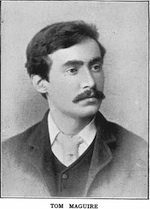
Next month On Copper Street, the fifth book in my Victorian series, will be published. One ongoing minor character has been Tom Maguire, a real person, and one of the unsung heroes of British politics, and one of the greatest unknowns ever to come from Leeds.

He discovered socialism in the 1880s and became a firebrand speaker, rousing the men and helping them win strikes. He was someone who helped in the formation of the Independent Labour Party, only to find himself sidelined by others with more of a taste for power. Tom Maguire died in Leeds in 1895. This is an extract from the new book. The circumstances of Maguire’s are true to reports of the time.

tom-maguire-lead


‘I had word about something while you were gone,’ Superintendent Kendall said.

‘What?’ From his expression, it couldn’t be anything good.

‘Tom Maguire. They found him dead at home. You knew him quite well, didn’t you?’

Knew him and liked him. Maguire had organized the unions. He’d helped them win their strikes, and he’d been there at the birth of the Independent Labour Party two years before. All that and not even thirty yet. But politics never paid the bills; he’d earned his money as the assistant to a photographer up on New Briggate.

‘How?’ The word came out as a hoarse croak. Surely no one would hurt him…

‘Natural causes,’ the superintendent said. ‘The doctor’s there now. I said we’d send someone over.’

‘I’ll go,’ Harper said.

‘A couple of friends called to see him this morning. Nobody had heard from him in a few days. The door was unlocked. They walked in and he was there…’


He knew Maguire had a room on Quarry Hill, no more than two minutes’ walk away from Millgarth, but Harper had never been in the place before; they’d always met in cafés and pubs and union offices. It was up two flights of rickety, dangerous stairs in a house that reeked of overcooked cabbage, sweat, and the stink from the privy next door. How many others lived in the building, Harper wondered? How many were packed into the rooms? How many more had lost their hope and will in a place like this?

The door to the room was open wide. The table was piled with books and magazines and notebooks. Politics, poetry, all manner of things. A few had slid off, scattered across the bare wooden floor. No sink, just a cheap cracked pitcher with a blue band and a bowl. A razor and leather strop, shaving brush and soap. A good, dark wool suit hung on one nail, a clean shirt on another.

That was the sum total of the man’s life.

The doctor was finishing his examination, wiping his hands on a grubby piece of linen. The inspector tried to recollect his name. Smith? That seemed right. An older man. Not uncaring, but hardened by the years. They’d met a few times before, always in situations like this.

‘He’s not one to trouble the police, Inspector.’ Dr Smith closed his bag. ‘Pneumonia. Sad at his age but nothing suspicious.’ He said good day, and the sound of his footsteps on the stair slowly faded away.

Harper could feel the cold all the way to his bones, as if there’d been no heat in here for weeks. The hearth was empty, carefully cleaned, but not a speck of coal in the scuttle. He opened a cupboard. The only thing on the shelf was a twist of paper that held some tea. No food. Nothing at all to eat.

The bed was cheap, pushed into the corner. A thin, stained mattress. Maguire lay under a grubby sheet and a threadbare woollen blanket. On top of that lay a heavy overcoat to give more warmth.

Two bodies in their beds, he thought. So different, he thought, but the ending was just the same. The doctor had covered the man’s face, trying to offer a little decency against the brutality of death. Harper pulled it gently away. The policeman inside needed to see for himself. Maguire’s skin was so pale it barely seemed to be there. His eyes were closed. No lustre in the ruddy hair.

A gust of wind rattled the window. Tom Maguire dead. No heat, no food. And no one to really care. Maguire had been ill; Harper had heard that. But this? How could he have died with nothing and no one around him?

Harper laid the sheet back in place. He’d liked the man. He was honest, he had principles and convictions that didn’t bend with the wind or the chance to line his pockets. He’d believed in the working man. He’d believed in the power to change things.

Very quietly, as if a loud sound might cause the corpse to wake, Harper pulled the door to. He started the walk out to the Victoria public house in Sheepscar. He needed to tell Annabelle.


‘Did you see him?’ she asked. ‘His body?’ He nodded.

When he entered she’d been standing by the window in the rooms above the bar she owned, gazing down at Roundhay Road. At first she didn’t even turn to face him and he knew. The word must have spread like ripples across Leeds: Tom Maguire was dead.

His eyes searched around for their daughter, Mary.

‘I asked Ellen to take her out for a little while,’ Annabelle said.

He put his hands on his wife’s shoulders. ‘I’m sorry,’ he said. He tried to pull her close but she didn’t stir.

‘I knew he was poorly. I should have gone down to see what I could do.’ Her voice was tight and hard. Blaming herself, as if she could have kept him alive. ‘I could have done something.’

What could he tell her? She’d known Maguire all her life. They’d grown up a few streets apart on the Bank, Annabelle a few years older. Life had taken them in different directions, then politics had brought them together again after she began speaking for the Suffragist Society.

Annabelle began to move away, ready to gather up her hat and shawl. ‘I can go over there now. I’ll see what I can do.’

Harper shook his head. ‘Don’t. There’s nothing. Honestly.’ If she saw how Maguire had lived and the way he died, then she’d never forgive herself. He put his arms around her, trying to find some words. But they wouldn’t come, just thoughts of a barren, bitter room.

He thought back over things he’d heard in the last few months. Word was that the new Labour Party was pushing Maguire away, that he was the past, not the future. He’d been seen out drinking a fair few times, so far gone that people had to help him home. That wasn’t the man he’d known, not the one he’d want to remember. It certainly wasn’t the one he’d watched who inspired hundreds of labourers with a speech on Vicar’s Croft and helped win them a cut in working hours. Not the man who led the gas strike like a general and beat the council. And definitely not the shyly humorous man he talked to in the café by the market. That was the Maguire who’d remain in his memory.

on-copper-street

2017, And My Year Ahead

So here we are, tiptoeing into 2017, casting a cautious eye at its possibilities, a little hopeful, a little wary that it might be more brutal than 2016. But the only thing my prognostications and the tea leaves are telling me is about the books I have coming up this year. Sorry I can’t help on lottery numbers or Grand National winners. I’m just not that good.

I write every day. I do it because it’s what I love and I have things to say. I’ve been lucky, so far at least, that publishers have wanted to put them in print and some people enjoy them. You have no idea how grateful I am for that.

I still have things to say, tales to tell. But there’s a strange alchemy that turns life into fiction, an odd transmutation. Late in February the fifth of my Tom Harper novels, On Copper Street,  comes out in the UK. Except that underneath everything, it’s not a Tom Harper book at all; that’s just the cloak it wears. Early last year, in the space of two weeks, I received news that three different friends had all been diagnosed with cancer. By then, 2016 was already whittling away at some of the icons of my generation. My friends, I’m pleased to say, are still here and seem to be doing well. But this book became my way to cope with it all, my way of understanding. Maybe even of accepting, I don’t know. It’s a way to reach down to the truth of it as it hits me, of that balance between life and death.

That, I know, probably doesn’t explain much. But for now, it’ll have to do. Oh, and if you’re especially eager, the best price for it seems to be here.

on-copper-street

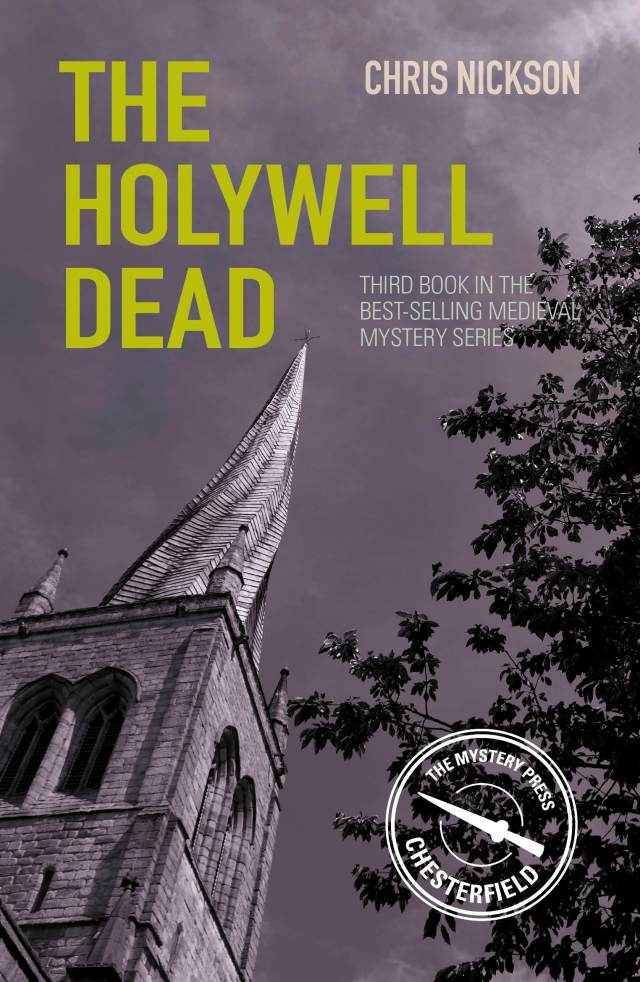
This summer there’s the third, and last, Chesterfield book with John the Carpenter, The Holywell Dead. For a man who came to me in an instant on the A61, driving through Chesterfield, he feels to have been around a while. We still had a little unfinished business, I was aware of that. Not just him, but Walter, Katherine, Martha, even Coroner de Harville. Their stories had further to run. Not that much…maybe just enough. The limits of a small town and a man who’d rather work with wood than find murderers were closing in. And it ends, I hope, in a fairly apocalyptic fashion, bowing out on a high note. I’ve enjoyed my time in the 14th century with him, but we’ve walked as far as the fork in the road and he’s taken one path and I’ve trodden along the other.

9780750979955

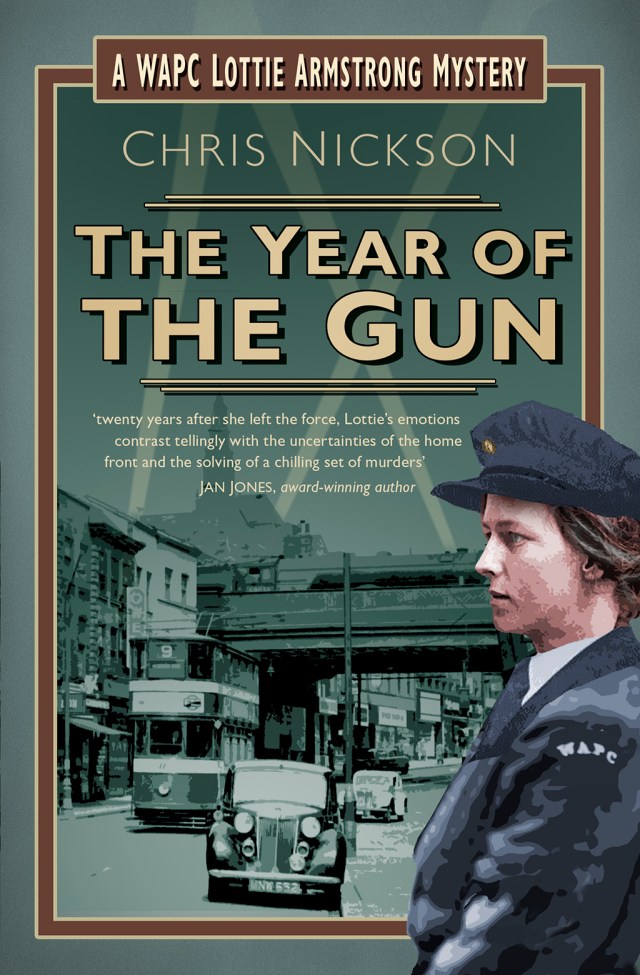
Then there’s my second – and again, last – visit with Lottie Armstrong in The Year of the Gun. I didn’t have a choice about it. She insisted. Her presence haunted me after I’d completed Modern Crimes, so that she had to come back. But the woman I visited again was older, in her forties, and experiencing World War II in Leeds. There was a vibrancy about her, so extraordinary by being ordinary. She had this other adventure to tell me about; all I had to do was listen and note it all down. But she wasn’t going to let me be until she’d finished the tale. As I said, the choice was taken out of my hands.

the-year-of-the-gun-new-fcp

And finally, in late November there will be Free from All Danger, the seventh Richard Nottingham book. It’s still unfolding, not quite all written yet. But I’ve known for a long time that Richard had more to say, and I’m glad he has the chance. By the time it appears, it will be four years since the last volume in the series.

I’m not a fan of endless series with the same character. It’s rare to be able to pull that off, although one or two writers do manage it with some depth. But as characters age, some edges get rounded, while others splinter a little and grow jagged and sharp. Some surfaces harden and other become softer. Those are the hallmarks, far more than the lines on the face or the lack of hair.

Richard has been away, but as he comes back it’s a chance to see how Leeds and the world has changed, and what his place in this might be. The old rubbing up against the new and how they can work together.

In many ways, Richard struck me early on as being like the straight-arrow sheriff in a Western, with his strong sense of good and evil. That changed somewhat over the course of the books, and the grey areas lapped so strongly into the black and the white. But coming out of retirement, how will he find everything now? Is he still sharp enough? More than that, where does he fit? And part of that is me, and my own sense of mortality, heavily tempered by the last 12 months, and the knowledge that new generations are shaping the world, while those of us who are older become more and more like bystanders, slightly out of time.

If the series had continued without a break, this wouldn’t have been the book I’d have written. So I hope that gap, that distance, has served us well.

Tom (and Annabelle, naturally), John, Lottie, Richard – they’re all as alive to me as anyone I talk to in a shop or over coffee. They’re friends, confidantes. And sometimes their books refract bits of the present into the past. Sometimes reflections of history, sometimes my own present, my thoughts and emotions. That transmutation that fiction can give.

And that offers a little background to the work of mine that’s appearing in the next 12 months. Of course, I hope they entertain, which is what they should do, and if they don’t manage that, then I’ve failed as a fiction writer. But there’s a backstory to each one, too, and maybe knowing it will offer a little more richness to the books.

The New Tom Harper Is Coming, Part II

Just in case you think Annabelle Harper isn’t an important figure in The Iron Water…well, you’d be wrong. But her life has changed a little, as you’ll see. And a new character enters the series…

‘Let’s hope she doesn’t wake us during the night.’ She looked over at the crib next to the bed. Mary was sleeping soundly. Fourteen months old on Wednesday. Mary Grace Harper. Her smile, her hair, her eyes, her laugh… from him and Annabelle.

As soon as the pregnancy was common knowledge, the women around Sheepscar had frowned and clucked and tutted. She was too old to have a bairn. Something would be wrong. A list of the problems that could happen. If he’d believed it he’d have been terrified for her. But that was the way here, always some mutterings under all the care and the smiles. In the end everything had gone smoothly. The labour had been long, but the midwife had done her job and mother and daughter emerged hearty and hale. He could still scarcely believe it when he looked at Mary. She was his, a part of him, named for the girl who’d been his wife’s best friend as she grew up. Dead now but living on this way.

‘Shhh, don’t tempt fate,’ he whispered. Since she’d passed three months and the colic went, their daughter had been a good sleeper. Growing so fast, a hefty weight when he picked her up after arriving back from work. No real illness, touchwood; the worry always remained at the back of his mind.

Annabelle had insisted on feeding the baby herself. No wet nurse; she’d never even considered the idea. ‘Why wouldn’t I give her the breast?’ she asked as if it was the most obvious thing in the world. ‘I have milk, that’s what it there for.’  And that was what she did until she weaned their daughter at nine months.

No nanny either, and no talk of one. They could afford it, but she wasn’t interested. When she went to one of the bakeries she owned, she pushed the child in a baby carriage, wrapped up against the weather.

‘I’ll not have people saying I’m getting above myself,’ she insisted. ‘There’s enough round here work all the hours God sends and still bring up families. If they can do it, so can I.’

He was proud of her. Of both of them. He loved his wife; even now he was still astonished that she’d agreed to marry him. But until Mary was born he hadn’t known how loudly his heart could sing.

Annabelle curled against him. She’d been out this evening at a meeting; the new Independent Labour Party. He couldn’t understand how she found the time for it all. Running the Victoria pub downstairs, keeping an eye on her three bakeries, a baby, and her politics. She’d turned down the chance to become part of the committee of the local Suffrage Society, but she was still very active locally, helping to organize and speaking at meetings. Sometimes she took Mary with her, enjoying the fuss everyone made of the child. This time, though, she’d gone alone and he’d had his little one to himself for two hours, the first time she’d trusted him.

‘The experience will be good for you,’ Annabelle had told him briskly before she left. ‘I showed you what to do, Tom. Just you remember, women have been doing it for thousands of years. I think a man can cope for a little while. Oh,’ she added, ‘after you change her, there’s some lard to use as cream on her bum.’ She gave him a big smile.

He managed, even bathing Mary before reading to her from The Water Babies, watching as her eyes gently closed.

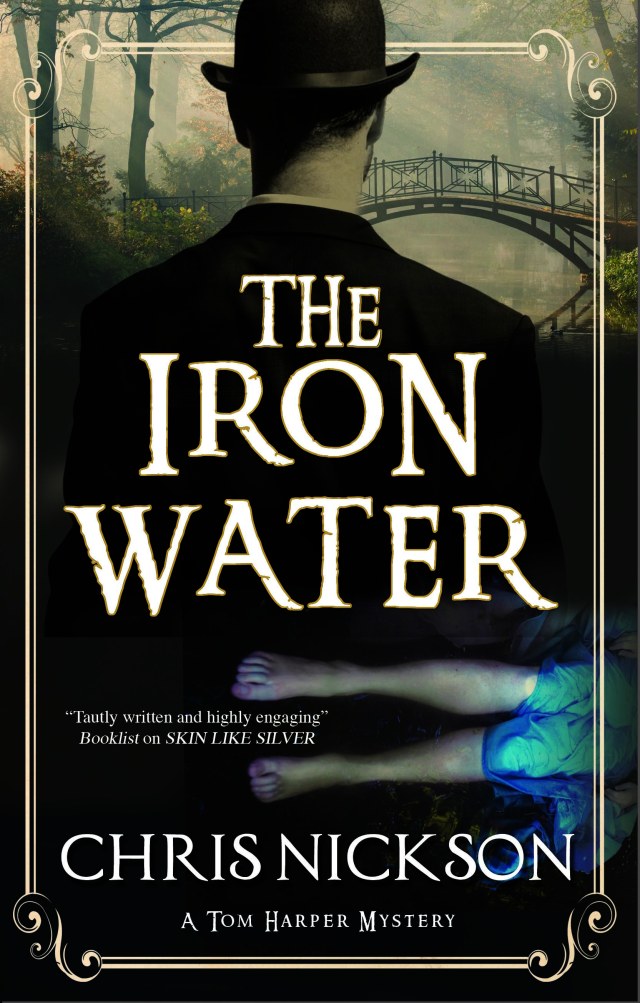
Remember, you can get your order in for the book here – the cheapest price I’ve found and you’ll be supporting independent bookshops. It’s out July 29.

the iron water 4 blue legs

The New Tom Harper Is Coming

The new Tom Harper novel is coming. The Iron Water, out in the UK on July 29.

Have a taste of it. And if you’re a fan of Annabelle…there’s plenty of her, too. You can order a copy here.


Early July, barely dawn as he strode up Roundhay Road in his best suit, the soft grey wool, his present from Annabelle three Christmases before. Already men were starting to emerge from the streets of back-to-back houses, on their way to the early shift. By the time he reached Harehills the air began to smell cleaner, the houses larger and more prosperous. Out beyond that was wealth. Oakwood was nothing more than a hamlet, a few houses by the road and the terminus for the electric tram by the arched entrance to the park. A copper saluted him as he approached.

‘Anyone here yet?’ Harper asked.

‘They brought the ordnance a few minutes ago. Along the Wetherby Road and the Carriage Drive. And a fire engine right behind it. I daresay the toffs will show up in their own good time. No reporters allowed at this one, sir.’

He strolled along Park Avenue, relishing the quiet and the soft early light. Along the hillside, a few large houses stood back from the road, only the servants up and around at this hour.

There was plenty of activity by the lake, men manoeuvring a wagon into place with a welter of shouting and swearing. The brass of the fire engine glittered in the early sunlight, the horses that drew it enjoying their feed bags. And Harper spotted a familiar figure.

‘Hello, Billy.’

Inspector Billy Reed of the Fire Brigade, looking uncomfortable in his best blue uniform. Detective Sergeant Reed once, until he transferred over and earned his promotion.

‘Hello, Tom.’ They shook hands. ‘Here for the spectacle?’

He nodded.

‘Whatever it is. How about you? For show, or just in case there’s a problem?’

‘We’ve been involved from the start.’ He pointed along the length of the lake and explained, ‘They’ll tow the boat out soon. If everything goes to plan, at seven they’ll fire two of those rocket-powered torpedoes and they’ll destroy it.’

‘Sounds simple enough.’

Reed snorted. ‘As long as the damn things work. Half the time they fizzle out. Are you showing the flag for the police?’

‘Something like that. I’m not even sure why they need me.’

‘They just like us all on our toes.’ A small pause. ‘How’s crime? Are they keeping you busy?’

Harper shrugged. ‘It never stops. You know what it’s like.’ He should, they worked together for several years. ‘And then there’s always Mary.’

‘How is she?’ He smiled. Reed’s wife, Elizabeth, was the manageress for Annabelle’s bakeries; the two women were close.

‘Wonderful.’ It felt like a stilted, awkward conversation, like two friends who hadn’t met in years and realizing they had little in common any more. ‘I think I’ll take a walk and see this boat.’

By a quarter to seven the important folk had arrived in their carriages. Sir James Kitson, from the engineering company, top hat gleaming. Charles Parsons, an industry grandee, greeted with proper deference. The Lord Mayor and men in the bright braid of naval uniforms. Harper bowed as he was introduced, then kept his distance.

It all seemed like a waste of his time. The important people were making an early picnic of the event, wicker baskets full of food, popping bottles of champagne. Enough to remind him that he hadn’t eaten yet. And no one was offering him a bite. Of course.

Then the sharp whistle blew and the men were making their final adjustment to the metal torpedoes, checking the angle and the fuses. Finally, exactly on the order, the missiles were launched, vanishing into Waterloo Lake. All that remained was a thin wake through water the colour of iron, bubbles rising to the surface.

And then the explosion.

Three hundred yards and it was still loud enough to make his ears ring. Complete destruction. My God, Harper thought, is that what war at sea was going to be like in future? How would anyone survive? He glanced across at Billy; the man’s face was impassive. Reed had been a soldier, he’d fought with the West Yorkshires in Afghanistan.

‘What do you think of that?’

‘Impressive, I suppose.’ He hesitated for a second. ‘Dreadful, too.’ He turned and walked away towards the fire engine.

Harper was lost in his thoughts for a few seconds. Then he heard shouting in the distance. Somewhere along the bank of the lake. Even with the hearing almost gone in his right ear he could make out one of the words: ‘Police.’

He started to run.

the iron water 4 blue legs

The Empress on the Corner – Some Thoughts

After a long time, it happened.

The Empress on the Corner appeared in public. In part, anyway. As part of Leeds Big Bookend festival, Carolyn Eden became Annabelle Harper. She’d done it briefly, at the launch for Skin Like Silver. But this was longer, more intense, as she recounted some of the scenes from Annabelle’s life.

It wasn’t the entire play, and there were different formats – a couple of scenes performed live, script-in-hand, two recorded on audio, like a radio play, and one on video, filmed in the Victorian pub at Abbey House Museum in Leeds.

A sharing, to explore the possibilities for the future.

Pretty much a full house, about 50 people, more than I could have hoped, really. And we’d had a good build-up. Friday brought this piece in the Yorkshire Post.

scan0001

Then, Saturday morning, we were on BBC Radio Leeds with Nick Ahad. Listen here; it starts about 40 minutes in – plus you’ll hear a fragment of one of the audio scenes.

The play tells the story of Annabelle’s life, as you’ll have gathered. The compressed version from yesterday is very much a work in progress. The festival believed in the idea enough to put it on, and Leeds Libraries believes in it enough to give us a grant, for which we’re very grateful (not a royal we; this has become very much a joint enterprise between myself and Carolyn, who’s also teaching me a lot about theatre. It’s very different from the publishing end of things). And there are plenty of others to thank, too, who’ve helped us – more than I can name here. But I hope you know who you are and that we’re grateful.

From the feedback forms, people enjoyed it. And that, of course, was the whole intention. But with a performance as good as this, that’s understandable.

One of the highlights for many was the performance of the suffragist speech from Skin Like Silver. While we didn’t film the Bookend performance, this was Carolyn’s first outing as Annabelle from the book launch, just as a reminder.

We intend to do more with the play. Quite what directions remain to be seen. But for an author, it’s so wonderful to see someone come to such perfect life. I don’t feel I created Annabelle. She found me. Maybe she found Carolyn, but that would be a silly idea, wouldn’t it? But I feel lucky to have found someone who is Annabelle.

Stay tuned to discover where it all goes.

IMG_0944

The Soul Awakes

Annabelle Harper. A successful woman, with the Victoria public house at the bottom of Roundhay Road and three bakeries, all of them making money. Respected all around Sheepscar, she’s become the empress on the corner, and happily married to Detective Inspector Tom Harper.

And then a political awakening. But simpler to let her tell you herself. Better yet, come down this Saturday and here her tell it to you. You can get tickets here.

DSCF1780


I’m going to tell you a story…


I still can’t quite believe it happened, although I know it did. We had a coalman who used to deliver to the pub. He retired and a new one showed up. Cocky little devil. Thought he could fob me off with stuff that wasn’t worth the money. When I told him I wasn’t standing for it, he told me that maybe my husband needed to give me a clout or two. I picked up a shovel and I swear I’d have gone for him if he hadn’t turned and run off. I needed to take a walk to try and calm myself down. I ended up by the outdoor market – couldn’t even remember getting there. I must have looked a sight because this woman came up, a little old dear, and asked if I was all right. “Looks like a man’s got to you,” she said. She put a pamphlet in my hand. Votes for Women. All I did was glance down at the title, couldn’t have been more than a second. Blow me down if she didn’t disappear. Like I’d dreamed her up. But I had the pamphlet. Took it home. A fortnight later and I had the parlour full of books. I wanted to know it all. Those words I read…it was like someone had looked into my head and put everything I’d thought down on paper. It made sense. Me, I’d hardly read a book in my life. Who had the time? Once I was done with school, I was too busy working. Now I was sitting there going through them like the pages were the most important thing in the world. And Tom, bless him, he took it all in his stride. Didn’t even blink when I started going to the suffragist meetings. I was worried what the police might think, an officer’s wife involved in all that. He told me to go ahead, to do what I felt was right. I did. I listened. I liked what they had to say. But most of them, they’d never needed to do a day’s graft. They’d never had to try and feed a family on a mill girl’s wages. Course, it wasn’t long before I was up on my hind legs, saying this or that. Putting me two pen’orth in. That was how I met Miss Ford. She was in charge of it all. She’d worked with the unions, helped with strikes. People respected her. Mind like a razor, sharp as you like, and a heart as big as Yorkshire. She sat me down. Told me I could make a good speaker for the Suffrage Society. I thought she was joking, that it was her way of gently telling me to shut my mouth. But she was serious. I didn’t know which way to look. And she made me think that I did have something to give. Something different. I said yes, then I wished I hadn’t. My mind was whipping backwards and forwards like nobody’s business: I was going to back out. I was going to do it. Then everything I tried to write sounded so false. Be yourself, Tom told me. Who was I? A jumped-up piece of muck from the Bank whose husband had left her a pub. What did I have to tell anyone?  It wasn’t as if I knew any answers. Even when I was up on that podium I wasn’t sure I could go through with it. My teeth were chattering so hard they must have heard it in London. Then someone was saying my name and people were looking at me and it was too late to run away.  

Well, now I know what it must be like to be on the halls. I feel like I should sing a song or something. You don’t know me. No reason you should, really. I run a public house in Sheepscar. Nothing grand but it pays the bills. And I grew up on the Bank, on Leather Street. I know what they say: you grow up on the Bank and you’ll never amount to anything. I’ve heard it all my life. I started out in the mills when I was nine. It’s a hard life, I can tell you that right now. Moved into service a few years later because it paid better and it wasn’t as dangerous. I’m still not above scrubbing a floor if it needs it, or giving something a cleaning. Most of the girls I played with ended up doing the same. Maids or mills. If I ever see them now, the ones who are married have five or six children and husbands who bring in next to nothing every week. They survive, and that’s all they do. It’s down to the pawnbroker with the good clothes of a Tuesday morning so they can last until their men are paid. Redeem everything Friday evening. Do you know what they wish for when they’re walking down the street holding everything of value that they own? That their little ones will have something better. But they won’t. Do you know why not? Because there’s no one to speak up for them. They live, they die. Probably half of the girls I played hopscotch with when I was in pinafores are in the ground now. I’m not saying having the vote would put everything right. I’m not a fool. Men will still run things, same as they always have. There’ll still be more poor people than you can shake a stick at. But at least we’ll have a say. All of us. That’s the women on Leather Street, where I grew up, as much as anyone here. Maybe they need it even more than us. I’ll tell you something else. Every day, every single day, I see women with all the hope gone from their faces. It’s been battered away long before they’re old enough to work. And we need hope. That’s why every woman needs the vote. Every man, too. The only way those men standing for Parliament will ever do anything is if they need our votes to win. Half their promises will still vanish into thin air. Of course they will, they always do. And they still won’t do anything more than they absolutely have to. (Pause) But for the first time they’ll have to listen to us.

And that was it. I couldn’t believe I’d said it all. Couldn’t believe I’d made that much sense. At least I wasn’t shaking anymore. And to see their faces and hear them clapping, well, it didn’t seem like that could be for me. But Miss Ford must have liked it – she wanted me to start speaking regularly. I had to take a deep breath before I said yes. As soon as I agreed to that, she started talking about having me on the committee. Give them an inch and they want a mile. I said no. All that travelling hither and yon. Not when I had the pub and the bakeries. And…

I was up the duff. Couldn’t be. That’s what I thought at first. After all, I hadn’t caught before. I thought the miscarriage meant I couldn’t. So I wasn’t about to say anything till I was sure. Not tempting fate. And I was older, not one of the young lasses popping them out. Tom, he was over the moon. (Smiles) Once he picked his jaw off the floor, any road. From the way he tried to look after me you’d think no one had ever had a bairn before. You have thought I was the best family china. How do you think you got here, I asked him finally? And your ma, and all those before her. It’s nature. That shut him up and he let me get on with things. There was work to do. I tell you what, nature decided to make hard work of me in the end. It had the last laugh. The best part of twenty-four hours in labour. Sweating and cursing and screaming. I was holding the midwife’s hand so hard I’m surprised I didn’t break her fingers. But it was worth it. Called her Mary, after Mary McLaughlin I grew up with on Leather Street. That’s right, I’m talking about you. Bit over a year now and into everything when she’s awake. Daren’t take your eyes off her for a moment. Talk to her da and you’d think butter wouldn’t melt. He’d learn quick enough if he spent all day with her. She won’t want for anything, I’ve already made sure of that. She’s lucky. I have the brass. Not like most round here, where the hunger never leaves the eyes. But I’m going to make sure she knows what the world is really like outside the door. She needs that. I owe her that. I’ve not forgotten all those years when I was muck. Scratch me hard enough and it’s still under there. I want my Mary to have the things I never did. The vote. Rights. A life that doesn’t have to depend on a fella. The things that matter. Might as well wish for the moon, eh? It’s like having a tiny hammer and chipping away at a big block of stone. You keep doing it and nothing seems to happen. But you keep believing that one day the stone will just fall apart. Maybe I can get in a few blows. Do my bit. Yes, I speak at meetings. Maybe it helps, I don’t know. I sold the bakeries. Miss Ford asked me to be secretary of the Suffrage Society. No going out of Leeds, she promised. Aye, I thought, I can do that. But there weren’t enough hours in the day to do everything, not with this one scampering around. The shops gave me what I needed. But maybe I didn’t need that any more. I’ll never get rid of this place, though. The Victoria, it’s home. Don’t want anywhere else. They’ll have to carry me out of here in a box. Won’t be for a long time yet, not if I have anything to do with it. Too much to do. And here I am, barely started. Up from the muck and still a long way to go. What I’ve learned: you do what you have to do. You get on with it.